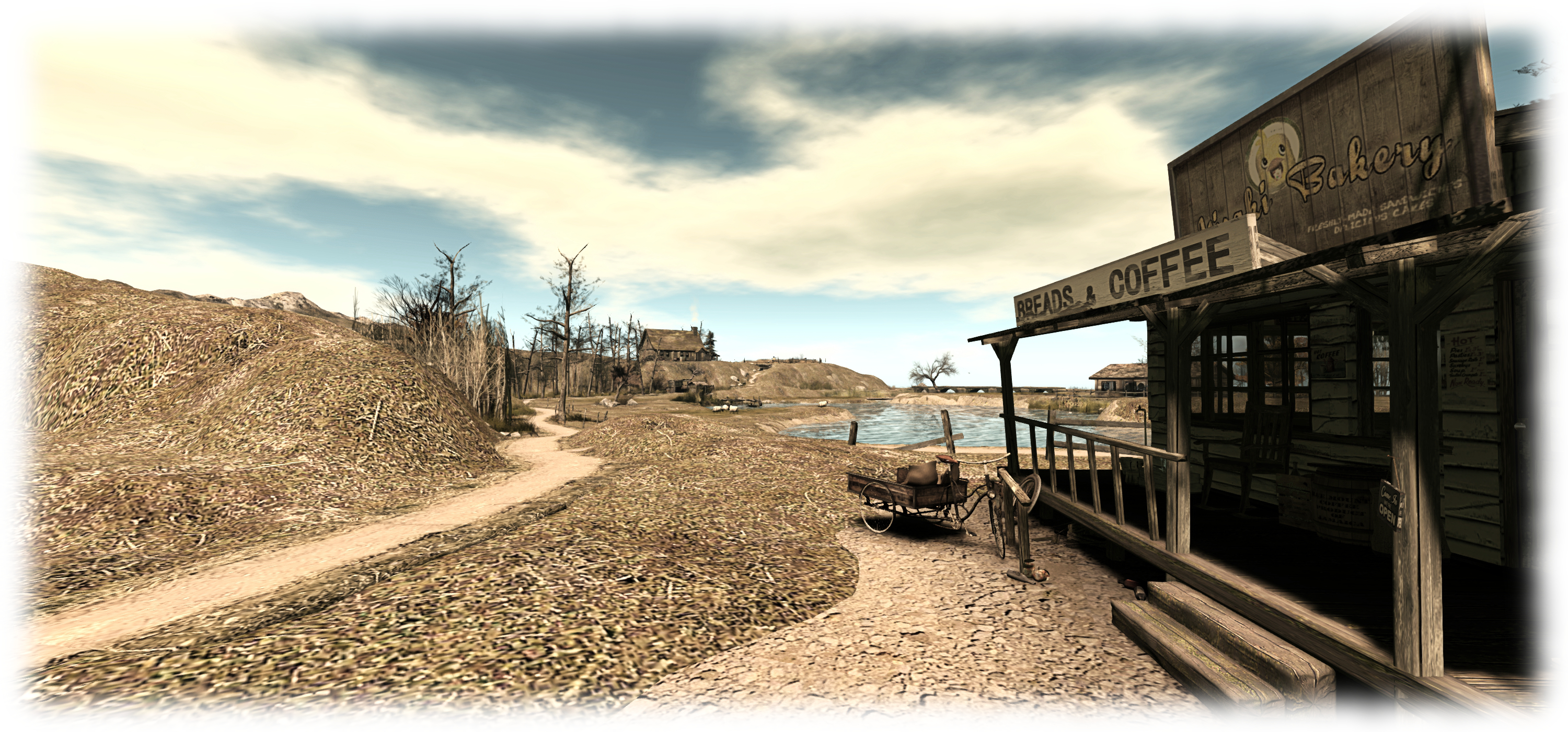
A skewed perspective on Second Life

There are probably very few of us active within the blogsphere, either as writers or readers, who are not aware of the brouhaha which boiled-up over the course of the last week in response to Hamlet Au’s take on a recent article published in Atlas Obscura.

Wagner James
Wagner James “Hamlet” Au: a biased stereotypical view of the SL outsider

The latter offers a broadly positive look at Second Life, and drew praise from many SL users, including myself. However, Mr. Au’s take on the matter was to largely dismiss the Atlas Obscura piece as a “distorted” piece of journalism because it didn’t delve into the more pornographic aspects of Second Life sufficiently enough to be to his liking. Understandably, his view drew a considerable amount of flak by those actively engaged with the platform.

As a consequence of this, Mr. Au was invited to participate in an interview on show #68 of The Drax Files Radio Hour, to discuss his point of view. What’s interesting about his original article and the subsequent Radio Hour podcast is the way in which Mr. Au appears content to perpetuate a number of misconceptions about Second Life.

The first of these misconceptions is that the Adult rating equates to a region having “pornographic” content – a wildly false proposition, as Honour McMillan has oft and correctly noted:

If you do have Adult content, it does not automatically mean it’s pornographic. Sex exists in Second Life. Fact. Having a popular Adult sim does not make it pornographic. That is also a fact.

The second fallacy evident in Mr. Au’s argument comes at the 14:27 mark in the Drax Files Interview, in his suggestion that anyone can be unwittingly re-directed to an Adult environment and encounter avatars engaged in sex – and thus, the world needs to be told this is the case.

Yet by default, the viewer is set to display / allow access only to material that is rated General or Moderate in nature. Therefore, the only way for anyone to access an Adult rated region under any circumstance whatsoever, would be because they took the conscious decision to set their viewer to access Adult material. And let’s be honest here; while all Adult rated regions may not be pornographic in nature, the label on the setting itself makes it fairly obvious as to the type of content one might encounter as a result of enabling it.

Therefore, it’s fair to say that Mr. Au’s presentation that anyone can somehow inadvertently finish-up in an Adult rated area and catch people in flagrante delicto, as a matter of pure happenstance and through no direct action of their own, borders on the nonsensical, and he does himself a disservice in presenting the matter in this way. True, you can happen into a private residence on regions other than Adult and witness adult activities – but again, they requires a pre-determine at of seeking green dots out on the Map and then trying to teleport to them – it is not a random event.

Contrary to believe in some quarters, one can only inadvertently wind-up at an Adult hub (or other Adult location in SL) if one has consciously decided to enable their viewer to access Adult content - the default is General and Moderate only
Contrary to belief in some quarters, one can only inadvertently wind-up at an Adult hub (or other Adult location in SL) if one has consciously decided to enable their viewer to access Adult content – the default is General and Moderate only

A further fallacy voiced is the idea that because the “main assumption” among people at large is that Second Life is all about “weird sex”, then articles providing insight into Second Life must include an exploration of that “weird sex”.

However, while many who have heard about SL do perhaps think of it as a place for “weird sex”, the huge volume and diversity of content, pursuits, interests, activities and events available in Second Life would suggest that it is in fact a misconception.

Misconceptions aren’t dealt with through reinforcement – which is essentially what Mr. Au is advocating. Rather, they are dealt with by presenting reasoned counterpoints which encourage those holding them to re-evaluate their position / attitude. This is precisely what the Atlas Obscura article does, intentionally or otherwise; while acknowledging there are sexual activities and content in SL, it seeks to offer a broader view of Second Life that doesn’t play to, or reinforce, the stereotypical view.

This isn’t in any way being “dishonest” or “misleading” as Mr. Au states – and again, he does himself a disservice by suggesting it is.
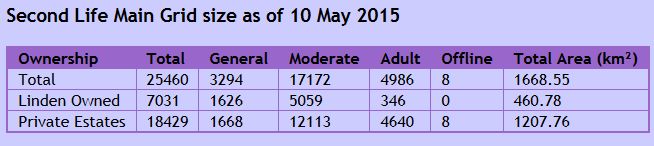
Tyche Shepherds Grid survey summary for May 10th, 2015, from which the figures in this piece are taken
Tyche Shepherd’s Grid survey summary for May 10th, 2015, from which the figures below are taken

And just how prevalent is all this “weird sex” anyway? On May 10th, 2015, there were 7,031 Mainland regions in SL, of which 346 were rated Adult. Given these are all located on the Adult continent of Zindra, it’s not unreasonable to assume that the larger portion of them is devoted to sexual content to one degree or another. Even so, that still amounts to less than 5% of the total Mainland content; hardly a preponderance. When the grid as a whole is considered, the figures are 25,460 region, of which 4986 are rated adult – that’s just 19.6%  – or to put it in Mr. Au’s parlance: “less than one-fifth”.

And (again) leave us not forget Honour McMillan’s sage words quoted above. Therefore, the actual number of pornographic regions accessible to those who have chosen to view adult content is liable to be somewhat lower than that “one-fifth”.

So where, really, does all this leave us?

The bottom line is actually pretty straightforward:  yes, there is a fair degree of sexual content and activity in Second Life. Just as there is on the Internet as a whole and in the physical world. However, the degree to which anyone coming into Second Life might be exposed to it is really hard to judge; unlike a wander through the streets of San Francisco (a parallel Mr. Au draws), where it is possible to accidentally and unwittingly stumble upon the seedier side of life, the degree to which one chooses to be exposed to the more sexual side of Second Life can be controlled, greatly reducing the risk of any accidental or unwanted exposure to it.

This being the case, the suggestion that an article such as Eric Grundhauser’s piece in Atlas Obscura is either “distorted” in its presentation of Second Life or somehow “misleading” simply because it doesn’t delve into the sexual side of SL or play to the stereotype that SL is “all about the sex”, is itself a skewed perspective on Second Life.

With due respect to Hamlet Au, the approach he advocates is not good journalistic practice – but it could easily be interpreted as encouraging continued salacious titillation.

Related Reading

I’ve added the two links above, as they also had an impact on my thinking during the gestation of this article.

Altas Obscura offers a clear-eyed image of Second Life

Second Life has been enjoying something of a positive resurgence in the media in recent months, and with May now passing us by, and June and SL’s 12th anniversary  sitting just over the horizon, it is inevitable that there will be more media coverage forthcoming on SL as the Lab’s media team crank things up.

Eric Grundhauser: touring Second Life with Ziki Questi

One of the first out of the gate in this regard is an article in Altas Obscura, which describes itself as the definitive guide to the world’s wondrous and curious places. Penned by Eric Grundhauser, Forgotten Wonders of the Digital World offers a positive insight on SL with a novel twist.

Rather than asking a few questions of the Lab or relying on images grabbed from Flickr and cobbled together with a little staggering around in-world, Eric Grundhauser is, with the assistance of the Lab, able to gain none other than Ziki Questi, photographer and blogger (together with her partner Kinn), to act as his guide to all that is, and can be found, in-world.

The result is an engaging and informed piece which neatly encapsulates SL’s history, presents an assured view of the platform devoid of the usual clichés and asides, and which focuses on the rich tapestry of content which can be found in-world – role-play, art, personal spaces, with even the broader uses of the platform touched upon, such as the US Army’s use of SL (and OpenSim) to help service personnel deal with PTSD. What’s more, with some of the images supplied by Ziki, the article looks good as well (Mr. Grundhauser’s own snaps aren’t too bad, and kudos to him for taking them, rather than seeking to raid an archive from 2008 or so!).

Ziki and I are a lot alike in terms of taste, so for me it was good to see RocheA Petrovsky Flux and Haveit Neox’s City Inside Out referenced in the article, with Insilico, Kowloon and The Far Away – which Ziki herself rescued from oblivion and now curates – also getting a mention (and photographs).

Roche, a favourite of mine, and featured in the Atlas Obscura article

Such is the impact of his time in Second Life exploring with Ziki and Kinn, Mr. Grundhauser willingly re-evaluates his thinking about the world, while remaining open and honest:

To be honest, when I decided to delve into Second Life, I half-expected to find a dying world of outsiders and bronies gleefully recreating pornographic impossibilities. But that simply doesn’t seem to be true. What I found, and mind you, I was only able to visit a strikingly miniscule portion of the available spaces, was that Second Life is still a fascinating and vital world that is constantly changing and pushing the boundaries of what a virtual space can be…

More telling I think, is the somewhat widespread perception that Second Life is no longer an active digital playground. The Grid is still a vital and evolving space that hundreds of thousands of users create and evolve each day.

Nor is “the sex thing” shied away from – kudos again to Ziki for being open on that subject as well, and the fact that – just as in the physical world and the Internet as a whole – there is an awful lot of it in SL. But as Eric Grundhauser demonstrates very ably – with or without established guides – just because there is a lot of sex in-world, it doesn’t bean it’s the be-all and end-all of the platform. As he notes when describing the diversity of activities and those using SL:

Doctors, universities, hobbyists, sci-fi fans, artists, and inexplicable curiosities can all be found operating in SL, by those willing to look.

Well done to him for making the effort to delve into SL and spend time exploring and getting to know at least a couple of residents, rather than simply taking the hoary old trail of slapping a few outdated headlines (and images) together in an attempt to underline a preconception.

All told, a good, light read.

Related Links

With thanks to Ziki Questi for the advanced notification that this article was upcoming.

Streaming Second Life (and other grids): Frame enters the arena

My original ruminations on Amazon AppStream have led to a couple of people giving the service a go.  Nabadon’s Izumi  has tried the service with the OnLook viewer and OS Grid, and Bill Glover has given feedback through his blog on using AppStream with Firestorm connecting to Second Life.

However, as several people have said, AppStream isn’t the only way to go – there are other options. One of these is Frame, which uses Amazon’s AWS and Microsoft’s Azure cloud services. In fact, it was Frame’s founder, Nikola Bozinovic, who suggested people look at the service as s potential means of accessing SL and similar grids via the cloud through a comment he left on this blog. He also provided a link to a demonstration he his have said up using the official viewer, together with an invitation to try it out.

Nikola Bozinovic, founder of Frame, who extended an invitation to try the service as a possible means of accessing Second Life (and other grids) from the cloud

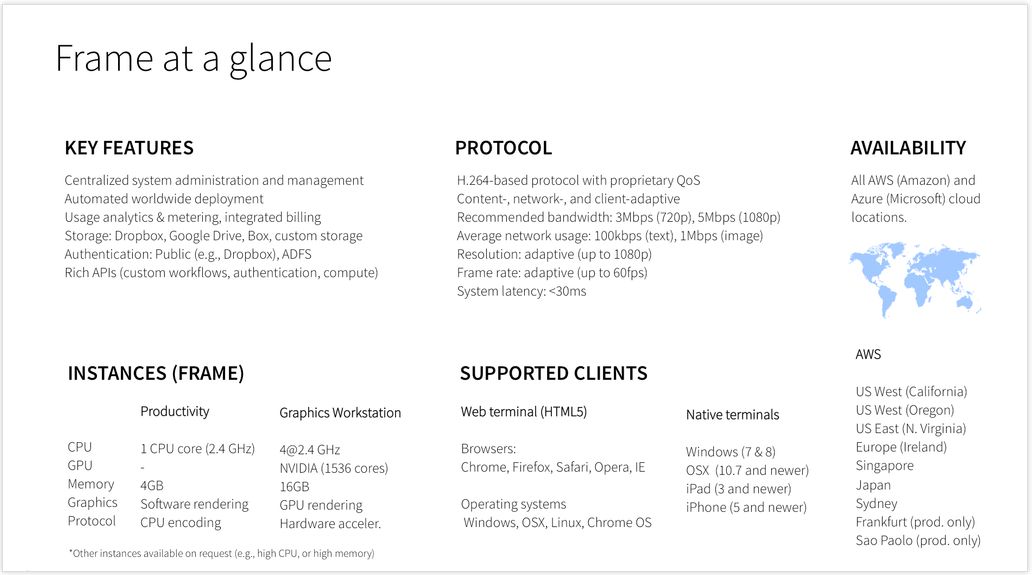
I don’t want to get blogged-down about what Frame is, but the infographic below should give the basics – suffice it to say here that it allows you to stream Windows and web apps, using a number of locations around the world, to a range of devices. It also provides a number of different use levels: Personal, Education, Business, and Platform. You can also find out more about it here.

The key point with Frame is that it potentially offers two approaches to accessing Second Life and other grids via the cloud:

  • As a do-it-yourself option, where you can sign-up for a Personal account, upload your choice of viewer and run it yourself when needed
  • As a packaged service similar to SL Go – which is how Bill Glover is approaching things through his Bright Canopy project, which has a demo up-and-running using Firestorm, and those interested can sign-up to find out about the work and try the demo version.

Nikola extended an invitation to me to try the Personal account  / “do-it-yourself” option for myself, which I was happy to do as a proof-of-concept attempt, and this article is primarily focused on doing that, and providing some short-form feedback. As Bill is working on the packaged service option, I’m not touching too much on that at this point in time.

A quick summary of the technical aspects of Frame (image courtesy of Nikola

Getting Started On your Own With Frame

Anyone wishing to try accessing Second Life through Frame can do so by requesting access to Frame Personal. An access code will be sent to you, allowing you to set-up your Frame account, and select the nearest PoP to you, and your preferred server type  (I opted for the four core system with 16Gb of memory and 20 free hours running a JavaScript client).

Once this has been done, the Launchpad is displayed. This is the normal starting point for Frame operations, and is used to manage the applications you’re running on the service (two are provided by default). This may take a short time to load the first time.

Adding a Viewer to your Frame Account

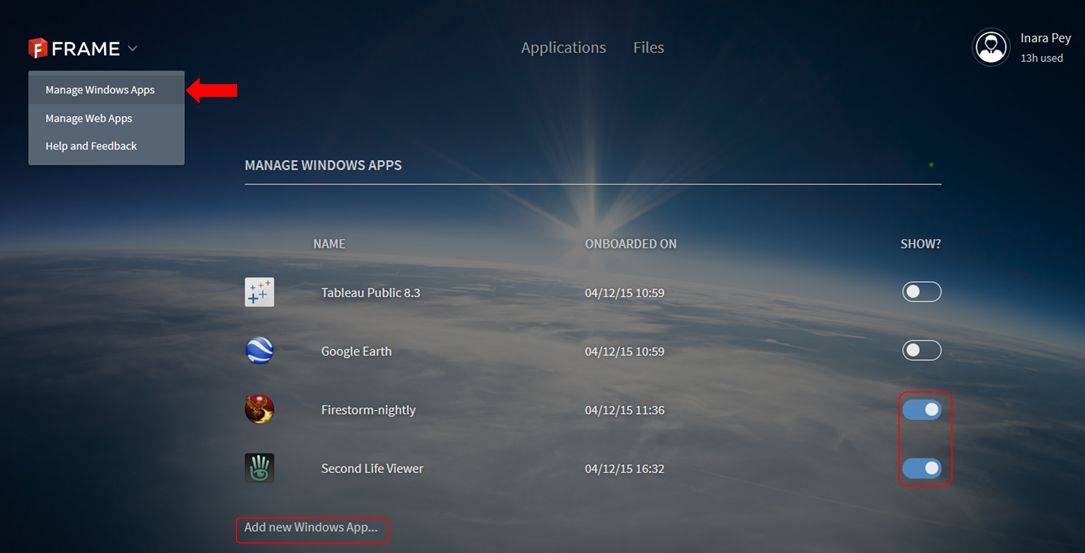
  • click on the chevron next to the Frame logo in the top left corner of the screen and select Manage Windows Apps.
  • A list of your installed applications is displayed (Tableau Public and Google Earth are provided by default).
  • Click on Add New Windows App … under the list.
  • Your virtual desktop will launch. Use the Chrome browser in the desktop to navigate to and download the Windows installer for your preferred viewer OR, if you have the EXE on your computer, use the Upload button (arrow in a circle) button in the lower right corner of the desktop screen to upload it.
Adding new applications to Frame is a matter of using the Manage Windows Apps (main menu) and the Add New Windows App function to run a virtual desktop from which you can browser for the application's installer and then download and install it. Frame will then automatically "onboard" it, and the application simply needs to be "switched on" via the toggle to the right of it
Adding new applications
  • Run the installer as if you were installing the viewer on your PC.
  • Once the viewer has installed, Frame will ask you if you wish to “on-board” it – confirm this, and accept the ToS – having read them, obviously! 😉 ).
  • When the “on-board” process has finished (it takes about 15 seconds), go to the gear icon in the lower left of your virtual desktop and DISCONNECT.This returns you to your Launchpad
  • Activate the viewer by toggling the “switch” to the right of it so it turns blue (shown above). This adds the viewer (and any other app you activate) to your Frame dashboard.
  • Click on Applications at the top of the screen to go to your dashboard. Double click the displayed viewer icon to launch the viewer.

While it may sound long-winded, the entire process of setting-up an application like this can be done in just a few minutes.

Continue reading “Streaming Second Life (and other grids): Frame enters the arena”

Using Amazon AppStream to stream a viewer

Update, Saturday April 11th: Bill Glover, who has also shown a keen interest in the possibility of using Amazon AppStream, has been carrying out his own experiments with Firestorm and Second Life. He notes of his experience:

I set-up a stream with the Firestorm and was able to use it from both a Chromebook and an Android phone. It was really very responsive over a hotel wifi network, but there are many caveats.

It works, but it’s expensive and nowhere near being useful for just casually streaming SL without some custom client development and viewer integration.

You can read his initial thoughts on things over on his blog.

On Wednesday, April 8th, and following the announcement that the SL Go service is to be discontinued, I speculated on how the Lab (or indeed, someone else) might offer up an alternative to fill the void left once SL Go ceases at the end of the month.

After looking at various alternatives (including Highwind’s GDN – Highwinds being one of LL’s CDN providers), a conversation with Dennis Harper pointed me towards Amazon AppStream, and the more I read, the more it seemed to be a viable option, and hence it became the focus of my article.

As a result, Nebadon Izumi (Michael Emory Cerquoni) sat down to see just how easy (or not) to get something up and running, albeit using OS Grid and the OnLook viewer, and reported some success.

What made me think to try was your article. “You get 20 hours of free streaming per month with Basic Amazon AWS account (required to access the AppStream service), then its 83 cents per hour. I also tried this on my Android Tablet, but while the graphics were beautiful, input is a problem, and the viewer will need overlay controls like SL Go, which will require development.

– Nebadon discussing using Appstream for Second Life with me

Once he had his account created, Nebadon was able to install the viewer and use the supplied web browser to obtain and install the VS C++ 2010 re-distributable packages he needed in order to run the Singularity-based OnLook viewer, “you can go anywhere on the web and download any software you need to make your application run,” he noted to me. “Once I had these and the viewer installed, it took about 20-30 minutes for the viewer to deploy, and I got a set of instructions on how people can connect to it.” The whole process took him, he estimates, about 2 hours.

This is obviously a long way short of providing a full-blown service, and anyone wishing to use Amazon AppStream as the basis for a streaming solution for their grid who obviously have to dig a lot deep into issues of cost and pricing, payment mechanisms, potential demand, management, scaling, and so on; it also has yet to be tried with a viewer connecting to SL. Nevertheless, as a trial exercise, Nebadon’s work at least shows that the viewer can be streamed relatively easily using AppStream, and that’s a good place to start.

Could the Lab use Amazon AppStream to “replace” SL Go?

Sl Go proved itself very popular among SL users running low-end hardware
SL Go proved itself very popular among SL users running low-end hardware

On Thursday, April 2nd, it was announced that SL Go, the streaming service for accessing SL  provided by OnLive, is to shut-down on April 30th alongside OnLive’s other consumer services. The reason for this is because OnLive has sold the IP and patents associated with the services to Sony Computer Entertainment.

Since the news broke, there have been numerous calls made for Sony to maintain SL Go as a service, including  an on-line petition. However, as painful as it is, all such calls and petitions to  Sony are unlikely to succeed, as I explained in a recent blog post.

In that article, I also considered whether or not the Lab might invest time and effort in offering something that might fill the void. At the time, I thought the answer to this would most likely be “no”, as the Lab seem to have enough on its plate already with Second Life and its next generation platform.

But the more I think about it, the more I feel that the Lab should endeavour to offer some kind of “SL Go replacement”.

One potential means by which they might do so could be via Amazon AppStream.

Obviously, there are issues involved in providing such a service beyond the physical provisioning. Anything which requires some form of external hosting is going to incur costs, for example. However, the flip side to this is it’s fair to say the SL Go has demonstrated that if users believe they are getting a beneficial service, they are willing to pay for it, providing the price is not prohibitively high.

Certainly, there are a wide range of potential benefits to be had from such an endeavour, particularly if implemented through something like Amazon AppStream:

  • It offers an easily scaled means by which the Lab could provide an “SL streaming service” to users on low-end hardware and those on mobile devices – something long demanded by SL users
  • It could provide the means by which SL could be accessed through web browsers – again, a long-desired means of attracting new users to the platform who might otherwise be put off by having to download and install the viewer
  • It obviously means that those SL users on low-end systems can enjoy the full graphical richness of SL in the manner LL would like to see all users experience it
  • It could help those preferring to run older operating systems – such as Windows XP – to continue accessing SL even after they might otherwise be unable to even install the viewer
  • It might even help the Lab map and test options which might be beneficial for their nascent next generation platform.

While developing such a service might not necessarily be easy, the Lab isn’t entirely without any experience in this area. As I and many others have pointed out, in 2010 they did experimenting with streaming the viewer, using the Japanese company Gaikai (coincidentally purchased by Sony Computer Entertainment in 2012), which delivered the viewer to web browsers, as shown in the video below. If there is anything remaining of this work at the Lab, it might possible to put it to work through something like Amazon AppStream.

That said, there is a lot for the Lab to consider in attempting to fill the forthcoming void that will be left by SL Go. And while I would not be at all surprised to learn they are already doing so, they might still require some encouragement to take things beyond just considering options. Something which might encourage them, or at least demonstrate to them that there really could be a worthwhile demand for such a service, could be for users to politely speak up.

One way to do this might be to add your name to the existing petition – I would hope someone at the Lab is keeping an eye on it.

Another could well be to leave a positive and polite comment on the subject following this article, as (and all ego aside) I do know eyes at the Lab pass over this blog (just as they do many others).

There is no guarantee that Lab will move to provide some kind of “SL Go replacement”, but on the other hand, as someone once said, nothing ventured, nothing gained.

Second Life is [in] Good today

Nalates Urriah pointed me to an article in Good magazine in which freelance writer Mark Hay discusses Second Life.

Now, before you start groaning, the piece is actually pretty good. Unlike wannabe writers of the Marlon McDonald ilk (whom I rebutted last year), Mark Hay has actually – shock, horror! – researched his subject prior to putting fingers to keyboard.  Not only that, he’s actually taken the time to comb through Flickr and found images that both reflect how Second Life actually looks today – so double kudos to him from the outset.

Don't be fooled by the look: Mark E. Hay offers a perceptive take on Second Life (image: Mark E. Hay)
Don’t be fooled by the look: Mark E. Hay offers a perceptive take on Second Life (image: Mark E. Hay)

What’s more, while at a little under 1500 words in length, Second Life is Staying Alive may not be a in-depth piece of analysis, but it is a considered and balanced peace which offers a largely impartial and fairly accurate examination of the platform – and a thought-provoking one at that, and in a number of ways.

For my own part, what makes this article particularly interesting is the social bent it takes. That it does is not precisely the interesting point, after all, Mr. Hay has something of a background in sociology by education. Rather it is the views he offers up which may not only be eye-opening for those who have heard about, but not really looked at, but which also offer food for thought on a number of levels even for those of us already engaged in the platform.

Some of the latter may not be immediately obvious, and may require a second reading in order for them to fall into place. As such, they may not even have been intended at the time of writing, although I suspect some of the examples he cites are far from mere happenstance when one looks at the wider context in which SL is at times held within the media.

This really kicks-in after he gives a very short potted history of some of the platform’s highs and lows and the apparent loss of interest in it that occurred within the wider world. Here he points out that despite all the claims otherwise, the platform does continue to enjoy widespread use around the globe with average monthly log-ins not that far below those enjoyed during its “peak” popularity. from this, he offers his own explanation to why this is the case: the ability to socialise and create / join communities in which those who are otherwise globally dispersed to engage with one another and create environments for that interaction which go beyond anything achievable through other mediums.

Give Us a Kiss, Dear, by Serena Snowfield on Flickr Not only does Mr. Hay offer an interesting and thought-provoking take on SL, he also takes the time to search through Flickr and locate images for his article that offer a fairer indication as to how the platform can look, such as with this image called “Give Us a Kiss, Dear”, by Serena Snowfield on Flickr

OK, so for those of us within SL this may generate something of a “no s*** Sherlock,” reaction; we are, after all, seeing this on a daily basis, either directly through our own involvement in the platform, or as a result of our travels within the platform.  However, other than the “fnar, fnar” finger-pointing or feigned outrage  at “the porn”, the ability for SL to provide a means to generate such societal interactions and ties seems to be something that has gone right over the heads of most of those willing to comment on the platform. Thus, Mr. Hay’s view is a timely, and welcome counterpoint to the frequent negatively which accompanies public mention of Second Life.

But this isn’t the sole thrust of his thinking. as he points out, the ability for SL to generate such social and sub-cultural networks and groupings isn’t actually new; it’s actually pretty much the way in which the Internet as a whole has grown. What does make SL unique, however, again as he identifies, is in the manner of the depth of creation and tangible persistence it offers all these various groups and sub-cultures, something what hasn’t previously been found within digital mediums and which has thus become the reason why many of us keep coming back to SL.

In this – and while he doesn’t point to it directly, but rather references it obliquely in mentioning attempts to bring the likes of the Oculus Rift into SL – his piece also highlights another potential within Second Life. Because it it can and does present the means for the creation, growth and sustained use of sub-cultures and societal interactions and structure which might not otherwise exist, it stands as the precursor for things to come in the promised VR revolution over the course of the next decade. Hence, his reference to Tom Boellstorff‘s seminal Coming of Age in Second Life: An Anthropologist Explores the Virtually Human, although offered in a broader context, is both unsurprising and entirely appropriate.

But even without all of this deeper ponderings, which as Mr. Hay correctly states, are all part of the future, his article neatly encapsulates why Second Life has endured and will likely continue to endure for the foreseeable future, as he points out in his closing statement:

For now all we can say is that Second Life is not as dead as many think. It just wasn’t the world we thought it was half a dozen years ago. Rather than a place that would reinvent everyday life for the masses, it became a place for the gathering, manifestation, and expression of societies and ideas that might not otherwise get to exist. And as long as it fulfils that purpose, it will most likely not fade away any time soon.

If you haven’t done so already, go read what Mr. Hay says about Second Life, and if you like what you’ve read, Tweet him. Better yet, get your SL-dubious friends to give him a read, they might just change some of their perceptions.

Related Links