Ebbe Altberg talks Sansar at Augmented World

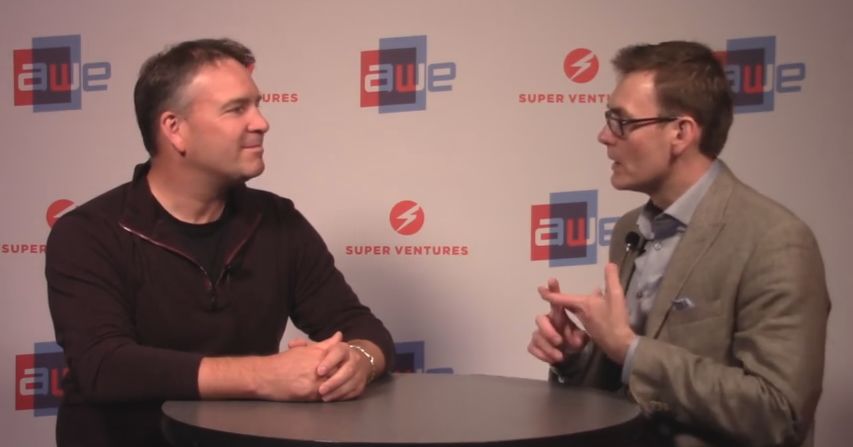
Ebbe Altberg discusses Project Sansar Mark Piszczor of Occipital at AWE, June 2nd

June 1st-2nd saw the 7th annual Augmented World Expo take place in Santa Clara, California. Billed as “the largest event dedicated to AR, VR and Wearable Technology”. Among the 200 speakers appearing at the event was one Ebbe Altberg, who sat down with Mark Piszczor of Occipital to chat about Project Sansar.

The interview, embedded below, doesn’t touch on anything significantly new for those of us who have been following the Sansar news. Time frames remain unchanged since the last Lab Chat event. The creator preview will open its doors to applicants in August; there have been “thousands” of applicants (and I’m still itching to know the ratio of Second life creator / users to non-SL creator / users in that number); public access so start around the end of 2016 / early 2017, etc. That said there were various points of interest for me.

Early on, we get a somewhat familiar discussion on the “social” approach being taken with Sansar, and the drive to (initially at least) address various markets where there is liable to be a real take-up in the use of VR. In this case, education and training are specifically mentioned at relative length.

At the 6;55 mark, while discussing Ready Player One, Ebbe touches on how Sansar is a platform on which many experiences put together by many different organisations, companies, groups and individuals can be hosted, some of which may be interconnected. This again got me wondering as to how much Sansar will be a white label environment for clients to use, and whether it is still planned to let those who wish use their own user authentication processes to control access to their Sansar experiences is still on the cards. This was initially mentioned way back in the 2015 VWBPE Q&A session with Ebbe, but hasn’t been remarked upon since.

Also in terms of interconnecting different experiences, it was interesting to hear the term “teleport amongst” experiences being used (07:12), rather than the more customary reference to experiences being “stitched together”. Whether this is indicative of whether movement between connected Sansar experiences might be somewhat analogous to moving between separate private islands in SL, or whether it was a slip of the tongue isn’t clear – so it will be interesting to see if “teleport” is used elsewhere when discussing Sansar.

From 08:30 onwards, there is a discussion of where Sansar might be in a year’s time. This again is interesting, as Ebbe’s reply suggests that while the Lab may well have a development roadmap for the platform, they are very open to building upon the feedback and lessons gained from their core users (or quite possibly “content partners”), rather than simply ploughing ahead with their own plans. Quite how this works in practice will have to be seen, but having an ear to users’ wants and needs is no bad thing.

All told, an interesting interview and well worth the 10 minutes required to watch it.
Lab Chat #3: transcript and audio

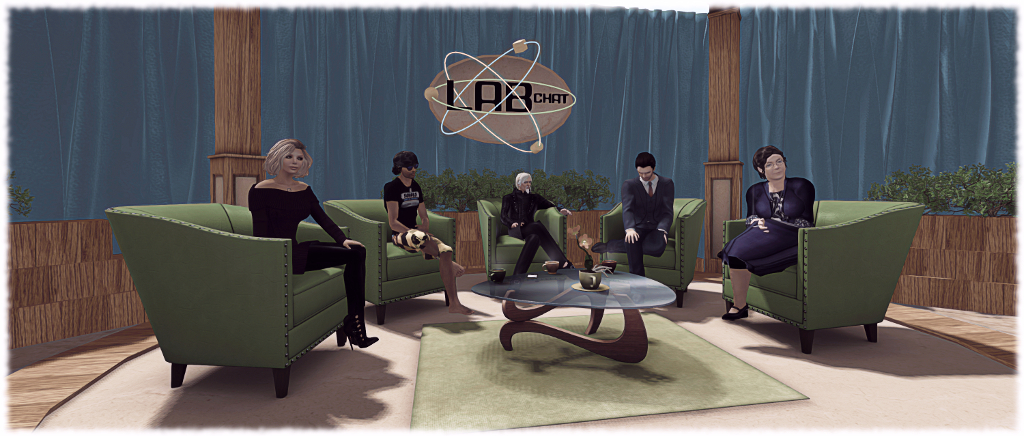
Lab Chat #3: Saffia, Troy, Oz, Ebbe and Jo

Friday, May 6th saw the third in the Lab Chat series take place in-world, featuring guests Oz Linden, the Director of Second Life Engineering, Troy Linden, a Senior Producer of Second Life and of course, Linden Lab CEO, Ebbe Altberg, in his alter-ego of Ebbe Linden.

The session focused on a mix of questions submitted to an official forum thread ahead of the event, and questions taken directly from the audience, and this transcripts offers a breakdown of the questions asked and answers given.

Please note that in places the audio presented has been edited to remove asides, repetition or removed inaudible elements, and so may differ in length and content to the official recordings made of the session. However, no attempt has been made to alter the content or context of the answers supplied by Ebbe, Oz and Troy.

For ease of reference, the session has been split into two parts, and the following Quick links will take readers to any specific topics of interest to them, and further topics can be navigated to by either returning to this page, or using the Quick Links summaries provided within the Bento / Second Life and Project Sansar pages.


An actual look inside Project Sansar

Project Sansar image via Linden Lab

The end of April was a busy time for the Lab, with Ebbe Altberg leading a team to both the  Collision 2016 tech conference (billed as the “anti-CES”) in New Orleans, which ran from April 26th through 28th, quickly followed by the 2016 Silicon Valley Virtual Reality (SVVR) conference, which took place at the San Jose, California, conference centre between April 27th and 29th.

At both events, Ebbe Altberg gave a presentation which included further images and some video shots from within Sansar, and Collision 2016 has now made these available for viewing within a recording of Ebbe’s presentation which can be found on YouTube, and is embedded below.

As the Collision event is more general tech than VR specific, the first part of the video is more about the potential of VR and the possible VR / AR marketplace in the future. A lot that is familiar to SL users is mentioned, such as the use of immersive spaces for social activities and the potential VR has in areas such as education, design, business, healthcare (the use of Second Life in helping PTSD sufferers is touched upon, something I covered back in June 2014).

For those wishing to cut to the chase, the Project Sansar discussion starts at the 8:18 point in the Collision video.

[05:52] The Sorbonne University and the Egyptian Ministry of Antiquities worked with Insight Digital to produce a 3D model of an ancient tomb based on digital photography and laser scanners. The initial 50 million polygon model, which the Lab were able to publish through Sansar as an optimised 40,000 polygon model visitors to the experience could visit and interact with and within
[09:52] The Sorbonne University and Insight Digital supplied a 50 million polygon model of an ancient Egyptian tomb created as a part of a project for the Egyptian Ministry of Antiquities. This was optimised as a 40,000 model in Project Sansar people can enter and explore
In brief, this part of the presentation:

  • Reveals the Lab is now employing around 75 people in RD on Project Sansar (High Fidelity, as a simple comparison, has around 25-30 staff)
  • Indicates the broad base of creators and “content partners” invited into the initial platform testing which started in August 2015 is revealed – such as the Sorbonne University / Insight Digital (see above)
  • We get to see both the editing environment and the runtime environment elements of Project Sansar (remembering that the actual editing / layout mode of Sansar is quite separate from the runtime environment where users actually engage with one another once experiences have been “published” to it)
Jason manipulates assets using the HTC Vive hand controllers within Sansar's edit mode whilst building the Mars scene seen in previous Sansat promotional shots
[11:17] Jason manipulates assets using the HTC Vive hand controllers within Sansar’s edit mode whilst building the Mars scene seen in previous Sansar promotional shots
  • Reiterates that in using the term “creator”, the Lab isn’t necessarily just referring to content creators as might be the case within SL. Rather the term also encompasses those who purchase original content within the platform and use it to create their scenes and spaces. It is ease-of-use for this broader class of creator that the Lab is currently addressing when it comes to ease-of-use within the platform.

I’m actually curious to know more about the edit mode / runtime split. For example, can an experience still be accessed by others while it is being edited, in the same way a WordPress (to use the Lab’s analogy) page can still be viewed and read by others? If so, what happens when an update for an experience is published?

The video show Project Sansar’s runtime environment commences at the 12:38 mark.

In particular, this reveals a number of locations – including the Mars scene, the Golden Gate seen previously in Project Sansar promo shots, and a camera trip into the ancient Egyptian tomb mentioned above.

The Sansar clips open with a reasonable-looking avatar walking across the office / excavation space
The Sansar clips open with a reasonable-looking avatar walking across a complex built around the Villa Ortli excavation in the Crimea – a model selected from on-line, or another joint project?

My own observations from these video clips are that:

  • Project Sansar potentially has a higher level of polish within the runtime environment than High Fidelity has thus far shown
  • In there appearance, Project Sansar avatars are at least as good as the more advanced avatars currently found within High Fidelity and certainly more immersively attractive than the more recent iterations of the Altspace VR avatars
  • It will be interesting to see how dynamic things like day / night cycles and weather are / will be handled be Project Sansar.
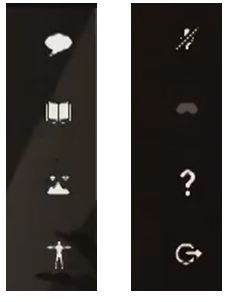
The UI icons in the video clips

The video includes some hints at the client UI – remember it is still very much a work-in-progress, so there are likely to be many changes.

As it stands, the buttons are ranged against the right side of the screen, in two groups of four, top and bottom, and shown on the right.

Some of these appear reasonably obvious: the landform / terraform tool and Avatar tool at the bottom of the first group of icons, and microphone, help and exit  / log-off options in the second group of four.

Doubtless the range of buttons and options available will increase  / grow more sophisticated as the UI continues to develop. The current set would appear to simply address the current level of capabilities within the platform at present.

The Lab is apparently still considering whether or not to make the video footage of Sansar more generally available. I’m tending to assume given the overall tone and presentation of the runtime footage, complete with music, that it was put together as a potential promo piece, rather than just a video to show at presentations. So hopefully it will make a broader appearance when the Lab judge the time to be right.

Project Sansar: applications open for “creator preview”

Project Sansar image via Linden Lab

On Tuesday, April 26th, Linden Lab announced the opening of applications for creators wishing to access their next generation virtual experiences platform, “Project Sansar”.

The press release on the announcement reads in part:

New Platform Enables User-Created Social VR Experiences

SAN FRANCISCO – April 26, 2016 – Linden Lab®, the creators of Second Life®, today announced that applications have opened for an upcoming “Creator Preview” for Project SansarTM, the new platform for user-created social VR experiences. Interested 3D content creators can now apply at ProjectSansar.com and accepted applicants will begin to receive invitations later this summer.

Slated for general availability at the end of 2016, Project Sansar will democratize virtual reality as a creative medium. It will empower people to easily create, share, and ultimately monetize their own interactive social experiences that can be enjoyed in VR with head-mounted displays like the Oculus Rift and HTC Vive, as well as via PCs and, later, mobile devices. The platform enables professional-level quality and performance with exceptional visual fidelity, 3D audio, and physics simulation, while also solving the complex engineering challenges that have previously limited creating and publishing social VR experiences to just sophisticated professionals.

While not entirely VR HMD centric, Project Sansar is being built to leverage the anticipated market for VR HMD-focused social and other experiences

It has been previously indicated by the Lab’s CEO, Ebbe Altberg that access to the new platform will initally be creator-focused, with priority given to those who have ideas / projects which can help Linden Lab further develop and enhance the platform in terms of its initial target audiences, and who are willing to give feedback and provide input to the Lab on exactly how the platform might be improved. This is very much reflected in the on-line application form, not only within its title, but also in the information being sought, focusing on potential market sector reach (e.g. education, commerce, design and architecture, fashion, games, media, health, etc.), and on tools used by applicants for content creation.

Those who are seeking a “sneak peek at Project Sansar will have to continue to wait; however the is an option within the creator sign-up for non-creators to subscribe to receive information updates on the platform by e-mail from the Lab.

Related Links

Additional hat-tip to Whirly Fizzle,

VWBPE 2016: Ebbe Altberg transcript with audio

Ebbe Atlberg, through his alter ego of Ebbe Linden, addresses the VWBPE conference

On Wednesday, March 9th 2016, Linden Lab CEO Ebbe Altberg appeared at the 2016 Virtual Worlds Best Practice in Education conference, where he gave a brief overview of matters pertaining to Second Life and Project Sansar over the course of the year since the last VWBPE conference, and to answer questions about either platform asked by the audience.

The following is a transcript of his session at VWBPE 2016, complete with audio extracts. Note that note all items are given in the order they are discussed in the video of the session. For ease of reference, I’ve split comments and questions between those specific to Second Life and those focused on Project Sansar. Also, where more than one question was asked on a specific topic, I’ve grouped the questions / responses together under a single topic.

The Summary

Click on the links below to go to the relevant section.

Opening Comments

Thank you  so much. Great to be here again; it’s an awesome event, I hope you’ve all have had great sessions and more sessions to come. I will just spend a little bit of time and just talk about what I am and what we here at Linden Lab are really excited about, and what we’re working on a little bit. Then as usual, very happy to spend most of the time actually talking to you with regards to your questions that you may have.

So, first of all, wow! What an incredible year it’s been. The virtual reality market that we’re sort-of been waiting for is actually in the process of happening. We’re now seeing incredible investments from a  very large number of companies, whether it’s hardware, software, platforms tools, that I’m sure many of you are very excited to get your hands on very soon.

We in the Lab have been playing a lot with the latest hardware that’s going to hit the consumer market soon, over the next few months, and doing a lot of work to integrate those into project Sansar, but there’s also work to get some integration of that into Second Life.

So we feel very fortunate to be having all this incredible experience, together with you all, of running Second Life. Having the opportunity to see what works and what doesn’t work, what works really well and what is not working at all, and what it takes to run a platform like Second Life. What makes creators successful, what makes businesses successful, because our primary goal here is to make creators of experiences as successful as they can possibly be, and share their success.

VWBPE 2016
VWBPE 2016

Second Life Overview

Second Life has made a lot of good strides over the last year since we last met. Performance is continually improving, and we have some more performance improvements in the pipeline to come out soon. Quality is improving, stability is improving, and we’ve also managed to roll out some nice improvements. New avatars, and you have the new, better web control or media on prim, that’s now a really modern browser technology, which hopefully will be really helpful for educators.

New Registration API

We also have a lot of interesting things coming in the pipeline. [An] improved registration API, so that it will be easier for institutions to bring on their customers or clients or students in a more pre-configured way: choosing what avatars they can select from, getting them set-up in the proper groups, and taking them through a whole custom on-board experience.

Back to index

Compliance Work

We’ve also done a huge amount of work in what seems boring but is very, very, important to us, and even though you might not realise it, very important to you all as well, which is around compliance, and making sure that all the things we do fiscally within the Second Life virtual economy, and what it takes for people to redeem to fiat currency, US dollars or whichever currency you prefer around the world. We’re doing a huge amount of work to improve all the tools and fraud controls, etc., to make sure we’re running a clean, tight ship where there’s no money laundering or anything of that sort.

We’ve gotten far enough that we’ll be able to soon improve the time it takes for people to redeem money, so we can do that in hopefully just a day or two for most people. We’ve blogged about that, so you might already know about that.

Back to index

The SL Team and Other Things Coming Up

So, I feel really good about the Second Life team. Just a few weeks ago we had the whole team together in Seattle. We keep switching spots; sometimes we do it in Boston and this time we did it near the offices in Seattle. And it’s a very tight group, they are very passionate about Second Life, with Oz heading-up on the engineering side, and just a great, tight crew who really just want the absolute best for Second Life and for you all. So I feel very good with what that team has been able to do over the last year, and what they’ll be able to do in the coming years.

Some cool things coming in addition to the registration API. We have a way for, institutions that have had interruptions of viewer updates when it wasn’t something they were completely prepared for can now sign-up to be on an EDU channel, where we can better manage viewer updates.

We’re working on an update to get the current Oculus viewer working with Second Life, and we’re also working on this Quick Graphics viewer (version 4.0.2.311103 a the time of writing), so that you can manage when people show up in your regions with way too much clothing or too heavy of an avatar and still get good frame rates within your regions if there are avatars that are too heavy.1 Those will all roll out over the next weeks and months.

Back to index

Continue reading “VWBPE 2016: Ebbe Altberg transcript with audio”

In the Press: a potted history of SL and a look at Sansar

Project Sansar screen shot (credit: Linden Lab)

Writing in Readwrite on March 2nd, Ryan Matthew Pierson looks at Linden Lab’s Project Sansar and the Future of Virtual Reality. It’s an interesting article in that Mr. Pierson is a journalist who likes to research his subject, rather than relying on cliché or the input of jaded pundits.

As such, what is presented is a brief, but fair potted history of Second Life, charting the highs and lows, and pointing out that while it can be “dark” it’s simply not all about the adult naughties and nasties. So it is that Mr. Pierson charts the highs and lows of Second Life, with input from someone who know it well:  Gary Wisniewski (Wiz Nordberg in SL) the founder of Treet.TV.

Starting with the rise in SL’s popularity in 2006/7, thanks to the attention of the media, the reader who might be unfamiliar with Second Life is given glimpses into the platform’s magic which are painted as effectively with words as they might be illustrated by an image:

You could travel quickly from island to island, experiencing a fantasy world filled with a lush forest one minute and a sprawling post-apocalyptic CyberPunk-style city the next. Just about everywhere you went, there were crowds of people taking in the sights, chatting about their experiences, or dancing the night away in one of Second Life’s many nightclubs.

He also touches on the broad appeal of the platform:

This appeal extended well beyond tech-savvy early adopters. Many residents found that you could do things in Second Life that transcended physical disadvantages. For example, someone bound to a wheelchair could dance the night away in Second Life’s nightclubs, or even fly through a mountain range like a superhero.

Ryan Matthew Pierson

The darker side of SL isn’t shirked, as noted, with Mr. Pierson pointing out the platform did suffer from a reputation for seediness – and that the Lab sought to try to address it as best they could through maturity ratings and safeguards, and without impinging unnecessarily on people’s freedom of choice.

From here, and via an all-too-brief mention of Relay for Life (when, oh when will journalists realise the sheer depths of human interest these is to be found within Second Life’s ability to support global fund-raising events in what is – when compared to the physical world costs involved in trying anything nearly so large – so utterly cost-effective? But I digress, as charity isn’t the focus of this article), the piece gently segues into an overview of Project Sansar.

In this, nothing exceptionally new is mentioned regarding the Lab’s new platform, although the parallels with the likes of WordPress and YouTube are avoided. The familiar comments on the VR tech support, the shift in revenue model away from land, and the desire to make it easer for “creators” all get the usual mention, as do the plans to make Sansar more broadly accessible to consumers:

Linden Lab also wants to make Project Sansar more cross-platform accessible. Where Second Life is largely tied to a desktop-only experience, Project Sansar’s users will be able to log in and enjoy the virtual world from various other platforms including mobile devices as well as HMDs.

It’s likely that SL users will find the Readwrite article frustrating for its lack of new information on Project Sansar. However, that more information isn’t provided stems not only from the fact that the Lab isn’t as yet ready to divulge more details – assuming they keep to their desired time scales, I’d expect this to start happening from about the middle of 2016 onwards – but from the fact that Mr. Pierson isn’t actually writing for Second Life users. He’s addressing the audience the Lab is primarily trying to reach: those ready to invest themselves in opportunities presented by the emerging wave of new VR technology.

That said, it’s fair to say the Readwrite piece isn’t perhaps as engaging as Sophie Charara’s recent piece in Wearable, but as an attempt to encapsulate both Second Life and Project Sansar, it’s a pretty good overview of the past and the present – and the Lab’s hoped-for future.