SL12B: Ebbe Altberg on Second Life & Sansar – transcript and video

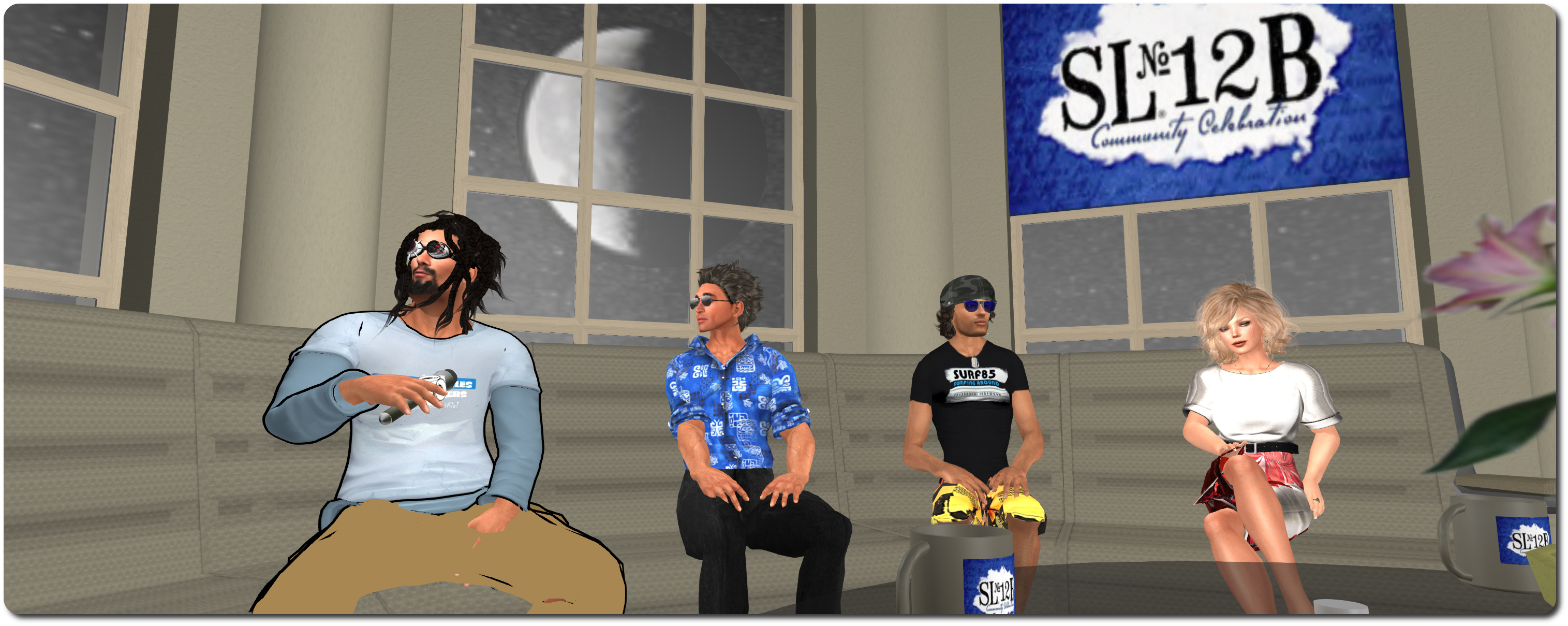
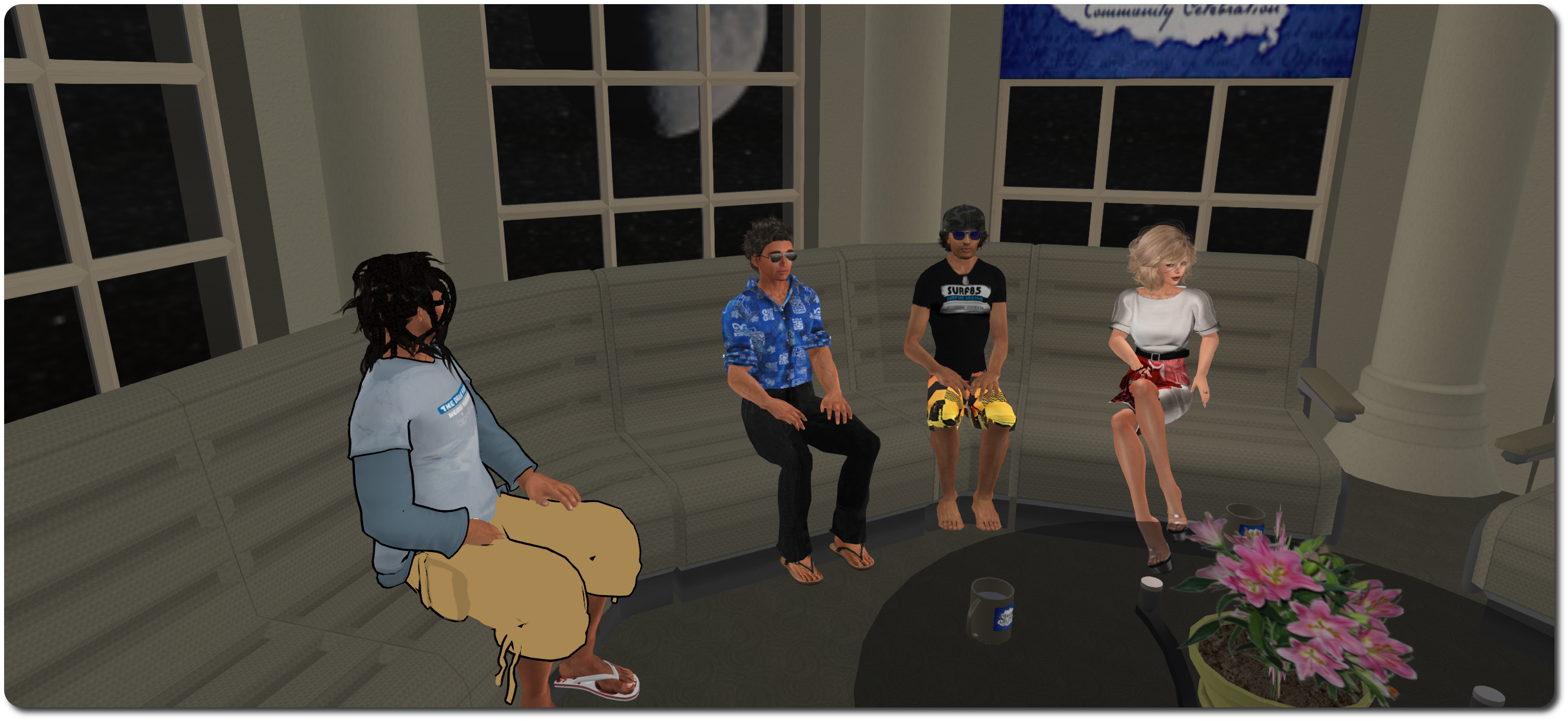
Ebbe and Saffia get ready for the discussion (Jo was off-line at this point)

On Friday, June 26th, Linden Lab CEO Ebbe Altberg faced questions from Saffia Widdershins, Jo Yardley and the audience in the last of the Meet the Lindens series sponsored by Prim Perfect.

The session lasted just over the hour, after initial teething problems in getting everything working, in which he addressed a wide range of question on both Second Life and Sansar, and offered-up some information of his own.

The following is a transcript of the event, based on a video by Chakat Northspring, which is embedded at the end of this article. My thanks, as always, to North. The official video will be available in due course via the Prim Perfect website.

Are there any things that have changed since you’ve been in charge that you are especially proud about?

[0:01:04] There’s a number of things. I think primarily it’s the relationship between the Lab and residents., I think is much better today. It was a little bit tense, I would say, the relationship, when I came on board; and it seems to be much more casual and fun and collaborative. And I think many of you have seen  more of us than you had for a while previously.

I’m also proud of the quality of the product. The performance, we’ve made lots of strides, the quality; [group] chat had lots of issues. So we’ve made a lot of progress on just making it a more stable product, a better performing product.

And I’m also proud of the focus we have at the Lab. When I came aboard, there were quite a few projects sprinkled about, and today I feel we have what I call four very strong focus areas with really good drive across each of them. So it feels like a healthier environment, not just between us and residents, but also amongst us Lindens, and a better quality product, and a better focused organisation. So I’m pleased with the progress.

Can you tell us what those four areas of concentration are?

[0:02:56] Obviously, continued to improve Second Life is something that we do. And you guys often hear from Oz and Danger on our progress there. We have Blocksworld; a fairly small team working on this neat little app for a younger audience to be able to build virtual experiences on the iPad. We have obviously a very huge investment in Project Sansar, our next generation experience platform, and we’ve worked really hard for over a year now, and we’ll start to get some external customers on-board in just a month or so. Just a few, but it’s great progress.

And the forth one, I would say, is compliance; making sure we run a tight ship when it comes to the linden dollar and who can cash out, and just running a tight ship when it comes to compliance … whether that’s fraud controls, identity controls – a number of things we need to do to make sure we and banks are comfortable with the business that takes place in Second Life.

So those are the four areas of focus.

The last thing you said about cashing out. You’ve said before that you want to speed that up. [do you have] any idea when this is going to happen, or how is the progress to that?

[0:04:39] The progress is good. We’ve now managed to automate a lot of things so that we can see what percentage we would be willing to pay out rapidly in an automated fashion. We’re still tuning the rules as to who we would trust to pay out; to make sure that we’re 100% certain that people who would be paid out should be paid out. And we continue to increase that percentage by continuing to dial the rules and make tweaks,

When we get to a significant enough percentage, then we should be able to start automating the process as well. not just the data saying we could, but we actually will pay out. I don’t have a date for exactly when we can turn that on; but it’s our goal for the vast majority of people that we have a trusted relationship with, to be able to pay within 24 hours or something.

I mean, there’s obviously external processes a well, that we’re not 100% in control of; but on our end, when someone clicks the button that says, “I want to be paid out”, we hope to, within 24 hours, to be able to automatically say, “start the process”, and then like I say, there’s actually some external dependencies for how quickly that actually takes place.

I think it’s interesting that you’ve given on compliance an equal status with the other three projects.

[0:06:14] Well, I wouldn’t say they’re all equal; but it’s a focus area, and it’s very important for us to run a trusted, large-scale business, to make sure that fraud cannot take place. For the sake of us as a business, as well as for the sake of you not having bad things go on. So it is an important aspect.

Danger Linden was actually saying that it’s one of Linden Lab’s advantages coming into Sansar, because all the new virtual worlds that are planning to come on-line, and you’ve got to get this right, and you have a head start.

Ebbe-6_001[0:06:59] Yeah, we are pretty much alone in having had a virtual currency with a floating exchange with cash-out and all these capabilities. There’s no-one else like it. so yes, we have a pretty significant leg-up compared to others if your intent is to have a virtual economy as we do. I mean, there are other business models that one could apply, but the way we are doing it, there’s no-one else really doing it as well as we do. And so that’s something we’ll certainly leverage; both operational experience and [the] technology, as we move forward with Sansar.

Second Life still gets some negative feedback in the media, although it seems like it’s become a lot less recently … but which kind of negative feedback do you pick-up [on], both in the media and form people in second Life themselves, that annoys you the most.

[0:08:15] Well, it’s not that much that annoys me … I’ve only had the opportunity to hear negativity for about a year … but I hear very little of it. whomever I talk to, it’s mostly … surprise that it’s still around, or more neutral. It’s very rarely that I’ll run into people that start off with the negative. So that’s a very small percentage of the population. Usually the negative people tend to be quite loud, but it’s not something I stress about.

I guess my biggest annoyance is people intolerance for various types of content. and when you look at the content in the real world, and people’s tolerance for that content in the real world. Then suddenly, when it’s in a virtual space, then it’s, “Oh my God!” Then there’s like a different level of acceptance for all kinds of content for some reason.

And that annoys me. So whatever the subject matter is, I can always draw a parallel to how it’s always “so much worse”, or it has just as much interesting stuff going on in the real world as in Second Life, whether it’s art, whether it’s sex, whether it’s whatever it is, all of this stuff is all around us in the real world, so why would it not be completely reasonable and acceptable to also have it in a virtual world. That’s maybe the most annoying part; when people don’t get that.

I know that your family have come into Second Life as well, and you actually have a family home here in Second Life and have actually had that for some time before you became CEO. So presumably, they get Second Life as well. But when you talk to friends … when they’re new to it, how do you explain what your job is?

[0:10:31] Well, it sort-of depends a little bit on the context of whom I’m trying to explaining it to; and it also really depends on their experience with various things. Bit generic when I explain that we’re trying to create a three-dimensional canvas that users can chose how to fill it, and how to populate it with what type of experiences, and that we want to create as much freedom as possible to allow people to create as much stuff as they can imagine.

So, kind-of suggesting that in something like Second Life, you can be whatever you want and do whatever you want and create whatever you want, as long as it’s legal and as long as it’s somewhat appropriate for the rest of us.

But then you can go into the incredible breadth of things that are really already working so well in Second Life; whether it’s education, health, art, role-playing. There’s almost as much variety of hobbies and interests and creations and experiences in something like Second Life like people can enjoy in their real lives.

So yeah, sometimes it’s tricky because it’s so broad. It’s so many different things to so many different people. So usually in a conversation, you usually have to figure-out what is of interest to the other person and figure-out how to relate to them with subject matter that they can get into or understand. And that’s part of the challenge of trying to explain something that’s so broad, because it’s obviously easier to explain a product that is narrow in its application or focus. So it’s usually a bit of dialogue that usually makes it easier than just a simple statement; it’s hard to think of a simply statement that sort-of captures it all for everybody.

Have you had a chance to Look around SL12B yet?

[0:12:50] I was around, I think it was two days ago. I was probably in there about half an hour or so; so I didn’t get too deep into too many things. but I really enjoyed some techno music over in the corner somewhere for a while. saw some fascinating art and creations, all kinds of interesting music, but not really enough time to have a chance to see all of it.
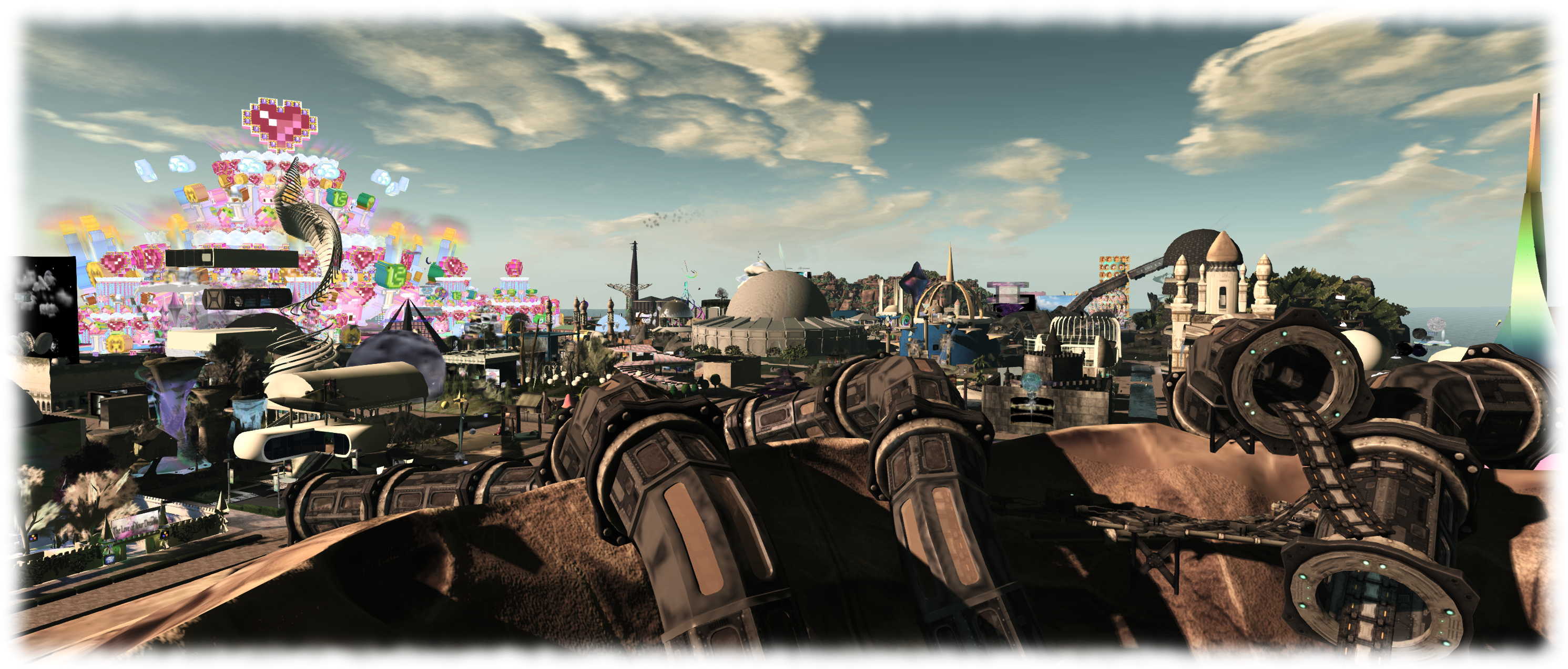
Many Lab staffers have been exploring SL12B and enjoying themselves

Continue reading “SL12B: Ebbe Altberg on Second Life & Sansar – transcript and video”
Sansar: news and updates from the media and from the Lab

Danger Linden (centre left) and Troy Linden (centre right) discuss Second Life and Project Sansar with Draxtor Despres and Saffia Widdershins at SL12B

Linden Lab’s next generation virtual worlds platform, code-named Project Sansar made the news in Second Life and in the media on Thursday, June 25th.

In the media, Bernadette Tansley, writing in Xconomy covers how Second Life Creator Linden Lab Prepares To Test Parallel VR Universe, delving into the forthcoming closed alpha testing for the new platform, which we know to be code-named Sansar.

In terms of Sansar news, the article specifies:

  • It can already run at 75 frames per second
  • The Lab plans to accelerate the platform to 90 frames per second to sync with specifications expected for the Oculus Rift and other headsets
  • The initial closed alpha, involving a limited number of creators experienced in the use of Maya, will commence in July 2015
  • If all goes according to plan, the programme will gradually be expanded to a more public beta testing phase around the first half of 2016
  • A “version 1.0” of the platform might be ready by the end of 2016.

Outside of LL and Sansar, the article is interesting in that it suggests Cloud Party, which was acquired by Yahoo in 2014, is still in the running to develop a virtual world that can be operated with the upcoming new range of VR headsets, etc.,  alongside the Lab, Philip Rosedale’s High Fidelity and new start-up AltspaceVR.

You can read the entire piece by following the Xconomy link given above.

Drax, Danger Linden, Troy Linden and Saffia at the Meet the Lindens at SL12B

During an interview with Danger Linden, Sr. Director, Product, Virtual Worlds and Troy Linden, Senior Producer, held as a part of the SL12B Meet the Lindens series of conversations, the subject matter inevitably came around to Project Sansar, and the following tidbits of information were given.

Further confirmations of Known Basics

  • SL users will be able to use there SL identities with Project Sansar if they wish
  • Linden dollars will be the transaction currency / tokens on Project Sansar
  • Both voice and text will be supported in Sansar for chatting / communications.

However, neither of the above mean you’ll be able to teleport directly from SL to Sansar or vice-versa; both are separate entities.

“Master” Accounts

Users will be able to have a “master account”, under which they can then have multiple avatar accounts they can use.

  • The “master account” will be known only to the user and Linden Lab, and will use an e-mail address as the main form of authentication
  • Users can create multiple avatar accounts (or “persona names” as Danger Linden referred to them) under this “master” account, which they can use to access Sansar, and will be known to other users only by the avatar account they are using
  • Inventory and account balances will apparently be associated with the “master account”, allowing them to be shared between the avatar accounts under the master account
  • It is not clear what format avatar / persona names will take, and whether it will be a first name, last name format.

(The idea of having a “master account” with this kind of flexibility has long been on users’ wish lists for Second Life for a long time – see JIRA SVC-6212 and my own article from 2011 on the subject. As such, this is liable to be a popular move among those SL users interested in trying Second Life.)

Anonymity and Trust

Sansar users will be able to have as much anonymity as they wish. However, the more information that users provide to Linden Lab – be it wallet identity, a verified e-mail address or payment information – the more capabilities they’ll have in-world.

The idea here is to try to address the issue of griefing while still maintaining a relatively low barrier to entry – obviously, the easier it is to access the platform, the easier it is for muppets to run amok. So, the idea is that as more information is provided, the greater the level of trust established between user and Lab, allowing people to “do more” in-world and participate more. However, the exact relationship between platform capabilities awarded, and the information users will be asked to provide in order to access them, is still being determined.

Obviously, the content of the information you provide to the Lab remains private and confidential (i.e. if you supply a verified e-mail address, that e-mail address is not revealed to any other users). However, if a verified e-mail is required to, say, publish a Sansar “world”, then the fact that you have published that world will tell other users you have a verified e-mail with the Lab.

Mesh, Terrain and Building Tools

  • Sansar content will obviously be focused on mesh – but not necessarily exclusively mesh
  • The terrain will be voxels
  • Subject to further confirmation, it should be possible to also build in-world objects using voxels
  • Maya is the tool that is being used purely to assist with testing when the closed alpha commences. It will not be the only tool, and it will not be the sole tool for content creation (see Ebbe Altberg’s comments on alpha access and tools from the Virtual Worlds Best Practice in Education, March 2015)
  • A goal for Project Sansar is for people to be able to build in-world and to share in collaborative building
  • Sansar will include a full “professional” (in terms of its capabilities not in the need for people to have to be professional animators in order to use it) animation system, which will be based on Havoc animations (Havoc being the SL physical system),  overlaid with additional capabilities  / code directly from the Lab
  • All objects in Sansar will be fully scriptable and animated; it is not clear whether on-the-fly modifications to mesh items in-world will be possible
  • It is acknowledged that content creation tools can be a barrier to adoption / use; it is therefore a goal with Sansar to “make it easier to make things in Sansar than it is in Second Life”

Continue reading “Sansar: news and updates from the media and from the Lab”

Ebbe Altberg talks Second Life, Sansar and VR to Bloomberg

A promotional image for Project SANSAR

On June 15th 2015, Ebbe Altberg participated in a Bloomberg Advantage podcast with hosts Cory Johnson and Carol Massar, discussing what is going on with Linden Lab in the run-up to the Second Life 12th anniversary celebrations.

The interview, which is some eight minutes long, unsurprisingly focused more on VR and its pcoming consumer focused headsets, together withe the Lab’s Next Generation Platform (codenamed Sansar) more than it did on Second Life, but what is said makes for interesting listening.

I’ve embedded an MP3 of the interview below, together with a transcript of the core discussion for those who prefer to read than listen. The transcript picks -up from the 28 second point into the interview, following general introductions. Breaks in the transcript, indicated by “…” are where the conversation includes asides or comments outside of immediate interest.


Cory Johnson (CJ): I want to talk about what’s going on with one of the kings of virtual reality, Second Life.

Ebbe Altberg (EA): Yeah. Second Life is still doing very well. It’s this month having its 12th birthday…

Carol Massar (CM): OK for those who might not know what Second Life is, those from the East Coast (laughter) I’m raising my hand for everyone on radio. Just for other folks out there who might not know.

Bloomberg's Carol Massar and Cory Johnson talk VR, SL and Sansar with Ebbe Altberg
Bloomberg’s Carol Massar and Cory Johnson talk VR, SL and Sansar with Ebbe Altberg

EA: So, Second Life is a virtual world that we created, but all the content and all the experiences in it are created by the users. so it’s a little like the real world … So you have a huge range of experiences in their ranging from role-playing to education, to health to art, and music. Just like in real life, people like to have all sorts of things in their world, and users have created all these things inside of Second Life.

And there’s a virtual economy where users can buy and sell digital goods and services to each other, and last year alone, creators of content and experiences in Second Life cashed out $60 million dollars. So a lot of people make a living creating and playing in Second Life.

CM: Where do you want to take it?

EA: We’re like the pioneers in this area, and the world around us is starting to catch-up a little bit …

CM: Competition out there?

EA: Yeah, a little bit of competition, but also with all these virtual reality headsets, these HMDs from Oculus, etc., is going to allow us and many others to take it to the next level. So we’re really excited about what’s happening right now, and we’re been hard at work for well over a year, investing heavily in a new platform  from the ground up that will take advantage of virtual reality hardware as it comes out later this year and early next year.  So we want to make sure we remain in a leading position when it comes to virtual reality experiences.

CJ: Well let’s talk about this a little bit. So Oculus sort-of has mind share, at least. When people talk about virtual reality now, then tend to think of these goggle-like experiences from Oculus. [But] there’s been academic work, particularly out of Stanford, suggesting that game-play might not be the thing; that it’s so immersive that it’s exhausting. That people can sit in front of their Xbox or PlayStation for 4, 6, or eight hours, but that you can’t do that with Oculus. What do you think?

EA: I think you will be able to. Part of why people say that is because the quality quality of the experience hasn’t quite got there yet.

CJ: So you’re looking at an image where your mind and your eye have to do so much more work, that it’s physically exhausting.

EA: No … when you see the latest generation of these things coming out now, it is not that exhausting any more; it’s actually quite relaxing.  You put these things on, an you’re wherever you want to be; you can be anybody you want to be and anywhere you want to be. And it’s it’s going to be comfortable …

CJ: The thing about when you put an Oculus goggles set on … first of all, the software right now is kind-of boring. The stuff that I’ve seen isn’t really gripping. It’s like, “Oh, this is cool. Imagine what you could do with it…”

EA: Did you try the Crescent Bay and the demos that came with it?

CJ: I haven’t done that.

EA: OK, so [with] the latest generation … you’ll forget about the hardware, you’ll forget about these pixels in front of you. You’re just there.

CJ: What is the experience you’re experiencing with that?

EA:  They’re still passive; they’re still basically playing things for you, that you watched. And you will have video-like experiences, but in 360; so you’re inside the video, rather than looking at the video, all the way to like what we do, which is social interaction and doing things like we’re doing right now in the studio, just hanging-out, meeting with people.

CM: Well, let me ask you Ebbe, I’ve been at Caterpillar and I’ve done their 3D world, or virtual reality world, where you pretend you’re in one of their big pieces of equipment to see how it worked and if the tools were in the right place. That’s my experience with it.  what about in a practical world? Are there applications that you guys are looking at?

A part of the interactive learning environment operated by Wendy Keeney-Kennicutt as part of the Texas A&M chemistry studies in SL
A part of the interactive learning environment operated by Wendy Keeney-Kennicutt as part of the Texas A&M chemistry studies in SL, and referred to in the interview (read more here)

EA: Absolutely, and they’re happening already today. Texas A&M is teaching chemistry in Second Life, and there are a lot of educational opportunities to teach …

CJ: How so? Is it, “pour this file into this beaker, but if it blows up, you’ll blow somebody up”? Or is it, you’re seeing the DNA or molecules?

EA: It’s a combination of actually doing lab experiments and pouring liquids and seeing what happens, as well as being able to interact with molecules, and you can sit on them, and you can do anything you want. So the ability to visualise information is way more powerful than reading it from a text book or watching it from a video.

CM: Is that potentially a big market there for you guys? Or Healthcare? We’ve just briefly toured around Seagull, and they’ve got a whole idea about what you’ve just called about; virtual reality and doing surgery, and having virtual reality to help a surgeon in that process.

EA: Yeah, it can can be for training, or it can help people with both mental and physical disabilities of all kinds. In Second Life already we have this older woman who has Parkinson’s; and because of Second Life she can run around, swim, fly, and exercise her brain. And because of that, she’s found that she has an easier way of moving in real life. So it can have a lot of really powerful impact on treatment or all kinds of phobias. I mean, right now here in our Lab, you can be on top of the golden Gate bridge and just get a sense of height …

In the interview, Ebbe Altberg indicates that one of the test VR experiences the Lab has developed for Project Sansar puts people on top of the Golden Gate bridge in San Francisco (view via wdievisionpans.com)
In the interview, Ebbe Altberg indicates that one of the test VR experiences the Lab has developed for Project Sansar puts people on top of the Golden Gate bridge in San Francisco (note: the above is not from Sansar, it is an image courtesy of wdievisionpans.com)

CJ: So, specifically, how do you manage the game play of Second Life? If you were to describe something that is the “common” Second Life experience now, and then what it would be like in this more augmented, 3D world of Oculus or whatever?

EA: Well, it’s taking immersion to a whole other level, where the brain starts not being able to tell the difference between what’s virtual and what’s real. And we take people through experiences in this next generation platform we’re working on – we’re calling it “Project Sansar” right now, it doesn’t have a final name. But you have people that are afraid of heights, for example, just getting really freaked out by being in the virtual space.

For example, Jeremy Bailenson of [the Virtual Human Interaction Lab at] Stanford … When he removes the floor underneath you in his Lab and tells you to walk this plank over this abyss, 30% of the people doing that in his lab cannot cannot walk the plank, it feels that real.

CM: I was thinking about the rides in Disney World or whatever; they can use this stuff.

EA: Oh yeah, they will!

CM: Cool stuff!

At his point the interview quickly wound down with the end of the podcast.

Again, not much is given away about the Lab’s Next generation Platform, and little is said in detail about Second Life. However, both Nassar and Johnson exhibit genuine interest in the subject of virtual environments and virtual reality, and to their credit don’t fall into the clichéd trap we’re all (or most of us at least) are so tired of hearing.

What is interesting to me is the the framing of the commentary around Sansar and the Golden Gate demonstration. This suggests that the Lab is creating something where the content potentially has a far higher level of fidelity than can perhaps be achieved with Second Life when placed within the immersive context of something like the Oculus Rift.

The message that Linden Lab is attempting to position itself as a major player in the emerging VR market does seem to be getting out. A recent report in Investor’s Business Daily, which estimates the potential market for VR / AR devices, etc., could hit US $62 billion by 2025, lists Linden Lab alongside of Valve, Magic Leap, Next VR, Jaunt VR and others as one of the private companies looking to carve itself a share of that market.

Ebbe Altberg: “The Future of VR is User-Created” (a look at SL + Sansar from the VR perspective)

Now into its second year, the Silicon Valley Virtual Reality (SVVR) Conference opened on Monday, May 18th. Among the presentations and panel discussions that marked the day’s events was a 20 minute piece by Linden Lab CEO Ebbe Altberg, intriguingly entitled The Future of VR is User Created.

Ebbe Altberg: address the 2015 SVVR audience on May 18th, 2015

The presentation can be found in this official SVVR video, starting at the 39:00 mark. It was also recorded by Ruthalas Menovich, whose video I have taken the liberty of embedding below. Timestamps in the summary that follows in this article refer to Ruthalas’ video.

Those who may have been hoping to gain more of an insight into the Lab’s Next Generation Platform (aka Project SANSAR) will perhaps be disappointed by this presentation. As the title suggests, it isn’t so much focused on the Lab’s NGP, but rather on user generated content (UGC).

Thus, it forms something of an exploration of the potential of UGC within VR environments, as seen through the focusing lens of Second Life, and what Second Life has taught the Lab about some of the potential constraints posed by both supporting UGC and Second Life itself, which the Lab are now seeking to address. In doing so, it also touches upon some of the broader challenges facing platform providers as well, particularly in areas such as the state of VR technology itself, issues of monetisation for users, etc.

I’ll likely have some comments of my own on SANSAR in an upcoming article. For now however, I’m restricting this piece to a summary of Mr. Altberg’s presentation, with timestamps to the relevant points in Ruthalas’ video for those wishing to listen to them in full.

00:31 – 02:28: Democratising Content

The premise here is that the power of VR will be in democratising content – making VR such that those who wish to can create and share content among friends and audiences; not just necessarily in having it fed to consumers by high-end organisations with considerable technical skills.

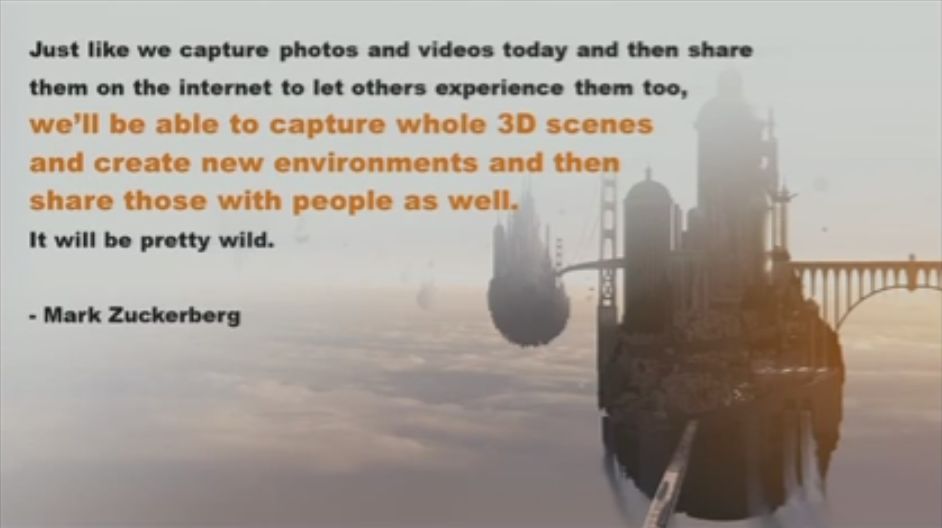
As a demonstration of this, he quotes Mark Zuckerberg, and points to the idea that just as self-expression is a natural part of our physical lives – how we decorate our homes, the clothes we wear, the interests we pursue – so too is it important for VR to allow us similar levels of self expression, such as through the freedom to create the environments we enjoy. In support of this view, he also points to the enormous popularity of sites on the Internet which today enable us to express ourselves through the content we crate, be it video, photography, the written word, or other mediums.

Mark Zuckerberg on VR's potential, quoted by Ebbe Altberg at SVVR
Mark Zuckerberg on VR’s potential, quoted by Ebbe Altberg at SVVR

02:28 – 14:30: UGC in Second Life and the challenges within SL

The focus moves on to Second Life and the challenges faced by anyone looking to enter the immersive VR environment with UGC.

Here he covers the rich diversity of user-generated content, which not only covers a huge range of interests and activities – social, educational, training, healthcare, business, entertainment, etc., and fulfils a massive variety of needs – homes, fashion, hobbies, landscaping, and so on -, but which is extraordinarily successful for both the company operating the platform and those providing the in-world content and services. In this he again cites the fact that in 2014, creators and providers redeemed some US $60 million from Second Life. The varying business models and their limitations – such as land – are mentioned.

The Lab’s work on making SL compatible with the Oculus Rift headset is touched upon, and a fair caveat is given on the aspect of performance. Ebbe notes that the work has to date really been more a useful tool for demonstrating to creators the difference between witnessing their creations on-screen and being immersed within them.

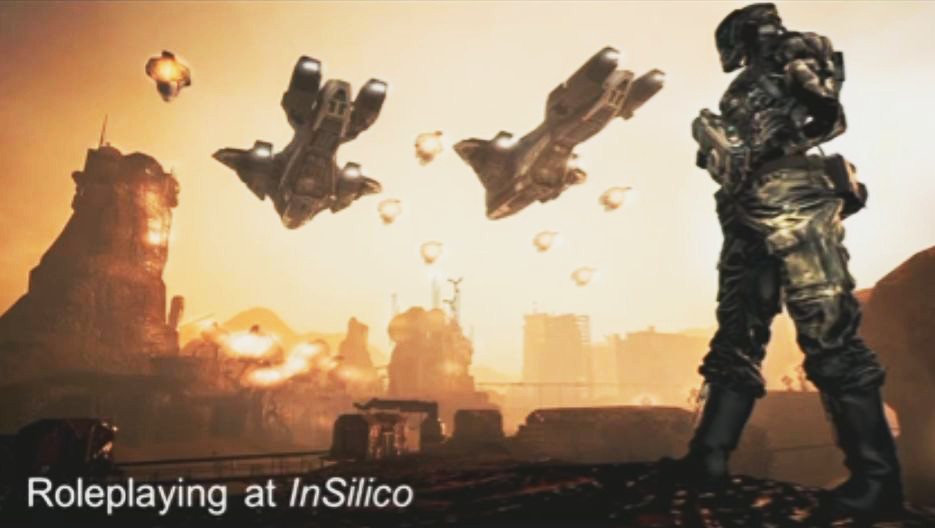
The InSilico RPG was mentioned to help illustrate the wide variety of SL content
The InSilico RPG was mentioned to help illustrate the wide variety of SL UGC

The limiting factors of Second Life are also discussed. Again, the land revenue model and its limitations (including scalability) are mentioned, as are the limits of region concurrency numbers and the challenges of trying to hold really large-scale gatherings in-world. The fact that user-generated content can itself be a problem is also mentioned; that users don’t necessarily know how to properly optimise their content to be efficient in terms of rendering and running, so the Lab will need to find a way to optimise that content.

Broader challenges in presenting an environment which allows everything that Second Life already does are also touched upon – such as issues of compliance and control given what are collectively vary large amounts of money flowing through the platform (with a GDP of half a billion US $ a year) supported through a floating exchange used to convert real-world currency into game tokens and back again, in order to ensure money laundering, etc., isn’t an issue.

Ease of use is also touch upon; not just in terms of SL’s own notorious learning curve, but also in the fact that VR itself is still very much a fluid environment in terms of technology and the devices which might be used within it – controllers, headsets, peripherals, etc – It simply isn’t clear (outside of head mounted displayed themselves) as to exactly what will come into commonplace use and what, out of all that is being suggested, developed, trialled or hyped, will fall by the wayside.

Continue reading “Ebbe Altberg: “The Future of VR is User-Created” (a look at SL + Sansar from the VR perspective)”

Lab confirms: Sansar is the new virtual platform’s interim name

LL logoOn May 3rd, I posted about the speculation circulating concerning two trademarks the Lab registered in April 2015 for “SANSAR” (US serial no 86593259) and “Project Sansar” (US Serial no 86593254), and whether there might be related to the Lab’s Next Generation Platform for Virtual Experiences.

At the time I indicated that I’d already approached the Lab on the matter, but has not received any feedback, I also pointed out that in October 2014, the Lab registered the domain name “projectsansar.com”.

The Lab have now responded, both directly to myself, and via Twitter.

In is e-mail I received on Tuesday, May 5th, Peter Gray, the Lab’s Director of Global communications said:

Hi Inara,

Project Sansar is the internal code name we’ve been using for the new platform, and we do plan to use that name externally in its early stages (like the invite-only alpha we begin this summer). However, this is just the project name, and we anticipate changing it prior to launching the platform to everyone.

best,
Peter

Shortly after I received the e-mail, the Lab also tweeted:

Confirmation of NGP's interim name via a Tweet and an e-mail
Confirmation of NGP’s interim name via a Tweet and an e-mail

That the name might be more an interim measure than a final operating name seemed to be indicated by the fact the domain name registration took place in October 2014, around the time the Lab was starting to indicate they had an internal name for the project. However, speculation as to the final name was understandable, given the trademarks were filed in April 2015 – although this obviously also converges with the Lab’s plans for a closed alpha to start-up later in the year, and so also fits with the name being the codename for the product.

I do still have some questions on the matter with the Lab; should I gain further replies, I’ll of course publish them here.

Is Sansar the name of the Lab’s new virtual experiences platform?

LL logoFor the last several days, speculation has been circulating on whether the name SANSAR might be the name of the Lab’s new next generation platform for  virtual experiences.

Speculation first came via a post made to the SL Universe forums, and has since appeared on both the Profile feeds and forums, relating to trademarks filed by the Lab on April 10th, 2015, namely:

In addition, in October 2014, Ascio Technologies, Inc., filed a domain name registration for projectsansar.com listing Linden Research as the Domain Administrator.

As has already been indicated in some of the responses to the forum posts referring to the trademarks, Sansara was one of the early names considered for Second life (being derived from Samsāra, which occurs in both Buddhism and Hinduism, and, perhaps more particularly where SL is concerned, was used by Hermann Hesse in his 1922 novel Siddhartha as a reference to the “world of illusion”), and currently lives on as the name of SL ‘s oldest and largest mainland continent. Whether “SANSAR” is a play on this is unclear – it might just as easily be an acronym.

Within Second Life, Sansra refers to the oldest and largest mainland continent. The word was also considered as one of the possible names for SL back when the Lab was first working on things
Within Second Life, Sansra refers to the oldest and largest mainland continent. The word was also considered as one of the possible names for SL back when the Lab was first working on things. whether “SANSAR” as used in the the new trademarks filed by LL is a play on this is unclear

The description of both trademarks is identical, and for those preferring to read it in a single pass rather than via the filings with the US Trademark office, it can be found on the Legal Force website, from which I’m quoting below:

Entertainment software, namely, software that is used for providing multi-player access to an on-line game environment; computer game software; virtual reality game software; computer graphics software; software that is used for providing multi-user access to an online 3D virtual environment; computer 3D virtual environment software, namely, software for use in creating, manipulating and participating in 3D virtual environments.

Advertising and marketing services, namely, developing and distributing electronic marketing materials.

Online financial services, namely, offering a fictional-dollar-denominated credit card to charge online purchases.

Communication services in the nature of text messaging and electronic mail services used in playing on-line computer games; communication services in the nature of text messaging and electronic mail services used in an online virtual environment.

Entertainment services, namely, providing an on-line computer game by means of communications networks; entertainment services in the nature of providing an on-line multi-player electronic computer game; entertainment services, namely, providing an on-line computer game that may be accessed by means of communications networks.

Computer services, namely, hosting an on-line 3D virtual environment featuring a wide variety of user-defined subject matter and hosting an on-line 3D virtual environment featuring a wide variety of user-defined subject matter that may be accessed by means of communications networks; design and development of multimedia and three dimensional virtual environment software.

Most of this reads pretty much as description for Second Life – so the applicability for a new virtual experiences platform is fairly obvious, and hence the speculation that is circulating.

However, what really does pique interest in this description  – beyond whether or not it pertains to the Lab’s new platform – is not the description of the environment, but the description of “online financial services”. The Lab has already indicated that Linden Dollars would be supported on the new platform, however, the description of a fictional-dollar-denominated credit card to charge online purchases suggests a new mechanism by which good and services within the new platform can be purchased, and by which the Lab might generate revenue.

Whether the name reflects the actual name for the Lab’s new virtual experiences platform or purely an interim project name (or even both, as may be the case given the two trademarks), is unclear. Sansar itself is a popular name for organisations related to the Asian continent (including SANSAR, the South Asian Network Supporting Awareness and Research based in Canada), so brand recognition, if this is to be the name, might be interesting in some quarters.

I approached Linden Lab for a comment on the matter, but have yet to receive a reply. Should one be forthcoming, I’ll update this article.

With thanks also to Ziki Questi