Space Sunday: the last man on the Moon

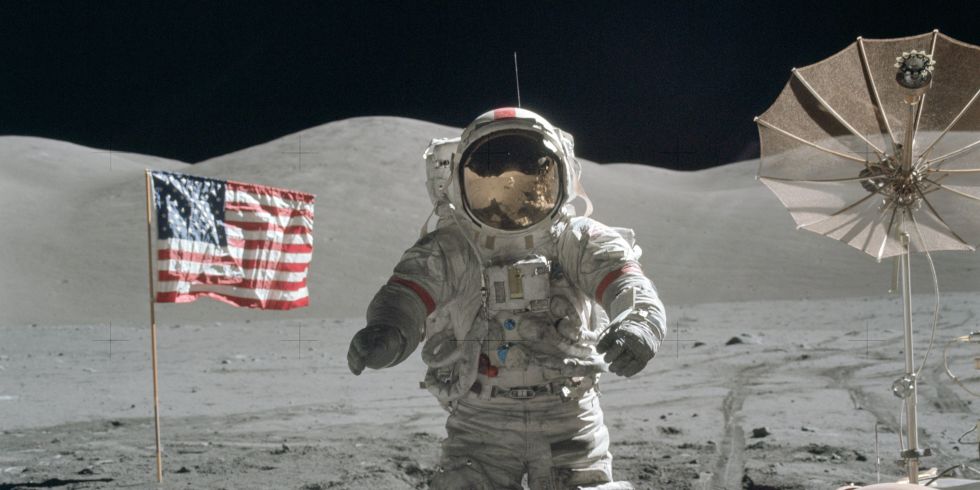
Eugene Andrew "Gene" Cernan, Commander, Apollo 17, in the Taurus-Littrow valley, December 1972
Eugene Andrew “Gene” Cernan, Commander, Apollo 17, in the Taurus-Littrow valley, December 1972. Credit: Harrison Schmitt / NASA via Getty / AFP

Eugene Andrew “Gene” Cernan, Captain, United States Navy (retired) and former NASA astronaut, passed away on Monday, January 16th 2017 at the age of 82. The commander of Apollo 17, he was – and currently remains – the last man to walk on the surface of the Moon, in what was arguably the most significant of the Apollo lunar missions.

Born in Chicago, Illinois in March, 1934, he attended Purdue University, Indiana, where he gained a Bachelor of Science degree in Electrical Engineering in 1956. While at the university. he took a commission as an Ensign in the U.S. Naval Reserve Officers Training Corps. Following his graduation, he attended U.S. Naval Flight Training, qualifying as an attack pilot, and went on to log more than 4,000 flying hours in jet aircraft and completed over 200 aircraft carrier landings.

In 1963, Cernan completed his education under the auspices of the US Navy, obtaining a Master of Science degree in Aeronautical Engineering from the  U.S. Naval Postgraduate School. Later that same year, he was selected by NASA as a part of their third intake of Astronaut Candidates, and participated in both the Gemini and Apollo programmes.

His first flight into space, aboard Gemini 9A started with a tragedy. The original Gemini 9 flight had been scheduled for Elliot See and Charlie Bassett. However, when they were unfortunately killed when their NASA aircraft crashed at the end of February 1966, the mission was re-rostered as Gemini 9A, and Cernan and his flight partner, Thomas Stafford, were promoted from back-up to prime crew.

Gemini 9A was to prove a mission plagued with misfortune. The first attempt to launch the mission, in May 1966 had to be scrubbed when the uncrewed Agena Target Vehicle Gemini 9A would rendezvous and dock with once in orbit  was lost not long after launch. This required a delay while a second Agena was prepared for flight, being launched on June 1st, 1966. However, once in orbit, telemetry from the vehicle suggested a launch shroud had not been correctly jettisoned.

On approaching the Agena following their launch on June 3rd, Stafford and Cernan confirmed the sections of the shroud, although open, had failed to detach, leaving the vehicle looking – in Stafford’s words – “Like an angry alligator out here rotating around”. He and Cernan indicated they were willing to carefully approach the Agena and try to nudge the shroud elements clear of the docking adapter, but mission control nixed the idea, fearing the Gemini vehicle might be damaged in the process. Instead, the crew rehearsed docking runs with the target vehicle and tested rendezvous abort procedures.

The "angry alligator" of the Agena target vehicle with launch shroud elements still attached, as seen from Gemini 9A on June 3rd, 1996. The nose of the Gemini vehicle can be seen at the top of the image, and the craft were some 20.3 metres (66ft) apart
The “angry alligator” of the Agena target vehicle with launch shroud elements still attached, as seen from Gemini 9A on June 3rd, 1996. The nose of the Gemini vehicle can be seen at the top of the image, and the craft were some 20.3 metres (66ft) apart. Credit: NASA

On the third day of the flight, Cernan became the third man (and America’s second) to walk in space. However, this part of the mission also proved troublesome. The Gemini spacesuits were not water-cooled, and had to be “inflated” prior to egressing the vehicle. Cernan found the latter made the suit almost completely inflexible and a serious impediment to his movement. This meant he had to exert himself a lot more, and because the suit had no proper cooling, he face the genuine risk of suffering heat prostration.

Nor was this all; the build-up of heat meant his helmet faceplate fogged to the point where he could barely see, and there were serious concerns about him getting back into the Gemini. His EVA was  curtailed without all goals being met, and after 128 minutes in space, Cernan eventually made it back inside the spacecraft. As a result of this experience, the Apollo spacesuits were redesigned to incorporate an undergarment using a water circulation system to cool the wearer – and approach still used in modern space suits.

Cernan next flew in space in May 1969 as part of the final Apollo dress-rehearsal mission for an actual landing on the Moon. Apollo 10, which saw Cernan and Stafford again fly together, and joined by John Young, became the second crewed mission to orbit the Moon (the first being Apollo 8, in December 1968), and the fourth crewed flight of Apollo overall. The focus of the mission was for Stafford and Cernan to pilot the Lunar Module to just 15.6 km (8.4 mi) above the lunar surface, gathering critical data which would allow the powered descent systems aboard future Lunar Modules to be correctly calibrated for their missions.

Gene Cernan in 1969, ahead of the Apollo 10 flight during a NASA press conference. A Snoopy toy sits next to him, indicative of the Apollo 10 lunar module call sign
Gene Cernan in 1969, ahead of the Apollo 10 flight during a NASA press conference. A Snoopy toy sits next to him, indicative of the Apollo 10 Lunar Module’s call sign. The Command Module was called Charlie Brown. Credit: NASA

In most respects, the Apollo 10 Lunar Module was fully capable of flying a mission to the surface of the Moon – it just lacked sufficient propellent in its ascent engine fuel tanks to make a successful flight back to rendezvous with the Command Module.  This later prompted Cernan to joke, “A lot of people thought about the kind of people we were: ‘Don’t give those guys an opportunity to land, ’cause they might!’ So the ascent module, the part we lifted off the lunar surface with, was short-fuelled. The fuel tanks weren’t full. So had we literally tried to land on the Moon, we couldn’t have gotten off.”

Apollo 10 reached lunar orbit on May 21st, 1969, three days after launch, and remained there for a further three days, completing the Lunar Module tests in the process, before returning to Earth. It was a mission which set both records and firsts. It was the first (and only) Apollo Saturn V mission to launch from Pad 39B at Kennedy Space Centre; it was the first (of only two, the other being Apollo 11) Apollo missions to comprise veterans of previous missions into space.

Continue reading “Space Sunday: the last man on the Moon”

The sky at night will be a little bit darker…

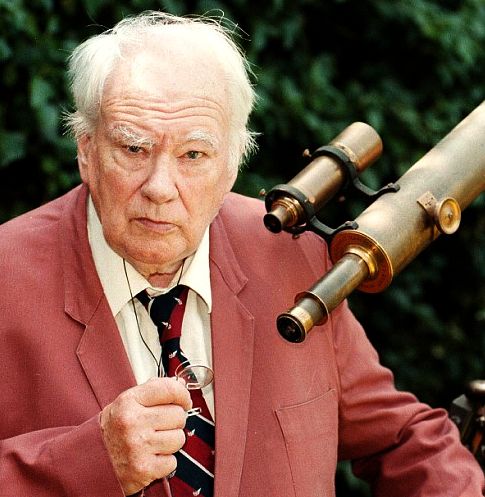
His name may not be known to many outside of either the UK or the field of astronomy, but Sir Patrick Moore was one of the all-time greats. His knowledge as an astronomer was prolific, his enthusiasm as a writer / broadcaster infectious, and his reputation as something of a monocle-toting eccentric in the great British tradition of the word, legendary.

Patrick Moore first presented The Sky at Night in April 1957

A Fellow of the Royal Society and of the Royal Astronomical Society, he was best known for his monthly BBC astronomy programme The Sky at Night, which in April 2012 celebrated 55 years of broadcasting, making it the longest-running television programme with the same broadcaster in history.  Through the programme, his also responsible in spurring-on many to develop an interest in astronomy, celebrities included, as well as  many to become scientists and astronomers.

His own passion for astronomy started at an early age, and by the age of 11 he was already a member of the British Astronomical Association and by fourteen he was running the local observatory. War interrupted his career – as it did so many – and saw him lie about his age to join the RAF (he was 16 at the time and already wearing his trademark monocle to counter a problem in his right eye), in which he served as a navigator in Bomber Command. After the war, he used his government demob grant to attend Cambridge University, and wrote his first book Guide to the Moon in 1952 using the 1908 typewriter one which he went on to  write every one of his subsequent books.

As a BBC presenter, Sir Patrick covered the Apollo missions in the 1960 and 1970s and he was on first-name terms with many of those unique men who first walked on the surface of the Moon.

As well as astronomy – which he pursued as a writer and broadcaster and through his own observatories in the garden of his home – Sir Patrick was a keen cricketer in his younger years, and revelled in his reputation for wearing a monocle and playing the xylophone – both of which he did with great aplomb and both of which tended to turn-up on television when he was being  – quite lovingly for the most part, it has to be said – impersonated.

He was truly a British institution.

I was lucky enough to meet Sir Patrick once while in my teens when Dad took Mum and I to a reception in London to mark the 21st Anniversary of Apollo 11. The special guest at the event was Edwin “Buzz” Aldrin. The event wasn’t that large, being organised by a society of which Dad is a member, but it still surprised me when Patrick Moore himself (whom I knew more by reputation and the aforementioned impersonations than actually having watched his show) came and talked to me while I was contemplating the buffet laid out.

I remember it being a little awkward, as my knowledge of astronomy and space was limited at best then, and I wasn’t really sure as to how to deal with thing Great Personality From Television (Patrick Moore was always physically imposing, even leaving aside the monocle and tufted eyebrows which always seemed to have a life of their own). I have no idea if he sensed my discomfiture – but I do remember that as we both stepped away from the buffet with loaded plates (most of the food on mine happily suggested by Patrick Moore himself), we were chatting about music and cricket (the latter being a subject of which I knew even less about than astronomy, and which he had just been forced to give up  – at the age of 68!).

It is the memory of that time, which now seems to have lasted hours but in truth was perhaps only ten or so minutes in length, which sits most vividly with me now. Sir Patrick Moore, FRS, FRAS, CBE, passed away today. As a result, the sky at night will be just a little bit darker from now on.

Sir Patrick Moore 4 March 1923 – 9 December 2012

In memory of Neil Armstrong

Nine summers ago, I went for a visit,
To see if the moon was green cheese.
When we arrived, people on earth asked: “Is it?”
   We answered: “No cheese, no bees, no trees.”
There were rocks and hills and a remarkable view
   Of the beautiful earth that you know,
It’s a nice place to visit, and I’m certain that you
   will enjoy it when you go.

Neil Armstrong, 1978

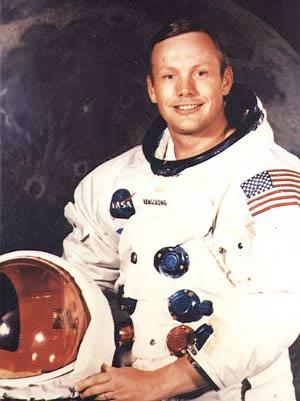
Neil Armstrong, 1930-2012
First man to walk on the Moon
Missions flown: Gemini 8, Gemini 11, Apollo 11

In memory of Sally Ride

 Oh! I have slipped the surly bonds of Earth
 And danced the skies on laughter-silvered wings;
 Sunward I’ve climbed, and joined the tumbling mirth
 of sun-split clouds, — and done a hundred things
 You have not dreamed of — wheeled and soared and swung
 High in the sunlit silence. Hov’ring there,
 I’ve chased the shouting wind along, and flung
 My eager craft through footless halls of air….

 Up, up the long, delirious, burning blue
 I have topped the wind-swept heights with easy grace.
 Where never lark, or even eagle flew —
 And, while with silent lifting mind I have trod
 The high untrespassed sanctity of space,
 – Put out my hand, and touched the face of God.

(Pilot Officer  John Gillespie Magee, Jr., RCAF)

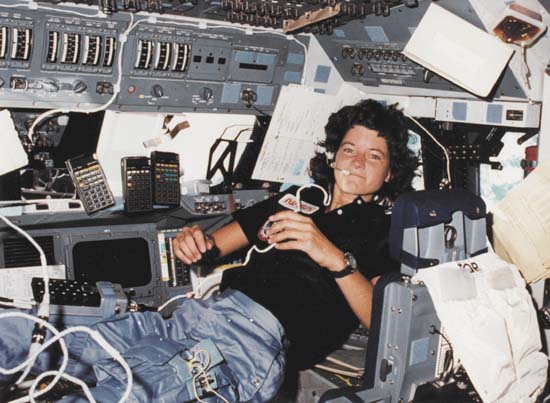
Sally Ride, 1951-2012
First American female astronaut.
Missions flown: STS-7, 1983; STS-41G, 1984.

 www.sallyridescience.com