Space Sunday: lunar ambitions: the real and the not-so-real

The core stage of China’s new Long March 10 (CZ-10A variant) booster uses a single motor to ease itself into the waters of the South China Sea to await recovery after a highly successful test flight. Credit: CCTV video footage

The current “race for the Moon” is turning into a hare-and-tortoise situation on several levels, including internationally. On the one hand, there is America’s (arguably over-complicated, thanks to NASA’s insistence on the use of cryogenic propulsion to get to / from the lunar surface) Artemis programme, which seems to race along in fits and bursts (and frequently slams itself into a wall of delay) and then there is China’s more conservative “latter-day Apollo” approach, which quietly plods along, racking up achievements and milestones whilst seeming to be technologically far behind US-led efforts.

As noted, China’s approach to reaching the Moon, is something of a harkening back to the days of Apollo in that it uses a relatively small-scale crewed vehicle for getting between Earth and the Moon, and a similarly small-scale lander. However, size isn’t everything, and both crew vehicle and lander (the latter of which has a cargo variant) would be more than capable in allowing China to establish a modest human presence on the Moon, just as their Tiangong space station, whilst barely 1/4 the size of the International Space Station, has allowed them to do the same in Earth orbit. It is also important to recognise it as part of an integrated, step-by-step lunar programme officially called the Chinese Lunar Exploration Programme (CLEP) and familiarly referenced as the Chang’e Project after the Chinese Goddess of the Moon, which has allowed China to develop both a greater understanding of operations on the Moon and in understanding the Moon itself.

The Chang’e project commenced over 20 years ago, and recorded its first successes in 2007 and 2010 with its Phase 1 orbital robotic missions. This was followed by the Phase II lander / rover missions (Chang’e 3 and Chang’e 4) in 2013 and 2018 respectively, and then the Phase III sample return mission of Chang’e 5 (2020).

Currently, the programme is in its fourth phase, an extensive study of the South Polar Region of the Moon in preparation for human landings, nominally targeting 2030. This phase of the programme has already seen the highly successful Chang’e 6 mission, the first to retrieve surface samples from the Moon’s far side, as well as deploying a rover there. 2026 will see Chang’e 7 launched, a high concept resource seeking mission comprising an orbiter, lander and “lunar flyer”, all geared to locate resources which can be utilised by future missions.

China’s Chang’e 6 mission, launched in May 2024, was the first Chinese mission to the far side of the Moon, and the first mission to ever return samples gathered from the lunar far side and return them to Earth (June 2024). In this image, Chang’e 6 is seen from the Jinchan mini-rover, which piggybacked a ride to the Moon with the lander. Credit: CNSA.

In 2028, the last of the Phase IV mission will launch. Chang’e 8 is intended to be a combination of in-situ resource utilisation (ISRU) test bed, demonstrating how local materials (water ice, regolith) can be used to produce structures on the Moon via advanced 3D printing, and to establish a small ecosystem experiment in advance of human landings.

This approach means that from a standing start, China has replicated much of NASA’s work of the 1960s that helped pave the way for Apollo, but in much greater depth. It’s not unfair to say that by retuning such a focused series of mission phases – notably Phase IV – China potentially will develop a greater spread of knowledge concerning the Moon’s South Polar Region than NASA.

At the same time, China has been developing the hardware required for the human side of the Chang’e Project. This primarily takes the form of their Mengzhou (“Dream Vessel”) reusable crewed vehicle, the Lanyue (“Embracing the Moon”) 2-stage lunar  lander / ascent vehicle and the Long March 10 semi-reusable heavy lift launch vehicle (HLLV) offering a very similar capability to Blue Origin’s New Glenn vehicle.

Mengzhou is being developed in two variants: a low Earth orbit (LEO) variant, designed to ferry crews to / from the Tiangong space station. The second is being developed expressly for lunar missions, offering an increased mission endurance capability. The first uncrewed orbital test-flight for the 14-tonne LEO version of Mengzhou is due to take place in 2026, the system having been going through progressive flight tests throughout the 2010 and early 2020s. If successful, it will pave the way for the vehicle to start operating on crewed flights to Tiangong alongside the current Shenzhou craft, which it will eventually replace.

Launch of the CZ-10A and Mengzhou test vehicles, February 11th, 2026. Credit: CCTV

On February 11th, 2026, a test article of the 21-tonne Mengzhou lunar vehicle completed a significant test atop the core reusable stage Long March 10 (Chinese designation CZ-10A) booster. This was a combined mission to test both the Mengzhou launch abort system (LAS) whilst under the rocket’s maximum dynamical pressure flight-regime, and also the booster’s ability to complete an ascent to its nominal stage separation altitude of 105 km, and then make a controlled descent and splashdown close to its recovery ship.

Following a successful launch, the combined vehicle climbed up to the period of “Max Q”, around 1 minute into a flight and wherein the maximum dynamic forces are being applied to the entire stack. The Mengzhou LAS successfully triggered, boosting the vehicle away from the Long March core stage at high speed. The Mengzhou capsule then separated from the LAS performed a splashdown downrange.

The Mengzhou LAS powers away from the CZ-10A corse stage, carrying the Mengzhou capsule with it, as would be required should a critical malfunction occur with the Long March 10 rocket. Credit: CCTV
The Long March 10 core stage then continued a powered ascent profile, performing engine shutdown at 105 km before simulating an upper stage separation followed by a post-separation manoeuvre. This saw the stage enter “glide” phase, using its aerodynamic fins to maintain its orientation.

During this “glide” phase (actually a controlled descent, the stage orienting itself to fall engines-first), the booster carried out an automated pre-cooling of its engines in readiness for re-use and raise the pressure within the propellant tanks to settle their contents in readiness for engine re-use.

Cameras on the booster capture the deployment of the SpaceX-like grid fins on the upper end of the stage, which help it to maintain the correct orientation during its descent back to Earth. Credit: CCTV

Roughly one minute before splashdown, several of the engines successfully re-lit in a braking manoeuvre to bleed off much of the stage’s velocity. These were quickly reduced to just 3 motors and then a single motor as the stage came to a near-hover before that motor shutdown allowed it to settle smoothly and vertically in the water just 200 metres abeam of its recovery ship.

As an aside, it is interesting to contrast reporting on this flight with media coverage of SpaceX Starship “integrated flight tests”. In the case of the latter, almost every flight has been reported as some kind of spectacular success, despite most of the flights blowing up, barely meeting their assigned goals, or simply re-treading ground already covered. By contrast, the Mengzhou / CZ-10A core stage test flight has largely been defined as a “small step” in China’s progress, with some emphasising the flight “not reaching orbit” – which it was never intended to do.

In reality, the entire flight was a complete success. Not only did it demonstrate the Mengzhou vehicle’s LAS fully capable of lifting the command module and crew clear of an ascending CZ-10A should the latter suffer a malfunction during the most dynamically active phase of it flight, it also further demonstrated the capsule’s parachute descent system and its ability to make a recoverable splashdown (Mengzhou is capable of both water and land-based touchdowns, being able to be equipped with either a floatation device or airbags prior to launch).

Another still from the video of the test flight, showing the booster entering the see and its proximity to the recovery vessel, just visible on the right of the image. Future tests will see the recovery vessel attempt to “catch” a returning booster directly using a “tether” system. Credit: CCTV

Further, the test demonstrated the CZ-10A core stage’s ability to undertake a return to Earth and splashdown (again, the booster is designed to both land on a recovery ship a-la Falcon 9 and New Glenn, or make a splashdown close enough to the recovery ship so it can then be recovered – direct returns to the recovery vessel will be a part of future tests). Finally, such was the accuracy of the guidance systems, the rocket splashed down just 200 metres from the recovery ship, as planned.

That said, it is true that all the core components of the crewed phase of the Chang’e project still have a way to go before China can send a crew to the Moon. But like the tortoise, their one-step-at-a-time / keep-it-simple approach could yet see them become the first nation to do so since 1972.

Why SpaceX is most likely “Shifting from Mars to the Moon”

Thirteen months ago, in an attempt to bolster his failing “Mars colony plan” (a totally unrealistic fever dream of sending a “Battlestar Galactica” scale feet of 1,000 Starship vehicles carrying 1 million people to Mars to establish a colony there), the SpaceX CEO declared “the Moon is a distraction” and Mars was the focus for his company.

Well, he’s had 13 months to forget all that, as on the weekend of February 7th and  8th, 2026, the self-styled man who “knows more about manufacturing than anyone else alive on Earth” and yet cannot deliver on a single one of his manufacturing promises, declared that the Moon is now the focus of SpaceX’s endeavours, all as a part of a grand plan to “expand human consciousness and support his equally questionable idea of operating a 1-million strong constellation of Starlink satellites as a string of “data centres in space”. For good measure he mixes in terms such as “climbing the Kardashev scale” )the latter seems to be a particular reference point for so-called space entrepreneurs of late).

However, the real reason is liable to be far more mundane: the SpaceX CEO is again trying to justify the US $1.2 trillion valuation he and his fellow broad members arbitrarily awarded the company in January, and to justify such a figure in the face of an upcoming IPO whilst also possibly trying to further dazzle investors with shiny promises about orbital data centres and moon bases at a time when SpaceX has just “inherited”xAI and its cash burn-through of around US $1 billion a month.

The promise of a fully operational “Moon Base Alpha” (yes, once again we have a sci-fi trope to add gloss to an idea) in “10 years” will, undoubtedly go the same way as the more than a decade old claim that Tesla vehicles will be capable of full self driving “next year”; the statement that SpaceX would have Starship operational by 2022, and that Starship would fly around the Moon in 2023 and to Mars in 2024, err, 2026, err, 2028. That is to say, most likely never.

Martian Organics Cannot be Entirely Explained by Non-organic Processes

One of the major mysteries of Mars is the question of methane. It was first detected in more than faint trace amounts by the European Space Agency’s Mars Express mission in 2004. A decade later, NASA’s Mars Science Laboratory (MSL) rover Curiosity,  detected methane spikes and  organic molecules whilst exploring the floor of Gale Crater. Then in 2019, the rover a massive spike as it explored “Teal Ridge”, a formation of bedrock and deposits on “Mount Sharp” (Aeolis Mons).

Alongside of this is the vexing discovery of organic elements on Mars. These and the methane seem to point a finger towards the idea that the planet may have once harboured life. However, as even proponents of this idea point out, both organics and methane can result from purely inorganic interactions. The tick is – how to determine which might be the case.

An artist’s rendering of Curiosity at work in Gale Crater. Credit: NASA

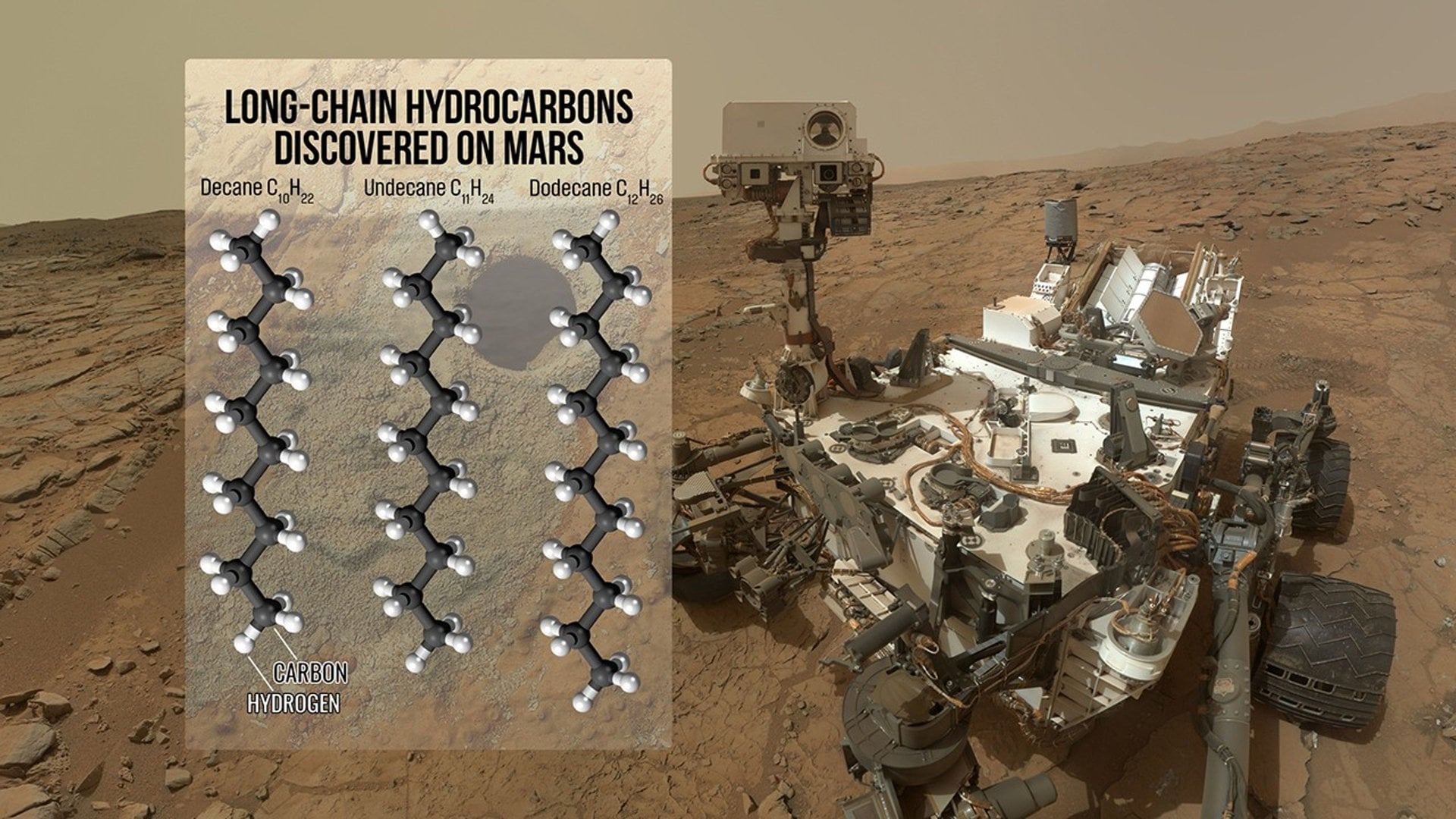
In March 2025, Curiosity detected small amounts of decane, undecane, and dodecane in a rock sample, which constituted the largest organic compounds found on Mars to date. These offered the potential to determine which option might be more likely to cause their existence – organics or inorganic chemical reactions. All three are hydrocarbons could be fragments of fatty acids, also known as carboxylic acid.

On Earth, carboxylic acid (aka fatty acids) is a natural by-product of life. Such acid can be found in animal tissues, nuts and seeds. In the case of animal tissues, carboxylic acid is predominantly formed by the breakdown of carbohydrates by the liver and found within adipose tissue, and the mammary glands. however, they can also be created by inorganic reactions – such as lightning striking chemically rich soils (or regolith), hydrothermal interactions and photochemical reactions between ultraviolet radiation and hydrocarbon-rich mixtures.

In order to try to determine whether the fatty acids discovered by Curiosity preserved in ancient mudstone are the result of organic processes or inorganic. Whilst limited with working only with data from the rover’s Sample Analysis at Mars (SAM) spectrometer, the team sought to recreate the likely conditions on Mars some 80 million years ago – this being the amount of time the rock containing the acids would likely have been exposed to the surface atmosphere – and then work back from there to try to determine which would survive the longest: carboxylic acid produced by organic or inorganic means.

What they found was that organic mechanisms appear to leave far more in the way of organic remnants – such as decane, undecane, and dodecane – than the typical non-biological processes involved in forming carboxylic acid could produce. The team suggest that this might be because any organics responsible for the fatty acids might have been assisted by periodic impacts by carbonaceous meteorites, known to be sources of fatty acids formed in space.

A graphic shows the long-chain organic molecules decane, undecane, and dodecane, the largest organic molecules discovered on Mars to date. Credit: NASA/Dan Gallagher

However the team also urge caution: whilst their finding might move the needle further towards the idea that Mars once harboured life, they also clearly note that there is a need for greater study; Mars is a complex world, rich in complex interactions. As such, more and detailed study is required – preferably first-hand, through the obtaining of samples from Mars itself. Currently, and rather ironically, whilst NASA had planned to make samples from the Mars 2020 rover Perseverance available for return to Earth, these do not contain samples of a similar nature to those found by Curiosity.

More particularly, at the time Perseverance had launched to Mars with sample retrieval in mind, no-one had actually sorted out how such a retrieval might be achieved. As such, a series of highly complicated, overly expensive proposals were put forward, involving both US and European co-operation. Each of these were knocked down on the basis of complexity and escalating price – up to US $11 billion – or close to half of NASA’s overall budget – for such a mission was just too big an ask. Thus, despite more cost-effective proposals such has Rocket Lab’s (still complex) three-launch mission slated to cost a “mere” US $4 billion, the entire idea of a sample return mission has been cancelled as a result of NASA’s budget being tightened.

Space Sunday: space debris and atmospheric damage + some updates

A European Space Agency Automated Transfer Vehicle (ATV) burns-up in the upper atmosphere following its departure from the International Space Station (ISS). Debris from this type of re-entry burn-up is now of growing concern due it its potential impact on the atmosphere and climate change. Credit: ESA

I’ve written about the issues of space debris on numerous occasions in these pages (for example, see: Space Sunday: debris and the Kessler syndrome; more Artemis or Space Sunday: Debris, Artemis delays, SpaceX Plans). Most of these pieces have highlighted the growing crowded nature of space immediately beyond our planet’s main atmosphere, the increasing risk of vehicle-to-vehicle collisions and the potential for a Kessler syndrome event.

However, there is another aspect of the increasing frequency of space launches and the number of satellites and debris re-entering the atmosphere: pollution and an increase in global warming. This is something I covered in brief back in October 2024, and it is becoming a matter of growing concern.

Currently, there are 14,300 active satellites orbiting Earth (January 2026), compared to just 871 20 years ago. Some 64.3% of these satellites belong to one company: SpaceX, in the form of Starlink satellites. Launches of these commenced in 2019, with each satellite intended to operate between 5 and 7 years. However, because of their relative cheapness, combined with advances in technology and the need for greater capabilities means than since August 2025, SpaceX has been “divesting” itself of initial  generations of their Starlink satellites within their anticipated lifespan at a rate to match the continued use of newer satellites, freeing up orbital “slots” for the newer satellites.

As a result, SpaceX is now responsible for over 40% of satellite re-entries into the atmosphere, equating to a net of over half a tonne of pollutants – notably much of it aluminium oxide and carbonates – being dumped into the upper atmosphere a day, all of which contributes to the greenhouse effect within the upper atmosphere.

These particulates drift down into the stratosphere where monitoring is showing they are having some disturbing interactions with everything from the ozone layer through to weather patterns.

We’re really changing the composition of the stratosphere into a state that we’ve never seen before, much of it negative. We really don’t understand many of the impacts that can result from this. The rush to space risks disrupting the global climate system and further depleting the ozone layer, which shields all living things from DNA-destroying ultraviolet radiation.

– John Dykema, applied physicist at the School of Engineering and Applied Sciences, Harvard

A 2023 axonometric view of Earth showing the space debris situation in different kinds of orbits around Earth. Credit: Pablo Carlos Budassi

In a degree of fairness to SpaceX – who will continue to dominate the issue of re-entry pollutants if their request to deploy a further 15,000 Starlink units is approved – they are not the only contributor. One Web, Amazon, Blue Origin and China via their Qianfan constellation, all stand to add to the problem – if on something of a smaller scale (Amazon and Blue Origin, for example, only plan to operate a total of 8,400 satellites, total). Further, NASA itself is a contributor: the solid rocket boosters used by the space shuttle and now the Space Launch System have been and are major depositors of aluminium and aluminium oxides in the upper atmosphere.

Nor does it end there. The vehicles used to launch these satellites are a contributing factor, whether semi-reusable or expendable. They add exhaust gases – often heavy in carbonates – into the atmosphere, as well as continuing to the dispersion of pollutants in the upper reaches of the atmosphere as upper stages re-enter and burn up.

Carbonates and things like aluminium oxides are of particular concern because of their known impact on both greenhouse gas trapping and in the destruction of the ozone layer. A further factor here is that research suggests that interactions between aluminium oxide and solar radiation in the upper atmosphere can result in the production of chlorine in a highly reactive form, potentially further increasing ozone loss in the atmosphere.

We’re not only putting thermal energy into the Earth’s climate system, but we’re putting it in new places. We don’t really understand the implications of changing stratospheric circulation. It could cause storm tracks to move. Maybe it could shift climate zones, or possibly be a new source of droughts and floods. Chlorine is one of the key actors in the ozone hole. If you add a new surface that converts existing chlorine into reactive and free radical forms, that will also promote ozone loss. Not yet enough to create a new ozone hole, but it can slow the recovery that began after the 1987 Montreal Protocol phased out chlorofluorocarbons.

– John Dykema, applied physicist at the School of Engineering and Applied Sciences, Harvard

There is something of a complex balance in all of this. We need the capabilities an orbital infrastructure can provide – communications, monitoring, Earth and weather observation, etc.,  – but we also need to be aware of the potential for debilitating the natural protections we need from our atmosphere together with the potential for pollutants to further accelerate human-driven climate change beyond the ability of the planet to correct.

This is further complicated by the inevitable friction between commercial / corporate need  – and much of modern space development is squarely in the corporate domain, where income and revenue are the dominant forces – and governmental oversight / policy making and enforcement. As such, how and when policy makers might act is also subject to some complexity, although many in the scientific community are becoming increasingly of the opinion that action is required sooner rather than later, and preferably on a united front.

Changes to stratospheric circulation may ultimately prove more consequential than the additional ozone loss, because the outcomes are so uncertain and potentially far-reaching. For the moment, many questions are not really amenable to straightforward, linear analysis. The ozone loss is significant, and we’re putting so much stuff up there that it could grow in ways that are not proportional to what has thus far been seen. The question is whether policymakers will act on those concerns before the invisible wake of our spacefaring ambitions becomes impossible to ignore.

– John Dykema, applied physicist at the School of Engineering and Applied Sciences, Harvard

Brief Updates

Artemis 2 Launch targets February 8th As Earliest Opportunity

NASA has announced a new earliest launch target date for Artemis 2: Sunday, February 8th, 2026, some two days later than the initial earliest launch date target.

The decision to push the target date back was taken after the planned wet dress rehearsal (WDR) for the launch – which sees all aspects of a vehicle launch tested right up to the point of engine ignition – was postponed due to extremely cold weather moving in over the Kennedy Space Centre which could have impacted accurate data gathering on the 49-hour test, which had been slated to commence on January 29th, 2026.

The Artemis 2 Space Launch System rocket on the pad at Launch Complex 39B at Kennedy Space Centre, January 31st, 2026. Credit: NASA/Joel Kowsky.

The WDR was instead reset for the period of February 1st through 3rd, 2026, with the countdown clock to the start of testing resuming at 01:13 UTC on February 1st. It will run through to the opening of a simulated launch window for 02:00 UTC on February 2nd. This latter part of the test will see the propellant loading system – which exhibited issues during preparations for the 2022 Artemis 1 launch – put through its paces to confirm it is ready for an actual launch.

As a thorough testing of all ground  and vehicle systems, and a full rehearsal for all teams involved in a launch, the WDR is the last major step in clearing the SLS and Artemis 2 for it mission around the Moon. It will officially terminate as the simulated launch window opens, some 10 seconds before engine ignition – but data gathering will continue through until February 3rd as the rocket is de-tanked of propellants and made safe. Then will come a data analysis and test review.

The actual crew of Artemis 2 are not participating in the test, but will be observing / monitoring elements of the WDR as it progresses. NASA has a livestream of the pad as the WDR progresses, and a separate stream will be opened during the propellant loading phases of the test.

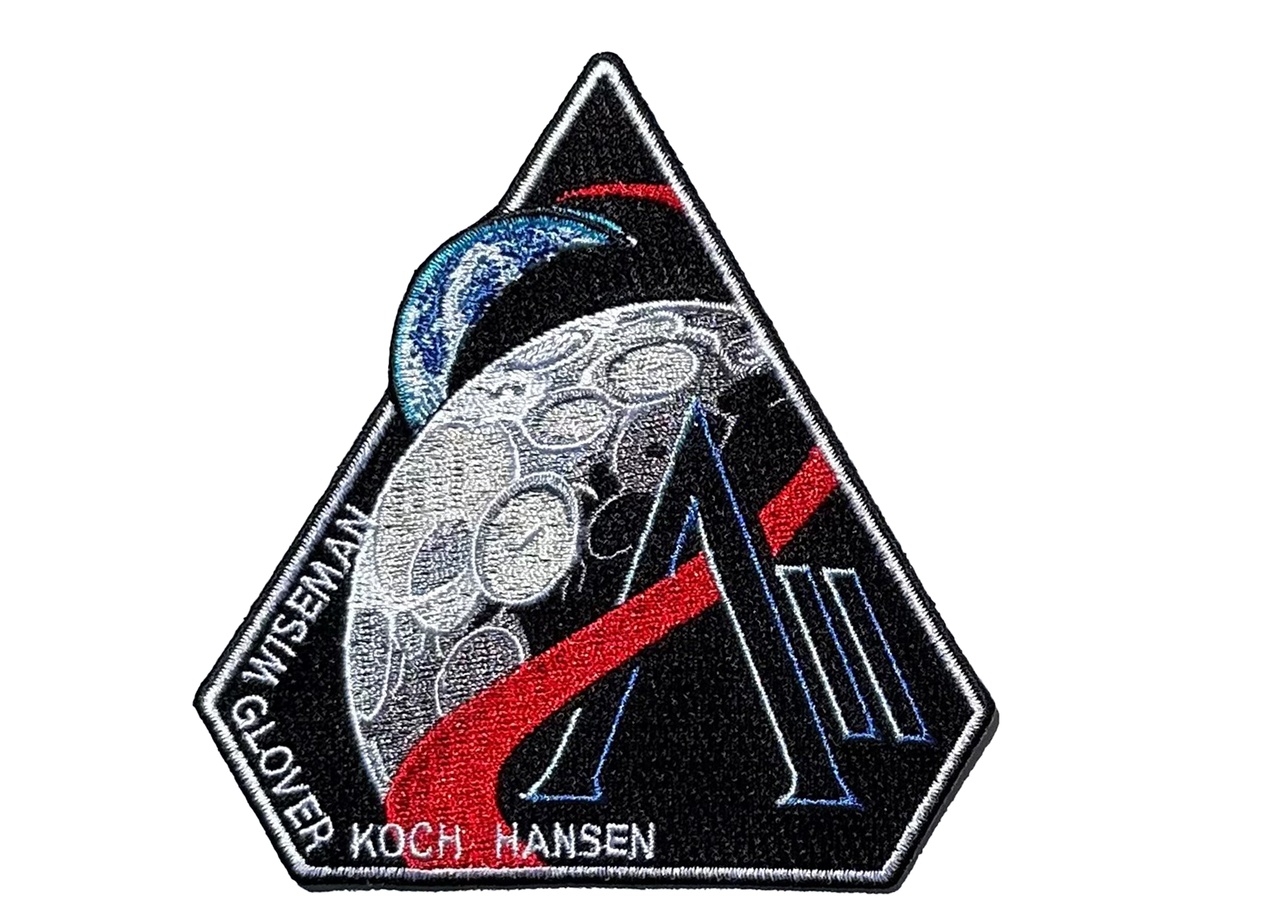
The Artemis 2 crew: Canadian Space Agency astronaut Jeremy Hansen, and NASA astronauts Victor Glover (vehicle pilot), Reid Wiseman (mission Commander) and Christine Koch. Credit: NASA

The push back to February 8th, means that NASA effectively has a 3-day opportunity through until February 11th (inclusive) in which to launch the mission before the current window closes. After that, the mission will have to wait for the March launch window to open.

NASA / SpaceX Crew 12 Looks to February 11th Launch

As NASA primarily focuses on Artemis 2, a second crewed launch is being lined up on the taxiway (so to speak) ready to follow the SLS into space – or possibly launch ahead of it.

NASA and SpaceX have confirmed they are looking at February 11th, 2026 as a potential launch date for the Crew 12 mission to the International Space Station (ISS). The mission will lift-off from Kennedy Space Centre’s launch Complex 39A (LC-39A), just a few kilometres away from the SLS at LC-39B, carrying NASA astronauts  Jessica Meir and Jack Hathaway, together with ESA astronaut Sophie Adenot, and Roscosmos cosmonaut Andrey Fedyaev aboard the SpaceX Crew Dragon Freedom.

The Expedition 74/75 / SpaceX Crew 12 personnel, l to r: Roscosmos cosmonaut Andrei Fedyaev, NASA astronauts Jack Hathaway (vehicle pilot) and Jessica Meir (crew commander), and ESA astronaut Sophie Adenot. Image credit: SpaceX.

Officially classified as NASA Crew Expedition 74/75, the four will bring the ISS back up to it nominal crew numbers following the medical evacuation which saw the Crew 11 astronauts make an early return to Earth, as I’ve covered in recent Space Sunday articles.

The preparations for Crew 12’s launch means that in the coming days there will be two rockets on the pads at Kennedy’s Launch Complex 39, each proceeding along its own route to launch. As to which goes first, this depends primarily on how the Artemis 2 / SLS launch preparations go.  If it leaves the pad between February 8th and February 10th as planned, then there is nothing hindering Crew 12 lifting-off atop their Falcon 9 booster. However, any push-back to February 11th would likely see Crew 12 delayed until February 12th at the earliest. Conversely, if Artemis 2 is delayed until the March launch opportunity, this immediately clears the way for Crew 12 to proceed towards a February 11th lift-off, with both February 12th and 13th also available.

Habitability of Europa Takes Another Blow

In my previous Space Sunday article, I covered recent studies relating to the potential for Jupiter’s icy moon Europa to harbour life (see: Space Sunday: examining Europa and “The Eye of Sauron”). The studies in question were mixed: one contending that conditions on Europa might lean towards life being present within its deep water ocean, the other being more sceptical about the sea floor conditions required to support life (e.g. the presence of hydrothermal vents).

Now a further study has been published, and it also suggests the chances of life existing in Europa’s ocean are at best thin.

One of the core issues with Europa has been knowing just how thick its ice shell actually is. Some have suggested it could be as little as 2 kilometres thick, whilst others have stated it could be as deep as 30km.

Understanding the thickness of the moon’s ice crust is crucial, as it helps define whether or not processes seen to be at work on the Moon are sufficient enough to have an impact on what might be happening within any liquid water oceans under the ice.

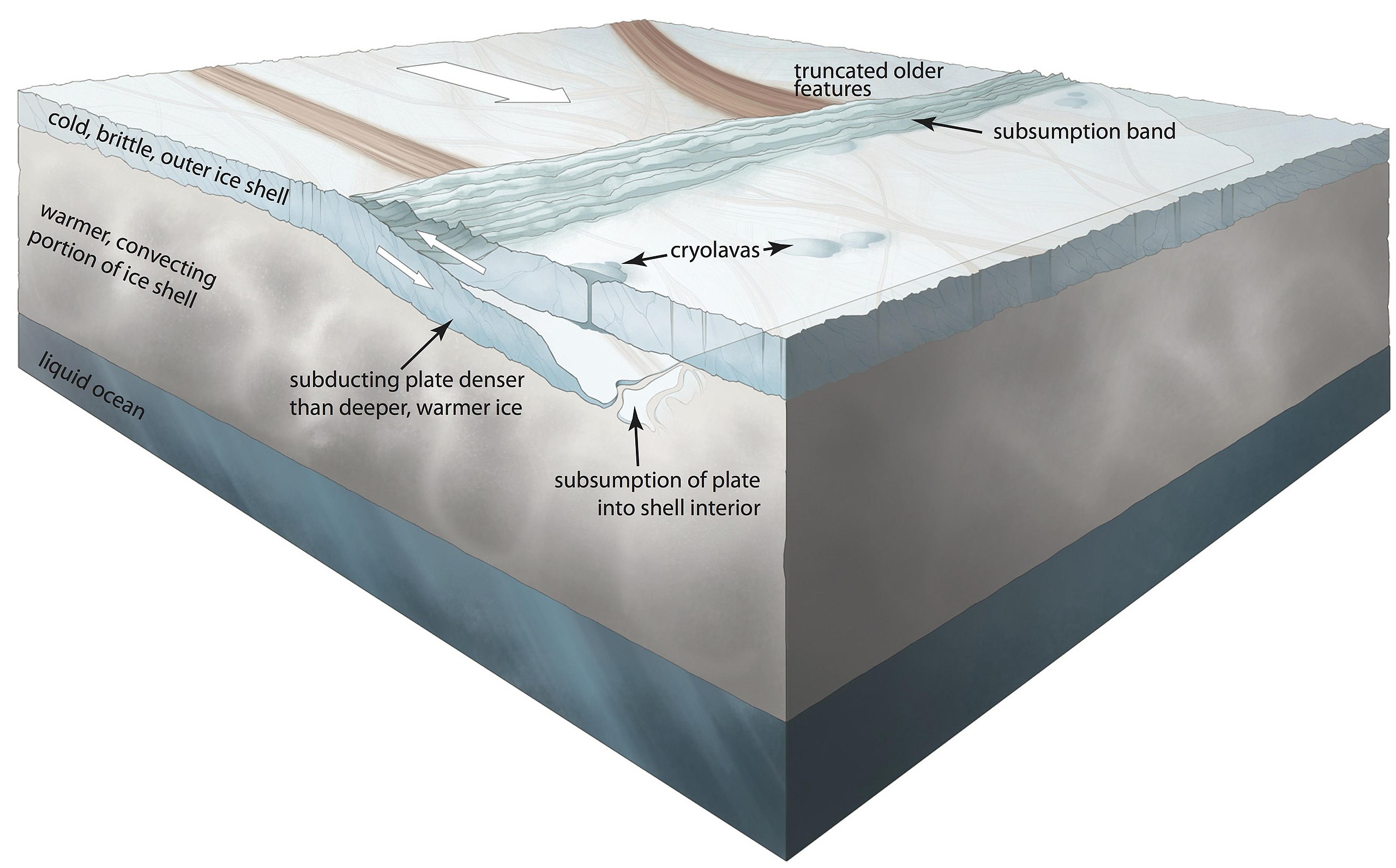
If the ice crust is thin – say a handful of kilometres or less – then activities like subduction within the ice sheets have a good chance of carrying minerals and nutrients created by the interaction between brines in Europa’s surface ice down into the ocean below, where they might help support life processes. similarly, transport mechanisms within the ice could carry oxygen generated as a result of surface interactions down through the ice and into the waters below. If the ice is too thick, then there is a good chance such processes grind to a halt long before they break through the ice crust into the waters below, thus starving them of nutrients, chemicals and gases.

An analysis of data gathered by NASA’s Juno mission as it loops its way around Jupiter and making periodic fly-bys of Europa now suggests that the primary ice crust of Europa is potentially some 28-29 kilometres thick. That’s not good news for the moon’s potential habitability because, as noted it would severely hamper any movement of minerals and nutrients down through the moon’s ice and into the waters below. However, the researchers do note that this doesn’t mean such elements could not reach the waters below, but rather they would take a lot longer to do so, but rather their ability to support any life processes within Europa’s waters would be greatly diminished.

A study of data gathered by NASA’s Juno mission spacecraft suggests the thickness of Europa’s ice crust might be enough – 28-20 km – to severely limit the ability of transport mechanisms and “crustal delamination” (see: Space Sunday: examining Europa and “The Eye of Sauron”) to transfer nutrients, chemicals, gases and minerals formed on the moon’s surface down to the liquid water ocean where they might help life processes in the water. Image credit: NASA

An unknown complication here is he state of the ice towards the bottom of the crust. Is it solid all the way through, or does it become more slush-like as it nears the water boundary layer, warmed by the heat of Europa’s mantle as it radiates outward through the ocean? If it is more slush-like, even if only for around 5 kilometres, this might aid transport mechanisms carrying nutrients, minerals, chemicals and oxygen down into the ocean. Conversely, if the ice is solid and there is a further 3-5 km thick layer of icy slush forming the boundary between it and liquid water, then it will act as a further impediment to these transport mechanisms being able to transfer material to the liquid water ocean.

As a result of this study, and the two noted in my previous Space Sunday article, eyes are now definitely turning towards NASA’s Europa Clipper, due to arrive in orbit around Jupiter in 2030, and ESA’s Juice mission, due to arrive in 2031, in the hope that they will be able to provide more detailed answers to conditions on and under Europa’s ice.

Space Sunday: Crew 11 comes home; Artemis 2 rolls out

The Crew-11 astronauts deboarding their NASA flight to Ellington Field, Houston on January 16th, 2026. Left to right: NASA astronauts Mike Fincke and Zena Cardman; Japan’s Kimya Yui and cosmonaut Oleg Platonov. Credit: NASA/Robert Markowitz

NASA’s ISS Expedition 73/74 crew, flying as SpaceX Crew 11, have made a safe and successful return to Earth following their medical evacuation from the space station.

As I reported in my previous Space Sunday piece, the decision to evacuate the entire 4-person crew, comprising NASA astronauts Zena Maria Cardman and Edward Michael “Mike” Fincke, together with Kimiya Yui of the Japan Aerospace Exploration Agency (JAXA) and Russian cosmonaut Oleg Platonov, was made after one of the four suffered an unspecified medical issue. Details as to who has experienced the issue and what form it takes still have not been revealed – although when initially discussing bringing the crew back to Earth roughly a month ahead of their planned end-of-mission return, the agency did make it clear the matter was not the result of an injury.

NASA also made clear the move to bring the crew home was in no way an emergency evacuation – had it been so, there were options available to return the crew a lot sooner. Instead, the evacuation was planned so that the affected crew member could have their situation properly diagnosed on Earth, whilst allowing time for the combined crew on the ISS to wrap-up as much as possible with outstanding work related to their joint time on the station and to allow Fincke, as the current station commander, to hand-over to cosmonauts Sergey Kud-Sverchkov, who together with Sergey Mikayev and  US astronaut Christopher Williams will continue aboard the station, where they will at some point in the next month be joined by the Crew 12 team from NASA.

Crew Dragon Endeavour, with her docking hatch open, backs gently away from the ISS, January 14th, 2026. Credit: NASA

The crew began prepping for their departure in the evening (UTC) of Wednesday, January 14th, when after a round of goodbyes to the three remaining on the ISS and then changing into the SpaceX pressure suits, the four Crew 11 personnel boarded Crew Dragon Endeavour, prior to the hatches between the spacecraft and station being closed-out and final checks run on the vehicle’s status in readiness for departure.

Following this, all four of the crew ran through a series of leak checks on their suits to ensure all connections with the Dragon’s life support systems were working, and Cardman – acting as the Crew 11 Mission commander and the experienced Fincke as the Crew 11 vehicle pilot – completed all pre-flight and power checks.

Captured via a high altitude observation aircraft, Endeavour passed into the denser atmosphere surrounded by a plasma cone of super-heated molecules and trailing a fiery tail behind her. Credit: NASA

Undocking occurred at 22:20 UTC, slightly later than planned, Fincke guiding the spacecraft smoothly and safely away from the station until Endeavour moved through the nominal 400-metre diameter and carefully monitored  “keep out sphere” surrounding the ISS. This “sphere” represents the closest any vehicle can come to the ISS whilst operating entirely independently from the station – vehicles can only move closer whilst engaged in actual docking manoeuvres.

Crossing the sphere’s outer boundary some 20 minutes later, Endeavour entered the “approach / departure ellipsoid” – a zone extending away from the ISS denoting, as the name suggests, the area of space along which vehicles can approach / depart the station and make a safe manoeuvres away should anything happen during an initial docking approach.

By 22:52 UCT, some 30 minutes after initial undocking, Endeavour transitioned away from the ISS and into its own orbit around the Earth, intended to carry to a position where it could commence it re-entry manoeuvres and make a targeted splashdown off the coast of California. The main 13.5-minute de-orbit burn was initiated at 07:53 UTC on January 15th, as Endeavour passed over the Indian Ocean and  Indonesia. From here, it passed over the Pacific reaching re-entry interface with the denser atmosphere at 08:31 UTC. At this point communications were lost – as expected – for around 7 minutes as the vehicle lay surrounded by super-heated plasma generated by the friction of its passage against the denser atmosphere, prior to being re-gained at 08:37 UTC.

A pre-dawn infrared photograph taken from the deck of the recovery vessel MV Shannon, shows Endeavour still glowing from the heat generated by her passage through the atmosphere as she awaits recovery, January 15th, 2026. Credit: SpaceX

Splashdown came at 08:40 UTC, closing-out a 167-day flight for the four crew. Recovery operations then commenced as a SpaceX team arrived at the capsule via launches and set about preparing it to be lifted aboard the recovery ship, which also slowly approached the capsule stern-first. By 09:14 UTC, Endeavour had been hoisted out of the Pacific and onto a special cradle on the stern of the MV Shannon, allowing personnel on the ship to commence the work in fully safing the capsule and getting the hatch open to allow the crew to egress.

On opening the hatch, a photograph of the four crew was taken, revealing them all to be in a happy mood, the smiles and laughter continuing as they were each helped out of Endeavour with none of them giving any clues as to who might have suffered the medical condition. Gurneys were used to transfer all four to the medical facilities on the Shannon, but this should not be taken to signify anything: crews returning from nigh-on 6-months in space are generally treated with caution until their autonomous systems – such as sense of balance – etc, adjust back to working in a gravity environment.

Visors up and thumbs up, the four crew (Platonov, Fincke, Cardman and Yui) aboard Endeavour as the capsule hatch is opened following recovery onto the MV Shannon. Credit: SpaceX

Following their initial check-out, all four members of Crew 11 were flown from the Shannon to shore-based medical facilities for further examinations. The ship, meanwhile, headed back to the port of Long Beach with Endeavour. Following their initial check-outs in California, the four crew were then flown to Johnson Space Centre, Texas on Friday, January 16th for further checks and re-acclimatisation to living in a gravity environment. No further information on the cause of the evacuation or who had been affected by the medical concern had, at the time of writing, been given – and NASA has suggested no details will be given, per a statment issued following the crew’s arrival at Johnson Space Centre.

The four crew members of NASA’s / SpaceX Crew-11 mission have arrived at the agency’s Johnson Space Centre in Houston, where they will continue standard postflight reconditioning and evaluations. All crew members remain stable. To protect the crew’s medical privacy, no specific details regarding the condition or individual will be shared.

– NASA statement following the arrival of the Crew 11 members at JSC, Texas.

Artemis 2 on the Pad

The massive stack of the second flight-ready Space Launch System (SLS) rocket and its Orion MPCV payload, destined to carry four astronauts to cislunar space and back to Earth, rolled out of the Vehicle Assembly Building (VAB) at NASA’s Kennedy Space Centre atop its mobile launch platform, to make its way gently to Launch Complex 39B (LC-39B).

The rocket – comparable in size to the legendary Saturn V – and its launch platform slowly inched out of High Bay 3 at the VAB at 12:07 UTC, carried by one of NASA’s venerable Crawler Transporters at the start of the 6.4 kilometre journey.

Artemis emerges: Sitting atop it mobile Launch Platform and on the back of a Crawler Transporter, the Space Launch System (SLS) vehicle containing Integrity, departs High Bay 3 of the Vehicle Assembly Building, Kennedy Space Centre, on the firs leg of the Artemis 2 flight to cislunar space and back. Credit: AP/John Raoux

The drive to the launch pad took almost 12 hours to complete, the average speed less than 1.6 km/h throughout. Standing 98 metres in height, SLS is powered by a combination of 4 RS-25 motors originally developed for the space shuttle, together with two solid rocket boosters (SRBs) based on those also used for the shuttle – although these boosters, with their tremendous thrust, will only be available to the rocket during the first couple of minutes of its ascent to orbit, helping to push it through the denser atmosphere before being jettisoned, their fuel expended.

The next major milestone for the launch vehicle is a full wet dress rehearsal on February 2nd, 2026. This involves a full countdown and fuelling of the rocket’s two main stages with 987 tonnes of liquid propellants, with the rehearsal terminating just before engine ignition. The wet dress rehearsal is a final opportunity to ensure all systems and launch / flight personnel handling the launch are ready to go.

Artemis 2 on its way to Launch Complex 39B at Kennedy Space Centre, January 17th,2026. Note the large boxy grey structure on the left of the base of the rocket. The is the combined propellants feed and power transfer mechanism, which proved problematic with leaks during preparations for Artemis 1 in 2022. Credit: AP/John Raoux

It was the wet dress rehearsal that caused numerous problems for NASA with Artemis 1, the uncrewed flight of an Orion vehicle around the Moon in 2022, with repeated leaks occurring in the cryogenic propellant feed connections on the launch platform. These issues, together with a range of other niggles and the arrival of rather inclement weather, forced Artemis 1 to have to return to the VAB three times before it was finally able to launch.

Since then, changes have been made in several key areas – including the propellant feed mechanisms. The hope is therefore that the wet dress rehearsal for Artemis 2 will proceed smoothly as the final pre-flight test, and the green light will be given for a crewed launch attempt, possibly just days after the rehearsal. However, Artemis 2 will not be standing idle on the pad until February 2nd; between now and then there will be a whole series of tests and reviews, all intended to confirm the vehicle’s readiness for flight and ground controllers readiness to manage it.

The crew of Artemis 2 – Canadian astronaut Jeremy Hansen, and NASA astronauts Christina Koch, Victor Glover and Reid Wiseman, prepare to address the media as Artemis 2 crawls by on its way to the launch pad. Credit: NASA

Assuming everything does go smoothly, NASA is currently looking at Friday, February 6th, 2026 as the earliest date on which Artemis 2 could launch, with pretty much daily windows thereafter available through until February 11th, with further windows available in March and April.

As I’ve recently written, Artemis 2 will be an extended flight out to cislunar space over a period of 10 days, during which the 4-person crew of NASA astronauts Reid Wiseman, Victor Glover and Christina Koch and Canadian Space Agency astronaut Jeremy Hansen will thoroughly check-out the Orion Multi-Purpose Crew Vehicle and its fitness as a lunar crew transport vehicle.

These tests will initially be carried out in Earth orbit over a 24-hour period following launch, during which the Orion vehicle – called Integrity – will lift both the apogee and perigee of its orbit before performing an engine burn to place itself into a trans-lunar injection flight and a free return course out to cislunar space, around the Moon and then back to Earth. The transit time between Earth and cislunar space will be some 4 days (as will be the return transit time). This is slightly longer than Apollo generally took to get to the Moon, but this (again) is because Artemis 2 is not heading directly for a close orbit of the Moon, but rather out to the vicinity of space that will eventually be occupied by Gateway Station, where crews will transfer from their Orion vehicle to their lunar lander from Artemis 4 onwards. Thus, this flight sees Integrity fly a similar profile the majority of Artemis crewed missions will experience.

As I’ve also previously noted, this flight will use a free return trajectory, one which simply sends the craft around the Moon and then back on a course for Earth without the need to re-use the vehicle’s primary propulsion. Most importantly of all, it will test a new atmospheric re-entry profile intended to reduced the amount of damage done to the Orion’s vital heat shield as it comes back through Earth’ atmosphere ahead of splashdown.

Space Sunday: an evacuation and astronaut health

The International Space Station as it appeared from a Crew Dragon vehicle in 2021. Credit: NASA / SpaceX

For the first time in the history of the International Space Station (ISS), NASA is curtailing an entire crew rotation in order to bring an astronaut with an undisclosed medical condition back to Earth in order for them to receive full and proper treatment.

Exactly what the medical issue is has not been disclosed, although NASA has confirmed it is not injury related and the move is being made out of an abundance of care rather then the crew member suffering any immediate threat to their life. Nor has the name of the affected astronaut been made public as yet. What is known is the affected individual is one of the four people making up the Crew 11 (NASA ISS Expedition 73/74) mission, who arrived aboard the ISS in August 2025, and who were due to return to Earth later in February 2026 following a hand-over to the upcoming Crew 12 mission.

Crew 11 comprises veteran NASA astronaut Michael “Mike” Fincke, who took over the role of ISS commander after arriving there in August 2025, NASA astronaut Zena Maria Cardman, making her first trip into space and who is serving as the station’s Flight Engineer, together with Kimiya Yui of the Japan Aerospace Exploration Agency (JAXA) on his second mission to the ISS, and Russian cosmonaut Oleg Platonov, on his first flight to orbit.

The Crew 11 / NASA Expedition 73/74 crew, clockwise from top rear: Roscosmos cosmonaut and Mission Specialist Oleg Platonov; JAXA (Japan Aerospace Exploration Agency) astronaut and Mission Specialist Kimiya Yui; NASA astronaut (and Crew 11 Commander) Zena Cardman; and NASA astronaut (and Crew 11 Pilot) Mike Fincke. Credit: NASA.

For Cardman this is the second time in succession her debut space flight his been the focus of changes; originally, she was to have flown as part of the Crew 9 mission in 2024, but was removed from that flight alongside astronaut Stephanie Wilson so their positions could be used to return Barry Wilmore and Sunita Wilson to Earth, following the issues with their Boeing Starliner which caused NASA to elect not to use that vehicle to bring them back to Earth.

News of the medical issue first broke on January 7th, when NASA announced the first EVA “spacewalk” of 2026 had been cancelled. This was to have been the first of 4 EVAs carried out by Crew 11 and the upcoming Crew 12 missions to install the last pair of iROSA solar arrays on the ISS as part of a years-long operation to boost the station’s power generation capabilities.

When originally launched, the ISS was furnished with eight pairs of massive 1-tonne solar arrays, each measuring 35 metres in length and 12 metres in width and originally capable of generating some 31 kW of electricity per pair. Called Solar Array Wings (SAWs) by NASA, these massive arrays have slowly become less and less efficient in generating electricity for the station, both as a result of their increasing age and because they are fairly fragile, and some have suffered certain amounts of damage over the decades.

A close-up view of damage done to the 4B SAW of the ISS in 2007, following a move and redeployment of the array during STS-120. Credit: NASA

Initially developed for NASA deep space missions, ROSA – Roll-Out Solar Arrays – are much more compact, much lighter and more robust than the SWs, as well as being far more efficient. The version used on the ISS – iROSA – for example, masses just 325 kg per array, with each array being half the size of the SAW units and able to generate up to 2/3rd the original SAW output. Since 2022, pairs of these iROSA units have been added to the ISS to supplement the SAW units, both stabilising and boosting the station’s power generation capabilities significantly.

As the medical issue was first announced at the time the EVA crew – Fincke and Cardman –  would have been going through personal and equipment check-outs in advance of the actual EVA preparation and execution period planned for January 8th, initial speculation was that one of them had suffered some form of medical issue severe enough to curtail the planned activity. However, speculation as to who the affected crew member might be shifted to JAXA astronaut Kimiya Yui after a press briefing on January 8th revealed that he had requested a private consultation with medical experts on Earth around the same time as the EVA pre-prep work.

Whoever the individual affected is, the result is the same: as they require evacuation to Earth as a matter of safety and well-being, then all four members of Crew 11 must return early from the ISS, so that no-one ends up (dare I use the term beloved of the media?) “stranded” on the ISS “without a ride home”.

A 2021 enhanced image of the International Space Station showing how it would appear with six iROSA solar arrays deployed over three pairs of the the station’s existing primary arrays. At the time, it was only planned to deploy six of the 8 iROSA units to the ISS, the decision to add the final two being made in 2024. Credit: NASA

Currently, the plan is to return Crew 11 to Earth on the 14th / 15th January, with Crew dragon Endeavour departing the ISS at around 22:00 UTC on the 14th, with splashdown off the coast of California planned for around 08:40 UTC on the 15th. Following recovery, the entire crew will likely be flown to shore-based medical facilities.

As a result of this, the ISS is likely to undergo a period when it is under-staffed, with just three people aboard to run things: US astronaut Christopher Williams, on his first rotation at the ISS, together with cosmonauts Sergey Kud-Sverchkov, who is on his second stint on the ISS and will take over as station commander as from January 12th, and Sergey Mikayev, another ISS rookie. Whilst this is not the first time a reduced crew has operated the station (the last was during the COVID pandemic), the early return of Crew 11 does raise some complications for the immediate future of ISS operations.

The first of these is that without the Crew 11 personnel, the first two EVAs required to prepare the external power systems etc, for the installation of the new iROSA units (which would have been carried out by Crew 12 following their arrival on the ISS in February). Nor can the members of Crew 12 or the other personnel on the ISS simply “slot into” the work Cardman and Fincke were to have performed: each EVA requires specialised training and techniques – and none of Crew 12 nor those remaining on the station have received said training. Thus, the iROSA deploy is liable to be subjected to some delay.

Nor is it clear as to when Crew 12 will be in a position to launch to the ISS and take some of the pressure off of Williams, Kud-Sverchkov and Mikayev. Usually, NASA prefers to launch an outgoing crew several days ahead of a departing crew, so as to allow a formal hand-over one to the next. With Crew 11 now set to return early,it is unlikely such a hand-over will be possible, and as a result, additional time will be required by Crew 12 to get fully up-to-speed with the overall status of the ISS and the revised work schedule for their rotation.

A major determining favour in this could be that of Artemis 2. Under the current launch schedule, the SLS rocket for that mission is set to roll-out to Launch Complex 39B at Kennedy Space Centre on January 17th. Once there, the vehicle will undergo the last remaining tests required to clear it for a planned February 6th, mission lift-off.

Like Artemis 1 in 2022 (see here), Artemis 2 is due to make the drive from the Vehicle Assembly Building at NASA’s Kennedy Space Centre to Launch Complex 39B mounted on its Mobile Launch Platform atop NASA’s huge Crawler Transporter. The multi-hour roll-out is currently targeting January 17th, 2026. Credit: NASA

Given this, and while ISS and Artemis missions are essentially separate entities with no real cross-over, NASA is likely to be very cautious about having any parallel launch preparations going on at the “neighbouring” Launch Complex 39A, where SpaceX operate all of their crewed launches, simply because both facilities have a degree of overlap in the use of launch support services – notably radar and tracking capabilities which could bring preparations for both launches into a degree of conflict, particularly if one or the other experiences delays whilst on the pad.

So unless SpaceX is able to demonstrate it is able to accelerate Crew 12 launch preparations to a point where an attempt can be made before the Artemis 2 roll-out and launch and without interfering with the final ground tests Artemis 2 must complete to meet its planned launch date, it is entirely possible Crew 12 will have to wait until around its originally target launch date of February 15th in order to get off the ground. And that’s assuming issues with Artemis 2 don’t push its launch back during a time when Crew 12 could otherwise have been on its pad and otherwise ready to go. As a result, the entire situation remains in something of a state of flux, and this story will continue to develop over the coming week.

Astronaut Health and Welfare

All of the above has forced a degree of focus on the questions of astronaut health and welfare, both on the ISS and in terms of missions to the Moon and Mars. The ISS has the overall advantage in this regard, as it is obviously the closest to Earth, and is the best equipped off-Earth facility when it comes to astronaut health – albeit one that is necessarily limited when it comes to more serious conditions or significant injuries. In particular, the ISS has extensive first-aid and medical facilities, including the likes of an ultrasound scanner, defibrillators and other specialised equipment, with many crew members receiving paramedic levels of medical training, backed by the ability to be able to call on Earthside expertise rapidly and with minimal delay in real-time communications and, in a worse-case scenario, have stricken crew returned to Earth in relatively short order.

While much of this can be replicated in missions to the Moon and Mars, there limitations. Getting back from the Moon is not exactly “immediate”, particularly with regards to the way Artemis using cislunar space rather than a direct Earth-Moon-Earth approach, and Mars is obviously even less so. Further, two-way communications are more limited.; there is always at least a 2.6 second delay in two-way Earth-Moon / cislunar space communications, for example. While this might not sound a lot, it could be the difference between saving and losing a life.

For Mars missions the situation is even worse, given delays are always at least 4 minutes for two-way communications, and can be as much as 24 minutes. Whilst the latter clearly means that practical real-time medical advice and support cannot realistically be offered during medical emergencies, it also means that crews on such mission face the additional psychological strain of being unable to communicate in real-time with family and loved ones, leaving all such contact to pre-recorded messages.

In terms of general health, there are a wide range of issues to be considered. The most obvious is that of physical fitness in micro-gravity conditions: as is only too well-known, long-term exposure to micro-gravity can result in a range of muscular and cardiovascular issues. While these can be addressed through discipline and exercise (around 2.5 hours a day), it’s still a major commitment to do so day in and day out for between 6 and 8 months journey time between Earth and Mars. But whilst such issues are the most referenced of those associated with living and working in microgravity, they they are not the only issues. There are many physiological and psychological matters we have yet to fully understand and address as best we can.

One example of this takes the form of the so-called 2015-16 One-Year Mission (although its duration was technically 11 months). In it, identical twins and astronauts Scott and Mark Kelly where the focus of an in-depth study of physical and psychological impacts of long duration space flight. This saw Scott Kelly spent the time on the ISS, whilst Mark remained on Earth as a control subject. Doing so allowed ten different teams of medical, health and psychology experts to monitor changes in Scott Kelly’s overall health, physiology and psychology using Mark as a baseline reference. Hus, they were able to analyse in detail a wide range of elements and their associated changes in Scott, including body mass changes / redistribution, eye and bone deformation, immune system responses, molecular and psychological changes, alterations in cognitive capabilities and more. The results were in many ways both surprising and unexpected.

Astronauts and identical twins Mark and Scott Kelly after the One-Year Mission (2015/16). Credit: NASA

Whilst Scott Kelly remained in overtly good physical health, he did undergo changes to his cognitive abilities, his DNA and immune system and changes to his body’s gene regulation processes. He also experienced changes to his retinas and eyesight, as well as to his carotids and gut microbiome. Whilst none of these changes were significantly debilitating (and did correct themselves over a period of time following his return to Earth), they were not entirely without outward impact on him, and pointed the way to the potential for serious psychological and other issues being a problem within especially isolated, long-duration missions where direct contact with others outside of the immediate crew is next to impossible in real time.

Nor is this all. As I recently related to friend and fellow space enthusiast Hugh Toussant, there are significant health implications linked to deep space radiation exposure which have only really come to light in the last 6 years and which require much more in the way of study. Some of these issues are, as an example, related to Galactic Cosmic Rays (GCRs), the so-called “background radiation of the Big Bang”, and a subject which has been somewhat overlooked due to a preoccupant with addressing the impact of solar radiation effects such has coronal mass ejections (CMEs) which can admittedly be utterly devastating to an unprotected crew in very short order.

Whilst GCRs perhaps don’t have the immediate threat of something like a CME, they are also potentially much more of a risk over time and harder to address, simply because of the amount of energy they contain. In particular, a 2018/19 study demonstrated that GCR collisions with the human body can result in the reactivation of various strains of Herpes viruses which are otherwise generally dormant. These include the relative mild (but sill unpleasant varicella-zoster virus (VZV), which can cause issues such as glandular fever, all the way through to the highly contagious Epstein–Barr virus (EBV). The latter is particularly nasty, as it is very tightly linked to malignant diseases such as cancers (both lymphoproliferative – Burkitt lymphoma, hemophagocytic lymphohistiocytosis, and Hodgkin’s lymphoma – and non-lymphoid malignancies such as gastric cancer and nasopharyngeal carcinoma).

What was particularly unsettling about this study was that not only did it show that viruses like EBV could be re-activated by exposure to GCRs – but that it had happened to astronauts aboard the ISS, which operates within the relative shelter of Earth’s magnetic field and the protection it offers by diverting GCRs away towards the polar regions and thus out of the path of the ISS as it orbits the Earth.  In particular a check back across the medical histories of 112 astronauts who flew on the ISS and shuttle missions revealed that between 61% and 96% of them had demonstrated shedding one or more re-activated Herpes viruses, including both EBV and VZV.

Exactly how much risk of such viral reactivation might occur on something like a mission to Mars – which largely takes place outside of any protection afforded by Earth’s magnetic field – is utterly unclear. However, given the potential for something like EBZ to give rise to a host of long-term malignant illnesses, it is clear that the apparent link between GCRs and the reactivation and shedding of such viruses needs to be more fully understood in order to enable proper mitigation techniques to be developed well before anyone starts mucking about with trying to send people to Mars.  All of which is a long way of saying that while we have learned a lot about living and working in space, we very much have much more to understand.

Space Sunday: Artemis 2 and a Blue Moon lander

An infographic outlining the Artemis 2 mission, during to take place in the first quarter of 2026. Credit: CSA

2026 is set to get off to an impressive start for US-led ambitions for the Moon, with the first three months intended to see the launch and completion of two key missions in the Artemis programme.

In fact, if the principal players in both missions get their way, the missions could be completed before the end of February 2026 and between them signal the opening of the gates that lead directly to the return of US astronauts to the Moon in 2028. Those two missions are the flight of the Blue Origin Pathfinder Mission to the lunar surface, and the first crewed flight to the vicinity of the Moon since the end of the Apollo era: Artemis 2.

Blue Moon Pathfinder

As I’ve previously noted in this column, Blue Moon Pathfinder is intended to fly a prototype of the Blue Moon 1 cargo lander to the Moon’s South Polar Region to demonstrate key elements and capabilities vital to both the Blue Moon Mark 1 and its larger, crew-capable sibling, Blue Moon Mark 2.

These goals include: the firing / re-firing of the BE-7 engine intended for use in both versions of Blue Moon; full use of the planned cryogenic power and propulsion systems; demonstration of the core avionics and automated flight / landing capabilities common to both Blue Moon Mark 1 and Blue Moon Mark 2; evaluate the continuous downlink communications; and  confirm the ability of Blue Moon landers to guide themselves to a targeted landing within 100 metres of a designated lunar touchdown point.

An artist’s rendering of the Blue Moon Mark 1 (foreground) and larger Blue Moon Mark 2 landers on the surface of the Moon. Credit: Blue Origin

Success with the mission could place Blue Origin and Blue Moon in a position where they might take the lead in the provisioning of a human landing system (HLS) to NASA in time for the Artemis 3 mission, currently aiming for a 2028 launch. A similar demonstration flight of Blue Moon Mark 2 is planned for 2027, involving the required Transporter “tug” vehicle needed to get Blue Moon Mark 2 to the Moon. If successful, this could potentially seal the deal for Blue Moon in this regard, given both they and SpaceX must undertake such a demonstration prior to Artemis 3 – and currently, SpaceX has yet to demonstrate the viability of any major component of the HLS design beyond the Super Heavy booster.

Of course, as others have found to their cost in recent years, making an automated landing on the Moon isn’t quite as easy as it may sound, so the above does come with a sizeable “if” hanging over it.

A comparison between the the Apollo Lunar Module, Blue Moon Mark1 and Blue Moon Mark 2. Note that the bulk of the latter comprises the massive Liquid hydrogen (LH2) tank (at the top, with the four large thermal protection / heat dissipation panels needed to help keep the propellant in a liquid form liquid), with the liquid oxygen (LOX) tanks between it and the crew module at the base of the vehicle. Credit: NASA / Blue Origin / David Leonard

The Blue Moon landers are between them intended to provide NASA with a flexible family of landing vehicles, with Blue Moon Mark 1 capable of delivering up to 3 tonnes of materiel to the Moon, and Blue Moon Mark 2 crews of up to four (although 2 will be the initial standard complement) or between 20 tonnes (lander to be re-used) or 30 tonnes (one-way mission) of cargo.

Currently, the Blue Moon Pathfinder flight is scheduled for Q1 2026 – and could potentially take place before the end of January.

Artemis 2: Four People Around the Moon and Back

Artemis 2, meanwhile is targeting a February 5th, 2026 launch. It will see the first crew-carrying Orion Multi-Purpose Crew Vehicle (MPCV) head to cislunar space with three Americans and a Canadian aboard in a 10-11 day mission intended to thoroughly test the vehicle’s crew systems, life support, etc. Despite all the negative (and in part unfair) criticism of the Orion system and its SLS launch vehicle, 21 of the 22 pre-launch milestones have now been met. This leaves only the roll-out of the completed SLS / Orion stack to the launch pad and the full booster propellant tanking testing order for the green light to be given to go ahead with a launch attempt.

An infographic shown by Brad McCain, VP and Programme Manager, Armentum Space Operations Division – a company providing critical support to NASA for SLS ground operations – during a December 15th Webinair on Artemis 2. Note both of the December 2025 items were achieved shortly after the webinair. Credit: Armentum / CDSE

No date has been publicly released for the roll-out, but given the issues experienced with Artemis 1, when helium purge leaks caused problems during the propellant load testing, it is likely that even with the high degree of confidence in the updates made to the propellant loading systems since Artemis 1, NASA will want as much time as possible to carry out the test ahead of the planned launch date.

Whilst Orion did fly to the Moon in 2022, the vehicle being used for Artemis 2 is very different to the one used in Artemis 1. This will be the first time Orion will fly all of the systems required to support a crew of 4 on missions of between 10 and 21 days in space (as is the initial – and possibly only, giving the calls to cancel Orion, despite its inherent flexibility as a crewed vehicle – requirements for the system). As such, Artemis 2 is intended to be a comprehensive test of all of the Orion systems, and particularly the ECLSS – Environmental Control and Life Support System; the vehicle’s Universal Waste Management System (UWMS – or “toilet”, to put it in simpler terms); the food preparation system and the overall crew living space for working, eating, resting and sleeping.

The Artemis 2 crew (l to r: Canadian Space Agency astronaut Jeremy Hansen and NASA astronauts Christina Koch, Victor Glover, and Reid Wiseman) outside the Astronaut Crew Quarters inside the Neil Armstrong Operations and Checkout Building, Kennedy Space Centre, during an integrated ground systems test for the mission, September 20th, 2023. Credit: Kim Shiflett

These tests are part of the reason the mission is set to have a 10-11 day duration compared to the average of 3 days the Apollo missions took to reach, and then return from, the vicinity of the Moon: NASA want to carry out as comprehensive a series of tests as possible on Orion “real” conditions prior to committing to launching the 30-day Artemis 3 mission.

The mission will also be a critical test for Orion’s heat shield. During Artemis 1, the Orion heat shield suffered considerable damage during re-entry into the Earth’s atmosphere, in what was called “char loss” – deep pitting in the heat shield material. Analysis of the damage reviewed the gouges to be the result of “spalling”. In short, in order to shed some of its enormous velocity prior to making a full re-entry into the atmosphere, Orion had been designed to make several “skips” into and out of the atmosphere, allowing it to lose speed without over-stressing the heat shield all at once.

Unfortunately, the method used to manufacture the original heat shields resulted in trace gases being left within the layers of ablative material. When repeatedly exposed to rapid heating as the Artemis 1 Orion vehicle skipped in and out of the upper atmosphere, these gases went through a rapid cycle of expansion, literally blowing out pieces of the heat shield, which were then further exacerbated as the vehicle make its actual re-entry, resulting in the severe char loss.

Two of the official NASA images showing the severe pitting and damage caused to the Orion MPCV heat shield following re-entry into Earth’s atmosphere at 36,000 km/h at the end of the uncrewed Artemis 1 mission, December 11th, 2022. They show the “char loss” pitting caused by “spalling” within the layers of heat shield material. Credit: NASA / NASA OIG

As a result of the Artemis 1 heat shield analysis, those now destined to be used on Artemis 3 onwards will be put through a different layering process to reduce the risk of residual gases becoming trapped in the material. However, because the heat shield for Artemis 2 was already cast, the decision was made to fly it with the mission, but to re-write the Orion’s atmospheric re-entry procedures and software to limit the number of atmospheric skips and the initial thermal stress placed on the heat shield, thus hopefully preventing the spalling.

The Orion vehicle to fly on Artemis 2 is the second fully-completed Orion system – that is, capsule plus European Service Module – and the first vehicle to ne formally named: Integrity. It is functionally identical to the vehicles that will fly on Artemis 3 onwards, with the exception that it is not equipped with the forward docking module the latter vehicles will require to mate with their HLS vehicles and / or the Gateway station.

The SLS booster to be used in the mission is the second in a series of five such boosters being built. Three of these – the vehicle used with Artemis 1 and those for Artemis 2 and 3 are of the initial Block 1 variant, using the Interim Cryogenic Propulsion Stage (ICPS) as their upper stages. This is an evolution of the well-proven – but payload limited – Delta Cryogenic Second Stage (DCSS) developed in the 1990s, and powered by a single RL-10B motor.

Artemis 4 and 5 are intended to be Block 1B versions of SLS, using the purpose-built and more powerful Exploration Upper Stag (EUS), powered by 4 of the uprated RL-10C version of the same engine, enabling them to lift heavier payloads to orbit and the Moon. This means that both Artemis 4 and Artemis 5 will each lift both an Orion MPCV with a crew of 4 and a 10-tonne module intended for the Gateway station intended to be the lunar-orbiting waystation for crews heading to the Moon from Artemis 4 onwards.

A comparison between the SLS ICPS and future EUS. Credit: NASA

However, to return to Artemis 2: as noted, it will be the second SLS rocket to be launched, and like Artemis 1, will fly using the venerable and (up until SLS at least) reusable RS-25 motor developed by Rocketdyne for the US space shuttle vehicles. Sixteen of these engines survived the end of the shuttle programme, and Artemis 2 will see the use of both the most reliable of them ever built. and the only one to be built for the shuttle programme but never used.

Engine 2047 has flown more missions than any other RS-25 – 15 shuttle missions in which it gained a reputation for being the most reliable space shuttle main engine (SSME), consistently out-performing all other motors to come off the original production line. It proved so reliable that not only did it help lift 76 astronauts from the US and around the world into orbit, it was often specifically requested for complex mission such as those involved construction of the International Space Station and servicing the Hubble Space Telescope. By contrast, engine 2062 will be making its first (and last) flight on Artemis 2, being the last of the original RS-25’s off the production line.

The four RS-25 engines to be used on Artemis 2, with 2047 highlighted. Credit: Helen Lewin, RS-25 Launch Support Lead, Aerojet Rocketdyne, via the December 15th, 2025 CDSE webinair

Such is the engineering behind these engines and their control systems that is worth spending a few paragraphs on exactly how they work at launch. While it may seem that all the motors on a multi-engine rocket fire at the same time, this is often not the case because of issues such as the sudden dynamic stress placed on the vehicle’s body and matter of balance, as well as the need to ensure the engines are running correctly.

For the SLS system, for example, engine preparation for launch starts when the propellant tanks are being filled, when some liquid hydrogen is allowed to flow through the engines and vent into the atmosphere in a process called chill down. This cools the critical parts of the engines – notably the high pressure turbopumps – to temperatures where they can handle the full flow of liquid hydrogen or liquid oxygen without suffering potentially damaging thermal shock.

Actual ignition starts at 6.5 seconds prior to lift-off, when the engines fire in sequence – 1, 4, 2, and 3 – a few milliseconds apart (for Artemis 2 engine 2047 is designated flight engine 1 and 2062 flight engine 2, and so these will fire first and second).  Brief though the gap is, it is enough to ensure balance is maintained for the entire vehicle and the four engines can run up to power without creating any damaging harmonics between them.

A diagram of the RS-25 rocket engine used in both the space shuttle system and SLS. Credit: Helen Lewin, RS-25 Launch Support Lead, Aerojet Rocketdyne, via the December 15th, 2025 CDSE webinair

The low and high pressure turbopumps on all four engines then spool up to their operating rates – between 25,000 and 35,000 rpm in the case of the latter – to deliver propellants and oxidiser to the combustion chamber at a pressure of 3,000psi – that’s the equivalent of being some 4 km under the surface of the ocean. During the initial sequence, only sufficient liquid oxygen is delivered to the engines to ignite the flow of liquid hydrogen, causing the exhaust from the engines to burn red. This high pressure exhaust is then directed as thrust through the engine nozzles, meeting the air just beyond the ends of the engine bells.

The counter-pressure of the ambient air pressure is enough to start pushing some of the exhaust gases back up into the engine nozzles, causing what is called a separation layer, visible as a ring of pressure in the exhaust plume. This back pressure, coupled with the thrust of the engines, is enough to start flexing the engine exhaust nozzles, which in turn can cause the exhaust plume on each engine to be deflected by up to 30 centimetres.

Images of a Space Shuttle Main Engine (SSME) ignition sequence showing the formation of the separation rings (arrowed left) and the cleaner-burning half-diamonds (right) as the engines come to full thrust. Credit: NASA

To counter this, the flight control computers initiate a cycle of adjustments throughout each engine, which take place every 20 milliseconds. These adjust the propellant flow rate, turbopump speeds, combustion chamber pressure and the movement of the engines via their gimbal systems in order to ensure all of the engines are firing smoothly and all in a unified direction and pressure, symbolised by a “half diamond” of blue-tinged exhaust (the colour indicating the flow of liquid oxygen) as the separation layer is broken, the thrust of the engines fully overcoming ambient air pressure resistance. All this occurs in less than four seconds, the flight computers able to shut down the engines if anything untoward is monitored. Then, as the countdown reaches zero, the solid rocket boosters (SRBs) ignite and the vehicle launches.

Once underway, Artemis 2 will carry its crew of 4 into Earth orbit for a 24-hour vehicle check-out phase, during which the orbit’s  apogee and perigee are raised. Check-out involves the crew completing a series of tests on the vehicle and its systems, including piloting it, both before and after the ICPS is jettisoned. Completion of this initial check-out phase will conclude with the firing on the ESM’s motor to place Orion on a course for the Moon.

Orion includes the ability for the crew to stow their flight seats flat once in orbit in order to give themselves more room in the capsule. This includes allowing them to rig four shuttle-style sleeping bags in the cabin, each of them positioned in a way that also maximises space for the crew, whilst also positioning them close to the vehicle’s “glass” command and control systems. Credit: NASA

The flight to the Moon will be undertaken using what is called a free return trajectory. That is, a course that will allow the vehicle to loop around the Moon, using its gravity to swing itself back onto a trajectory for Earth without using the main engine to any significant degree. This is to ensure that if the ESM were to suffer a significant issue with its propulsion system, the crew can still be returned to Earth; only the vehicle’s reaction control system (RCS) thrusters will be required for mid-course corrections.

This also means that the mission will only make a single pass around the Moon, not enter orbit. It will pass over the Moon’s far side at a distance of  some 10,300 kilometres and then head back to Earth. On approaching Earth, the Orion capsule will detach from the ESM, perform the revised re-entry flight to hopefully minimise any risk of spalling / char loss, prior to splashing down in the Pacific Ocean off the coast of California.

Orion MPCV 003 Integrity, the vehicle that will carry 4 astronauts on Artemis 2 at Kennedy Space Centre in 2025. The capsule is mated to its ESM, which is in turn mounted on the conical Spacecraft Adapter and awaiting the installation of the three Encapsulated Service Module Panels. Credit: NASA 

I’ll have more on the actual mission and the flight itself as it takes place. In the meantime, my thanks to the Coalition for Deep Space Exploration (CDSE) for hosting a special webinair on Artemis 2 in December 2025, from which portions of this article – particularly some of the graphics – were drawn.

Space Sunday: Administrators and directions

Jared Isaacman in orbit aboard the Crew Dragon Resilience during his Polaris Dawn mission, 2024. Credit: Polaris Dawn

Billionaire Jared Isaacman was confirmed by the US Senate as NASA’s new Administrator under the Trump administration – more than half a year after his appointment had originally been expected. The delay in the confirmation was the result of Trump himself, who withdrew Isaacman’s nomination virtually on the eve of his initially expected confirmation, possibly as a result of Trump’s public falling-out with the CEO of SpaceX, with whom Isaacman has close ties.

Those ties were a cause of concern back in April 2025, and rose again in the December hearings on Isaacman’s re-nomination, with some within the Senate questioning how unbiased he might be when it comes to making decisions around NASA’s human space efforts – particularly with regards to the Artemis Programme. In particular, questions have been raised over Isaacman’s financial ties to SpaceX – a company he has twice used for private-venture launches which have seen him gain almost 8 days experience in orbit with two crews. Isaacman himself has remained opaque on his precise financial ties with SpaceX, stating NDAs prevent him being more candid, whilst offering – at least prior to his confirmation – to seek release from his obligations by SpaceX to disclose them.

Jared Isaacman’s official portrait as the 15th NASA Administrator. Credit: NASA

Another cause for concern over her appointment lay in the form of the 62-page Project Athena document. Penned by Isaacman and his team earlier in the year, this outlined a radical direction for NASA which many saw as not particularly in the agency’s best interests.  Within it, Isaacman pushes for various aspects of NASA’s research work to be handed over to the private sector whilst also seeking to continue the – contentious, as I’ve noted in these pages in the recent past – work of apparently winding down the many functions and much of the work of the Goddard Space Flight Centre (GSFC) by either transferring them (e.g. to the Johnson Space Centre) or “deleting” them.

Whilst there is nothing wrong with commercialisation where it can be carried out properly and with the right supervision, history has already shown that when it comes to R&D and development, it doesn’t always work out.

Boeing’s Starliner is perhaps the most identifiable case in point here, even allowing for the company having to absorb the majority of the cost over-runs; however, it also overlooks SpaceX, which remains the greatest benefactor of NASA funding with absolutely no return to the American taxpayer. Without NASA’s intervention in the early 2000s, SpaceX would have failed completely with the Falcon 1 rocket, NASA effectively covering the lion’s share of development costs associated with Falcon 9, and with both the Dragon and Crew Dragon vehicles.

For his part, Isaacman has continued to deflect from the Athena document, calling it a set of “ideas” and “thoughts” rather than an actionable plan – this despite the fact that a) it is actually entitled a “strategic plan” for NASA, and b) it lays down a pretty clear roadmap that is heavily biased towards commercialisation, even in areas where it is difficult to see commercial entities being willing to engage unless assured of significant government financing.

However, all of this might now by a side note in terms was to what happens at NASA next, given that on the very day Isaacman took up his new post at NASA, December 18th, 2025, Trump issued an executive order outlining much of NASA’s immediate future priorities – and in places, quite ironically so.

Trump’s New Executive Order for “American Superiority” In Space

Whilst not including anything Earth-shatteringly new, the December 18th executive order focus on four areas:  expanding America’s human exploration of space, but with the focus confined to the Moon and Earth orbit; expanding America’s strategic and national security needs in space; “growing a commercial space economy”; and “developing and deploying” advanced technologies “to enable the next century of space achievements”.

Specifically with regards to NASA, the order calls for:

  • Returning Americans to the Moon by 2028 via Artemis.
  • Establishing the initial elements of a Lunar South Pole outpost by 2030.
  • Enabling the use of nuclear power in Earth orbit and on the surface of the Moon.
  • Further NASA’s reliance on commercial launch vehicles and providers.
  • Streamline NASA’s procurement processes, again with a bias towards buying-in rather than in developing.
  • Offset costs by decommissioning the International Space Station (ISS) in 2030, and moving to private sector space research and orbital facilities.

In addition, the Executive Order requires that in his first 90 days, Isaacman must submit a report on how the above – and other goals impacting NASA, such as financing commercial space activities – are to be achieved.

Both Blue Origin’s Blue Moon Mark 2 HLS (l) and SpaceX’s Starship HLS (r) face some significant challenges if they are to be ready for a 2028 lunar landing. Credits: Blue Origin and SpaceX

The goal of landing humans on the Moon by 2028 remains something of a reach. As was noted by Acting NASA Administrator Sean Duffy – and despite the SpaceX CEO’s protestations otherwise – it is very hard to see the SpaceX Human Landing System – the vehicle needed to get crews from cislunar space to the surface of the Moon and back again – and its many complex requirements being anywhere near ready and fully tested by 2028.And while Blue Origin, with their slightly less complicated Blue Moon Mark 2 HLS apparently well ahead of the curve in terms of development – including active astronaut testing of various elements of the vehicle as well as having a launch vehicle proven to be able to reach Earth orbit with a payload in place – it is not without complexities of its own which could yet impact on its ability to overtake the SpaceX Starship-derived system.

Mid-2025 saw Blue Origin work with NASA to test a mock-up of the airlock section of the Blue Moon Mark 2 HLS with the Neutral Buoyancy Lab (“Wet-F tank”) at Johnson Space Centre to assess its suitability for crew egress and return and crew rescue scenarios. Credit: NASA / Blue Origin

Perhaps the biggest issue facing both of these vehicles is NASA’s own insistence that they use cryogenic propellants. This makes both vehicles massively more complex than the likes of the Apollo Lunar Lander, which used a hypergolic motor system and thus it required no complex turbopumps or other systems in its engines, and the propellants did not require an external ignition source (they would ignite on contact) and could be stored relatively compactly.

Cryogenic propulsion, whilst providing a potentially greater bang, does require more complex engines, an ignition source, and substantial storage as they are bulky. Ergo, for either of the two HLS systems NASA plans to employ, there exists a requirement to be able to “refuel” the HLS vehicle when on-orbit, with the SpaceX HLS requiring substantially more in the way of propellant reloading than Blue Moon.

Further, and as the name suggests, cryogenics propellants require very low temperatures in order to remain in a liquid state (essential for reducing their bulk and enabling their flow). That’s hard enough when on Earth; in space, where either HLS vehicle will spend much of its time in the full blazing heat of the Sun, it’s much harder.

Thus, for both HLS vehicles to work, SpaceX and Blue Origin must be able to develop and test a reliable system to transfer tonnes (hundreds in the case of SpaceX HLS) of propellants between craft, and develop a means to minimise potential boil-off and loss through gaseous venting of side cryogenics. Again, neither company is anywhere near achieving either of these milestones.

Establishing the elements of a lunar outpost by 2030 is at best an ambiguous goal within the executive order, in that no effort is made to expand on whether this means on the surface of the Moon or just in cislunar space, such as by the positioning of initial elements of the Lunar Gateway station.

Gateway is a further questionably element of Artemis, with critics pointing to the fact that it is not actually needed for any return to the Moon by America. And while NASA promotes it as a “command and control centre” for lunar operations and a potential “safe haven” in emergencies, the fact remains that it is anything but.

When deployed, the station will likely occupy a 7-day near-rectilinear halo orbit (NRHO) around the Moon, making its closest passes (1,500 km altitude) over the lunar North Pole, and extending out as far as 70,000 km from the lunar South Pole, the area selected for surface operations, thus limiting its ability to respond to any surface emergency.

That said, the lack of any indicators as to what is meant in terms of a lunar outpost within the executive order does give Isaacman a relatively free hand with his response.

Similarly, the reference to the use of nuclear power is somewhat ambiguous. While there have been studies and proposals on using compact nuclear plants on the surface of the Moon (see: Space Sunday: propulsion, planets and pictures), nothing concrete has been put forward for Artemis, which gives Isaacman some room. However, in terms of propulsion systems (if these are included in the order’s reach), it is interesting to note that the joint DARPA-NASA DRACO project, which would have potentially seen a nuclear propulsion demonstrator flown in 2027, was cancelled earlier in 2025 because – irony – the Trump administration was looking to cancel it anyway under the 2026 budget proposal.

A conceptual rendering the DARPA-NASA DRACO nuclear thermal propulsion (NTP) demonstrator as it might have been. Credit: DARPA

Looking to leverage more commercial launch services is something that fits with Isaacman’s Athena document, as mentioned above. Also as mentioned, there is nothing wrong with this if it s done right, but this is harder to achieve than might otherwise appear to be the case (again, note the comments vis Boeing / Starliner and SpaceX Starship), and too much reliance on commercial entities can led to delays and issues as much as seen with SLS, simply because commercial entitles can have their own goals and requirements which can come at a higher priority.

Again, part – not all, given the fubar over the Artemis space suits – of the fact that Artemis 3 slipped from a 2026 date to 2028 is down to SpaceX consistently failing to prove Starship can do what is promised of it. This includes statements from the company’s CEO that a Starship would fly around the Moon with a crew of 8 in 2023, and the HLS version would make an unscrewed demonstration landing on the Moon in 2024. As such, there is much to be cautious about when it comes to any off-loading of capabilities to commercial entities.

The ISS retirement is easier to rationalise. Like it or not, the entire structure is aging and much of it is passing its planned operational lifespan. Even the most recent large Russian module to join the ISS – Nauka, launched in 2021, started construction in the early 1990s, marking its core structure older than its planned operational lifespan of 30 years. But the Russian modules are not alone, the US Unity module was constructed in the 1990s and launched in 1998, and thus is sitting on top of its 30-year planned lifespan.

The International Space Station, showing the US / International modules “below” the horizontal truss and the Russian modules “above” (to the rear of the US / international elements). Credit: NASA

As such, while there is no reason much of the ISS could continue beyond 2030, it is not without increasing risks and / or rising issues. Thus, decommissioning it does, sadly make a degree of sense.

What does not make sense, however, is the failure to plan for any real replacement for it in Earth orbit and simply relying on “commercial entities” to continue the tradition of research and science established by the ISS. The latter, as a government operation, does not have to generate a return on investment and is ideally suited by its governing articles to be a centre of research and study. Commercial entities, however, will be driven by a need to be profitable – hence why, while there are a number of commercial space stations is development (take Blue Origin’s Orbital Reef as an example, being perhaps the largest), their focus leans far more towards orbital tourism, their operators intending them to become resorts in space for those who can afford a ticket. Using them as a centre of research sits some way behind this, and will not be without a range of its own costs, both in terms of getting to / from a station and in actually spending time aboard it, as well as the time researchers might be permitted to stay.

The Blue Origin / Sierra Space-led Orbital Reef space station design, prioritise space tourism rather than research of the kind performed aboard the ISS. Credit: Blue Origin / Sierra Space / Boeing

Another risk in ending the ISS and not supporting any form of replacement potentially undermines the Trump administration’s desire (and the concerns of Congress and the Senate) to curtail (or at least slow) China’s growing ascendency on the international stage. With the ISS gone, Tiangong will become the only large-scale and potentially expandable orbital research facility – thus it could become the hub of international space-based research.

Which is a long way of saying that Jared Isaacman has come into NASA at a time of potential turmoil and with a possible agenda which could do much to completely alter the agency.  But whether this is to its betterment or not will have to be seen in time.