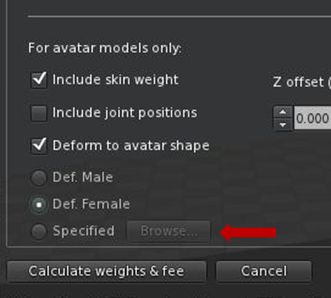
Testing is continuing with the latest release of the Mesh Deformer project viewer, which can be used to deform mesh items to either default or custom human shapes. While the pool of test items remains small, people appear to be testing using their own creations, with at least some feedback being given to the JIRA (STORM-1716), which remains open to comment. If you are testing the deformer using the latest project viewer, please be sure to provide feedback on your results – be they with default shapes or custom shapes – to the JIRA.

Most of the results obtained to date appear to be satisfactory, although some issues still remain with custom shapes. Darien Caldwell, working with Gaia Clary, has identified one issue which exists specifically with the Avastar add-in for Blender co-produced by Gaia.
Avastar is a Blender add-on for Second Life mesh creators and animators which provides a wide range of capabilities, including (for mesh creation): SL shape import into Blender, SL shape sliders support, support for attachment bones, and so on.
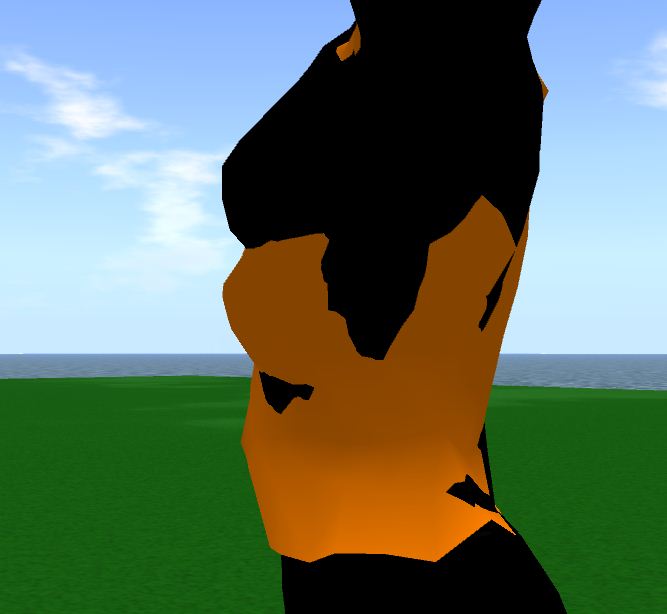
The issue has been that Avastar’s sliders have been based on a scale of 1-100, whereas the viewer’s sliders operate on a scale of 0-100 , leading to some scale miscalculations within Avastar which in turn have led to issues with mesh fitting over body parts such as breasts. According to Darien Caldwell, she and Gaia now have this “pretty well nailed” and an update to correct Avastar will apparently be out shortly (Update: please see Magus Freston’s comments at the end of this article).
This still leaves the broader deformation issue, as reported recently, which is still being looked into, and awaiting some feedback from Qarl.
Other issues outside of these which have arisen with the deformer have been largely the result of unrealistic expectations – that it will, for example, mimic facial morphs or hand movements closely or some changes to feet. However, in these situations, it is important to remember that the deformer was never developed to deal with these, as it works off the avatar’s bone structure, and facial features and hands don not have any bone structure within the avatar associated with them.
Time Frame for the Deformer
While progress with the deformer continues to look good, there remains no ETA as to when the code will appear in the release version of the official SL viewer.
The major reason for this is the ongoing problems with the Beta release channel for the viewer (of which more in the next update for this week!). As it stands, the deformer is positioned roughly at the back of the queue of releases which are being held as LL work to resolve the current crash issues with the Beta viewer. This means that, at least until the Beta issues are resolved, there is no official ETA for the deformer code reaching the release viewer. However, the latest revisions are starting to be incorporated into some TPVs.
In the meantime, and if you have been testing the project viewer, please remember to give feedback via the JIRA.
Performance Concern
While it is not actually an issue with the deformer per se, commenting at the Content Creation User Group on Monday 29th October, Siana Gearz highlighted a potential problem with mesh clothing utilising the deformer and avatar physics.
The concern is that the deformer uses the same morph-based schema as is used by the avatar physics system. This means that the GPU has to do a lot of additional calculations for the polygons in an item of mesh clothing to simulate movement (such as “bouncing boobs”) when avatar physics are in use. This obviously leads to a performance hit. So long as the polygon count in clothing is kept low, the impact is minimal, but the concern is that clothing build using high polygon counts to provide detail could have a larger impact on the viewer.
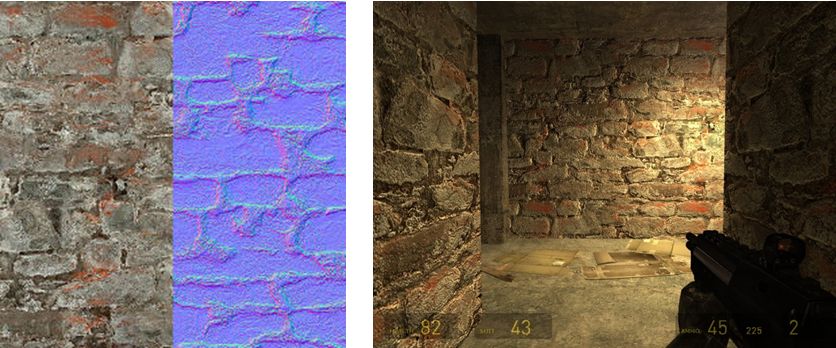
One possible way for this to be avoided, should it become an issue, is for clothing makers to optimise their mesh clothing with lower poly counts – and the forthcoming materials processing capabilities should go a long way towards helping with this.



 Inara Pey: Living in a Modemworld