At the end of 2014, Mitch Kapor stepped back as an active member of Linden Lab’s board of directors.
While no formal announcement was made at the time, I recently noticed Mr. Kapor’s name and biography to be absent from the Leadership section of the Lab’s corporate website’s About page, and contacted Peter Gray, the Lab’s Director of Global Communications to enquire.
“Although he remains an investor in and supporter of Linden Lab,” Peter said in reply to my enquiry, “Mitch Kapor stepped back from his role as an active member of the board of directors at the end of 2014, allowing him to devote more of his focus to the mission of the Kapor Center for Social Impact.”
Mitch Kapor (via Twitter)
Mr Kapor, who founded Lotus Development Corporation in 1982 and designed of Lotus 1-2-3, is also a co-founder of the Electronic Frontier Foundation, was one of the first investors in Linden Lab, and was the company’s very first Chairman of the board, taking on the role in April, 2003.
His decision leaves Dana L. Evan, Bill Gurley and Jed Smith listed as board members for the company.
Dana L Evan joined the board in 2008, bringing with her 20 years of of leadership experience in global finance and operations management, including 12 years as CFO of VeriSign, Inc., where she was a founding executive and a significant contributor to the company’s growth and profitability.
Mr. Gurley joined the board in late 2004, following a financing round which raised $8 million for the company. The round was led by Benchmark Capital, where Mr. Gurley is a general partner, and with participation from Omidyar Network.
Jed Smith was, alongside Mitch Kapor, both one of the early investors in Linden Lab, and an initial member of the board, most recently serving in the capacity of the board’s Chair. In that role, he was largely responsible for identifying Ebbe Altberg as the right candidate for the Lab’s new CEO, following Rod Humble’s departure at the end of 2013, and was also largely responsible for persuading Mr. Altberg to make the move to the Lab.
The Lab’s board (l-to-r): Bill Gurley, Dana L. Evan and Jed Smith
In a press release made on Wednesday, November 5th, Linden Lab announced the sale of Desura, the on-line digital distribution service which they acquired under Rod Humble’s leadership in July 2013.
Desura has been sold to Bad Juju Games, the Indie Game and Middleware Tools Developer for the Mobile, Console and PC Gaming markets, and based in Aliso Viejo, California. In the brief press release, the Lab state:
Bad Juju has taken over all day-to-day support, maintenance, and ongoing enhancements to the Desura website and service platform. The Bad Juju team will be reaching out directly to developers with games on Desura and are happy to respond to any questions they may have.
Transitioning Desura to a new owner is great for Linden Lab and our customers, as it allows us to further enhance our focus on creating the ambitious next-generation virtual world, while continuing to improve Second Life and growing Blocksworld.
Desura is a fantastic platform for game developers and players, and we look forward to seeing it continue to evolve and grow, now as part of Bad Juju Games.
Desura: just 16 months in the Lab’s portfolio
A press release from Bad Juju themselves indicates that negotiations over the future of Desura have been underway for some months:
Indie Game and Middleware Tools Developer Bad Juju Games®, today announced that it has officially acquired Desura™, a comprehensive digital distribution service for PC, Mac and Linux gamers from its former owner and operator Linden Lab®. The move comes after several months of coordinated planning by the companies to ensure uninterrupted operation of the Desura service as well as a comprehensive roadmap of new features that will significantly benefit both its users and game developers during the upcoming months and beyond.
It is unclear what the sale of Desura may mean for Scott Reismanis, if indeed it means anything at all. Reismanis, who founded the digital distribution service, and who joined Linden Lab as “Director of Digital” not long after the acquisition. With his experience in empowering creators to benefit from their digital content, Mr. Reismanis may already be involved in the development of the company’s “next generation” virtual worlds platform.
While this may sound a little like 20/20 hindsight, I confess to being unsurprised by the sale of Deura; I’ve actually been expecting news of this kind for the past couple of months, and particularly since the Designing Worlds interview with Ebbe Altberg. During that programme, Mr. Altberg referred to the Lab being in a process of cleaning up their product portfolio (some 3 minutes into the show), with the use of the present tense suggesting to me that the process was still going on, rather than him simply referring to the company’s removal of Versu, Creatoverse and dio from their portfolio. Given the statements of support that have been repeatedly given about Blocksworld, the comment in the DW show seemed to indicate something would be happening to Desura and / or Patterns.
To be totally honest, at the time I felt it more likely that Desura would be let-go than Patterns, as the latter at least seemed to fit with the Lab’s sandbox creativity philosophy, while Desura always seemed more of an awkward fit, and something more likely to generate a decent return if offered for sale. Of course, as it turned out, Patterns went first.
Confirmation also seemed to come when an enquiry on an unrelated matter led to a response from the Lab that all remaining advertising including Desura, would be removed from their remaining web properties (my.secondlife.com and search.secondlife.com). The reference to Desura chiming as odd, given it was ostensibly a Lab product.
I was broadly supportive of the Lab’s attempts to diversify their product portfolio, even iff the effort always did seem half-hearted. Companies with all their eggs in one basket tend to by very vulnerable to any number of circumstances not always of their own making – although equally, they can also sit very comfortably in a niche and enjoy a long life. Even with Blocksworld still on the books – and another repeated statement that the company will be standing beside that product – it now seems that for better or worse, the Lab has opted to keep only their golden egg, Second Life, and focus on perhaps producing another they can nurture alongside it.
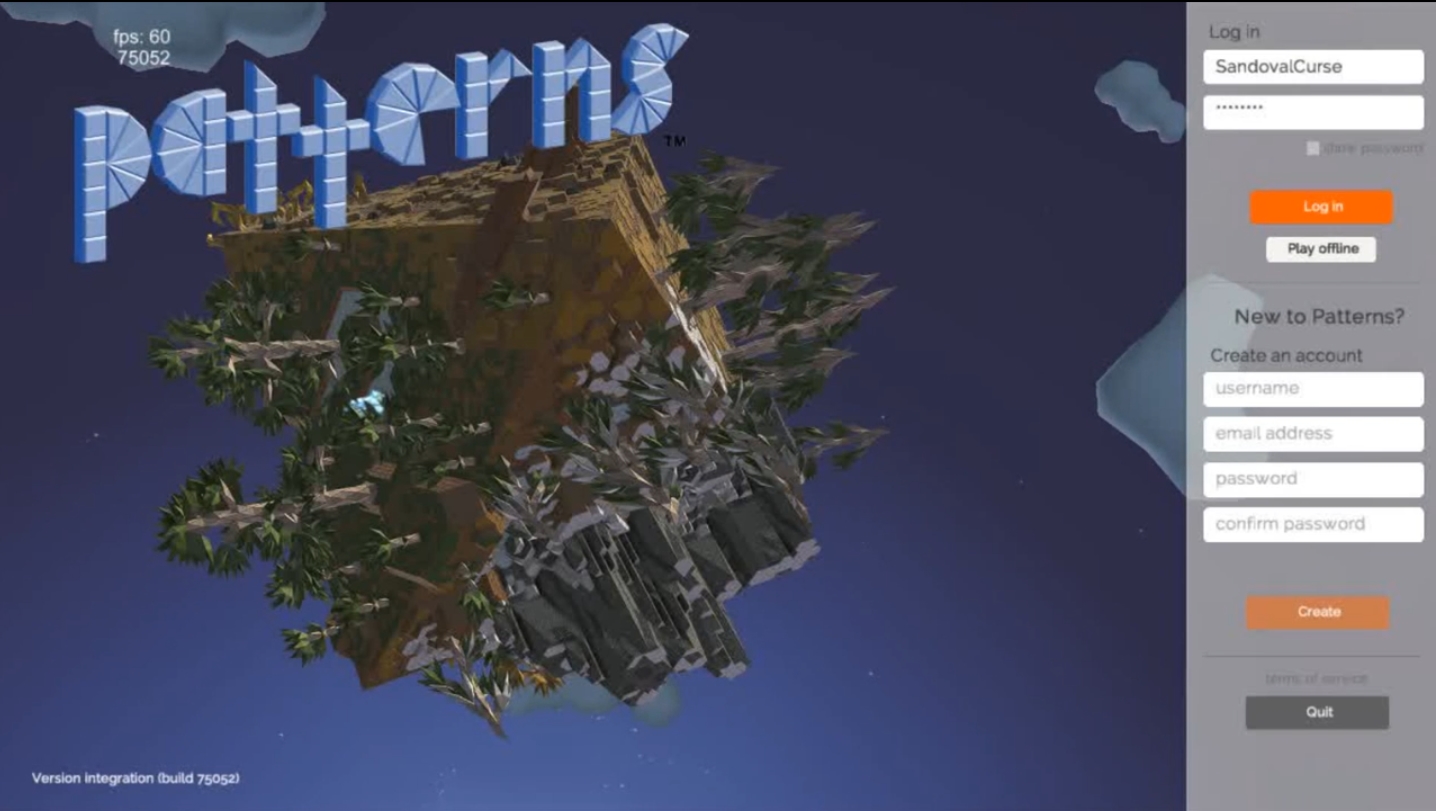
Linden Lab has announced it is discontinuing development of Patterns, its sandbox game for the PC and Mac. In a press release issued on Thursday October 9th, the Lab state:
Recently, Linden Lab announced that we are working on an ambitious project to create the next-generation virtual world, while we continue to improve Second Life and grow Blocksworld. As we focus on these priorities, we have ceased development for Patterns, and we will be no longer offering the game for sale.
We at Linden Lab are extremely grateful for the adventurous early players who explored the Patterns genesis release. Those who purchased the Patterns genesis release will still be able to play their copies of the game, but features relying on server connections, such as world-sharing, will not be functional.
Patterns had early promise, and while Linden Lab focuses our efforts on our other offerings, we are still evaluating the future of the Patterns technology. Interested parties are welcome to contact us with proposals.
Patterns: development discontinued
Following the announcement, the Patterns website was taken down, and all links to it referred back to the Lab’s corporate website. However, the game itself remains accessible, as per the announcement, although the loss of server-side elements means that the Cosmos for world-sharing is no longer functional, limiting users to the worlds they created and save locally or to the default worlds supplied with the game. Also, as a result of the move, keys for the game will not longer be purchasable, although existing keys will remain redeemable for those who have them.
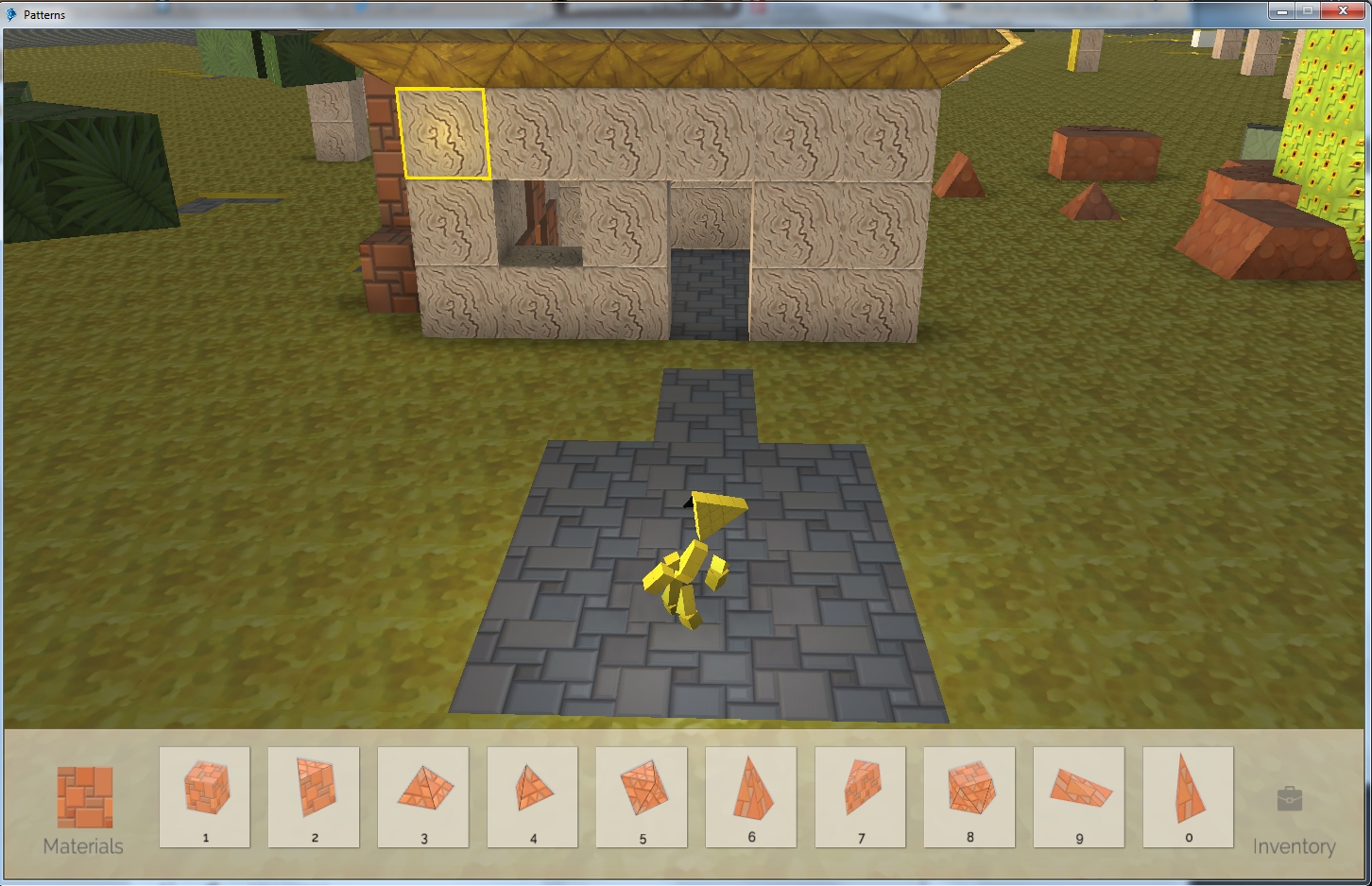
Patterns was another of the games which the Lab started developing (initially using a company called Free Range Software) under Rod Humble’s tenure. Despite never reaching a formal release status, the game had undergone continuous development right through until earlier this year (I covered a lot of the updates and additions to the game through this blog), with the last update introduing a new UI. It also established a quite loyal following of users both through Steam and, later Desura.
In its last major update (May 2014) Patterns gained a revised UI
As a game, Patterns was hard to judge; the sandbox capabilities were interesting, and these came to be a focus, with more and better tools being added, together with the likes of materials capabilities and so on. Over time, creatures were also introduced, and a multi-player capability was added which allowed up for four players to work together (or compete). However, outside of the sandbox element and creating new worlds, and the competitive “you build it up, I’ll knock it down” aspect, it was actually hard to see where Patterns would potentially gain a large enough following to make it viable.
The most interesting point of note with the announcement, however, is that the Lab appear to have taken on-board the Versu situation, and rather than simply closing the door, have indicated they’d be willing to hear from third parties who might be interested in taking Patterns on – albeit with the caveat that the company is still evaluating the technology used in Patterns at this time.
Regular readers here will recall that while the Lab initially closed the door on Versu and indicated that they weren’t interested in seeing its development move elsewhere, they did eventually reach an agreement with Emily Short, Richard Evans and Graham Nelsen which allowed them to take Versu forward under its own banner.
That further changes to the Lab’s product portfolio may be forthcoming was perhaps hinted at in the Designing Worlds interview. In discussing his thoughts on whether or not the Lab was what he was expecting, Ebbe Altberg commented (around the 3-4 minute mark), “some of the other products in Linden Lab’s portfolio were maybe a little bit surprising to me, but we’re getting that cleaned-up” [emphasis mine]. Hearing him use the present tense – given that Versu dio and Creatorverse went at the start of 2014 – seemed to suggest to me that one or more of the Lab’s other products might be under the microscope as far as continued support might be concerned.
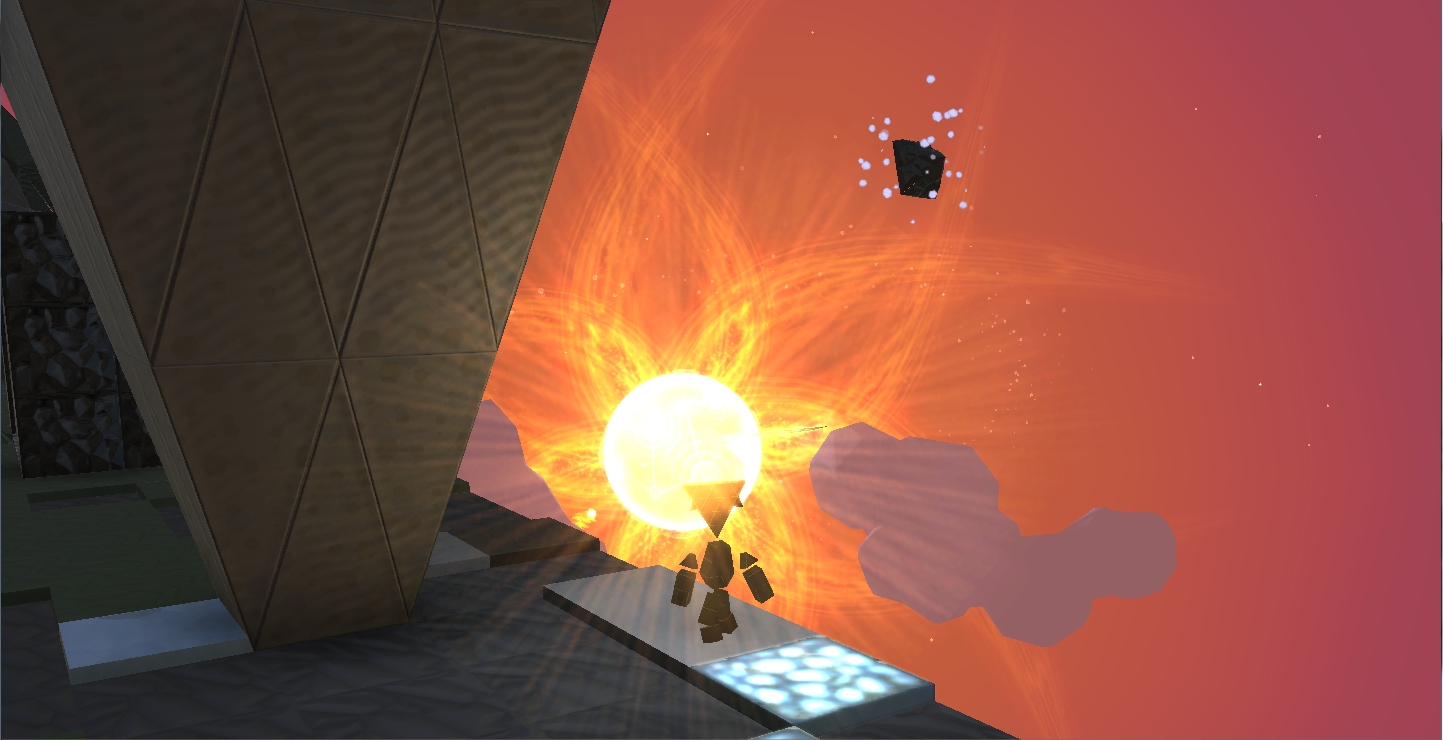
Whether or not Free Range Software have retained any involvement in Patterns, and if so, whether they (or indeed anyone else) would be willing to take it on, is unknown. For the moment, however, it would seem that the little Dorito Man is heading off into the sunset.
Will Dorito Man head into the sunset, or will he yet live on somewhere else?
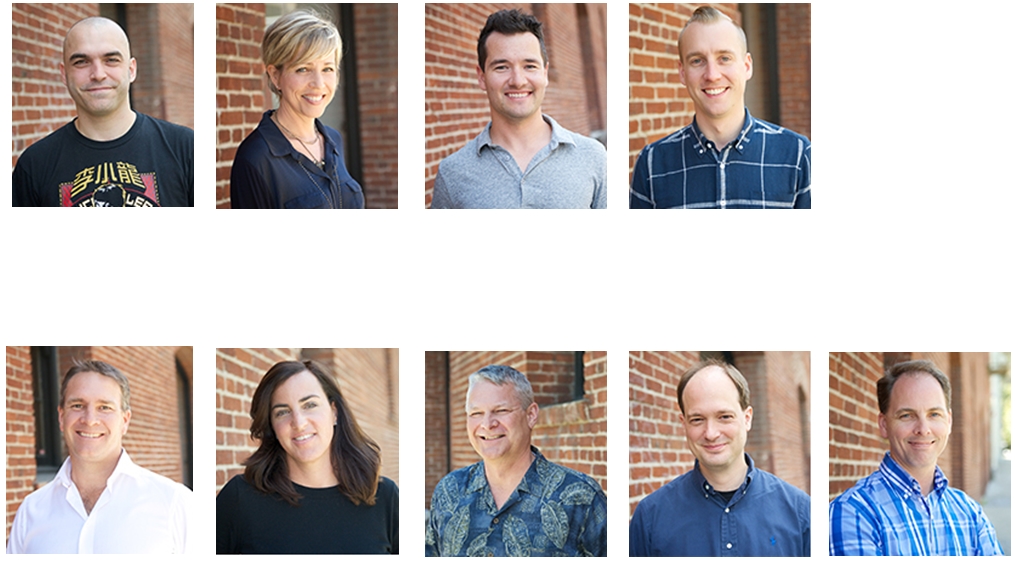
I generally keep an eye on the Lab’s corporate website, but confess that things have been such that over the last month, other things have been keeping me occupied so I’ve been a little lax in my checks; however, the Lab have refreshed the Leadership section of the company’s About Page. I’m not sure precisely when this happened, but it appears to have been some time towards the end of August 2014, or early September.
The updated Leadership section of the page sees an expanded management team list complete with photos for all of those on it, rather than the mix of photos and the “creation” images previously found against individual bios.
New to the page (but not necessarily to the Lab) are photos and bios for Rob Anderberg, Senior Director of Development, Pam Beyazit, Senior Director of HR, Scott Reismanis, Director of Digital, and Peter Gray, Director, Global Communications.
LL’s management team: LL’s management team: Rob Anderberg, Pam Beyazit, Scott Reismanis (of Desura fame) and Peter Gray (tow row) join Ebbe Altberg, Kelly Conway, Don Laabs (Danger Linden), Landon McDowell (Landon Linden) and Jeff Petersen (Bagman Linden) (bottom row) on the Lab’s corporate website management page
They all join the familiar line-up of Ebbe Altberg, Kelly Conway, Don Laabs, Landon McDowell and Jeff Petersen.
Gone from the management list is John Laurence, VP of Product, although his LinkedIn bio still records him as working at the Lab (and he was still listed as a member of the management team in August 2014). if he has in fact recently left the Lab, he succeeds Lee Senderov, formerly the Lab’s VP of Marketing, as the most recent departure from the Lab’s management team; Ms Sederov having moved on from the Lab around April 2014 to join Shopular as the Head of Marketing there.
The list of board members remains unchanged since Will Wright’s departure towards the start of 2014.
These updates both reflect changes to the Lab’s management structure and a gradual re-tuning of the corporate website itself, which also saw the removal of the Beta Sign-up option from the menu bar at the top of each page some time around the end of August, and which had previously seen the tag-line “Makers of Shared Creative Spaces” replaced by “Build Worlds With Us” some time in July or August 2014.
A final potential point of interest on the corporate site lies in the Careers Page, which has a list of ongoing career opportunities most likely linked to the Lab’s planned staff expansion to help in the development of their next generation platform. The point of interest is that two of the current positions – for a Senor Software Engineer and a Senior Software Engineer, Avatar – are referred to as being located in Cambridge, Massachusetts, rather than at the Lab’s Boston office, as one might expect. Does this signify that some of the work on the new platform is being carried out somewhat separately from the Lab’s core activities on the East Coast? Time may tell.
The news of Joe Miller’s passing has been circulating through the SL community for the last 24 hours, and has included a short tribute to his time with Linden Lab published on the Lab’s blog.
Mr. Miller served as the Lab’s Vice President of Platform and Technology Development from May 2006 through until December 2010, and as such, oversaw many of the key technical developments within Second Life.
Joe Miller’s alter-ego at the Lab: Joe Linden, as seen on his Twitter page
These included such activities as moving the grid away from the traditional “black Wednesday” downtimes while things were being banged upon for around eight hours, and users were faced with having to find something else to do with their online time; overseeing the arrival of voice in Second Life; improving the look of SL with the introduction of Windlight; and improving the overall stability of the viewer.
Throughout all of this, Mr. Miller, through his robotic alter-ego, Joe Linden, was popular among SL users, and not averse to meeting residents and participating in meetings. Via the Lab’s own podcast series, Inside the Lab, he discussed many of the challenges involved in running a service such as Second Life which, as Ciaran Laval (who has my thanks for providing the link) pointed out, can be as pertinent today as they were six years ago.
I didn’t actually get to meet by Joe Miller in-world while he worked at the Lab, but we did seem to share something of a passion for space exploration and astronomy. On Twitter and elsewhere, he would point to stunning astronomy and space images; one in particular that springs to mind is also a favourite of mine – a shot of the Earth and the Moon sitting against a backdrop of stars as captured in 2010 by NASA’s Messenger space vehicle when it was 183 million kilometres away, en route to a rendezvous with Mercury.
Joe Miller, a keen sports fan, joined Sportvision as VP, Engineering after leaving Linden Lab in 2010 (image courtesy of Sportvision.com)
Outside of his tenure at Linden Lab, joe Miller had a wide-range career in technology spanning some 30 years, and included time at Atari, Convergent Inc., Sega America and SegaSoft Inc. At the latter two, he respectively served as Senior Vice President, Product Development; and Executive Vice President, CTO, and board member.
Alongside of this, he also founded a number of companies and organisations during his career, including the Perilux Group, a product design company, which was engaged to develop several award-winning products now offered by LeapFrog (he is credited as one of the co-inventors of the original Leapster hand-held educational gaming console for young children), Bright Things, Apple, and Fitniks. He also founded the Knowledge Universe Interactive Studio, where he served as both President and CEO as well as serving on the board of directors.
Following his departure from the Lab, he went on to work at Sportvision Inc, as Vice President, Engineering,
Mr. Miller passed away peacefully on July 27th, 2014, with his family at his side. A memorial page has been established by his family where those who know him can remember him and perhaps leave a few words.
Update: Peter Grey has confirmed with me that Versu and Creatorverse will be removed from the App Store (and the other places Creatorverse had been available) and their websites taken down in the immediate future. The dio website will remain until the end of February, with a message announcing its forthcoming closure.
Linden Lab has just confirmed that three of its products, Creatorverse. dio and Versu have been axed.
After careful consideration, Linden Lab has decided to cease development and support for dio, Versu, and Creatorverse. We’re grateful for those who took the time to experiment with these products in their early days, but ultimately we have determined that due to a number of factors, we and our customers will be best served by focusing our efforts on continuing to provide exceptional service and compelling new experiences for the users of our other products.
dio, Versu and Creatorverse gone from most LL web properties
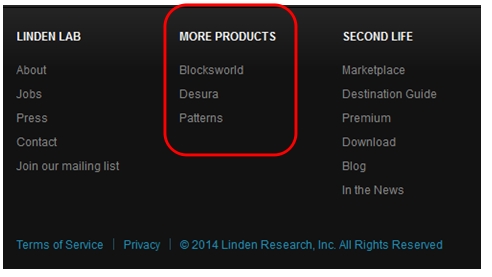
The products have been removed from the footer area of the Lab’s webpages, and from the corporate home page banner and products page.
 At the end of 2014, Mitch Kapor stepped back as an active member of Linden Lab’s board of directors.



 Inara Pey: Living in a Modemworld