Update February 25th: As per a comment from Jessica Lyon, Firestorm have now merged the Server-side Baking code and updates to RLVa into one of their private repositories.
On the 13th February, 2013, the Firestorm team hosted a question-and-answer session so they could outline the current status of the Firestorm viewer, the issues the team (and SL) are facing, and outline plans for both the immediate future and longer-term as well as address questions from the audience.
While the meeting was recorded, the Firestorm team are aware that many of their users have hearing difficulties, and / or prefer to read text. It is because of this that this transcript has been provided, otgether with the original recording itself. When reading it, please remember:
This is not a word-for-word transcript of the entire meeting. While all quotes given are as they are spoken in the video, to assist in readability and maintain the flow of conversation, not all asides, jokes, interruptions, etc., have been included in the text presented here
If there are any sizeable gaps in comments from a speaker which resulted from asides, questions to other speakers or requests for images to be displayed, these are indicated by the use of “…”.
Timestamps are provided as guidance should anyone wish to hear the comments in full from any speaker on the video
Questions were asked in chat during the meeting and while speakers were talking. This inevitably meant that replies to questions would lag well behind when they were orginially asked. Therefore, to provide context for both questions and answers, questions have been included in the transcript and timestamped at the point at which each is addressed by a member of the Firestorm team
The meeting proper commences at 16:36 into the video, and this is the point at which the transcript starts.
Update February 25th: As per a comment from Jessica Lyon, Firestorm have now merged the Server-side Baking code and updates to RLVa into one of their private repositories.
Update, 19th February: A transcript of the core part of the meeting, including Jessica’s Firestorm status overview and the Q&A session, complete with the video recording, is now available.
Update, 14th February: The initial video recording of the meeting is now available on YouTube, and an HD version will be available soon.
Wednesday February 13th saw the Firestorm team host an open meeting to discuss what is happening vis-à-vis Firestorm given all the various ongoing viewer-related projects currently underway (CHUI, materials processing, server-side baking, plus Firestorm’s own updates and improvements) – and when the next release is liable to hit the public at large,
Several members of both the Firestorm development and support teams were on-hand to field questions, with Project Lead Jessica Lyon leading things off with a 15-20 minute overview as to what is happening, where the viewer stands at this point in time, what the plans are for the immediate future and what we might expect to see in Firestorm in upcoming releases.
The Short Version
The Good:
Firestorm will be supporting all of the new viewer capabilities coming out of LL, although CHUI will require careful consideration as to what is adopted and how, as Firestorm already offers several similar options to those being added to the viewer by CHUI
Firestorm will be getting a range of new features (although not all at once) which include: further work on re-implementing legacy search capabilities, the ability to save and reload personal settings; more OpenSim support; new windlight settings; new UI skinning; further work on adding v1-style functionality
The Not-so-good:
Serious crash and other issues have also come to light in merging Firestorm with the latest LL 3.4.5 code which the team are endeavouring to resolve
Server-side baking (SSB) is the priority for the Firestorm team at present (as it is with other TPVs), as it has a major impact on how people will see things in-world, and it is the project which LL are emphasising. However, integration of the SSB code into TPVs (particularly those supporting RLVa) is not proving easy
The emphasis on work at the moment is overcoming bugs, issues and problems and trying to get Firestorm to a point where it is running the SSB code.
Taken together, the latter points mean that while a new version of Firestorm is in development, there will be something a further wait before it appears, and when it does, it my not have such a huge range of new features as has been found in previous releases and might suffer from stability issues.
Jessica Lyon (seated centre, at the edge of the stage) with members of the Firestorm development and support teams, discusses Firestorm on Wednesday February 13th
Viewer Status
There are some serious issues within the Firestorm development code which are delaying progress towards a potential release. Firestorm has been merged-up to the Linden Lab 3.4.5 viewer code, and this has given rise to some severe problems for Firestorm (and is actually having an impact on other projects, as I reported earlier this week).
Commenting on the situation, Jessica Lyon pulled no punches, stating:
I’m going to be completely honest with you guys. Right now Firestorm, for us internally, is in pretty bad shape since our merge with Linden Lab’s TIP (3.4.5 code). There are a lot of bugs that we’ve inherited; there’s a lot of regressions which we’ve inherited. Ed [Merryman, lead for Firestorm Support] is crashing about two times a day – and for those of you know Ed, know that Ed never crashes. So if Ed is crashing on our recent builds, we’ve got some problems. We’ve got some log-out crashes, log-out things; log-in crashes … Basically, we’re not in great shape, and we’ve got a lot of fixing-up to do before we’re ready for a release.
As well as inheriting bugs, the merge has also highlighted bugs and issues within the Firestorm code itself which also need to be fixed. All of this adds up to recent builds for the viewer being “way worse” than the current release version in terms of stability and issues, and it is going to be a while before these issues are fully resolved.
Server-side Baking
Server-side baking is perhaps the most prominent viewer project underway at the moment, inasmuch as it is essential that all viewers connecting to Second Life be able to support it in order to avoid in-world experiences from being broken. Simply put, avatar skins and system clothing will not render on viewers which do not support SSB once the code is fully deployed, as shown below. )Things are somewhat more involved than that, and for those unfamiliar with the project, I’ve covered it in-depth in Avatar Baking: “and the clock has started!”. )
The SSB problem in part: I’m standing on an SSB-enabled region. On the left – as I appear to others who are using an SSB-enabled viewer; On the right, as I appear to others who are using a viewer which does not support SSB.
As it stands, Firestorm has yet to be merged with the Lab’s supplied server-side baking code for the viewer, although work has been underway within the team in a separate repository to the 3.4.5 code merge. A major problem here, as I again reported earlier this week, is that SSB has considerable (and negative) impact with RLVa. These problems are compounded by the fact that the test regions for SSB functionality are all on Aditi, which has considerable issues of its own at the moment, which are affecting people’s ability to reliably test code, and all have scripts disabled – which makes testing RLVa fixes alongside SSB somewhat difficult.
Currently, the Lab remains sympathetic to the issues TPVs are facing (and have offered help wherever practicable), and are not currently pushing a date by which TPVs must be ready for SSB to go live. They’ve also acknowledged that some of the problems TPVs are facing are down to delays on the Lab’s part, such as not making any bug fixes to the viewer code available until January 30th, some seven weeks into the planned eight-week window in which it had been hoped TPVs would be able to integrate the code. However, it is clear that TPVs are feeling under pressure to get SSB-capable versions of their viewers sooner rather than later.
Please use the page numbers below to continue reading this article
Jessica Lyon, project lead for the Firestorm team, has announced that there will be a limited capacity meeting on Wednesday 13th February at 13:00 SLT, to discuss the Firestorm project. The core part of the announcement reads:
Every once in a while, and probably not often enough, we host a Question and Answer session in Second Life for the Second Life community. The purpose is to give us the opportunity to update you all with what we are doing and give you the opportunity to have a say, ask questions you may have to the team, voice complaints, make requests and in general communicate with us directly. This Q&A will not be quite like our office hours. It will not be as formal, it will be far less structured, and it will not be streamed live.
Seating is limited to 70 avatars and is first come first serve. We will, however, try to record it and offer the recording for folks who couldn’t make it.
All are invited, fans and haters alike, people who use our viewers and those who don’t… everyone. All questions are welcome, we only ask that language be kept PG and folks be civil to each other.
Again, note that the meeting will not be streamed live. The venue for the meeting is the Firestorm Office Hours meeting place on the Phoenix Firestorm support region.
On November 17th, the Firestorm team made a beta release of their latest update to Firestorm in order to offer users access to the new Group Services updates for managing large groups. At the time, it was indicated that the “full” release would occur in early December.
Keeping to their word, the team released 4.3.1.31155 on December 3rd, which includes everything featured in the beta release, and a few more goodies besides.
Given I’ve already given a comprehensive review of the beta release, this article will be focused primarily on the updates made between it and 4.3.1.31155 – although there will be some overlap.
As always, please refer to the Firestorm release notes for full details on credits, etc., for code contributions to the viewer, and for details of known issues and problems (known issues carried over from the LL code can be found here).
Download and Installation
As noted in the last review, the download .EXE is big – 40MB, which is unsurprising given that Firestorm packs so much into it. Installation – at a least for Windows users – is where the first set of changes occur, and it is worth recapping on these for people who have not installed the beta release:
A pop-up requesting whether or not the user wishes to have a Windows Start menu entry created for Firestorm during installation
Addition of the version string and estimated installed size to the installer
Addition of new OS detection code to warn if Windows Service Packs are not up-to-date and to prevent Firestorm being installed on Windows XP with
Publisher data, Phoenix URLs and Firestorm icon for the Firestorm entry in the Windows uninstall list
Automatic deletion of all previously installed skins to reduce issues arising from an unclean install
Addition of a DETAILS button in the installer pop-up window to allow the installation to be reviewed.
Havok Sub-licence
As noted last time, Firestorm has now signed a Havok sub-licence agreement with Linden Lab. This means that Firestorm is now available in two flavours – one for SL and one for OpenSim grids, with the SL version having both the –loginURI capabilities and the Grid Manager functionality removed.
This change means that Firestorm is now able to access the new LL-supplied Havok libraries, allowing the viewer to immediately include the pathfinding navmesh visualisation tools (as covered in my review of the beta release), and which could allow Firestorm to switch over to using the official LL mesh uploader code in the future, should they so wish, rather than using the current HACD code for mesh uploads.
For those using OpenSim, Firestorm 4.3.1.31155 can be downloaded here, and I’ve included an update on the OpenSim-specific updates to the viewer at the end of this article.
One point to note is that it is possible to use the OpenSim version of Firestorm on SL – the only difference is the OpenSim flavour of the viewer will not be able to access the SL Havok libaries or use any functionality associated with them.
Updates from Phoenix
Further updates from Phoenix have been added to Firestorm 4.3.1 in addition to those found in the 4.3.0 beta:
Texture Comment Metadata
When opening any texture, this will display the uploader name with a link to their profile together with the date / time the texture was uploaded. If permissions are sufficient, it will also display the asset ID on the texture preview floater.
Progressive Draw Distance (PDD)
A popular Phoenix feature, when enabled, this causes Firestorm to use a progressive Draw Distance stepping after a teleport, to help improve rezzing times. The Firestorm version includes an option to cancel stepping in progress if Draw Distance is manually changed (Preferences > Firestorm > General).
More Phoenix-like default settings for Phoenix Mode
The following Phoenix-like behaviours have been added to Firestorm when running in the Phoenix mode (selected via the Firestorm log-in splash screen):
“Resident” is not trimmed off legacy names
L$ balance changes will be shown in nearby chat instead of toasts
Received Items folder is shown as a normal Inventory folder
Firestorm will now send accept/decline responses for inventory offers after the according button has been pressed and not if the item has been received at the receiver’s inventory already
Group and IM notifications are now sent to the nearby chat console (v1-style) instead of toasts (v3-style)
Legacy Search
Firestorm 4.3.1.31155 re-introduces the V1-style “legacy” search capability for those who prefer it to the V2/V3 web-style search functionality.
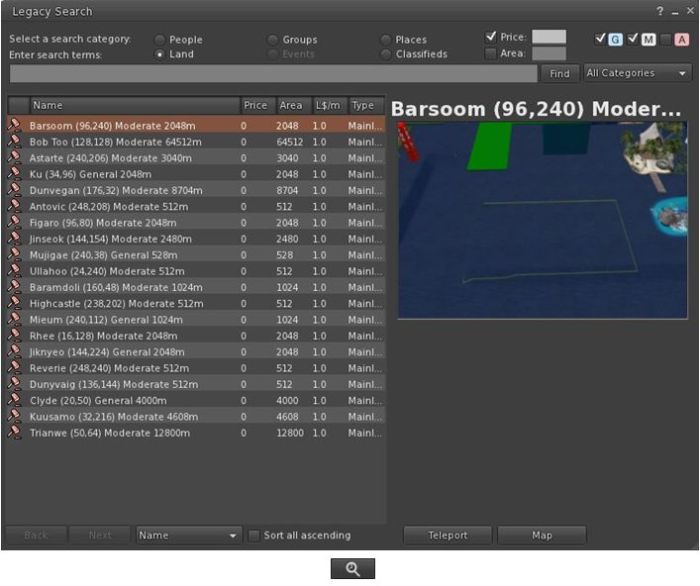
The Legacy Search floater and its associated toolbar button shown in icon mode
Provided by Cinder Roxley, the legacy search option is currently available via a menu option (Content > Legacy Search) or via a dedicated toolbar button, and works for all search categories except Events, which will be added in a future update.
Documentation on the search function is available via the Firestorm website.
Phototools, Windlight and Snapshots Updates
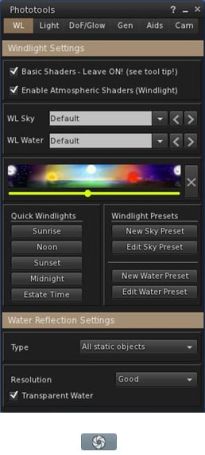
The main Phototools floater & toolbar button, shown in icon mode
Phototools is a suite of floaters which bring together a range of controls, debug settings and options available within the viewer into a single, cohesive set of options aimed at the SL photographer and machinima artist. I’ve covered them in detail previously, and provided a further update in my last Firestorm review. With this release of Firestorm the Phototools floaters (Phototools and revised Camera floater) can be accessed via a menu option: World > Photo and Video.
Alongside of these comes a windlight update of some 100+ presets for water and sky developed by Phototools developer William “Paperwork Resident” Weaver.
These additional presets can be accessed either via the Fixed Sky / Water presets menu option (World > Environment Editor > Environment Settings) or via the Phototool floater (shown right). All of the Phototools presets have “Phototools” at the start of their name.
Also, the Flickr tab on the Firestorm snapshot floater includes Katharine Berry’s update which add the parcel name to the location option.
Firestorm 4.3.0 has arrived slightly earlier than expected, in the form of an initial beta release made as a result of the implementation of new Group Services code across the main grid.
While this is only a beta, and the associated Firestorm blog post gives fair notice that it may yet be somewhat wobbly while final work on getting it QA’d and ready for a formal release is ongoing, there is more than enough in the release to make it something people are liable to be hungry for. So here’s a preliminary review of the release as it stands today, with the caveat that things may change between now and the full release, which is currently scheduled for December.
Download and Installation
The download .EXE is big – 40MB, which is unsurprising given that Firestorm packs so much into it. I’ve been running pre-releases of this version for a while now, and the size has been consistent between them and while much bigger than other TPVs and the official viewer, it hasn’t grown overly much since the last release.
The installer is actually the place where the updates to the viewer begin for Windows users, as it now incorporates:
A pop-up requesting whether or not the user wishes to have a Windows Start menu entry created for Firestorm during installation
Addition of the version string and estimated installed size to the installer
Addition of new OS detection code to warn if Windows Service Packs are not up-to-date and to prevent Firestorm being installed on Windows XP with
Publisher data, Phoenix URLs and Firestorm icon for the Firestorm entry in the Windows uninstall list
Automatic deletion of all previously installed skins to reduce issues arising from an unclean install
Addition of a DETAILS button in the installer pop-up window to allow the installation to be reviewed.
Lab Updates
Version 4.3.0 of Firestorm sees the viewer merged-up the official Linden 3.4.1 code base and the inclusion of later updates which are just filtering through to the official viewer 3.4.2 code pipe. Together these mean that this release incorporates and number of LL updates, including:
Recent updates and improvements to the viewer-side pathfinding code
Memory leak and memory crash fixes
Translation updates (together with further updates from members of the Firestorm team)
Incorporation of the official LL spelling checker (contributed to LL by Kitty Barnett to LL) and the official Auto-replace function (contributed to LL by Kitty Barnett, Jonathan Yapp, Tankmaster Finesmith and LordGregGreg Back)
Rendering fixes and optimisations
Group Services (group management) update (from the LL 3.4.2 code branch) allowing groups with more than 10K members to be edited and updated
Objects by multiple creators show creator details when viewed in inventory (Properties), rather than “unknown”
This release also incorporates the new LL maturity rating function which:
Notifies a user when trying to enter a region without having set the required maturity level in the viewer and presents the option to change their maturity setting (subject to age verification)
If applicable, sends a message to the person offering a teleport that the recipient is unable to access the region due to their maturity level.
Havok Sub-licence
Firestorm 4.3.0 sees the implementation of the Havok sub-licence agreement between the Firestorm team and Linden Lab. This means that this is the first version of Firestorm to be released without any support for OpenSim access. Both –loginURI capabilities and the Grid Manager functionality have been removed.
However, as Jessica Lyon has previously noted, development of the viewer will be forking, and OpenSim support will continue in the future via a version of Firestorm which excludes the code required to access the LL Havok libraries. How tailored the OpenSim version will be for use on those grids is not clear, and those who use Firestorm to access both SL and OpenSim grids should read Jessica’s comments on support in the future.
The Havok sub-licence agreement does mean that this release of Firestorm can access the new LL-supplied Havok libraries which in the first instance, enable TPV viewers to visualise and model the pathfinding navmesh.
The pathfinding navmesh can now be visualised in Firestorm 4.3.0
Group Services
The Group Services update was the main reason for pushing out a beta release of Firestorm 4.3.0.
This code allows for improved loading of membership lists of very large groups, together with improved reliability in editing such groups (i.e. assigning roles, removing people, etc.), by the group moderators. The server-side element of this code has been available on the RC channels for the last couple of weeks, and was deployed to the main release channel on Tuesday November 13th, making it available right across the main grid.
However, in order to be used, it requires additional viewer-side code. Without this additional code, the viewer will be unable to display membership lists for groups with more than 10K members (although any groups with fewer than 10K of members can still be edited using any viewer). Thus, the decision was taken by the Firestorm team to release 4.3.0 in a beta version so that users responsible for managing groups with very large members lists can continue to edit them.
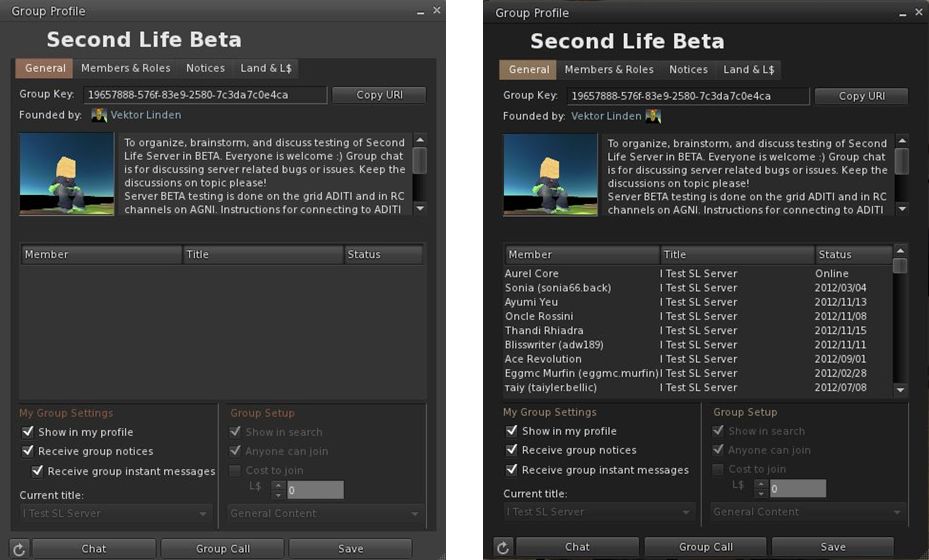
Group Services update – the difference: On the left, an attempt to load a group with almost 20K of members in the current release of Firestorm 4.2.2. On the right, the same group loaded using the new Firestorm 4.3.0 beta.
In making this release, Firestorm joins Cool VL and Niran’s Viewer in being able to handle large groups alongside the official SL beta viewer. However, the remaining TPVs are likely to have updates to support the capability out in the near future (and the code will soon be available in the SL release viewer as well).
Please use the page numbers below to continue reading this review top of page
As a result of the release of the Group Services project code to all of the main grid this week (see my SL Projects news report), The Firestorm team have released a beta version of their upcoming Firestorm viewer update.
The new Group Services code allows for improved loading of membership lists of very large groups, together with improved reliability in editing such groups (i.e. assigning roles, removing people, etc.), by the group moderators. however, in order to be used, it requires additional viewer-side code. Without this additional code, the viewer will be unable to display membership lists for groups with more than 10K members.
To overcome this, and to allow Firestorm users who manage very large groups, the Firestorm team have released a beta version of the Firestorm viewer which includes the necessary code – as well as a lot of other updates.
Group Services update – the difference: On the left, an attempt to load a group with almost 20K of members in the current release of Firestorm 4.2.2. On the right, the same group loaded using the new Firestorm 4.3.0 beta.
Announcing the release, Jessica Lyon, the project manager for Firestorm notes, that while this is not an official Firestorm release, it will be supported by the team but requests that only those who need to manage and edit groups with more than 10,000 members download and install this release. She comments:
NOTE: – This is NOT an official release, but we will provide support for it. – This has NOT been thoroughly tested by our Quality Assurance team. – We can NOT make any promises regarding how stable or bug-free it is. – This DOES have some really cool new stuff in it!
USE IT IF: – You need to manage large groups inworld. – You’re tired of seeing unknown alert messages in Phoenix. – You’re feeling brave, you live on the cutting edge and you want to get an early look at what’s coming in December’s Official Release.
This release means that Firestorm joins Niran’s Viewer, Zen, and Cool VL viewer alongside the official beta viewer in enabling large group editing.
Havok Sub-licence
This beta also includes code to access LL’s new Havok libraries. This means that it will be able to view the pathfinding navmesh, but as a result of the sub-licence arrangement, it will not be able to access OpenSim grids.
Downloading and Installing
The beta viewer is available here for Windows, Mac and Linux. As usual, a completely clean install is recommended for the most stable results.
A full review of the new Firestorm release will be appearing on these pages in due course.
A Note on Phoenix
The blog post from Jessica includes a section directed at those still using the Phoenix viewer, in which she states:
Our developers and support staff have been extremely busy trying to balance their real working and personal lives while continuing their volunteer efforts to develop SL’s most popular viewer for you. Unfortunately, most of us cannot easily compile Phoenix anymore because of missing/expired libraries like Fmod, compiler changes we’ve had to make for Firestorm, OS upgrades (Win8), etc. To update Phoenix to current LL code now would be a very, very big task and, because we are already at our limit of what we can do, there are no plans to update Phoenix Viewer to support this new group code or handle the new notification system at this time. We are, after all, only human.
This is unlikely to make popular reading in some quarters. However, as Jessica notes, the team have striven to make Firestorm’s front-end as much like Phoenix / Viewer-1 as humanly possible. While it is not possible to revert menus, etc. fully to the Phoenix format, the skinning and broad approach to getting as much of the look and feel on Phoenix into Firestorm should go a long way towards easing people willing to make the conversion a lot easier.
This does not mean the end of the road for Phoenix, but with user number falling and Firestorm proving to be a much more stable and reliable viewer which is capable of embracing viewer changes being driven out of LL, it is understandable that the Firestorm team is sounding a warning note as to the future and continued enhancement of Phoenix.
 On the 13th February, 2013, the Firestorm team hosted a question-and-answer session so they could outline the current status of the Firestorm viewer, the issues the team (and SL) are facing, and outline plans for both the immediate future and longer-term as well as address questions from the audience.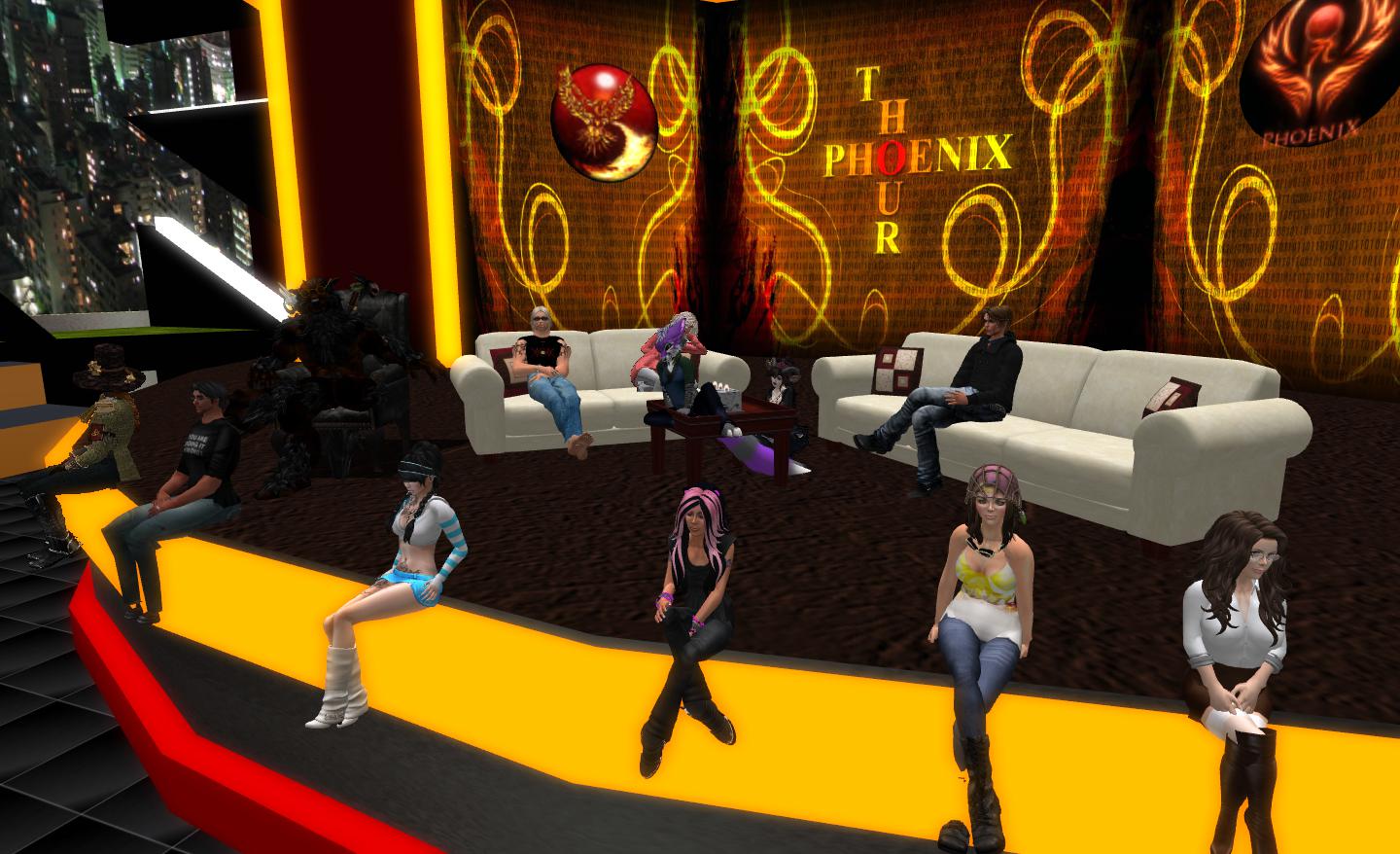



 Inara Pey: Living in a Modemworld