Yúcale: an arts community in Second Life

Yúcale; Inara Pey, May 2019, on FlickrYúcale – click any image for full size

Update: Yúcale has closed, and the host parcel is now home to the OHM Valley hangout).

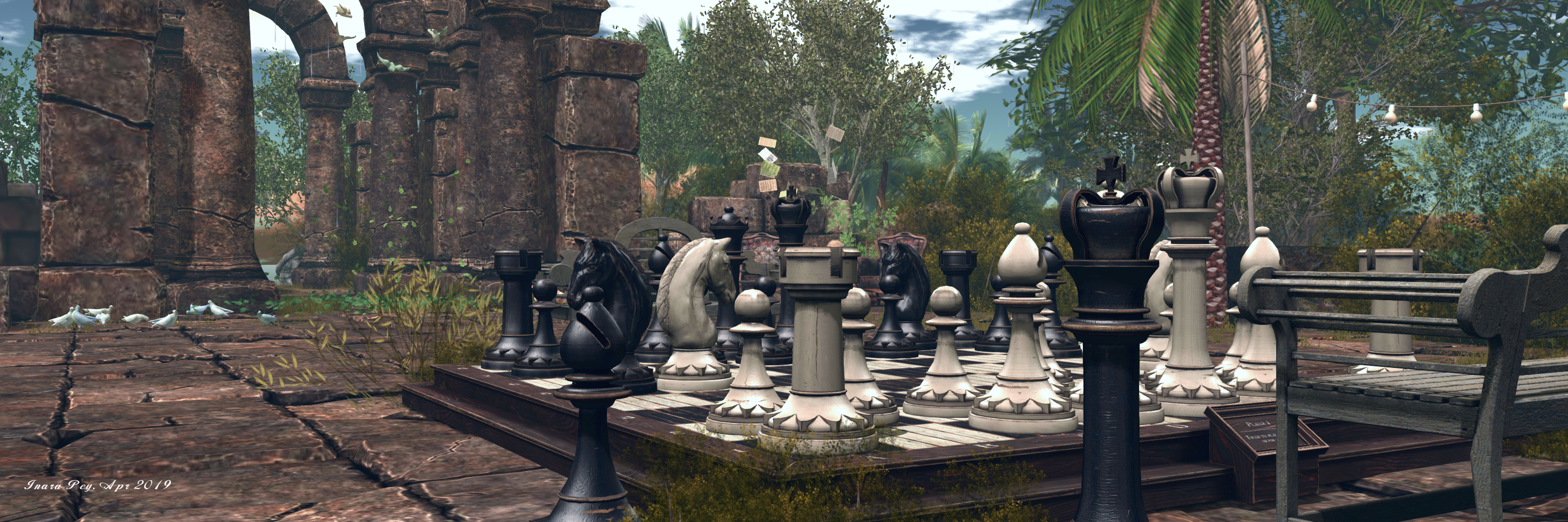
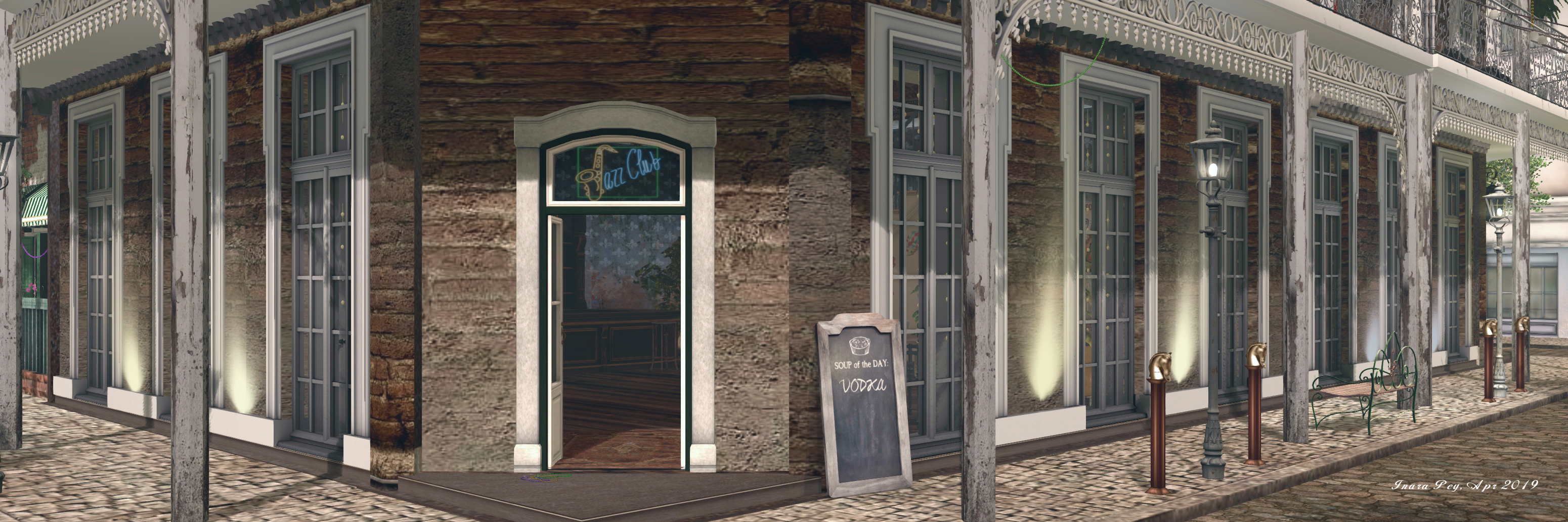
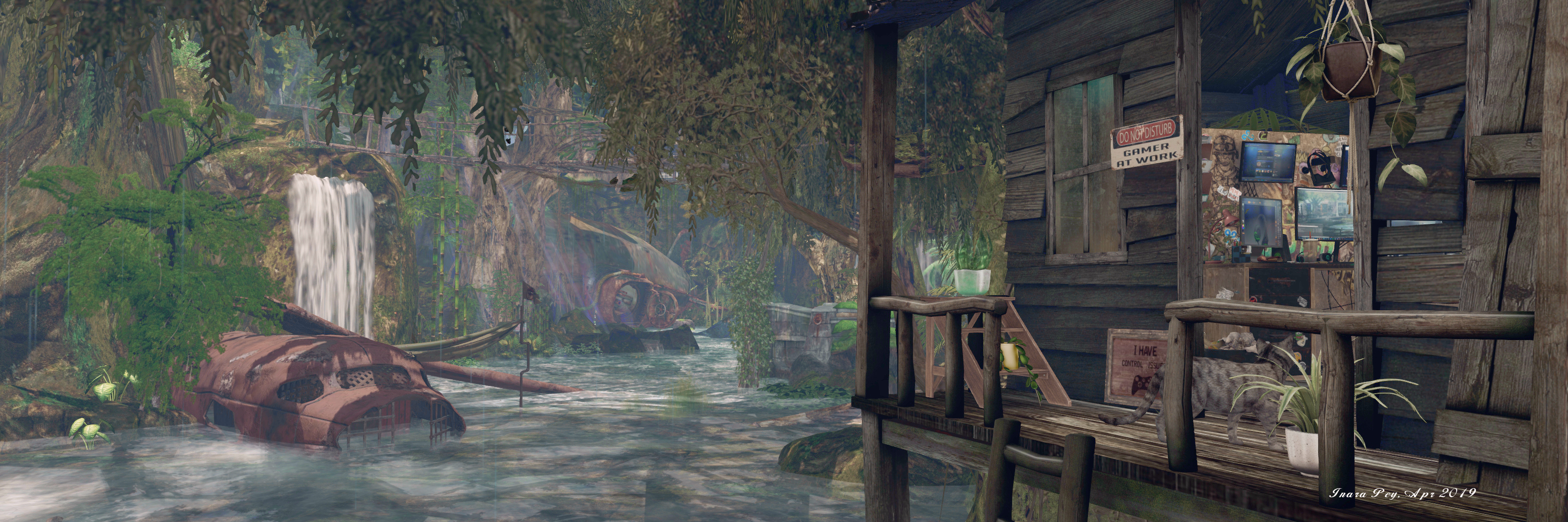
Saturday, May 4th, 2019 saw the grand opening – in fact the official return – of a base of operations for the Yúcale project and community in Second Life, Originally called the Yúcale Café Gallery (the name by which it is still known on Facebook), the project has a long history, as founder Samiraa Adderstein informed me during the second of two visits at the weekend.

Yúcale started in December 2014, we ran from then until June 2018, when I had a half years break from SL due to RL stuff. I started with a 300 LI parcel back then, and we’ve grown a lot since then, and actually moved three times!  We also had some smaller events before the official re-opening, and a benefit for Feed A Smile.

– Samiraa Adderstein founder of the Yúcale Coffee Gallery

Yúcale; Inara Pey, May 2019, on FlickrYúcale

Now called Yúcale Giramondi Virtlantis, the new location for Yúcale covers just under 1/3 of a Full region, and has been designed by Samiraa  – Samum to her friends – with the support of Pater Bac (Bacoo Balut) to be a place for mixed arts: exhibitions by photographers and painters (which will change bimonthly), together with readings by authors, music events. It is also a place where people can – as the About Land description notes, “meet every now and then to play games, listen to radio plays or watch movies together”.

We used to be the Yúcale Coffee Gallery, but I changed the name this time, because Kip Boahn of the Virtlantis language project sponsored us for almost a year, and it is a way for us to say “thank you”. Also, Giramondi was a small café in my home town that ran events like we do here. It has now sadly closed, but I wanted to remember it in our name.

 – Samiraa Adderstein explaining the name change

Yúcale; Inara Pey, May 2019, on FlickrYúcale

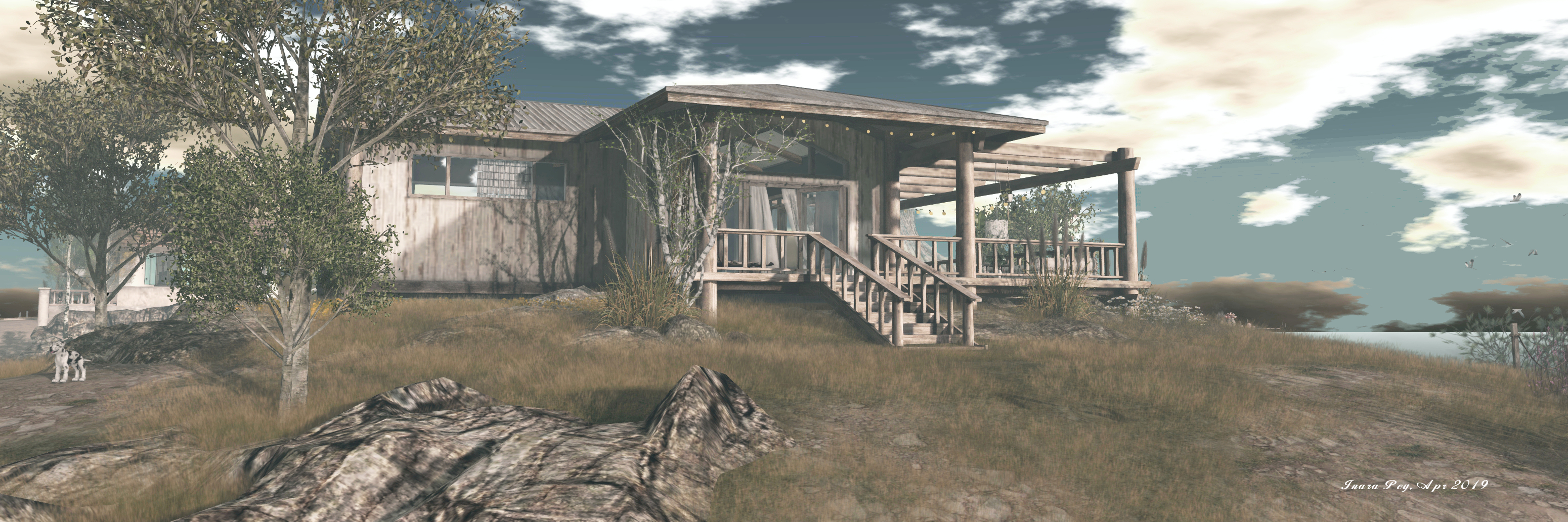
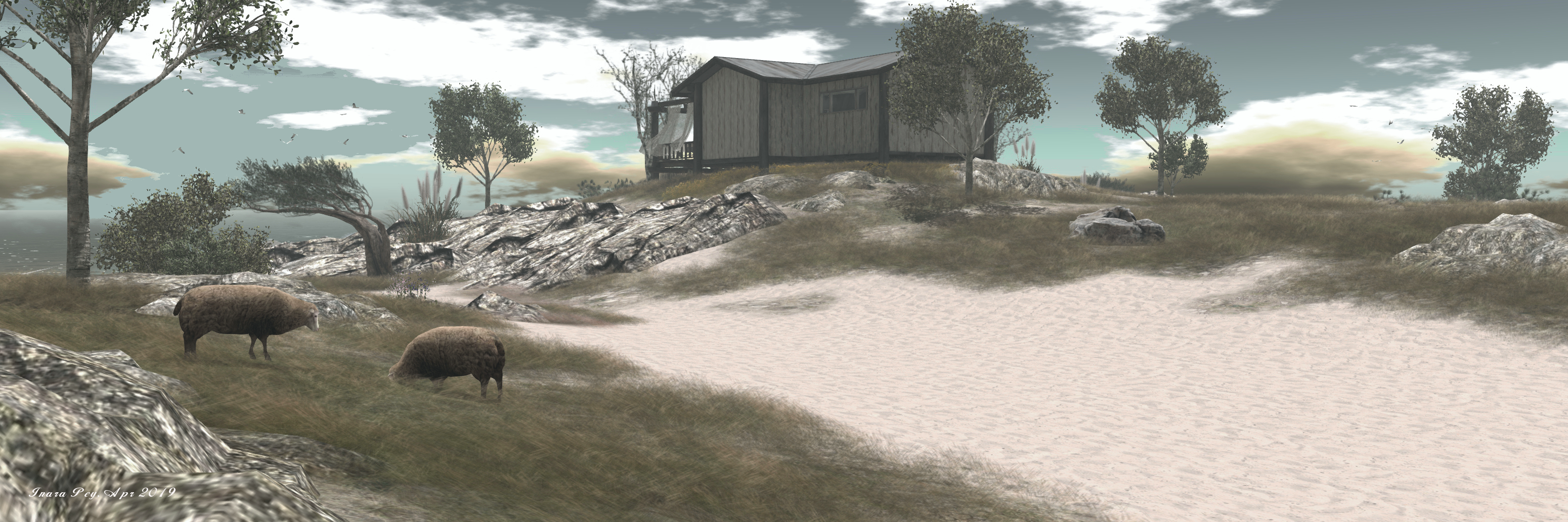
The new design for the community has a pleasantly Mediterranean feel to it. With a southern aspect and shoulder to the west and east by high cliffs, there is an intimate village feel to the location. With moorings down at the water’s edge connected by path and steps to the village above, it’s easy to imagine coming across it whilst sailing along the coast of Italy or Spain, and deciding to come alongside and enjoy an exploratory stroll up to the village square.

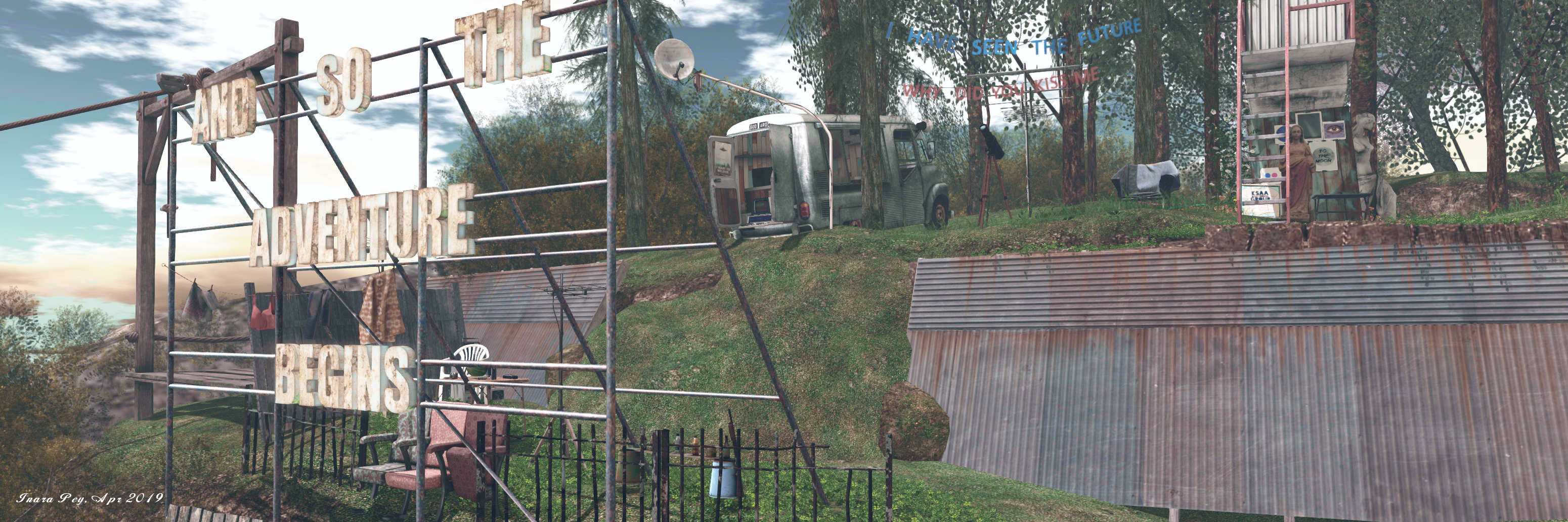
For the official opening, Yúcale features art by Belice Benoir, Jaëlle Faerye, Xirana Oximoxi, Balbera Resident and Samiraa herself. Individual exhibitions are located in different buildings both in the village and the parcel as a whole – Jaëlle’s work is displayed within the out warehouse in the south-west corner of the region overlooking the southern moorings and outside of the village, while Belice’s art can be found up in the little chapel looking down on village from a perch on the eastern highlands.

Yúcale; Inara Pey, May 2019, on FlickrYúcale – Balbera Resident

Yúcale is less a place than an idea. We do cooperative events quite often. On Sunday May 12th we have Sunday Lounge, a travelling event if you like. And As May 25th is International Towel Day, we’ll be holding an event to honour Douglas Adams with author readings, etc.

– Samiraa Adderstein

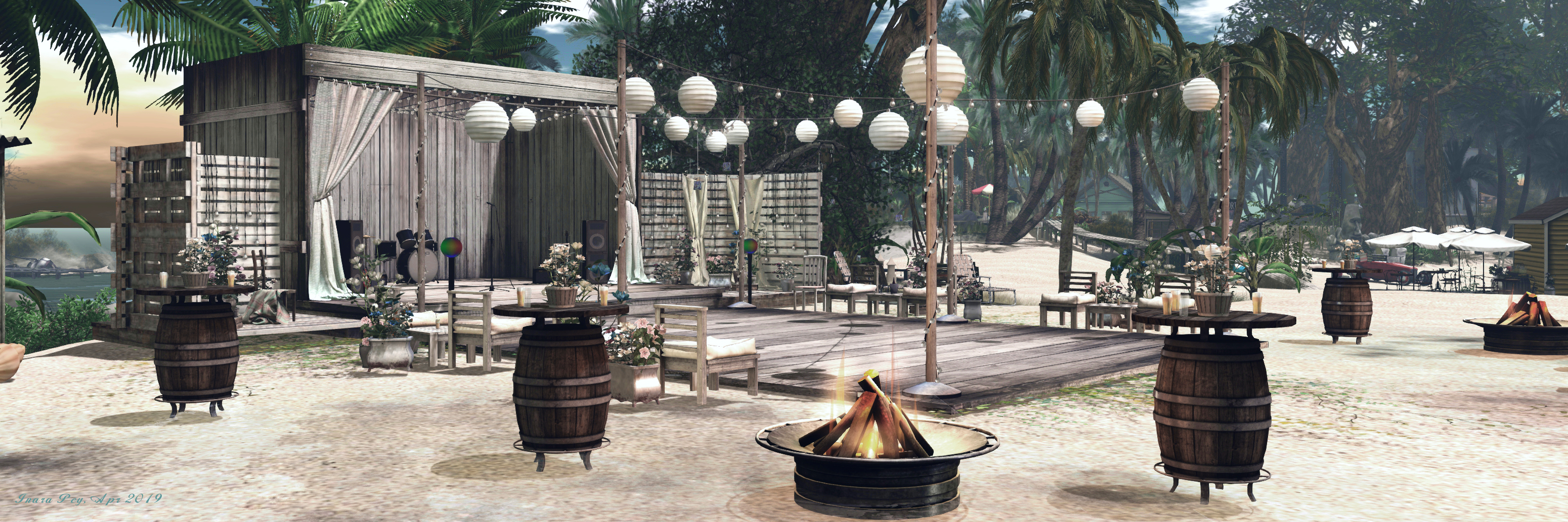
Scattered around and between the art locations are various venues for music – notably the village square and the circus tent down close to the waterfront, while some of the gallery spaces are large enough to accommodate music and dancing during openings. A restaurant / bar sits to one side of the village square, while a little book store (still being finalised at the time of our visits) pays homage to Yúcale’s café origins. In the unlikely event you have problems finding your way around, major venues within the location are linked via a teleport system as well.

Yúcale; Inara Pey, May 2019, on FlickrYúcale

Details of events at Yúcale are published via the Yúcale Café Gallery public Facebook page, the in-world .::Yúcale::. (subscribers at the location), and via a Flickr group. A new in-world publication has also been started, again available from Yúcale.

SLurl Details

City of Solace in Second Life

City of Solace; Inara Pey, May 2019, on FlickrCity of Solace – click any image for full size

Sitting just off Wellington Road as it arcs around the southern bulk of Jeogeot, sandwiched between Route 9 and 10 sits the City of Solace, a region-wide, futuristic city design by Jean K. Smit (jeankyn) and of Bill R. Smit (BlackBlade Smit). It’s an interestingly curious place, easily accessible by road, and with a direct teleport set to deliver people to the main rental office high overhead.

From this latter comment, it should be obvious that this is a location offering rentals – both residential and commercial; however, it is also a place open to visitors, and where casual role-play is potentially encouraged, the Destination Guide description noting:

Solace. A city of wonder, mystery, and amazing vistas. The City of Solace could be considered a city of tomorrow, today. Futuristic architectures, places to see and visit, things to see and do. In accordance to the city, there is also a space installation to explore, named S.O.A.R. Rentable habitation pods, access to starships, etc. There is lots to do for avid role-players.

City of Solace; Inara Pey, May 2019, on FlickrCity of Solace

At the time of our visit, a number of the city units had been rented, so some care is perhaps in order when exploring at ground level. This is reached via a teleport booth outside of the rental office, should you arrive there first. This gives access to three ground level locations: a nightclub, the city’s motor centre (which also supports Get The Freight Out), and the SmitCo headquarters.

The majority of the ground-level city is laid out along a network of enclosed roads which in turn provide access to both Wellington Road as noted above, and with the airport at Annyong to the north-west. Thus those driving through the Mainland or flying over it can pay a visit to the city if they wish.

City of Solace; Inara Pey, May 2019, on FlickrCity of Solace

The residential units appear to be of two sizes, single floor and split level, while local businesses occupy some of the high-rise buildings. There was no sign of role-play when I dropped in; but given the city appears in the Destination Guide’s Recently Added category, and elements of the supporting infrastructure – such as a promised web site – still appear to be under construction, this is perhaps not surprising as the city is still building is residents and businesses. Or perhaps role-play is more focused on the space station.

Located in the sky, the space station is officially called the Solace Orbital platform for Astromineralogy and Research (SOAR). It is reached via a separate teleport system to the main pods, being based on Stargate SG-1 style ring systems. One of these can be found just outside the rental office, lying within a grassy dimple. Another can be found at ground level in a circle of trees towards the south-eat corner of the city, just below the turn-off from  Wellington Road that’s marked by the tall Blue Star truck stop and travel centre sign.

City of Solace; Inara Pey, May 2019, on FlickrCity of Solace

SOAR is a large facility offering both research and residential opportunities. In fact, with its docking facilities, a mid-level public deck, that sandwiches habitation pods between itself and the biodome of the uppermost level, where visitors arrive when using the ring system teleport. One might be tempted to comment it is “a port of call – home away from home – a place of commerce and research…”, even if it isn’t big enough for a quarter million humans and aliens….

The multiple decks of the station are connected by a central elevator system, and while some areas are devoid of content, the public deck offers a bar and a cafeteria area looking out over the docks and their varied visiting spacecraft. The outer sections of the station feature restricted access and contain the main administrative offices and research facilities. Again, usage at the time of our visit appeared light, but this may grow over time as people discover the city and the station.

City of Solace; Inara Pey, May 2019, on FlickrCity of Solace

Overall, there could perhaps be a few more public spaces – the apartments feel a little cramped in their vertical stacking in the city – but overall, City of Solace and SOAR is an interesting – if unexpected – find whilst motoring through Jeogeot. It’s also a place that offers an interesting potential backdrop for photography.

SLurl Details

Whimberly’s summer fields in Second Life

Whimberly; Inara Pey, April 2019, on FlickrWhimberly – click any image for full size

Surprisingly, it’s been fifteen months since we last visited Whimberly, the homestead region design by Staubi Reilig (Engelsstaub). I say “surprisingly” given the region has always hosted eye-catching designs by Staubi, and has thus has tended to be a place for frequent revisits – as a result of which, it already has three prior appearances in this blog. But given we received a tap from Shawn Shakespeare that region’s look has changed in recognition of spring and the approach of summer, so a further visit seemed more than appropriate.

For those whose thoughts are turning to summer vacations, time in the Sun and away from the hustle of city life and the bustle of crowds, this iteration of Whimberly could be just the way to visualise such a getaway holiday. With a lean toward a Mediterranean feel, the region offers a genteel rural look and feel, dominated by a field of gold that arcs around the southern and western sides of the region, bordered on three sides by rocky slopes that fall away to the seas, whilst washing up against an abrupt rise in land on the fourth, in the lee of which sits a large Tuscan villa.

Whimberly; Inara Pey, April 2019, on FlickrWhimberly

The landing point sits over to the east of the island, on a broad headland topped at a small formal garden. From here a track winds away westwards, dropping down to where a deck sits out over a shallow cove, before rising past an flat-topped upthrust of rock presents a table upon which weeping willows shade a picnic spot, reached via a spiral path. Beyond this, the tack continues onwards to reach that field of gold – and then ending unexpectedly.

North of the landing point, a bridge has been strung across the narrow finger of water that has splits this part of the region into two headlands. With a north facing beach, the land across the bridge offers much to be explored, be it following the grassy path marked by rope lines and the bent figures of trees that appear to have struggled to grow in strong winds, or taking the path eastwards along the rocks above the ribbon of beach.

Whimberly; Inara Pey, April 2019, on FlickrWhimberly

Take the former, and the grassy path will eventually lead you to where a second bridge spans the channel between the bulk of the region and a small island, home to a squat lighthouse below which chairs and an bench offer a most excellent view back across the north side of the landscape. This route also has a path down to the edge of the waters flowing outward from the channel betwixt the two headlands. Here an egret patiently watches the slow passage of water and flowers grow in profusion.

The channel originates at an oval pool of fresh water lying almost at the heart of the region, beneath the high curtain of rock that separates it from the field of gold to the west. A slender ribbon of water drops from this natural curtain, constantly replenishing the pool, the rugged southern banks of which are marked by places to sit and look out over the waters. There are most easily reached via the wooden steps that descend from the back of the villa, passing under a natural arch in the curtain wall of rock in the process.

Whimberly; Inara Pey, April 2019, on FlickrWhimberly

The villa sits as a comfortable home, its two wings built around a walled courtyard with swimming pool, suggesting it is a holiday home, not a working property, despite the field washing against its boundary. Each wing is clearly defined in terms of use: one forms the living area, with bathroom above, the other sits at the kitchen and dining area with the bedroom above, with both upper floors reached by external stairs. It’s the kind of place one could lose oneself at during a vacation, and while it has not real garden of its own, a set of wooden steps sitting just outside the walls on the north side drop down to where a terrace of cut stone sits out over the waters, lit by large lanterns to help with appreciating the sculptures there, and with more seating close by.

Nor is the villa the only living accommodation on the island, however. Further along the northern coast and overlooking the beach, sits a cost wooden summer-house. mounted on a silt-legged wooden platform, this offers a view back towards the lighthouse and along the sands of the beach. It is also comfortably furnished in the manner of a holiday retreat, although it contains Staubi’s office. This appears to be more as a means of advertising her photography and design work, rather than being an actual place of business, as the house is otherwise open to public visits, as is the villa.

Whimberly; Inara Pey, April 2019, on FlickrWhimberly

With chairs and benches and swings scattered throughout, as well as things like the little picnic spot and courtyard and deck seating, this iteration of Whimberly offers plenty of reasons to not only explore, but to sit and stay a while. The openness of the southern and western aspects of the land making it ideal for horse riding, and  – although this should go without saying – there are photo opportunities a-plenty to be had.

Finished with an ideal windlight (that also works well under EEP), and with a rich, natural sound scape, this is a version of Whimberly that – like its predecessors – should not be missed. Should you enjoy your visit, please consider making a donation towards the region’s continued public presence in Second Life, via the donation box at the landing area.

Whimberly; Inara Pey, April 2019, on FlickrWhimberly

SLurl Details

HoPe: a world without humankind

HoPe; Inara Pey, April 2019, on FlickrHoPe – click any image for full size

Update: HoPe has closed, and the region hosting it has a new region holder and is being repurposed. SLurls to the build have therefore been removed from this article.

We first visited HoPe on the suggestion of Shawn Shakespeare at the start of April 2019. This is yet another region designed by the team of Fred Hamilton (frecoi), Alexa Maravilla (Spunknbrains) and Lotus Mastroianni, who have previously produced settings like Little Havana (with Sofie Janic – see: A trip to Havana, with a little Voodoo In My Blood), so the names alone were sufficient to further pique my curiosity on hearing about the region.

At the time of our first visit, HoPe had just opened, and was subject to some heavy traffic, so I opted to hold off blogging, as the region can take its toll on the viewer, and having a lot of avatars bouncing around at the same time certainly doesn’t help! Things are quieter now, so while the region can still present a performance hit for the viewer, I thought this week might be a good time to head back and take another tour.

HoPe; Inara Pey, April 2019, on FlickrHoPe

During out initial visit, the About Land floater had a short description about nature reclaiming a city that has befallen a disaster. On my return mid-month, that had changed to a more succinct description: The World wouldn’t die without the Humankind. A bleak outlook perhaps, but one that accurately describes the setting.

The is a setting in which it is clear some form of widespread catastrophe came to pass; the shattered remains of an elevated roadway almost rings the empty remnants of a city in which the roads lie crumpled and ruined, and the buildings are little more than empty shells, some of them leaning against their neighbours  as if seeking support as they stumble over the ripped and broken asphalt beneath them.

HoPe; Inara Pey, April 2019, on FlickrHoPe

In one corner, a subway tunnel had been thrown up, a broken maw spanned by the ruin of a subway car. From this, and the wrecks of cars in the streets and on the roadways – including those of fire trucks -, together with the broken fuselage of an aeroplane, indicate whatever happened, came suddenly and without warning, bringing chaos in its wake.

Oddly, the one part of the city that appears to have suffered the least from the cataclysm is a building site off to the south, atop a low hill. Here stands the skeletal frame of what might have eventually been a set of pristine apartments offering a grand view out over the city below; or perhaps it was destined to be a shiny new office building or some new factory premises. Earth movers sit outside, as do free-standing banks of spotlights – still oddly working; and while the sky crane towers might be broken, and the safety fence stands rusted and leaning, with nature encroaching into the building itself, the site stands oddly pristine, like the bleached bones of a whale on a beach.

HoPe; Inara Pey, April 2019, on FlickrHoPe

Throughout the setting are all the signs this was once a place of bustling human habitation. Faded store fronts line streets city, and graffiti sits on walls. Given the chaos that has ensued, some of the latter might actually now appear prescient: from one wall, the likeness of the late Heath Ledger’s Joker stares down at a street, a spray can of his laughing gas in one hand, while just around the corner, Harley Quinn, from her days in the Suicide Squad, swings her bat, both of them bringers of pandemonium.

While the initial catastrophe made have visited itself on the city without warning, nature has long since announced its determination to lay permanent claim to the neighbourhood. Open spaces now lie flooded, for example; might there have been a tsunami as well? Or has global warming subsequently led to a rising in sea level? You decide. Along the fractured streets, trees now add to the chaos, trunks further breaking the asphalt, roots eating into the foundations of building, adding to the canted appearance of some.

HoPe; Inara Pey, April 2019, on FlickrHoPe

It is with the trees that we have perhaps the clearest indication of whatever happened here happened a long time ago: some have matured to such an extent that, should people ever return here, without a significant lumber operation, the elevated roadway can never be repaired. For now, however, the buildings and town houses are home only to bushes, shrubs and brambles, the raised sections of subway now little more than trellises for plant growth, the air heavy with the sounds of birds, the once proud rising form of the new building now an apartment house for (possibly now feral) cats.

All of this is evidence that, when all is said and done, nature has the power to survive, no matter what humans might do. But also, on some deeper level, perhaps, just perhaps, there is a message that humanity also has the power to survive: just catch the sound of a radio in the air, caught within the cacophony of bird song, or the child’s rubber duck sitting on a streetside bench.

HoPe; Inara Pey, April 2019, on FlickrHoPe

Heavy going on the view it might be, but HoPe offers an ideal backdrop for photographers looking for something to frame their avatar studies, or who are looking for a more unusual landscape to capture.

Bellisseria gains a coastal airstrip in Second Life

Flying over the new island airstrip at Coral Waters off the west coast of Bellisseria

Update: Abnor Mole offers a list of rez points for vehicles and boats (again, as per the note below, keep an eye out for the lighthouses for the majority of the latter).

The Moles have been busy again! Following requests for airstrips within Bellisseria, the new Linden Homes continent (something I’ve actually requested in these pages as well), one has appeared off the west coast, complete with a boat rezzing area alongside.

We spotted it by chance whilst taking one of the boats out to try local region crossings; in fact, the airstrip was so new, it hadn’t actually appeared on the world Map – although we weren’t by far the first to spot it. By the time we happened to motor past it, the island was already the subject of considerable attention – some of it probably not suited to the environment (such as attempts to rez an ocean-going freighter followed by a United States Navy warship).

At the time of our initial visit (by boat – we’re loitering at the left-hand ed of the island in the photo) the Coral Waters airstrip was so new, it hadn’t even propagated to the world Map – but people were finding it!

Situated on a low-lying sandy island in Coral Waters, the airstrip has a tarmac runway suitable for light aircraft, complete with a rezzing zone off of its north end (although the mesh here can give some aircraft a little trouble when trying to clear the runway onto it).

The boat rezzing area – one of a number scattered around the region (generally on the offshore islands such as Springhurst Gulf or those with lighthouses on them) – sits on the east side of the island with a couple of piers. Rezzing time for both airstrip and piers is set to 2 minutes, which should be enough to get a ‘plane or boat pulled for inventory and sat upon.

The position of the island, with the north-south orientation of the runway means there is plenty of room for aircraft manoeuvring when taking off or positioning for a landing – just be sure to be careful if turning west on climbing out, as the island isn’t too far from the grid boundary.

Readying the TBM Kronos for take-off at the new Coral Waters airstrip – the aircraft rezzing area can prove a little rough for some ‘planes

Following our boat trip, I dropped over to the airstrip to give it a go using my TBM Kronos (see Flying the TBM Kronos in Second Life for a review). There’s not really a lot to report in this respect, other than the fact the airstrip does exactly what it does on the tin – provides space for flying out of / into for light aircraft (it’s really not suitable for jets or larger ‘planes), and has room enough from helos – again providing they are not oversized.

It’ll be interesting to see how popular the new airstrip is once the novelty of its arrival has worn off – and whether another might pop-up somewhere else in or around Bellisseria. Kudos to the LPDW for being so responsive (again) to requests!

SLurl Details

Re-visiting Elvenshire in Second Life

(Fae Forest), Elvenshire; Inara Pey, April 2019, on Flickr(Fae Forest), Elvenshire – click any image for full size

Update July 2019: Elvenshire has closed, and Zuma relocated to a new location (see A new (fae forest) in Second Life, also now closed) for details. Because of this, SLurls have been removed from this post.

It’s been two years since our last visit to Elvenshire, the Homestead region designed by Zuma Fae Dust (Zuma Jupiter); a fact I was recently reminded of by Shawn Shakespeare, who actually originally pointed the region out to us back in March 2017. So this being the case, we girded our lions for teleporting, and hopped over to renew our acquaintance with the region.

Back in 2017, the region was set as a place rife with magic and not a little romance, rich in little vignettes and suggestions of an elven (or at least fae) presence. A lot has changed since then; now simply called (Fae Forest) the region still encompasses a forested feel – but this time it is a rain forest, suggestive of somewhere in the sub-tropics, backed against at high arc of mountain-like terrain, the rest of the setting smothered by a heavy blanket of foliage hiding it from prying eyes overhead.
(Fae Forest), Elvenshire; Inara Pey, April 2019, on Flickr(Fae Forest), Elvenshire

Much of the land around the feet of the trees is flooded, with water tumbling from the inaccessible uplands (while a path does offer a way up the steep hills, it only goes so far – to a plateau where a Koi house sits alongside the tumbling waters of falls). This is one of several places available for visitors to find when exploring the region.

Several of these maintain the mystical feel present within the region at our last visit. There’s an ancient, broken rotunda, for example. Slowly being overtaken by forest growth, it marks the way to an ancient garden area that in turn leads to an aged bath house rich in décor, brought together in an eclectic mix that completely satisfies the eye. A door to one side of this structure offers a way back to the landing point – but taking it might risk missing other attractions.
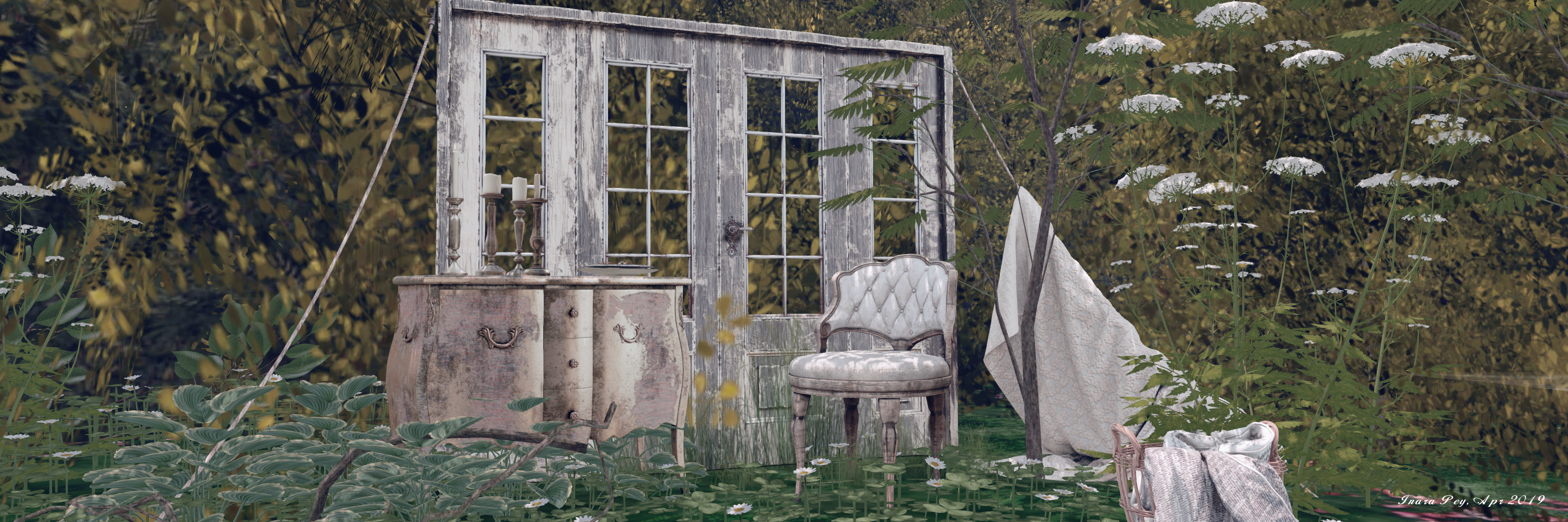
(Fae Forest), Elvenshire; Inara Pey, April 2019, on Flickr(Fae Forest), Elvenshire

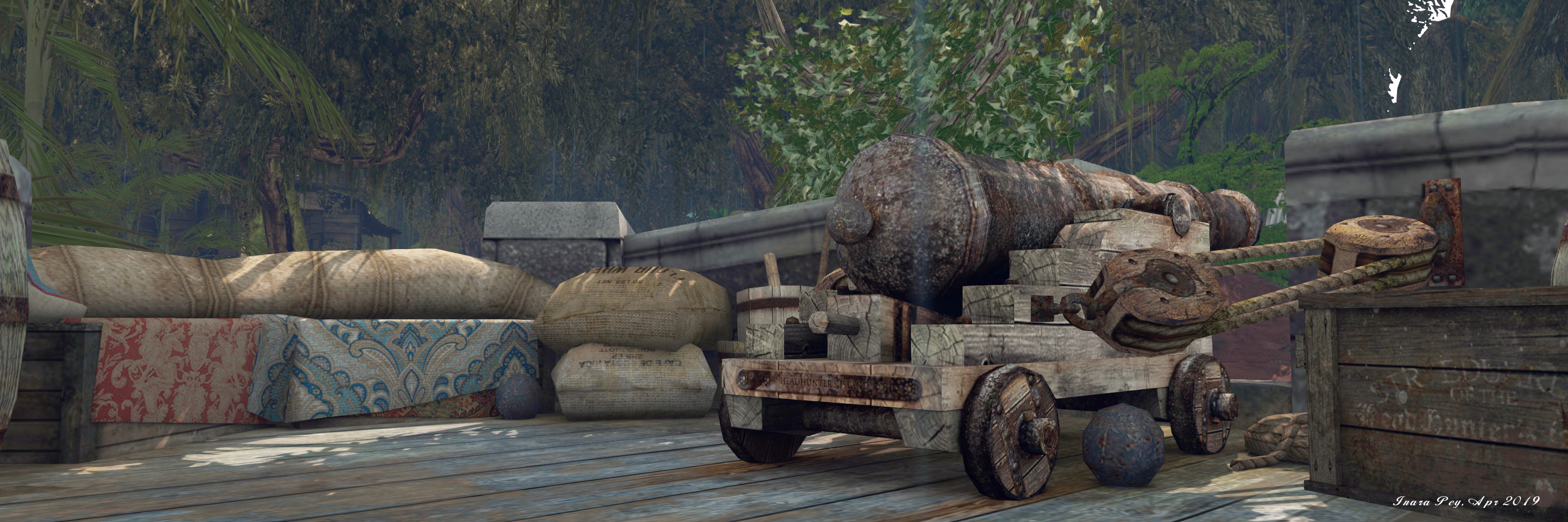
Elsewhere sit hints of fantasy and the fantastical: a great blue whale, swimming without moving on the water rather than below it, a garden on its back, the bulk of spaceship like submarine close by. Then there are the little vignettes still waiting to be found: the old round stone turret when rusting canon and makeshift sofa, the gamer’s hideaway, all sitting between and under the trees.

And then there is the landing point itself, a hall close to the edge of the region. It has a wonderfully homely feel to it setting that immediately puts one at ease, yet holds an exotic look offering the promise of discovery within the region beyond.
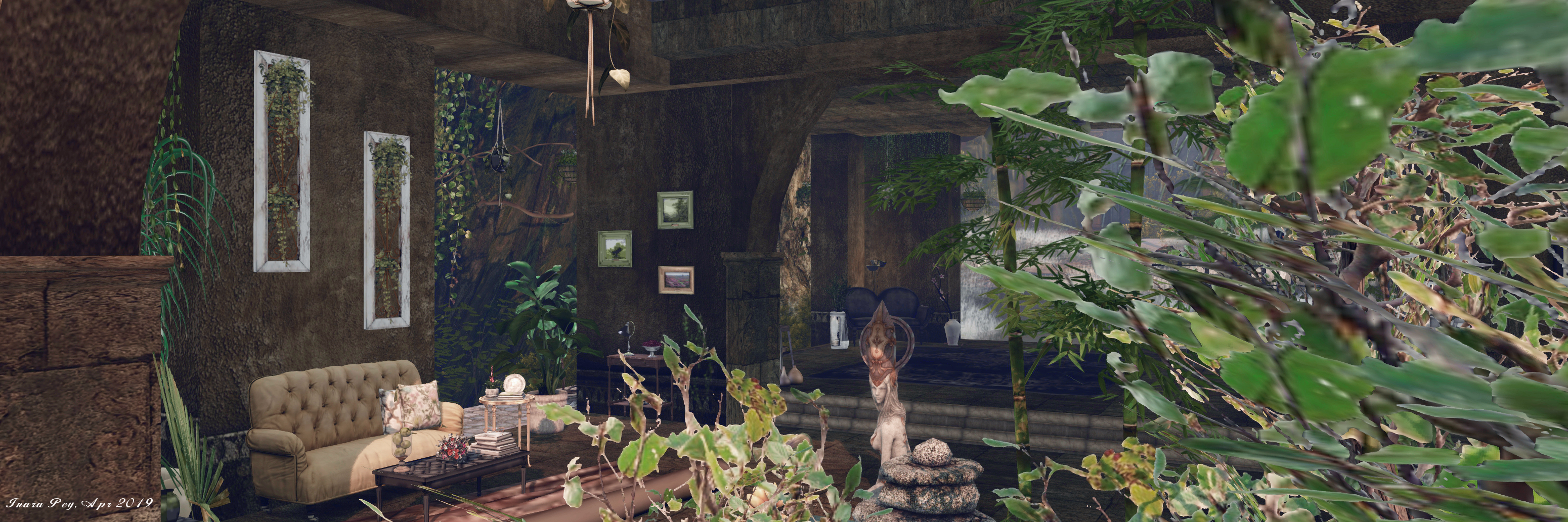
(Fae Forest), Elvenshire; Inara Pey, April 2019, on Flickr(Fae Forest), Elvenshire

Should the forest prove too oppressive, gated steps run down from the landing point to a short tongue of land that licks the edge of a little grassy island crowned by a single tree (although two more lie to one side) and a sunken ring of standing stones. Here the rain falls lightly, and may well ease the more enclosed, oppressed air some might feel under the heavy foliage of the rain forest.

For those who fancy more of a challenge, the route to the path up the hills mentioned above can take some finding, but it also does reveal another little cuddle spot for romantics. Also, take care when crossing the bridges that form part of the route to the hillside path; we both fell through parts of the bridges to take a further dip in the waters below.
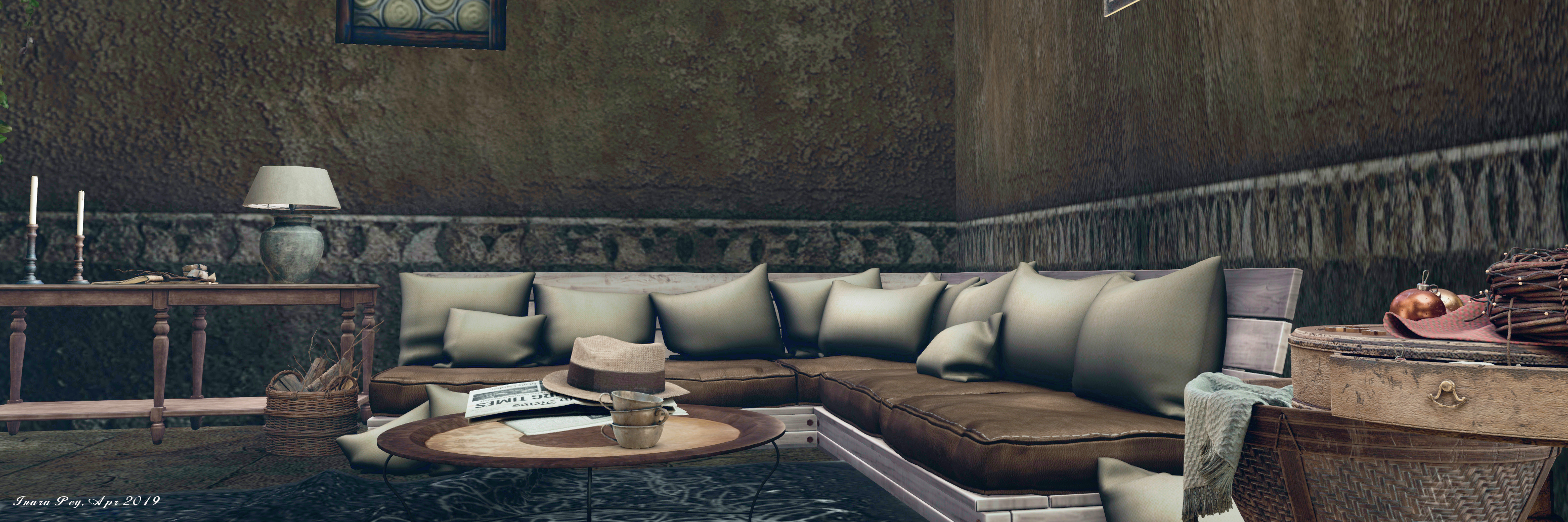
(Fae Forest), Elvenshire; Inara Pey, April 2019, on Flickr(Fae Forest), Elvenshire

This is a very different setting from the one we witnessed two years ago – hardly surprising since it is two years since our last visit; but it is one that remains photogenic.