Tonarino: an oriental curio in Second Life

Tonarino, December 2019 – click any image for full size

Shawn dropped a landmark for Tonarino, a Full region with a distinctly Japanese look and feel. A group design, the region is split into five major parts – not all of which are open to the public. To the south is a square block of a flat island, topped by scrub grass and what appears to be a café, while off to the west are three more fairly regularly shaped islands in a north-to-south line.

The majority of the region, however is given over to a large landmass the rises from east to west, and is home to a small semi-urban setting that sits at the end of a single line of railway track. A wooden bridge connects the little town with southern islands, and on crossing it, I found no evidence that the island and it’s café are not open to the public.

Tonarino, December 2019

However, given that the westward islands are separated from the main landmass both physically and by the fact the lay of the land largely hides them from view, they would seem to be collectively for private use. Certainly, the middle of the three islands – and the only one that offers a landing point for those making use of the pedal boats available from the western shore of the town –  is restricted to Group access only. Given that the north and south islands either side of it are only connected to it and are without any obvious at which to come ashore for those using the pedal boats, there is the suggestion that they are also private. Either way, I opted not to risk trespass.

The eastern side of the main landmass offers a mix of buildings from cement blockhouses with shops on the lower floor to little apartments on the floor above to stores and eateries modelled along more “traditional” lines all split into little groups by a small grid of roads and by the railway line. Sitting among them is space to grow vegetables an fruit although part of this ground is apparently lying fallow under the snow. To the west, between the hills, the ubiquitous school blockhouse that is often found within regions with a modern Japanese theme, squats as it overlooks the pedal boat moorings mentioned above.

Tonarino, December 2019

The railway line terminates with a station that’s little more than a waiting room with a bus stop neighbouring. On the other side of the track the land that is being cleared for building. A stream tumbles from the hill to the south-west to run parallel with the train line as it emerges from a tunnel under the hill before it eventually turns inland to cross the stream via a trestle bridge. Stone steps also climb the hill to overlook the waterfall and to provide access to a small cemetery.

To the north-east another craggy hill rises, stone steps cut into its face. It is home to the solid presence of an old temple sitting within a small garden, a little refreshment stand lurking just outside the gardens for those feeling hungry after a climb up the steps or a time of prayer in the temple. A (large) step down from this on an out-thrust shoulder of rock is an traditional Japanese walled house. Reached via separate steps, this appears to be linked to the spaces for growing fruit and vegetables, suggesting they may be owned or managed by whoever lives within the house.

Tonarino, December 2019

Looking careworn and a little tired under its light covering of snow, the setting at Tonarino has a very lived-in feel that offers scope for photographers looking for backdrops for avatar studies or who enjoy landscapes that feature buildings and urban / suburban settings. Places to sit may be few and parts of the region off-limits to most, but these don’t detract from any appreciation of the Tonarino.

SLurl Details

On the Other Side for Winter 2019 in Second Life

On The Other Side, December 2019 – click any image for full size

We last visited On The Other Side in February 2019, when the region – designed by xxMichelle20xx and Indrielx – was all set for spring (see: Back On The Other Side in Second Life). But given it does change with the seasons, we decided to go and see what the winter months might have brought forth – and it turns out that the region has been transformed into a marvellous rural winter wonderland.

Surrounded by a range of mountains, On The Other Side forms a little coastal area or island setting, watched over by a red brick lighthouse and within which the buildings are few and far between, the majority of the landscape being a haven for assorted wildlife. Even so, there are some echoes of past designs to be found, some of which might be easy to spot by returning visitors, while others might require a little searching out.

On The Other Side, December 2019

As with past designs, the landing point is underground – in this case a wintry cavern decorated as a (perhaps chilly) reading room. From here the way out into the region gets a trifle foreboding – a drop down to a lower cave via ladder brings visitors to the remains of five unfortunates lying in the snow and a ghostly figure, palms aflame, apparently pressed against the frosted exit to the cave. Step through this into the region proper, and then next surprise awaits: a large bear, angrily rearing up on his hind legs at you.

While all this sounds menacing, once you’re past the bear (who is actually quite harmless, giving rise to the temptation to comment “Why, Paddington! What big teeth you’ve got!” when passing him), you’ll find yourself in a marvellous winter landscape where admirable restraint has been shown in putting out falling snow (often a performance killer) and which keeps itself predominantly as a landscape in winter, rather than a frame for all the usual seasonal trappings for the end of December.

On The Other Side, December 2019

Most of the region looks open to the public, although there is a high table of rock to the south-east topped by a small cabin that might well be private: there is no obvious path up to this, and we weren’t going to start forcing our way up the one obvious slope to reach it for fear of trespass were it to prove to be so.

The cabin looks out across a gently curving bay, its sand dusted in snow, to where that lighthouse rises from the north-eastern headland. Both cabin and lighthouse have a little comic reflection of Santa on roof and chimney, while the lighthouse is open to the public as the region’s Christmas hang out.

On The Other Side, December 2019

But it is the lands between and to the west of these headlands that holds the attractions of the region. Marked by rocky uplands with snowy trails winding around and between them, and in places marked by paths and steps climbing their slopes, the region here feels more expansive than its 65,536 sq metres. This is a landscape blanketed in snow and home to a mix of fir trees and naked oak, birch and maple, their trunks an boughs well whitened with hoarfrost.

Across the setting there is much to be found, with the animal life mixing domesticated cows and sheep with horses, wildfowl, deer, reindeer, wolves, seals, penguins, raccoons, otters, jaguars, pandas – even a giant turtle!. Most of these form scenes-within-scenes across the region, awaiting discovery and photographs, gathered together in a little vignette that stands both on its own and as a natural part of the whole. More are set out quite naturally – although the pandas clearly have the right idea for dealing with the cold!

On The Side Side, December 2019

Everywhere across the region, from the southern seal cove to the northern cave (home to Ganesh, who has also featured in past iterations of the region) are places to sit and spend time. These range from chairs set out on decks or along the eastern beach (which offers surfing for those feeling like they need a cold dip!), to a cosy huts and blanket-laden carts and sleighs people and huddle and cuddle within to keep warm. For those wanting to escape the snow and cold, a barn and the Christmas Hangout offer more places to sit and enjoy the warmth of a fire (we were also appreciative of the hot cider as we explored!).

Previous versions of On The Other Side have included more eclectic elements to them, aspects that offer a little twist of fantasy. This is also this case with this build: anchored to the ground by a stout rope and held aloft by magical runes circling below it, floats a tiny island. Reached by climbing the rope, it offers another place to sit – and quite the high point to view the region as a whole; however, getting back to ground level in head-first descent can be a little dizzying!

On The Other Side, December 2019

Beautifully designed, accompanied by an ideal sound scape and filled with detail, On The Other Side once again offers a delightful, highly photogenic region that should not be missed.

SLurl Details

A Northern Shore in Second Life

Northern Shore, December 2019 – click any image for full size

On Sunday, December 8th, 2019 Elvira Kytori opened Northern Shore, a Full region forming part of her White Dunes estate. Primarily a residential region, it offers some waterfront public spaces.

Normally I’d be hesitant in blogging a region like this, simply because the public areas are so localised, and there is a risk of visitors accidentally intruding into tenant’s homes. However, Northern Shore  – as is often the way with Elvira’s designs – offers something just that little bit different.

Northern Shore, December 2019

To get directly to the point, Northern Shore is inspired by Stockholms skärgård, the Stockholm archipelago. The largest archipelago in Sweden, comprising approximately 24,000 islands and islets. Many are home to private houses, villages and small towns, and during the winter, the sea between come of the islands can freeze over. Most interestingly, all the the isles in the chain are subject to Allemansrätt (or “everyman’s right”), a law which gives anyone the right to go ashore or anchor on any ground not in the direct vicinity of buildings.

It is the rich diversity of islands within the archipelago that Elvira has sought to capture within the confines of a single region – and she has done so exceptionally well. Scattered across Northern Shore in such a way as to look entirely natural, is a series of islands and islets of varying sizes with rocky outcrops spaces around them. Some of these islands – notably the larger ones – have the rental properties on them, others off tributes to the fishing and formed a part of Skärgården’s history.

Northern Shore, December 2019

The landing point is to be found on one of the largest two islands in the group. It faces a broad, iced-over channel to face the waterfront of the other large island. Both offer working wharves for fishing boats – although none will be putting to sea given the presence of the ice. Wharves extend out into the waters, while boathouses, cabins, and places of business line the shore, although the paths and walks linking them are few: visitors must pick their way over the rocks in places.

Inland from these lie the rental houses, all of which are wooden built, their exterior boards painted in what might be seen as a “typical” Scandinavian look. These sit within their own parcels, many of which can be distinguished by gate and fence or line of trees; others may not be so obviously demarked – hence the need for care when exploring.

Northern Shore, December 2019

Travelling between islands is a matter of walking on the ice – or, if you prefer, by skating (which is welcomed) by those with skates. But again, be aware that several of the smaller, outer islands are also given over to rentals and may not offer much in the way of public spaces.

For those interested in living within this northern winter setting, the parcels in the region can be rented via the mail boxes on their walls. For those who enjoy photography, images can be submitted to the White Dunes estate Flickr group. While for those who enjoy exploring Second Life, the region makes for an engaging visit.

Northern Shore, December 2019

With thanks to Shawn for the pointer!

SLurl Details

A B&B winter in Second Life

B&B ‘Let it Snow’, December 2019 – click any image for full size

Occupying a quarter full region held by Belle Onedin and Blue Blauvelt that they’ve opened to the public as a winter setting for photography and appreciation. Using the title Let it Snow. It’s a charming, highly photogenic setting suggestive of a coastal village with a slight fairytale look to it.

B&B ‘Let it Snow’, December 2019

It’s a setting that doesn’t need an extensive amount of description. centred on a small square of over-sized cobbles, it features two snow-bound cottages and a towered house, all of which are in various states of readiness for the holiday season. Trees are decorated, presents are wrapped and snowmen are waiting to greet visitors in gardens surrounded by dry stone walls while paths wind their way between and around the homes.

B&B ‘Let it Snow’, December 2019

Around them, the snow falls steadily (which can impact viewer performance, but adds depth to the setting), encouraging visitors to wrap up and look the part – and the sense of frigid air is increased by the the off-sim snowy islands that have been placed off-shore.

B&B ‘Let it Snow’, December 2019

Opportunities for photography in this setting are manifold, indoors and out – and even on the icy water on a rowing boat (although the snow can make touching it to sit on it a little difficult).

There are also charming little touches to be found that help give life to the setting without making it appear twee. These include an Saint Bernard and her pups making the most of a igloo kennel, the shell of an old greenhouse turned into a cosy snug tucked away in the lee of an old wall and under the shelter of snow-laden trees and a wolf howls from a snow-covered hill, while pheasants fuss around a truck that seems to be filling-in for Santa, given the sack and gifts that has fallen from its flatbed.

B&B ‘Let it Snow’, December 2019

I could wax lyrical over this setting – but really, it is a place that that deserves to be seen (just do give things an opportunity and load and render). There is something decidedly delightful about the location, which also avoids a fair few of the props and items that tend to appear in multiple winter regions, and so offers a visit  that is very worthwhile. Those taking photos are also invited to submit them to the parcel’s Flickr group.

Do be sure to drop in and see for yourself.

B&B ‘Let it Snow’, December 2019

SLurl Details

Chouchou: Hello Astronauts

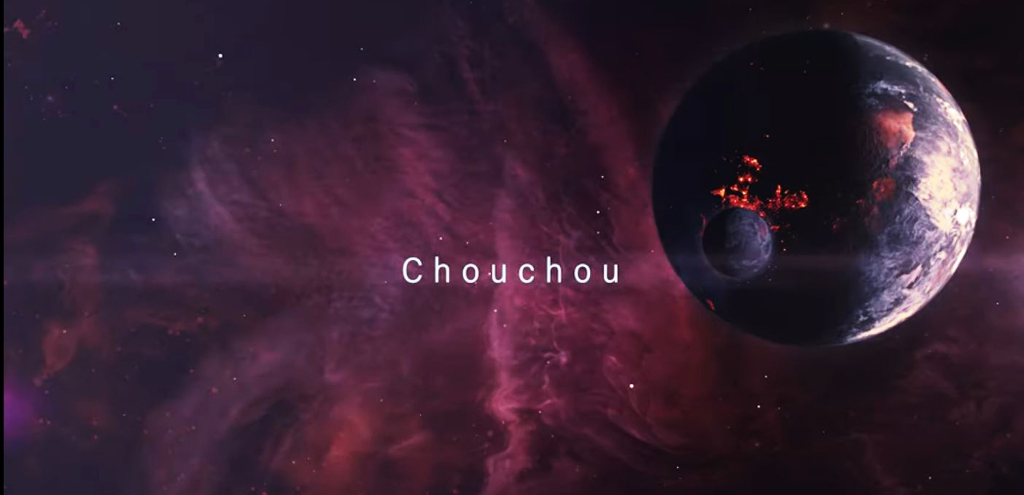
From the Chouchou Hello Astronauts teaser track featuring an excerpt of The Lovers

Earlier in 2019, there was widespread upset over the news that the popular region and builds of Chouchou in Second Life might be closing down and vanishing (see: A Farewell to Chouchou?). At the time of the news I noted:

Designed by Japanese pianist Arabesque Choche and vocalist Juliet Heberle, who together form the successful musical duet of Chouchou, the regions are among some of the longest running, unchanged private island environments to be found in Second Life, and are an absolute delight for all who encounter them. I made my first visit in 2012 (see Chouchou: blending music and art in SL), and have been back many times since, being particularly drawn to the sky build of  Memento Mori (located on Chouchou V), a quite remarkable cathedral.
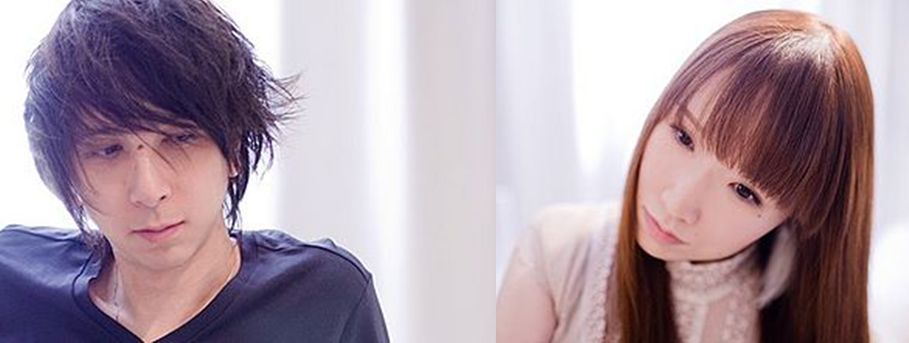
Pianist Arabesque Choche and vocalist Juliet Heberle, who form Chouchou via their biographies on generasia.com, the Asian media wiki

As the news of the possible closure spread, I was one of a number of people who reached out to both Chouchou and Linden Lab in an attempt to bring the two together so that the regions might be saved under the Lab’s Second Life Region Preservation Society (SLRPS). For a time, it appeared this might not be achieved, but in October 2019, Chouchou announced that an agreement had been reached that would indeed see the regions continue to exist as a part of the SLRPS programme (see: Chouchou set to remain in Second Life – and there’s more).

I raise this for two reasons. The first is, as noted in Chouchou set to remain in Second Life – and there’s more, the preservation will see the return of The Babel – of which more below. The second is that – more particularly on December 13th, 2019 Chouchou will be releasing their third concept album, and it is one that has something of a special appeal for me, inspired as it is by the theme of space travel.

Theme03: Hello Astronauts offers everything that is quintessentially Chouchou. It follows the first of their “experimental” series of recordings released in October 2019, and which has another space theme: Oort.

For the last week, Chouchou have made three of the tracks from Hello Astronauts – Voyager, Hyper-euphoria, and Lovers – available for download in advance of the release, together with a series of teasers available for You Tube, including and extended teaser for Voyager, which I’ve embedded below.

Hello Astronauts is available for pre-order via Bandcamp and iTunes – both of which include the ability to download the three tracks mentioned above in advance, and will also be available on the Japanese music site Fans’ Music following the album’s release. So if you’re looking for music that is ideal listening no matter what your tastes, and which carries with it an echo of Second Life – why not have a listen?

While it has yet to open to the public once more, The Babel presents a musical construct of boxes, elements and levels. Each box is a sound – an instrumental or vocal note or chord – which is played when touched. Some will play once when touched, others work on a toggle – they will play until touched again. These boxes are arranged in musical elements, with the lowermost boxes in an element representing bass notes or chords, and the boxes above containing percussion or melody elements. By touching the boxes in an element you can create various harmonies. It’s a place I last visited shortly before it was first retired from Second Life in (if I recall correctly) 2013; as such it is a place I’m looking forward to revisiting once it re-opens to the public.
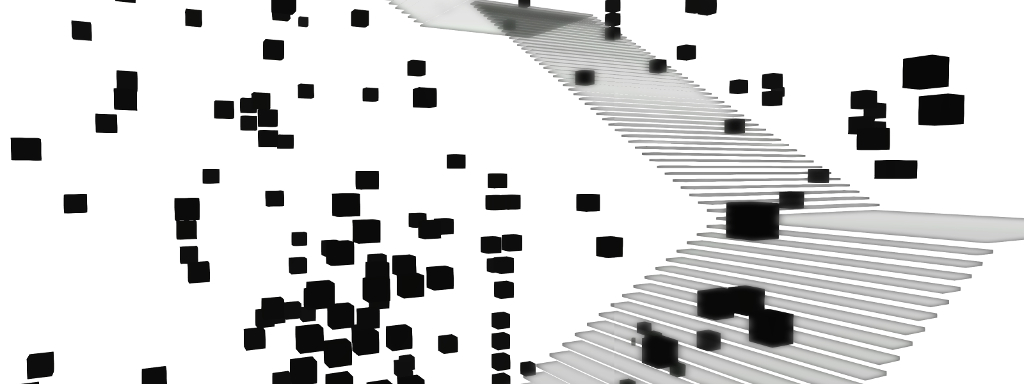
The Babel, 2019

In the meantime, the existing Chouchou regions remain open to visitors, and you can find out more about Chouchou’s music and all of their albums on their website.

SLurl and Links

A summertime Isle of Cezanne in Second Life

The Isle of Cezanne, December 2019 – click any image for full size

The Isle of Cezanne is a 1/4 Full region that has been designed and landscaped by ElenaMicheals Core. Occupying the south-east quarter of a region that has the full region land capacity bonus applied, the setting has something of a riverside feel to it, thanks to the use of two off-sim elements sitting off of the water-facing south and east sides.

Offering in a summertime setting, The Isle of Cezanne presents a rich countryside look and feel, but one with little touches of sci-fi fantasy that are just enough to add a twist to any visit without looking at all out of place. Rather, they add to the setting’s appeal for photography – which is a core theme for the location overall.

The Isle of Cezanne, December 2019

The landing point is tucked away in the north-western corner of the parcel. It is here, among the stones of an ancient ruin that visitors can find the teleport boards leading to three further photography locations in the sky over the region. Two of these are cosy studio-style settings (the Artist Studio and the Dressmaker Attic), and the third a more open winter setting for those seeking snowbound settings for avatar photography.

From the landing point, the ruins point southwards towards a tall house that has a little hint of Provence about it and which has been cosily furnished, including – at the time of our visit – hints of the season. This sits on a broad table of grassy rock (the entire landscape here is mesh, the terrain having been pushed below water level) looking south across the “river”. The land before the house slopes gently down to the water’s edge, pointing the way to where a wooden deck stretches out of the the water, offering a place to sit and admire the view while cormorants perch and flap their wings and the water’s edge, watched by black swans.

The Isle of Cezanne, December 2019

A second pier extends out into the water from between the house and the landing point ruins, but given a pair of brown bears are patrolling alongside of it, caution might be required when trying to reach it. However, it is the north side of the parcel that offers the sci-fi fantasy feel – although at first glance, it appears to be a natural setting: a further rocky landscape that ends with a barn and shed with cattle grazing on the wild grass, suggesting the house to the south is owner by a farmer.

To reach the barn and cattle, visitors can take a choice of routes. One goes part-way through the old ruins and then down the stone steps from the and past a little camping site sitting above the water. The other is to go directly east from the landing point and over the rugged terrain.

The Isle of Cezanne, December 2019

This latter route will take visitors past a “UFO house” sitting on concrete legs. It Sits as a strange little hideaway with and very eclectic set of contents, including toys, a laptop, a bomb, a crate of ammunition and – well, other interesting items. Outside this house are two large plants, with eyes at the centre of their flowers and a curiosity of their own, fixing any passers-by with a glassy, unblinking stare.

Throughout the parcel are numerous opportunities for avatar photography – the house, the wooden deck with its seating below it, the camp site, the “UFO house”, and so on. Also waiting to be found are multiple little touches of detail: deer in the shade of trees, sculptures, cranes dancing over the the water and so on,  all of which add depth to the parcel  for explorers.

The Isle of Cezanne, December 2019

Those wishing to rez props for their photographs can join the local group (no charge), and photos are welcome in the parcel’s Flickr group. Those who enjoy a rounded setting should ensure they have local sounds enabled during a visit to appreciate the local sound scape.

SLurl Details