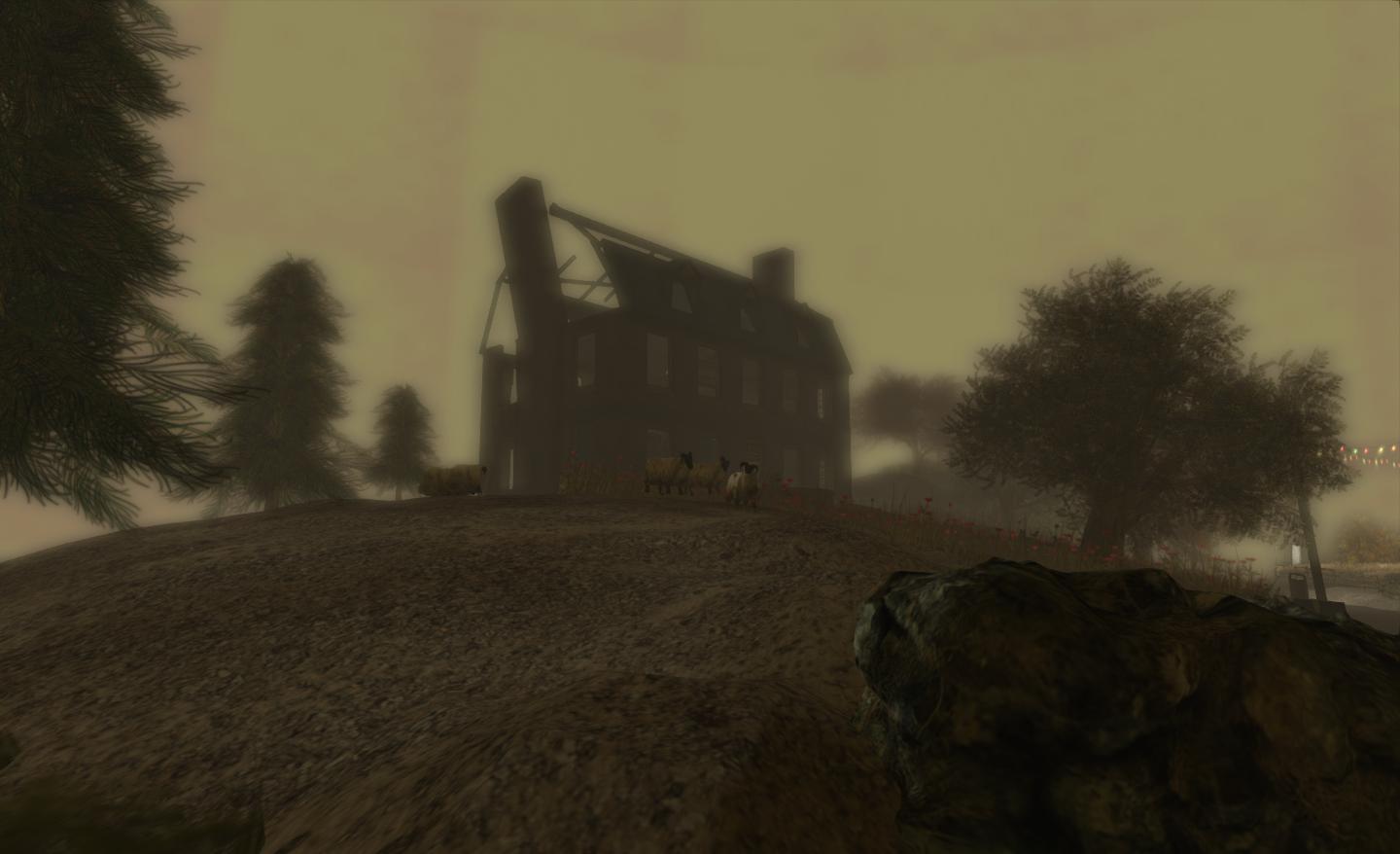
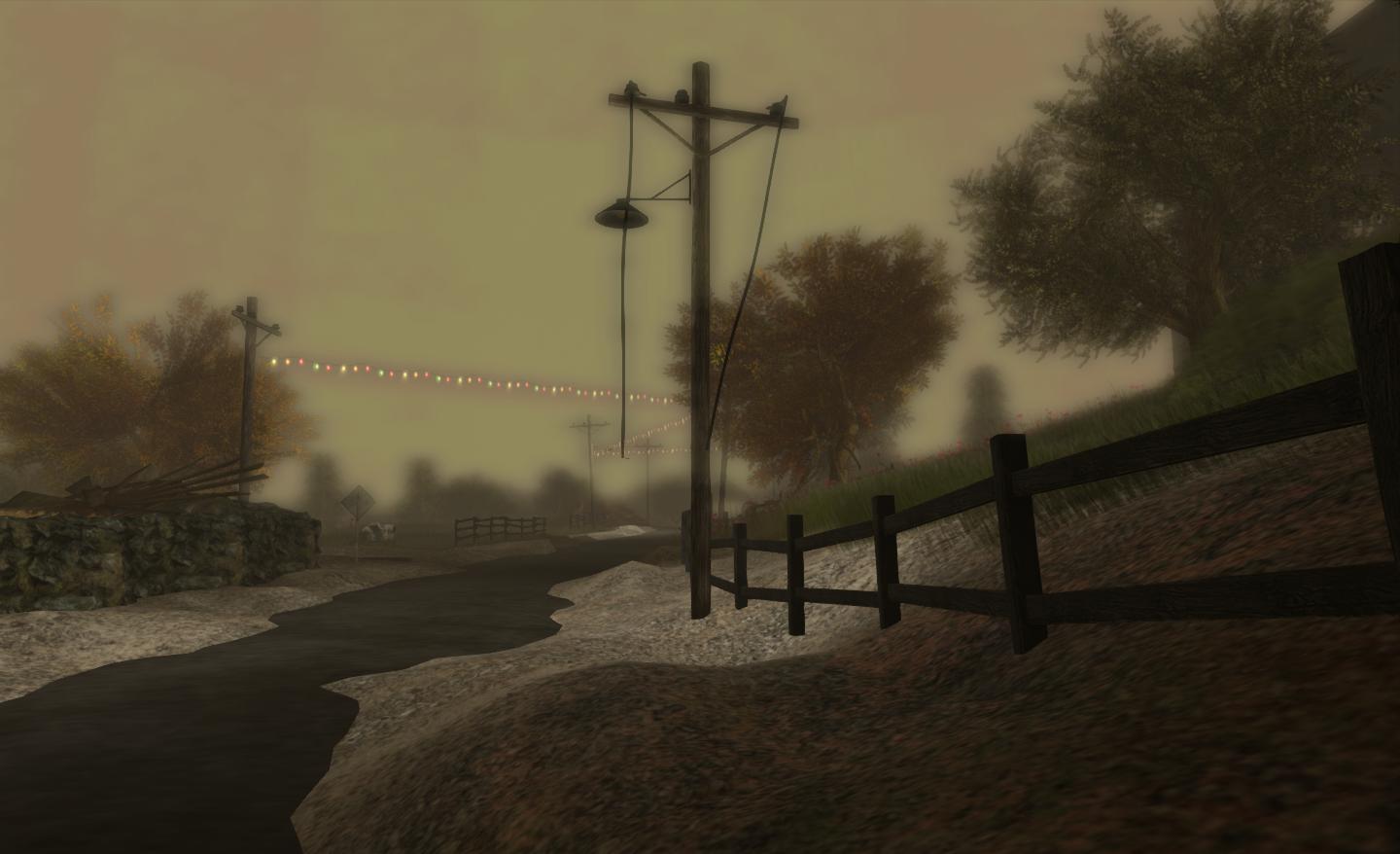
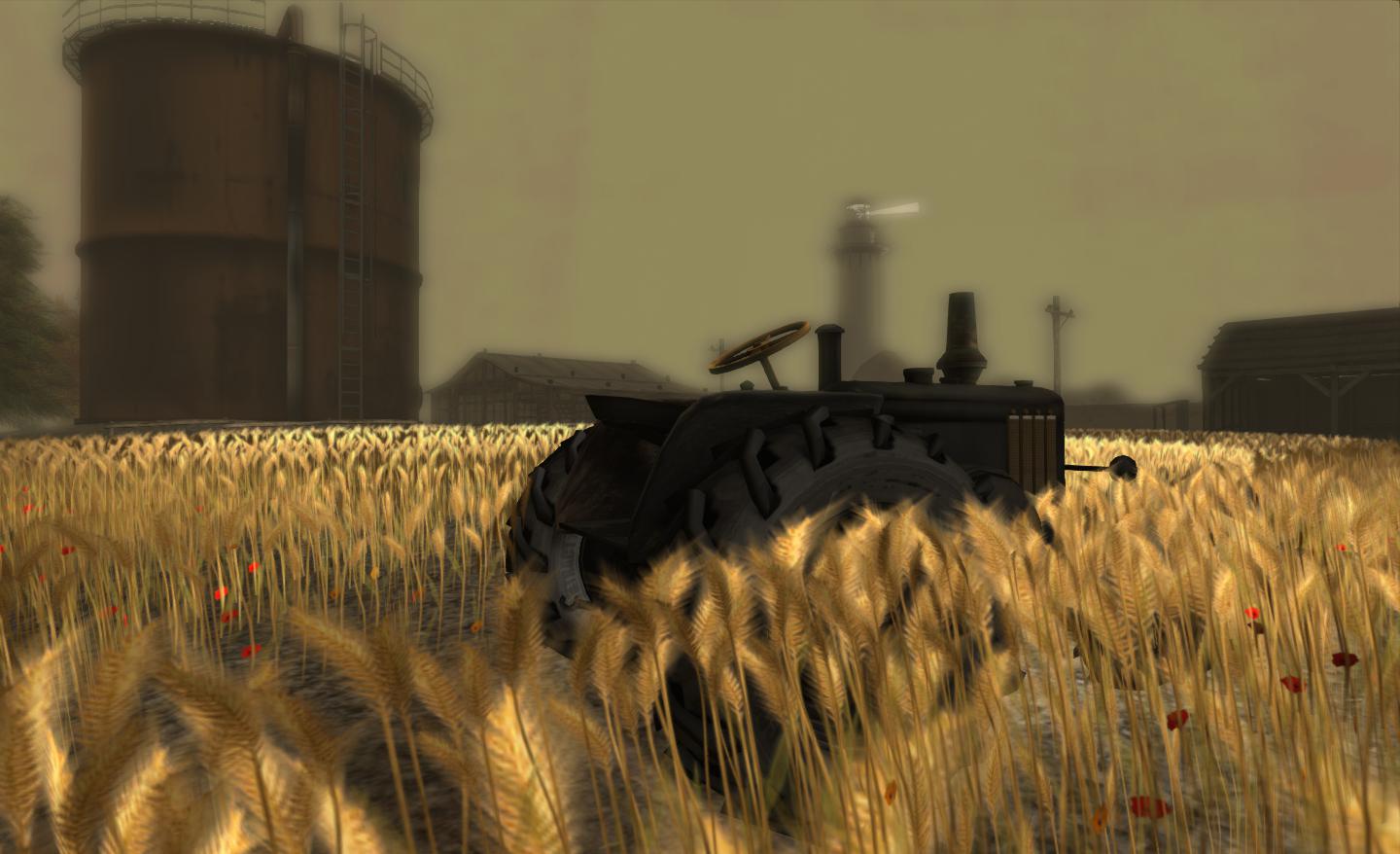
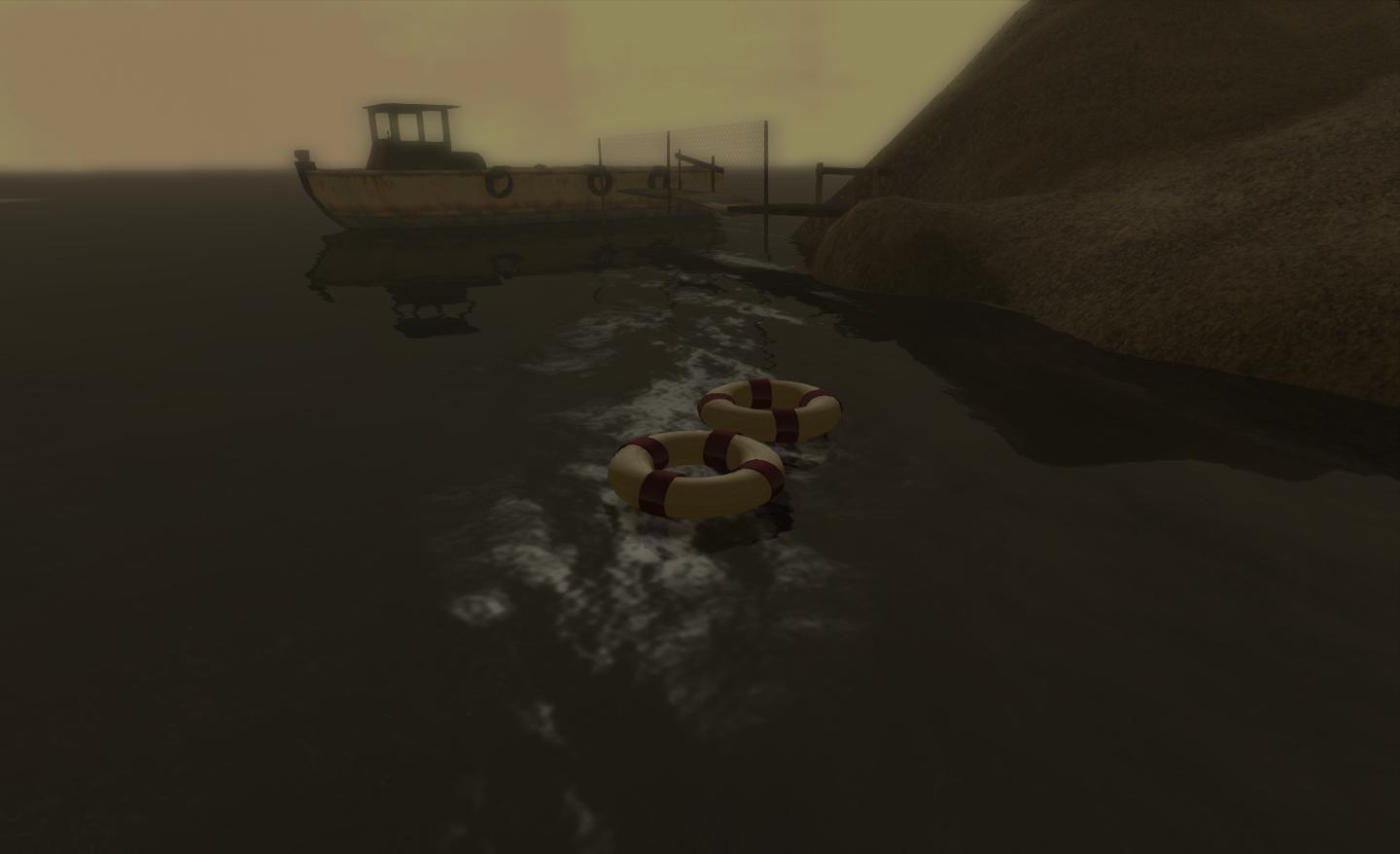
In November 2012, Salome Strangelove opened The Garden, an absorbing, immersive puzzle which is open to all to try their hand.
I reviewed The Garden as it opened last year, and for a time was a regular player, and also found myself attracted to it purely as a place in which to take pictures. In December 2012, I started working on putting together a video for The Garden, but stopped in early January with the project incomplete. Part of the reason for this is because I can’t actually do decent machinima on my current PC; I lack the skill (and hardware) for decent mouse control of the camera, and the PC / GPU has problems trying to run both FRAPS and SL side-by-side without a horrible loss of frames, even with Draw Distance down low and most bells and whistles turned off.
Anyway, for what it is worth and because I hate leaving things unfinished (they eventually all nag at me for attention), I decided to push the video through and upload it to You Tube.
As to The Garden itself, if you’ve not spent time there, I really do recommend you pay it a visit; it’s a fabulously immersive place in which to spend time – and the puzzle is quite addictive!
OK. I admit it. I’ll come clean. I’m Honour McMillan’s sekrit stalker. It’s her fault, actually – I know she’ll deny it, but it is. Honest. She keeps pointing to these marvellous places in SL to visit and blogging about them, and I keep reading about them and, well, drooling at her pictures.
Just the other day, she blogged a piece which featured Julala Demina’s The Haven on the Sea of Beckoning. Intrigued by honour’s pictures, I set out to take a look myself.
A photographer in both rl and SL, Julala has put together a region where nature and spirituality combine to present the visitor with both a delightful landscape to explore and photograph, and places to simply sit and rest and renew.
This is a place to come to when you want to get away from in-world pressures, be it on your own or with a close friend or loved one. The woodlands, rivers, walks and various points of interest have all been composed with care while retaining a completely natural – dare I say “harmonious” feel.
For those looking for a tranquil place to live, Julala offers four modest places to rent – all of which perfectly fit the theme of the region. During my wanderings, I noticed that three are occupied at present, so please be aware of and respect people’s privacy should you visit. Even if you’re not looking for a home, perhaps a rest at the campfire alongside the Romany caravan might be to your liking …
There are lots of little details here which make visiting a pleasure; lanterns hanging from branches and arches help light the paths at night, the paths themselves blend unobtrusively with their surroundings so as to feel a natural part of the landscape.
Up on one of the hills you can meditate under an awning, candles flickering around you, the ground lit by lanterns held by carven figures. Down in the valley, a short distance away, you can dance with a partner within stone walls. for the more energetic, there’s always the boathouse where you can rez a rowing boat – although getting around the island takes a little care.
For my part, I loved simply wandering around the island, walking under tree and over bridge and simply playing with my windlight settings and seeing what came forth. There is something very relaxing about simply being on ones own in such a region as this; it’s calming and renewing.
People sometimes come here looking for answers…..sometimes they find them….sometimes they don’t.
Sometimes people come here for comfort, reflection or have someone to listen in a safe and peaceful place. This is more easily found.
So reads the description for The Haven – and it is entirely apt; you may not find the answers you’re seeking when visiting – but you will find somewhere where reflection comes easy and peace presents you with a reason to stay. And that alone makes a visit more than worthwhile.
Update: Neva River is currently closed to public access.
I covered Neva River very briefly last year. The region is Neva Crystall’s private home, and every so often she will remodel it and then open it to the public for a couple of weeks, so that everyone can enjoy her builds – anyone who has visited Neva River will know why.
I recently saw word via Ziki Questi that Neva was moving towards re-opening the region. Since then, I’ve been waiting (not a little impatiently, I admit – along with a lot of other people!) for the doors to once again open.
This is inevitably going to lead to a stampede to get to Neva River – indeed, but the time I got there, the place was fairly teeming with people; it’s a measure of the popularity of Neva’s builds. If you have 30-40 minutes some time in the next couple of weeks, I urge you to join the queue, particularly if you are, to borrow from Honour McMillan, a landscape junkie.
Last time around, the region focused on a water theme, with low sandbanks, waterlogged copses and small fields of grass beneath an orange sky. This time, Neva has gone for something far more undulating, but with a few little eclectic twists. From coastal beaches through rural country to deep gorges, with high bridges, meandering streams, and broad lakes, Neva River presents a landscape which offers much to see, and not a few things to do.
Starting at the tall lighthouse, located at the headland at one end of the region, you can follow wooden walkways, paths and rutted tracks across the region, encountering other visitors, the local animals (mostly sheep) and various delights and oddities which make a visit to Neva River something of an exploration (just how did a fishing boat end up so land-locked…?).
The region come with its own late afternoon windlight setting, but as is my wont, I opted to go for my “standard” settings, based around a couple of windlight presents I’ve slightly tweaked, and which I like as I feel they give a more natural look and feel to places (one is actually my default viewer’s standard windlight setting nowadays). If the images here don’t do the build justice, blame me, not Neva Crystall!
I will confess that I had a few problems during my wanderings through the region. However, I think these were pretty much down to the fact that the place is rather busy, people-wise, right now and the fact that I’m using a pre-release of a viewer, so SL is a little bit on the bumpy side for me right now.
All-in-all the rebuild has been worth the wait; once again Neva River is on the list of “must places” to visit in SL – but those wishing to do so had best hurry; the doors may not be open for ever!
Update August 5th, 2013: Wretched Hollow has reloacted to Rainbow Coast.
Rolling Restarts run every Tuesday and Wednesday (well, as a rule). For the uninitiated, and without delving into the deeper intricacies of what goes where and how, Tuesday sees updates to the Second Life Server (“Main”) channel, which accounts for about 70% of the regions on grid, and Wednesday sees the three “Release Candidate” channels (called BlueSteel, Magnum and LeTigre and which account for around 10% of the grid apiece) get their updates. For those wishing to know more on this, info on the various deployments can be found in my SL projects updates.
Wretched Hollow
I mention rolling restarts, because they often mean that when logging-in to Second Life you don’t always get to go where you intended, be it home or anywhere else. At best you end up being diverted to a “location nearby” or to a “safe” hub (some of which seem, to paraphrase Douglas Adams, to have some strange new meaning of the word “safe” we’ve not been previously aware of), at worst you get a message pop-up during the log-in process stating the viewer has been “unable to connect to a simulator”.
Such was the case with me recently. I had planned an excursion to a specific region, but a rolling restart left me delving into the Destination Guide and opting for pot luck after I was left unable to connect to my desired destination.
Wretched Hollow
So it was that I ended up at Wretched Hollow, which describes itself thus:
A dark, whimsical sim inspired by the love of Gothic Romance and Neo-Victorian things. As one of Second Life’s best-kept secrets, Wretched Hollow is home to the Wretched Dollies store and has several places to explore, including a small town and a fishing inlet with dock.
The first part of the description was enough to have me teleporting over to check things out. What I found was very much a curious mix, possibly sliding more towards the Victorian than the Gothic, but certainly which touches of whimsy, be it with the 18th century ships anchored offshore, or the very much more recent oil drums providing a little warmth for those out on the streets of the township.
Wretched Hallow
The region is roughly split into two parts: a more rural, open setting, with a couple of private residences (one of which appears to belong to region holder Star Fairymeadow) The other part of the region forms an urban setting which provides a home for Star’s Wretched Dollies brand, offering a range of products – clothing, doll accessories, furniture – with a Gothic / Victorian leaning, as well as Star’s own textures and her range for Petites. For those into the club scene, the town also boasts an underground – literally – club featuring a broad mix of music (although Gothic Rock / Industrial / Darkwave, etc., seems to bt the primary theme).
I was drawn to the town because of its strong Victorian look and feel which, together with the default windlight setting and style of buildings, immediately put me in mind of the East End of London, and specifically the Whitechapel area and going out towards the old London docks of yesteryear. A newspaper billboard passed as I explored the streets heightened this feeling even more.
While Robert Downey Jr didn’t scuttle by me hurriedly swapping one disguise for another as he pursued clues to the mystery of the East End murders, I wouldn’t have been at all surprised had he done.
Wretched Hollow
Like many store-front regions in SL, Wretched Hollow has been put together with a creative skill which is deserving of time spent exploring it, and which lends itself to a lot of playing around with windlight options. The town certainly offers an opportunity for the avid SL photographer to come up with some memorable images and possible vignettes (although just clearing matters of using the region for photography with Star ahead of time would obviously be for the best).
For my part, I enjoyed my little unexpected excursion to the streets of Old London; Wretched Hollow came as a very pleasant surprise in my meanderings and allowed my to focus on a subject and setting a little bit outside the norm for this blog.
Update, March 15th: Mickey contacted me to let me know that after eight years and now retired, he has had to let Sheepville go, and he has downsized to a half Homestead. For further details, see: A Trip to Seagull Rock in Second Life.
I’ve been fortunate enough to be able to spend time using various pre-release versions of the upcoming Firestorm release over the last few weeks. I’m not about to launch into a pre-emptive review of the viewer here – that wouldn’t be fair on Jessica or the team; however, what I will say is that it is pretty fabulous. While there is more to be done before it is officially released, considering the state of play around a month ago, the team have pulled off one or two minor miracles.
One of the reasons I’ve been hungry to take Firestorm for a bit of a drive is because the snapshot tiling bug fix didn’t make it into the last release, so I’ve been limited to taking snaps at no greater than my screen’s resolution (1440×900) when using the viewer. The upcoming release does have the fix (albeit with the usual caveats in that the fix itself is not perfect), and I’m now in happy bunny land when it comes to taking snaps as I explore the wilds and not-so-wilds of Second Life.
I opted to try out higher-resolution snapping with a visit to Micky Woodget’s Sheepville , an open / residential homestead which is yet another treasure of Second Life.
Here, nestled amidst tall mountains and surrounded by water, is a tranquil village where the locals are quietly content with hanging out the washing, fishing from the end of a pier or sweeping the pavement. Birds, rabbits, duck, swans and deer can befound in the open spaces and on the waters of the lake and pond, and visitors are offered the opportunity to rent a log cabin for their home. All watched over by a little stone chapel high on a hill.
When visiting the region, one is free to roam along paths, climb hills, cross bridges, visit the chapel, enjoy a little fishing or simply sit be a campfire and watch the world go by. For the adventurous there are boats to row, balloon rides, gliding (in a vintage 1930s glider!) and hang gliding. For the photographer, there are scenes to be found at every turn or path and track, and Sheepville naturally leans itself to a wide variety of windlight settings.
Windlight is another reason I like using Firestorm. The choice of pre-sets from people across the grid is comprehensive – moreso with this upcoming release, which includes several of Vincent Nacon’s sky presets which give the windlight fiddlers even more to play with. I believe the release, once it is formally made, will include Vincent’s sky maps as well, for even greater depth, but I confess this is not something I’ve investigated.
Of course, the other thing which makes Firestorm attractive for photography is the inclusion of William Weaver’s fabulous Phototools floater. Having just about all the necessary settings available within the viewer which are suitable for machinima and photography is an absolute boon, particularly if, like me, you don’t go in for much in the way of post-processing. Phototools is obviously available right now in Firestorm, so if you’ve not tried the floater, you can.
If you do, Sheepville is an excellent place to try-out the floater. Just follow the paths and see what you discover and have a play with the settings. For those of a more romantic leaning, there is a little stone dance floor near the village, and a wooden gazebo out over the water on one side of the region which also offers dances; there are also numerous places to simply sit and hold hands and talk…
And if a visit does tire you out, drop into the village pub and refresh yourself with a drink or perhaps a plate of fish and chips – the landlord tells me the fish are all caught fresh and potatoes locally grown. If you’d prefer to eat outdoors, the bakery offers a range of breads and other goodies to help keep hunger at bay.
I’ve had remarkably few problems running the most recent pre-release version of Firestorm; while I haven’t explored all the options and updates by a long shot, I’ve enjoyed poking and prodding it and joining-in with a little bit of the testing.
Of course, my experience doesn’t mean the viewer is ready for release – and shouldn’t in any way be taken as suggesting it is. I’m not a member of the core Firestorm team, and they’re the people who know best. But considering a month ago I couldn’t actually start any of the pre-release versions without them crashing on me but I’ve recently been using the pre-release versions as my default viewer, it’s fair to say I’m looking forward to a formal release once it does come along.
And as to Sheepville – well, if you do opt to pay a visit, don’t be surprised if you find me admiring the view from the stone bridge, or sitting in a corner of the pub nibbling on a chip or three!
Kaya Angel is a long-term resident of Second Life, having been involved in the platform for over seven years. He is also the creator of Angel Manor and The Rose Theatre, one of the largest and most creative builds in Second Life: a grand English estate now spanning three regions. The build features a huge, Regency-style palace which encompasses The Rose Theatre (a long-time labour of love), an opera house, art gallery and more, and which is in turn surrounded by attractive formal gardens.
This truly is SL building on a grand scale – a place which has to be more than just visited – it has to be experienced. Whether you are a casual visitor, or attending a production at the fabulous Rose Theatre, opulent opera house or art gallery, Angel Manor deserves time to be explored inside and out – and by “time”, I don’t mean fifteen or twenty minutes; this is a palace one can wander within and around four hours and never stop finding something new which catches the eye.
From the moment you arrive, you know you’re in for something special; the main entrance to the palace presents a magnificent frontage overlooking the clear waters of a lake, broad steps leading up to the huge front doors, and paths leading off to either side along the formal gardens, inviting you to explore. Even the teleport / information boards are tastefully positioned so as not to ruin the feeling that one is in a period setting, being set well back so as not to intrude too much into a view of the house.
Follow the paths around the house and you’ll find trellised walkways, follies, places to sit, sculpted water features where swans glide peacefully – and more. Everywhere the attention to detail is clear, and the opportunities for the avid photographer obvious. I particularly like the way the entire build has been planned so that as much use can be made of Linden water as possible, rather than a reliance on prim water for fountains, etc. This adds a lot of depth to the build, especially when it comes to photography and using reflections.
Inside, and the attention to detail becomes even more abundant; the palace is rich in content – and I don’t just mean furnishings, statues, and so on; the attention to texturing floors, walls and ceilings adds tremendously to the feeling of authenticity and that one really is in a stately home – albeit one on a truly huge scale. The public function rooms offer outstanding venues for events and weddings – the estate’s chapel is one of many “must see” parts of the build – and I’m going to be keeping an eye on any upcoming events slated for the opera house; at the risk of wearing the word out, it truly is magnificent, with a stunning ceiling dome.
While exploring, make sure you follow any stairways which lead down as a well as up – there are a few surprises to be found in the vaults under the main house as well.