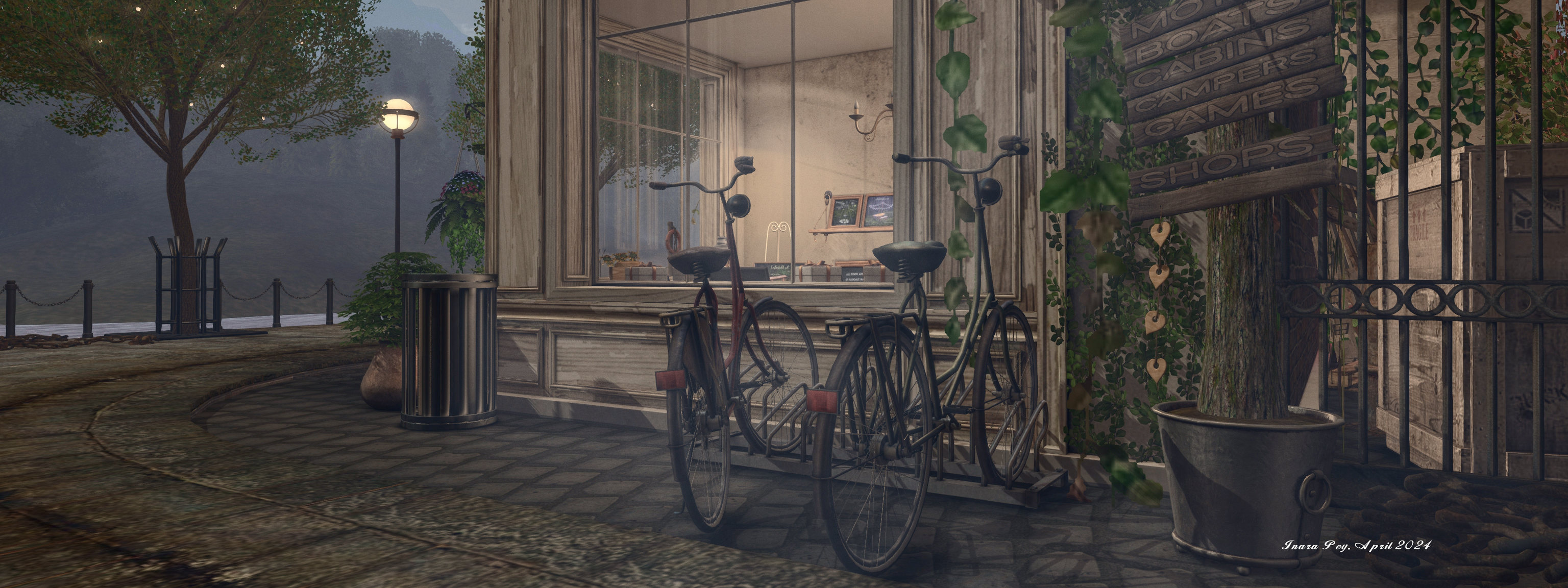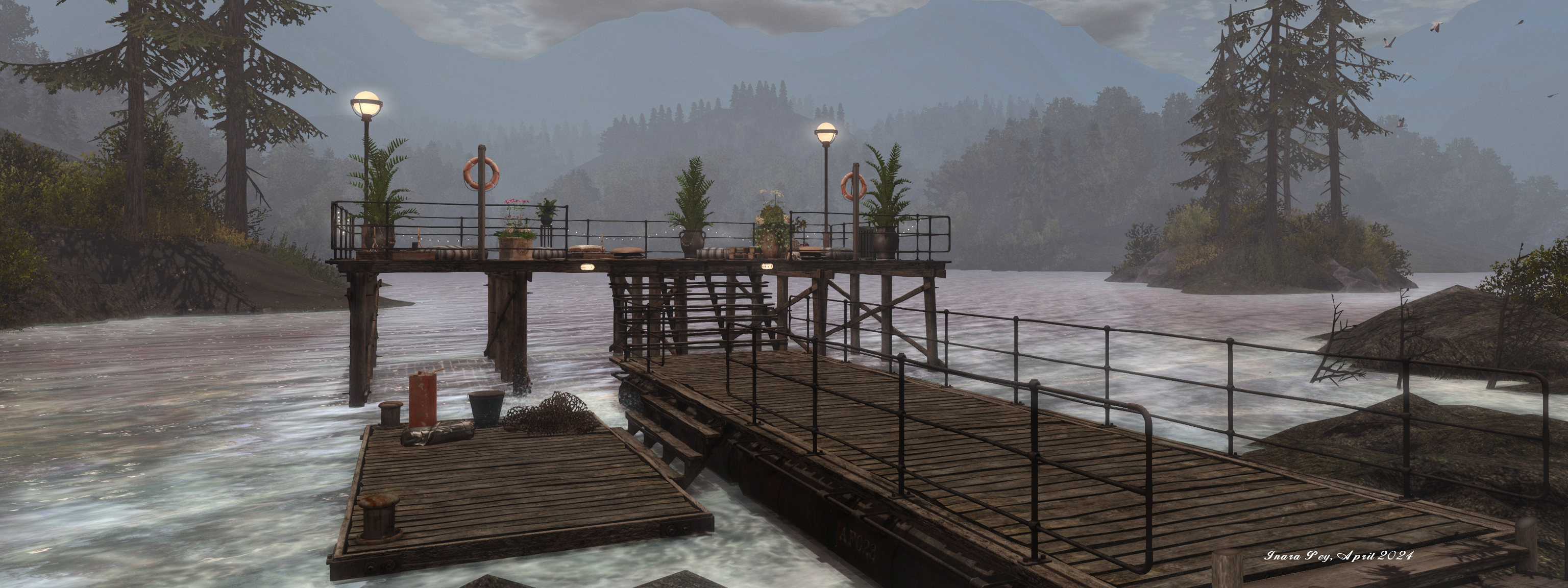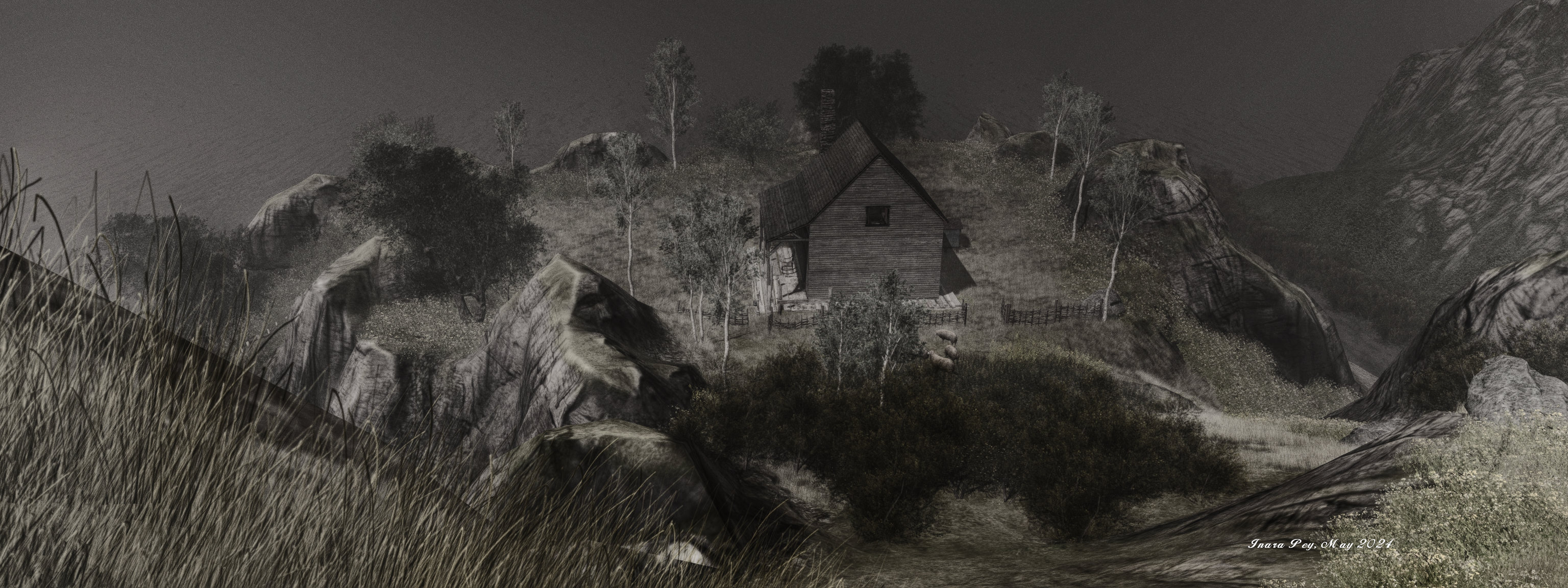
Alone: an immersive literary experience in Second Life

Alone, May 2024 – click any image for full size

It has been a fair time since Sheldon Bergman (SheldonBR) has presented an immersive experience within Second Life; so when he contacted me personally to tell me he has a new installation available for people to visit, I was immediately intrigued, and as soon as time allowed, I followed his invitation and hopped over to Alone.

Often working in collaboration with Angelika Corral – with whom he once co-ran the always engaging DaphneArts gallery and arts centre – Sheldon earned a rightful reputation for developing immersive art installations leveraging the (then new) capabilities of SL Experiences. In particular, these installations sought to bring the work of poets and artists from the physical world to life within the virtual, with a noted focus on the life and works of Edgar Allan Poe (as covered in these pages, for example, by A dream within a dream: celebrating Poe in Second Life (2017) and Annabel Lee in Second Life (2019)).
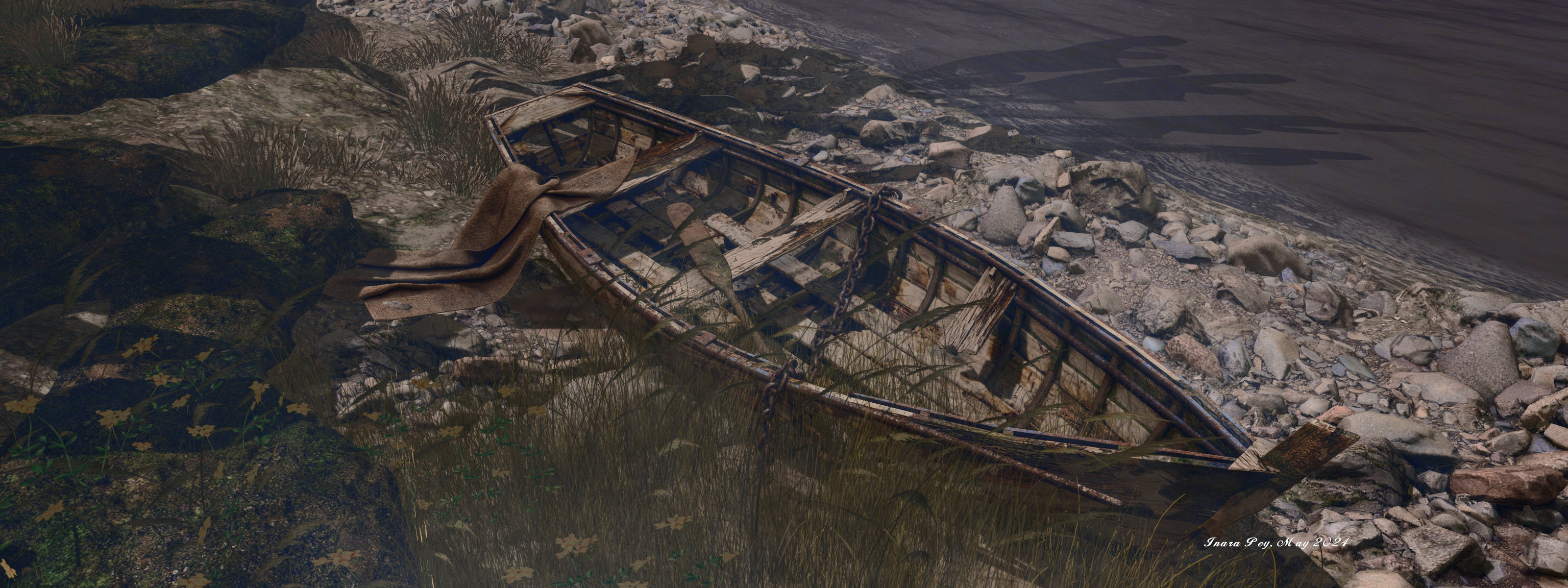
Alone, May 2024

With Alone, Sheldon continues within this theme, presenting installation with a personal dedication to Angelika, featuring what is Poe’s most revealing – and potentially his best – verse. It may not be as well known as the likes of The Raven or Annabel Lee – in fact it wasn’t even published until well after his death in 1849, finally appearing in print in 1875, having been held within the possessions of a family in Baltimore – but what it does say does much to help our understanding of Poe’s nature and what lay behind his writing.

Exactly when the poem was written is unclear; the original manuscript was both untitled and undated. However, the year is widely taken as being 1829 – no doubt the result of the poem’s first publication being accompanied by a facsimile of the original manuscript and on which the editor of the magazine had taken upon himself to add the date “March 17, 1829”. As this does sit as the middle year of the three in which Poe’s poetry was at its most focused terms of annual output (the other two being 1827 and 1831), it’s potentially not unreasonable to pin it to that year.
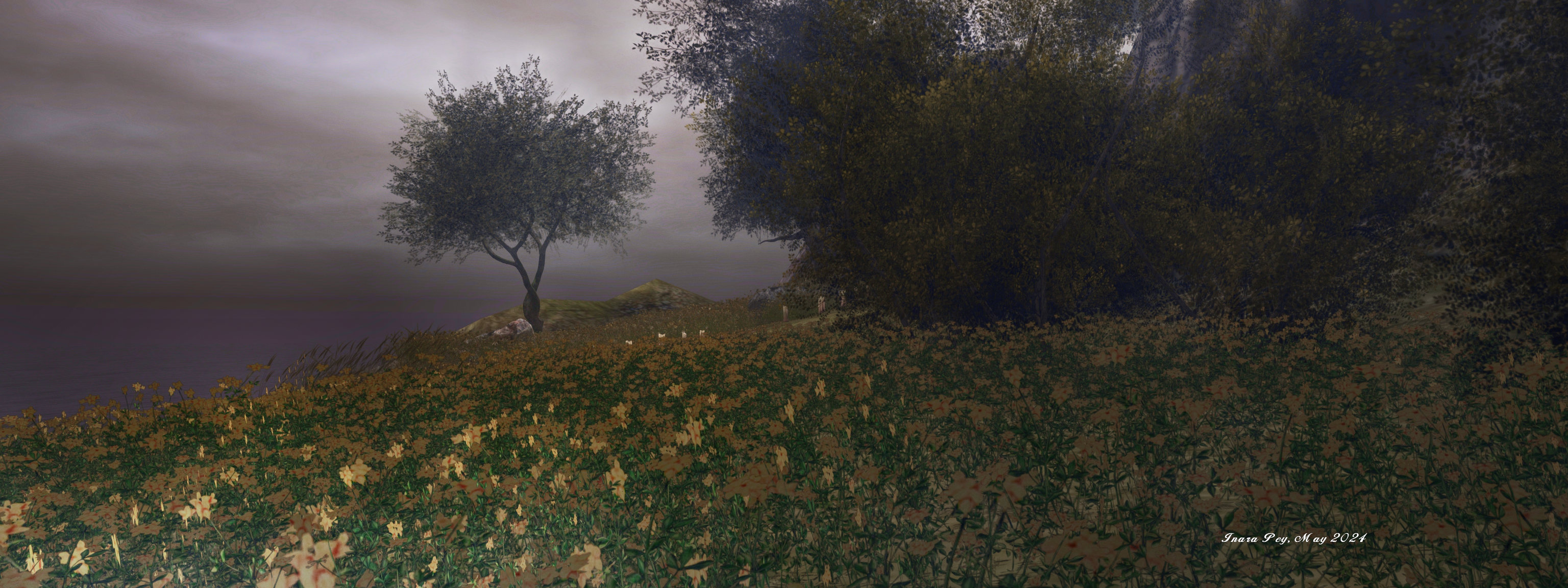
Alone, May 2024

But whether it was 1829 or 1827 or 1831, the poem would have been written when Poe was in his early 20s; as such it shows a remarkable sense of self-awareness and personal perception. At its heart, Alone focus on themes of loneliness, isolation and – most particularly – of being different and apart from others. It marks how Poe had always known he had a substantially different outlook to those around him, one that has existed from a childhood in which he saw himself unable to see things as other children saw them, perhaps because of the tempestuous nature of his first two years on Earth, marked as they were by abandonment by his father, the death of his mother and his being taken into a strict foster care – as the poem directly references:

And all I lov’d—I lov’d alone—
Then—in my childhood—in the dawn
Of a most stormy life—was drawn
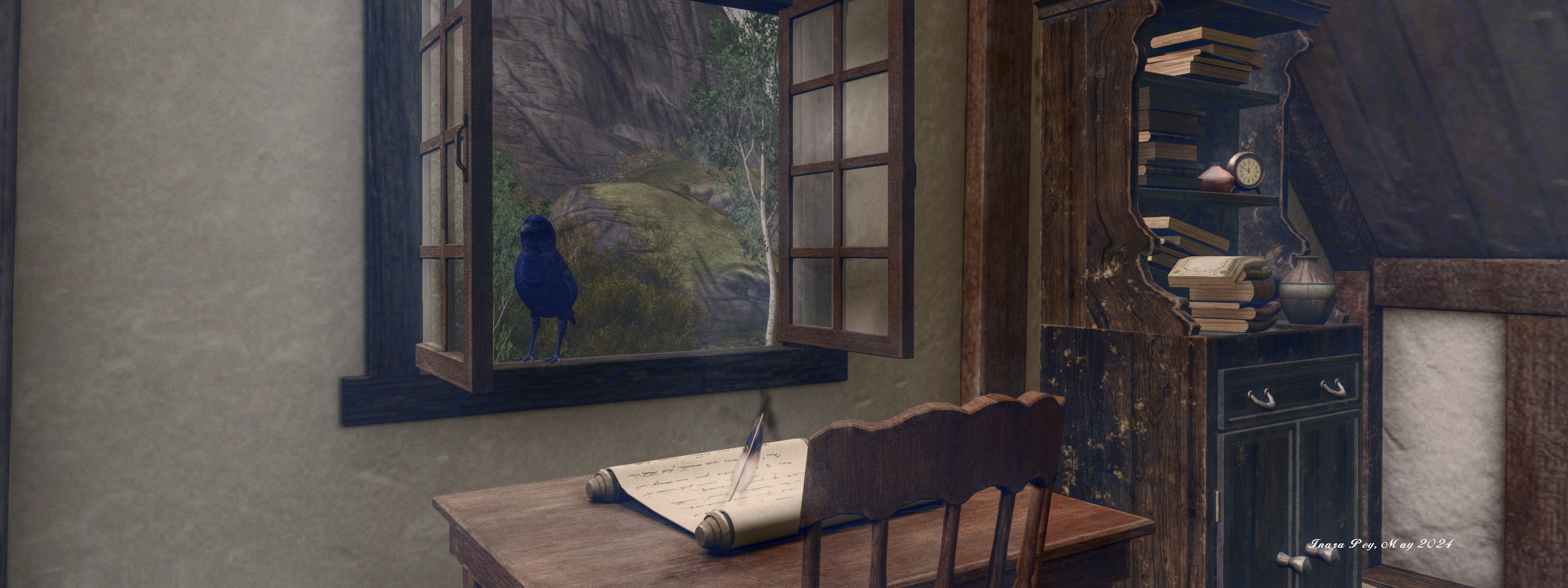
Alone, May 2024

This autobiographical element flows throughout the poem, right up to its open-ended final line in which the dash seems to state, that just as he past and present life had been, so to will be the future; whatever might pass as normalcy for those around him will forever be a foreign land to him, whilst his world will forever be beyond their understanding.

In this, Alone perhaps does more to shine a light on Poe’s short and tortured life than any amount of analysis of his work or examination of his death , both of which are too often the focus of any such analysis. Hence why, perhaps, Sheldon’s installation includes references to some of Poe’s famous works, both visually and through quotes: The Fall of the House of Usher (1839); The Black Cat (1843); The Raven (1845); A Dream Within A Dream and Annabel Lee (both 1849); doing so underlines the foundational element of understanding Poe’s view of himself any thus all of his writing.
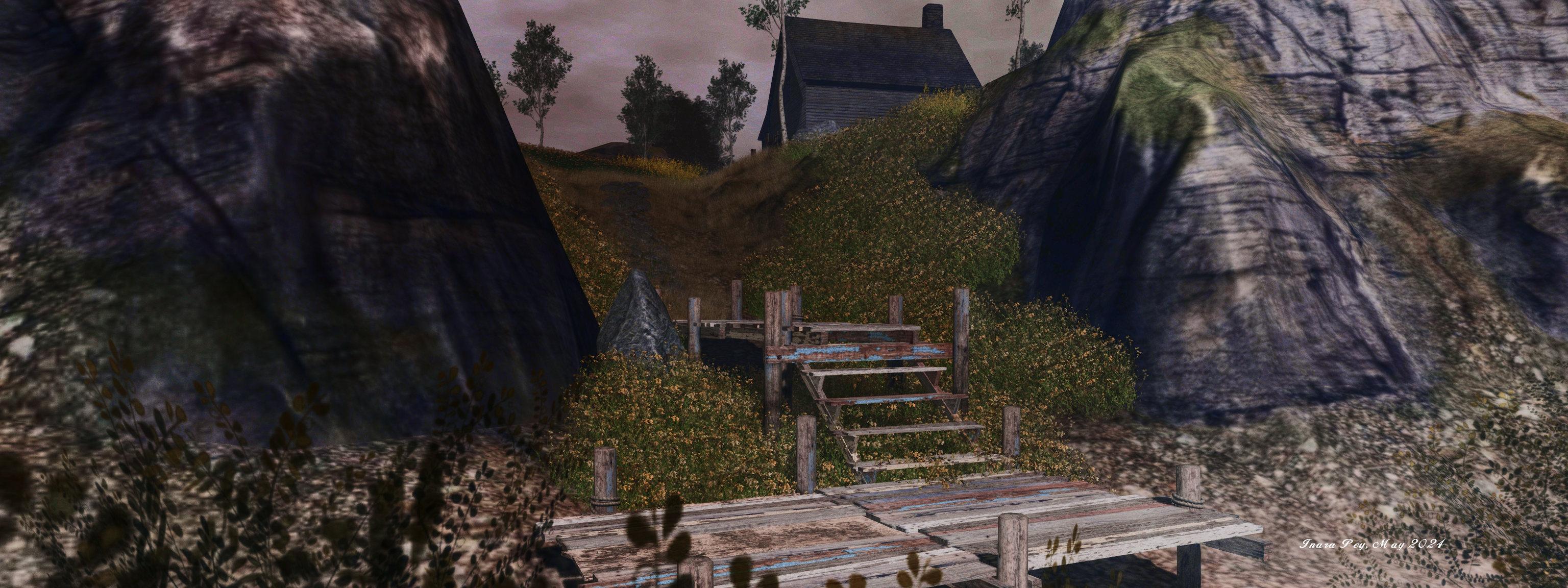
Alone, May 2024

To appreciate Alone in its fullness, visitors should accept the local Experience after arriving at the landing point by clicking on the displayed poster. This will allow a HUD to be temporarily attached to the viewer – it will detach on leaving the region, but must be left in place through a visit – which will initially offer instructions on how to correctly view the installation. In short these are: use the local Shared Environment; make sure local sounds are enabled and you have Advanced Lighting Model (ALM) enabled via Preferences → Graphics. Once these points have been followed, clicking on the HUD text will deliver visitors to the installation proper.

From here, it is a case of walking through the landscape from the landing point, up to the cabin sitting on the shoulder of a hill and then through it (upstairs and down), before exiting through the back door and following the path down to the waters and pier at the back of the cabin. In doing so, visitors will trigger visual elements at various points (such as the candles lighting to guide you up the hill) and text elements within the HUD, whilst also encountering reflections of the poems and stories the text references. Some of the latter might be obvious (such as the rave at the open bedroom window) others perhaps less so (e.g. the image on the wall of the cabin; the cabin and the wilderness in which it stands, etc.).
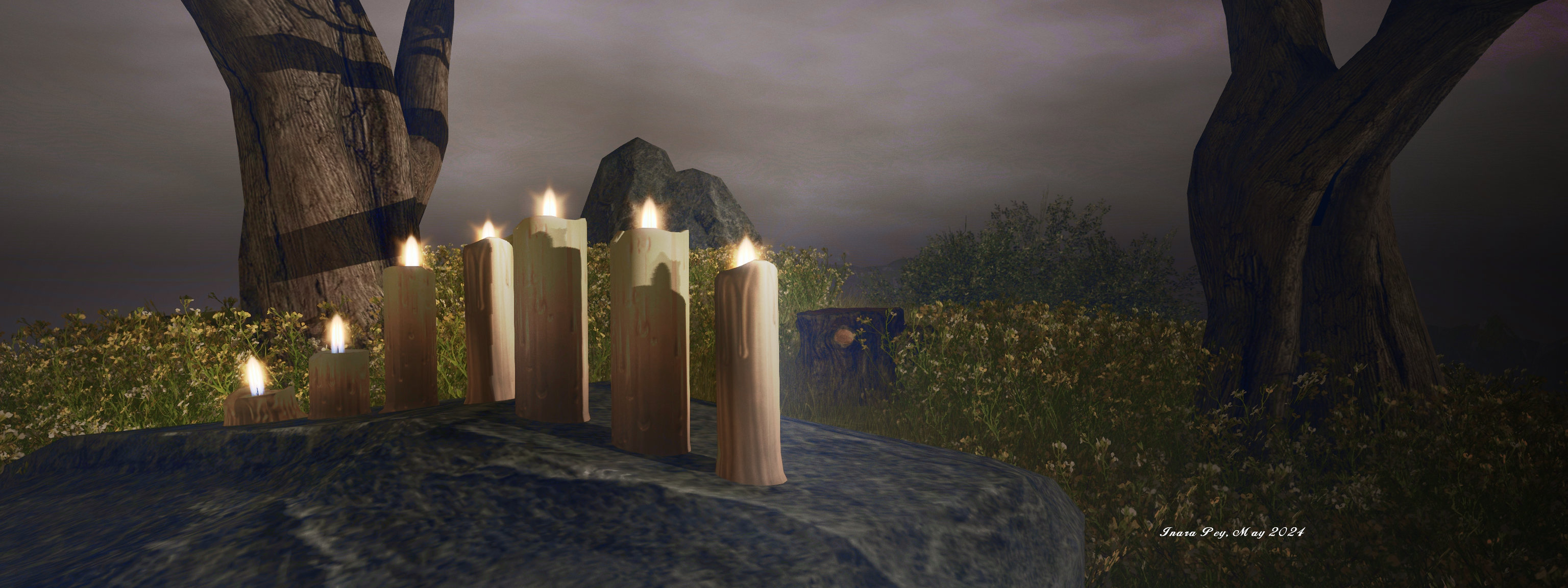
Alone, May 2024

The final element of the installation requires climbing the ridge rising from the east side of the cabin (where the sheep are grazing) to run first south and away from the cabin and then back to the west as it rises to reach the top of a hill overlooking the landing point far below. Crowned by a trio of windswept trees standing as bent-backed guardians, the hilltop is home to a low, alter-like stone within candles and a tree stump seat. It’s a place I have little doubt the poet would have approved for the recital of his poem (triggered as visitors reach the trees), its isolation and position apart from the rest well suited to the poem’s themes. Further, in coming at the end of the experience, it offers another underlining of the poem as a means to better understand Poe and his work.

Alone might not be the easiest of installation to grasp, but for those with a love of poetry and the work of Edgar Allan Poe – and who indeed who might feel separated and apart from the rest of life for whatever reason – it is an engaging and potentially evocative one.

SLurl Details

  • Alone (Canary Islands, rated Moderate)
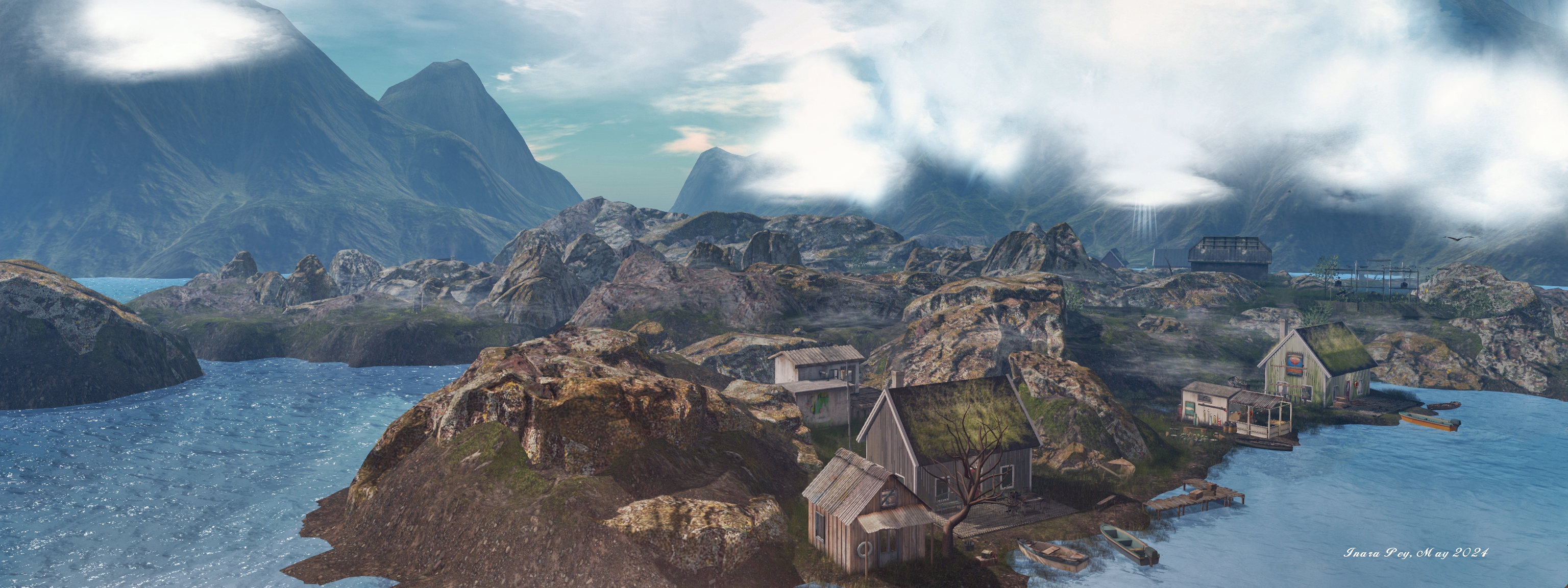
Vindfjell: Nordic Beauty in Second Life

Vindfjell, May 2024 – click any image for full size

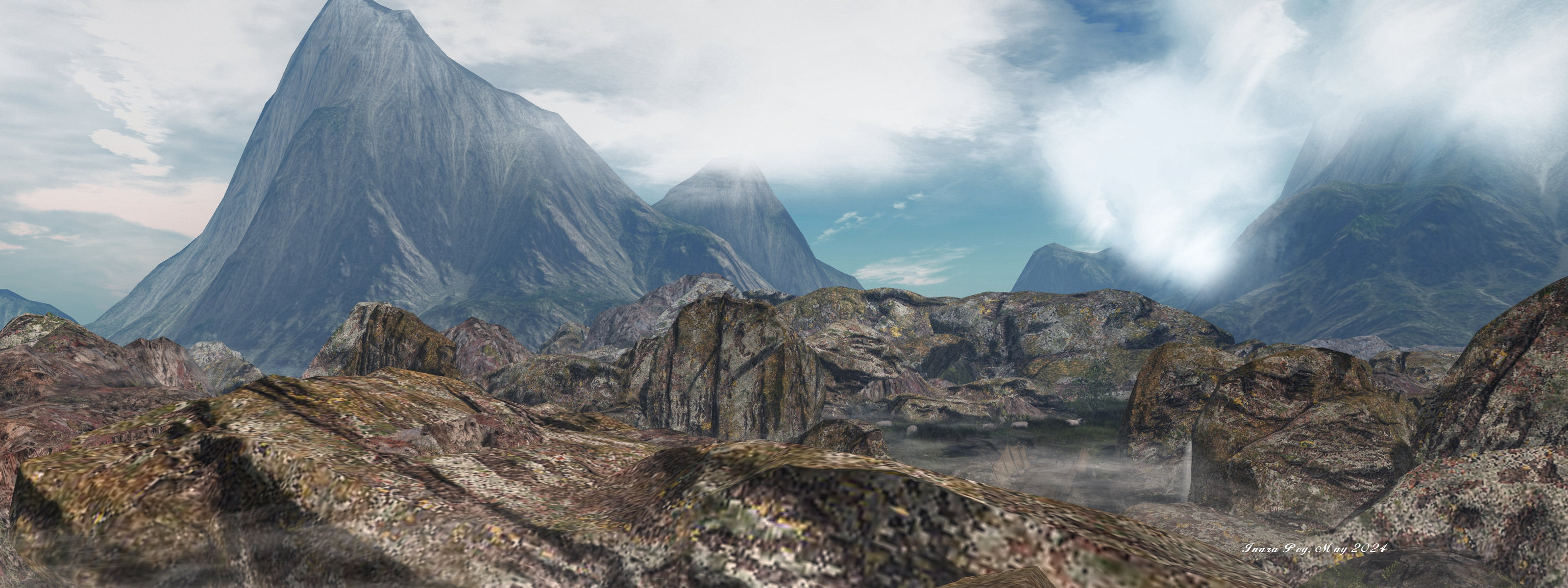
Open for a period of a month – through until late May 2024 – is a new Homestead region design by Dandy Warhlol (Terry Fotherington). Called Vindfjell, it is a marvel of windswept, Nordic beauty, balancing the region perfectly against the surrounding backdrop.

It’s my wont to often try to place regions with natural settings like this against locations within physical world which they might – if they existed – reside, or at least helped to inspire them. In some cases, this is helped by the region creator pointing to their inspiration or inspirations for their designs; sometimes it is possible to take a lead from the overall design and the designer’s background; other times, it is pure guesswork and imagination on my part.

Vindfjell, May 2024

With Vindfjell, it might be easy to point to Telemark County in Norway – specifically the Vindfjell mountain and nature reserve. However, whilst the name might well be taken from that area of Norway, I’d suggest that’s as far as the inspiration goes; the region itself folds numerous ideas and elements into it so that it is possible to see influences from across the Nordic countries of Finland, Sweden, Norway and Iceland and their associated autonomous regions, together with the likes of Denmark’s Faroe Islands and Greenland.

This is a place of rugged beauty and hardy living; a sheltered island sitting within fjords and inlets where fisher folk can live protected from the harsher aspects of North Atlantic weather, and from which they could depart in their boats to ply their trade, perhaps supplemented by a little sheep farming (although the sheep also likely help feed them!).

Vindfjell, May 2024

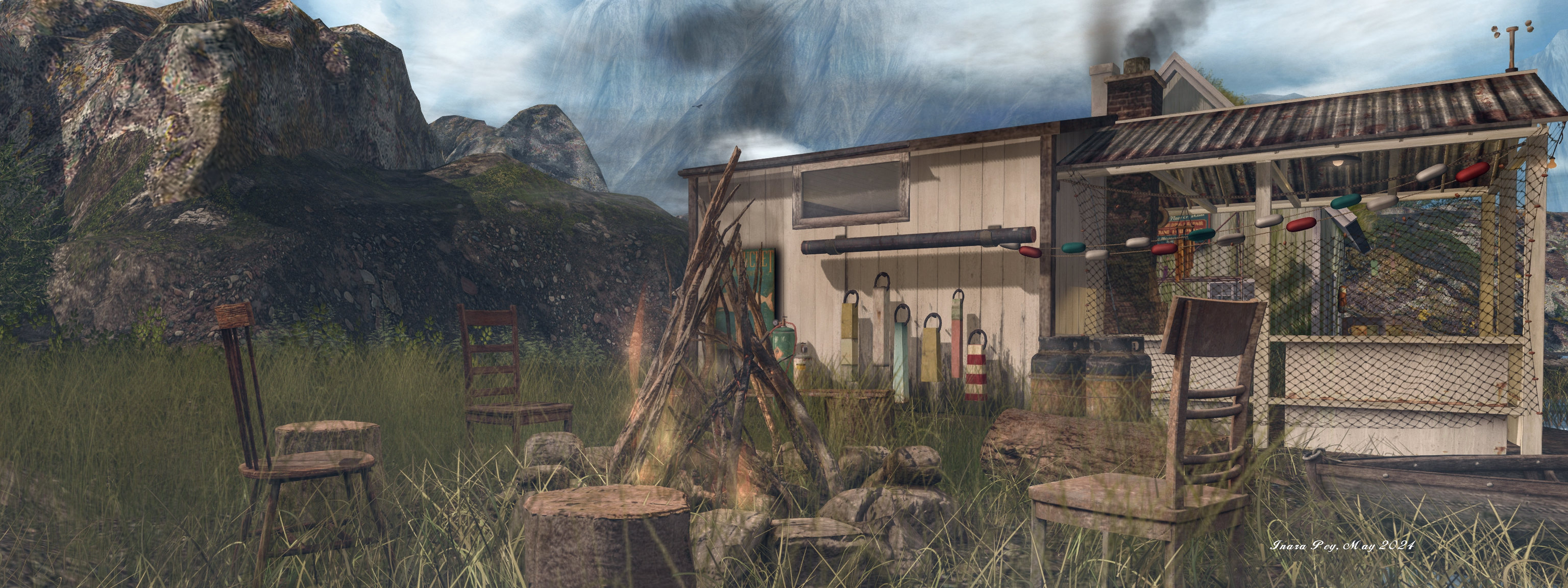
Given this, and as one might expect, the houses and cabins tend to confine themselves to the coastal aspects of the setting, where they can be easily reached by boat; indeed few are without a wharf, jetty or wall where boats may come alongside. Most – as typical of many Nordic houses in remote / rural areas – have a semi-turfed roof to help with insulation. These and the rugged nature of the island I found particularly evocative of my times in the northern parts of Iceland around Akureyri (which remains a place with one of the most spectacular runway approaches I’ve experienced, flying down through the ever-narrowing fjord) and Mývatn.

Most of the setting’s interior is given over to rocky beauty, with scrub grass and the occasional tree breaking the ground – something else that brought to mind parts of Iceland (and indeed, some of the remoter points along the north coast of Scotland I’ve seen).

Vindfjell, May 2024

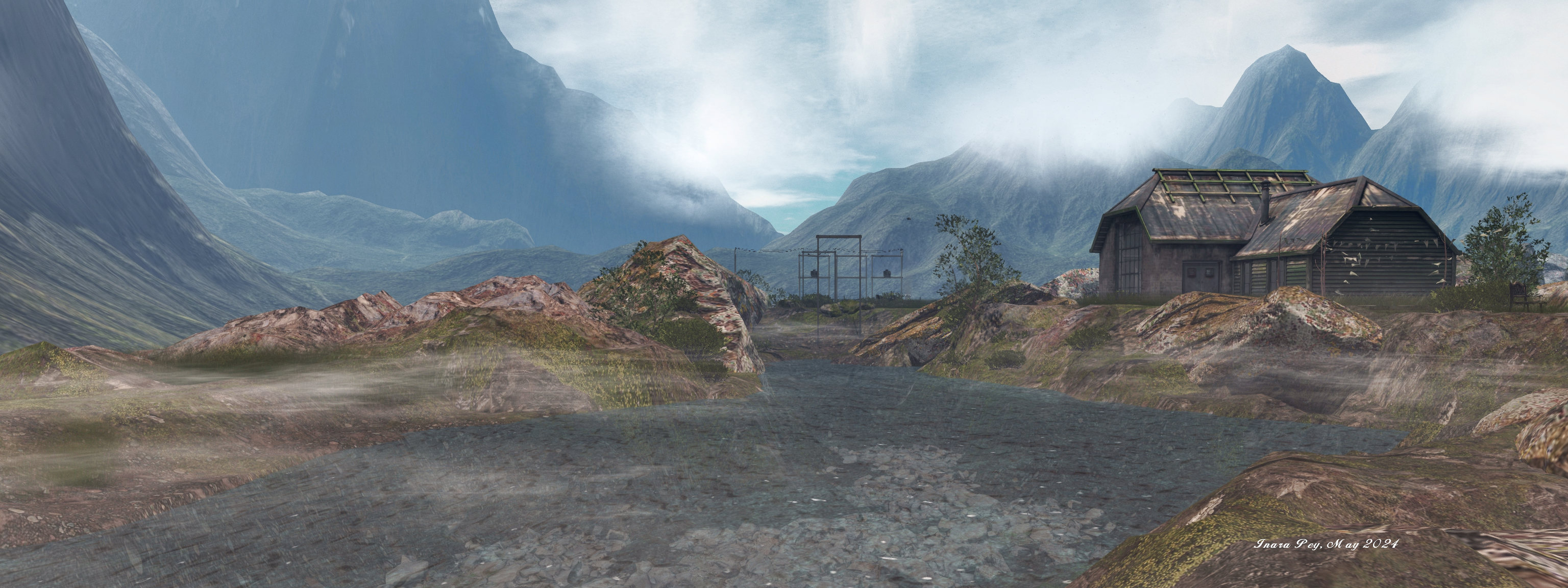
However, the one exception to this is a large industrial-like structure sitting somewhat inland, balanced between a deep gorge cutting its way through the landscape and a large body of water. Its presence, coupled with the electrical power lines close by together with the water and nearby falls might suggest this may once have been a hydroelectric power generation centre, or perhaps a place where geothermal energy had once been used to provide local power.

Or maybe the building had some other purpose, now being deserted; the choice is left totally open to the imagination – which adds further to the beauty of the setting, allowing as it does visitors to cogitate their own narratives as to the history of this place.

Vindfjell, May 2024

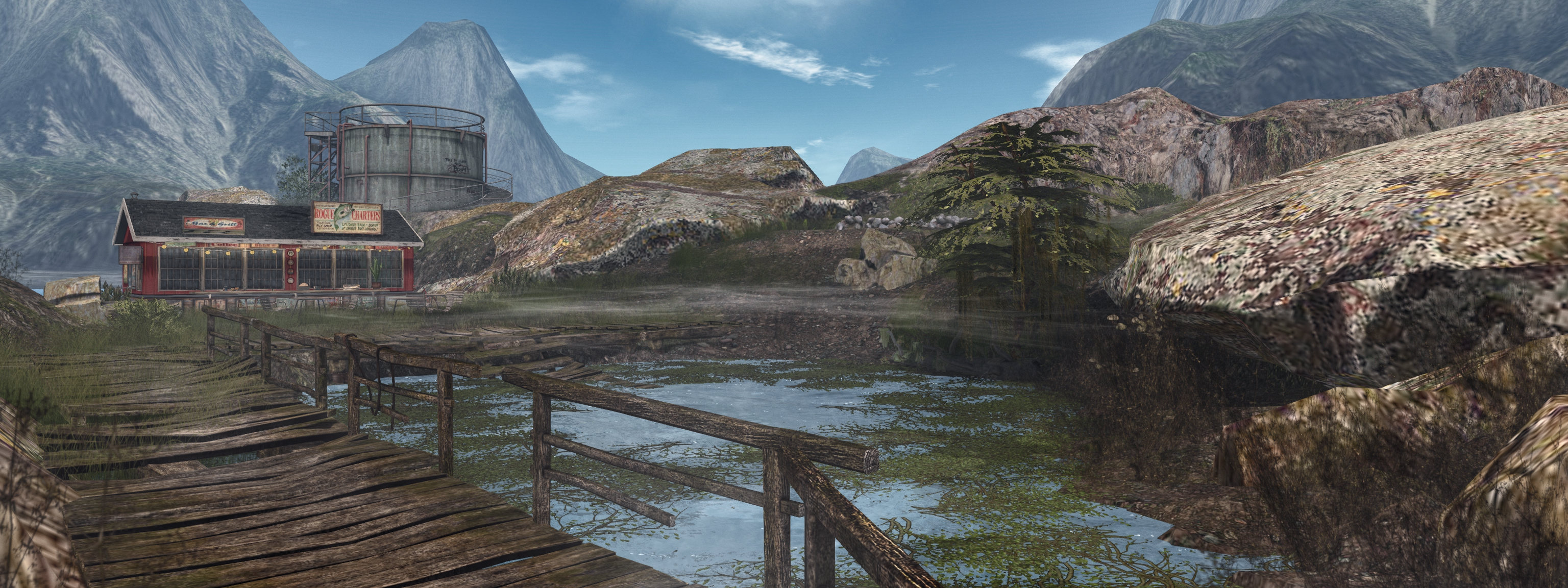
A further hint that the island once had something of an industrial use sits on the north-western headland, misty waters encroaching upon three sides. This is the kind of promontory many would look to site a lighthouse. Instead, Dandy (wisely, in my opinion) eschews that cliché and instead offers an ageing storage tank as a sentinel  overlooking the waters, the gentle twist of steps around its circumference making an easy climb to its flat top, the threatening graffiti notwithstanding!

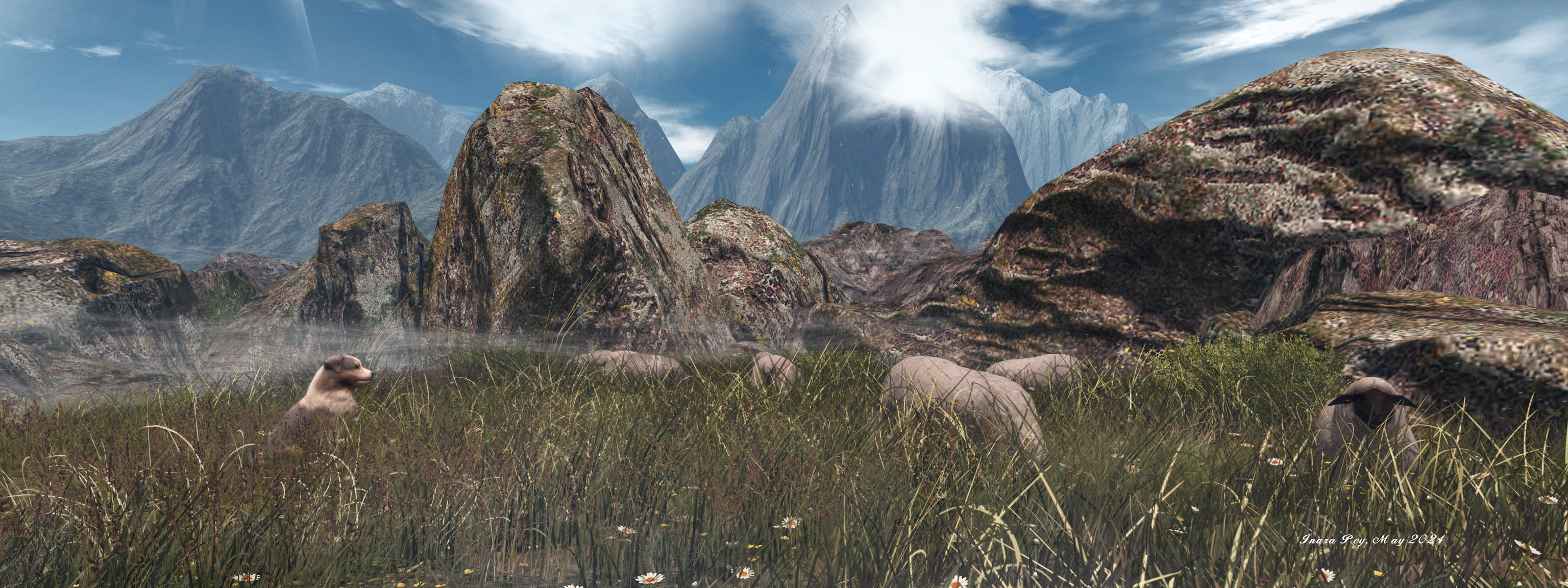
The landing point for the region sits somewhat towards the centre, amidst the scrub grass where sheep are grazing peacefully, having wandered up a narrow valley from the little farmhouse / fisherman’s cabin on the southern coast. As well as providing the route back to that cabin – no doubt followed by the sheep as night closes in, and the sheep dog herds them gently home – the grassland also presents a path and board walk down to the north side of the land, from where the storage tank mentioned above might be reached, together with the grassy spit of land forming the island’s northern side and which provides space for a couple of windswept houses.

Vindfjell, May 2024

In addition, the graceful arc of a stone bridge spans the gorge from this sheltered grazing, giving arrivals the means to reach the old industrial unit with its attendant body of water or follow a fence-marked trail down to the little hamlet occupying the south-east east of the setting, as they find shelter against the elements on their southern side by a blocky bluff of a headland poking out into the sounding waters.

Throughout all of this, Dandy has added further ambience to the setting via the region EEP, and through the use of mesh “puff” clouds, low-lying misty and floating seed heads float and flow as they are caught on the wind (in some cases to be blown helter-skelter between the narrower walls of rock, where one much reasonably expect any breeze to be funnelled and accelerated). That said, the static nature of the mesh clouds are a little at odds with the haunting hiss of the wind present in the sound scape – but one can forgive their refusal to move simply because they add a further depth to the setting.

Vindfjell, May 2024

Dandy calls the setting “ephemeral”, mostly because Vindfjell is only with us for a short time. As such, it’s a fitting term – but one to which I’d personally add the word “beauty”, as the setting really is glorious in its natural beauty and sense of being. A fabulous celebration of the rugged pulchritude of Nature, this is a setting very definitely not to be missed.

SLurl Details

A Blue Finch Blossoms Hollow in Second Life

Blue Finch Blossoms Hollow, April 2024 – click and image for full size

It was off back to the Full private region held by Dianna Fluffington for me recently, and a visit to her creation of Blue Finch Blossoms Hollow.

This actually marked my third time at the region in the past 12 months, having previously visited in April 2023 and again in November of that year (see: A Blue Finch Spring in Second Life and A Blue Finch Frosty Hollow in Second Life). However, both of those iterations of the region design were collaborative works between Dianna and her former partner Grant Wade (GMi7); so the occasion of this visit marked my first time to an iteration of the region that is solely Dianna’s design – and it remains as eye-catching and photogenic as ever.

Blue Finch Blossoms Hollow, April 2024

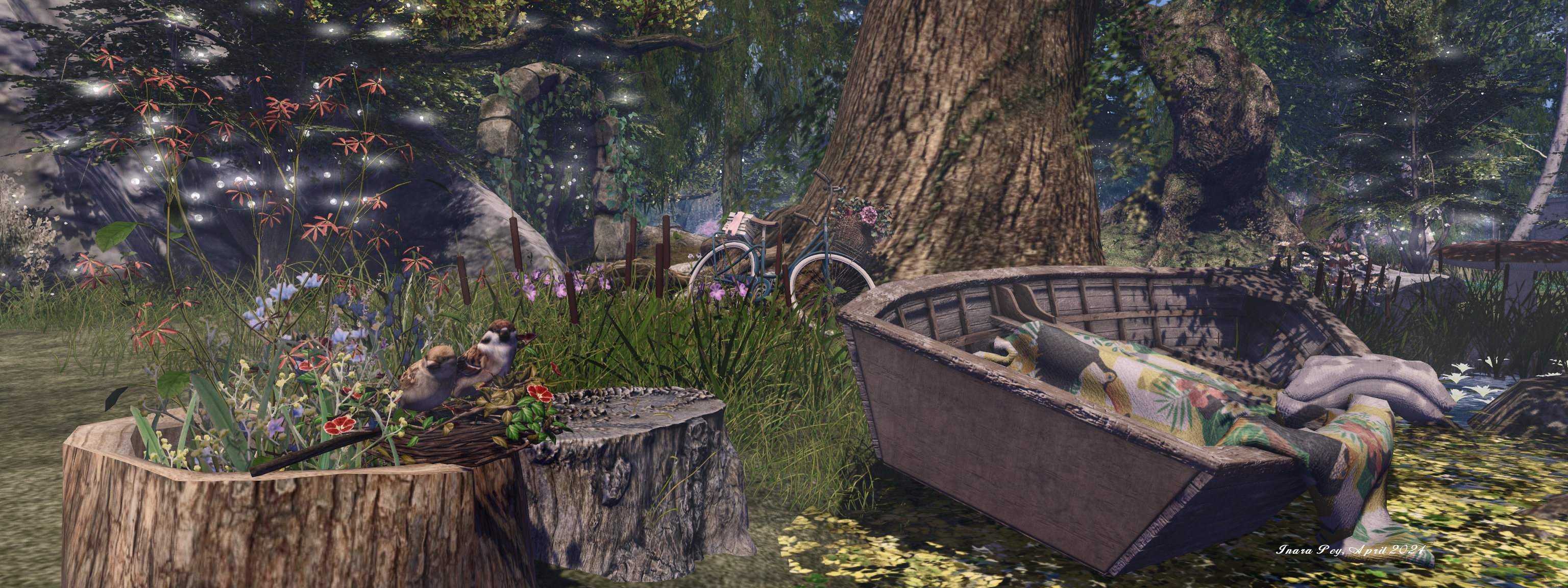
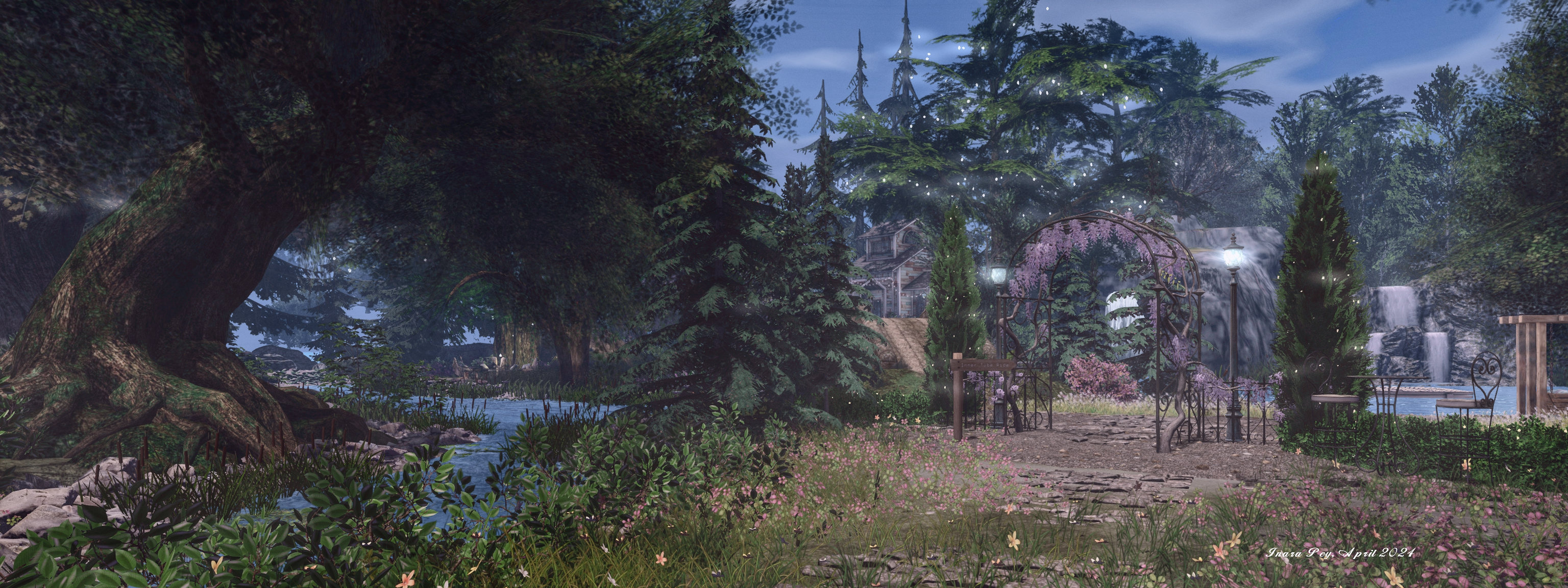
As with the two past iterations of the region, this version for Spring 2024 offers a pleasing mix of themes and influences. The subtle touches of fantasy (such as via the elven-like lanterns lighting the many paths through the setting) are present, there is much to appreciate in terms of natural flora and fauna, superb use is made of landscaping elements to give the setting a unique, rugged look and beauty which is softened through the use of grasses, trees, water, shrubs and paths.

Whilst not strictly enforced, the landing point sits to the east of the region, tucked quietly between the north-east and south-east quadrants and within the single paved street of a small gathering of places of businesses, all neatly framed by a mix of walls and water channels, flowerbeds and trees. Within the area, the little shops are open to visitors, whilst outdoor spaces offer plenty of space for sitting down and passing the time.

Blue Finch Blossoms Hollow, April 2024

It is here as well, towards the southern end of the street, that visitors can find information on the region and its in-world Group, an invitation to hop up to a sky platform to visit an art exhibition by Cammie Carver and hosted by The Wanderers Relay for Life team (all donations, etc., to RFL of SL via the team), and directions to a horse rezzer where visitors can take a tour of the region on horseback. Unfortunately, the rezzer refused to work for me, so I’m unable to mention the nature or extent of the tour.

For those opting to explore on foot, there are a variety of paths leading away from the landing point and the little hamlet of shops and on through the region. So many in fact, that I’m not going to even attempt to chart a route for you to follow from here; the best thing to do is just step through the gates or over the little bridges from the town space and start wandering – whichever way you go, you will be richly rewarded with things to see and do.

Blue Finch Blossoms Hollow, April 2024

In terms of the latter, as well as the horse ride, the immediate surrounding to the town offer mini golf to one side and on the other, on the shores of the central lake, the opportunity to rez one or more (if you are in a group) inflatable tubes. These will whisk you around the waterways (at a pretty brisk pace!), complete with your personal supply of beer / drinks. There are also zip lines awaiting discovery and use by the adventurous.

One of the latter sits between a elevated events area tucked into the north-west corner of the setting, on a terrace covering a table hill. Given the other path up to this region is long and winding (but well worth the effort of finding and following given it does take one on a tour of a good part of the region and offers so excellent views from some of the higher aspects of the landscape), this zip line offers a quick and easy ride back down to the lower-lying elements of the setting for those who do not wish to retrace steps.

Blue Finch Blossoms Hollow, April 2024

But to return to the tube ride: this deposits riders in the shallows of a cove directly below the events terrace noted above, which is home to one of two stretches of beach making up the setting. A rocky arch from here provides the means to return of the region’s grasslands and gardens. Once through the arch, it is possible to spot another of the region’s zip lines and also appreciate another touch of the fantasy elements found throughout, this one in the form of ruins and a quiet swing waiting for romantics.

Places to sit can also be found through the region – from converted rowing boats through decks built out over the waters, parasoled tables on terraces and squares or rafts on the water, through to the region’s little cafés and bars or the open-air cinema (complete with offerings of pizza and buckets of nibbles.

Blue Finch Blossoms Hollow, April 2024

Blue Finch Blossoms Hollow is one of those places where just as you convince yourself you’ve seen everything there is, something else pops up in the form of an unexpected turn of a path or a hither-to unseen passage between trees or under rocky heights, and so brings you to something else to enjoy.

Such a discovery might be a little vignette of animals or a place to sit, a romantic corner, the unexpected sight of water flowing upslope (such is the magic of the region!) or another such unexpected view. As such, it is genuinely a place where the more time taken in exploring, the greater the rewards to be reaped.

Blue Finch Blossoms Hollow, April 2024

Those seeking an immersive location bringing together assorted themes and ideas and which offer huge scope for photography, relaxing, having a little fun or romantic interlude – or indeed, a combination of all of these  –  will undoubtedly find Blue Finch Blossoms Hollow an ideal destination in their Second Life travels.

SLurl Details

A Venus by the Water in Second Life

Venus by the Water, April 2024 – click any image for full size

Update, July 2025: Venus by the Water has closed.

Elizabeth (ElizabethNantes) and Cecilia Nansen are two women in Second Life noted for their creativity. Elizabeth is a creator who has produced multiple popular region designs over the years, several of which I’ve previously featured in these pages since around 2016 – the last time being her excellent Hear How Your Landscape Should Sound, produced in collaboration with Electric Monday (see here for more).

Celia Nansen is one of Second Life’s premier photographers noted for producing evocative and narratively rich avatar studies, someone whom I’ve again often featured in these pages since the unveiling of her very first exhibition in-world back in 2017 (see here for more).

Venus by the Water, April 2024

In March, Elizabeth and Cecilia opened a collaboration of their own to Second Life users, one that brings together region design, art and music in a beautifully considered and executed Homestead region they have called Venus by the Water. Fittingly, given the region is the product of two in-world creative talents, Venus by the Water is also offered as a tribute to two exceptional talents from the physical world: Bjork and Polly Jean Harvey (more professionally known as PJ Harvey).

This is an idyllic setting, presented as a low, temperate island which the surrounding waters are in the process of breaking up. Already they have eroded the narrow neck of sand that once linked the two halves into a whole so that a broad wooden deck is now required to maintain the connection between the two segments of land. This deck is set as the region’s landing point, and is home to a tip jar and local Group joiner. From it, visitors can take their pick as to which half of the setting they choose to explore first.

Venus by the Water, April 2024

The larger area of land, forming a W-shape which extends from a narrow tail pointing eastwards along the southern side of the region, through to a rocky headland lying to the north-west, is largely sandy in nature, although the west side is home to lush grass and a small woodland area where horses might be found grazing. A stream cuts right through this land, separating the north-eastern most part of it off from the rest, shingle beaches to the north and west bracketing its grassland, the stream doing the same to the south and east.

Tucked into the south-western corner of this landscape, between the woodlands to the north and the sands to the east, sits the Gallery Bjork. At the time of my visit, the 2D work on display came from artists responding to a call from Cecelia and Elizabeth for submission of art on the theme of Venus on the Water (hence the décor within the Gallery space with a tide gently lapping over coastal reeds and grass).

Venus by the Water, April 2024

Outside, on the rear terrace might be found a sculpture by Mistero Hifeng keeps a quiet eye on things, whilst the front room of the gallery presents an image of PJ Harvey and Bjork from an interview published in (I think) 1993 or 1994, and which also featured American artist Tori Amos. Rendered in monochrome, the photo faces two reflections of its form, each featuring Elizabeth and Cecilia.

The smaller land mass for the setting sits to the north-east, cupped between the arms of the W. It presents a rugged by lushly flowered grassland bordered by trees, an earthen path cutting through it from the landing point to where the Café Polly sits atop an extensive deck reaching out over the waters. Broadly split into two indoor seating areas bracing the central service area, the café additionally offers outdoor seating under parasols for those who prefer, either on the deck itself, or on a smaller deck a very short walk from the café’s door, overlooking the bay that cuts deeply into the land.

Venus by the Water, April 2024

This is a peaceful location, although the aged and bent tree that seems to be trying to stretch its branches toward the café and touch it, together with the corpse of another tree angling itself sharply over the path leading to (or from, depending on your point of view) the café, suggests the island has seen its share of strong winds and harsh weather. Even so, there is nothing now to interrupt the gentle rocking on the rowing boats tied-up at the pier just below the café’s deck.

These rowing boats, rocking gently in the swell as it approaches the shore, are just one of the details that further bring this setting to life. There are many more to be found throughout which both give depth to the region and often offer encouragement for people to stay and enjoy their time here.

Venus by the Water, April 2024

For example, There’s a little camp site out on the sand of the south-east headland and watched over (in a manner of speaking) by the sheep grazing on the stunted grass close by. Then, almost mid-way between the landing point and the Café Polly, the path offers a short branch leading to a raised deck. This is home to a pair of loungers looking out over this bay cutting so deeply into the land. In doing so, they draw attention to another rowing boat, this one anchored out in the sheltered waters to offer another place to sit and past the time, either alone or with someone close to you. Still more such tranquil places await discovery – but I’ll let you find them on your visit 🙂 .

Venus by the Water is finished in an EEP setting which compliments it perfectly, and thus really is best seen under it. The region also fears a very subtle and fitting sound scape, so I recommend having local sounds active when visiting as well. The audio stream for the region has also been carefully curated, and features at times an interesting mash-up or two between Bjork and PJ Harvey, and well as some of their own recordings.

Venus by the Water, April 2024

All told, a perfectly presented and relaxing setting – as one would expect from two creative talents like Cecilia and Elizabeth.

SLurl Details

Exploring In Stillness in Second Life

Still, April 2024 – click any image for full size

Still and In Stillness sit as a pair of Second Life regions (one a Full private region leveraging the available Land Capacity bonus, and the other an adjoining Homestead region) held and designed by Matchbook Monday. Together, they more than live up to their About Land description – a place to still the mind and relax.

The two regions are presented as a temperate archipelago sitting – going by the region surrounds – just off the coast. In terms of which coast, I’d guess that by the lie of the land and Matchbook’s own origins together with the abundance of Canadian flags, either the east or west coast of that nation; say, somewhere along the British Columbia coastline or maybe somewhere within the gulf of St. Lawrence.

Still, April 2024

Although that said, it could just as easily be imaginatively set within somewhere like Lake Winnipeg (and even then, a boathouse in the setting displays a map of America’s Cape Cod, further making the setting a fascinating mix of potential influences!).

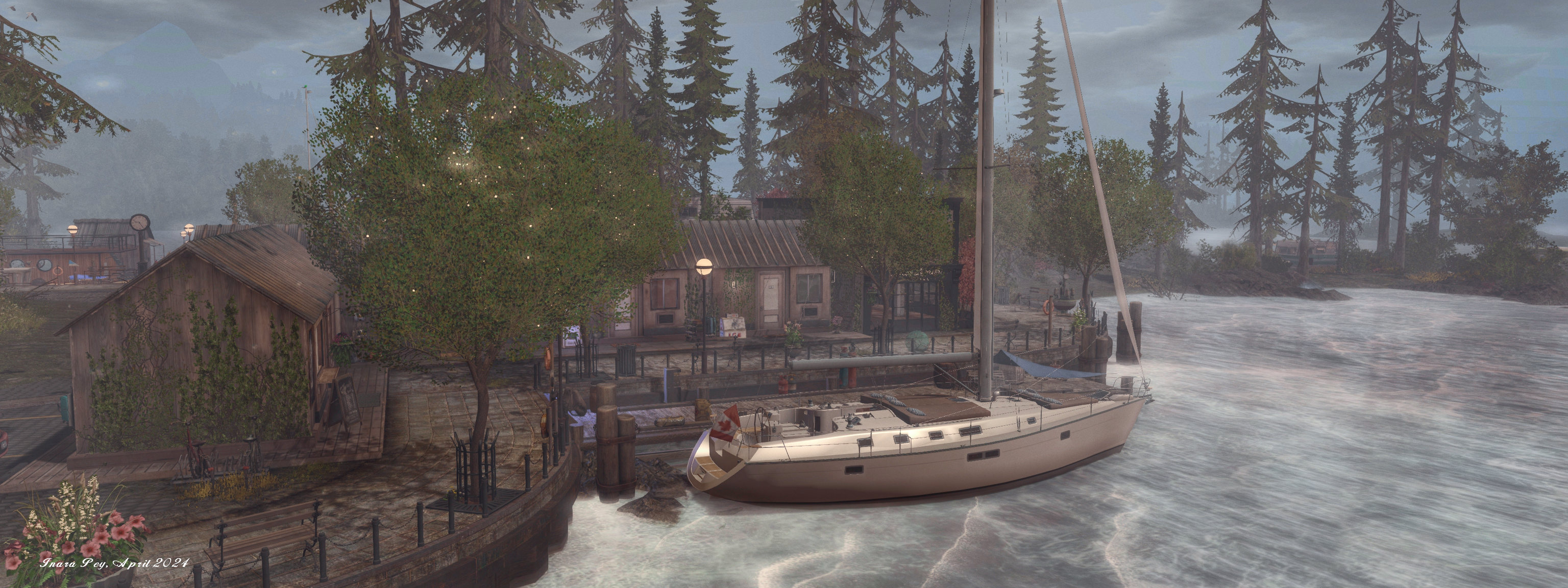
But wherever it might be placed, if one were inclined to try to pin it down as a place of the imagination with a physical world foundation, there is no doubting the natural beauty of the setting. The Full region comprises three islands, two of which are quite large, the northernmost of which is home to the main landing point. heavily wooded, the island sports a small cluster of waterfront businesses at its western end.

Still, April 2024

A broad walk passes around the northern side of the island to reach a small marina, sitting almost opposite a motel sitting alongside a quay on the island’s southern side. To one side of the motel, and rather incongruously given the wild nature of the landscape and setting as a whole, there is a parking lot hosting a couple of saloon cars – not that they really have anywhere to drive easily. It is perhaps the one eccentricity within the entire estate, and offers something of a little visual twist.

The eastern end of the island is home to a campsite dotted with caravans which appear to be available for rent. This end of the island also offers views across a narrow strait of water to its southern neighbour, which almost matches it for size. However, the easiest way to reach this island is via the bridges which connect all three islands. Both the second large island as the smaller isle making up the trio are similar inasmuch as they both share the same landscaping as the first – unsurprisingly, given this is an archipelago –  and they are both home to small collections of rental cabins.

Still, April 2024

This latter point does not mean either island is off-limits to exploration; there are paths and trails running through both which are open to wandering. Rather, it simply means that visitors should be aware that the cabins, like the caravans mentioned above may be occupied and deserving of privacy.

That both islands might be explored can be seen in the provision of the two jet ski rezzers available – one per island. Open to public use, these allow visitors to scoot around all of the islands in the group – particularly those scattered across the Homestead region, viewing them from the water.

Still, April 2024

Throughout all of the main islands are multiple places to sit and pass the time – camp sites, decks, outdoor eating and drinking places. Those with keen eye might also spot places to fish and also bicycle rezzers for a little fun in exploring the main islands. These all give the setting an increased since of space, joining with the selected EEP settings and landscaping to add to the ambience of the regions – something further enhanced by the moody set of the misty waters around the islands.

Rounded-out by an ambient soundscape and with birds wheeling overhead, the two regions of Still and In Stillness (which have been given the names In Stillness and Still the Mind by Matchbook), are beautiful designed and implemented, offering a lot to appreciate and explore, and plenty to do. And needless to say, the setting is highly photogenic.

Still, April 2024

SLurl Details

The return of Jade’s Hotel Del Salto to Second Life

Hotel Del Salto, April 2024 – click any image for full size

In May 2020 I visited a region design by Jade Koltai which – as with her work with the much-missed Serene Footman – was based on a real world location: the Hotel De Salto, Columbia. It was a fascinating visualisation of a place with an equally fascinating history, some of which I touched upon when writing about my 2020 visit.

Well, Jade’s Hotel De Salto is once again open to tourists to visit in Second Life, and as with the original, again sits above the gorge of the Salto del Tequendama, or Tequendama Falls. With the return of the build come some new elements I don’t recall from the first iteration – although they could be things I simply missed back in May 2020; either way, they provided an added bonus in re-visiting this eye-catching build.

Hotel Del Salto, April 2024

As I noted back in my original piece, the Hotel Del Salto is located some 30 km south-west of Bogotá, Columbia’s capital city, and within an area steeped in legend. The waterfall, for example, is believed by the indigenous Muisca people (also known as the Chibcha, also the name of their language) of the Andean plateau to have been created by Bochica, the founding hero of their civilisation, who (amongst other feats of leadership) used his staff to break the rocks of the high savannah plateaus to release the waters covering them, providing the Musica with rich and fertile lands for settlement. In fact, Tequendama, an ancient settlement close to the falls, is regarded as one of Colombia’s earliest permanent settlements.

Measuring 132 metres in their main height, the actual falls are an impressive sight, and the location of another Musica /  Chibcha people’s legend, being the place where it is said that in order to escape the Spanish conquest and its violently enforced evangelization of the Americas, the indigenous people of the area would leap from the falls, becoming eagles able to fly to their freedom.

Hotel Del Salto, April 2024

The story of the hotel commenced in 1923, and became wrapped in its own semi-tragic legend. Designed and built by Carlos Arturo Tapias at the behest of the 11th President of the present-day Republic of Columbia, Pedro Nel Ospina Vázquez, the building reflected French architectural lines. Its original purpose was to be a private mansion where the elite of Bogotá could gather and celebrate their wealth and elegance in a setting of supreme beauty and breath-taking views  – the building built against the very lip of the gorge carved by the nearby waterfall.

By 1928, the building had become a more formalised hotel, opening its doors to visitors from around the world, a role it was to perform for around 50 years. With its spectacular views of the falls, available from both the rooms and suites on the gorge side of the hotel and – especially – from the broad dining and tea terrace extending from the rear of the hotel to the edge of the gorge, the hotel did attract many. However, not all of them were happy visitors, with the hotel gaining a reputation for attracting the broken-hearted who would – perhaps as a result of the ancient Chibcha legend of people throwing themselves from the nearby falls to escape the terror of the conquistadors – throw themselves to their deaths from the nearby cliffs. These tragedies further enhanced the Hotel’s reputation, as it was said the cries of those taking their own lives could be heard from within the hotel, leading to claims that it was also haunted.

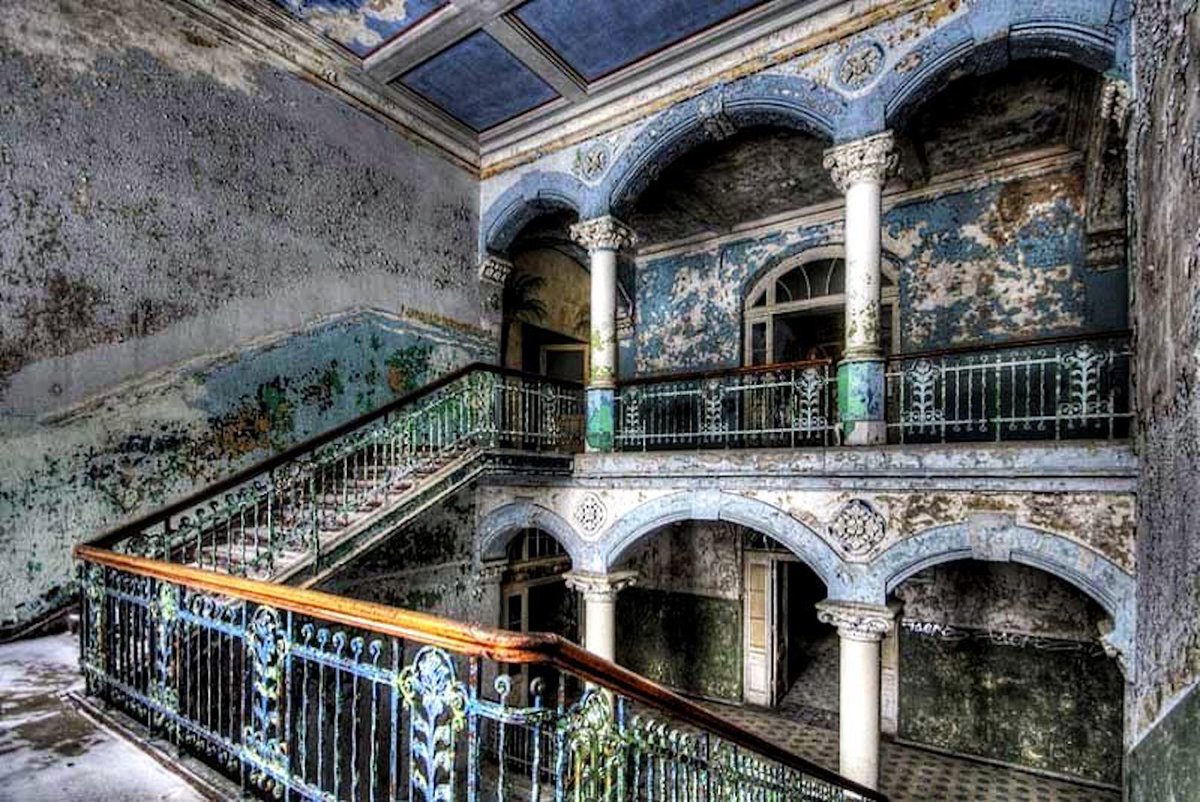
An interior view of Hotel Del Salto taken as work to restore the building was underway in 2011. Credit: National University of Colombia

However, in the 1970s, the Hotel’s fortunes entered a decline. Bogotá has undergone expansion at a pace that far outstripped its supporting infrastructure. As a result, the river serving the Tequendama Falls and following through the gorge below the hotel has become the city’s primary sewer. This became so bad that the falls gained the dubious distinction of becoming “the largest wastewater falls in the world”, and the river regarded as one of the most contaminated in the world, with its stench rising to the level of the hotel. A dam built across the river above Bogotá further restricted the flow of water reaching the falls whilst conversely increasing the among of raw sewerage it contained, and by the 1990s, Hotel Del Salto had closed its doors and was simply left to nature and to rot.

It is in this state that Jade has again chosen to represent the Hotel: an empty, mouldering shell. Rooms lay deserted, vines and creepers scale walls and hang from rafters, the branches of bushes and trees intrude through windows that have long since lost their glazing; paint fades on walls and doorways gape slack-jawed onto balconies, their doors also long-since vanished.

However, within its empty bulk, there are still reminders of the hotel’s glorious past, together with echoes of the ancient history of the Tequendama area and of the Musica / Chibcha.

Hotel Del Salto, April 2024

For example, one of the broad terraces offers a parasol-shaded lounger from which to appreciate the full glory of Salto del Tequendama, here depicted long before any upriver dam stemmed the full spate of the the river. Directly behind the Hotel, another terrace presents an ornate cast-iron table and chairs set for tea offering, again offering a view of the falls and one down the lush gash of the gorge, humming birds and a parakeet adding to the exotic sense of indulgence.

Meanwhile, a balcony serving one of the long-since deserted suites of the hotel offers both a comfortable bed for use as a latter-day chaise lounge, a gramophone on the floor for those requiring music perhaps reflective of the hotel’s early years. Watched over by a cockatoo, this balcony carries some of the echoes of the ancient past in the form of painted skulls displayed on the parapet guarding its edge.

Hotel Del Salto, April 2024

A further suggestion of the region’s ancient heritage might be found by descending the stairs which cling to the stone walls of Jade’s built as they support the Hotel from the rocks below, offering a route down to the water’s edge facing the foot of the falls. Here Jade has taken a little artistic liberty, turning the river into an enclosed body of water, allowing her to present evidence of ancient structures which help acknowledge the rich history of Tequendama, as well as providing a further retreat for those who wish to tarry for a while within the region.

Another place in which to pass the time can be found on the steps of the north face of the gorge. This takes the form of a sturdy, if rusting tower topped by plants and places for couples and individuals to sit. Reaching it, however, does require a sense of adventure and a trip along one of Cube Republic’s excellent rope climbs!

Hotel Del Salto, April 2024

For the last 14 years, the original Hotel Del Salto has been undergoing restoration, initially as project undertaken by the National University of Colombia’s Institute of Natural Sciences. This was part of a broader (and on-going) effort “to recover the region and make it free, clean, and surrounded by a healthy ecosystem.” Initial exhibitions at the Hotel under the Institute’s umbrella commenced in 2013, with the museum officially opening to the public in 2016.

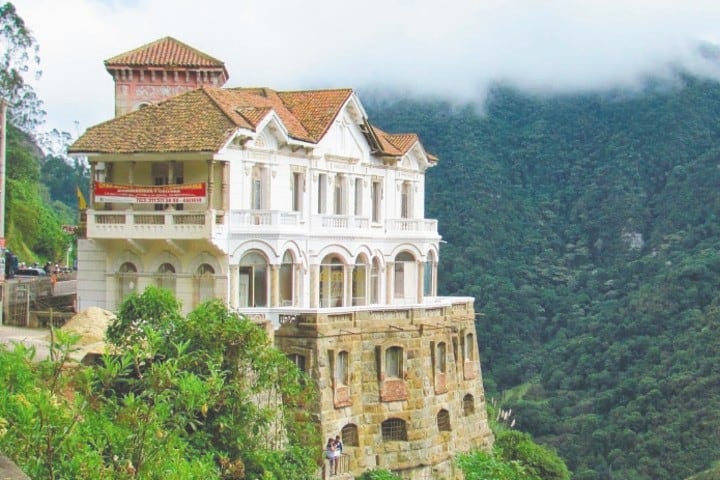
However, according to several reviews of the restored building, much of this work involved a complete abandonment of its original interior décor, settling instead for a modern, clinical white plaster finish, leaving the building’s interior a faint shadow of its former self. Similarly, much of the exterior of the building has been whitewashed, possibly in an effort to  protect the stone and brickwork against the ravages of the local climate, although visitors have again critiqued this as eliminating much of the building’s splendour.

The Hotel Del Salto in 2023 with its whitewashed frontage overlooking the Tequendama Falls. Credit: El Espectador

But however one might find the original Hotel Del Salto – should one opt to visit Columbia! – there can be little doubt that Jade’s interpretation is a welcome returnee to Second Life, and represents a vision of what might actually be the most evocative era of the real Hotel’s history, and does so in a manner that both pays homage to the broader historical context of the Tequendama area whilst perfectly fitting the constraints of a Second Life region.

SLurl Details