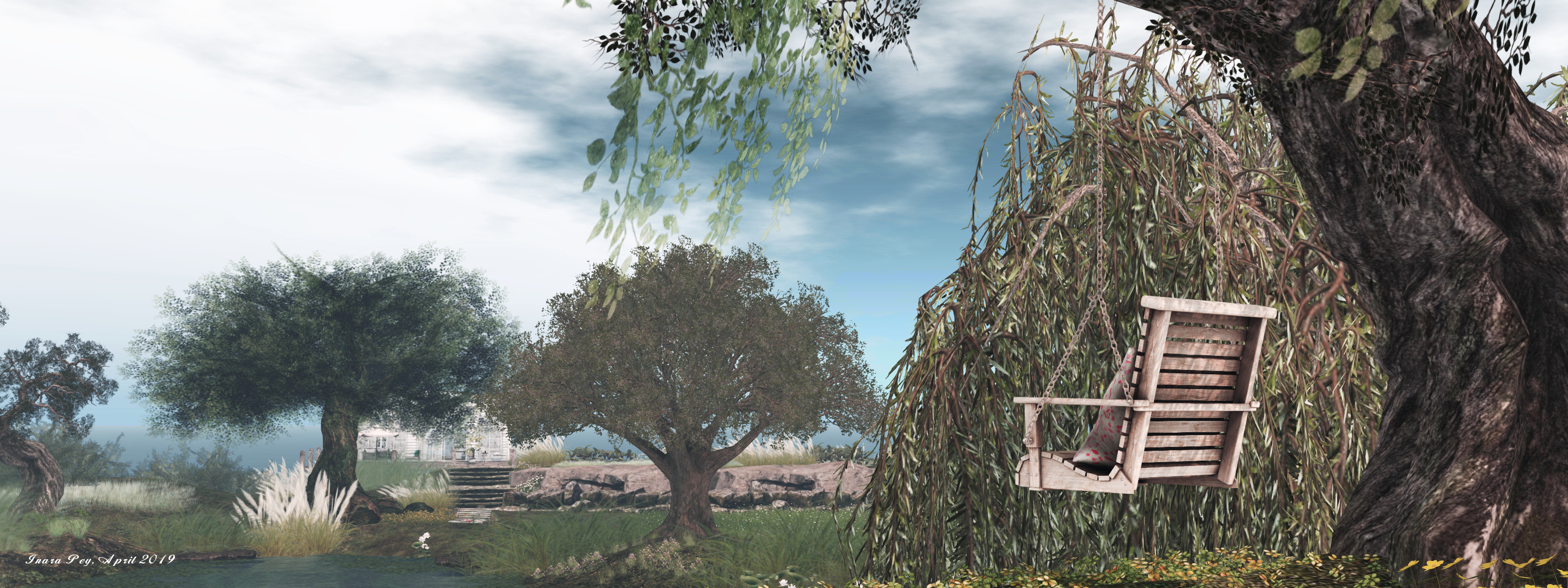
Whimberly’s summer fields in Second Life

Whimberly; Inara Pey, April 2019, on FlickrWhimberly – click any image for full size

Surprisingly, it’s been fifteen months since we last visited Whimberly, the homestead region design by Staubi Reilig (Engelsstaub). I say “surprisingly” given the region has always hosted eye-catching designs by Staubi, and has thus has tended to be a place for frequent revisits – as a result of which, it already has three prior appearances in this blog. But given we received a tap from Shawn Shakespeare that region’s look has changed in recognition of spring and the approach of summer, so a further visit seemed more than appropriate.

For those whose thoughts are turning to summer vacations, time in the Sun and away from the hustle of city life and the bustle of crowds, this iteration of Whimberly could be just the way to visualise such a getaway holiday. With a lean toward a Mediterranean feel, the region offers a genteel rural look and feel, dominated by a field of gold that arcs around the southern and western sides of the region, bordered on three sides by rocky slopes that fall away to the seas, whilst washing up against an abrupt rise in land on the fourth, in the lee of which sits a large Tuscan villa.

Whimberly; Inara Pey, April 2019, on FlickrWhimberly

The landing point sits over to the east of the island, on a broad headland topped at a small formal garden. From here a track winds away westwards, dropping down to where a deck sits out over a shallow cove, before rising past an flat-topped upthrust of rock presents a table upon which weeping willows shade a picnic spot, reached via a spiral path. Beyond this, the tack continues onwards to reach that field of gold – and then ending unexpectedly.

North of the landing point, a bridge has been strung across the narrow finger of water that has splits this part of the region into two headlands. With a north facing beach, the land across the bridge offers much to be explored, be it following the grassy path marked by rope lines and the bent figures of trees that appear to have struggled to grow in strong winds, or taking the path eastwards along the rocks above the ribbon of beach.
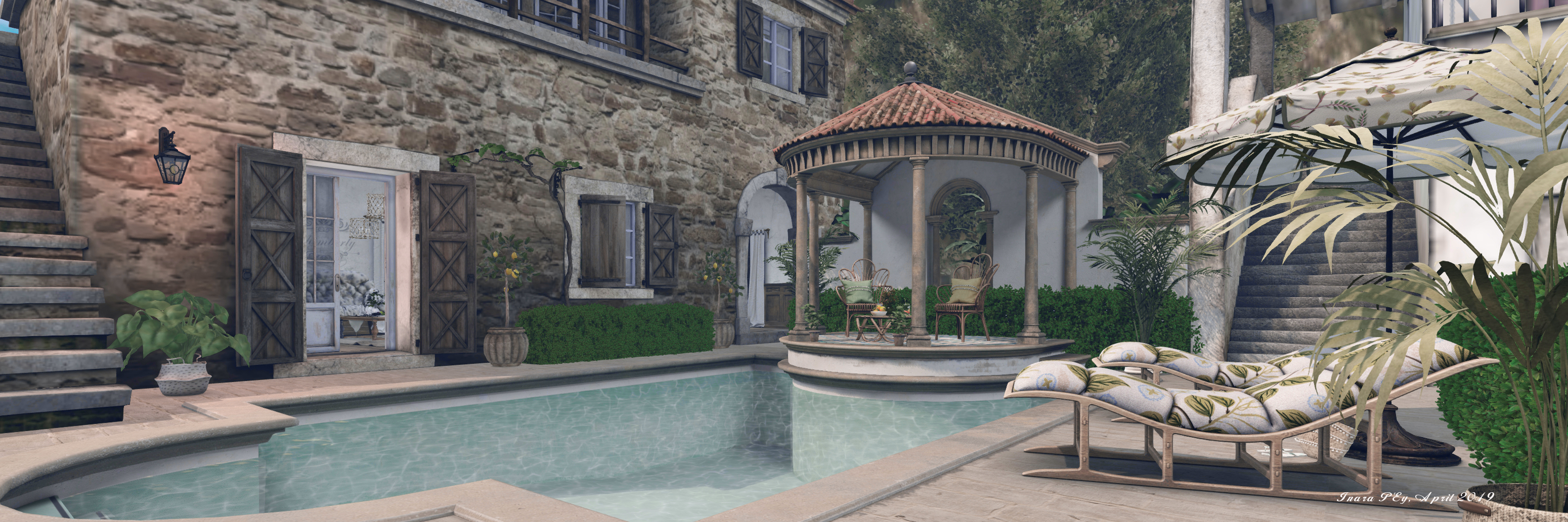
Whimberly; Inara Pey, April 2019, on FlickrWhimberly

Take the former, and the grassy path will eventually lead you to where a second bridge spans the channel between the bulk of the region and a small island, home to a squat lighthouse below which chairs and an bench offer a most excellent view back across the north side of the landscape. This route also has a path down to the edge of the waters flowing outward from the channel betwixt the two headlands. Here an egret patiently watches the slow passage of water and flowers grow in profusion.

The channel originates at an oval pool of fresh water lying almost at the heart of the region, beneath the high curtain of rock that separates it from the field of gold to the west. A slender ribbon of water drops from this natural curtain, constantly replenishing the pool, the rugged southern banks of which are marked by places to sit and look out over the waters. There are most easily reached via the wooden steps that descend from the back of the villa, passing under a natural arch in the curtain wall of rock in the process.

Whimberly; Inara Pey, April 2019, on FlickrWhimberly

The villa sits as a comfortable home, its two wings built around a walled courtyard with swimming pool, suggesting it is a holiday home, not a working property, despite the field washing against its boundary. Each wing is clearly defined in terms of use: one forms the living area, with bathroom above, the other sits at the kitchen and dining area with the bedroom above, with both upper floors reached by external stairs. It’s the kind of place one could lose oneself at during a vacation, and while it has not real garden of its own, a set of wooden steps sitting just outside the walls on the north side drop down to where a terrace of cut stone sits out over the waters, lit by large lanterns to help with appreciating the sculptures there, and with more seating close by.

Nor is the villa the only living accommodation on the island, however. Further along the northern coast and overlooking the beach, sits a cost wooden summer-house. mounted on a silt-legged wooden platform, this offers a view back towards the lighthouse and along the sands of the beach. It is also comfortably furnished in the manner of a holiday retreat, although it contains Staubi’s office. This appears to be more as a means of advertising her photography and design work, rather than being an actual place of business, as the house is otherwise open to public visits, as is the villa.

Whimberly; Inara Pey, April 2019, on FlickrWhimberly

With chairs and benches and swings scattered throughout, as well as things like the little picnic spot and courtyard and deck seating, this iteration of Whimberly offers plenty of reasons to not only explore, but to sit and stay a while. The openness of the southern and western aspects of the land making it ideal for horse riding, and  – although this should go without saying – there are photo opportunities a-plenty to be had.

Finished with an ideal windlight (that also works well under EEP), and with a rich, natural sound scape, this is a version of Whimberly that – like its predecessors – should not be missed. Should you enjoy your visit, please consider making a donation towards the region’s continued public presence in Second Life, via the donation box at the landing area.
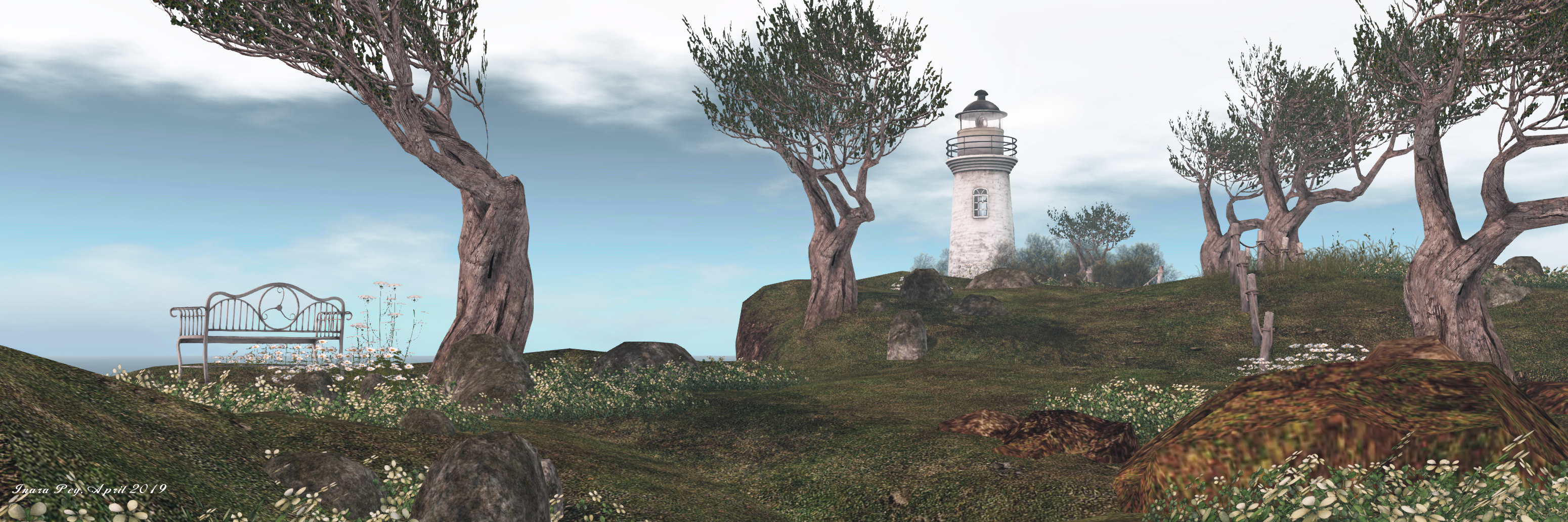
Whimberly; Inara Pey, April 2019, on FlickrWhimberly

SLurl Details

HoPe: a world without humankind

HoPe; Inara Pey, April 2019, on FlickrHoPe – click any image for full size

Update: HoPe has closed, and the region hosting it has a new region holder and is being repurposed. SLurls to the build have therefore been removed from this article.

We first visited HoPe on the suggestion of Shawn Shakespeare at the start of April 2019. This is yet another region designed by the team of Fred Hamilton (frecoi), Alexa Maravilla (Spunknbrains) and Lotus Mastroianni, who have previously produced settings like Little Havana (with Sofie Janic – see: A trip to Havana, with a little Voodoo In My Blood), so the names alone were sufficient to further pique my curiosity on hearing about the region.

At the time of our first visit, HoPe had just opened, and was subject to some heavy traffic, so I opted to hold off blogging, as the region can take its toll on the viewer, and having a lot of avatars bouncing around at the same time certainly doesn’t help! Things are quieter now, so while the region can still present a performance hit for the viewer, I thought this week might be a good time to head back and take another tour.

HoPe; Inara Pey, April 2019, on FlickrHoPe

During out initial visit, the About Land floater had a short description about nature reclaiming a city that has befallen a disaster. On my return mid-month, that had changed to a more succinct description: The World wouldn’t die without the Humankind. A bleak outlook perhaps, but one that accurately describes the setting.

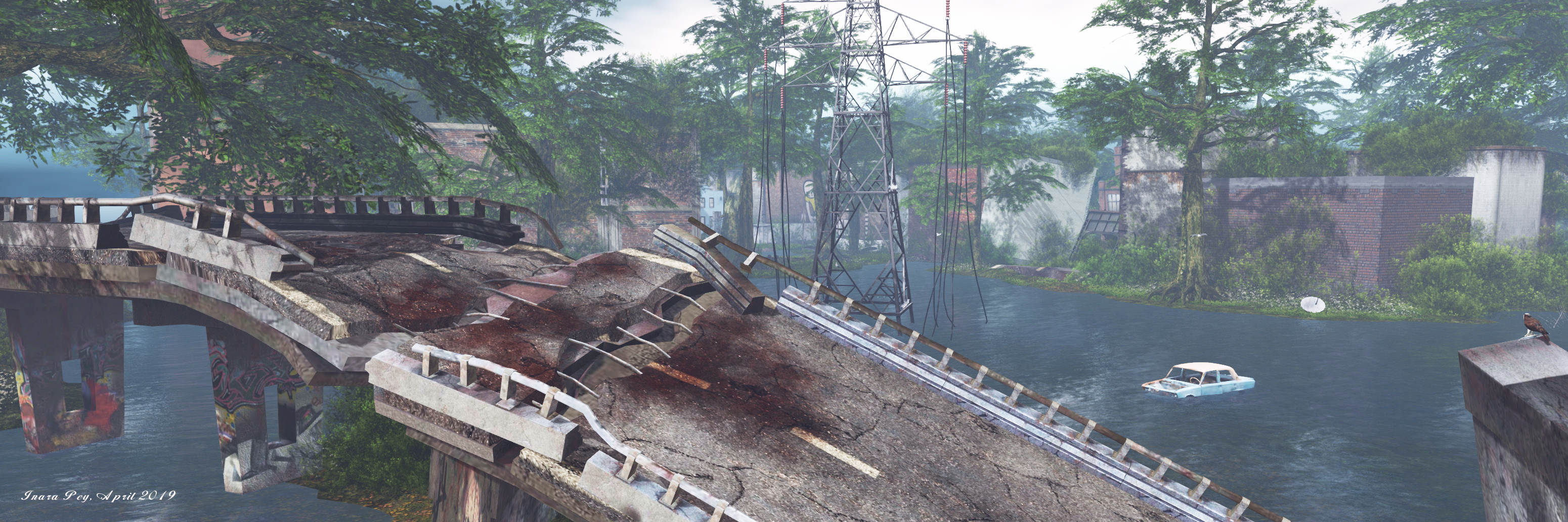
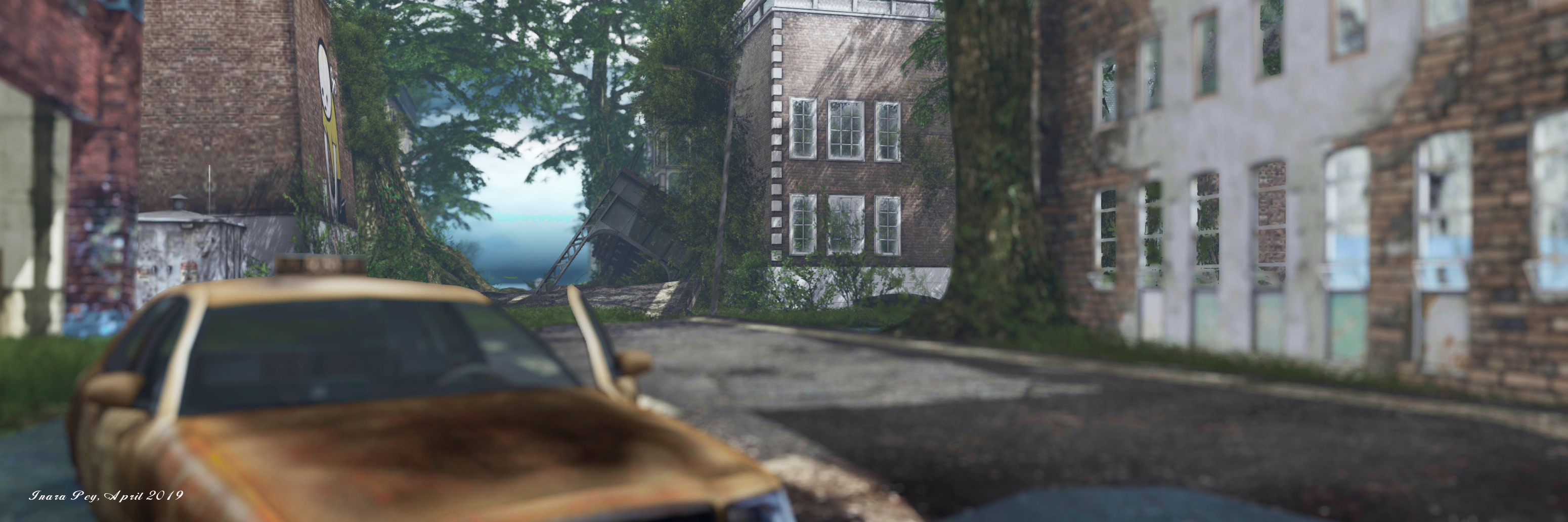
The is a setting in which it is clear some form of widespread catastrophe came to pass; the shattered remains of an elevated roadway almost rings the empty remnants of a city in which the roads lie crumpled and ruined, and the buildings are little more than empty shells, some of them leaning against their neighbours  as if seeking support as they stumble over the ripped and broken asphalt beneath them.

HoPe; Inara Pey, April 2019, on FlickrHoPe

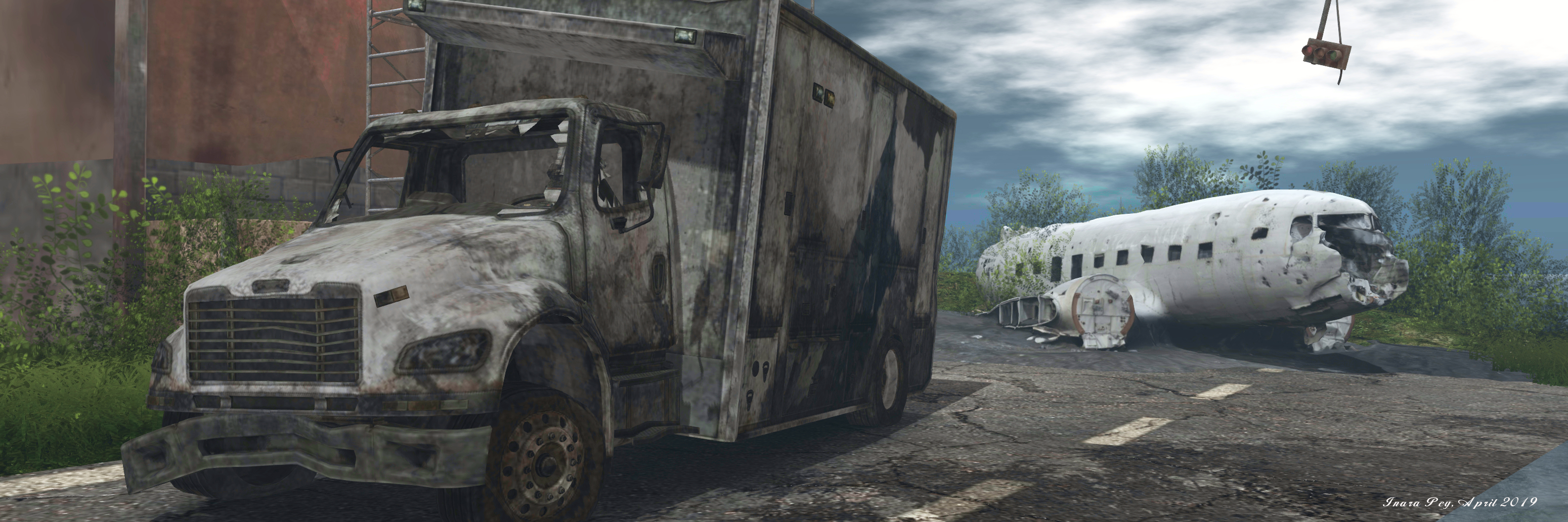
In one corner, a subway tunnel had been thrown up, a broken maw spanned by the ruin of a subway car. From this, and the wrecks of cars in the streets and on the roadways – including those of fire trucks -, together with the broken fuselage of an aeroplane, indicate whatever happened, came suddenly and without warning, bringing chaos in its wake.

Oddly, the one part of the city that appears to have suffered the least from the cataclysm is a building site off to the south, atop a low hill. Here stands the skeletal frame of what might have eventually been a set of pristine apartments offering a grand view out over the city below; or perhaps it was destined to be a shiny new office building or some new factory premises. Earth movers sit outside, as do free-standing banks of spotlights – still oddly working; and while the sky crane towers might be broken, and the safety fence stands rusted and leaning, with nature encroaching into the building itself, the site stands oddly pristine, like the bleached bones of a whale on a beach.

HoPe; Inara Pey, April 2019, on FlickrHoPe

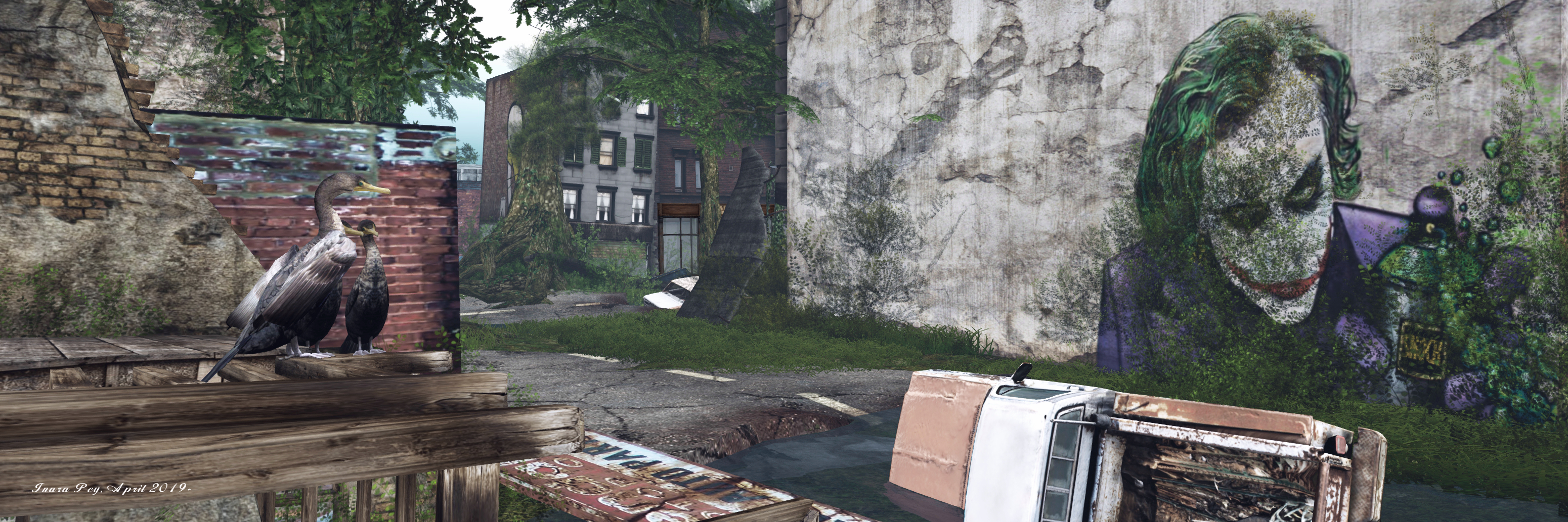
Throughout the setting are all the signs this was once a place of bustling human habitation. Faded store fronts line streets city, and graffiti sits on walls. Given the chaos that has ensued, some of the latter might actually now appear prescient: from one wall, the likeness of the late Heath Ledger’s Joker stares down at a street, a spray can of his laughing gas in one hand, while just around the corner, Harley Quinn, from her days in the Suicide Squad, swings her bat, both of them bringers of pandemonium.

While the initial catastrophe made have visited itself on the city without warning, nature has long since announced its determination to lay permanent claim to the neighbourhood. Open spaces now lie flooded, for example; might there have been a tsunami as well? Or has global warming subsequently led to a rising in sea level? You decide. Along the fractured streets, trees now add to the chaos, trunks further breaking the asphalt, roots eating into the foundations of building, adding to the canted appearance of some.

HoPe; Inara Pey, April 2019, on FlickrHoPe

It is with the trees that we have perhaps the clearest indication of whatever happened here happened a long time ago: some have matured to such an extent that, should people ever return here, without a significant lumber operation, the elevated roadway can never be repaired. For now, however, the buildings and town houses are home only to bushes, shrubs and brambles, the raised sections of subway now little more than trellises for plant growth, the air heavy with the sounds of birds, the once proud rising form of the new building now an apartment house for (possibly now feral) cats.

All of this is evidence that, when all is said and done, nature has the power to survive, no matter what humans might do. But also, on some deeper level, perhaps, just perhaps, there is a message that humanity also has the power to survive: just catch the sound of a radio in the air, caught within the cacophony of bird song, or the child’s rubber duck sitting on a streetside bench.

HoPe; Inara Pey, April 2019, on FlickrHoPe

Heavy going on the view it might be, but HoPe offers an ideal backdrop for photographers looking for something to frame their avatar studies, or who are looking for a more unusual landscape to capture.

Bellisseria gains a coastal airstrip in Second Life

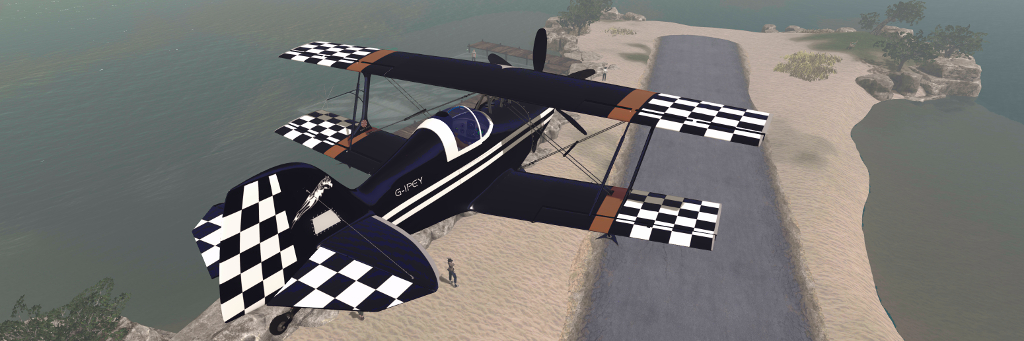
Flying over the new island airstrip at Coral Waters off the west coast of Bellisseria

Update: Abnor Mole offers a list of rez points for vehicles and boats (again, as per the note below, keep an eye out for the lighthouses for the majority of the latter).

The Moles have been busy again! Following requests for airstrips within Bellisseria, the new Linden Homes continent (something I’ve actually requested in these pages as well), one has appeared off the west coast, complete with a boat rezzing area alongside.

We spotted it by chance whilst taking one of the boats out to try local region crossings; in fact, the airstrip was so new, it hadn’t actually appeared on the world Map – although we weren’t by far the first to spot it. By the time we happened to motor past it, the island was already the subject of considerable attention – some of it probably not suited to the environment (such as attempts to rez an ocean-going freighter followed by a United States Navy warship).

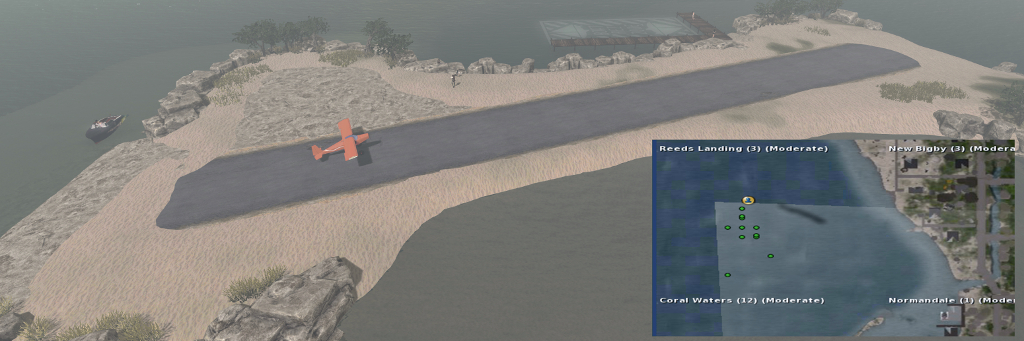
At the time of our initial visit (by boat – we’re loitering at the left-hand ed of the island in the photo) the Coral Waters airstrip was so new, it hadn’t even propagated to the world Map – but people were finding it!

Situated on a low-lying sandy island in Coral Waters, the airstrip has a tarmac runway suitable for light aircraft, complete with a rezzing zone off of its north end (although the mesh here can give some aircraft a little trouble when trying to clear the runway onto it).

The boat rezzing area – one of a number scattered around the region (generally on the offshore islands such as Springhurst Gulf or those with lighthouses on them) – sits on the east side of the island with a couple of piers. Rezzing time for both airstrip and piers is set to 2 minutes, which should be enough to get a ‘plane or boat pulled for inventory and sat upon.

The position of the island, with the north-south orientation of the runway means there is plenty of room for aircraft manoeuvring when taking off or positioning for a landing – just be sure to be careful if turning west on climbing out, as the island isn’t too far from the grid boundary.

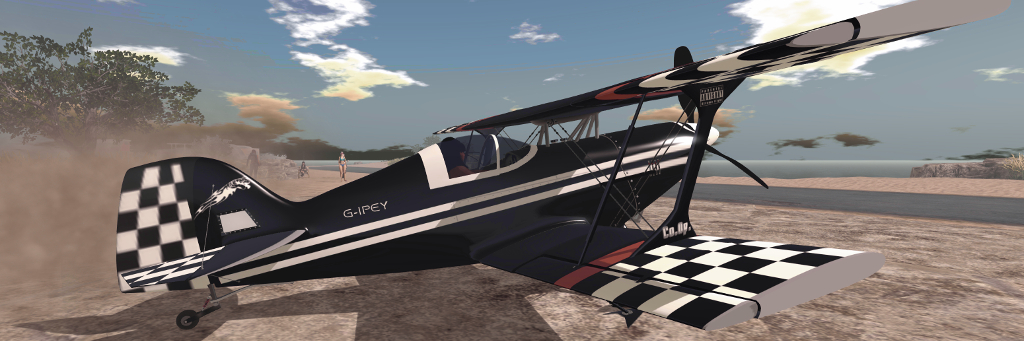
Readying the TBM Kronos for take-off at the new Coral Waters airstrip – the aircraft rezzing area can prove a little rough for some ‘planes

Following our boat trip, I dropped over to the airstrip to give it a go using my TBM Kronos (see Flying the TBM Kronos in Second Life for a review). There’s not really a lot to report in this respect, other than the fact the airstrip does exactly what it does on the tin – provides space for flying out of / into for light aircraft (it’s really not suitable for jets or larger ‘planes), and has room enough from helos – again providing they are not oversized.

It’ll be interesting to see how popular the new airstrip is once the novelty of its arrival has worn off – and whether another might pop-up somewhere else in or around Bellisseria. Kudos to the LPDW for being so responsive (again) to requests!

SLurl Details

Re-visiting Elvenshire in Second Life

(Fae Forest), Elvenshire; Inara Pey, April 2019, on Flickr(Fae Forest), Elvenshire – click any image for full size

Update July 2019: Elvenshire has closed, and Zuma relocated to a new location (see A new (fae forest) in Second Life, also now closed) for details. Because of this, SLurls have been removed from this post.

It’s been two years since our last visit to Elvenshire, the Homestead region designed by Zuma Fae Dust (Zuma Jupiter); a fact I was recently reminded of by Shawn Shakespeare, who actually originally pointed the region out to us back in March 2017. So this being the case, we girded our lions for teleporting, and hopped over to renew our acquaintance with the region.

Back in 2017, the region was set as a place rife with magic and not a little romance, rich in little vignettes and suggestions of an elven (or at least fae) presence. A lot has changed since then; now simply called (Fae Forest) the region still encompasses a forested feel – but this time it is a rain forest, suggestive of somewhere in the sub-tropics, backed against at high arc of mountain-like terrain, the rest of the setting smothered by a heavy blanket of foliage hiding it from prying eyes overhead.

(Fae Forest), Elvenshire; Inara Pey, April 2019, on Flickr(Fae Forest), Elvenshire

Much of the land around the feet of the trees is flooded, with water tumbling from the inaccessible uplands (while a path does offer a way up the steep hills, it only goes so far – to a plateau where a Koi house sits alongside the tumbling waters of falls). This is one of several places available for visitors to find when exploring the region.

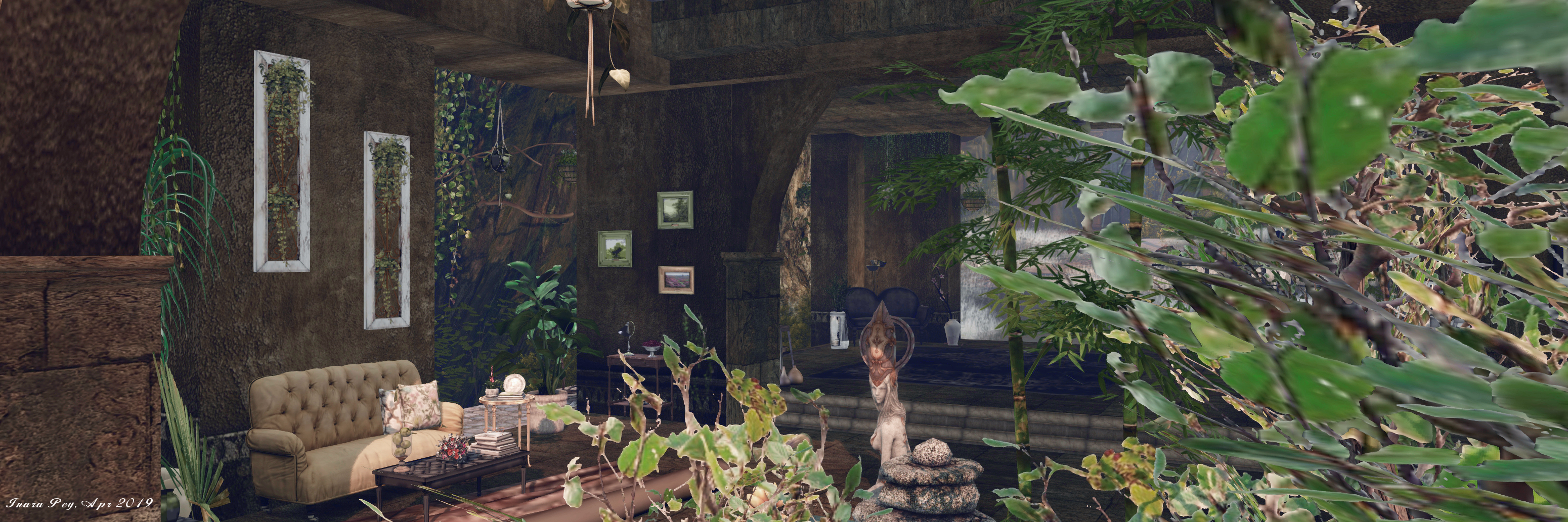
Several of these maintain the mystical feel present within the region at our last visit. There’s an ancient, broken rotunda, for example. Slowly being overtaken by forest growth, it marks the way to an ancient garden area that in turn leads to an aged bath house rich in décor, brought together in an eclectic mix that completely satisfies the eye. A door to one side of this structure offers a way back to the landing point – but taking it might risk missing other attractions.

(Fae Forest), Elvenshire; Inara Pey, April 2019, on Flickr(Fae Forest), Elvenshire

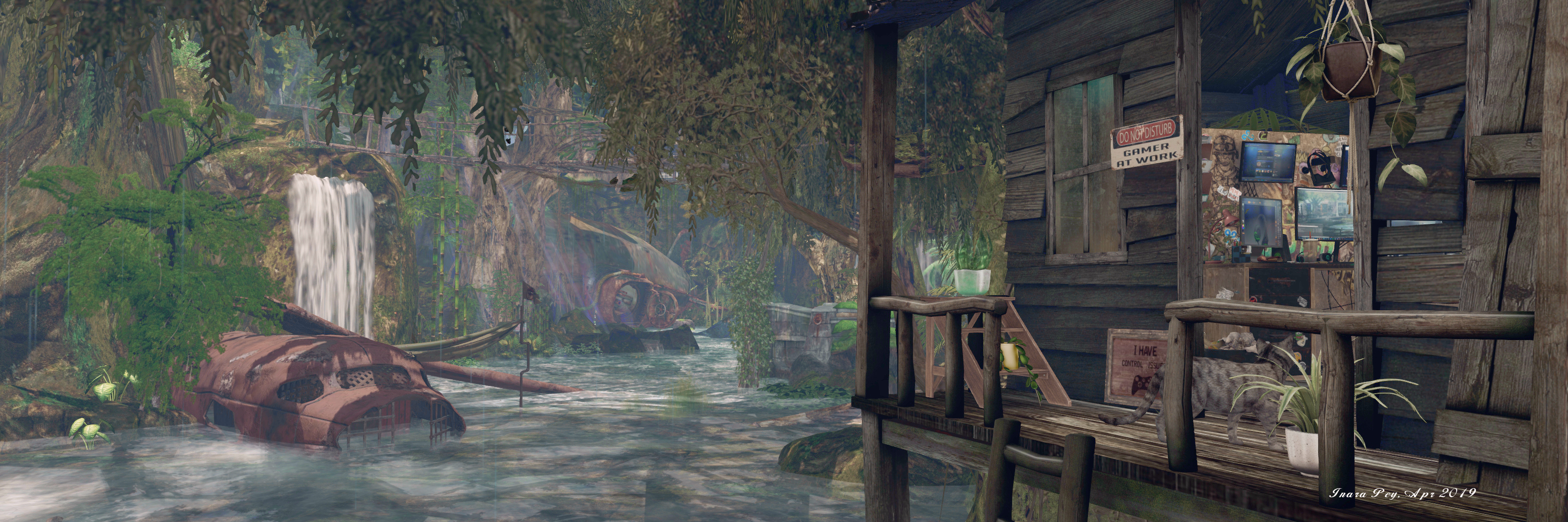
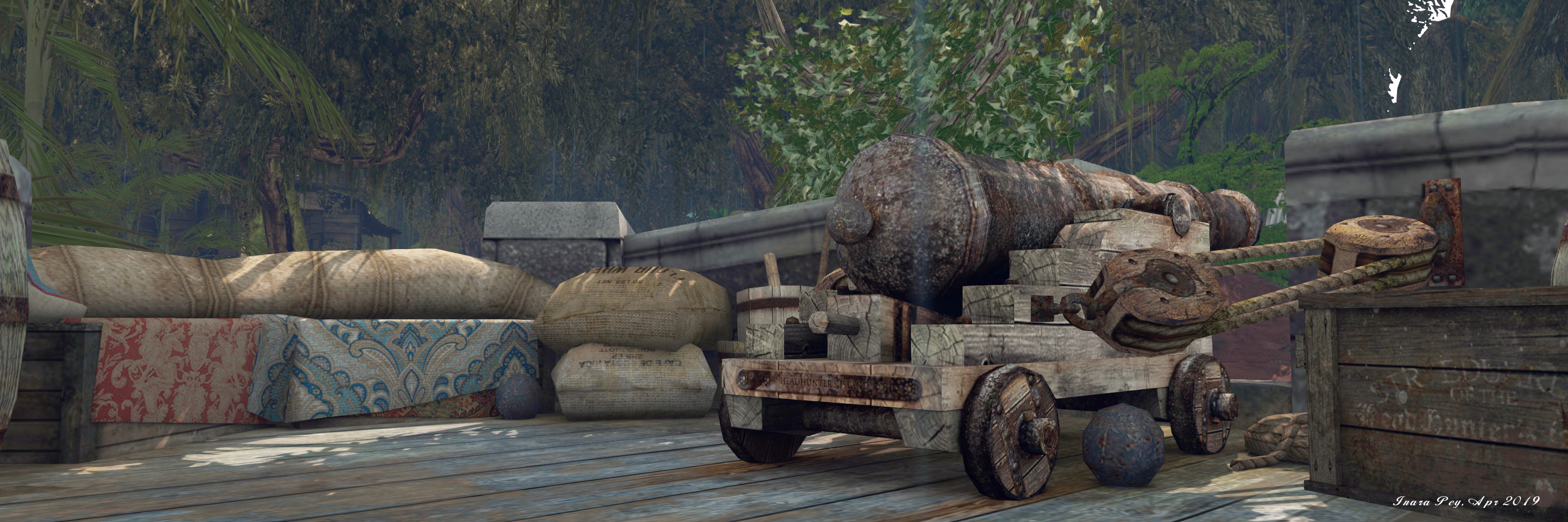
Elsewhere sit hints of fantasy and the fantastical: a great blue whale, swimming without moving on the water rather than below it, a garden on its back, the bulk of spaceship like submarine close by. Then there are the little vignettes still waiting to be found: the old round stone turret when rusting canon and makeshift sofa, the gamer’s hideaway, all sitting between and under the trees.

And then there is the landing point itself, a hall close to the edge of the region. It has a wonderfully homely feel to it setting that immediately puts one at ease, yet holds an exotic look offering the promise of discovery within the region beyond.

(Fae Forest), Elvenshire; Inara Pey, April 2019, on Flickr(Fae Forest), Elvenshire

Should the forest prove too oppressive, gated steps run down from the landing point to a short tongue of land that licks the edge of a little grassy island crowned by a single tree (although two more lie to one side) and a sunken ring of standing stones. Here the rain falls lightly, and may well ease the more enclosed, oppressed air some might feel under the heavy foliage of the rain forest.

For those who fancy more of a challenge, the route to the path up the hills mentioned above can take some finding, but it also does reveal another little cuddle spot for romantics. Also, take care when crossing the bridges that form part of the route to the hillside path; we both fell through parts of the bridges to take a further dip in the waters below.

(Fae Forest), Elvenshire; Inara Pey, April 2019, on Flickr(Fae Forest), Elvenshire

This is a very different setting from the one we witnessed two years ago – hardly surprising since it is two years since our last visit; but it is one that remains photogenic.

Showing a little Flourish in Second Life

Copper River; Inara Pey, April 2019, on FlickrFlourish – click any image for full size

We recently received an invitation from Julz (Juliette Rainfall) to visit the latest region design she and her SL partner, Leaf (Peyton Darmoset) have put together. As the people responsible for creating the outstanding region designs of Cold Ash (read more here), Erebos Harbor (read more here) and Cloudbreak (read here), among others, we were keen to see their latest work.

Unlike most of their previous designs, Flourish is a commercial region, designed to be the home of the Flourish Studio and Salon S2 brands. However, this Full region is also very photogenic, as one would expect from one of Leaf’s designs.

Copper River; Inara Pey, April 2019, on FlickrFlourish

Surrounded by dusty hills and mountains, the region is presented as a rugged desert setting, centred on a deep-sided lake, its shores largely cliff-like walls. Roads appear to cut through the landscape, passing across region and sim surround alike. One of theses point “into” the region and to the grounds of Flourish Studio, the other winds its way up the southern foothills to the Salon S2 store (which at the time of our visit had yet to be outfitted).

Desert it might be, but there is a lot going on here. The stepped foothills on the southern side of the region offer space to climb and explore alongside the Salon S2 building, the landscape here a mix of bare rock, scrub grass, cacti, creosote bushes and wild shrubs. Within it sit a water run-off and evidence of some old workings of some description. Wooden steps offer a route up and down the tiered rocks of the hills, with a hole in the fence around Flourish Studio – designed to resemble an outdoor market – inviting explorers into the store at it sits in the north-east corner of the region.

Copper River; Inara Pey, April 2019, on FlickrFlourish

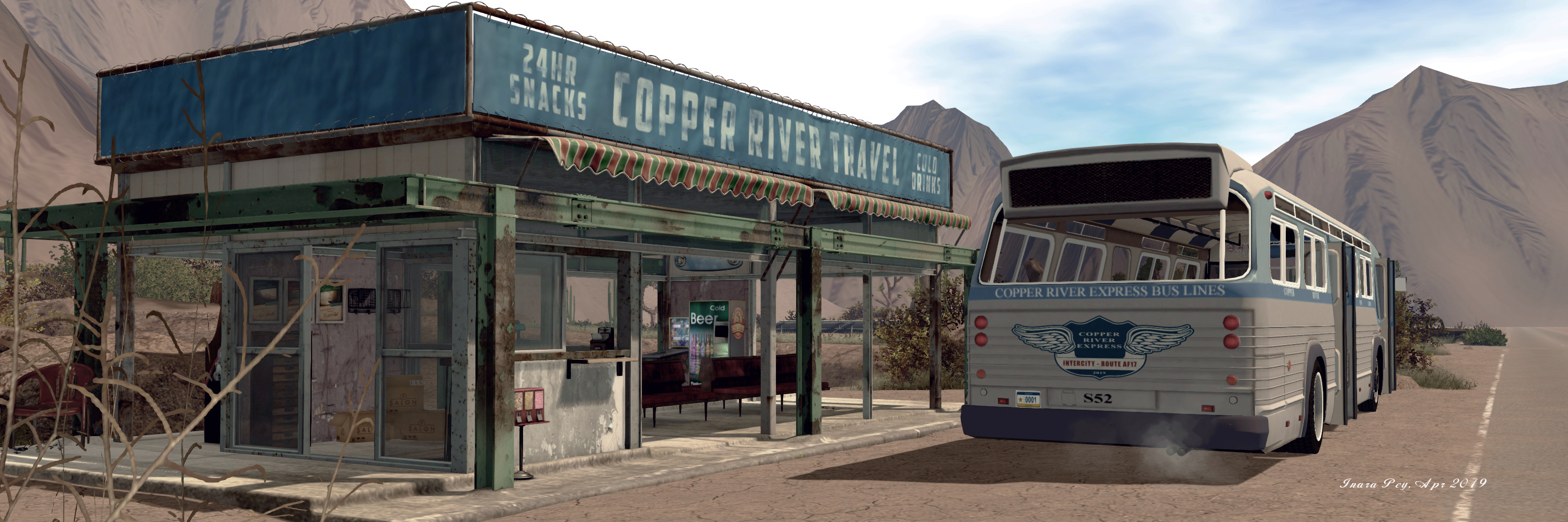
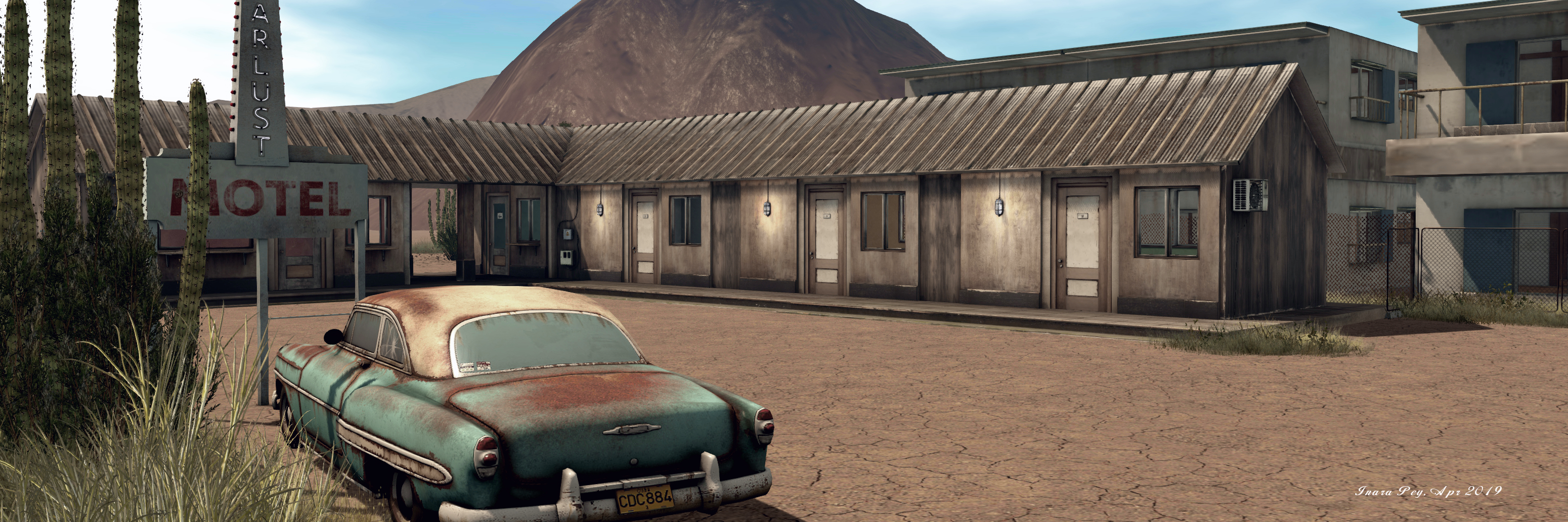
Follow the road west from here and it will lead you past a somewhat run-down motel, faced by a bus stop / fuelling point across the road, while away to the north the shadowy forms of high-rise buildings break the horizon, indicating the presence of a distant city. Might this be Reno or Las Vegas or somewhere else? That’s up to you to decide.

Alongside the bus stop is something of an artistic statement: an old outside broadcast van, its satellite dish pointing vacantly to the hills as it forms a backdrop to an array of old televisions, the screens of which have been painted with a variety of slogans, some of them with a lean perhaps towards political comments.

Copper River; Inara Pey, April 2019, on FlickrFlourish

Close to this statement, a sandy path leads away from the road and between the rocks and boulders to point the way yo the top of the cliffs of the lake. Here’s under a large canvas awning, sits an events stage, the flat rock between it and the waters below offering room to dance, and a wooden platform built out from the cliff edge a place to sit. The the lake is fed by a tumbling waterfall, while narrow ribbons or sun-baked sand seem t0 offer narrow waterside beaches north and south, each reached by a path of hard-packed and parched sand.

More art can be found off to the west, along the road winding up to the Salon S2 store. Here, next to neat lines of solar arrays as they capture the Sun’s like, stand three large female torsos, giant mannequins, on which have been painted the truism Life goes on.

Copper River; Inara Pey, April 2019, on FlickrFlourish

All of this presents a striking region with plenty of opportunities for exploration and photography, nicely rounded-off by an ambient soundscape.

SLurl Details

  • Flourish (Copper River, rated: Moderate)

The magic of Season’s Cove in Second Life

Season's Cove; Inara Pey, April 2019, on FlickrSeason’s Cove – click any image for full size

Update: Season’s Cove appears to have closed.

One type of region we’ve always enjoyed visiting is the type that feels TARDIS-like; that is, when exploring it, it feels much larger than its individual map tile / 256m-on-a-side would suggest. There are many such regions scattered across Second Life, but one of the most imaginative we’ve recently visited is that of Season’s Cove.

Designed by Muira Mingann (Angelique Vanness) with assistance from Takoda Mingann (Mingann), this full region design ticks a lot of boxes for the avid Second Life photographer. The design is rural / coastal with a strong twist of fantasy, hints of magic; a place where wizardly towers overlook tumbledown dance halls, beaches sit above undersea gardens and tunnels with multiple rooms vie with surprise portals to carry you to places in the sky that further extend the feeling of being in a place that’s much bigger that its physical constraints should allow.

Season's Cove; Inara Pey, April 2019, on FlickrSeason’s Cove – click any image for full size

A visit begins innocently enough: a large terrace towards the centre of the region, cliffs to its back, water below its stone walls. It is home to a little café, a carousel and the first hint of the more mystic elements: a fortune teller’s tent. Two wharves sit below the terrace, each offering a way down the water’s edge – and one allowing visitors to travel much further.

Multiple paths lead away from this terrace. Some go around the plateau that sits above it, running south then west. Others point north and then east, promising to perhaps circle the land and meet with their brethren further around the region. Some climb the shoulders of rock to reach the plateau above, others dip down to the water’s edge and promise another means to circumnavigate the island, or to pass by bridge and track to its eastern lowlands, where beaches face the sea, water cuts a winding channel from the large inlet below the landing point terrace to a small pond, all watched over by the ruins of another tower.

Season's Cove; Inara Pey, April 2019, on FlickrSeason’s Cove

A further path leads inwards, under the high table of rock, to where a labyrinth of tunnels connect rooms one to another as water drips from arched stone ceilings and stone cisterns sit with backs to the walls, offering the weary a chance to drink the water purified by its travel though the sandstone. The rooms within these tunnels offer a mix of interior settings, from small bathing pool to rooms clearly intended for more adult pursuits.

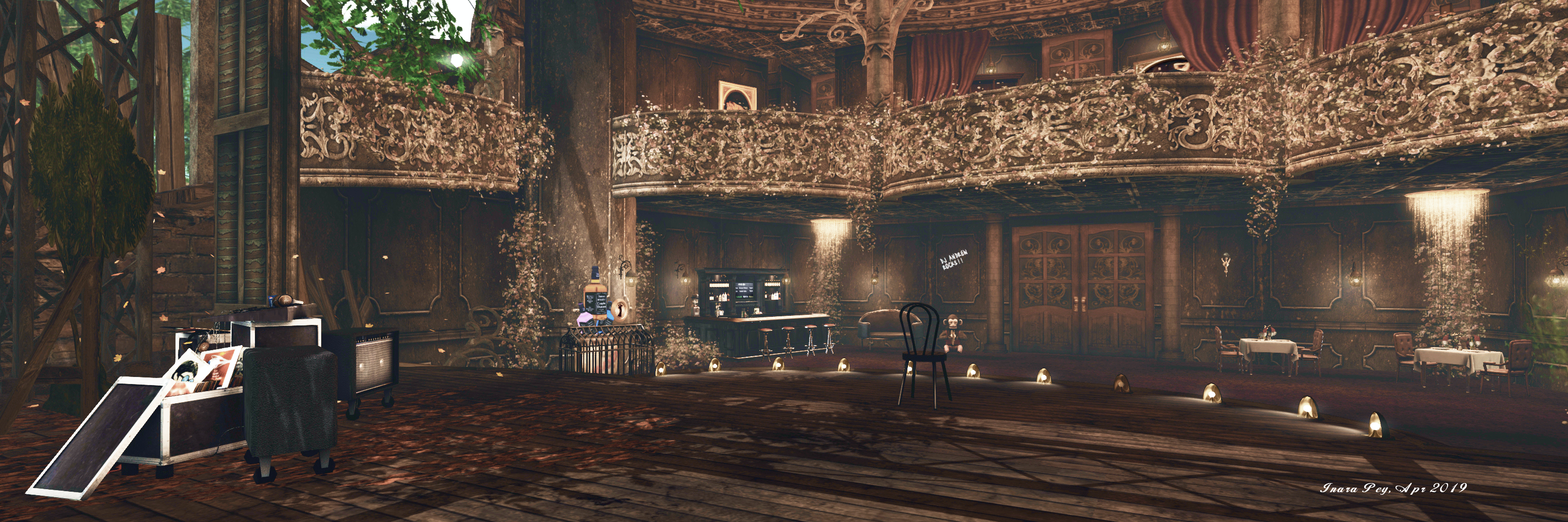
The terrace facing entrance is not the only route into or out of these tunnels: wander far enough around the island or within them, and you will find others. One of these is a wooden walkway that spirals up an open hole on the region’s north-west side. At its top lay numerous further paths waiting to be followed, including one running up to the remains of the old dance hall / theatre which, despite its decrepitude, still offers a place for music to be enjoyed within, complete with tables set for romantic dinners for two.

Season's Cove; Inara Pey, April 2019, on FlickrSeason’s Cove

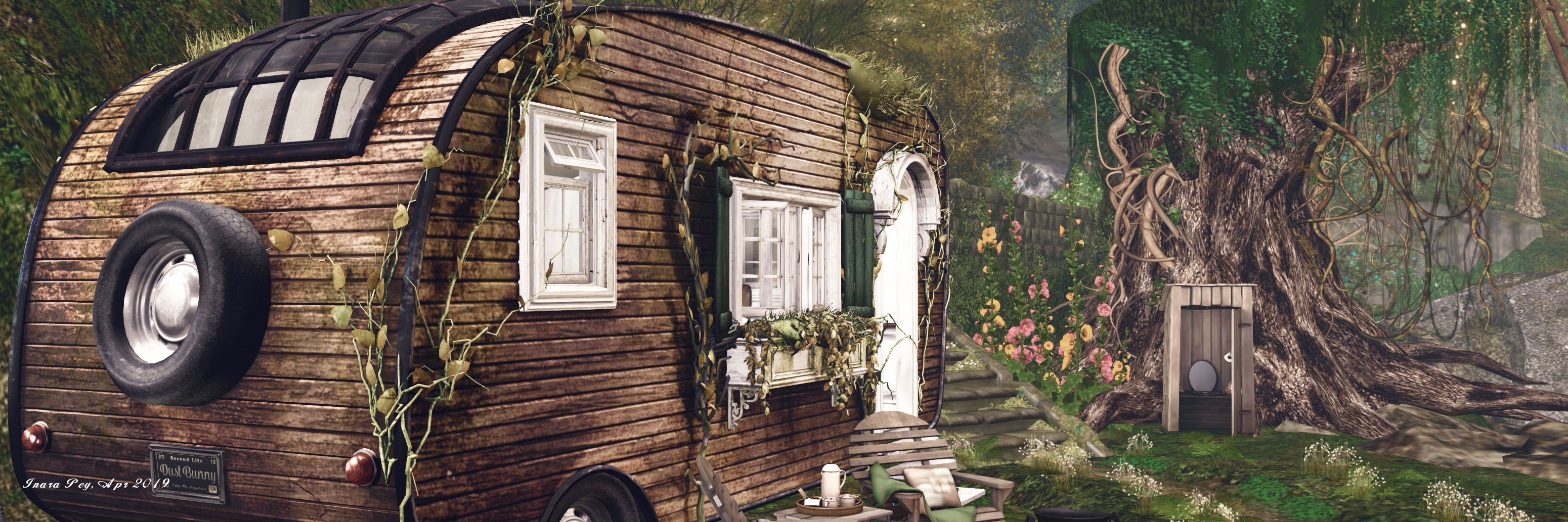
This is another aspect of the delight found within this region: around every corner, at the end of every path is something new and perhaps unexpected to find. Take, for example, the ruins of a Catholic / Orthodox church, complete with confessional, sitting within the low woodlands, or the quaint traveller’s caravan tucked into the lee of the main plateau and looking west to where a tall, rugged island is home to another ancient tower, more ruins lying below it.

Nor is exploration limited to using your feet. It you have a wearable Bento or Animesh horse, you can wear that and take to the paths and trails whilst exploring – most of the routes through the region avoid stairs and steps (although there are some steps and stairs scattered around, to be sure).

And when it comes to horses – keep your eyes open for pointers to the riding trail. They show the way to what initially appear to be paths passing through rocky arches. They are in fact teleport portals leading to points in the sky – in this case, either the “Season’s Cove Stables” or a riding trail in the sky (just be aware the latter including a giant tree house that is a private residence). Several such portals exist within the region; we found two more (one to a lover’s tryst, another to a “BDSM Dungeon), but there could be others that we might have missed!

Season's Cove; Inara Pey, April 2019, on FlickrSeason’s Cove

Using the portals to connect with these skyboxes will require accepting the region’s experience on the first attempt – but thereafter they should be automatic unless or until you revoke the experience. Be warned, as well, that finding your way back to ground level might take a little work, as some return portals are intentionally hidden. Also, some of the return portals may rotate your direction, with the result yo might step back into the ground-level portal as you try to move clear on landing.

Another element of Season’s Cove that makes a visit a pleasure, is the care with which the design is curated. There is a lot going on the ground, in the air and underwater (look for the steps near the landing point terrace for a way down to the underwater gardens and their delights), neither Caitlyn nor I found our computers under any strain from the load. Yes, fps for me with shadows enabled did drop to the low 20s / high teens, but this can happen elsewhere, and certainly didn’t spoil the visit.

With places to sit and  / or dance throughout, dozens of opportunities for photography and the chance to really explore a quite unique and details setting, Season’s Cove present a genuinely worthwhile and engrossing visit. Should you enjoy your visit as much as well did, do please consider a donation towards the region’s continued presence as a public space.

Season's Cove; Inara Pey, April 2019, on FlickrSeason’s Cove – click any image for full size