The Summer and Winter Winds of Second Life

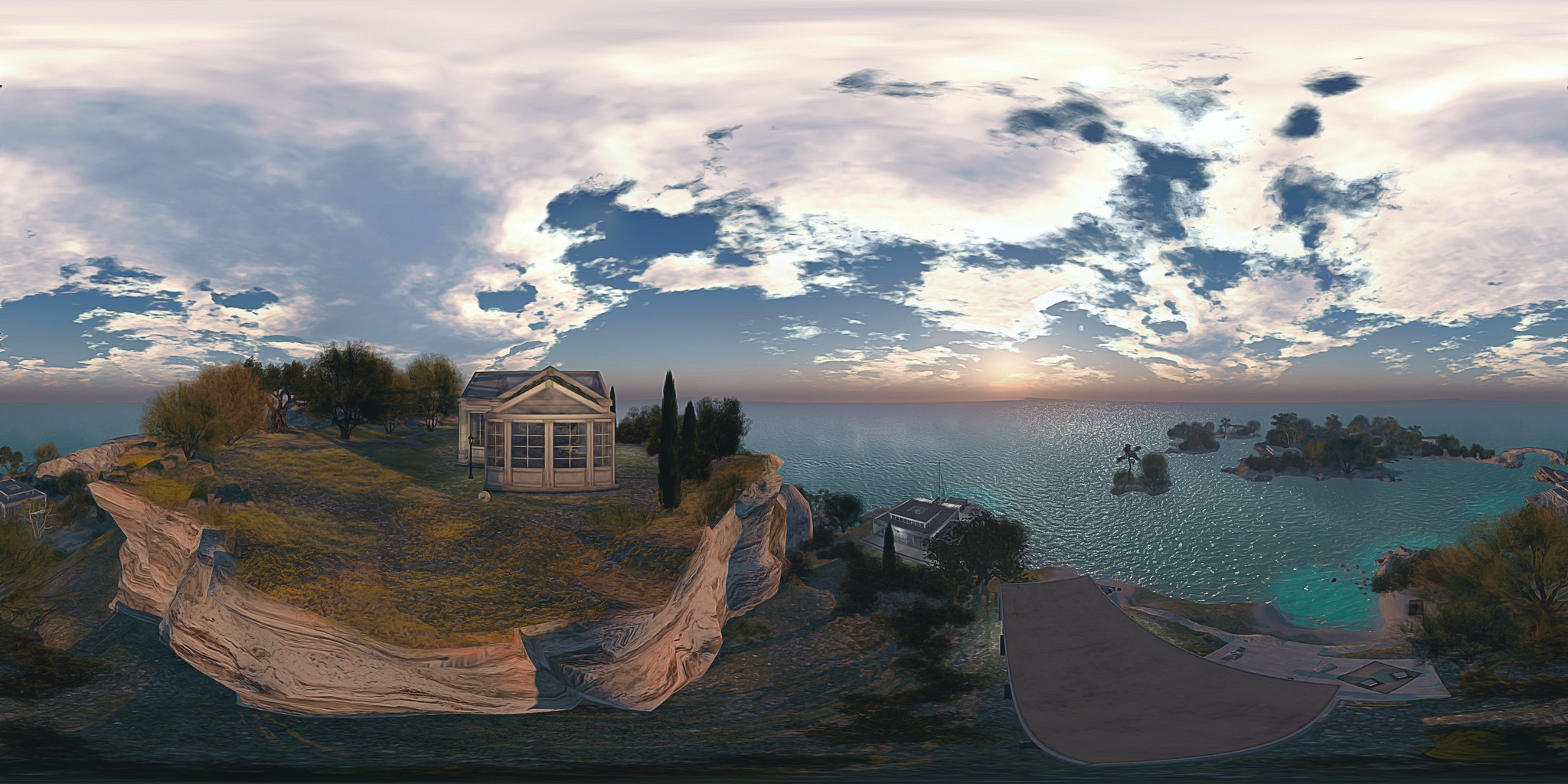
Summers Wind; Inara Pey, October 2016, on Flickr Summers Wind – 360 image, click to open and scroll

The summer wind, came blowin’ in from across the sea
It lingered there to touch your hair and walk with me
All summer long we sang a song and then we strolled that golden sand
Two sweethearts and the summer wind.

So open the lyrics to Summer Wind, Johnny Mercer’s 1965 re-working of the lyrics from German Der Sommerwind by Hans Bradtke (music by Heinz Meier). It’s a song perhaps most associated with Frank Sinatra, and I mention them because the song popped into my head as Caitlyn and I explored the sister regions of Summers Wind and Winters Wind – and the more I thought about it, the more appropriate the song seemed to fit the regions.

Both of these regions – a full sim and a homestead respectively – have been designed by Mexi Lane, of MIC- Imagin@rium art region fame, together with mesh specialists. MIC- Imagin@rium may have passed into history, but the influences of Mexi’s Greco-Roman design there are clearly evidenced in Summer Wind, which offers a mix of public, residential and commercial facilities in what can only be described as a stunning landscape, beautifully and imaginatively put together to present a location which is quite unique among Second Life regions.
Summers Wind; Inara Pey, October 2016, on Flickr Summers Wind – click any image for full size

The landing point is located towards the centre of the region, nestled between the vertical shoulders of huge, grass-topped mesas, the ground feeling like narrow canyons running between them. A well is close to hand, as is a bicycle rack for those who fancy riding through the region – although using your pedal extremities for walking is by far the best way to find your way around; bikes and stairs often don’t mix!

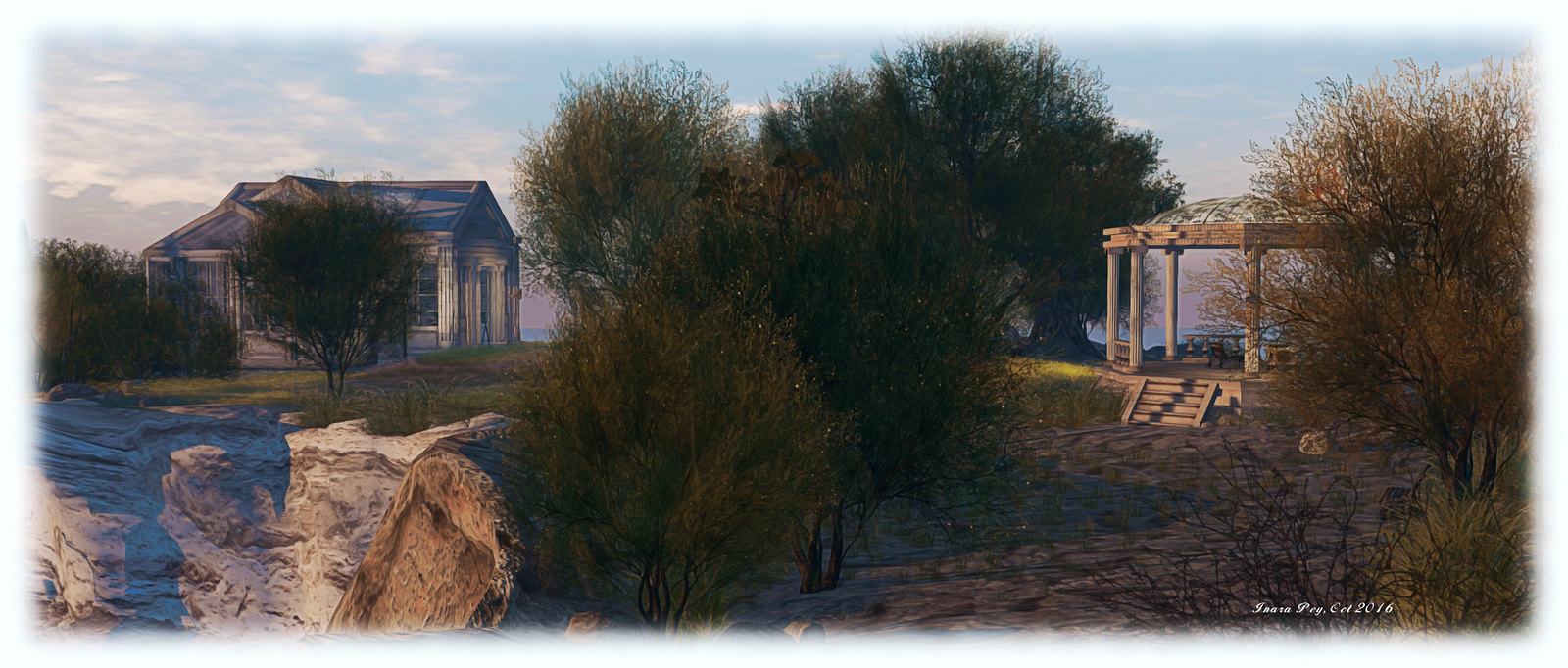
Those familiar with MIC- Imagin@rium will immediately feel a sense of familiarity here: the windlight offers a similar just-before-dusk setting Sun, the rocks and vegetation all have a faintly familiar feel, while a quick glance down along the canyons will reveal hints of Greco-Roman architecture marking the fronts of commercial premises hewn out of the huge bulk of the mesas. For a more direct homage, see the name of the conference centre sitting atop one of the mesas.
Summers Wind; Inara Pey, October 2016, on Flickr Summers Wind – click any image for full size

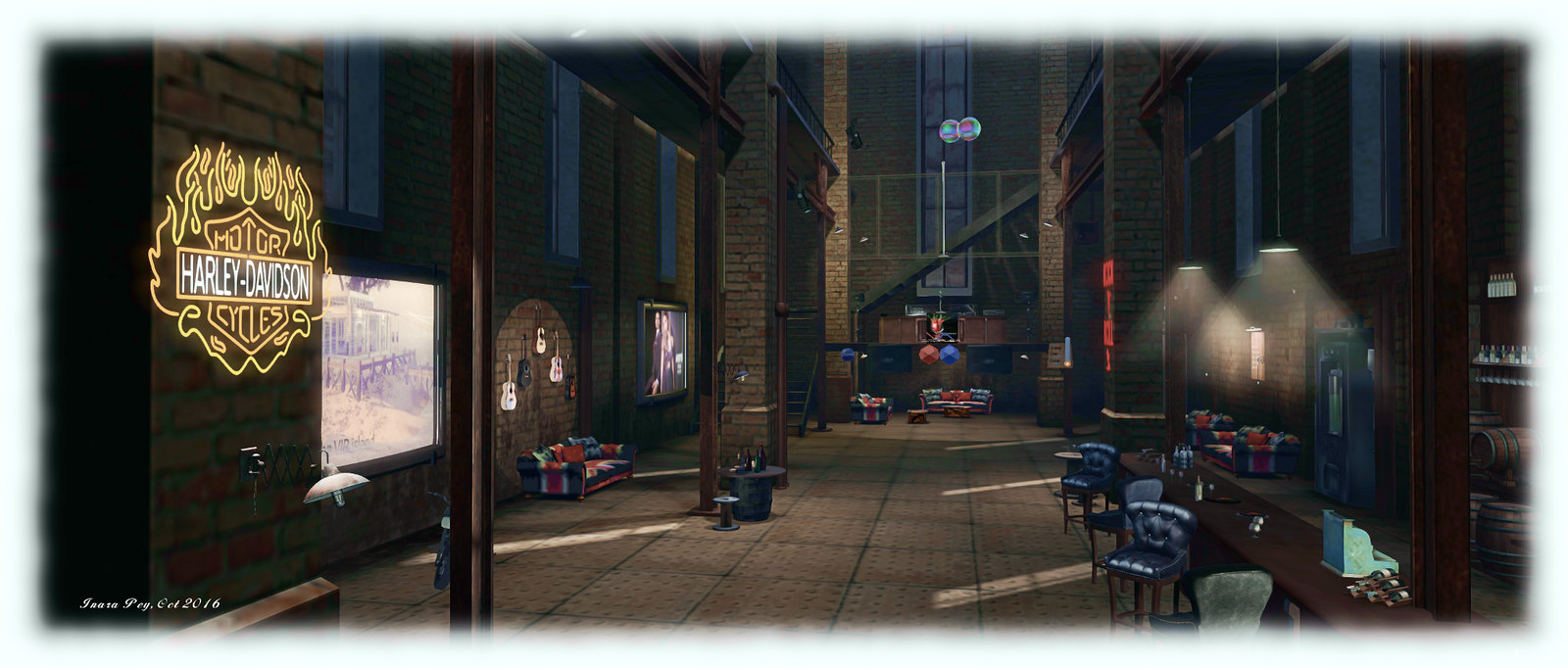
Close to the landing point is the entrance to the Peperonico Club: a narrow tunnel mouth which gives little away as to what lay within; the rocks of the mesa have been beautifully custom-made to surround the steampunk factory by Hattie Panacek (Hatris Panacek), its interior made into a very cosy club in which Caitlyn and I felt completely at home, thanks to the roaring fireplace on the upper mezzanine, and the ample use of the Union flag in the design :).

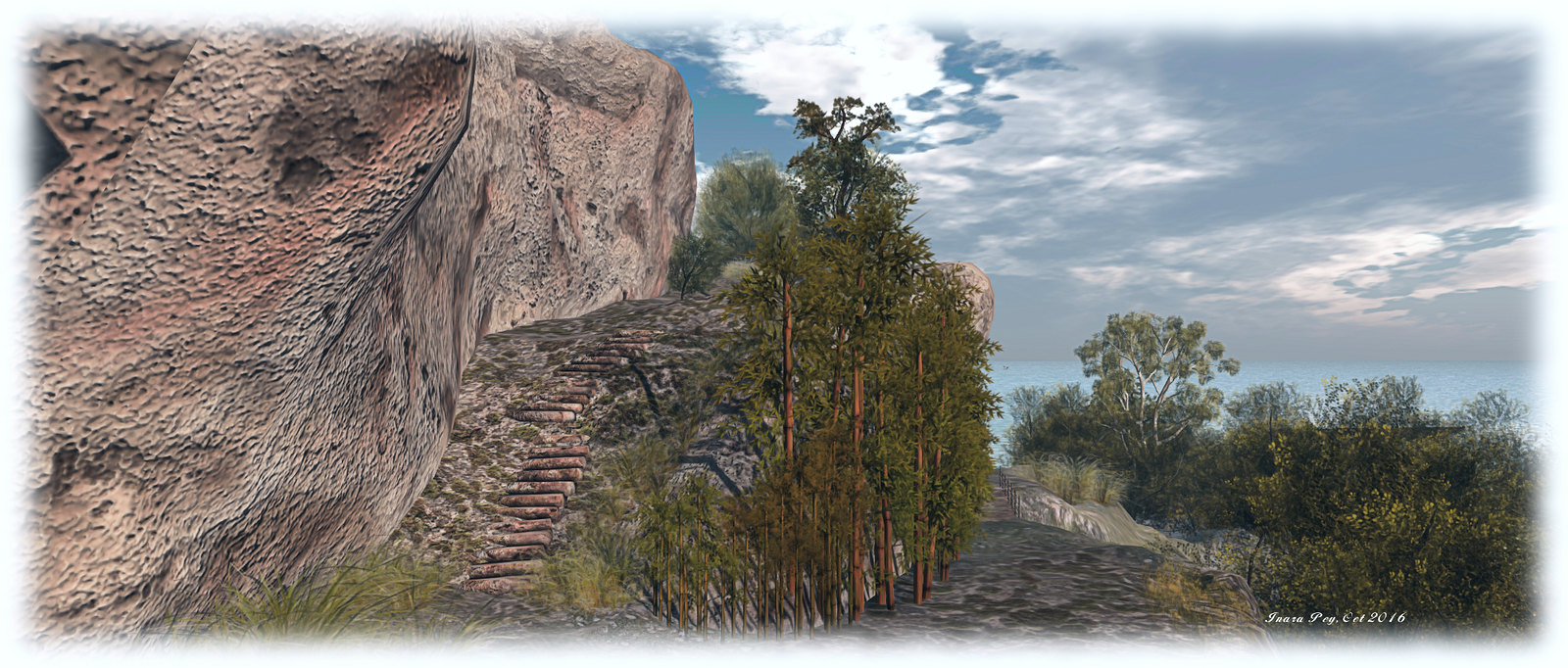
Tunnels, steps and paths are the secret to finding your way around Summers Wind. Ground level paths wind between the tall cliffs and eventually to the low-lying coastal areas with shingle beaches, grassy paths and rich foliage. Private residences occupy the western curve of the region, facing out to sea and screened from the public paths by trees and bushes. To the east, at the foot of the cliffs lie more caves and places to relax, including a waterfall-fed spa in a broad cavern.
Summers Wind; Inara Pey, October 2016, on Flickr Summers Wind – click any image for full size

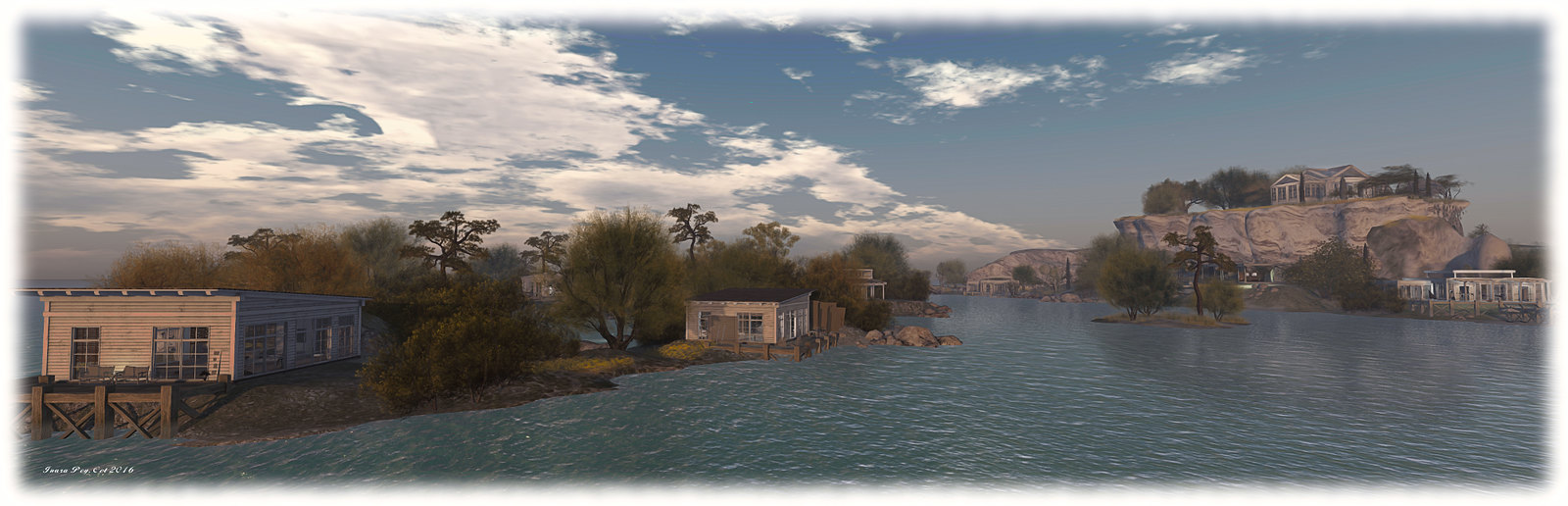
More residences lie to the north – so take care to avoid encroaching on privacy there as well, where a stone bridge leading to Winters Wind can be found. This forms a spur of land curving northwards to cup the waters of a bay, with smaller islands sitting just off of it. Houses and cabins are scattered among the tress and on the sands, when a single footpath through the middle and the arc of a beach offering the only public areas here.

The beauty of Summer Wind lies in the almost entirely custom nature of the landscape: the cliffs and mesas, with their steps and arches, tunnels and grassy footpaths, have been specifically designed to fit the region. The result is a place that is both unique to Second Life, yet delightfully Mediterranean in look and feel; a place which might be found on a remote part of the Spanish or Italian coast, or equally somewhere on the Aegean coastal regions.  The design means there is plenty to see, so if you tire of walking, keep an eye out for the teleport network of urns lying half-buried in the ground to whisk you around.
Summers Wind; Inara Pey, October 2016, on Flickr Summers Wind – click any image for full size

And the link to Mercer’s song? Well, that comes not only from the strong Italian flavour in the design of Summers Wind and Winters Wind, but also because the original Der Sommerwind was a song about the changing seasons, using the Sirocco wind of the Mediterranean as a metaphor; so using the song as a metaphor for the beauty of these regions seems entirely appropriate.

 SLurl Details

A Shattered Masquerade in Second Life

Darkness Prevails - Shattered Masquerade; Inara Pey, October 2016, on Flickr Darkness Prevails – Shattered Masquerade – click any image for full size

Note: Darkness prevails has closed.

Darkness Prevails – Shattered Masqueradee is a new role-play environment by Lokhe Angel Verlack (Jackson Verlack) and Miza Cupcake Verlack (Mizaki), based on the Worlds of Darkness (WOD) universe. It has just moved to a new full region, and is open for business, although some work is still continuing in developing RP locations. Regular readers of this blog may remember that Lokhe and Miza previously operated another WOD inspired role-play realm, World of Darkness: Château Village, which I wrote about back in October 2015. So, are the two connected?

“This is entirely separate from Château Village,” Miza told me as we toured the region together. “We actually started Shattered Masquerade in September, with a half-region build we called The Oasis, that was a starting point for our story. We’re now moving things on from there, expanding things to offer more opportunities for free-form role-play. There are no meters, and we’re letting the story unfold in a gentler way for now; the first chapter in the 1/2 region had a lot of action.”

Darkness Prevails - Shattered Masquerade; Inara Pey, October 2016, on Flickr Darkness Prevails – Shattered Masquerade

The Oasis set the scene to the unfolding story: in the 23rd Century, Earth has been ravaged by a war caused by the shattering of the masquerade: the barrier which kept humans from seeing all the supernatural beings living among them: vampires, werewolves, demons, fae folk, who had previously gone about their lives out-of-sight of mortals.

The war ultimately ravaged Earth, with humanity fleeing to a terraformed Mars, returning only to end the war by turning Earth into a prison for the other races, who were used as sport and for experimentation. But when the orbital station providing protection for the humans on Earth is destroyed, those on Earth find themselves trapped on Earth, cut-off from Mars and forced to face survival in a hostile environment and among potentially hostile races.

Darkness Prevails - Shattered Masquerade; Inara Pey, October 2016, on Flickr Darkness Prevails – Shattered Masquerade

From the arrival point, where one can learn more about RP here, pick their preferred race and tribe / group (and casual visitors / those interested in joining the RP) can pick-up an Out Of Character tag, which should be worn at all times within the region. From here, a teleport delivers folk to The Wastelands – ravaged Earth – at ground level. This is a harsh, rugged place where little vegetation remains, and the land is cast under a dust-laden sky. It is home to the human settlement, commanding the highest point in the land, and the neutral marketplace  where the various races come together to banter and trade – the one place where fighting of any description is not tolerated, for the good of all. Also to be found here, tucked away under the lee of rocks and cliffs, is a small clinic.

Further afield, and awaiting discovery are the portals leading to Arcadia, realm of the changlings – fae folk, darklings, etc., and the Caves, realm of the werefolk. Both offer very different environments to the ramshackle human habitation, suggesting the non-human races have tighter, more settled social bonds and structure. A further realm, the Underworld, is under construction, and will be coming on-line soon.

Darkness Prevails - Shattered Masquerade; Inara Pey, October 2016, on Flickr Darkness Prevails – Shattered Masquerade

“We’re open for players now,” Miza told me of the region’s status. Those wishing to join the role-play are encouraged to visit, explore and then complete the on-line application form. The rules are fairly straight-forward, in keeping with the wish to generate free-form role-play with multiple threads, and rentals are available for players wishing to make Shattered Masquerade their home.

The free-form element offers plenty of opportunities for player to develop their own stories and plot lines, whilst also allowing the admins to gradually add story arcs as well – such as the potential for a mission from Mars arriving to learn why the space station fell silent. “So that’s good for story evolution,” Miza confirmed, “but the emphasis is really to keep things loose, and let people have fun.”

Darkness Prevails - Shattered Masquerade; Inara Pey, October 2016, on Flickr Darkness Prevails – Shattered Masquerade

You can find out more about Darkness Prevails – Shattered Masquerade by visiting the official website, where there is plenty of information on back story, races, the rules of play, together with the aforementioned application form.

Visiting The Fallen in Second Life

The Fallen City
The Fallen – click any image for full size

Halloween is always a time when ghostly goings on and ghoulish gambits of games and explorations take over many parts of the grid. The Destination Guide can be awash with places to visit, so much so that those who love this time of years have both a cornucopia of places to visit, and a bit of a headache in choosing where to go and what to do.

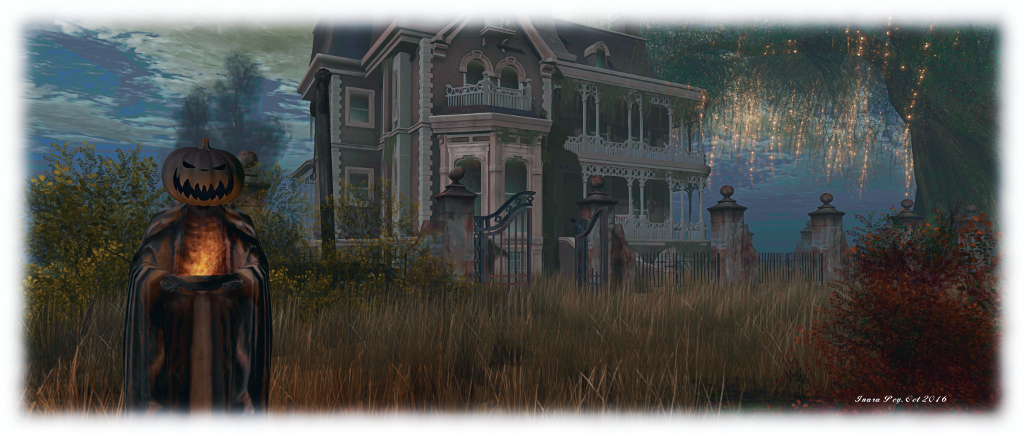
The Fallen, open for the month of October, offers a destination which includes touches of Salem, Sleepy Hollow and Transylvania gathered around a small urban setting overlooked by castle and mansion. It’s a dark, mysterious place which extends over a rolling, misted landscape – and also under it at the couple of locations.

The Fallen City
The Fallen

A visit starts towards the south of the region, beneath the roof of a circular gazebo. menacing sounds grumble and reverberate through the air, echoing hollowly as mist wraps its way around shadowy trees. to the left, the leaded panes of church windows glow strangely, while to the right, rotting piers point broken fingers out to sea. The strains of Speak Softly Love, seemingly played on a trumpet, drift through the air, drawing one along a path to where modern buildings reveal themselves in the darkness.

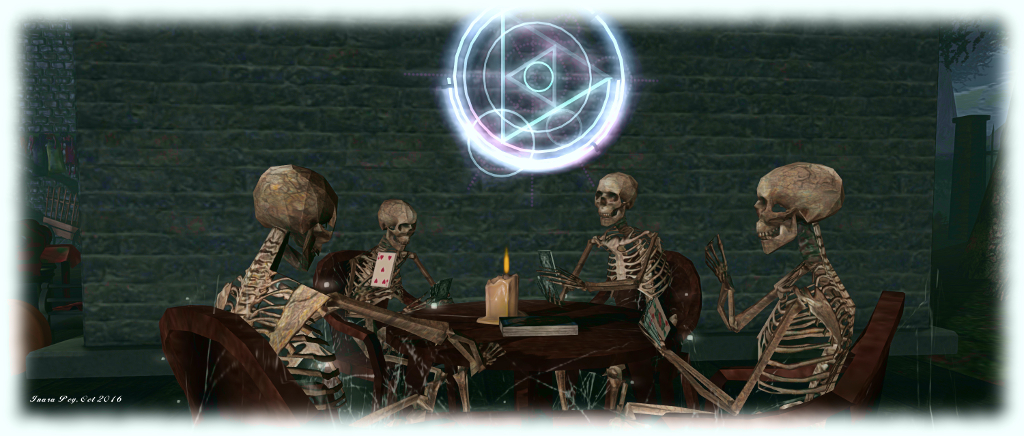
As one might expect, this is no ordinary town; pentagrams and mystical signs glow on the ground before the entrances to establishments and homes, bats flit and fly, and the locals are somewhat bony in looks. This is a place where you might want to tread carefully as ghouls are prone to rising from the ground, and even some of the plants have an interest in the taste of human flesh; even the local nuns appear to be up to a certain amount of mischief.

The Fallen City
The Fallen

Beyond the town, over a rickety wooden bridge, the road plunges underground before emerging into daylight, the great mass of a castle rising from amidst the densely wooded landscape. Does it offer greeting or more ghoulishness for those who step through the heavy front doors? I’ll leave that to you to decide as you explore, and simply say fangs for allowing the visit, to the castle’s occupant.

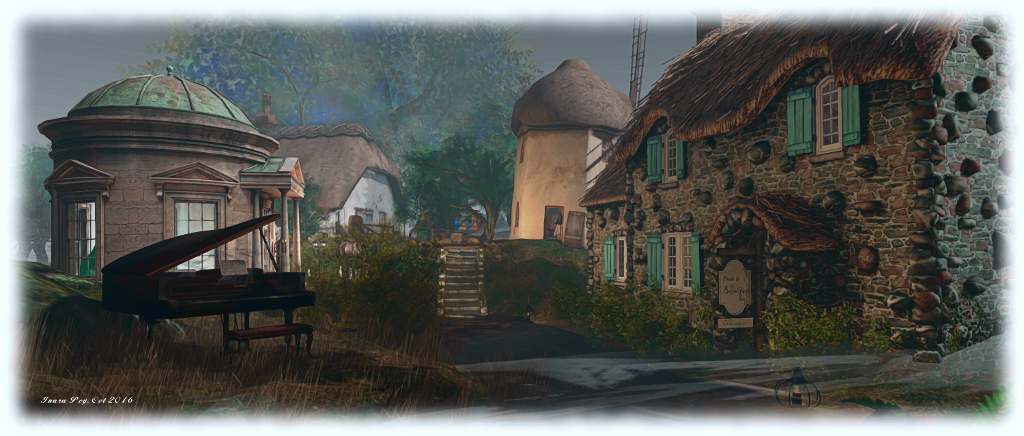
Back across the river, the castle is overlooked by a mouldering mansion up on a hill above the town, while a path running north and east leads visitors to an apparently sleepy little hamlet, complete with thatched cottages, creaking windmill and farm animals. All seems normal and safe – until a faded proclamation on a sign reveals you are somewhere near a latter-day Salem, or perhaps Sleepy Hollow. Elsewhere, an old mine plunges underground, begging to be explored by the brave, and stone steps wind their way around a cliff to a small Japanese resting house protected by three Kokeshi dolls.

The Fallen City
The Fallen

Designed by Lily Poptart Kazagumi (iheart Wonder) and #TeamLazy (who style themselves as The Pirates Who Don’t Do Anything, although this region suggests they actually do!), The Fallen City is an interesting place to visit with lots of little touches throughout, although given all that is going on means it can be a little taxing on systems, particularly when things are rezzing. However, if haunts and Halloween are your thing, why not hop over and take a look?

SLurl Details

TaKe Heart in Second Life

TaKe Heart; Inara Pey, October 2016, on Flickr TaKe Heart – click any image for full size

Years ago on the BBC there was a kids TV series called Take Hart, featuring artist Tony Hart. intended to encourage children to get involved in art of almost any form – drawing. painting, 2D, 3D. It took over from an earlier show called Vision On, and both  featured a piece of music called Left Bank Two by the Noveltones, which became an iconic part of British culture in the 1980s (and still is among those who went through there early years back then).

I mention this, because when Caitlyn and I explored TaKe Heart, the homestead region Kess Krystal and spazz Tackett have opened to the public, I was immediately put in mind of the show and the music – and once the theme had lodged in my head, I could shift it. Kess told me I’m not alone – there was apparently a lot of humming and singing the theme during the work of designing the region. even to the point of thought being given to adding a little Morph somewhere.

TaKe Heart; Inara Pey, October 2016, on Flickr TaKe Heart

While there is a similarity between the region’s name and the show, the former is not directly tied to the latter – the TaKe in the region’s name is a combination of TAckett and KEss. Nevertheless, it does contain an echo of Tony Hart’s passion for art: it is so photogenic, it brings out the artist in anyone who visits.

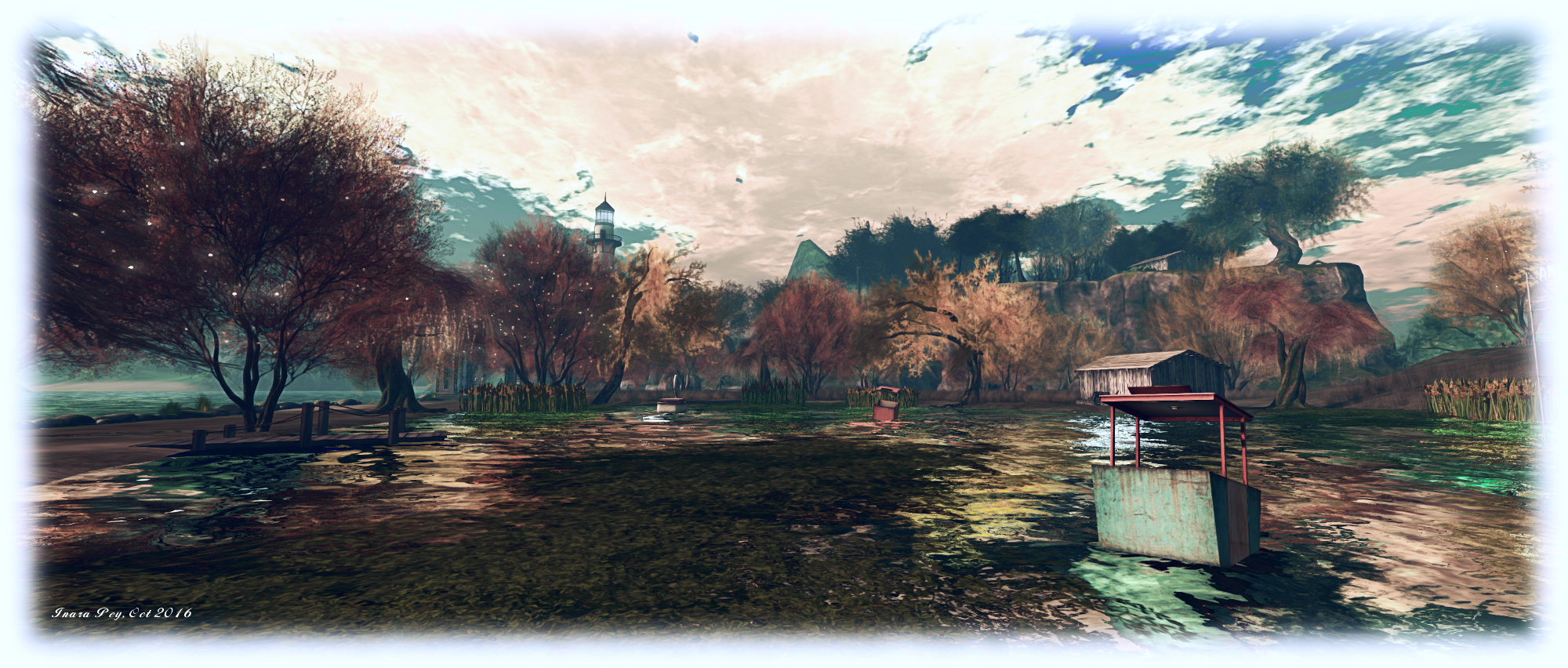
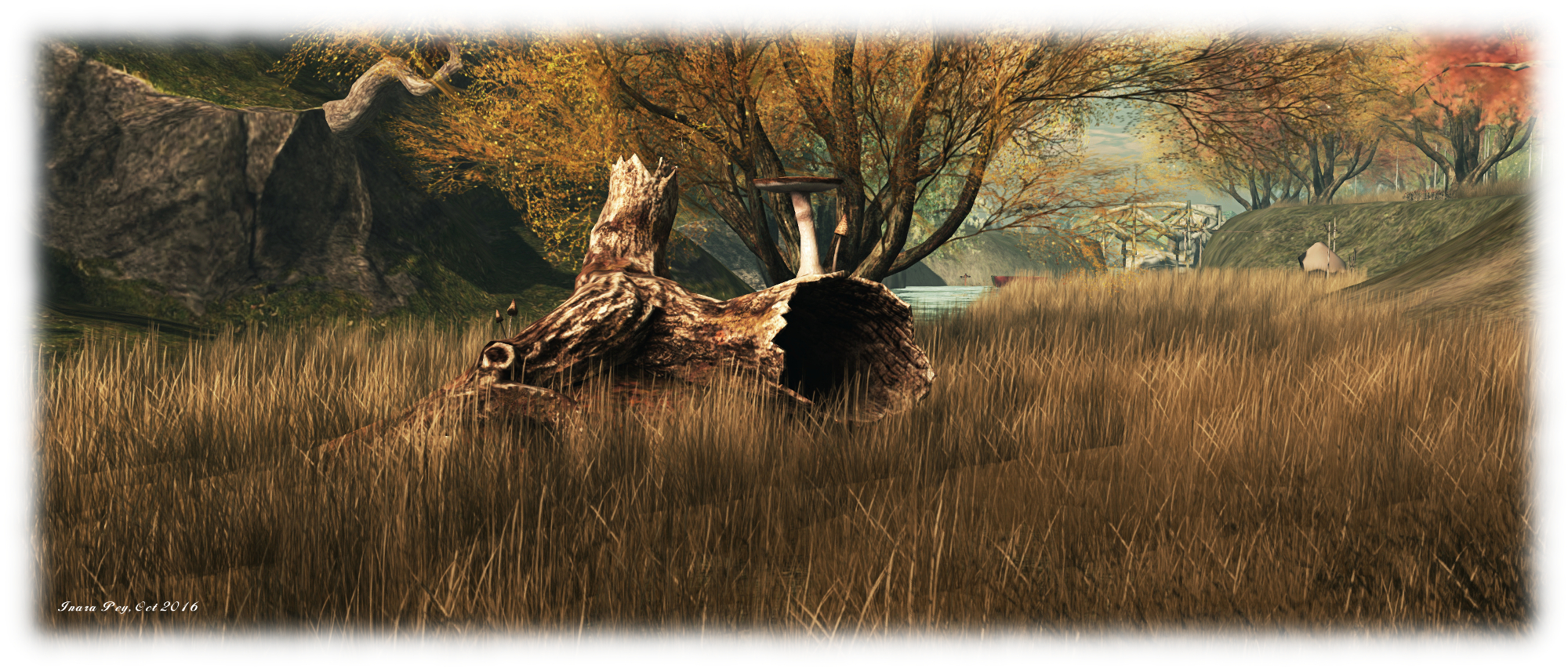
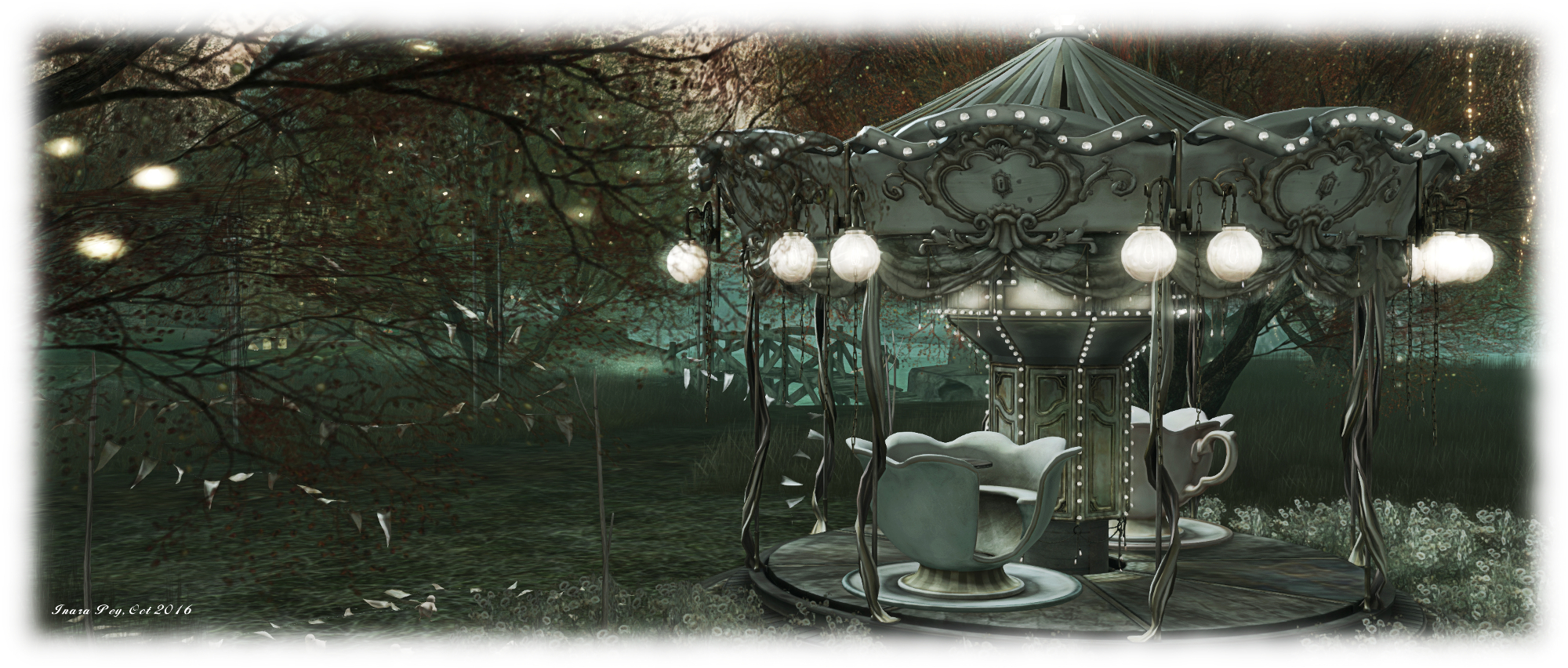
Surrounded by rugged island peaks rising from the sea, TaKe Heart is a rugged, rural place, with steep cliffs, undulating swathes of grass, long and short, where trees are misted by glowing points of light twinkling like fireflies in the gathering dusk. It’s a tranquil place which can be enjoyed whether exploring on your own or with friends. There’s even a couple’s walking animation. allowing romantics to  walk hand-in-hand.

TaKe Heart; Inara Pey, October 2016, on Flickr TaKe Heart

Split into three islands, the region offers plenty of space to explore, starting from the west side of the largest island, where sits the landing point.  From here visitors, can wander around the large lake of main island – and try the swan boat or the precarious-looking Ferris wheel cars floating on the water. A picnic table between lake and sea offers the chance for lantern lit refreshments, while further away, and up a sharp rise, an arched circle offers the chance for a twilight dance.

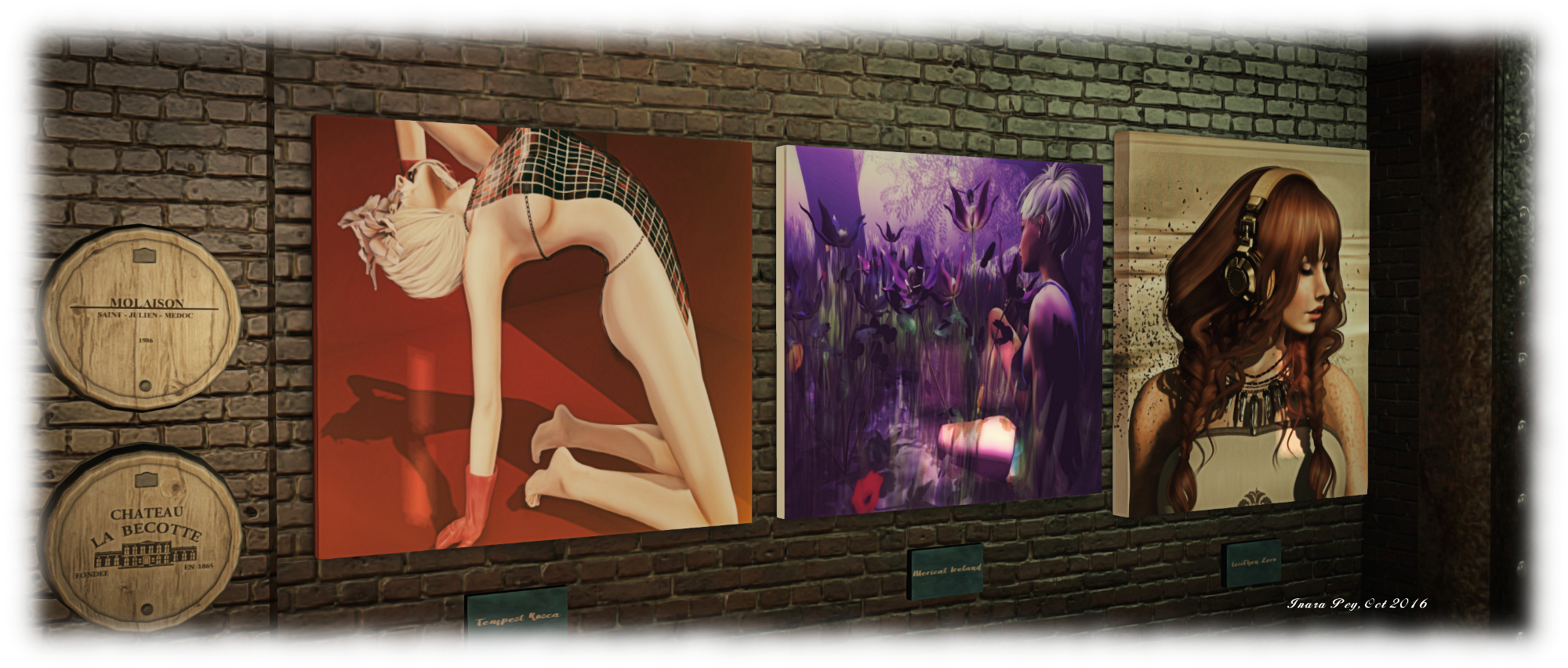
Two bridges connect this island with its smaller siblings. The first and larger of these is home to a tall lighthouse, sitting on a headland, a floating house in its lee and a church sitting on a low hill not far away, spire vying for height with the surrounding trees. The other, and smallest of the island is home to the TaKe Two Gallery featuring some excellent photography by friends Kess invited to display there, and which I highly recommended visiting.

TaKe Heart; Inara Pey, October 2016, on Flickr TaKe Heart

Elsewhere can be found more places to sit indoors or out, with opportunities to snuggle. Old barns hide cars – one of which has seen better days, while, for the month of October at least, there are suitable macabre elements to be found.

However, rather than write reams about TaKe Heart, I’m going to encourage you to pay a visit and enjoy it for yourself. Instead, I’m going to sign-off with a little trip into childhood days, those of us of a certain age from the UK will remember with a smile.

SLurl Details

Mont Saint Michel now gone from Second Life

Mont Saint Michel - now departed Second Life
Mont Saint Michel – now departed Second Life

Update November 21st: Mont Saint Michel is back on the grid, same SLurl.

Several people have contacted me over the last couple of days concerning Mont Saint Michel, Second Life.

In September 2015, and following Ciaran Laval’s lead, I reported the region would apparently be closing at the start of October, the news of the closure having been given by Moeka Kohime via her Flickr stream.

It seemed the news was premature; come November 2015, Petr Hastings-Vanbeeck dropped me a line to say the region was still alive and kicking. It continued to be that way through early 2016 and on through the year.

However, at the start of September 2016, Tyche Sepherd listed the region as one of 55 removed from the grid at the end of August, 2016 – almost a year after notice was first posted of its departure from SL. It’s not clear why the region remained so long after notice was first given; attempts to contact region holder Moeka kohime without success – but suffice it so say, many were pleased to see it continue well beyond its stated date of expiration.

The build, pre-dating mesh, was a fine example of prim architecture in Second Life, and a beautiful reproduction of the physical world place. It was a region many of us enjoyed visiting time and again (I still remember my first visit there back in 2011, and made a point of returning around once a year thereafter, blogging about it in brief again in 2013). As such, I have little doubt it is a place that will be missed by many.

With thanks to chankingyin_hk (Flickr), Silvana Cassini, Jo Yardley and John Brianna for passing along information about the region’s removal. 

Venta Silurum in Second Life

Venta Silurum; Inara Pey, October 2016, on Flickr Venta Silurum – click any image for full size

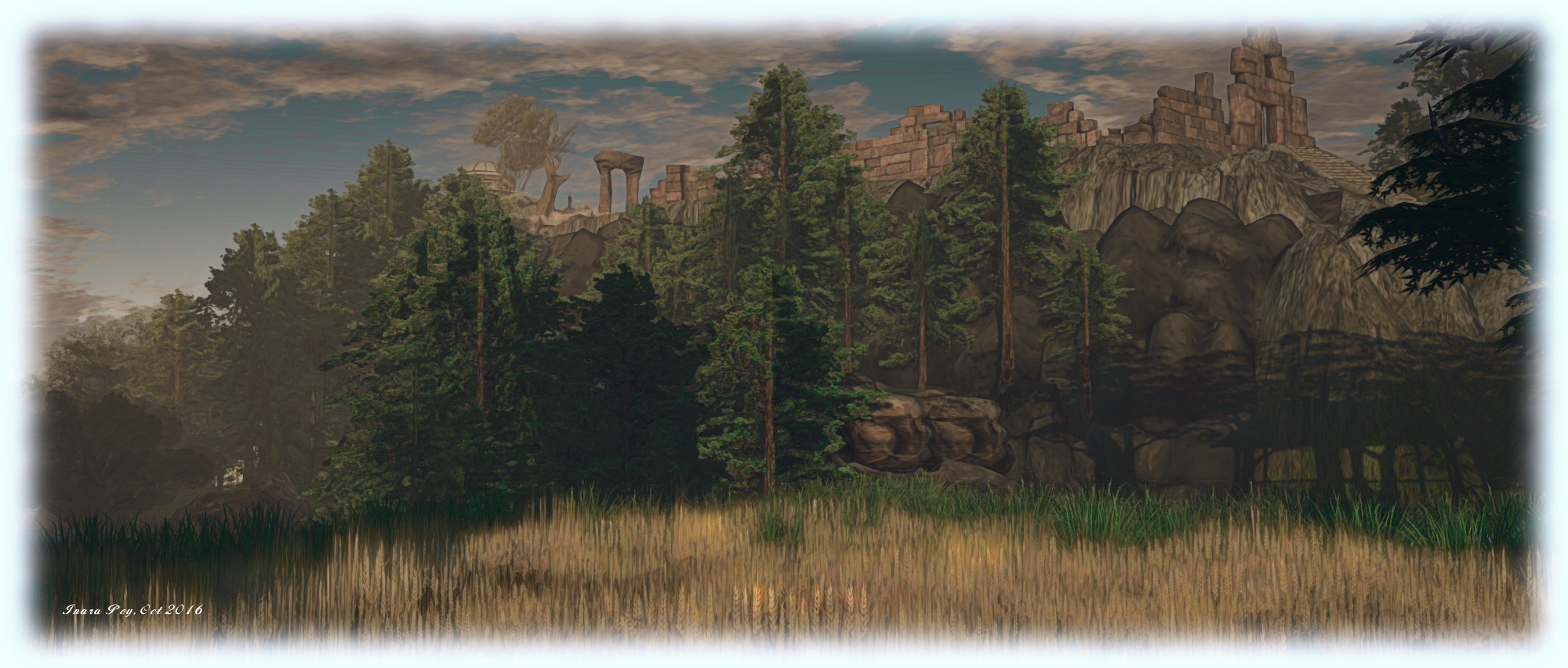
Venta Silurum, a homestead region by Tally (Tallyesin) and Kiana  (kiana Jarman), takes its name from a small town which once existed in the Roman province of Britannia (Britain), the remains of which now lie in the village of Caerwent, Monmouthshire, south-east Wales. It also, in part, reflects its physical world namesake, in that it includes a number of ruins open to the public to explore, while part of the landscape pays homage to the more rugged parts of Wales.

However, a facsimile of ancient Venta Silurum this most certainly isn’t; as the About Land notes state, this region is a place for adventure and exploration – and it offers one or two unexpected surprises along the way.

Venta Silurum; Inara Pey, October 2016, on Flickr Venta Silurum

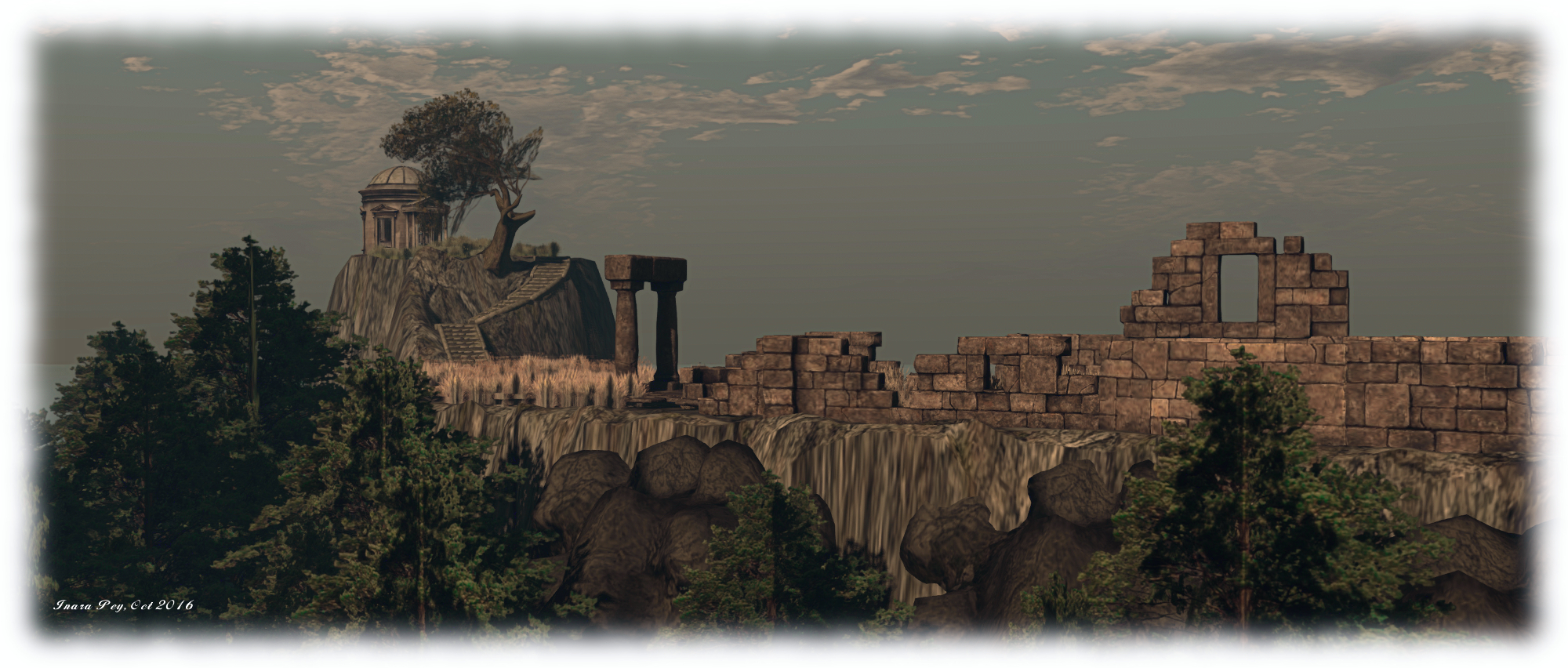
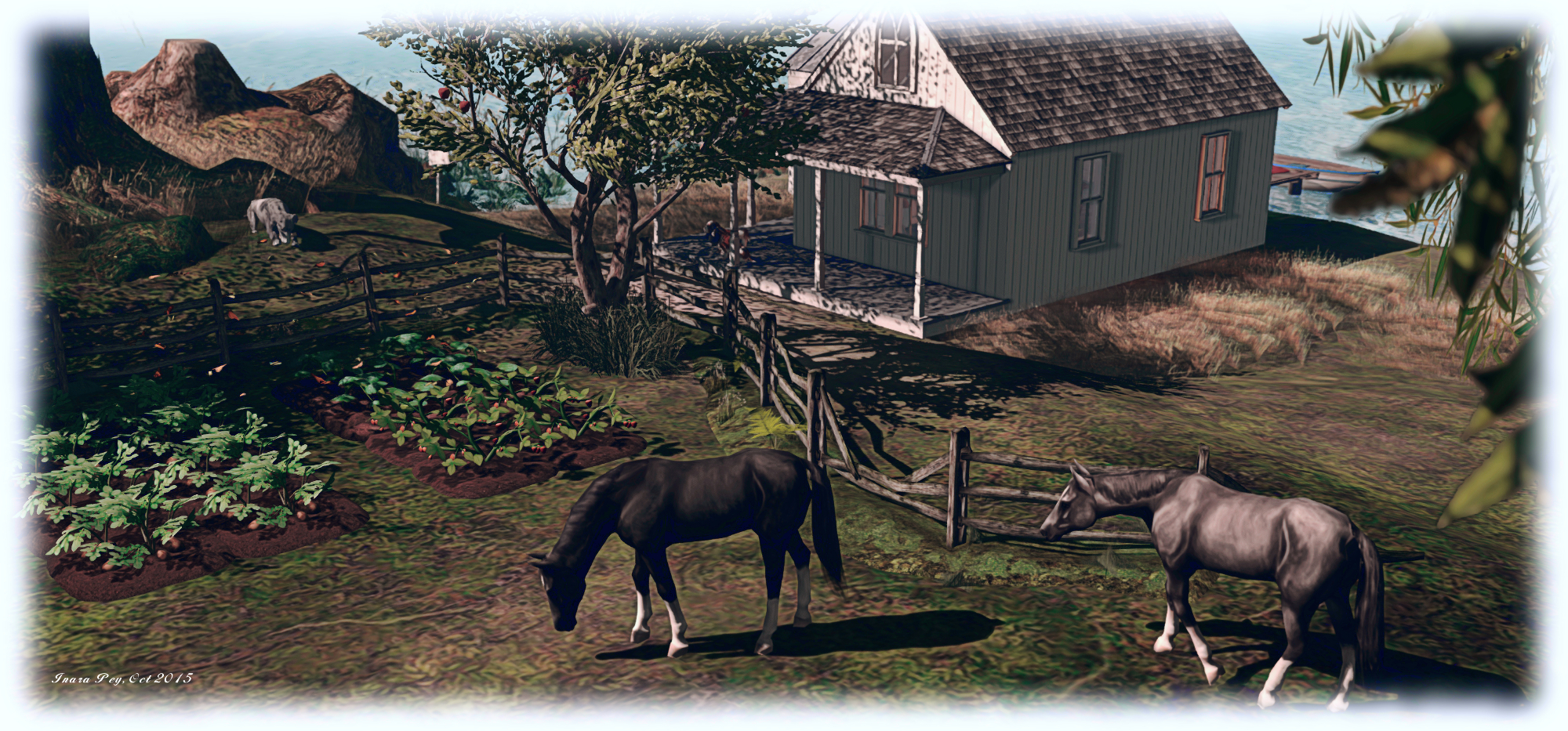
An explorer’s visit commences on the west side of the region, atop a grassy plateau fronted by jumbled rocks dropping sharply to the waters below. A lighthouse stands at this small headland, while behind it are the narrow fields of a small farm, watched over by the whitewashed tower of a windmill. Caught in the spell of a forever dusk, the region inspires and immediate air of mystery, which is heightened by the distant line of ruins and a single  finger of a folly standing before the eastern sky.

How one reaches these may not immediately be apparent; wooden steps offer a way down between the rocks beneath the lighthouse, and thence out across the reedy waters that cut into the land, pointing the way to a lone farmhouse to the north. However, a careful examination to the south and east, over the still waters of a flooded quarry, will reveal stone steps winding their way up the ridge on which the ruins sit, and which are reached by following the rutted track past the squeaking sails of the windmill.

Venta Silurum; Inara Pey, October 2016, on Flickr Venta Silurum

Following the track will bring you, by way of a narrow gorge spanned by a covered bridge and a gated fence, to the foot of the stone steps. These in fact lead both up and down – up to the ruins, and down to a secluded southerly beach with ramshackle bar and places to sit and cuddle or lie quietly on the sand. Beside these stone stairways sits one of wood, dropping away into the heart of the region.

Climb the stone stairs and you’ll find your way through ancient walls of square-cut stone and flgstone floors to the folly, now apparently the lonely sanctum of someone interested in the sciences – or perhaps magic. Take the wooden steps and you’ll be led under rock to where more mysteries await beneath the boughs of trees, and onward and northward to where more ruins sit under the shoulder of the sheer ridge, a stone bridge spanning a channel of water, leading the way back to the small farmhouse first glimpsed from the landing point.Venta Silurum; Inara Pey, October 2016, on Flickr Venta Silurum

Set beneath a marvellous windlight, filled with ambient sounds and rich in opportunities for photographs, Venta Silurum offers an intriguing and delightful visit, sure to conjure up stories about its various sights and offerings, ancient or more modern.

SLurl Details