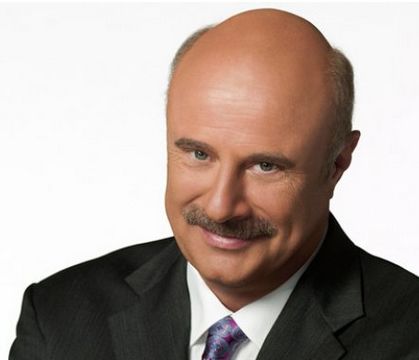
Dr. Phil McGraw is a psychologist turned television talk show host who first rose to prominence in The Oprah Winfrey Show in the 1990s prior to migrating to his own show in 2002, simply entitled Dr Phil. In it, he deals with a wide range of topics, offering advice in the form of “life strategies” based on his experiences as a psychologist.
Dr. Phil McGraw (courtesy CBS Television)
The show is a staple in the diet of US weekday television, and in the run-up to the July 14th show, Won’t Work, Won’t Go to School: “My Son Just Wants to Game All Day”, there was much brouhaha about the announcement that Second Life would be featured in the segment.
“Featured” tends to suggest a major role; as such, there were many efforts to promote the platform’s inclusion in the show through social media. There were also a number of blog posts expressing some concern as to how SL would be represented in the show.
Such reactions are understandable. This is our platform after all, so promoting it when the mainstream media will result in a natural reaction of anticipation. However, given the focus of this segment was advertised as being about computer game addiction, the anticipation was countered by a degree of concern as to how the platform might be portrayed.
In the event, any concerns regarding just how Second Life might be portrayed proved to be without cause. Not so much because SL is shown fairly positively within the programme, but rather because, quite frankly, its role in the show was pretty minor; the overall focus for the programme was squarely on the stated subject of computer game addiction.
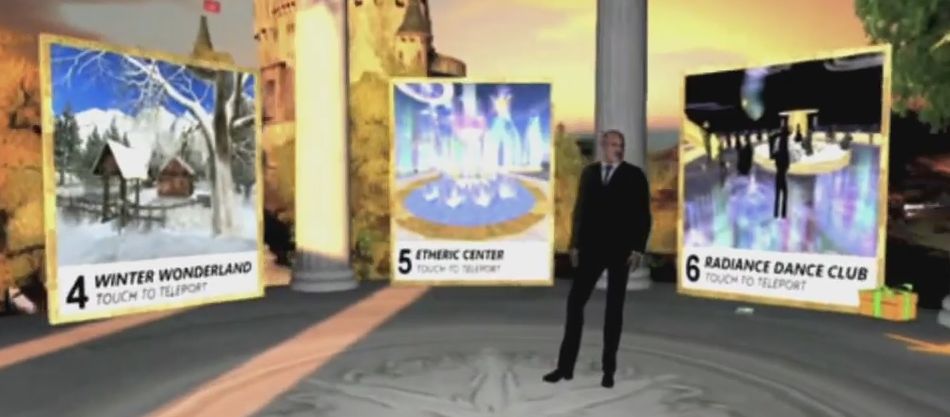
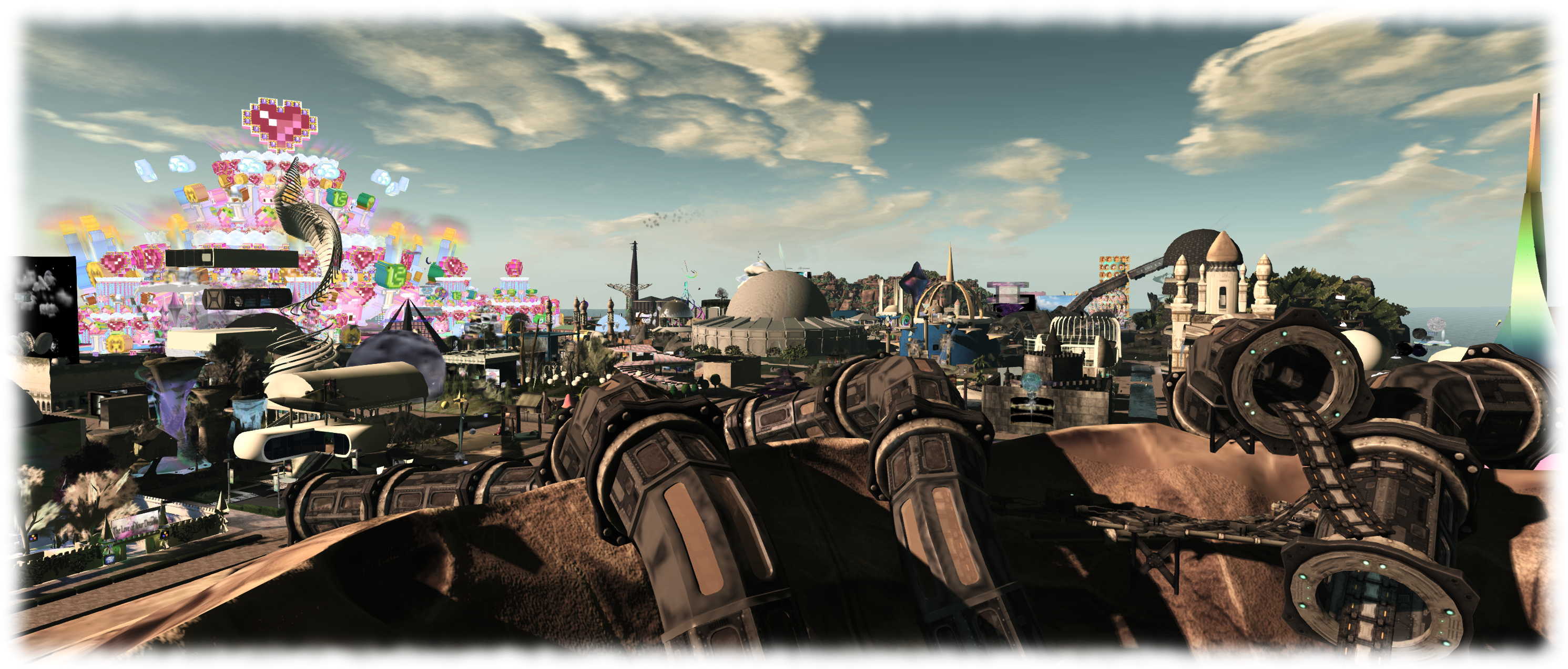
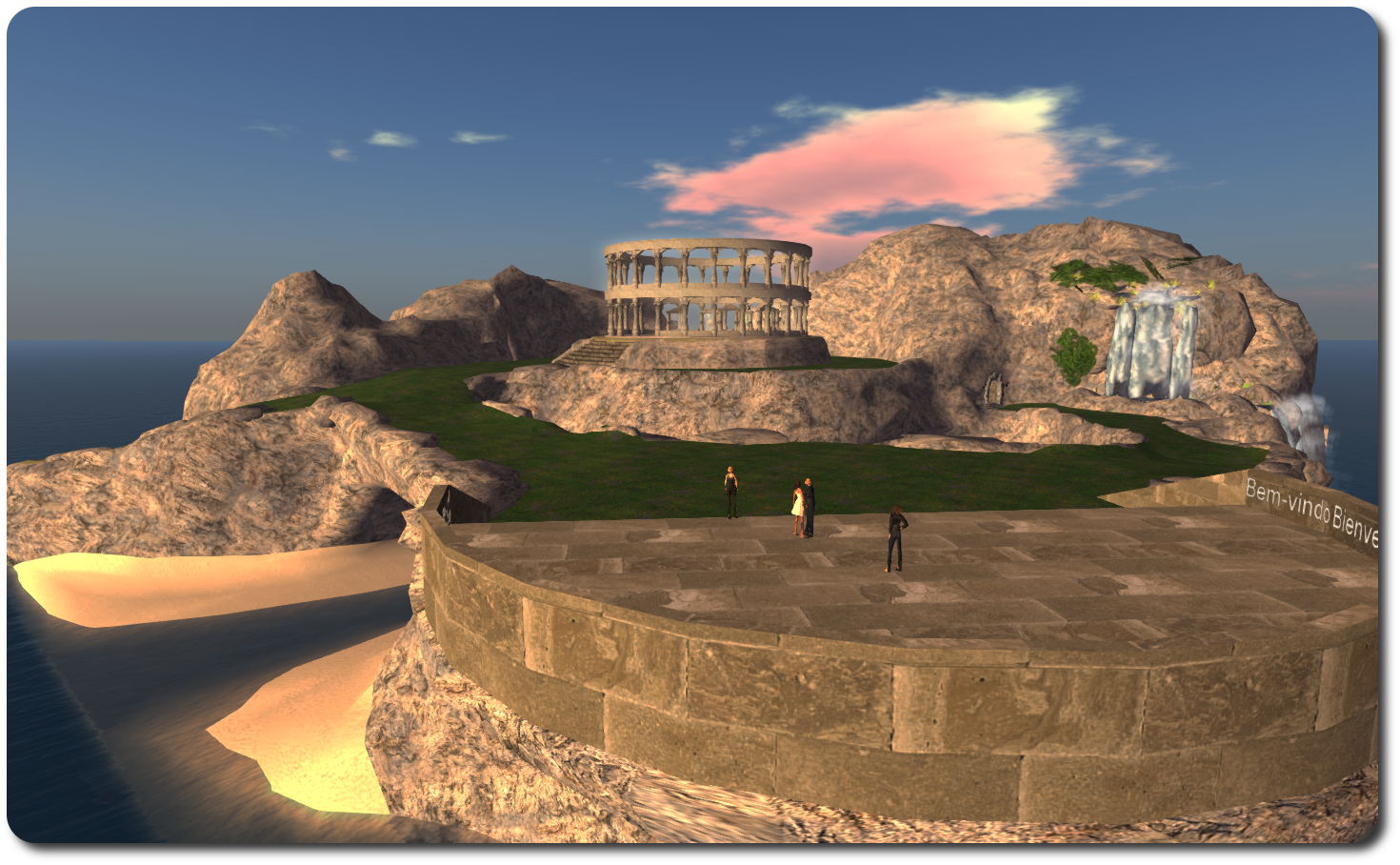
Yes, Dr Phil is shown in-world at places like Creations Park and Mont Saint-Michel, but really, SL is completely secondary to the show’s focus
We often joke about being “addicted” to this or that – including computer games; but the truth is that in extreme cases, “addiction” is precisely the correct term. Those suffering from it demonstrate the same responses and reasoning as those caught in more “traditional” forms of addiction such as drugs or alcohol; so much so that it is now beginning to be treated as a clinical condition by healthcare specialists.
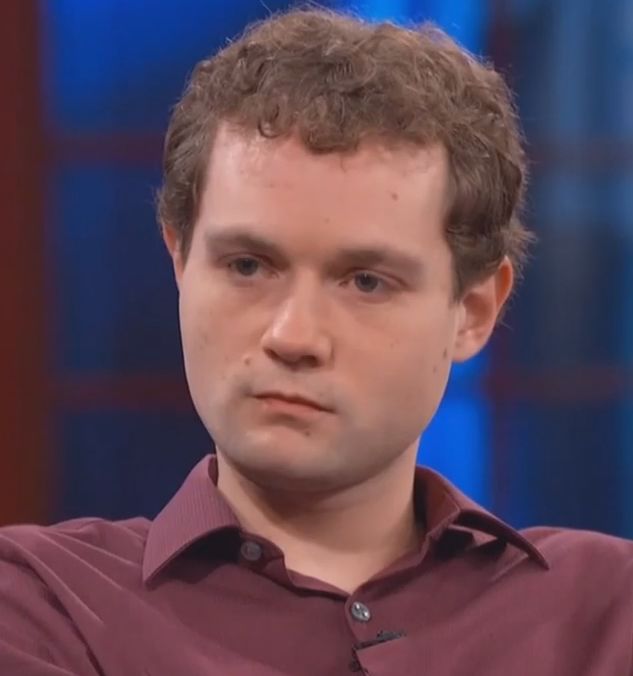
Such is the case with the focus of the show: 23-year-old Justin, who is in every sense of the word, an addict. He is almost completely dependent upon playing computer games to the exclusion of all else (other than marijuana), including caring for his own body.
To be honest, it was this aspect of the show which caused me more concern than how Second Life might be presented.
Justin – the young man at the centre of the show
Addiction of any sort can be a traumatic situation for all parties caught within it; be it the person with the addiction or their family or loved ones. As such, I couldn’t help but wonder just how Dr Phil – a programme I’ve admittedly never seen before, but which has oft been accused of taking a “simplistic” approach to the topics covered – would handle the issue. Would it sensationalising the issue and Justin’s situation, or would it reduce the issue to platitudes and sound bites for the sake of daytime television?
However, what we actually get is a reasonable study of Justin’s life and the factors which have contributed to his situation. These include long-standing family history (suicides, mental illness, alcohol and drug abuse); his mother’s own reticence to constructively deal with his childhood obsession with video games; his own personal trauma of being hit by a car at age 15, with a possible undiagnosed closed head injury that brought about a subsequent change in his nature. All of these are covered in a manner which is neither accusatory nor gratuitous, with Dr. Kenneth Woog of the Computer Addiction Treatment Program, providing context for the similarities between computer gaming addiction and more recognised forms of addiction.
There are the inevitable elements of drama in the show – notably around Justin’s examination by Dr. Rachael Ross and the clips of his home lifestyle; but on the whole what is presented here is a balanced look at a young man’s addiction, although it has to be said that given the segment is just 38 minutes in length, some matters are only lightly touched upon; at several points I found myself wanting Phil McGraw to follow-up more closely on comments passed by both Justin and his mother.
However, for a show that does get critiqued at times for its manner in addressing some issues, as noted above, this one did seem to offer a solid means by which Justin could obtain further help, both through the Lawlis Peavey PNP Centre (often used as a referral centre in the show) to further evaluate Justin’s condition, and the offer of a stay at a dual diagnosis treatment centre to help Justin deal with his addiction, depression and anxiety. I’d also hope that some measure of support was also extended to his mother and step-father, both of whom could perhaps use some counselling in how to more positively support Justin in handling his addiction.
I’m still not overly convinced as to the amount of clinical good that comes out of programmes like this, and there is certainly a good deal that could be debated about their merits or otherwise. As it is, and strictly in terms of this particular segment, it would be interesting to see a follow-up, say a year or so hence, so that we might learn how Justin has managed with his addiction and the results of the assistance offered to him.
As far as Second Life is concerned, the show references it twice. The first time is just after the opening titles, when there is around 90 second of footage showing McGraw’s avatar in-world (and McGraw initially manipulating it). Then, around two-thirds of the way through the show, Lab CEO Ebbe Altberg gets to talk about the more positive influences of virtual environments, overlaid with further clips from in-world, for about 60 seconds. In both instances, the platform is used to underline the fact that engaging in computer games and virtual environments is not in itself necessarily toxic, and to counterpoint any generalisations that might be drawn that this is the case. As such, I’d say the platform stood up well in the show.
On Friday, June 26th, Linden Lab CEO Ebbe Altberg faced questions from Saffia Widdershins, Jo Yardley and the audience in the last of the Meet the Lindens series sponsored by Prim Perfect.
I have a transcript of that discussion / Q&A, as recorded by Chakat Northspring, available in this blog. Since posting that blog post, the Lab have posted the official video footage from the session.
However, as the Lab notes in a blog post published on Tuesday, July 14th, there were a number of questions asked (many in chat from the audience) which didn’t get to be addressed. There are also doubtless many more questions people have about both Second Life and Project Sansar they hope might be answered.
To this end, as again as indicated by the Lab’s own blog post, a new forum discussion thread has been opened, and residents are invited to Ask the CEO questions about either platform which he, or designated staff members from the Lab, will endeavour to answer – starting with those that didn’t receive an answer during the show.
Ebbe and Saffia getting ready for the SL12B discussion on June 26th – now you can put further questions to him on Sl and Sansar via the forums
This isn’t the first time the Lab has taken such an approach; following the initial news about Sansar’s development being given by Ebbe back in June 2014, he spent a considerable amount of time within a forum thread attempting to answer questions from users (and at the time, unfortunately being faced with no small amount of trolling by some determined to try to derail the discussion).
So, if you need to refresh you mind on what was said during the SL12B interview, feel free to check-out the official video or cast your eyes through my transcript. Then, if you have questions for the Lab on either Sansar or SL (or both), why not head on over to the forum and write them up?
Ebbe and Saffia get ready for the discussion (Jo was off-line at this point)
On Friday, June 26th, Linden Lab CEO Ebbe Altberg faced questions from Saffia Widdershins, Jo Yardley and the audience in the last of the Meet the Lindens series sponsored by Prim Perfect.
The session lasted just over the hour, after initial teething problems in getting everything working, in which he addressed a wide range of question on both Second Life and Sansar, and offered-up some information of his own.
The following is a transcript of the event, based on a video by Chakat Northspring, which is embedded at the end of this article. My thanks, as always, to North. The official video will be available in due course via the Prim Perfect website.
Are there any things that have changed since you’ve been in charge that you are especially proud about?
[0:01:04] There’s a number of things. I think primarily it’s the relationship between the Lab and residents., I think is much better today. It was a little bit tense, I would say, the relationship, when I came on board; and it seems to be much more casual and fun and collaborative. And I think many of you have seen more of us than you had for a while previously.
I’m also proud of the quality of the product. The performance, we’ve made lots of strides, the quality; [group] chat had lots of issues. So we’ve made a lot of progress on just making it a more stable product, a better performing product.
And I’m also proud of the focus we have at the Lab. When I came aboard, there were quite a few projects sprinkled about, and today I feel we have what I call four very strong focus areas with really good drive across each of them. So it feels like a healthier environment, not just between us and residents, but also amongst us Lindens, and a better quality product, and a better focused organisation. So I’m pleased with the progress.
Can you tell us what those four areas of concentration are?
[0:02:56] Obviously, continued to improve Second Life is something that we do. And you guys often hear from Oz and Danger on our progress there. We have Blocksworld; a fairly small team working on this neat little app for a younger audience to be able to build virtual experiences on the iPad. We have obviously a very huge investment in Project Sansar, our next generation experience platform, and we’ve worked really hard for over a year now, and we’ll start to get some external customers on-board in just a month or so. Just a few, but it’s great progress.
And the forth one, I would say, is compliance; making sure we run a tight ship when it comes to the linden dollar and who can cash out, and just running a tight ship when it comes to compliance … whether that’s fraud controls, identity controls – a number of things we need to do to make sure we and banks are comfortable with the business that takes place in Second Life.
So those are the four areas of focus.
The last thing you said about cashing out. You’ve said before that you want to speed that up. [do you have] any idea when this is going to happen, or how is the progress to that?
[0:04:39] The progress is good. We’ve now managed to automate a lot of things so that we can see what percentage we would be willing to pay out rapidly in an automated fashion. We’re still tuning the rules as to who we would trust to pay out; to make sure that we’re 100% certain that people who would be paid out should be paid out. And we continue to increase that percentage by continuing to dial the rules and make tweaks,
When we get to a significant enough percentage, then we should be able to start automating the process as well. not just the data saying we could, but we actually will pay out. I don’t have a date for exactly when we can turn that on; but it’s our goal for the vast majority of people that we have a trusted relationship with, to be able to pay within 24 hours or something.
I mean, there’s obviously external processes a well, that we’re not 100% in control of; but on our end, when someone clicks the button that says, “I want to be paid out”, we hope to, within 24 hours, to be able to automatically say, “start the process”, and then like I say, there’s actually some external dependencies for how quickly that actually takes place.
I think it’s interesting that you’ve given on compliance an equal status with the other three projects.
[0:06:14] Well, I wouldn’t say they’re all equal; but it’s a focus area, and it’s very important for us to run a trusted, large-scale business, to make sure that fraud cannot take place. For the sake of us as a business, as well as for the sake of you not having bad things go on. So it is an important aspect.
Danger Linden was actually saying that it’s one of Linden Lab’s advantages coming into Sansar, because all the new virtual worlds that are planning to come on-line, and you’ve got to get this right, and you have a head start.
[0:06:59] Yeah, we are pretty much alone in having had a virtual currency with a floating exchange with cash-out and all these capabilities. There’s no-one else like it. so yes, we have a pretty significant leg-up compared to others if your intent is to have a virtual economy as we do. I mean, there are other business models that one could apply, but the way we are doing it, there’s no-one else really doing it as well as we do. And so that’s something we’ll certainly leverage; both operational experience and [the] technology, as we move forward with Sansar.
Second Life still gets some negative feedback in the media, although it seems like it’s become a lot less recently … but which kind of negative feedback do you pick-up [on], both in the media and form people in second Life themselves, that annoys you the most.
[0:08:15] Well, it’s not that much that annoys me … I’ve only had the opportunity to hear negativity for about a year … but I hear very little of it. whomever I talk to, it’s mostly … surprise that it’s still around, or more neutral. It’s very rarely that I’ll run into people that start off with the negative. So that’s a very small percentage of the population. Usually the negative people tend to be quite loud, but it’s not something I stress about.
I guess my biggest annoyance is people intolerance for various types of content. and when you look at the content in the real world, and people’s tolerance for that content in the real world. Then suddenly, when it’s in a virtual space, then it’s, “Oh my God!” Then there’s like a different level of acceptance for all kinds of content for some reason.
And that annoys me. So whatever the subject matter is, I can always draw a parallel to how it’s always “so much worse”, or it has just as much interesting stuff going on in the real world as in Second Life, whether it’s art, whether it’s sex, whether it’s whatever it is, all of this stuff is all around us in the real world, so why would it not be completely reasonable and acceptable to also have it in a virtual world. That’s maybe the most annoying part; when people don’t get that.
I know that your family have come into Second Life as well, and you actually have a family home here in Second Life and have actually had that for some time before you became CEO. So presumably, they get Second Life as well. But when you talk to friends … when they’re new to it, how do you explain what your job is?
[0:10:31] Well, it sort-of depends a little bit on the context of whom I’m trying to explaining it to; and it also really depends on their experience with various things. Bit generic when I explain that we’re trying to create a three-dimensional canvas that users can chose how to fill it, and how to populate it with what type of experiences, and that we want to create as much freedom as possible to allow people to create as much stuff as they can imagine.
So, kind-of suggesting that in something like Second Life, you can be whatever you want and do whatever you want and create whatever you want, as long as it’s legal and as long as it’s somewhat appropriate for the rest of us.
But then you can go into the incredible breadth of things that are really already working so well in Second Life; whether it’s education, health, art, role-playing. There’s almost as much variety of hobbies and interests and creations and experiences in something like Second Life like people can enjoy in their real lives.
So yeah, sometimes it’s tricky because it’s so broad. It’s so many different things to so many different people. So usually in a conversation, you usually have to figure-out what is of interest to the other person and figure-out how to relate to them with subject matter that they can get into or understand. And that’s part of the challenge of trying to explain something that’s so broad, because it’s obviously easier to explain a product that is narrow in its application or focus. So it’s usually a bit of dialogue that usually makes it easier than just a simple statement; it’s hard to think of a simply statement that sort-of captures it all for everybody.
Have you had a chance to Look around SL12B yet?
[0:12:50] I was around, I think it was two days ago. I was probably in there about half an hour or so; so I didn’t get too deep into too many things. but I really enjoyed some techno music over in the corner somewhere for a while. saw some fascinating art and creations, all kinds of interesting music, but not really enough time to have a chance to see all of it.
Many Lab staffers have been exploring SL12B and enjoying themselves
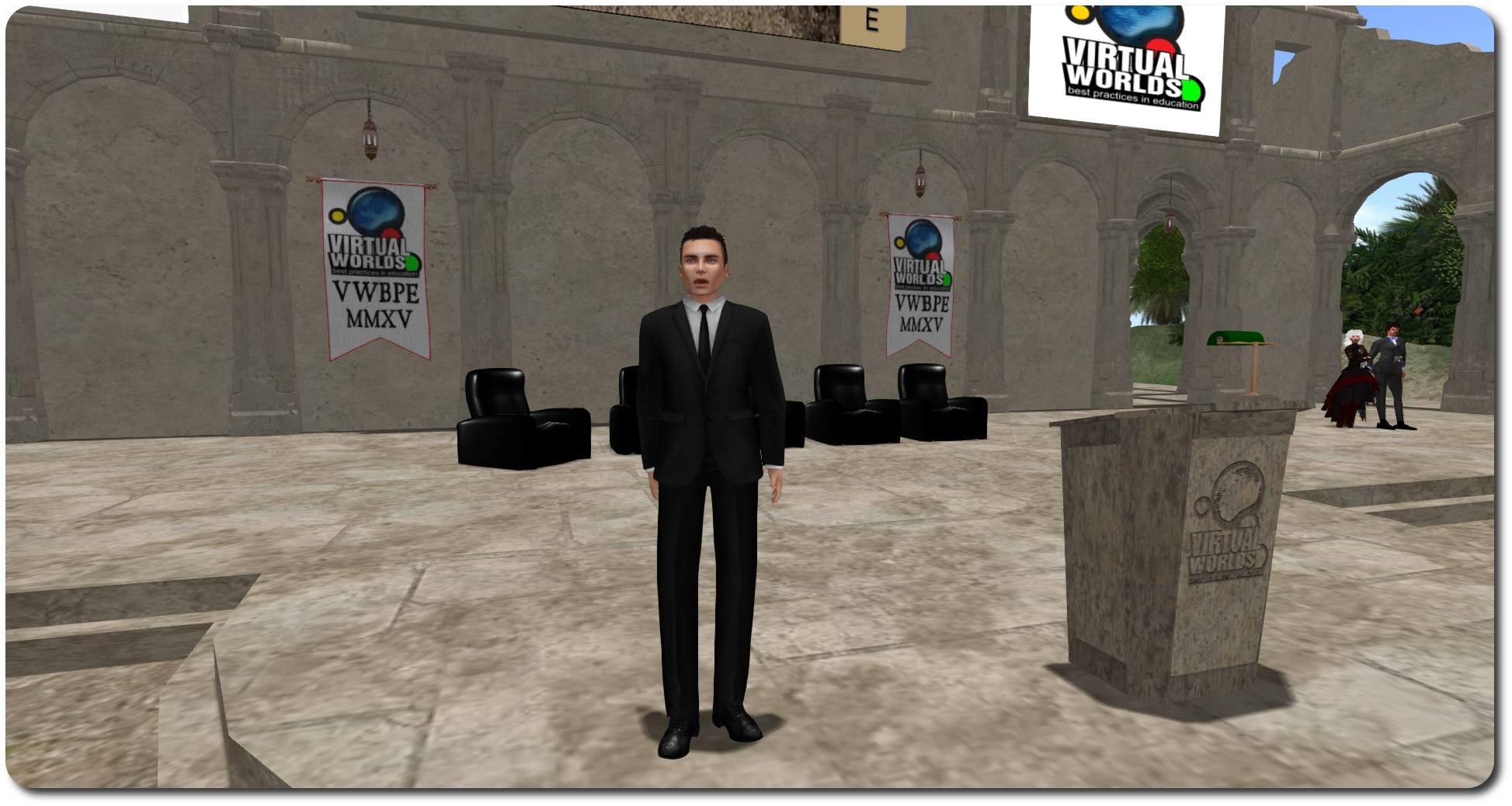
On Wednesday, March 18th, Ebbe Altberg gave the keynote presentation at the 8th annual Virtual Worlds Best Practice in Education conference, which runs through until Saturday, March 21st inclusive, in both Second Life and OpenSimulator.
Ebbe Altberg: opening keynote at the 2015 Virtual worlds Best Practice in Education conference, March 18th
His key address lasted a little over an hour, in which he outlined the Lab’s approach to education and non-profits, provided some insight into what Lab’s future plans, and discussed further information on the Next Generation platform. Following this, he entered into a Q&A session, which ran beyond the main session time, switching from voice to text chat in the process.
The following is a transcript of his initial comments and review of the Lab’s relationship with the education sector, his overview of Second Life as it is today, a look to the future, and his concluding comments. I have produced a separate transcript dealing with his comments on the next generation platform.
As well as including the official video, embedded below, I’ve included audio playback of each part of Ebbe’s talk for those who prefer to listen while reading. Timestamps to both the audio segments and the video are provided.
[00:00 / 02:55] First off, I’m really, really happy to be back at the VWBPE. Last year, I was pretty much brand new at Linden Lab, and we’ve had a year since then, and a lot of good and interesting things have happened that we’ll talk about. Like you heard in the introduction, we’re going to leave plenty of time at the end for Q&A so that we can talk about all [the] things that are on your minds.
Changes at the Lab
[00:38 / 03:34] So, since last year there have been a lot of changes at the Lab, We have simplified the portfolio of products that we are working on. Since I was here last year, we’ve discontinued work on six products [actually five (that were known about): Creatorverse, dio, and versu, and Patterns and Desura].
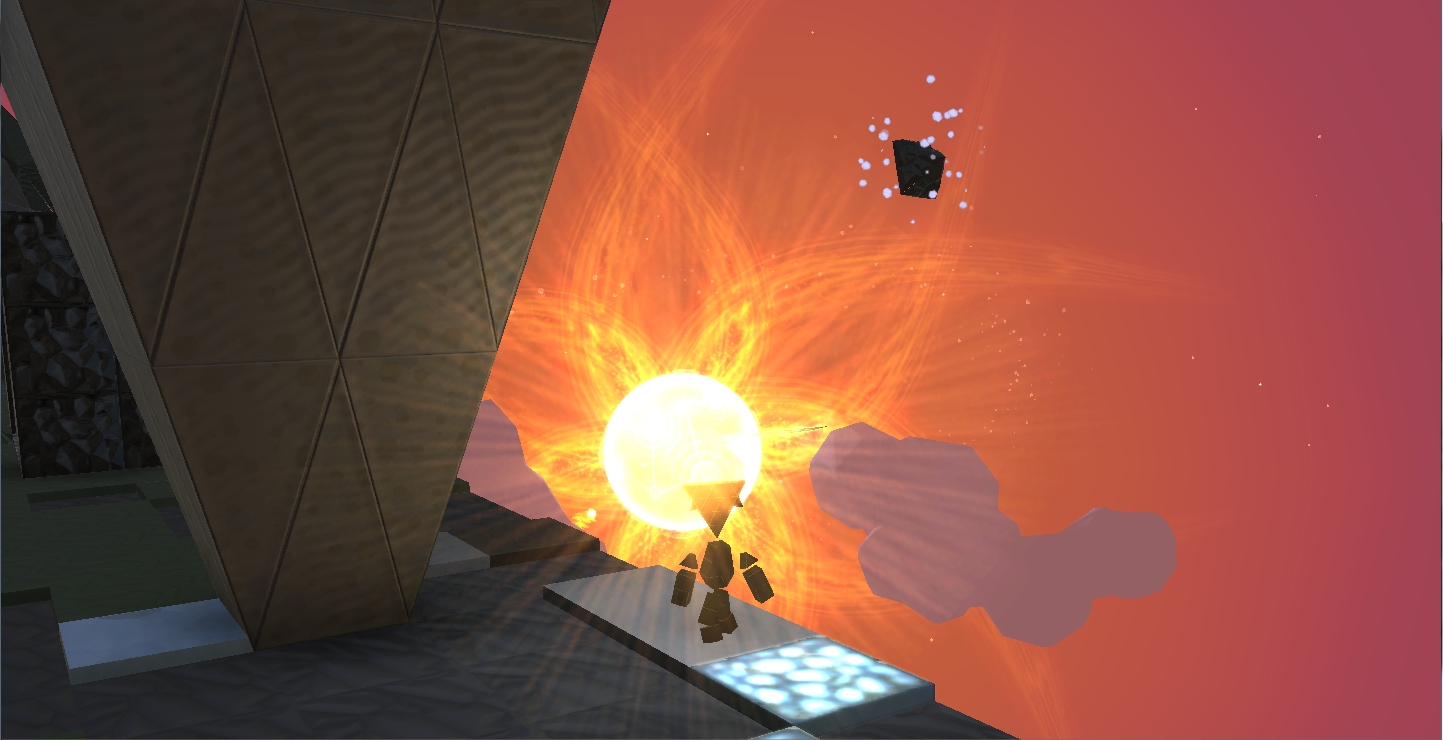
The little “Dorito man” headed off into the sunset in October, as Patterns followed Creatorverse, dio and Versu in being axed from the Lab’s nascent product portfolio. It was followed in November by news that Desura had been sold.
[01:02 / 04:00] So we have a much more focused company now, and we’re focused on things that are all relevant to user generated content, either through Second Life, or blocksworld, or through this next generation platform you have yet to see but we’re working on very, very hard to bring to you all.
[01:21 / 04:30] So focus has greatly improved. The other thing I wanted to talk about is some of the improvements made in Second Life. Performance and quality has greatly improved over the course of the last year, with the CDN work and the HTTP pipelining work some of you may have heard of, which should make access to worlds snappier than it used to be. i still feel we still have a lot to do to make it even more performant, but we’ve made great strides in that area.
[02:04 / 05:01] We also brought you the ability to experience Second life with the Oculus, so you can get sort-of an introduction to virtual reality if you have a chance to get your hands on an Oculus device.
The Lab’s Relationship with Users
[02:19 / 05:18] And we’ve also, I think, made a lot of improvements in how we market ourselves, how we’re connecting with you and many other customers and different audiences. I would say that when I showed up here a year ago, the relationship between the Lab and customers and partner was not great; and I think that’s improved greatly. We’ve spent quite a bit of effort, particularly Pete and myself, but also many other Lindens, socialising with you all, talking to you about what we can do better, how we can do things differently, better understand what you’re trying to accomplish. and so I think today, the relationships between us and you are much improved.
The Media, SL and VR
[03:19 / 06:18] We’ve spent quite a bit [of time] talking to the press; Pete and I have spoken to many. I would say a year ago, that was a difficult thing to do; Second Life was seen as old and not particularly relevant. Since the, we’ve had a tremendous boom and boost in all things virtual reality. It sort-of kicked-off with the big acquisition Facebook did when they acquired Oculus for two billion, and when the world started to realise that virtual reality was something that could be achievable much sooner than people [who] had been working in this area had previously thought. So there has been a massive acceleration in people’s mind of what virtual reality can and will do.
[04:16 / 07:15] So now it’s pretty easy to find people who want to talk to us, whether partners or press, about what we’re doing, and people are realising that our experience running Second Life is actually extremely valuable now that virtual reality and virtual worlds are all a sort-of hot topic again. So it’s very exciting for all of us to have the rest of the world sort-of get re-introduced and re-energised by what’s possible in virtual reality.
The Lab and the Education Community
[04:50 / 07:50] We’ve also spent quite a bit of time focusing and understanding education specifically in the context of Second Life, and also understanding it so that we can do a better job with our next generation platform to meet your needs in even better ways. And it’s absolutely clear that the capabilities of 3D and virtual experiences such as visualisation and simulation, and the ability to interact within those environments is an extremely strong component of how we can improve learning and teaching.
[05:33 / 08:32] We see evidence over and over again of how it’s proven that people can more quickly understand subject matter, content and experiences much better and much faster with much better retention of information, if they can experience something in a virtual context where they can do things, not just read or watch.
300+ Organisations and Success Stories
[06:00 / 08:58] We have well over 300 organisations that are taking advantage of our discount programme for educators and non-profits. I think there used to be more than that in the past, and we’re looking forward to making that grow back as we do a better job of meeting your needs.
[06:26 / 09:24] And we continue to hear over and over again just great stories from the community of educators about what they’re doing in Second Life, the success they’re having in Second Life to teach and learn all kinds of subjects from languages to chemistry to economics to health. The stories just keep going and going, and that’s really motivating for us to hear these success stories.
[06:56 / 09:54] And we started a thread on our forum, and I know there’s quite a few stories elsewhere out there, especially on [the] VWBPE.org site. so please continue to share these stories and successes with us; it helps motivate people, it energises us, and also helps us learn what we can do to help you be even more successful.
Collaborating with the Community and Prioritising Needs
[07:25 / 10:24] Like I said, we’ve spent quite a bit of time collaborating and communicating with various groups in the educational community in Second Life, and that’s absolutely great. It’s a great group of people to interact with, and often times I’ve asked these groups to work together to come up with the things that they find [as] the most important things for us to work on.
[07:54 / 10:53] Sometimes it can be difficult for us to filter all of the ideas and wishes and needs from a community as large as yours, and when you take the time to collaborate among yourselves to further refine priorities and needs for us, it helps a lot. We have to do less guesswork to understand what really matters to you all.
[08:19 / 11:17] I’d particularly like to thank Serenek Timeless, Aldo Stern, JJ Drinkwater Lorelei Juno who, at the end of last year took that request to heart and talked to … more than 60 educators to come up with a sort-of prioritised list of issues and concerns and opportunities for us to think about and focus on to help you all. so I’ll speak to some of these, and what I don’t speak to, obviously feel free to ask questions about afterwards in the Q&A session.
Platform Pricing and Discounts
[08:57 / 11:56] One thing that comes up quite frequently, and probably because we’ve made mistakes in the past, is the question about pricing. I just want to make it very clear that we have absolutely no intention of repeating the mistake we did in the past of removing the discount or increasing the pricing.
[09:17 / 12:15] So we have absolutely nointention whatsoever to make it more costly for you.
[09:22 / 12:21] We spend no time thinking how to make it more costly for you. We spend actually quite a bit of time thinking about how we can make it less costly for you; and it might be difficult to do in the context of Second Life, but we will try. But as we think about the next generation platform, this is something that’s thought about from the beginning, about how we can make it more economically feasible for more people to participate.
Content Creation and Creators
[09:51 / 12:49] Another thing that comes up is the ability to easily create content. you know, simplified building and scripting capabilities so that all users can create something.
[10:07 /13:06] We do think of creators in sort-of three categories of users that we believe we have to meet the needs of. You have the sort-of artisan or professional people that can create some really high-end experiences. We have the hobbyist, which I would say is where there’s a lot of them in Second life, who don’t necessarily have a formal background in 3D or animation or CGI, but are able to use Second life to create incredible things.
[10:43 / 13:41] And then we have the vast majority of people, who we call “customisers”; they don’t necessarily create original content, but they take bits and pieces by shopping or finding or being given items that they can then place, whether it’s to get dressed or to make their space laid-out just as they like it. So they don’t necessarily make the chair, but they put the chair where they want it. It’s sort-of like real life; most of us don’t build the clothes and cars and homes that we live in and use every day. We’re customisers, most of us; we get dressed in clothes that others make, and that’s probably how it’s going to be in the virtual space as well.
[11:30 / 14:28] We do want to make it as easy as possible for people to create content and contribute content. and I don’t expect there to be huge changes in Second life in this area, although we are working to improve the ability to import content from the outside world.
[11:50 / 14:48] As we think about the next generation platform, which I will talk about more later on, we’ll make a number of difference I’ll speak about then. But the scripting language will change, support for third-party will be very important to us; but I’ll talk about that in a bit.
New User Experience (1)
[12:08 / 15:06] Another thing [is] an improved and customisable new user experience, including entry points. This is something I’ve spoken about before. We feel it’s important to make it very easy for the creators of an experience to be able to attract an audience to come directly to that experience without the need of having to go through some generic front door to get going.
The Lab wishes to move away from the idea of a centralised, generic new user experience within the next gen platform, to something over which experience creators have more control – this might filter into Second Life
[12:39 / 15:37] And so we will continue to think about that in the context of Second Life, of how can we bring back notions we’ve had in the past of community portals or some such, and also how SL URLs, or SLurls, can be optimised to be [a] more efficient way of bringing users directly into a particular place. I would say the SLurl today is kind-of a crooked path to come on-board from from the outside world.
[13:10 / 16:09] So we want to improve all these things, so it is easier for all of you to bring users into the experiences you want them to come into.
On Wednesday, March 18th, Ebbe Altberg gave the keynote presentation at the 8th annual Virtual Worlds Best Practice in Education (VWBPE) conference, which runs from March 18th through 21st inclusive, in both Second Life and OpenSimulator.
Ebbe Altberg: opening keynote at the 2015 Virtual worlds Best Practice in Education conference, March 18th
His key address lasted a little over an hour, in which he outlined the Lab’s approach to education and non-profits, provided some insight into what Lab’s future plans, and discussed further information on the Next Generation platform. Following this, he entered into a Q&A session, which ran beyond the main session time, switching from voice to text chat in the process.
The following is a transcript of his core comments on the Lab’s next generation platform. These commence at the 31:20 mark into the official video of the event, although obviously, mention is made of both in reference to education earlier on in his presentation, as Ebbe discusses education, issues of accessibility, etc. I’ve included audio excerpts here as well, for further ease of listening to his comments whilst reading. Time stamps to both the audio tracks and the video are supplied.
Ebbe Linden as he appeared in-world at the VWBPE 2015 conference
On the Name
[00:00 / 31:20] So, the future platform for virtual experiences. We’ve said that the next generation platform, we still don’t have a name for this thing; we have a code name internally, but we don’t want to leak that out or use that, because that could just be confusing and distracting, and it’s probably going to change soon anyway. So we just refer to it as “the next generation platform”.
[00:21 / 31:42] We do notrefer to it as “SL 2.0”, because that might imply a little too much linearity, and we don’t want to necessarily constrain ourselves by the past; but we also want to obviously take advantage of, and leverage, our learnings from the past.
Progress to Date
[00:39 / 31:38] But the progress is going every well. I would say we’re about 8-9 months in on working on this; I would say the last six months have been absolute, full-on with a big crew. We’re talking close to 40 people or more; probably 30+ just engineers, and then obviously a bunch of product managers and designers working on this product.
New User Discovery and Experience
[01:12 / 33:33] And there’s a number of areas where we think about it quite differently from Second Life, and we did spend quite a lot of time thinking about why did Second Life hit the ceiling, if you will. You know, many years ago it peaked at 1.1 million monthly users and these days it’s around 900,000, so it’s not a huge difference from the highs and where we are today,
[01:38 / 32:59] But why didn’t it go to five million, ten million, 100 million? And what can we do to solve some of the things we thought caused it to sort-of max out there?
The Lab is hoping their next generation platform will bridge the gap between niche and mass adoption. This may prove easier said than done
[01:52 / 33:11] One area where we want to think quite differently is discovery; how do I discover an experience? Today you pretty much have to be inside Second Life to discover an experience, and we want to make it a lot easier for people to be able to discover an experience from the outside. So that you can create an experience, and [people can] much more easily find your experience and enter your experience without having to necessarily at that point being aware of the notion of this platform or what other types of things are available to them. They can discover those as they go along. Make it easier for you to bring your audience directly into your experiences.
Platform Accessibility
[02:36 / 33:55] Accessibility. Today, when you leave your PC, you pretty much leave Second Life behind, [so] what can we do to make sure it’s available on more platforms? It’s obviously getting more complicated now with all these VR platforms, so what used to be PC, windows and Mac, which we support today; and then mobile, which you can get access to today if you use a third-party service like SL Go or some other clients that support mobile.
[03:10 / 34:29] But we want to think about mobile as something we can support form the beginning; but again, the number of platforms across mobile, PCs and VR … [there’s] more and more of them. so it’s tough to keep up. So we are building a next generation platform from the ground up to make possible for us to take advantage of all these different platforms.
Scalability and Creativity
[03:37 / 34:57] Scalability. This is a really important one; an event like this highlights it. There’s a tremendous amount of effort that goes into putting on a meeting like this with just a couple of hundred people in-world. We have to put together four corners and you have to do a lot of work, and it’s still creaking at the seams as we speak, to put something like this on.
[04:06 / 35:25] We want [with the] next generation platform to make the size of an event like this to be a trivial exercise, and then figure out how, with various techniques, to make it possible to do events like this for tens of thousands of people.
[04:26 / 35:46] That’s one way to think of scalability: how do you get more people in a region, how do you get more people to be able to participate in an event at the same time. but [there’s] also the scalability for creators. How do you make it possible for creators to not only be able to reach a larger audience, but also make more money, too.
[04:44 / 36:14] Take the classroom that Texas A&M put together for teaching kids chemistry. The developers of that experience of teaching chemistry, they probably did as a one-off, for some fee, job for Texas A&M to create that classroom. When the classroom is used by students at Texas A&M, you know, 20 students, whatever, then that experience is fully in use.
[05:22 / 36:41] What if that developer could have an unlimited number of copies of that experience to rent out or sell, and every institution could use that virtual classroom all at the same time? That makes for a much more appealing prospect for a creator of an experience, and gives them a greater opportunity to monetise their experience. And then we’ll get more high-quality content creators introduced into the economy, and then everything sort-of heads upwards. So that’s something we think about a lot.
Quality and Ease of Use: Physics, Avatar Design, Shopping
[05:56 / 37:16] We also think about quality. Quality is a range of things: ease of use, quality of physics, lighting, basic performance of how smooth are things, how easy is it to do things, how natural an avatar can we make.
[06:21 / 37:41] The skeleton system in the new avatars we’re working on are way, way, way, more complex than what we have in Second Life.
[06:29 / 37:48] How can we make it easier for people to shop and get dressed and do these types of activities with much higher visual fidelity at the same time. So we think a lot about that.
Revenue Generation for the Lab
[06:46 / 38:05] And then monetisation – the way we [Linden Lab] monetise. I’d say our business model is a little be strange in Second Life today. We charge you a lot for land, and then we charge you almost nothing for all of the transactions that happen in-world. So, I’ve said this before, but generally we think about how do we lower our property taxes by a lot and at the same time, we’ll have to raise sales taxes to make some of the difference.
[07:15 / 38:35] And then also how can we build a platform that [is] technically less demanding, so that it costs us less to operate all of this content that we’re running all of the time, so that we can have a lower barrier to entry, and make it possible for people to come it and create some really interesting things at very low cost. And so that’s a big focus for us. How can we make less money per user, almost, but have a lot more users, is kind-of the core of the puzzle we’re trying to solve for.
On Monday, February 10th, 2014, Ebbe Altberg officially took-over the reins as the CEO of Linden Research Inc. (aka Linden Lab).
The news of his appointment, which had been released not too long before his arrival, and after the Lab remained steadfastly silent after the departure of his predecessor had entered the public domain, tended to bring retorts of “who he?”, promoting me to pull together something of a profile on him from various sources, which tended to draw largely positive feedback. I also took the liberty of offering a couple of suggestions on the day he arrived at LL, which appeared to be appreciated:
So, now we are a year on, how have things been, overall?
For me, given I originally wrote that “open letter” to him on the subject of communications, the turn-around has been both noticeable and appreciated. At the first of his many public appearances with bodies of users and groups which marked his opening months at the Lab, Ebbe effectively announced at the 2014 VWBPE event that the door is once again open, and demonstrated as much by spending almost 90 minutes addressing questions from users.
Following that, we saw re-engagement through forums, further bridge building with educational and non-profit organisations, the re-opening of the JIRA, the lifting on the ban on Linden staff entering SL using their Linden accounts unless they were on official business, and fresh (and persistent) use of the blogs once more to present news, information and updates – such as Monty Linden’s superb range of posts on the HTTP work, or Landon Linden’s equally informative posts such as The Recent Unpleasantness. As the year progressed the Lab continued to open windows as well as doors, seeking to re-engage with the community through a variety of means, from pro-actively seeking input from users on potential improvements to SL through to something as simple as the return of the annual snowball fight.
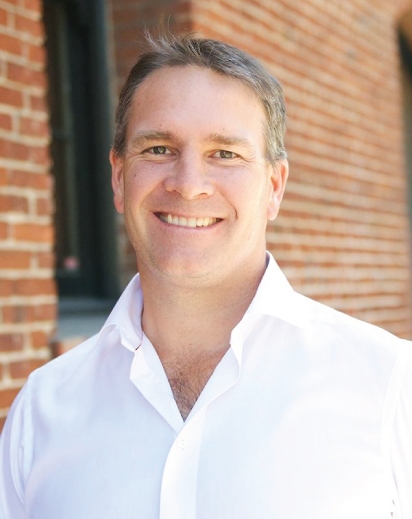
Ebbe Altberg: one year in the Hot Seat
All of this has been to the good, even if some approached this “new” openness (actually more of a return to how the Lab used to be) with suspicion. Some of it was perhaps understandable; at the start of his tenure at the Lab, Ebbe’s predecessor seemed to initially breathe life into matters of communication (even then a priority in many people’s eyes) – only for the door to been slammed shut again within a few months.
Some might even argue that such re-engagement is trivial “in the scheme of things”; I’d say not so. Engagement and communication lie as two of the foundations of trust between a company such as a Lab and its user community; therefore putting them both back in place does do much to stem the erosion of that trust.
Elsewhere, things may seem to have been a little slower. While there have been changes for the better for SL in technical terms, it’s fair to say that these have been more incremental and evolutionary, rather than revolutionary. But then, SL is a decade-plus old platform; getting truly revolutionary with it isn’t that easy. Instead, what we’ve had is a continuation of approach started prior to Ebbe’s arrival at the Lab – and quite rightly, too.
Far better to allow projects of proven likely benefit to continue to their conclusion and then build on them, than to suddenly try to jump tracks and do something else entirely, even if it does promise lots of new shiny in the process. As it is, the improvements this work has brought to the vast majority of users are undeniable. What’s more the approach has meant the thorns long ignored, such as group chat issues (another pressing problem put to Ebbe when he arrived) are also getting attention.
Ebbe Altberg also worked to put Linden Lab and Second Life front-and-centre of the debate on the future of the metaverse through opportunities such as SVVR’s Creating the VR Metaverse panel, and in discussions about the future of VR outside of games through opportunities such as at Engadget Expand NY in November 2014 (above) where he joined Matt Bell, Marte Roel and host Ben Gilbert.
Where things have perhaps been radical have been outside of Second Life, such as the dropping of almost all of the products that marked the company’s attempts to diversify its portfolio and potentially generate additional revenue. Again, this was actually something started before Ebbe’s arrival, but which he supported – hence the axing of Creatorverse, dio and Versu, to be followed later in the year by the closure of Patterns development and the sale of Desura.
In truth, when first announced, the idea of the Lab looking to diversify its revenue stream through a broader product base was a good one; the problem was the follow-through never really matched expectation and became too much of a grand experiment.
Of all the products the Lab developed or acquired, only Blocksworld has demonstrated it has real legs, while Creatorverse and dio, always appeared to be far too limited in appeal to ever gain deep and lasting traction, so trimming them was a sensible move. It was also hard to see how the acquisition of Desura could offer the Lab practical revenue growth outside of meeting its own needs, or without on-going investment and development which would in turn offset the value of revenue gained. Even so, Patterns and Versu, did appear to offer potential. Versu has certainly since gone on under its own steam (full kudos to the Lab for allowing it to do so), while Patterns, even though still under development, built up a small but loyal following on both Steam and Desura, and the announcement of its passing did give rise to upset.
The little “Dorito man” headed off into the sunset in October, as Patterns followed Creatorverse, dio and Versu in being axed from the Lab’s nascent product portfolio. It was followed in November by news that Desura had been sold.





 Inara Pey: Living in a Modemworld