SL22B Meet the Lindens: Philip Rosedale – summary

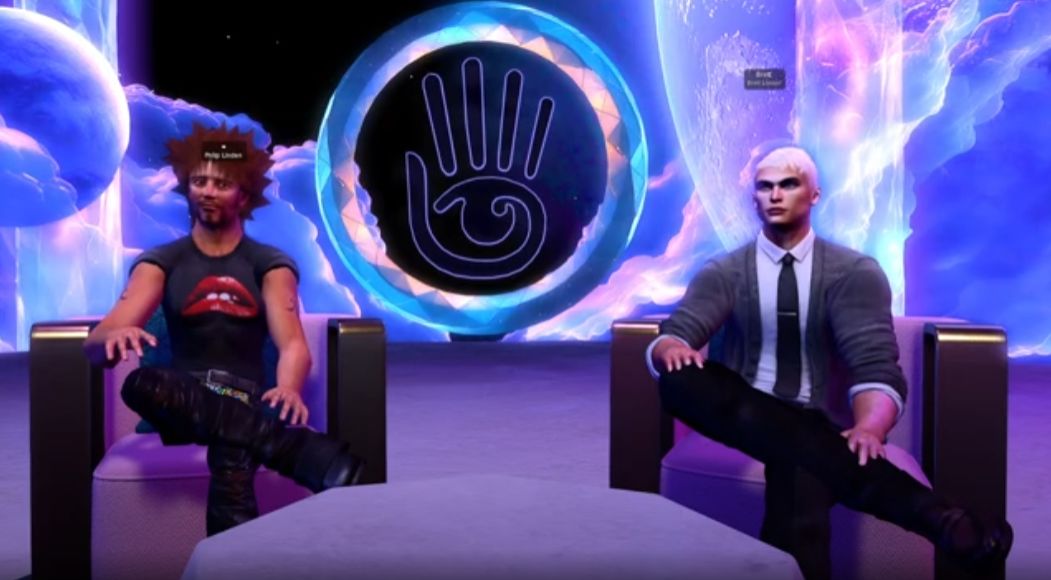
SL22B Meet the Lindens: Philip Rosedale, with Brett Linden (r) 
On Wednesday, June 25th, 2025, Linden Lab held the second of the SL22B Meet the Lindens events, featuring Second Life and company founder, Philip Rosedale, in conversation with Brett Linden. The session was live and featured a mix of pre-submitted questions, and those asked during the session.

This is a summary of the majority of topics discussed at the session, and the official video of the session is embedded at the end of this article.

Fore ease of reference:

  • Timestamps are provided to the relative points within the video where specific topics are discussed, allowing readers who prefer to listen to the comments directly to be able to do so. 


Table of Contents

  • In the hopes of better continuity, questions asked during the open Q&A session which related back to comments made earlier in the session have been incorporated within the topic section itself under the heading “From the Live Q&A Session”.

Note this is not intended to be a full transcript, but rather covers those items discussed which are liable to be of the most interest.

Personal Perspectives on SL and Working at LL

[Video: 7:37-10:38]

  • Has been back working on Second Life full-time for some seven months. Prior to that, was sharing office space with LL, but was not working on SL day-to-day (that work was with In Reality Lab (IRL415).
  • Obviously, for the first 10 years, was the CEO of Linden Lab.
  • Recognises the company has 25 years of history and SL has changed a lot, but is delighted that overall, the technology LL has created / brought together is good, positive and humane for people, when as a whole within the industry, the overall impact of technology can be uncertain – or even negative (as with social media).

What is He Most Proud of with Second Life?

[Video: 10:39-12:02]

  • Would say is he is not proud of anything he has created – but is proud of what people have created in SL.
  • From the start, was always most interested to see what people would create in SL, and started out more from a physics perspective than a creator perspective: making various physics laws and then seeing what people created using those laws.
  • Points specifically to:
    • The volume of art produced within Second Life, and how it is exponentially larger than any single art museum.
    • The number of teaching / learning spaces and all the various ways they are used.
    • All the communities that have grown in SL – particularly their support for diversity.
  • Is “super, super proud” of the positive feedback he receives from people about how SL has helped and changed them.

Is There a “Hidden Gem” in Second Life?

[Video: 12:16-14:49]

  • Thinks Second Life has so many hidden gems. Second Life could be compared to Los Angeles, but has for more to discover within it than can be found in LA, so picking on a particular thing as a “hidden Gem” feels “goofy”.
  • That said, would say that one thing he would like to see more of is the “sandbox experience”: people building and sharing together in sandboxes, becoming friends learning from one another, teaching one another.
  • Does not believe LL has intentionally changed this, but the nature of the platform has simply drifted away from it. So while not a “hidden gem”, would like to see a move back towards it more.

From the Live Q&A Session

[Video: 52:41-54:54] In response to a comment that while he mention in-world building, Second Life has become more about building content outside of the platform and then “showcasing” it in-world, rather than fostering the arts of in-world creation, and asking if SL will “again” get tools to encourage the latter?

  • Believes SL has always been a place for content creation, and believe it should remain so, but recognises a need to provide more tools for content creation.
  • Notes that earliest content creation was prims, and most users learned to build using them. However, mesh is a more sophisticated means of content creation, which necessitated leaning on external building tools and then import the results.
  • Were it possible, he would have some form on in-world mesh editing capability, but providing such would be difficult because of the complexities and capabilities of the toolsets involved (e.g. blender).
  • Suggests that if SL is not supporting enough of the features of something like Blender in-world, then perhaps the Lab might need to figure out how to correct that.

[Video: 58:58-1:01:07] What is the one thing you would change in Second Life if you could?

  • While there are lots of things he would like to change, the first thing that came to mind was better support for democracy and Groups.
  • A lot of good work has been done with Groups, but when SL was started, Groups weren’t considered, nor were things like social media, as SL was supposed to be a place.
  • Groups were one of the things that came out of SL that he didn’t really expect, and it has given him pause for thought on how self-governance tends to be done through Group membership.
  • So sees making Groups stronger in terms of governance, democracy, identity and reputation, etc., as important, and as such, would liked to have considered Groups from the outset as a “kind of a fundamental all primitive in Second Life”.

On His Vision for Second Life (next few years)

[Video: 2:20-4:41]

  • Second Life can do something really special – preserve diversity in an increasingly homogenous world.
  • A lot of what is going on in the physical world – social media, AI, the geopolitical situation in many countries (notably, but not exclusively the United States) – is trying to make everyone in the world more similar and repressing differences between people.
  • So in thinking about a “vision” for Second Lie, tends not to focus on a specific feature or reason for the platform, but the opportunities SL has to stand as a place that preserves diversity and differences, and the ways in which it can deliver on that.

On Expanding the User Base: Non-Verbal Communication Cues

[Video: 4:44-7:35]

  • Find it amazing that SL has been around for 20+ years, and still represents probably the largest gathering of “grown-ups” in a virtual world.
  • Recognises that SL is not for everybody and only a tiny fraction of a single percent of people are using it, whereas social media is used by a majority of people worldwide.
  • Personally believes that to make SL more accessible to the majority is to get people comfortable with using SL through better transmission of nonverbal cues.
    • Right now, an SL avatar is non-expressive in terms of what a person is expressing by way of hand-gestures, facial expression, etc.
    • Such no-verbal cues are critical to communications, and in order to gain millions (or more) users, SL needs to be able to someday express them.
    • Believes this is a particular reason why VR Chat has been so successful, because VR headsets allow more non-verbal cues on communication to be expressed.
  • Obviously recognises there are other technical aspects of SL which need to be addressed: the complexity of the viewer UI, avatar dressing, etc., but to grow the user base, SL needs to get everyone more comfortable talking to people they don’t know by transmitting these non-verbal cues.

From the Live Q&A Session

[Video: 35:07-37:23] In response to a comment on the benefits of the asynchronicity of text chat, which many users prefer:

  • Didn’t mean to dismiss other means of communication in Second Life such as text chat, avatar actions, etc., and totally values these means of communication.
  • Rather, he meant that if two complete strangers are put together with Second Life, unable to physically see one another and their avatars their only means of communication / interaction, most will express discomfort at conversing with a stranger without the benefit of body language and non-verbal cues as to what the other person is thinking.
  • So while the more “advanced” means of communications within Second Life are valuable, there are table stakes around getting people comfortable when they are conversing with strangers through non-verbal cues.

On Second Life and VR

[Video:  14:55-18:09]

  • Bringing native VR headset support to SL is something the Lab is “always” thinking about. However, there are no current plans to do so.
  • Has a deep respect for VR Chat in the way it has demonstrated how to build an experience like SL entirely for VR headsets – something he tried to do with High Fidelity, and recognises there are “amazing” experiences to be opened up by VR headsets.
  • However, also recognises that VR headsets are not for everyone and they’re may not be particularly with people to whom something like Second Life appeals.
  • As such feels the overlap between VR headsets and virtual worlds is not clear, but is by no means a 100% overlap.
  • But again, does feel there are capabilities SL has which VR could “completely open up” (e.g. the already mentioned non-verbal communication cues).
  • Also notes that some of this could possibly be achieved without the need for a VR headset, such as using a combination of AI tools and a webcam (or webcams) as a means of conveying non-verbal cues and controlling an avatar, without the need to put on a “face toaster”.
  • So, does think VR support for SL is interesting, it’s just not something the Lab has any announcements about at this time.

On Second Life and AI “Taking Over”

[Video: 18:10-21:25]

  • As a sophisticated technologist, and is very involved in AI, and is on the board of the California Institute for Machine Consciousness (AI), and so is doing a lot of work on AI outside of Second Life.
  • Within Second Life, believes the Lab has been very cautious with regards to AI, and has tried to be respectful as to the risks and the debate about how to use AI.
  • The Lab hasn’t “done anything broad” as yet with AI outside of a few experiments.
  • Stated that any use of AI within Second Life “has got to end up by enhancing human contact not reducing it”, by helping people to connect to one another, and must do this “well”.
If AI can help with that, I’m all for it; if it hurts that, we shouldn’t do it. And as long as I’m here, I’m going to think I maintain precisely that position.

– Philip Rosedale on AI

  • Outside of Second Life, thinks that AI offers “big possibilities, but also even more enormous risks”, and is going to cause some “necessary existential risk” which will cause “profound change” in the whole human population, and believes this will include:
    • Forcing us as a planet-girdling species to change how we work together and do things.
    • Potentially change our entire economic structures.
  • As someone who programs a lot with AI, and as an engineer, is both shocked and excited about the potential impact of AI in the world whilst still trying to make sense of it.
  • Returning to SL, believes the Lab is being “super cautious” and respectful of the risks that people have been raising.

From the Live Q&A Session

[Video: 41:31-47:10] On the use of AI Tools in Content Creation & managing the influx of copyrighted and potentially copyright-derived material produced using AI being upload to SL / the Marketplace.

  • Notes that there are many different types of AI content, and that the general thinking among experts is that there is little hope of using AI tools to detect AI generated content.
  • Given this, it would not be technically possible to add a “no AI” filter to the SL upload mechanisms; the technology is simply moving too fast, and would outstrip any such capability.
  • That said, LL does respect the conversation going on around whether and to what extent and what should be the proper approach for AI should be.
  • Believes that the wider global discussions on the use of AI are appropriate to be considered.
  • Also feels that a lot of AI generated 3D content is so bad he doesn’t believe it would gain much of a foothold in SL compared to the content people are making, and that given the overall state of AI 3D content tools, doesn’t feel that at this point in time, it is not a major concern – although this could change.
  • Points to his essay Ultravalletic Catastrophe and the potential for AI to completely overwhelm social media messaging due to its ability to impersonate people, which he sees as a major issue, and notes that this could result in fake AI “people” creating Second Life accounts, and we’re not even going to know it; so we’re all going to have to deal with the problem, and there’s not an easy way to just put a there’s not an easy way to put an AI filter on Second Life, even if everyone wanted one.
  • Believes that with his background and LL’s geographic positioning, the company will probably figure out what to do “right” with AI.

On Inclusion and Accessibility

[Video: 21:36-22:52]

  • Is particularly looking forward to the full deployment of the WebRTC (Real Time Communication) Voice service to replace Vivox.
  • As well is improving Voice quality, this will allow:
    • Speech-to-text and text-to-speech.
    • Language translations.
  • Thinks this can all be done later in 2025, with captioning (speech-to-text) and text-to-speech being the “number one” accessibility request of which he is aware.

On User Growth and Retention

[Video: 23:01-27:32]

  • Notes that between Project Zero (the SL viewer in a browser) and SL Mobile, the Lab has been able to get 10 times as many people from the sign-up page and into SL compared to having to download and install the viewer.
  • This looks to have doubled the number of people returning to SL after the first couple of times they initially log-in.
  • Regards this as an important metric in allowing LL to further grow Second Life.
  • Following-on from this, the focus is shifting towards
    • The experience new users have after coming into Second Life.
    • The whole dressing an avatar / changing an avatar’s appearance.
  • Some of the latter has been initiated through the Avatar Welcome Packs, and will be expanded into the complexities of actually customising an avatar, with the aim of simplifying it – or at least making it “modestly difficult rather than almost impossibly difficult.”
  • His own experiences in trying to create an avatar / look (see the videos here and here) have helped inform a design direction for the Lab to take, and so updates should be coming Soon to Welcome Areas.

From the Q&A Session: Project Zero

[Video: 37:24-38:51] Will Project Zero ever be free to those on lightweight hardware?

  • The hope is to make it free at some point; currently, it is expansive to stream the viewer to a browser by the hour.
  • So yes, longer term the hope is there, but right now, LL cannot offer it for free, and are focusing on offering it more to incoming new users rather than existing users – hence why some have not been unable to access it.
  • Is optimistic about being able to offer it potentially for free because the rapid advances in AI are driving the price of GPUs down very fast, so there will be a crossover point which, once reached, will make more sense to offer Project Zero free to everybody, but things are not yet at that point.

On Creativity and Messaging / Policies and Supporting Creativity

[Video: 27:35-29:55]

  • Agrees that maybe there are ways LL could do a better job to about what should be compelling to you as you’re coming to Second Life as a creator.
  • Outside of for the “table stakes” of content creation: keeping fees low, the GDP stable, the ability to make money through content creation, etc., believes that adding creative features and capabilities is a mechanism for supporting creators.
  • Specifically mentions:
  • Notes that support of glTF is important a) because it is a recognised standard and makes it easier to import from content creation tools into SL; b) support for the current mesh import format (COLLADA.DAE) is being increasingly deprecated within content creation tools.
  • These are projected aimed for this year, and more broadly, notes the Lab needs to keep adding new (and modern) capabilities to support content creation.

On Prioritising Work

[Video: 29:57-31:59]

  • There are often questions concerning how LL prioritises work, e.g. bug fixes vs. Stability vs. implementing new features. Part of this is because it’s a little harder to see what goes on behind the scenes.
  • Feels that since his return full-time to SL, for any release and at any given time, around 75% of development time is toward infrastructure maintenance performance improvements and bug crashes and fixes, including (but not limited to): DDOS attacks; upgrading the platform on Amazon services. etc.
  • So for the 50-ish strong development team, 75% at any time are working on “keeping the wheels on the car” and some 25% are working on “new shiny” features.
  • [Video: 34:05-34:55] It is hard to keep Second Life running, but everyone at the Lab is doing good work, and there are not a lot of things the teams could just stop doing, which drives the 75%/25% split.

On Second Life Profitability

[Video: 32:05-33:44]

  • SL has been fortunate as the mechanisms put in place (e.g. land fees) allowed the company to become profitable very early on – breaking even in around 2006.
  • Since then, the company has been able to increase its profitability “a bit beyond that”. So yes, the company is “comfortably profitable”.
  • This means the company will continue to be able to do what it has always done: set its own course. There is no critical market fit or monetisation problem requiring further funding from investors.
  • As such, the company is able to sustain profitability and choose where it wants to take things next without having to worry about additional capital inflow.

Open Q&A Session

On Server Locations – Using Other Amazon Centres

[Video: 39:54-41:30]

  • In theory should be relatively easy to move those servers which are most heavily used by a geographic region, but is not sure how much this has been looked into.
  • Also notes the same is true for Project Zero – the servers running the viewer instances could be located in multiple Amazon centres. This is something that the Lab “should definitely do” as Project Zero starts to open up to more users.

On Users Helping Spread the Word about SL / Helping Improve the New User Experience

[Video: 47:11-50:30]

  • With the company able to bring-in more people (via Project Zero / SL mobile, for example), the Lab needs help in figuring out how to make a newcomer’s experience in their first few minutes in SL “10 times better”.
  • Is not sure exactly how users and communities can help LL to do this, but one way might be to experiment with different ideas and bring them to the Lab (e.g. develop an experience that would be comprehensible, compelling and interesting to a new user who has just arrived in SL).
  • There are a couple of on-going programmes built around the new user experience, and those interested in helping are encouraged to join with those programmes.
  • Has also ready noted the design challenge of helping people to more easily dress and customise their avatar, making it fun while also exposing them to SL content. To be effective, this work must involve changes to the software and to in-world content so a new user can more easily create an avatar that speaks to their needs.

On Spatial Audio in SL

[Video: 50:36-52:41]

  • Spatial audio can be a pain in the posterior is that Bluetooth devices (including Apple) do not support stereo when the microphone is on. This means that spatial audio cannot be presented to the ears when the microphone is on.
  • This has been one of the contributing factors as to why spatial audio hasn’t been more directly pursued within SL despite the environment being “amazing” for its use.
  • Does believe that this issue will get fixed “in the next year or two”, and Bluetooth will support spatial audio correctly when microphones are on. When this happens, SL will definitely embrace everything that you can do with spatial audio; and you have to have spatial audio for group conversations to be comfortable.

On Bringing LindenWorld to Second Life

[Video: 54:59-57:10]

  • Thinks it would be “wonderful” to have LindenWorld (the precursor to Second Life) in-world.
  • Suggests that perhaps the “easiest” way to do this would be to have an intern who can focus on the project. However, the challenge would be to just get LindenWorld running again, as it did involve a different approach and a lot of user-generated content.
  • Will explore whether or not it would be possible.

On SL Mobile and Future Plans

[Video: 57:18-58:40]

  • Believes LL have created a strong asset with SL Mobile, which has Unity under the hood, giving LL access to the Unity renderer which could be used on the desktop and be a potential stepping-stone towards VR support and offers “solid base that we can use for a lot of stuff.”
  • Understands that in the coming quarters there will be further improvements.
  • Also,: please refer to:

Closing Message to all of Second Life

Everybody here, all of us, should be proud to have been part of what is now more than 20 years of an experiment in demonstrating that online experiences, something you do online on your computer with other people can actually bring people together and make them happier and healthier. As opposed to making them lonelier and angrier,  which sadly seems to be what we’ve done with most of our technological product time in the last decade or so…
And the hope that that gives to the world is something we all need right now … The whole world needs to see that you can use technology to bring us together; it is not just a force for evil. And so I think everybody here should be incredibly proud of having been part of that experiment and hopefully continuing to be a part of it indefinitely as we as we carry on so thank you.

Philip Rosedale
SL22B Meet the Lindens: Product and Engineering – summary

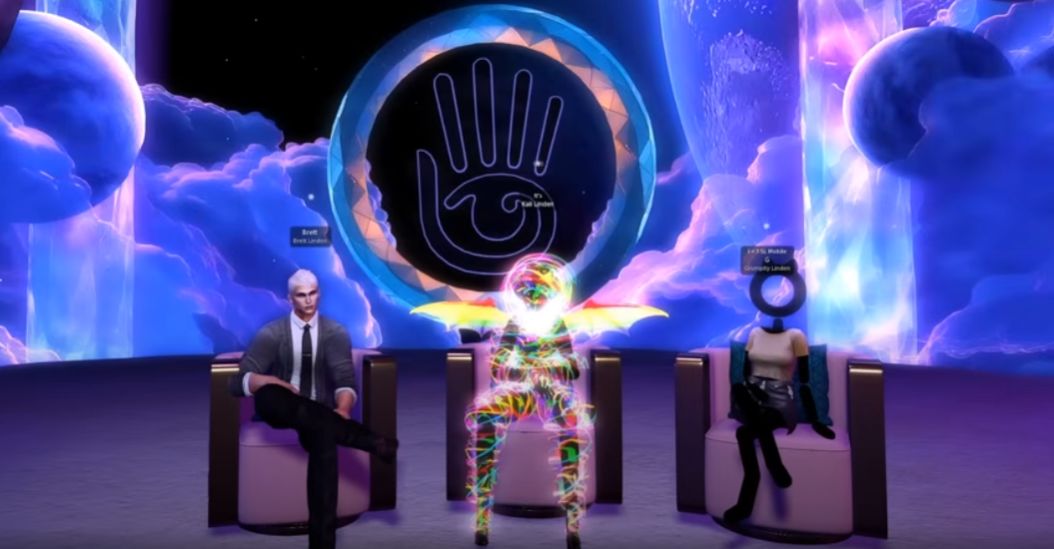
SL22B Meet the Lindens: Product Operations: (l to right): Brett Linden, Kali Linden and Grumpity Linden
On Tuesday, June 24th, 2025, Linden Lab held the second of the SL22B Meet the Lindens events, featuring personnel from the  Product Operations teams. The session was pre-recorded, but included a text-based Q&A session afterwards. The session featured:

  • Grumpity Linden – Senior VP of Product & Engineering.
  • Kali Linden – Director of Engineering, Web & Platform Kali Linden.
Table of Contents

This is a summary of the majority of topics discussed at the session, and the official video of the session is embedded at the end of this article.

For ease of reference, timestamps are provided to the relative points within the video where specific topics are discussed, allowing readers who prefer to listen to the comments directly to be able to do so. Note this is not intended to be a full transcript, but rather covers those items discussed which are liable to be of the most interest.

A Little Background

[Video: 0:53-6:33]

Grumpity Linden

Grumpity Linden: joined SL as a contractor with The Product Engine and helping with the development of (the then) Viewer 2.0 in 2009, and formally joined LL in 2014. As the Senior VP of Product and Engineering she is responsible for coordinating both teams and overseeing their various projects, often in a hands-on capacity (as with SL Mobile).

Personal highlight for the last 12 months at the Lab: working more closely with the creator community and going to the 2025 Game Developers Conference (GDC).

Kali Linden

Kali Linden: has been with Linden Lab for ten years, working on Second Life directly for the last five. She heads-up the teams responsible for the Lab’s web properties, the account management and log-in services, etc. Her current focus is on improving LL’s technology stack, improving the user experience and supporting the overall SL infrastructure.

Her teams directly oversee: the SL Marketplace; Web Search; the Linden Homes web portal; the Destination Guide pages; region purchasing pages; transactional security and accuracy; liaising with AWS for maintenance and cost efficiency; support tooling, asset delivery and storage – managing the databases handling all the inventory of all of SL user’s.

Personal highlight for the last 12 months at the Lab: Agrees with Grumpity on the GDC, and finds the energy and enthusiasm for the platform shown by users to be “really infectious”.

Working Together

  • While Grumpity and Kali have different core focuses, they work together on matters of account security.
  • Working on developing the Premium Plus and Plus subscriptions and working to try to make all subscription tiers a value proposition for users.
  • They noted that not all the work that is carried out is necessarily user-visible (e.g. implementing new back-end tools in support of services, etc.), but often forms the backbone of keeping Second Life operations going.

Web and Tools

[Video 6:55-11:41]

Marketplace

[Video: 6:55 -9:29]

  • Mobile support:
    • Work is going into making the Marketplace more mobile-friendly and to display well on different screen sizes and from within the in-viewer browser without blotting out the entire scene view.
    • The hope is to have a fluid experience so, for example, a user can see an item on an external website (Primfeed was the example used) can tap on the Marketplace link and view the item on the Marketplace with ease for any device and, if they want to, purchase it.
  • CasperVend:
    • LL still plan to integrate CasperVend into the Marketplace.
    • Kali’s goal is to have the integration such that merchants can manage their CasperVend inventory and their Marketplace presence from the same place.
    • Would like to incorporate CasperVend capabilities such as coupon sales and gift cards into the Marketplace as well, and expand on them.
    • Further plans include making it easier for merchants to manage their Marketplace presence – easier inventory management, simpler listing import, and better reporting data.
    • Continuing to improve MP Search in response to feedback from shoppers and merchants.

Web Capabilities

[Video: 9:31-11:41]

  • Kali views the web as an extension to users’ in-world experience, and as such is constantly thinking about:
    • An ability to view and possibly manage inventory from the web.
    • A calendar system for events which also works in-world, and which can include maturity filters.
    • Options for managing Groups and Friends from the web.
  • Would like to see the web become a means for people to more easily be able to manage their Second Life without necessarily being logged-in to the desktop viewer.
  • Is aware of request for people being able to gift subscriptions to friends; for tools for creators and venue owners to promote their spaces; proving shareable Marketplace gift cards – all of these might be seen as making Second Life a more connected environment in which it is easier to share with people you care about.

Second Life Mobile

[Video: 11:45-17:51]

  • Avatars and Performance:
    • At the start of the project, there would doubts about being able to get avatars rendering correctly on mobile devices – and it has proven to be hard.
    • However, the team has made great strides in this area [Please refer to my April and June and / or watch the video below].
    • Currently, work is focused on further performance improvements to further benefit avatar rendering and the app.

  • Currently have a platform that allows existing users to do a lot of the things they can do on the desktop, stay in touch with friends / customers, etc.
  • At the same time, what is available at present is not really enough for those new to SL to come in to it through the Mobile app and really get what Second Life is about.
  • Work is therefore about meeting both sides of the coin: making Mobile a meaningful and useful companion for those already engaged in SL, and on making it a meaningful route for on-boarding those new to Second Life and giving them a clearer understanding of the broader “SL universe”.
  • What the Mobile team is not doing is to try to force all of the desktop experience into the app – the aim is to translate what Second Life is into a more compact experience that meets the needs of new and experienced users.
  • On the short-to-medium term roadmap are plans to work with the server team to provide this like:
    • Persistent chat between Mobile and desktop, without loss of chat history when moving between one and the other
    • The ability to use Mobile whilst logged-in to the desktop, so allowing people to leave their desktop (e.g. to get a drink or something) and still continue to chat, see group notifications, etc.
  • Direction for development is often the result of taking feedback from users. Such feedback is gathered via the Feedback Portal, including the Mobile Alpha Features section, through the monthly Mobile User Group meetings [Note: summaries of Mobile User Group meetings can be found here].
  • Feedback can also be gathered by a physical presence at new user starting locations.
  • Data has shown a lot of Mobile users are in fact new to SL, heightening the desire to make it a great experience for them.

Server and Viewer

[Video: 17:52-20:29]

  • The last 6+ months has seen a concerted effort to improve the performance of the viewer.
    • This work has seen a number of performance gains, although it is in part to compensate in a loss of performance seen in late 2024.
    • These performance improvements have been made across different platforms and for different chipset.
  • Work is continuing on performance, looking at crash rates, FPS, as well as having a focus on quality of life improvements in the hope of making the viewer more a tool to allow people to “get to” their second life, rather than being a product in and of itself.
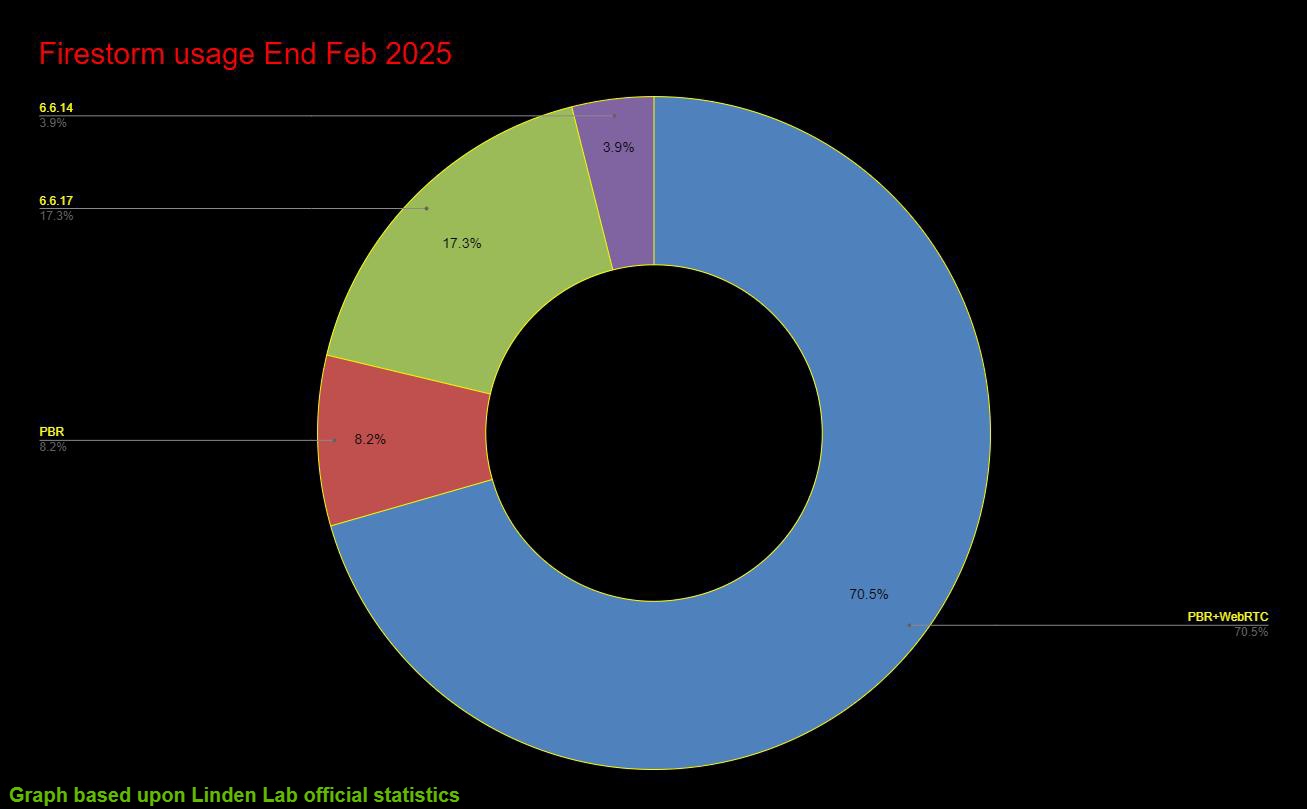
  • ;The viewer team has also been working closely with Firestorm to help them get their most recently release out the door, which contains all of the features and improvements LL have released over the last 6+ months, as well as including WebRTC (new Voice service) support.

glTF Importer

[Video: 20:30-21:38]

  • The aim with the glTF importer is to make things like importing meshes and materials as simple and straightforward as possible.
  • The initial alpha release of a viewer with the importer can be found on the Alternate Viewers page.
  • Mesh content creators and encouraged to try it out and offer feedback and to attend the Content Creation User Group to discuss the importer.
  • [Note: summaries of Content Creation User group meetings can be found here]. The more feedback given, the 9potentially) faster the importer can be stabilised and make its way through to a release viewer.

WebRTC

[Video: 21:41-24:33]

  • WebRTC (Real Time Communications) is the new Voice protocol for Second Life, replacing Vivox and the need for a Voice API plug-in in the viewer.
  • The WebRTC had been stalled as a result of the focus on performance coupled with a large (but now in substantial decline) number of users using a pre-PBR version of Firestorm (and thus without the necessary WebRTC support).
  • The current target is to have the entire grid running WebRTC by the end of summer 2025.
  • WebRTC voice quality should be superior to Vivox.
  • WebRTC also offers “practically endless” possibilities for feature development.
  • One of the first features to be included with WebRTC is that of moderation tools: these will allow land owners to set the rules for using Voice on their land and carry out Voice moderation – when people opt to be stupid in Voice.
  • Other options being considered for use with WebRTC included AI tools to allow things like instant translation, voice-to-text, text-to-voice, all aimed at expanding accessibility.

New Subscription Level

[Video: 25:06-26:47]

  • Pending a formal announcement, LL are thinking about how to make Premium Plus benefits accessible to a broader swath of users.
  • This includes the idea of offering a version of Premium Plus for creators [only?] without the weekly stipend payout, which would reduce the overall cost of having a Premium Plus account, whilst retaining all the other benefits.
  • This subscription might also be payable in Linden Dollars, although this may not be an option when it is initially launched.
  • Details will be made available on this once things are finalised / ready to be announced.


SL22B Meet the Lindens: Product Operations – summary

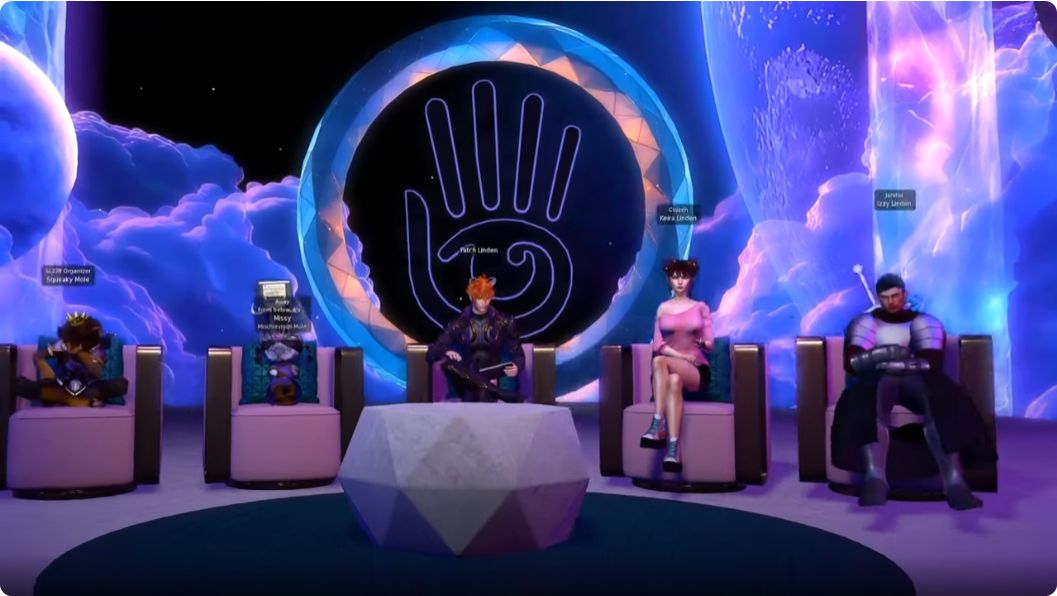
SL22B Meet the Lindens: Product Operations: (l to right): Squeaky Mole, Missy Mole, Patch Linden, Keira Linden and Izzy Linden
On Monday, June 23rd, 2025, Linden Lab held the first of the SL22B Meet the Lindens events, featuring personnel from the  Product Operations teams. The session was a live event  and featured:

  • Patch Linden – Senior VP of Product Operations, Customer Support & Trust & Safety.
  • Keira Linden – Manager, Customer Success & Trust & Safety.
  • Izzy Linden – Creative Producer.
  • Missy Linden – Linden Department of Public Works.

This is a summary of the majority of topics discussed at the session, and the official video of the session is embedded at the end of this article.

Table of Contents

For ease of reference, timestamps are provided to the relative points within the video where specific topics are discussed, allowing readers who prefer to listen to the comments directly to be able to do so. Note this is not intended to be a full transcript, but rather covers those items discussed which are liable to be of the most interest.

Linden Homes

Plans

[Video: 4:21-7:19 and as noted below]

  • LL recently released the Premium Aspen Ridge Homes and new styles for the Premium Log Homes.
  • As well as updating theme with new styles, the work also involves updating the back-end technology and improving the overall look of the Linden Homes.
  • The size of Bellisseria makes updating all Linden homes to things like PBR “a challenge”, but will be “chipped away at” as things progress. Updates will continue through the year.
    • [Video 16:19-17:52] Updates will be made on an ongoing basis, notably with PBR improvements, but it might not be possible to implement the seasonally changing landscaping across all of the Linden Home regions.
    • [Video 1:14:15-1:14:30] There have been requests from content creators to be able to hook-into the Linden Homes season changing capability, and this is being worked on.
  • By the end of 2025 the Linden Homes offerings should be: 10 Premium themes (with Trailers also supporting Plus); 5 Premium Plus themes and 1 theme of mixed Premium / Premium Plus.
    • This last mixed theme is scheduled for later in the year and will include “some exciting features”.
  • [Video: 1:16:57-1:19:39] Why does the Lab move on to a new theme of home before an existing theme is “finished”.
    • No theme is every really considered “complete”; while there is an initial map, the Lab is more driven by a mix of demand and diversity.
    • Demand: rather than deploy a “complete” build involving (say) 50 regions, only a handful might be initially released, and those then added to over time based on the popularity of the theme.
    • Diversity: additional themes are released whilst others are still available / not fully occupied to give users an broader choice of themes / styles.

Next Theme – Ridgewood Enclave

[Video: 5:37-6:40]

  • The next theme will be Premium Plus Homes and is “right around the corner” and will be offered under the name Ridgewood Enclave.
  • It will “be separate and kind-of its own thing” and be LL’s first foray into offering allowing commercial activities (which has long been requested).
  • Those obtaining a parcel within Ridgewood Enclave will have the option of devoting their parcel to a home, or splitting it between home and commercial.
  • The roll-out will likely be the homes first, followed by the ability to split parcels between home and commercial.

“Game of Homes”

[Video: 21:03-27:52]

  • Will the selection process for Linden Homes within a theme be improved to that the system does not re-select a parcel a user has already rejected in their current batch of searches (limited to 5 per 24 hours)?
    • Not really. The system is a) old; b) as random as it can possibly be.
    • However, it is recognised it will keep serving up specific parcels, even if far more are available, and may only move on when the parcels it keeps offering are all taken.
    • If a user finds they are constantly being re-offered the same parcel within one of their 5-picks periods, they can contact support, who can reset the user’s number of picks once for any given 24-hour selection period.
  • Premium Plus users have the ability to place a ticket with support to obtain an available Linden home parcel they would particularly like to claim (outside of the initial 24-hour after the release of a new theme).

Land

[Video: 7:43-14:30]

Discounted Homesteads for Premium Plus

  • There are no plans to offer discounted Homestead regions to Premium Plus account holders.
  • As a reminder, it is possible for Premium Plus users who also hold a region (or regions) to pay their tier to LL in Linden Dollars.

Land Capacity

  • The Lab is constantly experimenting with Land Capacity, and has tested Full regions with 40K-80K Land Capacity.
  • However, increases have to be considered alongside a host of other issues (load balancing across instances, impact of simulator performance, etc.).
  • As technology does improve, there may be opportunities in the future to increase Land Capacity as the Lab gains confidence in doing to.
    • IF this does come to pass, it will be announced through the usual channels.

Region Management and Region Server Options

[Video: 12:07-16:19]

  • Are there plans to offer region holders more autonomy over managing their regions?
    • LL has already added the option to restart regions to the holder’s secondlife.com dashboard.
    • Allowing regions holders to take other actions – renaming a region was given as an example – is under consideration, but no time frame as to when such options might be delivered.
  • Are more server options going to be made available for hosting regions?
    • LL already off a bonus Land Capacity option for Full regions and offer both the Event and Elite Event region products, all of which are also available as upgrades.
    • All three cost extra in tier, the Event and Elite Event regions are underpinned by more performant AWS hardware, allowing them to support more agents (avatars) per region, etc.

Themed Mainland Areas

[Video: 17:56-20:48]

  • Mainland has always had a “free to build” outlook, without the imposition of zones, covenants, etc., by Linden Lab.
  • A frequent request to the Lab is to offer such zoning / covenants within Mainland to allow people to build themed communities there.
  • This idea is seen as potentially having merit and benefits, and is something the Lab has considered, and tends to revisit as an idea. However, it does have complexities:
    • Should it be a full covenanted Mainland area (like Bellisseria, but without the Linden Homes)? Is it something on a smaller scale? Is it something primarily aimed at stopping specific activities – e.g. preventing ban lines?
    • How would the model work / impact private estate regions offering their own models and covenants, etc.
  • As such, the idea is not rejected, but it is not on the current roadmap, and if it to reach the point of being actively considered, then it would be a topic to bring back to the community for a more focused discussion and to gain feedback.

Support and Customer Success

Governance and Abuse Reports

[Video: 28:54-32:08]

  • Adult-rated content an images can be seen within moderate rated Mainland regions, often simply by using the road system. What is being done to remediate this?
    • It is acknowledged that this does happen, but given the size of Mainland, LL often rely on users reporting instances where it can be found / seen via the Abuse Report mechanism.
    • The above also applies to avatars behaving in appropriately as well.
  • The name of the avatar account filing any Abuse Report is never revealed to the subject of any subsequent investigation.

Support Ticket Responses / Support Availability

[Video 33:49-38:50]

  • There has been a delay in responding to support tickets. This has in part been due to a reorganisation of the support teams at the end of 2024, which resulted in a backlog of tickets.
    • The estimate was that in January, the backlog stood at 7,000-7,500 tickets, and this has since been halved, with the remaining number being rapidly reduced.
    • Older tickets in the backlog are being addressed in order to clear them as quickly as possible.
  • This, and the nature of more recent ticket that have been coming into the system, has meant that certain cases have taken much, much longer to resolve.
  • LL have been recruiting-in new support personnel, and has almost completed this, to make the customer Success and Trust and Safety teams larger than they were previously, by around 10 people.
  • Currently, most areas of support – tickets, live chat, phone – are back to within their 72-hour SLA requirements.
  • To further help with support matters, weekend support is being re-introduced as from Saturday, June 28th, 2025 (phone and live chat).
  • [Video: 1:21:51-1:23:25] Could live chat support be extended into the evening (SLT)?
    • There are currently no plans to change support hours.
    • However, as more of the new staff come on-stream, it is possible that times can be reviewed and adjusted to better meet the needs of users.

Support and Thunes (Tilia)

[Video: 39:17-42:38]

  • With the sale of Tilia to Thunes now complete (see: LL completes Tilia sale to Thunes: What you need to know) work is underway to streamline handling of support issues over things like cashing-out from SL between the two companies.
  • Those experiencing delays or issues should always submit a support ticket to Linden Lab first, to see if the issue can be addressed directly, and to allow LL to deal directly with Thunes.
  • Going directly to Thunes first can lead to greater confusion and delays.

Account Holds/ Banning Copybotters

[Video: 43:18-44:42]

  • Should someone who has had their account placed on hold receive notification that this is the case?
    • When an account is placed on hold, an e-mail is sent to the address specified in the account. This should include the hold notification and the reason for it, and a timeline as to when to expect access to be re-enabled (if available).
    • These notifications can end-up being steered towards spam or junk or promotions-type folders, so be sure to check these in case filtering has misdirected the e-mail.
    • Those who are sure they have not received any such notification, but have found their account on hold should contact Support.
  • [Video: 44:49-47:54] Can more permanent action be taken against copybotters – e.g. IP bans?
    • Instances of copying content should be reported by the creator of the original content, who can supply LL with all the relevant data (e.g. item location, UUID, etc.), and information on the original.
    • To assist in the process, and if required, LL might additionally request the creator to file a DMCA Notice, if they have not already done so.
    • In terms of preventing repeat offenders returning, LL is always evaluating how to better prevent this / slow repeat offenders from being able to quickly re-access SL.
      • This work also involves evaluating various tools that might assist with investigations into these types of issues.

Account Security

[Video: 49:55-52:50]

  • Malicious messaging, scam links, phishing e-mails are very much an issue.
  • This has been the subject of recent official blogs posts, and posts from bloggers like myself (see: Linden Lab: keeping your Second Life account safe).
  • In short:
    • Never share your account password with anyone.
    • Never supply your log-in credentials in reply to any e-mail, no matter how official-looking; LL will never ask you for them.
    • Be wary of any e-mails or links promising cheap or free Linden Dollars, they are most likely phishing traps.
    • Don’t click on links in group chats, IMs, etc., unless you are absolutely sure of their origin.
    • Strengthen your account with a strong password + the use of the Lab’s Multi-factor Authentication option.
  • LL is actively looking at tools to identify and prevent malicious activity within the platform, and making some basic changes to alert people to the risks in clicking on links, etc.
  • In addition, the Trust and Safety are looking to implement a new Trust and Safety User Group meeting to replace the old Governance User Group, so that matters around account security, etc. Can be discussed.

Payment and Billing

[Video: 1:04:34-1:07:00]

  • More payment options (e.g. Google Pay):
    • Payment and billing is now handled through Thunes, per the links concerning Tilia, above.
    • Thunes is looking to make additional payment options available to SL users, but which options in particular might be put forward is not yet clear, but will be checked.
    • Any new payment options agreed to between the Lab and Thunes will be announced on the Second Life official blog.
  • Can an option be provided to allow those paying tier directly to LL to do so early, if required (e.g. to cover for when they might be on vacation, or in hospital, etc)?
    • It would require extensive programmatic changes to achieve.
    • However, would appear to be a good idea, and a Canny Feature Request was requested via the Feedback Portal.

Lifetime Premium and Premium Plus Membership Offers and SL22B

[Video: 1:10:30-1:13:49]

  • There will be no Premium or Premium Plus Lifetime membership offered at SL22B.
  • Such offers are now being reserved for special events (e.g. with partners such as the American Cancer Society), where it is specifically possible to have the funds generated through such offers donated directly to charitable organisations.

General Questions

  • [Video: 32:31-33:26] Does Support hire people to operate remotely?
    • Depends on the position: Customer Success & Trust and Safety operate out the Atlanta offices, and so people working on those teams are based there; Product Operations and its related teams does have the potential for remote working.
  • [Video: 53:02-54:43] Removal of Voice capabilities from InfoHubs
    • This was a difficult decision, given InfoHubs are intended to be newcomer-friendly social gathering spaces.
    • However, too many people were using Voice within these places to harass and cause disruption, so in the interests of the larger community using the InfoHubs the decision was made to disable Voice.
    • The Lab will continue to monitor InfoHubs and may revisit this decision in the future.
  • [Video: 54:54-56:49] Do the Shop and Hop events complete too heavily with user-created shopping events held at the same time (e.g. Valentine’s Day, Christmas, etc.).
    • LL are always “cognizant” of the potential for such impact, but thus far has not directly received any complaints from the organisers of other shopping events or the creators attending them.
    • Shop and Hop is perhaps a broader tent than other shopping events, many of which are geared towards specific genres (sci-fi; fantasy; adult; etc.).
    • Shop and Hop is intended to be seasonally limited (with the special SLB Shop and Hop being an exception), and not driven with the intent to “blot out” other shopping events.
    • If people do feel it is harming other events, then feedback is welcome on that.
    • Creators selected for the Shop and Hop events are selected more-or-less on the basis of a lottery, not based on how quickly they apply.
    • Not everyone who applies can automatically be granted store space at a Shop and Hop, as they are limited by scale and manageability. For SL22B, for example, there were over 840 applicants – doubling the overall logistical requirements for hosting, running and managing the event.
  • [Video: 1:07:15-1:09:49] Is it possible to use the Name Change capability and not have the new name linked to previous names?
    • Currently no, for assorted reasons (e.g. to prevent someone doing something nefarious and then using the Name Change capability to hide their guilt).
    • The above was also something the community was worried about at the time Name Changes were introduced.
    • If attitudes have since changed, then the suggestion is to raise a Canny Feature Request was requested via the Feedback Portal.
  • [Video: 1:19:50-1:21:24] Will Cape Ekim (read: Saying farewell to the original Linden Homes – and a Second Life mystery?) be preserved when the old Linden Home mini-continents are retired?
    • Cape Ekim has been considered “very, very seriously” in terms of preserving the history of Second Life Linden Homes.
    • Once all the old Linden Homes have been retired, the plan is to make a special area paying tribute to them, and as such, Cape Ekim, “isn’t going anywhere”.
  • There was a final question on AI tool for translation services, and a full answer on the subject was deferred to the Operations and Engineering session.

Second Life Town Hall: AI & the Future of Our Virtual Community – summary

The Town Hall meeting space
On Friday, April 18th, Linden Lab Hosted a Town Hall meeting with Philip Rosedale to discuss AI & the Future of Our Virtual Community, defined in part by the Lab thus:

As Artificial Intelligence (AI) becomes increasingly present in both our physical and virtual worlds, the Second Life community is coming together for a Special Town Hall event to explore its evolving role and impact within our shared metaverse.

The meeting was livestreamed to You Tube, where the official video is available with transcript.

This following is a summary of topic, comments, presentations and responses in the order presented. Two videos are also provided:

  • The official livestream video (which ended 10 minutes before the end of the session, and which has some audio issues.
  • The video recording by Pantera Północy, to help overcome the sound issues with the above. Both are embedded in this article. My thanks to Pantera for providing it.
Table of Contents
  • Timestamps in the text primarily reference the official livestream video, with timestamps to Pantera’s video clearly denoted as such.

Philip Rosedale – Opening Statement

Welcome everybody to our Town Hall … This is our Town Hall on the growing, evolving role of Artificial Intelligence in Second Life. It’s good to see some many people here, I think engaging on this with us is one of the most important conversations of our time; how AI is shaping the metaverse; how we live with it here.
We’re not here today to make any announcements; this is a Town Hall, and we’re going to run it as one, and try to establish a pattern where we can do this again and again, when we need to, about things. … So we’re not going to announce anything, because we’re here to listen; this is going to be an open conversation. If governance or policy or software changes come out of this discussion, we can try and act on them – and we will. But at the start, we have no new announcements to make.

Brett Linden – Structure and Flow

[Video 3:06-5:42]

  • The meeting is a two-way dialogue and exchange.
  • There was a response to the opportunity for users to give pre-prepared comments [7 in all]; those people have up to 3 minutes to present them.
  • There were also pre-submitted questions and feedback [68 in all], and an aim is to address as many of those as possible, time allowing.
  • As this meeting is specific to AI, people were asked not to ask questions on other matters pertaining to / aspects of Second Life.
  • A request for orderly use of chat and open microphones.
  • LL recognises that AI is a polarising topic, but request that comments and feedback is kept constructive and solutions-oriented.

Philip Linden – Major Usage Areas for AI in Second Life

[Video 5:44-15:40]

Notes:

  • This includes actual and prospective uses of AI in SL, and some of the feedback from users submitted ahead of the meeting.
  • The breakdown of items is an arbitrary one on my part, to try to contextualise the uses.
AI Tools to Provide General Assistance
  • Finding duplicates in Feature Requests and bug-reports in the Feedback Portal [Canny].
    • This is the only way AI is being used in the Production environment, and is considered by LL to be a good addition to SL.
    • This takes the form of taking newly-entered items and – where appropriate – merging them with matching reports / requests also submitted via the Feedback Portal or held within the JIRA archive. This would be next to impossible to do at the human level.
    • All submissions to the Feedback Portal are still human-reviewed [triaged].
  • Providing assistance to new users in a range of tasks – directly answering questions, etc., as has been trailed in some Welcome areas.
  • Planned future use of AI:
    • Translation and closed-caption tools [voice-to-text and text-to-voice] – seen by LL and many users as the “number one” accessibility improvement feature.
  • Not in development, but worthy of possible consideration:
    • Assistance with Inventory management [user suggestion] – using an AI tool to help structure and organise large inventories.
    • The potential for AI tools to help with shopping on the Marketplace [e.g. to build a specific avatar look] by carrying out searches and presenting suggestions.
    • In-world text-to-content generation tools – using text chat to describe an object (including Animesh or an avatar) and having AI perform the basic construction.
    • Identifying harassment, bullying, hate-speech, etc., within text and/or Voice chat.
    • Finding cases of possible copyright infringement in a volume impossible for humans to do (albeit it with recognised potential issues).
    • As with the current physical world trend, the creation of a romantic AI-driven partner – with the recognised questions as to whether it would in fact be broadly compelling to people + the ethical implications.
Current Uses of AI Tools in SL (by Users)
  • Use of 3D content generation [e.g. Meshy] tools to create Marketplace / in-world content – recognised as being very contentious and the subject of great debate.
  • Use of 2D image generation tools [e.g. Midjourney] to create marketing materials for content in-world / on the Marketplace – also recognised as being very contentious and the subject of great debate, but seen as distinct from actual generative content creation.
  • Creating companion avatars [e.g. through the use of the Convai –driven Character Designer).
  • Creation of more dynamic Non-Player/ing Characters (NPCs), for use in role-play environments, etc.
“Philip’s Crazy Dream”
  • Having avatars “learn” through how they are used when logged-in, what they say, and have them “live on” in-world as a presence when the user logs-out.
  • Acknowledges it is a “crazy, fun, Black Mirror idea”, but wanted to include it as an illustration of where AI might potentially go.

Responses to Comments Submitted in Advance

[Video: 15:40-22:15]

  • Is Linden Lab currently training, planning to train, or knowingly paying another company to train any AI models with user-generated content [UGC] previously uploaded to Second Life, including but limited to: textures, mesh models, shapes, scripts and chat logs?
    • The Lab has yet not trained AI on any of the content in-world.
    • This is a community discussion on AI, and as such, given SL’s success has been in part based on the explicit and clear statement that Linden Lab does not own any UGC within the platform, training AI on such content is not seen as a decision LL can arbitrarily make.
    • There has potentially been unfounded concerns raised on this as a result of some misunderstanding of the role of the partner company to LL in developing the AI capability used within the Feedback Portal system, as mentioned above – however, this work only utilised public information within the Feedback portal system.
  • When will Convai bots [characters built using the Convai tool] be allowed on parcels in Bellisseria.
    • Bellisseria has been established as a community with a specific covenant which states No Bots. As such, properly marked Convai characters are not allowed in those regions.
    • If all [a majority?] Bellisseria residents want to have Convai characters within the regions, then LL are open to finding a way to taking a vote or similar on the subject and updating the Bellisseria covenant.
    • On a broader context, LL should be looking to residents / communities to make these decisions, rather than the Lab wants to do.
  • Bots and AI characters / AI content should be clearly marked as such (e.g. with the creator’s name).
    • Aware of a third-party blog survey in which 53% of respondents agreed with this idea.
    • Currently, there is no automated way to easily identify AI content, and such is the pace of AI development, that any tool or gadget created for this purpose is liable to be obsolete in 6 months.
    • Further, given SL is an open world where those coming in do not have to give personally identifying information, makes pursuing them in the event of a gross misuse of AI difficult.
    • However, LL is open to discussions on the issue and possible solutions.
AI Town Hall: Philip Rosedale on the stage

Resident Statements

Sailor Paü (HonePau)

[Video: 24:56-26:53]

When we come into Second Life we’re not just bringing an avatar we’re bringing our thoughts our moods our intentions. For a lot of us this place is more than just a game or a creative outlet it becomes emotional it becomes real in ways that’s hard to explain to some people outside of sight of it. So the question of whether AI can have a soul here isn’t just about machines or scripts, it’s about presence and about connection.
When I’m thinking about what makes something meaningful in Second Life it’s not about how detailed your mesh is or how smooth the animations are it’s about feeling something that it gives you and maybe a build something someone made years ago an old sim that you visit; a forgotten gallery; maybe a memory; and that makes us start to think about the soul so it’s not a religious sense necessarily, but in a deeper emotional way um the part of us that it makes us connect mostly.
An AI can learn to replicate things so it can speak in our tone it can recreate scenes, mimic dialogue, outfits, pictures, something you say … And I guess everyone’s just curious about where it can go next especially since we’re all singular individuals functioning separately. So maybe AI will continue to improve maybe it will eventually move and speak in a way that feels more human; but it doesn’t have that memory or meaning to it and it doesn’t ache; it doesn’t create from longing it doesn’t respond from presence or absence or carry something when you’re gone. So I guess that’s all I wanted to say overall when it came to Second Life AI and the soul, and being able to not detach that from yourself when it comes to wherever it goes.

William Gide – Questions

[Video: 27:20-32:35]

[Pantera’s Video: 29:03-34:18]

Note: the audio broke up quite notably during this part of the session, to catch the audio in full, please refer to Pantera’s recording per the above link.

  • Many don’t feel comfortable with talking to “counterfeit people” [AI-generated characters], so what is the Lab doing to allow people to easily identify they are interacting with a large language model (LLM) automated bot?
  • What’s being done to give land holders on Mainland the same ability to ban bots as available to private estates?
  • In regards to on-boarding new users with AI bot assistance: what failure scenarios has LL discussed that would convince the company that LLM bots, at the price-point you’re willing to pay right now, are not yet ready for user orientation?
Philip Rosedale Response
  • Better parity between region / parcel controls on Mainland to those on private estates: there is a number of open tickets on this in general (and specifically for Voice), and LL’s intention is to provide better moderation controls, and LL will look at open issues to help decide the order of implementation for better controls.
  • In respect of question’s and Sailor’s statement: little doubt that SL is all about human connection, so the importance of discussing and deciding what to do with LLMs that pretend to be people “is extraordinarily high”.
    • A question from this is how to distinguish people from AIs, given the noted fact that users are free to join the platform without giving any personally identifying information [which then might be used to distinguish human-driven avatars]. This presumption being that most people would not want to move away from this model.
    • This is a question that goes beyond LLMs masquerading as humans, and can include things like the sale of illegal items on the Marketplace.

Nodoka Hanamura-Nu Vaughn (Rathgrith027) – Text

[Video: 33:56-38:11]

[Pantera’s Video: 36:02-39:55]

For nearly a quarter of a century we have called this place home. We have created, we have cherished we have toiled and desired. We have yearned and developed ourselves in the fire of creation, from which Second Life,  Agni – our home, named after the very Hindu god of fire himself!
I have to ask you: what gives Agni its fire? What gives it the light that radiates across its grid? It is the creative minds of its children! Children who bleed, sweat, and toil in works of mind and body to create this world we call home, in every respect. Who use digital tools to create facsimiles of a reality we wish we could only have in the physical. To live lives that those bound to a chair and bed, those without voice, without sight, without sound, can live a modicum of a normal life!
And what life is it, if it is not made as a labour of love, a labour of advancing oneself? All things are done through struggle, both big and small – both inflicted on oneself and inflicted by others! What point, what purpose, is Agni to create – if a machine creates for us? Exists for us? Thinks for us?
These artificial intelligences should exist to make our work easier – to obsolesce the undesirable and most painful of the struggles of creation and production not obsolesce the work and plant a façade of life!  Do w not find it concerning that a machine creates for you, THINKS FOR YOU? At what point do we draw the line?
At what point do we say “no” to the repetitive slop that inundates our Marketplace? At what point do we say “no” to the manipulation of the advertisements of products sold to us? At what point do we say “no” to the people who have been blinded by the future and in insult to that all transhumanism is, have abandoned their humanity in blind pursuit of advancing technology.
I am not a Luddite! Neither are so many of us! But we know full well the perils of technology used without caution, without respect, without understanding of its consequences! I ask you, at what point do we draw the line? Do the Lindens draw the line? Do they draw the line in our mutual interest?
At what point can we even be certain that the person on the other side of the screen is a human, and not an algorithm that could be replaced with any other? At what point can we simply disregard creating for others and simply just create for ourselves, drowning our virtual home’s ability to produce a profit for not just its denizens that contribute to it, but its benefactors?  I ask you, at what point will the Lindens actually open their eyes and listen?!
It is now, or it is never, for this discussion, and the decisions which follow will steer the ship [and] either see us through another 25 years if we are lucky, or see our certain demise in the next 5 as creators and residents alike abandon our home as a result of the continuing degradation of it!
I implore the residents, and most of all the Lindens, when you speak here, when you make your decisions, do so not in your own damned self-interest, but in the interest of all of us. For I implore you all, if we let these AI run rampant, they will take our very humanity from us. I cede the floor.
Philip Rosedale Response

[Video: 38:16-39:11]

I think there are many ways in which AI has dangers for us and I’ve written about this a good deal [and] I’ll put one link in chat for those who don’t follow my Substack writing. This one is about avoiding homogenization and I think it’s a great example of why there are many ways in which we don’t want to use AI to manipulate our culture and ourselves. So just really, thank you for that; that’s a  very strong uh strong and appropriate perspective.

Ruby Maelstrom – Text

[Video:  39:54-42:15]

[Pantera’s video: 41:21-43:58]

I’m here to make a short presentation in support of the responsible use of generative AI in Second Life.
I have used AI as a starting point for many of my mesh objects. In fact, I likely would have never learned how to use Blender if I hadn’t had AI to provide some sense that I wasn’t starting from square one. Everyone, is not the same, but I personally needed that push to tackle such a complex learning challenge. After working alongside AI for a while, I now feel like I understand how to model in Blender, and I’m starting to learn how to rig mesh.
AI isn’t a replacement for humans in the creative process, but a tool like many others which can help people like me do things they may not have found the energy or motivation to get started on previously. It can be a starter for an engine of creativity.
Having said that, everything that I’ve made with the assistance of AI is marked so that people are aware that it was involved in the process. I believe that a practice of marking AI-generated content makes sense. 
I also use one of the Linen-provided AI characters in my café, and it’s a popular fixture which a few people actively seek out to have a conversation with. An LLM character can be welcoming and friendly, and is strongly affected by what kind of personality its owner has written for it. When someone doesn’t feel fully capable of interacting with another person, an AI character can be a useful social outlet. In this way, I see AI characters as a sort of accessibility tool. It is also clearly marked as AI in multiple ways, and interaction with it can be avoided quite easily.
Thank you for listening to my perspective on some of the ways that generative AI can be used positively in our shared digital world.
Philip Rosedale Response

[Video: 42:18-44:02]

  • Very much agrees with the point made.
  • Notes that he’s been asked what tools he uses – ChatGPT, Grok, etc., and how frequently, and that he uses them most frequently for programming (outside of SL).
  • Feels that AI tools help him as an experienced developer who is “very out-of-date with modern tools and technology, and he finds that AI is extraordinarily helpful in saving time using programming language to do something but would not otherwise be able to figure out the coding patterns, or which otherwise would take me a lot longer to complete.
  • >Also notes that he also uses GPT or DeepSeek to seek answers to questions when he feels it would be more efficient in answering than a Google search.

Hazel (Dolly Waifu)

[Video: 44:33-46:40]

  • Notes that content in Second Life represents the collective efforts of thousands and thousands of artists, creators and builders, many of whom have spent a lot of time learning skills in various tools and who depend on the platform as a source of income.
  • Many of these creators already face enormous stress and pressure to keep up with the myriad events, etc., which constantly require them to turn out new content, sometimes on a monthly basis, in order to just maintain a place in the market and their income.
  • Is concerned that generative AI merely ads to this pressure on a quantitative level, due to the volume of items that can be turned out with little or no effort / overhead.
  • Requests that LL do not lose sight of the effort of all content creators in SL and provide tools that help uplift the artesian nature of their work above the use of generative AI tools, and help them to protect and maintain their work and their income against a perceived rising tide of less qualitative but far more quantitative content.
Philip Rosedale Response

[Video: 46:4-47:31]

  • Would suggest that one of the big problems with AI isn’t that it can replicate human action in things like creating content, but the fact it can do so extremely easily and quickly.
  • Also notes that tech entrepreneurs try and paper over the negative impact to presented by AI with the excuse that people will just figure out new things to do, which is an unfair statement, given the fact AI can do things with orders of magnitude of greater speed and reduced cost.

Zeke Onyx

[Video: 47:43-52:59]

  • Speaks as a mentor and the operator of a community gateway on-boarding new users (Vidian Gateway).
  • Is not in favour of AI adoption within SL, although concedes it could be useful, but believes it is being embraced far too quickly and without regard for possible dangers.
    • Raises concerns that AI “mentors” in SL may (in keeping with William’s questions) have a high error / failure rate in helping new residents (e.g. being unable to tell if someone is wear one or three pairs of shoes).
    • Requests the need for Marketplace content filters to remove AI content from search results, etc., for those who do not wish to view it.
    • Beyond Second Life raises concerns about:
  • Provides feedback on various AI usage / limitations:
    • AI search engines outside of SL endangering people through providing incorrect information.
    • References generative AI tools that take images, text, music without consent and re-use without attribution.
    • Raises ethical concerns over AI bots data-scraping information – companies adding conditions to their terms of service that expressly allow them to scrape user data for AI training, taking away the right of choice for users.
    • Notes the environmental impact AI farms can have on the environment (power use, etc.).
  • States that use of AI is power without responsibility.
 Philip Rosedale Response

[Video: 53:00-56:53]

  • Offers a definition of “generative AI” for those who might not be familiar with it:
[It] is generally the title applied to those models called large language transformer models or stable diffusion in the case of image and content generation these models are notable in that they are effective only because they are trained on what need to be extremely large bodies of existing work and as just said, in many cases that work is not clearly allowed by those who have posted it. Indeed I am one of those who would agree that the assertion that information published on the public Internet can be freely used to generate new content by AIs –  I don’t believe that is obvious. I think that we need as a society to have a conversation about what the rules should be.
  • Note that this is also a conversion – about what the rules of re-use should be – for Second Life, even for data listed as “public” on the internet, as it is not clear what that means.
  • Acknowledges that the legality of training AI on text, images, etc., via common Internet trawl or the use of large bodies of data, is still “up in the air”.
    • As such, thinks the world should be “sensible” sensible about the extensive use of any such technologies while that debate is still on-going.
    • However, believes it is a debate beyond the scope of Second Life, and requires the input of the “whole world” and big corporations like Google, Facebook and OpenAI.
  • Agrees that it is not at all obvious that public data conveys the right for AI systems to take it and re-use it.
  • Notes that every one of these arguments / concerns has use-cases on both sides which are complicated and we need to bear out what’s going to happen, and be aware that if we don’t use some of these technologies in some ways, there may be negative impacts.
  • Agrees that existing LLMs are extraordinarily expensive and environmentally unfriendly – although, so does the Internet as a whole, with social media applications using “10 or 100 times” more electricity than current LLMs.

Rysa (lukaskw)

[Video: 58:46-1:03:11]

  • Wants to specifically discussion generative AI – specifically in the sense of content generation large language models, including but not limited to: images videos text and scripts (which touches on the use of Convai characters). It does not include machine translation or similar.
  • Would personally not see generative AI content in Second Life in any capacity, but understands a blanket ban is both unlikely and unenforceable.
  • Instead proposes a (hopefully) simple solution for two areas of SL: Marketplace and avatar Profiles.
  • Many have already commented on the massive influx of AI generated images and other types of content on the Marketplace being sold under all manner of names and categories.
    • Would love to see a means to filter such content out of the Marketplace experience for those not wanting to see it.
    • Would also suggest an enforceable requirement for generative AI content to be listed as such in a similar manner to mesh / partial mesh content.
  • Understand policing this would be a huge task and something not easily automated at this time; but feels the ideas should be discussed.
  • In terms of Profiles, with LL, various brands and residents all experimenting with AI powering full avatars, believes more than just relying on the goodwill of those writing the avatar’s Profile to indicate it is AI-powered.
    • S personally in favour of a more “heavy-handed” approach – there should be a clear, unavoidable denotation of an avatar’s status at a scripted agent of any kind – so not just AI powered avatars, but any scripted bot system.
    • Believes it has to be marked as such internally, so suggests the denotation should be made public through the Profile.
  • Believes the overall, residents of Second Life should be given the tools that they need to make informed decisions about the aspects of the grid that they wish to engage with, and tools such as those suggested would help in this.
Philip Rosedale Response

[Video: 1:03:29-1:04:40]

  • Suggests the idea of self-identified content on the MP should be submitted to the Feedback Portal (if not already done), as it is something LL could consider, noting that self-identification is not currently enforced.
  • Notes that subjective identification of AI-generated content can be just that: subjective, rather than accurate. Therefore placing such identification into the hands of a tool runs the risk of false positives.

Dax Dupont

[Video: 1:05:53-1:09:33]

  • Continues the discussion on generative AI and the ethical and safety impacts, citing articles about AI Chat bots used in the mental health sphere having a negative impact on those using them.
  • Asks whether LL are convinced that their use of AI in the first person [via bots] in SL is safe for users, and will not “hide behind the standard liability claim of’ oh we’re not responsible of whatever comes out of this object’, because they believe there is a “non-zero” chance people are going to get hurt.
Philip Rosedale Response
  • Points out that Second Life may be a pseudonymous environment, it is not anonymous, and that acts have consequences. There is a strong bottom-up governance trend.
  • Thus, in general, and regardless of the use of AI, anything that come out of an avatar is someone’s responsibility.
  • In terms of LL’s direct use of AI bots, emphasises that LL does not see itself as a content creator, so would not take responsibility like that; even tools like the Character Generator carry the statement that those using the tool are responsible for the content the character is creating.
  • Believes that to create a living world like Second Life has to be “deeply bottom up”, meaning everyone takes responsibility for the things they are doing, and any use of an LLM would have the same responsibilities applied to an avatar emitting its signal as it would to anything else some might say through their avatar.

Arrow Njarðarson Strong

[Video: 1:11:31-1:13:51]

  • Notes that he has used AI extensively to assist him in his personal life and with his Second Life as a creator / builder, including creating AI characters that have assisted him process his personal trauma.
  • Does not believe AI “steals”, but rather learns “patterns like a student exposed to a library of human thought, and then generates new unique content based on what we ask it to do”, and as such, believes the creativity rests with the creator, and that AI is a “brush”.
  • Notes that AI has personally allowed him freedom as a person living with anxiety and noise sensitivity, helping him to reclaim control of his time and energy, and his ability to dream again.
  • Suggests that AI is another way of learning from humanity’s shared knowledge, and is not something to replace us but to continue the ago-old process of the accumulation of wisdom.
Philip Rosedale Response

[Pantera’s Video:  1:15:40-1:16:08]

  • Notes that Arrow touches on the challenge that AI does demonstratively have very close copies of recognisable content, such as likenesses of Mickey Mouse or similar, because they are so common, it can reproduce them precisely – and that is one of the issues making AI such a complex topic.

Philip Rosedale – Closing Remarks

[Pantera’s Video: 1:16:08-1:18:44]

  • Notes that the meeting has been recorded as a matter of permanent record.
  • Believes that the discussion could result in proposals submitted by users through the Feedback Portal which might help / try to move things towards specific actions relating to AI in terms of code, governance and the SL Terms of Service.
  • Would like feedback on whether people think such town Halls are a good forum for discussions on matters relating to SL.
  • Feel as if that, given the state of the world at large, there is a potential to use Second Life as a demonstration of how self-governance can work.
  • He recognises that LL as a company are running the servers and the platform, and so have an “unfair” advantage that could be “difficult to give up” – but given projects such as open-sourcing the viewer, the open nature of the currency exchange, etc., – it might not be impossible.
  • Restates his belief that open dialogue of the kind seen at the meeting is desperately needed in the wider world.

Final Word – codyjlascala

[Pantera’s Video: 1:19:53-1:22:00]

Featured in the award-winning film My Avatar and Me, Cody made a moving statement at the conclusion of the meeting, spoken through his carer, but offered in the first person here.

Here is my opinion on AI. I think it would be a good thing, especially for people with disabilities, because it could help them to build things and stuff like that, which is very difficult for them to do. I have been trying to build a city in Second Life, and it has really not been easy, and AI could really help me do what I want to do. I love Second Life because it is a democracy and not an autocracy.

Videos

Official Video

Pantera’s Video

Linden Lab announces AI Town Hall with Philip Rosedale

The Town Hall meeting space

During the March 2025 Community Round Table / Town Hall meeting (which I have summarised here, complete with the official video of the event†), there was a peaceful demonstration by some Second Life users on the use of AI / generative AI within the platform. Such concerns have also been formulated elsewhere, such as this document outlining objections to AI on the Feedback Portal.

At the time of that meeting, Lab CTO, Philip Rosedale stated the company would look to hold an open Town Hall meeting to discuss concerns about AI, together with the opportunities it might present, and on community values around the use / presentation of AI in Second Life.

On Monday, April 14th, 2025, the Lab officially announced the event, now entitled Second Life Town Hall on AI & the Future of Our Virtual Community.

Meeting Date, Time and Location

Meeting Purpose

To quote from the official blog post:

As Artificial Intelligence (AI) becomes increasingly present in both our physical and virtual worlds, the Second Life community is coming together for a Special Town Hall event to explore its evolving role and impact within our shared metaverse.
This special event will include an open and interactive conversation focused on the opportunities, concerns, and community values surrounding AI in Second Life. We’ll be diving into topics that matter deeply to residents—from identity and authenticity to economic impact, creative ownership, and the future of social interaction.
This event will be hosted by Second Life founder Philip Rosedale, who will facilitate a lively discussion with the community on all-things-AI.

Topics under consideration for discussion are listed as:

  • How AI-generated avatars may affect identity and trust in social spaces
  • Generative AI and the Second Life creative economy.
  • Emotional manipulation, consent, and transparency with AI-driven characters
  • Use of AI in customer support and other non-in-world services
  • Balancing creative opportunities and responsible use of emerging AI tools

Participation

The meeting is open to all Second Life users and will  – I presume, as there was no direct mention of this in the official announcement when I read it – be livestreamed. Direct participation in the event is being offered in one of two ways:

  • Those who have questions / comments / thoughts on the potential / current use of AI in Second Life can submit such questions or comments for consideration during the event via this form.
  •  Those wishing to make an initial brief presentation or give prepared comments on the subject should submit a request via this form.
via Linden Lab

†While they are not officially representative of the Lab or these meetings, please note that I attempt to provide summaries of meeting such as these, and for a number of user group session within these pages.

March 2025 Community Round Table summary with video

March 2025 Community Round Table (l to r): Kyle Linden, Roxie Linden, Patch Linden, Grumpity Linden, Philip (Rosedale) Linden, Sntax Linden and Signal Linden
On Friday, March 14th, 2025, Linden Lab held a Community Round Table event entitled Enhancing Project Zero and the 2025 Roadmap. Attending the event and providing both updates and answering questions (most submitted in advance of the event) were:

  • Philip Rosedale, Linden Lab’s Chief Technology Officer.
  • Grumpity Linden, Senior Vice President, Product and Engineering.
  • Patch Linden, Senior Vice President, Product Operations.
  • Signal Linden, Engineering Director, Second Life Server & Viewer.
  • Sntax Linden, product lead, Project Zero.
  • Roxie Linden, leader developer, Project Zero and WebRTC.
  • Kylie Linden, Product Manager, Second Life Viewer
Table of Contents

The event was livestreamed, and that video is embedded below. However, this article is not intended to be a full transcript, but a summary of comments / responses. In addition:

  • Notes are not necessarily in chronological order; where it has appeared logical to do so, I have attempted to group comments under common headings.
  • So that the context of questions and answers might be fully understood, links are provided to the specific point in the video where they are made and the question can be heard.

Event Introduction – Philip Rosedale

[Video: 5:20-5:58]

So, what we’re going to do today, as Grumpity said, is we’re going to present a rough roadmap for the software development work we’re doing in 2025 … and after we give that overview, we’re going to respond to both pre-submitted and live questions and discuss it. And, of course, we’re going to change that which we’re about to say based on what we’re going to hear. We will continue to have roadmap session like this on at least a quarterly basis, so you can expect a second one in the second quarter. 

– Philip Rosedale, March 14th, 2025

Project Zero Updates and Discussion

Firestorm Zero

[Video: 6:00-10:05]

  • Firestorm Zero (FS0) is the name given to a collaboration between Linden Lab and the Firestorm team to provision the current release version of Firestorm (7.1.11) as a part of – but separate to – the Project Zero viewer-in-you-browser project.
  • Firestorm Zero is specifically aimed towards existing SL users (and those who have used SL in the past), particularly those on lower specification hardware, allowing them to have richer, ore graphically intense experience without the need for a costly CPU / GPU combination.
  • There is a nominal fee for this – L$250 for a 5-hour pass to access the service.
  • The number of available passes is limited – but the service should scale to meet the demand of passes purchased, with (hopefully) no waiting time beyond the initial log-in and streaming load times.
  • Issues with with service can be reported via the Firestorm Zero category in the Feedback Portal.
  • Related blog posts:

Project Zero Discussion

[Video: 10:06-14:22 + as noted in the bullet points]

Project Approach and Hopes
  • Making Second Life accessible through people’s web browser is a major initiative at Linden Lab.
    • It is recognised that there are many more people wanting to use SL (and see it at its fullest potential) than have the kind of high-end gaming PC set-up required to see SL at its best.
    • There is also the growth of portable devices – tablets etc., by which people prefer to access the web, and which may be seen as a preferable alternative for day-to-day use when updating from lower-specification PCs (unless there is a specific gaming interest, obviously).
  • As already noted, Project Zero now has a two-prolonged approach Zero itself, providing the Second Life Viewer (SLV), which is aimed toward incoming new users (who have an initial 4 hours on the service) and Firestorm Zero, providing streaming access to SL to existing users.
  • As a part of the work for Project Zero is being used to experiment with a number of new ideas around the UI and UI elements  [using, I believe, HTML and React] to help make SL more accessible to new users, whilst keeping the existing UI available.
    • [Video 59:04-1:00:48] The idea here is to offer new users the ability to interact with the viewer UI in new, easier ways, without limiting existing users / forcing them down the same path, as it is recognised that changing the UI and forcing users to re-learn how to use it can be as damaging as making new users learn a complex UI.
    • One such new way is that new users coming into SL via Project Zero current have [a to be expanded] Go menu, recommending around a dozen places for them to possibly visit as the browser is loading – and LL are able to monitor how well this is responded to.
  • [Video: 58:00-58:36] LL have already seen the willingness of new users to complete the sign-up workflow and then access SL through Project Zero is “many times higher” than those signing-up and then being directed to download and install the viewer – which had been expected as Project Zero was being developed.
  • Given the above, expect to see project Zero iterate and grow.
  • Overall, Zero – both the SLV and Firestorm – is aimed towards getting “more and more people” to access SL through their browser, and hopefully expanded the platform’s reach in acquiring new users.
    • Obviously, those already using high-end computers / gaming rigs at home will still be able to run SL locally and obtain all the performance benefits Zero offers to those on lower-specification machines.
  • [Video: 35:45-36:07] Currently there are options in Project Zero / Firestorm Zero which are not available (e.g. uploading textures, etc., saving snapshots to your local disk), hopefully some of these capabilities will become available within the streaming versions of the viewer as the projects are enhanced.
  • [Video: 36:21-37:32] Sntax Linden:
    • Project Zero remains in progress, and can be regarded as a separate project wo Firestorm Zero.
    • Project Zero remains free-to-use, but with limited slots to existing users and sessions limited to 1 hour.
    • The UI work is still in progress.
  • [Video: 38:06-39:09] Can Project Zero / Firestorm Zero be used on mobile devices / tablets? – Roxie Linden:
    • Yes, both will stream to mobile devices, however, given the small screen form, accessing the UI on things like smartphones is not user-friendly.
    • Both will stream to tablets [I’ve accessed Project Zero via an Android Tablet utilising a keyboard and mouse], however, there are some keyboard input issues which may limit this.
    • If there is interest in pursuing such access (allowing for SL Mobile), then then could be looked into.
  • [Video: 39:27-40:46] Requirements for streaming the viewer to a browser – Roxie Linden:
    • A connection suitable for streaming Netflix, Zoom, Google Meet, etc. (e.g. around 3Mbps down).
    • Any system with at least a dual-core CPU and 2Gb RAM, and with the likes of Chrome, Firefox, Safari or Edge installed.
    • Should even work using tethering to a smartphone [data costs allowing!].
  • [Video: 40:50-41:20] Voice support – Roxie Linden:
    • Vivox Voice is supported.
    • There are known issues with using WebRTC Voice, and these are being addressed, and should be fixed ahead of any switch-over to WebRTC.
    • Voice quality and interactions should be the same quality as on a desktop viewer.
  • [Video: 48:33-49:42] Streaming SL (both Project Zero and Firestorm Zero) is currently running out of the West Coast of the United States. However, plans are in-hand to start using other Amazon end-points, most likely staring with Éire (the Republic of Ireland).
  • [Video: 1:17:59-1:18:31] It should be possible to provide support for game controller through Project Zero / Firestorm Zero; support for the likes of the 3D Space Navigator will have to be investigated.
Cost and Fees
  • Currently, use of the official viewer through Project Zero remains free, but is focused on incoming new users over supporting existing users.
  • As I noted in Project Zero Update: Firestorm in your browser as well] Streaming the viewer from Amazon services is currently costing Linden Lab around US $1.75 per user per hour, which is still well above the L$250 for 5 hours initially being charged for Firestorm Zero.
  • This means that the Lab is running both aspects of the streaming service at a loss, and this may come to affect pricing down the road.
  • However, there is confidence that the costs involved in streaming in general can be reduced in a number of ways such that streaming can be an affordable option for those users who wish to use it in preference to their own hardware in order to gain that better experience.
    • [Video 34:45-35:26] One of the reasons streaming SL is so expensive (to LL) right now is because it is being provisioned through Amazon’s high-end GameLift service. Philip noted that other service are available, and this will help reduce pricing.
Data and Content Security

[Video: 1:12:45-1:14:59]

  • Neither Firestorm Zero nor Project Zero place user or other data on the browser which might be accessed by third parties. Both are streamed services, just like Netflix, et al, which means they are essentially a video stream with no useful data to be scraped.
  • The connection between the browser and the server supplying the viewer data is also somewhat more secure that connecting view a desktop viewer, as the connection is more akin to a VPN (e.g. the IP address associated with the viewer instance will be that of a server in Amazon’s cloud).
  • Using the viewer through a browser in this way also means that it is not possible to copybot  / rip content through the streaming viewers, as no object data is actually being downloaded and stored locally, as is the case with the desktop viewer.

SL Mobile

Notes:

  • The Mobile User Group meeting is generally held on last Thursday of every month at 12:00 noon SLT (Voice and text) at Campwich Forest.
  • I provide meeting summaries in this blog.

[Video: 15:19-17:49]

  • The interest in SL Mobile from existing users has been high. However, thee has been an organic increase in interest with SL Mobile from new users.
  • The interest from new users has been something of a surprise, as SL Mobile hasn’t been developed with new users primarily in mind – those who have followed the project know that it has been developed along the lines of being more of a companion app for existing users / returning users to use alongside the viewer as a means to access SL when away from the latter.
  • The focus remains on trying to provide existing users with as much access to Second Life as possible through the Mobile app, but at the same time, there has been a swing towards helping new news to engage with SL through the app as well [hence why the early addition of the new user workflow in January 2025?].
  • Bug fixing and feature building are being processed as quickly as possible.
  • Mention of the current (at the time of writing) Mobile Millions challenges and log-in Streaks rewards.

Server and Viewer Updates

Notes:

  • Simulator User Group meetings are generally held very Tuesday at 12:00 noon SLT (text only), and at this location. I offer summaries of these meetings (together with videos by Pantera Północy).
  • Viewer development is discussed at the Third Party Developer (TPVD) meetings  (Voice + text), the Open Source Developer meetings (text only) and at the Content Creation User Group (CCUG) meetings (Voice and text).
    • I provide summaries of the TPVD meetings and CCUG meetings together with videos by Pantera Północy.
    • Dates and times for meetings are available through the SL calendar.
    • Note that the Open Source Developer meeting and the TPVD meeting might be merging, and the venue / time / frequency of one or both change as a result.

General Discussion

[Video: 17:59-22:05]

  • The Lab is attempting to move both simulator and viewer updates to a monthly release cadence.
    • For the simulator code, this includes moving a release through the Release Candidate channels are required, through the a release on the Main channel.
    • For the viewer this includes taking each release through the familiar iterative release candidate process prior to promoting it as the de facto release viewer. However, this will generally be on a per viewer release, rather than having multiple release candidates in flight as has been the case in the past.
  • The idea is to have each release focused on a usability improvement and and “major initiative” [feature, etc.].
  • Currently the three core areas of usability issues are seen as being:
    • Avatar loading (without issues of items failing to load, meshes flapping around in the air prior to being correctly rigged, etc.).
    • The viewer start-up and world loading time overall.
    • Smoother regions crossings (particularly in vehicles).
  • Additionally, releases will also be focused on addressing issues, etc., raised through the Feedback Portal and which receive user upvoting.
    • Part of this work will involve more regular updates to the Roadmap section of the Feedback Portal.

WebRTC

Note: officially announced in March 2024, WebRTC (RTC=”real-time communication”), is the replacement for the Vivox Voice component of Second Life.

[Video: 22:19-24:42]

  • Work has been stalled in completing the roll-out for two reasons:
    • Getting a critical mass of users onto versions of the viewer supporting WebRTC functionality [essentially getting users to run a PBR-enabled version of the viewer].
    • As the lead developer on the project, Roxie Linden has been heavily involved in the Project Zero work over that last couple of months, and so has not been able to focus on WebRTC.
  • [Stats from Linden Lab and published by Firestorm, indications are that overall, given that Firestorm has the largest percentage of Second Life viewer users, that critical mass of users on WebRTC supporting viewers is fast being reached.]
Breakdown of Firestorm users by viewer version. note the 70%+ now on WebRTC-supporting versions. Credit: Linden Lab / Firestorm viewer
  • As it is, multiple regions on the Main grid (Agni) are supporting WebRTC, and support tickets can be filed by region holders wishing to have WebRTC enabled on their regions.
  • WebRTC should provide a much higher fidelity Voice service  compared to Vivox [and will end the viewer’s reliance of a third-party “black box” plug-in to run Voice].
  • As it is directly supplied by the Lab, WebRTC will also allow rapid iteration of voice-related capabilities, such as:
    • Voice captioning – see what people are saying in Voice as closed captions a-la you tube.
    • Improved translation capabilities.
    • New voice changing / morphing options.
    • Better voice moderation / control at the parcel level.
  • There is no set time frame for switching solely to WebRTC support on the back-end. However, in the March 14th, 2025 TPVD meeting, Signal Linden indicated LL hope to get to it sooner rather than later.

Viewer Updates

[Video: 26:05-27:08]

  • Recap on the promotion of the ForeverFPS viewer, with its focus on performance improvements to de facto release status, with the following noted:
    • Water Exclusion Surfaces which allow Linden Water to be “hidden”. At the time of writing, WES can only be enabled via scripted means (and support legacy invisiprim scripts insofar as “hiding” Linden Water is concerned), but but new UI elements are coming to the viewer to allow them to be created from there. See my summary on WES functionality.
A very(, very) basic example of a Water Exclusion Surface hiding Linden Water
    • Improvements to managing VRAM use in the viewer (e.g. be fixing the maximum resolution of the in-world view).
  • [Video 29:19-31:50] Signal Linden:
    • The faster release cadence is seen as important in ensuring Second life receives regular updates and to support code contributions from the open source community, rather than having them languishing for months or years. It does not mean that LL will no longer be taking on large projects, but rather will be developing them more responsively.
      • One example of this is the re-focusing of efforts within the glTF project to provide a means to upload glTF mesh model using the existing mesh upload floater in the viewer in order to counter Blender announcing the deprecation of COLLDA mesh support.  – see my summary of the Thursday, March 6th, 2025 CCUG meeting for more.
    • To further support contributions from the opensource community, there is a proposal for revamping the open source programme to make it more streamlined, accessible and responsive.
  • [Video: 53:50-56:31] Further performance improvements – Signal Linden:
    • The (at the time of writing) current viewer release – ForeverFPS – has numerous performance improvements.
    • The next release [viewer 2025.03, still in development] will have further performance improvements within it .
    • There is also an internal (to LL) version of the viewer for native support of Apple Silicon which significantly improves viewer performance on that chipset. This viewer is likely to go to Project Viewer status, but will have limited functionality initially, due to the need to rebuild many of the third-party libraries used to build the viewer, together with issues around the viewer being able to recognise navmesh.

SLua – SL Lua Scripting

[Video: 27:15-29:09]

Promoting Second Life to Creators as a Revenue Earning Platform

[Video: 1:06:30-1:09:05]

  • SL is one of the most capable platforms for revenue generation among content creators, offering much lower costs to creator in terms of fees etc., when compared to other platforms such a Fortnite and Roblox. will it be promoted as such?
  • Yes. Marketing efforts have restarted, and one aspect of this is on the subject of content creation and revenue earning.
  • In December 2024, VenturBeat published Linden Lab has spent $1.3B building Second Life and paid $1.1B to creators (which I summarised here), in which it was noted creators have a greater chance of earning more through SL than Roblox, despite the latter’s much larger user base.
  • Linden Lab is also attending the 2025 Game Developer Conference (March 17th-21st, 2025) in San Francisco to promote Second Life and the ability for content creators to earn money through the platform.

In Brief

  • [Video 4:08-5:19] The meeting was attended by those protesting the use of AI in Second Life, both in terms of AI generated / modified advert (e.g. for products listed on the MP), art, and LL’s introduction of the AI character generations project.
    • There is a document outlining objections to AI on the Feedback Portal.
    • Philip Rosedale indicated he will look to hold an open forum / debate on the use of artificial intelligence within Second Life, at which the pros and cons – and user concerns – can be discussed. He urged those with concerns to formulate their thoughts – including constructive recommendations on how AI should be handled within SL – and attend that event, when announced.
    • [42:22-44:24] Philip additionally noted that there are a range of aspects to the use of AI within second Life – such as the use of AI toolset in support of SL, such as with re-time translation – which are beneficial; but there are broader issues to address (through the proposed “AI Town Hall”) on the use of AI in-world. He also acknowledged there a multiple questions around AI that need to be address more broadly.
  • [Video: 24:56-25:40] Second Life Community Discord Server will be opened to all users, most likely during the week commencing Monday, March 17th, 2025. User will be able to use Discord Connect to link their SL accounts to the server and access all of the available channels.
  • [Video: 44:48-46:44] After the contraction of the Support and Trust & Safety teams late in 2024, these are again being expanded, with new hires coming-in. As this happens, support hours should again be increased to provide weekend support.
  • [Video: 51:23-53:30Multi-factor authentication (MFA):
    • A reminder that MFA has been implemented across all of LL’s web services (Dashboard, Marketplace, Project Zero or Firestorm Zero web pages) for those opting-in to the capability.
    • Encouragement was given to make use of MFA as an added layer of account protection for all those currently not using it.
  • [Video: 53:53-54:35] What happens to a Second Life Business if it is cleared of DMCA wrongdoing?
    • Once the legal team has completed investigations and made a determination they there is no infringement, then the business and the associated account is “cleared”, with the case closed.
  • [Video: 1:09:10-1:10:54] Chat and Message Persistence Between Viewer and App:
    • Messages received on SL mobile are not carried over to the viewer (and vice versa), which can limit usage of the Mobile app in favour of the viewer providing a single place for message receipt and recall.
    • LL are working on better Chat persistence across the various platforms, which should allow for this to happen in a number of ways (Push notification, IMs, chat history).
    • One reason for this taking time to implement is due consideration of security, encryption, and protection of chat and messages in the cloud.
  • [Video: 1:11:24-1:12:14] Linden Homes:
    • The next Linden Home theme – “Alpine” – will be for Premium subscribers and will feature options “never seen before”.
    • A reminder that a selection of 512 sq m Linden Home styles are now available to Plus subscribers (see here for more on this).

User Group Meetings

There are numerous User Group meetings held in-world each month by Linden Lab, which focus on a range of subjects – simulator development, viewer development, Marketplace and web services, land, content creation, skill gaming, etc. The meeting are open to anyone to attend, with some held in text, some in Voice and some a mix of both. Questions on the topics they cover are welcome, and further details can be found as follows: