Space Sunday: of “planet” and planets

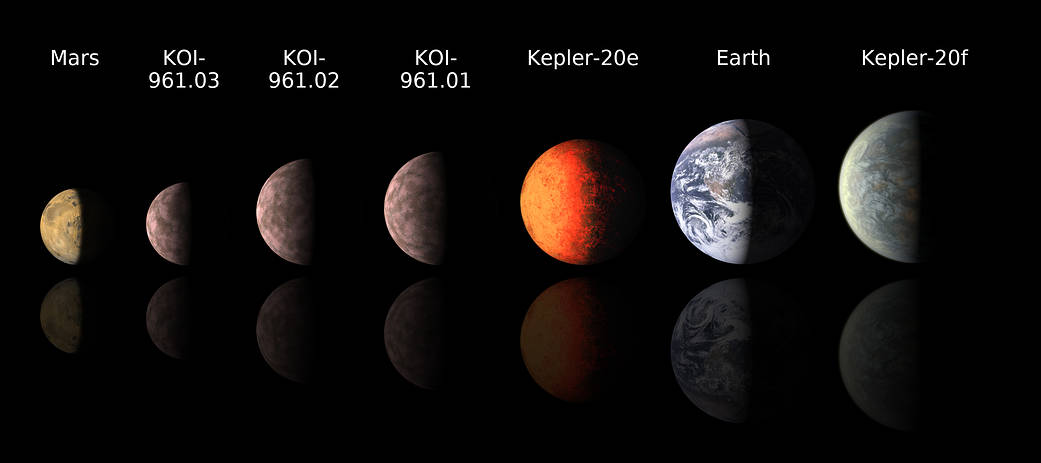
Celestial bodies from our solar system and beyond – although technically, only two meet the current IAU definition of the term “planet”. Credit: NASA

What is a “Planet”? This might sound like a catch question, but in fact it has been the cause for debate for almost two decades at least, and its roots go back as far as – wait for it – 1801.

Up until the start of the 21st century, everyone was reasonably comfortable with the idea of what a planet was: we’d discovered a total of nine making their way around our star over the previous centuries, including the somewhat oddball Pluto. The general (and informal) agreement was that a “planet” was that of a large, roundly spheroid / round object moving in an orbit around the Sun.

Then, in 1801 Ceres was discovered. Whilst tiny by comparison to the like of our Moon, it was nevertheless almost circular in shape and bumbling around the Sun in its own orbit. Hence, many argued, it was a planet – that in fact it was the so-called “missing planet” believed to exist between Mars and Jupiter. However, by 1851 the discovery of yet more bodies within this region of space had pushed the total number of “planets” in the solar system to 23; the eight large planets of Mercury through Neptune, and all these “little” planets, many of which weren’t entirely circular in shape (but others, like Juno, Vesta and Pallas) came pretty close. It was also clear the number was liable to keep on growing.

Thus, astronomers started cataloguing these smaller bodies in their own right and, effectively, the idea of the asteroid belt was born, with Ceres becoming the first asteroid within the belt to be discovered. Problem solved; not even Clyde Tombaugh’s discovery of Pluto in 1930 didn’t upset this approach too much, nor the definition of “satellite / moon”. But then in 1978, someone had to go and find Pluto’s Moon Charon, a body so large, it broke the traditional view of a “moon”, coming close to being a twin planet to Pluto. Then, in 2005, Eris was discovered, and the wheels really started coming off the wagon.

Whilst two other relatively large, “planet-like” Kuiper Belt bodies had been discovered orbiting the Sun – Quaoar (2002) and Sedna (2004) – prior to Eris, they were comparatively small and easy to lump into the “asteroid” container alongside Ceres. But Eris turned out to be around the size of Pluto, and more massive; so, either it was a planet (and was actually referenced the “tenth planet” of the solar system immediately following its discovery) – or Pluto wasn’t a planet. Cue astronomical bun fight.

Planets, dwarf planets, satellites, oh my! Credit: M. Özgür Nevres

The fight between classifying Eris as a planet or downgrading Pluto to “not a planet” became quite heated relatively quickly, prompting much debate within the International Astronomical Union (IAU) which wrestled mightily with the question of how all the various celestial bodies in the solar system should be formally classified – starting with was should be meant by “planet”.   In the end, and possibly fearful of the sudden blossoming of planetary bodies within the Kuiper Belt following the discovery of Eris, as had been seen 200 years ago with the asteroid belt following the discovery of Ceres, in 2006 the IAU settled on the side of downgrading Pluto’s status from “planet” to “dwarf” planet.

In doing so, the organisation also sought to ratify the term “planet”, eventually settling on three criteria, published under what id now referred to as Resolution 5B, as found within GA26-5-6. Clause 1 of which holds:

Is it a dwarf planet? A TNO? A Plutoid? An Euler Diagram showing the IAU Executive Committee conception of the types of bodies in the Solar System during the 2006 General Assembly. Credit: Holf Weiher

A planet is a celestial body that:

  • is in orbit around the Sun;
  • has sufficient mass so as to assume hydrostatic equilibrium (aka “a round shape”);
  • has “cleared the neighbourhood” around its orbit.

The decision caused (and still causes) a lot of emotional upset where Pluto is concerned, and this masked a potentially bigger issue with Resolution 5B-1: be defining a planet and a “celestial body orbiting the Sun”, it immediately excluded the term being formally used with regards to planets orbiting other stars.

Oops.

In fairness, while astronomers have been locating exoplanets since 1992, by the time the IAU arrived at their definition in 2006 the number discovered was measured in the handful, so considering them didn’t really factor into the IAU’s thinking. Since then, of course, things have changed dramatically: we’re fast approaching 6,000 planets known to be orbiting other stars.

Again, being fair to the IAU, they did try to address the issue of exoplanets (the term simply means planet outside the solar system, rather than having any meaningful definition) in 2018. However, the effort never got beyond the “working” phase. In fact, the 2018 discussions revealed that even when applied to just the solar system, Resolution 5B-1 was pretty woolly and unquantifiable; something better was needed. Things weren’t much better by the time of the next IAU General Assembly in 2021.

Potentially, the best way to offer a properly unquantifiable definition for planets wherever they might be found, do this is via mathematical modelling, removing any subjectivity from how both the term and planets are defined.

This is precisely what a team from the USA and Canada has attempted to do. AS they note in their study, published in The Planetary Science Journal, they sought to break down the the potential taxonomy of planetary bodies – both solar and extra-solar – in terms of critical physical characteristics: mass, density, etc., local dynamical dominance within their orbits, the bodies they orbit (single stars, brown dwarfs, binary systems, etc.). Using mathematical models to quantify these measures, they have been able to show that celestial bodies tend to fall in to distinct clusters, and this has enabled them to develop a far more quantifiable definition of the term “planet”, thus:

A planet is a celestial body that:
a.       Orbits one or more stars, brown dwarfs or stellar remnants and
b.       Is more massive than 1023 kg and
c.       Is less massive than 13 Jupiter masses (2.5 x 1026 kg)

This definition is due to be presented at the 32nd IAU General Assembly being held in Cape Town, South Africa in August. If adopted, it will establish a meaningful framework by which planets, dwarf planets and natural satellites – wherever they might be found – can be quantitatively defined in  manner that could objectively, rather than subjectively, help shape our understanding of the universe and our place in it.

VIPER Cancelled

On July 17th, NASA announced it has cancelled its Volatiles Investigating Polar Exploration Rover (VIPER) mission due to cost increases and schedule delays.

Roughly the size of a golf cart (1.4m x 1.4m x 2m), VIPER was a relatively lost-cost (in the overall scheme of things) rover charged with an ambitious mission: to carry out extensive prospecting the permanently shadowed areas of the Moon’s South Polar Region, seeking resources and mapping the distribution and concentration of water ice. However, the project has been repeatedly hit by delays and increasing costs, both with the rover (built by NASA) and its Griffin lander vehicle, supplied by commercial space company Astrobotic Technology Inc., and which was due to fly with additional payloads to the rover.

VIPER (Volatiles Investigating Polar Exploration Rover) was to be robotic lunar rover tasked to prospect for natural lunar resources within a permanently shadowed region near the lunar south pole. Rendering credit: NASA

In 2022, these delays resulted in the mission being pushed back to a late 2024 launch date from a planned 2023 date. This was then further pushed back to September 2025. At the time this decision was made, the overall cost for the rover had risen from US $250 million to US $433.5 million and would likely exceed US $450 million by the 2025 launch date. More recently, a review found that whilst the rover is largely completely, it has yet to undergo environmental testing and still lacked proper ground support systems, noting that delays with either of these could quickly eliminate any chance of meeting the 2025 launch date and push the costs up even further.

At the same time, the cost to NASA for the development of the Griffin lander has risen by over 30% (from some US $200 million to US $323 million). These are likely to rise even further as a result of NASA’s requested additional testing of the lander in the wake of the January failure with Astrobiotic’s smaller Peregrine One lunar lander, test which could have also impacted the lander’s readiness for a 2025 launch.

VIPER being assembled in a clean room at NASA’s Johnson Space Centre, Texas. Credit: NASA

The problem here is that the VIPER mission can only be launched at certain times in order to capitalise on favourable lighting conditions in its proposed landing zone; any delay beyond November 2025 for mission launch would therefore mean the mission could not take place until the second half of 2026. As a result, overall costs for the mission could be nudging US $1 billion by the time it is launched. Given NASA’s overall science budget for 2025 has already been tightly constrained by Congress, this was seen as unacceptable by the review board, as it potentially meant putting other missions at risk. Ergo, the decision was made to cancel VIPER.

That said, the Griffin lander flight to the Moon will still go ahead with NASA support, allowing it to fly its planned commercial payloads, together with a payload simulator replacing the rover. In addition, NASA is also seeking to get the rover to the Moon by offering it to any USA company and / or any of NASA’s international partners willing to fly it to the Moon at their own cost. If no such offers are received by August 1st, 2024, then the rover will be dissembled and its science instruments and other components put aside for use with other missions.

NASA Confirms Use of SpaceX for ISS Deorbit Whilst Suspending  Falcon 9 Station  Launches

On July 17th, 2024, NASA supplied further information on the planned use of SpaceX hardware to de-orbit the International Space Station (ISS) when it reached its end of life in 2030, whilst simultaneously effectively suspending SpaceX launches to the space station pending its own review of Falcon 9 following the recent loss of a Falcon 9 upper stage and its payload.

NASA originally awarded the contract for the United States Deorbit Vehicle (USDV) – the vehicle that will physically de-orbit the ISS – was awarded to SpaceX on June 26th, 2024 with little in the way of specifics, other than NASA aimed to obtain the vehicle for no more than US $843 million. In the more recent statement, NASA confirmed that SpaceX will provide NASA with an “enhanced” version of their Dragon vehicle, comprising a standard capsule with a lengthened “trunk” (the service module providing propulsion and power) equipped with a total of 46 Draco motors and 16 tonnes of propellants.

An artist’s impression of the enhanced SpaceX Dragon docked with the Harmony module on the International Space Station and using its Draco engines to de-orbit the station. Credit: SpaceX

Under NASA’s plans, the USDV will be launched prior to the final crew departing. At this point, the station’s orbit will be allowed to naturally decay to around 330 km, at which point the last crew will depart. The station’s orbit will then be allowed to decay for a further six months prior to the USDV being used to orient the ISS for re-entry in a manner that will see much of the station burn-up in the atmosphere, and what survives falling into the south Pacific.

The contract awarded to SpaceX is for the Dragon vehicle only, not for its launch or operation; on completion, the vehicle will be handed over to NASA to operate. However, given the 30-tonne mass of the USDV and the fact it is a Dragon vehicle makes the SpaceX Falcon Heavy a strong contender as a potential launch vehicle (unless superseded by the company’s Starship / Super Heavy combination by the time USDV is ready for launch).

In the meantime, NASA has suspended all Falcon 9 launches to the ISS pending their own reauthorisation review in the wake of the July 11th loss of a Falcon 9 upper stage and its payload of Starlink satellites.

That loss is already under investigation on behalf of the US Federal Aviation Administration, however, on July 17th, NASA confirmed it will carry out its own review once the FAA’s work in concluded, although preparations for upcoming flights – notably a launch of a Cygnus resupply vehicle via Falcon 9 due on August 3rd and the launch of the Crew 9 rotation due later in August – will continue.

Screenshot from the webcast of a SpaceX Starlink launch on July 11th, 2024, showing a build-up of white material on the upper stage of a Falcon 9 rocket. This is thought to be ice from a liquid oxygen propellant leak, and may have led to the loss of the vehicle. Credit: SpaceX

The suspension of operations is normal when a launch vehicle utilised by the space agency is involved, and NASA made it clear that none of the crew currently on the ISS are in danger or at risk of running out of supplies.

SpaceX has sought to limit the impact of the FAA investigation citing that given the fault occurred in the vehicle’s upper stage and when it was entering orbit, it posed no threat to public safety and so other launches should not be discriminated against as a result. However, NASA has indicated that even if the FAA agreed with SpaceX and allowed Falcon 9 launches to continue during the mishap investigation, the NASA suspension of operations would remain in place until such time as its own review has been completed.

Crew safety and mission assurance are top priorities for NASA. SpaceX has kept the agency informed as it works closely with the Federal Aviation Administration throughout the investigation, including the implementation of any corrective actions necessary ahead of future agency missions. NASA and its partners also will implement the standard flight readiness review process to ensure we fly our crew missions as safely as possible.

NASA statement on ISS-related Falcon 9 launches in the wake of the July 11 loss of a Falcon 9 upper stage

Space Sunday: Mars ISRU and a water world

A two-stage Earth Return Vehicle of the kind proposed in the Mars Direct mission outline (1990) on its way to the surface of Mars following entry into the Martian atmosphere, protected by its (still attached) heat shield. Mars Direct proposed this vehicle used in-situ resource utilisation (ISRU) to fuel itself for an eventual return to Earth with a 4-person crew aboard. Credit: The Mars Society / Orange Dot Productions

In 1990, engineer-scientists David Baker and Robert Zubrin published Mars Direct, a paper outlining a relatively cost-effective means to initiate the human exploration of Mars. The paper was primarily written in response to NASA’s own 90-Day Study on Human Exploration of the Moon and Mars, a sprawling document rolling out of George H.W. Bush’s Space Exploration Initiative (SEI), a plan which NASA estimated would cost some US $500 billion in 1989 terms, and require NASA’s budget at the time be increased by 50% (from US $11 billion to $16.6 billion annually), and then adjusted for inflation every year from then on for some 30 years – and that was without accounting for the funds NASA would need to carry out all its other programmes.

While the 90-Day Study (as it was abbreviated to) outlined the means by which the United States could achieve a permanent presence in low-Earth orbit, then on the Moon before going onwards to Mars, it contained much within it that was nonsensical or at least highly questionable in terms of reaching Mars with crewed missions. However, it was the price tag that very quickly killed it – no surprises there.

Mars Direct, by contrast – whilst also controversial in several areas – was written to provide NASA with a means to go, as the name implied, directly to Mars in a manner that could be achieved in a finite time frame (10 years from project initiation through to the first crew setting foot on Mars) and at a cost that would not break NASA’s budget (and additional US $1 billion a year). A key idea of the outline – and one greatly expended upon by Zubrin in his 1996 book The Case for Mars: The Plan to Settle the Red Planet and Why We Must – was that of ISRU (in-situ resource utilisation), the use of resources available on Mars that could be leveraged to both reduce the complexities of the mission and also provide the means for an outpost on Mars to have a degree of self-sufficiency in several key areas.

This recognised that Mars has a lot of natural resources that could help support human missions to Mars – notably, but not limited to – the planet’s carbon dioxide atmosphere, which Zubrin demonstrated could be leveraged to produce vehicle propellants, water and oxygen using processes based on the Sabatier Reaction. Zubrin demonstrated this capability at his own facility in Colorado, and NASA has more recently tested it for oxygen production using their Mars Oxygen In-Situ Resource Utilization Experiment (MOXIE) on the Mars 2020 rover, Perseverance.

The Mars Oxygen In-Situ Resource Utilization Experiment (MOXIE) experiment, carried aboard the Mars 2020 rover Perseverance, tested the idea of producing oxygen from the Martian atmosphere. Credit: NASA / JPL

Zubrin also pointed out that parts of the Martian surface are potentially mineralogically rich, and these minerals could be put to a wide range of uses in support of human operations on Mars, including producing fertilisers for growing food, producing plastics, ceramics and construction materials, generating oxygen and hydrogen, etc. Like many of the ideas Zubrin developed from 1996 through the early 2000s, his views on ISRU were met with a mix of conservatism and an attitude of “not invented here” on the part of NASA, leading to the agency largely downplaying or ignoring the potential for over a decade.

Since the success of MOXIE, NASA has encouraged research into ISRU. Now a new study led by the Planetary Sciences and Remote Sensing Group at the Institute of Geological Sciences, Freie Universität Berlin, not only outlines the wider potential for ISRU using hydrated minerals, it highlights regions on Mars which are not only rich in said minerals but offer potentially “safe” landing zones for crewed missions, they are in and of themselves interesting areas for scientific study.

The research paper – due to be published in the October 2024 issue of Acta Astronautica – initially focused on the extraction of hydrates for the production of water (and by extension, hydrogen and oxygen), a-la Zubrin’s ideas with Mars Direct (allowing for the latter focusing on doing so using the Martian atmosphere). However, as the study progressed, the research team – which included representatives from Germany, France and NASA – realised the extraction and use of hydrated minerals could yield additional benefits.

The hydrated minerals on Mars are the largest water reservoir on Mars known to date (mainly sulphates and phyllosilicates). Water can relatively easily extracted from sulphates and as described in the paper [it] is the most important resource, especially propellant production. However, the [resultant] minerals [obtained through the extraction process] can also be used as fertiliser for food production [while] the phyllosilicates could be used as building material or, for example, making ceramics.

Christoph Goss, Freie Universität Berlin, research lead

The team further noted that the extraction of these hydrates, which are located within the surface regolith rather than within the permafrost layer below it or deeper within the Martian crust, can be achieved through known techniques that are relatively fast and lightweight and do not require complex drilling and other deep-level extraction mechanisms. Thus, they could be achieved relatively easily via robotic means ahead of any human presence, in much the same way as Mars Direct proposes propellant production on Mars in advance of the arrival of any exploratory crew.

Robotic precursor missions could start mining and refining the resources, especially for propellant production. Also, for example, the robotic construction of habitats or the pre-production of oxygen are conceivable projects.  

Christoph Goss, Freie Universität Berlin, research lead

In analysing data gathered from a range of Mars observation satellites, including data gathered by the Compact Reconnaissance Imaging Spectrometer for Mars (CRISM) instrument aboard NASA’s Mars Reconnaissance Orbiter (MRO) and mineralogical maps produced by ESA’s Mars Express mission orbiter, the researchers identified several locations on Mars where crewed exploration could be undertaken whilst leveraging mineral ISRU. Two of these locations in particular are especially well suited for this purpose. These are Mawrth Vallis, an ancient flood channel that opens into the Chryse Planitia plains in Mars’ northern hemisphere, and Juventae Chasma, a 5 km deep basin located north of Valles Marineris. Both present excellent opportunities for landing multiple vehicle on Mars and for carrying out a range of geological and scientific research.

In this, Mawrth Vallis is particularly interesting as it was one of the regions considered for exploration by both NASA’s Perseverance rover prior to Jezero Crater being selected for that mission, and also as a possible landing zone for ESA’s (hopefully) upcoming ExoMars rover, Rosalind Franklin – although the nearby Oxia Planum was eventually selected as the landing zone for that mission.

Mawrth Vallis has some of the most spectacular colour variations seen anywhere on Mars, as revealed in this true colour image captured by the HiRISE imaging system on NASA’s Mars Reconnaissance Orbiter. These variations in surface colour are due to a range of hydrated minerals located with in and around the valley, marking it as a point of interest both for scientific study and potential ISRU exploitation. Credit: NASA / JPL

The study further points out that NASA and commercial organisations have looked at various technologies of ISRU utilising materials gathered from the surface of Mars. Whilst none are specifically referenced, one of the latter worth mentioning here was the MARCO POLO/Mars Pathfinder study conducted by engineers at Kennedy Space Centre in 2016.

MARCO POLO comprised an integrated system of a mock-up lander vehicle containing a “pressure cooker” designed to extract water, hydrogen and oxygen from an analogue of Martian regolith, and a robotic excavator, the Regolith Advanced Surface Systems Operations Robot (RASSOR). Operating on an automated basis, RASSOR demonstrated how a robot vehicle could harvest the analogue material from a test sandbox, and then deliver it to the mock-up lander for processing – with a robot “hopper” vehicle acting as a transfer vehicle between RASSOR and “lander” when the former was operating at greater distances from the that, so that RASSOR didn’t have to spend time making the transfer itself.

Ultimately, MARCO POLO went no further than the demonstration phase – the work was later re-targeted for use on the Moon in order to further develop concepts for use in the proposal Resource Prospector mission. However, the mission was cancelled in 2018 whilst still in its formulation stage.

This report might yet encourage the ideas developed by MARCO POLO (which also included the testing of a robot “hopper” tractor which could be used as an intermediary for transferring material from RASSOR to the “lander” thus allowing RASSOR to focus on gathering surface materials without having to constantly trundling back and forth to the lander to make the transfers itself) to once again be considered for future use on Mars.

Has JWST Found an Actual Water World?

LHR 1140 is a nominally unremarkable class M dwarf star located some 48 light-years away, and is now known to have two planets orbiting it. The first, discovered in 2017 and called simply LHS 1140 b, was initially thought to be an gaseous “mini Neptune” some 1.7 times the size of Earth and orbits its parent star every 25 terrestrial days. However, studies using the James Webb Space Telescope (JWST) during a series of observations of the planet as it transited its parent star have shown the planet is actually a rocky “super Earth”, with around 5.6 times the mass of our planet; what’s more, these studies have turned up a curiosity with the planet: calculations of its density suggest it has an abnormally – by Earth standards, at least – high level of water, with between 10-20% of the planet being water by mass (for comparison, only 0.02% of Earth is water by mass).

An artist’s impression of exoplanet LHS 1140b, (foreground) orbiting its red dwarf parent. Located 48 light years from Earth, recent studies of data gathered by the James Webb Space Telescope (JWST) suggest the planet my have a high percentage of water content by density. Credit; European Southern Observatory (ESO)

This potentially means that LHS 1140 b is the first confirmed “water world” discovered outside of the solar system. However, whether than water exists as a liquid or as ice (in full or in part) is open to question. Obviously, for LHS 1140 b to have liquid water present on its surface, this requires a dense enough atmosphere – and it’s going to take another year of observations at least to determine whether it does have an atmosphere, its composition and its density. In some ways, the odds of this being the case are weighted against LHS 1140 b.

Planets orbiting their parent star as close as LHS 1140 b does to its star face two challenges. The first is that class M stars like LHS 1140 are generally very violent, prone to excessive outbursts of flares and mass ejections. This can, given enough time, rip away any atmosphere of a nearby planet – and at just 9.6% the average distance between the Earth and the Sun, LHS 1140 b is very close to its parent star. The second is that such proximity to its star means that LHS 1140 b is tidally locked with its parent, always keeping the same hemisphere facing the star and in perpetual light and the other in perpetual, freezing darkness.

The first might be mitigated by the fact that LHS 1140, by red / brown dwarf standards, exceptionally calm. Therefore, it is possible that LHS 1140 b may have had a dense enough atmosphere to survive the star’s more violent phases and even now remains dense enough to support liquid water on its surface – at least within one hemisphere; the other will undoubtedly be frozen, and the regions separating the two subject to storms.

Size comparison of the two known planets of LHS 1140 with Earth. Credit: Martin Vargic

But even if the planet does not have an atmosphere, this also doesn’t necessarily all of the water it may contain is frozen; it may actually mean the planet is a gigantic “exo-Europa”, a planet covered in a shell of ice tens of kilometres thick and with a liquid water ocean beneath it, thanks to a mix of natural heating from the planet’s core, a degree of gravitational flexing as it is influenced by the gravities of both its parent star and the other known planet in the system, LHS 1140 c, and as a result of direct heating from the star itself.

This in turn raises a further point of intrigue and speculation. If LHS 1140 b does have an atmosphere, it could mean that whilst the majority of the planet is covered in ice, a single ocean – a “bull’s eye”, if you will – might exists at the point where the planet consistently receives the greatest amount of heat and light from its parent star. Estimates made by the astronomers studying the planet suggest that such an ocean could be up to 4,000 km in diameter – roughly half the size of our Atlantic Ocean – and with water temperatures reaching around 20oC, which is very approximately the average temperature of the Atlantic Ocean between the tropics.

Two possible looks for LHS 1140 b; with Earth sitting alongside for comparison. This rendering shows two of the speculated looks for the exoplanet: as a completely ice-covered world (with or without and atmosphere) similar to our own Europa, or as a largely ice-covered world with a denser atmosphere and a “bull’s eye ocean” sitting at a point where it receives the greatest amount of light and warmth from its star. Credit: B. Gougeon / UdeM

Obviously, if this were to be the case, then LHS 1140 b would be a truly unique world; the problem being that unless we manage to send to probe to it, we’ll never be able to look down on such a strange sight. And even putting aside the idea of such an exotic ocean existing on a faraway world, it’s going to take as much as a year’s worth of careful observations of the planet in order to be able to detect whether or not it has an atmosphere.

There is still a lot to be learned about LHS 1140 b, including whether or not it has an atmosphere, as noted above. But right now, all the evidence points to the fact that whether fully or partially ice, the fact that LHS 1140 b appear to have so much water in terms of its mass has important connotations for the potential of water being present on other worlds beyond our solar system.

Ariane 6 Launch Update

On Tuesday, July 9th, as as previewed in my previous Space Sunday article, the European Space Agency (ESA) successfully completed the maiden launch of its new Ariane 6 heavy lift launch vehicle (HLLV).

The rocket departed the pad at the Kourou launch site in French Guiana at 1901 UTC, making a flawless ascent, its two solid rocket boosters separating just over two minutes into the flight at an altitude of 62 km. The core stage, powered by its single Vulcain motor, continued to burn for another 6 minutes, carrying the upper stage to orbital velocity prior to shutting down and the core stage separating. The upper stage Vinci motor then fired to raise the vehicle onto its designated orbital track so that deployment of the rideshare payloads could commence from a 577-km altitude circular orbit.

Deployment of the core payloads proceeded smoothly and was completed within two hours of launch. However, problems were encountered during the demonstration of the Vinci engine’s ability to restart itself. Two engine burns were schedule for the flight, the second of which failed when the auxiliary power unit (APU) controlling the engine’s restart suffered an anomaly. This curtailed the planned de-orbit burn of the upper stage, leaving it in orbit. This caused the planned deployment of two re-entry test capsules to be cancelled. The upper stage is now expected to undergo a natural orbital decay and re-enter the atmosphere on its own in the future.

Despite this issue, the launch is seen as a success, and ArianeGroup and ESA are now focused on the next Ariane 6 launch, which is due to place France’s CSO-3 spy satellite into orbit later this year.

Space Sunday: capsules, spaceplanes and missions

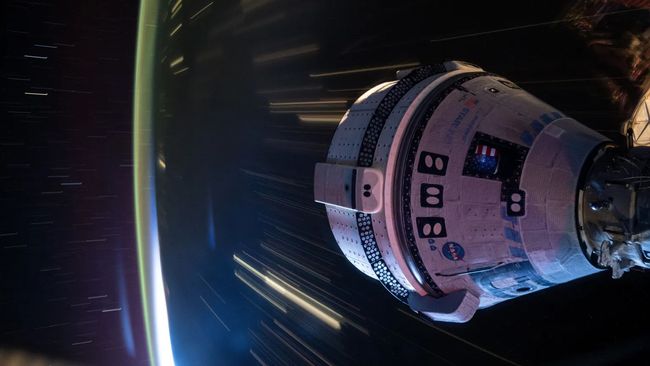
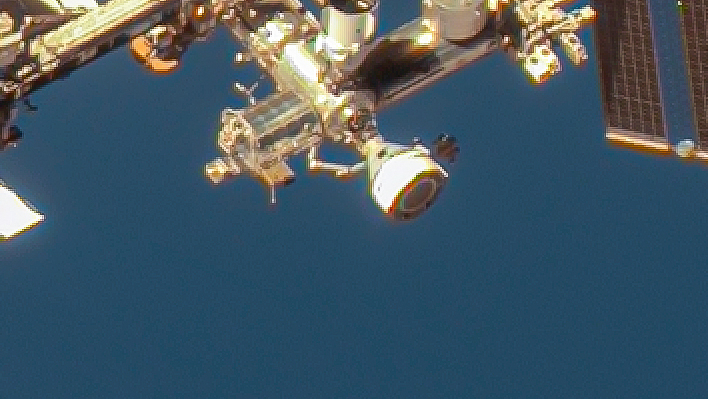
The Boeing CST-100 Starliner Calypso docked at the Harmony module of the International Space Station during the Crew Flight Test mission. Two of the thruster “doghouses” which have been the source of issues, can be seen amounted on the service module. Credit: NASA

Boeing’s CST-100 Starliner spacecraft will now not depart from the International Space Station (ISS) until sometime in July at the earliest. The decision was announced by NASA on June 21st, marking the fourth such delay in the vehicle’s return to Earth during its Crew Flight Test, which lifted-off from Cape Canaveral Space Force Station, Florida, on June 5th, for what should have been a test flight of roughly a week’s duration.

Following a flawless launch and arrival in orbit, and as reported in these pages (see: Space Sunday: Bill Anders; Starliner &; Starship), the vehicle started to encounter further issues with its propulsion system, with further helium leaks (the cause of a number of delays ahead of the launch), together with faults with five of the reaction control thrusters as the craft approached the ISS for docking. However, these were largely resolved prior to docking – although problems with the helium purge system associated with the thrusters suffering leaks of decreasing size has continued to be a problem.

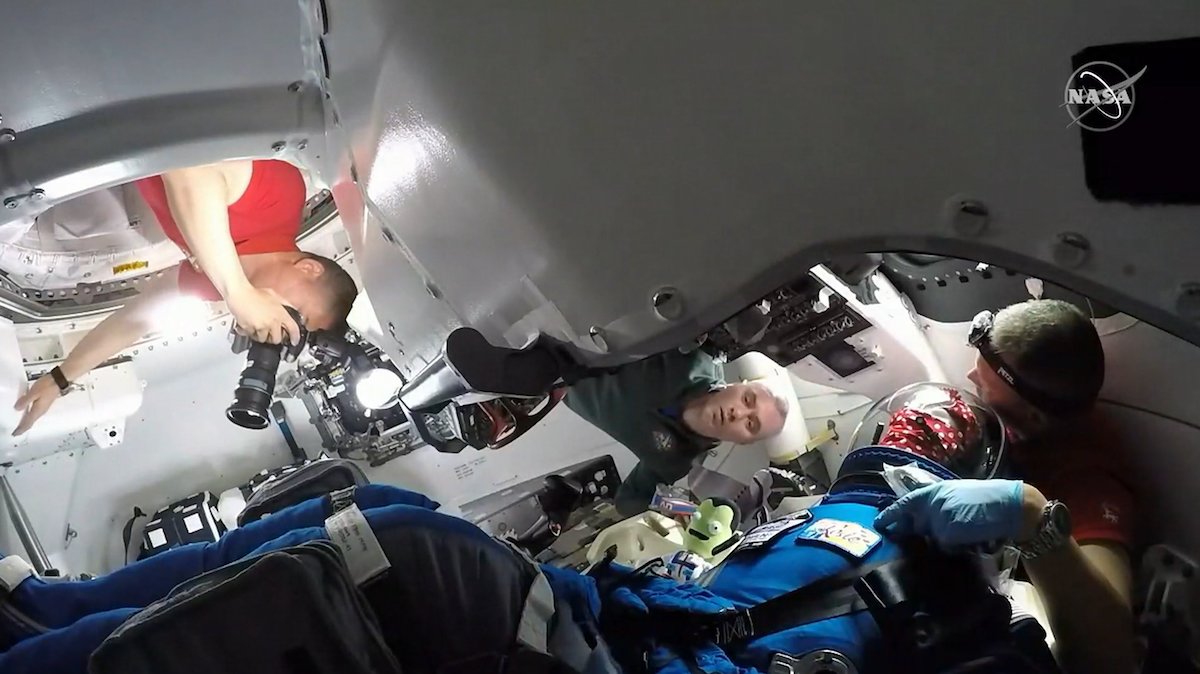
Members of the ISS Expedition 71 crew – NASA astronaut Kjell Lindgren (with the camera), Roscosmos cosmonaut Denis Matveev (centre) and astronaut Bob Hines (behind “Rosie the Rocketeer”, a sensor-laden mannequin which also flew on the uncrewed Orbital Flights Tests with Starliner), explore the CST-100’s cockpit. They were the first people who did not fly on the vehicle to enter it while in orbit. Credit: NASA / Roscosmos

However, despite claims made by some, the delays are not the result of the vehicle being “unsafe” or “broken”; simply put, they are to allow NASA and Boeing to carry out multiple additional tests on the thruster systems – including multiple test firings whilst docked at the ISS – and delve deeper into the issue of the helium leaks.

This is particularly important as the thruster systems will not be making a return to Earth; as a part the vehicle’s service module they will be discarded to burn-up in the upper atmosphere. Ergo, NASA and Boeing want to be sure that as much data has been gathered to facilitate further post-flight investigations. This is particularly important for the problematic systems, as they will not be returning to Earth: as they are mounted on the outside of the vehicle’s service module, they will be detached prior to the capsule’s controlled re-entry into the atmosphere and left to burn-up with the rest of the service module.

No date has been given for any return following the latest postponement, NASA stating they are being data-driven in making decisions, not date-driven. However, as the Expedition 71 crew have had to postpone two EVAs to accommodate Starliner’s continued presence at the ISS, and these need to go ahead at the start of July.

A final consideration for the vehicle’s return lies with the landing sight – the so-called “Space Harbour” at White Sands, New Mexico. NASA and Boeing would rather the landing there takes place under certain lighting conditions, if possible, so that cameras, etc., can gather as much data as possible as well. These opportunities occur every 3 or 4 days, allowing for the ISS being in the correct position in its orbit in order for Starliner to depart it and arrive over its landing site to meet those conditions during its descent.

Virgin Galactic Pauses Sub-orbital Flights; Announces New Astronaut Selection & Seeks to Boost Share Price

It’s a busy old time at Virgin Galactic, the sub-orbital space company offering both private and commercial sub-orbital flights to the edge of space.

On June 8th, 2024, the company’s only operational space plane, VSS Unity, undertook its seventh  – and final – passenger-carrying flight, this one was a mix of the company’s commercial research flights and  a tourism flight, marking the first time the two have been combined into a single Virgin Galactic flight, research flights having previously been carried out as dedicated flights. The mission also marked Unity’s 12th flight overall to sub-orbital altitudes.

The Virgin Galactic Mothership, VSS Eve, takes to the air from Spaceport America, New Mexico, with the SpaceShipTwo vehicle VSS slung underneath it, June 8th, 2024. Credit: Virgin Galactic

Galactic 07 featured Turkish research astronaut, Tuva Atasever, the second Turk to flight into space via a private mission – the first being Alper Gezeravcı, who flew to the International Space Station  (ISS) during the Axiom Space Ax-3 mission in January 2024 – and it was Axiom who arranged for Atasever to fly with Virgin Galactic. He was joined by space tourists Andy Sadhwani, a principal propulsion engineer at SpaceX who previously did research at NASA and Stanford University; Irving Pergament, a New York real estate developer and private pilot; and Giorgio Manenti, an Italian investment manager living in London.

Atasever carried out a total of seven research experiments related to medicine and health, and also oversaw automated payloads from Purdue University to study propellant slosh in microgravity, and a 3D printing experiment  from the University of California Berkeley, both of which were flown under the NASA Commercial Flight Opportunities Programme. The flight, which reached an altitude of 87.5 km, was commanded by Virgin Galactic veteran Nicola Pecile, making his fourth flight, with rookie Jameel Janjua, on his first spaceflight, as pilot.

Virgin Galactic founder Richard Branson (left) and company CEO Michael Colglazier (right) with the Galactic 07 astronauts: Andy Sadhwani, Irving Pergament, Giorgio Manenti and Tuva Atasever. Credit: SpaceNews/Jeff Foust

It has been previously announced that Unity would be retired from active service in mid-2024. However, at the time of that announcement – November 2023 – it had been assumed that the company could be switching to use their new SpaceShip III craft. These are visually identical to the SpaceShipTwo vehicle type represented by VSS Unity, but with an evolution of flight systems. In all two vehicles in the SpaceShip III class has been unveiled: VSS Imagine and VSS Inspire. Imagine was rolled-out with great fanfare in 2021, and had been due to commence flight testing in 2022/23, but this never happened.

With the June 8th flight of Unity, the company confirmed that the SpaceShip III project had been cancelled, and neither Imagine or Inspire will fly; instead being relegated to the role of ground test articles. Instead, the company will not focus on their next generation of space plane, the Delta Class.

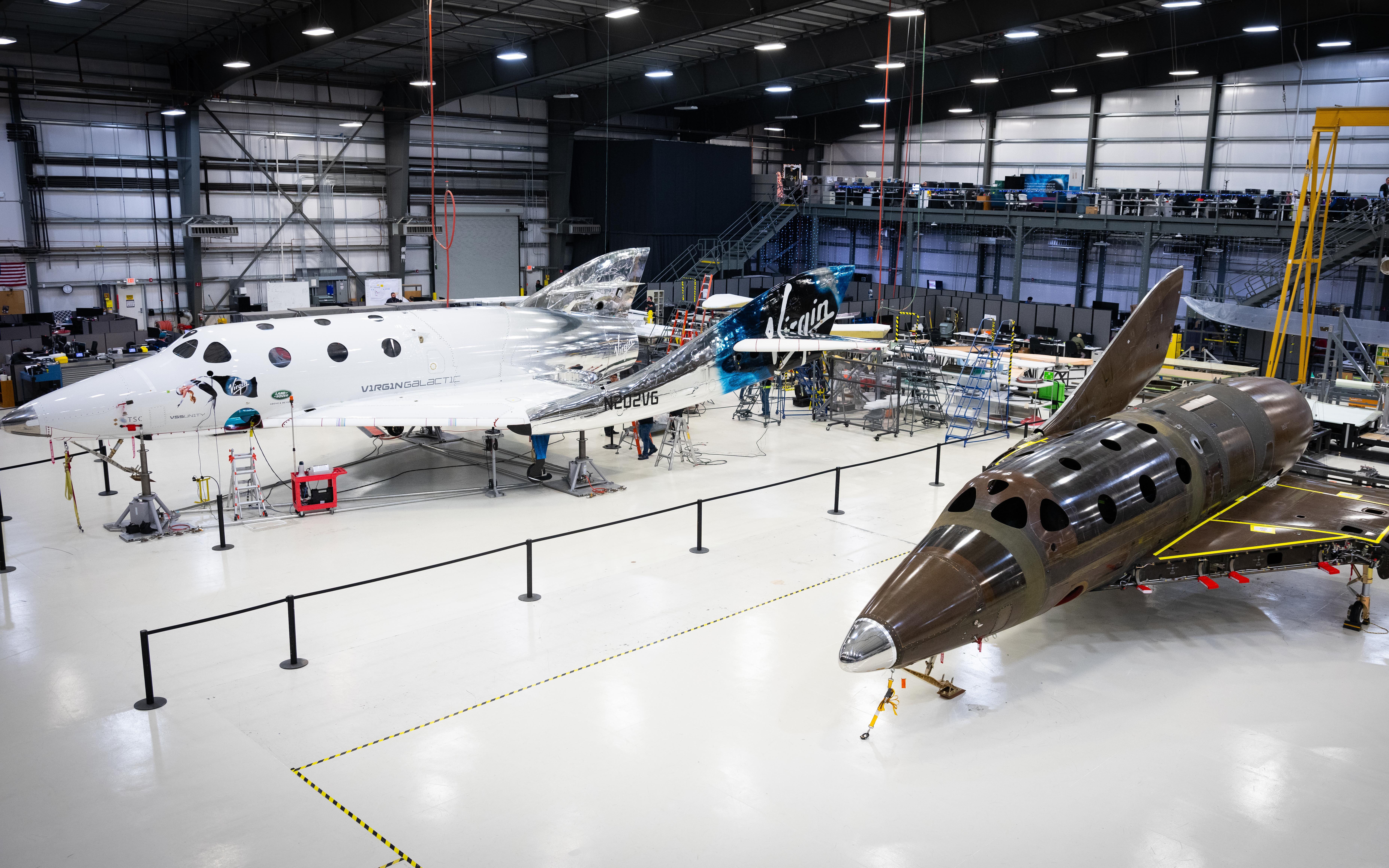
VSS Unity (background) undergoing servicing, with the fuselage of Spaceship III VSS Imagine in the foreground, June 2020. Credit: Virgin Galactic

The Delta vehicle is said  – again – the be visually the same as the SpaceShipTwo and SpaceShip III vehicles; however, the airframe has been completely redesigned to make much greater use of composites, much updated avionics and the ability for vehicle fabrication to be sub0contracted out so that Virgin Galactic only has to focus on final vehicle assembly, operation and maintenance. As such, it is expected that the Delta vehicles will be easier to manufacture and have much lower manufacturing, operational and maintenance costs. The first Delta vehicle(s) are due to be delivered for testing in 2025, with commercial flights using the first of them commencing in 2026.

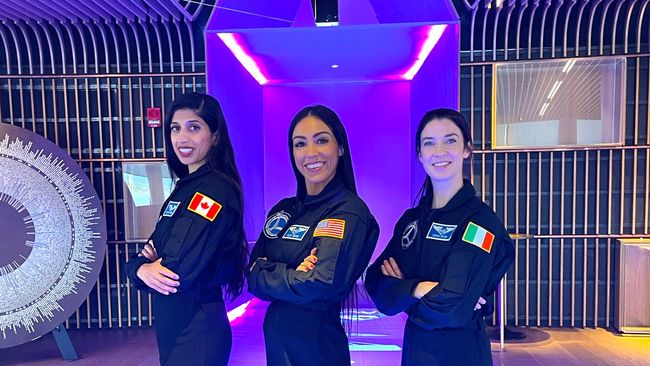
If all goes according to plan, one of the first Delta class flights will feature an all-female research team flying with it, in the form of US national Kellie Gerardi, who flew aboard Galactic 05 in November 2023, along with Canadian Shawna Pandya and Ireland’s Norah Patten. All three are part of the non-profit International Institute for Astronautical Sciences (IIAS), whose mandate includes testing technologies in suborbital aircraft and performing educational activities. Together, they will expand on research that Gerardi (also IIAS director of human spaceflight) performed during Galactic 05, focusing on fluid behaviour with applications to human health.

Three private astronauts assigned to fly one of the first Delta-class missions with Virgin Galactic, representing the International Institute for Astronautical Sciences.(l to R): Shawna Pandya (Canada); Kellie Gerardi (USA); Norah Patten (Ireland). Credit: Virgin Galactic)

Despite  a string of successful space tourist and commercial flights, Virgin Galactic has not been without financial issues; one of the reasons for the switch away from the SpaceShip III vehicles to focus solely on Delta is to reduce overall expenditure. More particularly, the company’s share price has tumbled from a peak of US $50 a share (2021) to around US $0.85 a share – meaning the company has been trading at below the New York Stock Exchange’s (NYSE) minimum share price of US $1.00. Because of this, they have been given 6 months to reverse matters or be removed from listed on the exchange.

As a result the company is – with board approval – going ahead with a 1-for-20 share reversal , meaning 20 existing share will become a single share, increasing its value by a factor of 20. It is hoped that this will, combined with the US $870 cash and equivalents the company holds, be sufficient to see it move forward to starting-up flights with the Delta vehicles. Virgin Galactic hope that flights with just two Delta Class vehicles will yield around US $450 million in revenue.

Voyager 1 on 4; Hubble on 1

An illustration of one of the twin Voyager spacecraft now in interstellar space. Credit: NASA/JPL

Two of NASA’s longest-running space missions, the Hubble Space Telescope and Voyager 1 having been facing troubles of late, as reported in these pages, which have proven equally hard to resolve, but for very different reasons.

With Voyager 1, the issue is that of distance: it is the most distant human-made object from Earth so far ever made; so far away, that two-way communications take almost 48 hours. The bad news is that in November 2023, the vehicle started returning gibberish to Earth during routine communications. The good news is that, as I reported in April 2024 (see: Space Sunday: Rocket Lab, Voyager, Hubble and SLIM), the root cause of the issue had been identified and corrected, leaving engineers and scientists to bring the craft’s remaining four science instruments back on-line.

On June 13th, 2024, the space agency announced all four instruments – which measure plasma waves, magnetic fields and particles in interstellar space – are back on-line, gathering data, and that data is being correctly transmitted to Earth without being converted to garbage.

In order to get things running solidly, the final step to returning Voyager 1 to a fully-operational status was a full communications sub-system software update: the first time an interstellar software update has every been carried out.

However, the news that Voyager 1 is once again telling us about the interstellar medium has been a bittersweet moment, coming has it did two days after the announcement that Edward C. “Ed” Stone, the man who oversaw the entire Voyager project from its formal inception in 1972 through until 2022, had passed away.

Ed Stone lead the Voyager programme from its formal inception in 1972 through until 2022. He passed away on June 9th, 2024, just before Voyager 1’s science capabilities were fully restore. Credit: NASA/JPL

Allowing for declining energy from its decaying from their plutonium-238 power supplies (and the degradation of the thermocouples that turn the heat from that decay into electrical energy), both Voyager 1 and Voyager 2 should be able to continue to transmit data through until 2030 – or even the mid-2030s -, although it is possible than one or more of the remaining instruments on either will have to be turned off in the intervening time.

For Hubble, meanwhile, the issue is not distance, but capability; in short, and again as I’ve previously reported, while the telescope might be operating in Earth orbit, we no longer have a vehicle suitable for rendezvousing with it in order for astronauts to swap-out worn-out parts or make other repairs. Again, as I reported in the Space Sunday edition linked-to above, one of the most delicate elements of the telescope is its gyroscopes – vital for pointing the telescope and maintaining its stability.

Normally, Hubble requires three gyros – which is good, because for the just few years, it has had only three of its original 6 in reasonable working order – and one of those has been unwell, as reported in the Space Sunday linked-to above. As that gyro cannot be reliably recovered, NASA made the decision to alter operations so that Hubble only uses a single gyro – the other of the remaining two being held in reserve.

The Hubble Space Telescope captured this image of the galaxy NGC 1546 while in single gyro mode. Credits: NASA, ESA, STScI, David Thilker (JHU)

As a result, a new technique has been developed to ensure the telescope can correct point itself at targets and remain steady during imaging, and the results of initial testing are more than promising. On June 20th, NASA released an image of NGC 1546, a galaxy 50 million light-years away. Capturing such an object at such a distance requires both precise pointing and rock-steady stability: and Hubble managed both, revealing the galaxy in as much detail and clarity as if it had been operating on all three gyros.

This is great news for deep-space operations with Hubble, and means the telescope can once again keep producing good science; but there is a price. Pointing and steady the telescope means that Hubble’s operational has to be cut by 25%, and it cannot track objects moving a reasonable speed – such as comets and asteroids inside the orbit of Mars. Even so, better that, than losing Hubble altogether.

Space Sunday: cameras and Starliners and starships

The Vera C. Rubin Observatory, Chile, as it nears completion. It is now the house of the world’s most powerful digital camera, with a 3200 megapixel resolution. Credit: NSF / NOIRLab screen capture

So, what is the megapixel resolution of your favourite camera / phone / tablet camera? Leaving aside the questions of sensor size, pixel light bleed and so on, all of which influence the quality of images over and above mere megapixel count, people seem to take great pride in the camera’s megapixel resolution; so is it 16, 20, 24, 30? Well, how about 3200 megapixels?

That’s the resolution of the world’s most powerful digital camera. Not only that, but its sensor system is so large (64 cm (2 ft) across) it can ensure every single pixel produces the absolute minimum in light-bleed for those around it, ensuring the crispest, deepest capture possible per pixel. This camera is called The Legacy Survey of Space and Time (LSST) camera – which is a rather poetic and accurate name for it, given that in looking out into deep space it will be looking back in time – and it has been 20 years in the making. It is the final element of a major new stellar observatory which will soon be entering full-time service: the Vera C. Rubin Observatory, and it will lie at the heart of the observatory’s primary telescope, the Simonyi Survey Telescope.

The observatory is located 2.682 kilometres above sea level on the El Peñón peak of Cerro Pachón in northern Chile, a location that is already the home of two major observatories: Gemini South and Southern Astrophysical Research Telescopes. Originally itself called the LSST – standing for The Large Synoptic Survey Telescope – the observatory was first proposed in 2001, and work initially commenced through the provisioning of private funding – notably from Lisa and Charles Simonyi, who put up US $20 million of their own money for the project (and hence had the telescope named for them), and a further US $10 million from Bill Gates.

By 2010, the potential of the observatory was such that it was identified as the most important ground-based stellar observatory project by the 2010 Astrophysics Decadal Survey – a forum for determining major projects in the fields of astronomy and astrophysics which should receive US funding in the decade ahead. This led the National Science Foundation (NSF) to provide an initial US $27.5 million in 2014, as the first tranche of funding via the US government, while the US Department of Energy was charged with overseeing the construction of the observatory, telescope and the primary camera system, with the work split between various government-supported / operated institutions and organisations.

A dramatic shot of the Vera C. Rubin Observatory following the completion of all major construction work on the building in 2022. Set against the backdrop of the Milky Way galaxy as we look towards its bright centre, the image brilliant captures the Great Rift, a huge shroud of interstellar dust which hides a strip of the Milky Way from our view. The Simonyi Telescope and LSST camera will be able to look right into the Rift and hopefully discover what might be lurking there. Credit: NSF / AURA

Whilst originally called the LSST, the observatory was renamed in 2019 in recognition of both its core mission – studying (the still hypothetical) dark energy and dark matter by a number of means – and in memory of astronomer Vera Rubin (July 1928 – December 2016); one of the pioneers of dark matter research. It was her work on galaxy rotation rates which provided key evidence for the potential existence of dark matter, and laid the foundation upon which later studies into the phenomena could build.

As well as this work, the observatory and its powerful camera will be used for three additional major science tasks:

  • Detecting transient astronomical events such as novaesupernovaegamma-ray burstsquasar variability, and gravitational lensing, and providing the data to other observatories and institutions for detailed follow-up, again to increase our understanding of the universe around us.
  • Mapping small objects in the Solar System, including near-Earth asteroids which might or might not come to pose a threat to us if their orbits around the Sun are shown to intersect with ours, and also Kuiper belt objects. In this, LSST is expected to increase the number of catalogued objects by a factor of 10–100. In addition, the telescope may also help with the search for the hypothesized Planet Nine.
  • Mapping the Milky Way. To increase our understanding of all that is happening within our own galaxy.

To achieve this, the telescope is a remarkable piece of equipment. Comprising an 8.4 metre primary mirror – putting it among the “large” – but not “huge” earth-based telescope systems – it has a mechanism capable of aligning it with a target area of the sky and allowing the LSST camera capture an image before slewing the entire multi-tonne structure through 3.5 degrees, and accurately pointing it for the next image to be captured in just 4.5 seconds (including time needed to steady the entire mount post-slew). This means the telescope will be able to survey the entire visible sky above it every 3-4 days, and will image each area of sky surveyed 825 times apiece, allowing for a comprehensive library of images and comparative data to be built over time.

A cutaway view of the LSST camera, showing the lens system, filters, CCD and major electronics. Credit: Todd Mason

In turn, to make this possible, the LSST camera is equally remarkable. Operating a low temperatures, it has a primary lens of 1.65 metres in diameter to capture the light focused by the telescope’s unique set of three main mirrors (two of which – the 8.4 metre primary and the 5.0 metre tertiary – are effectively the “same” glass, being mounted back-to-back). This light is then direct through a second focusing lens and a set of filters to screen out any unwanted light wavelengths, to no fewer that 189 charge couple devices (CCDs).

These are arranged in a flat focal plain 64 cm (2 ft) across, and mounted on 25 “rafts” which can be individually fine tuned to further enhance the quality of the images gathered. In use, the focal plain will be able to capture one complete, in-depth, time-exposed image every 15 seconds, allowing it to capture the light of even the faintest objects in its field of view. Combined with the speed with which the telescope can move between any two adjacent target areas of the sky – each the equivalent of a gird of 40 full Moons seen from Earth – this means that the camera will produce around 20-30 terabytes of images every night, for a proposed total of 500 petabytes of images and data across its initial 10-year operational period.

The 64-cm wide focal plane of the LSST camera showing the grid of 189 CCD devices that will capture light and create images. Credit: Jacqueline Orrell / SLAC National Accelerator Laboratory

As noted, the LSST camera is the last major component for the telescope to arrive at the observatory. It was delivered from the United States on May 16th, 2024, and will be installed later in 2024. As it is, all of the core construction work at the observatory – base structure, telescope mount, telescope frame and dome – has been completed, with the telescope delivered and mounted between 2019 and 2023. In 2022, a less complex version of the LSST camera, called the Commissioning Camera (ComCam) was also installed in preparation for commissioning operations to commence.

Most recently – in April 2024 – work was completed on coating the primary and tertiary mirror assembly with protective silver, so it is now ready for installation into the telescope (the 8 metre secondary mirror is already in place). This coating work could only be done at the observatory and once all major construction work have been completed, meaning the three mirrors have been carefully stored at the site since their respective arrivals in 2018 and 2019.

Commissioning will see the ComCam used to assist in ensuring the mirrors correctly moments and aligned, and to allow engineers make physical adjustments to the telescope without putting the LSST camera at risk. Commissioning in this way also means that issues that may reside within the LSST camera are not conflated with problems within the mirror assembly. Once science teams and engineers are confident the telescope and its mirrors are operating exactly as expected, the ComCam will be replaced by the LSST camera, which will then have its own commissioning  / calibration process.

If all goes according to plan, all of this work should be completed by 2025, when the observatory will commence the first phase of its science mission. However, there is one slight wrinkle still to be ironed out.

The ComCam – Commissioning Camera – a simpler version of the LSST camera, but sharing its dimensions, being installed into the Simonyi Telescope at the Vera C. Rubin Observatory, August 2022. Credit: NSF / AURA

As a result of growing concern among astronomers about the growing light pollution caused (particularly) by the 4,000+ SpaceX Starlink satellites, the European Southern Observatory (ESO) carried out a survey on behalf of AURA – the Association of Universities for Research in Astronomy, which is now responsible for managing the observatory’s operations – to measure the potential impact of Starlink overflights on the Vera Rubin’s work.

Using the La Silla Observatory, located in the same region as the Vera C. Rubin and at near enough the same altitude, ESO replicated the kind of 15-second image exposure the latter will use when operational, and found that during certain periods of the Vera C. Rubin’s daily observation times, between 30% and 50% of exposures could be impacted by light trails formed by the passage of multiple Starlink satellites overhead.

SpaceX has promised to do more to “darken” their satellites in the future (the first attempts having had mixed results), but AURA is also considering whether or not to make updates to the LSST camera’s CCDs and control system to allow the camera to overcome image pollution from these satellites. Such work, if proven viable, will need to be carried out ahead of the LSST’s installation into the telescope, and thus might result in the start of operations being pushed back.

Continue reading “Space Sunday: cameras and Starliners and starships”

Space Sunday: solar events; black holes;+ updates

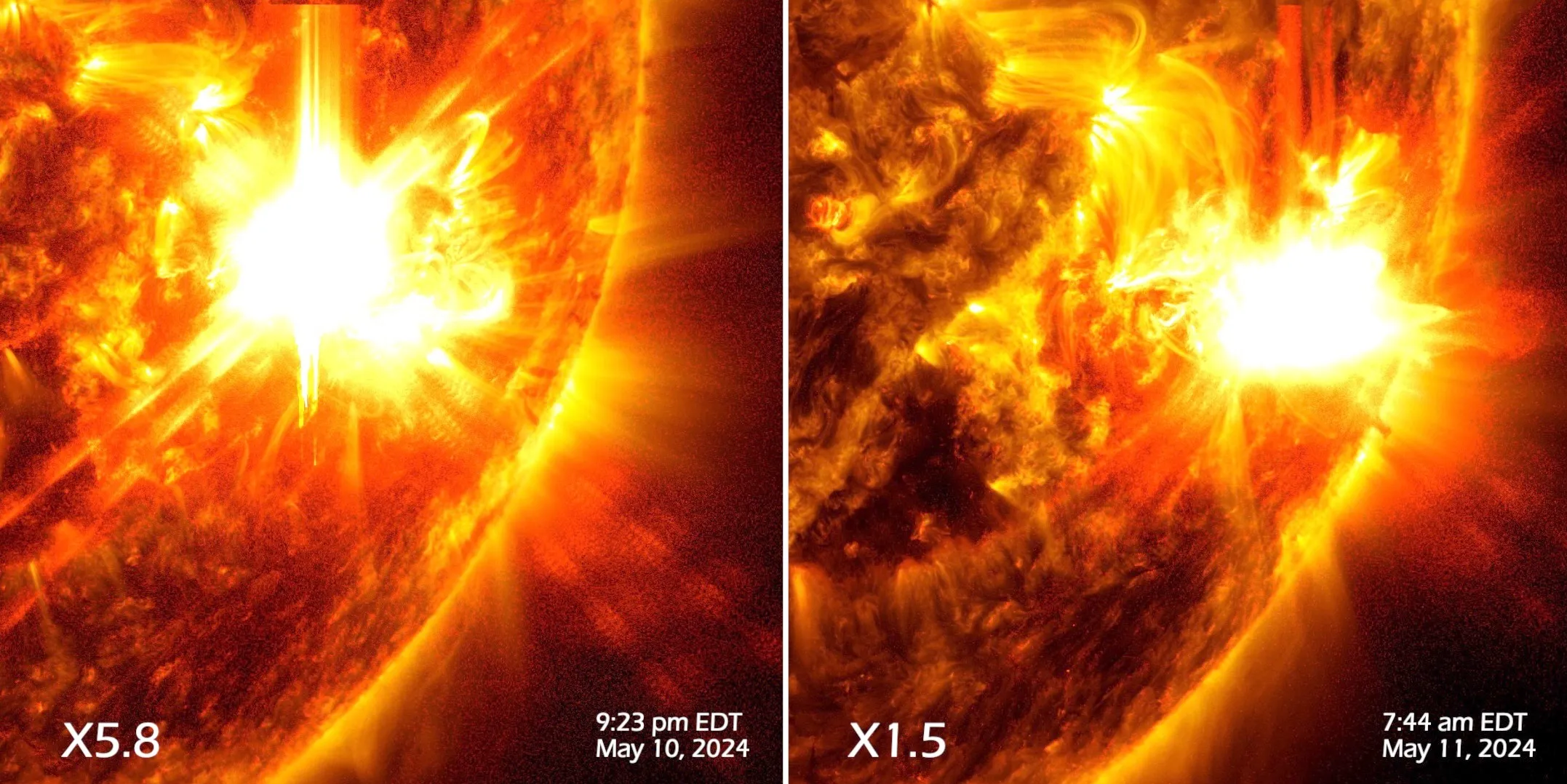
NASA’s Solar Dynamics Observatory captured these two views of massive solar flares, registering X5.8 and X1.5, respectively, on May 11th, 2024. Credit: NASA

We are currently approaching the mid-point in Cycle 25 of the Sun’s 11-year cyclical solar magnetic activity. These are the periods in which observable changes in the solar radiation levels, sunspot activity, solar flare and the ejection of material from the surface of the Sun, etc., go from a fairly quiescent phase (“solar minimum”) to a very active phase (“solar maximum”) before declining back to a quiescent period once more to repeat the cycle again. The “11-year” element is the average length of such cycles, as they can be both a little shorter or a little longer, depending on the Sun’s mood. They’ve likely been occurring over much of the Sun’s life, although we only really started formally observing and recording them from 1755 onwards, which is why this cycle is Cycle 25.

This cycle started in December 2019, and is expected to reach its mid-point in July 2025, before declining away in terms of activity until the next cycle commences in around 2030. Predictions as to how active it might be varied widely during the first year or so, (2019-2021), with some anticipating a fair quite cycle similar to Cycle 24; others predicted it would be more active – and they’ve been largely shown to be correct. And in this past week, the Sun has been demonstrating that while it might be middle-aged, it can still get really active, giving rise to spectacular auroras visible from around the globe.

The Aurora Australis (Southern Lights) seen over waters of Lake Ellesmere on the outskirts of Christchurch, New Zealand on May 11th, 2024. Credit: Sanka Vidanagama via Getty Images.

The cause of this activity carries the innocent name of AR3664 (“Active Region 3664”), a peppering of sunspots – dark patches on the solar surface where the magnetic field is abnormally strong (roughly 2,500 times stronger than Earth’s) – on the Sun, and one of several such groups active at this time. However, AR 3664 is no ordinary collection of sunspots. In a 3-day period between May 6th and May 9th, it underwent massive expansion, growing to over 15 Earth diameters in length (200,000 km), and at the time of writing is around 17 Earth diameters across.

This rapid expansion gave rise to a series of huge dynamic solar flares on the 10th/11th May, with the first a massive X5.8 class flare – one of the most powerful types of solar flare the Sun can produce. Accompanying the flares have been interplanetary coronal mass ejections, which since Friday have been colliding with Earth’s magnetosphere, causing geomagnetic storms and auroras, giving people spectacular night skies.

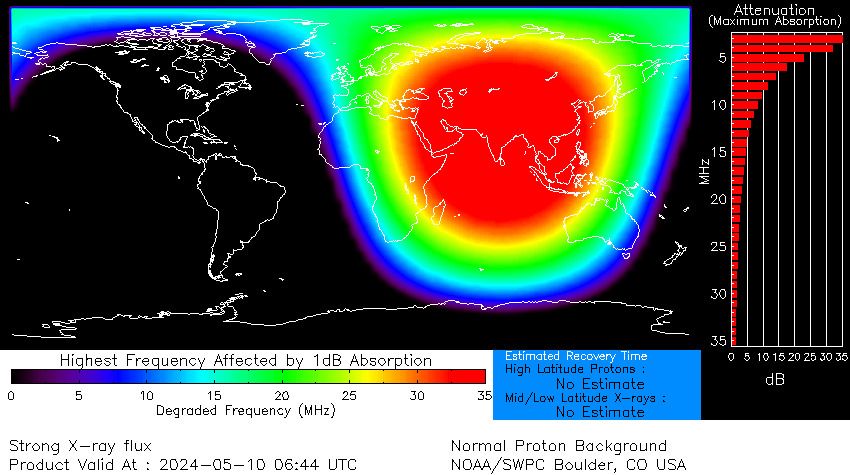
The first of these geomagnetic storms was classified G5 – the highest rating, and the first extreme storm of this type to strike our magnetosphere since October 2023, when damaged was caused to power infrastructure and services in several countries, including Sweden and South Africa. This event caused high-frequency radio blackouts throughout Asia, Eastern Europe and Eastern Africa, and disrupted GPS and other commercial satellite-directed services, although overall, the impact was fairly well managed.

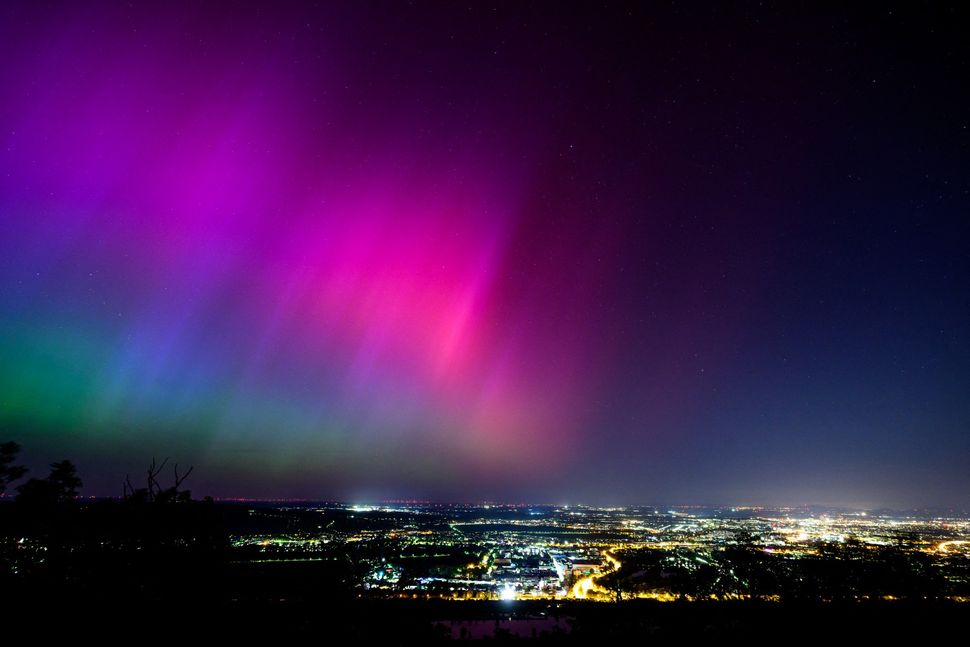
Aurora Borealis (Northern Lights) seen over Vienna during the May 11th geomagnetic storm. Credit: Max Slovenchik via Getty Images

Further storms were experienced through Friday, Saturday and Sunday (10-12th May), varying between G3 and G4 as a result of further CMEs from AR 3664, together with further solar flares in the X4 range. Storms and auroras are expected to continue through until Monday, May 13th, after which AR 3664 will slip around the limb of the Sun relative to Earth.

Thus far, cycle 25 has seen daily sunspot activity around 70% higher during the peak period when compared to Cycle 24, although most of the resultant flares and CMEs have tended to be well below the extreme levels of the last few days. Whether AR 664 marks the peak of events for this cycle, or whether we’ll have more is obviously a matter for the future – but if you’ve not had the opportunity to witness the aurora, the nights of the 12th/13th May might be a good opportunity to do so!

High frequency radio blackouts occurred throughout Asia, eastern Europe and eastern Africa shortly after the X5.8 solar flare of May 11th, 2024. Credit: NOAA/SWPC

AR 3664 is, coincidentally, believed to be around the same size as the sunspot cluster thought to have been responsible for the 1859 Carrington Event, the most intense geomagnetic storm in recorded history (Cycle 10), resulting in global displays of aurora and geomagnetic storms, the latter of which massively disrupted telegraphic communications across Europe and North America (and lead to reports of telegraph operators getting electric shocks from their morse keys and still being able to send and receive messages even with their equipment disconnected from the local power supply!).

Take a Plunge into a Black Hole – Or Fly Around it

Black holes are mysterious (and oft misunderstood) objects. We all know the basics – they are regions on spacetime where gravity is so great that not even light can escape past a certain point (the event horizon) – but what would it be like to fall into one or pass into orbit around one?

In the case of the former, we may think we know the answer (stretching / spaghettification, death + a different perspective of time compare to those observing us from a safe distance), but this is not actually the case for all black holes; it comes down to the type you fall into.

In the case of stellar black holes, formed when massive stars collapse at the end of their life cycle, it’s unlikely you’ll ever actually reach the event horizon, much less fall into it; the tidal forces well beyond the event horizon will rip you apart well in advance. But in the case of supermassive black holes (SMBHs), such as the one lying at the centre of our own galaxy (and called Sagittarius A*) things are a little different.

The first direct image of a supermassive black hole, found in the galactic core of Messier 87, released in 2019 by the Event Horizon Telescope Collaboration. The orange colour is the accretion disk of matter surrounding the black hole some distance from its event horizon. Messier 87 is a giant galaxy 53 million year-years from Earth. Credit: EHO

These black holes are so mind-bogglingly big that the gravity curve is somewhat “smoother” than that of a stellar black hole, with the tidal forces more predictable, possibly allowing the event horizon to be reached and crossed (giving rise to spaghettification). Even so, trying to define what goes on in and around them is still somewhat theoretical and based on abstracted concepts drawn from indirect observation and complex maths.

So, to try to get a better handle on what the maths and theories predict should happen around something like a SMBH – such as falling into the event horizon or being able to orbit and escape such a monster, NASA astrophysicist Jeremy Schnittman – who is one of the foremost US authorities on black holes – harnessed the power of NASA’s Discover supercomputer (with over 127,000 CPU cores capable of 8,100 trillion floating point operations per second), and used available data on Sagittarius A* to generate two visual models which make for a fascinating study.

In the first, the camera takes us on a ride from a distance of some 640 million km from the SMBH (a point at which its gravity is already warping our view of the galaxy), through the accretion disk and into a double orbit around the black hole before gravity is allowed to pull the camera in and across the event horizon. It provides a unique insight into how the galaxy around us would appear, how time and space are bent (and eventually broken), whilst also offering an enticing view of another black hole phenomenon: photon rings – particles of light which are travelling fast enough to fall into orbit around the black hole and loop around it more than once before escaping again.

I’ll say no more here, the video explains itself.

In the second video (below), the camera passes around the black hole for two orbits before breaking away, just like the light particles responsible for the photon rings. As well as the visualisation of the warping effect gravity that a black hole has on light, both videos also demonstrate the time dilation effect created by the SMBH’s gravity.

In the “orbital” video, eat loop around the black hole takes – from the camera’s perspective – 30 minutes to complete. However, from the perspective of someone watching from the video’s starting point, 640 million kilometres away, each orbit appears to take 3 hours and 18 minutes. Meanwhile, in the “fall” video, from the camera’s perspective, the drop from orbit to event horizon lasts 10 minutes. However, from anywhere beyond the black hole, it never ends; the object appears to “freeze” in place the moment it touched the event horizon (even though it is ripped apart nanoseconds after crossing the event horizon).

And these dilation effects assume the black hole is static; if it happened to be rotating – then in the case of camera orbiting the black hole and then braking free, mere hours may seem to have passed – but to the observers so far away, years will have seemed to pass.

Updates

Starliner CFT-1 Delayed

Boeing’s CST-100 Starliner continues on the rocky road to flight status. As I reported in my last Space Sunday, CST-100 Calypso was due to head off to the International Space Station (ISS) on Monday, May 6th, carrying NASA astronauts Barry “Butch” Wilmore and Sunita “Suni” Williams on a Crewed Flight Test (CFT) designed to pave the way for the spacecraft to be certified for operations carrying up to 4 people at a time to / from the ISS.

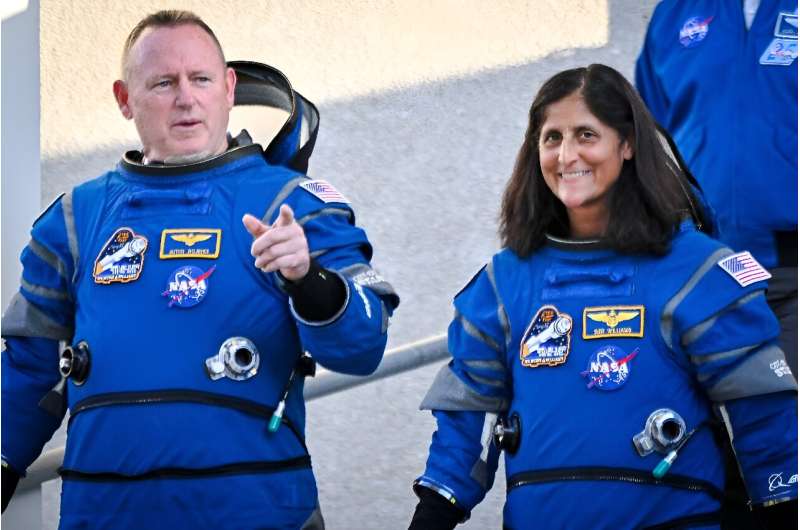
Whitmore and Williams departing the Neil A. Armstrong Building at Kennedy Space Centre in preparation to board the crew bus from the drive to neighbouring Canaveral Space Force Station for the (subsequently scrubbed) CST-100 launch attempt, May 6th, 2024. Credit: NASA

Only it didn’t; the launch was scrubbed some 2 hours ahead of lift-off due to issues in the flight hardware – although this time, thankfully, not with the vehicle itself. The fault lay within an oxygen relief valve in the Atlas V’s Centaur upper stage, of the Atlas V launch vehicle. The valve was cycling open and closed repeatedly and so rapidly that crew on the pad could hear it – describing is as a “buzzing” sound.

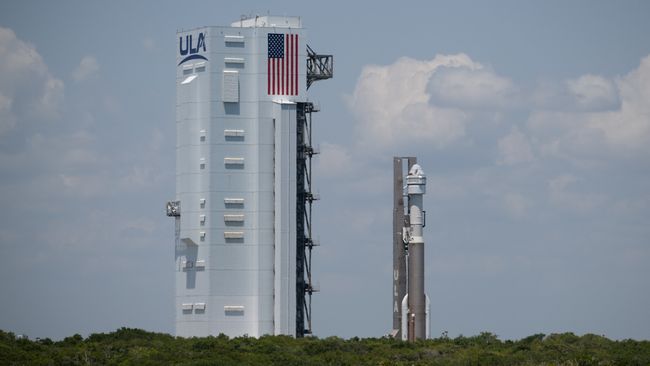
Initially, it had been hoped that the issue could be rectified without moving the vehicle back from the pad at Cape Canaveral Space Force Station, and that a launch date of May 10th could be met. However, by May 8th, attempts to reset the valve via software and control intervention had failed, and ULA – the company responsible for the Atlas V and its upper stage (ironically, the Centaur is produced by Boeing, one of the two partners in ULA) – decided the stack of rocket and Starliner would have to be rolled back to the Vertical Integration Facility (VIF) close to the pad, so the entire valve mechanism can be replaced.

Boeing’s Starliner spacecraft and its Atlas V rocket returning to the Vertical Integration Facility at Cape Canaveral Space Force Station, May 8th, 2024, so a faulty oxygen relief valve on the launch vehicle can be replaced. Credit: NASA

As a result, and at the time of writing, the launch is now scheduled to take place on Friday, May 17th, with a lift-off time targeting 23:16 UTC.

Hubble Back, TESS Down, Up, Down, Up

On April 28th, I reported that the Hubble Space Telescope (HST) had entered a “safe” mode following issues with one of its three remaining pointing gyroscopes. As noted in that piece, the gyroscopes are a vital part of HST’s pointing and steadying system, and while it generally requires three such units for Hubble to operate efficiently, it can get by at a reduced science capacity with only two – or even one, if absolutely necessary – functional gyro.

These gyros do naturally wear out – six brand new units were installed in 2009 (pairs of primary and back-up), but since then, three have permanently failed, and one of the remaining three has been having issues on-and-off since November 2023. Fortunately, in the case of that issue, and now with the April 23rd problem, engineers on Earth were able to coax the gyro back into working as expected. Thus, in the case of the latter, Hubble was back on science gathering duties with all instruments were operational on April 30th.

Hubble (l) and TESS: troubled times. Credit: Robert Lea

Quite coincidentally, another of NASA’s orbiting observatories – the Transiting Exoplanet Survey Satellite (TESS) – also entered a “safe” mode on April 23rd, 2024 – the second time in April its did so. On April 8th, 2024 TESS suddenly safed itself without any warning, and remained off-line for science operations through until April 17th, when the mission team managed to restore full service. However, what triggered the safe mode in the first place has yet to be identified; so when TESS slipped back into a safe mode on April 23rd, engineers looked to see if there was a connection. There, was – but not in the way they’d hoped.

In order to restore TESS to an operational status on April 17th, the mission team had to perform an “unloading” operation on the the flywheels used to orient and stabilise the observatory. This is a routine activity, but it requires the use of the propulsion system to correct for any excess momentum held by the flywheels that might get transferred directly to the spacecraft and cause it to lose alignment. This in turn requires the propulsion system to be properly pressurised. Unfortunately, this was not completed correctly, and the thrusters were left under-pressurised. As a result, a small amount of momentum was transferred to TESS’s orientation, gradually swinging it out of expected alignment until it reached a point where the main computer realised something was wrong, triggered the safe mode and ‘phoned home for help.

Given this, the fix was relatively simple: correctly pressurisation the propulsion system and gently nudge it to stabilise TESS once more so it is aligned in accordance with its science operations.

Space Sunday: total eclipse and a nova

Total eclipse of the Sun. Credit: Alan Dyer/VW Pics/UIG via Getty Images

Monday April 8th 2024 marks 2024 only total solar eclipse of the year (and only one of two which might be witnessed during the year the other being an annular eclipse on October 2nd, 2024), with North America being treated to the spectacle.

A total eclipse is when the Moon crosses directly between Earth and the Sun in a manner which means it completely blocks the face of the Sun from view to those directly “under” the Moon’s path across the sky. This is the region known as the path of totality, marked by the Moon’s shadow marching its way across the face of the Earth as the Moon passes between planet and star. Within that path, the full light of the Sun is blocked for a brief period, plunging the land into twilight before the face of the Sun re-emerges from the limb of the Moon as the latter continued on in its orbit.

As I’ve mentioned before in these pages, a total solar eclipse is the most intense and fascinating of the various types of eclipse that can be observed from Earth, and they tend to occur roughly every 12-24 months, affecting different parts of the world depending on factors such as the Earth’s rotation at the time, the position of both the Sun and Moon relative to Earth, etc. Thus, not every total eclipse is necessarily so easily visible; the path of totality can often be in very remote places or over sparsely populated regions or even far out at sea.

Track of the April 8th, 2024 total solar eclipse across North America, showing the main path of totality. Michael Zeiler/GreatAmericanEclipse.com

The event on April 8th 2024, however, is a little different. The 184-km wide path of totality will extend across 15 US states, whilst its ground track across North America will include Sinaloa, Durango and Coahuila in Mexico and Ontario, Quebec (where it will brush both Toronto and Montreal respectively), New Brunswick and sweep over the Labrador coast of Newfoundland close to St. Johns. This means it will be potentially visible (weather permitting) to around 32 million people in the US alone. What’s more, and in a rarity for total eclipses, it comes just seven years after the last total eclipse was visible from the continental United States (prior to that, the previous one to occur over the contiguous US was in 1979, and the next will not be until 2044).

Upcoming total solar eclipses and their visibility on Earth. Via timeanddate.com

If you are lucky enough to lie along the path of totality, and the weather is suitable for you to view it, please keep in mind these common sense guidelines:

  • Never look directly at the Sun – even with sunglasses or by using dark material such as a bin bag or photo negative; these filters do not protect your eyes against infrared radiation and can cause permanent eye damage.
  • Only look at the sun if you have certified eclipse glasses and are wearing them.
  • Only use a telescope or binoculars to project an image of the Sun onto white card, and never use either instrument to observe the Sun directly unless you have a certified solar filter fitted.

The best way to view an eclipse if you do not have eclipse glasses or have a telescope or binoculars to project the Sun’s image onto card, is via a pinhole camera:

  1. Cut a hole in a piece of card.
  2. Tape a piece of foil over the hole.
  3. Poke a hole in the foil with a pin.
  4. Place a second piece of card on the ground.
  5. Hold the card with the foil above the piece of card on the floor to project an image of the Sun onto it, and look at the image. Do not use the pinhole to look directly at the Sun.
Eclipse Types (Moon and Sun not to scale). Credit: Cmglee

There are a number of terms common to eclipses which are worth mentioning for those who wish to follow the event, but are unfamiliar with the terminology. Specifically for a total eclipse these are:

  • The umbra, within which the object in this case, the Moon) completely covers the light source (in this case, the Sun’s photosphere).
  • The penumbra, within which the object is only partially in front of the light source.
  • Photosphere, the shiny layer of gas you see when you look at the sun.
  • Chromosphere, a reddish gaseous layer immediately above the photosphere of the sun that will peak out during the eclipse.
  • Corona, the light streams that surround the sun.
  • First contact, the time when an eclipse starts.
  • Second contact, the time when the total eclipse starts.
  • Third contact, the time when the total eclipse ends.
  • Fourth contact, the time at which the eclipse ends.
  • Bailey’s beads, the shimmering of bright specks seen immediately before the moon is about to block the sun.
  • Diamond ring, the last bit of sunlight you see right before totality. It looks like one bright spot (the diamond) and the corona (the ring).
Baily’s beads and the “diamond ring” effect seen during a solar eclipse on July 2, 2019 from the Cerro Tololo Inter-American Observatory in Chile. Credit: CTIO/NOIRLab/NSF/AURA/D. Munizaga

As noted, a total eclipse occurs when the observer is within the path of totality marked by the Moon’s shadow – which is formally called the umbra – passing along the surface of the Earth. For those in Mexico, much of the USA and Canada outside of the umbra, there is still the opportunity to see a partial solar eclipse if you are located within the penumbra.

If you are observing the eclipse (particularly along the line of totality), you might keep an eye out for some / all of the following:

  • If you look at the ground around you just before totality occurs and the Moon completely covers the disk of the Sun; you might see the phenomenon of fast-moving shadows, called shadow bands, racing across the ground under your feet. These might also occur as the Sun starts to re-emerge from behind the Moon.
  • During totality, keep an eye out for the brighter stars becoming visible during totality, together with the following planets:
    • Jupiter: roughly 30o above and to the left of the Sun / Moon.
    • Venus roughly 15o below and to the right of the Sun / Moon.
    • Saturn and Mars (both very faint) roughly 20o below Venus, close to the horizon and further to the right.
  • The very keen eyed might also be able to spot comet 12P/Pons-Brooks as a fuzzy dot just off to the right of Jupiter (although you will need to be very keen-eyed!
Sky chart showing the most conspicuous stars and planets that might be visible in the vicinity of the totally eclipsed sun. Credit: Joe Rao
  • Watch and listen to the local animals and wildlife (if present). Birds may stop singing, with some flying to their roosts, cattle might behave is if it is evening , etc., as they become confused by the local twilight.
  • During the solar eclipse, you may see colours shifting, giving familiar objects unusual hues. This natural shift in colour perception is caused by fluctuating light levels resulting from the darkening of the sun.
US Viewing probability map for the April 8th, 2024 total solar eclipse. Credit: Joe Rao

If you prefer not to watch the eclipse directly, or are not lucky enough to live along the path of totality (is the weather is pooping on you seeing it if you are), then it can be followed on-line at the following resources:

Totality Times (UTC) for Notable North American Locations

  • Mazatlán, Sinaloa, Mexico – 18:07; duration: 4 minutes 20 seconds.
  • Durango, Durango, Mexico – 18:18; duration: 3 minutes 50 seconds.
  • Piedras Negras, Coahuila, Mexico/Eagle Pass, Texas, U.S – 18:27; duration: 4 minutes, 24 seconds.
  • Dallas, Texas – 18:40; duration: 3 minutes 52 seconds.
  • Indianapolis, Indiana – 19:06; duration: 3 minutes, 51 seconds.
  • Cleveland, Ohio – 19:13; duration: 3 minutes, 50 seconds.
  • Erie, Pennsylvania – 19:16; duration: 3 minutes, 43 seconds.
  • Rochester, New York – 19:20; duration: 3 minutes, 40 seconds.
  • Niagara Falls, Ontario, Canada – 19:18; duration: 3 minutes, 31 seconds.
  • Montreal, Quebec, Canada – 19:26; duration: minutes 57 seconds.
  • Tignish, Prince Edward Island, Canada – 19:35; duration: 3 minutes, 12 seconds.
  • Catalina, Newfoundland, Canada – 19:43; duration: 2 minute, 53 seconds.

Note that part of north Europe  – notably the UK – will be able to witness a partial solar eclipse.

Continue reading “Space Sunday: total eclipse and a nova”