Space Sunday: interstellar visitors and updates

Interstellar comet 3I/ATLAS seen moving against a backdrop of stars in a series of images captured by the 8.2-metre Very Large Telescope at Cerro Paranal on the night of July 4th, 2025. Credit: ESO Science Archive.

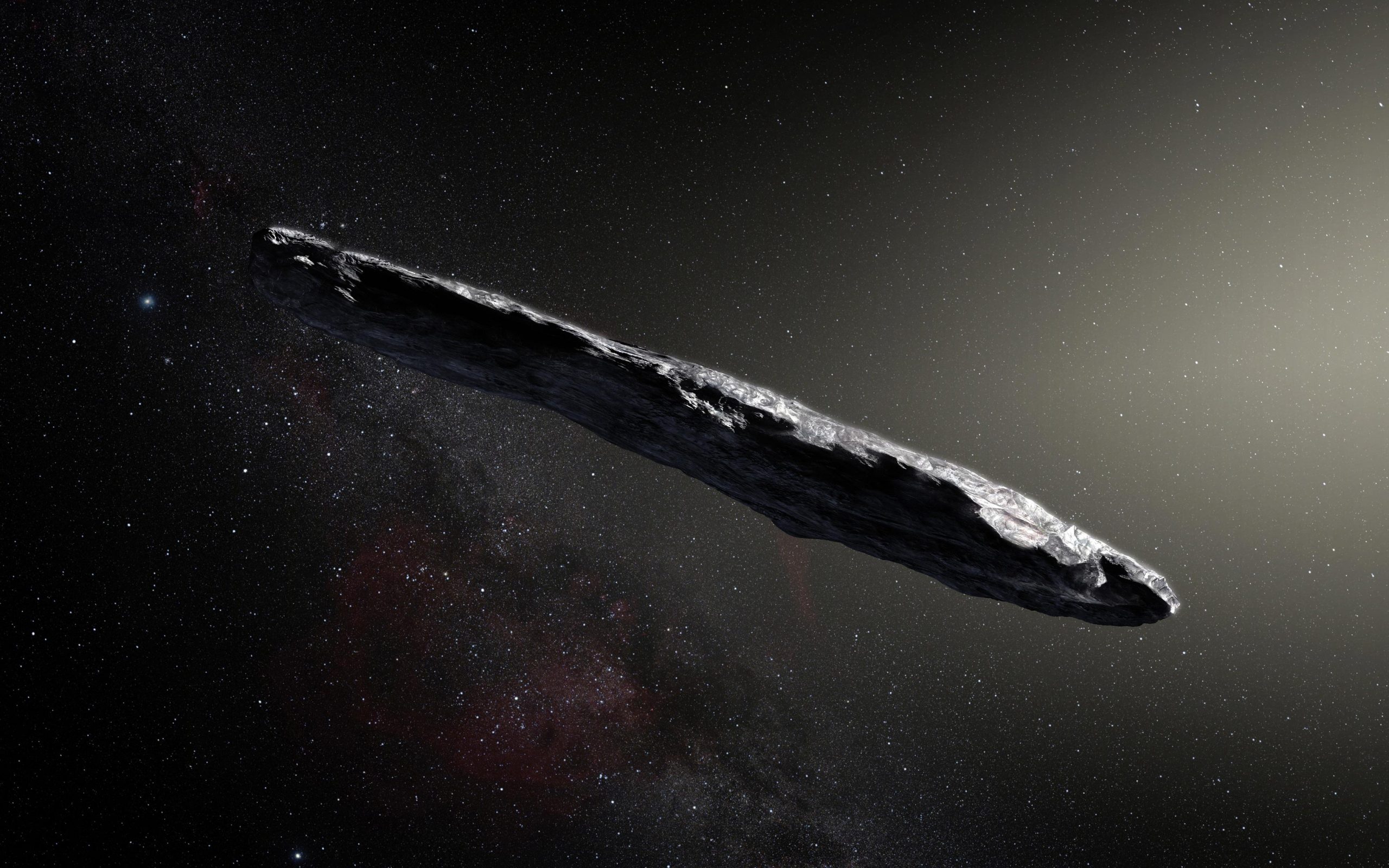
The solar system is welcoming its third (known at least – we have no idea how many may have passed through the solar system undetected down the ages) interstellar visitor. 3I/ATLAS, also known as C/2025 N1 (ATLAS), was identified on July 1st, 2025 as an interstellar comet. It is the third such object positively identified as having interstellar origins to pass through the solar system in the last eight years, the others being 1I/ʻOumuamua (discovered in October 2017) and 2I/Borisov (discovered in August 2019).

At the time of its discovery, 3I/ATLAS was some 4.5 AU (670 million km) from the Sun and moving at a relative speed of 61 km/s (38 m/s). It’s exact size is unknown, as it is behaving as an active comet and so is surrounded by a cloud of reflective gas and vapour. However, estimates put it to be somewhere between around 1 km and 24 km across – with its size likely to be at the lower end of this scale.

The object was located by the NASA-funded ATLAS survey telescope at Río Hurtado, Chile, and will reach perihelion in October 2025, when it will pass around the Sun at a distance of 1.3 AU. Following its initial discovery as a object moving through the inner solar system, there were concerns it would come close to Earth – and it was even designated a Near-Earth Object (NEO). However, checks back through the records of other observatories which may have spotted the object – such as the Zwicky Transient Facility – indicated 3I/ATLAS had been observed in mid-June 2025. These observations and those made by ATLAS confirmed the object to be of interstellar origin and on a hyperbolic path through the solar system that would not bring it close to Earth.

An animation of the hyperbolic trajectory of 3I/ATLAS (blue) through the Solar System, with orbits of planets shown. Credit: Catalina Sky Survey.

More recently, studies of the object’s track suggest that Comet 3I/ATLAS may pre-date the formation of our solar system by over three billion years, and that it appears to hail from the outer thick disk of the Milky Way, rather than the inner disk where stars like our Sun typically reside. The thick disk is where the majority of the Milky Way’s oldest stars tend to reside, and it is likely 3I/ATLAS originate in one of these ancient star systems.

Given spectrographic analysis of the object is rich in water ice, making it the oldest and most unique of our three known interstellar visitors to date. This water ice means that the comet is likely to become more active and reveal more about itself as it approaches and passes around the Sun and becomes more active. Observations will be curtailed as it passes around the Sun relative to Earth, but then resume as 3I/ATLAS starts its long journey back out of the solar system and back to interstellar space.

New Glenn to Launch EscaPADE on Second Flight

Blue Origin has confirmed that the second flight of its massive New Glenn launch vehicle will be to launch NASA’s Escape and Plasma Acceleration and Dynamics Explorer (EscaPADE) mission to Mars and the launch is scheduled for mid-to-late August 2025.

This mission had actually be scheduled to fly aboard New Glenn’s inaugural launch in late 2024; however, NASA withdrew it from the launch manifest in September 2024 when it became clear Blue Origin would be unlikely to meet the necessary launch window for the mission, so as to avoid the expense (and complications) of loading the necessary propellants aboard the EscaPADE vehicles and then having to off-load them again.

Since then, it has been unclear when the EscaPADE mission would launch – or on what vehicle. Speculation had been that the second launch of New Glenn – originally (and provisionally) scheduled for spring 2025 – could be used to send the mission on its way; However, this was not confirmed by either NASA or Blue Origin until the latter issued as formal confirmation on July 17th announcement.

The twin EscaPADE spacecraft in a clean room at Rocket Lab, the company responsible for building them on behalf of NASA, prior to being shipped to Kennedy Space Centre. Credit: Rocket Lab

EscaPADE is a pair of small satellites called Blue and Gold led by UC Berkeley’s Space Sciences Laboratory, with the two craft built by Rocket Lab Inc., and financed under NASA’s Small Innovative Missions for Planetary Exploration (SIMPLEx) programme. The mission has three primary mission goals:

  • Understand the processes controlling the structure of Mars’ hybrid magnetosphere and how it guides ion flows
  • Understand how energy and momentum are transported from the solar wind through Mars’ magnetosphere
  • Understand the processes controlling the flow of energy and matter into and out of the collisional atmosphere.

Each of the two satellites carries the same three science experiments to achieve these goals. Due to the relative positions of Earth and Mars at the time of launch, the craft will not be able to enter into a direct transfer orbit. Instead, they will initially target the Earth-Sun Lagrange 2 position (located on the opposite side of Earth’s orbit around the Sun relative to the latter), where they will loiter for several months carrying out solar weather observations. As a suitable transfer orbit from the L2 position opens, so the satellites will continue their journey, with a total transit time from Earth to Mars of around 24 months.

Annotated illustration of an EscaPADE satellite. Credit: NASA Scientific Visualization Studio

On initial arrival around Mars, Blue and Gold will enter a highly elliptical orbit that will be gradually lowered and circularised over a 6-month period, after which the science mission proper will begin. Both vehicles will then occupy the same nominal orbit whilst maintaining a good separation. After this, Blue will lower its apoapsis to 7,000 km and Gold will increase its own to 10,000 km, allowing simultaneous measurements of distant parts of the Mars magnetosphere for a period of some 5 months, after which the primary mission is due to end.

As well as EscaPADE, the New Glenn NG-2 launch will also fly a technology demonstration for commercial satellite company Viasat in support of NASA Space Operations Mission Directorate’s Communications Services Project, with the mission serving as the formal second certification flight to clear New Glenn to fly US national security missions. As with the first flight of the vehicle, Blue Origin will attempt to have the first stage of the booster for landing on the company’s floating landing platform Jacklyn.

AX-4 Crew Return to Earth

In my previous Space Sunday, I wrote about the Axiom Ax-4 private mission to the International Space Station (ISS). Well, two weeks have passed and the 4-person crew is back on Earth. The mission had been scheduled for a minimum of 14 days and – as I’ve reported – the mission was subjected to a series of delays prior to launch.

As such, it was perhaps somewhat fitting the crew’s return was slightly delayed, with Grace, their SpaceX Crew Dragon, departing the space station at 11:15 UTC on July 14th, to commence a gentle return to Earth over a period of almost 24 hours, splashing down off the coast of California on July 15th.

The slow return was in part to allow a Pacific splash-down, avoiding the need for the Crew Dragon to re-enter the atmosphere over the US mainland, as would be required were the vehicle to make a splash-down in the Atlantic, as has been the case with the majority of past Crew Dragon missions. The reason for this is that there have been several occasions where pieces of a Dragon “Trunk”- the service module – surviving re-entry into the atmosphere to come down close to – or within – populated areas.

An infra-red image made from video provided by SpaceX, showing the bright white dot of Crew Dragon Grace dissipating the heat of re-entry and suspended below four good main parachutes, shortly before splash-down off of the coast of California by the Axiom Ax-4 mission very early in the morning (PST) on Tuesday, July 15th, 2025. Credit: SpaceX

In all the international crew spent two and a half weeks on the ISS carrying out some 60 experiments and technology demonstrations which involving 31 different nations, and also carried out a series of public outreach events. The mission went a long way towards increasing Axiom’s experience in on-orbit operations ahead of plans for the company to start operating its own station as the ISS reaches its end-of-life.

This mission marked the first time in space for the three male members of the crew – Shubhanshu “Shux” Shukla from India; Tibor Kapu, a member of HUNOR, Hungary’s orbital astronaut programme which operates independently of Hungary’s involvement with the European Space Agency (ESA); and Sławosz “Suave” Uznański-Wiśniewski, from Poland, who is an ESA astronaut. It also marked mission Commander Peggy Whitson, a former NASA astronaut and now Axiom’s director of human spaceflight, extending her record for cumulative days spent by an American in space to 69 days across five missions.

Starliner Flight: 2026, and No Crew

As Boeing and NASA continue to work on the problems affecting the former’s CST-100 Starliner crew vehicle, the US space agency has indicated that, despites hope to slot a possible re-flight for Starliner into 2025, the next mission will almost certainly not come before 2026 – and is likely to be uncrewed.

Starliner’s last mission was the first to fly with a crew aboard, after two previous uncrewed test flights. However, despite the overall success of that first crewed flight, the Starliner vehicle had a series of issues with its thrusters systems which, whilst not critical, caused NASA to opt to instruct Boeing to return the vehicle – comprising the capsule Calypso and its service module (which mounted the problematic thrusters systems) – under automated means; leading to the inevitable (and largely inaccurate) claims that the crew – Barry “Butch” Wilmore and Sunita “Suni” Williams – were “stranded” in space and in need of “rescue”.

The core issue with the vehicle’s thrusters has been identified as a design flaw with seals within the vehicle’s fuel lines and helium purge systems, which NASA and Boeing are now working to resolve. Part of the problem here is related to the fact that the vehicle’s multiple thrusters are grouped into four close-knit sets set equidistantly around the circumference of the vehicle’s service module, in what are called “doghouses”. These units experienced unexpected temperature spikes during the 2024 Crewed Flight Test, exacerbating the issues with the seals on the thrusters failing / causing valves to stick.

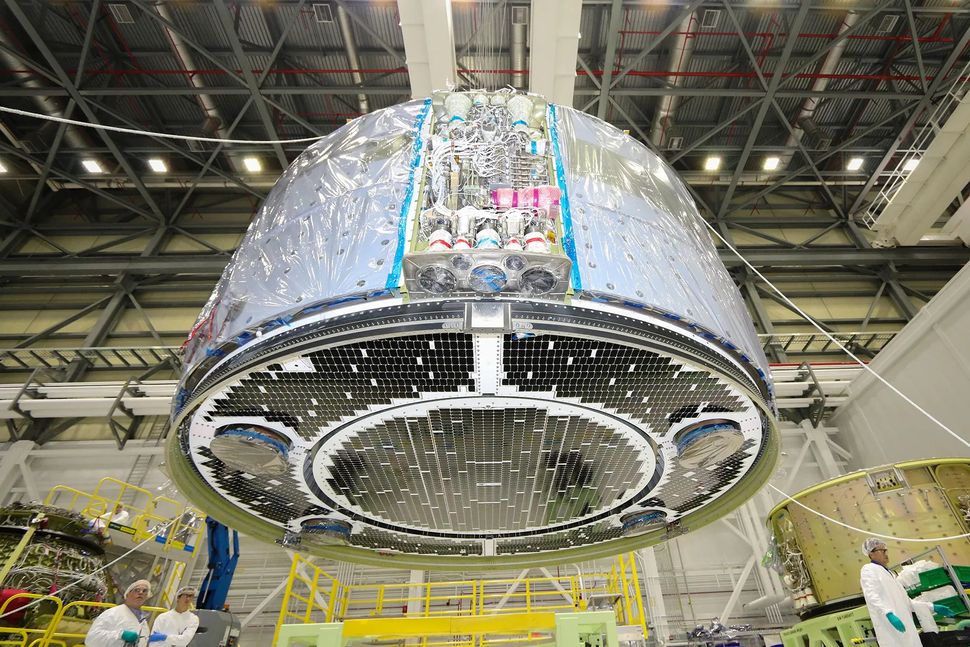
A CST-100 Starliner service module showing one of the four problematic thruster assembles (bordered by blue stripes) without its “doghouse” cover. Credit: Boeing.

The doghouse system has already seen a number of improvements since the Crew Flight Test, and the focus is now on developing seals in the thruster system valves so they can better hand the stresses and remaining heat issues. This work means that no Starliner vehicle will be ready for a 2025 launch. Further, such is the schedule for 2026 ISS missions that slotting a crewed test of Starliner in that year is liable to be difficult. NASA are therefore looking to conduct a further uncrewed flight – but rather than it be merely a flight test, the plan is to have the vehicle fly cargo to the ISS, making it an “operational” mission.

Space Sunday: Axiom Ax-4 and Vera C. Rubin

The SpaceX Dragon Grace, carrying the Axiom Mission 4 (Ax-4) crew, approaches the International Space Station with it nose cone open to expose the docking mechanism within. At the time of this shot, both spacecraft were orbiting 421 km above the coast of southern Madagascar. Credit: NASA

After delays and concerns over pressure leaks within the Russian section of the International Space Station (ISS) – see Space Sunday: frustrations and extensions and Space Sunday: Rockets, updates and Planet Nine – the Axiom Ax-4 private mission to the station finally lifted-off from Kennedy Space Centre on June 25th, carrying an international crew of four to the station.

The SpaceX Falcon Nine booster lifted-off from Launch Complex 39A at 06:31:52 UTC, carrying mission commander Peggy Whitson, a highly-experienced former NASA astronaut and now Axiom’s Director of Human Space Flight; India Space Research Organisation’s (ISRO) astronaut Shubhanshu Shukla, filling the role of mission pilot; and mission specialists Sławosz Uznański-Wiśniewski, a European Space Agency project astronaut from Poland, and Tibor Kapu representing the Hungarian Space Office.

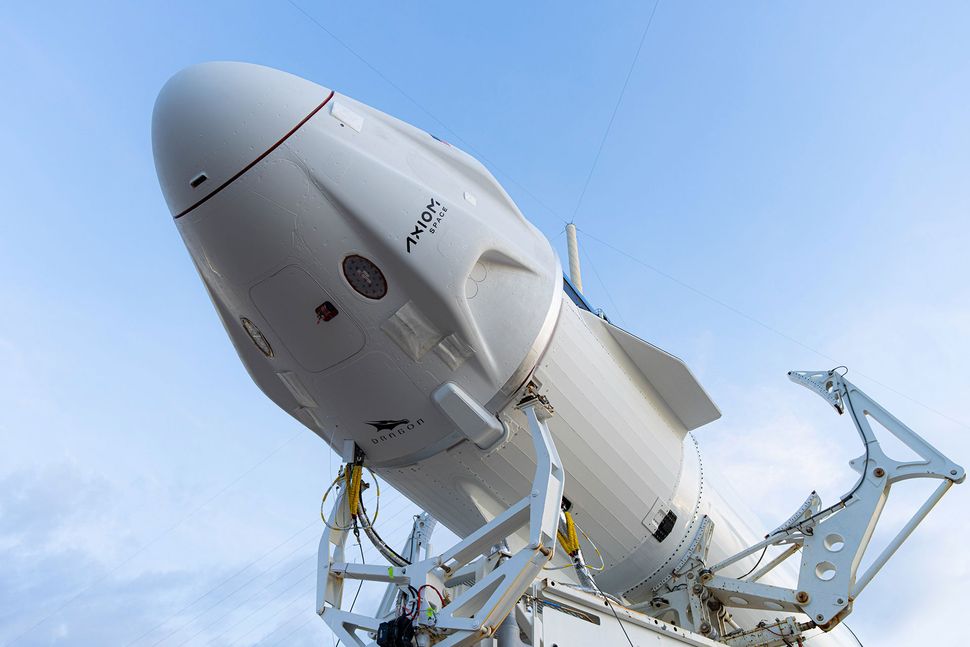
The fifth (and final) Crew Dragon vehicle – to be named Grace by the Ax-4 crew – atop its flacon 9 booster as both are raised to a vertical position at Launch complex 39-A, Kennedy Space Centre. Credit: SpaceX

The four were flying aboard the newest Crew Dragon vehicle built by SpaceX, which the crew christened Grace following a flawless launch and ascent to orbit.

We had an incredible ride uphill and now we’d like to set our course for the International Space Station aboard the newest member of the Dragon fleet, our spacecraft named ‘Grace’.
“Grace” is more than a name. It reflects the elegance with which we move through space against the backdrop of Earth. It speaks to the refinement of our mission, the harmony of science and spirit and the unmerited favour we carry with humility. Grace reminds us that spaceflight is not just a seed of engineering, but an act of good work for the benefit of every human everywhere.

– Peggy Whitson, AX-4 Crew commander

Following launch and separation from the Falcon 9 upper stage, Grace preceded on a “slow” orbital trajectory to “chase” the ISS, rendezvousing with the station some 24 hours after launch. This allowed the crew to check-out the vehicle and perform the first of their broadcasts to Earth. Docking with the ISS took place on June 26th, at 10:31 UTC, to mark the start of a say that is designed to last at least 14 days, but could extend to up to 21 days.

The Axiom Mission 4 (Ax-4) crew (in the blue jumpsuits) and the ISS Expedition 73 in a group portrait within the Harmony module of the ISS. Form left to right: back row – cosmonauts Alexey Zubritskiy, Kirill Peskov, Sergey Ryzhikov and NASA astronauts Jonny Kim and Nichole Ayers; front row: Ax-4 crew Tibor Kapu, Peggy Whitson, Shubhanshu Shukla, and Sławosz Uznański-Wiśniewski, with Anne McClain (NASA) and Takuya Onishi (JAXA). Credit: NASA

Also aboard the flight are a number of science experiments, notably from Poland and India, further emphasising the international focus of the mission. The flight is especially significant for Shukla; he is the first Indian to fly into space as a part of India’s newly-instigated astronaut corps (although not the first Indian national to fly in space), and has already been selected to fly in the first crewed mission aboard India’s home-grown Gaganyaan space capsule. His time aboard Ax-4 is very much seen as preparing him for that mission. For Axiom and NASA, Ax-4, is intended to signify a desire to maintain on-orbit operations aboard space stations as an international endeavour as the ISS researches its end-of-life in 2030, and facilities such as Axiom’s own space station take over from it.

Ax-4 also carries aboard it some special treats for everyone on the ISS: Shukla and Kapu have taken along specifically-developed national dishes and treats such as moong dal halwa, carrot halwa and mango nectar, together with a specially-formulated version of Hungarian chocolate and a range of Hungarian spices to help pep-up the taste of food on the ISS. Uznański-Wiśniewski, meanwhile worked with ESA, NASA and Polish chef and restaurateur Mateusz Gessler to develop an entire menu for the Ax-4 crew which includes pierogi, tomato soup with noodles, Polish ‘leczo’ stew with buckwheat, and apple crumble for dessert.

Nor is carrying such foods simply a matter of catering to personal whims; food can have a positive psychological impact – particularly comfort foods that bring with them memories of home and which offer a departure from the more usual offerings. As such, experiments like this can help nutritionists and psychologists bring more and better varieties of meals and foods to crews on long-duration missions, bolstering their sense of well-being and comfort.

Vera C. Rubin Opens its Eyes

Located on the El Peñón peak of Cerro Pachón, a 2,682-meter-high mountain in northern Chile is the world’s biggest digital camera, a 3.2 gigapixel charge-coupled device. It sits at the heart of the Vera C. Rubin Observatory, a major new astronomy facility capable of imaging the entire southern sky every few nights.

Originally called the Large Synoptic Survey Telescope (LSST), where synoptic describes observations that give a broad view of a subject, the observatory was first proposed in 2001, with work on the 8.4-metre primary mirror starting on 2007 with the aid of private funding.

The Vera C. Rubin Observatory imaged in 2022 during the final construction phase, seen against the backdrop of the Milky Way galaxy. The latter appears to be split in two by a dark path called the Great Rift. This is actually a shroud of dust sitting between Earth and out view of the centre of our galaxy, preventing the light of the stars beyond it breaking through as it scatters visible light. Credit: Rubin Observatory/NSF/AURA/B. Quint

In 2010, the observatory became the top-rated large ground-based project in the 2010 Astrophysics Decadal Survey, moving to be funded through and overseen by the US National Science Foundation (NSF), with the actual funding provided by the US Department of Energy and the non-profit international LSST Discovery Alliance.

Overall construction of the physical observatory commenced in 2015, with initial testing of the on-sky observational capabilities taking place in late 2024 utilising an engineering test camera, with the First Light images captured with the observatory’s Simonyi Survey Telescope and the 3.2 gigapixel camera taken on June 23rd, 2025.

The primary aim of the observatory is designed to build a continuous survey of the southern sky over 10-years in an attempt to answer a number of questions, including:

  • How did the Milky Way galaxy form?
  • What is 95% of the Universe made of?
  • What will a full inventory of Solar System objects reveal?
  • What will we learn from watching millions of changes in the night sky over 10 years?
Combining 678 separate images taken by the Vera C. Rubin Observatory in just over seven hours during its First Light test, this mosaic shows a region of space in the southern skies in which two nebula – the Lagoon Nebula (Messier 8), 4000 light-years away and shown in a vibrant pink colour, and the Trifid Nebula (Messier 10), some 5,000 light years away and also pink-looking – can be seen. Labelled are various stars and galaxies which lie in, before or beyond the Nebulae. The Lagoon Nebula is a stellar nursery, and is brightly illuminated by a cluster of young, massive stars within it, their illumination allowing it to be just visible with even a modest telescope. Click for full size. Credit: Rubin Observatory/NSF/AURA

To answer these questions the observatory will carry out science in four principal areas:

  1. Understanding the nature of dark matter and dark energy.
  2. Creating an inventory of the Solar System.
  3. Mapping the Milky Way.
  4. Exploring objects that change position or brightness over time.

The telescope’s wide field of view is extraordinary – 3.5 degrees in diameter, or 9.6 square degrees. Combined with the telescope’s large aperture (light-collecting ability), the telescope’s optics have an imaging capability three times that of the largest-view telescopes currently in use. This means the observatory can “see” literally everything – from the smallest sources of reflected light in our own solar system to remote deep-space objects.

A rendering of Vera C. Rubin’s Simonyi Survey Telescope (in the centre of the ring structure) and its mounting frame. Credit: Rubin Observatory project office.

To achieve this, the Simonyi Survey Telescope’s 8.4 metre diameter primary mirror is supported by a 3.2-metre diameter secondary mirror, and a tertiary 5-metre mirror, the world’s largest convex mirror. Both the primary and tertiary mirrors were designed to be placed together to make the telescope very compact and easier to re-orient, which it must do quickly and efficiently each night.

Further, it allows the placement of three additional corrective mirrors to reduce image aberrations without over-complicating the optical train. This in turn allows the telescope to avoid the usual adjustable optical mechanisms required to counter atmospheric image dispersion as a telescope is repointed and encounters different atmospheric conditions. This is particularly important as the Vera Rubin must be able to bet re-point and be ready to take an image within 5 seconds after the previous image capture has been confirmed – leaving no time for the usual atmospheric adjustments.

First light with a telescope refers to the first time a telescope and its instruments capture one of more astronomical images after its construction. This moment is significant for astronomers and engineers as it is an important step towards fully calibrating a telescope and correcting potential issues within the optics so that it is ready to start formal operations.

Made from over 1100 images captured by the Vera C. Rubin Observatory during its 10-hour First Light test, this mosaic contains an immense variety of objects, including some 10 million other galaxies, demonstrating the broad range of science Rubin will transform with its 10-year Legacy Survey of Space and Time. Annotated within it are a number of galaxies and brighter stars. Click the image for full size. Credit: Rubin Observatory/NSF/AURA

For the Vera C. Rubin observatory, First Light tests produced images revealing over 10 million galaxies and led to the discovery over 2,000 new asteroids. Once operational, the observatory will be capable to capture more information about the universe than all the optical telescopes used throughout history thus far, combined. Its image gathering capability means it will be generate 20 terabytes of image data per night. This data will be collected and transmitted to a series of “data brokers” around the world, ensuring that the data is not only secured across multiple redundant sites, but allows the brokers to serve the information and alerts to astronomers and research centres globally.

To assist in making sure astronomers and institutions can access the data and images they are interested in, the cloud-based data brokers are supported by a dedicated system called Data Butler. This holds all the relevant metadata for every image captured by the observatory, allowing astronomers with access to it to query it using astronomical terms – object type, time scale of observations, object co-ordinates, etc., and receive the images they need.

Vera Florence Cooper Rubin, 1828-2016. Credit: Mark Godfrey

The alert system allows the system to identify “transients”, unexpected events which could require an immediate response by astronomers: things like supernovas, kilonovas that produce gravitational waves, novas, flare stars, eclipsing binaries, magnetar outbursts, asteroids and comets moving across the sky, quasars, and so on.

Once operational it is expected that the observatory will issue up to 10 million such alerts per night, all of which will be parsed through the Data Brokers, allowing the system to analyse them and determine what should be immediately passed on to astronomers for further / detailed investigation.

In all, the Vera C. Rubin Observatory – named for Vera Florence Cooper Rubin, the American astronomer who pioneered research into galaxy rotation rates which is seen as evidence for the existence of dark matter – is set to revolutionise our visual understanding of the universe, our galaxy and our own solar system. However, there is a cloud on the horizon.

As it moves towards entering service, the observatory’s major source of funding, the National Science Foundation, is facing significant budget cuts and uncertainty about its future operation allocation.

Under the Trump Administration’s budget, NSF is set to have its budget cut by 56%, from US$8.83 billion under the Biden Administration to just US $3.9 billion. Already, the Trump administration has frozen or terminated 1,600 NSF grants. While on the day following Vera C. Rubin’s First Light test, 1,800 NSF staff were informed the administration intends to remove them from their current headquarters building as a part of “government efficiency”. Ironically, NSF only moved into the building under the first Trump administration. Worse, no word has been given as to where NSF staff are to be relocated. As a result, the attempt to displace the NSF is meeting strong resistance from both Capitol Hill and the American Federation of Government Employees (AFGE).

The particular concern for the Vera C. Rubin observatory is that if the Trump budget passes as is, the NSF’s Mathematical and Physical Sciences Directorate, which is responsible for funding astronomical activities under the NSF’s remit, will only have an operation budget of US $500 million. This means that optical and radio centres  such as Kitt Peak, and Cerro Tololo Inter-American Observatory some 10 km from Vera C. Rubin, are to be “phased out” of the NSF’s budget, with the hope their operations can be transferred to “other organisations”. Similarly, the Nobel Physics Prize winning Laser Interferometer Gravitational Wave Observatory (LIGO), is to have its budget reduced by 40%, resulting in the closure of one of its two facilities, reducing its effectiveness enormously.

In response to concerns the Trump Administration emphasises “support” for the observatory, noting its 2025/26 budget allocation is increased from US $17.7 million to US $32 million over 2024/25. However, the former budget amount was for the final development phase of the project, not operations, and the US$32 million promised to the observatory is some 20% less than had been requested in order for it to start observational operations.

These concerns aside, the First Light images from Vera C. Rubin are astonishing – and one hopes the observatory will be funded to a point where it can complete its initial 10-year mission.

Space Sunday: Rockets, updates and Planet Nine

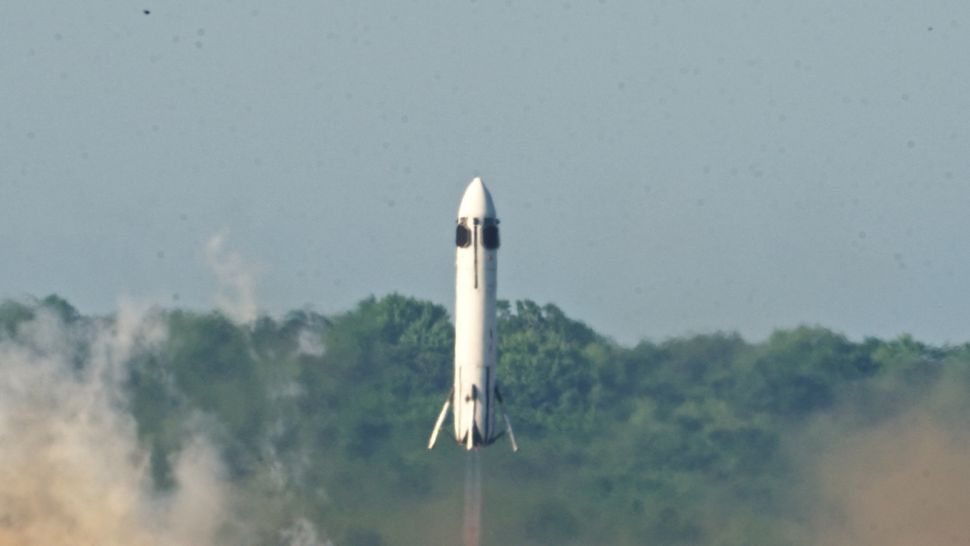
Honda’s 6.3 m tall experimental reusable rocket stage, with legs deployed, readies to land after an ascent to just under 300 metres in its first flight. Credit: Honda R&D Co., Ltd

Honda is known for many things: cars, motorcycles, engines, power tools robots, bicycles, aircraft, rocket motors – and now reusable rockets.

The company only formally announced its interest in entering the world of reusable launch systems in 2021, and since then things have been a little quiet. Well, up until this past week, that is; on Tuesday 17 June 2025, Honda’s research and development arm, Honda R&D Co., Ltd., announced the successful launch and landing of its first experimental reusable rocket.

The announcement appeared to come out of left-field for many in the space media – with the success, inevitably, being contrasted to that of SpaceX, a company with more than 20 years in the business, and not to Honda’s advantage; something that’s a little unfair given the head-start SpaceX has – and possibly unwise, given Honda’s abilities.

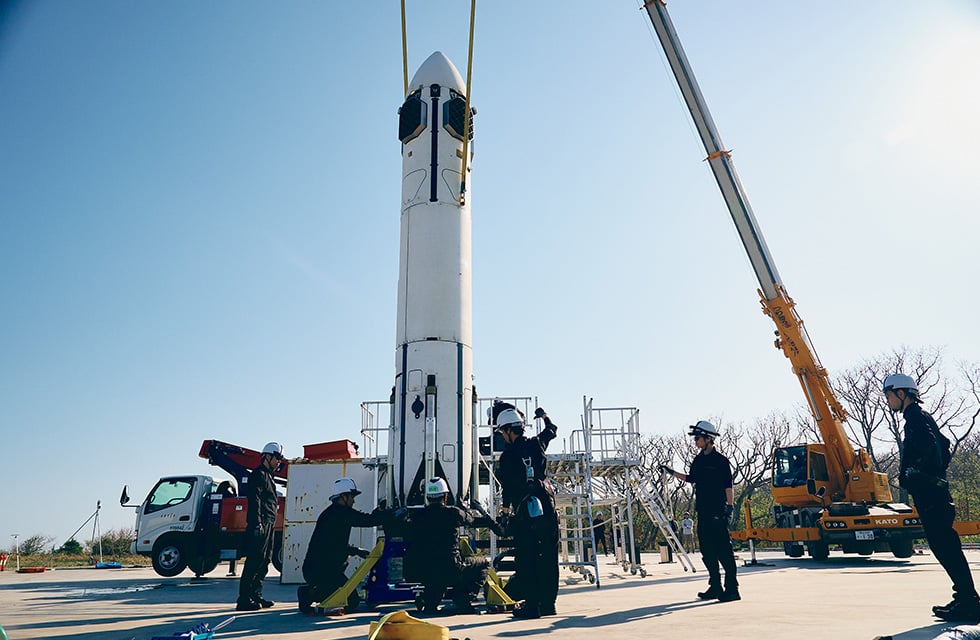
Honda’s experimental reusable rocket stage being prepped for launch. Credit:Honda R&D Co., Ltd

The vehicle, measuring 6.3m tall and 85 cm in diameter and with an all-up launch mass of 1.3 tonnes, was launched out of Honda’s facility in Taiki, Hokkaido. It rose to an altitude of 271.4 metres, before making a controlled descent to land just 37 centimetres from its target. It is the first step towards a stated goal for Honda to make a full sub-orbital launch by 2029. The launch was intended to carry out a range of aerodynamic tests and gather data, and Honda defined it as being a complete success.

Honda’s involvement in developing a launch vehicle is part of the overall goal of the Japanese government to double its space industry’s turnover to US $55.20 billion per annum by 2030.This will be through a combination of government-driven space activities managed by JAXA, the Japan Aerospace Exploration Agency, and subsidising private endeavours, including launch and satellite systems. However, while its is a goal Honda seemingly intends to support, the company is the first to admit that at this point in time, it has no clear goals for commercialising its reusable launch system once fully developed.

Even so, the company has the size and power to achieve a lot, and potentially become a major player in the commercial launch business.

The Search for Planet Nine – New Evidence?

I’ve written about the search of “Planet Nine” on numerous occasions as evidence for and against its existence have bounced back and forth down the years, but now a new study has identified possible candidates which might prove its existence.

As a quick recap: were it to exist, Planet Nine would be roughly 5–10 times the mass of Earth, orbiting somewhere between 400–800 times farther from the Sun. The problem here is that whilst it may well be big, it is so far away from the Sun that it will reflect very little sunlight, making it hard to detect via conventional means.

Because of this, theories as to the planet’s possible orbit and location have to a large part depended on mathematical models and some degree of assumption based on the orbits of clusters of large Kuiper Belt Objects.

An artist’s impression of Planet Nine with the Milky Way as a backdrop, as the planet orbits the distant Sun. The oval around the Sun represents the orbit of Neptune. Credit: Tom Ruen, background from ESO

Now, a team led by Amos Chen from the National Tsing Hua University, Taiwan, have taken a step in a different direction in and attempt to locate a potential Planet Nine – one that perhaps seems so obvious, it might seem surprising no-one has tried it before: looking for the thermal footprint of the planet, rather than any optical evidence.

To explain: all objects in space tend to give off heat – particularly planets. But here’s the thing: when you double the distance from the sun, reflected light becomes 16 times fainter (following what scientists call an inverse fourth-power relationship); however, its thermal radiation signature only diminishes by a factor of four. Thus, whilst still faint, the thermal signature of a planet a long way away should be easier to detect then by searching for it visually.

With this in mind, Chen and his team took the most common computer models that suggest where Planet Nine might reside in the night sky and then turned to the data gathered on that portion of the sky by the Japanese ASTRO-F AKARI space telescope during its operational period to see if they could find something unusual.

Launched in 2006 into an Earth-Sun synchronous orbit, AKARI (“Light”) carried out one of the most sensitive whole sky surveys in the mid- and far-infrared. As such it generated a wealth of data much of which was recorded multiple times for the same areas of the sky.

An artist’s illustration of JAXA’s infrared astronomy satellite ASTRO-F AKARI. Credit: JAXA

This is important because Planet Nine is so very far from the Sun, it will not appear to move over spans of days, making it exceptionally hard to differentiate from the background of stars and galaxies and gas and dust clouds. However, over a course of months, it will be seen to move, so by comparing images gathered by AKARI at different times of the year, the team were able to examine the specific area of sky the models suggest Planet Nine might be found, longing for signs of something moving in a manner predicted by the computer models, and with the kind of thermal signature something the size of Planet Nine would most likely have.

They discovered two possible candidates which met the criteria. This doesn’t mean that one of them might turn out to be Planet Nine; as the team notes, there is potential  for Planet Nine to be there in the form of one of the candidates, but much more work in observing both to determine what they might actually be.

There is a further complication in this: the computer modelling used by the team is based on the orbits of a number of Kuiper Belt objects which are both extreme, but also quite closely packed. This has led to the hypothesis that they have been “shepherded” into their close-knit groups by the influence of Planet Nine’s own gravity, and therefore, they can be used to define the likely arc of the planet’s orbit.

The problem here is, again as I’ve recently written about, there is a growing number of other Kuiper Belt objects which exist within their own extreme orbits well apart of the clusters. If there was a large body out beyond them, then realistically, it should have affected and shaped their orbits as well, coaxing them into similar orbits to the identified groups. Thus, there is a lot more work to be done before it can be definitively started that the solar system once more has nine planets orbiting the Sun.

In Brief

Axiom Ax-4 Mission

As noted in my previous Space Sunday, the planned fourth mission by Axiom Space to send 4 people to the International Space Station has been plagued by problems in actually getting off the ground. None of the issues have been Axiom’s fault, but a combination of weather than technical issues.

In that piece, I noted that the most recent technical issue was that of pressure leaks within the “vestibule” tunnel at the aft end of the Zvevzda module. Whilst not a new problem for the module, the losses had until recently been relatively under control before spiking again ahead of the launch.

The Axiom AX-4 crew: From left to right: mission specialist Sławosz Uznański-Wiśniewski; commander Peggy Whitson; pilot Shubhanshu Shukla, and mission specialist Tibor Kapu. Credit: Axiom

As a result, NASA held the launch, pending further checks and remedial action by the cosmonauts on the ISS (who, under the management of Roscosmos, are entirely responsible for the status of the Russian section of the ISS). The hold meant the launch would not take place before June 19th, 2025.

However, this target was then moved to June 22nd, as the pressure leaks continued, despite assurances from Roscosmos. Therefore, the decision was taken on June 19th, to scrub the June 22nd launch attempt. At the time of writing, a new target launch date had not been released.

Starship Explodes on the Test Stand

On 04:00 UTC on Thursday, June 19th, a SpaceX Starship exploded whilst on the test stand at the company’s Boca Chica, Texas facilities.

The 52-metre tall vehicle, intended to form the upper stage of the company’s massive heavy-lift launch system, was being prepared for the next attempt to complete a test flight from end-to-end with all objectives successful met.

Part of these tests involve static fire tests of the motors on both the booster and the Starship upper stage. The vehicle in question had already completed a test of one of its motors and the explosion occurred during preparation for a test of all six engines. These tests take place at a sub-facility within the SpaceX Starbase facilities referred to as Massey’s Test Facility, well removed from the main launch / recovery facilities.

No-one was injured in the explosion, although the vehicle was utterly destroyed. Early indications from SpaceX are that the fault lay with one of the vehicle’s composite overwrapped pressure vessels (COPV). These are pressure-containing units typically used in spaceflight due to their high strength and low weight.

The explosion of the Starship at the Massey Test Facility, Starbase City, Boca Chica, June 19th, UTC

The COPV in question was holding pressurised nitrogen in its gaseous state, when it ruptured. There are multiple COPVs within the Starship payload bay, and significantly, they are located close together and have propellant feed lines running between them to serve the vehicle’s header tanks up in its nose – the tanks that are intended to provide propellants to the vehicle’s motors during atmospheric descent and capture manoeuvres.

The running theory is that the rupture of one COPV may have over-pressured the vehicle hull and compromised others COPV units and the header tanks propellant feeds, and compromised the main propellants tanks, bringing the 10% load of liquid methane the vehicle had aboard at the time of the explosion and the almost full load of liquid oxygen the vehicle had into contract with a source of ignition.

Interestingly, a whistleblower had in May raised concerns about a lack of professionalism at the Starbase site relating to how crews charged with assembling vehicles there treated the COPVs with a lack of respect, although it is far too earlier to say if his statements reflect ate actual state-of-play and if so, whether such poor handling was a factor in the explosion.

 What is clear is that there was significant damage done to the Massey Test Facility itself, notably to the infrastructure required to feed propellants to Starship vehicles undergoing testing there – the facility now being the only facility where such pre-flight testing of Starship vehicles can occur. As such it is likely to be some time before there are any further attempts to launch Starship / Super Heavy test articles.

China Completes Anticipated On-Orbit Rendezvous

As previewed in my previous Space Sunday update, China has completed an on-orbit rendezvous between two remote vehicles operating in geostationary orbit.

As noted in that article, China is developing the means to carry out high-orbit rendezvous capabilities, with the intention of developing a means of extending the operational life of their various satellites. Both Shijian-21, launched in 2021, and Shijian-25, launches earlier this year, have been moving towards you another since the start of the month. Initially, Shijian-25 manoeuvred towards Shijian-21, the latter having been in a parking orbit for a number of years after a busy early life, which included hauling a defunct communications satellite to a graveyard orbit.

An initial rendezvous between the two had been expected sometime after June 12th, but at the time of my last article, it wasn’t clear if it had actually taken place. However, it appears that both vehicles made contact on both June 13th and June 14th, or at least came very close to making contact. The aim of Shijian-25 is to provide a refuelling capability for satellites, which Shijian-21 is liable to require given its very active early on-orbit career. Success, if not already achieved, would and put China on an even footing with the United States in terms of on-orbit capabilities.

Space Sunday, of planets, signs of life, and an award

Comparing the large dwarf planets with Earth and the Moon. Credit: unknown

As I noted back in July 2024, classifying just what “is” and “is not” a “planet” is something of a minefield, with the entire debate going back to the 1800s. However, what really ignited the modern debate was – ironically – the search for the so-called “Planet 9” (or “Planet X” as it was then known), a body believed to be somewhere between 2 and 4 times the size of Earth and around 5 times its mass (see: Space Sunday: of “planet” and planets).

That hunt lead to the discovery of numerous bodies far out in the solar system’s Kuiper Belt which share similar characteristics to Pluto (size, mass, albedo, etc), such as Eris (which has at least one moon) Makemake, Haumea (which has two moons), Sedna, Gonggong and Quaoar (surrounded by its own ring of matter), all of which, like Pluto, appear to have reach a hydrostatic equilibrium (aka “nearly round shape”).

Is it a dwarf planet? A TNO? A Plutoid? This Euler diagram, used by the  IAU Executive Committee, demonstrates the complexity in trying to classify objects within the solar system. Credit: Holf Weiher

The discovery of this tiny worlds led to an increasing risk that the more we looked into the solar system, so the number of planets would require updating, causing confusion. So, in 2006, the IAU sought to address the issue by drawing up a definition of the term “planet” which would enable all these little planet-like bodies to be acknowledged without upsetting things too much. In the process, Pluto was relegated to the status of “dwarf planet”, in keeping with the likes of Ceres in the inner solar system, Eris, Makemake et al. This make sense – but that’s not to say it didn’t cause considerable upset.

The definition was also flawed from the outset in a couple of ways. Firstly, if taken strictly, the criteria the IAU had chosen meant that Saturn Jupiter, Mars and Earth were actually not planets, because all of them have not “cleared the neighbourhood around [their] orbit[s]”: all of them have gatherings of asteroids skipping around the Sun in the same orbit (notably some 10,000 for Earth and 100,000 for Jupiter).

Secondly, that body has to be “in orbit around the Sun” pretty much rules out calling called planet-like bodies orbiting other stars “planets”; something which given all the exoplanet discoveries by Kepler and TESS et al has become something of a bite in the bum for the IAU. As a result, the “pro-Pluto is a planet” brigade have felt justified in continuing their calls for Pluto to regain its planetary status.

Several attempts have been made to try to rectify matters in a way that enables the IAU to keep dwarf planets as a recognised class of object (including Pluto) and which addresses the issues of things like exoplanets. The most recent attempt to refine the IAU’s definition took place in August 2024, at the 32nd IAU General Assembly, when a proposal offering a new set of criteria was put forward in order for a celestial body to be defined as a planet.

Unfortunately, the proposal rang headlong into yet more objections. The “Pluto is a planet” die-hards complained the new proposal was slanted against Pluto because it only considered mass, and not mass and hydrostatic equilibrium, while others got pedantic over the fact that while the proposal allowed for exoplanets, it excluded “rogue” planets – those no longer bound to their star of origin but wandering through the Galaxy on their own – from being called “planets”. Impasse ensued, and the proposal failed.

In the meantime, astronomers continue to discover distant bodies that might be classified as dwarf planets, naturally strengthening that term as a classification of star system bodies. This last week saw confirmation that another is wandering around the Sun – and a very lonely one at that.

Called 2017 OF201 (the 2017 indicating it was first spotted in that year), it sits well within the size domain specified for dwarf planets, being an estimated 500-850 metres across, and may have achieved hydrostatic equilibrium (although at this point in time that is not certain). Referred to as an Extreme Trans-Neptunian Object (ETNO, a term which can be applied to dwarf planets and asteroids ), it orbits the Sun once every 25,000 years, coming to 45 AU at perihelion before receding to 1,700 AU at aphelion (an AU – or astronomical unit – being the average distance between Earth and the Sun).

As well as strengthening the classification of dwarf planets (and keeping Pluto identified as such), 2017 OF201 potentially adds weight to the argument against “Planet 9”, the original cause for the last 20 years of arguing over Pluto’s status.

2017 OF201 imaged by the Canada–France–Hawaii Telescope on 31 August 2011

To explain. Many of ETNOs and Trans-Neptunian Objects (TNOs) occupy very similar orbits to one another, as if they’ve somehow been clustered together. For example, Sedna has a number of other TNOs in orbits which closely match its own, leading the group as a whole to be referenced informally as “sednoids”. Among “Planet 9” proponents, this is taken as evidence for its existence, the argument being that only the influence of a large planetary body far out beyond Neptune could shepherd these ETNOs and TNOs into clusters of similar orbits.

However, by extension, this also means that 2017 OF201 – together with 2013 SY99 and 2019-EU5 should have also fallen to the same influence – but none of them have, orbiting the Sun quite independently of any clusters. This potentially suggests that rather than any mysterious planet hiding way out in the solar system and causing the clustering of groups of TNO orbits, such grouping are the result of the passing influence of Neptune’s gravity well, together with the ever-present galactic tide.

Thus, the news concerning 2017 OF201 confirmation as a Sun-orbiting, dwarf planet-sized ETNO both ups the ante for Pluto remaining a dwarf planet and simultaneously potentially negating the existence of “Planet 9”.

Jupiter: Only Half the Size it Once Was?

Definitions and classifications aside, Jupiter is undoubtedly the planetary king of the solar system. It has a mass more than 2.5 times the total mass of all the other planetary bodies in the solar system (but is still only one-thousandth the mass of the Sun!) and has a volume 1,321 times that of Earth. It is also believed to have been the first planet to form in the solar system; possibly as little as one million years after the Sun itself was born, with Saturn following it shortly thereafter.

Jupiter is an important planet not just because of its dominance and age, but because of the role it and Saturn played in the overall formation of the solar system, although much of this is subject to contention. The primary concept of Jupiter’s and Saturn’s voyage through the solar is referenced as the “grand tack hypothesis“, on account of the two giants migrating through the solar system in the first few millions of years after they form.

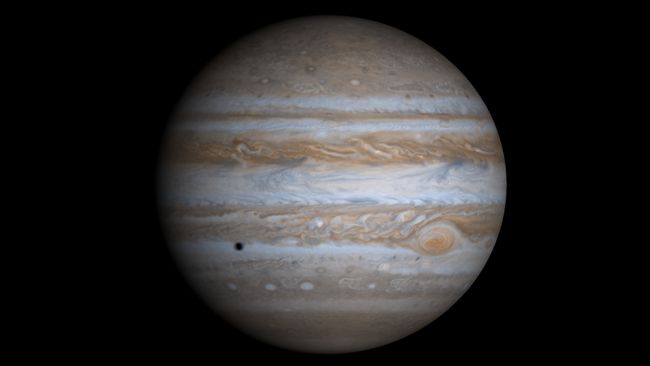
Jupiter as it is today, as seen by the Hubble Space Telescope. Not long after its formation, it might have been twice its current size. Note the black dot to the left of the image is the shadow Io, the innermost of Jupiter’s large moons. Io itself is outside of the frame. Credit: NASA/JPL / University of Arizona

Under this theory, Jupiter formed around 3.5 AU from the Sun, rapidly accreting a solid core and gaining mass to a point where it reach around 20 times Earth’s mass (although Earth would not form for another 45-50 million years). At this point, it’s mass and size (and those of Saturn) were such that they entered into a complex series of interactions with one another and the Sun, with both migrating towards the Sun, likely destroying a number of smaller proto-planets (all of them larger than Earth) along the way. At some point, these interactions reversed, and both infant planet started migrating away from the Sun again, clearing the way for the remnants of the smaller proto-planets they’d wrecked to gradually accrete to form what we now know to be the inner planets, as Jupiter and Saturn continued outwards to what are now their present orbits.

Believed to have occurred over between 4 to 6 million years, the “grand tack hypothesis” is contentious, as noted, and there are alternate theories concerning Jupiter’s formation and the early history of the solar system. Because of this, astronomers Konstantin Batygin (who, coincidentally, is one of the proponents of the “Planet 9” theory) and Fred C. Adams used complex computer modelling to try to better understand Jupiter’s formation and early history, in order to try to better determine how it may have behaved and affected the earliest years of the solar system’s formation.

In order to do this, and not be swayed by any existing assumptions concerning Jupiter’s formation, they decided to try to model Jupiter’s size during the first few million years after its accretion started. They did this using the orbital dynamics of Jupiter’s moons  – notably Amalthea and Thebe, together with Io, Jupiter’s innermost large moon – and the conservation of the planet’s angular momentum, as these are all quantities that are directly measurable.

Taken as a whole, their modelling appears to show a clear snapshot of Jupiter at the moment the surrounding solar nebula evaporated, a pivotal transition point when the building materials for planet formation disappeared and the primordial architecture of the solar system was locked in. Specifically, it reveals Jupiter grew far more rapidly and to a much larger size than we see today, being around twice its current size and with a magnetic field more than 50 times greater than it now is and a volume 2,000 times greater than present-day Earth.

Having such a precise model now potentially allows astronomers to better determine exactly what went on during those first few million years of planetary formation, and what mechanisms were at work to give us the solar system we see today. This includes those mechanisms which caused Jupiter to shrink in size to its present size (simple heat loss? heat loss and other factors?) and calm its massive magnetic field, and the time span over which these events occurred.

Yeah. Finding Life is Hard

In March, I reported on a possible new means to discover evidence of biosigns on worlds orbiting other stars by looking for evidence of methyl halides in their atmospheres (see: Space Sunday: home again, a “good night”, and seeking biosigns). In that reported, I noted that astronomers had potentially found traces of another element associated with organics, dimethyl sulphide (DMS) , within the atmosphere of exoplanet K2-18b, a hycean (water) world.

This is the strongest evidence yet there is possibly life out there. I can realistically say that we can confirm this signal within one to two years. The amount we estimate of this gas in the atmosphere is thousands of times higher than what we have on Earth. So, if the association with life is real, then this planet will be teeming with life.

– Prof Nikku Madhusudhan, lead investigator into the study of the atmosphere of K2-18b and the apparent discovery of dimethyl sulphide.

Now in fairness, the team behind the discovery did note that it needed wider study and confirmation. Extraordinary claims requiring extraordinary proof and all that. And this is indeed what has happened since, and the findings tend to throw cold water (if you forgive the pun) on that potentially wet world 124 light-years away, having  dimethyl sulphide or its close relative, dimethyl disulfide (DMDS) in anywhere near detectable levels.

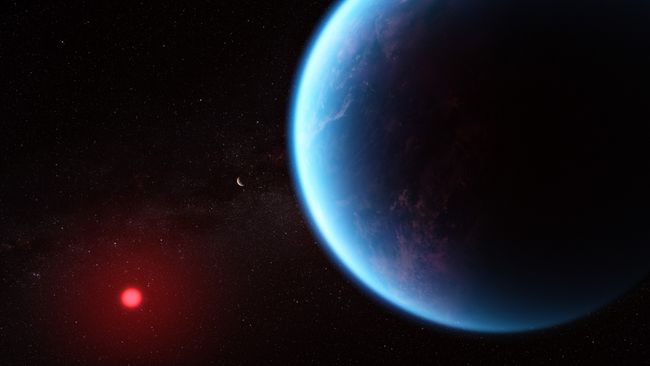
An illustration of what K2-18b may look like. Credit: NASA / ESA / CSA / Joseph Olmsted

The more recent findings come from a team at the University of Chicago led by Rafael Luque and Caroline Piaulet-Ghorayeb. Like Madhusudhan and his team at Cambridge University, the Chicago team used data on K2-18b gathered by the James Webb Space telescope (JWST). However, in a departure from the Cambridge team, Luque and his colleagues studied the data on the planet gathered by three separate instruments: the Fine Guidance Sensor and Near Infrared Imager and Slitless Spectrograph (FGS-NIRISS), the Near Infrared Spectrograph (NIRSpec) and the Mid-Infrared Instrument (MIRI) – the latter being the sole source of data used by the Cambridge team.

Combing the data from all three instruments helps ensure a consistent, planet-wide interpretation of K2-18b’s atmospheric spectrum, something that cannot be obtained simply by referencing the data from a single instrument. And in this case it appears that by only focusing on MIRI, the Cambridge team inferred a little too much in their study.

We reanalyzed the same JWST data used in the study published earlier this year, but in combination with other JWST observations of the same planet … We found that the stronger signal claimed in the 2025 observations is much weaker when all the data are combined. We never saw more than insignificant hints of either DMS or DMDS, and even these hints were not present in all data reductions.

Caroline Piaulet-Ghorayeb

Most particularly, the much broader set of spectrographic data gathered from the three instruments points to some of the results observed by Madhusudhan’s team could actually be produced entirely abiotically, without any DMS being present. The Chicago paper has yet to be peer-reviewed, but their methodology appears sufficient to roll back on any claims of organic activities taking place on K2-18b or within its atmosphere.

AAS Recognises Gene Kranz

The “original four” NASA Flight Directors. Back row, (l to r): Glynn Lunney and John Hodge. Bottom (l to r): Gene Kranz and Chris  Kraft. Credit: NASA

Eugene Francis “Gene” Kranz is a genuine NASA legend. He may never have flown in space, but he played a crucial role – along with the late Christopher C. Kraft (also see: Space Sunday: a legend, TESS and a rocket flight), John Hodge and Glynn Lunney (also see: Space Sunday: more from Mars and recalling a NASA legend) – in formulating how NASA runs it manned / crewed spaceflights out of their Mission Operations Control Centre, Houston.

He is particularly most well-known for his leadership of his White Team during the Apollo 11 Moon landing in 1969, and for leading the work to get the crew of Apollo 13 back to Earth safely when that mission faced disaster. As a result of the latter, Kranz and his entire White Team received the Presidential Medal of Freedom in 1970 as well as being immortalised in film and television (although the line “Failure is not an option” was not something Kranz ever said – he instead used it as the title for his 2000 autobiography; the quote was purely fiction and used in the 1995 Ron Howard film Apollo 13, which saw Ed Harris play Kranz).

His career at NASA ran from 1960 through 1994, during which he rose from Mission Control Procedures Officer to Director of Mission Operations. As a result, he has been the recipient of NASA’s own Distinguish Service Medal, Outstanding Leadership Medal and Exceptional Service Medal.

And he has now been similarly recognised by the American Astronautical Society, which on May 21st, 2025, named him the recipient of their 2024 Lifetime Achievement Award. Only presented every 10 years, the award recognises Kranz for his “exemplary leadership and a ‘must-never-fail’ style that ensured historic mission successes, empowered human space exploration, saved lives and inspired individuals around the world.”

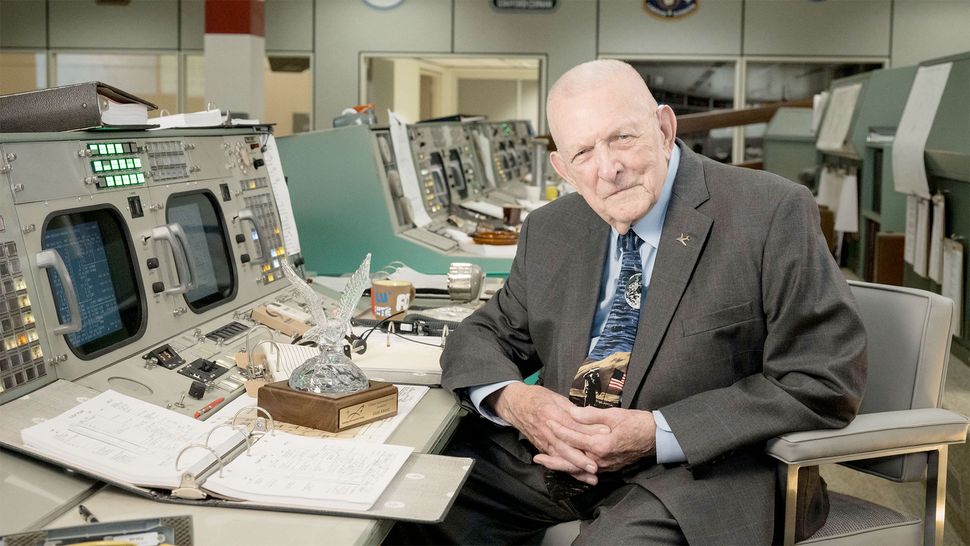
The ceremony took place at the Johnson Space Centre, Houston, Texas, where Kranz was also able to revisit the place where he and his teams and colleagues made so much history: the Apollo Mission Operations Control Room (MOCR – pronounced Mo-kerr – NASA has to have an acronym for everything 🙂 ).

Gene Kranz, with his AAS Lifetime Achievement Award, seated at the restored console he occupied at the White Team Lead Flight Director, notably during the Apollo 11 and Apollo 13 missions. Credit: NASA

The latter had been recently restored as a direct result of a project initiated and driven by Kranz in 2017 in memory of Apollo and so many of his colleagues who have since passed away (the most recent, sadly, being Robert Edwin “Ed” Smylie whose team worked alongside Kranz’s White Team to make sure the Apollo 13 astronauts returned to Earth safely, and who passed away on April 21st, 2025). Fully deserving of the AAS award, Gene Kranz remains one of the stalwarts of NASA’s pioneering heydays.

Space Sunday: FRAM2, private missions, asteroids

Crew Dragon Resilience splashes down of the coast of California at the end of the 4-day FRAM2 mission. Credit: SpaceX

Previewed in my previous Space Sunday update, the FRAM2 mission lifted-off almost precisely on time from Kennedy Space Centre’s Launch Complex 39A at 01:46:50 UTC on April 1st, carrying the first humans to ever orbit the Earth in a low-Earth polar orbit.

The ascent to orbit, travelling south from the space centre, proceeded smoothly, the SpaceX Crew Dragon capsule and service module (“Trunk” in SpaceX parlance) entering a low Earth orbit with an apogee of 413 km and a perigee of 202 km some eight minutes after launch. The orbit, referred to as a polar retrograde, due to the fact the vehicle travelled first over the South Pole then around and over the North Pole, lay at an inclination of 90.01°, breaking the previous high inclination orbit record for a crewed space vehicle set by Vostok 6 in 1963.

Aboard the vehicle were Chinese-born, but Maltese citizen and crypto currency entrepreneur Chung Wang, who will be the mission’s commander and is a co-bankroller of the flight; Jannicke Mikkelsen, a Scottish-born Norwegian cinematographer and a pioneer of VR cinematography, 3D animation and augmented reality, who is the other co-bankroller for the flight; Eric Philips, a 62-year-old noted Australian polar explorer, who will be the first “fully” Australian national to fly in space, and Rabea Rogge, a German electrical engineer and robotic expert.

The 4-day mission comprised an extensive science programme, focusing on human health in space, growing food supplements on-orbit (oyster mushrooms) and investigating the Phenomena known as STEVE (see my last Space Sunday update) from orbit. The mission also included educational broadcasts to schools and a lot of social media-posted videos.

A video of Antarctica recorded by the FRAM2 crew. Seen in the footage is videographer Jannicke Mikkelsen, and the voice-over is from Eric Philips

To assist in observations and measurements, Resilience was fitted with the transparent Copula to replace the outer  airlock hatch and docking mechanism within the forward end of the capsule, affording the crew near-360º views of Earth once the vehicle’s protective nose cone had been opened.

The launch itself required a complete update of the Crew Dragon navigation software, originally written for lower 51º inclination orbits. This included a complete overhaul of the launch abort software for both capsule and launch vehicle. The latter was made necessary by the fact the ascent to orbit carried the vehicle over parts of South America, so any abort situation had to ensure that both booster and capsule would not return to Earth over land, and the capsule would be able to splashdown safely with the crew.

What really marked this mission, however, was the sheer transparency of operations; nothing in the video logs was pre-scripted or rehearsed; camera were rolling with conversations going on in the background – including conversations between crew members and SpaceX mission control about “known issue” with the space vehicle (not sure how significant – but being told that there is a “known issue” with a vehicle when you’re sitting in it in space might not be the most comforting thing to hear!), informal chit-chat during observations and an introduction to the fifth “crew member”, Tyler.

A compilation video of the mission, including shot through the inner hatch of the airlock showing Earth beyond the Copula. Note the inner hatch could also be opened to allow crew to enter the forward are and look out of the Cupola

While the mission had a lot of science goals – including testing a portable MRI unit, carrying out x-rays of the human body, studies into blood and bone health and glucose regulation in the body in micro-gravity – it has not stopped criticism being levelled at it, with some scientists stating the period spent in space being too short to yield practical results in some areas, and other aspects of the mission being labelled “a notch above a gimmick”.

For Chung, Mikkelsen and Philips in particular, however, the mission was as much personal as scientific: they have spent fair portions of their adult lives exploring the Polar regions, carrying out studies and research (the four all actually met during an expedition to Svalbard (leading them to nickname the mission “Svalbard 1”).

The first ever x-ray of a human hand taken in space (right) during tests of a small x-ray unit aboard the FRAM2 mission. The hand (with ring) was used in homage to the first ever x-ray of a human, captured by Wilhelm Conrad Röntgen (of his wife’s hand) in 1895 (l). Credits: Wilhelm Conrad Röntgen; FRAM2 / SpaceX

FRAM2 came to an end on April 4th, 2025, when, following an extended de-orbit, the combined vehicle re-entered the atmosphere and headed for a splashdown off the California coast where the SpaceX recovery ship was waiting for the vehicle. This marked the first splashdown for Crew Dragon off the west coast of the USA – although more will be following.

SpaceX has been criticised for the fact that during several missions returning crews from the International Space Station, the “Trunk” service module has in part survived re-entry, with elements coming down very close to populated areas. To avoid this, the company is moving crewed splashdowns to the west coast of the USA in order to ensure that should any parts of the Trunk survive re-entry they will splashdown in the Pacific Ocean.

As a test of this, the module used by Resilience remained attached to the vehicle for longer during the initial re-entry operations, in order to ensure that if any part of it did survive the heat of re-entry, the debris would fall to Earth over Point Nemo – the remotest part of the Pacific Ocean relative to human habitation, and referred to as the “spacecraft graveyard”.

A re-entry seared Resilience is lifted aboard the SpaceX recovery vessel in preparation for crew egress. Credit: SpaceX

Splashdown occurred at 19:28 UTC on April 4th, with the capsule and crew safely recovered to the SpaceX recovery vehicle for transport to the port of Los Angeles.

NASA Opens-Out Requirements for Private Missions to the ISS

NASA has announced it is seeking proposal for two further private astronaut missions (PAMs) to be conducted to the ISS – and for the first time, the requirement that such missions must be commanded by former NASA astronaut has been removed.

The agency is planning to pivot away from the International Space Station (ISS) operations as it nears its end-of-life (some of the Russian elements of the station are already well outside their “warranty” – that is, their intended lifespan), with the hope that the private sector will take over low-Earth orbit research and station operations. Currently, there are a number of proposals for doing so – perhaps most notably Axiom Space and the orbital Reef consortium led by Blue Origin and Sierra Space.

Axiom Space already has a contract with NASA to add its own modules to the ISS, starting in 2027 with the launch of the PPTM – Power, Propulsion and Transfer Module. This will then be joined by at least a second module, Hab-1, prior to the decommissioning of the ISS. These modules will then be detached from the ISS to become a free-floating hub to which Axiom will add further modules.

An artist’s impression of the Axiom space station as it will look when completed and free-flying. Credit: Axiom Space

To prepare for this, Axiom signed an agreement with NASA to fly four missions to the ISS between 2022 and 2025, with the option on a fifth. Three of these form the only fully private missions yet flown to the ISS, and all have been commanded by former NASA astronauts – Michael López-Alegría (Axiom AX-1 and Ax-3) and Peggy Whitson (Ax-2), with Whitson also set to command AX-4, currently targeting a May 2025 launch.

Under the new NASA PAM requirements, private missions are now required to be commanded by any astronaut who has served as a long-duration ISS crewmember (defined as 30 days or more in the ISS) and who has been involved in ISS operations in the last five years or else shows evidence of “current, active participation in similar, relevant spaceflight operations”. This therefore opens the door for missions to be commanded by Canadian, French, German, English, Japanese, etc., astronauts meeting the requirements to command missions by commercial providers.

The move to relax the requirements is to help remove the reliance on purely NASA-based experience to lead private sector missions into orbit and allow companies like Axiom, Blue Origin and – most notably, perhaps – Vast Space, who have a MOU with SpaceX to fly two PAM missions to the ISS but have yet to meet NASA’s requirements to do so, to start formulating their own requirements, gain expertise and build partnership and processes to assist in their efforts to establish on-orbit facilities.

The Blue Origin / Sierra Space-led Orbital Reef space station design, which will utilise the Boeing CST-100 Starliner for crew transfers, and the Sierra Space Dreamer Chaser spaceplane for cargo transfers. Credit: Blue Origin / Sierra Space / Boeing

The announcement by NASA is of potential import to the UK: Axiom have an agreement in place with SpaceX to fly a total of five Ax missions to the ISS. However, the fifth – provisionally aiming for 2026 – has yet to be crewed, and there have been discussion between Axiom and UK officials about the mission being an “all British” crew, comprising Tim Peake as mission commander, who flew the Expedition 46/47 rotations on the ISS, together with fellow UK European Astronaut Corps members  Meganne ChristianRosemary Coogan and Paralympic sprinter (and surgeon)  John McFall.

New Glenn Mishap Investigation Completed

The Federal Aviation Administration announced March 31st, 2025 that it has accepted the findings of an investigation led by Blue Origin following the loss of the first stage of the company’s New Glenn heavy lift launch vehicle during its maiden flight on January 16th, 2025 (see: Space Sunday: NG-1 and IFT-7).

While the overall goals of that mission were met, a secondary goal – recovering the rocket’s large first stage by landing it at sea board a landing vessel – failed, the booster stage falling back into the Atlantic Ocean. Whilst no debris was strewn across flight corridors or fell on populated areas (unlike recent SpaceX Starship launch attempts), the failure of the planned booster recovery, whilst always rated by Blue Origin as having a minimal chance of success on the very first flight of the rocket, meant the vehicle’s launch license was correctly suspended by the Federal Aviation Authority (FAA) until a full Mishap Investigation into the cause of the loss had been carried out by Blue Origin and the FAA had accepted the findings and remedial actions taken.

The investigation report was duly supplied in March 2025, and identified the booster’s inability to re-ignite its motors during descent as the cause of the loss. Whilst no precise cause(s) for this failure have been openly published, Blue Origin has indicated seven areas where remedial work has been undertaken on the vehicle’s flight systems, and the FAA now consider the investigation closed. As a result – subject to a final inspection of the changes made – the license suspension should be lifted before the end of April. In the meantime, Blue Origin has been given the all-clear to resume preparations for the next New Glenn launch.

The maiden flight of Blue Origin’s New Glenn rocket lifts-off from Launch Complex 36 at Cape Canaveral Space Force Station on January 16th, 2025. Credit: Blue Origin / USSF

All of this is in stark contrast to the handling of the last two SpaceX Starship launches (IFT-7 and IFT-8). Both resulted in the complete loss of the Starship upper stages well within Earth’s atmosphere, resulting in debris falling over the Greater Antilles (and some of it striking close to populated areas on the Turks and Caicos islands) together with a degree of disruption to commercial flights in the region. However, in the case of IFT-7, the FAA cleared the launch of IFT-8 before the Mishap Investigation was closed, and appears to be on course to do so in the case of IFT-8, with SpaceX already ramping-up for the next test article flight.

In the meantime, assuming the New Glenn license is renewed in April, the next launch for the vehicle could come as soon as “late spring 2025” (end of May). However, no payload for the flight has been specified, only that it will include a further attempt to return the first stage to an at-sea landing aboard Landing Platform Vessel 1 Jacklyn.

Some reports had suggested this next launch could comprise the Blue Moon Mark 1 lander – an automated vehicle capable of delivering up to 3 tonnes of payload to the surface of the Moon and intended to demonstrate / test technologies to be used in the company’s much larger Blue Moon Mark 2 lander, designed to deliver crews to the surface of the Moon. However, in discussing the launch path for New Glenn, Blue Origin CEO David Limp indicated that a launch of Blue Moon Mark 1 is unlikely to occur before late summer 2025 at the earliest.

2024 YR4 Seen At Last

As I noted in February 2025, 2024 YR4 is an Earth-crossing Apollo-type asteroid discovered on December 27th, 2024. It caused a bit of stir at the time, as there was a non-zero chance that as it pursued its own orbit around the Sun, in 2032 it could end up trying to occupy the space volume of space as taken-up by or own planet, with potentially disastrous and deadly results for anyone and anything caught directly under / within the air blast that would likely result from its destruction as it tore into our atmosphere.

Fortunately, continued observations of the asteroid – which passes across Earth’s orbit roughly once every 4 years – have shown the threat of any impact in 2032 are now very close to zero (although it does still exist on the tiniest of scales, together with a smaller chance of it hitting the Moon).

At the time of its discovery, 2024 YR4 was classified as a stony S-type or L-type asteroid, somewhere in the region of 50-60 metres across (roughly the same size as the fragment which caused the 1908 Tunguska event). That size estimate has now been confirmed, and what’s more, we now have our first (and admittedly fuzzy) images of the fragment, courtesy of the James Webb Space Telescope (JWST), and they reveal it to be a strange little bugger.

2024 YR4 imaged by JWST’s NIRCam on 8 March 2025. Credit: NASA/ESA

Imaged and scanned by the US Near-InfraRed Camera (NIRCam) and British-led European Mid-InfraRed Instrument (MIRI), 2024 YR4 is indeed some 60 metres across at its widest. It is also somewhat unlike similar asteroids in its spectral type, in that it has a high spin rate as it tumbles around the Sun and appears to be more a conglomeration rocks banded together, rather than a single chunk of rock.

Observations are continuing to ensure the 2032 rick of impact is completely eliminated and also to provide data to calculate impact risks beyond 2032, whilst the data obtained by JWST – which mark 2024 YR4 as the smallest object the observatory has every imaged from its L2 HALO orbit – are being used to help scientists to better characterise NEOs of a similar size and spectral type and more fully understand how they might react were one to strike our atmosphere.

Space Sunday: launches, mission and exoplanets

The Fram2 crew (l to r): Eric Philips, Rabea Rogge,Jannicke Mikkelsen and Chung Wang

If all goes according to schedule, a SpaceX Falcon 9 / Crew Dragon combination is due to lift-off from Kennedy Space Centre’s LC-39A on March 31st, 2025, carrying four private citizens into space for a 4-5 day mission.

Aboard Crew Dragon Resilience will be Chinese-born, but Maltese citizen and crypto currency entrepreneur Chung Wang, who will be the mission’s commander and is a co-bankroller of the flight; Jannicke Mikkelsen, a Scottish-born Norwegian cinematographer and a pioneer of VR cinematography, 3D animation and augmented reality, who is the other co-bankroller for the flight; Eric Philips, a 62-year-old noted Australian polar explorer, who will be the first “fully” Australian national to fly in space, and Rabea Rogge, a German electrical engineer and robotic expert.

What is particularly notable about this flight is that it will be the first time any human space mission will be launched into a high-inclination (90º) polar orbit at an altitude of some 420-425 km (giving it a 93-minute orbital period). The aim of the flight is to carry out research on the Earth’s poles and their space environment, hence its name: Fram2. This celebrates the ship used by (among other Norwegian polar explorers), Roald Amundsen. In fact, in a further tie to polar exploration, mission was originally due to be flown aboard Crew Dragon Endurance, named for Ernest Shackleton’s vessel, until scheduling issues meant the mission has to switch to using Resilience.

A STEVE over Little Bow Resort, Alberta, in August 2015. Credit: Elfiehall via Wikipedia

Given the time of year of the mission, flights over the North Pole and arctic will be carried out in daylight, allowing for direct observations of Arctic ice melt, whilst passage over Antarctica and the South Pole will be in darkness, during which times the crew hope to be able to more clearly study the phenomena known as STEVE.

According to data gathered by the European Space Agency (ESA), STEVEs are caused by a 25 km wide ribbon of hot plasma at an altitude of 450 km, with a temperature of 3,000 °C flowing at a speed of 6 km/s  (compared to 10 m/s outside the ribbon). They appear as a very narrow arc extending for hundreds or thousands of kilometres, aligned east–west, and  generally last for twenty minutes to an hour. STEVEs can appear in both southern and northern skies, and are a phenomenon with a quaintly curious history.

As an observable event, records on STEVEs go back at least as far at 1705 – but throughout that time, they have had always largely been dismissed as an off-shot of aurora because (until October 2024) one had never been observed in the absence of any aurora. However, this changed in 2016 thanks in part (and possibly inevitably) to social media.

It was in that year that a group of amateur aurora photographers in Alberta, Canada noticed the appearance of a nightly whilst observing aurora, and they started taking photographs of the events and posting them to Facebook, with one of them referring to the ribbon in his photos as “Steve”, in reference to the comic series (and film) Over the Hedge. The photographs rapidly went viral and sparked a lot of discussion as to what the ribbon might be.

In particular, the photos and discussions drew the attention of a couple of planetary physicists, one of whom connected the photos to the data gathered on the phenomenon by ESA, leading another – Robert Lysak – to come up with the backronym of STEVE, for Strong Thermal Emission Velocity Enhancement, which is the term now used to reference the ribbon scientifically. It is now hoped that that physical observations from orbit of STEVE events by the Fram2 crew will help further our understanding of the phenomenon.

In addition to this, the mission’s science programme includes the first attempt to grow mushrooms in space in an effort to further research into the ability to provide sustainable nutrition on space missions – something seen as key to missions to Mars.

The vacuum-packed oyster mushroom substrate that will be flown of Fram2 in an attempt to cultivate it into mushrooms. Credit: FOODiQ Global

While there have been successful efforts to grow foodstuffs on the International Space Station (ISS) such as red Russian kale, chilli peppers, dragoon lettuce, dwarf wheat, mustard, they have not been without their drawbacks. For one thing, even relatively small amounts of food cultivation require space and other resources quite out of keeping with the results: while a cubic metre of  growing space can generate a small crop of food in just 30-35 days, the amount produced tends to only be enough to help supplement a single meal (or perhaps two) for 7-8 people.

Mushrooms – in this case oyster mushrooms – potentially offer a more viable means of dietary supplement. They grow at a rapid pace (doubling in size every day), do not require an enormous amount of space, they have a rich nutrient profile and – when grown under UV lighting (as these will), they can produce the daily dose of vitamin D required by astronauts. They can also grow in inedible plant waste, do not require intensive cultivation in order to grow.

For Fram2, the plan is for the crew to prepare an oyster substrate in orbit, and then study its growth and fruiting process and then monitor the rate of the developing mushrooms, record their growth characteristics in microgravity and monitor for any unusual contamination. The fungi will then be returned to Earth for further studies, including whether or not the mushrooms are still safely edible and can deliver on their nutritional promise.

With a battery of human science objectives set for the mission – including testing a portable MRI unit, carrying out x-rays of the human body, studies into blood and bone health, and glucose regulation in the body in micro-gravity – Fram2 is set to be one of the most science-intensive short-during human space flight missions yet undertaken.

ISAR Spectrum Maiden Flight Ends with a Ka-Boom

Europe’s commercial launch companies are not having a lot of success.  In 2024, German company Rocket Factory Augsburg (RFA) hoped to be the first European commercial launcher to get a rocket to orbit from European soil (excluding Russia) with its RFA One vehicle. However, that hope ended in August 2024, when the first stage of the vehicle was lost after it exploded during a static fire engine test at the UK’s SaxaVord Spaceport (see: Commercial activities and a fly-by).

The Isar Spectrum rocket falling back towards Earth 30+ seconds after launch. Credit: Isar Aerospace

That loss in turn came on top of the 2023 failure of a (now defunct) Virgin Galactic airborne launch of the company’s LauncherOne from their carrier aircraft, Cosmic Girl, flying out of Spaceport Cornwall (aka Newquay Airport) – see: Space Sunday: Exoplanets and updates. Now, a further company has added to the list.

Thus, Germany’s Isar Aerospace had – with finger’s crossed – hoped to claim the crown by reaching orbit from the Andøya Spaceport in northern Norway, and albeit using a vehicle without any payload. The aim of the launch was intended to be a fully integrated test of the company’s two-stage Spectrum rocket and launch and flight systems to determine the vehicle’s readiness to commence payload carrying operations. Given this, the company did indicate actually reaching orbit would be a bonus.

Spectrum is designed to operate from multiple launch sites –notably Andøya, targeting Sun-synchronous (SSO) and polar orbits, and Guiana Space Centre (Spaceport Europe) for equatorial and medium inclination orbits. It is capable of lifting up to a metric tonne to low-Earth Orbit (LEO) and up to 700 kg to SSO. The first operational flight is expected to be out of the Guiana Space Centre, carrying seven small satellites, later in 2025.

The Spectrum rocket on the launch pad at Andøya, March 26th, 2025. Credit:  Isar Aerospace

The test flight – calling Going Full Spectrum – out of Andøya on March 30th, appeared to start off smoothly enough. The vehicle lifted-off cleanly at 10:30 UTC, the rocket and climbed away from the launch pad. But as the rocket commenced its programmed ascent roll at 18-seconds in the flight, attitude control was lost, the rocket pitching over onto its side.

At this point the webcast video froze, but the sound continued to play, and the rocket was heard exploding. Initial reports stated that the vehicle’s flight termination system (FTS) had been triggered. However, separate footage recorded from a cell phone and posted by Norwegian publication VG, showed the rocket falling horizontally to strike the waters close to the launch facilities and explode. Later video of the released to various organisations euphemistically referred to the vehicle’s fall and explosion as being in “a controlled manner”. That said, the flight did yield data.

Two more Spectrum rockets are currently being fabricated, but the company has yet to indicate whether either of these will be used for a further flight test or whether they will seek to go ahead with a payload launch.

China’s Planetary Exploration Roadmap

As I’ve noted in numerous past Space Sunday pieces, China is developing a multi-faceted robotic and human space exploration programme, with the latter focusing on Earth-orbital activities using the Tiangong space station (soon to be joined by a new crew-carrying space vehicle), then missions to the lunar South Polar Region commencing in the early 2030s, prior to progressing to human-to-Mars flights some time thereafter.

On the robotic front, China has already achieved a lot re: the Moon and Mars, and on March 26th, 2025, the country’s Deep Space Exploration Laboratory (DSEL), part of the China National Space Administration (CNSA), unveiled what appears to be a roadmap of upcoming missions, to the general public.  In a slide offered during a presentation, DSEL highlighted a number of goals, commencing with the already in-development Tianwen-3 Mars sample return mission. In all, the slide disclosed the following mission ideas:

  • ~2028 (launch): Tianwen-3 Mars Sample Return.
  • ~2029 (launch) Tianwen-4 Jupiter / Callisto orbiter mission investigating the potential habitability of the latter.
  • ~2030: Earth-based platform for simulating planetary environments and their habitability.
  • ~2033 (launch): Venus atmospheric sample return mission (utilising aerodynamic space vehicle).
  • ~2038 (launch): untended, automated Mars science outpost for long-term biology and environmental research (precursor to human missions).
  • ~2039 (launch): Neptune / Triton mission to investigate habitability of outer planets and water worlds.
The DSEL slide showing China’s roadmap for robotic / Earth-based missions. Credit: DSEL / CNSA

Also mentioned in the presentation was the Earth 2.0 Exoplanet Investigator – a TESS-like observatory for studying exoplanets, particularly those referred to a “exo-Earths” – planets of a size and location around their parent stars considered suitable for the potential development of life. Earth 2.0 (referred to as “ET” – geddit?) is currently due for a 2028 launch to operate at the Sun-Earth Lagrange point 2 (the same gravitationally-stable region of space on the far side of the Earth relative to the Sun in which the James Webb Space Telescope operates). Once there, it will attempt to continuously monitor 2 million stars within the Kepler mission star field in an attempt to locate more exoplanets.

To achieve this, ET will use a set of 6 28-cm aperture telescopes working in unison. Due to its location and optical capabilities, ET will be able to study large areas of our galaxy for extended periods, increasing its ability to both locate more planets and to do so across wider areas. In this respect, ET will not only try to detect “exo-Earths” but also characterise them – determine their size, atmospheric composition, potential for bearing liquid water, etc., working in collaboration with ground-based and other facilities. It further hoped that these studies will increase our understanding of the mechanisms at work in the formation of exoplanets, particularly given that the mechanisms observed without our own solar system do not necessarily seem to apply to all other planetary systems.

A conceptual diagram of China’s Earth-2, and how it will use both optical means in an attempt to locate and characterised “exo-Earths” and gravitational lensing to location rogue planets. Credit: CAS

In addition, ET is to be equipped with a 35 cm microlensing telescope it will use in an attempt to locate “rogue” (aka “wandering”) planets. These are planetary bodies no longer tied to orbiting a particular star, but instead wander freely in interstellar space.

As such planets do not lend themselves to detection via the transit method – regularly passing between the observer and their parent star, causing the brightness of the latter to dip relative to the observer – ET will focus its 35-cm telescope on around 30 million stars within the galactic bulge in an attempt to detect gravitational lensing effects caused by the passage of rogue planets somewhere between the observatory and the “cloud” of background stars.

In all, ET is slated for a 4-year primary mission once launched and operational – although clearly, it could run for much longer than this. It is also the only high-volume, in-depth mission with a specific focus on worlds with potential habitability slated for launch in the near future; whilst NASA is developing the Habitable Worlds Observatory (HWO), this is still very much at the conceptual stage, and unlikely to be ready for launch within the next 15-20 years.