Sansar product meetings 2017: week #36 – Aug/Sept release

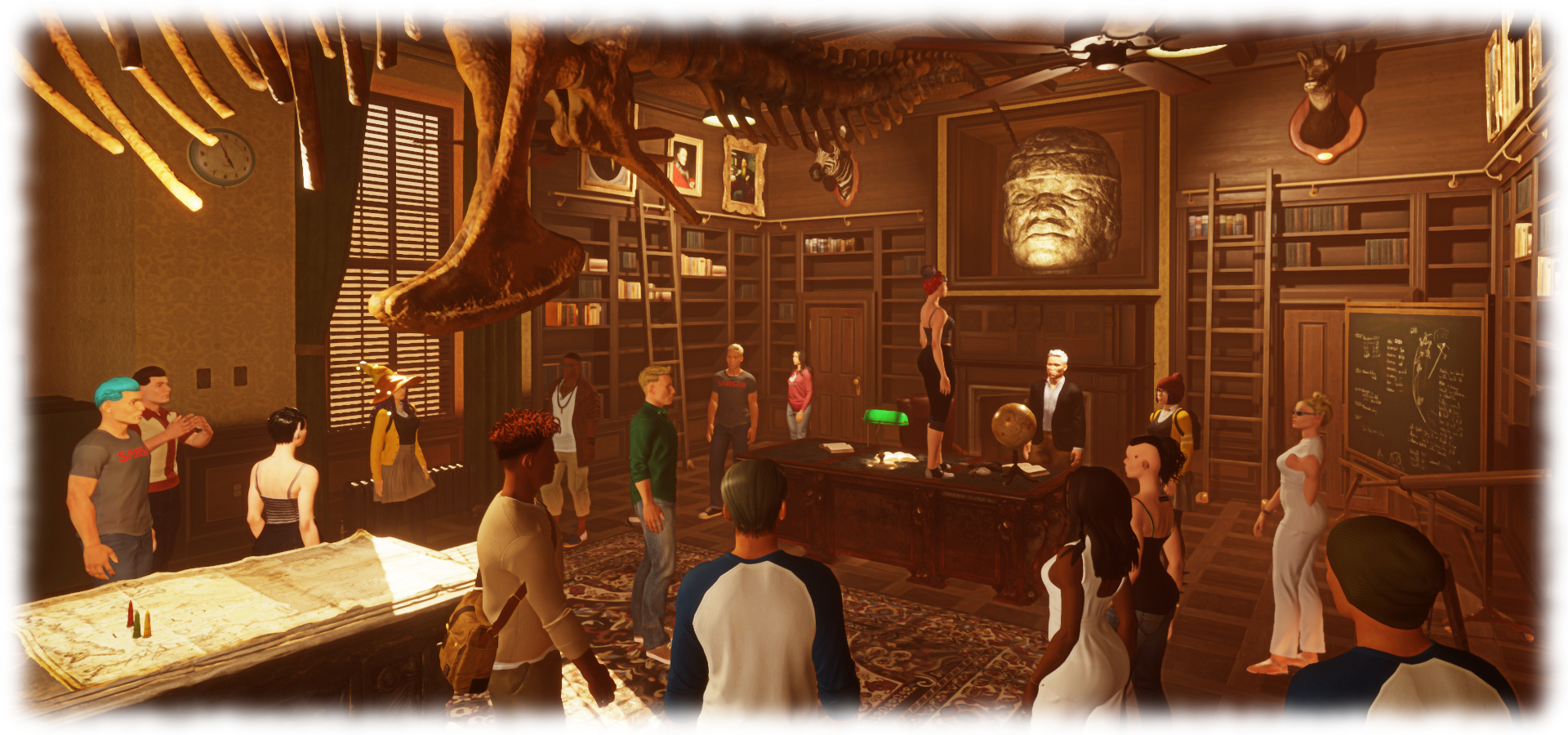
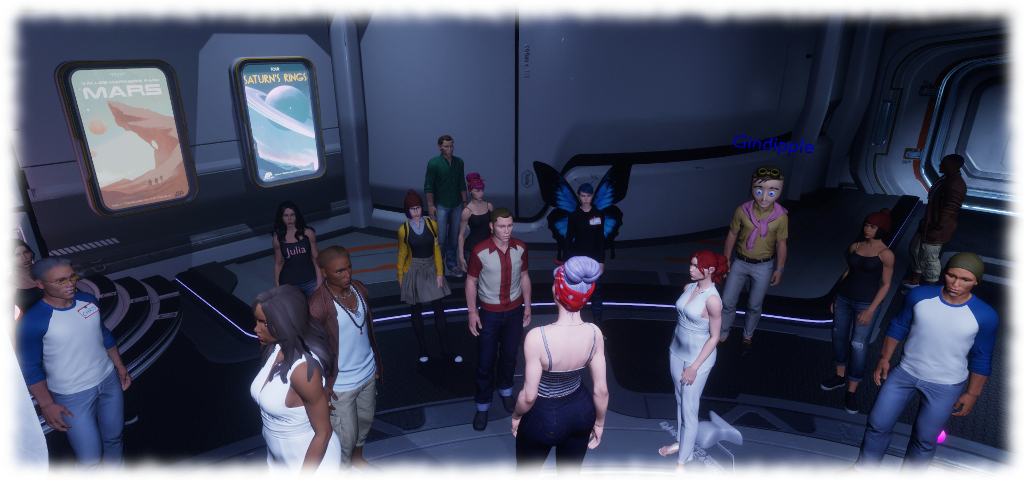
People gather at Astro Port for the first Friday September 8th 2017 Product meeting

The following notes are taken from the Sansar Product Meetings held on Friday, September 8th. These meetings are held every Friday at 9:30am PDT and 4:00pm PDT, and are open to all.

There is no set agenda (currently), and the meetings are a mix of voice and text. Venues change on a weekly basis, and are announced in the Meet-up Announcements. The September 9th meeting took place at Mold3D’s Astro Port. The official meeting notes are generally published the week following each pair of meetings.

The meetings are chaired by Jenn (aka Xiola Linden) from the Community Team, and feature various members of the Sansar teams. Cara, Carolyn and Jeremy joined the Friday, September 8th meeting.

August / September Release

The long-awaited August / September release arrived on Friday, September 8th, 2017. Highlights of the release are noted  below (please refer to the release notes for full details of this release, including known issues). Note that many of these features are still work in progress, rather than being final / polished versions.

Terrain Editor / Sculpting

Experience creators can now edit terrain objects in Sansar: create mountains and hills, create dips, craters and valleys or uneven terrain (“noise”). This is the first iteration of these tools, and features will be added over time.

Simply drag and drop a terrain plain (in one of four texture defaults) from the system objects panel, then use the sculpt tool and options to shape it. Individual plains can be placed together to create as big an area of terrain as required (within Sansar’s own limitations).

See Working with terrain in the Sansar Knowledge Base for more information.

The Terrain toolbar with the sculpt and paint master controls highlighted, and option buttons to their right
  • Terrain plains can be sculpted on in defined areas, from around 32 metres on a side up to 256 metres on a side.
  • The paint tool can be used to apply textures (from pre-set families of four) to the sculpted terrain, with automatic attempts made to blend textures with height / depth (e.g. so grass gradually gives way to rock). The brush size for painting can also be varied in size from (approximately) one metre in size upwards.
  • The textures / materials associated with the editor are currently limited to only working with one family of four textures / materials at a time, although creators can hot swap between them.
  • This is not voxel editing, and is currently restricted to height maps, so no tunnelling into terrain at present. The sculpting tool is somewhat similar in approach somewhat similar to the Second Life terraforming tool, presenting a view of the terrain and the selected tool overlaid on it at the appropriate size, although unlike SL a choice of tool shapes is offered (round or square).
A terrain plain show a raw sculpt of a hill (left), and with smoothing being applied (right). Credit: Jeremy Linden
Future Terrain Editing Capabilities

The ability to add use custom terrain textures and height maps is coming soon, together with support for mega textures. The latter will allow more textures to be blended together at a time, which are then  composited together when an experience is published.

Jason (aka Widely Linden) indicated that the roadmap for terrain editing in Sansar currently includes (exact implementation still TBD):

  • A hybrid form of terraforming, using height maps for efficiency when sculpting the terrain, then switching to a voxel element when creating tunnels / caves, etc., which is then “stitched” into the mesh height map.
  • The ability to “geo-paint” environments – use a painting technique to add boulder, rocks, vegetation, etc., onto a terrain map. This will likely start with pre-defined geo elements, before moving to allow users to define their own elements.

A suggestion from Maxwell Graf to assist in making custom height maps (once they can be imported), is to consider installing Unreal or Unity (both free) and then purchasing a terrain editing tool for the relevant engine, and using that to create terrains, then export the height maps for import into Sansar (once possible) It was also noted that Visual Studio 2017 comes with Unity support, and it is easy to add Unreal support.

.OBJ File Format, Animated & Multi-part Object Import

The Animated objects capability isn’t, at this point, fully animated mesh – there is no ability to import or use a skeleton for an object (a-la SL’s animated objects project), although this is coming.

Future Capabilities / Ideas

Also coming in a future release for animated / multi-part objects, are collision meshes. These will allow can be bound to rendered meshes for collision purposes. So a multi-part cable car could have collisions enabled on specific parts to allow avatars to ride it. This has already been done as a test with the gondolas in Colossus Rising.
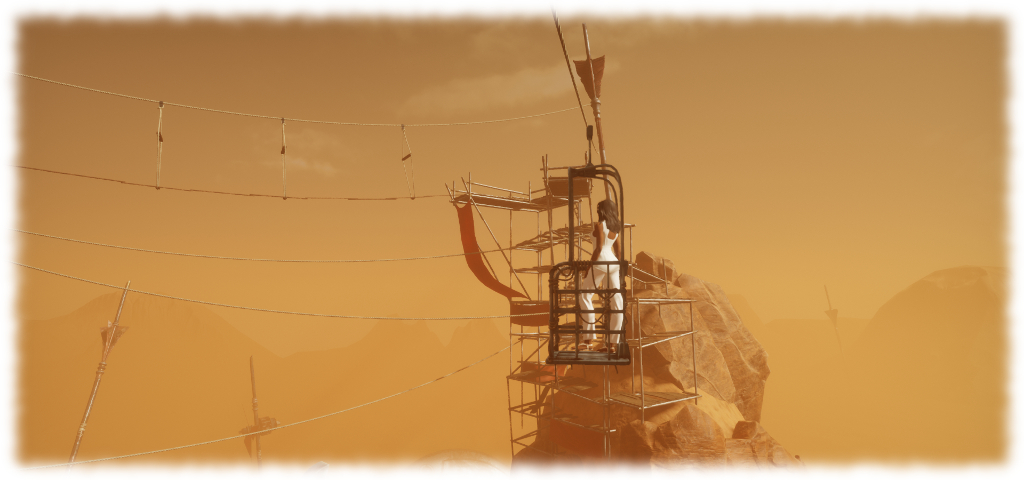
The cable car gondolas in Colossus Rising demonstrate how collision volumes can be bound to a rendered mesh object to allow interaction (in this case riding a gondola) with an avatar. This ability will be part of a future update to the animated / multi-part objects capability forming part of the August / September Sansar release

Jason indicated that – further into the future, and via a scripted / API meachanism which the Sansar product team is considering – animated objects should allow for very dynamic things like trees which not only sway in a breeze, but which move in accordance with the (changing) wind direction / force (rather than just randomly moving) or stop swaying if there is no wind. The same scripts will also be able to trigger associated sounds of the wind in the branches when affected by a breeze.

New Stereoscopic Media & UV Animation Shaders

A series of new shaders in the materials editor:

  • Standard + Emissive + Stereographic
  • Media Surface + Stereographic
  • Standard + Emissive + UV Animation
  • Standard + Alpha Mask + UV Animation.

UV animation supports both scrolling UVs and flipbook UV, and brings the ability to animate things like water, animated lighting, etc, in Sansar. Currently, these have to be configured and applied prior to upload, but future updates will allow editing and refinement of the maps post-upload.

Trigger Volumes

Trigger volumes allow scripted events (e.g. teleporting) without the need for dynamic objects, allowing for more flexible interactions inside events.

Continue reading “Sansar product meetings 2017: week #36 – Aug/Sept release”

Sansar product meetings 2017: week #35

People gather for the Sansar Product Meeting, Friday, September 1st

The following notes are taken from the Sansar Product Meetings held on Friday, September 1st. These meetings are held every Friday at 9:30am PDT and 4:00pm PDT, and are open to all. There is no set agenda (currently), and the meetings are a mix of voice and text. Venues change on a weekly basis, and are announced in the Meet-up Announcements. The September 1st meeting took place at Maxwell Graf’s Rune, which is one of five parts of his Rustica “grand experience”. The official meeting notes published the week following each pair of meetings.

The meetings are chaired by Jenn (aka Xiola Linden) from the Community Team, and feature various members of the Sansar teams.

August / September Release

The next release was pushed back from August 31st as a result of a couple of last-minute issues which required fixing. The release is now being targeted of Wednesday, September 6th.  This is in keeping with the Lab’s approach to making major (feature) updates at the end / start of a month, with smaller interim releases focused on bug fixes and patches being rolled out as required between these major releases.

Highlights of the upcoming release include:

  • Terrain Editor (first pass): ability to edit the current terrain options; the ability to upload custom textures to follow.
  • Scripting Updates and Improvements, including:

  • Ambient Occlusion (AO): allowing things like indirect lighting shadows. This should not require creators to re-visit and update the Global Illumination (GI) bakes for their experiences, as the AO will be a real-time effect.
  • Avatar updates, including:
    • Selling Avatar Attachments: creators will be able to upload and sell their own avatar props (attachments) through the Sansar Store – more on this below.
    • Having been removed from Sansar due to speed issues when seen in VR mode, the ability for avatars to run will be returning in the next release.
    • Further improvements to avatar customisation, e.g. adding nail colours.
  • Ability to upload multi-part objects: there will be some limitations placed on this, which will be specified in the release notes.
  • Object Animations: animated objects created in Maya, 3D Studio Max, or Blender can be imported them into Sansar.
  • Media updates, including:
    • Support for custom music and live streaming via Shoutcast, Icecast and similar services. OGG should be supported via web links, although AAC will not be supported with this release.
    • The ability to play back s£ movies within experiences.
  • Bug fixes.

Some of these features may yet be subject to final testing by the Lab, so please refer to the release notes once the update has been made for details and links to supporting documentation. The release notes will form an e-mail to Sansar users and be available in the Release Notes section of the knowledge base.

When the release is rolled out, it will mean down time for the platform, and this will be announced through the forums and on the log-in screen, etc.

Sansar Product Meeting, Friday, September 1st

Avatar Attachments

As noted above, creators will be able to make, upload and sell avatar attachments in Second Life through the Sansar Store with the next platform release. However, because the initial provision of attachment points on the avatar lead to some outsized (non-resellable) props being made, there will be a number of initial limitations placed on the props which can be uploaded and sold, including:

  • Uploaded props will not initially be allowed to exceed a 1m x 1m x 1m size.
    • Existing props which are larger than this can continue to be used, but creators will not be able to sell them.
  • Attachments will be limited in terms of total triangles they can contain.

Full details of the limits and upload requirements will be documented in the Avatar Attachments knowledge base article once the release is public. Some of the limitations may be relaxed over time.

Contest Announcements

Partially to mark creators being able to upload and sell avatar props through the Sansar Store with the next release, and because Halloween in approaching, Linden Lab has launched two Sansar contests. On offer are five prize packages featuring Oculus Rift + Touch bundles. In addition, the Halloween themed contest includes a US $10,000 grand prize. Details can be found on the official Sansar blog, and on my blog.

HUDs and Web Support in Sansar

Second Life users are all familiar with the concept of HUDs to enhance users’ abilities to interaction with other scripted objects (usually attached to an avatar) and / or interact with external web services. Specific scripting support for HUD objects (and the ability to attach them to the Sansar UI) isn’t at present being worked on by the Lab.

Some broader web support, is being developed. This includes the ability to display web pages and media on objects in an experience (again, in SL parlance, the equivalent of media on a prim). There will also be some form of web browser capability within the Sansar UI, but there is currently no time frame on when this is likely to appear or what it will look like.

Request have been made to provide Sansar with a similar scripted functionality to LLHTTPRequest to enable more complex interactions between Sansar and external web services. Provision of such a capability has not – as yet – been discussed  for Sansar.

Avatar Sitting

The ability for avatars to sit on objects within and experience is not the roadmap, but will not be part of the next release, and may yet be further down the road, possibly as much as six months hence – although this needs confirmation from the Lab.

Continue reading “Sansar product meetings 2017: week #35”

Sansar product meetings 2017: week #34

People gather for the morning product meet-up, Friday, August 24th

The following notes are taken from the Sansar Product Meet-ups held on Friday, August 25th. These meetings are held every Friday at 9:30am PDT and 4:00pm PDT, and are open to all. There is no set agenda (currently), and the meetings are a mix of voice and text. Venues change on a weekly basis, and are announced in the Meet-up Announcements;  the August 25th meetings took place at Voyage Live: Egypt. The official meeting notes published the week following each pair of meetings.

The meetings are chaired by Jenn (aka Xiola Linden) from the Community Team, and feature various members of the Sansar teams. The August 24th meetings, for example, saw Cara and Caroline from the Product Team in attendance, with Hydro Linden from the Modelling Team, and Brett from the Community Team.

Next Release

The tentative date for the next major Sansar release is Thursday, August 31st. This is in keeping with the Lab’s approach to making major (feature) updates at the end / start of a month, with smaller interim releases focused on bug fixes and patches being rolled out as required between these major releases. There is still some work to be done on the release, so the 31st is not a definite date. Highlights of the upcoming release include:

Terrain Editor

A first implementation of the Sansar Terrain Editor; the ability to upload custom textures to follow. Cara reports there are still some issues with this at present which need to be sorted before it is released.

Scripting Updates and Improvements

A range of scripting updates and improvements, including:

Ambient Occlusion (AO)

An initial implementation of AO to allow things like indirect lighting shadows to help objects and avatars look more “rooted” in a scene. This should not require creators to re-visit and update the Global Illumination (GI) bakes for their experiences, as the AO will be a real-time effect.

Other Notable Updates

  • Avatar Attachments: creators will be able to upload and sell their own avatar attachments through the Sansar Store.
  • Object Animations: animated objects created in Maya, StudioMax, or Blender can be imported them into Sansar.
  • Support for custom music and live streaming: e.g. via Shoutcast an similar services, for audio streaming in experiences.
  • 3D Video support: ability to watch 3D movies within experiences.
  • Bug fixes.

Once the release has been deployed, details of updates, changes, improvements and fixes will be documented in the Release Notes section of the knowledge base, and form an e-mail to users. Specific feature notes will also published through the forums.

Jenn and Cara Linden at the 09:30 PDT meeting, Friday, August 25th.

Beyond the Next Release

The following areas are priority work areas for future releases:

Collaborative Building / Design

While seen as a priority, it may take some time to appear, as it is also reliant on other aspects of the platform, such as the permissions system.

It’s also not clear what form it might take – will creators be able to work together to “block out” a scene collectively, using tools in the editor to construct basic models (walls, floors, door, etc), which can then be positioned, modified and used as a reference for the off-line building of the actual optimised, fully textured items for use in the scene, for example?

Social Aspects Improvements

These include:

  • Making it easier to find others in Sansar and communicate privately with non-friends (currently, you can only direct message someone you have friended)
  • Greater avatar-to-avatar interaction when in Desktop mode (e.g. the ability to identify other avatars, ability to directly mute (voice only) other avatars, etc).
  • Text chat improvements (e.g. clickable support for URLs rather than reliance on the “Go” button function to identify URLs; ability to copy / paste chat, etc.).

Text chat and messaging in particular lack some core functionality (scrolling back through open chat, for example, no time stamps on messages, muting only applies to voice, etc). The current inability to directly contact non-friends came about as a result of muting being limited to voice chat only, and will hopefully be reversed in time.

An attempt will be made to get someone from the UI Team and from the Product Team involved in the UI / chat tools to come to a meeting to discuss their work and priorities.

Other Items In Progress

  • Inventory management improvements.
  • User preferences – but no details on what these will be.

Sansar Roadmap

There is a Sansar roadmap for updates and improvements, etc. This is currently being refined, revised and prepared for public release. Once available, the hope is that it will form the basis for more focused discussions on Sansar’s development and for obtaining feedback from Sansar users.

Avatar Improvements

A means to refine the texturing of hair for avatars was discussed several weeks ago, but it’s not clear if this is on general release to creators, or something only available for the Sansar Character team to use in refining the current avatars. If it is generally available, a request as been made for documentation / examples.

There is a longer-term project to refine and improve the Sansar avatars. This includes separating clothing from the avatar bakes to make it easier to support clothing (e.g. clothing making, mixing and matching items, etc.). The time frame for this could be several months.

Continue reading “Sansar product meetings 2017: week #34”