Second Life: state of the grid, 2018

Black Bayou Lake; Inara Pey, October 2018, on FlickrBlack Bayou Lake  blog post

On December 30th, 2018, Tyche Shepherd tweeted a brief summary on the general size and state of the Second Life main grid.

The surface level reading in the summary is good: overall, the grid increased in size by 2.1% – the first such increase since 2011, leaving the grid at a total of 23,811 regions at the end of December 2018, compared to 23,337 at the end of 2017. However, where private regions are concerned – still the major revenue earner for the Lab – things were far more modest: just 14 regions up on the year, from 16,106 to 16,120 – a 0.1% growth. The rest came from Mainland, up 460 regions to 7691, thanks largely to the arrival of the SSP continent.

Taking the year-on-year figures for private regions from 2010 onwards (that being the previous year in which the grid exhibited a growth in the number of private regions), we get the following breakdown:

2010 2011 2012 2013 2014
24,483 23,857 20,994 19,273 18,600
Increase
%age
Loss %age
Loss
%age
Loss
%age
Loss
%age
810 3% 626 2.56% 2863 12% 1719 8.2% 673 3.5%
 2015 2016 2017 2018
17,775 16,783 16,106 16,120
Loss   %age  Loss  %age Loss
%age
Increase %age
 
825 4.4% 992 5.6% 677 4.0% 14 0.1%

Working on the basis of Tyche’s Full Private Region surveys I have to hand, a breakdown of approximate recent monthly revenues from private regions over the most recent five-year period might be given as:

  • November 2013: US $3,857,000 (+/- US $52,000)
  • March 2016: down to US $3,385,000 ( +/- US $43,000)
  • December 2016: down to US $3,162,000 (+/- US $39,000)
  • December 2017: down to US$ 2,970,000 (+/- US $36,500)
  • December 2018: approximately US$ 2,970,000 (+/- US $36,500)

Note the December 2018 monthly tier level reflects a growth of just 14 regions (most likely mixed between Full and Homestead), having minimal overall impact based on the margin of error.

The increase in private region is likely – as Tyche points out – due to the Lab’s downward adjustment in private region fees, announced in June 2018, and which came into effect as from the start of July 2018. Certainly, this was followed by an upswing in demand totalling 69 private regions over two weeks, although it might be argued that overall, the fee changes can’t yet be judged to have moved the grid into a sustained level of growth.
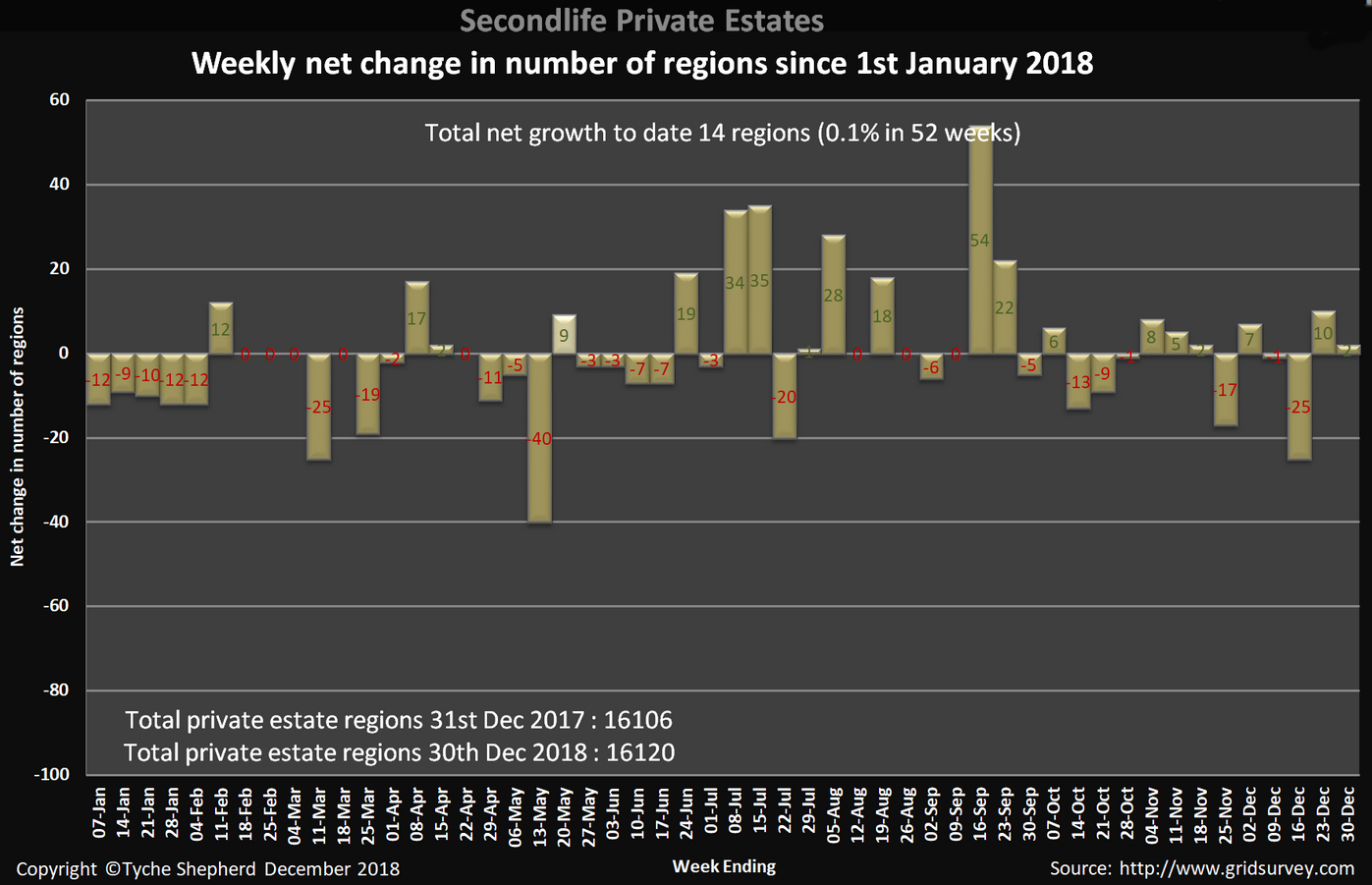
Private estate numbers downs and ups in 2018 – click for full size

In fairness, the reduction in costs for private regions wasn’t going to result in a massive upswing in demand. For one thing, the 15% reduction in monthly tier for a Full region  – as I noted at the time – wouldn’t see people stampeding to get a region of their own. Thus, outside of events, etc., demand for land still largely lays with those in the land rental business, particularly given Homestead availability remains tied to having at least one Full region, and how well they are perceived as passing on the lower fees through reduced rental charges to customers, which itself could be complicated. Although all that said, it might have been hoped things came out a little stronger by year-end than has been the case.

So, what might we see in 2019 in terms of land?

Well, it’s unlikely Linden Lab will move towards another reduction so soon after that of July 2018, simply because more time will be required to analyse the overall outcome in terms of overall outcome. However, there are other things that will be forthcoming in 2019.

As noted, the largest growth in regions is the SSP continent (384 + a testing region). It’s no secret this is likely the new Linden Homes continent, due to come on stream in 2019. What is still to be seen is how they will be offered, how they might help generate revenue, and what effect they might have on the grid. For example, will they replace the existing Linden Homes entirely and be offered within the current Premium subscription package and ultimately intended to replace the existing Linden Homes continents? Will they form part of a new Premium subscription offering, sitting alongside the existing Linden Homes continents? If they are to completely replace the existing Linden Homes over time, what might be the logistics for doing so and for “retiring” the existing LH continents? Might we see more than one new Linden Homes continent deployed in the coming year?

2019 may well also see a large part of the Lab’s work in transitioning Second Life to the cloud. Even if this is completed by the end of the year (which is probably optimistic given the massive complexity of SL, but we’ll see), it’s also unlikely to lead directly to any adjustments to land fees or the release of new products, simply because, again as the Lab has indicated, they’ll need time to bed things in and ensure everything is running as anticipated and – equally importantly – experiment to see what  (if any) kind of product options might be available and how they might be priced.

For my part, I suspect the sine wave we’ve seen in the second half of 2018 will likely continue, undulating between losses and gains, with a possible bias towards the positive side of the line. But that said, I didn’t foresee a fee cut for private regions coming in 2019, and actually expected numbers for the year to decline (albeit far more slowly than previous years); so what do I know?  🙂 .

Related Links

A Nordic Maison de L’amitie in Second Life

Maison de L'amitie; Inara Pey, December 2018, on Flickr
Maison de L’amitie – click any image for full size

Update September 2019: Maison de L’amitie has relocated.

It’s been more than eight months since our last visit to Corina Wonder’s Homestead region, Maison de L’amitie. At that time, the region presented an eye-catching reproduction of Bolivia’s Salar de Uyuni (about which you can read more here). Since then, things have returned to Corina’s more “usual” landscape designs, and for winter 2018 / 2019, it currently offers a suitable setting with which to launch this year’s Exploring Second Life series.

The great joy with Corina’s landscapes is that they present setting that was wonderfully natural and which encourage exploration without making demands on visitors; rather they encourage a gentle stroll, generally with opportunities for sitting and chatting / cuddling. Such is the case with this winter look, which comes with something of a Nordic feel.

Maison de L'amitie; Inara Pey, December 2018, on Flickr
Maison de L’amitie

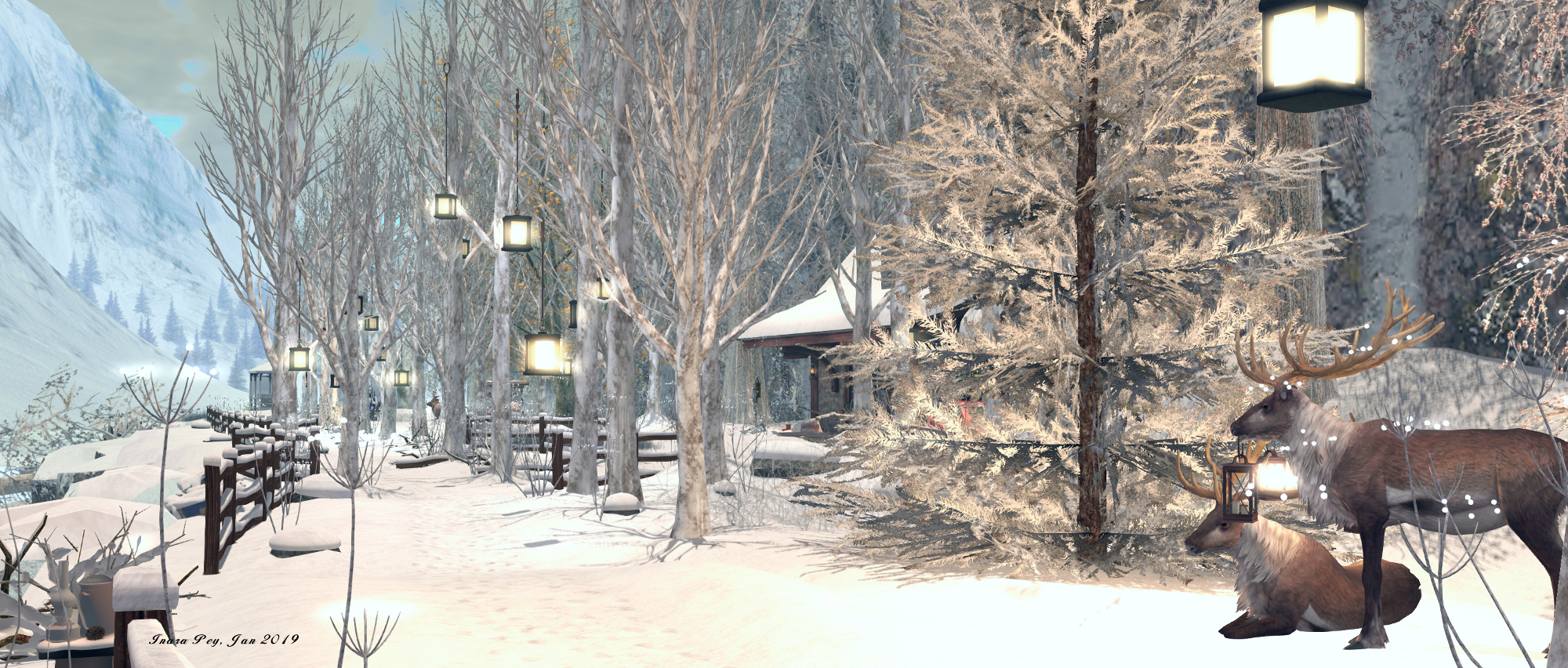
Set between two parallel lines of off-sim snowy mountains, both of which encroach well into the region’s west and east sides, visitors are presented with a rocky splinter of land facing a narrow channel of icy-looking water to the west and open sea to the south. Sitting at the feet of tall rocky fingers that form a jumbled parade of cliffs, a snow-covered road runs south from the landing point and its little frozen pond and nearby open-air seating area, past a cosy-looking stone cabin sheltering under the high cliffs, before vanishing around a distant curve.

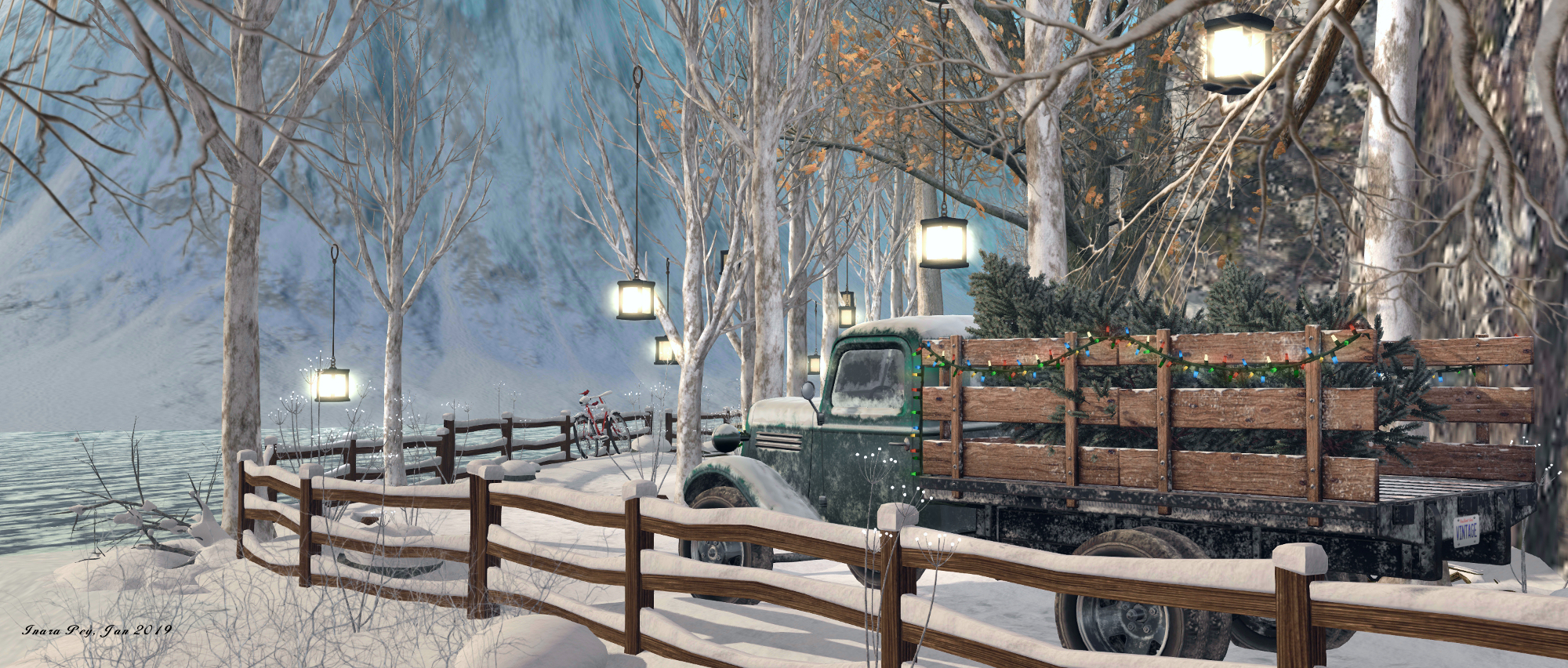
Wooden fencing separates the path from the cold waters, and lanterns hang from silver birch that march down the road, lighting the way as reindeer passively watch all the comings and goings.  The cabin offers a warm welcome for those feeling the chill, with Wellington boots arranged on the porch and, more particularly, a fire burning in the outside hearth, wooden chairs ranged before it. A bicycle lies in the snow, partially buried, suggesting recent fall, while inside signs of homeliness can be found with food being prepared and paintings mounted on easels.

Maison de L'amitie; Inara Pey, December 2018, on Flickr
Maison de L’amitie

Follow the road south, however, and it will lead you to a view of the local lighthouse. Past a squeeze between the roadside fence and a truck loaded with fir trees, you’ll find why I refer to the region having a Nordic feel. As the path curls around the southern headland, so it leads to a fjord-like channel, sitting between two further walls of cliffs separated by a finger of icy water.

Here the path runs directly over the water, raised above it on concrete bricks, to arrive at a welcoming brick-built house. This is, like the stone cabin, backed against the high cliffs and affords a view of the waterfall feeding the fjord from its closed end. Despite the freezing look of the water, otters are at play, swimming and curiously examining the kayaks moored not far from the foot of the falls.

Maison de L'amitie; Inara Pey, December 2018, on Flickr
Maison de L’amitie

Nor is this all. Atop the canyon rocks are places to sit and cuddle – although I confess, we didn’t actually find a physical way up to them. As a landing point is set, an attempt to double-click teleport won’t work, and the only alternative appears to be to select one of the sit points; but we might have missed something.

A simple, wild setting, I’d perhaps have liked to see the east side rocks more naturally blend with the mountains behind them, if only to present a more natural look, but that is just me. For those who wish to rez props for use with photos, a land group is available to join – simply touch the board at the landing point for a link to the group. Photos of the region are welcome at the region’s Flickr group, should you opt to share them.

Maison de L'amitie; Inara Pey, December 2018, on Flickr
Maison de L’amitie

SLurl Details

Among Angels in Second Life

Among Angels

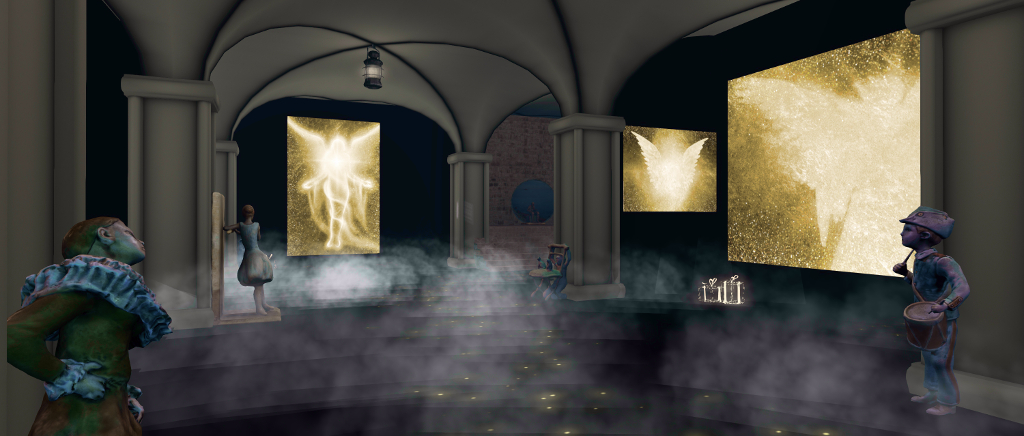
Bedrich Panacek-Guisse (Bedrich Panacek), co-owner of Ville de Coeur, invited me to visit a new art exhibition in the catacombs beneath the Citadel Gardens.

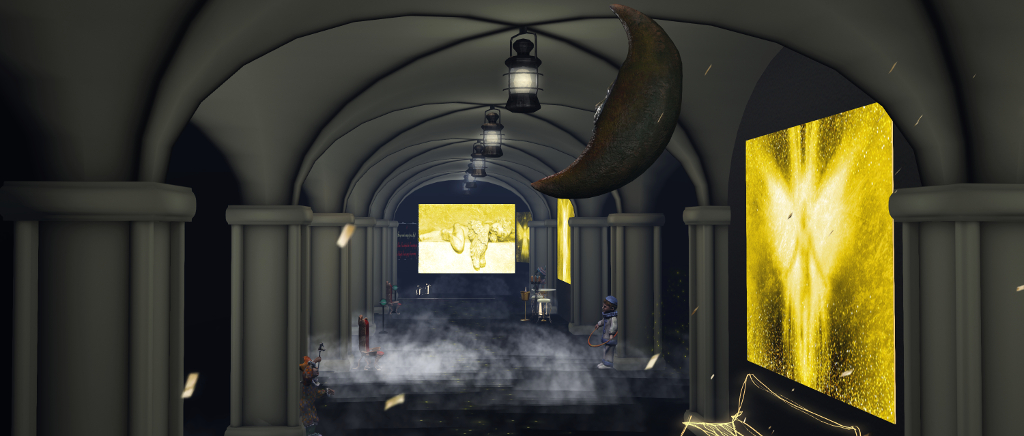
Among Angels is a story in art presented by JannaWhiskers. It depicts a conversation between a small girl and her mother on the subject of Angels. Images are presented in order, each with an accompanying text element relating the unfolding story. As such, it’s important to follow the directions through the catacombs from the entrance – although this is not hard.

Among Angels

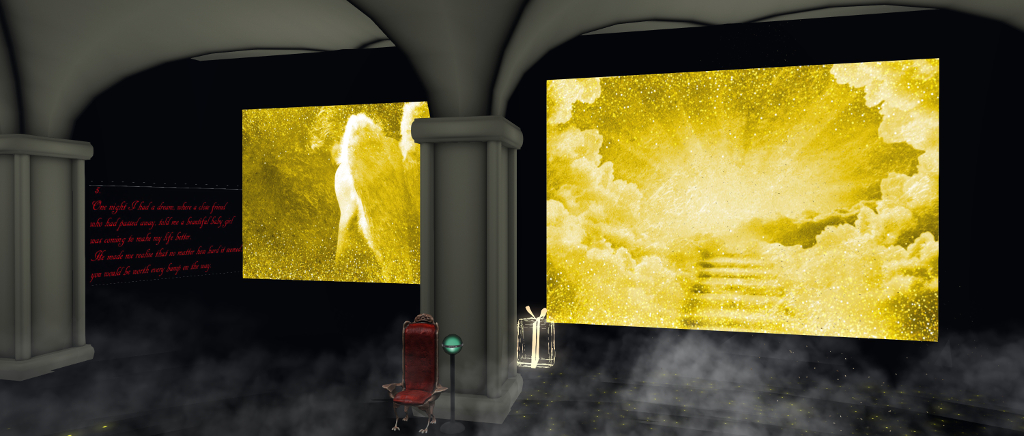
Janna was offered the opportunity to hold the exhibition after winning the Ville de Coeur Autumn Photo Competition. She presents some 30 images, not all of which have an associated text element, but they are all presented in a golden finish that can make details a little hard to discern at times, but which also brings a heavenly, other-worldly look to each, and is perfectly reflective of how we often imagine angels as being creatures of light.

The dialogue is presented in two colours: yellow (or gold, if you prefer), for the young girl, and red for her mother. Their words are woven into a mother / daughter discussion that might be seen as typical of many in the way it reflects the bond of love between the two, but which also reveals more. The child’s perception is clear and through her questions, she not only touches upon, but gently reveals, her mother’s own beliefs and  – faith?

Among Angels

As such, this is an evocative exhibition, one that is ideally suitable to the way it is presented through the halls of the catacombs, the route bringing to life the walk taken by mother and daughter as they talk. A walk given added depth through the inclusion of figurines by Silas Merlin, that offer a further sense of presence and company – or childhood – through the exhibition.

Places to sit are also offered through the halls, allowing visitors time to contemplate the art and appreciate the nuances of the story and the parental / child relationship. In addition, Janna offers a series of wire-frame gift boxes, each of which will present a gift when touched.

A touching exhibition, I couldn’t help but hear Robbie Williams’ Angels, some the lyrics seemed to aptly fit the theme of the exhibition.

And through it all she offers me protection
A lot of love and affection
Whether I’m right or wrong
And down the waterfall
Wherever it may take me
I know that life won’t break me
When I come to call, she won’t forsake me
I’m loving angels instead.

Among Angels

SLurl Details


Future Shock: the machinima continues

Future Shock: sci-fi machinima

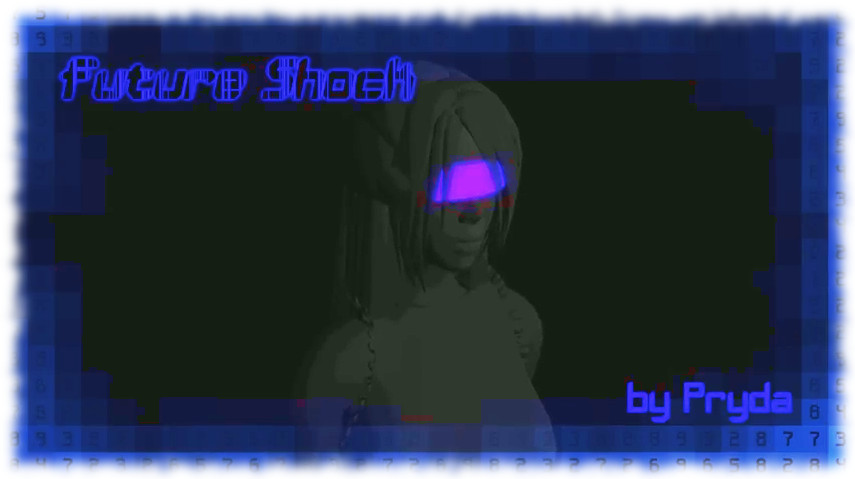
I first wrote about Future Shock, an ambitious Second Life Machinima series produced by Pryda Parx, in September 2016, when the first part in the series was released, and then revisited the project at the start of 2017, once the entire first season was available on You Tube.

In August 2017, a special “Director’s Cut” version of the first season was released, bringing all eight parts (plus the initial trailer / introduction)  together into a single 32-minute film which included previously unreleased footage, even as Pryda was working on the second season of 9 episodes. The new series was released over a period of several months in 2018, although sadly, the scheduling of things (coupled with other matters) prevented me for covering them at the time.

However, on December 27th, 2018, Pryda released another Director’s Cut, which brings all eight parts of this second season together into a single 23.5 minute film, which as with the first series version, includes previously unreleased footage. So this seems a good time to catch-up on the series, with apologies to Pryda for only now getting to it.

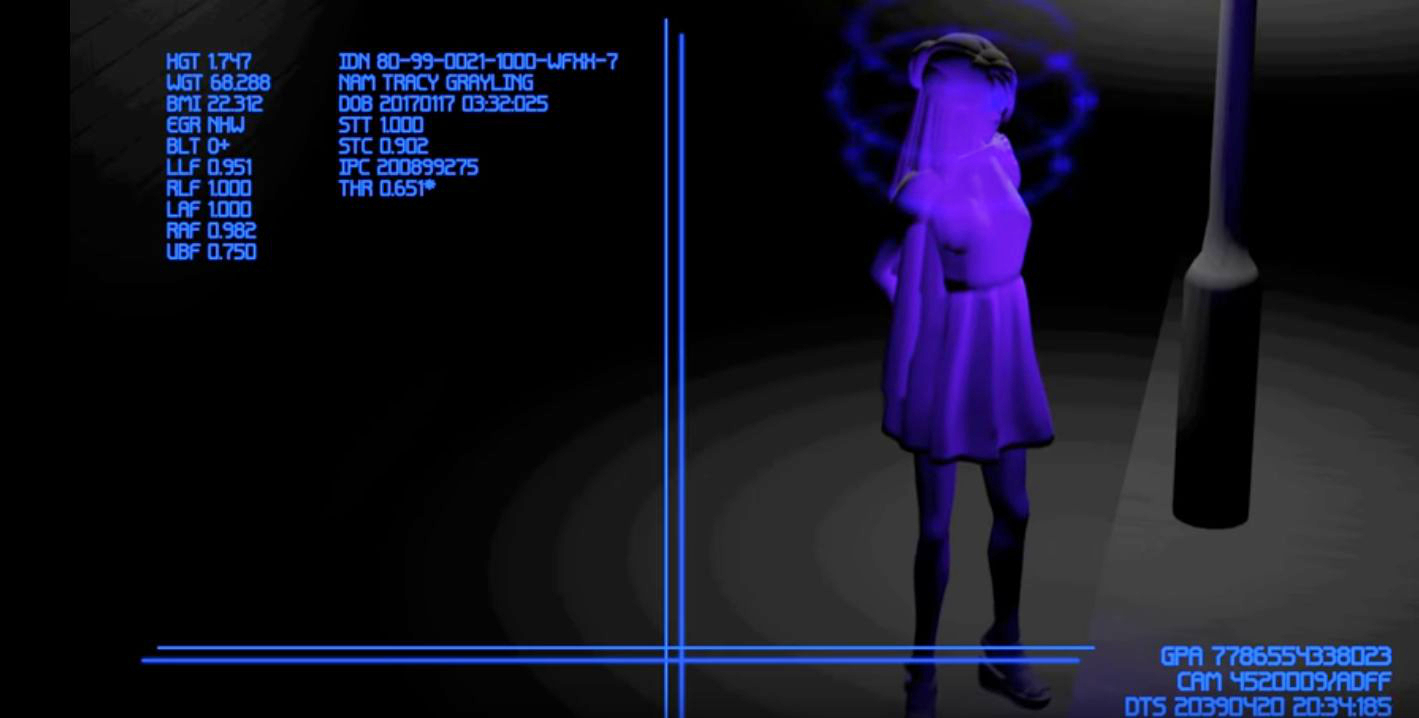
In short, Future Shock is a story of a somewhat dystopian / semi-cyberpunkish world where technology infiltrates every part of people’s lives, watching over them, seemingly providing both a protective blanket and providing various means personal gratification and escapism through the intertwining of their physical and virtual lives. But all is not as it seems. Rather than guiding / guarding / assisting, technology has come to dominate, defining everyone in terms of their net worth, or IP Credit (draw your own conclusions from the use of “IP”). So long as this remains positive, a person has little to fear – not even death; technology allows them to augment / redefine / rebuild their own bodies to suit their desires. But should a person’s net worth zero-out or enter a negative value, then things can become uncomfortable, and survival less-than-certain, with those in debt clinically  – if harshly – dealt with; as is also the case for those perceived to be a threat.

Tracy Grayling: protagonist – but innocent, or self-obsessed mole / agent?

Thus, this is a world of questionable moral and ethical values. people’s lives are determined by what is effectively a line on a balance sheet, while the people themselves are driven by baser instincts: greed, desire, avarice, envy, determined to raise their credit value, wanting to make themselves better physically than their peers through surgery / augmentation, or to be able to have sufficient value to escape into the virtual realm – a place reached not in the home, but within life support centres, the body fed and cared for while the mind escapes – and the all-important credit balance ticks down minute by minute.

Life in this world is very much factionalised; not everyone may approve of the way technology is all-pervading, or the way in which humanity has come to rely so wholly on it. Others simply seek to exist not caring for anything more than the next opportunity to become immersed in the virtual, while some seek to improve themselves, whilst also seeking a means for self-expression.

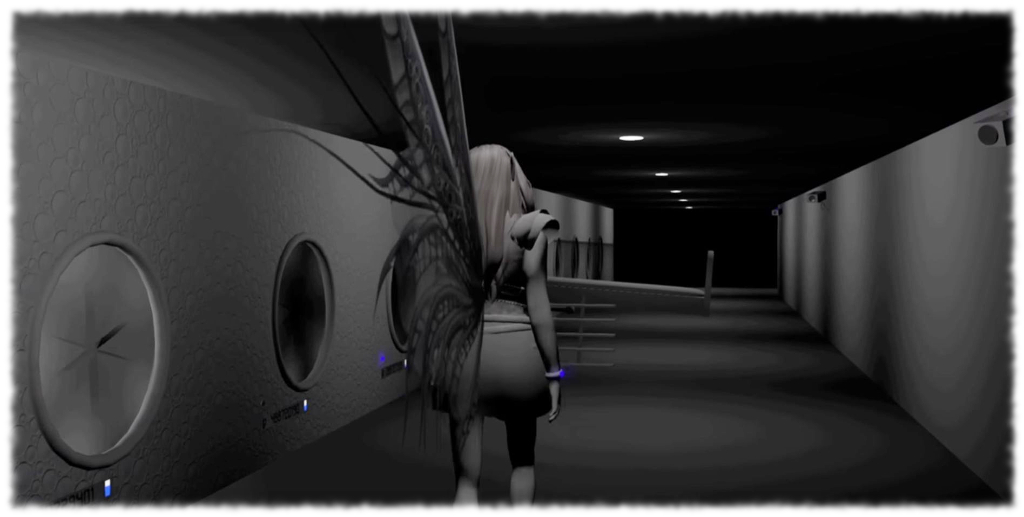
What made the first series engaging was both the visual style used throughout: the physical world is a dark, cold monochrome place for the most part, where colours are minimally used – blue to highlight technology, for example; red as a negative. Conversely, the virtual realm is a place vibrantly alive with colour and imagination, warm and inviting and far removed from the physical. Also, the storytelling is richly layered. This opening drops us into the middle of things, roughly 19-20 years hence. We’re quickly introduced to a number of the core elements – particularly the idea that humans are regarded as little more than constituent parts of the whole, to be recycled as required, plus the main protagonist for the story, Tracy Grayling, but the overall context can only be understood and the pieces fitted together by watching all the segments in turn – and at times returning to a previous segment in order to gain further insight.

Being in sufficient credit means you can afford exotic changes to your body – such as wings. But there is still the mystery / threat / salvation hidden within the Dark Grid …

This approach is continued through the nine episodes of the second season, which adds a further layering, in that the series records the events of the first, but from the perspective of another group of characters, the “rebels”. Slightly shorter in length overall than the first season segments, the second series also lifts the production values seen within the production. In this, Pryda made no bones about the fact that in filming the first series of Future Shock, she was also going through a learning curve in terms of machinima production – and the second season shows that she has learnt a lot, and has a very definite approach to style, nuance and overall production.

Future Shock is an engaging series, one that tells both a story and raises questions about the future and our increasing reliance on technology and what it may mean for personal freedoms – including the freedom of expression. These questions have perhaps become more salient over the course of the two years in which Pryda has been working on the series; as such it is worth viewing from this perspective as well. For those who wish to see more, Pryda has also produced a series of short pieces providing insight into the principal characters. However, I would recommend only watching these after seeing the entire series; they contain significant spoilers!

Related Links

Happy New Year 2019


Wishing you all the best for 2019 in whatever you do, and once again, thank you for all your support and encouragement through 2018.

Bay City 2018 New Year prim drop in Second Life

Bay City Prim Drop 2018

Monday, December 31st 2018 will once again see Bay City celebrate the turning of the year with their annual Prim Drop festivities.

The event will open at 23:30 SLT at the Bay City Fairgrounds in North Channel. The theme for the event is a wintertime soirée; black tie attire is recommended, and all SL residents are invited to attend. Marianne McCann will be providing the music and fireworks, and food and drink will be provided.

This will also be the final opportunity in 2018 to donate to Child’s Play Charity,  a US 501c3 non-profit organisation which helps seriously ill children around the globe during their hospital stays with the purchase of games and gaming equipment. So even if you can’t make it to the event itself, do please consider taking a couple of minutes out of your SL day and stopping by the Bay City Fairgrounds and making a donation via one of the collection bins there.

Bay City: Prim Drop 2018

About Bay City and the Bay City Alliance

Bay City is a mainland community, developed by Linden Lab® and home to the Bay City Alliance. The Bay City Alliance was founded in 2008 to promote the Bay City regions of Second Life and provide a venue for Bay City Residents and other interested parties to socialize and network. It is now the largest group for Residents of Bay City.

SLurl Details