Space Sunday: Venera and a return 53 years in the waiting

A model of a Soviet-era 3MV (3rd generation Mar-Venus vehicle with a 1-metre diameter Venera lander attached (the spherical object, foreground), flanked by the vehicle’s solar arrays. The far end of the vehicle (to the left) is the propulsion module, the umbrella-like object is the high-gain communications antenna and the hemispherical object flanking the solar array mounts are the thermal radiators. Credit: Anatoly Zak, RussianSpaceWeb.

A Soviet-era space mission finally drew to a close on Saturday, May 10th, 2025 (UTC) after 53 years in space – although admittedly, that wasn’t really the plan when it was launched. Also, it’s fair to say that for the vast majority of that time, it has been little more than a hefty lump of space junk looping repeatedly around the Earth rather than doing anything useful.

However, its return marks an opportunity to recall an interesting period of the early era of the space age. A time when both the US and the Soviet Union were just starting to get to grips with lobbing humans into orbit, but when the latter already had grander designs in mind – starting with an aggressive programme to study Venus.

Initiated in 1961 – the same year as a human first flew into space – the Soviet Venus, or Venera, programme was a daring and high-stakes programme given the overall reliability and sophistication of rocket vehicles and space probes at the time. Thus, over a period of 23 years and 29 missions, it had a fair few highs and lows.

Massing 1.5 tonnes and standing some 2 metres tall, Venera 9 and its sister, Venera 10, were the first to Venus landers to return images of the surface of the planet to Earth. They are also, to date, the heaviest vehicles to land on Venus. Credit: K. E. Tsiolkovsky Museum of the History of Cosmonautics

For example, of those 29 missions, 12 never even made it Venus, while several others didn’t go fully to plan. However, of those that did get to Venus, their successes were remarkable, whether or not all mission objectives were achieved:

  • The first fly-by of another planet (Venera 2, 1965/66- although contact was lost prior to any data being returned).
  • The first vehicle to impact the surface of Venus (Venera 3, 1965/66 and twin to Venera 2, although a failure with the carrier vehicle meant that again, no data was returned).
  • The first vehicle to reach the atmosphere of another planet and return data to Earth (Venera 4, 1967).
  • The first vehicles to perform a deep analysis of the atmosphere of Venus, down to an altitude of around 20 km (Venera 5 and Venera 6, 1969).
  • The first vehicle to successfully land on another planet and return data from it (Venera 7, 1970).
  • The first vehicles to successfully return images from the surface of Venus (Venera 9 and Venera 10, 1975).
  • The first vehicles to return colour images from the surface of Venus and the first to record sounds from Venus -the wind the mechanical operations associated with the landers. (Venera 13 and Venera 14, 1982).
  • The first vehicles to deploy balloons on Venus (Vega 1 and Vega 2, 1985).

Among these missions, some are worth a little further highlighting. For example, because it was still considered that the surface of Venus could have liquid water present, Venera 4 was designed to float in event of a splashdown, despite massing 383 kg. It was also fitted with antenna deployment locks made of sugar.

The idea behind this latter point was that if Venera 4 landed on water, the impact force might not be sufficient to trigger the release of the locking mechanism and allow the main communications antenna deploy. However, the impact on water would result in the locking mechanism being splashed with water – which would (in theory) dissolve the mechanism, allowing the antenna to be deployed!

First view and clear image of the surface of Venus, taken by the Venera 9 lander on October 22nd, 1975. Credit: Soviet Academy of Sciences

It was initially thought that Venera 4 was the first vehicle to actually reach the surface of Venus. However, due to a combination of error margins built into some of the instruments coupled with inconsistencies between data obtained by Venera 4 and later probes, it is now believed that Venera 4 only reached somewhere between 55 and 26 km above the planet’s surface before succumbing to the harsh conditions.

Whilst Venera 5 and Venera 6 also failed to reach the surface of Venus in an operational capacity, they are remarkable as they were able to remain aloft for more than 50 minutes each, drifting under their parachutes and gathering data on the nature and composition of the planet’s atmosphere, gently descending to with 20 km of the surface before finally being overwhelmed.

The story of Venera 7 is in part one of diligence over dismissal. Immediately after receiving confirmation the vehicle was on the surface of Venus, mission controller seemed to lose all contact with the lander. Attempts were made to re-establish contact, with the recording tapes on the communications link still recording. Eventually, unable to diagnose the issue, the mission was dismissed as lost without data.

However, several weeks later, radio astronomer Oleg Rzhiga decided to review the recordings of the landing and subsequent events. In doing so, he found 23 minutes of faint, data-carrying signal had in fact received from the lander. Venera 7 hadn’t failed, it had simply been knocked off-axis on landing, resulting in its radio signal only being faintly received but passed unnoticed by mission controllers at the time.

A model of Venera 7, the first human-made craft to land on another planet, as displayed at the at the Sergei Pavlovich Korolyov Museum of Cosmonautics. Credit: Emerezhko via Wikipedia

Finally, there are the two Vega missions, remarkable for a number of reasons. “VeGa” is actually a westernisation of ВеГа, itself taken from the first two letters of the Russian for “Venus” (Венера) and Галлея (“Halley”  – or “Galleya”). This latter part of the name indicated their primary mission focus – rendezvousing with Comet Halley, which was making one of its (on average) 76-year revisits to the inner solar system.

However, in order to reach the comet, the probes would need a gravity assist from Venus. This meant that they could also piggyback Venus-centric missions, releasing them as they approached Venus for their fly-by. The Venus element comprised two landers of a similar design to earlier Venera craft, and intended to study both the atmosphere and surface of the planet. Unfortunately, turbulence encountered during descent caused the surface instruments on the Vega 1 lander to activate before touch-down, so that only the mass spectrometer returned data once on the surface. The Vega 2 lander was more successful, returning data for a period of 56 minutes, post-landing.

Vega balloon probe model on display at the Udvar-Hazy Centre of the Smithsonian Institution. Credit: Geoffrey A. Landis

The more fascinating part of these missions was the use of balloons. These were released as a package by the landers at some 60 km above the surface of Venus. Parachutes initially slowed their descent to a point where, at an altitude of around 50 km, a mechanism attached to the parachute systems inflated each balloon with helium, the parachute and inflation system then being jettisoned. This allowed both balloons, each dangling a 7 kg gondola of instruments, to climb back to an altitude of some 53 km, which they drifted 11,000 km around Venus – 30%of its circumference – transmitting data to their respective Vega craft for relay to Earth. Both balloons were still actively transmitting when the Vega craft passed out of communications range, 45 minutes after the balloons started sending data.

Of the failures, the majority came, not unreasonably, in the early days of the programme. Of the first eight attempts to reach Venus between February 1961 and April 1964 (launch dates), all failed. As a result, six were never officially designated – as was the Soviet approach in the first years of their space programme (i.e. if it doesn’t have an official designation, it didn’t happen and so couldn’t have failed). Of the remaining two, one gained the Venera 1 designation, as it made it out of Earth orbit (but failed while en route to Venus) and the other being designated a “Kosmos” mission.

Originally, “Kosmos” was a catch-all designation for Soviet Earth-orbiting uncrewed missions. It was intended to obfuscate and confuse western agencies, in that it didn’t matter the object in question was a piece of test hardware or a surveillance satellite or a communications relay, or a navigation beacon, or a weather satellite or whatever. If it was orbiting the Earth, it was called “Kosmos” and given a number. In 1962, the designation was extended to include any Soviet interplanetary probe that failed to leave Earth orbit, allowing failure to be hidden in plain sight. Only after a mission was on its way to its intended destination would it be given an actual mission designation (e.g. Venera 1, etc.).

Within the Soviet-era Venera programme, five vehicles gained the Kosmos designation:

  • Kosmos 27 (one of two Zond missions for Venus launched on March 27th, 1964, and breaking-up in the upper atmosphere 24 hours later after failing to achieve a stable orbit).
  • Kosmos 96 (launched on 23rd November 1965, failed to depart Earth orbit, burned-up in the upper atmosphere on December 9th, 1965, possibly resulting in the  Kecksburg UFO incident).
  • Kosmos 359 (launched on 22nd August, 1970, suffered an upper stage motor failure and re-entered the atmosphere on November 6th, 1970)
  • Kosmos 482 – the cause of this article, and of which more below.

Intended to be the partner probe to Venera 8 (keeping to the naming convention to the actual run of successes), what was to become Kosmos 482 was launched on March 31st, 1972. However, a malfunction occurred as the upper stage booster motor was re-lit to transfer the probe onto its trajectory to rendezvous with Venus, and the vehicle broke up.

Some of the debris from the break-up fell to Earth in the form of 38-cm diameter, 13.6 kg titanium pressure spheres, most likely from the booster stage. These struck crop fields just outside of Ashburton, New Zealand, 48 hours after launch. However, the two larger elements of the break-up were pushed into 210 km x 9,800 km elliptical orbit around Earth, initially travelling close together, gaining the Kosmos 482 designation.

In the west, there larger of these two elements was identified as the remnants of the booster rocket and the Venus Bus, intended to provide power to the 495 kg lander. They were given the Designation 1972-023A. The smaller of the two was identified as most likely being the lander itself, clearly separated from its bus and booster, and so designated 1972-023E.

Over the next nine years, the two travelled in partnership, looping around the Earth, each pass having an increasing effect of 1972-023A, which gradually started breaking up, depositing pieces of itself to burn-up in the atmosphere (some surviving to fall on poor New Zealand again!) until it succumbed to atmosphere friction and burned-up on re-entry in mid-1981.
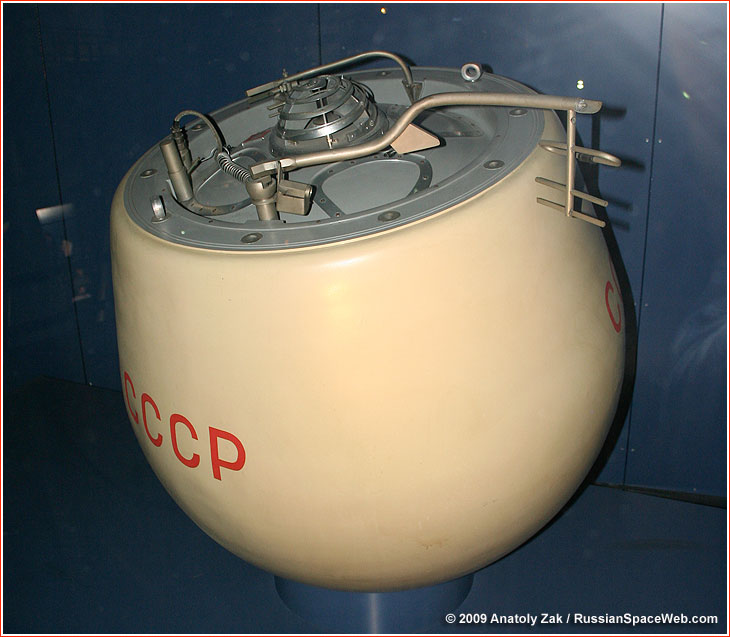
A Venera V-72 Venus lander, the same type of lander launched in 1972 as a part of the mission later designated Kosmos 482. Credit: Anatoly Zak, RussianSpaceWeb.

The lander – or 1972-023E – was made of sterner stuff, and continued to loop around Earth largely unfazed and forgotten. But each time it did make a close flyby there was exchange: a little velocity here, a little change in trajectory there. Over the decades, these little changes served to pull the craft closer and closer to Earth, such that by this year, it was looping around us once every 80-90 minutes, with its apogee and perigee both slipping into sub-200 km altitude figures. All of which meant that atmospheric entry was all but certain; the question was when? By the start of May 2025, NASA and ESA were looking to a re-entry window extending from May 9th through May 13th,which was then quickly narrowed down to the early hours of May 10th (UTC) – albeit with an initially wide margin of error (+/- 3.3 hours).

Given the orbital track of the debris, and the fact it was designed to survive the much tougher entry into the atmosphere of Venus, there were fears it could come down intact on a populated area. However, this was always unlikely, given that while it did pass over population centres each and every orbit, it also passed over large tracts of largely empty land (in human habitation terms), and even greater amounts of open ocean. Further, even if it did survive re-entry (not an absolute certainty given that both its age and the fact it would likely start tumbling during an uncontrolled atmospheric and most likely break-up / burn-up), it would not come crashing through the atmosphere at a huge velocity and explode in a massive air-burs. Rather, it would fall with a maximum velocity of around 250 km/h – enough to be decidedly upsetting if it hit a building or similar, but not enough to result in something like a city-wide disaster.

As it is, and at the time of writing, Roscosmos have stated that the vehicle re-entered the atmosphere at 06:24 UTC on May 10th over the Bay of Bengal, 560 km west of the Andaman Islands and prior to impacting the Indian Ocean somewhere west of Jakarta, Indonesia. However, this had yet to be confirmed by other agencies, although ESA indicated the vehicle potentially re-entered the atmosphere between 06:04 and 07:32 UTC, which would place its impact point most likely somewhere in the Indian or Pacific Oceans.

Kosmos 482 marked the last failure within the Soviet-era Venera programme, and its return to Earth acts as a very physical closure to that era of space history. However, it does not close the book on Russia’s ambitions where Venus is concerned. Currently, Russia is planning a return to Venus as it resumes its Venera programme with Venera D.

This mission – which is subject to a lot of ifs and maybes, already having been delayed on multiple occasions. When first conceived in 2003, it was targeting a 2013 lunch date; currently, the mission is slated for a launch no earlier than 2031, although it has yet to have its science packages finalised and developed. Comprising an orbiter and lander, if it does go ahead, Venera D (also sometimes called Venera 17) will deliver heavyweight (1.6 tonne) lander to the surface of Venus with the intentions of it being able to survive and carry out science studies for up to 3 hours after landing.

2025 week #19: SL TPVD meeting summary

Maison de L’amitie, March 2025 – blog post

The following notes were taken from my chat transcript + the video recording by Pantera (embedded at the end of this summary) of the Third-Party Developer meeting (TPVD) held on Friday, May 9th, 2025. My thanks to Pantera as always for providing it.

Meeting Purpose

  • The TPV Developer meeting provides an opportunity for discussion about the development of, and features for, the Second Life viewer, and for Linden Lab viewer developers and third-party viewer (TPV) / open-source code contributors to discuss general viewer development. This meeting is held once a month on a Friday, at 13:00 SLT at the Hippotropolis Theatre.
  • Dates and times are recorded in the SL Public Calendar, and they are generally conducted in text chat.
  • The notes herein are a summary of topics discussed and are not intended to be a full transcript of the meeting.

Official Viewers

  • Default viewer: 2025.03 7.1.13.14343205944, issued April 9th and promoted April 15th.
    • New UI element for water exclusion surfaces: Build / Edit floater → Texture Tab → Hide Water checkbox.
    • The maximum amount of Reflection Probes can now be adjusted to better accommodate low VRAM scenarios.
      • Values will be set automatically depending on your chosen graphics quality. OR
      • Use Preferences → Graphics →  Advanced Settings →  Max. Reflection Probes to manually set.
    • An issue with being unable to see Sky Altitude values in the Region/Estate window has now been resolved.
    • Preferences → Graphics → Max. # of Non-Imposters has been renamed Max. # of Animated Avatars for clarity.
    • Bug and performance fixes and memory optimisations.
  • Release Candidate: 2025.04 – 7.1.14.14742193597, May 2nd – see below.
  • Second Life Project Lua Editor Alpha, version 7.1.12.14175675593, April 2nd.

Release Candidate 2025.04

  • Currently includes the following new features and updates:
    • Chat Mentions (Early Support): Type @ then pick a name. To follow: audible alerts and highlight colour pickers (New).
      • This does not support generic mentions such as @everyone or @here.
    • My Outfits subfolders: supports for the use of subfolders (new).
    • Build Floater improvements: increase to scale boundaries; Physics Material Type now updates when selecting linked objects; Repeats per Meter value no longer incorrect for non-uniform sized objects
    • Hover height: the minimum/maximum is now +/- 3 meters.
    • Snapshot floater: L$ balances can be hidden independently of the rest of the UI.
    • Preference Search bar: general usability and readability improvements.
  • Bug fixes as listed in the release notes (link above).

glTF Mesh Uploader

  • Originally planned for inclusion on the 2025.04 RC, this now looks as if it will be initially shipped as a project viewer.

2025.05 RC Viewer

  • This is being primed to contain the backporting of up fixes and updates originally intended for 2024’s Maintenance C RC. Details to follow as they are made available.

In Brief

  • Meeting format:
    • Following the previous TPVD meeting being held in local chat, the decision has been made to continue in chat only.
    • Both the TPVD meeting and the Open Source Development meeting now look on track to be combined into a single, text-only meeting, date and time going forward TBA.
  • Chromium Embedded Framework (CEF) Updates: used for the likes of media handling / web page presentation within the viewer, the current version of CEF is increasingly out-of-date. How to update it has been a subject of internal discussions at the Lab, with Geenz Linden noting:
Current line of thinking is just have one CEF instance – use CEF’s tab mechanism. Seems to be the preferred solution by CEF as well for cookie management. It’s more work, but it’s also generally what seems to be the “preferred” route from CEF land. 
Now that being said.. Depending on when we can get that work scheduled (we have _a lot_ on our plates right now), we may be open to a stop gap with that work on the docket in the future. We want to do this by the book as best as we can, I want to be clear about that. We are well aware of how out of date CEF is in the viewer, and it is something we want to fix. We’re still figuring out the path to do so – do we have a stop gap for now with a firm commitment to a proper upgrade later? Do we just skip to upgrade? We’re still discussing it.
    • This discussion revolved around a suggested approach to update used within the Cool VL Viewer and submitted to (and rejected by) LL. Further discussions on both the Lab’s thinking on the CEF tab mechanism and a possible discussion on interim options such as the Cool VL Viewer approach.
  • Terrain texture blending: there can be a noticeable difference is results when trying to blend terrain textures when seen on viewers running on different operating systems.
    • See: Terrain blends are different for different users (raised April 25th, 2025, and closed on May 1st (“expected behaviour”) for a description of the issue.
    • See: Terrain Texture Blending Consistency for one suggested solution and further discussion.
    • The issue appears to be the manner in which the Windows viewer applies a randomiser for blend textures between different elevations compared to Mac OS / Linux (see: SL Wiki : Creating Terrain Textures – Elevation Ranges).
    • This discussion became mixed with one concerning issues with PBR mirrors yielding different results / failing to work at log-in (notably under Windows), and the discussion of potential fixes, although the root cause seems to be similar in nature.
    •  It terms of any “fix” for terrain blending issues, the problem is that any adjustment made to the calculations could end up impacting some percentage of users in some way.
    • LL’s view (at the meeting) was to lean towards keeping the calculations used by Windows untouched, and to try to adjust Linux / MacOS to match; the reasoning for this is that as around 90% of the user base is running Windows (and potentially landscaping in Windows), they are seeing things “correctly”.
    • This led to something of a debate along the lines of the “needs of the many”; the question of ROI on fixes of one types or another (time to implement, overall impact, etc.).
    • This discussion took up much of the latter half of the meeting, but no firm view on any likely “fix” or time-frame at this point.

Next Meeting

† The header images included in these summaries are not intended to represent anything discussed at the meetings; they are simply here to avoid a repeated image of a gathering of people every week. They are taken from my list of region visits, with a link to the post for those interested.

Relaxing in Lavender Springs in Second Life

Lavender Springs, May 2025 – click any image for full size

Back in September 2024 I dropped into Les Bean at the Salty C, a coffee house within the Cerulean regions (see Coffee and a Salty C in Second Life).

Designed by members of the extended Cerulean family, notably (at the time of my visit) Emmerson Skye Cerulean (Emm Evergarden) of The Nature Collective fame and Teagan Cerulean, it is one of a number of places held across Second Life by members of the family – and somewhere to which I’ve received an invitation to make a further visit, and plan to do so in the near future.

Lavender Springs, May 2025

Another location designed by members of the Cerulean family – V Cerulean Rhys (Veronika Nightfire)and Dani Cerulean (Dani Varela) joining Emm and Teagan – is that of Lavender Springs, a charming retreat offering hot springs, relaxation and opportunities for photography, sitting on the south side of Heterocera.

Located at the end of a short dirt track connecting it with the cobbles of the Atoll Road, Lavender Springs sits and an open-air retreat, a large sign encouraging people to explore, and a notice board offering information on the Cerulean Sea, the Nature Collective and the Greenwich Café – a coffeehouse apparently inspired by England’s Lake District, and so may well end up on my list of places written about.

Lavender Springs, May 2025

Small it might be, by Lavender Springs is perfectly formed and richly engaging. Three hot springs are available for bathing – two on one side of the stream flowing through the setting. The third is reached via a fallen tree trunk now doubling as a bridge across the colder waters of the swiftly-flowing waters of the stream as they tumble away from the local falls.

The first two springs are reached by crossing two wide stepped decks. One is the home of a massage therapy area, the other offers relaxation in the Sun. They are partnered by a stack of Zen rocks forming a tall pedestal for yoga and meditation.

Lavender Springs, May 2025

Oak, Jacaranda, Wildberry form a screen of mature trees to provide shade and some degree of privacy, while the large pool into which the stream flows perhaps offers the opportunity for cold plunges after time in the hot springs. For those seeking a quieter means of relaxation, a swing might also be found.

Watched over by egrets, completed by a gentle soundscape and offer a lot of detail in so small an area, Lavender Springs is another space adding considerably beauty to the Mainland.

Lavender Springs, May 2025

SLurl Details

To Arrakis and the halls of the Fremen in Second Life

Grauland – Arrakis / Fremen Home – May 2025 – click any image for full size

As is probably apparent from past articles in this blog, I enjoy science fiction in most of its various forms, be it literary, television, film or radio; and whether it takes the form of epic space opera or near / far-future explorations or action / adventure or comedic in nature. However, whilst I’ve read everyone from Adams to Zelazny, I have, in all honesty, never been overly enamoured with Frank Herbert’s Dune (neither the original novel nor the franchise as a whole).

I say this because Dune – in the form of Arrakis and its hardy inhabitants, the Fremen – forms the inspiration of JimGarand’s latest build (as of May 2025): Grauland – Arrakis / Fremen Home. Fortunately for those who, like myself, are not soaked in the lore of Dune as it might be found on paper or on film, one does not have to have an in-depth knowledge of either the planet or the the tale in order to appreciate the setting.

Grauland – Arrakis / Fremen Home – May 2025

Rather, all that is required is the knowledge that the Fremen arrived on Arrakis as a religious sect, thousands of years prior to the events within the franchise, becoming a numerous and hardy race, fully adapted to life on the desert world, living as tribal communities within cave warrens they call “sietch”, meaning “place of assembly in time of danger” (and borrowed from sich – a term meaning military / administrative centre – of the  Zaporozhian Cossacks, not that this is of any relevance at all in the scheme of things 😀 ).

The sietch of Arrakis, I believe, come in a range of sizes. Within Grauland, Jim and his partner, PaleLily, offer a fairly modest vision of such a centre of Fremen life, located somewhere within the greater desert of Arrakis. And while I cannot offer insight into the sietch found within the novels or associated films, etc., I can say that whilst minimal, Grauland: Arrakis / Fremen Home offers an interesting setting ripe for those seeking something a little different in which to take photographs.

Grauland – Arrakis / Fremen Home – May 2025

Surrounded by a desert expanse, this rocky sietch has been hewn within a low mesa, the entrance to which can be found a short walk from the Landing Point. Within it, as one might expect given the general description of such places, is a warren of tunnels, halls and rooms hewn from the living rock.

Some of the tunnels within this warren are roughly cut, walls and floors unfinished; others have squared-off walls, paved floored and properly supported doorways. Similarly, the rooms come in various forms, from simple cubes of space through to a grand pillared hall suggestive of a council chamber of or meeting place – or place of worship. Lights sit above doors, in ceilings and along walls provide pools of illumination which are particularly effective when running with shadows enabled.

Grauland – Arrakis / Fremen Home – May 2025

Perhaps the greatest delight within the sietch is its massive pool of water. When discovered, it can be the most unexpected find; it is also the one location within the sietch utilising a reflection probe, potentially as a result of it using a section of Alex Bader’s excellent PBR mesh water. Taken as a whole, it forms a relaxing focal point, with places to sit and meditate to one side.

As noted, this is something of a minimalist build, although I believe it might be one that evolves; whilst there are rooms either empty or only partially furnished, I’ve been given to understand Jim and Poly are interested in being pointed towards items that might sit within the overall setting without looking out-of-place.

Grauland – Arrakis / Fremen Home – May 2025

Those who find their way through the tunnels, halls and circular doors might find their way to a landing bay complete with a shuttle vehicle parked within it. Whilst the latter isn’t an Ornithopter, it also does not look out-of-place here as a piece of technology that might exist on Arrakis. The same might be said of the ship passing overhead.

Simple but attractive and well-suited to avatar photography – particularly for Dune fans – Arrakis / Fremen Home makes for an interesting visit.

Grauland – Arrakis / Fremen Home – May 2025

SLurl Details

Art and simulacrum at Nitroglobus in Second Life

Nitroglobus Roof Gallery: Manoji Yachvili  – Simulacrum 

Drawn from the Latin, simulacrum (“likeness, semblance”) entered the language of European art during the late 1500s, when was originally used to refer to a painting or statue directly representing someone or something (most notably a god or deity). However, by the 19th century, it had come to express an artistic endeavour – notably an image – formed without the substance or qualities of the original (e.g. to use a more modern example: a photocopy of a photograph of a painting).

It is a term which is particularly relevant today thanks to the rapid rise of generative AI tools, and the manner in which they can be used to literally churn out prompt-based images over and over without any genuine artistic input or understanding of the actual desired request or the inconsistencies, anachronisms and outright errors present within the final product.

Nitroglobus Roof Gallery: Manoji Yachvili  – Simulacrum 

Of course, those using such tools diligently will argue that they are merely a tool; when balanced with a critical eye and the use of other tools to refine, enhance and correct, they can be used to produce richly diverse pieces that do have originality within them. This is actually not an unfair summation, as far as it goes.

The problem¹ here is that the vast majority of users of such generative tools don’t exercise skill or talent. They prompt, wait, publish, often using minor variations of the same prompt ad nauseam (“make the woman’s hair colour blue”) to produce a stream of near identical images (as all too often seen on the likes of Deviant Art). There is little originality within such pieces when compared one to the next; worse, there is little in the way of critical review, and those aforementioned errors are allowed to persist. Worse still, all this repetition (complete with errors) is fed back into the data pool, further diluting it and increasing the regurgitation of vacuous elements to form what amounts to self-perpetuating simulacrums, devoid of originality and talent.

Nitroglobus Roof Gallery: Manoji Yachvili  – Simulacrum 

This constant cycle of regurgitation and repetition without originality is explored by Manoji Yachvili (onceagain), in her exhibition Simulacrum, currently on display at Nitroglobus Roof Gallery, curated by Dido Haas. It is also very much a personal expression of Manoji’s own increasing sense of artistic loss and frustration as she sees creative expression, skill and progress within art and artistic experimentation vanishing in a rising tide of banality.

Reality no longer exists, it has disappeared, crumbled by the media and modern technologies that propose images that do not refer to reality, that receive meaning only from other images and that are perpetually regenerated, thus remaining increasingly disconnected from what was originally real. Everything I see has an appearance and the power of appearance, without a faithful external image and therefore devoid of the original vitality.

– Manoji Yachvili

Nitroglobus Roof Gallery: Manoji Yachvili  – Simulacrum 

To achieve this, Manoji presents a collection of original paintings that are richly expressive whilst clearly echoing the banality and emptiness of the kind all too easily spewed forth by generative AI. Through the use of simple, repeated elements – masks, faceless figures, and muted colours – she beautifully conveys the empty, expressionless redundancy so common within generative AI art.

Yes, these are all paintings utilising common themes elements – but each of them is completely original in form and presentation, allow it to stand on its own as a singular, unique piece carrying with it an ability to speak to each of us differently. Thus, these are pieces that reach beyond the artist, offering a richness of expression and meaning, standing not as the result of a collection of prompts, but as a prompt for our imaginations to take flight within them.

Nitroglobus Roof Gallery: Manoji Yachvili  – Simulacrum 

In doing so, Manoji establishes the genuine power of art through the hand, eye and talent originating from within the artist, making this a beautiful expressive collection, each piece standing in its own right as a genuine work of art.

SLurl Details

  1. Please note that within this article, I’m intentionally avoiding issues of copyright and ownership in relations to the “training” of generative AI tools, because while these are clearly of concern generally, they are not the focus of the exhibition being reviewed.

2025 week #19: SL SUG meeting

Buddha Garden, February 2025 – blog post

The following notes were taken from the Tuesday, May 6th, 2025 Simulator User Group (SUG) meeting. They form a summary of the items discussed, and are not intended to be a full transcript, and were taken from my chat log of the meeting. Pantera also recorded the meeting, and that recording is embedded at the end of this piece – my thanks to Pantera, as always, for providing it.

Meeting Overview

  • The Simulator User Group (also referred to by its older name of Server User Group) exists to provide an opportunity for discussion about simulator technology, bugs, and feature ideas.
  • These meetings are conducted (as a rule):
  • Meetings are open to anyone with a concern / interest in the above topics, and form one of a series of regular / semi-regular User Group meetings conducted by Linden Lab.
  • Dates and times of all current meetings can be found on the Second Life Public Calendar, and descriptions of meetings are defined on the SL wiki.

Simulator Deployments

  • On Tuesday, May 6th, the Main SLS channel was restarted without any update.
  • On Wednesday, May 7th:
    • BlueSteel and the snack channel running the Elderberry simulator update (see below) should be restarted.
    •  All remaining RC channels should be updated with Elderberry.

Elderberry Update (2025.05)

  • A new option to llDerezObject – DEREZ_TO_INVENTORY, which returns the targeted object to inventory and saves its current state (e.g. has the same behaviour as Build → Object → Save Back to Object Contents.
  • llIsLinkGLTFMaterial  – which can can determine if a face on a linked prim is PBR.
  • REZFLAG_DIE_ON_NO_REZZER – which will cause a rezzed prim to die if its rezzer is no longer present in the region.
  • llSetGLTFOverrides, rather than changes to llSetColor and llSetAlpha to work with PBR, as changing the latter was “starting to lead down some very scary paths WRT ‘What is the right thing to do'”.
  • Possibly a fix for llSetGroundTexture, which currently has the NE & SW values swapped. The question was asked in this was in the release, but the question wasn’t fully answered.

Upcoming Deployment – Fig Pudding (2025.06)

  • This is still being put together.
  • The update is unlikely to surface before June, as the simulator team has been focusing on some necessary internal work (e.g. ensuring various repositories build and deploy via Github actions correctly; updating where docker images are stored) which has drawn attention away from feature work on the simulators.

SL Viewer Updates

  •  Default viewer: 2025.03 7.1.13.14343205944, issued April 9th and promoted April 15th.
    • New UI element for water exclusion surfaces: Build / Edit floater → Texture Tab → Hide Water checkbox.
    • The maximum amount of Reflection Probes can now be adjusted to better accommodate low VRAM scenarios.
      • Values will be set automatically depending on your chosen graphics quality. OR
      • Use Preferences → Graphics →  Advanced Settings →  Max. Reflection Probes to manually set.
    • An issue with being unable to see Sky Altitude values in the Region/Estate window has now been resolved.
    • Preferences → Graphics → Max. # of Non-Imposters has been renamed Max. # of Animated Avatars for clarity.
    • Bug and performance fixes and memory optimisations.
  • Release Candidate: 2025.04 – 7.1.14.14742193597, May 2nd 2025 – NEW.
    • Includes the following new features:
      • Chat Mentions (Early Support): Type @ then pick a name. To follow: audible alerts and highlight colour pickers.
      • My Outfits subfolders: now supports the use of subfolders.
    • Key updates:
      • Build Floater improvements: increase to scale boundaries; Physics Material Type now updates when selecting linked objects; Repeats per Meter value no longer incorrect for non-uniform sized objects
      • Hover height: the minimum/maximum is now +/- 3 meters.
      • Snapshot floater: L$ balances can be hidden independently of the rest of the UI.
      • Preference Search bar: general usability and readability improvements.
    • Refer to the release notes for full updates and fixes.
  • Second Life Project Lua Editor Alpha, version 7.1.12.14175675593, April 2nd.

In Brief

  • A request for SLua events to be updated along the lines suggested in this canny request. Rider Linden indicated that a update will be made prior to SLua moving to wider beta testing, and will likely It will likely end up looking similar to the Canny proposal. However, there is no current time frame as to when the update will be made.
  • A Canny request was filed in January for a llGetRegionWorldMapTile feature. This was reportedly now sitting in the backlog of requests and work the server team are hoping to work through in time.
    • This saw a follow-up request at the meeting to be able to zoom down to the level of centring a parcel on the map. Rider indicated that it should be possible to give the full region map as a as a texture ID, allowing scripts to adjust the offset and scale of the texture to achieve desired results.
  • A discussion on regions idling (at 1 FPS(?)) when not in use (e.g. when there are no avatars in the region, no child agents registered with in and no HTTP IN/OUT functions running); the ability for llGetEnv to obtain a region’s status.
    • Regions are not completely shut-down when “empty”. as most require scripts to keep running.
    • This broadened into a discussion on how low a region takes to start-up. The most accurate might be “no long in the scheme of things, but variable”.
  • In response to a question on progress with combat 2.1 features, Rider stated:
Combat 2.1 is pushed back. I’ve got no eta when that will come back up. I’d like to get it moving, I think it introduces some important additions that have impacts outside of just Combat, but there are lots of things that need doing and I can only type so fast.
  • The latter half of the meeting was taken up with discussions of texture loading, the impact of alpha layering, non-optimised contents and similar, the majority of which was more viewer-centric. They arose from a complaint that Fantasy Faire is overloaded with “4K textures” (which aren’t actually a thing in SL) causing viewer performance issues.


† The header images included in these summaries are not intended to represent anything discussed at the meetings; they are simply here to avoid a repeated image of a rooftop of people every week. They are taken from my list of region visits, with a link to the post for those interested.