
The James Webb Space Telescope (JWST) is due to enter its initial halo orbit around the Earth-Sun L2 position, 1.6 million kilometres beyond Earth’s orbit around the Sun, on Monday, January 24th, 2022.
With the deployment of its major external elements completed, the observatory has been engaged in the first phase of a sensitive operation to correctly align the 18 hexagonal segments of its primary mirror so it perfectly reflects light into the boom-mounted secondary mirror and thence back into the telescope’s interior for delivery to its space science payload.
This first part of what is an extensive operation saw all 18 segments gently eased 12.5 mm away from the mirror’s backing structure, each segment being propelled forward by six tiny motors, referred to actuators. This allowed each mirror segment to be gently moved away from the restraints that held it in place during launch, and provides enough space behind each segment so it can be gently adjusted to align with its companions as the alignment process continues, all of them coming together to form a single, focused parabola.
When it starts, the latter part of the work will involve the actuators moving in the micron and nanometre ranges of movement, and once started, is expected to continue for around 40 days.
However, before that process begins, at 19:00 UTC on Monday, January 24th, JWST will fire its thrusters to ease itself into its initial halo orbit around the Earth-Sun L2 position, marking its arrival in the area of space where it will operate.
Thanks to the sheer accuracy of the Ariane 5 launch vehicle and the “mid-course” correction thruster burns JWST has made en route to this point, it has been calculated the observatory currently has sufficient propellant reserves for at least 10 years of operations. If the insertion burn proves to be as accurate, mitigating any need for it to be further refined, then JWST may have its overall mission length extended a little more.

Once safety inserted around the L2 point, the telescope will go through an additional period of cooling adjustment to bring its instruments down to their operational temperatures. This process, which will actually use heaters to ensure heat dissipation is properly controlled, will take a number of weeks to complete, after which the primary mirror alignment process will resume, allowing scientific instrument calibration to commence.
Artemis: No Immediate Second Lunar Landing
After landing astronauts on the Moon in the mid-2020s for the first time in more than a half-century, NASA will wait at least two further years before making a second crewed lunar landing as part of the Artemis program.
Artemis 3 is due to deliver a crew of 2 to the lunar surface in around 2025. However, the next mission slated for Artemis will not follow it to the lunar Surface. Instead, and as indicated at a two-day meeting of the NASA Advisory Council’s Human Exploration and Operations Committee on January 18th/19th, it was indicated that the Artemis 4 mission will target the assembly of the Lunar Gateway.
This is the space station that will be placed in cislunar orbit and used as a transfer station for crews arriving from Earth aboard NASA’s Orion capsule and the Human landing System (HLS) vehicles that will carry them to the surface of the Moon and back. The first elements of the Gateway, the Power and Propulsion Element and Habitation and Logistics Outpost, will be launched together via a SpaceX Falcon Heavy in late 2024. They will then spend a year spiralling around the Moon and settling into their halo orbit.
Artemis 4, which will feature the Block 1B Space Launch System rocket using the powerful Exploration Upper Stage (EUS), intended for heavy cargo launches and deep space missions will carry the International Habitat Module (I-Hab) for the gateway, along with a crewed Orion vehicle that will oversee attaching I-Hab to the Gateway modules already in lunar orbit.

Even with the more powerful EUS replacing the Interim Cryogenic Propulsion Stage that will fly on Artemis 1-3, the Gateway flight of Artemis 4 will be a challenge for the SLS. The Block 1B vehicle will be capable of delivering around 38 tonnes to lunar orbit – and some 27 tonnes of that capability will be taken up by the Orion crew capsule and its service module. That means the European and Japanese space agencies, responsible for providing I-Hab for Artemis, must ensure the module masses no more than 10 tonnes. By comparison, similar modules on the ISS average around 12-12.5 tonnes.
A further reason for focusing Artemis 4 on Lunar Gateway activities is that NASA will not actually have any HLS vehicle(s) at its disposal for lunar landings for a period of time after Artemis 3. In awarding the initial HLS contract to SpaceX to develop a lunar landing variant of its Starship vehicle, NASA did so on the basis of using only a single lunar landing. Once it returns to orbit, the SpaceX HLS will require refuelling in order to make a second trip – and currently, NASA has indicated that it would rather await a “sustainable” HLS system – to be developed under a new, yet-to-be awarded contract called Lunar Exploration Transportation Services (LETS).
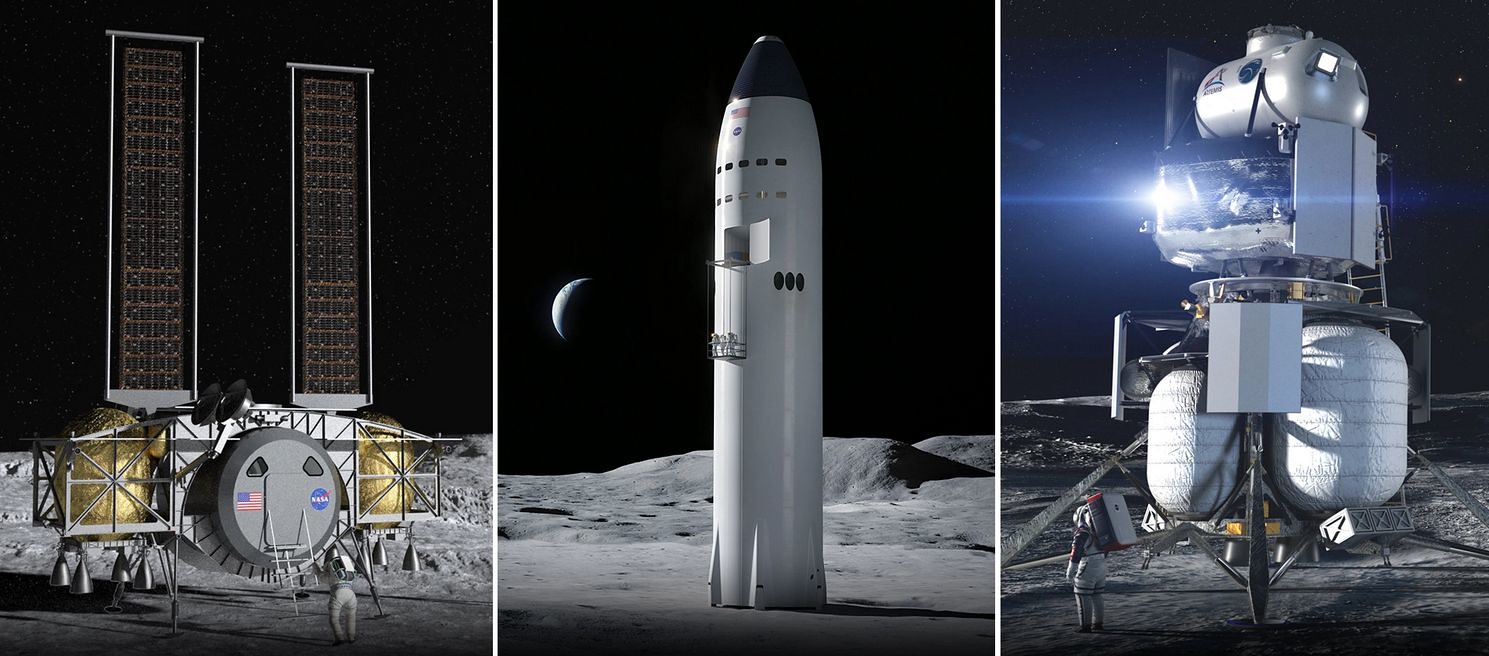
Exactly what is so happen to the SpaceX HLS after Artemis 3 is unclear. That mission will not use the Lunar Gateway, but will see an Orion dock with the SpaceX vehicle in lunar orbit for the 2-person crew transfer. As such, it is entirely possible the SpaceX HLS might simply be “parked” in lunar orbit and left.
However, given any LETS contract has yet to be granted a further crewed landing on the Moon under the Artemis banner is unlikely to occur before late 2027 or (more likely) 2028 / 29.
Continue reading “Space Sunday: JWST, Artemis and rockets delivering cargo to Earth”









 As I’ve noted in various pieces in this blog, whilst the physical transition of Second Life services from dedicated hardware operated directly by the Lab in a co-location facility to running those services within an Amazon Web Services (AWS) environment was completed at the end of December 2020, work on the project continued through 2021 in refining how the various services run within the AWS environment and in work leveraging the better capabilities Amazon provide – hardware configurations, monitoring tools, etc., – to improve the performance of SL’s services.
 Inara Pey: Living in a Modemworld