The Wylde and The Nightgarden, July 2025 – click on any image for full size
Back on May 2022, visited The Wylde, a quarter-region design by Jazaar Silvermoon (Jazaar Heartsong) and AmiandAeon Silvermoon (AmiAndAeon), presented as a public garden for people to visit and appreciate as it sat alongside – but entirely separate from – their private home (see: A walk in The Wylde in Second Life).
Since then, Jazaar and AmiandAeon have acquired the rest of the Full region on which their home and The Wylde stand, allowing them to expand the latter whilst also offering a second public space to visit, which they’ve called The Nightgarden. The latter is both separate from The Wylde with its own Landing Point, but also connected to it – at least it is for those who are observant and willing to explore carefully! With the expansion, Jazaar kindly sent me an invitation to pay the region another visit.
The Wylde and The Nightgarden, July 2025
The landing Point for The Wilde remains on the west side of the region, immediately adjacent to one of the gates and walls marking Jazaar and Ami’s home, which occupies the south-west corner of the region and is not open to public exploration.
The public path heads north, very quickly branching into a Y to offer two choices of exploration. Which you opt to take is entirely up to you. One leads the way through the trees to where a small cuddle deck sits out over the waters of a brook (and more), the other offers a meandering path through the woods with multiple discoveries to be made along the way.
The Wylde and The Nightgarden, July 2025
As I noted when writing about The Wylde in 2022, there is a mystical look and feel about it, with the paths offering much to see – rabbits, unicorns in a hidden meadow (where people might also dance), statues, ponds, gazebos, streams – all of which allow the setting to speak for itself as it unfolds before the eyes as one wanders. Luminescence hangs in the air and graces exotics plants, teardrop lanterns hang from boughs, and the density of trees and shrubs ensure you’ll want to keep a keen eye in order to observe everything.
Depending where you wander, you explorations may be aided by the timely intervention of a bridge to span a stream or body of water – or you might find stepping stones to help keep your feet dry. Rotating rings of stone blocks, a bubbling cauldron and statues of fae folk and (perhaps) pagan deities add further mystery and magic to the setting. The centre highlands are dominated by two large structures, a mystical rotunda sitting between the stubby peak of a frosted mounted topped by an eleven garden. There are at least two routes up to the rotunda (one passing under a Fantasy Faire “gate”) – but again – I’ll leave you to find them!
The Wylde and The Nightgarden, July 2025
The Nightgarden is, as already noted, the latest addition to the setting. Occupying the south-east quarter of the region, it stands both on its own as a place to visit via its own Landing Point, and as a place which can be explored alongside of The Wylde, to which it is connected by hidden paths (one of which I found and will say only this: bridges here don’t only span a gorge, they might also heave beneath them a part hidden in plain sight and which doesn’t end at a waterfall).
Welcome to the Nightgarden, a mystical world of starlit serenity. Follow the paths, explore the phosphorescent flora, bask in the waterfalls from the floating islands, and discover the portals that lead you into even more discoveries.
– From The Nightgarden’s About Land description
The Wylde and The Nightgarden, July 2025
Surrounded by steep rock, The Nightgarden offers a deep water lake which can almost be circumnavigated, the shoreline awash with luminescent plants and rich foliage, as blue water tumbles from islands of rock floating overhead. Some of this pools in depressions atop the cliffs prior to tumbling down one more, some falls directly into the lake. Strange plants also float above the deep waters, sharing the air with the rock islands – the largest of which has a garden of its own waiting to be visited – and lanterns.
Watching over this is a house of glass, an arboretum rich in exotic, glowing flora. It stands back against the cliffs, inaccessible save via the teleport boats, one moored on the waters of the lake, the other serenely moored against the arboretum, each with an touch-teleport ring mounted upon its deck. Nor do things end there; below the waters is a further realm, again alive with colour and filled with detail, just waiting for people to slip below the waves and explore.
The Wylde and The Nightgarden, July 2025
Throughout all of this – The Wylde and The Nightgarden alike – are many places to sit and relax, cuddle, dance and generally lose yourself. Well worth visiting and exploring.
Cica Ghost opened her July 2025 installation at the start of the month. Entitled Among the Hills, it is another setting using a fairy tale related quote, in this case one from Hans Christian Andersen:
Life itself is the most wonderful fairy tale.
It’s a quote carrying a number of potential messages. Best known for his fairy tales, Andersen was a prolific author of novels, poems, plays and travelogues who saw life as something to be experienced, offering the most unique of opportunities and experiences, making it as wonderful as anything that might be derived from the imagination by means of a fairy tale. At the same time, the quote reflects Andersen’s belief that fairies weren’t supernatural, but part of daily life, and we’re simply not aware of them – unless we open our eyes and minds.
Cica Ghost: Among the Hills, July 2025
Then there is the application of the quote to Cica’s builds. It perfectly sums-up her ability to offer environments that offer fun, a sense of wonder and an opportunity for escape. And with its giant turtles, dragons, frogs looking like they might be waiting for a kiss to return them to them princehood and white rabbits, together with teddy bears and walking trees, Among the Hills offers a similar reflection of the wonders of fairy tales and the magic they can weave in the imagination in a world only slightly removed from our own.
Yes, the setting perhaps lacks some of the usual quirks to be found in Cica’s builds: fun little sit-points dances, etc., but there is good reason for this. As aSL22B exhibitor, Cica likely had to balance producing this installation along with preparing for SL22B. Even so, Among the Hills is a fun visit for summer.
The following notes were taken from the Tuesday, July 1st, 2025 Simulator User Group (SUG) meeting. They form a summary of the items discussed, and are not intended to be a full transcript. The notes were taken from my chat log of the meeting. No video this week.
Meeting Overview
The Simulator User Group (also referred to by its older name of Server User Group) exists to provide an opportunity for discussion about simulator technology, bugs, and feature ideas.
Meetings are open to anyone with a concern / interest in the above topics, and form one of a series of regular / semi-regular User Group meetings conducted by Linden Lab.
Dates and times of all current meetings can be found on the Second Life Public Calendar, and descriptions of meetings are defined on the SL wiki.
Simulator Deployments
There are no planned deployments to any channels this week, only restarts (RC channels subject to confirmation at the time of the meeting).
The back-end work which had stalled simulator updates over the last few weeks is now largely completed, and Rider Linden is hoping to get a cut of the simulator release to QA for week #28. The backend migration was about storing of build pipeline assets (libraries, docker images, etc) from one cloud service to another. While this was in progress, the opportunity was taken to do “a lot of clean-up and fresh implementation” of using Github workflow jobs.
Second Life Project glTF Mesh Import, version 7.1.14.15830455952 June 24 – NEW.
Second Life Project Lua Editor Alpha (Aditi only), version 7.1.12.14888088240, May 13 – No Change.
In Brief
SLua:
Rider Linden hopes to return to a half-finished project of speeding up some permissions calculations that happen when changing primitive parameters via LSL/Slua. This is a hot spot that Harold Linden noticed when benchmarking SLua scripts.
The overall memory limit for SLua scripts has not yet been settled. However, as the bytecode is smaller, even if the current Mono limit is kept, SLua programs will have more room to work.
Rider Linden indicated he would nudge Harold and Signal Linden about updating the current SLua servers on Aditi.
It has not yet been decided how require, include, etc., will work with SLua, and a determination will likely be made during the beta – although there is no time frame when the latter will commence.
One of the things Harold Linden has done is move the definition of the LSL API to a config file, allowing some of the Mono boilerplate to be autogenerated from it.
A general discussion on coding and how SLua might be handled, caveated with reminders that LL is trying to maintain LSL compatibility; and in LSL once a prototype is set and published changing it becomes breaking.
Linden Lab is considering setting up a public repo (or similar) which could be used to publish the XML used to define the LSL commands.
A discussion on experiences and the KVP database (e.g. experience permissions, allowing “purchasable” access to larger amounts of KVP storage, use of external storage and LSL access to it. This was largely driven by users.
A general discussion on a modal generating capability via LSL for HUDS, etc., together with approaches and pros and cons.
† The header images included in these summaries are not intended to represent anything discussed at the meetings; they are simply here to avoid a repeated image of a rooftop of people every week. They are taken from my list of region visits, with a link to the post for those interested.
Konrad (kaiju.kohime) and Saskia Rieko are back with another iteration of their Nathhimmel Homestead region. It’s a place I always enjoy visiting as Konrad and Reiko offer imaginative takes on places, myths and events from the physical world, and I’ve covered it on numerous occasions in these pages.
For the latest iteration of the region, Rieko and Konrad have turned to mythology of South America – specifically that of Viracocha (aka Huiracocha), a creator deity originally worshiped by the pre-Inca inhabitants of Peru, and later appropriated by the Inca.
Nathhimmel: Vira Cocha, July 2025
The stories and legends surrounding Viracocha highlight his role in the creation of the universe, the Sun and the Moon, and humanity itself. According to tradition, after forming the rest of the heavens and the earth, Viracocha wandered through the world teaching men the arts of civilisation. As such his character is complex, blending elements of a god of creation with those of a wandering deity who brings knowledge to the people – and while he came late to the Inca Patheon, the cult of Viracocha is regarded by some as having been more important than the cult of the Sun god.
Given the complexity of his role in various mythos, Viracocha had a long list of titles, such as the Old Man of the Sky, Lord Instructor of the World and the Ancient One, and went through multiple transmogrifications. Legend claims he created peoples then destroyed them before recreating them and educating them before dispersing them across the land. As a wanderer, he journeyed widely teaching and instructing before departing across the Pacific Ocean – and as Kon-Tiki, Viracocha was said to have brought Inca culture to Polynesia.
Nathhimmel: Vira Cocha, July 2025
With Vira Cocha, Konrad and Saskia present a personal take on the legend, complete with their own telling of the tale, which can be obtained at the Landing Point (click the Info sign).
The setting presents a landscape surrounded by mountains and water, suggesting a lake island – perhaps one on Lake Titicaca, where Viracocha is said to have created the the Sun and Moon – and indeed, a huge Moon, as if freshly-made, sits low in the sky. Carrying a sub-tropical jungle feel, the land forms a U to enclose the water that also surrounds it. Paths offer a route around the land, carrying visitors to various points of interest.
Nathhimmel: Vira Cocha, July 2025, July 2025
The latter are many and varied and offer a series of unique elements to the build. Statue-like rocks stand as echoes of the legend of Viracocha creating people from stone. Then there are pod-like structures raised on stilts; they are not of an Inca design and their smooth surfaces and looks give them an other-worldly – or at least a futuristic – look. Mixed with these are very contemporary elements – surf boards, the wreck of a truck converted into a beach shack, modern-looking wooden decks offered as hang-out spaces; all of which combine to give the setting a sense of mystery and welcome.
Hints that this is South America are provided in various little touches of detail – Capybara, snakes, flora, all of which contribute to the depth of the setting. A real sense of mystery can be found to the north-west side of the island, where the path around the headland is marked by small bonfires, as if lighting the way to a place of night-time rites. They encourage one onwards and around the headland.
Nathhimmel: Vira Cocha, July 2025An engaging setting, well worth exploring.
Logos representative only and should not be seen as an endorsement / preference / recommendation
Updates from the week through to Sunday, June 29th, 2025
This summary is generally published every Monday, and is a list of SL viewer / client releases (official and TPV) made during the previous week. When reading it, please note:
It is based on my Current Viewer Releases Page, a list of all Second Life viewers and clients that are in popular use (and of which I am aware), and which are recognised as adhering to the TPV Policy.
This page includes comprehensive links to download pages, blog notes, release notes, etc., as well as links to any / all reviews of specific viewers / clients made within this blog.
By its nature, this summary presented here will always be in arrears, please refer to the Current Viewer Release Page for more up-to-date information.
Outside of the Official viewer, and as a rule, alpha / beta / nightly or release candidate viewer builds are not included; although on occasions, exceptions might be made.
Second Life Project glTF Mesh Import, version 7.1.14.15830455952 June 24 – NEW.
This is an early Alpha release with some of the rough edges and already resolved many bugs and crashes, although more are to be found, together with general feedback from the community. Please read the release notes if you intend to test this viewer.
Second Life Project Lua Editor Alpha (Aditi only), version 7.1.12.14888088240, May 13 – No Change.
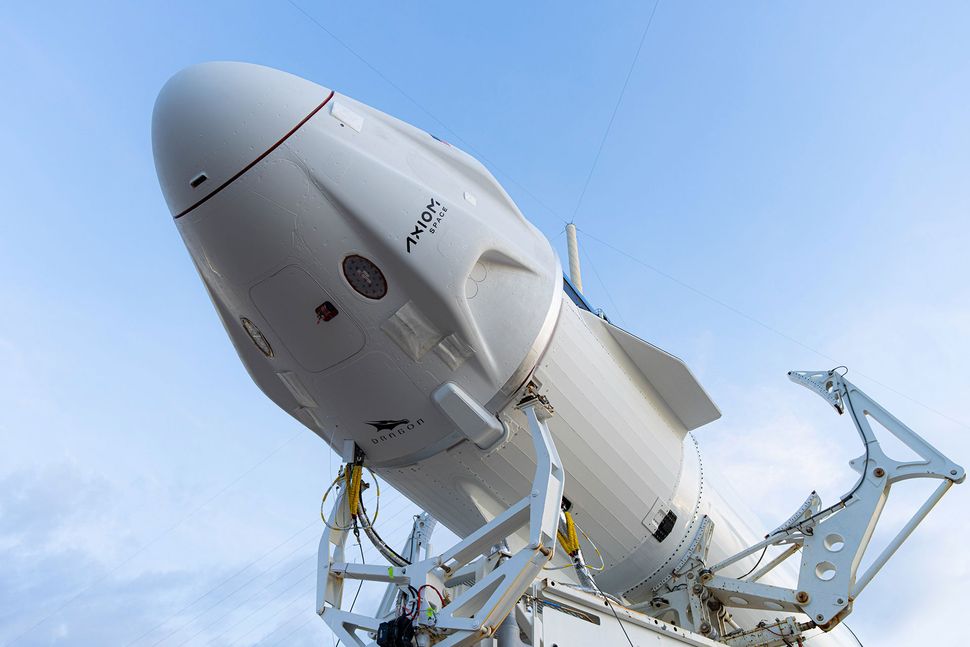
The SpaceX Dragon Grace, carrying the Axiom Mission 4 (Ax-4) crew, approaches the International Space Station with it nose cone open to expose the docking mechanism within. At the time of this shot, both spacecraft were orbiting 421 km above the coast of southern Madagascar. Credit: NASA
After delays and concerns over pressure leaks within the Russian section of the International Space Station (ISS) – see Space Sunday: frustrations and extensions and Space Sunday: Rockets, updates and Planet Nine – the Axiom Ax-4 private mission to the station finally lifted-off from Kennedy Space Centre on June 25th, carrying an international crew of four to the station.
The SpaceX Falcon Nine booster lifted-off from Launch Complex 39A at 06:31:52 UTC, carrying mission commander Peggy Whitson, a highly-experienced former NASA astronaut and now Axiom’s Director of Human Space Flight; India Space Research Organisation’s (ISRO) astronaut Shubhanshu Shukla, filling the role of mission pilot; and mission specialists Sławosz Uznański-Wiśniewski, a European Space Agency project astronaut from Poland, and Tibor Kapu representing the Hungarian Space Office.
The fifth (and final) Crew Dragon vehicle – to be named Grace by the Ax-4 crew – atop its flacon 9 booster as both are raised to a vertical position at Launch complex 39-A, Kennedy Space Centre. Credit: SpaceX
The four were flying aboard the newest Crew Dragon vehicle built by SpaceX, which the crew christened Grace following a flawless launch and ascent to orbit.
We had an incredible ride uphill and now we’d like to set our course for the International Space Station aboard the newest member of the Dragon fleet, our spacecraft named ‘Grace’.
“Grace” is more than a name. It reflects the elegance with which we move through space against the backdrop of Earth. It speaks to the refinement of our mission, the harmony of science and spirit and the unmerited favour we carry with humility. Grace reminds us that spaceflight is not just a seed of engineering, but an act of good work for the benefit of every human everywhere.
– Peggy Whitson, AX-4 Crew commander
Following launch and separation from the Falcon 9 upper stage, Grace preceded on a “slow” orbital trajectory to “chase” the ISS, rendezvousing with the station some 24 hours after launch. This allowed the crew to check-out the vehicle and perform the first of their broadcasts to Earth. Docking with the ISS took place on June 26th, at 10:31 UTC, to mark the start of a say that is designed to last at least 14 days, but could extend to up to 21 days.
The Axiom Mission 4 (Ax-4) crew (in the blue jumpsuits) and the ISS Expedition 73 in a group portrait within the Harmony module of the ISS. Form left to right: back row – cosmonauts Alexey Zubritskiy, Kirill Peskov, Sergey Ryzhikov and NASA astronauts Jonny Kim and Nichole Ayers; front row: Ax-4 crew Tibor Kapu, Peggy Whitson, Shubhanshu Shukla, and Sławosz Uznański-Wiśniewski, with Anne McClain (NASA) and Takuya Onishi (JAXA). Credit: NASA
Also aboard the flight are a number of science experiments, notably from Poland and India, further emphasising the international focus of the mission. The flight is especially significant for Shukla; he is the first Indian to fly into space as a part of India’s newly-instigated astronaut corps (although not the first Indian national to fly in space), and has already been selected to fly in the first crewed mission aboard India’s home-grown Gaganyaan space capsule. His time aboard Ax-4 is very much seen as preparing him for that mission. For Axiom and NASA, Ax-4, is intended to signify a desire to maintain on-orbit operations aboard space stations as an international endeavour as the ISS researches its end-of-life in 2030, and facilities such as Axiom’s own space station take over from it.
Ax-4 also carries aboard it some special treats for everyone on the ISS: Shukla and Kapu have taken along specifically-developed national dishes and treats such as moong dal halwa, carrot halwa and mango nectar, together with a specially-formulated version of Hungarian chocolate and a range of Hungarian spices to help pep-up the taste of food on the ISS. Uznański-Wiśniewski, meanwhile worked with ESA, NASA and Polish chef and restaurateur Mateusz Gessler to develop an entire menu for the Ax-4 crew which includes pierogi, tomato soup with noodles, Polish ‘leczo’ stew with buckwheat, and apple crumble for dessert.
Nor is carrying such foods simply a matter of catering to personal whims; food can have a positive psychological impact – particularly comfort foods that bring with them memories of home and which offer a departure from the more usual offerings. As such, experiments like this can help nutritionists and psychologists bring more and better varieties of meals and foods to crews on long-duration missions, bolstering their sense of well-being and comfort.
Vera C. Rubin Opens its Eyes
Located on the El Peñón peak of Cerro Pachón, a 2,682-meter-high mountain in northern Chile is the world’s biggest digital camera, a 3.2 gigapixel charge-coupled device. It sits at the heart of the Vera C. Rubin Observatory, a major new astronomy facility capable of imaging the entire southern sky every few nights.
Originally called the Large Synoptic Survey Telescope (LSST), where synoptic describes observations that give a broad view of a subject, the observatory was first proposed in 2001, with work on the 8.4-metre primary mirror starting on 2007 with the aid of private funding.
The Vera C. Rubin Observatory imaged in 2022 during the final construction phase, seen against the backdrop of the Milky Way galaxy. The latter appears to be split in two by a dark path called the Great Rift. This is actually a shroud of dust sitting between Earth and out view of the centre of our galaxy, preventing the light of the stars beyond it breaking through as it scatters visible light. Credit: Rubin Observatory/NSF/AURA/B. Quint
In 2010, the observatory became the top-rated large ground-based project in the 2010 Astrophysics Decadal Survey, moving to be funded through and overseen by the US National Science Foundation (NSF), with the actual funding provided by the US Department of Energy and the non-profit international LSST Discovery Alliance.
Overall construction of the physical observatory commenced in 2015, with initial testing of the on-sky observational capabilities taking place in late 2024 utilising an engineering test camera, with the First Light images captured with the observatory’s Simonyi Survey Telescope and the 3.2 gigapixel camera taken on June 23rd, 2025.
The primary aim of the observatory is designed to build a continuous survey of the southern sky over 10-years in an attempt to answer a number of questions, including:
How did the Milky Way galaxy form?
What is 95% of the Universe made of?
What will a full inventory of Solar System objects reveal?
What will we learn from watching millions of changes in the night sky over 10 years?
Combining 678 separate images taken by the Vera C. Rubin Observatory in just over seven hours during its First Light test, this mosaic shows a region of space in the southern skies in which two nebula – the Lagoon Nebula (Messier 8), 4000 light-years away and shown in a vibrant pink colour, and the Trifid Nebula (Messier 10), some 5,000 light years away and also pink-looking – can be seen. Labelled are various stars and galaxies which lie in, before or beyond the Nebulae. The Lagoon Nebula is a stellar nursery, and is brightly illuminated by a cluster of young, massive stars within it, their illumination allowing it to be just visible with even a modest telescope. Click for full size. Credit: Rubin Observatory/NSF/AURA
To answer these questions the observatory will carry out science in four principal areas:
Understanding the nature of dark matter and dark energy.
Creating an inventory of the Solar System.
Mapping the Milky Way.
Exploring objects that change position or brightness over time.
The telescope’s wide field of view is extraordinary – 3.5 degrees in diameter, or 9.6 square degrees. Combined with the telescope’s large aperture (light-collecting ability), the telescope’s optics have an imaging capability three times that of the largest-view telescopes currently in use. This means the observatory can “see” literally everything – from the smallest sources of reflected light in our own solar system to remote deep-space objects.
A rendering of Vera C. Rubin’s Simonyi Survey Telescope (in the centre of the ring structure) and its mounting frame. Credit: Rubin Observatory project office.
To achieve this, the Simonyi Survey Telescope’s 8.4 metre diameter primary mirror is supported by a 3.2-metre diameter secondary mirror, and a tertiary 5-metre mirror, the world’s largest convex mirror. Both the primary and tertiary mirrors were designed to be placed together to make the telescope very compact and easier to re-orient, which it must do quickly and efficiently each night.
Further, it allows the placement of three additional corrective mirrors to reduce image aberrations without over-complicating the optical train. This in turn allows the telescope to avoid the usual adjustable optical mechanisms required to counter atmospheric image dispersion as a telescope is repointed and encounters different atmospheric conditions. This is particularly important as the Vera Rubin must be able to bet re-point and be ready to take an image within 5 seconds after the previous image capture has been confirmed – leaving no time for the usual atmospheric adjustments.
First light with a telescope refers to the first time a telescope and its instruments capture one of more astronomical images after its construction. This moment is significant for astronomers and engineers as it is an important step towards fully calibrating a telescope and correcting potential issues within the optics so that it is ready to start formal operations.
Made from over 1100 images captured by the Vera C. Rubin Observatory during its 10-hour First Light test, this mosaic contains an immense variety of objects, including some 10 million other galaxies, demonstrating the broad range of science Rubin will transform with its 10-year Legacy Survey of Space and Time. Annotated within it are a number of galaxies and brighter stars. Click the image for full size. Credit: Rubin Observatory/NSF/AURA
For the Vera C. Rubin observatory, First Light tests produced images revealing over 10 million galaxies and led to the discovery over 2,000 new asteroids. Once operational, the observatory will be capable to capture more information about the universe than all the optical telescopes used throughout history thus far, combined. Its image gathering capability means it will be generate 20 terabytes of image data per night. This data will be collected and transmitted to a series of “data brokers” around the world, ensuring that the data is not only secured across multiple redundant sites, but allows the brokers to serve the information and alerts to astronomers and research centres globally.
To assist in making sure astronomers and institutions can access the data and images they are interested in, the cloud-based data brokers are supported by a dedicated system called Data Butler. This holds all the relevant metadata for every image captured by the observatory, allowing astronomers with access to it to query it using astronomical terms – object type, time scale of observations, object co-ordinates, etc., and receive the images they need.
Vera Florence Cooper Rubin, 1828-2016. Credit: Mark Godfrey
The alert system allows the system to identify “transients”, unexpected events which could require an immediate response by astronomers: things like supernovas, kilonovas that produce gravitational waves, novas, flare stars, eclipsing binaries, magnetar outbursts, asteroids and comets moving across the sky, quasars, and so on.
Once operational it is expected that the observatory will issue up to 10 million such alerts per night, all of which will be parsed through the Data Brokers, allowing the system to analyse them and determine what should be immediately passed on to astronomers for further / detailed investigation.
In all, the Vera C. Rubin Observatory – named for Vera Florence Cooper Rubin, the American astronomer who pioneered research into galaxy rotation rates which is seen as evidence for the existence of dark matter – is set to revolutionise our visual understanding of the universe, our galaxy and our own solar system. However, there is a cloud on the horizon.
As it moves towards entering service, the observatory’s major source of funding, the National Science Foundation, is facing significant budget cuts and uncertainty about its future operation allocation.
Under the Trump Administration’s budget, NSF is set to have its budget cut by 56%, from US$8.83 billion under the Biden Administration to just US $3.9 billion. Already, the Trump administration has frozen or terminated 1,600 NSF grants. While on the day following Vera C. Rubin’s First Light test, 1,800 NSF staff were informed the administration intends to remove them from their current headquarters building as a part of “government efficiency”. Ironically, NSF only moved into the building under the first Trump administration. Worse, no word has been given as to where NSF staff are to be relocated. As a result, the attempt to displace the NSF is meeting strong resistance from both Capitol Hill and the American Federation of Government Employees (AFGE).
The particular concern for the Vera C. Rubin observatory is that if the Trump budget passes as is, the NSF’s Mathematical and Physical Sciences Directorate, which is responsible for funding astronomical activities under the NSF’s remit, will only have an operation budget of US $500 million. This means that optical and radio centres such as Kitt Peak, and Cerro Tololo Inter-American Observatory some 10 km from Vera C. Rubin, are to be “phased out” of the NSF’s budget, with the hope their operations can be transferred to “other organisations”. Similarly, the Nobel Physics Prize winning Laser Interferometer Gravitational Wave Observatory (LIGO), is to have its budget reduced by 40%, resulting in the closure of one of its two facilities, reducing its effectiveness enormously.
In response to concerns the Trump Administration emphasises “support” for the observatory, noting its 2025/26 budget allocation is increased from US $17.7 million to US $32 million over 2024/25. However, the former budget amount was for the final development phase of the project, not operations, and the US$32 million promised to the observatory is some 20% less than had been requested in order for it to start observational operations.
These concerns aside, the First Light images from Vera C. Rubin are astonishing – and one hopes the observatory will be funded to a point where it can complete its initial 10-year mission.






 Inara Pey: Living in a Modemworld