Logos representative only and should not be seen as an endorsement / preference / recommendation
Updates from the week through to Sunday, August 21st, 2022
This summary is generally published every Monday, and is a list of SL viewer / client releases (official and TPV) made during the previous week. When reading it, please note:
It is based on my Current Viewer Releases Page, a list of all Second Life viewers and clients that are in popular use (and of which I am aware), and which are recognised as adhering to the TPV Policy. This page includes comprehensive links to download pages, blog notes, release notes, etc., as well as links to any / all reviews of specific viewers / clients made within this blog.
By its nature, this summary presented here will always be in arrears, please refer to the Current Viewer Release Page for more up-to-date information.
Note that for purposes of length, TPV test viewers, preview / beta viewers / nightly builds are generally not recorded in these summaries.
Official LL Viewers
Release viewer: version 6.6.2.573358 – formerly the Maintenance 2 RC viewer, dated August 1, promoted August 4 – NEW.
Release channel cohorts::
Profiles RC viewer updated to version 6.6.3.574158, on August 18.
Maintenance P (Preferences, Position and Paste) RC viewer version 6.6.3.573877 issued August 15.
Izarra Maintenance RC, version 6.6.3.573920, August 15.
As many doubtless already know, thanks to the work of other bloggers and also Lab Gab, NatureCon is currently underway within Second Life, and runs through until August 31st. Despite being offered the opportunity to preview it – my apologises to the organisers – the week ahead of the event opening was a little chaotic for me (hence the slow-down in general blogging), and I was unable to accept the offer. As the opening weekend in the regions was also super busy, I decided to hold off blogging until slightly quieter times allowed for more relaxed exploration.
NatureCon’s mission is to inspire connections between related SL communities and organizations from Bellisseria and the Mainland through a shared love of exploration and expressions of nature in SL.
In celebration of creative natural spaces and the folk who share them, NatureCon 2022 aims to unite Mainland’s and Bellisseria’s natural spaces and share a love of travel with the greater SL community.
– from the NatureCon 2022 Guide
NatureCon 2022: Ruthenium region – click for full size
The event is located within two Full regions on the southern tip of Sansara and connects to the open waters that offer passage to and from Bellisseria. As such, the event can be reached via direct teleport, by water from Bellisseria, by road from anywhere in Sansara or by air from the grid as a whole via the Gateway International Airport.
Between them, the two regions offer much to see and do, and features both groups and individuals from across Second Life, some of who I’ve been only too happy to cover in these pages – such as the Zany Zen Railway (see: Letting off steam with Zany Zen Railway in Second Life), one of the Great Little Railways of Second Life (alongside of Dreamshire Village – see here, and the Valkyrie Light Transport Railroad – see here, both of which are represented through advertising in the regions), and the Nature Collective by Emm (Emmalee Evergarden), which I wrote about in July 2022.
NatureCon 2022
Within the inland areas are trails and boardwalks to be followed (and climbed or descended!), which provide access to the various stages of live events, info and activity areas, allowing visitors to go horse riding, ride zip lines, try their hand at rope climbing or hang-gliding, and so on – and even tickle a volcano into an eruption(!). Down along the coast meanwhile are beaches, opportunities to mess about on (or in and under!) the water, the chance to catch the ferry to Bellisseria, and a special info centre by the SL Coast Guard.
As a celebration of Nature, there are multiple exhibits focused on the diversity of life on this planet, with a special habitat by the BB, a bird observatory, Emm’s aforementioned Nature Collective, undersea seas which include links to external resources on ocean and aquatic life conservation, and information boards a-plenty found throughout the regions, offering visitor plenty of opportunities to learn more about nature, conservation, and about communities across Second Life. In all, the event has involved the collaboration of some 60 people, including the Moles of the LDPW, and Mainland communities such as Bay City, and famous Mainland sites such as Mount Campion (see here and here for more) as well as those already mentioned.
NatureCon 2022 – Osmium region – click for full size
From the main info hubs, visitors are free to wander as they will; the trails and boardwalks offer the most direct means of getting around, but people can also avail themselves of the ChedderWorx Railway and any one of the many horse rezzers scattered around the landscape and hills – or can wear their own horse, as I did whilst exploring the greater part of the regions. Those who enjoy a hunt will also be rewarded by a visit, thanks to the NatureCon 2022 Artist Hunt – details via the posters at the two landing points. Art is also well represented through the event regions, with displays to be found under canopies of tall trees, along some of the trails and within places such as the Park Office.
Given all that is going on, a visit can put something of a strain on a visitor’s computer, so do be prepared to make some adjustments to your settings if you encounter issues – lowering draw distance may limit your view, but if it means you’re able to explore with greater ease, it’s worthwhile doing so. Also, for a fully immersive experience, do be sure to have local sounds enabled.
NatureCon 2022
It’s clear that considerable thought has gone into NatureCon 2022; so much so that drawing attention to personal niggles might seem a little unfair. However, whilst wandering, both Imp and I couldn’t help but feel while undoubtedly useful in some places, the boardwalks within the setting were in others a trifle over-used; this is a nature reserve after all, so why c;lutter so much of the landscape with (what felt like in places to be acres of) wooden planking? And while not exclusively affiliated with the Mainland, given their love of all things aquatic and for undersea life and nature, it would have been nice to visit the (otherwise bland) Mermaid’s Grotto and find information on Second Life’s mer communities.
But niggles aside, NatureCon 2022 is an obvious labour of love from all concerned, and well worth a visit. Details of facilities and events are in the images supplied here, simply click on any one of them for the full size, if required.
August and September 2022 mark the 45th anniversaries of the launches of Voyager 1 and Voyager 2, NASA’s twin interplanetary – and now interstellar – explorers.
Designed to take advantages of a planetary alignment which occurs once every 176 years, allowing the use the gravities of one of the outer planets to “slingshot” a vehicle on to the next, the two Voyager mission vehicles remain in operation today, and continue to stand at the forefront of our understanding of the local space surrounding our solar system.
Voyager 1 continues to set records as the furthest man-made object from Earth – it is now over 23.3 billion kilometres away – whilst Voyager 2 remains famous for giving us our first detailed views of Uranus and Neptune during its 20-year voyage through the outer solar system.
Products of the 1970s, the Voyager craft stand as museum pieces by today’s standards. Each has around 23 million times less memory than a modern cellphone, their communications systems can only transmit and receive data some 38,000 times slower than a modern cellular network, and they record the data they gather on an 8-track tape recorder prior to transmitting it back to Earth. Nevertheless, the amount of knowledge they have gathered and returned to us about the outer reaches of the solar system, the heliosphere (the bubble of space around the Sun in which the solar system resides), the heliopause (the boundary between that Sun-dominated “bubble” and the galaxy at large) and the realm of interstellar space beyond that bubble.
Operated by NASA’s Jet Propulsion Laboratory (JPL), the Voyager craft were launched in reverse order, with Voyager 2 lifting-off on August 20th, 1977 and Voyager 1 following on September 5th, 1977. The reason for this ordering was simple: during the development of the mission, Saturn’s moon Titan, known to have an atmosphere, was identified as a primary target for fly-by investigation, and so was assigned to Voyager 1.
Animation of Voyager 1’s trajectory around Jupiter: Pink – Voyager 1; Light Blue · Jupiter; Red · Io; Dark Blue -Europa; Yellow – Ganymede; Green · Callisto. Credit: Phoenix777
However, in order to reach the moon, the vehicle would have to follow a course that would carry it over Saturn’s northern reaches, and throw it “down” and out of the plane of the ecliptic and away from any chance of reaching the outer planets. Instead, Voyager 2 was tasked with completing the “grand tour” of the major planets – Jupiter, Saturn, Uranus and Neptune, and in order to achieve this, it would have to be launched first.
Even so, thanks to the nature of orbital mechanics requiring Voyager 2 to be thrown out on a more circular, “indirect” path towards Jupiter whilst Voyager 1 could be launched more directly towards Jupiter meant it could reach the gas giant first, arriving in January 1979, having “overtaken” Voyager 2 in December 1977. . Its passage through the Jovian system revolutionised our appreciation of the Galilean moons of the system, after which it travelled on to its November 1980 encounter with Saturn and then Titan.
Voyager 2’s more circular trajectory meant it did not reach Jupiter until July 1979, six months behind Voyager 1, but its route allowed it to make a much closer fly-by of Europa, the ice-covered Galilean moon, giving scientists the first hint of the nature of the mechanisms at work deep within the moon.
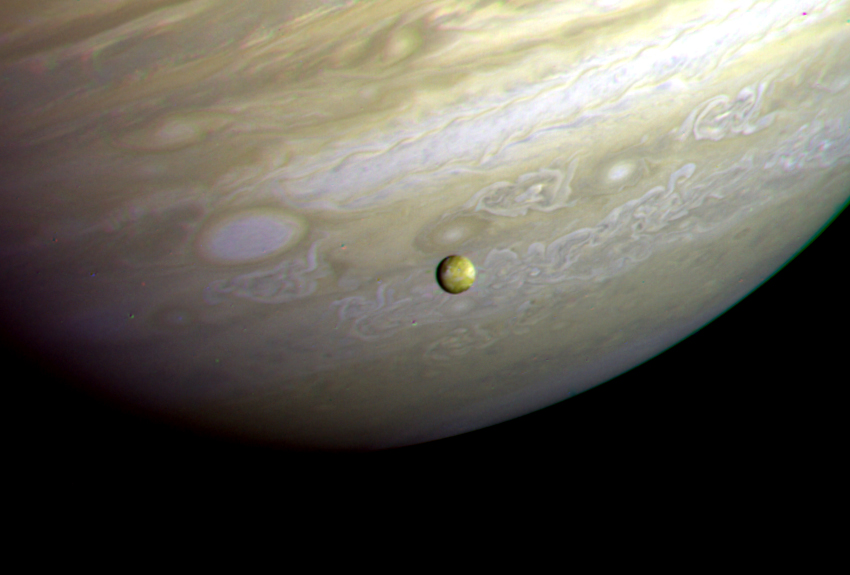
A transit of Io across Jupiter as imaged by Voyager 2 in July 2022. Credit: NASA/JPL
From here the vehicle journeyed on to an August 1981 encounter with Saturn and then Uranus in 1986 and then Neptune in August 1989, whilst Voyager 1 continued onwards toward the heliopause, all of which I covered in Space Sunday: Voyager at 40.
In 2010, Voyager 1 commenced a two-year transition from the space dominated by the Sun and its outward flow of radiation, and the realm of interstellar space. The first indications that it was beyond the influence of the Sun’s radiation came in later 2012 – although it was not until March 2013 that this was empirically confirmed through analysis of multiple data returned by the vehicle.
Voyager 2 commenced its voyage through the heliopause in 2013; however, as it was still travelling within the plane of the ecliptic, it was effectively travelling through a “thicker” part of the “bubble wall” of the heliosphere, so it did not enter interstellar space until November 2018.
Even so, and possibly confusingly, neither craft have actually departed the solar system per se. This is because the “size” of the solar system is measured in two ways: the influence of the Sun’s outward flow of radiation and by the influence of its. Despite having passed through the former, both craft are sill within space affected by the latter, and neither will reach the Oort Cloud – the source region of long-period comets and seen as marking the outer limits of the Sun’s gravitational influence – for another 300 years.
As such, both of the nuclear-powered vehicles are now engaged in a multi-vehicle mission (having been joined in it by the likes of the New Horizons spacecraft, the Parker Solar Probe and others) referred to as the Heliophysics Mission.
The Heliophysics Mission fleet provides invaluable insights into our Sun, from understanding the corona or the outermost part of the sun’s atmosphere, to examining the sun’s impacts throughout the solar system, including here on Earth, in our atmosphere, and on into interstellar space. Over the last 45 years, the Voyager missions have been integral in providing this knowledge and have helped change our understanding of the sun and its influence in ways no other spacecraft can.
– Nicola Fox, director of the NASA’s Heliophysics Division
Voyager 2 left the heliosphere on November 5, 2018. Credit NASA/JPL
Today, as both Voyagers explore interstellar space, they are providing humanity with observations of uncharted territory. This is the first time we’ve been able to directly study how a star, our sun, interacts with the particles and magnetic fields outside our heliosphere, helping scientists understand the local neighbourhood between the stars, upending some of the theories about this region, and providing key information for future missions.
– Linda Spilker, Voyager’s deputy project scientist at JPL
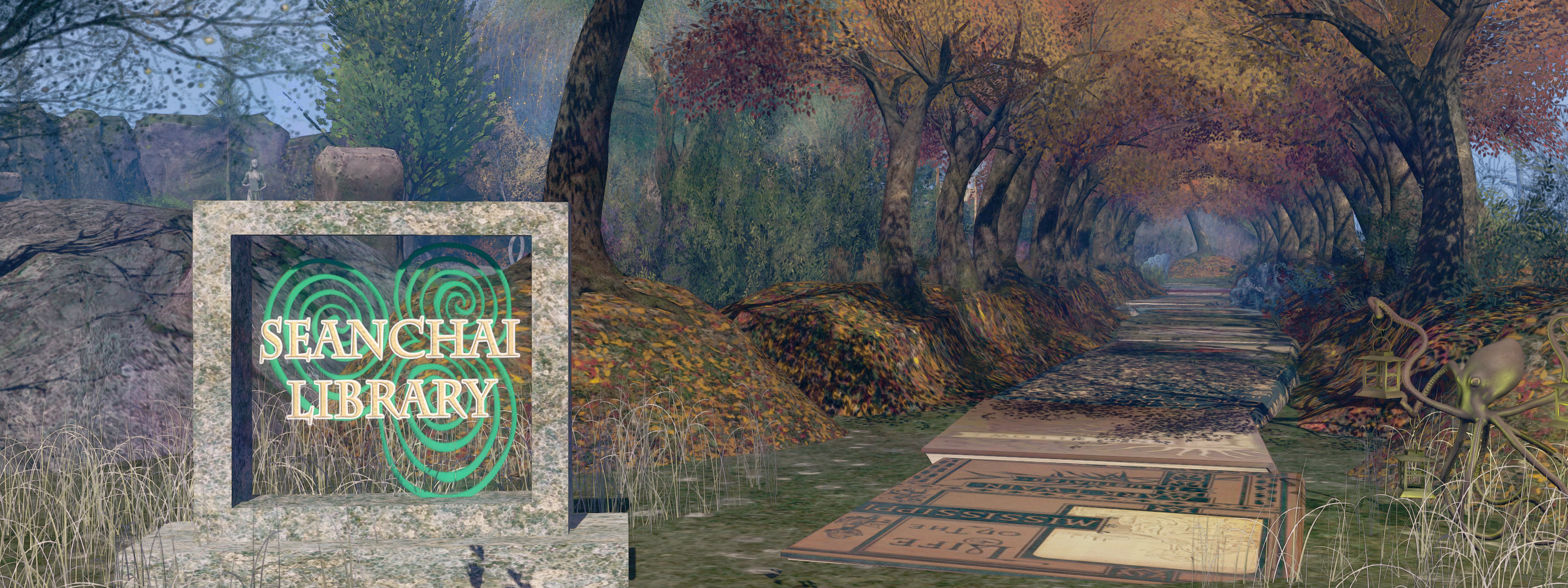
It’s time to highlight another week of storytelling in Voice by the staff and volunteers at the Seanchai Library – and this week previews the launch of a very special event.
As always, all times SLT, and events are held at the Library’s home in Nowhereville, unless otherwise indicated. Note that the schedule below may be subject to change during the week, please refer to the Seanchai Library website for the latest information through the week.
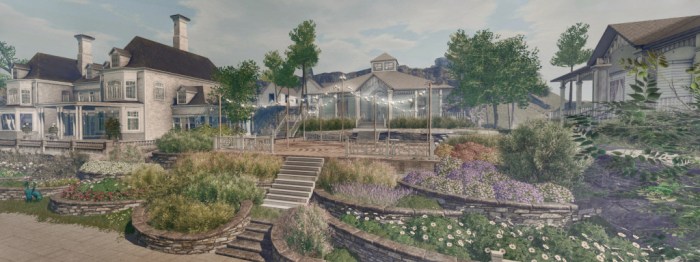
The are times when even Belgian ex-pat detective Hercule Poirot needs a break from his chosen vocation; so when the opportunity arises for him to enjoy a holiday in Devon at the Jolly Roger Hotel (inspired by the Burgh Island Hotel) located on a tidal island just off the south Devonshire coast, he looks forward to the chance of a little R&R.
Evil Under the Sun – a Seanchai Library special event
Whilst at the hotel, he encounters the other guests, notably Arlena Marshall who, desire being at the hotel with her husband Kenneth and step-daughter Linda, spends a lot of her time flirting with Patrick Redfern – much to the anger of Redfern’s wife, Christine and the disgust of her step-daughter. Also among the guests is Rosamund Darnley, who was once sweethearts with Kenneth Marshall.
Trying to keep himself apart from the intrigue, Poirot finds himself drawn into the middle of things and in need of his most particular deductive skills when Arlena Marshall is found dead on the sand of a secluded cove across the little island far from the hotel; a place where she apparently had a secret assignation…
Evil Under the Sun – a Seanchai Library special event
Join David Abbott, Corwyn Allen, Gloriana Maertens, Elrik Merlin, Kayden Oconnell, and Caledonia Skytower as they commence a reading of the 23rd adventure for Agatha’s Christie’s hero, first published in 1941, within the setting of the Jolly Roger Hotel. Should you wish, you can also enjoy the hotel’s grounds and facilities, partake of a little fun – and visit the cove which proved fatal for Arlena Marshall.
Monday, August 22nd, 19:00: More Mark Twain Shorts
Samuel Langhorne Clemens (1835 –1910) known by his pen name Mark Twain, was an American writer, humourist, entrepreneur, publisher, and lecturer. He was lauded as the “greatest humourist the United States has produced”, and William Faulkner called him “the father of American literature.”
Join Caledonia Shytower as she shares more of Twain’s wit and wisdom.
There lived a girl named Petra Peña, who wanted nothing more than to be a storyteller, like her abuelita.
But Petra’s world is ending. Earth has been destroyed by a comet, and only a few hundred scientists and their children – among them Petra and her family – have been chosen to journey to a new planet. They are the ones who must carry on the human race.
Hundreds of years later, Petra wakes to this new planet – and the discovery that she is the only person who remembers Earth. A sinister Collective has taken over the ship during its journey, bent on erasing the sins of humanity’s past. They have systematically purged the memories of all aboard – or purged them altogether.
Petra alone now carries the stories of our past, and with them, any hope for our future. Can she make them live again?
Caledonia Skytower read Donna Barba Higuera’s 2021 winner of the Newbery Medal and Pura Belpré Award.
Wednesday, August 25th, 19:00: Seanchai Flicks
A special for Star Wars month as the Seanchai cinema space plays host to videos and throw popcorn around!
Thursday, August 26th
19:00: Calydonian Boar Hunt Part 2
Shandon Loring reads one of the great heroic adventures in Greek legend, which took place a generation before the Trojan War: the hunt of a monstrous boar by a gathering of great heroes (excluding Heracles).
The boar had been sent by the Goddess Artemis to ravage the kingdom of Calydon in Aetolia, in revenge for the region’s king, Oeneus having slighted her when he forgot to name her in annual rites to the gods. The hunt is led by Meleager, and in most accounts is joined by Atalanta, the great huntress, who ultimately won the boar’s hide, leading to tragic results.
Phaedra / Druune, August 2022 – Click any image for full size
Update, August 28th: well, as is so often the way with Hera’s builds, Phaedra / Drune has already gone from Second Life.
Hera (zee9) is back with a new build that brings together multiple themes and inspirations to present an little bit of everything for lovers of science-fiction, science-fantasy, major motion picture franchises, Greek mythology and Hera’s own builds.
Phaedra / Druune (yes, the extra “u” in “Druune” is intentional, possibly to set this design apart from Hera’s past Drune builds) apparently takes as it core founding the HBO Max series Raised by Wolves – at least in terms of encouraging Hera to work on a science-fantasy environment; this is a wholly unique setting, one not intended to directly reflect that series.
Phaedra / Druune, August 2022
The About Land description states the core of the setting is the moon Phaedra, a satellite of the planet Pasiphae. In this we have the nod to Greek mythology, Phaedra being Pasiphae’s daughter. In this the naming is perfectly reflective of the relationship between planet and moon, for the latter are often “born” from the remnants of the former.
Visits to the setting start aboard the spacer Erebus orbiting the moon, its teleporters ready to transfer passengers to the moon’s principal city, The landing point aboard the ship offers enough information to get people to the teleporters, together with a a backstory to the setting that comes as recommended reading; however, it would be remiss not to point out that spending a little time exploring said vessel is also worthwhile, as it has its own detailing – and an opportunity to partake a little extravehicular activity.
Phaedra / Druune, August 2022
On reaching the moon, those familiar with Hera’s work will recognise the core build, drawing as it does on her Shadezar builds (see: Sharing in Hera’s dreams and visions in Second Life (August 2021) and Majilis al Jinn and a return in Second Life (November 2021). However, as Hera states in her introductory notes, this is no simple revisit; she has put considerable effort into this design, including new textures and a lot of elements which both encourage exploration and also pay homage to popular science-fantasy of the last several decades.
I’m not going to go into a blow-by-blow description of all of the latter in this piece – I’ll leave it to you to read the backstory to get a general feel for things and then explore for yourself – discovery is always best when first-hand, after all! What I will say is that the story offers a great means to get the imagination rolling, and there are more that enough touches throughout – as noted above – to keep the science fantasy aficionado more than happy.
Phaedra / Druune, August 2022
Perhaps the greatest of these are the echoes of the Star Wars universe from both large and small screen. The city is mindful of the desert cities of Tatooine, the streets ancient in form but littered with tech: structures like vaporators are to be found throughout; hover tractors are ready to manhandle freight, terminals are bolted onto ancient stone walls, droids act as servitors, and speeders mindful of those seen in the series are parked outside places of business.
Reference to a more recent chapter in the franchise can be found just outside the main city walls. Here, protected by massive rail guns sitting on high towers, a landing zone is occupied by a vessel bearing a remarkable resemblance to a ST-70 class Razor Crest M-111 Assault Ship as used by a certain Mandalorian (at least until its unfortunate destruction). A fuelling station to one side of the landing area carries a reminder of a more hard-edged sci-fi series (both books and TV), bearing as it does the name Rocinante.
Phaedra / Druune, August 2022Elsewhere, it is possible to find shades of Crichton’s and Spielberg’s Jurassic Park which, while not a direct homage – Hera explains her reasoning well enough in her introductory notes – is nevertheless is hard to miss (and you’ll have to find the caves under the city to discover all of the dinosaurs!).
But this is far from all; also present within the build are Hera’s own welcome touches: the familiar presence of a bar / club – one that draws on a number of influences from science-fantasy and Hera’s own builds; offices, shops, a massage parlour, subtle touches in some of the signage (Rossum’s Universal Robot Repairs, anyone?), and echoes of the more mystical, tucked into the Temple of Druuna.
Phaedra / Druune, August 2022
Finished with a sound scape and utilising an EEP setting I strongly recommend using, and clearly a very busy place given the fighter craft patrolling and space ships passing overhead, Phaedra / Druune is packed with a lot of detail outdoors and indoors, and is altogether another excellent build from Hera – so be sure to grab a visit while it’s available!
The following notes were taken from my audio recording and chat log of the Content Creation User Group (CCUG) meeting held on Thursday, August 18th 2022 at 13:00 SLT. These meetings are chaired by Vir Linden, and their dates and times can be obtained from the SL Public Calendar.
This is a summary of the key topics discussed in the meeting and is not intended to be a full transcript.
Official Viewers Status
Release viewer: version 6.6.2.573358 – formerly the Maintenance 2 RC viewer, dated August 1, promoted August 4 – no change.
Release channel cohorts:
Profiles RC viewer updated to version 6.6.3.574158, on August 18.
Maintenance P (Preferences, Position and Paste) RC viewer version 6.6.3.573877 issued August 15.
Izarra Maintenance RC, version 6.6.3.573920, August 15.
Maintenance (N)omayo RC viewer, version 6.6.3.573882, August 5.
Project viewers:
Love Me Render (LMR) 6 graphics improvements project viewer 6.6.2.573263, July 21.
Performance Floater project viewer, version 6.5.4.571296, May 10.
Mesh Optimizer project viewer, version 6.5.2.566858, dated January 5, issued after January 10.
Copy / Paste project viewer, version 6.3.5.533365, dated December 9, 2019.
The back-end updates are now “all there”, and the focus is now on “tightening up” the graphics., the the image-based side of things now looking “pretty good”.
Internal testing currently involves Second Life, the new PBR / Materials viewer, the Kronos glTF 2.0 standard and Adobe Substance tools (Painter, Stager) to ensure that results displayed within Second Life are consistent with expectations when working within Substance Painter and with glTF.
Some inconsistencies with using directional lights created in Blender have been noted and subject to further testing.
Those with access to the Content Creation Discord server will be able to obtain an updated viewer soon. This will lack transparency support or LSL support; it will also have some “rough edges” around the UI and inventory support.
This is a test viewer only, and not for general consumption.
A more public Project viewer will be made through the Alternate Viewers channels when the work is more stable and suited for wider consumption.
Once the initial work on PBR Materials is released, the graphics team will likely work on some quality of life improvements (e.g. bug fixes) for the graphics system, rather than launching into a new project immediately.
Possible New Inventory Fields
Whilst not solely related to content creation, the Lab has been discussing the potential of adding new inventory fields. Ideas being considered or also put forward at the meeting comprise:
Providing a thumbnail image of the inventory item, rather than having to rely solely on descriptive text.
A means of “tagging” inventory items (e.g. to define what they are in terms of being an attachment or not, and whether the attachment is / is not rigged, etc.), rather than just simply leaving them as a list of orange boxes.
Providing a formal means of “archiving” items that are not regularly used but which are not yet ready to be deleted (other than boxing things up and creating more orange boxes….).
Splitting head shapes and body shapes to make it easier for people who use different heads with the same body (or vice-versa).
In Brief
Requests are again surfacing for texture animation support in particles (see feature request BUG-5307). Those interested in seeing such capabilities should consider adding feedback to this Jira.
This led to questions on a complete overhaul of the SL particle system, which is not something currently under consideration as a possible future project at the Lab – which is not so say incremental updates are ruled out. Again, specific requests incremental updates system should be made via Jira.
For texture animations on particles, for example, the Lab would likely consider adopting the existing texture animation system for use with particles, rather than rebuilding the particle system to handle texture and other animations.
There was a brief discussion of a viewer-side Animation Override (AO) system (e.g. similar in nature to the Firestorm approach). This has been raised in the past at TPV Developer meetings, where it appears to get more robust discussion.
The question was raised of having support for user-defined custom shaders in Second Life. The short answer is “no”, as there are too many variables (a custom shader for a single scene may work – but what happens with 30 people utilise their own shaders / shaders made by others and all congregate at a single club? The rendering will not scale (also, with people all creating their own shaders, how can a consistent result be ensured? What about the risk of malicious shaders being used with content?).





 There lived a girl named Petra Peña, who wanted nothing more than to be a storyteller, like her abuelita.


 Inara Pey: Living in a Modemworld