Space Sunday: Earth and Moons

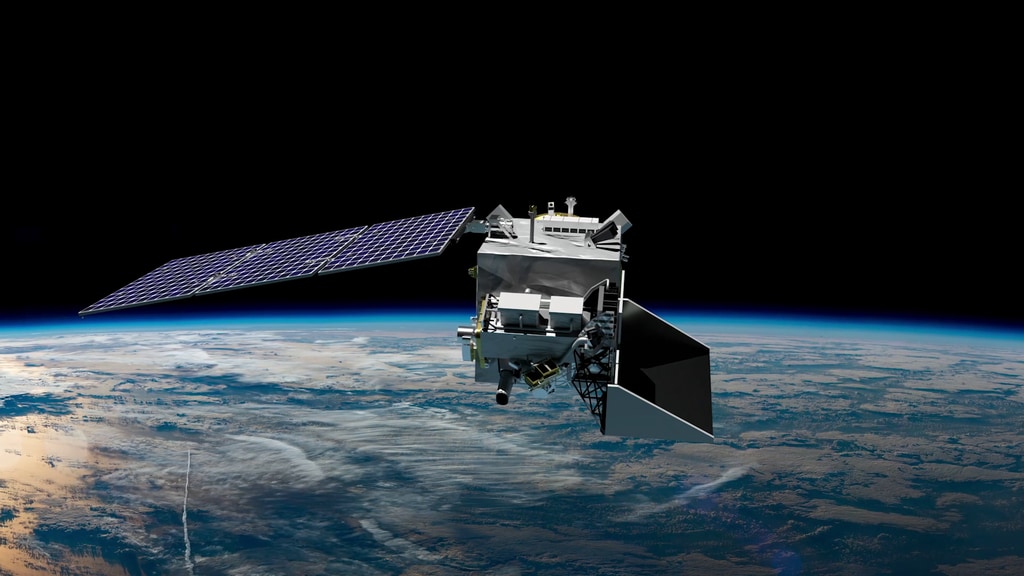
An artist’s rendering of the PACE Earth observation platform in orbit. Credit: NASA

On Thursday, February 10th, 2024, NASA launched a critical Earth observation satellite intended to study the world’s oceans and atmosphere in the face of increasing climate change.

PACE – the Plankton, Aerosol, Cloud, ocean Ecosystem remote sensing platform – is designed to operate in a geocentric, near-polar Sun-synchronous orbit, allowing it to observe all of Earth’s atmosphere and oceans over time. In doing so, it will study how the ocean and atmosphere exchange carbon dioxide and how microscopic particles (aerosols) in our atmosphere might fuel phytoplankton growth in the ocean. The data it accumulates will be used to identify the extent and duration of harmful algae blooms and extend NASA’s long-term observations of our changing climate.

Referred to as autotrophic (self-feeding), phytoplankton are present in both oceanic and freshwater ecosystems and play a key role in sustaining them – and in managing the planet’s carbon dioxide absorption and oxygen production. With the former, phytoplankton absorb carbon dioxide from the atmosphere and convert it into their cellular material, serving as the base of the global aquatic food web, a critical resource for countless species – including humans. In terms of the latter, phytoplankton are responsible for around half the planet’s natural oxygen production despite being around just 1% of the global plant biomass.

Phytoplankton can be imaged in a range of wavelengths (visible light, infra-red, ultraviolet, etc.), allowing colours to be used to assess their bloom size, drift, health, etc. In this 2016 image captured by the Visible Infrared Imaging Radiometer Suite (VIIRS) on the Suomi NPP satellite, the Southern Ocean phytoplankton bloom extending outwards from either side of the South American continent and down to the Antarctic Peninsula is clearly visible. Credit: NASA

Occupying the photic zone of oceans, where photosynthesis is possible, phytoplankton are crucially dependent on large quantities of nutrients, including nitrate, phosphate or silicic acid, iron, and also large amount of vitamin B. The availability of these nutrients is governed by a range of factors: the so-called ocean carbon biological pump; nutrients delivered into the photic zone via freshwater sources emptying into the oceans, natural organic decay, etc.

Both anthropogenic global warming and pollution are particularly harmful to phytoplankton; the former can lead to both changes in the vertical stratification of the water column and the supply of nutrients vital to phytoplankton. Similarly, increased acidity within ocean waters and currents can also adversely affect phytoplankton, up to an including causing biochemical and physical changes. In this, the colour changes exhibited by phytoplankton are considered important indicators of estuarine and coastal ecological condition and health.

Thus, the study of the global distribution and health of phytoplankton communities could profoundly advance our knowledge of the ocean’s role in the climate cycle, whilst at the same time providing real-time data on the negative effects of coastal and deep-water pollution and the impact of climate change and increasing temperatures on the world’s aquatic ecosystem.
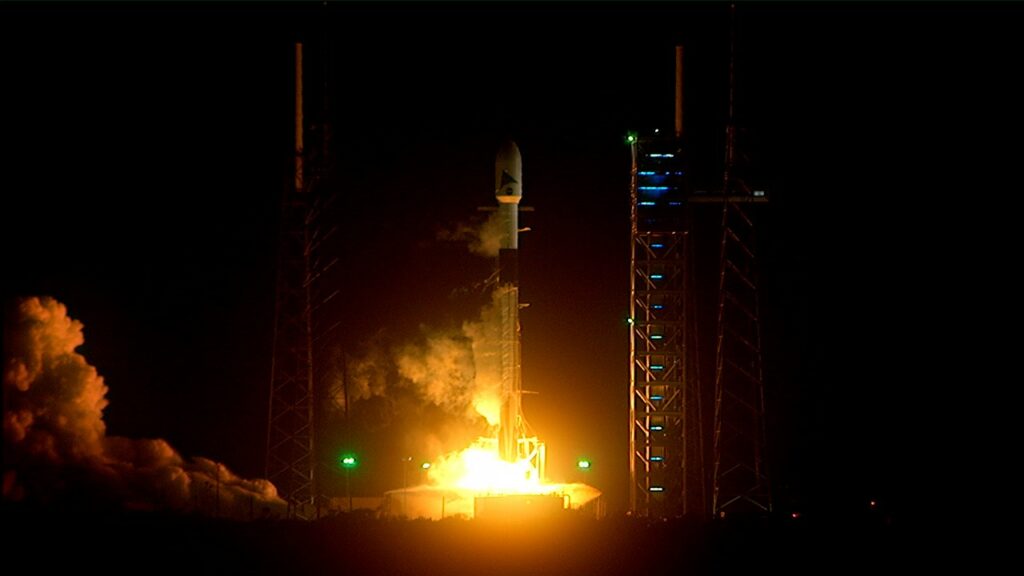
A SpaceX Falcon 9 rocket lifts-off from Cape Canaveral Space Force Station, Florida, carrying NASA’ PACE platform up to orbit. Credit: SpaceX

In this, PACE will operate in unison with the French-American Surface Water and Ocean Topography (SWOT) mission. Launched in 2022, SWOT is designed to make the first global survey of the Earth’s surface water, to observe the fine details of the ocean surface topography, and to measure how terrestrial surface water bodies change over time to allow a more complete picture of the impact of anthropogenic global warming and pollution on the planet’s aquatic biodiversity and life-giving water cycle.

“Death Star” Moon’s Underground Ocean

We’re becoming increasingly familiar with the solar system being potentially full of so-called “water worlds” – bodies that may be home to vast subsurface oceans. Jupiter’s Europa and Saturn’s Enceladus are perhaps the most well-known, with both showing visible signs of water vapour escaping in geyser plumes through cracks in their surfaces. However, there are other bodies scattered around the solar system where water could be present beneath their surfaces, if not in liquid form, then at least in either a semi-liquid icy slush or solid ice.

Now a team of French-led scientists believe they have another candidate for holding a sub-surface ocean: Saturn’s moon Mimas.

Mimas, moon of Saturn, compared roughly to scale to the original Death Star and from a similar viewing angle, helping to show why it is often compared to the fictional battle station. Credit: Jason Major

This tiny moon – officially designated Saturn I – is the smallest astronomical body yet found in our solar system known to be roughly rounded in shape due to its own gravity. However, Mimas – with a mean diameter of 396.4 km – is perhaps most famous for resembling the fictional Death Stars of the Star Wars franchise.  This is because one face of the moon is dominated by a huge, shallow impact crater 139 kilometres across, which has an almost sinister resemblance to the depression housing the primary weapon found on the fictional doomsday space vehicle.

Discovered in 1789 by William Herschel – after whom the distinctive crater is named – Mimas is responsible for one of the largest gaps in Saturn’s complex ring system, the Cassini Division, and had long be thought to be primarily made up of water ice rather than rock, simply because of its relatively low density (1.15 g/cm³).

However, the research team, using data gathered by the NASA / ESA Cassini mission which studied Saturn and its complex system of moons and rings between July 1st, 2004 and September 15th, 2017 (Space Sunday: Cassini – a journey’s end), believe that Mimas most likely has a watery ocean which exists at around the freezing point of water where it is closest to the moon’s surface, whilst potentially being several degrees warmer at the sea floor.

“That’s no moon… No, wait – yes it is!” – Mimas (lower left) shown to scale with the Moon (upper left) and Earth. Credit: unknown.

Building models to account for the moon’s mass and motion, and which also incorporate data on potential core warming and tidal flexing due to the influence of Saturn and other bodies orbiting the planet, the research team concluded that it is likely the ocean on Mimas accounts for around 50% of its total volume, and reach up to around 30 or 20 km below the moon’s crust. This would put the total amount of water within the moon at around 1.2%-1.4% that of all the Earth’s oceans; a not inconsiderable volume, given Mimas’ tiny size.

What has excited planetary astronomers the most, though, is the suggestion that this ocean might only be around 15 million years old – too young to have influenced the moon’s surface, but old enough that – assuming the conditions within it were right – it might actually be home to basic life still in the earliest stages of development; not that actually studying that life would be in any way easy (if at all possible). Even so, Mimas has possibly revealed that even the tiniest bodies in our solar system, if given the right circumstances, could be home to bodies of liquid water and perhaps to the basics of life.

Second CLPS Lunar Mission Set for Valentine’s Day Launch

The second private mission to fly to the Moon under NASA’s Commercial Lunar Payload Services (CLPS) programme is set to launch on February 14th, 2024.

The 675 kg IM-1 lander, also known as a Nova-C lander and christened Odysseus by its makers, has been built by Intuitive Machines, a Texas-based start-up. It had originally been scheduled to be the first lunar lander to be launched under the CLPS programme, in October 2021. However, a series of slippages – one of which one of the losing parties (Deep Space Systems) for the CLPS contract unsuccessfully challenging the US $77 million award – led to the mission being pushed back several times, enabling the recent Astrobotic Peregrine Mission One to claim the title of the first successful CLPS mission launch (January 8th, 2024 and the maiden flight of the ULA Vulcan Centaur rocket).

Intuitive Machines’ IM-1 lunar lander Odysseus undergoing testing. The vehicle is due to launch on February 14t, 2024. Credit: Intuitive Machines

Intuitive machines, who will be using a SpaceX Falcon 9 rocket as their launch vehicle, are hoping for a better result than that of Astrobotic – as I reported at the time, whilst the launch of the latter mission was successful, the lander suffered a malfunction and never reached the Moon, instead eventually re-entering Earth’s atmosphere and burning up.

Odysseus will be carrying 12 payloads to the Moon – six provided by NASA and 6 privately-funded. Included in the latter are sculptures by artist Jeff Koons entitled Moon Phases, and are tied to his first foray into the rabbit hole of NFTs (and in the process potentially furthering his critics’ view that his work could be considered little more than cynical self-merchandising). However, its sculptures will form the first set of sculptures to reach the Moon since 1971, when Apollo 15 astronaut David Scott placed the 9-cm tall Fallen Astronaut by Belgian artist Paul Van Hoeydonck on the Moon alongside a plaque commemorating the astronauts and cosmonauts who have lost their lives in space missions up until that time.

Also aboard the lander is a system called EagleCAM, a camera system designed to gain the first ever “third-person” images of a vehicle landing on the Moon. It will attempt to achieve this by being ejected from the lander when it is 30 metres above the lunar surface. Falling ahead of the lander, it is hoped EagleCAM will arrive on the Moon in such a way that one of his lens will be pointing at the landing site, allowing it to record Odysseus’ arrival. Any images it does capture will be transmitted to the lander via a wi-fi connection for transfer to Earth.

Thew utterly unassuming EagleCAM by Embry-Riddle University. Credit: ERU

The NASA instruments include a laser retro-reflector array (LRA), designed to provide precise measurements of the distance between the Earth and the Moon using lasers fired from Earth. Six LRAs were left on the Moon by the Apollo missions, and three more have been placed by the two Soviet Lunokhod rover missions of the 1970s, and one by the Indian Vikram lander in 2023.

The lander also carries the Lunar Node-1 (LN-1) prototype for a radio navigation system NASA hopes to utilise on the Moon for precise geolocation (or should that be selenolocation?) and navigation. The idea is that every unit on the Moon – base camps, rovers, astronauts, landers – and incoming vehicles – will have such beacons, and will be able to use the signals from multiple beacons to precisely confirm their position relative to one another. In theory, such a system would allow an automated lander make a precise landing wherever it was required, or allow two rovers to rendezvous with one another without the need for mission controller Earthside to direct them. LN-1 would therefore provide a local radio navigation system, one of several options for surface vehicle and lander navigation being investigated by NASA.

Following its launch at 05:57 UTC on February 14th, Odysseus will make a 5-day cruise to the Moon and has a provisional landing date of February 19th, 2024. It is due to land at Malapert A, an impact crater near the southern limb of the Moon and once on the surface, it is expected to operate for some 14 days – as long as the Sun is above the horizon to provide it with energy.

The total cost of the mission to NASA has been US $118 million, including some US $40 million towards launch and operation costs associated with the Falcon 9 rocket.

Welcome to Volcano Central: A Stunning View of Io

On December 30th, 2023, the NASA Juno spacecraft (of the mission of the same name), which has been orbiting Jupiter since July 2016, returning a huge amount of data and images of the solar system’s largest planet and its retinue of moons, made its closest approach to Io, the most volcanically active place in the solar system.

At that time, the orbiter passed over the north hemisphere of Io at a distance of 1,500 km. In February 2024, the spacecraft made a second pass over Io, this time over the moon’s southern hemisphere, and these two passes have allowed the production of the sharpest images of the moon ever seen to date.

At the innermost of the four large Galilean Moons of Jupiter, Io is very slightly larger than our Moon, and has the highest density of any moon in the solar system. With some 400 active volcanoes being recorded on its surface, it is not only the most volcanically active place in the solar system – it is the most geologically active, courtesy of its surface being almost constantly re-shaped by volcanic outflows.

The cause on all this volcanism is primarily because Io is constantly being tidally flexed: on the one side, it has massive Jupiter pulling away at it and its molten core. On the other, it has the three other Galilean moons, each of which exerts its own pull on Io, and all of which periodically combine their forces to counter Jupiter. In addition, Io sits well inside Jupiter’s immensely powerful magnetic field, which also imposes tidal forces on the moon’s core, further causing it to flex and generate heat and energy.
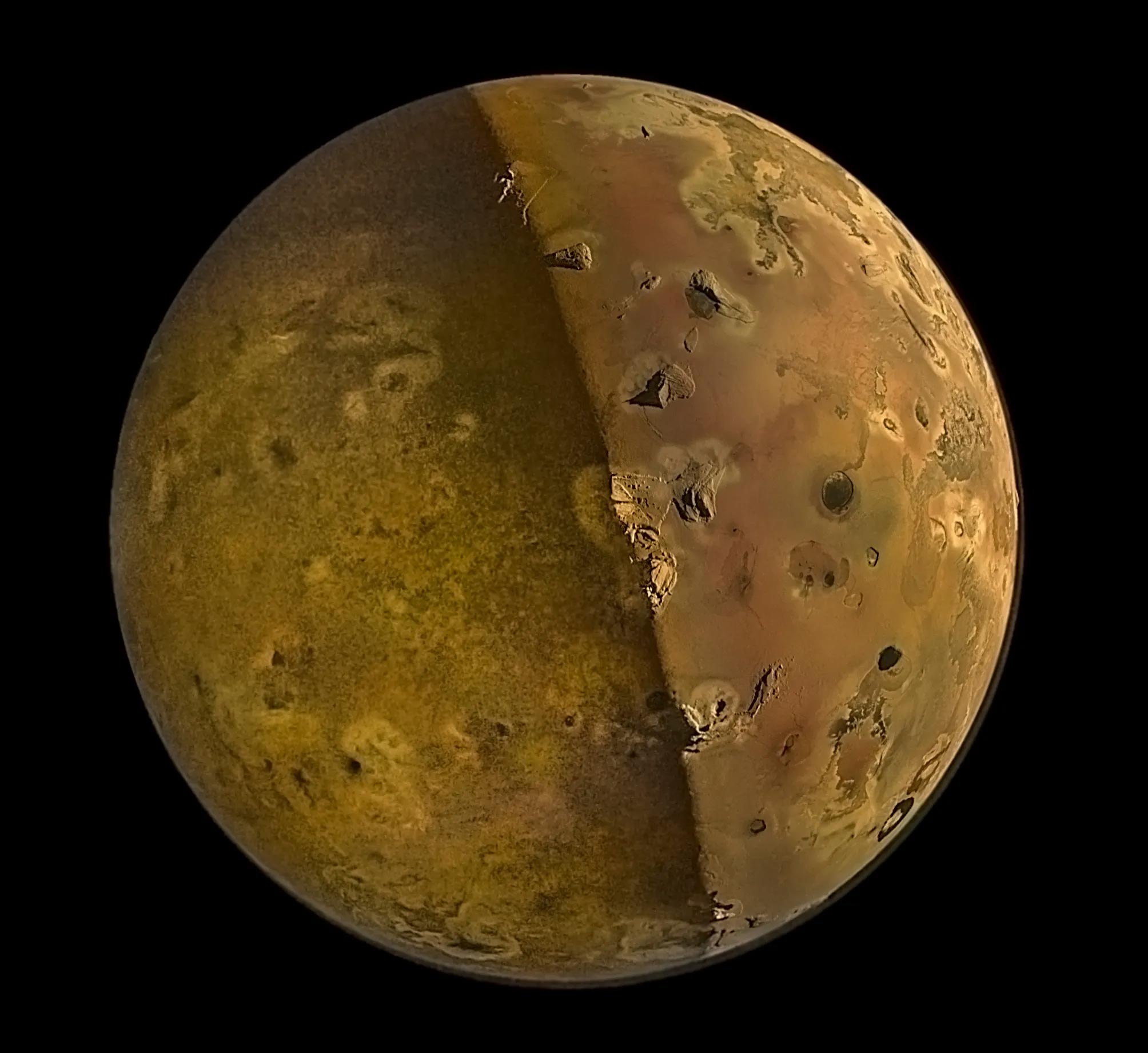
Jupiter’s moon Io, its night side (left) illuminated by reflected sunlight from Jupiter, or “Jupitershine.” Credits: original image data via NASA/JPL / MSSS. Image processing and image production: Emma Wälimäki

The images from the two recent passes over Io by Juno have been combined into a single true-colour mosaic, with the moon almost equally lit on two sides by direct sunlight and sunlight reflected onto it by Jupiter’s nearby bulk. The result is an image stunning in its clarity and depth of detail.

Many of Io’s volcanoes are visible, with at least one puffing out a plume of ejecta. On the sunward side of the moon (to the right) the light of the Sun is sufficient to reveal the moon’s hazy, mineral-rich atmosphere, whilst large parts of the surface appear bland and smooth due to the outflow of lava from multiple eruptions, and upon which volcanic island appear to be dotted.

A further impressive aspect of this image is that it was not created by NASA or anyone at Malin Space Science Systems (MSSS), who made and manage the mission’s JunoCAM imager. Instead, it was pieced together and processed by citizen-scientist Emma Wälimäki, using raw Juno images presented by NASA for public consumption, as a part of her involvement in the NASA citizen-science programme.

Second Life Combat User Group: February 8th, 2024 summary

Credit: Rider Linden

The following notes were taken from the Thursday, February 8th, 2024 Combat User Group meeting (also referred to as the Combat Committee User Group or CCUG, an abbreviation also used by the Content Creation User Group, and which I’ll not be using in these summaries to reduce the risk of confusion between the two). They form a summary of the items discussed, and are not intended to be a full transcript.

Meeting Overview

  • The Combat User Group exists as a forum to discuss improvements to the Linden Lab Combat System or LLCS to better support combat in Second Life.
  • The meetings are the result of a proposal document on improving the native damage system in SL, written by Rider Linden, and which is the focus for both the meeting and any work arising from them.
  • These meetings are conducted (as a rule):
    • By Rider Linden, with the support of Kyle Linden.
    • On alternating Thursdays (rotating with the Content Creation User Group) at 13:00 SLT. Meeting dates are recorded in the Second Life Public Calendar.
    • Initially in text, although voice might be included in the future depending on feedback from those attending.
    • At this location.
  • Additional details are available via the SL wiki.

Proposal Responses

  • Rider’s proposal has received broadly favourable feedback, particularly the following:
    • The new region / parcel additions (Damage Limit, Regeneration Speed, consequence of death (e.g. teleport victim home as per current LLCS or to a telehub  / landing point or take no action).
    • The proposed new on_damage event (and notably the damage adjustment capability to account for intervening elements which may result in less severe damage being caused).
    • The new Region Combat Event Log (details still to be finalised).
  • The idea of having region / parcel controls that specifically relate to damage, spawn points, etc.,  were welcomed as they are seen as both allowing core combat elements to be more effectively curated and managed by those managing the region / parcel(s) where the combat is taking place, whilst the LSL events allow the maximum in flexibility for specific purposes.
    • This is seen as important, as it allows weapons creators to continue to choose how they wish to script the operation and capabilities of their weapons whilst allow combat operators precise what those weapons can do in terms of damage, etc.,  within their combat environments, rather than having to rely solely on the scripting within the weapon (or the combat system for which it has been developed).
  • Rider noted that:
    • Accessing and modifying the new region / parcel combat controls might be provided through llGetEnv.
    • The on_damage event is likely to be a difficult element of work, as it marks the first time an event only triggers after it has fired in all relevant scripts.

Comments and Requests

  • There as some difference in opinion in how much control should be exposed through the simulator, with some noting that implementing too many “combat rules” at the region / parcel level could prove counter-productive and restrictive if used to try to limit “cheating”, particularly given many  / most combat environments have staff well versed in dealing with those trying the cheat. The countering view, as noted above was that better control at the region / parcel level potentially removed reliance of combat meter systems and the need for weapons geared for those systems.
  • Request: make the health  / regeneration capabilities accessible to LSL for setting them, rather than being simulator-side additions (thus allowing for health  / recovery pick-ups or boosts).
    • This is something that Rider hadn’t considered for the first pass of improvements, and something he might consider adding.
  • Request: add a region setting (and / or Edit / Build floater option) to check and enable avatar invulnerability when an avatar is sitting on a object such as a tank or other armoured vehicle, to eliminate the need for additional extra hitboxes using volume detect.
    • Rider noted that the proposed on_damage event would allow for this by allowing a function to be called to distribute a defined amount of damage (e.g. none) to the vehicle sitters. This would not only neutralise damage being passed on for armoured vehicles, it could be used to increase the amount of damage passed on (e.g. as a result of the vehicle “exploding”).
    • He further noted that an upcoming feature (contained within the Hearts & Flowers simulator maintenance update to let a scripter set a flag on a seat to make the avatar non-collide, which will also play into this as well.
  • Request:  allow all the combat stuff to run even on non-damage land (but without TPing people home), to assist weapons / meter developers test their systems even if their in-world workspace is on a No Damage region.
    • This is unlikely to happen, as it opens the door to potential griefing within No Damage regions.
  • Request: allow alterations to avatar speed (e.g. limiting the avatar to walking pace if carrying a heavy / unwieldy weapon), perhaps linked to scripts in the item itself, tied to an experience.
    • Rider noted that avatar speed is something he would like to address at some point; however, it was left out of the current proposal so that it could remain focused on managing damage.
  • Request: allow manual / custom spawn points rather than teleporting the “dead” home  /forcing people to reset that Home Position so as to remain in the combat region.
    • It was pointed out the proposal already has this in the ability to set teleport hubs / landing points – although how this might be managed so that opposing combatants are sent only to their own side’s spawn point might be open to question, unless they are defined by specific group or similar.
    • As an alternative, the suggestion was made to allow a scripted “respawn” prim, which when touched by an avatar automatically set their spawn point it to wherever the prim is located (thus allowing opposing sides to have their own spawn points, which could then be easily relocated as required. This is something Rider indicated he would add to the proposal.
    • It was also suggested that “killed” avatars should have some form of animation triggered on dying, rather than simply being teleported to a spawn point; a) Rider pointed out this is possible in the proposal; b) the suggestion resulted in a slightly off-tangent discussion over how such animations should be implemented.
  • Request: block the use of Mouselook (unclear why) – forcing visual parameters on users is not a popular idea within LL, as it could potentially impact ease of access to the platform for some.
  • Request: allow llGetHealth(key id) for anyone in the region, so you aren’t wasting a charge on someone who’s already at full health. Rider agreed this would be a good addition.
  • Request: allow a damage fall-off for weapons )e.g. a pistol’s ability to inflict damage would drop off over distance more than that of a rifle, while a long-range weapon (sniper rifle, for example) should have very little drop-off over distance.
    • One idea for this has already been written-up in the forum thread for the proposal.
  •  Request: make the combat log readable in real-time via a chat channel, to help deal with issues around people trying to cheat or review disputes. This is actually Rider’s plan for implementing the log, as well as having it recorded.
  • Request: have to combat log automate some of the administration concerns (e.g. someone using a scripted means of “fast healing” or using a weapon that is inflicting unfair damage) and have it alert region / combat admins  and/or force a re-spawn for the offending avatar, rather than waiting for human intervention based on reading the log.
    • Rider felt this is better dealt with via specific scripting, as it would be very hard to determine if someone is actually “cheating” in an given situation. Plus scripting would allow greater use-case refinements than a simulator-side set of parameters.
  • Request: to have something like “llVisualizeRay”, which allows a scripter to define a ribbon particle that traces along raycasts from a raycast weapon as visual “projectiles”, so the weapon does not need to rez actual projectiles – Rider asked that this be submitted in a detailed Canny feature request.
  • There were various thread going on through the meeting discussing armour and armour systems (such as LBA), damage calculations, etc. However, these were primarily being attendees at the meeting, rather than comments or requests directed at Rider Linden for consideration, as so fall outside the scope of these notes.

Of hidden treasure and a Monkey Island in Second Life

Monkey Island, February 2024 – click any image for full size

Gian (GiaArt Clip) is an artist, photographer and region designer whose work – in the form of Buddha Garden – I’ve covered twice within this blog (in February and December 2022, so is itself overdue for a return visit on my part!) and who has now presented us with a new setting to explore and enjoy in the form of Monkey Island, which I was recently able to visit.

Described as “an island in the Caribbean”, Monkey Island offers opportunities for exploration – including a treasure hunt -, photography, relaxing, and simply enjoying the setting with its mix of major and minor islands as they edge towards a theme of pirates whilst also offer a number of potential twists which take the mind in other directions.

Monkey Island, February 2024

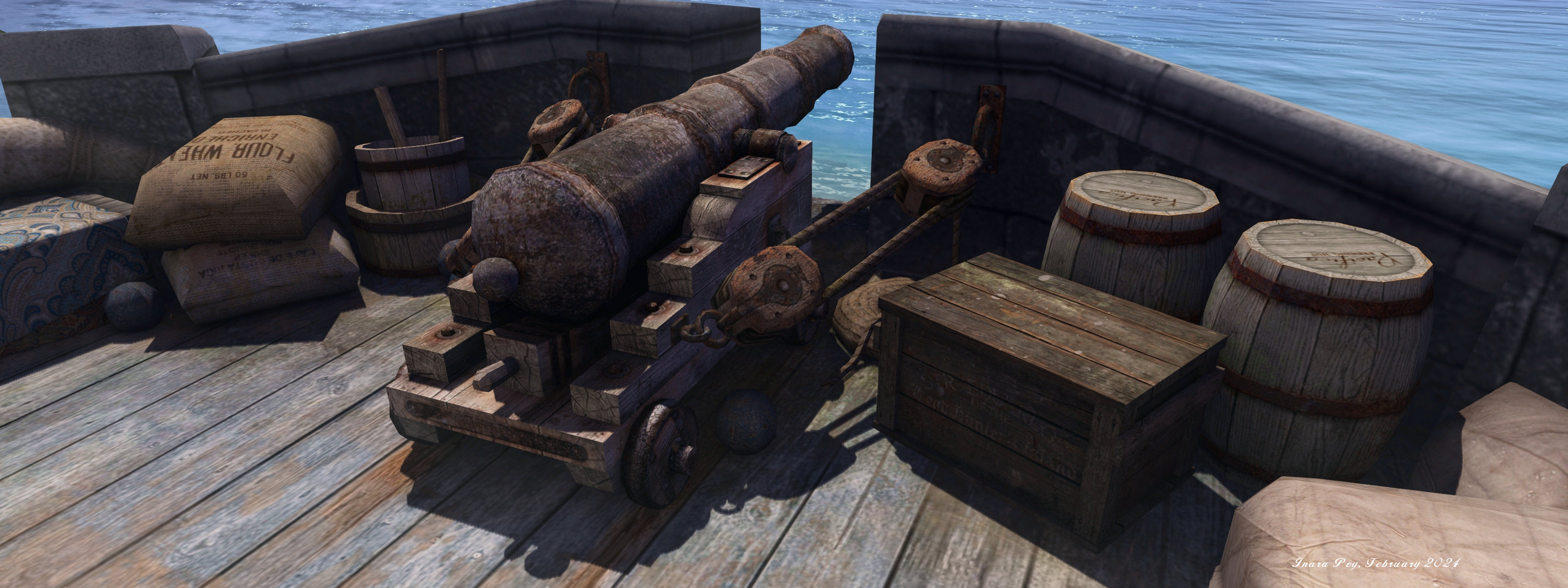
The Landing Point is located on the largest of the islands, upon which sit a little village presenting an interesting mix of themes and places to visit. There is a small house, for example, which is neatly kept and carries with it a sense of refinement one might not usually associate with piratical leanings; paintings apparently from the European Renaissance period adorn the walls along with framed wooden fretwork; the kitchen area is well-cared for and the bed made with comfortable sheets, while behind a screen and offering a further twist, sits a bath complete with plumbing and shower head!

Meanwhile, the smithy next door harkens back more towards medieval times in terms of the majority of the weaponry and protection being made (although admittedly, there are canon and shot on the upper floor); and while the tavern has a look suited to almost any period, medieval, renaissance or the “golden age” of piracy (mid-17th through early 18th centuries), the meals being served would not necessarily look out-of-place in a modern gastro-pub.

Monkey Island, February 2024

This is not to criticise in any way; the mixing of themes and ideas works very well, serving to give the setting a sense of history and mystery. This continues up to the rocky nub forming the highest point on this island, where sits a little art gallery selling pieces by Gian, several of which offer a glimpse of the pirate era and one of its most famous sons – Edward Teach.

More direct hints that this is an enclave for pirates can also be found scattered around the place, both indoors and out, whilst those interested in the treasure hunt can obtain their first clue from the proprietress of the tavern (be sure to give the chimp playing outside a little pet). She’ll set hunters on a route of exploration through the village and elsewhere – but to succeed, patience and a code will be required – I will say no more!

Monkey Island, February 2024

A sandbar curls out from the village island, pointing towards the second of the setting’s large islands; a place which is probably going to attract the eye anyway. given its most obvious feature. Apparently carved our of the peak’s rock, this feature might will put some in mind of an island with another name; a place if not associated with monkeys, then certainly known for being the home of one titan of an ape.

The sandbar doesn’t actually connect to this second island, but it does offer protection for a small bay and wharves where a boat might be found to carry you across the water. But don’t be in a hurry to find the boat rezzer and set off over the water – there is much to find around and below the village; and a walk out along the sandbar (where many of the monkey that presumably give the islands their name also roam) is worth it, if only to better appreciate what lay its its far end.

Monkey Island, February 2024 – “Alas, Poor Yorrick! I knew him, Horatio…”

Sitting on the rocks which mark the end of the sandy finger at the end of the sand sits an oversized chimp atop of a pile of books. He appears to have been cast from bronze or similar, rather than being carved from the rock and is quite a striking figure as he holds in one hand a human skull he appears to be thoughtfully pondering. Looking at him, I was instantly put in mind of two things: the famous speech from Act 5, Scene 1 of Shakespeare’s The Tragedy of Hamlet, Prince of Denmark, and the infinite monkey theorem – and I’m sure I’ve not been alone in reacting this way!

Whether the placement of the chimp is intended to set thoughts wandering along such paths or not, I’ve no idea; but certainly the Hamlet-esque element is not entirely out-of-place, with its themes of death and burial: the pirate’s life tended to have violent ways and ends whilst including the idea of buried treasures; and it is fair to say that Edward Teach saw he head and body part ways following his death, so perhaps the chimp is contemplating the skull of a pirate more than a court jester…

Monkey Island, February 2024

As to the tall island itself, this offers much to explore and discover, with paths, wooden stairways, climbing ropes and zip lines presenting the means of getting around. One of the latter in fact crosses the water to one of the smaller islands as it sits in the lee of the mountain, a pirate ship anchored in its shallows, and if you seek the hidden treasure, you’ll need to take the ride down it to the little island as it holds the key (figuratively speaking) to the final part of the hunt – but again, I’ll leave you to find that out for yourself. All I will say here is that even if you’re not interested in unlocking the treasure, you will still most likely want to visit this little island and take the plunge to find its secrets.

One other thing I would note as a well in talking about the smaller islands, is that there is one is home to a small stone cottage with a round tower at one end. This might well look inviting to the curious, but it is in fact a private residence and not open to uninvited guests or wanderers, so do please keep that in mind when visiting.

Monkey Island, February 2024

Richly detailed, fun to explore and finished with a subtle, natural sound scape, Monkey Island is a fun place to visit with much to discover (I’ve not even mentioned the hidden grotto with its upright piano within until now, for example!). Recommended.

SLurl Details

Matrescence and art: a tribute in Second Life

ARTCARE Gallery: Carelyna: Matrescence

Matrescence is a term which may not be familiar to many, although it was first coined in 1973 by American medical anthropologist Dana Raphael. The dry dictionary definition of the term (when available – not all dictionaries even recognise it) reads as:

The process of becoming (and coming to inhabit the role of) a mother. From the Latin mātrēscēns, mātrēscō (I become a mother)

I say “dry” as the definition actually leaves so much unsaid. The birth of a first child is profoundly transformative for a woman – as transformative as that any human passing through adolescence, bringing as it does  physical, psychological, hormonal, etc., changes. However, while science and culture keep us well informed about the latter, matrescence is far less understood (and thus often confused with postpartum depression / PMAD).

ARTCARE Gallery: Carelyna: Matrescence

The difference is, motherhood is quite literally life-changing; one that unlike adolescence, can be experienced more than once, although the first time is probably the most impactful because it is a step into the unknown: a complete watershed – physically, emotionally, mentally / psychologically and spiritually, – between all that came before and all that follows after. It is a transition which artists and ARTCARE Gallery owner Carelyna beautifully sums up within her exhibition entitled Matrescence:

Matrescene is … a ritual of passage, a spectrum of emotional and existential ruptures, it’s much like a caterpillar becoming a butterfly. Matrescence is lifelong in the sense that one you become a parent, you will forever be.

This is a description offering much to ponder about motherhood. However, and more particularly here, it is used as a personal way to recognise and pay tribute to Carelyna’s own mother and all she offered, and who passed away at the end of 2023.

Comprising twelve pieces in Carelyna’s distinctive abstract style, Matresence presents rich interpretations on many of the elements and changes associated with becoming a mother (offering the safest place for the life within her to grow, the blooming of her pregnancy, birth, the psychological and emotional pressures, the gaining of strength and wisdom, and more). At the same time the pieces offer insight into all that Carelyna’s mother meant to her: a pair of loving arms to hold and protect, a giver of wisdom, a soother of fears and worries, a guide and comfort through puberty / adolescence – and (again) more.

ARTCARE Gallery: Carelyna: Matrescence

Carelyna’s work is always rich and vivid in its use of colour and tone. Here the choice of colour and use of brushwork results in a series of pieces which individually stand on their own merit as a work of abstract art, whilst the subject framing and personal nature folded into each of them brings added depth and interpretation.

SLurl Details

2024 SL SUG meetings week #6 summary

The Forgotten, January 2024 – blog post

The following notes were taken from the Tuesday, February 6th, 2024 Simulator User Group (SUG) meeting. They form a summary of the items discussed, and are not intended to be a full transcript. A video of the meeting is embedded at the end of this summary, my thanks as always to Pantera for recording the meeting and providing it.

Meeting Overview

  • The Simulator User Group (also referred to by its older name of Server User Group) exists to provide an opportunity for discussion about simulator technology, bugs, and feature ideas.
  • These meetings are conducted (as a rule):
  • They are open to anyone with a concern / interest in the above topics, and form one of a series of regular / semi-regular User Group meetings conducted by Linden Lab.
  • Dates and times of all current meetings can be found on the Second Life Public Calendar, and descriptions of meetings are defined on the SL wiki.

Simulator Deployments

Viewer Updates

No changes at the start of the week, leaving the list of official viewers as:

  • Release viewer: version 7.1.2.7215179142, formerly the glTF PBR Materials Maintenance RC, issued December 15, promoted January 8, 2024 – numerous bug fixes and improvements – No Change.
  • Release channel cohorts:.
    • Maintenance-W RC viewer, version 7.1.3.7701974306, January 31, 2024 – bug and crash fixes.
    • Emoji RC viewer, version 7.1.3.7453691714, January 22, 2024.
    • glTF PBR Materials Maintenance-2 RC viewer, version 7.1.3.7467259489, issued January 12, 2024.
    • Maintenance X RC, version 7.1.1.7088410646, December 7 – usability improvements.
    • Maintenance Y RC, version 6.6.17.6935642049, issued November 21 – My Outfits folder improvements; ability to remove entries from landmark history.
  • Project viewers:

Reminders

Jira End-of-Road

New Combat User Group

  • The first meeting of the Combat Committee User Group will be held on Thursday, February 8th, at 13:00 SLT, and so will be alternating with the Content Creation User Group.
  • The venue for the meetings will be:  Longfellow/142/255/30
  • The initial format for the meetings will be text-only, but this may become a mix of voice / text according to attendees’ preferences.
  • Further details are available on the SL wiki, and the meeting is now on the SL Public Calendar.
  • As I’ve pointed out to Rider Linden having two alternate meetings on the same weekday at the same time called “CCUG” could cause confusion, this UG may be renamed. Apparently the leading contender as an alternative name is “Pugilist Parliament User Group” (PPUG), as the name “Pew-Pew User Group” has already been nixed internally at the Lab.

Game Controller Update

  • A new pre-release version of the game controller updates viewer being developed by Leviathan Linden can be downloaded via Github, although Leviathan is trying to get it listed on the official Alternate Viewers web page.
  • The game controller functions in this viewer will only work on the LeviathanLove, LeviathanLost and KaijuCorner regions on Aditi (the Beta grid).
  • With this update it is possible to remap the “Avatar movement actions” <–> “GameControl Input Channels” via mouse clicks, and it is possible to play with it even if there is no connected controller device. However:
    • Leviathan noted that here are some known oddities in the default mappings between the GameControl <–> Avatar movement actions, which he is hoping to fix soon.
    • If the mappings are customised, they do not currently save to settings as yet, so have to be customised again at the next log-in.
  • This sparked an on-going discussion on avatar movement options (such as having variable avatar speeds when moving  / in accordance with avatar size) which became intertwined with the discussion on animations (below).

In Brief

  • A request was made for a scripted means to sync worn Animesh animations with avatar animations.
    • This sparked a general discussion on animations + limitations of the current SL approach to handling them.
    • Whilst it was noted that there is a rising number of issues / requests related to the animation system, any work would likely be dependent on the glTF project & form a significant tranche of work in its own right.
  • The above segued into various ideas that had been raised within the (still suspended) Puppetry Project.
  • Further details in the video below.

† The header images included in these summaries are not intended to represent anything discussed at the meetings; they are simply here to avoid a repeated image of a rooftop of people every week. They are taken from my list of region visits, with a link to the post for those interested.

A Woodland Café in Second Life

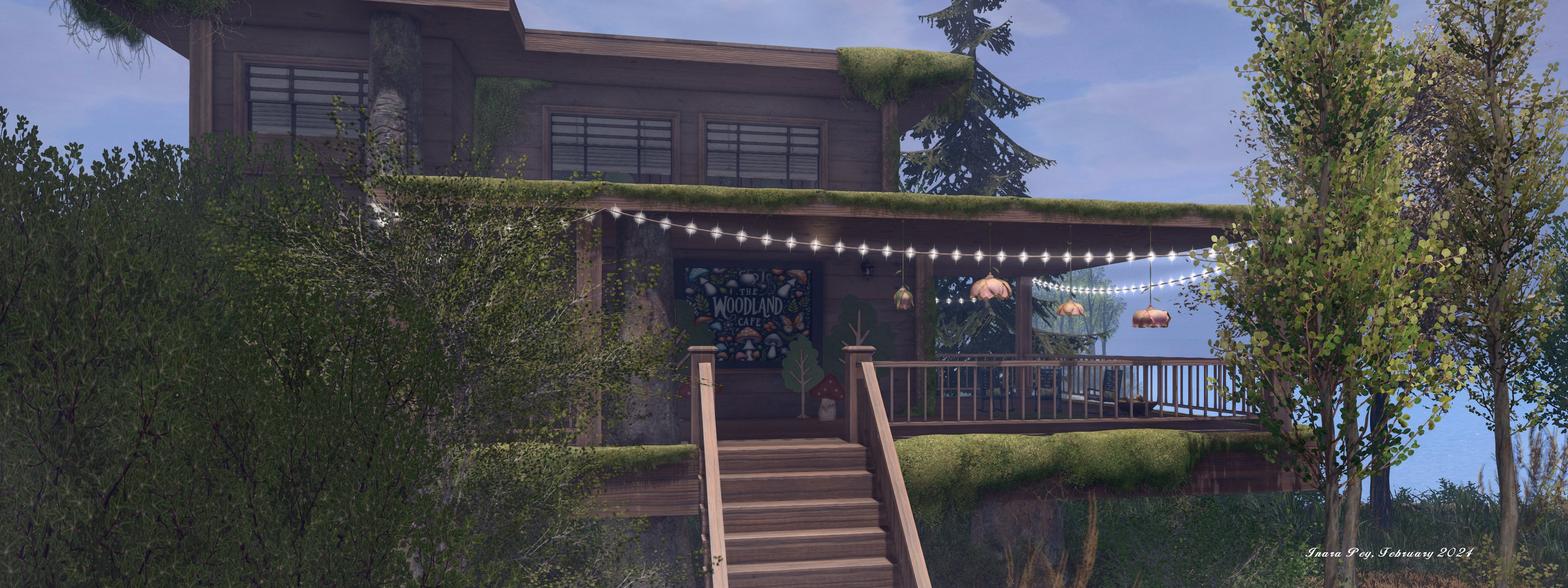
Woodland Café and Library, February 2024 – click any image for full size
A whimsical café & library built on its own serene lake with lots of areas to explore and relax. The library is stocked with short stories for readers to get lost in. Bring your friends and family or come alone and enjoy a meal, relax with a warm drink, read some books, or just lounge around and take in the scenery. It is all ages and newcomer-friendly!

Having read these words via the Destination Guide, it was back on one of my café hopping expeditions in Second Life for me as I set out to visit the Woodland Café and Library, the work of Sienna Skye (Sienna Foxdale). And as I quickly discovered on arrival, they offer just a hint of what this thoroughly relaxing setting has to offer visitors.

Woodland Café and Library, February 2024

Nestled within the enfolding arms of the Briarwood residential estate, Woodland Café occupies its own Homestead region, and is largely separated from the rest of the estate by the surrounding lake, thus eliminating the risk of accidental incursion into someone’s house or garden. The one route into the estate on foot is presented by two bridges passing by way of one of the small islands sharing the waters close to the café island, making it possible for the local residents pop in.

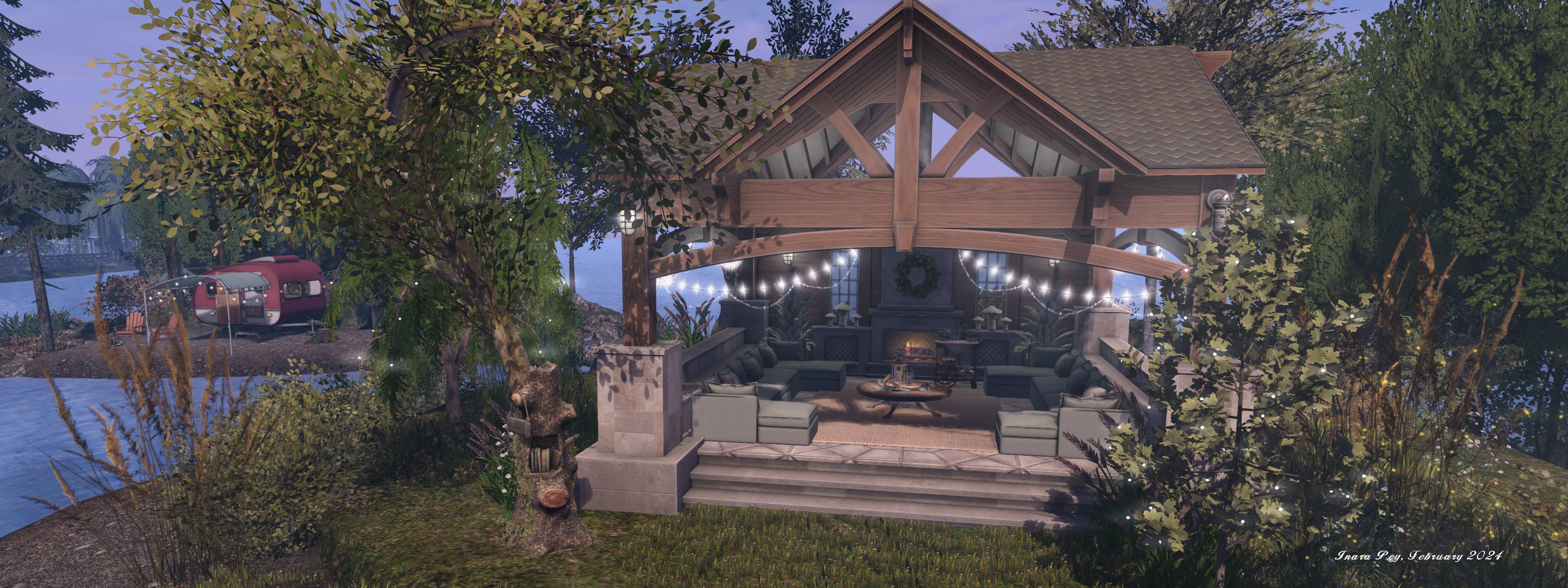
Those teleporting to the Woodland Café will find themselves delivered to the island on which it stands, arriving roughly equidistant from one of the bridges leading back to the estate, a stone-and-wood pavilion (one of Cory Edo’s always excellent designs) and the path leading up to the café itself. Like me, Sienna  appears to have a fondness for Cory’s designs, as the café is another design from Trompe Loeil, whilst another of the little islands sitting alongside the café is home to Cory’s Jetje vintage caravan.

Woodland Café and Library, February 2024

This little islet can reached via stepping stones spanning the short neck of water between it and the café’s island; just follow the shingle cover shoreline as it curve around the side of the stone pavilion to find it. Warmed by a log fire and lit by lanterns and strings of light, the pavilion presents a comfortable retreat in which to relax or join friends (and strangers!) in quiet conversation whilst partaking of the refreshments offered on the tea trolley.

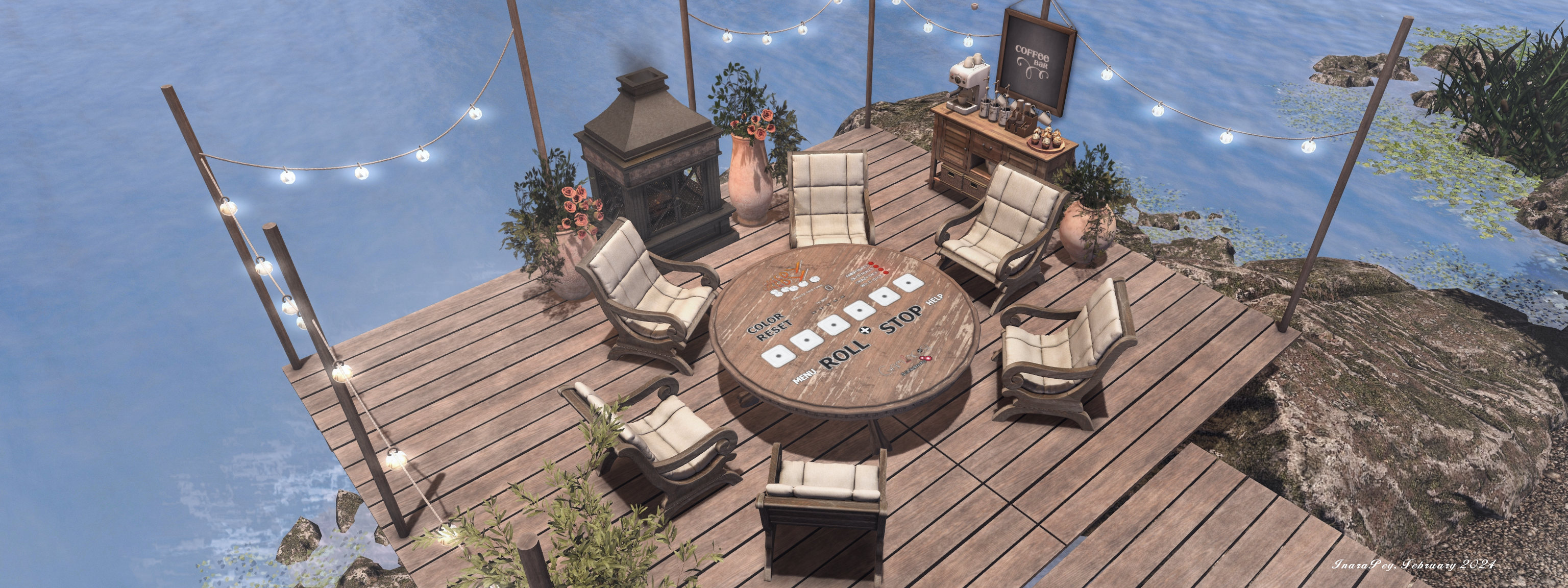
For those seeking a little more entertainment, a gravel path branches from the foot of the route up to the café proper. Skirting between the flat-topped mushroom of rock on which the café sits and the raised location of the pavilion, to provide access to a wooden deck where people can engage in Greedy Greedy, again warmed by a wood-burning fire and with refreshments taking the form of an espresso machine and frosted cupcakes.

Woodland Café and Library, February 2024

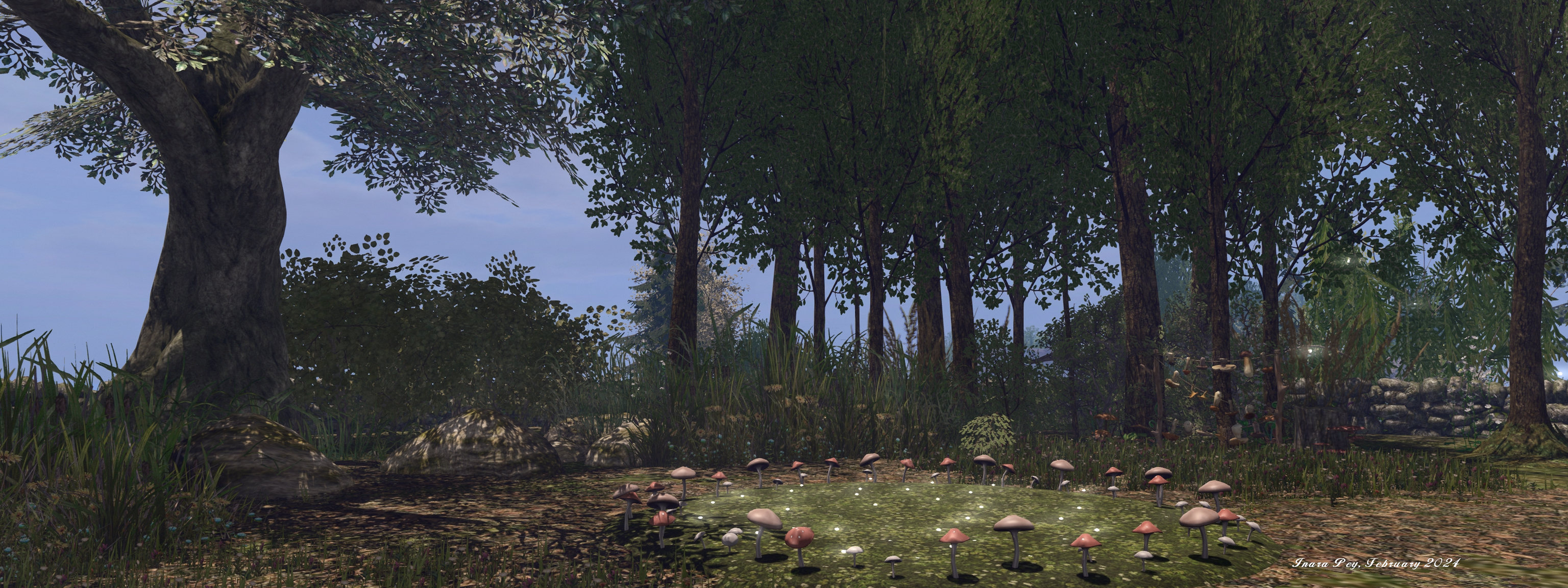
Once up on the rocky “mushroom”, visitors have a choice of taking the wooden steps leading to the café’s balcony and outside seating, or scrambling up a rocky lip to a wild garden area where someone appears to be cultivating mushrooms. Sadly, no places to sit are on offer in the garden, which is a bit of a shame as a blanket and some nibbles to enjoy would make it a nice little place for relaxing as well.

Fortunately, the café makes up for this by offering plenty of places to sit and relax or browse the web (sort-of! 🙂 ). Downstairs the counter with its temptations of drinks and waist-expanding goodies is imaginatively set is if in a woodland glade, the tables and chairs before equally set upon grass-like rugs to enhance the glade-like atmosphere. Mushrooms can also be found here, although there are far more decorative and functional / playful in nature, and Tiny visitors might well appreciate the mushroom fort with its cushions and opportunity to avoid being trodden on by oversized, clodhopping humans!

Woodland Café and Library, February 2024

The upper floor reveals why the café is also a library: interactive bookcases line two walls. When touched these will offer a menu of books, plays and short stories by the likes of Shakespeare, the Brother Grimm, and other available to read on the web, although here they take note card form and the selection is apparently updated weekly (note that these can also be obtained from the bookcase tree trunk outside of the pavilion). The seating on the upper floor is also set out so as to suggest or invite discussions or perhaps a reading circle.

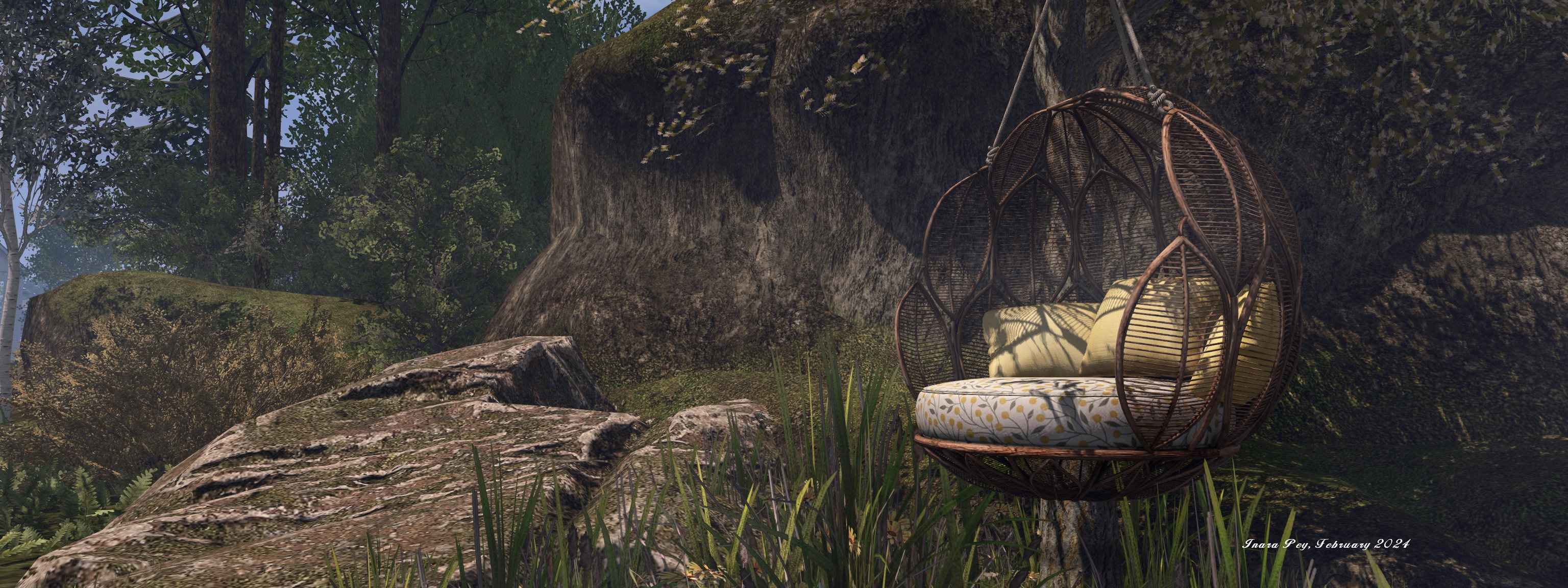
People who desire a little more solitude are also catered for within the setting; a little rowing boat with mixed singles and couples poses is anchored in the lee of the islands, whilst the route towards the rest of the estate passes by a shaded hanging chair overlooking the little model boats sailing on the nearby pond. There is also the tiny island mentioned above, with its caravan and outdoor seating, whilst another rowing boat has been turned into a cosy sofa for those who are willing to seek out its semi-hidden location.

Woodland Café and Library, February 2024

To call this setting delightful would be an understatement; there is a natural blending of charm and nature (including local wildlife) throughout which is thoroughly engaging and photogenic throughout and well worth a visit.

SLurl Details