Windwept echoes of a Starfall

WindWept, Dolly; Inara Pey, May 2015, on Flickr Windwept (Moderate) May 2015 (Flickr) – click any image for full size

In 2014, Starfall’s Twiight’s Edge proved to be a popular stopover for Second Life travellers. Both a destination and a venue for performance art, it was a captivating place to see; a beautiful use of water on which to build some captivating scenes (my own initial visit is recorded here). So much so, that its closure was met with a fair degree of lamentation.

Such ws the love of the place, that the news that Nezzy (Inez Pennell) and Imp (Cinderr Resident) had created a new location in Second Life filled a fair few people with delight – including myself; although I admit it’s taken me a little time to work my way around to making a  visit. And I have to say, Windwept, the new region, doesn’t disappoint, at all.

WindWept, Dolly; Inara Pey, May 2015, on Flickr Windwept (Moderate) May 2015 (Flickr) – click any image for full size

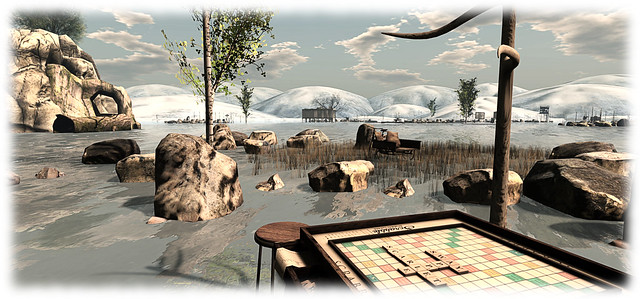
Windwept provides a watery environment surrounded by gently undulating hills which encompass a place rich in echoes of Starfall while evoking a look and feel entirely of its own. Those familiar with the latter will doubtless recognise some of the art and elements placed within Windwept, all of which helps generate a comforting déjà vu like feeling that while one might well be visiting for the first time, there is something comfortingly familiar about the region.

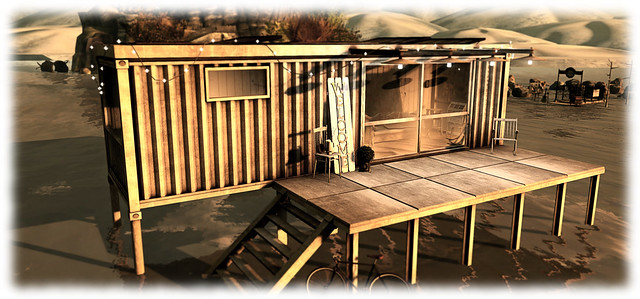
Scattered across the water are a series of rocky vignettes, each inviting exploration. The largest of these is a high plateau which offers both a commanding view of the region and its surrounding hills, and a cosy little coffee shop in which to relax. Equally cosy, thanks to it being chock full of bric-a-brac, is a converted shipping container, sitting on the water a little apart from everything else; while right across the region are places to sit and be cosy with a friend or friends.
WindWept, Dolly; Inara Pey, May 2015, on Flickr Windwept (Moderate) May 2015 (Flickr) – click any image for full size

But like Starfall, Windwept is a little deceptive in nature; what you see is not necessarily all that there is; towards the centre of the region is a wooden pier with a small stone-walled garden at one end, bounded on three sides by windows floating in the air. Here sits the top of a ladder, descending into a watery hole – the first indicator of hidden delights waiting to be found; in this case, an underwater room, and little hideaway tucked out-of-sight.

And there is more. Touch the windows (three were active at the time of my visit), and you can be transported to other locations, high overhead, which offer an interesting mix of themes and a touch of whimsy – including one which looks like it may well be intended for live events.
WindWept, Dolly; Inara Pey, May 2015, on Flickr Windwept (General) May 2015 (Flickr) – click any image for full size

It’s good to see Nezzy and Imp open a region like this again; Starfall always had a wonderfully tranquil fee to it, and the skyborne areas for art and contemplation were always a pleasure to visit. Windwept captures so much of Starfall’s spirit, but offer something this is also wonderful in it own right.  The winter’s morning look and feel to the region is ideal for photography, but as can hopefully be seen in the images here, the region offers itself to a range of windlight settings.

But don’t take my work for it – go see for yourself!

Related Links

LEA open AIR 9 land grant applications

LEA_square_logo_60Applications are now open for round 9 of the Artist in Residence (AIR) programme operated by Linden Endowment for the Arts.

Twenty regions (LEA10 through LEA29), donated by Linden Lab and managed by the LEA, are offered under the AIR programme, and successful applicants will be given the use of one full region for a period of five months. The region may then be used on an individual or group basis for such diverse activities as:

  • Full sim exhibitions and / or immersive installations
  • Curated projects, especially those which have a connection to physical exhibitions and events (mixed reality).
Borderlines, LEA24
AIR 8: Lemonodo Oh – Borderlines, LEA 27 – review

Artists are asked to take no more than 3 months to execute their build, so that their installation is open to the public for at least the last 2 months of their grant. However, artists may also open their installation ahead of the three-month build deadline, and many artists in the past have used their land to have multiple exhibits.

The timeline for application as it currently stands is:

  • Application deadline: May 30th, 2015
  • Notification by: June 14th, 2015
  • Sim handover and public announcement: July 1st, 2015
  • End of round: December 31st, 2015.
AIR 8: Haveit Neox - City Inside Out, LEA 20; review
AIR 8: Haveit Neox – City Inside Out, LEA 20; review

The application form can be found at the end of the official announcement for AIR round 9. Those needing assistance in completing the form can refer to some guidelines provided by Honour McMillan.

In hell’s ninth circle with Frankx Lefravre

Cocytus: the 9th circle of Hell
Cocytus: the 9th circle of Hell – LEA 18

I first became enamoured of Frankx Lefavre’s work at the start of 2014, when he participated in the LEA’s “interim” series of installations, and I met him at the piece he’d built which he informally called “light and glass” (and about which you can read here). Since that time, I’ve reported on a number of his set pieces at the Linden Endowment for the Arts, and for the 8th round of the LEA’s Artist in Residence series, he is back once more, with arguably one of his most ambitious projects yet – and one which was bound to grab my attention.

Cocytus: the 9th Circle of Hell, now open at LEA 18, is a dramatic 3D representation of the ninth and lowest of the circles of hell Durante degli Alighieri wrote about in Inferno, the first cantica of his Divine Comedy. This is the resting place – if such a term might be used – of those who have committed treachery or acts of fraud, and within it are four “rounds” leading inwards, and through which Dante travels with his guide, Virgil. Within each round, and according to the form of their treachery, are the souls of the damned, buried in ice to varying degrees, from semi-submerged through to completely entombed.

Cocytus: the 9th circle of Hell

The four rounds of Cocytus are described by Dane as, Caina (after Cain from the Bible), where can be found those who betray their blood relatives; Antenora (after Antenor), where can be found those who betray their county; Ptolomea (after Ptolemy, the governor of Jericho) where can be found those who betray their guests; and Judecca (after Judas Iscariot), where can be found those who betray their benefactors and masters.  At the very centre of  this round lies Satan, bound up to the waist in ice.

Visitors to Cocytus: the 9th Circle of Hell take something of Dante’s journey through the Cocytus of Inferno, starting with their arrival in a dramatic, desolate landscape dominated by a red-rimmed Sun which fixes them with a baleful stare. A slender wooden bridge directs people to a path which zig-zags down to the maw of a cavern, and the first of the rounds of of which Dante wrote.

Cocytus: the 9th circle of Hell

The path through the installation is also a zig-zag, and the windlights should change progressively as you make your why through the four rounds – I’ve used different lighting in the images here for effect). They are atmospheric in tone, but you may need to pick your way with care to avoid blind turns or dead ends. There are some torches along the way to mark a part of the path, so keep an eye out for them, and a further wooden bridge will bring you to the innermost round.

While representing Dante’s work, in a vivid manner, Frankx also takes a couple of diversions as well – his Satan is not the three-faced beast Dante witnessed, for example – which is not to say it is any the less imposing. More particularly, where Dante saw Cocytus as a frozen lake, Frankx’s use of the path through the caverns and over the four icy rounds gives the impression one is following the course of a frozen river, albeit one broken by sections of hard  stone. In this way, the ice here carries an echo of the original Cocytus, the river of lamentation (or wailing) in Greek mythology, and one of the five rivers surrounding Hades.

Cocytus: the 9th circle of Hell

This is the second interpretation of Dante’s Inferno I’ve seen mounted at the LEA, the first being Rebeca Bashly’s Inferno in October 2011, which marked the inaugural AIR / LEA installation. Like that installation, Cocytus: the 9th Circle of Hell is an involved and beautifully executed representation of of Dante’s poem. It will be open through until the end of June, and a visit is recommended.

Witnessing Molly’s Brain-Gasm

Brain-Gasm
Brain-Gasm (click any image for full size)

Now open at The Living Room, the art and music space curated and managed by Owl Dragonash and Daallee, is the latest exhibition of Molly Bloom’s remarkable 3D art.

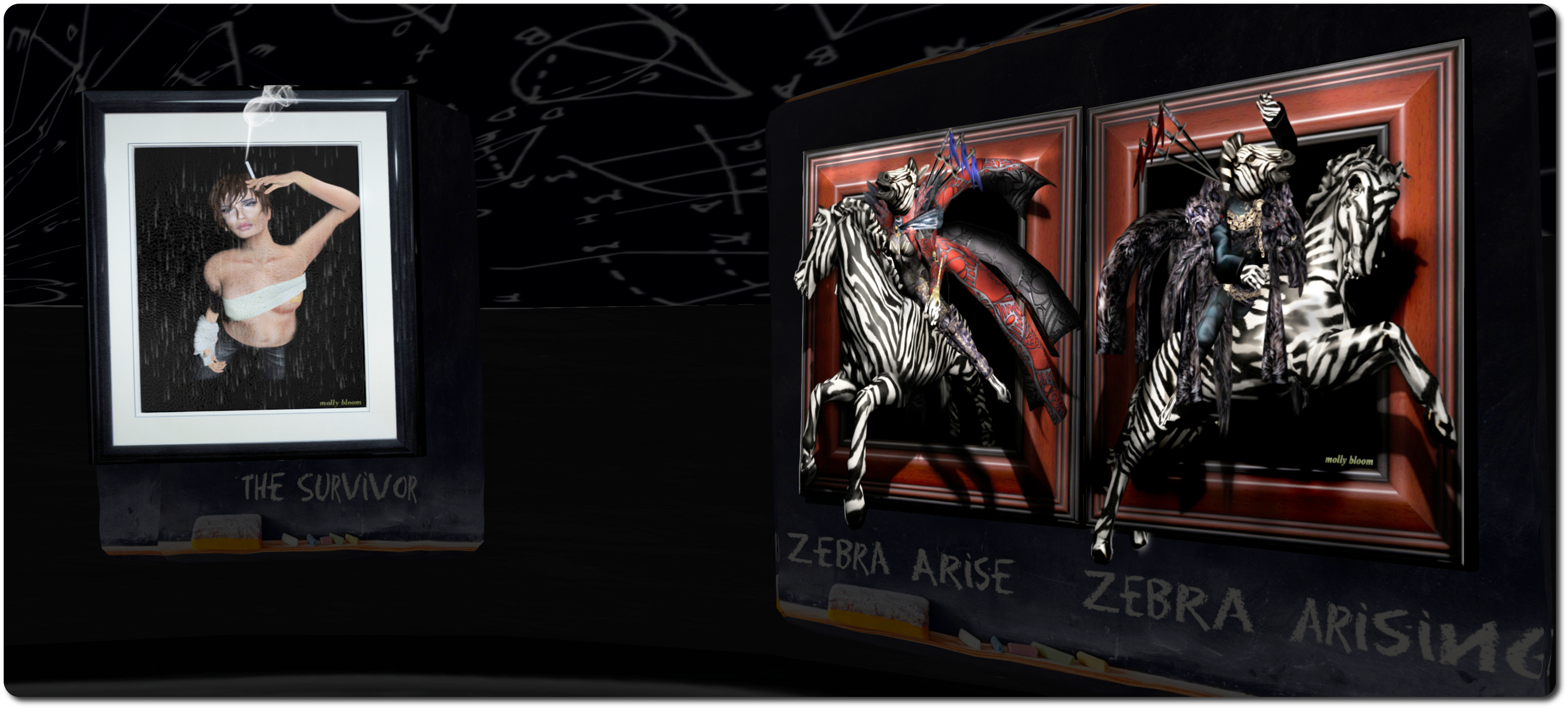
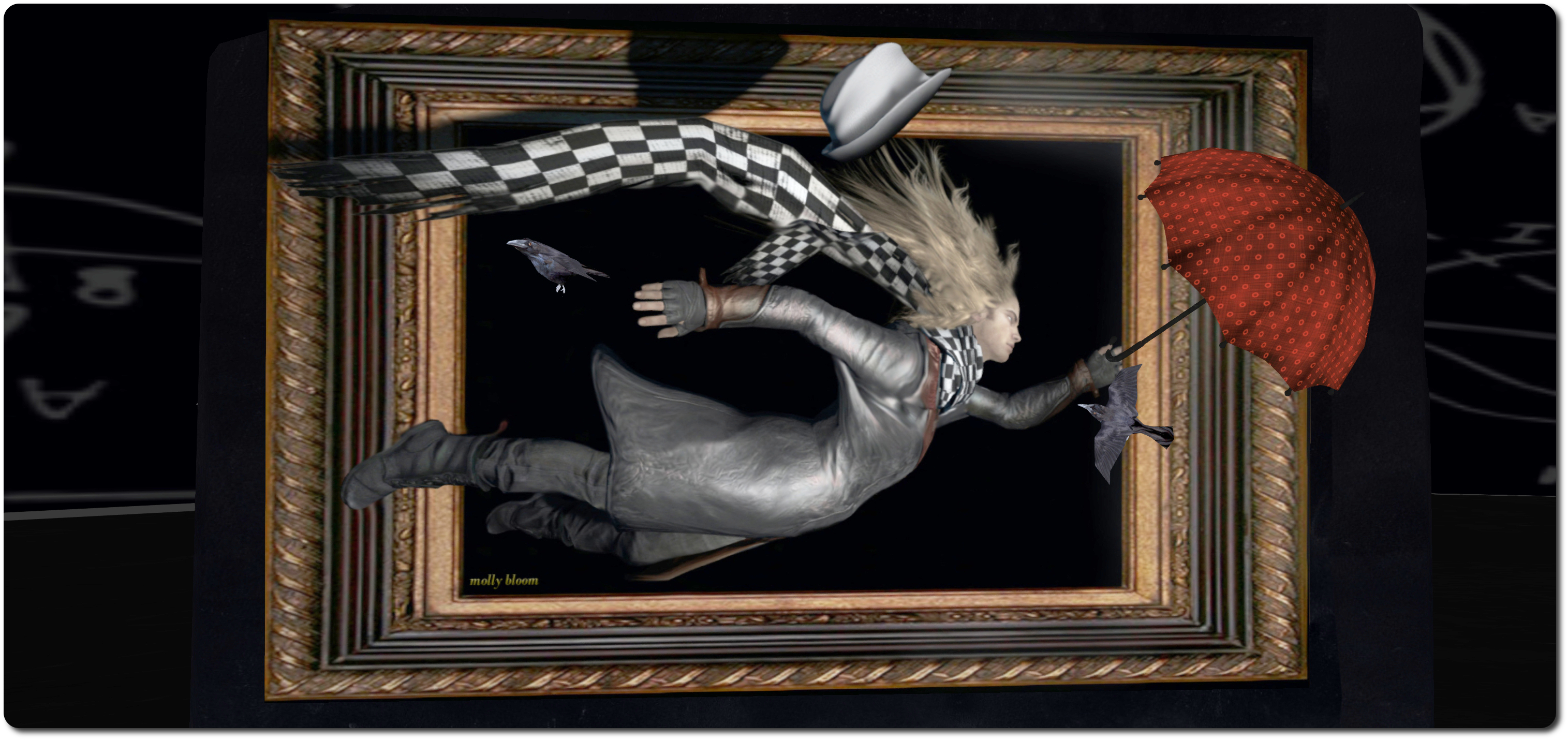
Created  entirely within Second Life, with minimal additional post-processing, Molly’s work  is beautifully intriguing because with it, she plays with our perception of depth. For Brain-Gasm, The Living Room’s gallery space has been dressed as a schoolroom, which Molly uses to frame an invitation for people to share in her special moments of creation.

“Brain-gasms come from everywhere, a visual, a smell, the sound of a song or an emotion.   Sometimes the effect is fleeting, and sometimes you find yourself with the overwhelming need to express,” Molly notes in discussing the exhibit. “Creativity flows, and not just in the traditional arts, but maybe cooking an extraordinary meal, creating an astounding business deal, or the perfect computer program.   If you are lucky to have a fulfilling outlet, your expression becomes tangible.

“Often an artist expresses themselves in a much deeper raw form than the onlooker can even understand, drawing you into their ‘gasm’,” she continues, “trying to turn you on as much as they were.  Each and every gasm is not only a personal learning experience but also invites onlookers to learn about the artist.”

Brain-Gasm
Brain-Gasm

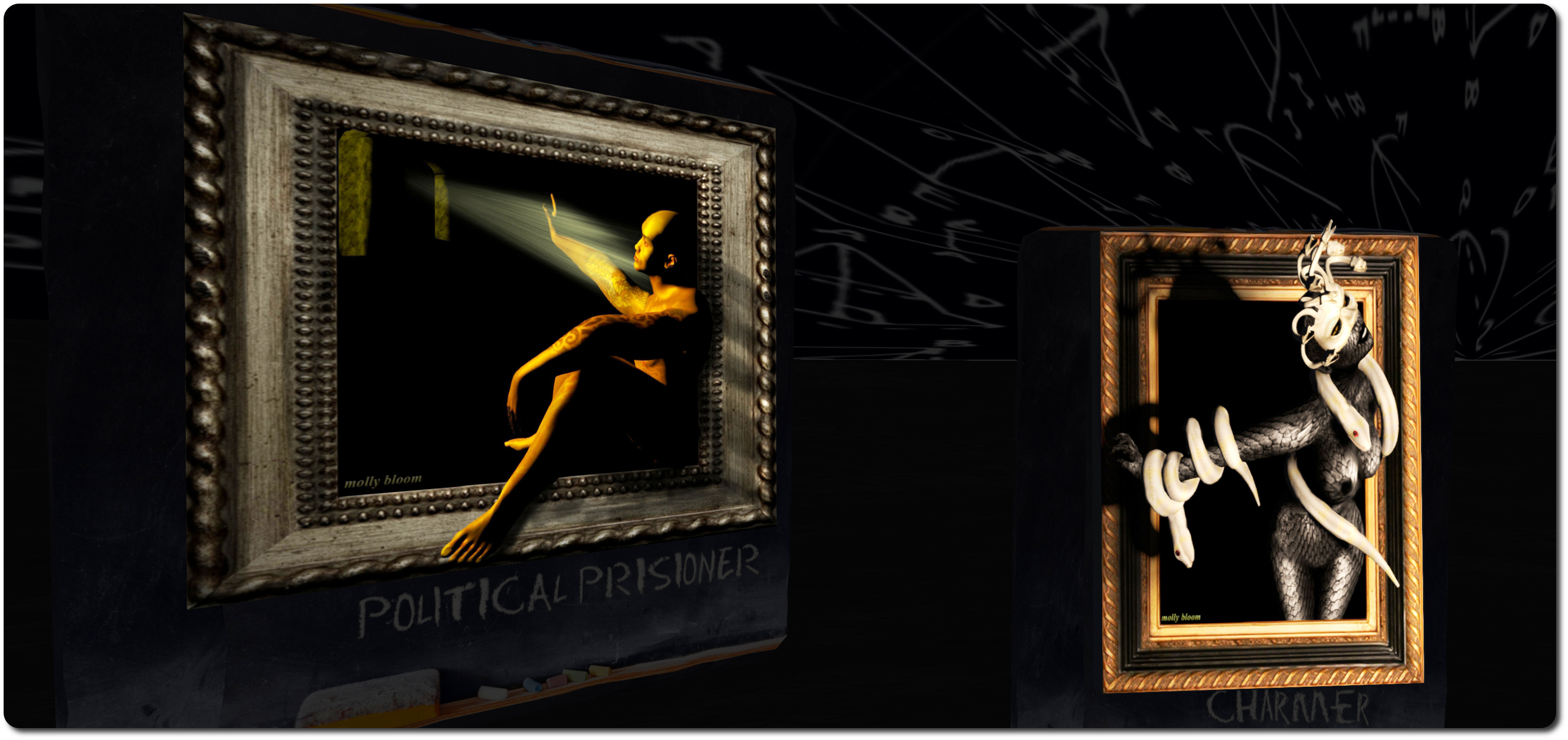
The pieces represent a mix of individual and paired works (Molly often creates duet and triple pieces); and I was delighted to see Cops and Robbers among those selected for this exhibition. This captivated me when I first saw it in 2014, and it was the springboard for my appreciation of her work.  Also at Brain-Gasm, I was strongly drawn to Political Prisoner (below, left), and the deeply compelling The Survivor (seen in the image at the top of this piece).

As I’ve said in the past, and will doubtless say so again in the future, Molly Bloom is one of the most engaging and engrossing artists working in the photographic medium in Second Life. If you’ve not seen her work before, Brain-Gasm offers you the chance for an introduction, and shouldn’t be missed.

Brain-Gasm
Brain-Gasm

Other events occurring at The Living Room this month are (all times SLT):

  • Thursday, May 14th – music with:
    • 17:00 – Bat Masters
    • 18:00 – Blindboink Parham
  • Tuesday, May 26th – Molly Bloom exhibit closes, with music by Bronze

Related Links

Meandering through Miyagi

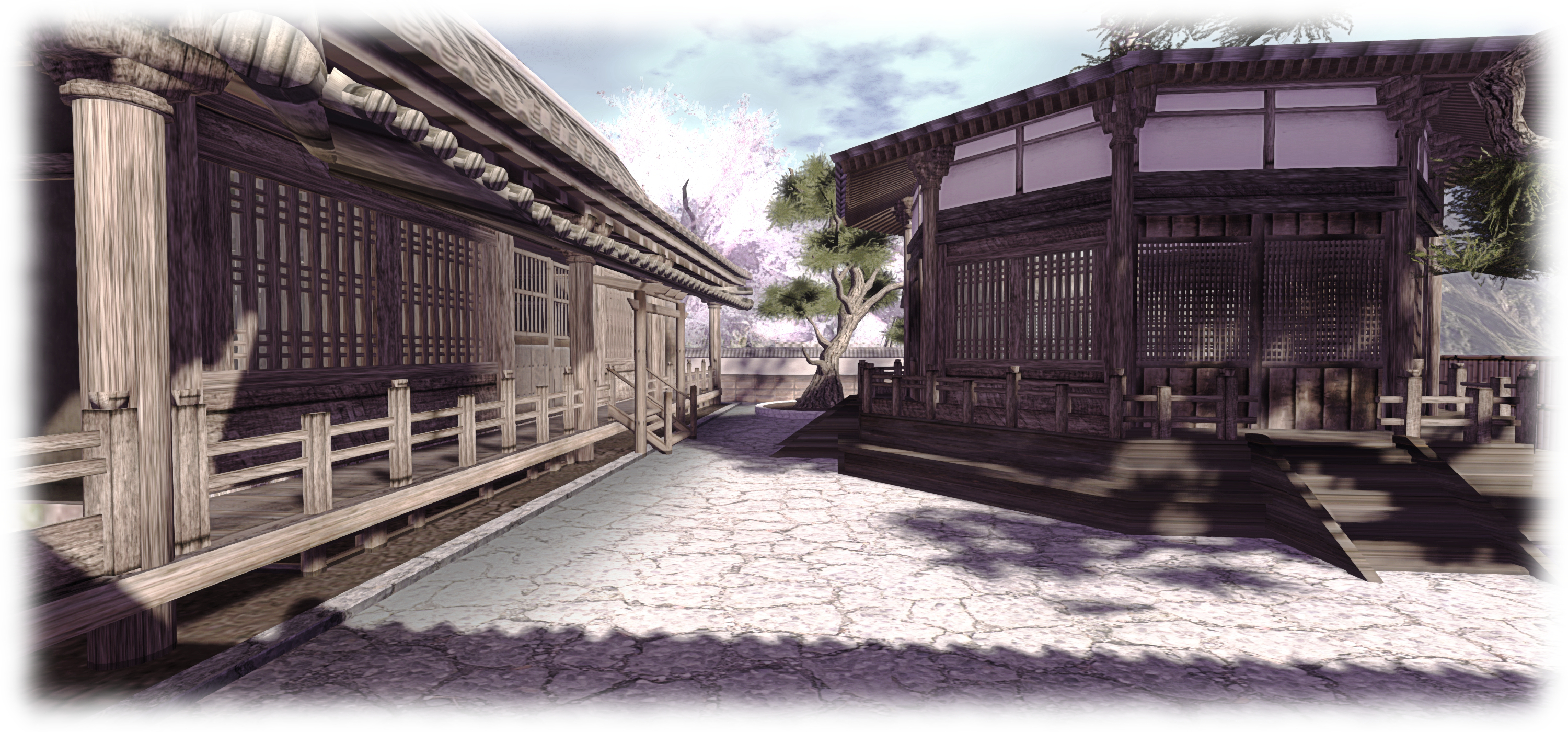
Miyagi; Inara Pey, May 2015, on Flickr Miyagi (General) May 2015 (Flickr) – click any image for full size

Update: Miyagi is closed.

It’s Honour’s fault. But then it always is, isn’t it? 😉 .

She recently posted about an oriental region called Miyagi. As regulars here know, anything involving an oriental feel tends to pique my interest. Then Honour mentioned something about racing cars as well, and as I’m currently having Formula 1 withdrawals (hey, three weeks between races this time!), so I had to go take a look…

Miyagi is truly a place with two different faces to present to the world – and with a few secrets waiting to be found as well, making it the ideal place for gentle (in an adrenalin-fuelled way) explorations.

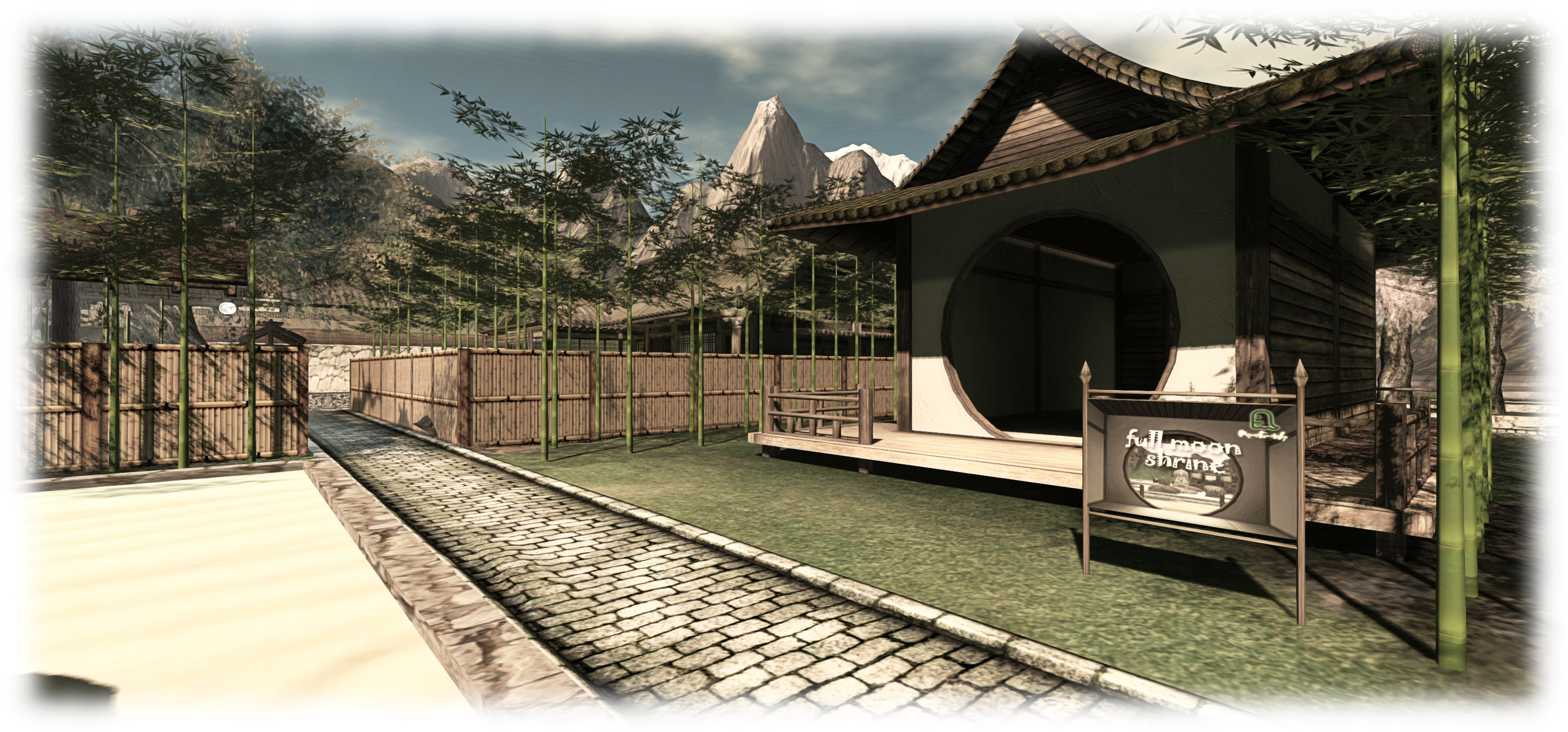
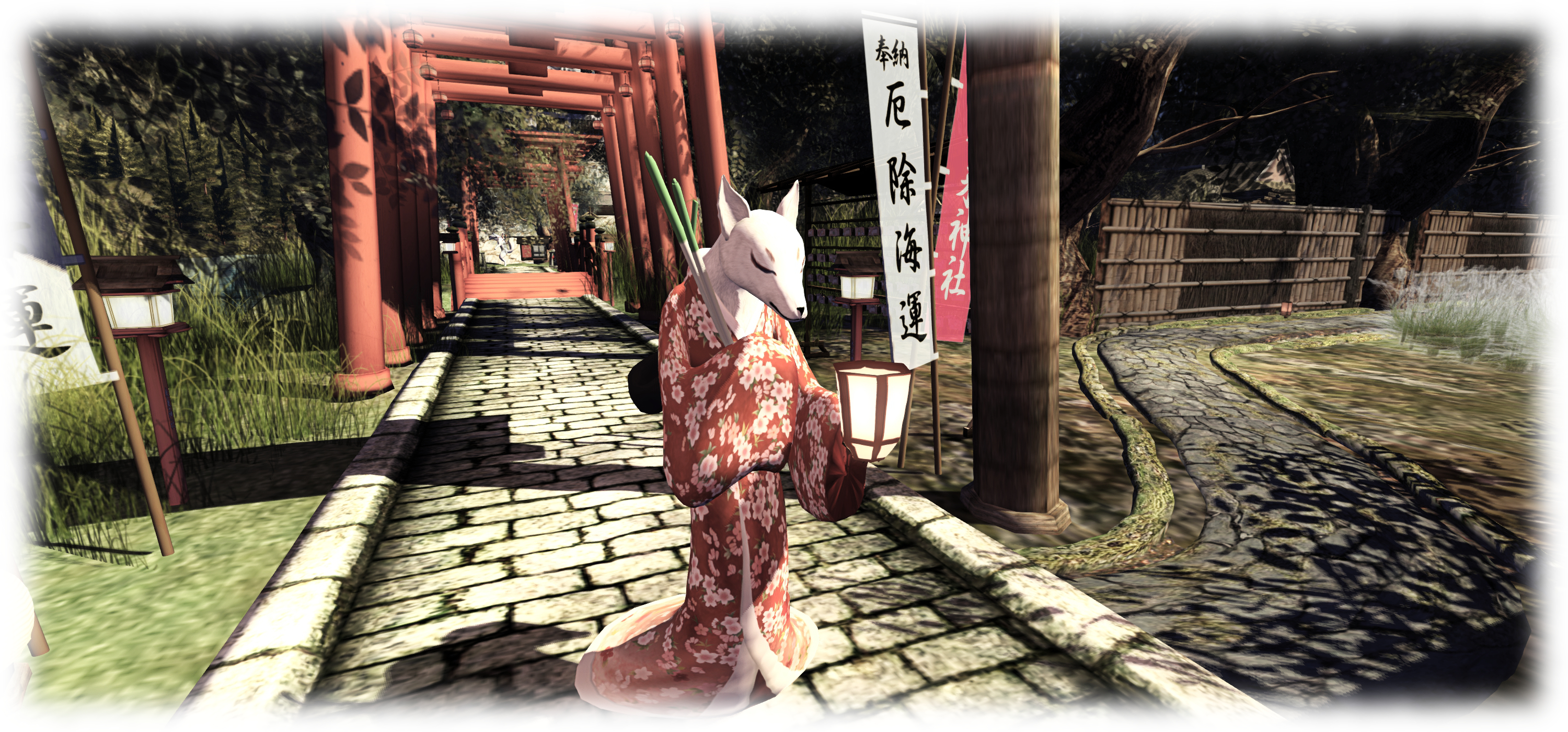
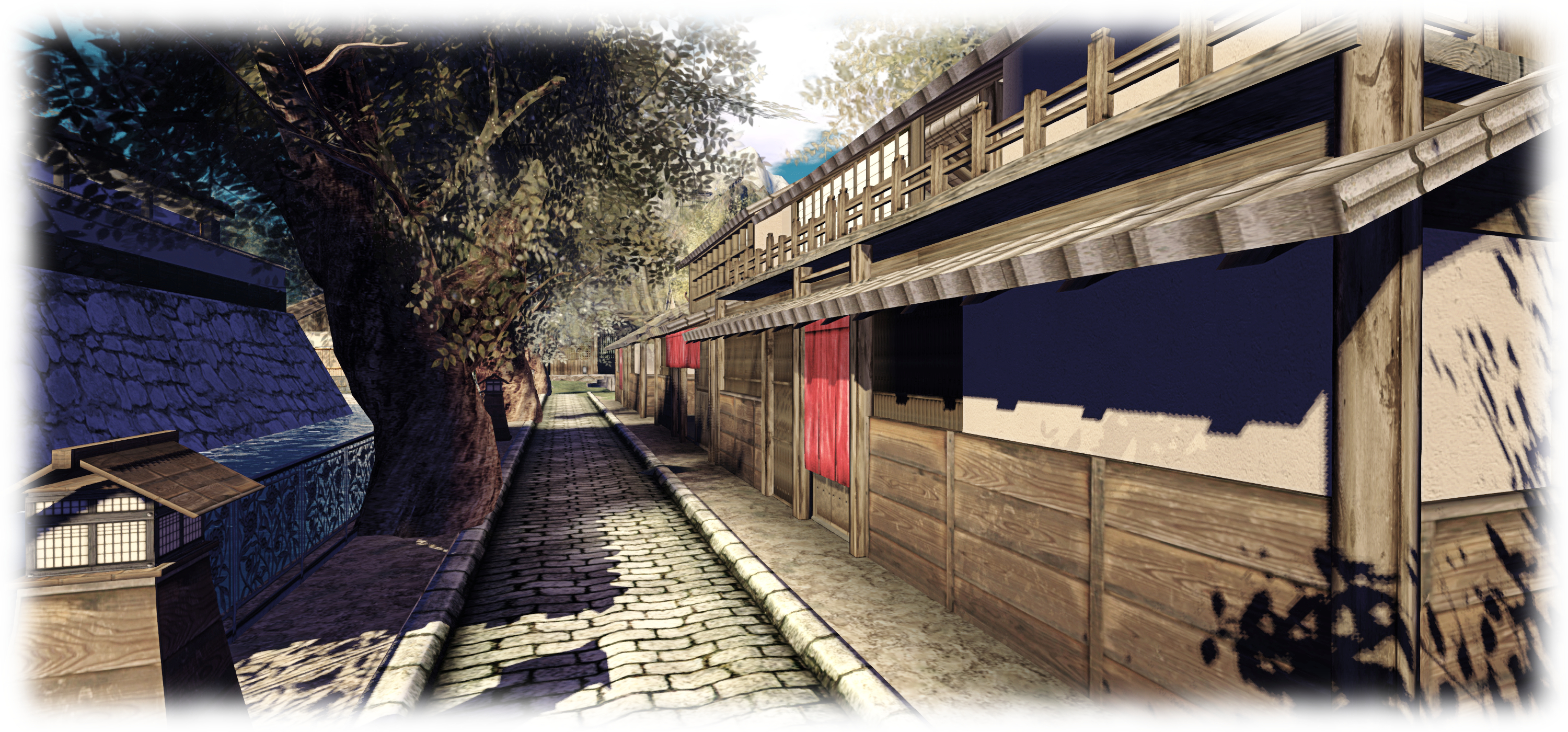
The first face Miyagi offers the world, for those unfamiliar with it at least, is that of a rural Japanese setting with paved footpaths mixing with shrines, little houses, bamboo walks, a castle and even its own Yumedono (hall of dreams). Away from the arrival point with its modern commercial premises and teleport board (which reveals some of Miyagi’s other face), this is an almost tranquil setting. You can wander the footpaths, visits the shrines, wander over bridges crossing the waterways which divide the land and find plenty of opportunities for taking photos.  make your way across the region, beyond the castle, and you can climb torii-spanned steps leading up to a mountain-top shrine.

Miyagi; Inara Pey, May 2015, on Flickr Miyagi (General), May 2015 (Flickr)

In fact, so picturesque is the the place, it’s easy to forget there’s more here than meets the eye. As noted above, the teleport board gives some of it away – you can use it to reach a number of skyborne raceways – rezzing is permitted, so you can try them for yourself. Or you can test your skills at simball (that’s a kind of full contact football played on hoverboards, for want of a better description), although you will need at least one other player for this to work. The teleport board will also give you access to the local nightclub, Gao (after all every racing driver likes to let-off steam).

But this is far from all Miyagi has to offer. Explore carefully enough, and you might find your way to the river boat tour which will take singles and couples on a ride around and through the region, revealing things you might otherwise miss. Further afield lies a path leading up to an onsen sitting over a lava flow – bringing a whole new meaning to the term hot springs. Higher still, on another peak, sits the hang gliding and bungee jumping platforms (the latter with some delightful animations”) – although you may need a little time to find the elevator up to them! Even the castle offers a rope slide of its own, while closer to the arrival point, there are opportunities to fly a hot air balloon or a wooden helicopter!

Miyagi; Inara Pey, May 2015, on Flickr Miyagi (General), May 2015 (Flickr)

And the secrets of Miyagi? Well, not everything at ground level is at it seems. Take the little shrines scattered around the place, for example, or the kago you’ll find at the start of the path leading to the Miku shrine. Are they all that they seem? Perhaps you might want to open the doors and find out.

Should you feel particularly daring, look for the trap door in the floor of castle. it’ll reveal a rope ladder leading downwards to a subterranean maze, complete with several traps, hidden passages and more. Just be aware that there’s only one way out (teleporting doesn’t count 🙂 ), and you’ll need the code from a certain nice young lady stuck down there if you’re to get past the final barrier. Then you can take the train car back to safety – well, assuming you find the ladders back up to ground level! And if you find the ladders before going to the castle, do remember that without the code mentioned above, your journey underground will be kept a little short.

Miyagi is a place that manages to cram a lot into itself without feeling the slightest bit overcrowded. With places to wander, rides to enjoy, opportunities to sit and contemplate and the chance for some sporting fun all mixed with a little underground adventure, there is enough on offer to keep almost anyone happy during a visit. Keep an eye out, as well, for the Show Pub Puppet theatre (shows Saturdays / Sundays?) on neighbouring NonStop, where a music store can also be found.

Miyagi; Inara Pey, May 2015, on Flickr Miyagi (General), May 2015 (Flickr)

Eyerotica: through the eyes of the voyeur

Eyerotica
Eyerotica

Erotic photography can be a difficult subject to present; there’s a tipping point where such work ceases to be purely erotic and slips into the pornographic. The problem is, bring any cross-section of a community together to view erotic art, and you’re bound to get clear differences of opinion as to where the tipping point resides.

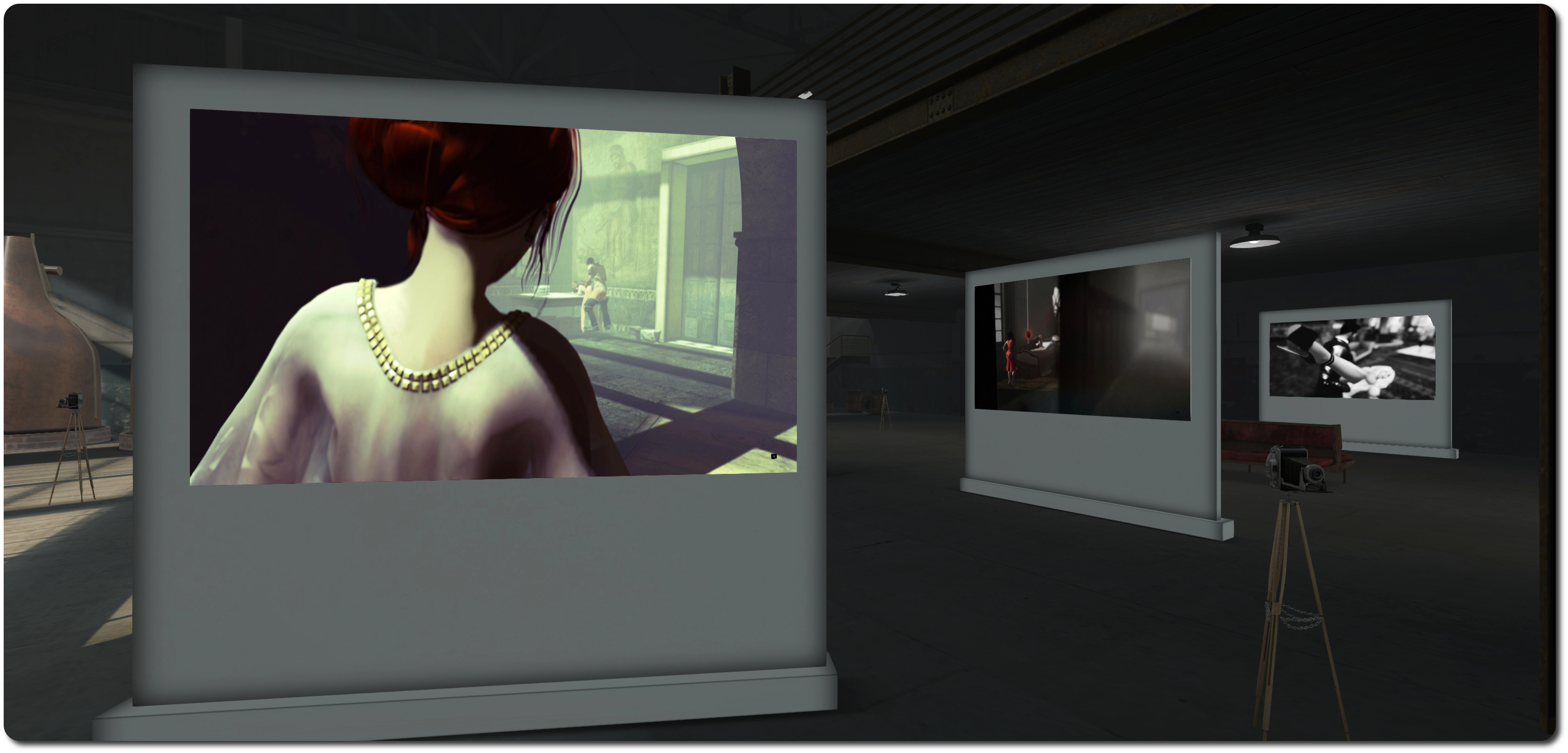
Given this, there are bound to be conflicting opinions on the latest  exhibition Max Butoh is staging at his Dathúil gallery. Eyerotica, a series of images by Ash (Ashratum), is definitely NSFW, focusing (no pun intended) as it does on the issue of voyeurism; although it does so with a subtle twist.

“Voyeurs are often seen as male in cinema and photography,” Ash notes. “While females are frequently the observed subjects. My gendered and embodied point of view, a feminine point of view, is my small contribution for this  “other side” of the power of looking.”

Eyerotica
Eyerotica

The result is a charged but nevertheless fascinating series of images covering the wide variety of sexual encounters we might experience in life (physical or virtual), in which both the voyeur plays as much a role as the scenes which captured their attention and some of the many different aspects of voyeurism are touched upon.

There is for example, the study of the accidental voyeur, the individual happening upon a situation perhaps entirely unexpectedly; then there is a the voyeur-as-a-participant, a witness to unfolding activities, perhaps even for their arousal; and there is the voyeur unseen, chancing upon a situation through security cameras or while processing a roll of film, these and more are uniquely offered, the angle of the shot, the deliberate use of light and shadow, the blurring of subjects all serving to draw us into the tableaux we see before us.

Eyerotica
Eyerotica

And herein lies the power of these pictures: yes, they are erotic, yes some may well tip into waters pornographic; but each of them also has a story to tell. There is a depth of execution within these images that demands we frame a story around each one. At the same time the vibrancy each contains underscores Ash’s fascination with the subject, and she sees herself in such situations. “The keyhole, even though it is a frequent metaphor for voyeurism, doesn’t describe my personal spectatorial desire,” she states. “I’m more like a voyeur participant, a body whose presence simultaneously sees and is seen, someone who takes part and affects what she observes.”

Visitors to the exhibit can further share in the experience of the photographer – be it as a voyeur or the capturer of erotic images. Just stand at one of the cameras scattered through the gallery and click Peek in the dialogue box that’s displayed (you may need to tap the ESC key to free your viewer’s camera and see what the in-world lens is willing to reveal).

Eyerotica runs through until the end of May.

Related Links