Immaterial in Second Life: entries gather


Immaterial (via UWA)

At the end of June, I wrote about the start of the University of Western Australia’s new art challenge, IMMATERIAL, which is currently open to 2D, 3D and machinima artists through until July 31st.

While not a competition in the manner of the UWA’s Grand Challenges (there are no cash prizes or judging panel), IMMATERIAL offers those who enter the opportunity to have their entry displayed at the UWA’s Gallery, and featured in a companion exhibition catalogue, which will be published on-line as part of the UWA Studies in Virtual Arts (UWA SiVA) journal series.

Krystali Rabeni: "If Wishes Were Kisses"
Krystali Rabeni: “If Wishes Were Kisses” – “Shadows are such straightforward things: cast a light on an opaque object, and a shadow of it is thus born,” Krystali says of the piece. “Yet shadows can be manipulated to resemble entirely different shapes…” And so a poignant message is born …

IMMATERIAL asks entrants to consider the concepts  light, shadows, textures, motion, and ideas, and to: Highlight the technologies of SL as a medium for creative expression. We especially want work that uses advanced techniques, in addition to objects per se.

As such, entrants are encouraged to work with mesh, materials, projected light and shadows, particles, pathfinding, avatar and object motion/animation and advanced scripting/interaction.

Since the announcement, entries have been arriving steadily, as they do, UWA’s curator, FreeWee Ling, has been putting them on display.

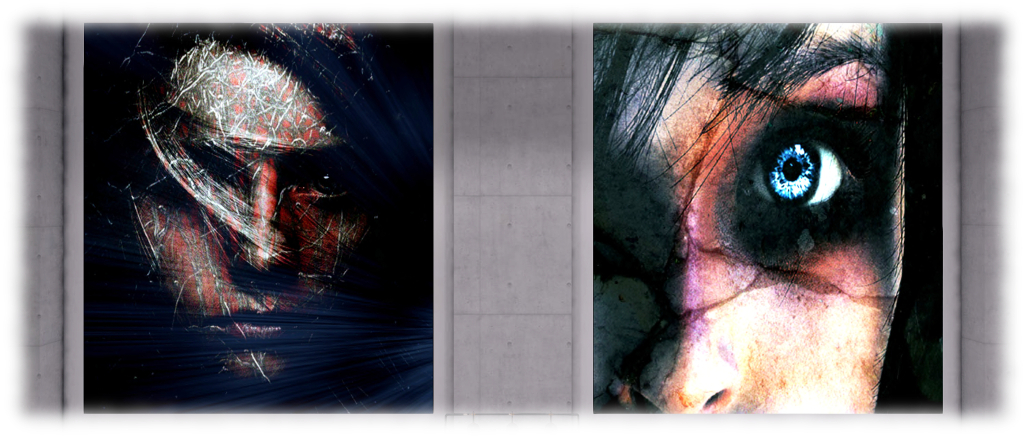
Yoon (Toyono): "The Dark Queen"
Yoon (Toyono): “The Dark Queen” – using projected light and a black background, Yoon creates a powerfully evocative image

As usual for such a UWA, the breadth of entries is quite breathtaking, and many of them deeply evocative, already marking this as an exhibition very much worthwhile visiting. I’ve selected just a small handful here as a sample to encourage you to do so, and repeat visits are recommended as the exhibition grows.

If you would like to submit a piece for IMMATERIAL, note that the deadline for submissions is 23:59 on July 31st 2016 at 11:59 PM SLT. You can find the full set of entry requirements on the UWA blog.

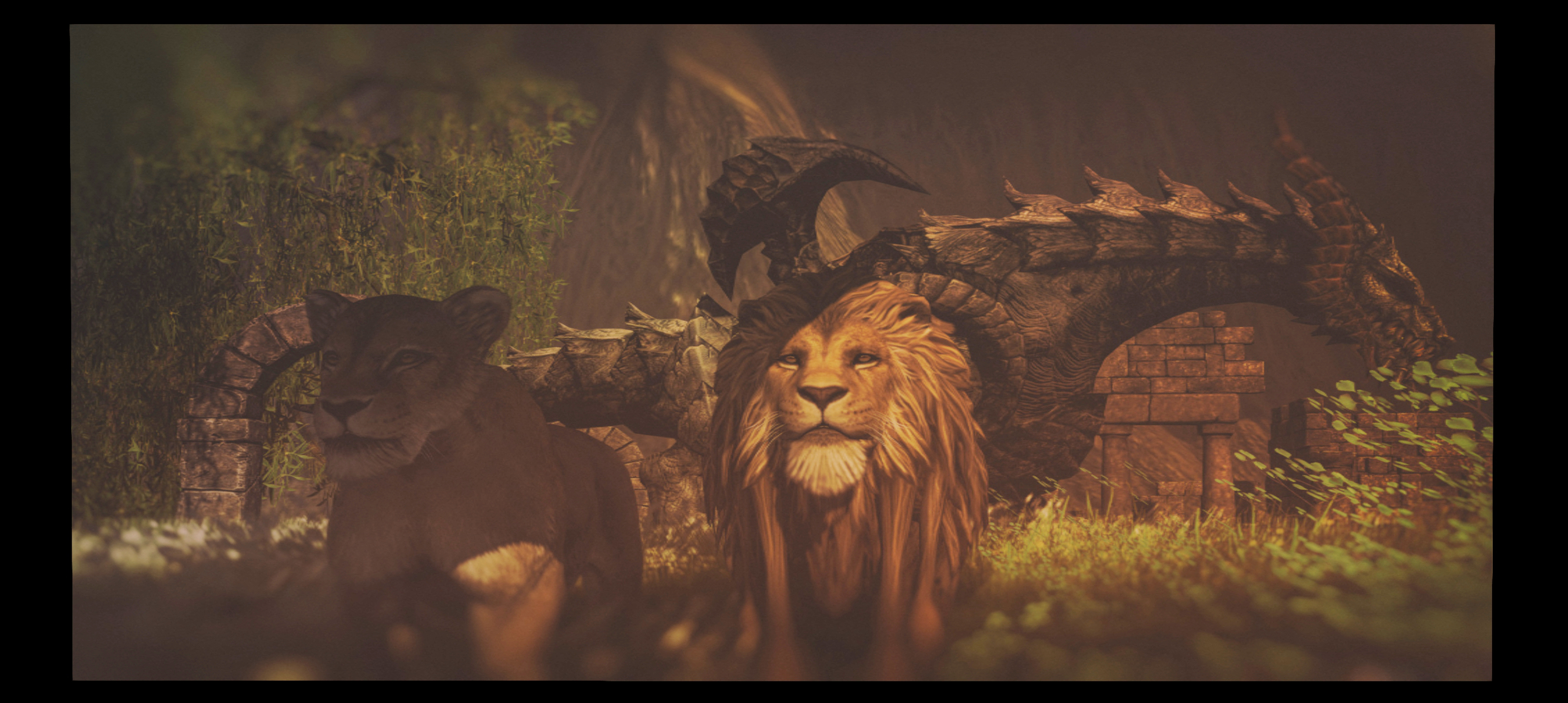
Silas Merlin: "Guardian Angels"
Silas Merlin: “Guardian Angels” – Silas says he was just having a little fun with this piece. The result is nevertheless stunningly beautiful

Related Links

Mandala Art in Second Life

Gallery 24: Sheba Blitz

The mandala (literally meaning “circle” in Sanskrit) is a symbol with very deep religious, spiritual and even political meaning. The classical form for a mandala is a square with four (generally T-shaped) gates containing a circle with a centre point, and generally displaying radial balance. More generically, “mandala” can mean a geometric pattern intended to symbolise the cosmos, and which contains a squaring of the circle, representing balance and order.

Mandalas are also intrinsically beautiful works of art, as demonstrated by Australian artist Sheba Blitz, whose work is the subject of the latest exhibition at  Kayly Iali’s Gallery 24 at Tabula Rasa. Sheba describes herself as a Mandala Artist, producing her intricate pieces using gouache, acrylics and metallic paints on either canvas or paper, drawing on sources such as music, books, astrology and tarot symbolism as her inspiration.

Gallery 24: Sheba Blitz

Mandalas – particularly those created through sandpainting, or dul-tson-kyil-khor, in Tibetan Vajrayana Buddhism – have always fascinated me, the inherent balance present within them, the confluence of ideas they represent  – the sheer beauty and intensity of their very creation – is utterly  absorbing and calming. Sheba’s works exhibits all of this, each one individually  rich in symmetry and harmony. Fortunately, as they are produced through more substantial mediums than coloured powders, they remain with us for far longer; there is no metaphor for  “impermanence” here. Instead, one might say they are reflective of the enduring measure of the cosmos.

Sheba informs Kayly that she didn’t come to Second Life to display her work; she decided to do so as a result of naturally seeking out other artists and attending exhibitions, buying art by others and immersing herself in the means to experience art in a new way. Fortunately, she was also invited to exhibit her art in-world, and because of that original invitation, we can now all enjoy her work.

Gallery 24: Sheba Blitz

It doesn’t matter whether you follow the spiritual, religious or even Jungian view of mandalas, Sheba’s work is instantly approachable and can be appreciated in and of itself. However, should you feel the desire, the back room of the gallery offers a spot for quiet contemplation.

SLurl Details

Exploring Hermoupolis Village in Second Life

Hermoupolis Village; Inara Pey, July 2016, on Flickr Hermoupolis Village – click any image for full size

I first visited Hermoupolis Village by Nitsuko’s Nits’ (putanakio) back towards the start of the year, after finding it in the Destination Guide. At the time, I didn’t get the opportunity to blog about it, so I thought it was about time I put things to rights.

Occupying the east side of a full region, Hermoupolis Village is beautifully photogenic, nestled between rugged peaks on one side, and what might be the tongue of a large lake cutting inland on the other, the green hills of an off-sim surround giving the impression of a rolling landscape on the far side of the water.

Hermoupolis Village; Inara Pey, July 2016, on Flickr Hermoupolis Village

The northern end of the land is dominated by the imposing bulk of a department store, in front of which sits a series of terraces, each one the focus for a sculpture. These are beautifully created by Valtum, with at least two  – the Discobolus of Myron, and the Barberini Faun – being drawn from the physical world. On other side of these terraces, a tram track emerges from a tunnel and winds its way past a town house, the interior of which looks ideal for telling haunted tales, and a small drug store, before running along the water’s edge.

The middle of the land is occupied by a tall town house flanked by two smaller houses, a paved rod looping in front of them. Across this sits an inviting lakeside café bar. Together these form a smooth transition between the more urban look of the department store and its terraces and and distinctly Mediterranean village of the title, sitting to the south.

Hermoupolis Village; Inara Pey, July 2016, on Flickr Hermoupolis Village

Within the village, stone paths wind between the various buildings – which, like all the building here, are open to the public – while an open market offers fresh produce and farm animals wander the grass. For those looking for a place to soak up the sun, the southern end of the village offers a pool and hot hub enclosed with the walls of what appears to have once been an ancient courtyard.

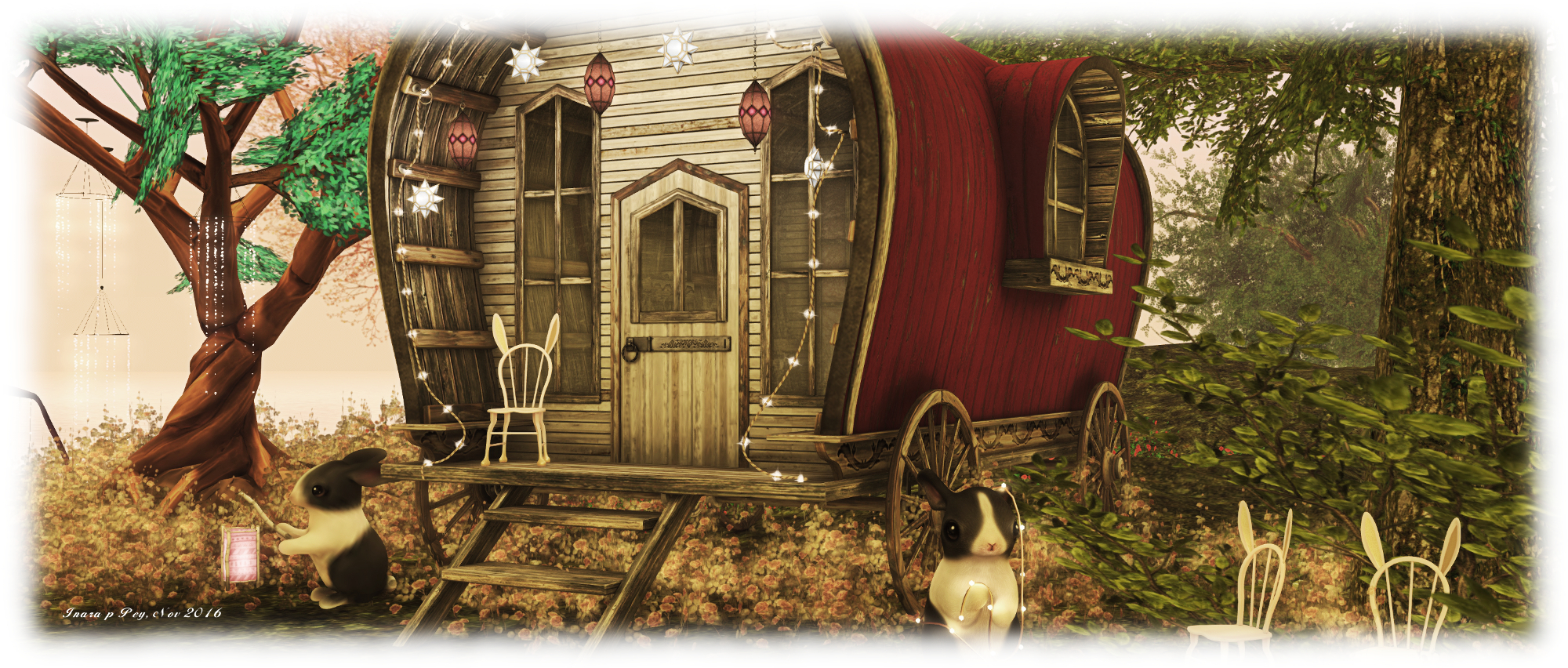
This is a place which is deceptive in its attractions, as there is so much to discover. Each of the houses is individually appointed, inviting exploration. There’s a little Romany camp to be found at the edge of the village, while a little stream running beneath the lee of the jagged peaks running along the west side of the land also invites exploration.

Hermoupolis Village; Inara Pey, July 2016, on Flickr Hermoupolis Village

There are also numerous places encouraging visitors to tarry: the café mentioned above, the pool and its hot tub, benches along the terraces, a small orangery offering cakes and ice cream at the north end of the land – even the verandahs and terraces of the houses themselves.

Nitsuko’s tells me he does change things around from time to time, but prefers not to make huge changes. Doing so tends to offer people reasons to return – quite aside for those making use of the stores – without the heart and look of the land being lost in a major reconstruction.  For my part, I thoroughly enjoyed this long-overdue re-visit, and will be making sure it’s not such a long time between this and the next time I drop in!

Hermoupolis Village; Inara Pey, July 2016, on Flickr Hermoupolis Village

SLurl Details

The Vordun: a new art experience in Second Life

The Vordun Gallery
The Vordun Gallery

Saturday, July 12th witnessed the opening of The Vordun Museum and Gallery, created and curated by Jake Vordun, the owner of Fancy Decor.

Occupying a large, modern building on one side of the Fancy Decor region, the museum and gallery presents a venue capable of supporting multiple exhibitions, with two art exhibits and a museum exhibition being presented for the opening season. Together they make for a unique and immersive visit.

The Vordun: European Masters
The Vordun: European Masters: 300 Years of Painting

The first of the art exhibitions is European Masters, 300 Years of Painting, which occupies the main gallery hall. On displays are over 30 paintings from the period 1500 through 1799, all of which are presented in a scale consistent with one another and to their physical world originals.  These can be freely perused and admired, title cards alongside of each one offering information on its provenance:  artist, title, year of painting, medium and the physical world collection where it current resides.

However, what makes this exhibit unique is that it has an associated experience. On entering the gallery lobby, visitors should be asked to accept the gallery’s experience, smartly scripted by Tangle Giano of Madpea fame (if the dialogue is not displayed, click one of the racks of headsets on the lobby counters). Accepting it will attach a HUD and explanatory note card to your screen. The card can be clicked away once read (and the permissions requested by the experience are automatically revoked and the HUD removed & deleted on leaving the gallery area / teleporting away from the region).

The Vordun: European Masters

The HUD comprises a numbered keypad and display screen, each of the numbers corresponding to a number displayed in the lower right corner of the title card for 28 of the displayed paintings. When standing in front of one such painting, clicking the corresponding number on the HUD will focus your camera directly on the picture and display additional information (courtesy of Google Culture and Art) in local chat. An audio reading of the same text is also given for those with local sounds enabled, while the provenance information for the painting is displayed in the screen area of the HUD. Once the audio track has finished, control of the camera is released, allowing individual paintings to be more freely admired.

This approach adds considerable immersive depth to the exhibition, offering something of an audio tour of the paintings on display, whilst allowing visitors to freely wander between them in an order of their own choosing.

The paintings themselves are superbly reproduced, and run from portraits of famous figures of the times, through still life scenes, landscapes, allegorical paintings and biblical scenes. All studiously avoid the use of Full Bright, and this coupled with the use of a neutral windlight settings for the region, allows them to be presented in as close to “real world” lighting conditions as possible, further enhancing the immersive feel of the exhibition.

The Vordun:: Lip Service by Celeste Forwzy
The Vordun: Lip Service by Celeste Forwzy

The north wing of the gallery houses the second art exhibition, entitled Lip Service. Running through until September 19th, it features a set of watercolour drawings of female mouth – or specifically lips – by physical world and Second Life artist Celeste Forwzy.

Twelve framed images are presented in the exhibit, and again considerable care has been taken in their presentation. The gallery space is rendering in a neutral white, with a simple wooden floor, with each drawing softly lit through the use of a projected light. The result is and environment ideally suited to focusing one’s attention on the drawings, each of which is extraordinarily attractive.

The Vordun: A Night to Remember

Across the hall, in the south wing, is A Night To Remember (from the 1958 film of the same name), curated by Emery Milneaux. An interactive exhibition commemorating the loss of RMS Titanic on the night of April 14th 1912, it runs through until October 9th, and is another extraordinary piece.

On entering the exhibition space, visitors are asked to attach a boarding pass to their screen. This bears the name of an actual passenger aboard the Titanic, with the promise that the fate of the passenger will be revealed further into the exhibition. From here, visitors move through a series of rooms which take us through Titanic’s brief history, from construction to loss.

The Vordun: A Night to Remember

This is told through a richly mixed medium of interactive photos and title cards (click the former to focus your camera on the photo, click the latter to receive further information in chat), together with principal figures from the liner’s story: Commodore Edward Smith, the Titanic’s Captain, socialite Madeleine Astor, first class passenger and survivor, Frederick Fleet, one of the vessel’s lookouts on the fateful night, and a young newspaper boy in London, Ned Parfett. Bump into any of them, and they will present a short “first hand” narrative. There are also reproductions of the ship’s Grand Staircase, together with a first and third class cabin – the latter two starkly outlining the massive class divide of Edwardian society.

However, it is the final gallery of this exhibit which is the most poignant, dealing with the liner’s sinking. In particular, in the final room, three large plaques list the names of every passenger who sailed with the Titanic, together with their fate on the night of April 14th. Through these, visitors can discover the fate of the person named on their boarding pass, adding something of a personal dimension to the exhibition. A fourth plaque commemorates the liner’s crew, 700 of whom (out of 916) lost their lives.

The Vordun: gift shop

Individually, any one of the exhibitions at The Vordun would be more than worth visiting. Taken together, and a visit becomes a singular experience of many facets, one I have no hesitation in recommending. And I’ve not even covered the gift shop, which offers copies of the drawings, paintings and memorabilia for sale, together with a range of other souvenir items.

My congratulation to Jake and all involved in the project for developing such an outstanding venue. I look forward to making many future visits to The Vordun, and seeing future exhibitions, and the use of capabilities like Experience Keys might be further leveraged.

SLurl Details

With thanks to Kess Crystal for introducing me to Jake.

Creative Inhalations in Second Life

reative Inhalation: Breaking Bad in Frenzyville
Creative Inhalation: Breaking Bad in Frenzyville

Open through until the end of August at the Paris Metro Art Gallery is Creative Inhalation: Breaking Bad in Frenzyville, featuring the wonderful, whimsical and intriguing art of Molly Bloom.

Noted for her ability to play with our perception of depth by having elements of her images reaching beyond the confines of their picture frame, even to the point of using props completely outside of the picture, Molly’s art is instantly recognisable when encountered in Second Life – and it is always a delight to visit exhibitions of her more recent work, as is the case here.

Creative Inhalation: Breaking Bad in Frenzyville

On display are 22 pictures (23 if you count the superb self-portrait on the upper floor, which makes clever use of one of the gallery’s arched windows), which are split between the two floors of the gallery. Collectively, the exhibition is presented in memory of Molly’s late father, who passed away in May 2016 at the age of 95, with four of the images in particular being dedicated to him.

Not that this is in any way a downbeat exhibition; quite the reverse. As Molly notes, she inherited her sense of humour from her father, and it is much in evidence in many of the pieces displayed here and in a variety of ways, from the subtle, smile-inducing, through to the right-in-you-face-laugh-out-loud. Between these extremes sit the whimsical, the thought-provoking   and – of course – the dedications.

Creative Inhalation: Breaking Bad in Frenzyville

As I noted at the top of this piece, it is always a delight to see Molly’s art in Second Life, and Creative Inhalations: Breaking Bad in Frenzyville is no exception. Do be sure to drop in before the end of August, especially if you’ve not encountered her work before.

SLurl Details

The Drax Files 39: of games and freedom in Second Life

Sergio Delacruz. Image courtesy of Draxtor Despres / Sergio Delacruz

There’s an argument about Second Life which is as old as the platform itself: is it or isn’t it a game? The majority of  active Second Life users most likely fall on the side of the line which says it is not a “game”, and I’d be among them for many and varied reasons. However, one thing that Second Life can be, is a platform for a wide range of games.

This is demonstrated in segment #39 of The Drax Files World Makers,  which explores the work of content creator and designer of in-world games, Sergio Delacruz. However, in typical Draxtor style, there’s a hidden depth to this piece which makes it yet another fascinating exploration of the potentials and opportunities which are open to anyone engaging in Second Life.

Sergio runs Delacruz Technologies, where he builds a range of items, such as his familiar Ferris wheel and bumper cars, and where he hosts Susan's Diary
Sergio runs Delacruz Technologies and Delacruz Park, where he builds a range of items, such as his familiar Ferris wheel and bumper cars, and where he hosts Susan’s Diary

When it comes to games, Sergio is the man behind Drone Wars (which I can remember playing back in 2009/10), a first-person shooter pitting players in combat against armed drones whilst attempting to locate and disarm a nuclear device. More recently, he has created Susan’s Diary, an immersive horror / mystery story players have to solve.

Like so many of us, he was drawn to Second Life out of curiosity, and was struck by the huge scope for creativity offered by the platform. “I was like a child with Lego,” he says of his early, sandbox-based days. However, and again like many of us, he quickly realised the potential of the platform for both creative expression and for learning new skills. Starting with a pair of primy sneakers, he progressed through teaching himself to script in LSL and onward into game design.

With the latter, he also recognised what is perhaps one of the more unique aspects in designing games within the platform: if the creator desires, they can be built so that people can play them using the avatar with which they are most comfortable with using, without the need to adopt a specific character and / or look, as is the way with console and computer games.

One of the darker aspects of Susan's Diary, an immersive horror / mystery game
One of the darker aspects of Susan’s Diary, an immersive horror / mystery game

This is actually an important point. Because we can engage in games within Second Life using our avatarian familial, rather than being forced into the identity of a pre-defined character, it is possible to have a far more personal connection with the game – it becomes far more our adventure.

Second life also allows for a more open approach to games design and game play; designers can present games which are not necessarily constrained by a linear narrative, but become more of an exploration and discovery by the players, whether playing individually, or with a group of friends (something which further makes games in SL far more of a genuine social experience than those of other mediums can allow, again due to the limitations imposed by pre-determined characters, etc.).

The concept of “freedom” is perhaps where a good portion of the heart of this piece lies. At its core, Second Life is about giving anyone who uses it personal freedom and in a huge number of ways, be it through the creativity of actually making things, or through using the things other make to create an environment others can appreciate and enjoy, or through which we can find new ways and means to express ourselves through art, or through learning new skills. And of course, there is the freedom it gives us to express our personalities through our avatars and to socialise with others from all of the world in a huge variety of ways.

Sergio designing his physical world home in SL - from the comfort of his physical world home, inset). Image courtesy of Draxtor Despres / Sergio Delacruz
Sergio designing his physical world home in SL – from the comfort of his physical world home, inset). Image courtesy of Draxtor Despres / Sergio Delacruz

Of course, there’s a wide range of opportunities sitting around and between these examples, both within and beyond the platform. Nor are any of them mutually exclusive; most of us embrace two or more through our time in-world.

In Sergio’s case, this freedom has given him the ability to develop skills and interests which have application beyond Second Life. From LSL he’s moved to more recognised programming languages such as JavaScript and C#, which in turn have encouraged him to experiment in other mediums, and also to get a potential leg-up into the world of “consumer VR”. Most recently it has offered him the opportunity to dip a toe into real-world design, reproducing his own home inside Second Life.

“In Second Life you are free,” Sergio says at the end of the piece. “Free without limits.”  And that is perhaps the platform’s greatest gift to each of us.