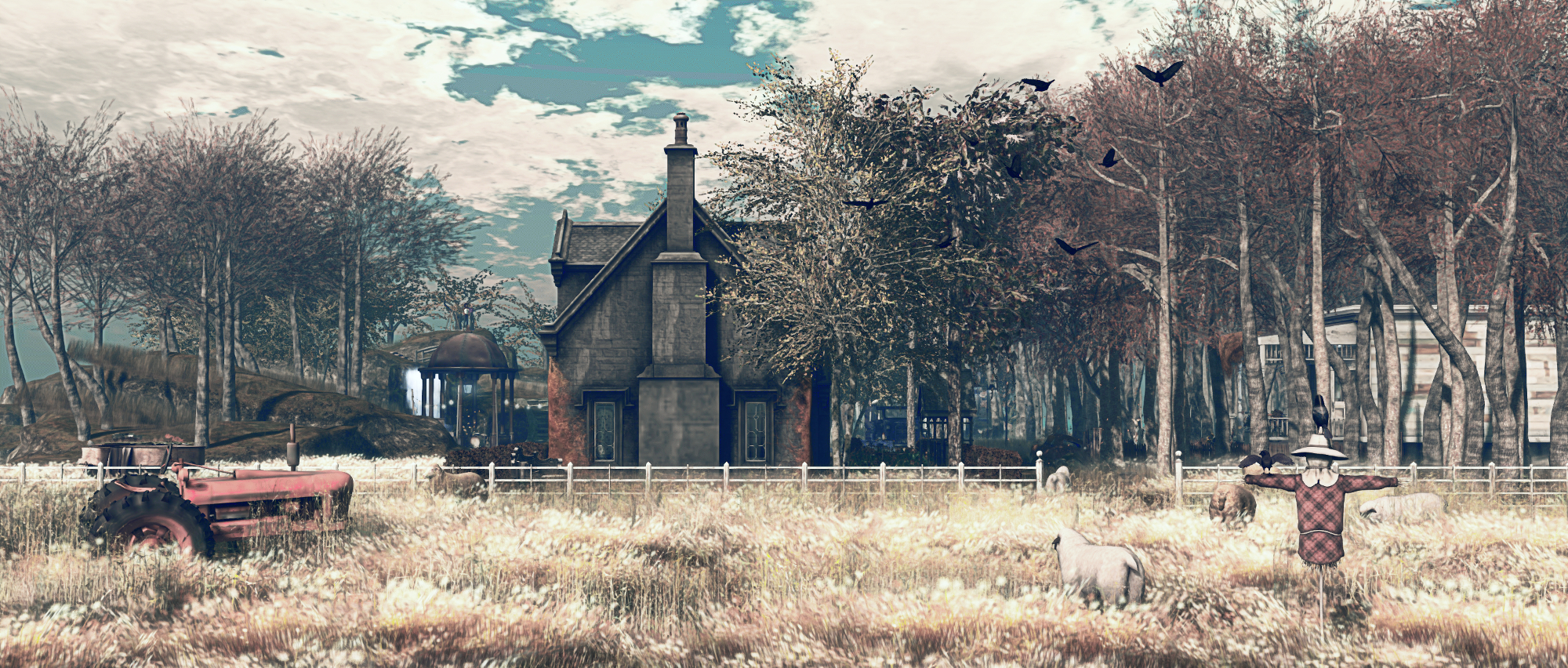
Bailey’s Norge in Second Life

Bailey's Norge; Inara Pey, March 2018, on FlickrBailey’s Norge – click any image for full size

Note: Bailey’s Norge is now La Frontera – read here for more.

In late January, Caitlyn and I visited Bailey’s Norge, designed by the Bailey family and in the Homestead region of Forest Haven. At the time, it wasn’t clear how long the region would be open to public visits, but as it is still open to people to explore, I thought I’d write a few words on it.

Designed to represent a piece of rural Norway, the region sits within a ring of green mountains, surrounded by water as if snuggled at the inland end of a fjord, a single channel leading out to sea, watched over by the rotating eye of a lighthouse.

Bailey's Norge; Inara Pey, March 2018, on FlickrBailey’s Norge

A visit starts close to the centre of the region, on a set of stepping-stones running across the mouth of a channel separating two of the region’s islands – so be sure to wait until everything has rezzed and rendered before taking too many steps, or you might end up taking and unexpected bath.

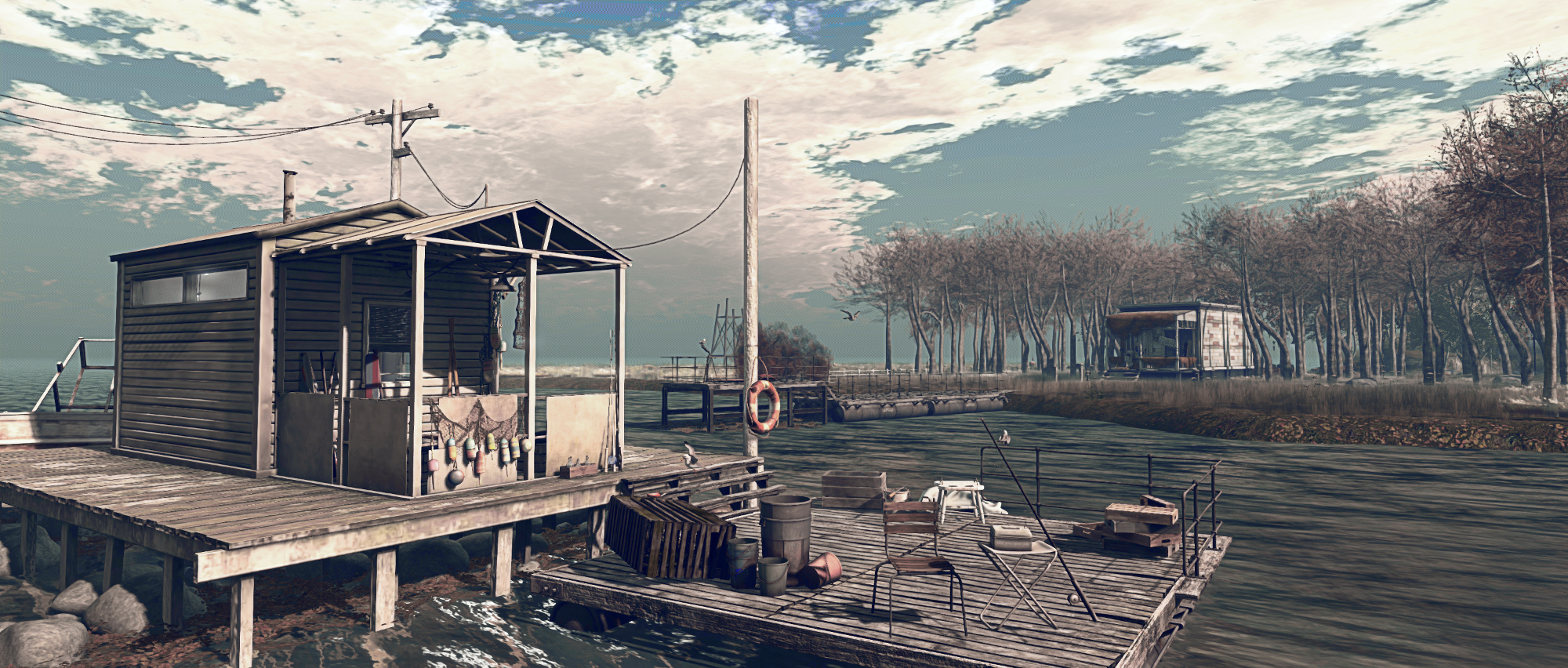
These stones link the two largest islands with one another. The easternmost of these islands has a north-south orientation, and is occupied by two large houses. One of these sits alongside the stepping-stones, the second to the north, reached by a walk through the long grasses which dominate the flatlands of the island. This second house has the look of a working home – a pier sits on the shoreline close by, perhaps home to the fishing boat out in the bay, and with fish drying on the lines alongside the pier. And old pick-up truck has been converted into a makeshift flower garden, while a seating area lies in the shade of trees.

Bailey's Norge; Inara Pey, March 2018, on FlickrBailey’s Norge

A box bridge spans the water separating the northern end of this island with one of the two small islands on the north side of the region. Cut by a man-made water channel, where a little snuggle spot can be found atop a raft, it is otherwise deserted. A second small island lies to the west – but please note it appears to be a private residence, so exploration there should perhaps be avoided in the interests of privacy.

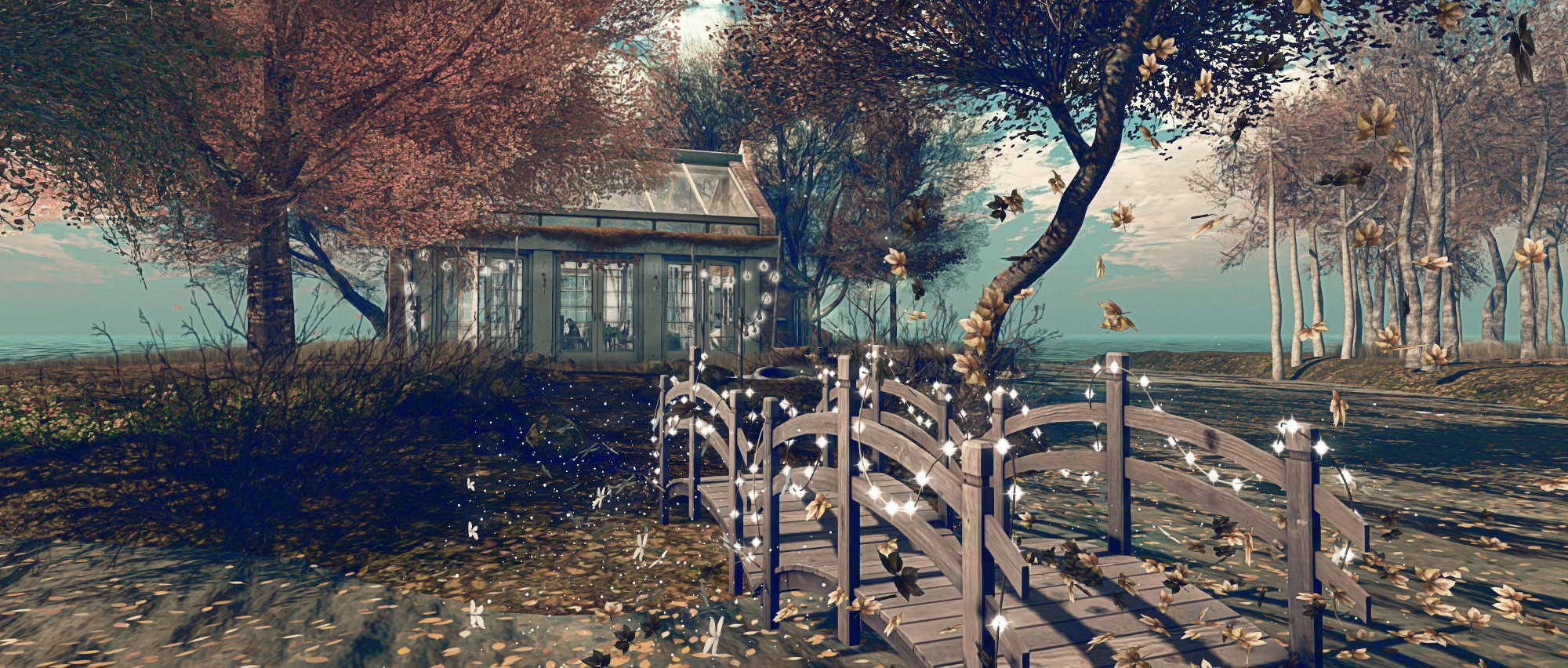
Travel south through the grasslands of the east-side island, and you’ll find your way to a small cabin snug against the southern coastline, looking west towards the second of the large islands, on which sits a large number of structures. A gable roofed bridge sits close by, spanning the narrow channel dividing the two islands from each other.

Bailey's Norge; Inara Pey, March 2018, on FlickrBailey’s Norge

The closest of the  buildings across the bridge is a large Scandinavian-style house. It is clearly a family home, given the swings, slide, roundabout and see-saw in the fenced garden. Surrounding this on two sides are outhouses and barns. These give the house the feel of being a farm, although the outhouses have been converted for particular uses: a bathhouse and a small photography studio / gallery.

Slight further afield, on the north side of the island lies a little shop, a converted boat dock nearby, a swing seat replacing the covered moorings. Further along the curve of the shoreline sits an old Norse building, its apparent age hinting that there has been a settlement here for a long time. Meanwhile, on the west side of the island sits a wood-framed church. This faces a boathouse sitting on the shore alongside a wooden deck that extends out over the waters. As well as offering cosy seating indoors and chairs on the deck, the boathouse also has a hot tub and hammock outside.

Bailey's Norge; Inara Pey, March 2018, on FlickrBailey’s Norge

With rich, open spaces with places to sit and / or cuddle scattered throughout, and one or two little surprises waiting to be found – keep an eye out for the Norwegian troll keeping a watch on things from the tree-line – Bailey’s Norge offers a lot to see and enjoy. Should you enjoy a visit, please consider offering a donation towards the upkeep of the region (the donation box is at the southern end of the east-side island). And if you take photos, please consider sharing them with the region’s Flickr group.

SLurl Details

Second Life through La Baroque’s Eyes

Club LA and Gallery – La Baroque

Currently open on the mezzanine floor of Club LA and Gallery, curated by Fuyuko ‘冬子’ Amano (Wintergeist), is an exhibition of art based on Second Life photographs, by artist La Baroque.

Hailing from Italy, La Baroque entered Second Life in August 2007. Already keenly interested in photography, she quickly found Second Life photography as engaging as that of the physical world. However, what makes her work particularly fascinating is not only the subject matter of her images, but the manner in which she uses post-processing techniques to make her images look – and feel – as much like paintings as possible, often with an other-worldly feel.

Club LA and Gallery – La Baroque

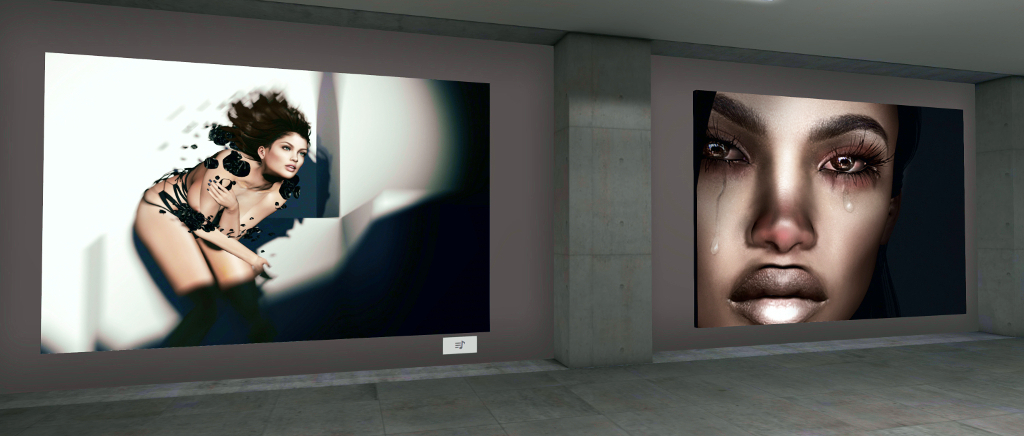
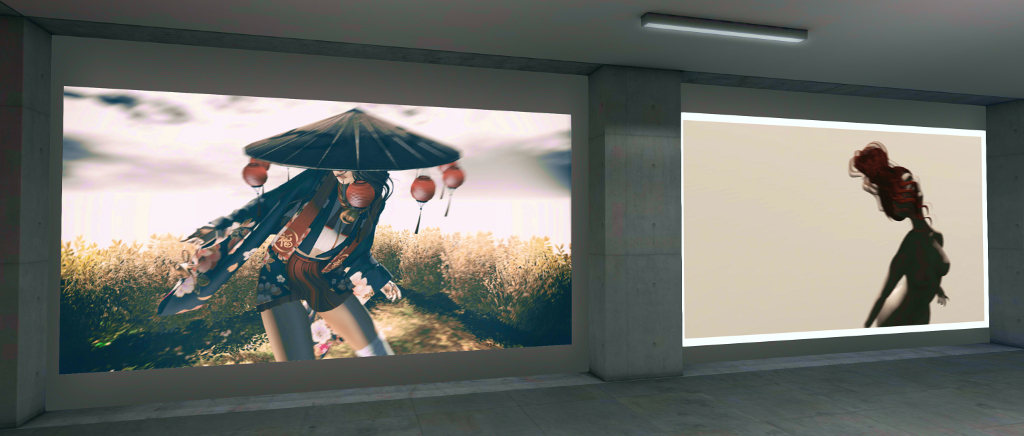
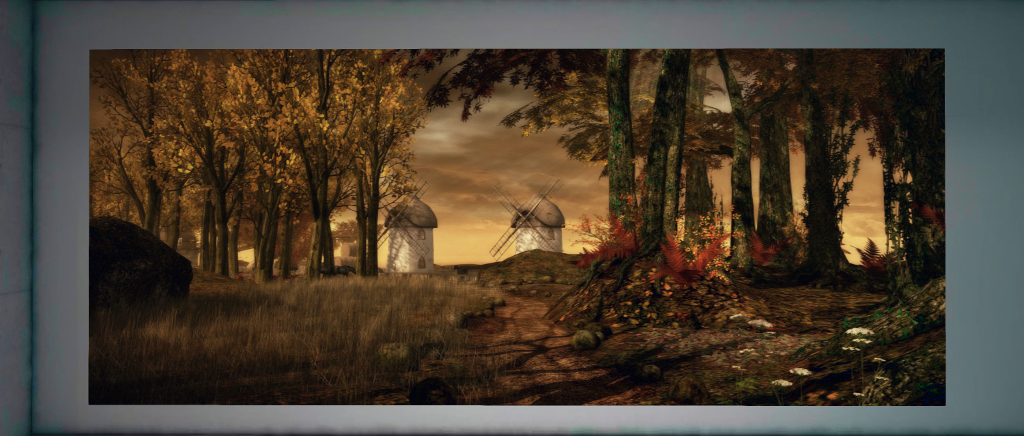
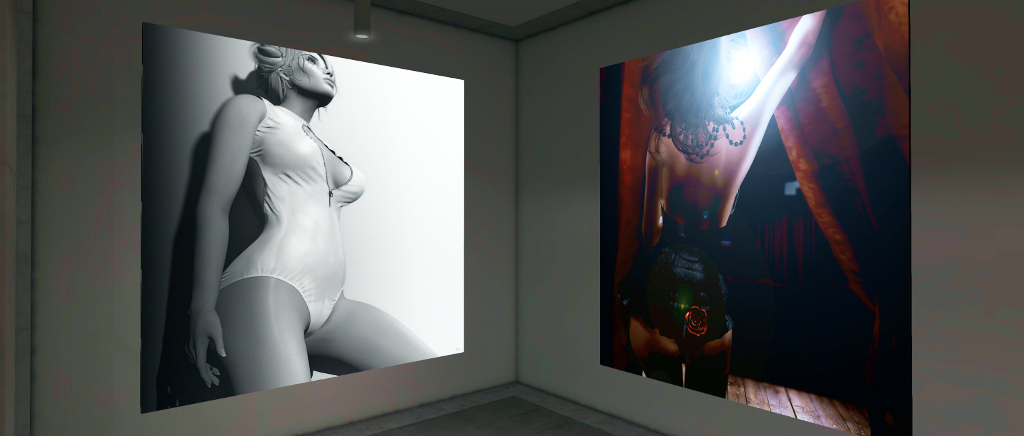
All of this is very much in evidence in the exhibition at Club LA and Gallery. Placed within a beach-like setting, complete with sand and camp fire, are nineteen pieces from La Baroque’s portfolio, all richly diverse in subject, framing, composition and finish. Some are suggestive of watercolour landscapes and settings, others suggest they are oil paintings, rich in colour and texture to the point where it’s easy to imagine reaching out and feeling the uneven surface of the paint on canvas. At least one – Chairs – offers a suggestion of the abstract, while that feeling of other-worldliness is also to be found throughout many of the pieces on display.

In terms of subject matter, the images offer very personal takes on Second Life landscapes, some of which might be familiar to Second Life travellers, such as Orcadi Island (which you can read about here) and Sarawak (which I wrote about here). Others are composed avatar studies offering a narrative flow – such as with Nothing on the Horizon and Breathe the Scent of the Sea, two pieces I found particularly strong in story within this series of narrative images.

Club LA and Gallery – La Baroque

Another piece I found particularly evocative – although singling out pieces within this selection really isn’t fair – is Memories of a Dragon, which is perhaps the most powerfully expressive of La Baroque’s ability to create an expression of a parallel world.

As well as producing 2D art, La Baroque also produces 3D art, but notes she doesn’t do it too often as she claims she is “much too lazy” and lacks the patience to build. Given the depth of creativity and care  shown within the pieces on display at Club LA and Gallery, I beg to differ with La Baroque’s assessment; she is far from “lazy” and her patience with the creative process is abundantly clear.

SL Details

Gaia Calling in Second Life

Gaia Calling; Inara Pey, March 2018, on FlickrGaia Calling – click any image for full size

Update: Gaia Calling no longer exists at Serena Kiraly. The sim is under new management and has been repurposed.

Gaia Calling is the name given to the Homestead region design by Gidgy (Gidgette Adagio) – who has previously presented Savor Serenity and Hobbiton (see here and here respectively). It is something of a departure from these previous builds, which were rooted in Tolkien’s mythologies, offering instead a take on more classical mythology – specifically that of the primordial deity, Gaia, the ancestral mother of all life and primal Mother Earth goddess. But while a departure from Gidgette’s past designs, it is nonetheless as enchanting as they have been.

A visit begins on a transparent octagonal platform serenely floating above a deep gorge cutting into an elevated landscape. This platform contains an echo of Gidgette’s earlier builds in that it is ringed by a circle of elven-like arches. A single arched walkway points the way to a second platform, almost at the centre of the region. From this, a tall figure of Gaia rises, arms uplifted as she becomes a tree – the perfect symbol of mother Earth – framed by a rising Sun.

Gaia Calling; Inara Pey, March 2018, on FlickrGaia Calling

The roots for this great tree / statue reach down beneath the platform, extending down to the surface of the water below. The waters of this gorge are served by a series of waterfalls that tumble-down the cliffs and slopes of the surrounding ring of land – a right richly forested, but which doesn’t quite connect to either of the platforms, presenting visitors with an interesting quandary of how to get from platforms to land.

Flying is one means of crossing the divide – but there are preferable alternatives: the arrival platform includes a bubble rezzer for those who like to travel on their own. Simply touch to rez, sit in the bubble and use the WASD / arrow keys for forward / back motion and turnings, and PAGE UP and PAGE DOWN to increase / decrease altitude. For couples, there is a flying leaf rezzer, with the same principles applying to flying it.

Gaia Calling; Inara Pey, March 2018, on FlickrGaia Calling

The surrounding lands offer various paths through the aged trees, some of which are strung with lights. Along these paths visitors can find numerous points of interest: lanterns offering dances, “magic” mushroom that rez picnic spots and / or cuddle spots, a gazebo rich with flower growing in an old bathtub, a cosy camp fire … all offering places to sit and appreciate the ethereal surroundings.

Nor is this all: bears and wolves and rabbits are scattered across the landscape, and for those willing to take the plunge – preferably via bubble or flying leaf –  there is a world under the surface of the waters to be found, where whale, porpoise, shark and more swim together, their surroundings rich in colour from corals and plants.

Gaia Calling; Inara Pey, March 2018, on FlickrGaia Calling

“Many moons ago, many sunrises ago, Gaia called.” Gidgette says of the region, “Her song singing the essence of our being, the calling of the soul, the oneness of our dream, and as our consciousness arises, Gaia smiles.” Wandering this landscape, beautifully lit, it isn’t hard to imagine being one of Gaia’s first Earth-born, and even encouraging spiritual / conscious growth through the mediation platform extending from one of the cliffs of the gorge.

Gaia Calling is a marvellously ethereal setting, rich in content and beautifully photogenic (and photos can be submitted to the region’s Flickr group). It makes for both a restful and fun visit – particularly when floating around in the bubbles. There’s also a lot more to discover than might at first appear to be the case – not only because of the underwater setting mentioned above, but also because of other little spots I’ve refrained from mentioning here so that you might enjoy discovering them for yourself – just be sure to look underground and under tree…

Gaia Calling; Inara Pey, March 2018, on FlickrGaia Calling

SLurl Details

  • This sim is under new management, and Gaia Calling as a region no longer exists.

Bryn’s Tilt-a-Whirl in Second Life

Bryn Oh: Tilt-a-Whirl

At the end of February 2018, Bryn Oh opened Tilt-aWhirl, the third in a series of single-scene poems  she has been putting together whilst also working on a new immersive installation to succeed Hand (reviewed here). It joins Lady Carmagnolle and 26 Tines (both of which I wrote about here) on a darkened Immersiva. However, in difference to the first two pieces, Tilt-a-Whirl has something of a personal foundation for Bryn.

“It is pretty much a nostalgic memory of being young at a fairground or carnival,” Bryn says of the piece – albeit it a carnival with fantasy overtones. Two rides form the piece, the titular tilt-a-whirl ride, with flashing lights and regular-looking cars, and a carousel with a quite unusual set of animals on which to ride: a dragon, ball-balancing unicorn, a butterfly, and a mechanical octopus, seahorse and horseshoe crab …

Bryn Oh: Tilt-a-Whirl

These are not a random selection of creatures for the ride, however. In her notes accompanying the piece, Bryn notes how some of the creatures have a personal link to her – notably the dragon and the octopus – a creature she’s clearly fascinated by, and with good reason.

There seems to be a further personal element contained within this piece, a reflection of another childhood memory revealed by the accompanying 3-stanza poem, which opens:

I dreamt of my youth
when I met a girl
and kissed her by the
Tilt-a-Whirl

Bryn Oh: Tilt-a-Whirl

Glance under the front of the Tilt-a-Whirl, and this memory is revealed through two figures – Flutter and Juniper – cautiously leaning towards one another, one shrouded by a blanket, hands reaching for one another, heads tilting. It’s a poignant moment caught in time; an echo of a childhood event made manifest once more through art and expression. Click on them, and you can view the video accompanying the scene, and which I’ve taken the liberty of embedding below (the video, and those for Lady Carmagnolle and 26 Tines can also be video by clicking the images on the floor of the arrival point).

Like Lady Carmagnolle and 26 Tines, Tilt-a-Whirl is haunting in theme, but it is also perhaps warmer in tone and feel. All three make for a striking visit.

SLurl Details

Spring 2018 at La Vie in Second Life

La Vie; Inara Pey, March 2018, on FlickrLa Vie – click any image for full size

It’s just two months since our last visit to La Vie, the homestead region designed by Krys Vita and Arol Lightfoot (see here for our winter visit write-up). Normally, I prefer not to re-visit regions after so short a space of time, but La Vie has always been somewhere special, so when I received word from Krys that the region had received a spring 2018 make-over, I knew we had to hop over a take a look.

The new design brings with it some motifs and elements those familiar with earlier iterations of the region will recognise – a broad sandy beach, rural paths and fields, a little gathering of buildings – while the region as a whole presents something wholly new in terms of look and feel.

La Vie

A visit begins on the west side, where sits a little cobble square with a round-cornered road to nowhere set within it. Two sides of this square – north and east – are bounded by tall shops and town houses. To the west, the square overlooks the open sea, a wooden board walk extending out over the rocky shoreline.

On the east side sits a gym ready for those wishing to keep themselves in shape (try the boxing bag). Close to the gym, a set of wooden boards and steps provide passage over more rocks and cross a sliver of water to where a small warehouse store and wharf sit at the water’s edge. This finger of the region is almost – but not quite – cut off from the rest by the water’s narrow passage, allowing it to offer a little corner of solitude, its southern edge marked by a cinder beach, and a cosy gazebo sitting in the middle of its grassy top.

La Vie

Finding other routes out of the little village square is somewhat harder. It sits on a flat table of rock, the rugged making passage to the beach to the north or the open lands to the east a matter of scrambling over rugged  shoulders of rock; it would perhaps be nice to have another wooden walkway and steps to help guide visitors. However, once the rocks have been negotiated, visitors will likely find themselves in a broad dip in the land that forms something of a track to be followed, easing further exploration.

Take this path northwards, and it becomes increasingly sandy until it delivers you to the broad northern beach. Take it eastwards, and it will lead you through grass and by tree and bush, curling gently around the large plateau that forms the backbone of the land, steadily rising towards the top as it does so. A set of stone steps passing between old iron gates mark the top of the plateau, and give the impression you’re entering a wild garden. Crowned by trees, the plateau is home to an old folly where beribboned  geese and winged mannequins gather around a wooden swing, all watched over by a passing unicorn. A second set of gates and steps present a way to a track running sharply  down the slope of the plateau to meet with the beach below.

La Vie

Throughout this setting are a number of places visitors can sit and enjoy the scenery, from the gazebo mentioned above, to bench seating and parasolled tables in the village square, to places like the folly and its swing and shady spots on the beach. There’s even an off-shore vantage point offering a bird’s-eye view of the region, although whether it is supposed to be used or not is questionable; it’s positioned so close to the region edge, anyone finding it and sitting on it is in for a dunking when they stand!

With March having arrived, and the promise of spring sitting on the horizon for those of us in the northern hemisphere – or the danker days of winter for those in southern climes – La Vie’s current make-over reminds us of the promise and delight of warmer, sunnier days and the opportunities for countryside walks or lazy afternoons on the beach.

La Vie

Another beautiful setting by Krys and Arol, and a perfect destination for those seeking somewhere to go.

SLurl Details

  • La Vie (La Vie, rated: Moderate)
A little more tee in Second Life

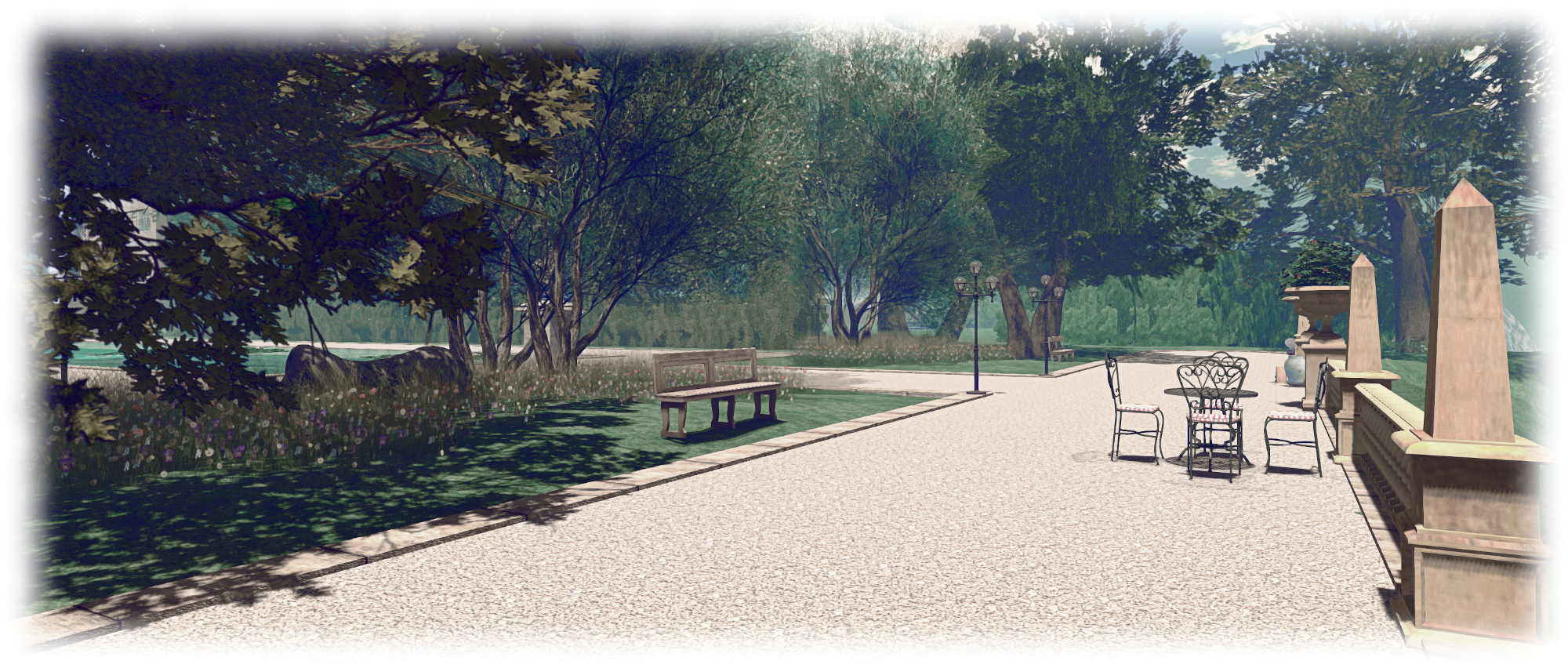
Angel Manor: always an amazing visit and for those trying SL golf for the first time, an excellent introduction to the game?

Caitlyn and I have been dabbling on-and-off with golfing in Second Life. Our preferred base of operations has been the AERO golf club, simply because it is so relatively quiet (see Teeing off in Second Life for more). However, there are many places in SL where a round or two can be enjoyed. So many, in fact, that there are doubtless favourites for many who enjoy the sport  – just as those coming into it for the first time might feel a little overwhelmed. Not just by the breadth of choice, but also by the prospect of trying to get around an entire 18 holes.

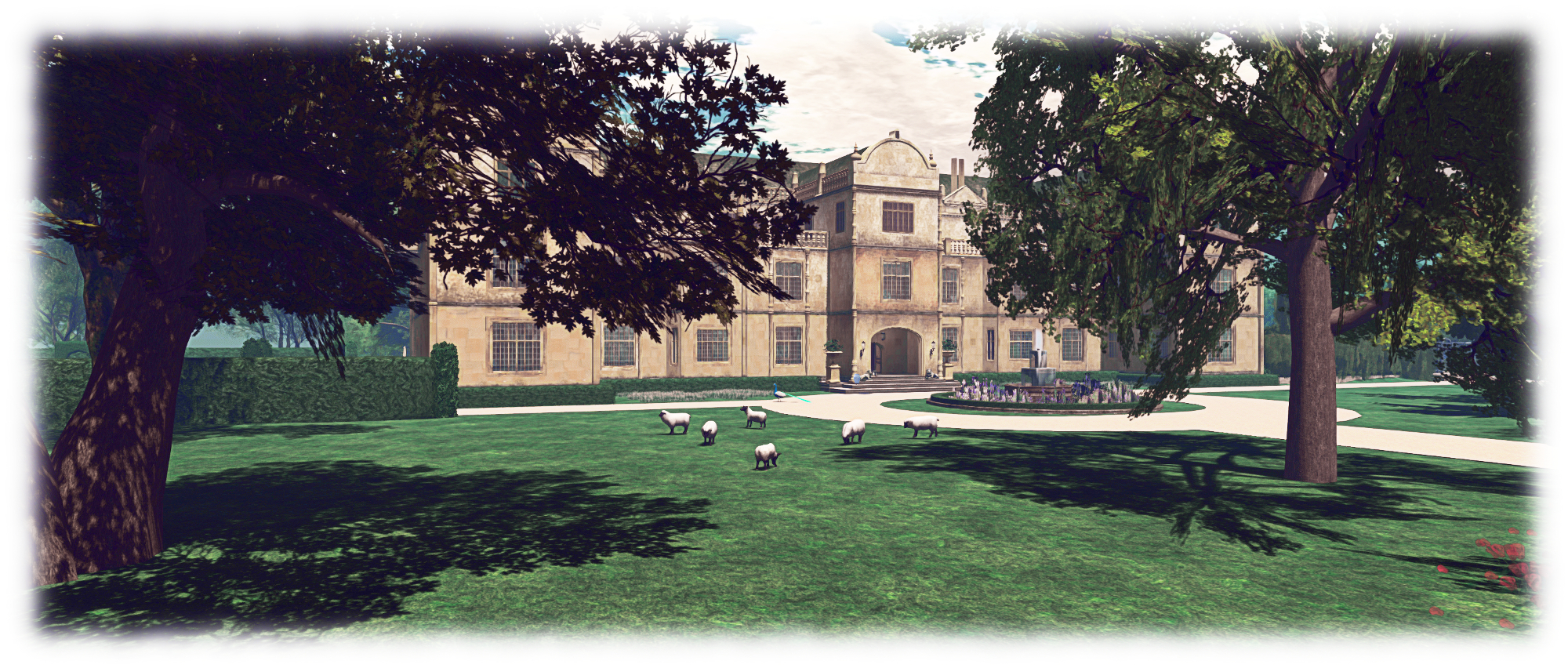
Of course, you can always break your round down over a couple of sessions: find a course and do the first nine, say, then come back and complete the back nine another day. Or, if that doesn’t appeal, you can always try a smaller course – such as the one at Angel Manor. Here, on the south side of Kaya Angel’s magnificent 12-region estate centred on his stunning manor house, can be found a delightful 6- hole course which can serve as an excellent introduction to SL golf.

Set within Angel Manor Park, the course covers just over half a region, and can be played using most golf systems. Two systems are provided at the tee for the first hole: Fa Nyak’s basic system of club and HUD (provided free and works for about a day), and the CrowleyCorp Elite golf system. The latter can be purchased outright from the vendor boards, or “rented” for L$10 per 16 hours (real-time).

One of the six fairways at Angel Manor Park

Fa Nayak’s system is more than adequate for more casual golf play in SL: everything is HUD-driven, with three basic clubs provided: driver, wedge and putter. The CrowleyCorp system is more sophisticated: HUD-driven again, it provides a set of 12 clubs: driver, 3 woods (1, 3, 5), five irons (5-9), a pitching wedge, a sand wedge, and a putter. In addition, the HUD provides options for adjusting the club size for a better fit with different height avatars, a range of camera options, a built-in power meter, a spinner for adjusting backspin on the ball,  and an animation suite (tee-up, walk to ball, drop ball, holster / unholster club from bag, if used).

Which of the two systems you play with is a matter of choice: Fa’s is the simpler of the two, and avoids the need to have to worry about fiddle-farting with options and settings – useful if you are just starting out. The CrowleyCorp system offers a more “realistic” approach to play, although with respect to the Angel Manor course, it probably really doesn’t come into its own, the holes all being relatively short par 2 or par 3 affairs with few obstacles which have to be worked around.

Both systems also offer the same basic play: select your club – such as the driver (which will also tee you up) –  then checking the particle wind indicator and noting the ball’s direction of flight as indicated by the arrow marker overlaying your ball. The LEFT / RIGHT cursor keys can be used to adjust the latter, and to compensate for winds cutting across the ball’s line-of-flight (headwinds and tail winds are handled through the power of your stroke).

The Fa Nayak HUD (l) offers the essentials for good game play without overwhelming the novice. The CC Elite HUD (C) offers a broader range of clubs (on the right) and additional gameplay and animation options. Selection of wood, iron or wedge opens a further sub-menu of options (r), requiring a greater degree of familiarity with the function of the various clubs

When your shot is aligned, it is then a case of pressing and holding the LEFT mouse button and monitoring the power behind your swing. This is indicated by the power meter on the CrowleyCorp HUD, or in-world with the Fa Nayak system, which uses a hovertext indicator. Judge the amount of power to put into a swing takes practice – and be wary of holding the mouse button down too long as the power meter reaches full strength (when needed), as this can over-drive your swing and lead to unexpected results. Then, note where your ball falls, may way for your companion players, before continuing down the fairway and to the green, selecting your clubs as required by each stroke.

Given their relatively short par lengths, the six holes at Angel Manor can be completely pretty easily, avoiding a round from becoming too drawn-out. As noted the obstacles are pretty limited, but it is still possible to get into the odd spot of bother which can make things fun. But, as a gentle introduction to golf in SL, the compact size of this course makes it pretty ideal – while the choice of systems available for play gives newcomers a good feel of what to expect on other courses.

Both systems use essentially the same approach to play, including swing direction indicators. note my camera is deliberately slewed to take this picture, and is not representative of gameplay camera positioning

Nor is this the only fun to be had in Angel Manor Park. Sitting in the middle of this little 6-hole course is a clay pigeon shooting system. Free-to-play, this is a qualification-based game: each round comprises 40 clays, with a minimum number which must be hit each round (e.g. 10 in the first), to progress to the next round. At the same time, the frequency and number of clays released each time increases, and the angles of release can become more and more divergent.

I’ve played this type of game in SL before (in fact, a really old, and no longer functional system is buried in my boxed inventory). Some require the payment of a basic fee to play, others are free – the Angel Manor system, created by Abramelin Wolfe – is free to play. Just get a shotgun from the board and touch the trap to start a round and go to Mouselook to shoot (left-click). My one minor niggle with this system is the gun has unlimited ammo: hitting the clays is a matter of blasting away as fast as possible, rather than making shots count in the knowledge you have to “reload” every 2 shots. But – it’s still fun to play.

So, if you’re looking for a gentle introduction to SL golf located within a eye-catching environment (and one of the grid’s most famous and stunning destinations) – and which offers something “extra” in the way of fun (blasting clays out of the sky), Angel Manor park could be just the ticket. And don’t forget – there is the manor and its public grounds awaiting exploration as well!

SLurl Details