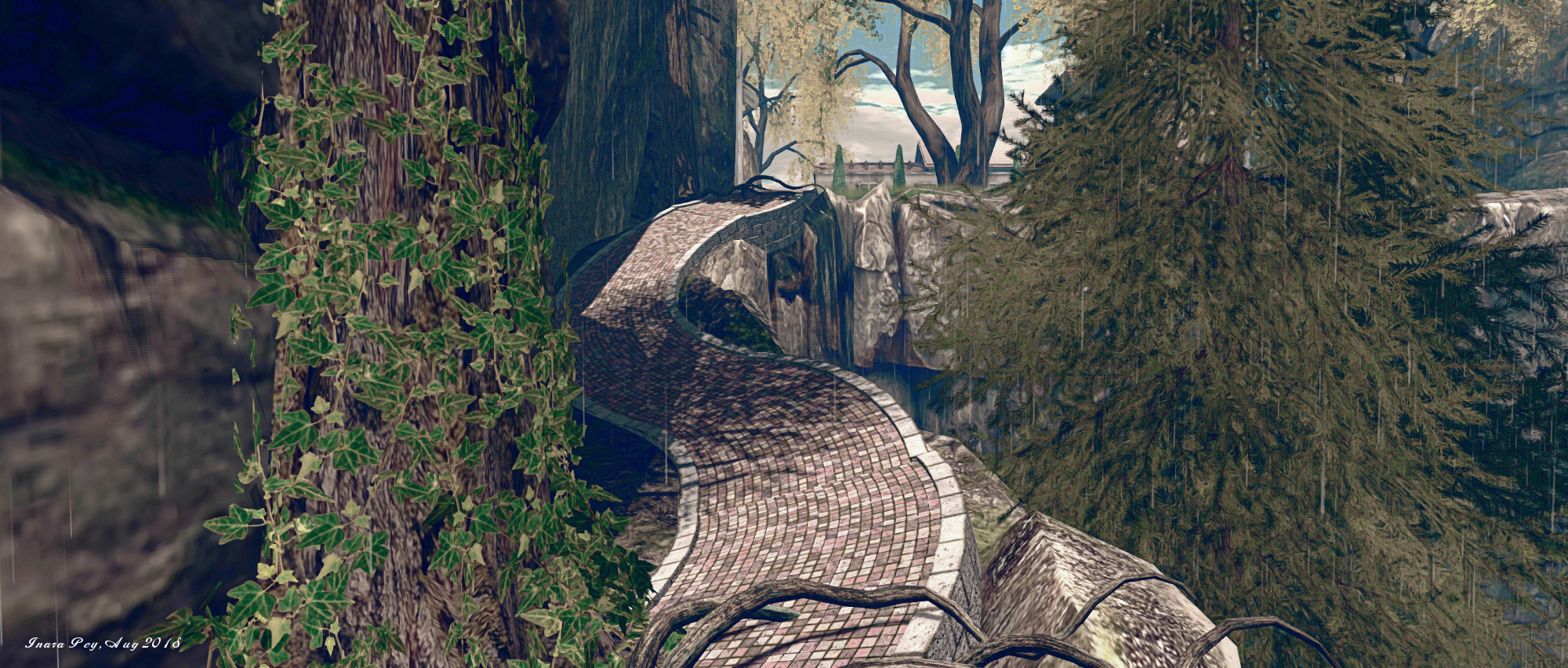
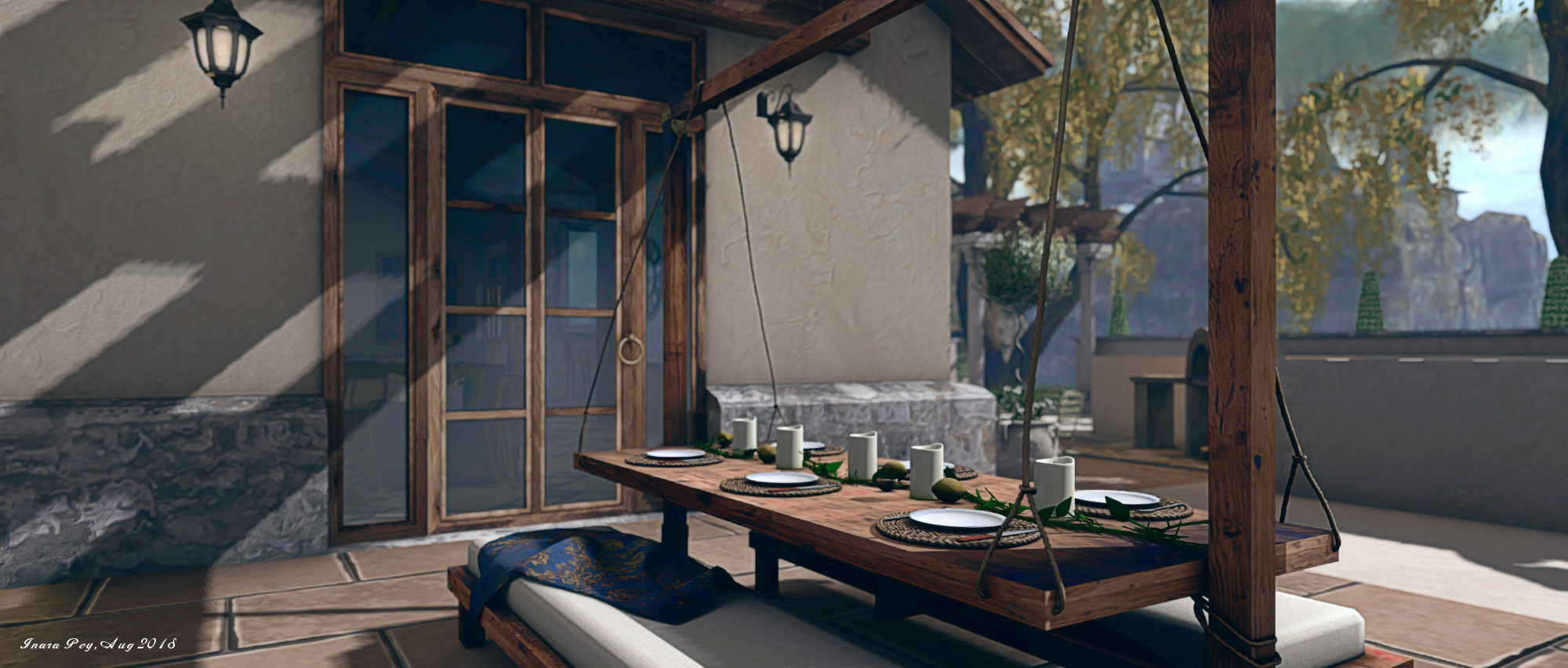
The Isle of May in Second Life

Isle of May; Inara Pey, March 2018, on FlickrIsle of May – click any image for full size

Update, November 26: Isle of May has re-opened for winter 2018 – read here for more.

Update, July 6th: Isle of May has “closed for now”. SLurl links have therefore been removed from this article.

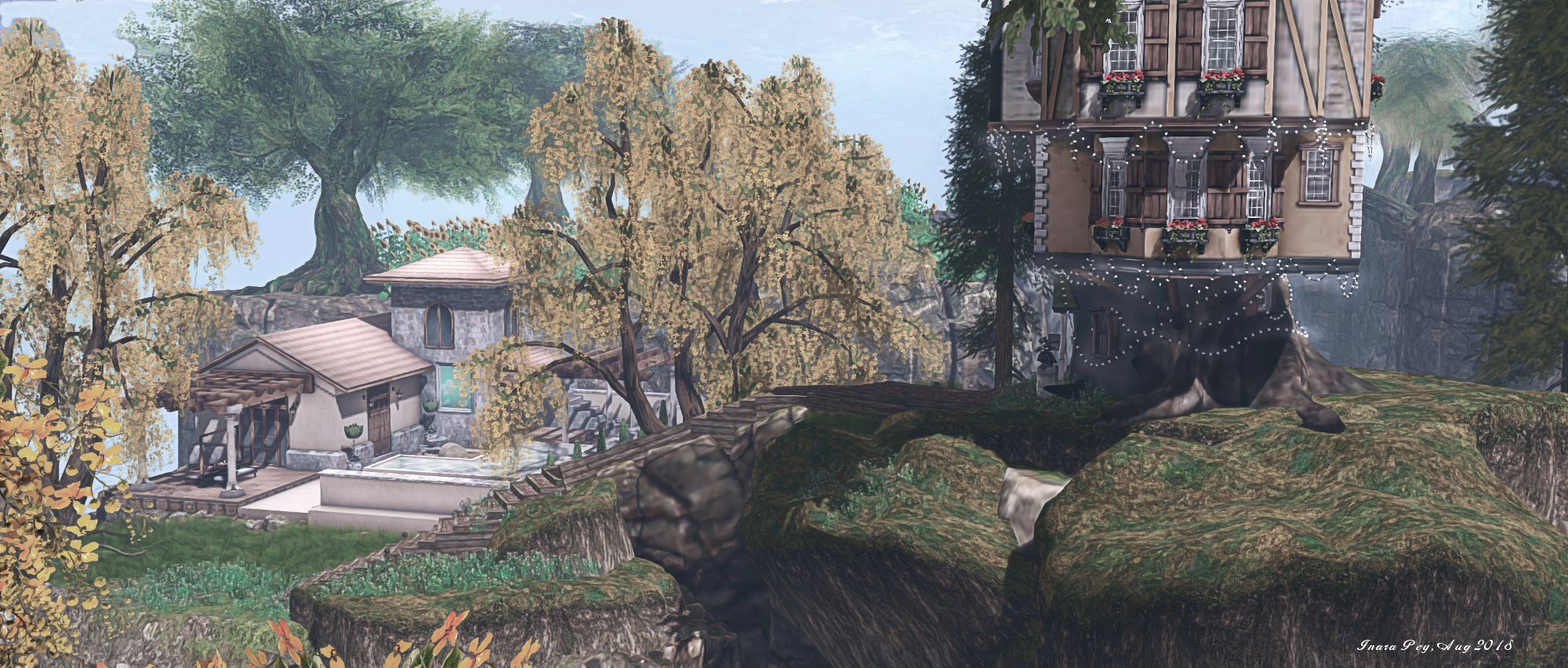
Isle of May, located on the north side of the outer Firth of Forth, is a tiny island – less than 2 kilometres long and under half a kilometre wide – sitting 8 km off the Scottish coast. A rugged finger-like uplift of basalt, it has no permanent human residents today but is managed by Scottish Natural Heritage as a National Nature Reserve, and home to over 285 bird species, including puffins, kittiwake, guillemots, razorbills, shags and fulmars, and from October through Easter, is a home for seal pups.

It is also now the inspiration for a new region design in Second Life. Called, appropriately enough, Isle of May. Designed by Jade Koltai and her partner, Serene Footman (of FurillenKhodovarikha and La Digue du Braek fame), the region is a beautifully conceived and executed design.

Isle of May; Inara Pey, March 2018, on FlickrIsle of May

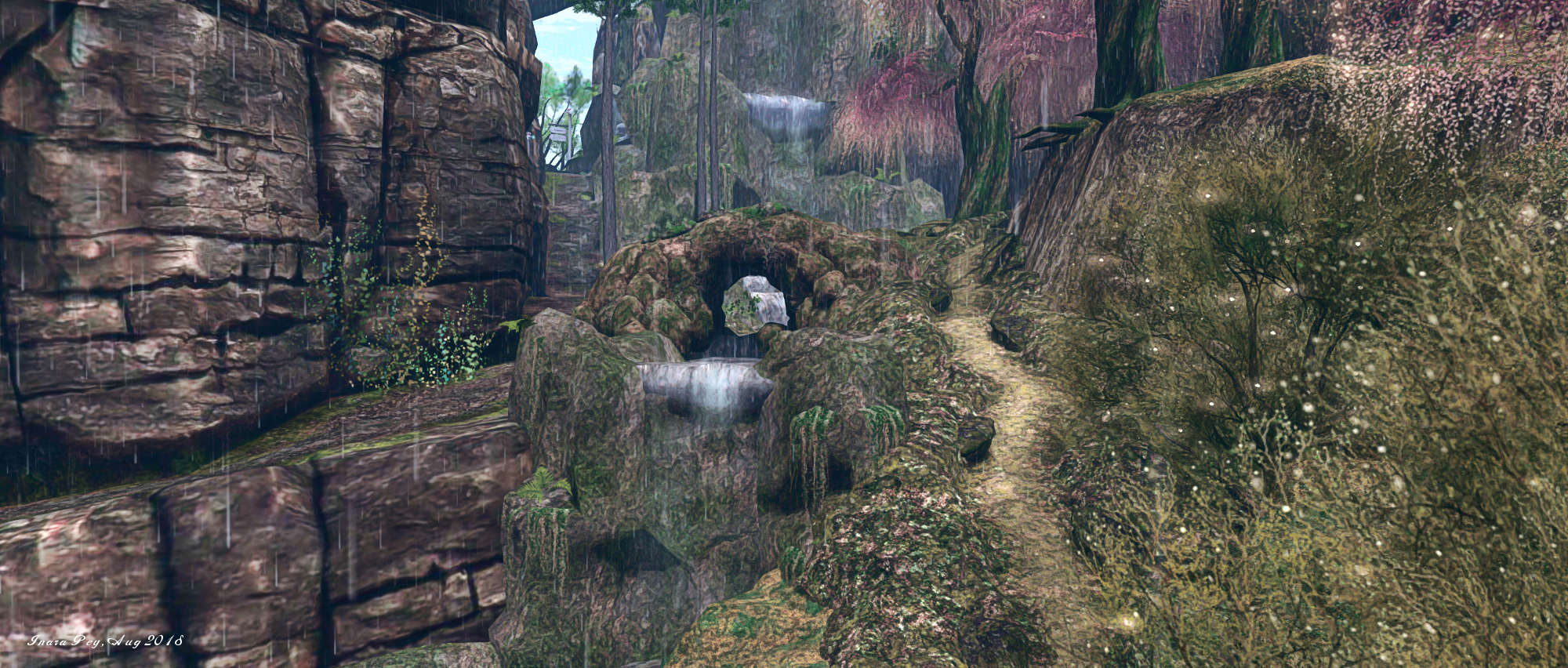
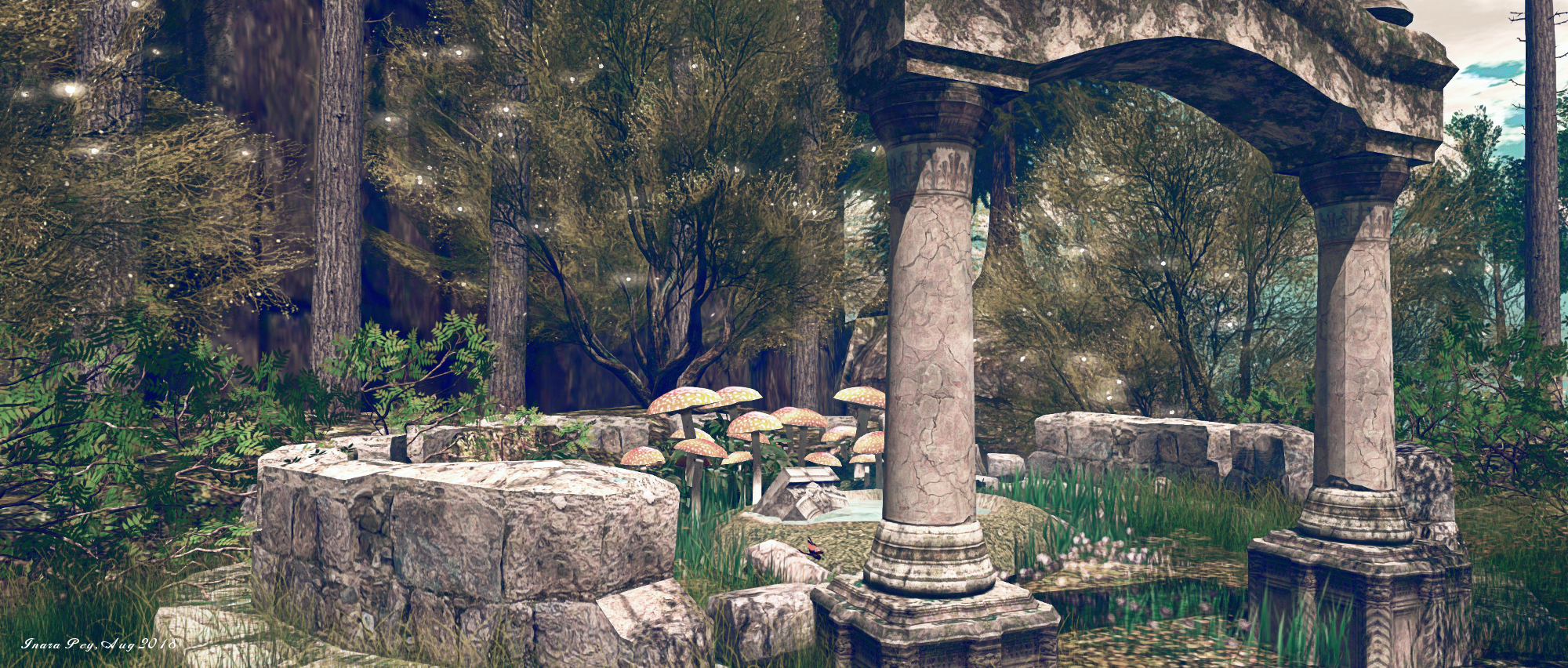
Compressing something even as small as Isle of May into Second Life isn’t easy, but within this design, Jade and Footman have captured the essence of the island perfectly. As rugged as the original, it is similarly cut by deep gorges, and offers a hint of antiquity – the original had settlements dating back to the Bronze Age, and was the site of one of the earliest Christian churches in Scotland, was a site of pilgrimage and, in medieval times, home to a Benedictine community – through the ruins located on the north-western headland.

Some of the island’s famous landmarks are imaginatively represented. Its two lighthouses and unmistakeable fog horn, for example, have been combined into a single lighthouse and buildings on the north-eastern headland of the region (check the map of the island inside the building alongside the lighthouse). A little artistic license is also taken with the geography; this Isle of May is cut into three islands linked by wooden bridges. However, while the Rona peninsula of the original is almost separate from the rest, the physical Isle of May is but a single rocky mass.

Isle of May; Inara Pey, March 2018, on FlickrIsle of May

This setting also has a lot of foliage in the form of trees and bushes than the original boasts (it being largely grassland atop its basalt rock plateaus). But the trees and bushes help to give the couple’s vision more of a unique look and feel – although at times, the foliage can make several of the paths winding down the cliffs a little hard to find when searching at avatar eye-level.

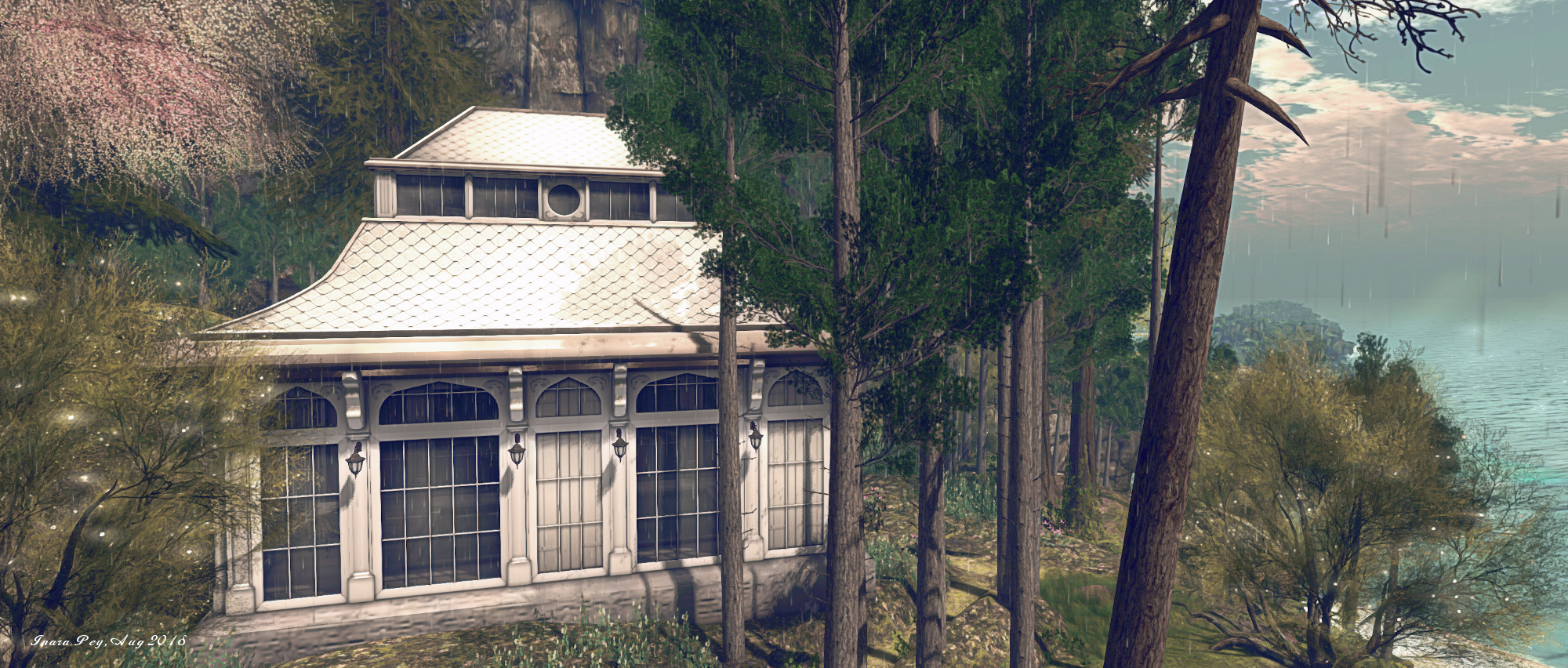
These paths offer multiple routes down to the islands’ rough coast. Some lead to shale and rock “beaches” and coves, others form paths down to shoreline buildings – here a cottage, there an old working hut on a pier, now converted into a cosy snug …

Isle of May; Inara Pey, March 2018, on FlickrIsle of May

Jade and Serene note that while the original has no permanent human residents, they imaged their Isle of May to be home to a small community of artists and photographers – hence the large house dominating the main plateau, and the aforementioned cottage and converted pier hut. And it works perfectly.

Also well represented is the island’s avian communities are richly and diversely represented, from garden birds through to cormorants, guillemots and more, while the more usual seal pup population found on the island in winter months has been imaginatively substituted by the presence of sea otters, while dolphin and orca might be found off-shore, together with a passing trawler.

Isle of May; Inara Pey, March 2018, on FlickrIsle of May

“What we were searching for is something holistic and organic,” Serene and Jade note of the build. “For visitors, an immersive experience of being ‘in nature’ that is powerful and evocative.” With its natural look and feel, wrapped in a delightful sound scape and suited to a wide range of windlight settings, it is absolutely clear that they’ve succeeded.

With thanks to Shakespeare from dropping me the LM!


Within Storm’s Country of the Mind in Second Life

Storm Septimus, Untitled – LEA 28

Untitled, the latest installation by Storm Septimus, is an extraordinary build. Deeply personal, a visit to is to take a journey into Storm’s Country of the Mind; a reflection of her thoughts and feelings around disability and illness.

Like The Void before it (see here), Untitled is something of a dark place – if not literally, then certainly in tone. As such, it may not appeal to everyone – but for those who visit, I urge patience; this is a build rich in symbolism and metaphor.

Storm Septimus, Untitled – LEA 28

A visit begins on a rocky platform high in the sky, home to a desk filled with syringes, prescription containers for pills, and – other items which might in certain situations be associated with mental illness: a knife and bottles of alcohol. A denuded (dead?) tree stands over the desk, which has a single flower, a small tractor and an old toy sitting with it; all of them metaphors for life and death.

An ornate mirror stands close by, a touch teleport offering the way to the second island (or to the Lower Garden – although I recommend a trip to the second island ahead of any jump to the Garden. Rising from a sea of roiling cloud, this island is a place of vivid symbolism, in places mindful of Invictus (see here). Central to it is a sea of blood surrounding a smaller island, home to the mirror teleport. Scattered around the rim of the island are expressions of illness: old-style hospital screens, wheelchairs, bed frames and theatre lights.  Elsewhere are the wrecks of ships, old watchtowers, trees twisted in the shapes of strange creatures, while atop a high plateau sit images of death – tomb stones, broken limbs of mannequins, all of which is crowned by a small chapel.

Storm Septimus, Untitled – LEA 28

The Lower Garden reveals that the landing point sits upon the shoulders and upper backs of four huge statues, semi-bound by chains – a further symbol of being held prisoner to illness and disability. A bridge spans the gap between this lower garden and the base of the second island, revealing that latter is in part held aloft by two huge creatures. Troll-like in form, they are held in place by great chains, hands locked in place in great cast iron restraints, further holding them in place. Between and either side of them, blood rises in three streams, feeding the pool above.

Scattered across these landscapes are diaries waiting to be discovered and read. They offer further personal insights into dealing with illness, disability, doubt and depression. There are also places to sit and reflect on what is being presented in the open, and for those who explore carefully, other teleport points. One of these, deep within the island, suggests a place of sanctuary – an inner sanctum of the mind, a place filled with small comforts: a favourite chair, a select of treasured books, and open vault of memories – although a little darkness remains in the form of a centipede wrapped around the glass bell containing the beauty of a flower.

Storm Septimus, Untitled – LEA 28

“I wanted to highlight the emotional effects of disability,” Storm says of the installation. “I know I could have gone so many ways with that [but] the build ended up being that lonely, desolate, hopeless place of despair in my mind.” And indeed, the emotional power contained within the installation is inescapable; it permeates throughout every element, presenting a powerfully immersive environment which, dark though it may be, offers considerable food for thought.

When visiting, there are a few things to keep in mind: firstly, you’ll need to have Advanced Lighting Model enabled in order to fully appreciate the more subtle touches in the installation – such as the reflections in the teleport mirrors. Also be sure to try touching things as you explore the installation; some – like the diaries – are interactive. Also, be aware this build has a lot going on, and viewer performance can be very variable throughout it.

Storm Septimus, Untitled – LEA 28

Storm has also passed an invitation to disability  support groups to display information about their work in the Lower Garden. So, if you represent such a group and would like  to have your information displayed there, please drop Storm a line.

SLurl Details

A Winter of Enchantment in Second Life

Paris Metro Gallery: Winter of Enchantment

Opening on Saturday, March 17th, 2018 at 12:00 noon at the Paris Metro Art Gallery is Winter of Enchantment, a selection of (largely) winter-themed avatar studies and images by the legendary Skip Staheli.

For the exhibition, the gallery has undergone slight remodelling to make three level available, the upper two mezzanine like galleries level reached via two spiral staircases. The centre area of the ground level has been modelled to give the feeling of being outdoors – appropriate to the idea of winter – with flower boxes, a fountain, circling butterflies and the occasional gust of snow.

Paris Metro Gallery: Winter of Enchantment

Some 29 images are on display across the three levels, two mounted on easels (and possibly intended as information givers, although neither was set-up as such when I slipped in to preview the exhibit), the rest mounted on the walls of the gallery. All are undeniably Skip, bringing forth his innate ability to capture mood and emotion, and in presenting erotically sensuous couples. Some nudity is displayed, but hardly enough to mark this exhibition as NSFW.

A number of the images very much focus directly on the idea of winter through subject / imagery – notably Brunella~No more sad winters…, Miranda~Such a blue blue Winter… and Draakje~Ice Queens Magic… along one of the ground floor walls, together which Dee~Through Winter, which faces them from across the gallery, together with Skip~I want you to come, and walk this world with me….Skip~Not feeling the cold… and Julian and Aleriah~ Feeling safe and warm…. Others evoke winter more indirectly, such as Hannah~It’s a new Year….,  and Dee Mighty…, where tone and or title along suggests wintertime.

Paris Metro Gallery: Winter of Enchantment

Some, like Breezy~All my senses, Dee~Little Red Ridinghood, and Bridget~FurrrrPurrrr…, lean more towards the erotic, although one might say their use of red evokes echoes of winter – or at least midwinter and Christmas. Still others, Long Canvas, Cuddles~Leader of the pack…, lean more towards the sensual or the personal, as with Caleb and Lillbirdee~Drifting away with you…

But whatever the suggestion / emotion each invokes, there is no denying the life these images present to us as we examine them in turn. Each is an exquisite narrative, and story fully formed, waiting to capture and hold us. And for those that feel a hint of chilliness emanating from the more wintry pictures, the fireplaces with their blazing logs offer an opportunity to warm hands and hearts – and to sit awhile and admire the art.

Paris Metro Gallery: Winter of Enchantment

SLurl Details

Linden Realms revamped

The flames of Linden Realms

Linden Realms, first introduced by the Lab in 2011, has proven surprisingly popular among residents. An early example of the Lab’s (then) nascent experience tools, the appeal of the game is – in part at least – its relative simplicity (coupled with the Linden Dollar rewards). In short, players are delivered to a 12-region location (there are several – all identical – on the grid) – where they can receive a game HUD and instructions. Then it is a case of running around the landscape collecting crystals which can be exchanged for Linden Dollars.

Crystals come in three colours, reflecting their rarity  / value, and they can be collected by running over them. However, this being a game means there are a range of hazards – from the rock monsters patrolled the regions and which will chase you if you get too close, through to toxic waters, fireball-spewing rock carvings, treacherous caverns and so on. However, no-one actually dies from these hazards – being “caught” by any of them will lead to players being teleported to one of several “resurrection circles” (generally the one closest to the point where they were “caught”), and then they can resume the game. Or those are the basics.

Linden Realms: the threats are still there, despite the flames

The game has been tweaked a few times along the way (such as being opened to all SL users a month after it opened, rather than remaining Premium-only), and on Thursday, March 15th, the Lab announced the latest of these tweaks: a new fiery look for the Realm regions. In a very brief back story, it seems the wicked Ruth (she of the villainy in Tyrah and the Curse of the Magical Glytches – see my review here) has used Magellan Linden’s coffin (launched into space as part of the prologue to the Tyrah story), to divert a comet so it has crashed on the Realms, leaving them in flames (technically, it should have flattened them, but I’ll push the space fan in me to one side 🙂 ).

From the  – admittedly brief – time I spent there, game play is still the same as previously, just now within a lurid,  smoky-orange environment where trees and building equally burn. How long it will remain so is hard to say, but right now, and allowing for the aforementioned point that Linden Realms has retained popularity through the last 6+ years, the new look and feel does appear to be attracting the curious and encouraging them to play.

Should you opt to renew your acquaintance with Linden Realms (or even hop over to play it for the first time), don’t forget that the regions are also available for the capture of Glytches from Tyrah and the Curse of the Magical Glytches mentioned above. Just be sure to wear your Tyrah HUD and Glytch capture weapon at the ready, as the note in local chat reminds you on first arriving within the Linden Realms regions:

If you would like to play Tyrah and the Curse of the Magical Glytches on this parcel (and many others) you need to be wearing a HUD and a weapon for collecting Glytches. If you do not have a HUD or weapons for collecting the Glytches, you can collect them from Hartyshire (144,126,23). You can read more about the game Tyrah and the Curse of the Magical Glytches at this URL: https://wiki.secondlife.com/wiki/Linden_Lab_Official:TCMG.

Glytches are also in Linden Realms, and can be hunted and caught is you’re wearing the Tyrah and the Curse of the Magical Glytches HUD (the Glytches will ignore you if you don’t)

And happy hunting, whether it is for crystals or Glytches – or both.

Linden Realms, Tyrah and other Linden-created destinations can be reached via the Portal Parks:

The poet and the Prince of Denmark in Second Life

La Maison d’Aneli – Nino Vichan: Hamlet 5 Scenes

Opening on Thursday, March 15th at La Maison d’Aneli, curated by Aneli Abeyante, are two new exhibitions by three well-known Second Life artists: one by Nino Vichan, and the second by Tutsy Navarathna and JadeYu Fang. They are two very different exhibitions, but they are drawn together through each of them having literary foundations. Both are reached via an initial arrival point, and can be reached via either the teleport disks or by clicking on the artist’s names on the main board (which will also deliver note cards). There’s also a direct drop down to one of the installations.

In Hamlet 5 Scenes, Nino Vichan presents his interpretation of five key scenes from Shakespeare’s Hamlet, Prince of Denmark. As Nino points out in his opening notes, we know of three versions of the play have survived through to modern times: the 1623 First Folio edition, considered to be the “definitive” version of the play; and the “First Quarto” (1603, aka “Hamlet Q1”) and “Second Quarto” (1604, aka “Hamlet Q2”).

La Maison d’Aneli – Nino Vichan: Hamlet 5 Scenes

The former of these two Quartos is now widely regarded as the “bad Quarto”, possibly written by an actor who participated in a production of Hamlet. While the Second Quarto is now regarded as an attempt by Shakespeare to published the “full” version of the play (it is some 1600 lines longer than the First Quarto) to set the record straight. In support of this, historian point to the title page of the Second Quarto stating that it is “Newly imprinted and enlarged to almost as much againe as it was, according to the true and perfect coppie.”

For his part, Nino takes these three versions as the leaping-off point for imaging Shakespeare within his study, struggling over the play, writing and revising it. For the purposes of the piece, we are Shakespeare, invited to take a seat – in turn – in each of the five chairs ranged around a central table. Each chair represents a specific element of the play, which we see through the playwright’s eyes, as it were, as he contemplates each.

La Maison d’Aneli – Nino Vichan: Hamlet 5 Scenes

For this to work. make sure your camera is not free-flying when sitting in a chair (hit ESC before sitting in each one). This will allow the act of sitting to take control of your camera and focus it on each scene. The chairs should be occupied in numerical order (each has a number visible on its upholstery), so that the scenes can be seen chronologically in reference to the play.

These scenes start with the sightings of the ghost of Hamlet’s father which set the events of the tragedy in motion, and conclude with Hamlet’s encounter with the skull of a jester he knew in his childhood (“Alas, poor Yorick. I knew him, Horatio: a fellow of infinite jest, of most excellent fancy; he hath borne me on his back a thousand times.” Between there sit the famous soliloquy, the murder of Polonius and the death of Ophelia. Modelled in 3D , using a mix of mesh and particles to achieve their effect, each offers unique view on the aspects of the play it represents, while the liner notes accompanying the installation offer further context, should it be needed.

La Maison d’Aneli: Tutsy Navarathna and JadeYu Fang – Bring Me Your love

For Bring Me Your Love, Tutsy and JadeYu present a tribute to the German-American poet, novelist, and short story writer Henry Charles Bukowski (born Heinrich Karl Bukowski; August 16th, 1920 – March 9th, 1994). The title of the installation is taken from Bukowski’s 1983 short story of the same name, illustrated by Robert Crumb.

This installation brings together images taken from around Second Life together with quotes from Bukowski and excerpts from his writing – poetry and stories. Blunt, at times aggressive in his use of language, Bukowski was forthright in his writings and views, and this is very much reflected in this installation, which is presented as a single piece – art and quotes making up walls and floors. To one side there is an area set aside for sitting and contemplation, complete with a  television set playing a loop of clips of television shows and films for the later decades of Bukoski’s life.  This area is also home to what might be regarded as the bric-a-brac of Bukowski’s life.

La Maison d’Aneli: Tutsy Navarathna and JadeYu Fang – Bring Me Your love

As noted above, these are two very different exhibitions, drawn together through each of them having a literary foundation. Each is individually fascinating, their core subject matter being very different, thus they make an ideal complimentary visit.

Slurl Details

Spirit of Sun, Spring 2018 in Second Life

Spirit of Sun; Inara Pey, March 2018, on FlickrSpirit of Sun – click any image for full size

Now open to the public through until approximately Sunday, March 18th, is Spirit of Sun, a normally private group-owned region. The region has been opened to public access as a part of a photo competition, in which entrants are asked to submit images to the Flickr group associated with the Spirit of Sun. Caitlyn and I were alerted to the opening by Shakespeare and Max, so given the brief period of opening we hopped over to take a look – and found a visually stunning region, well worth taking the time to visit.

The region has been split into three large islands of roughly equal size. The landing point is on the southernmost of the three, a slender finger that runs east-west across the sim’s entire length. A rugged plateau, it is topped by a  bumper car ride (available to visitors) at its eastern end, linked to a central plaza of shops by a broad cobbled walk and wooden steps. Beyond the shops sits a garden area featuring a small stage, open-air seating and a track leading back to the shops.

Spirit of Sun; Inara Pey, March 2018, on FlickrSpirit of Sun

A small headland extends from this island, pushing out into the waters of the region’s channels. A great stone bridge once spanned the channel between this southern island and the one to the north-west, where a knuckle of rock rises from the surrounding land. However, some disaster long ago broke the back of the bridge, leaving it a ruin on either side of the channel. Instead, the western island can be reached via a switchback path winding down to the foot of the blunt headland to where a pier sits, two sailing boats moored against it, the wreck of a fishing boat close by.

The boathouse behind the pier offers a cosy place to sit – one of several across the region – while on the side of it opposite to the wreck of the fishing boat lies a small wooden bridge. A little awkward to reach, it nevertheless provides access to the western island by way of a low table of rock and grass sitting mid-channel.

Spirit of Sun; Inara Pey, March 2018, on FlickrSpirit of Sun

The knuckle of rock against which the ruined bridge is anchored is one of two plateaus on this island, the second being home to an old lighthouse. A dirt track runs south-to-north along the island, passing under a rocky arch between these two plateaus, pointing the way to a third at the northern end of the island. This home to a broad wooden deck, reached by stairs. A greenhouse converted for use as a summer-house sits close to the foot of the steps, while the deck at the top sits around an old English-style folly. Tables and chairs are placed out across the deck, while the folly itself offers a further comfortable lounge.

Between these highland areas is more to be found – a café sitting in the middle of a small lake, another greenhouse – this one of more traditional design – presenting another cosy snug. Pass under the rocky arch to the southern headland, and you’ll find a camp site complete with a pair of British Land Rovers which look like they are on an outing from Encounter Overland.

Spirit of Sun; Inara Pey, March 2018, on FlickrSpirit of Sun

Across the water to east is the remaining island. Dominated by another massive plateau – one equalling the height of the southern island, leaving a deep gorge between the two – curls around the eastern coastline of the  island to form a broad ridge descending down to the lowlands. Six houses sit atop this plateau and ridge, spaced along the track that winds its way along both.  As these appear to be private residencies, discretion when walking by them is recommended.

The lower part of the island offers a broad greensward of grass running out to a narrow ribbon of a beach. This is the home of another camp site, this one apparently of a Romany origin, watched over by a stone windmill oddly built against the rocky face of the plateau. Further around this southern headland lies another summer-house and further secluded spot couples can enjoy.

Spirit of Sun; Inara Pey, March 2018, on FlickrSpirit of Sun

Spirit of Sun is a richly engaging place to explore – albeit one with a limited time with which people can appreciate it. With this latter point in mind, I’d suggest anyone wanting to visit do so sooner rather than later, least public access is restricted once more. And don’t forget to submit photos to the region’s Flickr group. Congrats to Justine Lemton, Doutz (Rianna Joubert), and the rest of the group for their creation.

SLurl Details