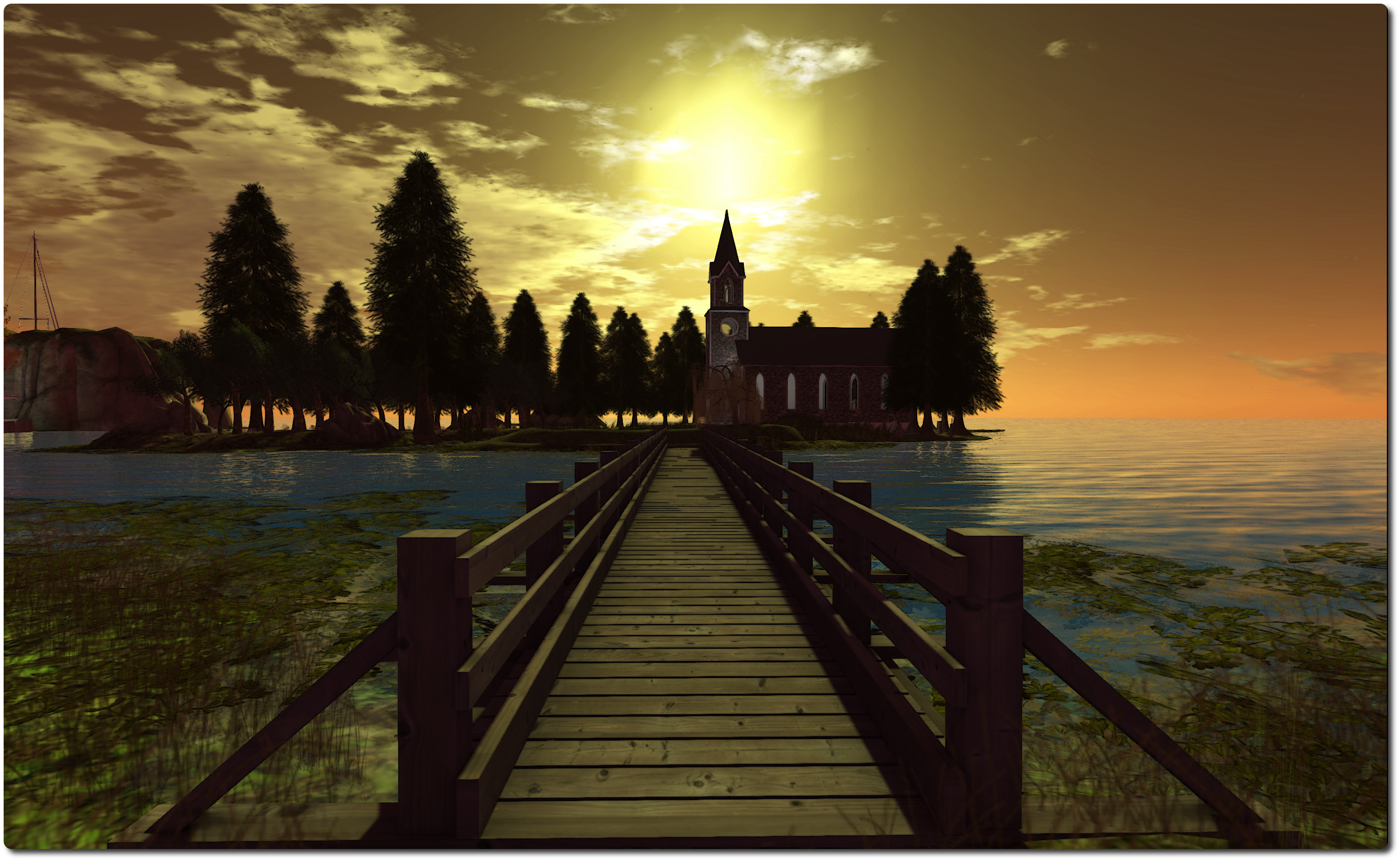
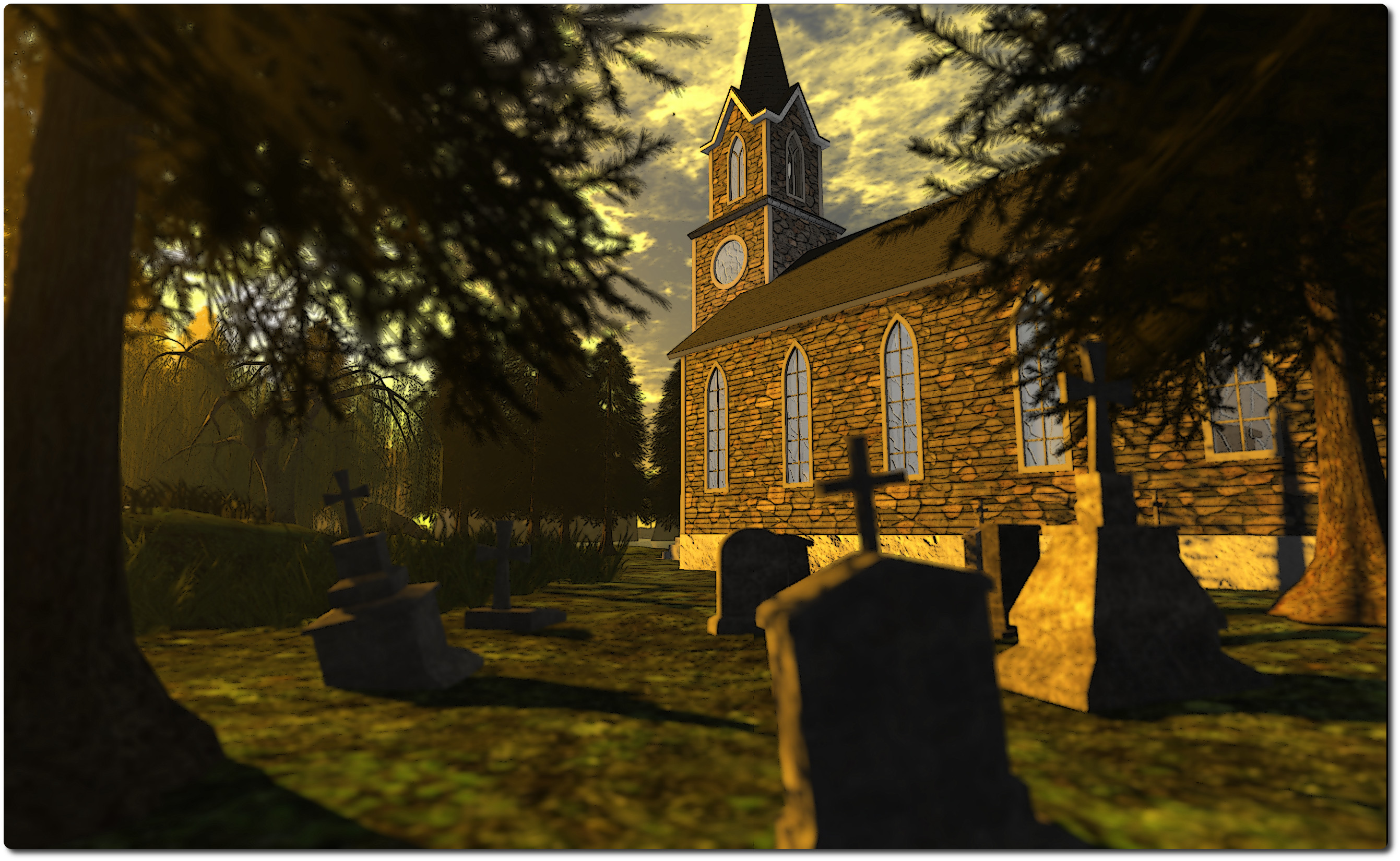
Travelling the coastal regions of Second Life’s great continents, you’re never quite sure of what you might find. Take the north coast of Jeogeot, for example. For the most part, it’s fairly typical of most mainland regions, a huge variety of builds facing the open sea, some attractive, some less so, some hugging the ground, some floating above it and others bridging the gap between the two. Such is the range of builds, it’s very easy to miss some very rare gems among them.
Gems like the Moonlight Teahouse, sitting on the coast of Tuli form example. Tucked into a narrow – but deep – parcel, it is a charming haven of peace and comfort one might so easily sail – or fly – right by and never notice. In fact, I only noticed it as a result of it appearing in the Destination Guide as a recent addition.
The work of SL entertainer Myron Byron on behalf of the Moonrocks group, Moonlight Teahouse packs a lot into a relatively small space, and is worth dropping by and having a look around. From the arrival point, sitting above a small, secluded beach, you can follow the paved walk atop a high wall, past an area for Tai Chi practitioners and then either descend a set of stone steps through a rock tunnel to the beach, or climb another, shorter stairway to the teahouse itself.
Here sits not only the teahouse, but a beautiful garden beyond, where the clever use of trees, paths, walls, plants, water and a surrounding facade of rocks presents a feel of a place much larger than is the case, and which harbours a warm feeling of seclusion and peace, despite the surrounding builds.
A path loops around the garden, leading you both away from and back to the teahouse, spanning the stream which meanders through the parcel with twowooden bridges. Stone lamps light the path, giving an added sense of romance during twilight times.
A pair of Japanese rock gardens sit on either side of the main entrance to the teahouse, where you can sit and enjoy a traditional tea ceremony with a friend or on your own, or simply sit and talk and forget the worries and pressures of the world – real or digital. Afterwards, you can wander down to the beach and sit in and old rowing boat, or simply let the tranquillity of the gardens wash over you.
The parcel follows the natural day / night cycle of the region, but to fully appreciate it, I suggest you have a play with your viewer’s windlights, this is a place then very definitely lends itself to the late afternoon / evening time of day, and also looks superb under moonlight conditions, as I hope some of the pictures here demonstrate.
I don’t tend to cover SL destinations which are BDSM focused. Not because of any prudeness on my part, but because I’m aware that things like BDSM and D/s are not everyone’s cup of tea. It’s also fair to say that – and without wishing to appear unkind – I’ve tended to find that a lot of BDSM themed regions in SL aren’t really that captivating to the eye (no pun intended) or genuinely attractive.
However, there are always exceptions to any kind of generalisation like the one above. Such is the case with The Cyprian Garden, developed by the Obscura Land Group under the leadership of Dorian Meredith. If I had to use a single word to describe it, I think that word would be “stunning”.
The garden, which I think I’m right in saying has only recently opened, is a genuine tour de force in design and layout. Everything has been artfully considered, the landscape carefully crafted and the flora, etc., chosen with an eye towards presenting an environment which is both open and welcoming to visitor, inviting them to linger and explore, while also providing seclusion and privacy for those wanting to enjoy one another’s company, be it in friendly conversation or something more intimate. Paths wend their way around the shoreline and through trees, over hills and through valleys. Tall trees provide shade, flowers bloom everywhere, and water drops from tall falls, meanders through streams and pools in ponds and lakes. Even the surrounding mountains both add to the beauty of the region and to the sense of seclusion and intimacy it generates, while the soundscape of birdsong in the trees further enriches the immervise feel of the garden.
There are places here for people to meet socially, with armchairs and stools laid out in the shade of trees or under vine-hung trellises; there are also places for couples to sit together and watch the world go by. Given that the garden is BDSMfocused, there are some accoutrements on display: a large, cushion-floored cage hanging from a tree here, another ornate cage there, and so on. But for the most part, those areas devoted to more intimate play tend to be secluded (one being underground). Please do note that I say “for the most part”; this is an adult-themed region after all, and that does need to be kept in mind when exploring.
For those who do enjoy the added spice of consensual adult activities, the play areas are such that the overall design and layout of the gardens means that people aren’t necessarily going to be tripping over one another. There are also skyboxes overhead; whether these are residential or for more private assignations (or both) I’m not sure. There is a rental station hovering over the region, so I assume at least the former, but to be honest I didn’t spend time looking at what was overhead; I was simply enjoying the beauty of the gardens.
Seasoned SL travellers will recognise much of the flora and builds used in the garden, which includes many of Alex Bader’s ever-popular pieces, as well as items by Kriss Lehmann, Mandingo Quan, Aki Shichiroji, Wendy Xeno, Lilith Heart and others – all of which blend perfectly together and give considerable depth and feel to the region.
For the SL photographer there is a lot on offer here, allowing for people’s activities in the gardens and respecting others’ privacy. So much so that a photo contest is currently under way, although the closing time and date of 12:00am on the 27th September is looming fast!
Those wishing to enter are invited to submit up to two colour images of 1024×768 resolution, taken within the Cyprian Garden (the actual theme of the image(s) are left to the entrant’s discretion). Some post-processing is allowed, but submitted pieces must not include text. On offer is L$5,000 in prizes, with L$3,000 going to the first place winner, as decided by the contest voting system. Anyone interested in participating can find further details on the competition, including an entry form, at the information boards within the garden itself.
If you do set out to explore the garden, do be aware that the region is shared with The Domaine Imperium. For the most part, the two blend together seamlessly, and the east side of the region, under the auspices of the Domaine, is as open to the public as the rest of the garden, with one exception. That is the private residence located on a small island down toward the south-east corner of the island. This can only be reached via a gated wooden bridge – and the gate should serve as warning enough. However, a security system is also in operation to deter trespassers as well.
For my part, I enjoyed my visit and explorations, wandering along the paths and tracks, snapping as I went. The region is fairly quiet right now. While there were a fair few comings and goings in and out of the region, these appeared to be taking place up among the skyboxes and were none of my business and certainly didn’t interrupt my wanderings.
If you’re happy exploring adult environments and love natural spaces and gardens in SL, or a looking for a more refined venue for consensual adult activities, then you may well want to add The Cyprian Gardens to your list of places to visit.
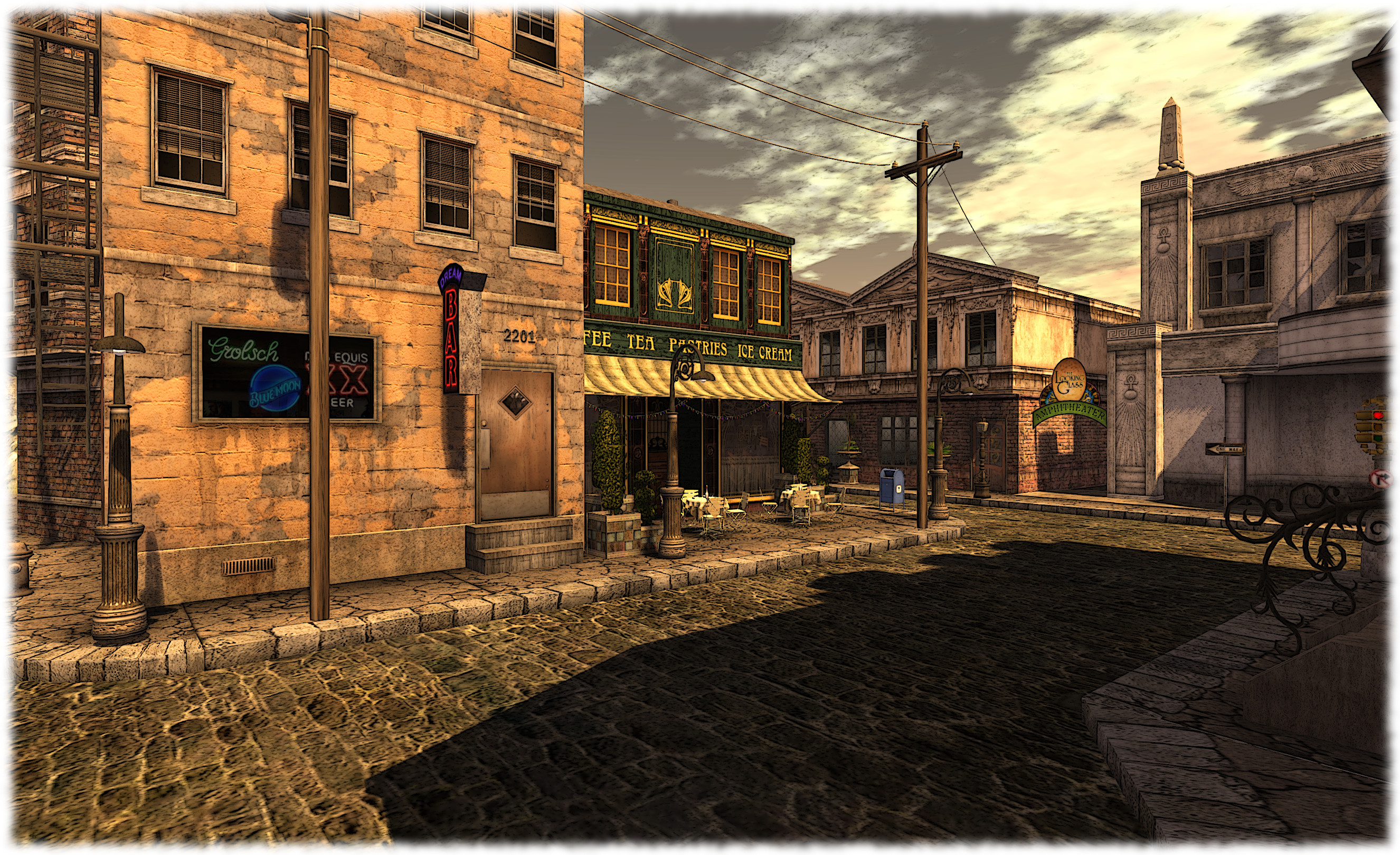
I first blogged on The Looking Glass, the fabulous joint creation of Marcus Inkpen and partner Sharni Azalee, back in October 2011. While I make frequent visits there, it surprised me to realise that I’ve not blogged about it in the nigh-one two years since. In that time some things have changed within the region, and my SL photography has (hopefully) matured somewhat. This being the case, I decided to gather together snaps taken during my most recent visits (the last being in August 2013), and update my thoughts on the region.
At first glance, not a lot appears to have changed over the years; however, appearances can be deceptive. While the run-down urban area is still very much present, the Looking Glass shops themselves have now gone. They’ve been relocated to a sky platform, leaving the ground level of the region as a veritable tour de force of Markus’ and Sharni’s creativity.
As befitting the nature of the urban quarter, the old Looking Glass stores haven’t been re-leased; they stand empty, just a couple of unwanted packing cases left to gather dust. Elsewhere, the old theatre is still its dilapidated self, the coffee shop still awaits patrons while a couple more pieces of graffiti appear to have found their way onto walls.
One of the things I love about The Looking Glass is not only the way in which tableaux have been set-out in a manner which so very artfully demonstrates the depth of their beauty and the attention to detail poured into them, but also the juxtaposition of themes and imagery which can be found as one explores.
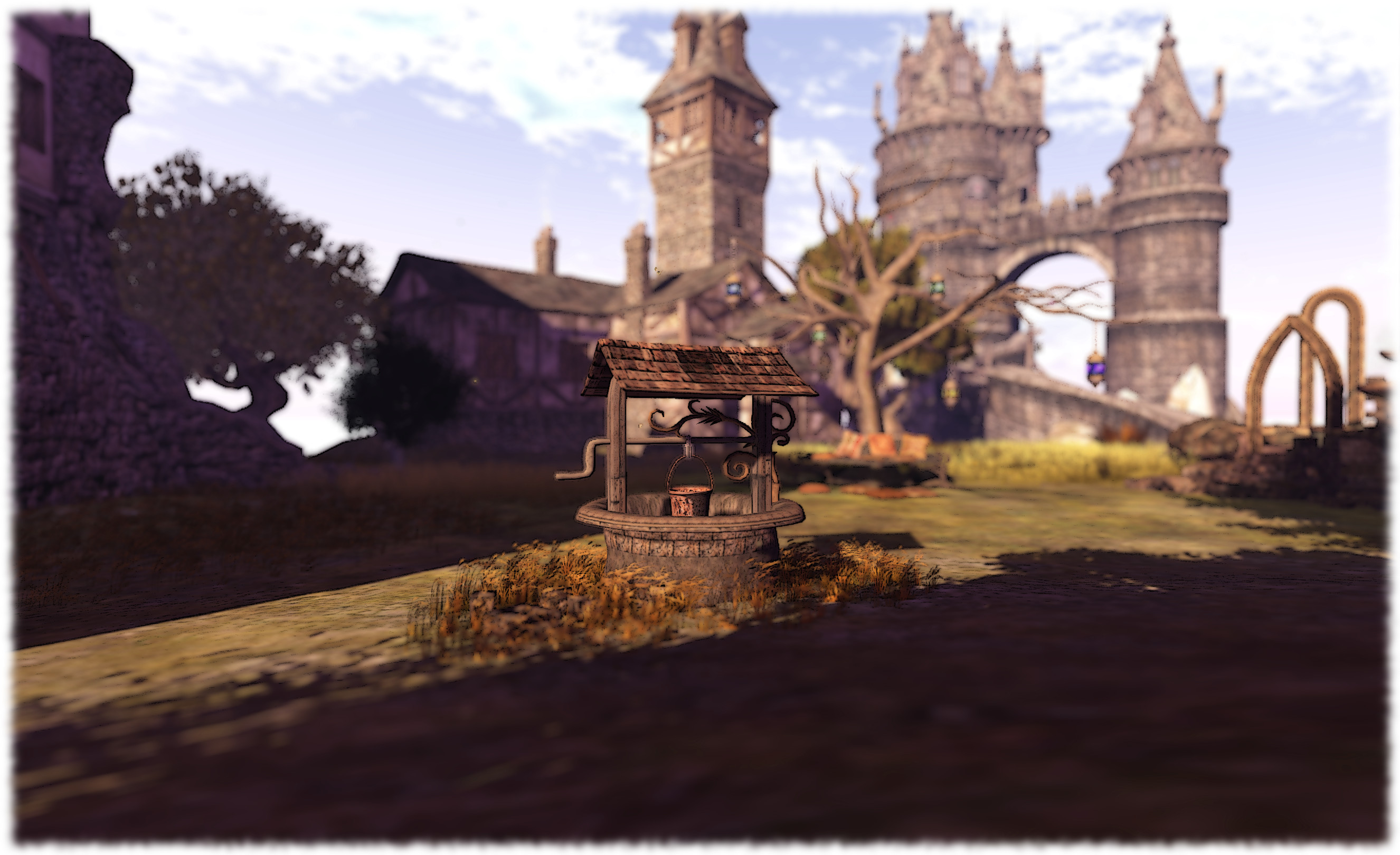
From the very urban look at feel of the corner town, it is only a short wall down steps and through a rocky arch to a setting which is altogether more medieval in look and feel, with wood-framed buildings setting atop the stone walls of an old castle, complete with a brooding tower rising over the local landscape. There are a few subtle changes to be found here for those who have not visited in a while.
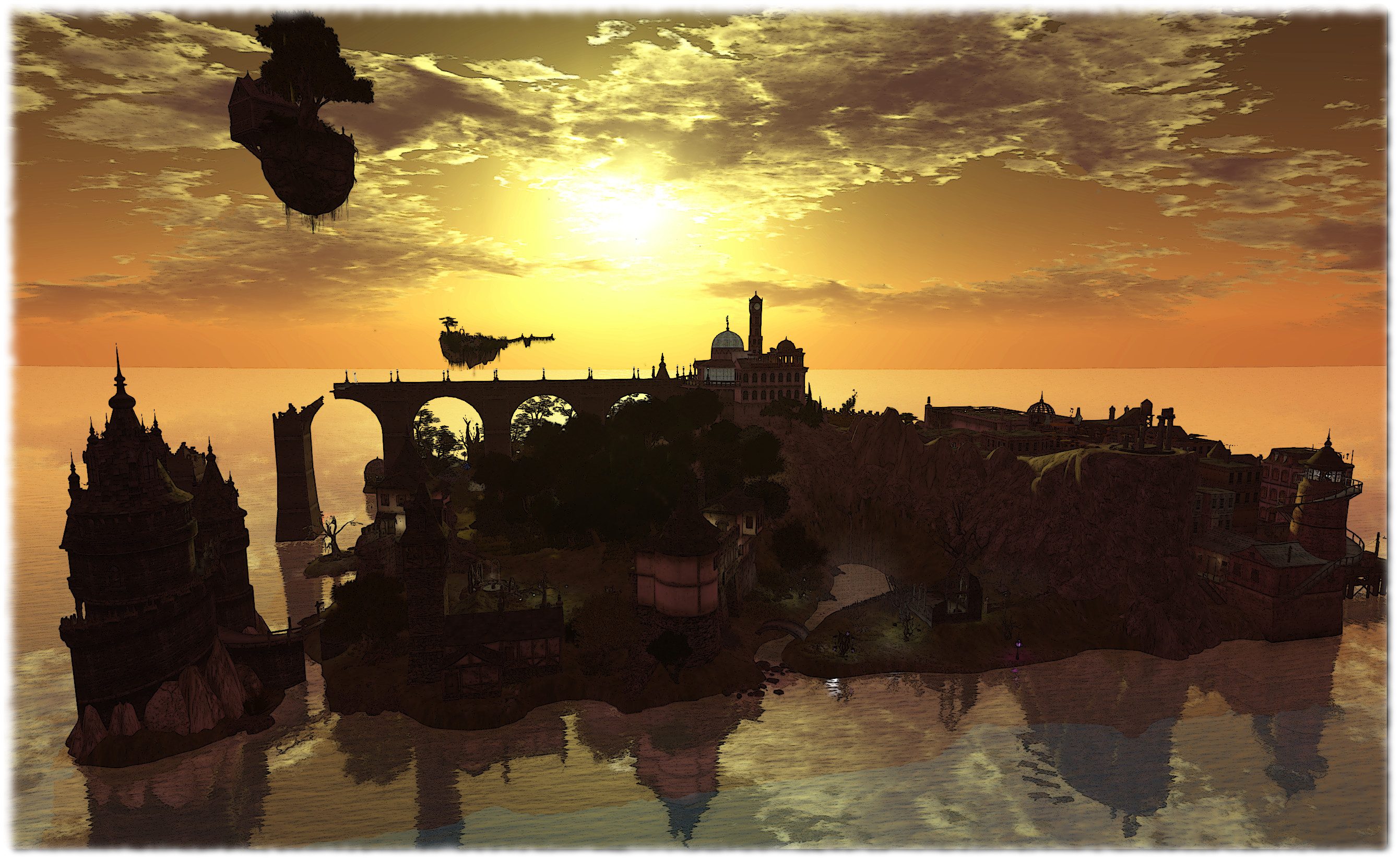
Carry on around the island, under the arches of the great ruined bridge which forms part of the region’s focal-point, and the place takes on an air of fantasy. Here is a verdant land filled with plants which are exotic in both look and colour, where a house sits shaped from the stump of some gigantic tree, a wizard’s tower sits atop a tall rock, and where gardens float serenely overhead.
Another delight with The Looking Glass is that it is not just a shop-front; it is a place to be explored and enjoyed, and where there is often something going on, whether at the amphitheatre, the ruined temple atop the rocky hills which split the region in two or at The Looking Glass gallery itself, which is currently preparing for a winter exhibition entitled Animals in the Scribbled Wild, featuring the artwork of Scott Rolfe, better known to many in Second Life as Scottius Polke, and which opens on December 17th.
Whether you’ve been to The Looking Glass once or a dozen times, it is a place which never fails to enchant and lift the spirits. Visitors are always welcome and there are plenty of places to explore (including some which are not so obvious!) or to sit and think and watch as the world drifts by.
And if you have yet to visit, then your taxi awaits; I very much doubt you’ll be disappointed by the trip.
Hybie Mynx is both a fellow SL traveller and blogger; she’s also the proprietor of Savoir Faire Shapes & Poses, located over her homestead region of MiLova.
The ground level of the region forms Serenity Gardens, a lovely landscape where visitors are invited to explore, and which offers ” a majestic hike through forest, caves, waterfalls, rustic, coastal shores and romantic beach areas”, with the land description concluding people may find it “a little eerie, a little enchanted”.
Here you’ll find a lush wooded landscape split into two by a rocky gorge, itself spanned by a wooden bridge. On the larger of the two parts of the island, the woodlands are mixed with open areas of grass, and there are a number of points of interest to explore, with pathways winding through the trees, gazebos, a small cottage and, perched on a hill with the gorge on one side and horseshoe falls on the other, a tall wooden lighthouse. This side of the island also has the beach, with a curious sculpture garden perched above, overlooking it.
Across the wooden bridge sits the “adult” area of the region – with a sign at the end of the bridge warning you that it is. However, given that the region is G rated, don’t expect things to be overly Adult here; the ToS is still the ToS. However, there are secluded spots here for couples to snuggle-up and enjoy one another’s company, either outdoors or hidden within a cave. Or people can simply wander through the woods, which are lit by floating paper lanterns, enjoying the scenery.
Object return in the region is set to 15 minutes, so if you did want to spread a blanket of your own or pull out a canvas chair and just sit and watch the world go by, you should be able to do so. Just make sure you pick your things up behind you. There are also a number of places scattered through the region which offer places to sit and watch or think – or both.
In August, I paid a visit to Collins Land, Cerys Collins’ homestead region at Aqua Shores. My time was a little pressed when I dropped-in, so I didn’t get to stay as long as I wanted back then. Even so, I found the region beautifully put together and striking in its contrasts.
Now I’ve had the opportunity to make up for my lack of time during that first visit, as Cerys has been busy re-working the region, and she extended a warm invitation to me to take a look at it ahead of it being opened to the public once more. And I have to say, she has again done a wonderful job.
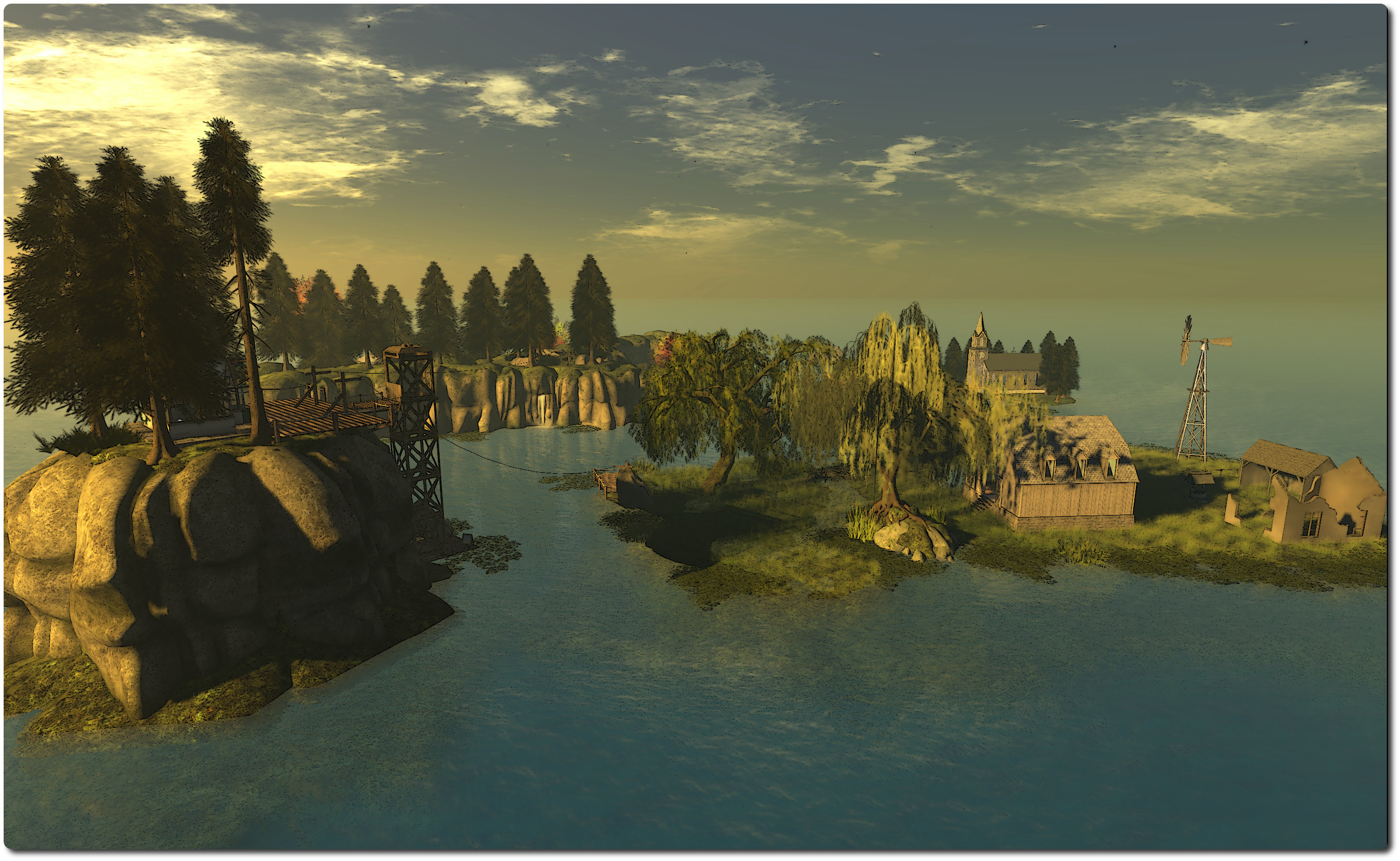
The new design sees the region take on more of a low-level coastal feel – although there is still a rugged backbone of plateau-topped cliffs snaking through part of the region, splitting one of the islands in two. There are three main islands all told now, two of them low-level and grass-covered, one devoted to the outbuildings of a small farm, the other home to a tall stone-built church, a slender wooden bridge sitting atop the water connecting them. The third – with the hills running through it, is the largest in the group.
I say “main islands” as there is a forth, although column of rock might be a better description for it. This rises from the sea on the north-east side of the region, and atop it sits the arrival point, which will be instantly familiar to anyone who visited Collins Land in its last incarnation.
From here you can look out over the region and get a first glimpse of the changes which have been wrought. To get to the other islands, you have a choice of two rope slides (recommended!) or using the wooden elevator, which will take you down to water level, where you can hop into a rowing boat and paddle your way around the place – which is actually a nice way of seeing everything, and you can also pick-up a boat from the wooden pier on the main island.
Collins Land is still very much a place of contrasts. For the most part, it is very rural in feel; grasslands, trees, a farm and country church, the plateau atop the cliffs a wooded park.. However, the main island also offers a slightly more urban feel to it – there is a paved road and sidewalks, street lights, a post box, bus stop and stone-built house with free-standing garage. There’s a children’s playground here as well, as a quayside pushing out to sea. The road itself winds through a short tunnel under the park-topped hills, to the wooden pier where people can either sit and relax or take a boat out onto the waters.
Cerys’ attention to detail is again everywhere; I particularly like the little vignette which appears to suggest a slight altercation between a UPS delivery man and a dog as to whether or not three parcels should be delivered to the front door of the main island’s house …
I understand from Cerys that Collins Land will re-open to the public in October. Until then, access is by invitation only, but once the region does re-open to all, I really do recommend you pay a visit. You won’t be disappointed.
Everyone has a unique and unknown world churning underneath. The ability to set yourself apart lies in whether or not you’re willing to pull up the roots of who you are, and then plant yourself on the surface for all to see.
So speaks Bowie Zeplin, creator of the marvellous Pangloss; and she has certainly revealed something of a world of her own, offering it to all in Second Life to see.
I came across Pangloss after bumping into the Caminante de Suenos (“Dreamwalker” or “Walker Dreams”) blog, which features it in a photo spread. And it is fair to say that something which features flying turtles does tend to be an attention-grabber.
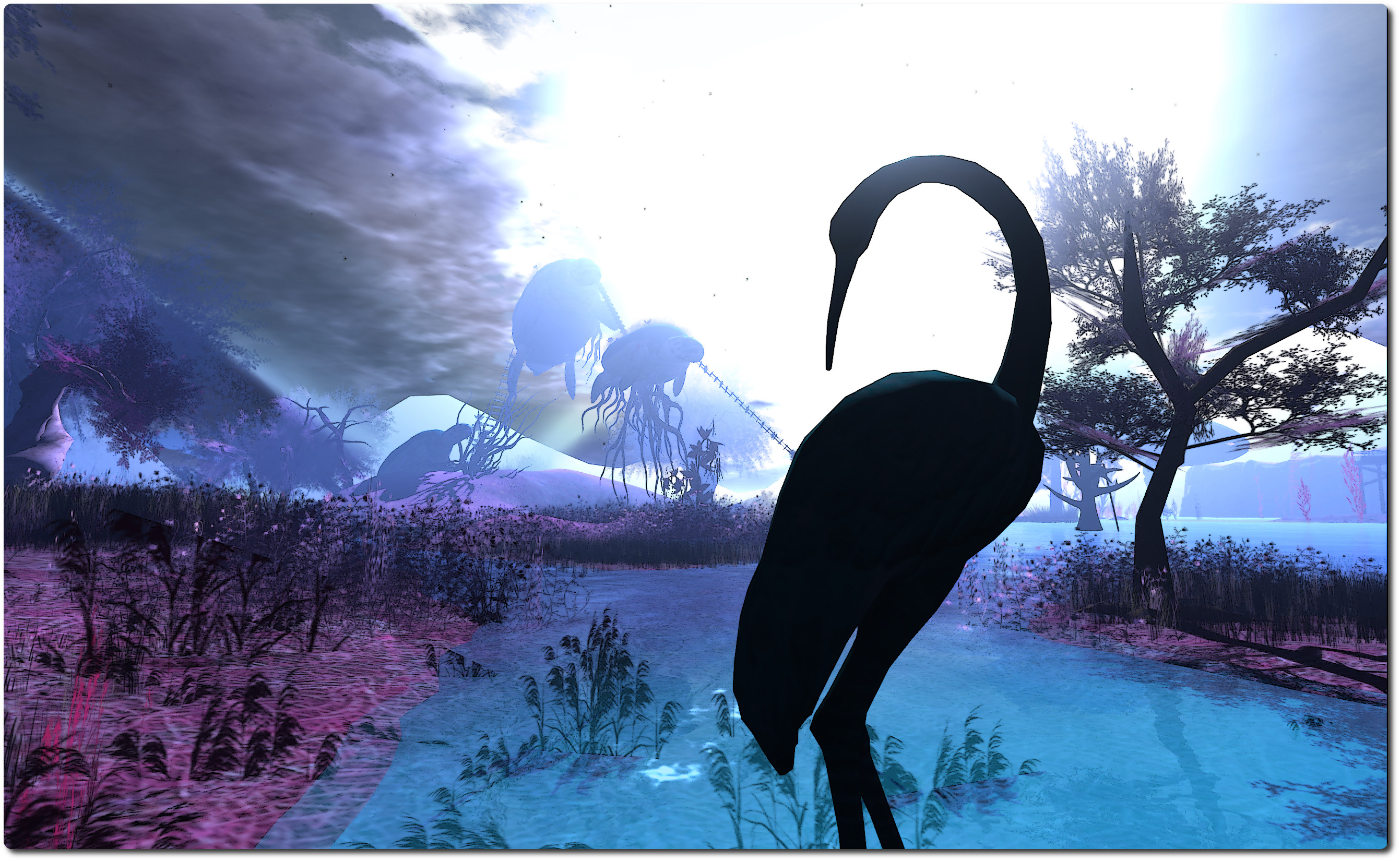
A Homestead region, and still under construction at the time of writing, Pangloss is wonderfully surreal in look and feel, featuring items from some of SL’s most popular creators. It also places the visitor in a bit of a conundrum: are you actually on land, or are you walking through some fantastical undersea world? Are you in a fabulous sculpture, or touching on elements of dream, fairy tale and fiction?
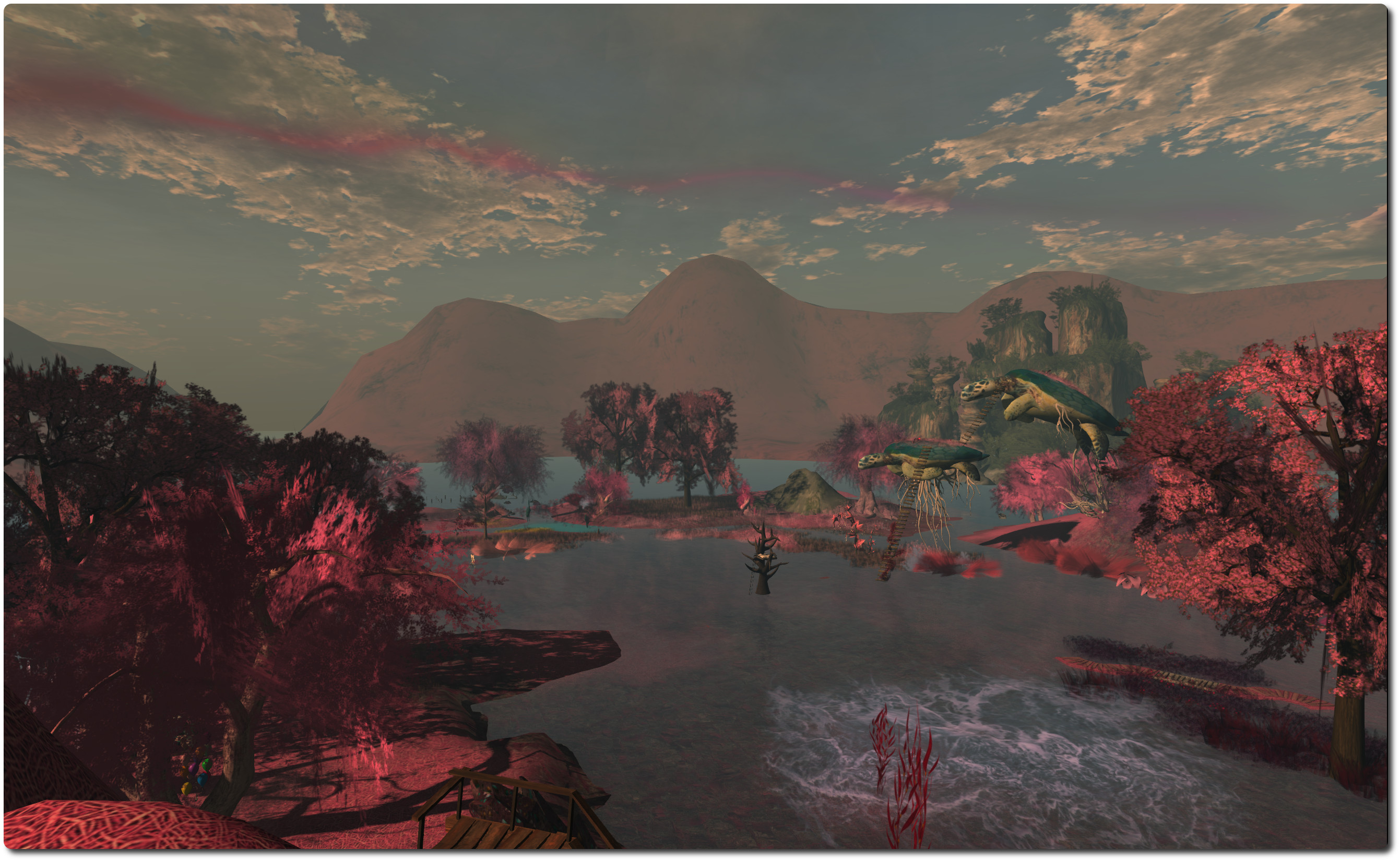
The trees and flowing water, the surrounding hills, the wooden pier and rowing boat: all seem natural enough and speak of being out in the open somewhere. But then there are the turtles, two of them airborne, a third seemingly preparing to launch itself away from the ground. Are they really flying? Or are they swimming through a mystical sea? And what about the humpback whale, hovering over the north side of the region, fluke rising and falling, as if powering it through invisible water?
You decide.
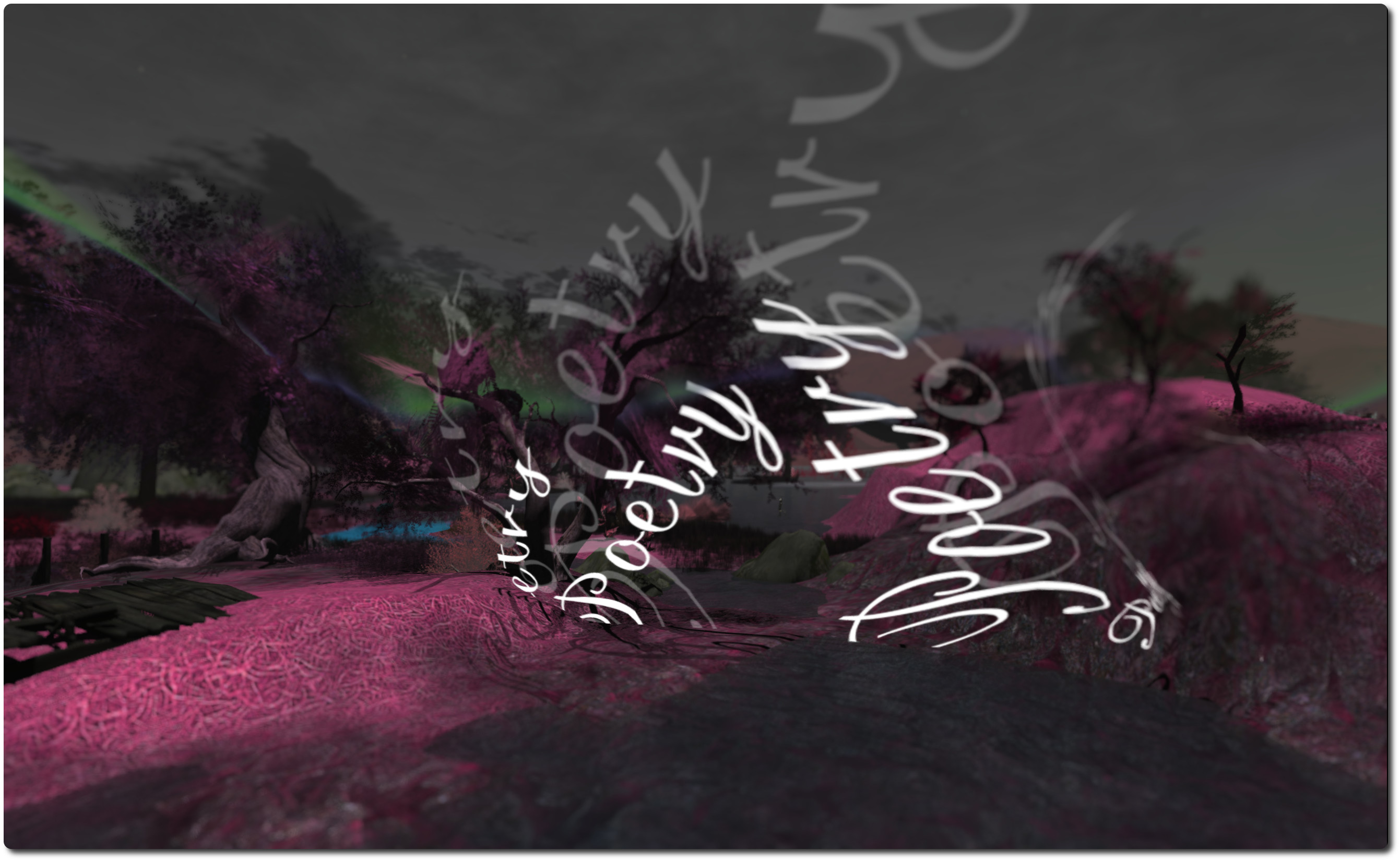
There’s a certain poetry here in the juxtaposition of images – one of which literally is poetry. It’s as if the gates of Bowie’s subconscious have been set wide, and images of dreams and echoes of thought and memory allowed to tumble out to be given form. Even the colours here are quite unlike any natural landscape or setting, adding to the surreal feel.
The subconscious is a huge storehouse of information and memories; little wonder, then, that along with the huge set-pieces like the turtles (which you can climb up to and wander their backs) are smaller tableaux suggestive of childhood memories and tales once told or read. Here, for example, a tall wolf strides purposefully upright, hooded cloak about his shoulders, followed at a distance by a young girl dressed in red, the hood of her own shawl raised against the wind. Over there is a table set for a tea party, complete with an odd assortment of chairs and stools – including one atop a pile of books, suggesting a rather small guest is expected. A dormouse, perhaps…?
And if this is the opening of the subconscious, then just like we can sometimes find uncomfortable thoughts and images welling up from beneath in our own minds, so too is Pangloss edged with a little darkness, such as the huge hands, clutching at the side of a hill but soon to vanish, leaving deep furrows in the land over which they passed, suggesting a desperate attempt to gain any kind of purchase in order to stop the inevitable slide into whatever lies beneath the calm-looking water.
That this is a place where dreams and the subconscious are set free might best be indicated by the tree-top bed lying towards the centre of the region, surrounded by the imagery and vignettes.
Everywhere you look there are images and scenes, most of which offer more than one possible interpretation – just like our dreams offer themselves to more than one possible meaning. Take a look at the alien in its little spaceship; it’s at once cute and fun-looking and also darkly disturbing as one takes-in the defenceless cow rising towards the ship in a green beam of light. Just what has the creature in mind for its helpless captive?
This rich collage of images, ideas, thoughts and symbolism make Pangloss a rich and varied feast for the eyes and the mind. It’s wonderfully immersive and captivating. And while I frequently say this about the places I visit, it is a SL photographer’s heaven, offering so much for those who want to capture the unusual and / or love to play with windlight and camera settings.
The default windlight for the region appears to be based on Will Weaver’s Phototools – Quidditch Light, and it works. However, given the very nature of the place, it cries out to you to play and fiddle with settings. I actually ended up rotating through a fair number of different options, twiddling with the sun, glow, clouds, haze and taking multiple snaps from the same angle, etc. But because I really couldn’t get away from the feeling of being both underwater in some mysterious realm, or perhaps exploring another world entirely, I gravitated towards Bryn Oh’s BLUniverse, which for me just seemed to fit the region and its vignettes.