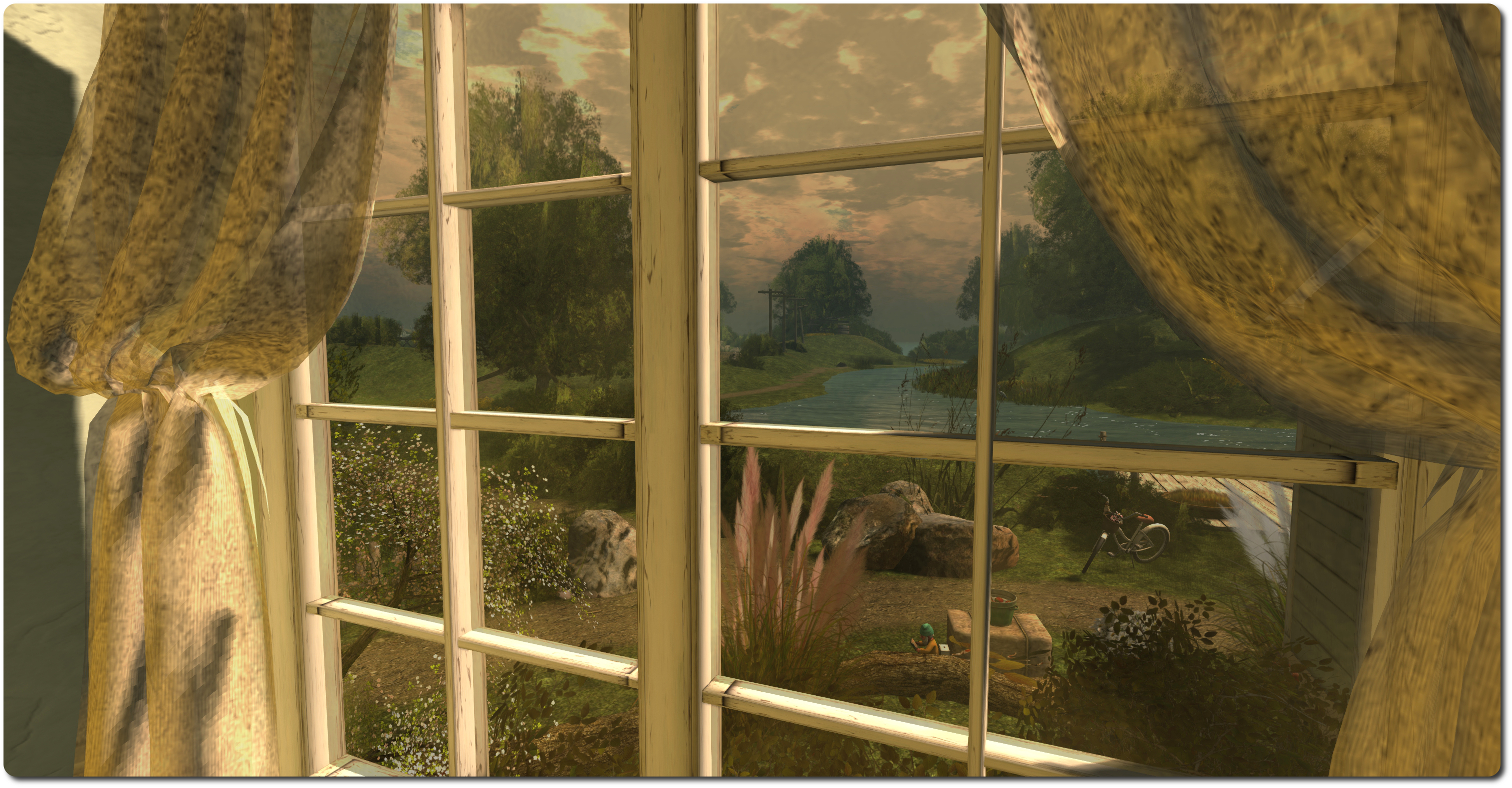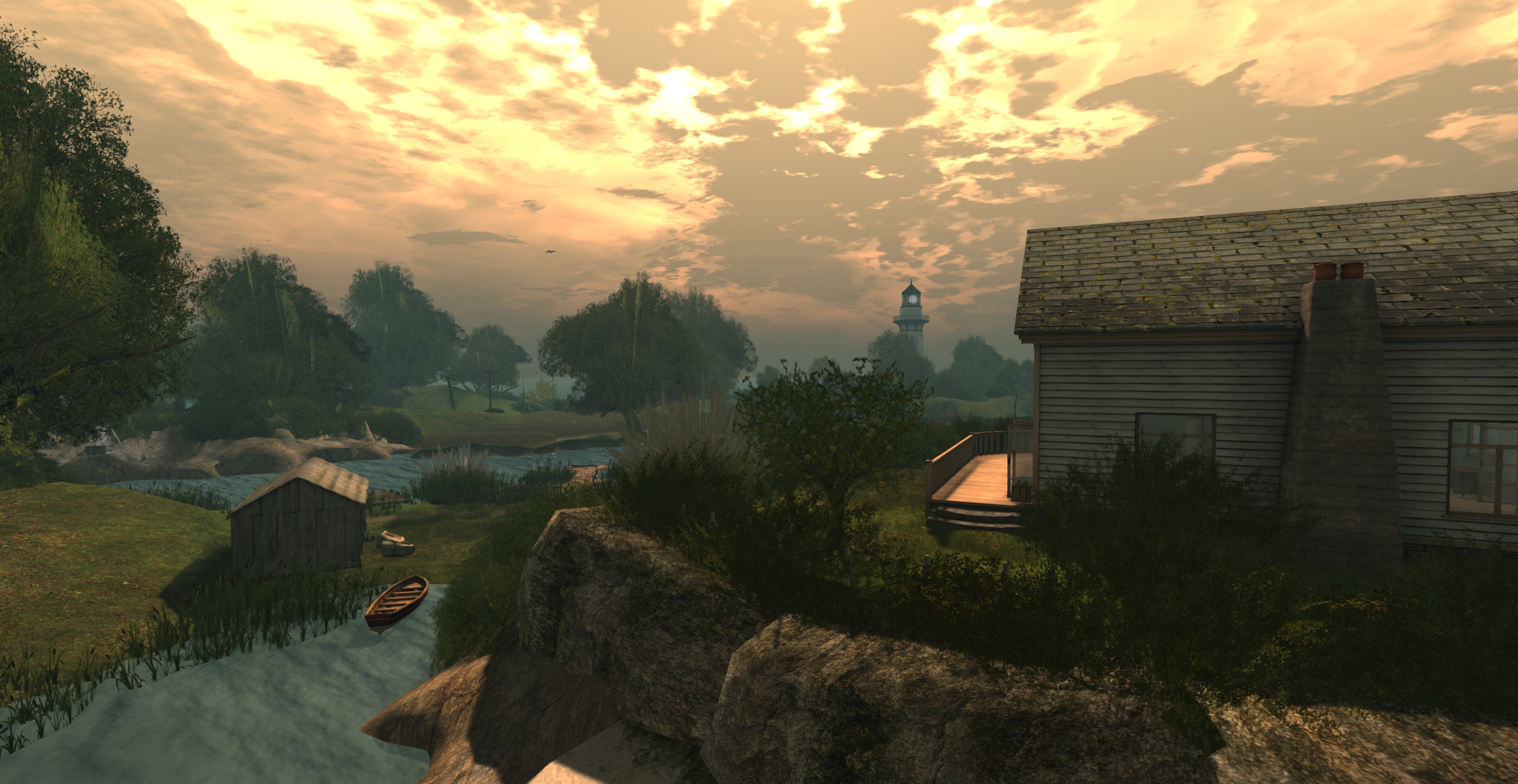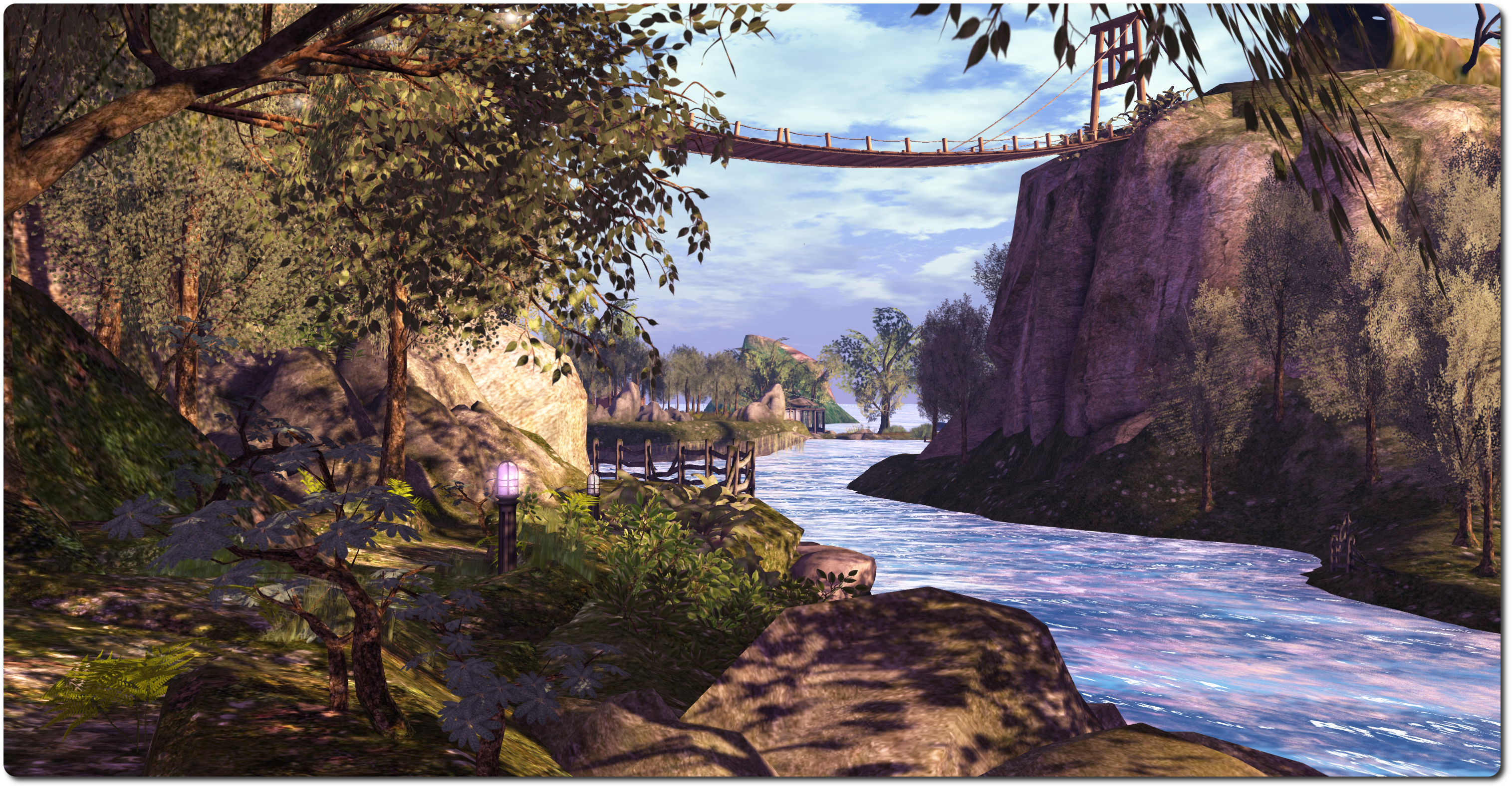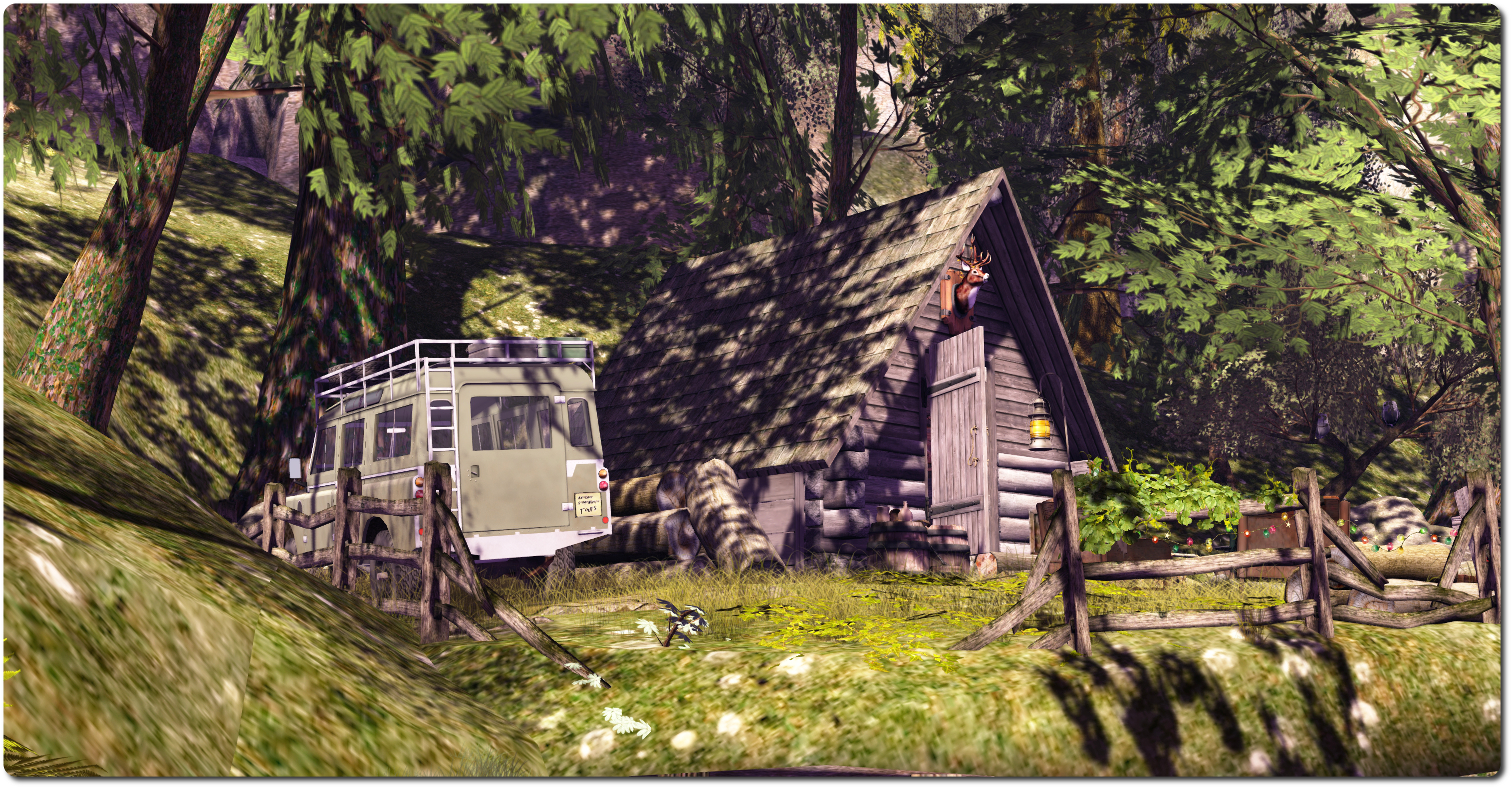
Le Botanique: a materially beautiful creation

Le Botanique, Mirriam Brown; Inara Pey, July 2014, on FlickrLe Botanique, Miriam Brown, July 2014 (Flickr)

I first met Liara Okiddo as a result of visiting her home on the Region of Golden Rose back in July 2013, Garden of Eden was a 8192 square metre parcel of land where she had built a compact tour de force of what can be achieved without necessarily needing an entire region of your own in which to create an eye-catching build. It was a truly amazing and verdant design, rich in colour, flora and fauna, creating a tropical island like feel in which she had located her in-world studio and gallery.

In November 2013, Liara extended an invitation for me to see her next project – then a work in progress, Isla Okiddo, her own homestead, which opened to the public in February 2014, forming another visually stunning build where she had again created a wonderful tropical paradise in which she located her gallery and her home.
Le Botanique, Mirriam Brown; Inara Pey, July 2014, on FlickrLe Botanique, Miriam Brown, July 2014 (Flickr)

Sadly, Garden of Eden and Isla Okiddo now only exist in memory and pictures, although they remain two of my top 10 all-time most beautiful locations in Second Life.

More recently, Liara has been working on a new project, which she pinged me about early on (and for which I still owe her an apology, and life, the universe and everything meant I never really supplied the feedback she’d requested). The project opened earlier in July (and which the physical world again conspired to keep me away from) and is another masterpiece.

Le Botanique is a 64 metre square slice of rain forest-like beauty floating in the air above Miriam Brown, and it is a marvel of design and the use of materials – around 75% of the build is materials enabled.
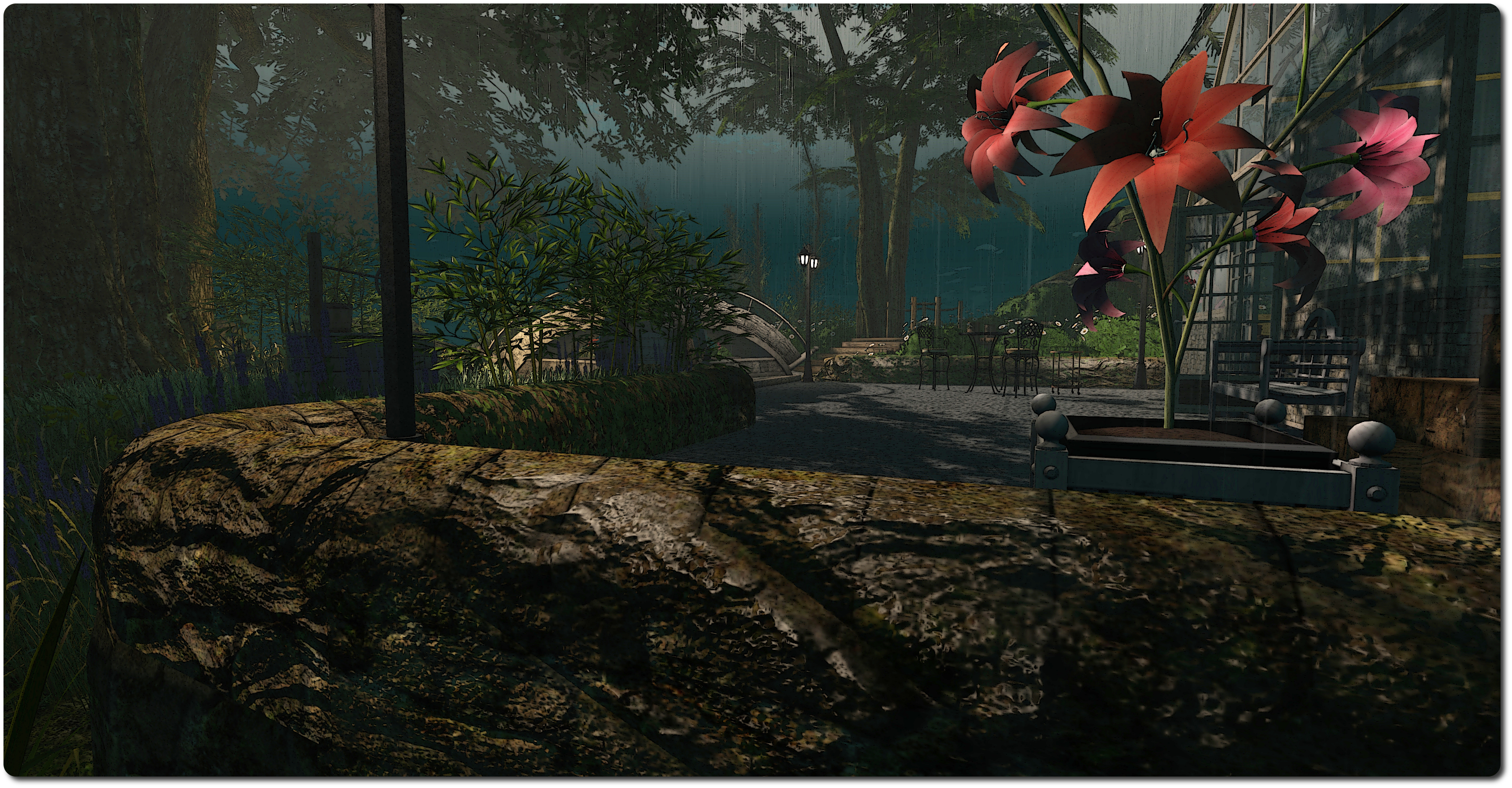
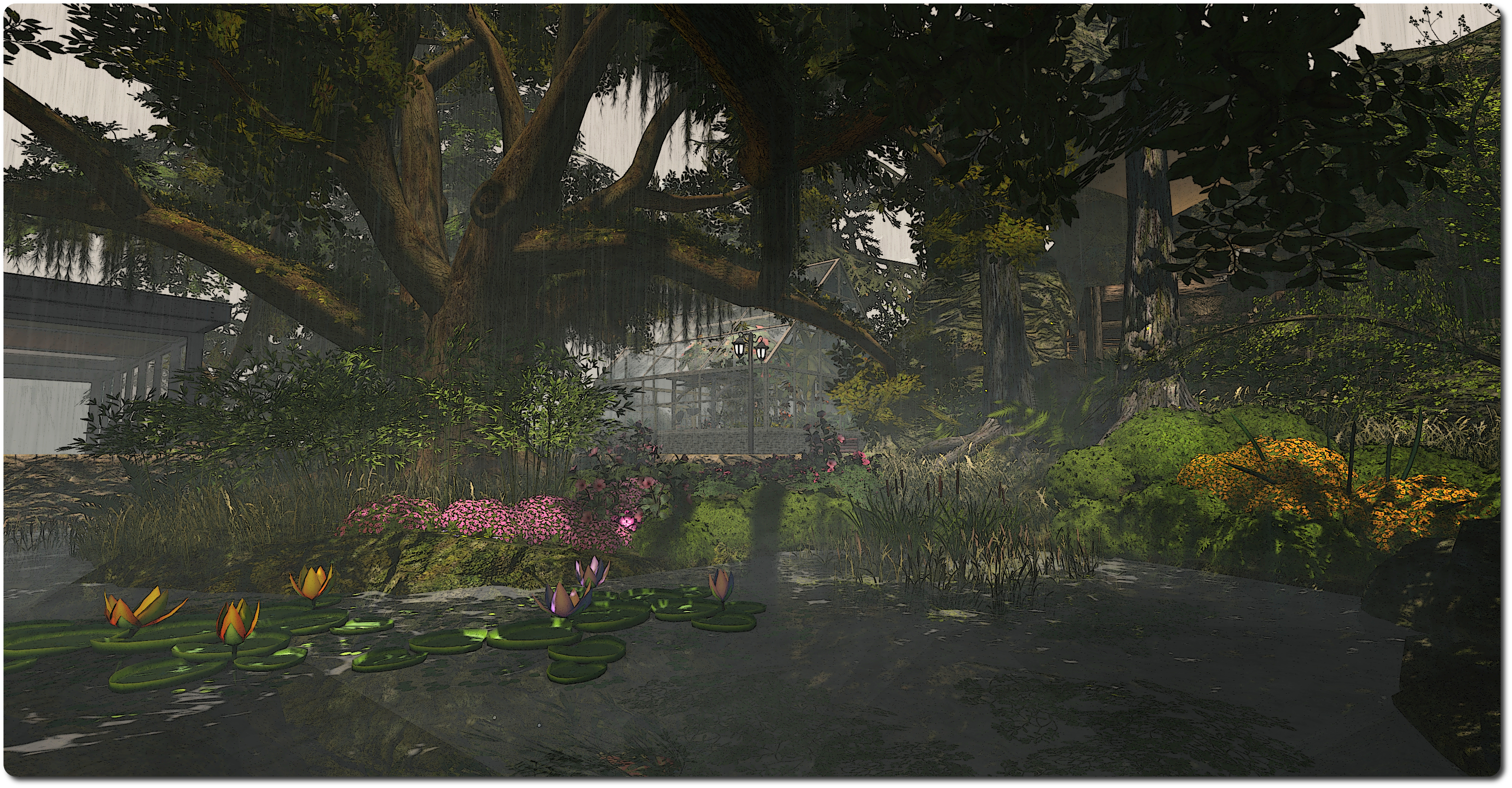
Le Botanique, Mirriam Brown; Inara Pey, July 2014, on FlickrLe Botanique, Miriam Brown, July 2014 (Flickr) – note the beautiful wet sheen to the stone wall in the rain as it reflects the light from the lamp-post above; the beauty of materials

You arrive inside a summer-house in one corner of the forest (do make sure you accept the local windlight, if offered, on your arrival). The staccato beat of rain falling on the glass panels of the roof is your greeting, together with the crackling pop of wood burning in the hearth its accompaniment. A piano from the other room in the house might also add a little harmony to your arrival. But all these serve as background to the lush, rain-soaked slice of tropical splendour which awaits you beyond the sliding doors.

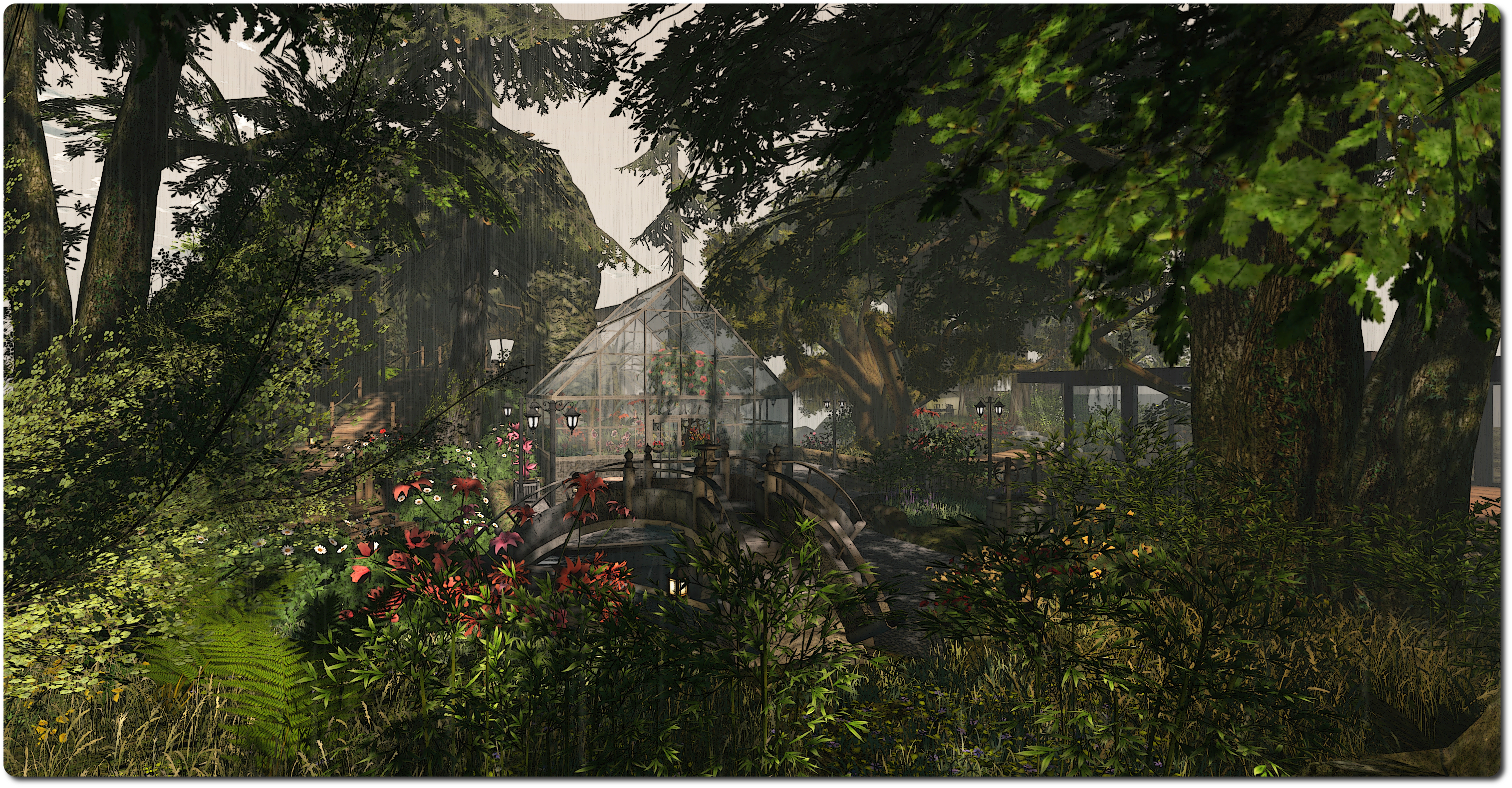
Rain splashes over everything here, pattering across cobbled terrace and wooden walkways alike, leaving a wet sheen over mossy walls, grassy rocks and dripping from the lush vegetation. A wooden bridge passes over a narrow channel of water separating the summer-house from an old terrace where sits a wrought iron garden table and chairs, dripping in the shower alongside a tall green house in which grow where exotic lilies and other plants are growing in rich abundance, sheltered from the rain.

Follow a set of wooden steps from here, and they take you up to the high point of the build, a rocky grotto where sits a table an chairs under a canvas awning.  Elsewhere, stepping-stones guild the visitor across the expanse of rain-speckled water below the summer-house and up to another rocky ledge offering another little seating area under canvas, this one with a touch of romance added: candles on the table, complete with a bottle of wine, two glasses, and a red rose.
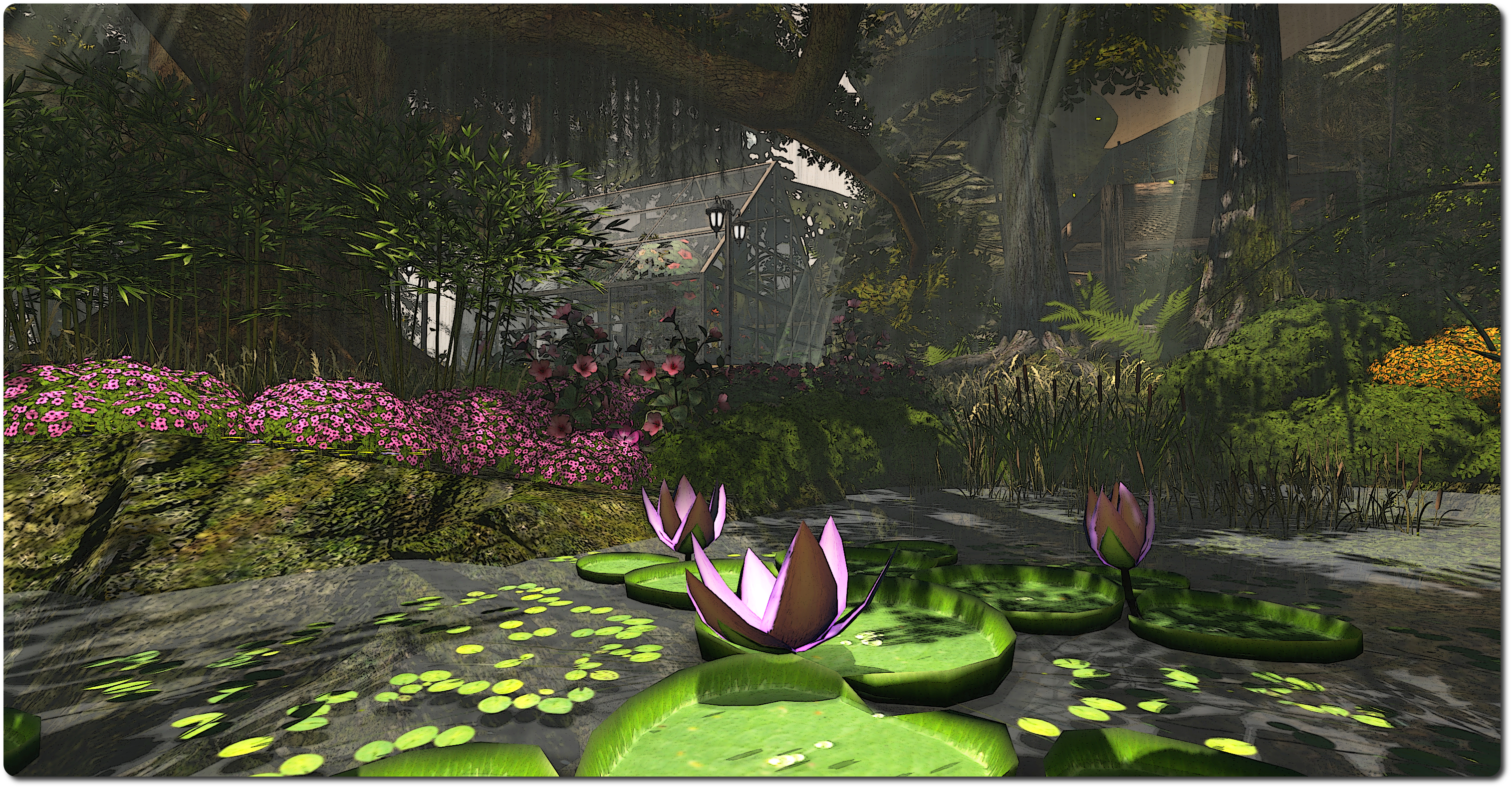
Le Botanique, Mirriam Brown; Inara Pey, July 2014, on FlickrLe Botanique, Miriam Brown, July 2014 (Flickr)

All of this exists an in rich spread of flowers and plants, tall trees through which sunlight slants, and over which the rain falls steadily. It’s an amazing sight for even the most causal visitor. However, if you want to experience Le Botanique to the fullest, then you should enable your viewer’s Advanced Lighting Model (Preferences > Graphics > check Advanced Lighting Model) option, if it is not already active.

This shouldn’t result in too big a performance hit on your system – you don’t have to enable Shadows as well (which are the performance killer). When you do so, Le Botanique will spring into even greater life as the wet sheen on the rocks and walls becomes visible, and the light from lamps and lanterns is reflected in the wet surfaces around you.

I’ve fiddled around with materials myself in SL and more noticeably on Kitely with Fallingwater, but I’ve done nothing to the depth of Liara’s project. As noted above, the built features the use of materials across about 75% of it, and this has involved Liara carefully selecting copy / mod items which she has then painstakingly retextured with custom diffuse (texture), normal (bumpiness) and specular (shininess) maps, and the results are truly stunning, and incredibly life-like; so much so in fact, that it’s possible to miss some of them without a degree of careful camming, therefore time is the order of the day when visiting.
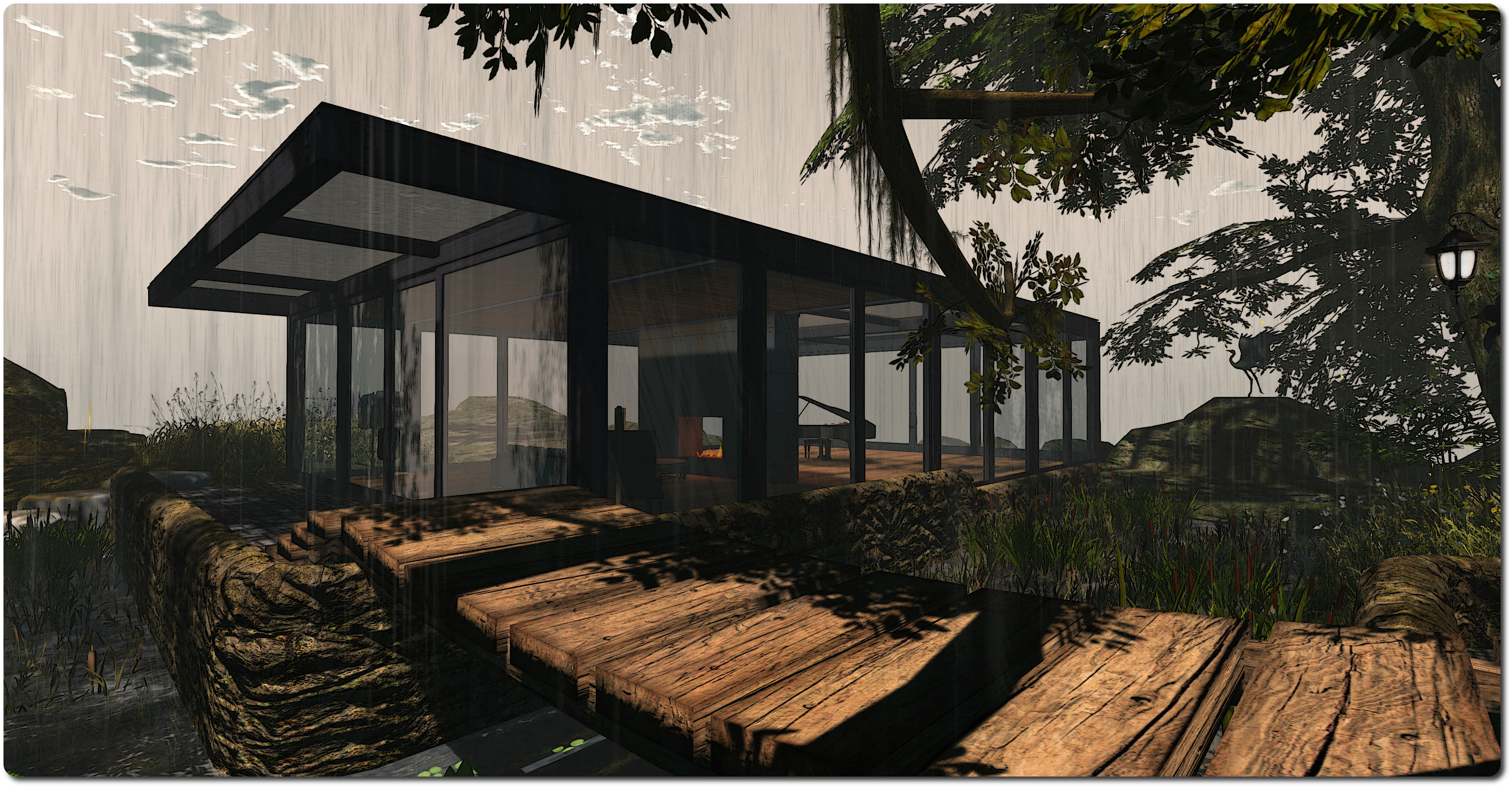
Le Botanique, Mirriam Brown; Inara Pey, July 2014, on FlickrLe Botanique, Miriam Brown, July 2014 (Flickr) – note the relief on the stone work and on the wooden boards

For those interested in the technical aspects of the build, Liara has created a special Flickr album charting her work on Le Botanique, and to be honest, her photos far outweight my meagre efforts here should you need any visual persuading to make a visit.

I never cease to be amazed and awed by Liara’s work; each of her creations builds on the foundations laid by the last, and each is in turn an incredible and beautifully immersive environment. In this, Le Botanique is no exception. It is simply glorious; a stunning demonstration as to what can be achieved with time, patience and materials, and (again) without needing an entire region in order to do so.
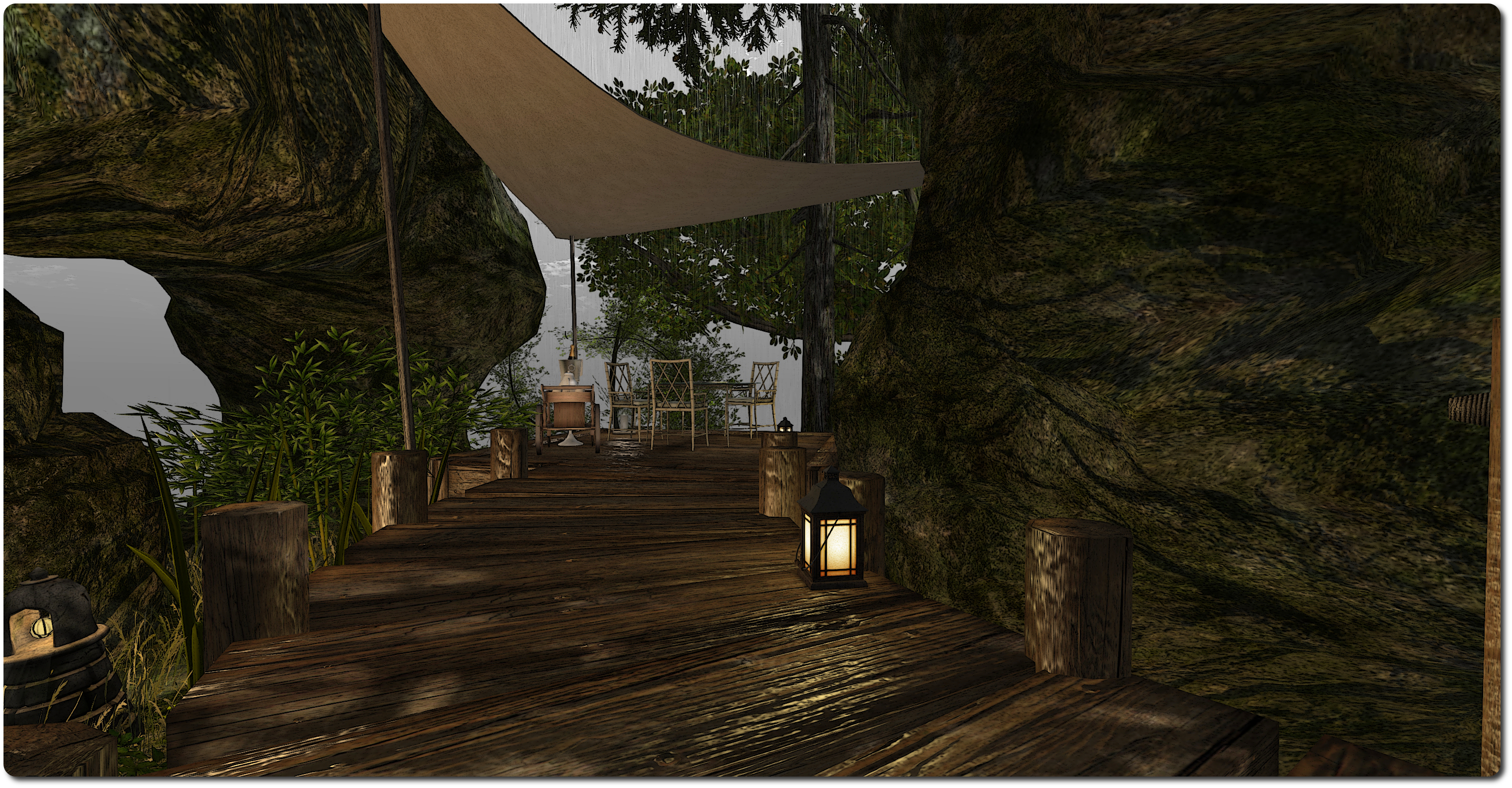
Le Botanique, Mirriam Brown; Inara Pey, July 2014, on FlickrLe Botanique, Miriam Brown, July 2014 (Flickr) – the light of the lamps reflected off the wet surface of the wooden boards

It is, in a word, glorious.

Related Links

An equine roleplay in the name of conservation

Matoluta Sanctuary, Sartre; Inara Pey, July 2014, on FlickrMatoluta Sanctuary, Sartre (Flickr)

Matoluta Sanctuary is a newly opened role-play region with a difference. Offering people the opportunity to engage in equine role-play (i.e. actually taking on a horse avatar), the focus of the region and the community behind it is to raise awareness of the plight of the Colonial Spanish Horse on the North American continent.

These horses, perhaps more familiarly known as Spanish Mustang by some although there are in fact several strains and sub-strains, are  descendants of the original Iberian horse stock brought to America from Spain, and are one of only a very few genetically unique horse breeds worldwide.

Matoluta Sanctuary, July 2014
Matoluta Sanctuary

As with other breeds of horses introduced to the North American continent from Europe, some Colonial Spanish horses escaped into the wild, where, due to their nature and abilities, they became the preferred mount of the Great Plains tribes of native Americans. In more recent times their numbers have greatly reduced,  and the breed’s extinction status is regarded as critical.

The arrival area in the region in located overhead. Here you can obtain visitor information on the sanctuary, and background on the herd itself – which is modelled on a genuine herd of Colonial Spanish horses in Oklahoma.  You can also join the Sanctuary’s access group here. The fee is L$250 to join  – and is required for access to the region below (although there will be free access periods – check the calendar on the Matoluta Sanctuary website). Rezzing rights on the region cost L$500, and all fees go directly towards the upkeep of the region, events, etc.

Matoluta Sanctuary, Sartre; Inara Pey, July 2014, on FlickrMatoluta Sanctuary, Sartre (Flickr)

Note, as well, that visitor access is restricted to 10:00-20:00 Mondays-Saturdays; casual visitors arriving outside of these hours will be deposited at a corner tile on the region and will not be able to proceed further. From 20:00 through 10:00, access to the region is for members of the roleplay group and bloggers / photographers only. The latter can apply for special access by e-mailing matolutasanctuary@gmail.com with their credentials and then apparently going through an interview process. I’m not entirely sure how this works, as I e-mailed, but have yet to actually hear anything in reply, so am just quoting the information note card.

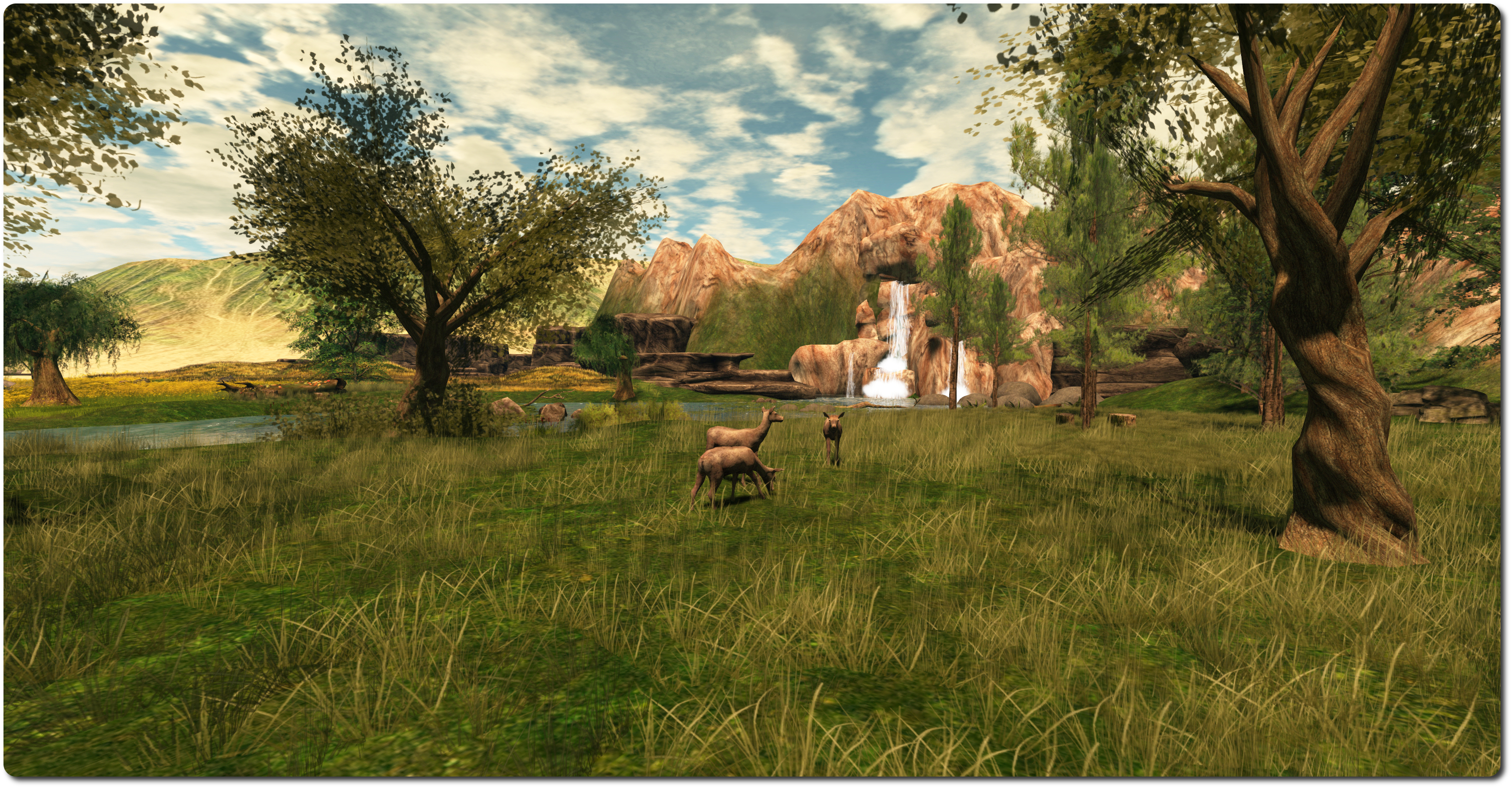
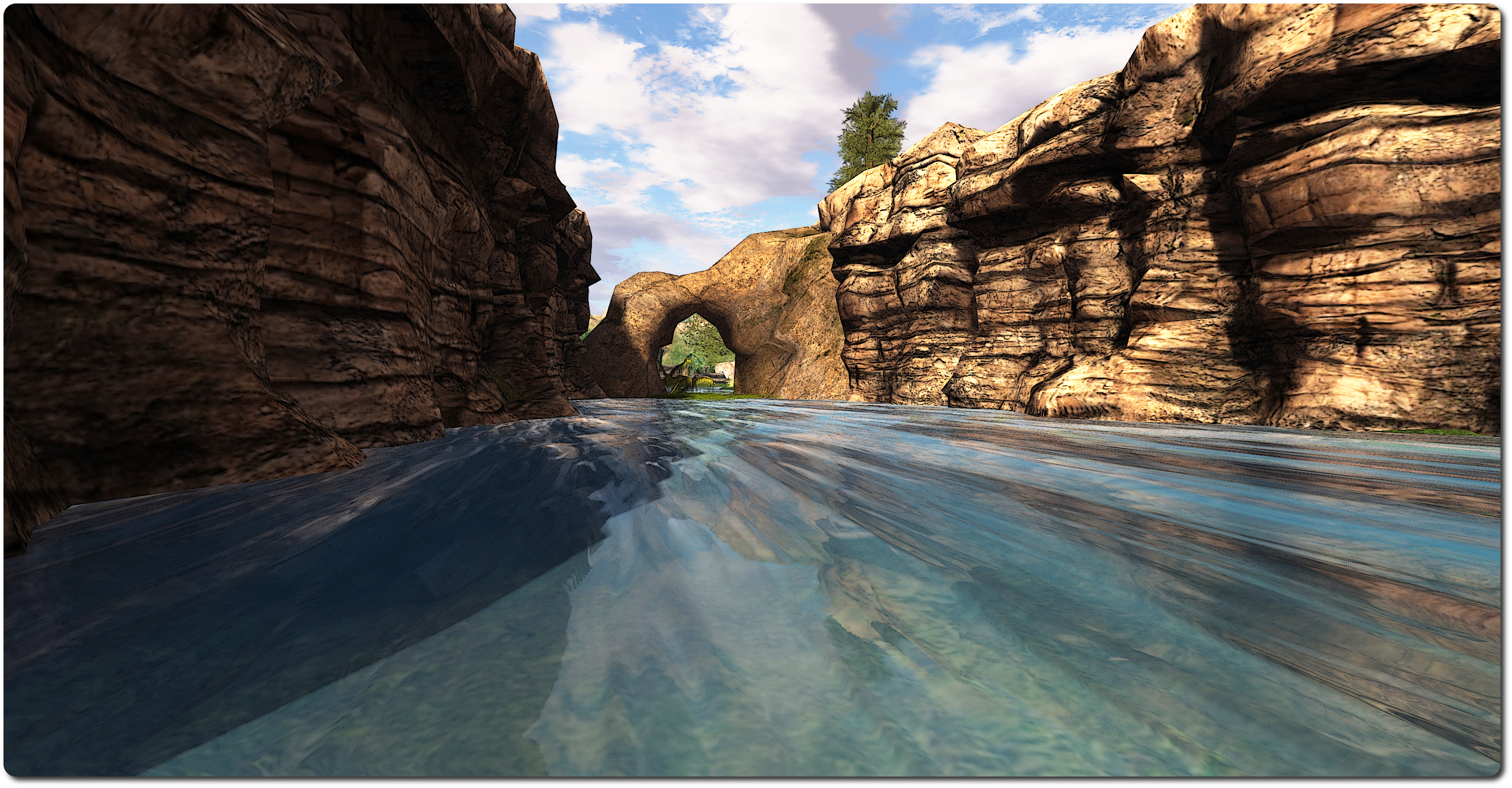
A teleport disc takes visitors down to ground level, and to one end of a watery canyon. Follow this down under the rocky arch and you’ll come to the sanctuary proper. Here a river flows outwards from distant falls and splits the land in two. On the left lays the open lands of what had been the Haskell Ranch, lost to a tornado in the 1900s, and now with only the broken remains of a windmill standing in memory of its passing. Across the water sits The Dark Glen, a place of tall trees and long grass, where many of the herd can be found.

Matoluta Sanctuary
Matoluta Sanctuary

The entire landscape has been designed by Mz Marville and, together with the sim surround, is somewhat evocative of the old American West, and is very photogenic. Wildlife is very much in evidence here: bears hunt fish in the river, eagles soar over the rocky outcrops, geese occupy a section of one river bank, while further inland sheep and deer can be found, as can, for the keen-eyed, badgers and beavers. And, of course, there may well be members of the herd roaming the landscape.

Those interested in joining the herd for role-play can do so by contacting Ursus Broono (also known as Manatou, the herd leader). When on-line, he can often be found up on the rocks overlooking the falls, near Badger’s Gap. There’s apparently a fair degree of etiquette involved in the role-play, so a chat with him beforehand by the curious might well be in order. Role-play on the region is entirely optional for visitors, although they are encouraged to join-in with the spirit of things if members of the herd are present. The welcome package includes a role-play attachment, and any animals visiting the region are encouraged to use the animal channels on the attachment for discrete chat.

atoluta Sanctuary, Sartre; Inara Pey, July 2014, on FlickrMatoluta Sanctuary, Sartre (Flickr)

This is an interesting concept in role-play and conservationism, and further information and news on activities and events can be found on the Sanctuary’s website, which also has information on a special photography contest being run to mark the opening of the region.

Related Links

A pastoral setting that’s Heaven Scent

NorderNey, Heaven Scent; Inara Pey, July 2014, on FlickrNorderNey, Heaven Scent (Flickr)

I tend to visit places around SL in bursts. By that I mean I’ll visit five or six at a time, take notes, grab snapshots and then settle down to write about them. This inevitably means the order in which they appear in my Exploring Second Life series can be haphazard, particularly if I find somewhere which demands I write about it right now.

Sometimes it also means that places wind-up as a folder of snapshots and a set of notes sitting on the computer waiting their turn because I’ve *cough* actually let them slip my mind as I bounce around. This doesn’t often happen, but it did happen with NorderNey, Jacky Macpherson’s beautifully pastoral setting on her region of Heaven Scent – and for which she has my sincere apologies!

NorderNey, Heaven Scent; Inara Pey, July 2014, on FlickrNorderNey, Heaven Scent (Flickr)

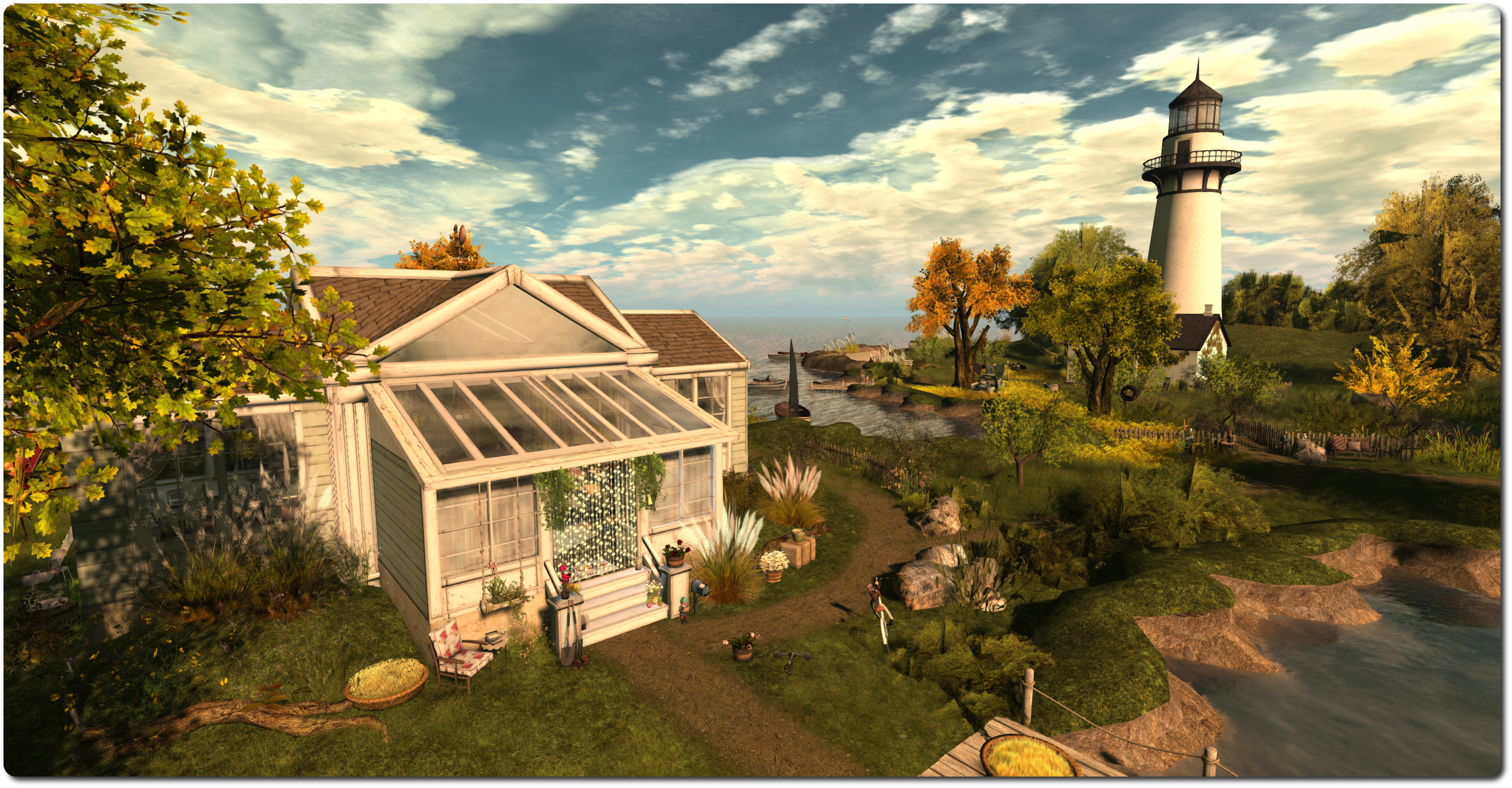
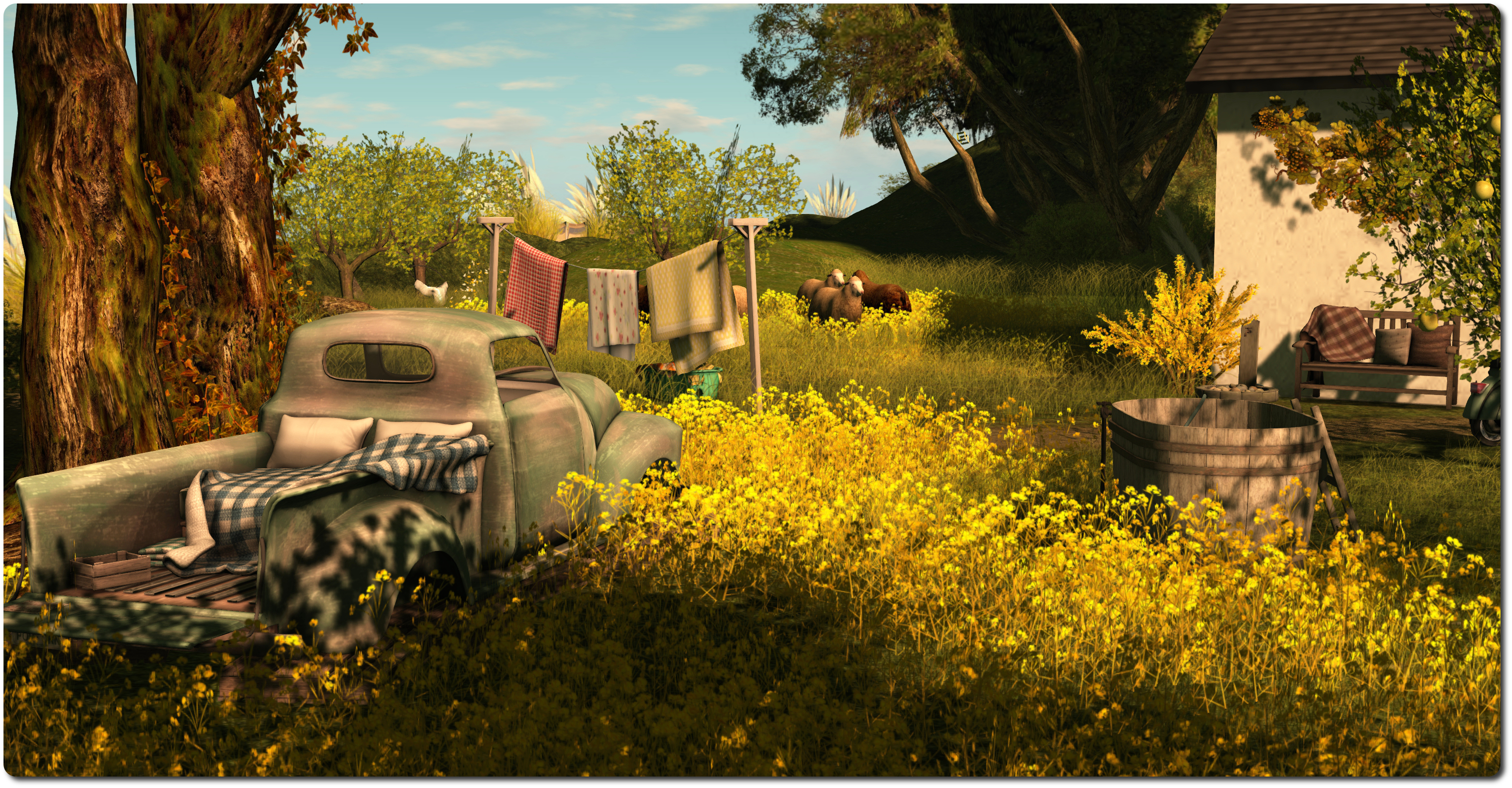
NorderNey is another of those evocative regions in which one can easily feel at home despite never having visited before. It brings together rural and coastal elements in a perfect blend of land and sea that, while it lacks any form of sim surround, still suggests it sits on a stretch of temperate coastline somewhere in the world; a place where the soil is still rich enough for a golden crop of wheat to be grown even as it slowly gives way to sandy shores and the sea beyond.

Two houses occupy the land, almost diagonally opposite one another. From the larger of these, situated next to the landing point, unpaved tracks offer visitors two routes by which to explore the island, one linking the house to the nearby lighthouse and the beach beyond it; the other winding “inland”, along what could easily be a river bank, and past that field of wheat.

NorderNey, Heaven Scent; Inara Pey, July 2014, on FlickrNorderNey, Heaven Scent (Flickr)

This is a place which should be explored with local sounds turned on, as Jacky has added a sound scape which perfectly matches the setting, giving added depth to the surroundings as one explores. Close to the coast, the sound of waves breaking against the sand and rocks can be heard. Further inland, birds and wildlife sing, chirp and call; towards the northeast side of the island, and the second house, the wind can be heard sighing through the tall grasses and around and between the rocks and trees, while overhead and across the island, gulls cry as they circle on the updrafts.

NorderNey, Heaven Scent; Inara Pey, July 2014, on FlickrNorderNey, Heaven Scent (Flickr)

That NorderNey is a photographer’s delight goes without saying – as many who have visited an blogged about it before me have proven. So to is it a delight for those who want to simply wander or sit and forget their troubles or spend a little time in the peaceful company of a friend or two; places to sit and share can be found right across the region, on jetties, alongside houses, on the beaches, in the shade of the trees –  even in one of the many rowing a sail boats moored around the island.

NorderNey, Heaven Scent; Inara Pey, July 2014, on FlickrNorderNey, Heaven Scent (Flickr)

When I first visited NorderNey, I happened to be playing to J.S. Bach on the stereo. Given that sheep are grazing around the lighthouse on the island, the piece I happened to be listening to seemed a tad serendipitous, so I’m going to close with it here.

Related Links

Going Somewhere

Another Somewhere, Hamoa Island; Inara Pey, June 2014, on FlickrAnother Somewhere, Hamoa Island (Flickr) – click any image for full-size

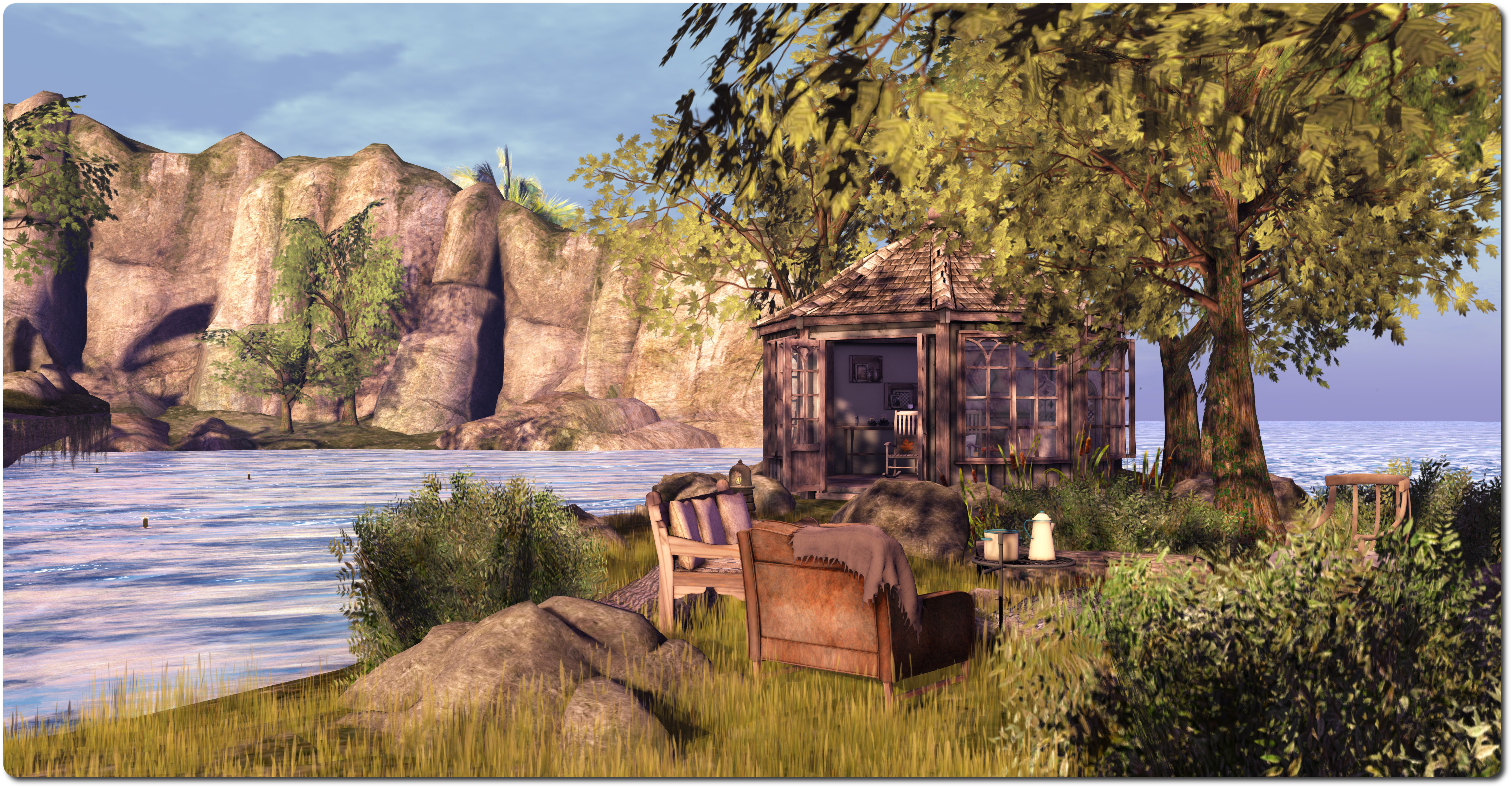
Another Somewhere is a half homestead region of delight. Created by Azriel Xue, it is another reminder that it doesn’t necessarily require a 15,000 prim land capacity to create something eye-catching and memorable (or even 3,750 for that matter).

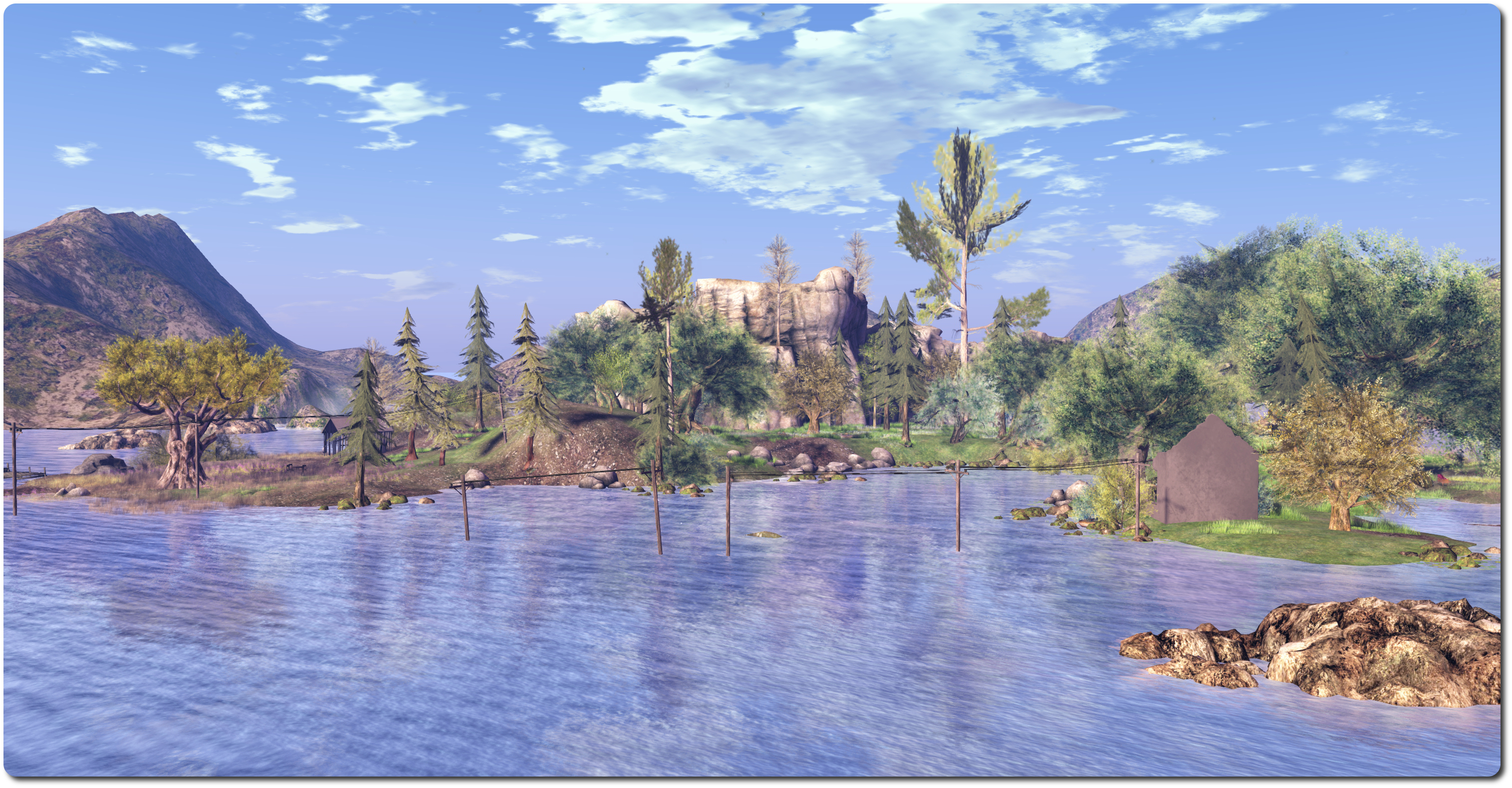
Wilderness is the theme here; rugged cliffs, perhaps leading up to mountains tall and cold, stand over a stretch of coastline hugged by blue waters which surround three nearby islands. These can be reached by boat, and are in turn watched over by larger islands further out to sea (off-sim).

Another Somewhere, Hamoa Island; Inara Pey, June 2014, on FlickrAnother Somewhere, Hamoa Island (Flickr)

Footpaths follow the shoreline, winding their way around the base of the cliffs and overlooking the water, before branching to climb steps worn into the rock and then branching again. Little red huts stand over the waters, precariously balanced on wooden piers out-thrust from the sheer rocky faces.

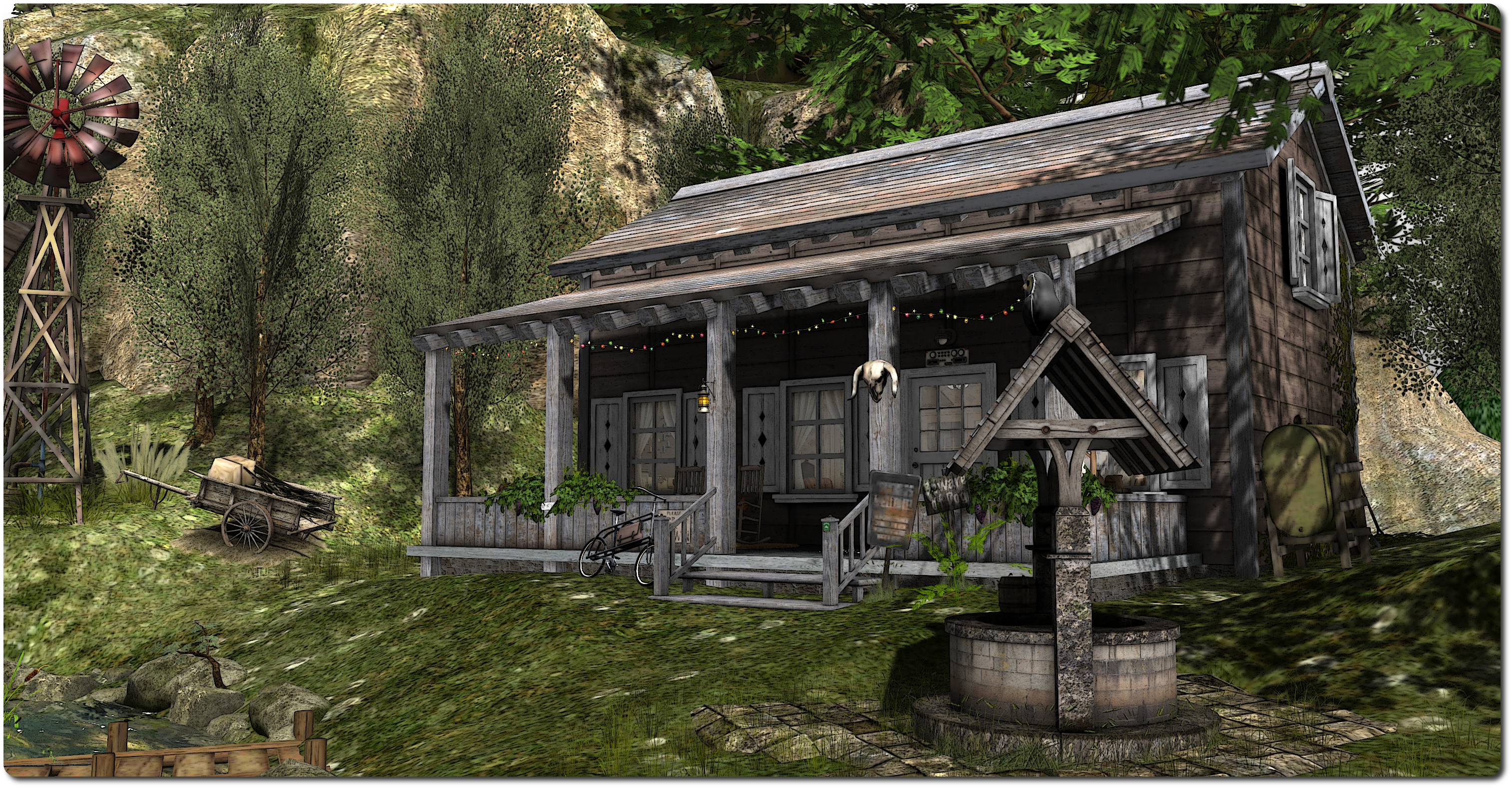
Part of the water passage between coast ansd islands has been dammed, squared-off stone bricks allowing a path to reach the largest of the islands. Here sits a rustic cabin, offering home comforts and fresh water from deep well. An improvised jetty of old railway sleepers offers a place where you can grab a motorboat and make your way to the other islands (although I confess, the rezzer didn’t want to work for me 😦 ).

Another Somewhere, Hamoa Island; Inara Pey, June 2014, on FlickrAnother Somewhere, Hamoa Island (Flickr)

The outermost of the remaining two islands offers a place to sit out with friends under leafy shade, enjoying a cup of coffee or a bowl of what looks to be chowder, both simmering over an open fit pit. A gazebo offers a warm fire and place to sit sheltered from any wind, for those who prefer.

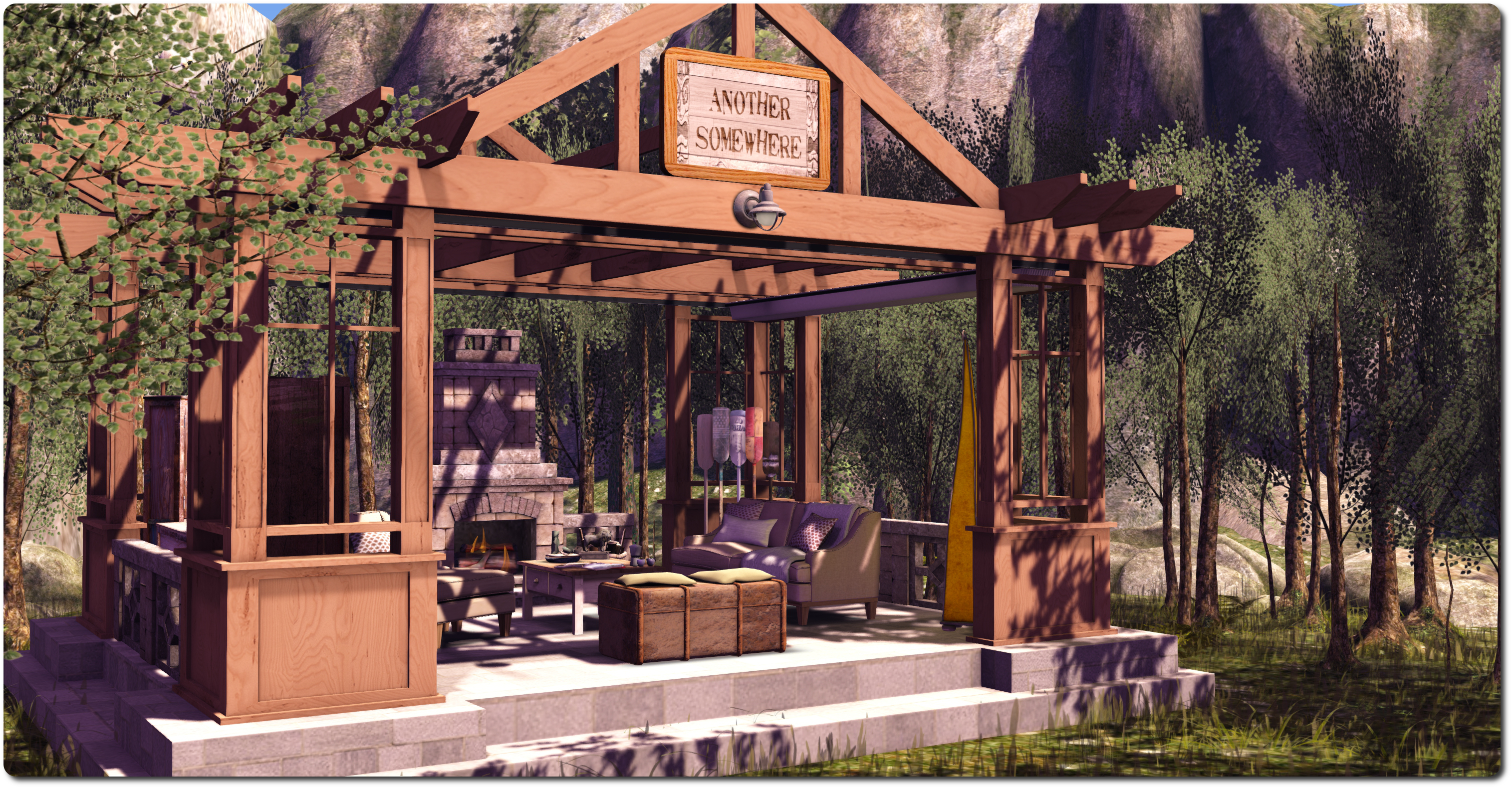
Across a narrow stretch of water, a wooden pergola sits atop a grassy upthrust of rock, a solid pier again offering a place to rez boats, stout wooden steps leading up to the pergola as it sits amidst a small copse on the island. Another well is also to be found on this island, so the water is fresh for those wanting a cup of tea or mug of coffee. Here is another place where friends can meet and relax – although for the adventurous, a zip slide links it to the gazebo’s little island. Just mind the tree at the end of the line! I had a bit of a George of the Jungle moment sliding down…

Another Somewhere, Hamoa Island; Inara Pey, June 2014, on FlickrAnother Somewhere, Hamoa Island (Flickr)

Across the water, you can follow the paths upwards, where there is more to discover: one leads to a look-out point, another gives access to an old mountain shelter, now perhaps serving as a hunting lodge. Follow a follow a third, and it will take you into the foothills and to a high wooden footbridge spanning the gorge between the cliffs and the rocky outcrop sheltering the  cabin.

For SL photographers and those seeking new places in SL to enjoy, Another Somewhere presernts itself as an excellent place to visit. I also have to admit to liking Azriel’s outlook on life, summed up in a quote from Lauren Myracle: I live in my own little world. But its ok, they know me here. I know that feeling ony too well!

Another Somewhere, Hamoa Island; Inara Pey, June 2014, on FlickrAnother Somewhere, Hamoa Island (Flickr)

Related Links

Of pigeons and a Meaningless wander

Pigeon Island, Neverending; Inara Pey, June 2014, on FlickrPigeon Island, Neverending (Flickr – click any image for full size)

Amelie Knelstrom (Raein) offers visitors to her homestead region two very different places to explore, both of which invite the imagination to create little stories to suit them.

The first is Pigeon Island, which is also the arrival point for visitors. This is a slightly rugged island of temperate disposition, sitting in a bay (or perhaps a fjord?) which, given the lush green of the grass, may see more than its share of rain at times.

A farm looks to have once been here, although little now remains, other than the ruins of a small house or cottage (the actual landing point for the region) and an old shed which faces it across the curve of a rocky little bay. Old telegraph poles march out into the waters of the bay in two lines, still carrying their wires and looking like they may have once met, but their comrades have at some point either fallen into the blue waters or have been taken away. Did the lines running between them carry messages, or did they once bring electrical power to this little place?

Pigeon Island, Neverending; Inara Pey, June 2014, on FlickrPigeon Island, Neverending (Flickr)

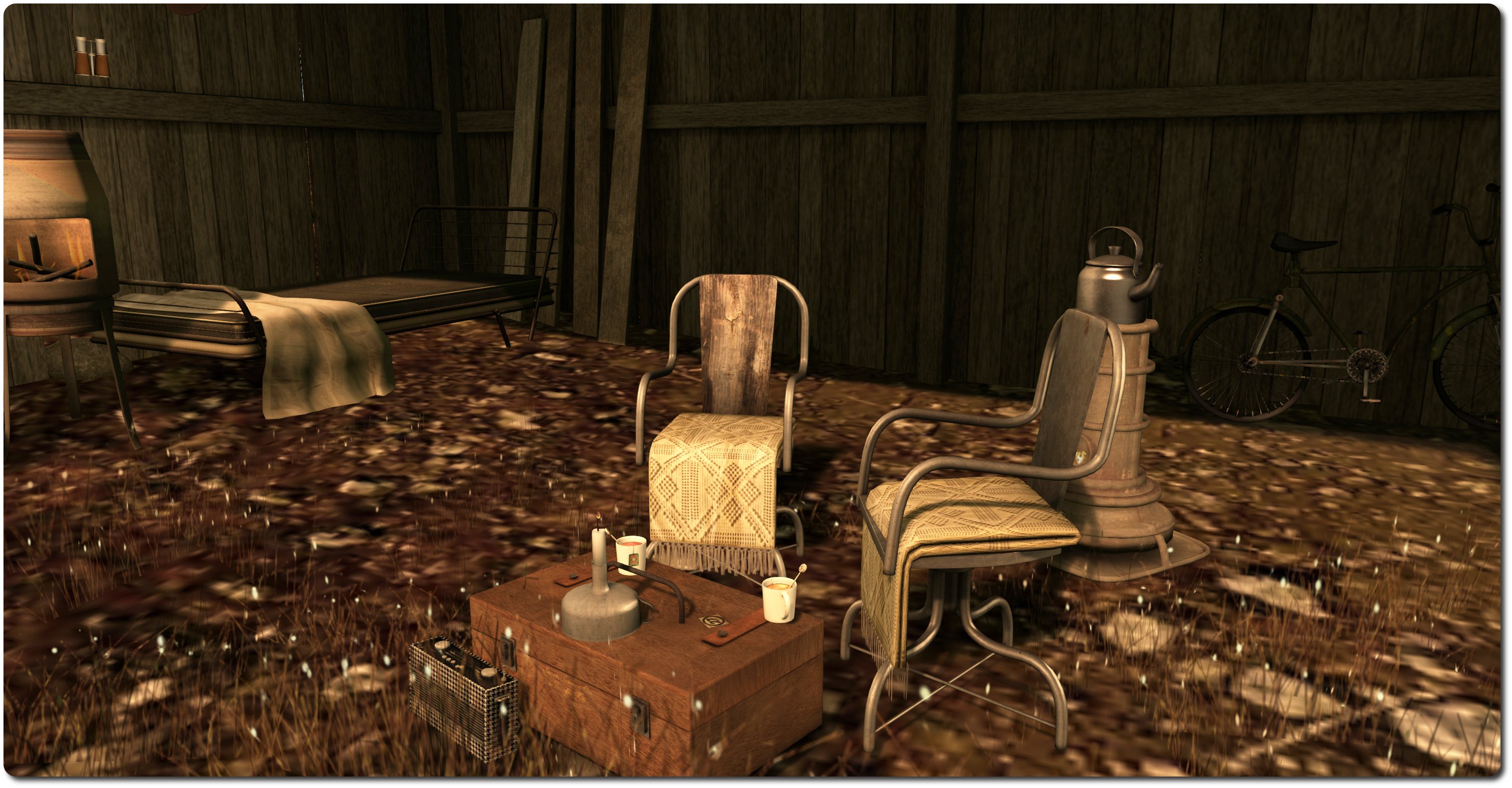
Not that the island is deserted; far from it. Sheep wander the low-lying parts of the island, grazing on the grass, and the little shed shows signs of habitation: there are chairs and couple of wood-burning stoves (one with a kettle atop it), while a bed sits in the corner; all signs that someone finds their way to the island, perhaps to make sure the sheep are fairing well, or perhaps to escape some noisier place across the water. There are other signs of life to be found as well: a hammock here, swings there, a table and chairs under the open sky, blankets out on a wooden pier, a telescope … all await your discovery.

The western side of the island is given over to a huge upthrust of rock. Flat-topped and with stair and path cut into its flank, it overlooks both island and bay, a gravel-like beach of stone and eroded rock separating it from the blue waters of the latter. Follow this rough path around the base of the rock, and you’ll find your way to a secluded beach sheltered between rocky shoulders, and more signs of habitation: a bed made in an old rowing boat and a small tent pitched well back from the water, while an old fishing boat sits at anchor.

Pigeon Island, Neverending; Inara Pey, June 2014, on FlickrPigeon Island, Neverending (Flickr)

Pigeon island is a wonderful rustic coastal scene, ripe for the SL explorer and photographer. But it’s not all that can be found here. Sitting in the wall of the old farmhouse / cottage is a single wooden door. Open it, and you can be transported high overhead to the streets of Meaningless City.

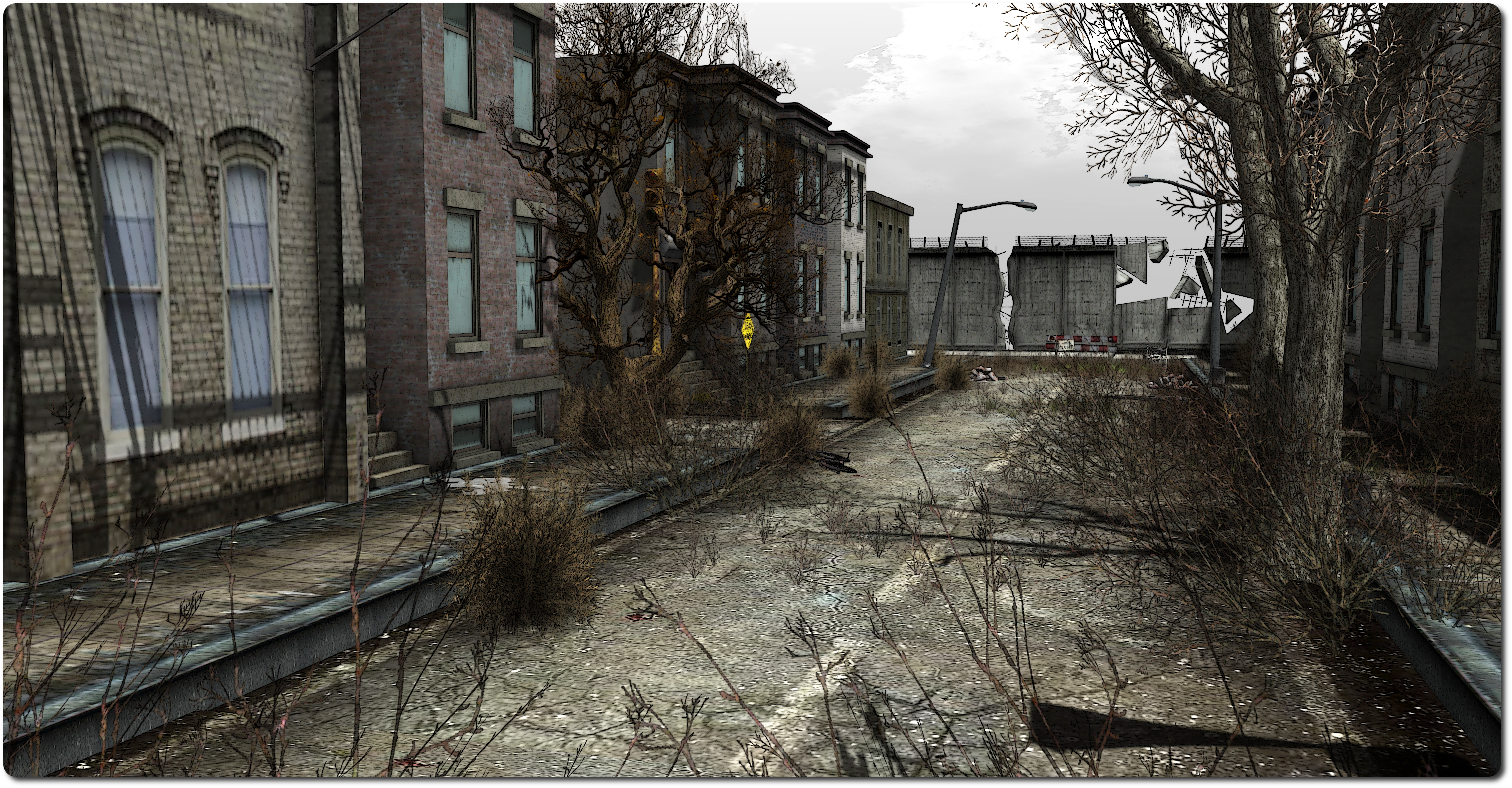
Here is a place very different to the island’s natural beauty. The streets are deserted, their tarmac cracked and breaking, weeds and grass pushing their way up through the gaps;  concrete walls are cracked and damaged, holes revealing their steel reinforcement. All of the houses stand deserted, grime and dirt turning their empty windows into opaque, sightless eyes as crows circle overhead. In the playground, a lone children’s slide stands rusting and forgotten, barrels with flammable warnings adorning their sides sitting close by…

Pigeon Island, Neverending; Inara Pey, June 2014, on FlickrPigeon Island, Neverending (Flickr)

It is clear something has happened to cause the inhabitants to leave this place – but what? Do those barrels with their dire warnings of fire offer a hint, or is it something else? Why are the streets all closed-off by the gaunt forms of concrete walls, the barbed wire along their tops ominously turned inward? And what of the tall, silent sentinel of an old siren standing at one end of a street? What part does that play in the stories waiting to be told here?

Pigeon Island and Meaningless City are poles apart, yet such are the strong contrasts between them, coupled with the strands of stories running through them, that they complement one another in many ways.

Why not pay them both a visit and see what tales they whisper to you?

Related Links

In the garden of The Snow Lion

The Snow Lion, Oceanside dAlliez; Inara Pey, May 2014, on FlickrThe Snow Lion, Oceanside dAlliez (click for full size)

The roar of the Snow Lion is a call for the awakening and integration of the body and the mind.  This garden is dedicated to that perfect integration and to the resulting bliss.

Thus reads part of the description for The Snow Lion, which occupies a quarter of Oceanside dAlliez; a place of serene beauty and tranquil settings.

The design, by parcel owner Sethos Lionheart, carries a strong oriental theme – which is the reason it caught my eye when browsing the Destination Guide – and is cleverly laid-out, offering paths to explore and secluded spots to discover.

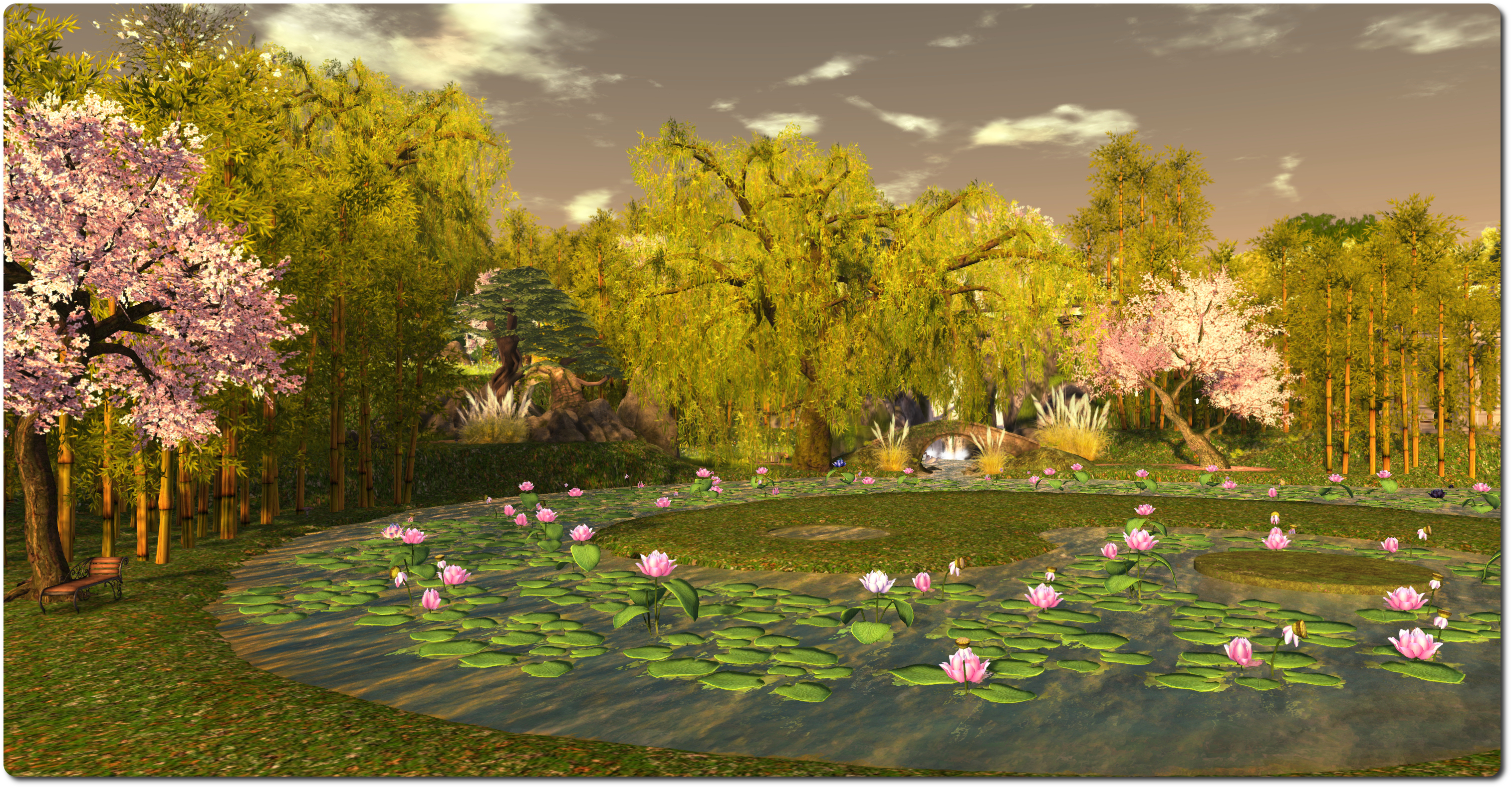
The arrival point is in the lower portion of the garden, and the motif here may not be readily apparent until you cam out a little. When you do, you’ll realise land and water have been carved into a yin-yang, the Chinese philosophical concepts used to describe how apparently opposite or contrary forces are actually complementary.

The Snow Lion, Oceanside dAlliez; Inara Pey, May 2014, on FlickrThe Snow Lion, Oceanside dAlliez (click for full size)

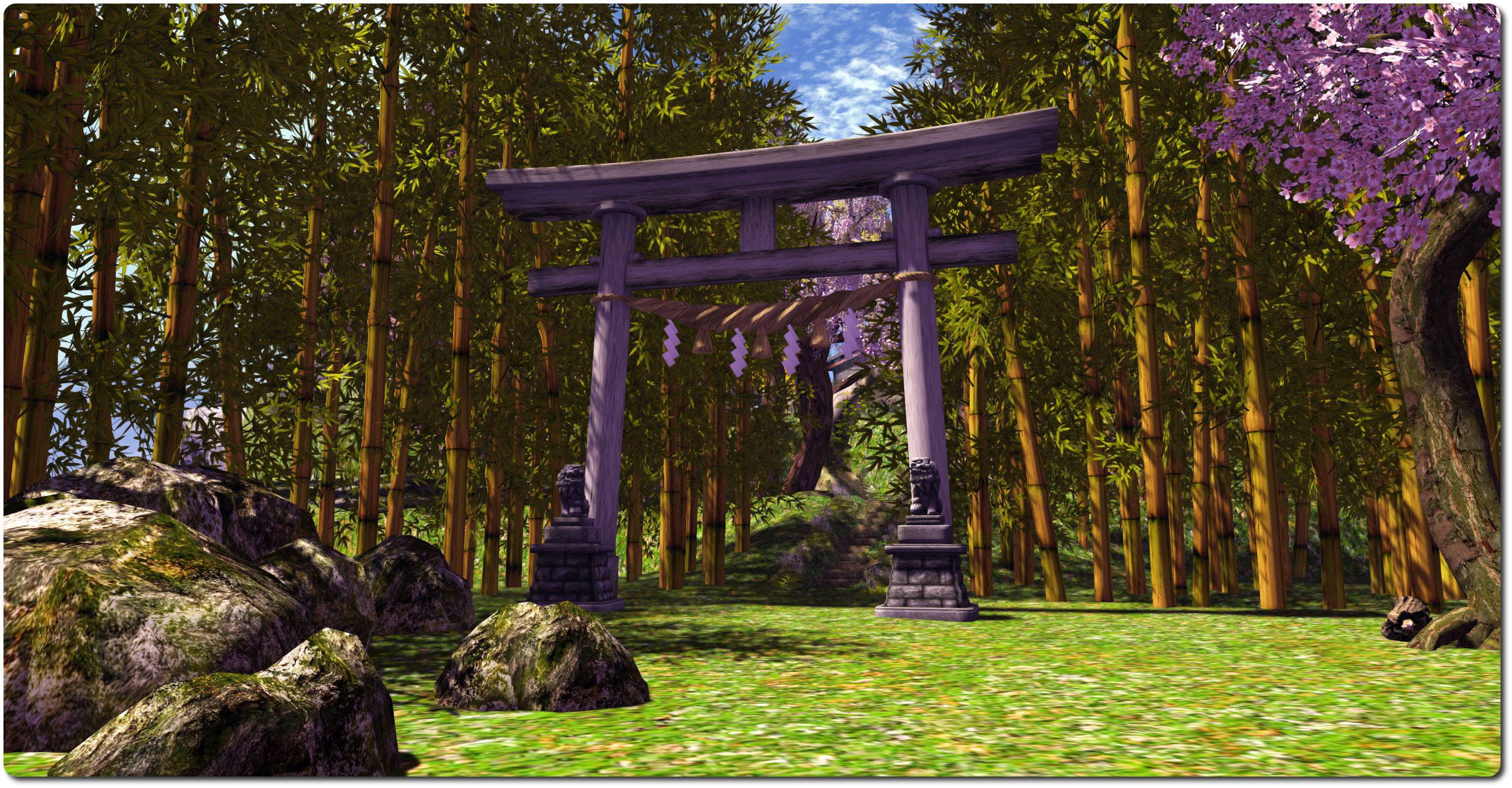
The cleverness of this design is easy to miss: the yin is formed by the water element – in keeping with its passive, soft, and wet characterisation and its association with water. It is rich with water lilies as it curls around the landing-point to join with the sea. The yang element, by contrast, forms a sweep of land, fully in keeping with its solid, hard character. Follow its curve, and it will lead you to a torii gate sitting before a bamboo grove and guarded by two lions. Here the path climbs upwards, passing under a stone arch before splitting left and right.

Follow the path to the right, and it will take you on around the lower part of the garden to a natural-looking pool, fed by water from falls on one side, and open to the sweep of the water “yin” on the other. A stone bridge arches over the water, offering the way to a western-style folly and a quiet place to sit.

To the left, the path runs past a stone terrace, home to a grand piano shaded by the boughs of a huge cherry blossom tree, before climbing more steps upwards to a grassy nook. Here sit cut logs on which to sit, and a harp to play, while the path passes onward  to come before the stone figure of The Wise General, branching right and left before him.

The Snow Lion, Oceanside dAlliez; Inara Pey, May 2014, on FlickrThe Snow Lion, Oceanside dAlliez (click for full size)

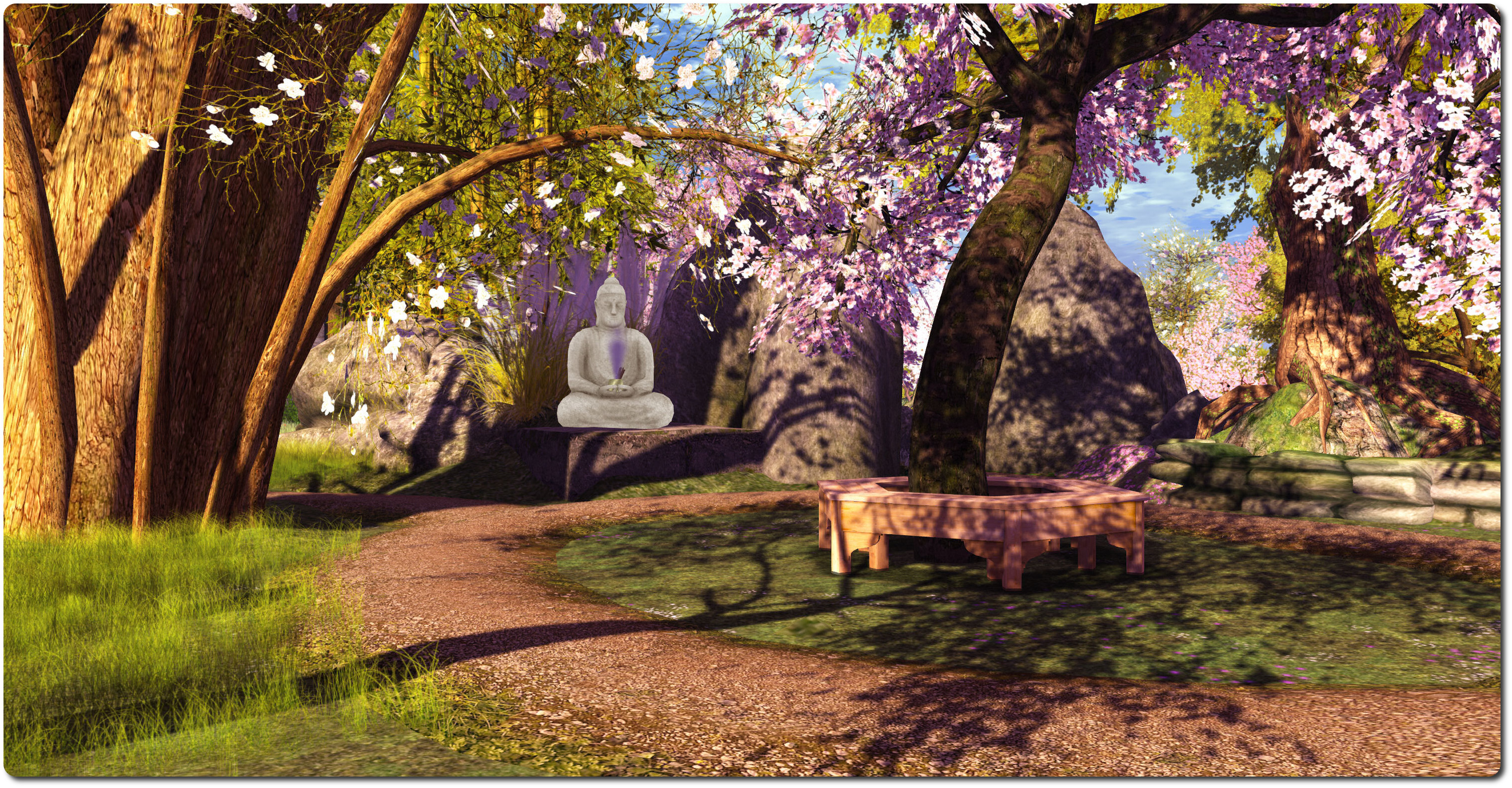
Whichever branch you take is up to you. Follow one through the mid-level of the garden to tranquil lily pond where one can sit alone or with a friend, in quiet contemplation beneath a leafy canopy which naturally hides it from the garden above. Take the other, and it will lead you by stair and bridge to the highest level, passing another quiet glade along the way, this one presided over by a white figure of Buddha.

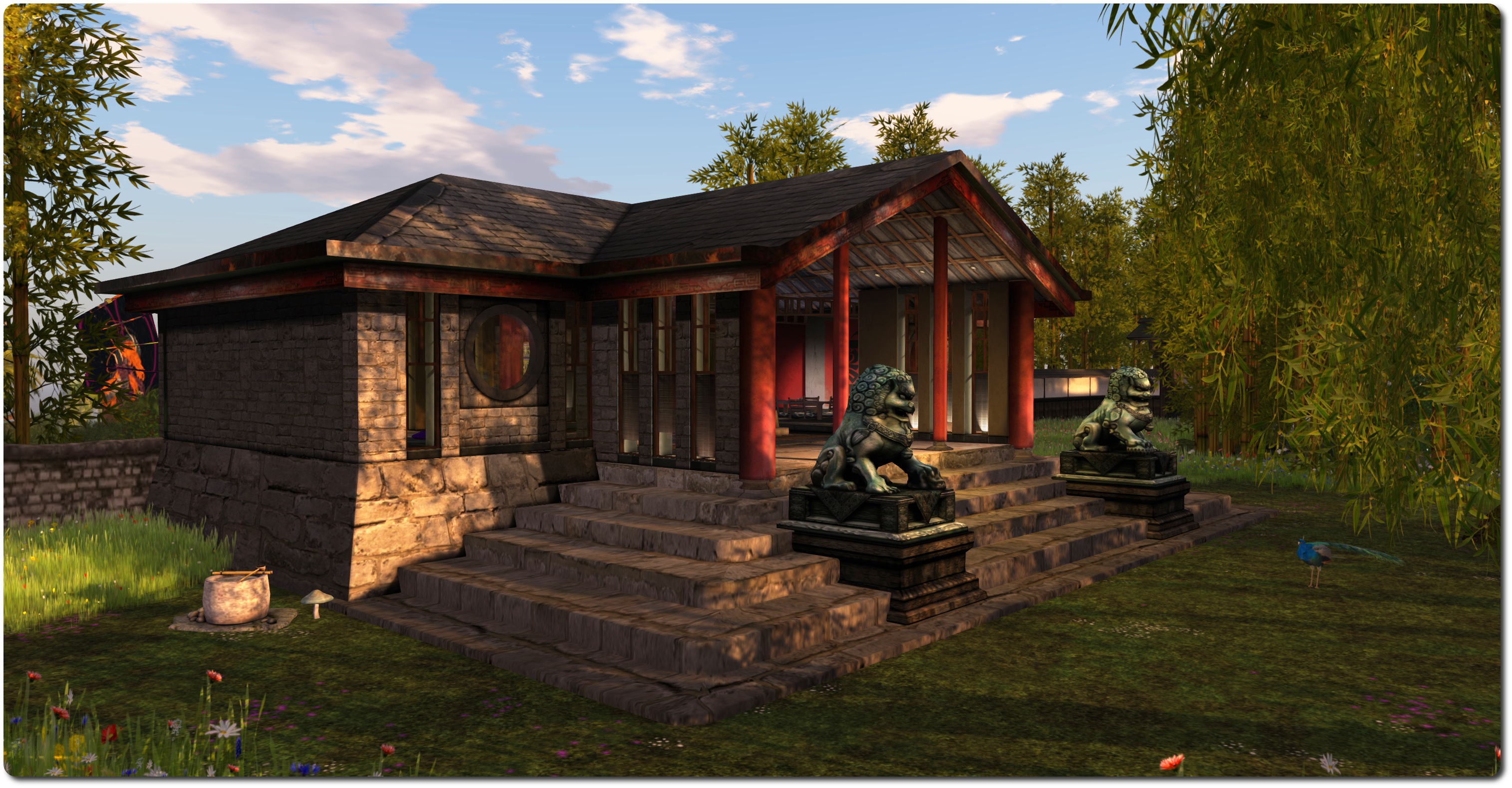
It is on this uppermost level that you’ll find the garden’s single building, a place of decidedly Tibetan looks, yet guarded by two Chinese Imperial lions. It offers a place to meditate or to partake of yoga or to enjoy a cup of simmering Japanese tea. A garden of wild flowers links it with a broad stone terrace, walled on both sides and watched over by the tall forms of torii gates, and which runs the length of one side of the garden.

The Snow Lion, Oceanside dAlliez; Inara Pey, May 2014, on FlickrThe Snow Lion, Oceanside dAlliez (click for full size)

Here you will find speaking scrolls made by  Sethos Lionheart, each one bearing an image of traditional design and which offer words of wisdom when touched. These can be purchased for a modest L$50 each, and would grace the wall of any home. Along this terrace, through a set of wooden gates, another place for contemplation can be found.

The garden offers many places to sit, with poses for individuals, couples and friends exploring together; discrete bird boxes offer opportunities to dance for those who would like to do so. Paper lanterns hang from the cherry trees to light the path at night,  while kimono-dressed foxes hold up lamps to illuminate terrace and folly.

The Snow Lion, Oceanside dAlliez; Inara Pey, May 2014, on FlickrThe Snow Lion, Oceanside dAlliez (click for full size)

All told, The Snow Lion is a lovely place to visit, and an attractive demonstration of yin-yang at work. These can be found in everything from the simple divisions of the path as it leads to very individual points in the garden, each with its own focus, yet still part of the whole, through the expression of the harmonious nature of high and low as you travel up and down through the different levels, to the complementary mix of cultural influences revealed as one explores: Chinese, Japanese, and western. Do make sure, as well, that you have local sounds enabled as you wander the paths and enjoy the terraces and glades.