A Winter Trace in Second Life

Winter Trace; Inara Pey, November 2016, on Flickr Winter Trace – click any image for full size

With winter now folding its arms around us in the northern hemisphere, regions with a winter’s theme are once again starting to appear across Second Life. This being so, it seemed appropriate – thanks (again) to a nudge from friend and fellow grid traveller Shakespeare (Skinnynilla) – to pay a visit to Winter Trace.

This is one of three regions jointly designed by Kylie Jaxxon and Elvira Kytori, the other two being Summer Trace (see here) and Fall Trace (which is on my list of regions to visit, but time hasn’t as yet allowed me to get to it).  Each of them presents a vision of the season after which it is named, with Summer Trace also incorporating a touch of spring, and are presented as such all year round for people to visit and enjoy.
Winter Trace; Inara Pey, November 2016, on Flickr Winter Trace

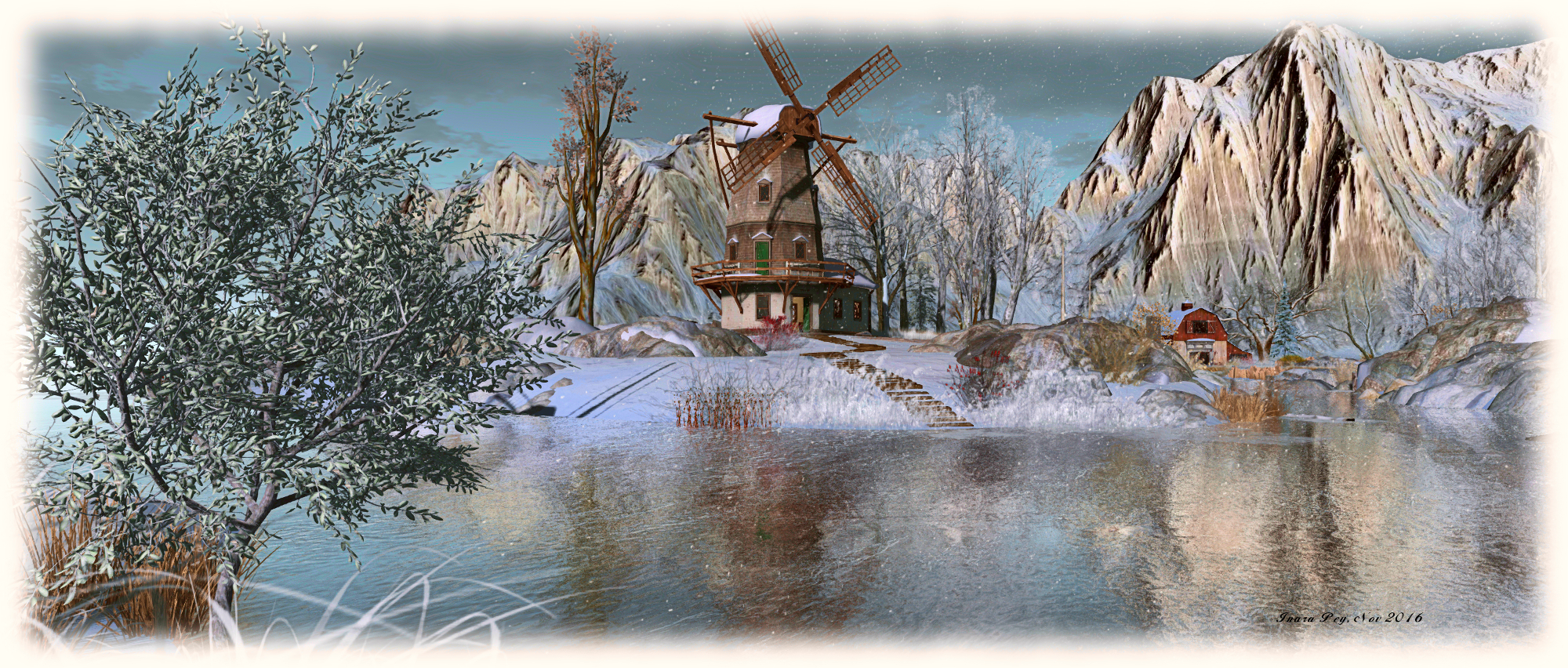
Almost completely surrounded by snow-covered, craggy hills, Winter Trace offers a rural landscape rising from frozen waters which wind their way into the land, slicing it into a series of islands. Most of these are relatively low-lying, although the largest and most central has a humpbacked hill near its centre, crowned by an old ruin.

Across the islands, snow has covered the ground, in places offering something of a salt-and-pepper mix where it has been pressed into the underlying sand by the passage of feet and wheels along tracks and paths. Wooden ties and sleepers are set out on the ground in places, forming footpaths of their own, further suggesting that in summer, this is a warm place, with sand underfoot.
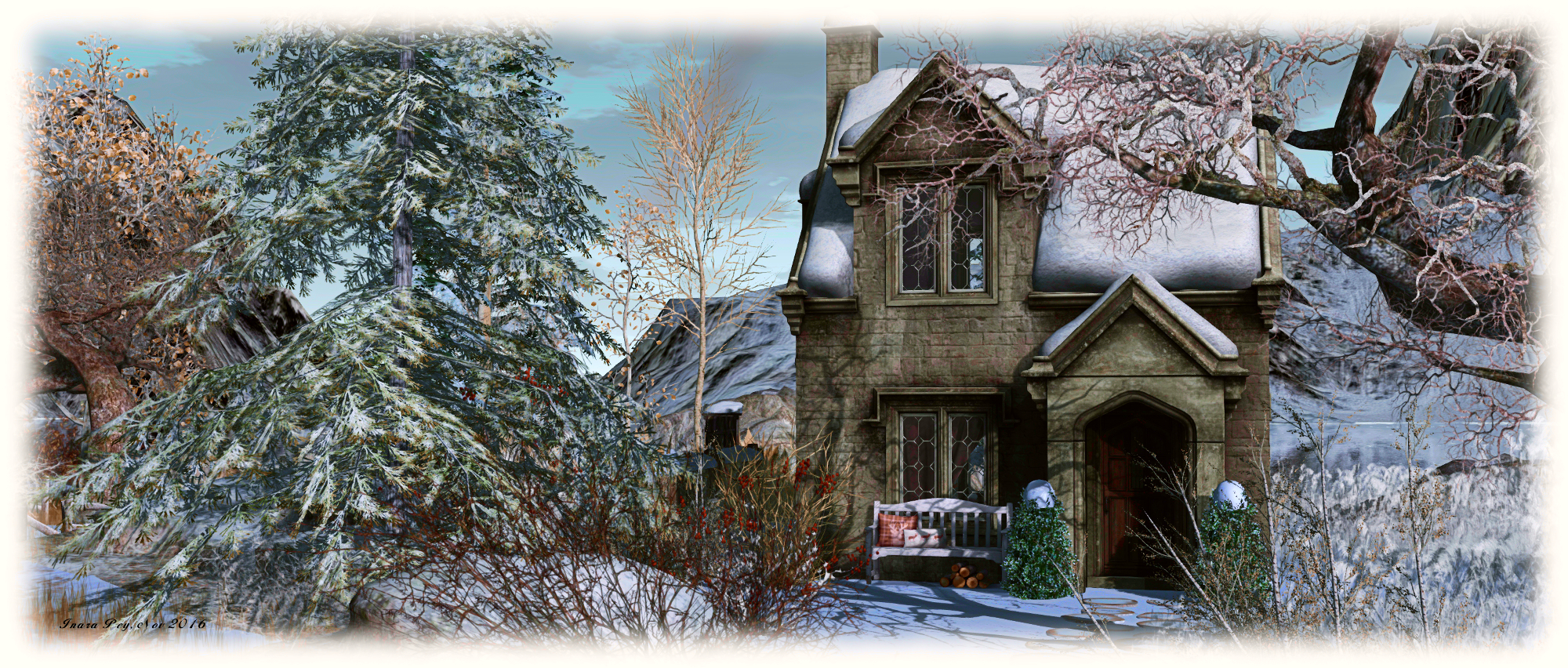
Winter Trace; Inara Pey, November 2016, on Flickr Winter Trace

Windmills occupy two of the islands, a narrow strait of water between them. One contains the region’s landing point, the other offers the potential to be a cosy little home for the budding conversion enthusiast. Across another channel from both sits the dark hulk of the ruins, a great stone bridge close by adding to the suggestion that perhaps long ago, this was a place of strategic importance to someone. Now, however, the ruin offer nothing more menacing than the chance of go sledding down the open slope of the hill pointing eastwards from it.

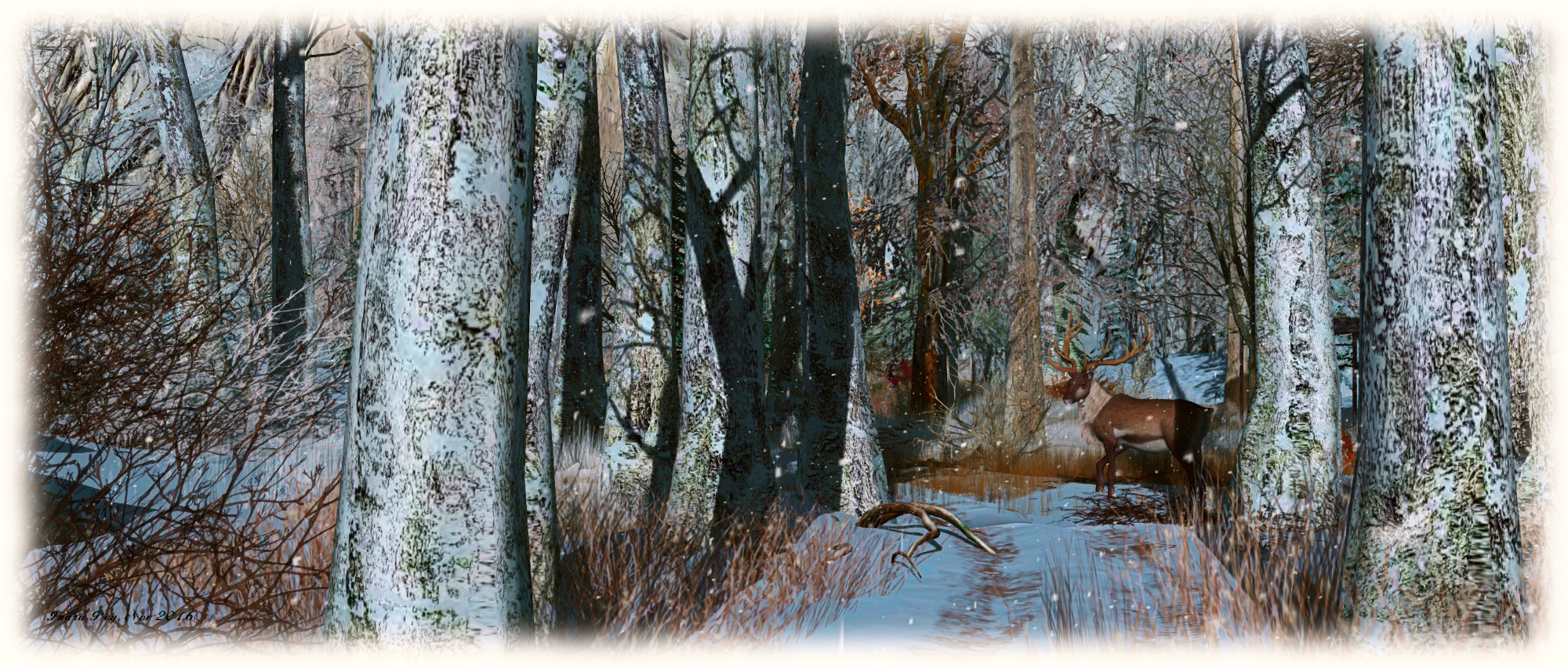
Further east and across a modest wooden bridge, stands a converted barn, its interior now a comfortable home, the horses it may once have housed now relegated to the field outside where the grass pokes up through the blanket of snow. To the south side of the barn there’s a narrow neck of frozen water, offering quick route back to the largest island, the trails that wind between larch and beech trees denuded of their leaves, branches raised to the grey sky, while between them fir trees carry a powering of snow on their shoulders.
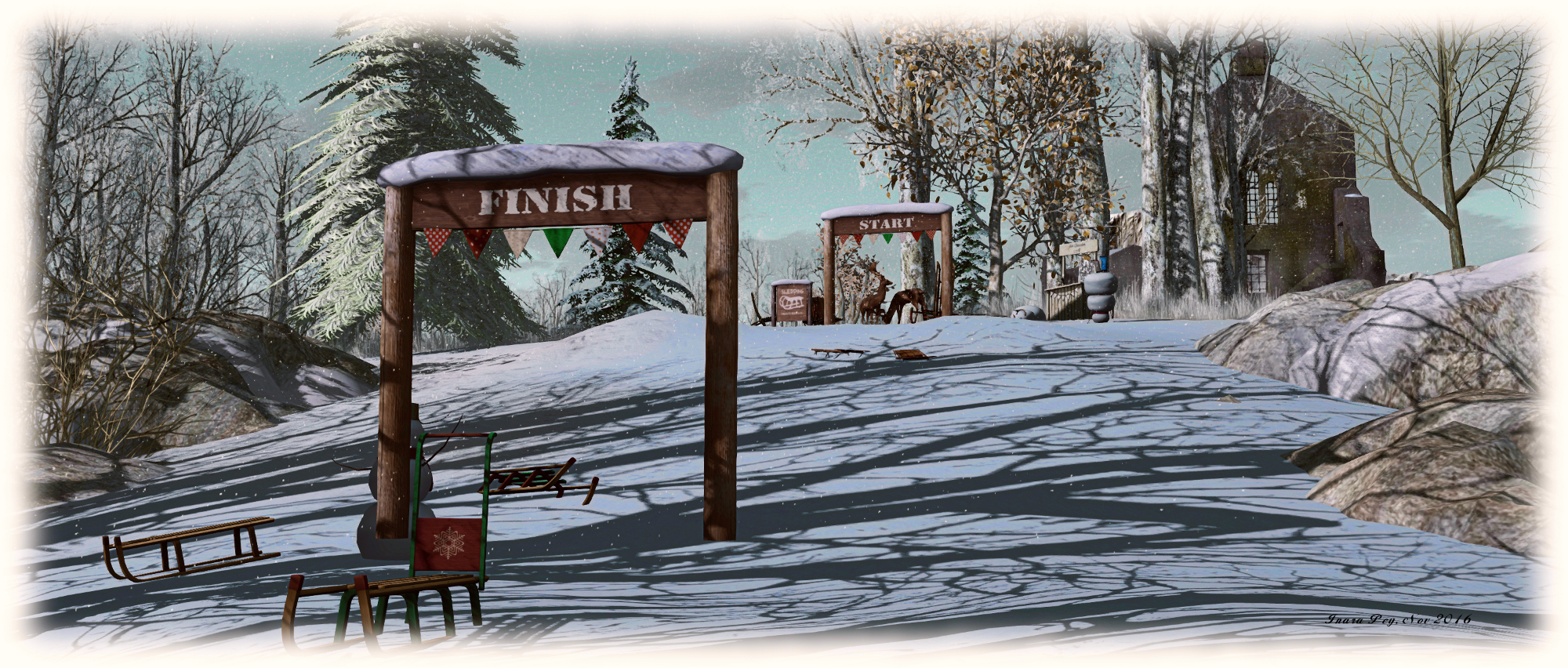
Winter Trace; Inara Pey, November 2016, on Flickr Winter Trace

There are other signs of habitation to be found scattered across the land besides the windmills and barn, such as the little farmer’s market – currently the home of a woodcutter going by the piles of trimmed logs – and a little cottage sitting alone on an equally little island. Also to be found and places to sit and admire the view and / or have the odd cuddle with someone close. There are outdoor fires to help you stay warm, and fires in the hearths indoors should it prove too cold outside.

With snow gently falling from clouds moving lazily across the sky, a soft, subtle sound scape and opportunities for photographs in every direction and at every turn, all of which is set under a perfect windlight suggestive of a fresh, cold winter’s morning, Winter Trace is not a place to be missed – at any time of the year.

SLurl Details

Knightfall in Second Life

Knightfall
Knightfall – click any image for full size

Knightfall is a relatively new destination in Second Life, having opened in October. I actually became aware of it as a result of Shakespeare (Skinnynilla) passing me the landmark recently – my thanks (again!) to him for doing so.

Knightfall has been designed by Cyrus Knight (josman2088) and Jestyr Knight (Zeke Jestyr), the partnership behind the popular Ironwood Hills (see here and here). Jestyr describes the region as, “an immersive sensory medieval adventure park. It’s kinda like Jurassic Park and Westworld meets Game of Thrones, but without so much dying or dinosaurs!”

Knightfall
Knightfall

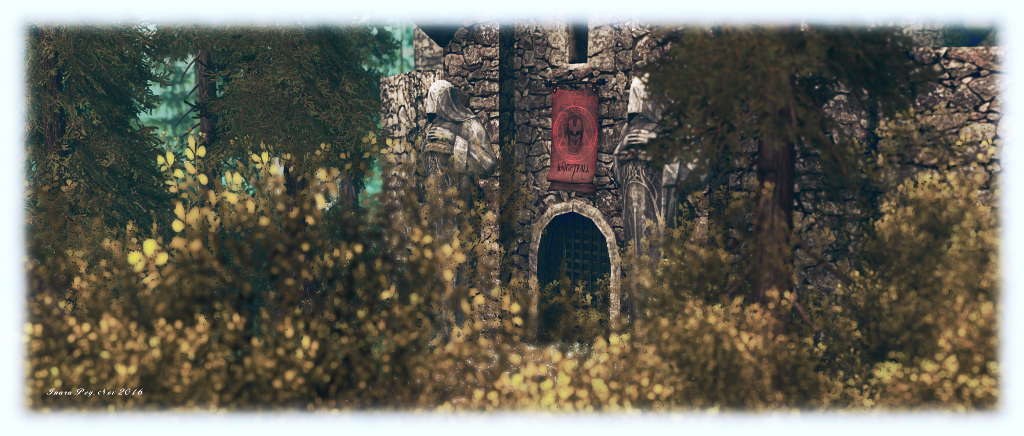
There’s much to see here, and the idea of it being a kind of theme park is immediately evident on arriving: the landing point is a car park, with turnstiles at one marking the entrance proper. Beyond these lies a dramatic landscape of deep gorges and high cliffs topped by grass-covered or snow-swept plateaus; a place where bridges of every kind  – covered, stone, wood and rope, fallen log – span rivers and chasms alike.

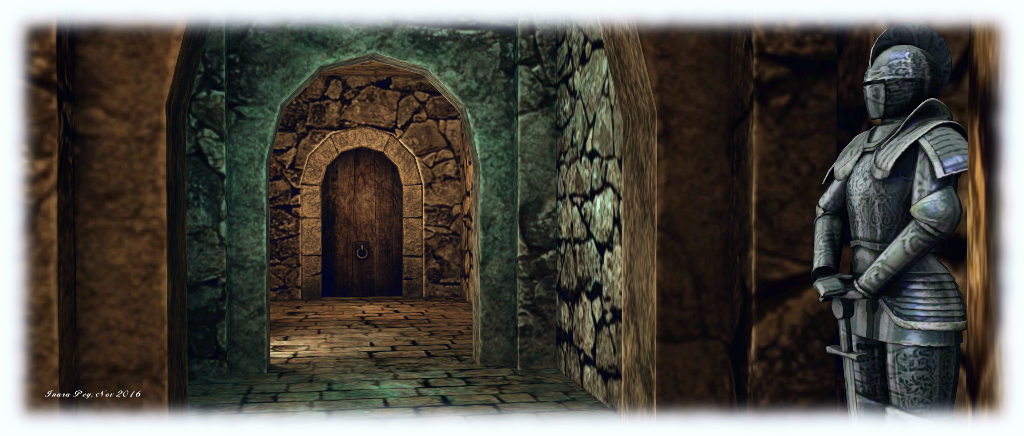
It is also a place of curious mystery: who occupies the camp reached by flimsy bridge and flimsier looking wooden walkway clinging to a sheer rock face as it is beaten down upon by a blizzard? What witchcraft or necromancy is at work down in the valleys, where a witch’s retreat sits across a burial ground from a ring of standing stones complete with mystical book at their centre? What do we make of the mighty castle, within whose walls are many more mysteries, including access to a hidden catacomb, and a strange laboratory which might have been lifted from Mary Shelley’s Frankenstein?

Knightfall
Knightfall

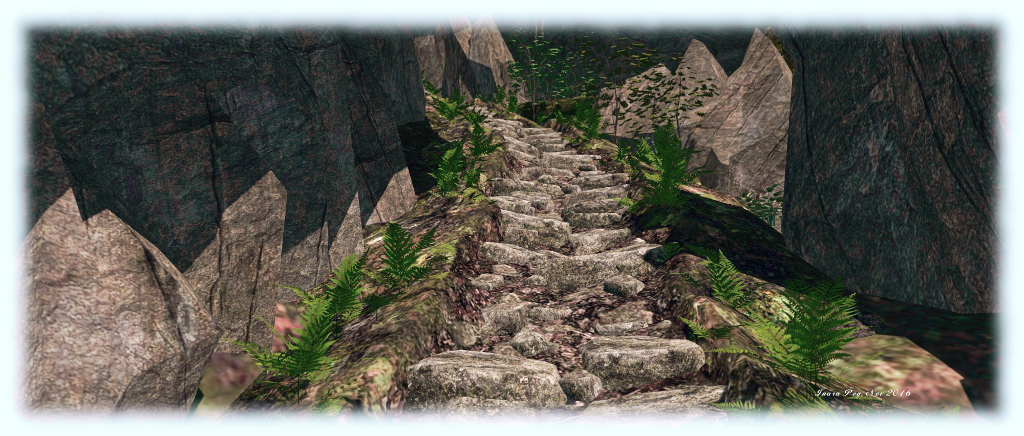
Around these conundrums, the region is spectacularly folded and cut, offering much to see, from the riverside hamlet right up to the aforementioned castle and camp. Rocky paths wind, climb and twist between rocky wall and pointed up-thrust, watched over by the tall, silent sentinels of great fir trees.

I freely confess to not understanding where either Jurassic Park or Westworld fit into the scheme of things. But this, and the niggles Caitlyn and I encountered in trying to ride the offered horses through the land, did not detract from the rugged beauty of Knightfall. Anyone who has enjoyed Ironwood Hills through its various iterations will likely feel the same way here as well. Photographers, too, will find much that is on offer here as they follow path and ancient stone stairs, and visit stone rooms and climb rounded towers.

Knightfall
Knightfall

SLurl Details

Women of Science in Second Life

Women of Science History Museum

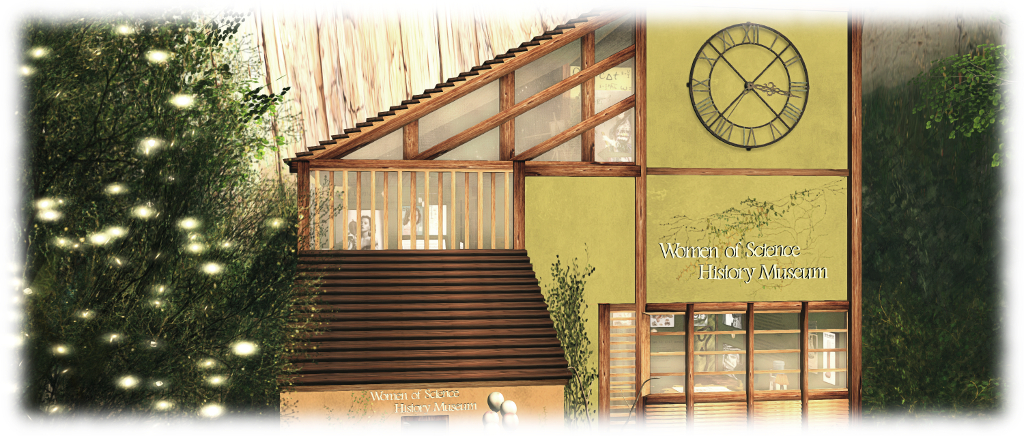
Tucked into a little corner of Second Life, and easily overlooked, is the Women of Science History Museum. I first visited it in early October, after noting it featured as an Editor’s Pick in the Destination Guide, but it’s taken me a little while to sit down and write about it!

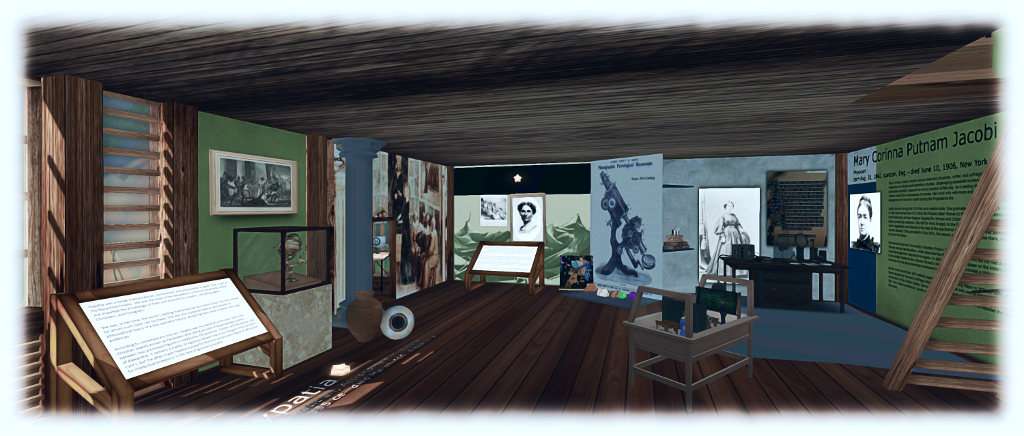
Occupying a modest garden offering a place for visitors to sit as chat, the museum is curated by Elliot (LadyAngelDust), and occupies a three storey structure to one side of the garden. Inside is a selection of informative biographies of some of the women who have contributed to our understanding of the sciences over the years.

Women of Science History Museum

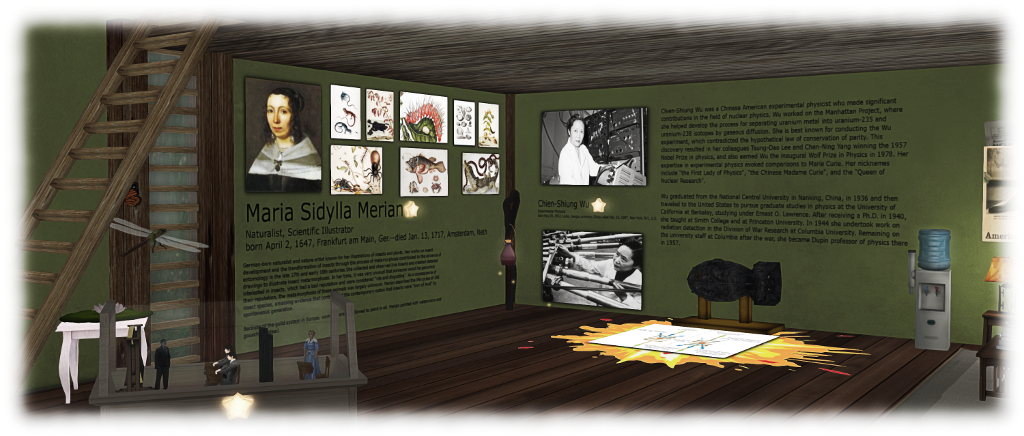
It’s an eclectic and diverse group; some will be familiar to many – Hypatia (355-415 ce), Ada Lovelace (1815-1852) and Marie Curie (1867-1934) to name three – while others may be less well-known, such as Mary Sherman Morgan (1921-2004) and Chien-Shiung Wu (1912-1997), with a total of twelve women from history represented across the three floors of the museum.

Each woman is represented by a display which includes props representing their field, photographs and a biography – the latter of which can also be obtained in note card form by clicking on the gold star alongside their names.

Women of Science History Museum

Wisely, they are not presented by science background or in chronological order (although the second floor exclusively features women born in the 20th century). This encourages fully exploration through the museum, which leads visitors up to the upper floor and a teleporter sitting in a corner.  This provides access to the planetarium and the biographies of four more women, including a personal heroine of mine, Claudia Alexander.

There is perhaps a slight bias towards American women evident at times, particularly in the planetarium section, where it would have been nice to see someone like Nicole-Reine Lepaute recognised. I also felt it a shame that Mary Anning, who was denied proper recognition for her ground-breaking work in palaeontology during he own lifetime, is not included. But these are minor niggles, and it’s fair to say there are a lot of women who might justifiably be included, but the museum only has so much space. Certainly as minor critiques, they do not detract from the fact the museum does make for an informative visit, and is fully deserving in being recognised as a DG Editor’s Pick.

Women of Science History Museum

SLurl Details

A mystical Telrunya Winter in Second Life

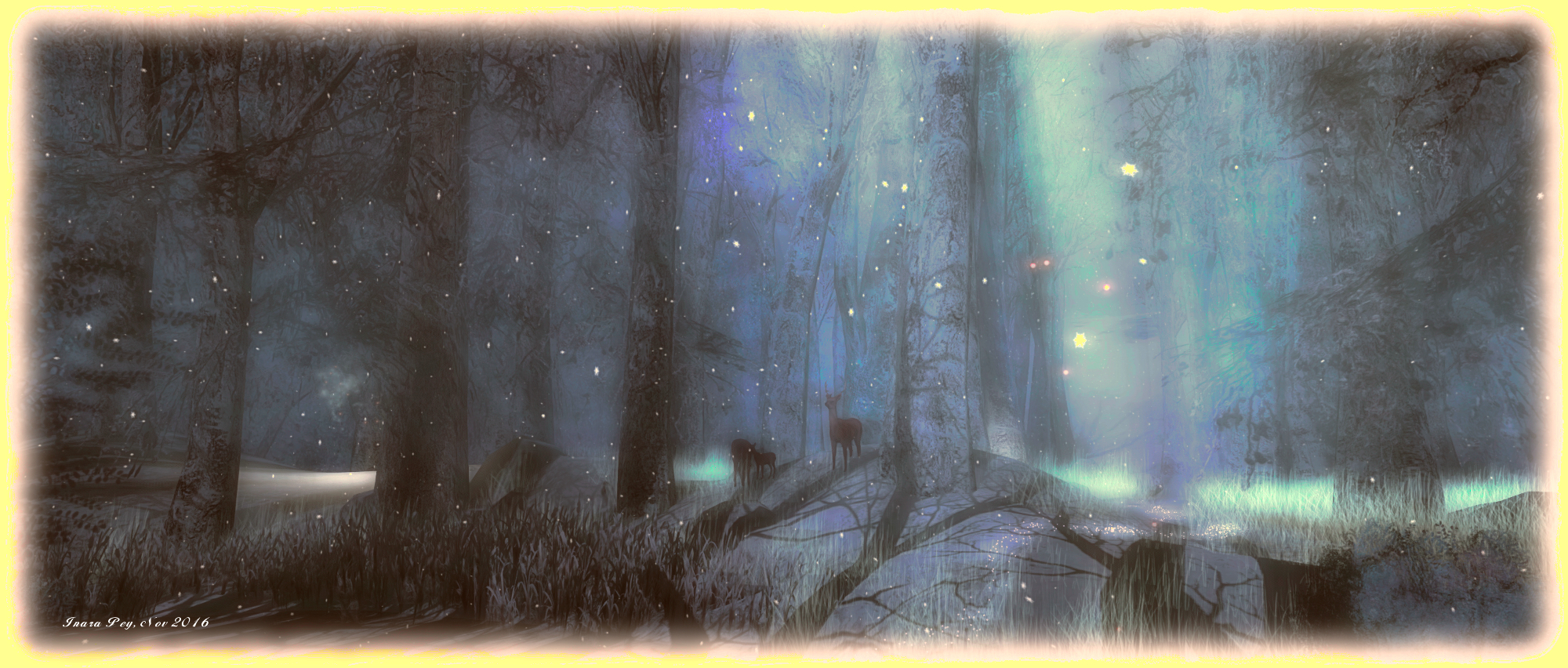
Telrunya Winter; Inara Pey, November 2016, on Flickr Telrunya Winter – click any image for full size

At the start of 2016, I wrote about Telrunya – Forest of Dreams, a resign design by Nessa Zamora (Noralie78). It was a beautiful, tranquil place which I likened to an elven corner of Tolkien’s Middle Earth.

Well, time has moved on since then, and places have changed; the Forest passed into the west some time in 2016. However, Telrunya’s spirit has now returned to Second Life in the form of a new design by Nessa, in a new location, and with a new name.

Telrunya Winter; Inara Pey, November 2016, on Flickr Telrunya Winter

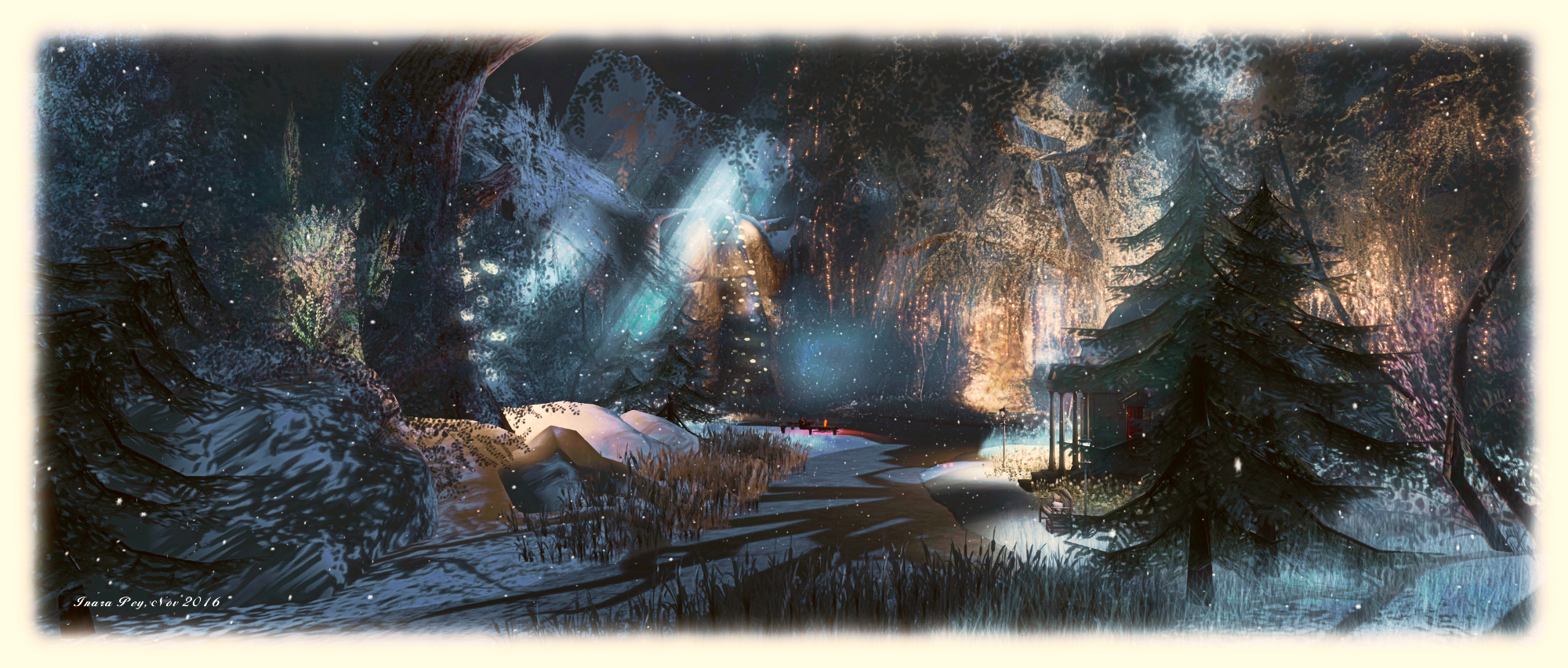
Telrunya Winter, occupying the homestead region of Diamond Island presents visitors with a winter wonderland of snow, night skies, shafts of Moonlight filtering through frosted trees and the glow and scatter of winter lights. It is at once very different to the Forest  of Dreams while at the same time bearing an echo of that build.

From the landing point under the dome of a Victorian gazebo, visitors are invited to explore the region on foot or via ice skates – sets are available with snowballs at the landing point for a small fee. A frozen river offers plenty of scope for the latter, as it curls away from an ice-covered pond. And if you take the right direction, you might find a little surprise.

Telrunya Winter; Inara Pey, November 2016, on Flickr Telrunya Winter

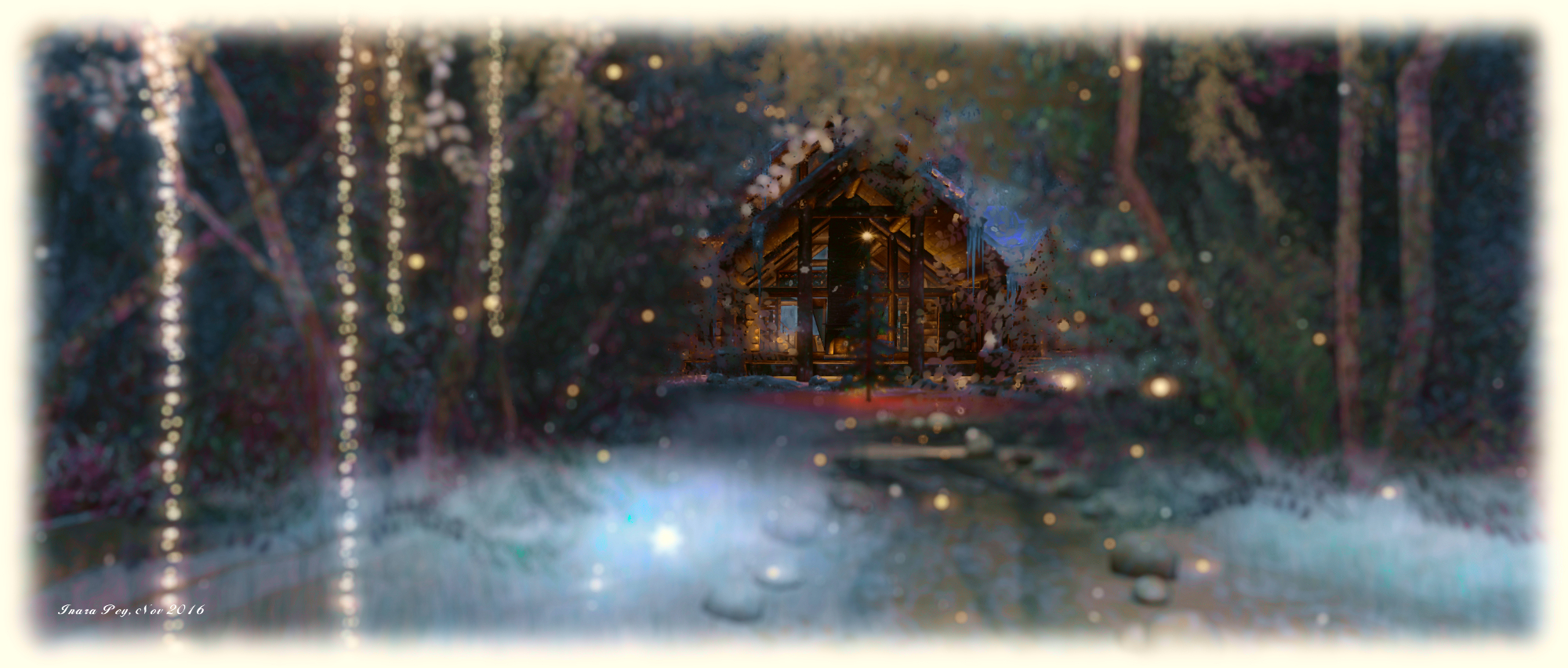
For those whole prefer walking, the crisp, white snow is inviting of footfall, and walking across it, one can almost hear that soft, fresh crunch of it being compacted underfoot. Follow the stone-edged trail over a bridge and under bough, and you’ll find your way to a wood cabin. Here, light and warmth invitingly pour forth; fires burn brightly in hearths, warming rooms furnished with deep armchairs and sofas. For those not yet ready to come inside, another fireplace on the covered porch offers warmth to those wishing to use the bench alongside to sit in comfort and continue to appreciate the aurora-washed sky and the gently falling snow.

South of the gazebo, across ice and snow, a low rocky plateau pushes upwards from the otherwise almost flat land, a table on which ancient ruins sit, arches lit by naked flames as they look out between the snow-draped shoulders of the high surrounding peaks. Elsewhere, strings of lights hang from the bare arms of trees, deer walk between moonlit trunks, lanterns glow and float through the air, giving the entire region a feeling of otherworldly magic, with places a-plenty to sit and ponder and enjoy, alone or with a friend or loved one.

Telrunya Winter; Inara Pey, November 2016, on Flickr Telrunya Winter

With winter closing around us in the northern hemisphere, it is traditional to see winter landscapes come to the fore in Second Life. Telrunya Winter is the first I’ve visited since the start of the year, and it certainly won’t be the last. However, it will be special, Nessa has a talent for creating places with a mystical air and feel, as Telrunya Winter amply demonstrates. It is a tranquil slice of winter not to be missed.

SLurl Details

A pilgrimage of the prim in Second Life

Temple of the Prim
Temple of the Prim

There are many places in Second Life from which legends and tales are sprung. As I recently noted, there is the famous Prim Rig of ANWR, itself linked to the deeper legends of Magellan Linden, Heterocera, Nova Albion, et al. Then there is the mysterious fairground at Pyri Peaks from whence Moles were said to have vanished (see here) and the equally mysterious Cape Ekim, involving Professor Linden (see here), to name but two more.

Another such place of mystery is the Temple of the Prim, located in Corsica. This strange site, ancient and perhaps hallowed, lies atop the south-east corner of the continent’s great rocky plateau, at a point where the naked rock thrusts outwards in a shoulder-like ridge. But to reach it requires no small amount of dedication, as to visit it properly requires something of a pilgrimage.

Temple of the Prim - walkway
Temple of the Prim – walkway from Viktarin

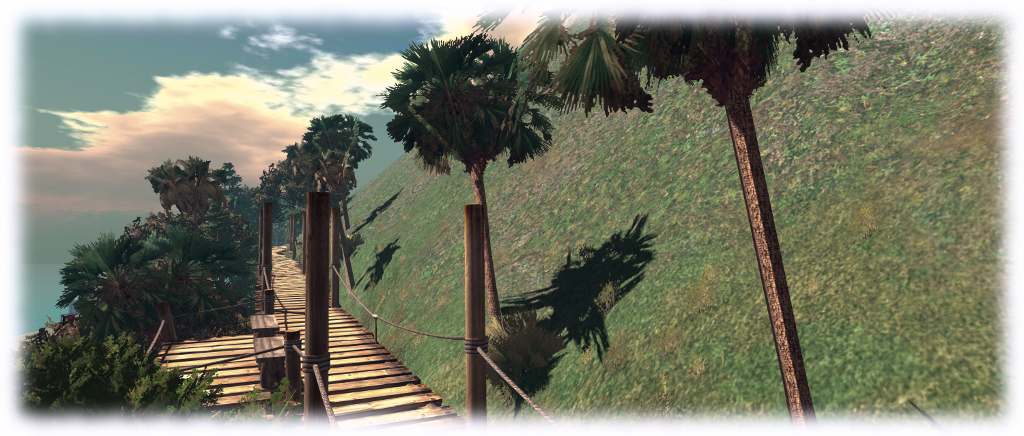
First, one should begin at the beginning – a wooden walkway strung from pole piled into the grassy ground, which slowly and gently winds its way around the base of the ridge, Trees line the walkway, and there are little rest points along the way where you might catch your breath – and you’ll need plenty of breath! Why? Because at the end of this walkway lies the start of the next part of your journey: a switchback climb up the side up the ridge.

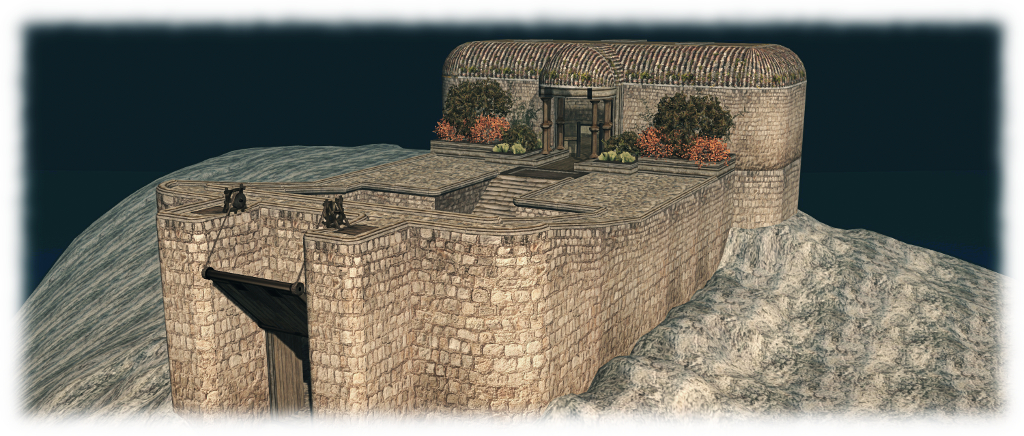
While this starts on the grassy lower slopes, it quickly leaves all forms of flora behind, to cut its way up the side of the living rock, twisting sharply back and forth as it does so. And just as you feel you can climb no more, it turns and levels out suddenly, and there stands the Temple, its great stone walls towering over you, thick and strong, a massive gate raised between two defensive towers, inviting you to enter.

Temple of the Prim
Temple of the Prim

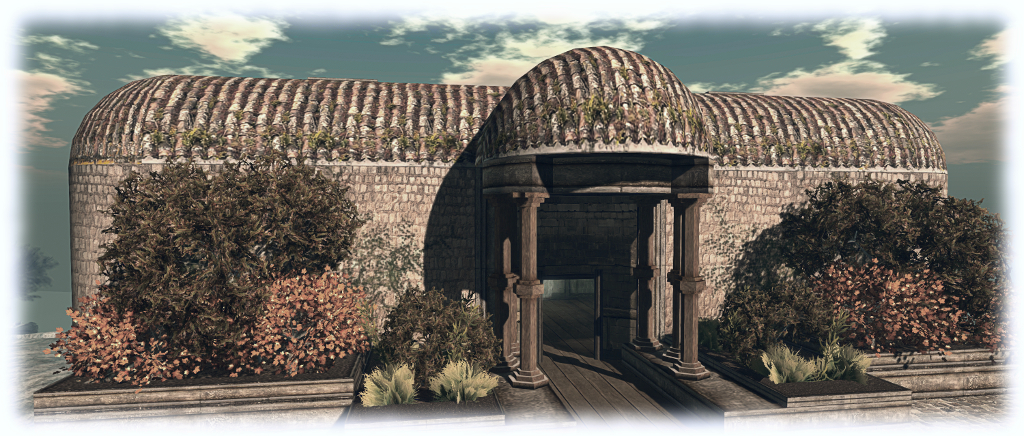
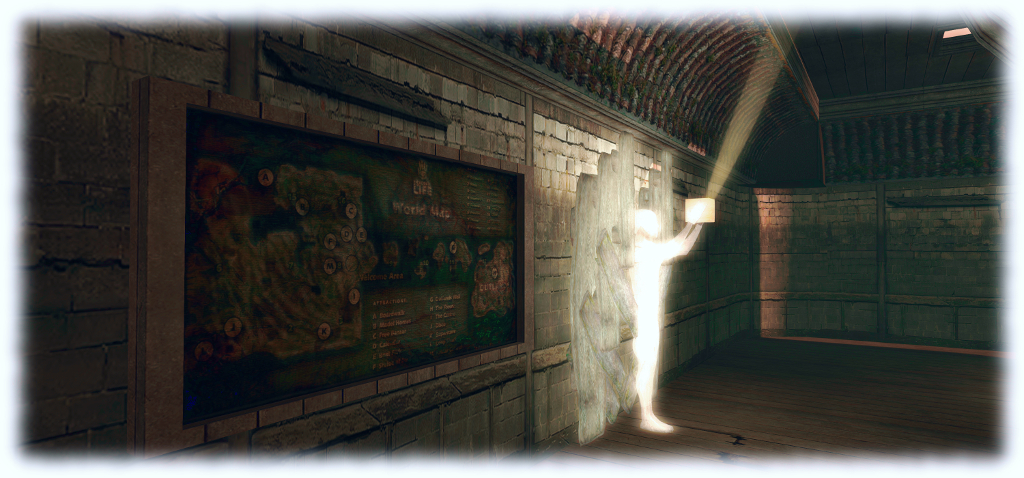
A at the top of the great stone ramp rising from the courtyard sits the Temple proper, its domed entrance flanked by trees and shrubs. Within its great hall stand three great statues, each holding aloft a giant prim so that it catches sunlight pouring through openings in the roof. Such is the intensity of the captured light, the statues themselves glow in its radiance.

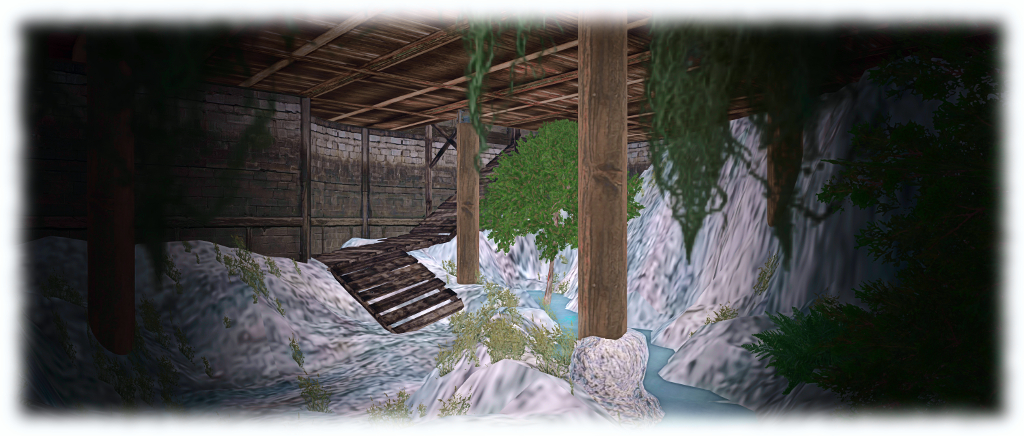
On the wall close to one of the statues, aged and slowly fading, is an ancient map, perhaps the very first ever made back at a time when this world was new, revealing the (then) known lands. To one side of the room is a wooden stair, leading down to a lower level, and thence to an underground river which strangely rises and falls within the walls of the Temple’s foundations.

Temple of the Prim
Temple of the Prim

But what are we to make of all this? I turned to the one authority I could think of: the legendary Michael Linden himself, ensconced in his dusty office at the LDPW.

“Ah yes!” he replied. “After traversing several hundred meters of precarious rope bridges, you come to the bottom of an enormous stone mountain. A path winds up the face of the mountain. At the peak is a stone fortress, clearly meant to repel invaders. Passing through the gate you find yourself in a courtyard; majestic steps lead up to the Temple of the Prim.”

“Yes!” I replied, “I know!” But what is it for?”

He sat in thought for a moment, eyes reflecting the light of the fire burning slowly in the hearth, nose twitching. Then he looked up, eyes still shining. “You know, I haven’t the foggiest! The DPW cleared away the dust and sediment, but many questions remain!”

Temple of the Prim
Temple of the Prim

Perhaps one day, they will be answered. But for now, the Temple of the Prims stands tall and strong against the march of time, open to visitors and pilgrims alike.

Will you be one?

SLurl Details

Quotes from Michael Linden in part borrowed from an old and dusty forum post which spurred this article.

A taste of Dystopia in Second Life

Dystopia // [flit ink] + aberrant; Inara Pey, November 2016, on Flickr Dystopia // [flit ink] + aberrant – click any image for full size

Dystopia is the home of the [flit ink] and Aberrant brands. It is also another of those in-world commercial locations well worth a visit whether or not you’re looking for avatar accessories, simply because of the amount of care and attention which has gone into making the region both photogenic and open to the potential for casual role-play.

As the name might suggest, together with the About Land description, the role-play in this case centred on a dystopian, post-apocalyptic future where climate warming has run amok, and (it would seem) civilisation has broken down, leaving the shattered remains of an urban area – where is not stated, although it presents a curious blending of American, British and Japanese cultural elements – which now appears to be in the hands of gangs, or perhaps tribal units.

Dystopia // [flit ink] + aberrant; Inara Pey, November 2016, on Flickr Dystopia // [flit ink] + aberrant

It’s a haunting place, roughly divided between the three districts: Dystopia, Carnage City and The Slums, and caught in a perpetual night, although I opted to use daylight settings when taking pictures. All three areas naturally flow one to the next, providing a continuous setting for role-play and / or photography.

The given landing point drops visitors on the upper level of the region, alongside the two stores.  Nearby, a fuel tanker is ablaze, perhaps the first indication that things are amiss. Across the road a deserted children’s playground overlooks the weed-choked river which diagonally cuts through the town, its far bank home to a strange conglomeration of buildings and metal shipping containers. Litter lies on the tarmac, graffiti covers walls, and everywhere windows are boarded, batter or broken.

Dystopia // [flit ink] + aberrant; Inara Pey, November 2016, on Flickr Dystopia // [flit ink] + aberrant

Follow the road past the burning tanker and around the corner and you’ll walk past rudimentary club houses, shattered shops and what appears to be a hastily evacuated school-house, now given over to the base of operations for a local gang. Just beyond this, a bridge provides access to the remnants of a decaying amusement park. This sits alongside the shanty-like village of containers and wooden structures  first seen from across the river. Built with the aid of a massive construction crane, this shanty town, with its ladders and connecting aerial walkways looks to have been built for defence as much as anything else.

To the west of all this, and lying on lower ground, the rest of the town has been overtaken by rising sea levels. Here the sidewalks are barely above water which has turned the streets into rivers. The futuristic awning of a subway station rises from the flood, the handrails of steps down into its bowels offer a forlorn pointer to the platform and rails submerged below, where a strange mix of Japanese signage and very British destinations can be found – although unsurprisingly, all trains to them have been cancelled.

Dystopia // [flit ink] + aberrant; Inara Pey, November 2016, on Flickr Dystopia // [flit ink] + aberrant

With a smaller, more rural elements which include dirt tracks, shingle sided church, tree houses, and hilltop moonshine still, a trailer park a plane wreck and even a small run of tunnels, Dystopia offers a lot of space for exploration and – as noted – casual role-play for those so minded.

For those interested in the role-play element, the region has an accompanying website where more information can be found. However, this doesn’t appear to have been updated in a while, so I’m not at all sure how active the region is RP-wise or events wise – but still offers a good starting point for finding out more.

All told an engaging design by Flit Ulrik (of Flit Ink), Dylain Nikita (of Aberrant), Epidural hematoma (Epimitheus), and MollyWolliDoodle, Dystopia makes for and interesting visit.

Dystopia // [flit ink] + aberrant; Inara Pey, November 2016, on Flickr Dystopia // [flit ink] + aberrant

SLurl Details

With thanks to Loverdag for the pointer, and apologies to Epidural hematoma for missing his name off the list of designers.