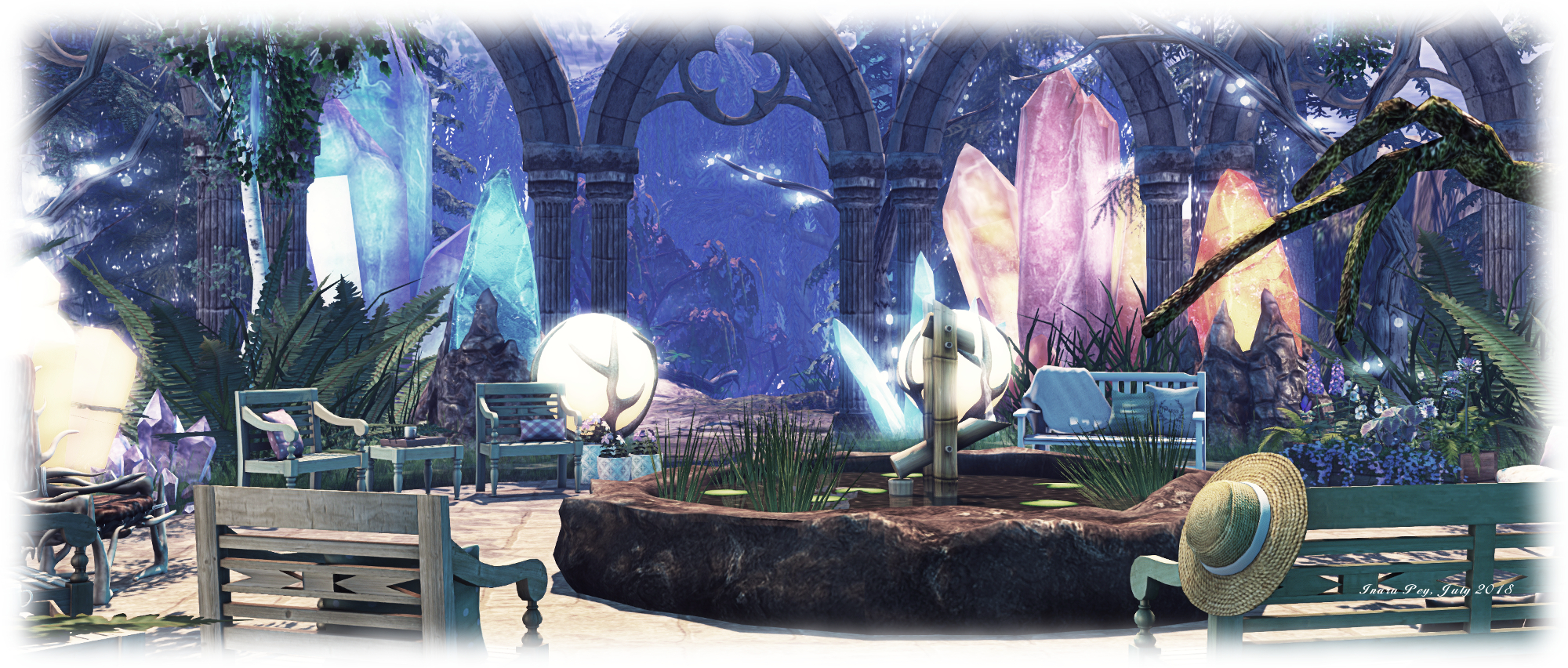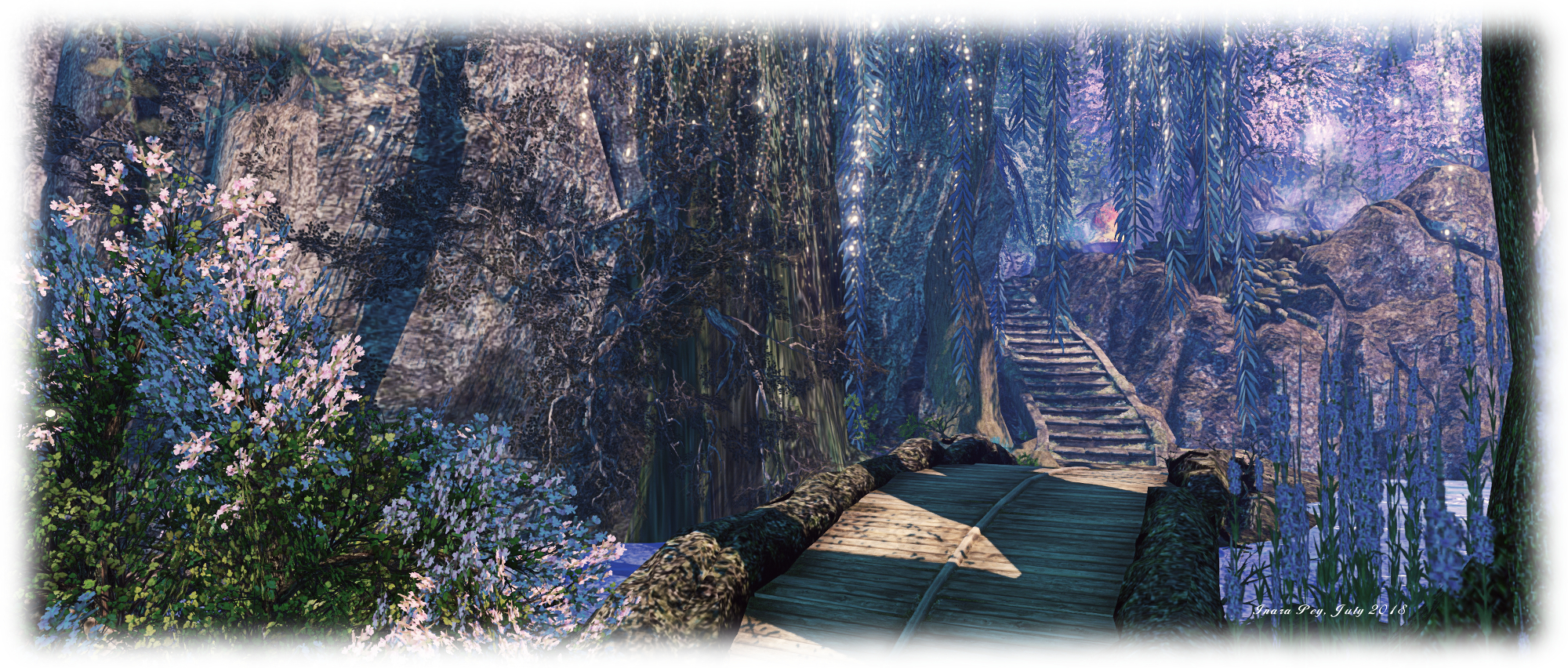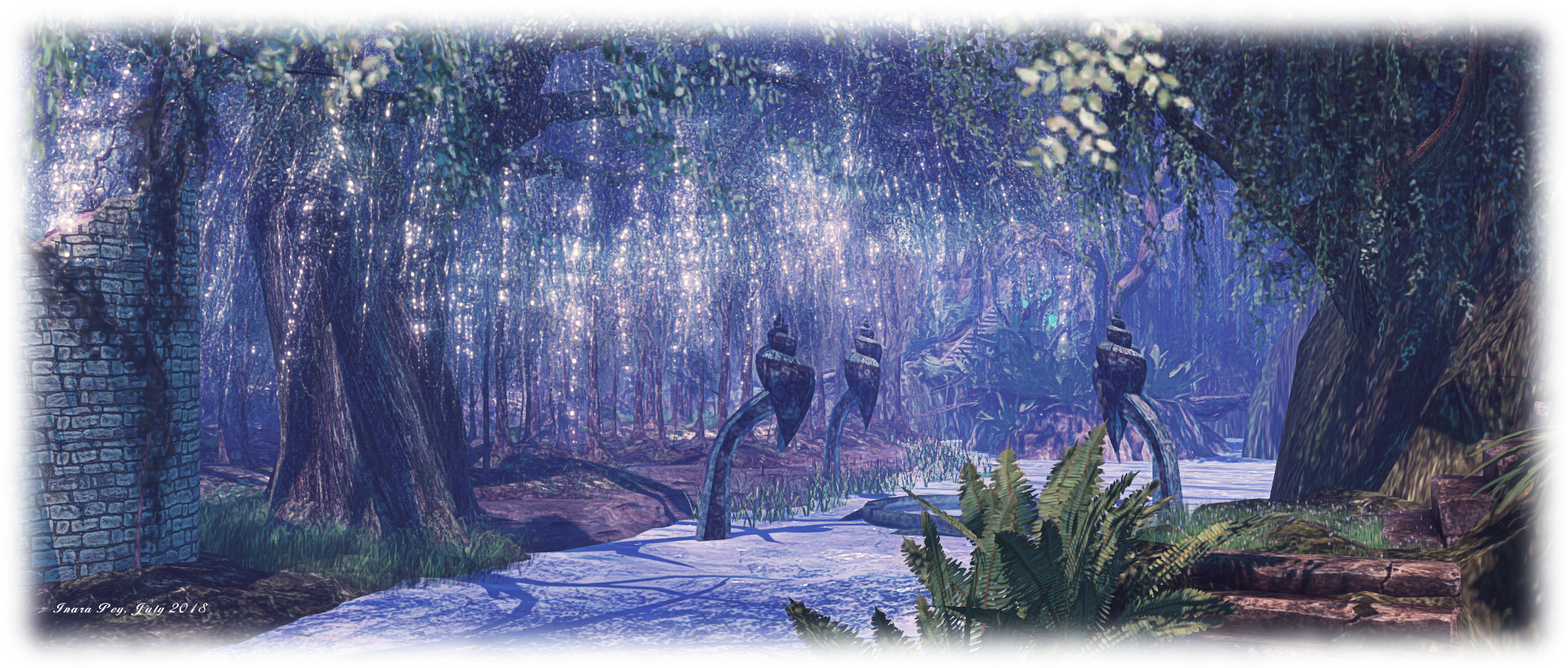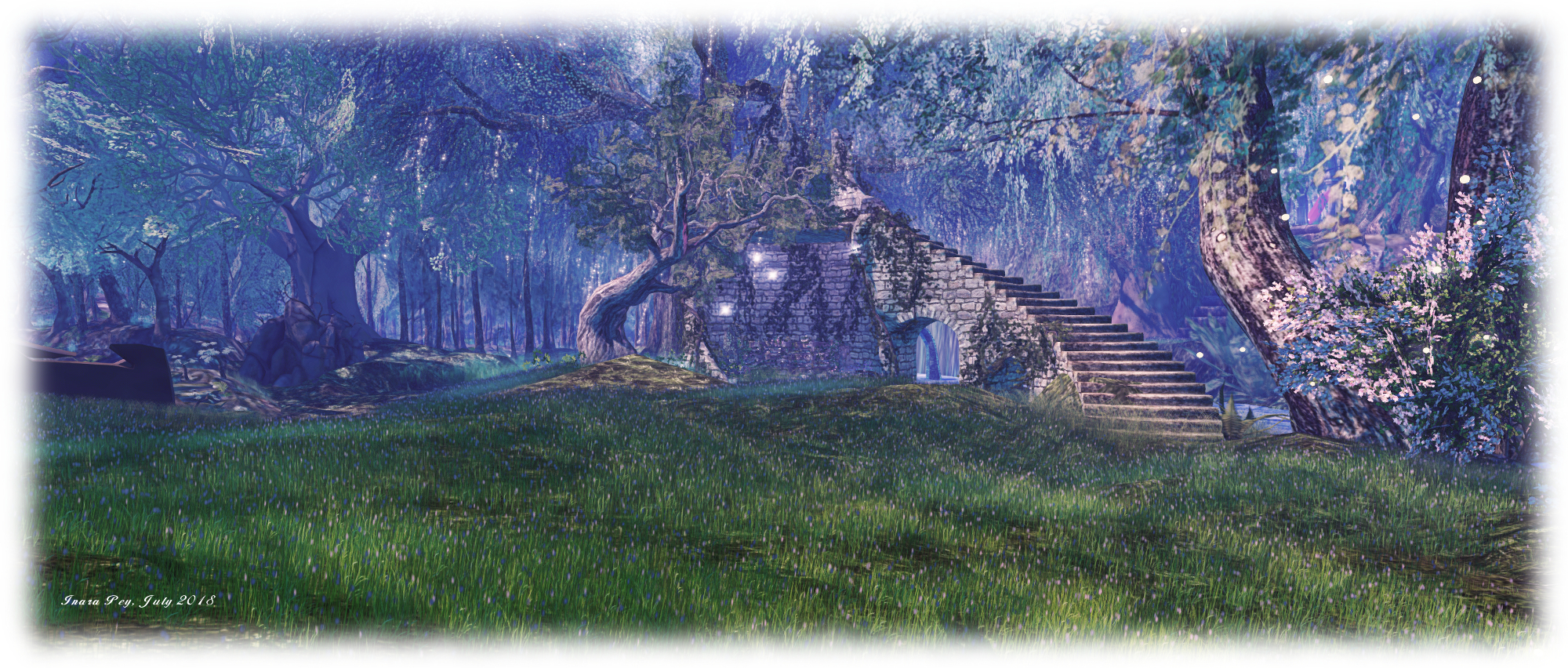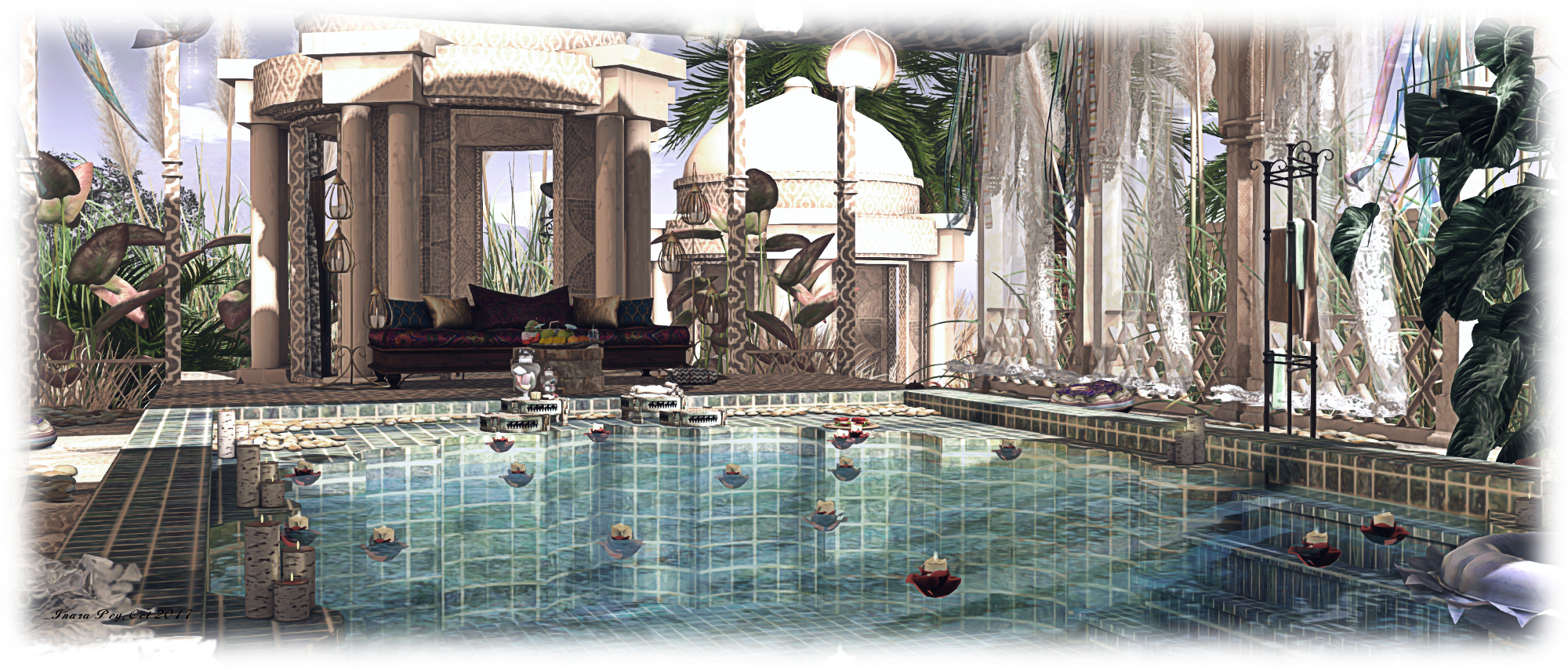
A Farewell to a Pandora Box of magical Dreams

Pandora Resort; Inara Pey, October 2017, on FlickrNamaste – click any image for full size

I’ve written about the region designs of Lokhe Angel Verlack (Jackson Verlack) since April 2015, when I first discovered one of his first iterations of Pandora Box of Dreams – the name he has largely used to denote the regions he has designed and run with his SL partner, Miza Cupcake Verlack (Mizaki).

Over the years, these designs have grown in complexity and vision, he and Miza have also moved from the Pandora Box of Dreams approach to design role-play regions inspired by the World of Darkness universe (see here and here) before returning once more to the Pandora Box of Dreams “brand” with region designs that have mixed rental accommodation with stunning places for visit and spend time, such as the former Pandora Resort, and more recently Namaste and Kamigami, both of which I visited in 2017 (see here and here).
Pandora Resort; Inara Pey, October 2017, on FlickrNamaste

Sadly, word came from Miza that Namaste and Kamigami will be closing on August 1st, 2018. In fact, Jackson has already started dismantling Kamigami. What’s more, it’s likely to be the last public region design we might be seeing from Jackson for a while.

The reason for the closure isn’t the hoary old devil of tier per-se – whilst offering rentals for people, Jackson and Miza have largely covered the cost of the region out of their own pocket. Rather, its a lack of footfall through the region. Despite frequent events, the opportunity to enjoy two very well-designed and captivating locales, the region has seen a steady decline in traffic which, sadly, has reached a point where Jackson and Miza feel they’d rather focus on more personal projects and things that give them enjoyment.
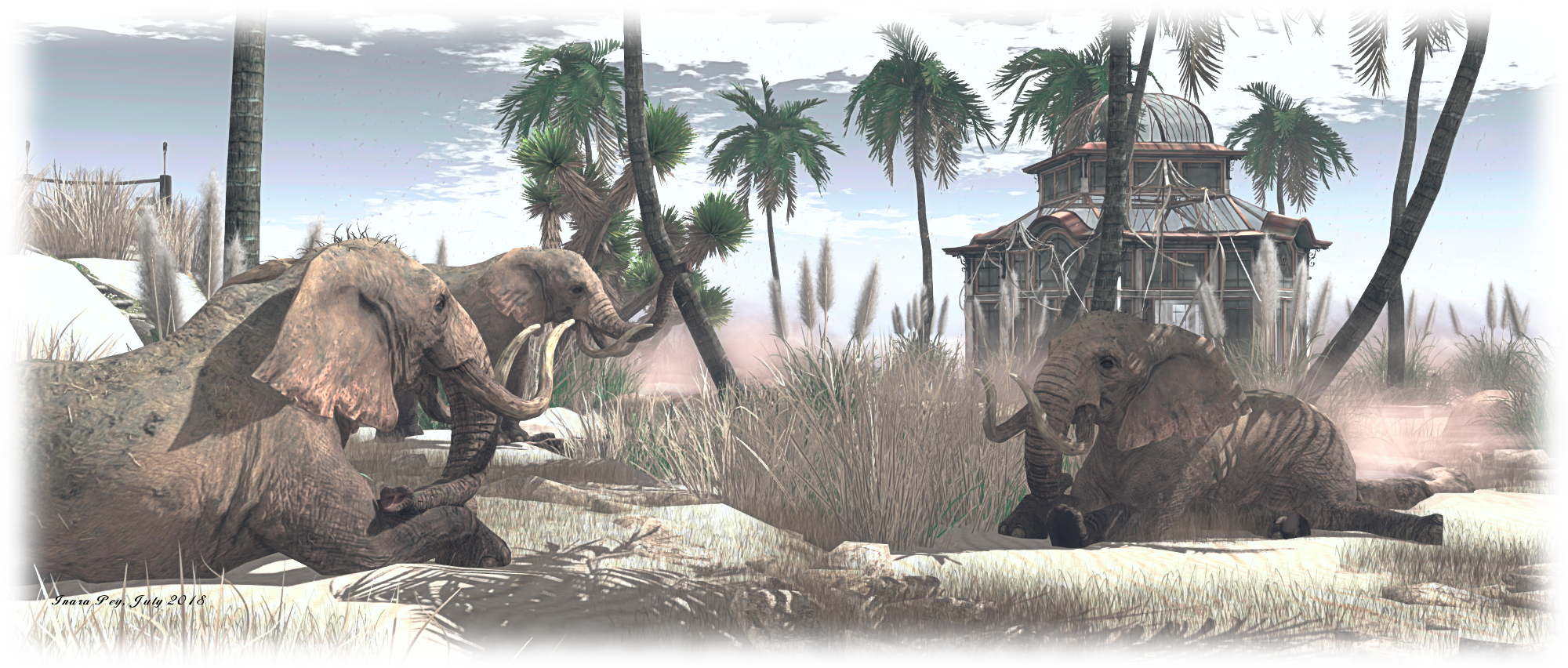
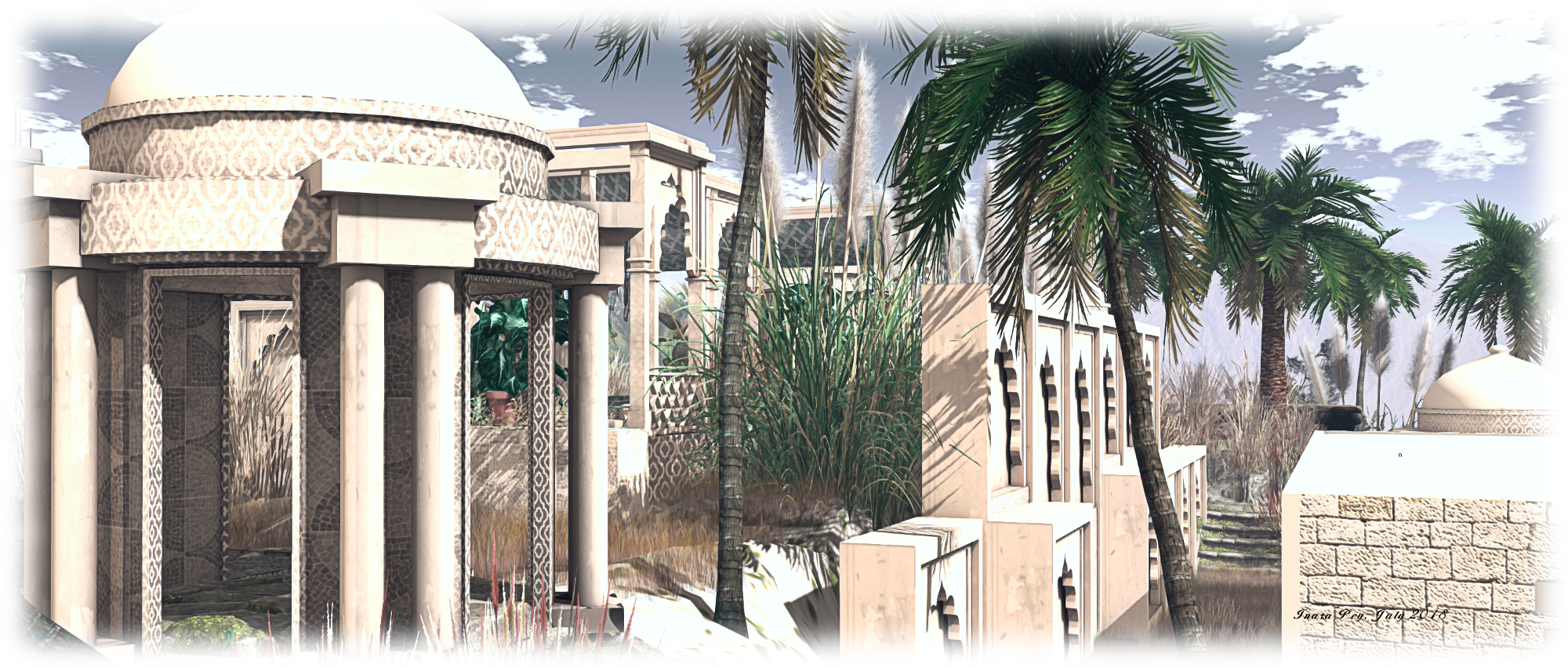
Pandora Resort; Inara Pey, October 2017, on FlickrNamaste

In this, they are far from alone: the truth is that such is the vastness of Second life and the constant popping-up of new regions and new places to visit, those places that offer a sense of longevity and comforting familiarity, unless located on the mainland, do become harder and harder to maintain when it comes to drawing a steady flow of traffic. Even with things like tier reduction (and depending on how that is passed on through land companies when it comes to rented regions), a point can so easily be reached  where the effort in trying to maintain that flow and meeting the cost of keeping a region has to be put into perspective and a decision sometimes made.

I admit, I feel a little guilt here; as a Second Life travel blogger, I’m all too keen to hop to the “new” places and write about them, or hop back to those that are given a make-over every few months. It becomes all too easy to forget about those that are there, month-on-month and never overly changing, but offering a consistent beauty for all to enjoy. Perhaps this is something all of us who write about Second Life need to keep in mind, and consider looking back at some of the regions we’ve visited in the previous year that might not have changed in the intervening time, and just dropping a “reminder” note about them for readers who may not have had the chance to visit, or might be unaware of their presence.
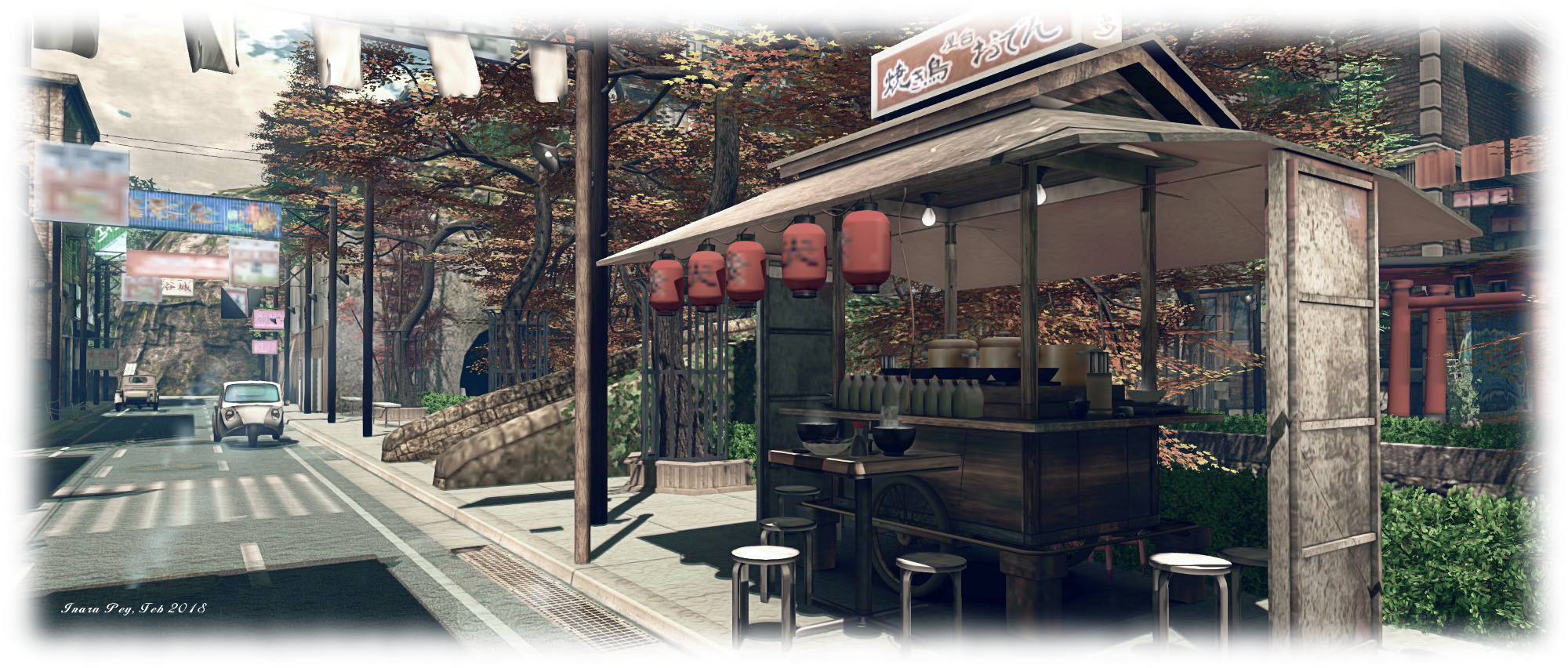
Kamigami, Pandora Resort Town; Inara Pey, February 2018, on Flickr Kamigami, Pandora Resort

In the meantime, the gradually disappearing Kamigami notwithstanding, there is still a little time before the region closes on August 1st, 2018, to visit Namaste and say farewell, and perhaps drop a note of thanks via IM or notecard to Lokhe and Miza for sharing their vision with us.

For my part, I hope this is not the last we’ve seen of Lokhe’s designs; he has amazing vision in creating special places, and my thanks to him and Miza for allowing us to share in them.
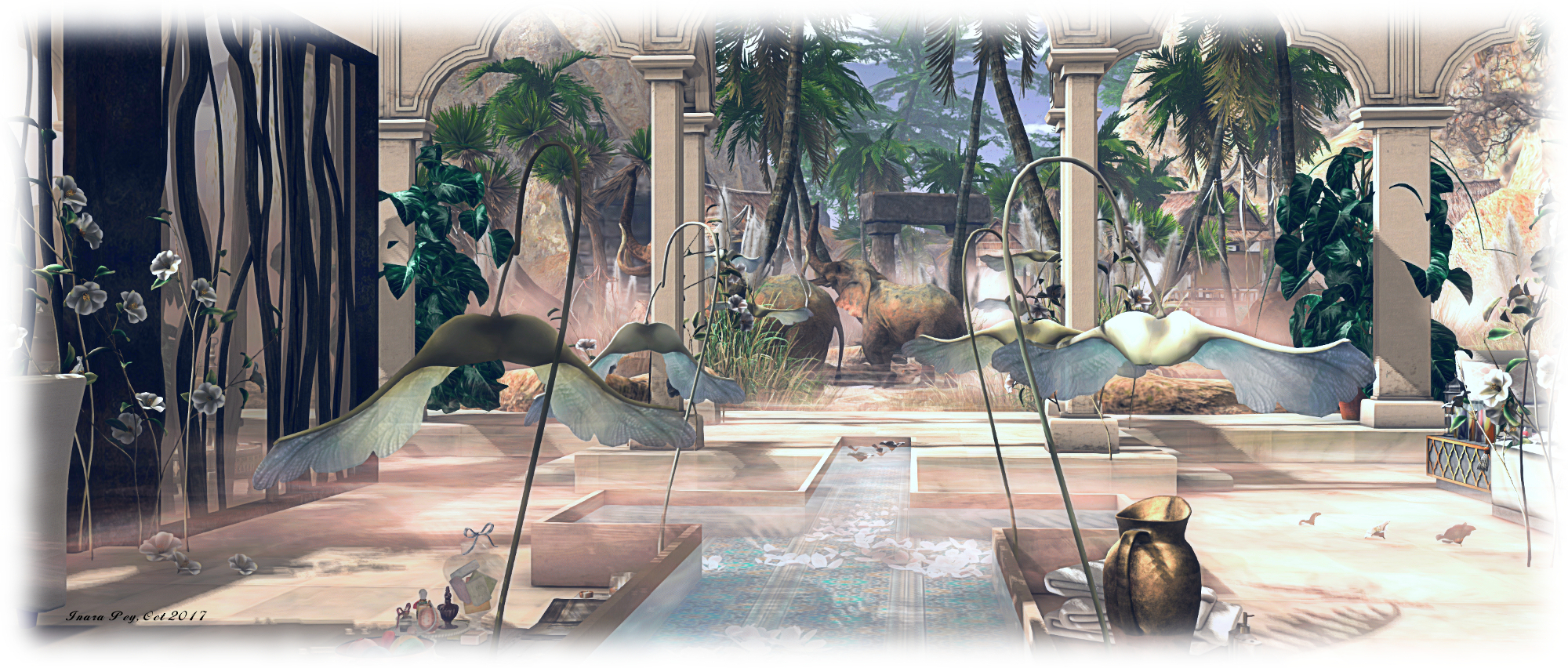
Pandora Resort; Inara Pey, October 2017, on FlickrNamaste

SLurl Details

Ponto Cabana, Lemon Beach, in Second Life

Ponto Cabana; Inara Pey, July 2018, on FlickrPonto Cabana – click any image for full size

Lemon Beach is a place we’ve frequently visited in Second Life. From at least 2015 through until early 2017, it was held by Silvermoon Fairey under the name It’s A New Dawn (see here and here for more). More recently, it has been held by Iska (sablina), who initially gave it the name La Virevolte (The Twirl), occasioning us to visit on two occasions in the winter of 2017 and the spring of 2018.

Iska, working with working with Chimkama, and Toxx Genest (ToXxicShadow). has now give Lemon Beach a further makeover, and a new name, Ponto Cabana, presenting a reason to make a further visit as July drew to a close.

Ponto Cabana; Inara Pey, July 2018, on FlickrPonto Cabana

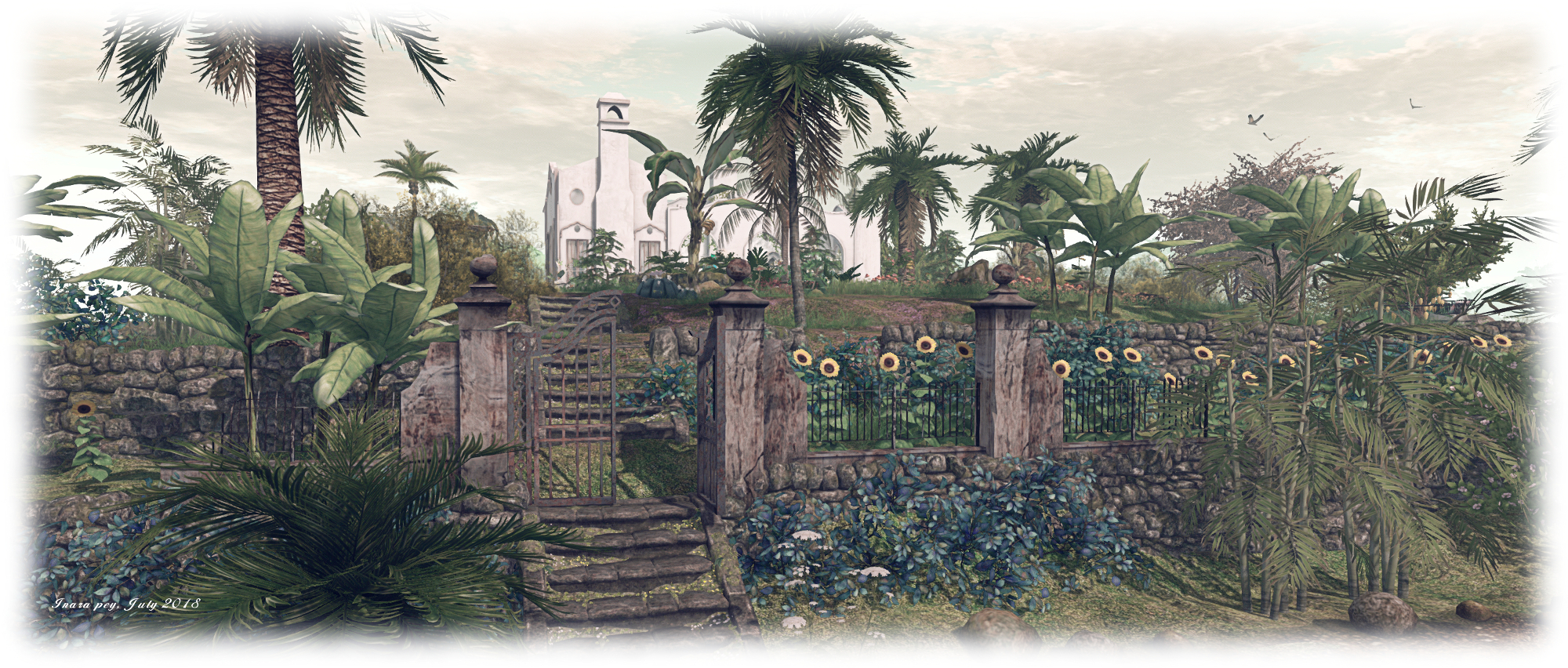
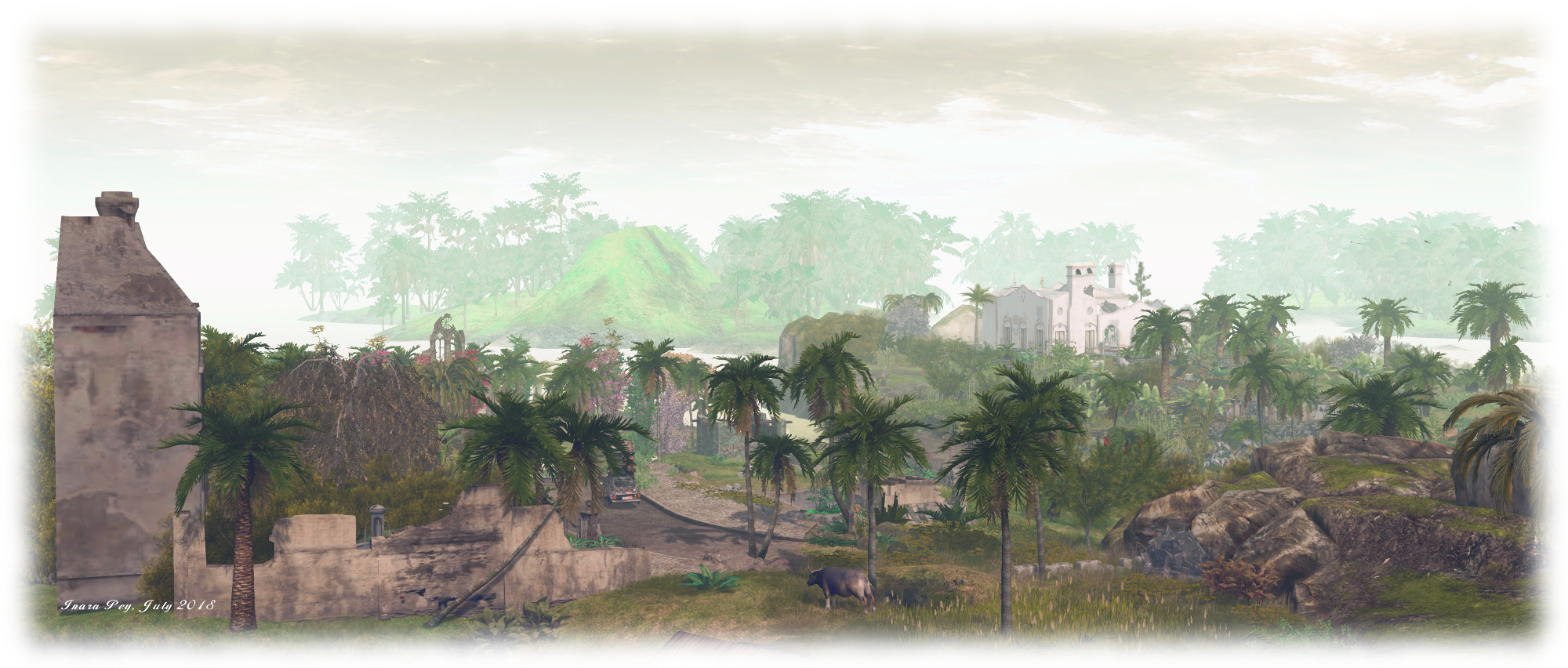
In its new guise, the region offers a curious mix of settings. On the one hand, there is a feeling that perhaps this is in part an old Spanish colonial plantation somewhere in the tropics. A grand house sits on the highest point on an island, steps descending down through what might have once been cultivated terraces to where the old road runs past the foot of the hill before snaking its way up to the house. In doing so, the road turns sharply past the single remaining wall of an old chapel. This may have once been a part of the estate, but time has not been kind, the lone wall with its forlorn bell sitting above the sea.

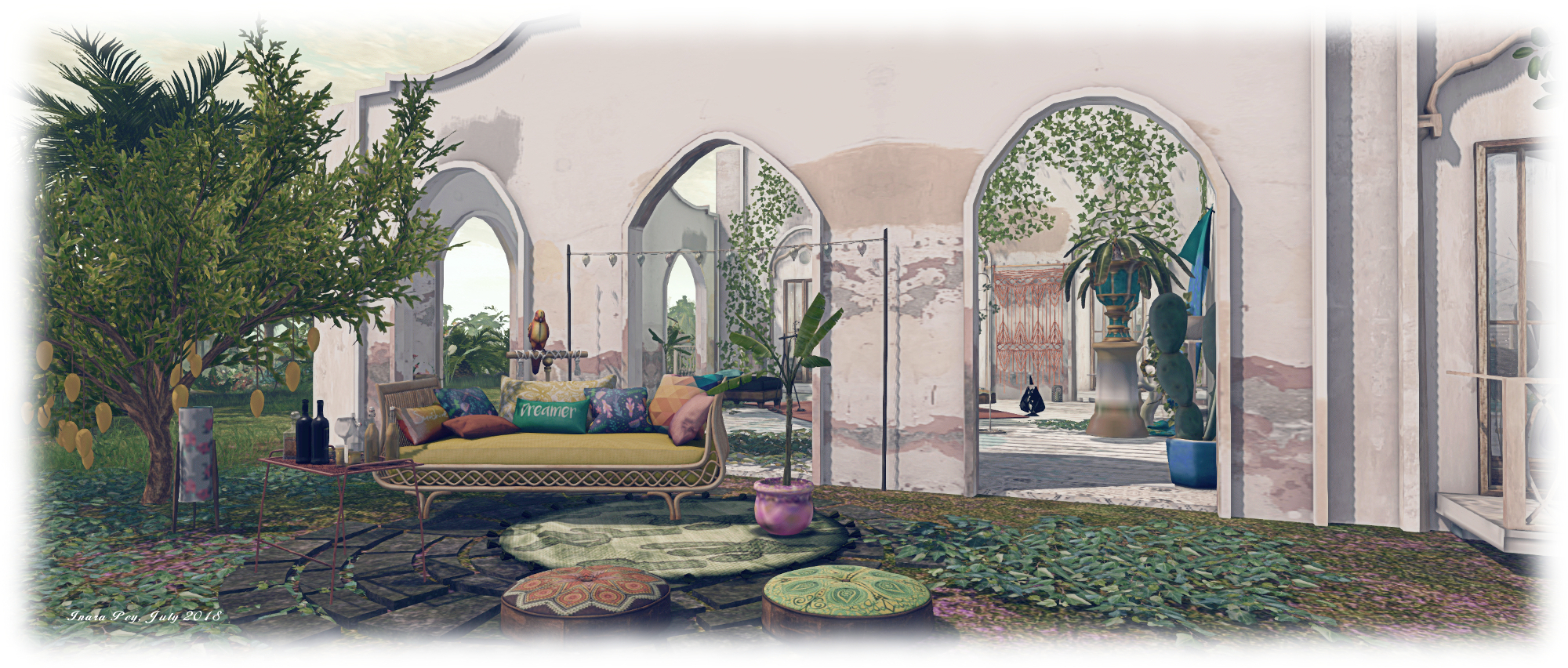
Some of the terraces below the house are still being cultivated, although these now appear to be more for personal use than for growing produce destined for market or export. The rest, sitting before the house and cut by both winding road and grassy footpath, are given over to an informal garden. Meanwhile, the house with its white, adobe-like finish cracked and broken in places and clearly roughly patched in others, has a sense of stately age about it, perhaps just a little at odds with the furnishings within and around it, which suggest the current occupants lean towards a more bohemian lifestyle than one focused on the cultivation of local plants and fruits.

Ponto Cabana; Inara Pey, July 2018, on FlickrPonto Cabana

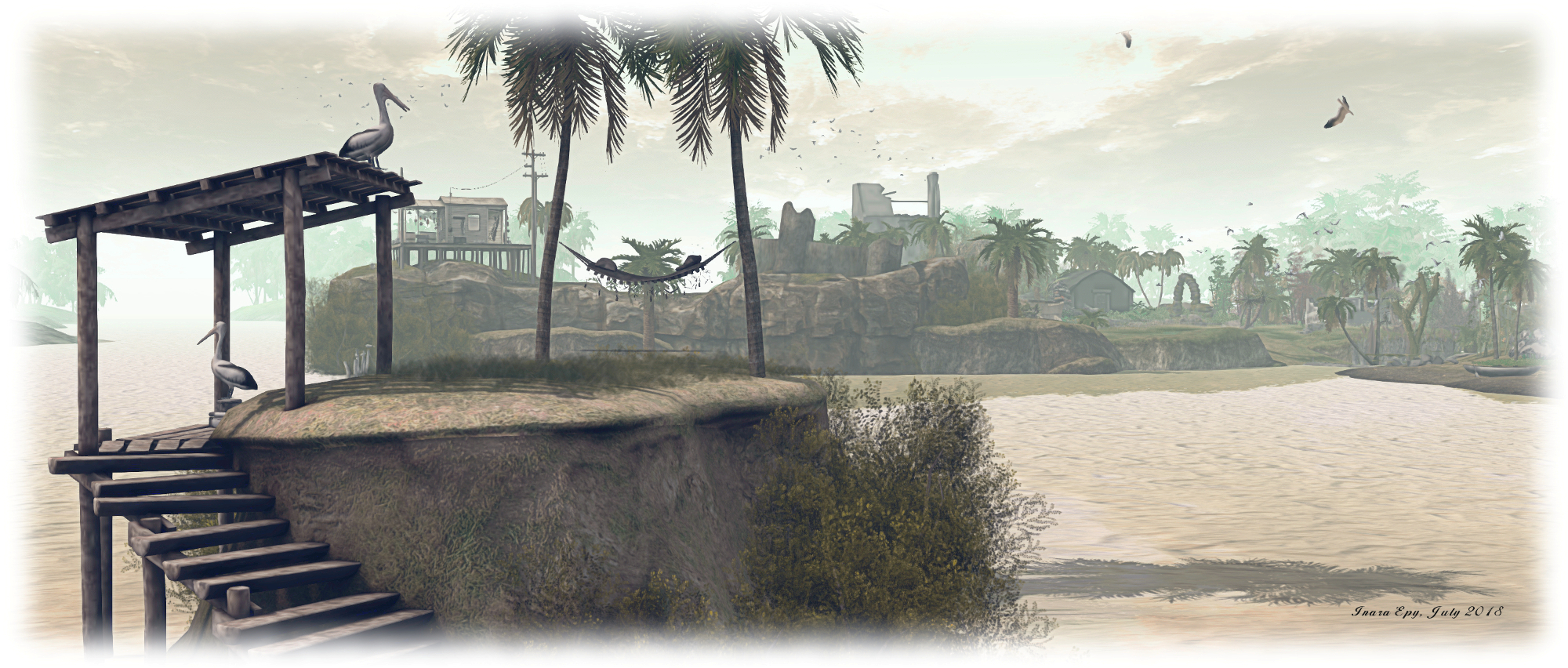
Across the water, on another rocky-sided island, there is a slightly different look and feel. The structures here are mostly more modern in style – if a lot more run-down than the adobe fronted house. A paved road, leading to and from nowhere, arcs past a large house – or about what’s left of it, given its broken form is now subject to nature’s claim. Across the short sweep of road sits an old swimming pool, a pelican perched on the rusting frame of a diving board perhaps wondering just what happened to the water.

Up on a headland, beyond the ruin of an old fort, sit a raised wooden hut with evidence of some occupancy scattered about it, but on the whole the feeling here is of a place now deserted; or at least in the process of being deserted. A car piled high with luggage sitting incongruously on the road outside of the ruined house as if ready to forever depart, a stubborn donkey standing before it, determined to stare it down. The road itself ends just behind the donkey, a set of steps leading down to another pat of the setting that again has a feeling of age about its occupancy in the form of the ruins of a stone chapel.

Ponto Cabana; Inara Pey, July 2018, on FlickrPonto Cabana

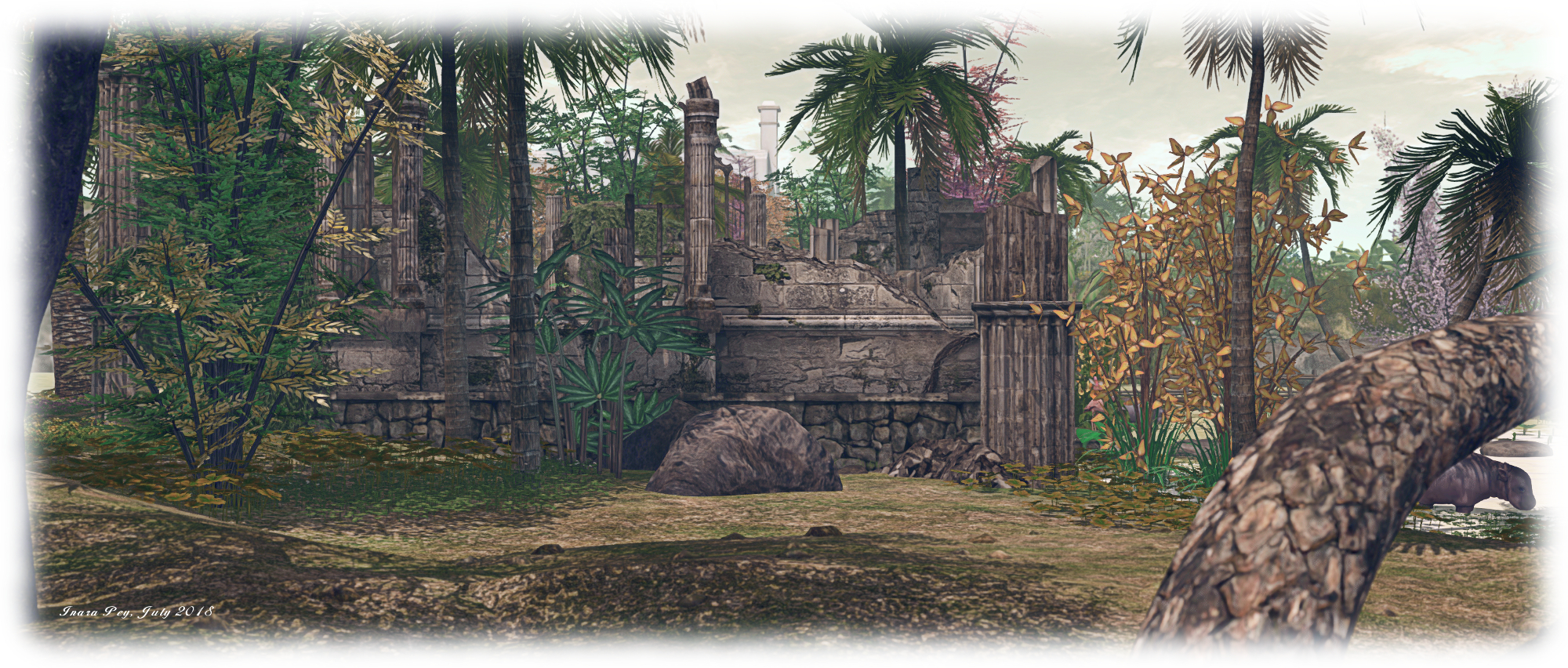
Of grander stature than the lone, bell-carrying wall near the old plantation house, this ruin speaks of a once proud centre of worship with something of a medieval bent in its design. The way to it has long since been flooded, but stepping-stones offer a way across the water to the foot of the steps leading up to its stone flagged floors even as a wooden bridge offers access to the lands around it. Flamingos wade through the water, while humming birds flitter busily around the flowers growing from it and – in another incongruous, but oddly acceptable touch – two little hippos stand knee-deep in the water.

All-in-all, Ponto Cabana is a strange and eclectic mix. However, it is an eclectic mix that works, and works delightfully well. With places to sit and relax – notably around the old plantation house, surrounded by off-sim islands heightening the tropical feel for the setting, and even a couple of off-shore perches to enjoy, Ponto Cabana makes for an ideal and photogenic visit.

Ponto Cabana; Inara Pey, July 2018, on FlickrPonto Cabana

SLurl Details

Erebos Harbor in Second Life

Erebos Harbor; Inara Pey, July 2018, on FlickrErebos Harbor – click any image for full size

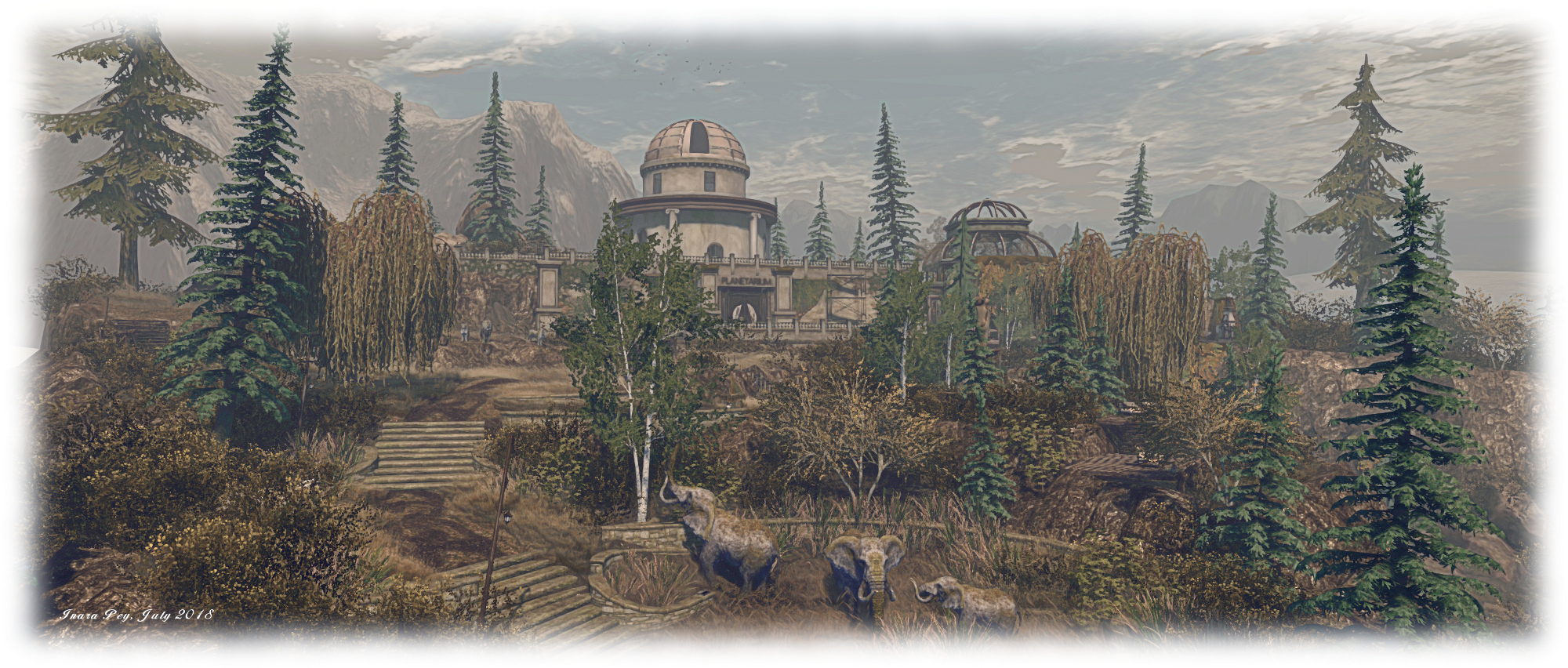
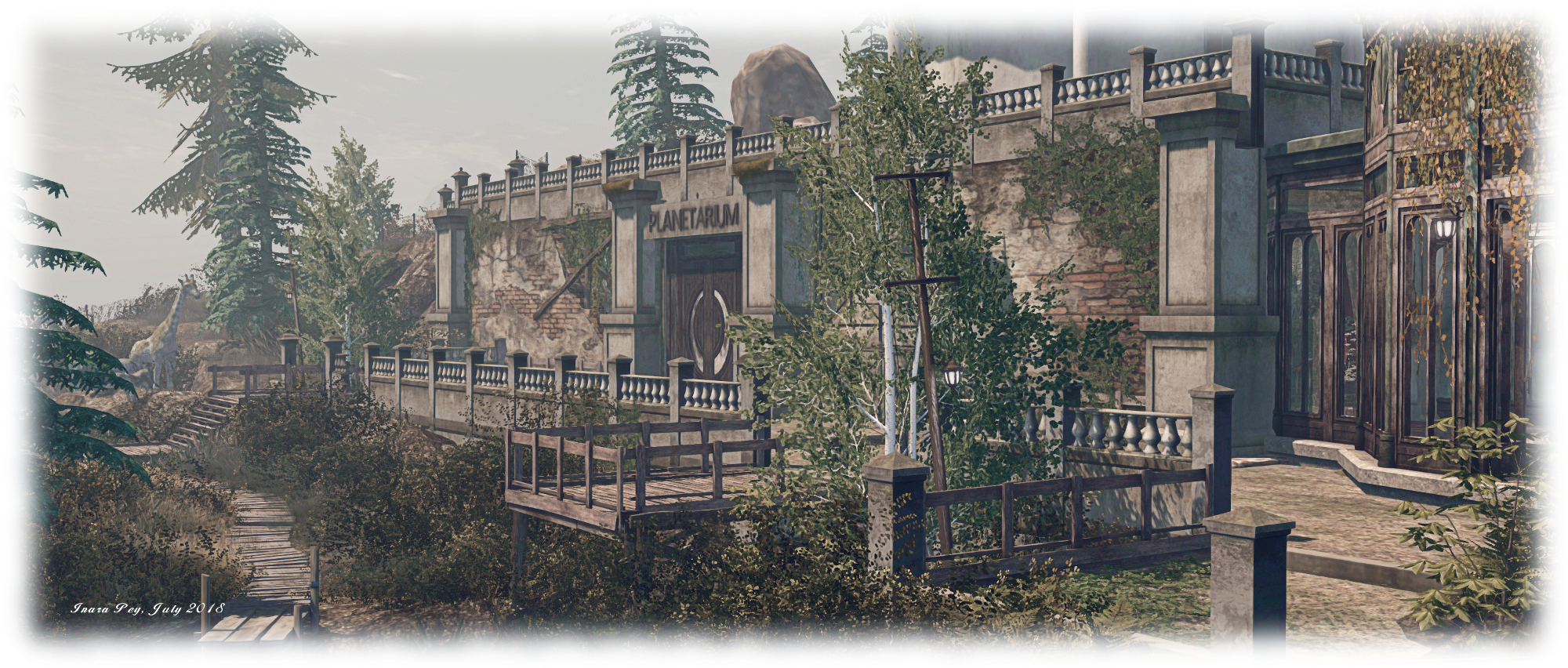
The lowering sun glints off the copper dome of an observatory, skylined to the north of town square. The shutter door is open, cutting a slice of darkness into the curve of the dome, but any telescope that may once have lain within its protection has long since gone.

Seated upon its throne of a high plateau north of the town, the observatory presides over Erebos Harbor, what may have once been a series of impressive terraced gardens set immediately before it. A waterfall tumbles in two deep steps from the high rocks, a sliver of silver against their darker faces, further enticing people to heed the siren call of the high dome and travel north towards it.

Erebos Harbor; Inara Pey, July 2018, on FlickrErebos Harbor

I make no apologies for writing about this build by Leaf (Peyton Darmoset) and Julz (Juliette Rainfall) under the dirty.pretty banner, so soon after visiting Cloudbreak (see: An Indonesian Cloudbreak in Second Life). This is because, like the regions of Cloudbreak, Erebos Harbor is an extraordinary build, quite breathtaking in its design and execution, and fully deserving of an article to itself.

It is, in summary, very much a region of three parts. To the south is a small town style layout, complete with fishing docks and a railway siding. To the west sit two humped islands of rock, reached by high bridges, where homes and beaches might be found. Then, to the north, and dominating the setting, sits the imposing bulk of the old observatory.

Erebos Harbor; Inara Pey, July 2018, on FlickrErebos Harbor

Despite the boutique cafés with their street side parasols or paved gardens, or the warehouse converted to a music venue, the town has a feeling of perhaps being past its prime. Brickwork is careworn, the streets look a little tired, stores lie empty, packing cases on their bare floors, while the garage space at one end of a set of shops has lost both its roof and upper floor.

To the west, the islands are home to the region’s rental properties – predominantly wooden-build cabins and houses overlooking the surrounding sea and water, or descending to cinder beaches on their west side. The rental properties up on the tops of the islands are relatively easy to identify, but do be aware there are what appear to be a rental down on the beach as well, so do please respect the privacy of the tenants. Another private residence also sits down on the west side of the “mainland”, at the edge of the channel separating it from the outlying islands.

Erebos Harbor; Inara Pey, July 2018, on FlickrErebos Harbor

However, it is the observatory that is liable to attract the visitor’s eyes and feet. Impressive from a distance, it is nothing short of stunning when seen up close; Leaf’s vision for the setting is extraordinarily imaginative. While the town below may give hints of having seen better days, this is clearly a place that is well past its prime, and where nature has decided to take up residence – indoors as well as outside. Where the terraced gardens may once have been of a more formal layout, now they are overgrown, any paved paths or lawned walks that may once have connected the stone steps between the different terraces now long gone, replaced with wild grasses or bare ground. In some places, even the stone steps have gone, replaced by wooden walkways and stairs, including those up to the observatory itself.

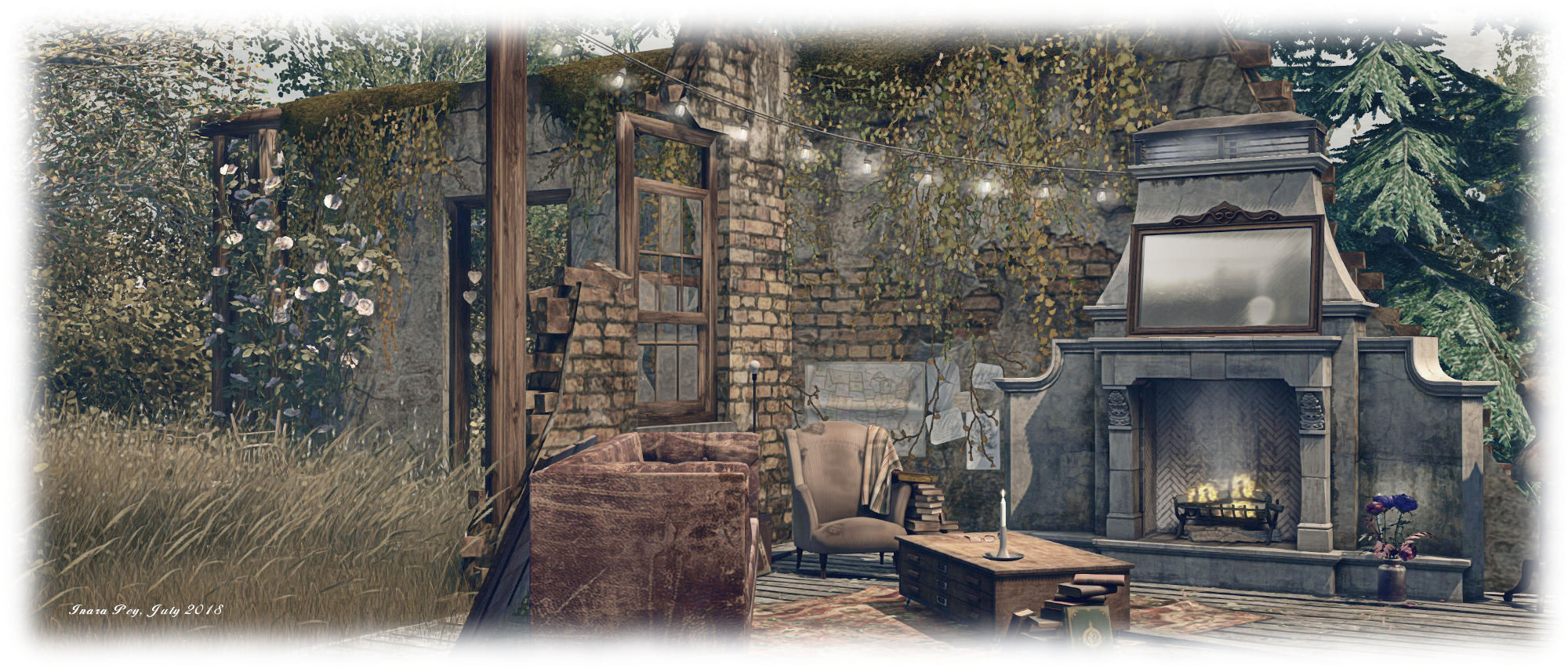
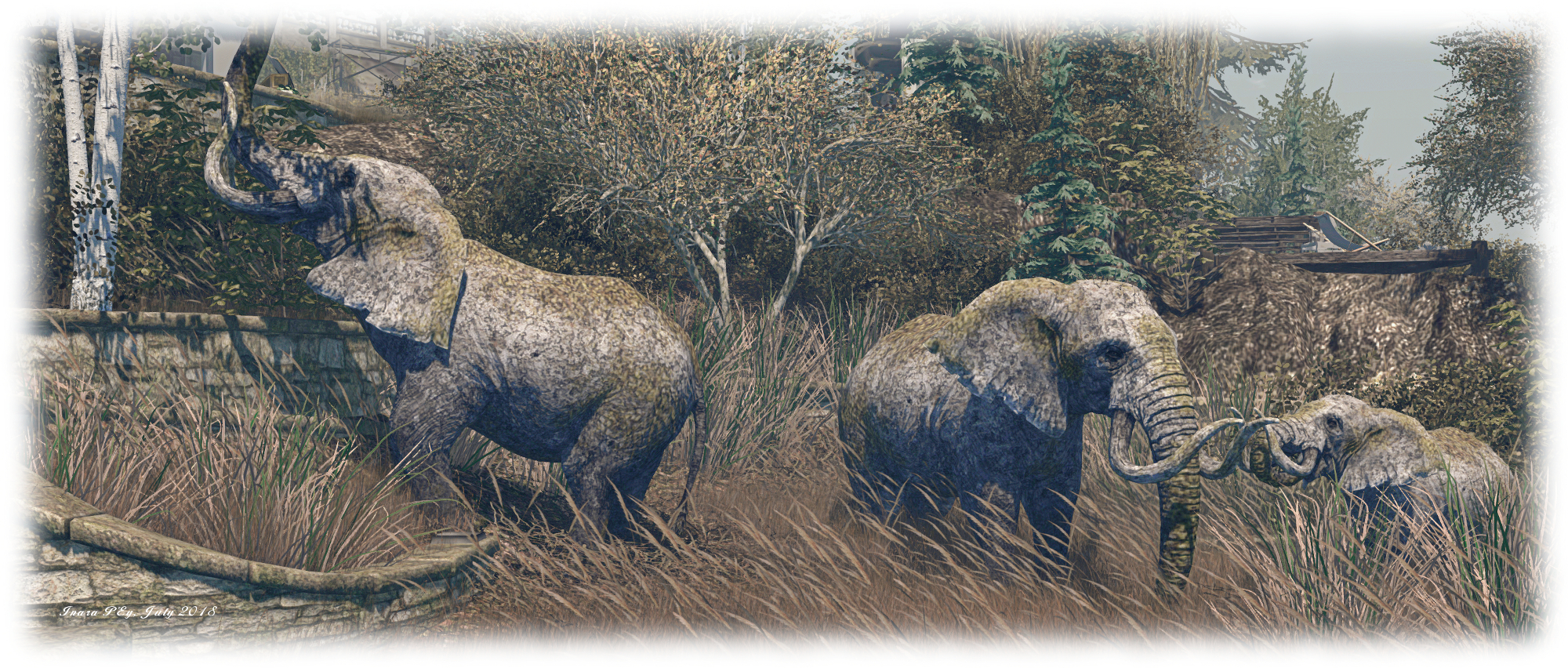
This is  wonderful home build / kitbashed structure by Leaf which deserves to be seen and appreciated in its own right. Some of the walls are crumbling, the observatory dome no longer protects a telescope, while inside, nature has long since taken a hold on things – although a huge and uniquely finished orrery still operates within the foyer space of the planetarium. Outside, there is a wonderful use of décor in the gardens I freely admit to the way Leaf has converted from the wildlife creations of Hannah Kozlowski into the must far-reaching of statues.

Erebos Harbor; Inara Pey, July 2018, on FlickrErebos Harbor

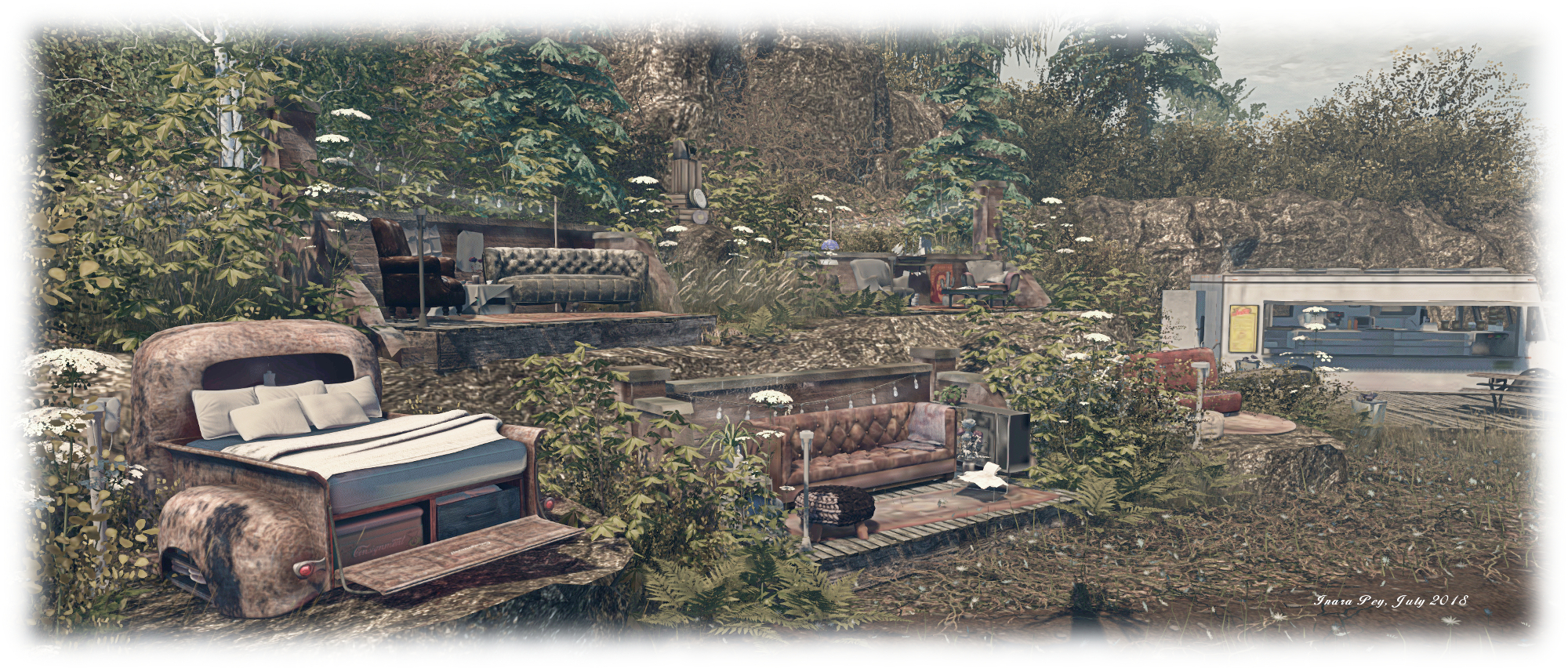
Scattered across the observatory’s terraces are numerous places to sit, whether by oneself or with friends, and to enjoy a cuddle with a loved one. These include, for the daredevils out there, a bed-like platform suspended over the waterfalls tumbling down the sheer rock face to a pool below. Those seeking a less risky pursuit than leaping down to the platform can enjoy the open-air movie theatre sitting in the lee of the plateau’s west side.

There are a host of little treats to be found throughout Erebos Harbor, indoors and out, so exploration is highly recommended – keeping in mind the private residences to the west of the region. Photographs are welcome at the dirty.pretty Flickr group, and rezzing rights can be obtained by joining the dirty.pretty in-world group. As noted above, this is a truly exceptional region in terms of design and settings, and absolutely not one to be missed.

Erebos Harbor; Inara Pey, July 2018, on FlickrErebos Harbor

SLurl Details

An Indonesian Cloudbreak in Second Life

Cloudbreak; Inara Pey, July 2018, on FlickrCloudbreak – click any image for full size

Update, November 13th: Cloudbreak appears to have closed, and all SLurls have been removed from this article. My thanks to Miro Collas for letting me know.

Cloudbreak is the all-encompassing name for two regions  – one Full (Cloudbreak), the other a Homestead (Cloudbreak II) – offering visitors a taste of “an Indonesian inspired surfers’ paradise”, and both are very well put together to offer a nicely immersive environment.

Designed by Leaf (Peyton Darmoset) under the dirty.pretty banner she runs with partner Julz (Juliette Rainfall), the two regions have a distinctly north-south / east-west design, the land running down the eastern sides of the two regions, their western sides being open to the sea. The land itself is primarily rugged territory, backing directly on to the mountainous sim surround that greatly heightens the feeling that this is a remote coastal area in the world’s largest archipelago nation. To the west, the land drops sharply away to the water, a ribbon of sand winding up along the coast under the constant bombardment of a rolling tide of breakers.

Cloudbreak; Inara Pey, July 2018, on FlickrCloudbreak

The “official” (although not enforced) landing point lies to the south-east of the landscape, well up into the rocky terrain. It’s worth starting your visit here,  rather than simply dropping in anywhere on the map, as it really provides the best sense of immersion in the environment whilst exploring – plus there’s also a good chance a “blind” teleport will either drop you in the sea or possibly into one of the private rental properties to be found to the south and north. The landing point also provides information on the rentals, as well as on a local photography contest (running until August 3rd and with some impressive L$ prizes, as well as encompassing the regions of Ash Falls (read here for my July 2017 review of the region) and Erebos Harbor, also operated under the dirty.pretty banner).

Stone steps, guarded by small stupa-like objects, lead the way down into the richly forested landscape, where trails and wooden walkways offer a variety of paths to explore. Some of these run between the rugged highlands, others offer a way down through them. Some keep to the eastern extremes of the regions, others offer the way to cross to the west side before descending to the beaches. Two of the more impressive of these is a zip line that runs from the highest accessible point to the east down to a platform on the west side of a deep gorge, where (for those prepared to jump) a rocky path winds down under a great table-like slab of rook to reach the sands of the coast.

Cloudbreak; Inara Pey, July 2018, on FlickrCloudbreak

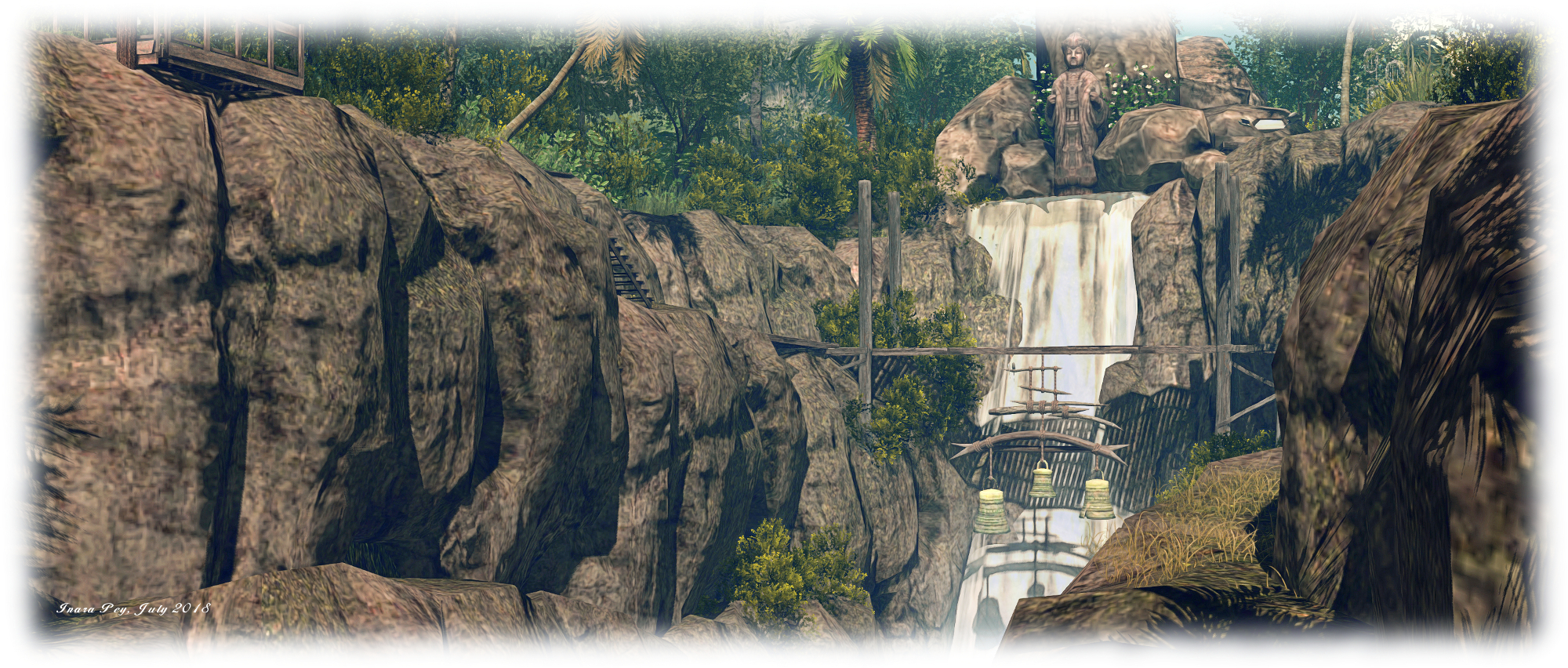
For those who don’t fancy the sliding and jumping, the second option is to follow the wooden walkways and steps that offer a way across the upper end of the gorge, close to a high waterfall, and a single bridge from which is suspended three great copper bells to join the path down the west side of the gorge, and thence to the beach.

Take the trails south or north along the rugged uplands, and you will eventually come to the rental properties. The northern most of these had, at the time of our visit, a rather aggressive security system (5 second warning prior to teleport to the edge of the parcel) and no sign to indicate it was private property – so care when approaching these might be advisable.

Cloudbreak; Inara Pey, July 2018, on FlickrCloudbreak

There are also public areas along the highlands as well, so don’t let the thought of security systems put you off. Perhaps the most prominent of these public spaces sits upon the great slab of rock mentioned above, and under which the waters of the gorge flow into the sea. Looking west to where Buddha sits atop a rocky island, it offers a cooling pool of water in which to relax and shades places to sit and cuddle. Elsewhere can be found camp sites and shaded wooden platforms, on which to sit and rest.

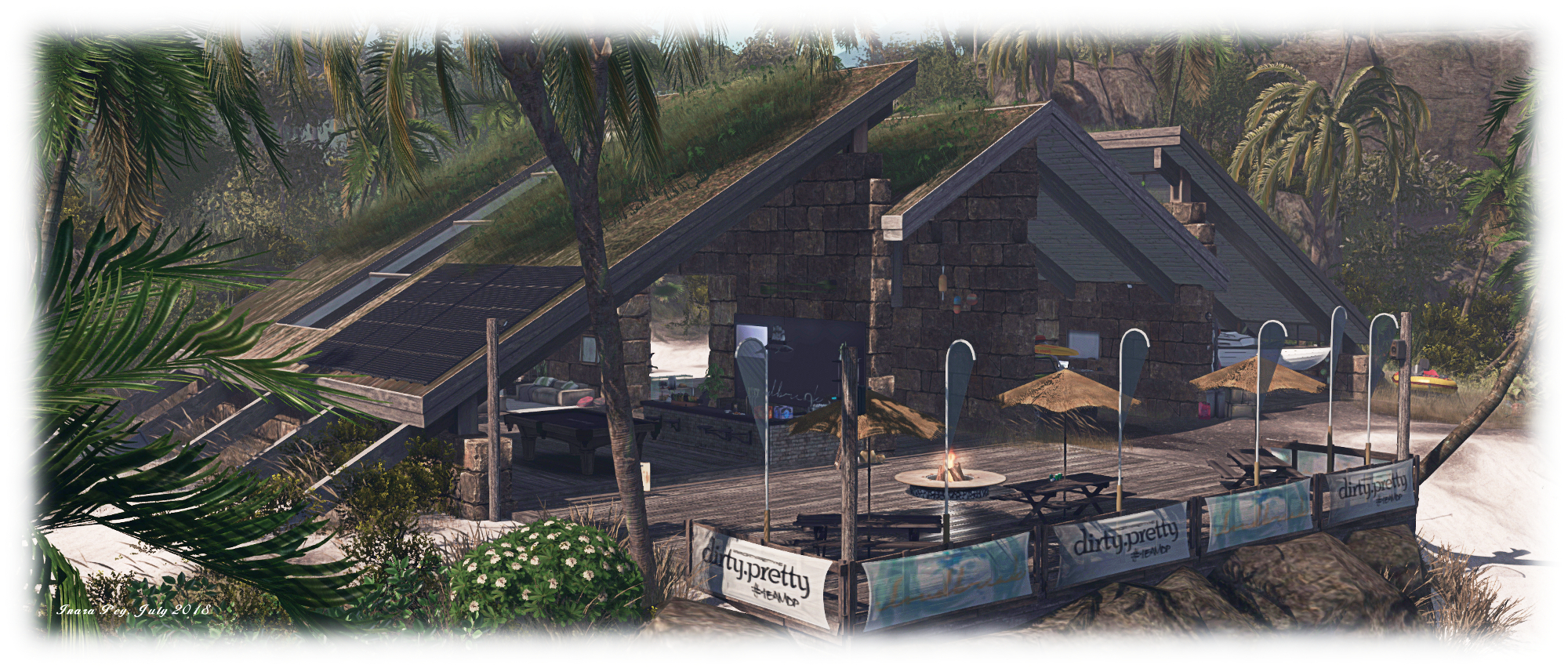
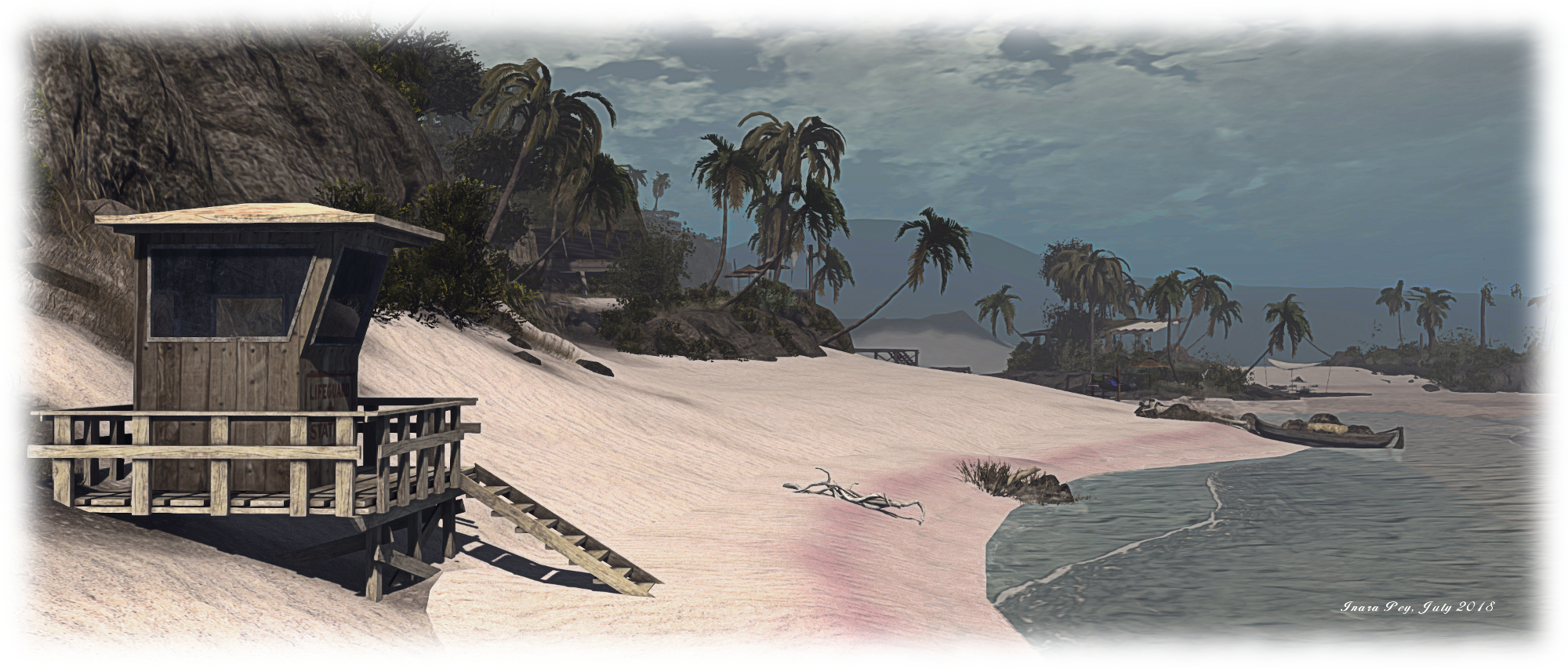
Those wishing to get a closer look at Buddha can do so via raised wooden walkways that reach out over the sea from the beach to his pinnacled seat. These go by way of an off-shore music venue on a sandbar to eventually reach the moorings clustered at the foot of Buddha’s island. The beach itself is broad, the golden sand tingled naturally with hints of pink along the high tide mark. There are rezzers to be found along the sands for those wishing to have a go at surfing (which can be fun), but for me, the most impressive aspect of the beach is the club house area which has clearly been kitbashed by Leaf from assorted sources, the parts brought together to create something genuinely unique  and perfectly suited to the environment.

Cloudbreak; Inara Pey, July 2018, on FlickrCloudbreak

Beautifully conceived and executed, Cloudbreak is a genuine gem of a setting. Stunning in vista, clever in layout, captivating to the eye and the camera (photos are welcome at the dirty.pretty Flickr group). Rezzing rights are available to those who need it by joining the local group. Note that a percentage of the fee paid to join goes towards supporting the Whale and Dolphin Conservation (WDC) – an organisation of which I’ve long been a supporter – and dirty.pretty’s adopted Orca, Holly.

With thanks to Shakespeare for the pointer.

Ravenwold’s mystical beauty in Second life

Ravenwold; Inara Pey, July 2018, on FlickrRavenwold

Update: Ravenwold has closed.

“Wold” in England tends to mean a piece of high, open uncultivated land or moor, so when encountering it in the name of a region, I tend to find myself expecting such open landscapes; places with swathes of grass, perhaps undulating, possibly with copses here and there, together with tors or other features. However, take things too literally, and you can find yourself surprised.

Take Ravenwold for example, the Full region held by the partnership of DaveOSaurus and Damoira and designed by Damoira. Far from having broad open spaces, it is presented as a richly wooded landscape, and so taking more of a Germanic root, filled with an enchanting and eclectic mix of features stirred together to produce a magical and mystical setting that really does deserve careful and thorough exploration.

Ravenwold; Inara Pey, July 2018, on FlickrRavenwold

Follow the trails through ancient forests to discover a land of beauty and intrigue. Ravenwold is as much a place of exploration as it is entertainment, with venues offering Live Acts and DJ’s as well as a fully stocked gaming area open for all to enjoy. 

– Ravenwold About Land description

This may at first appear to be a region in two parts, split by the high curtain wall of cliffs running east-to-west across it. However, it is all part of the one landscape, the two halves linked by a connecting tunnel. Both sides of the region offer a setting full of whimsy and the unexpected, dotted here and there with buildings, but largely given over to woodlands dotted with various clearings and rocky areas where the treasures of the land might be found.

Ravenwold; Inara Pey, July 2018, on FlickrRavenwold

The north side of the region features one of the music venues: an impressive building called Obsidian, sitting on a large paved plaza and looking like it is suited to live performances. Across the region to the east is the gaming area located under the boughs of trees. Between these two are paths winding through the trees, offering opportunities to find shaded glades rich with characters suggestive of magic and fantasy, and places to sit and to dance.

Ancient ruins are to be found here, adding to the fantasy / ethereal feel of the region, and – in one case at least – offer the chance for a little whimsy as a cast of characters from Alice’s Adventures in Wonderland appear before a ruin, together with a few friends. This part of Ravenwold also includes an outdoor folk performance area and a coastal bar, while a teleport portal offers the way up to another games area up in the sky.

Ravenwold; Inara Pey, July 2018, on FlickrRavenwold

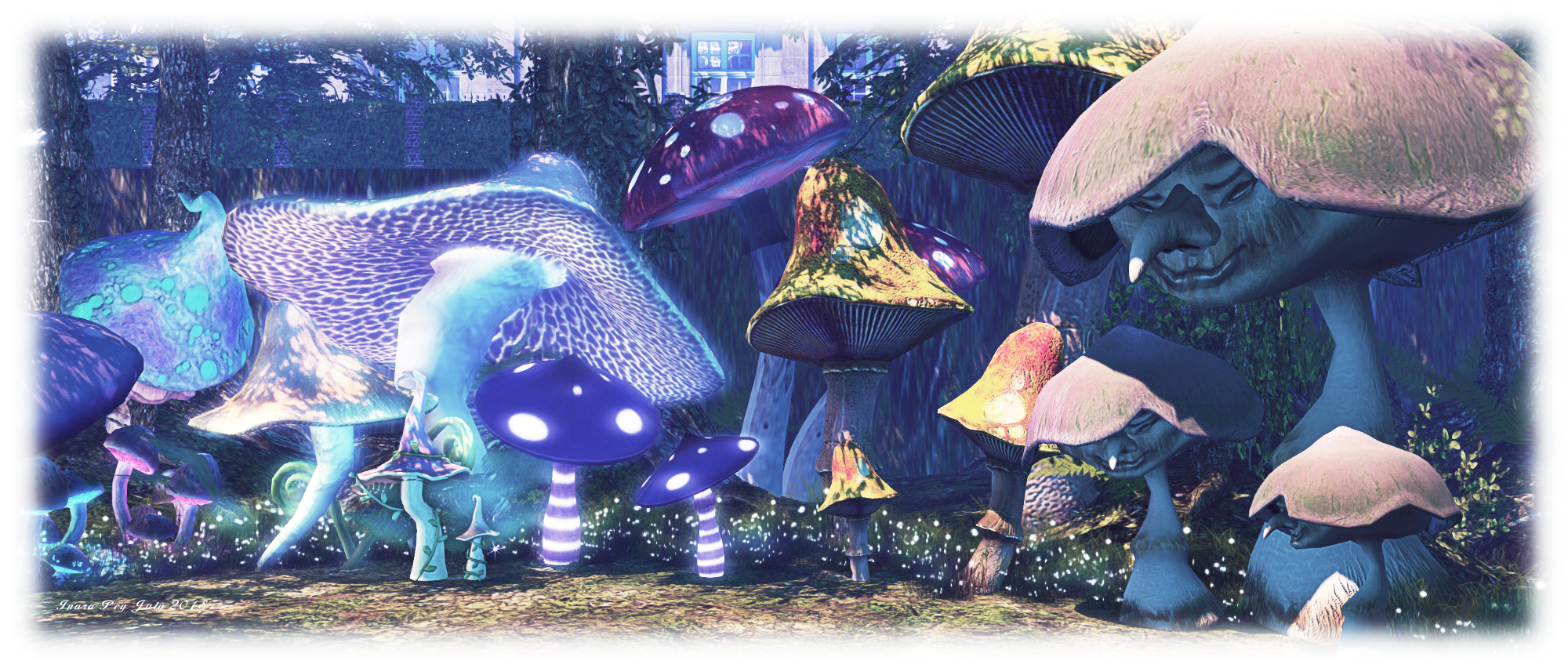
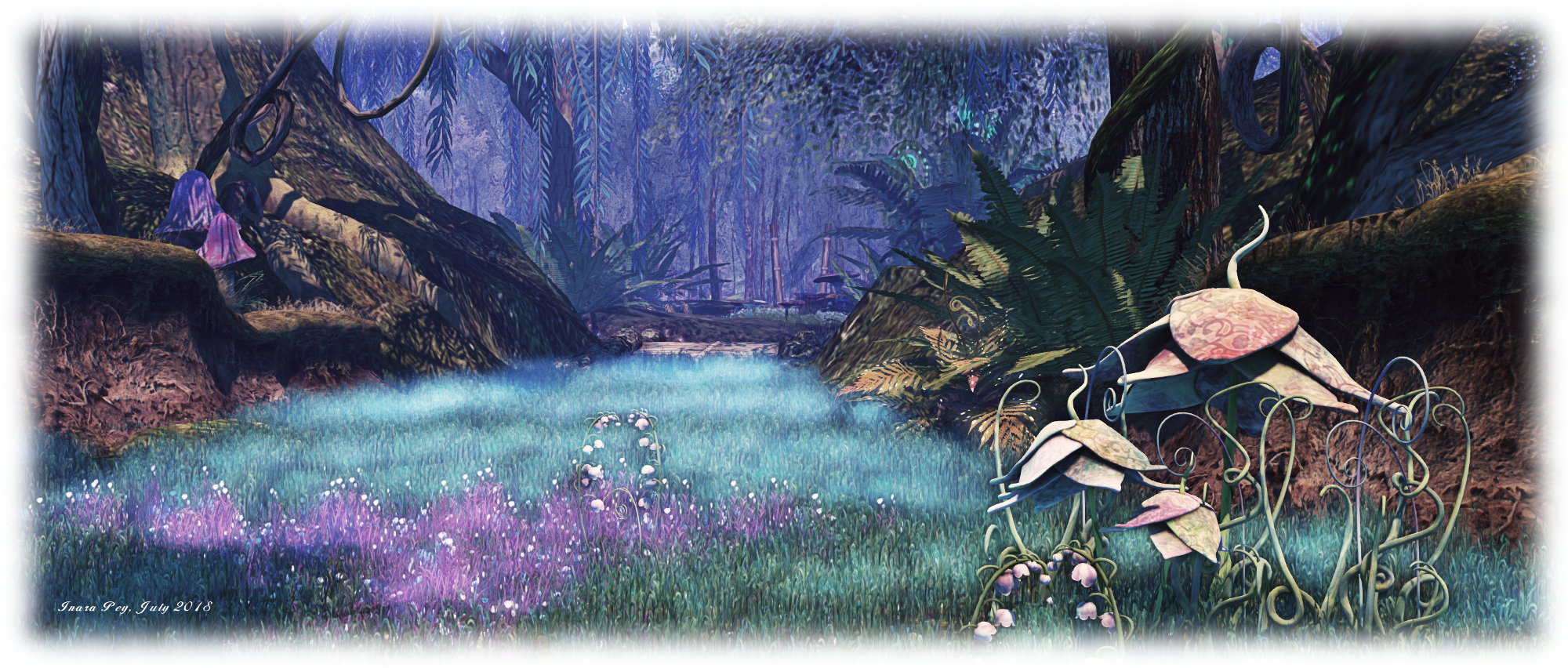
Follow one of the brick paths to the tunnel running under the curtain of cliffs to connect the two halves of the region, and you’re find a further world to explore. Once again, trees raise a green canopy over the paths and trails that branch here and there to cross streams and climb rocky outcrops. More building – these with a definite fantasy lean – can be found here, sitting on plateaus, whilst down in the glades are more places to sit or dance, watched over by exotic and colourful plants. For those seeking a little piece and quiet, stairs up to one plateau point the way to where crystals guard a circle of stone arches surrounding what might be a storyteller’s circle.

These upland areas are particularly to be found on the southern side of the region, which also includes an ancient henge sitting in a box-like canyon. Among the stones and rocks here sits Excalibur, as if awaiting those who feel they might be up to the challenge of drawing it from its rocky scabbard. Not far from this, Also to be found here is the hidden entrance to another of the venue’s music venues, nicely hidden away.

Ravenwold; Inara Pey, July 2018, on FlickrRavenwold

Caught under a twilight sky (although I opted for a little more mystical windlight, courtesy of Stevie Davros), Ravenwold is beautifully put together, and beautifully photogenic. Even the 10-pin bowling lane is tucked into the region without being obtrusive or appearing out-of-place. The number of paths winding their way through the region, branching and joining, cross streams and climbing hills and rocks, all serve to give the feeling this is a realm much bigger than its 256 metres on a side.

Should you enjoy a visit and wish to show your appreciation do consider a donation towards the region’s upkeep – if you can’t find one elsewhere, there is a tip cauldron inside the Obsidian venue, close to the landing point.

Ravenwold; Inara Pey, July 2018, on FlickrRavenwold

A musical [Smash] in Second Life

[Smash]; Inara Pey, July 2018, on Flickr[Smash] – click any image for full size

A good, good while ago now, reader Alana Onyett suggested I might like to take a look at [Smash], a region designed by Zoe Jimenez. At the time I did – although I’m ashamed to admit I then filed everything away without getting around to blogging about it. So this piece comes with an apology to both Alana and Zoe.

For those who like music – notably electronic dance music and indie (but by no means limited to these to genres) – [Smash] could well be the place to spend a little time sounding out (if you’ll pardon the pun!). Where one region may boast one or two venues for music, this is a region that boasts a good dozen different venues, indoors and out, set within and over what might be described and something of a post apocalyptic environment with twists of steampunk and sci-fi.

[Smash]; Inara Pey, July 2018, on Flickr[Smash]

Such is the number of venues within the region – which forms part of a larger grouping of sims – that the easiest way of getting around, particularly from the landing hub, is to use the provided network of teleport discs. These allow rapid transit between the different clubs. Alongside of these – for those arriving at the landing hub – there is also a teleport experience.

To use this, touch any of the individual signs scattered next to the landing point and which advertise the various club venues. You’ll be invited to join the region’s experience and on acceptance, will be transported to the destination advertised by the sign you touched. Thereafter, you’ll be automatically transported to any of the venues on touching the applicable sign (unless you remove yourself from the experience, in which case you’ll have to re-join it).

[Smash]; Inara Pey, July 2018, on Flickr[Smash]

However, while the teleport systems are convenient, when you’re on the ground I recommend wandering on foot, as there are plenty of opportunities for exploration and photography – although do note there are private rental homes scattered around the outer edges of the region as well. There are also stores to be found among the taller buildings, clustered towards the centre of the region, offering an excuse for shopping.

Events wise, this is a busy location – as the [Smash] website schedule quickly reveals, with around 40 DJs hosting sets through any given month, with up to seven sessions per day. Times are slightly biased towards the American side of the Atlantic, but there’s enough spread across sets for most people to manage at least one or two sets through any given week.

[Smash]; Inara Pey, July 2018, on Flickr[Smash]

Each of the venues within the region has its own uniqueness / quirks, all of which again offers a good excuse for exploration. I admit to finding The Pool a particularly novel location for a night club, given there is still water in the pool and very imaginative use has been made of the diving boards. Similarly, the Steamport, with its two venue areas – indoors and out (hit the teleport board to get into The Globe)  – sitting over the landing hub, is both imaginative and eye-catching.

My own musical preferences perhaps run in a slightly different direction to those on offer at [Smash], but that doesn’t stop me from appreciating the amount of work that has gone into the design – which really is nicely done – or the amount of effort all concerned put into bringing it to life as a centre for DJ-led music in Second Life. So, even if EDM or indie or techno aren’t to your particular taste, I’d still suggest that if you enjoy exploring places with a difference in SL and which offer opportunities for photography, you find time to hop over to [Smash] and discover it for yourself, if you haven’t done so already.

[Smash]; Inara Pey, July 2018, on Flickr[Smash]

And again my apologies to Alana and Zoe for taking a fair while to get this post out!

SLurl Details

  • [Smash] (Whiskey Smash, rated: Moderate)