A Little Sanctuary in Second Life

Sanctuary; Inara Pey, February 2018, on FlickrSanctuary – click any image for full size

I don’t often get the chance to write about the mainland – a fault that is mine; so I was delighted when we had the opportunity to explore Sanctuary, a beautifully presented stretch of coastline in the continent of Satori, designed by Roxi Firanelli with help from her best friend (and Second Life photographer),  Darth Kline (ropedick). Spanning a stretch of land across two regions –  Afanasyev and Rideau – it is a photographer’s delight and a place rich in detail for explorers.

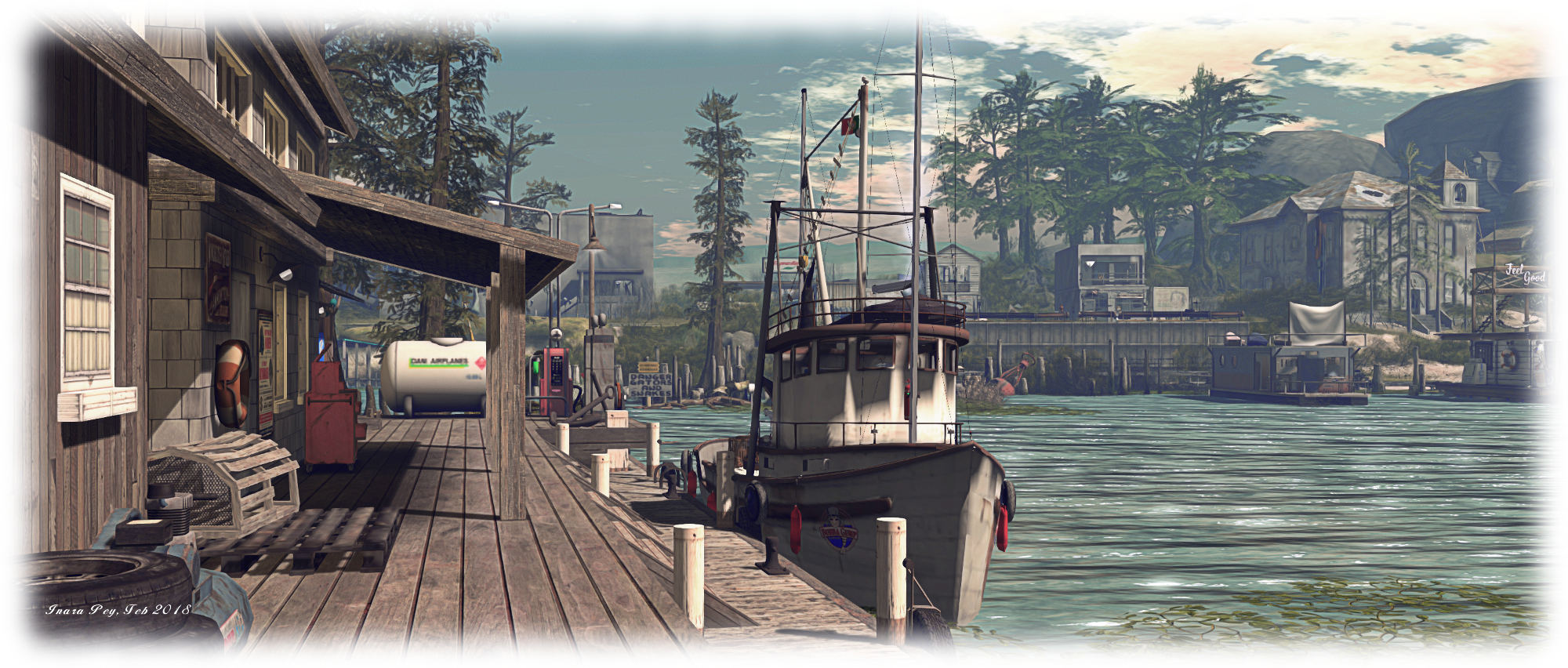
In looks, a good portion of Sanctuary has the feel of a careworn coastal town, possibly along America’s gulf coast. The buildings are old, slightly run-down, the roads unpaved and overlooking a bay dotted with sandbanks, one of which has the wreck of a coaster aground on it; a wreck so old, nature is gradually having its way.
Sanctuary; Inara Pey, February 2018, on FlickrSanctuary

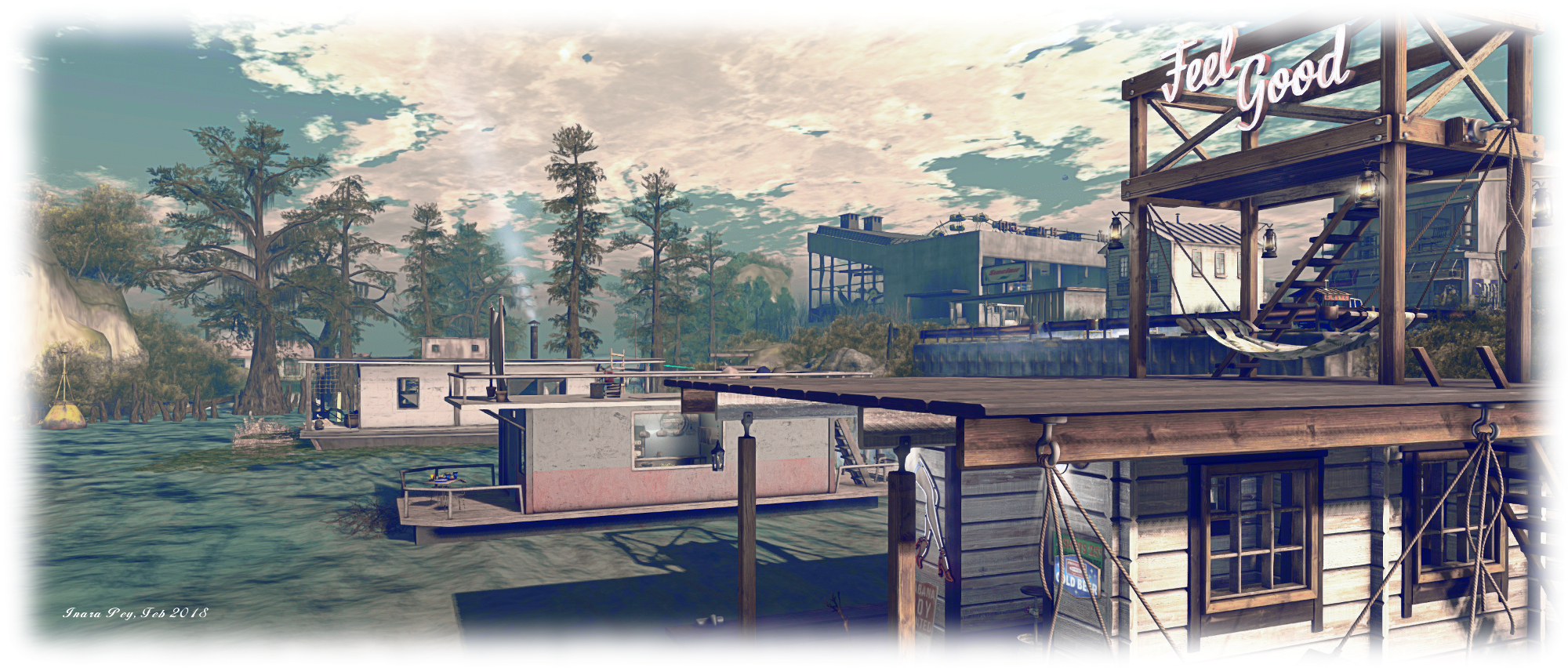
There’s no set landing point for visitors, so I’ve arbitrarily selected the parking lot above the bay. From here, visitors can look down on an old board walk which has clearly seen better days and is home to three old houseboats, one of which has been converted to a eatery, and another is now home to a bar.  Across the road from the parking lot sit a little huddle a businesses, all of which have seen better days, the largest of which is a used car lot and auto repair centre.

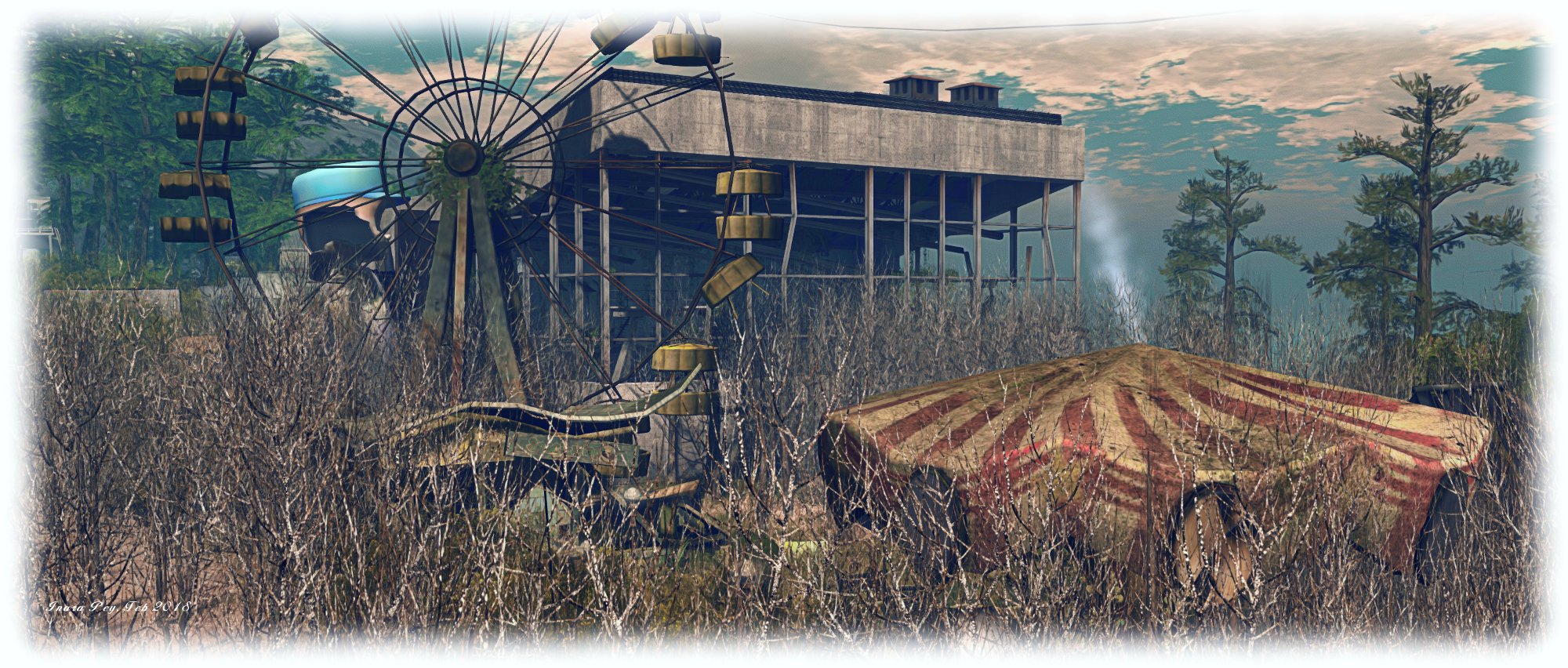
These businesses are filled with detail which help to further bring sanctuary to life. Going by the car being repaired at the auto centre and bicycles outside the cafe, they still seem to be drawing in business as well.  However, they are bookended – if not overshadowed – by the two structures which perhaps best encompass  the broader status of this little corner of the world: a boarded-up motel, and a tumble-down, overgrown funfair and public swimming pool. These clearly speak to the place which has perhaps seen better times.
Sanctuary; Inara Pey, February 2018, on FlickrSanctuary

Across the water sits a small, rugged island, home to a working dock and wharf on its north and island-facing side (the southern side of the island appear to be privately owned) with trawlers tied-up alongside. The channel running between the island and the mainland looks to have once been swampland; there’s evidence of old tree having been cut down to clear the water, although some swamp cypress still grow on either side of the slowly-passing water while signs give notice of snakes and alligators. For the most part, these may not be easy to spot – with one exception: a cheerful (and whimsical) ‘gator is more content with standing on an ageing wooden pier playing a banjo than with floating log-like in the water. If you spot him, do consider leaving him a tip for his efforts!

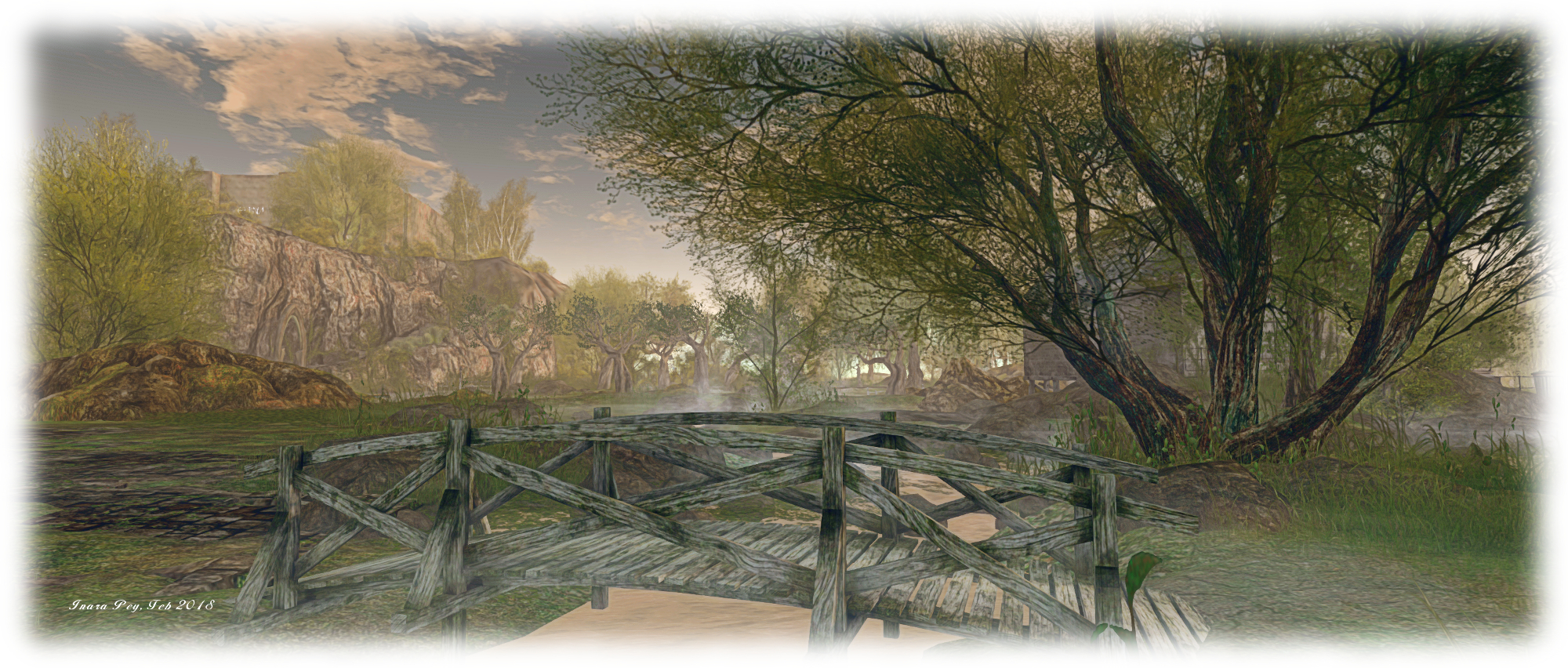
Follow the old road up towards the abandoned motel and you’ll find a choice of routes to take: a grassy track down between the motel and its sign, leading to where the board walk below the rod comes to an end; or you can stick to the old road and following it as it switchbacks inland, offering an walk that eventually loops back towards to the coast; or you can turn off the road just past the old motel and take the aged stone steps climbing up into the hills behind Sanctuary’s southern waterfront.
Sanctuary; Inara Pey, February 2018, on FlickrSanctuary

All three route can bring you by turn, gorge and bridge to an abandoned farm sitting above the motel, buildings long deserted, equipment left behind, unwanted. However, take the grassy trail down from the road to where the broad walk ends, and as well as the path leading up to the farm, you’ll discover a stony trail curled past the old, converted machinery house sitting on its own pontoon. This trail will- for the keen-eyed – offer a way to where a set of steps are cut into the rock which offer a path north into Sanctuary’s northern end, in the region or Rideau.

“Roxi decided we needed a change there,” Darth informed me during our visit. “So please excuse the untidiness!”

In turn, the rebuilding work barely intrudes on a visit – but it was worthwhile knowing it was going on, as it definitely marked Sanctuary as a place to be revisited soon. As it is, the northern half of the build couldn’t be be more different to the southern end. Climb up through the rocks and follow the path through the narrow clefts and you’ll be brought to a place which – for me at least – brought out strong memories of Sri Lanka.
Sanctuary; Inara Pey, February 2018, on FlickrSanctuary

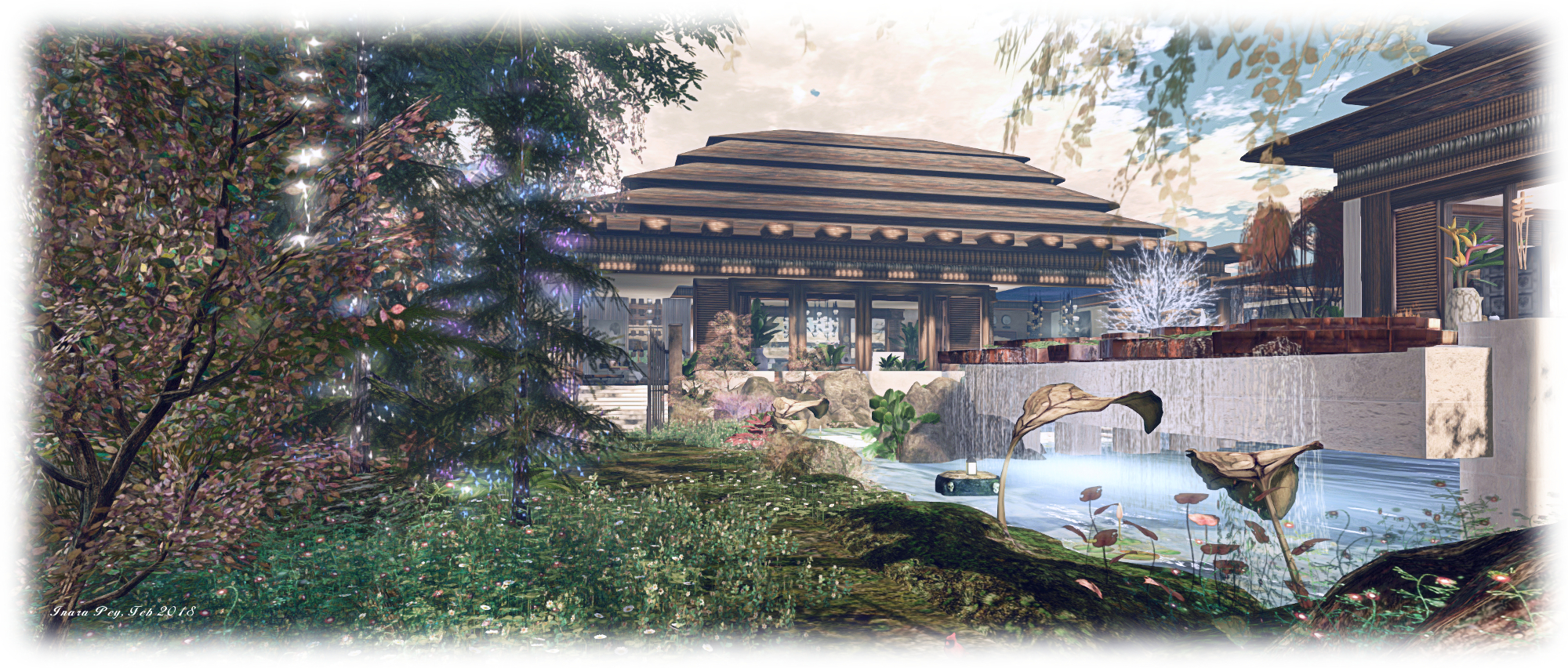
Down on the waterfront sits a copy of Eliza Wierwright’s Patron house: a open-sided villa which powerfully echoes Sri Lankan resorts designs in look and layout. Up the hill, behind this villa, tiered walls hide stairs that lead up into the high rocks, to where more clefts and steps cut and climb – the entire walk up from the beach putting me in mind of the Boulder Garden Hotel, Kalawana, Sri Lanka. The upper end of this walk is were work is being carried out, so I’m not going to reference more of it here – but will be back to see what Roxi and Darth produce there.

I genuinely cannot praise Sanctuary enough; it’s an outstanding design, rich in detail and full of contrasts, with the southern end of the landscape suggestive of America’s gulf coastal regions, as noted, but also containing little twists and touches  – such as the tuk-tuk vans – which might place it elsewhere. The tuk-tuks also provide a nice hook to the more tropical / Indo-Asian feel of the northern end of the land.

Sanctuary; Inara Pey, February 2018, on FlickrSanctuary

Undoubtedly well worth visiting and taking the time to explore carefully. My thanks to both Roxi and Darth for taking the time to chat, as well. Do keep an eye out for the more … unusual .. details of setting as well, which I’ve pointed not mentioned here, but which add a little edge to the scene.

SLurl Details

Realm of Light in Second Life

Realm Of Light; Inara Pey, February 2018, on Flickr Realm Of Light – click any image for full size

Annie Brightstar led us to take a visit to Realm Of Light, a Full region designed by Varielle and Tai (Taionia). Described as a “medieval/fantasy sim”, I’d definitely place it as the latter more than the former; it has a delightfully elven / fae feel to it with more than enough fantasy touches to mark it in that direction rather than medieval.

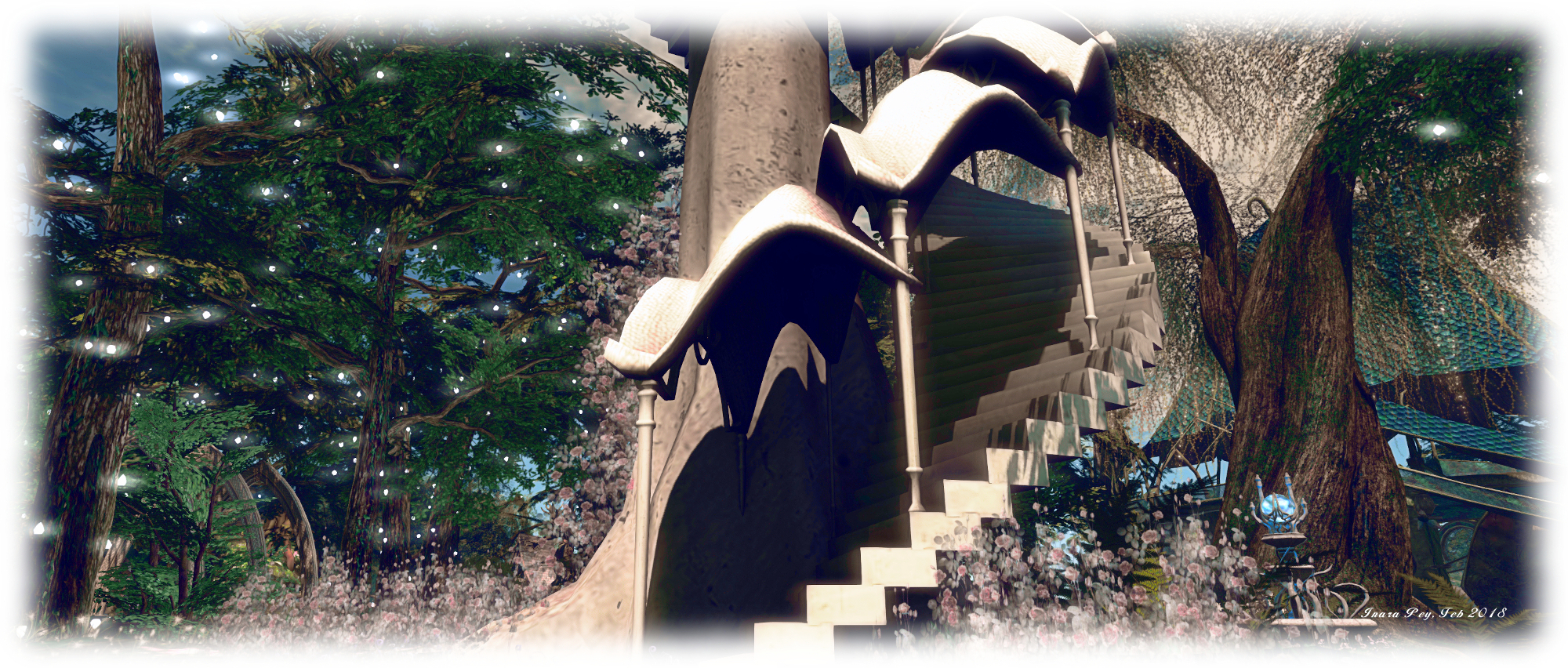
The landing point immediately evokes the fantasy feel, offering a faery circle, trees with windowed trunks lit from within and clearly the homes of the little folk dancing around the landing point on gossamer wings. Four paths offer routes of departure from the ring – three meandering through the tall trees, the third a bridge over one of the region’s rivers. Which you take is entirely up to you – and guaranteed, if I might paraphrase Tolkien, to bring you a place to which you may not have been going, but where your presence is welcomed.

Realm Of Light; Inara Pey, February 2018, on Flickr Realm Of Light

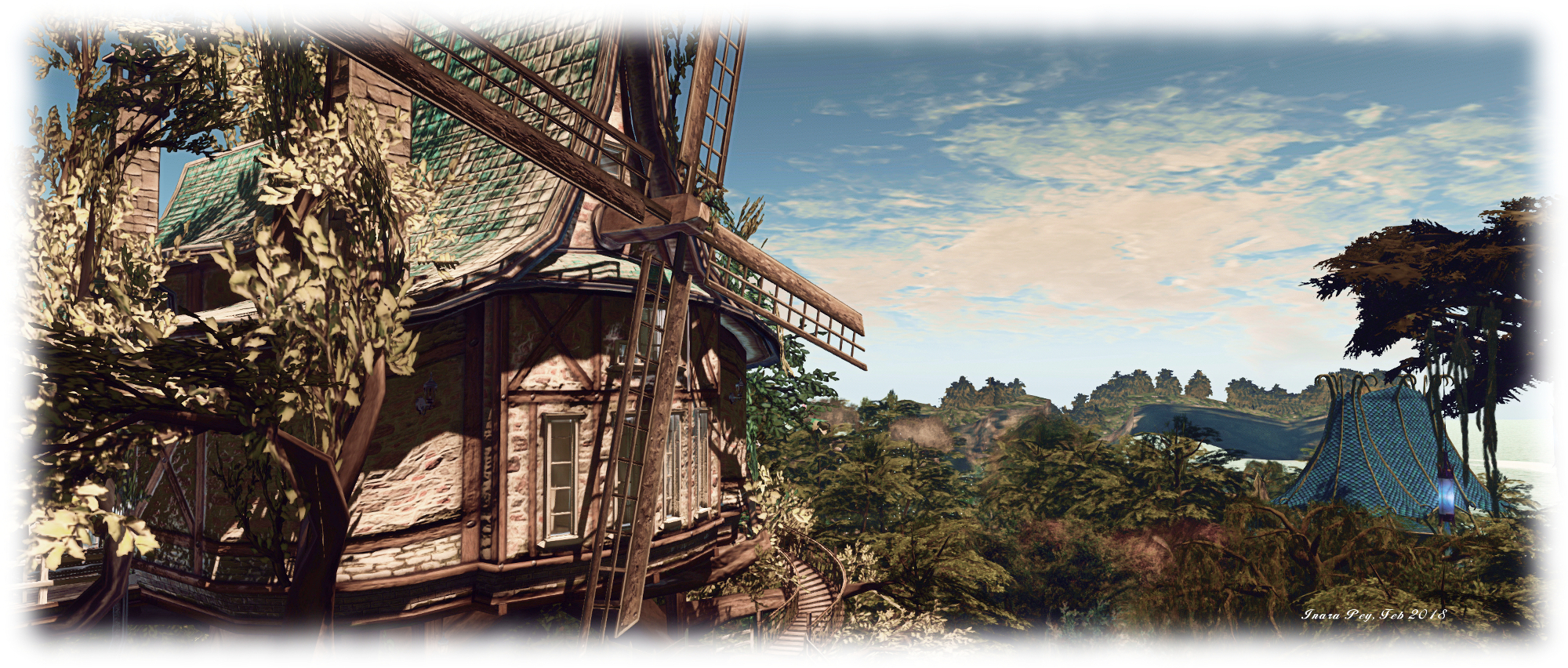
Travel east along one of the paths, and you’ll quickly come to another stream, bridged by interlocking tree trunks, the greensward beyond offering a place to sit and relax – or float- among exotic and colourful plants and fungi. South of this, and sitting on a tiny island separated from the rest of the region by narrow channels, is a great tree supporting a wooden platform on which is built the most marvellous windmill-come-house. At ground level and in the shade of the tree, is a smaller cottage – but be warned! The dragon guarding both is not there purely for show; this little island is a private residence, so please be respectful and avoid trespassing.

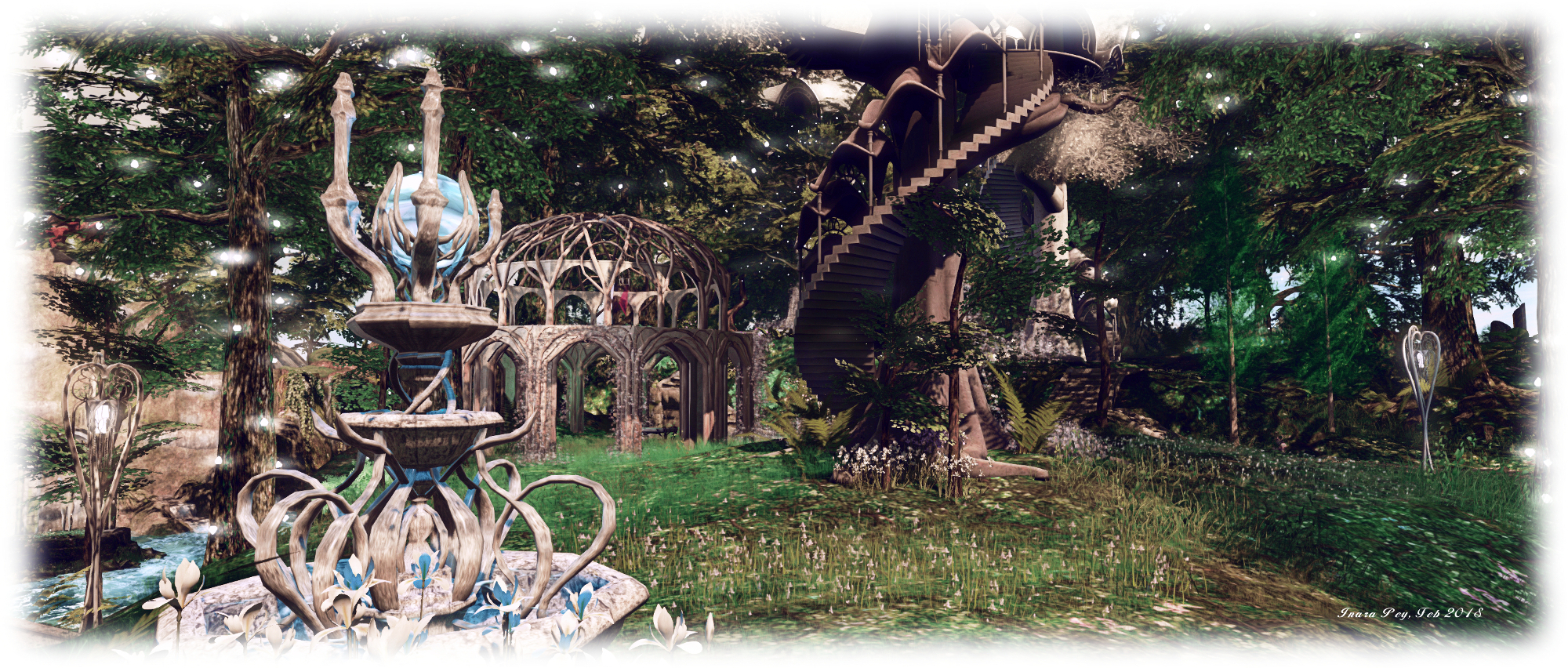
Take the path to the north, and it will take you – by way of another bridge – to a garden and elven pavilion. The garden a place of fountains, cuddle spots, a teleport to a floating meditation island. It is dominated by a great mallorn-like tree, a passage cut through its trunk, great lanterns hanging from its boughs and a platformed house held within its crown.

Realm Of Light; Inara Pey, February 2018, on Flickr Realm Of Light

Go south from the landing point, and the path will branch and fork, bringing you to a number of places – what might be an alchemist’s retreat, an ancient walled garden, a mystical tree cave and another greensward ending at a fae waystone circle.

A stone bridge near to the waystone circle offers a way across a narrow river gorge to where elven tree houses sit within the woods, stone paths and steps running between them, the grasses in their shade home to deer and rabbits. The tree houses are connected by bridges spanning the gaps between their ornate platforms, allowing easy passage from one to the next and back without the need to descend to ground level. North-west of the tree houses sits another island, reached by two bridges; again be aware that the properties here are available for rent and may be occupied – so please resist the temptation to enter them.

Realm Of Light; Inara Pey, February 2018, on Flickr Realm Of Light

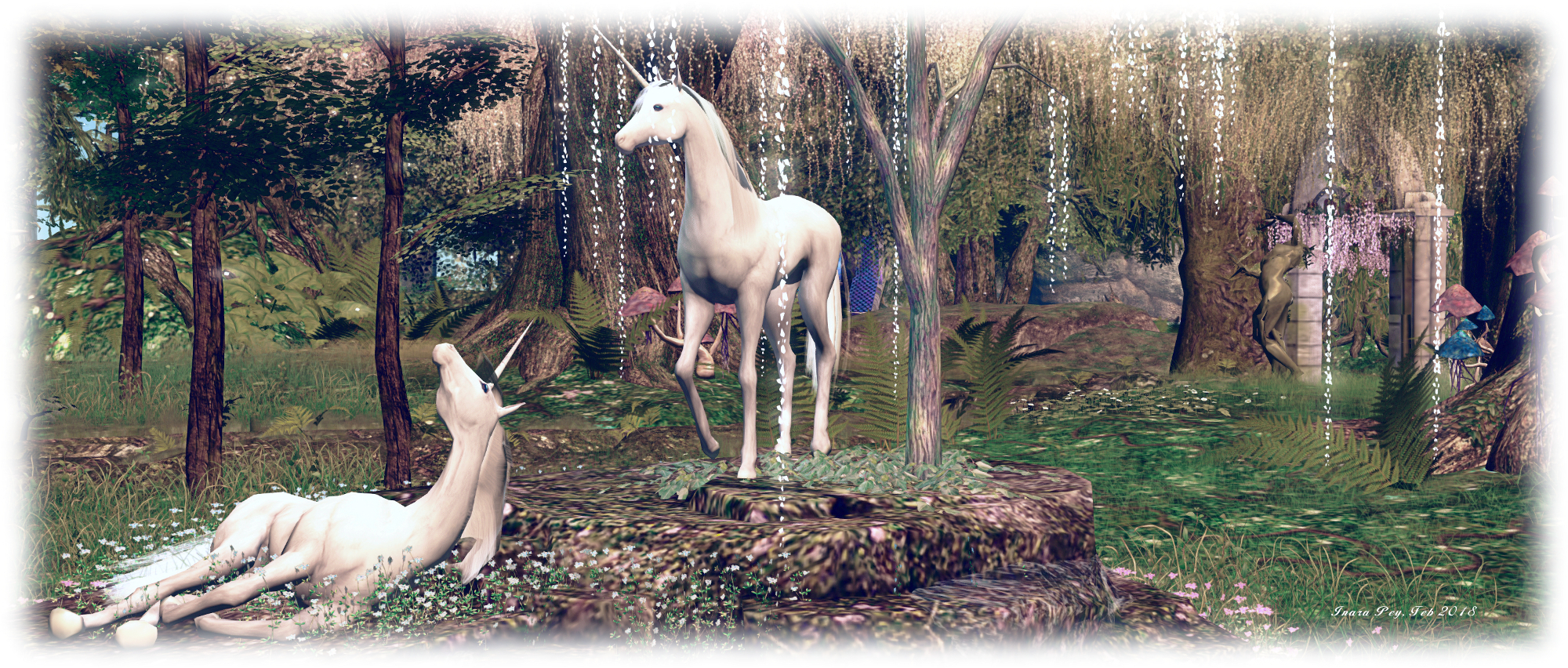
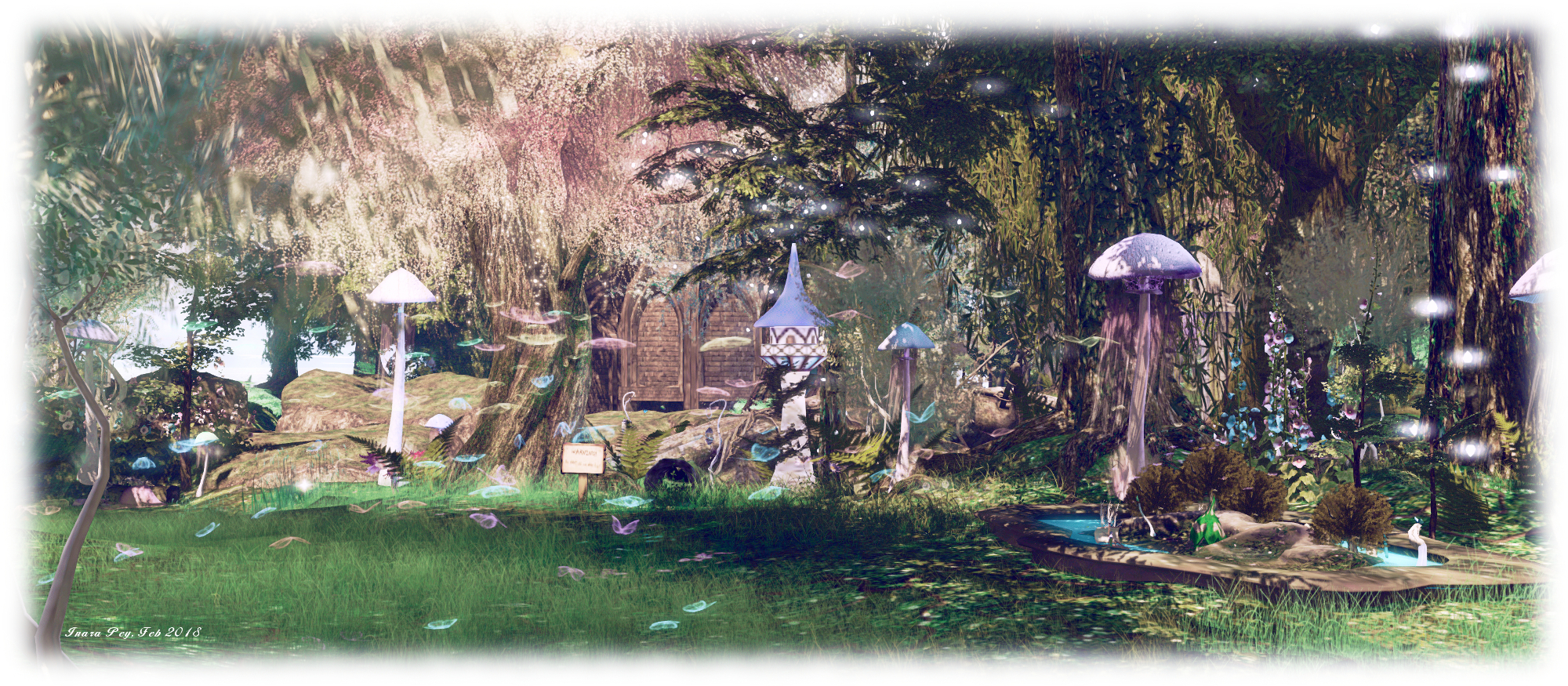
All of this is just scratching the surface of this region. Along the rivers – and overhead – one might find more dragons; to the north-east lies ship wrecks and a mermaid cove with places underwater to explore. Unicorns are to be found among the trees, while translucent butterflies flutter over plants and toadstools. Keep an eye out for the tiny houses and towers scattered around, and the fae folk who flutter about or are engaged in different activities.

Realm Of Light could perhaps benefit from a more appealing windlight, but as most photographers tend to use their own, this isn’t a drawback – but I do encourage experimenting with options when visiting; this is a place which really comes into its own under many sunlight settings. As it is, Realm Of Light makes for an engaging visit and offers plenty of opportunities for photography and exploration.

Realm Of Light; Inara Pey, February 2018, on Flickr Realm Of Light

SLurl Details

Kamigami, Pandora Resort in Second Life

Kamigami, Pandora Resort Town; Inara Pey, February 2018, on Flickr Kamigami, Pandora Resort

Note: this vision of Pandora Box of Dreams closed on August 1st, 2018, so the SLurl have been removed.

Lokhe Angel Verlack (Jackson Verlack) is a master in creating immersive environments, and I’ve covered a number of his region designs over the last few years – the most recent being Namaste, under their Pandora Resort/Pandora Box of Dreams banner (read here for more). Recently, he had his partner, Miza-Cupcake-Verlack (Mizaki) opened a new destination at Pandora Resort – Kamigami, a Japanese themed, down-town style environment with some nice little touches.

As with Namaste, a visit to Kamigami commences on the upper deck of an airliner zapping through the sky. Arrows on the floor direct passengers down to the lower deck and to teleport boards sit nestled in the cabin door lobby. One of these takes visitors to Namaste, the other to Kamigami, where they are delivered to the lower entrance to a metro station – the steps to street level offering the only way forward.

Kamigami, Pandora Resort Town; Inara Pey, February 2018, on Flickr Kamigami, Pandora Resort

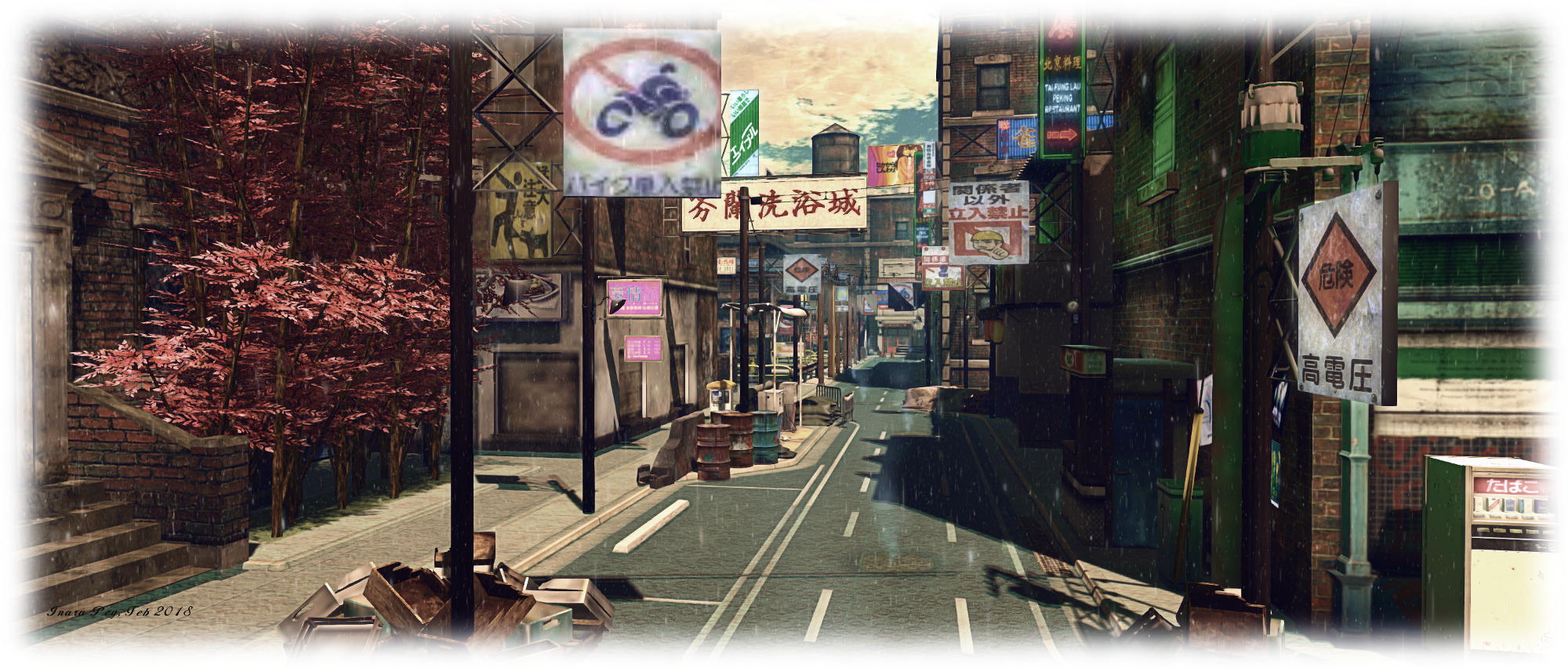
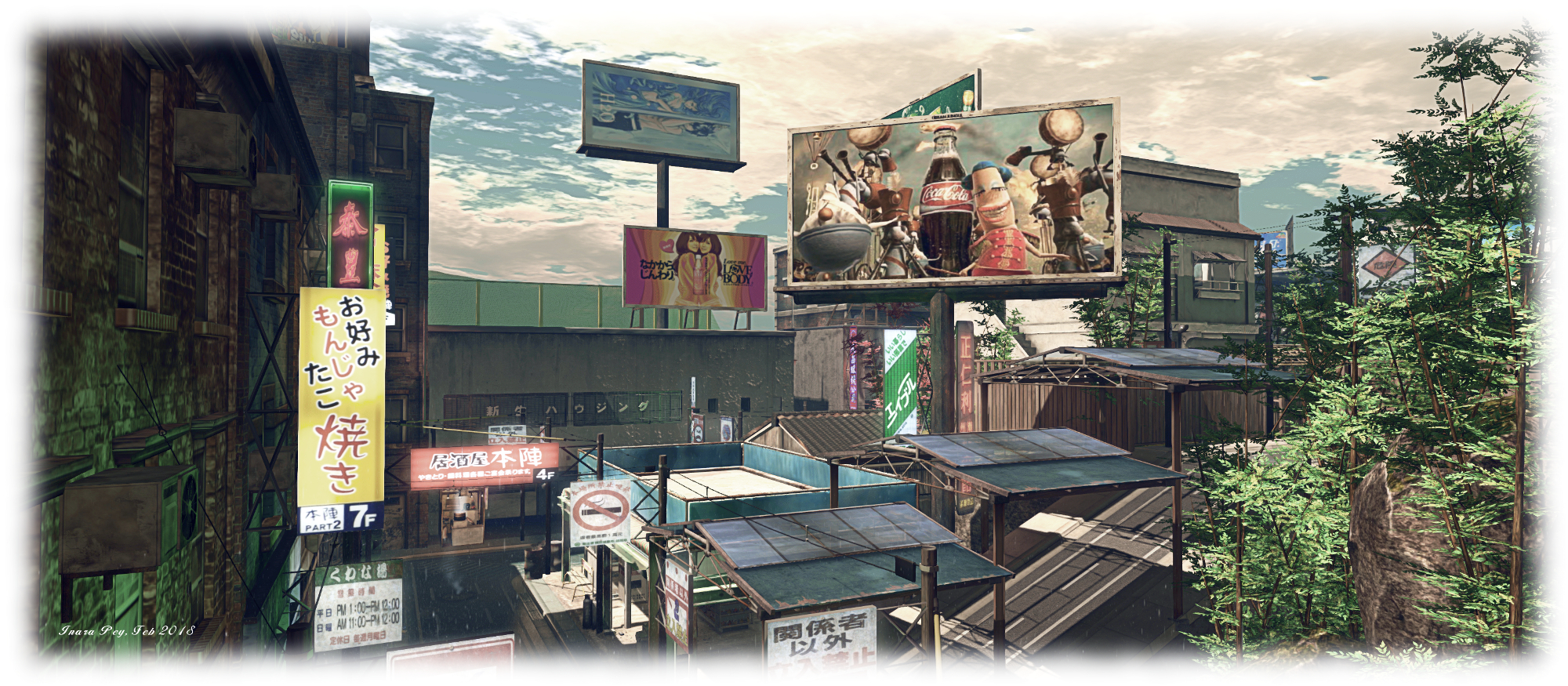
Climbing the steps reveals this is not the better part of town; the red-bricked buildings are grimy with age, the streets – although apparently pristine tarmac, possibly washed clean by the falling rain – are lined with piles of rubbish, old oil cans and signs that some attempts are being made at renovation.The metro sign on the wall of the steps suggests we’re in Kyoto, in which case, this might be an older, more outlying part of that city.

More signs, neon and painted boards, hang from walls, extend from posts carrying overhead power lines and are mounted on overhead gantries. Some of these are typically Japanese while others offer a more Chinese lean, and some have a distinctly western look and feel; all of which gives the setting an eclectic look and feel.

Kamigami, Pandora Resort Town; Inara Pey, February 2018, on Flickr Kamigami, Pandora Resort

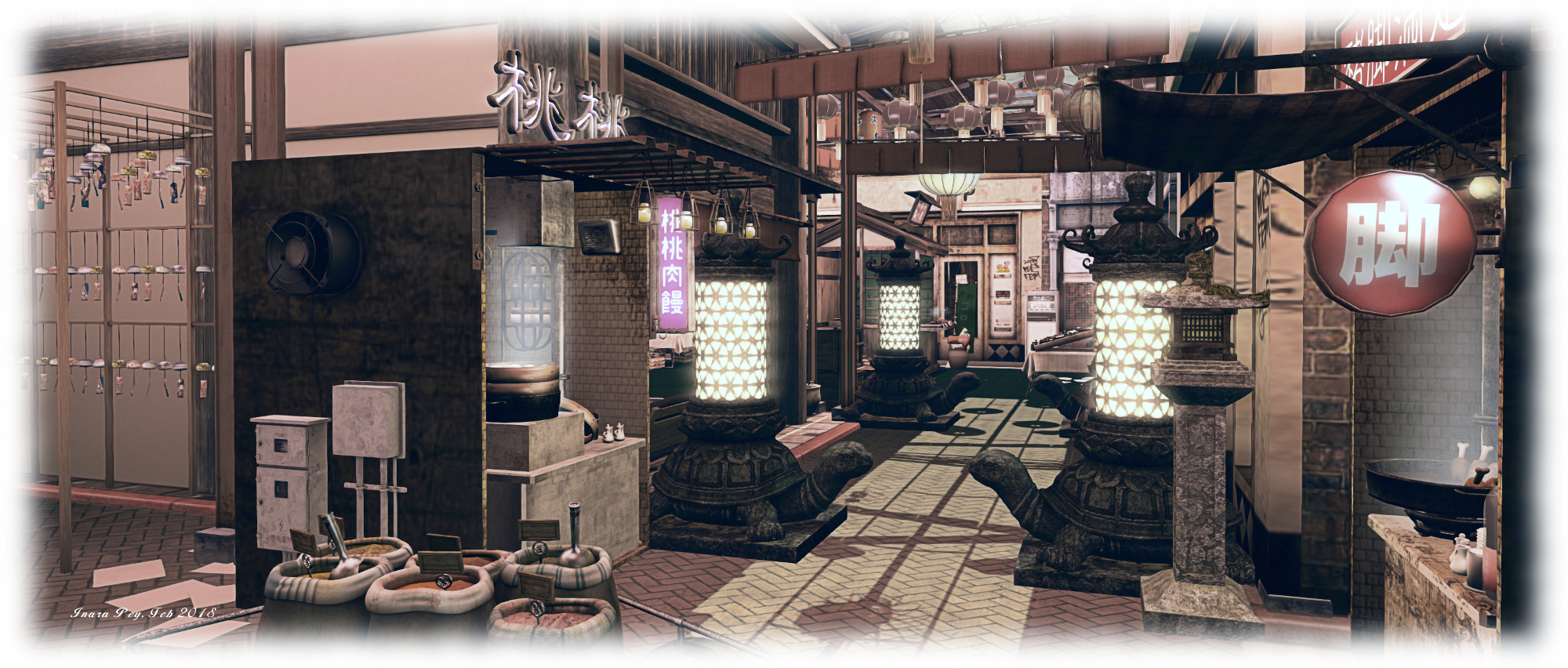
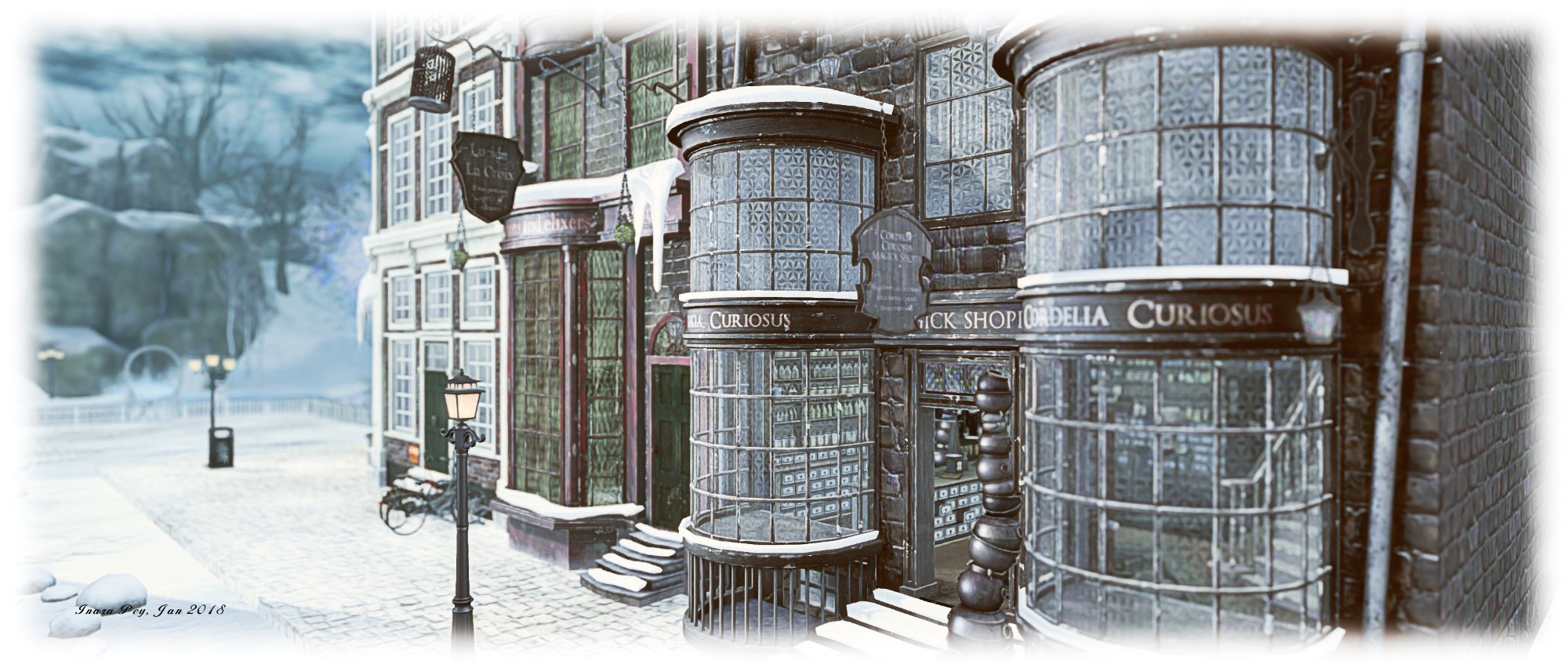
Most of the builds are admittedly shells, but part of the interest in a visit is finding your way around the streets separating them into blocks, taking in all the little details. I say “most”, because wander far enough and you will find places that are open to avatars to explore, such as the magic shop along one street and, most particularly, in the south-east of the build where a series of covered alleys offer little market stalls, eateries and curio shops.

The largest buildings in the setting are of distinctly European / western design. They sit within formal gardens positioned on the rugged table of rock that raises them above the surrounding town, an aloof position befitting their imposing looks. A narrow cutting in the rock,, marked by stone steps, presents the route up to these two manor-like buildings, both of which appear to be places of learning … or of dark acts.

Kamigami, Pandora Resort Town; Inara Pey, February 2018, on Flickr Kamigami, Pandora Resort

Keep an eye out, as well, for the town’s canal; not because of the water or for boats, but because of its unique display of fish that are literally flying along its course, rather and swimming. These can be seen from the road running alongside part of the canal, or from the old stone bridge spanning it.

As with all of  Lokhe ‘s builds – and as one might expect from my description of him at the top of this piece – Kamigami is eye-catching in its level of detail and touches.  Visually, it is as engaging as Namaste, down on the ground level below it – but in a very different way. There are opportunities for photography among the streets. As such, a visit is once again recommended.

Kamigami, Pandora Resort Town; Inara Pey, February 2018, on Flickr Kamigami, Pandora Resort

Kisaragi Town in Second Life

Kisaragi Town; Inara Pey, February 2018, on Flickr Kisaragi Town – click on any image for full size

We were first made aware of Kisaragi Town early in January 2018, when Shakespeare (SkinnyNilla) dropped a landmark over to me. Various things prevented a visit at the time, so it wasn’t until the start of February that we finally got to go and see it – and I’m glad we did.

Covering a half region, the build has been designed by xLinzerTortex, who from his profile appears to be a relative newcomer to Second Life. While profile age is no guarantee of overall time in SL, if he has only been in-world a year and a half then additional kudos to him for presenting such a carefully designed, richly detailed location for people to enjoy.

Kisaragi Town; Inara Pey, February 2018, on Flickr Kisaragi Town

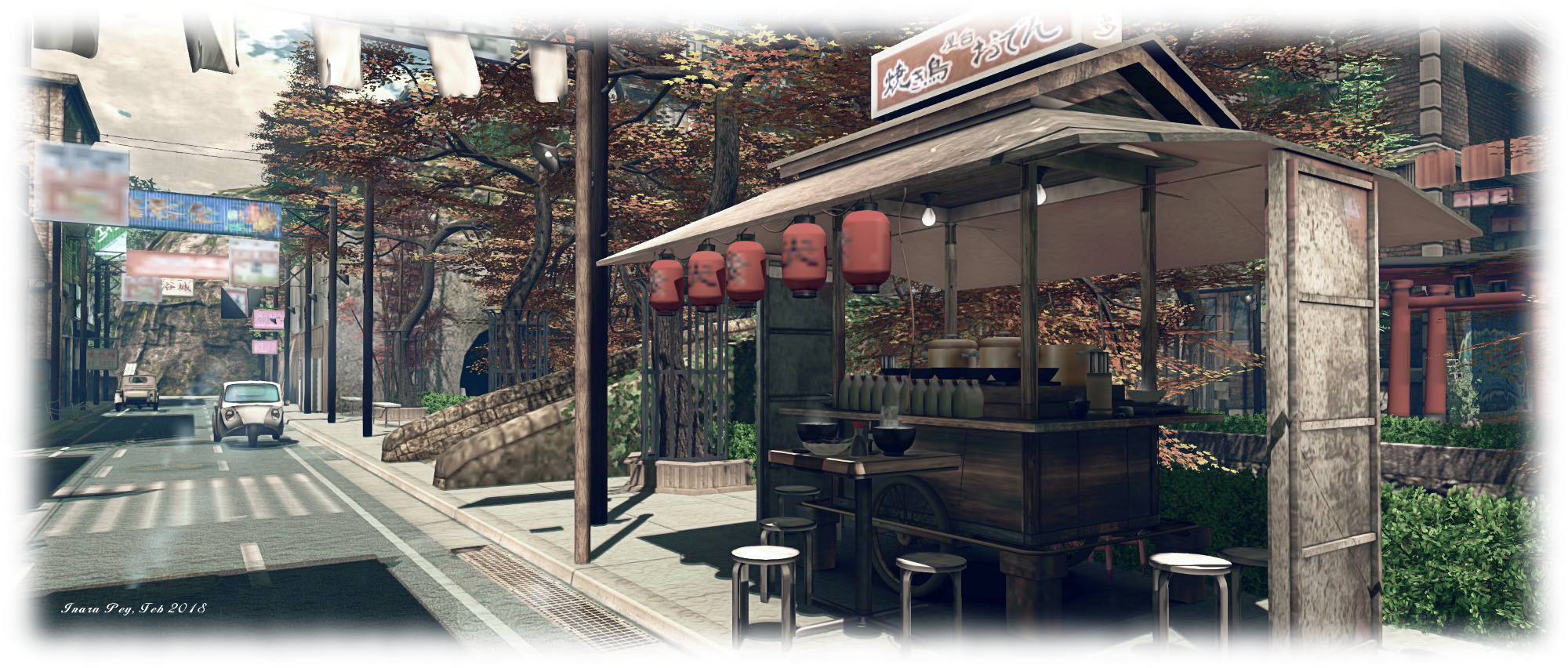
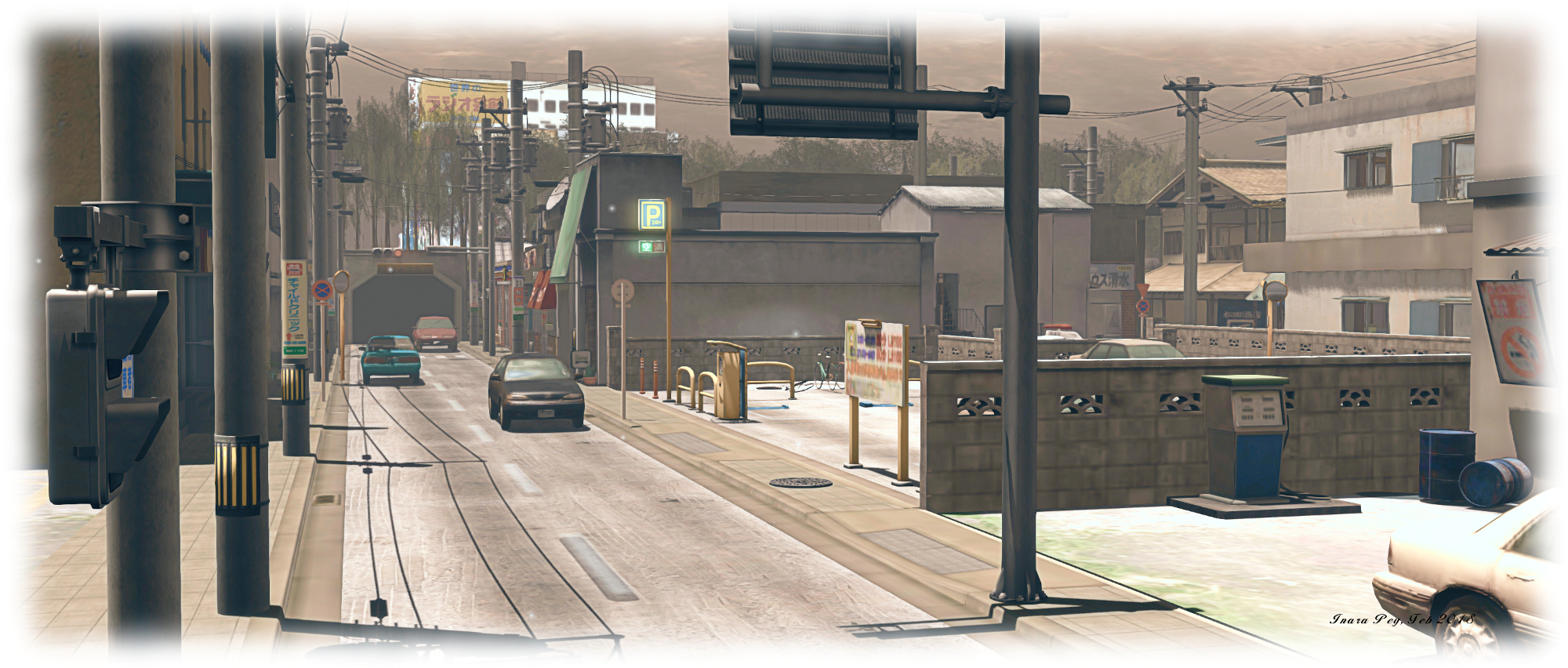
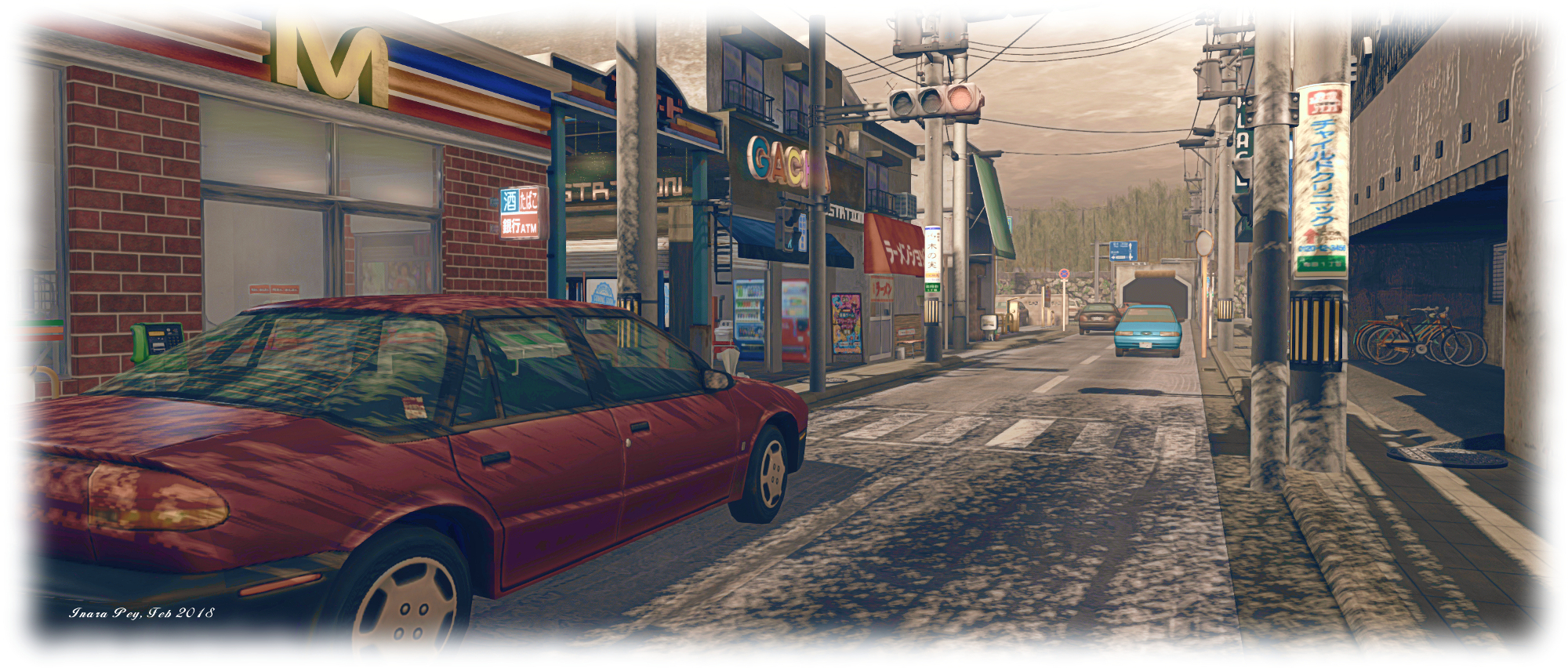
A visit begins on a main road running west-to-east through the town, with tunnels at either end linking Kisaragi Town with the two neighbouring parcels / region (the town sits within a series of Japanese themed private regions). Along this road are assorted businesses: a post office, movie theatre, garage, coffee shop, metro store, eatery and so on. Cars are scattered along the streets or sit parked in assigned bays; traffic lights blink, and advertising hoardings hang from buildings, with posters wrapped around lamp posts and sign poles.

From the style of the buildings, this would appear to be an older part of town; many of the structures are flat, cement-sided blocks, colour provided in splashes by small tiled areas of walls or by the advertising boards or the simple contrast of wood against cement. The exceptions to this are the movie theatre, located towards the eastern end of the street with its painted façade and tiling, and the metro store and gacha standing either side of a small shopping arcade – or alley, if you prefer – running southwards from the eastern end of the street.

Kisaragi Town; Inara Pey, February 2018, on Flickr Kisaragi Town

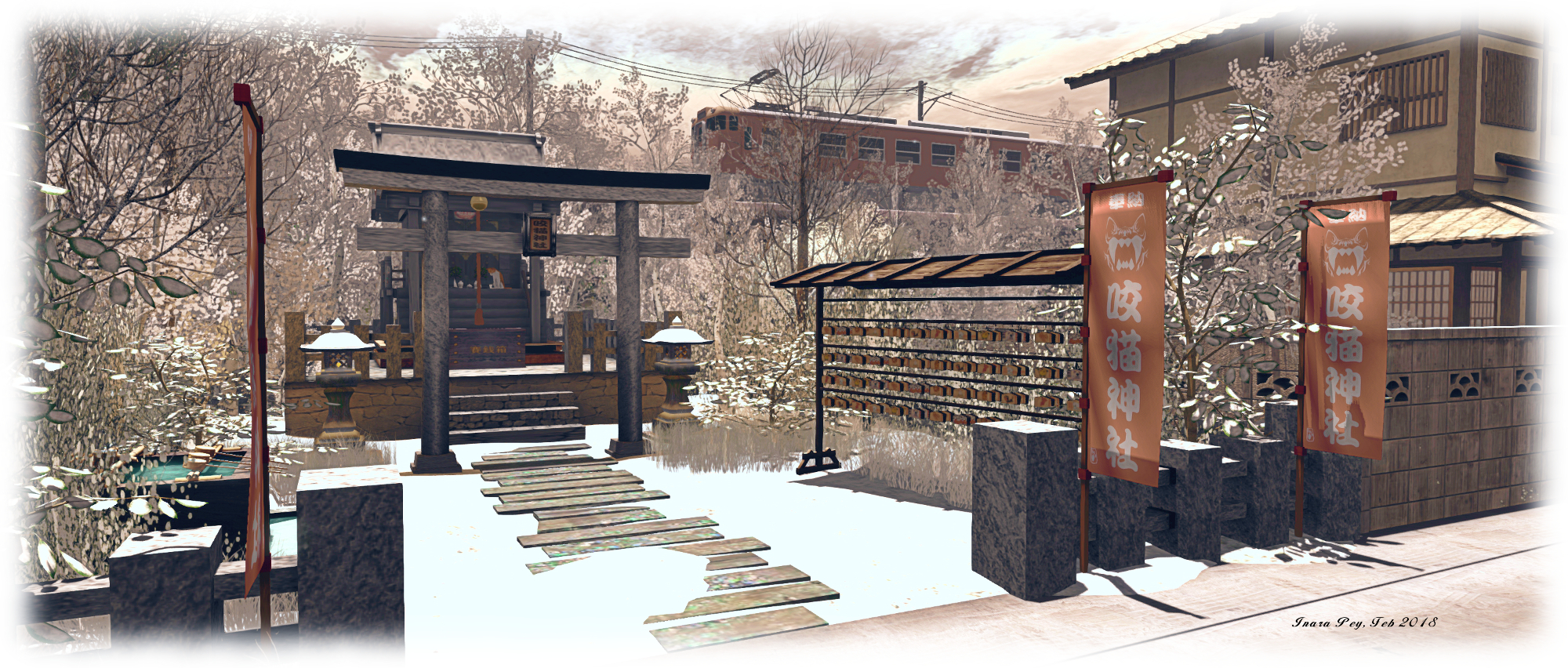
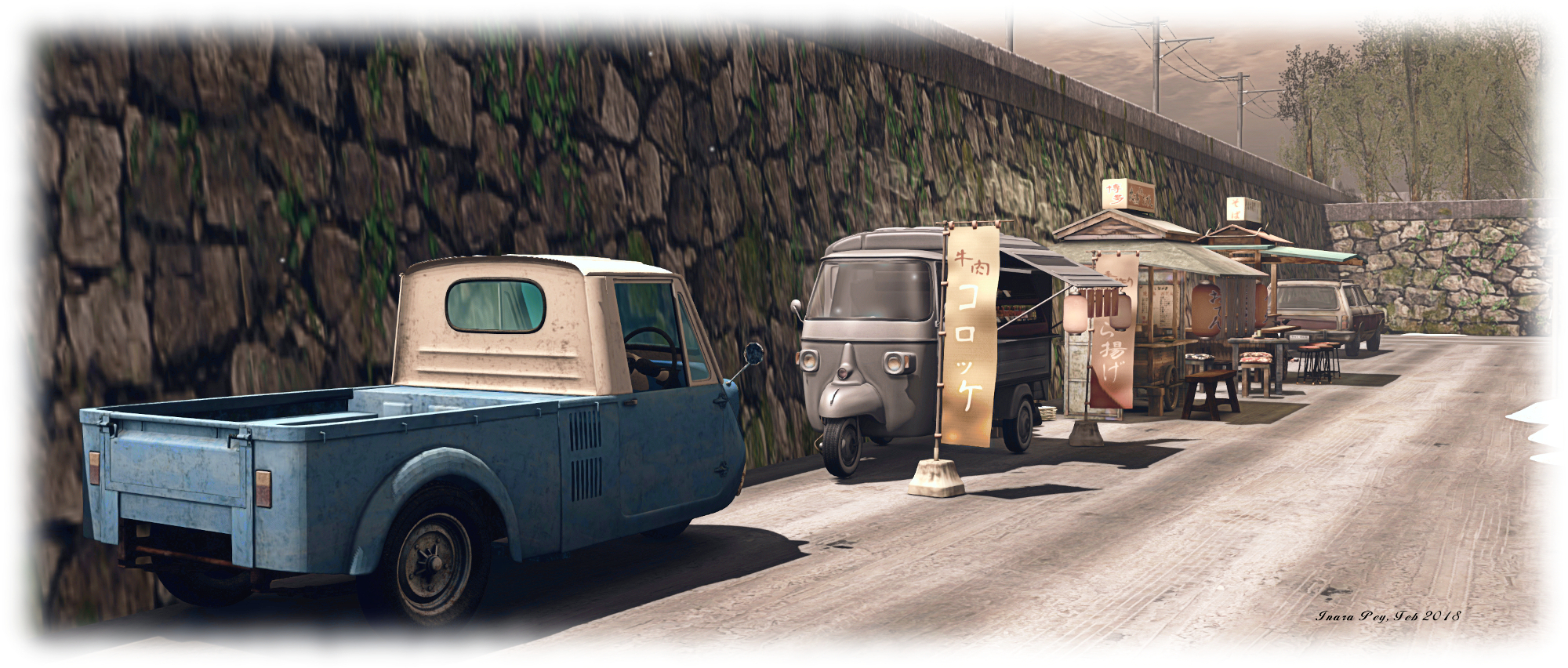
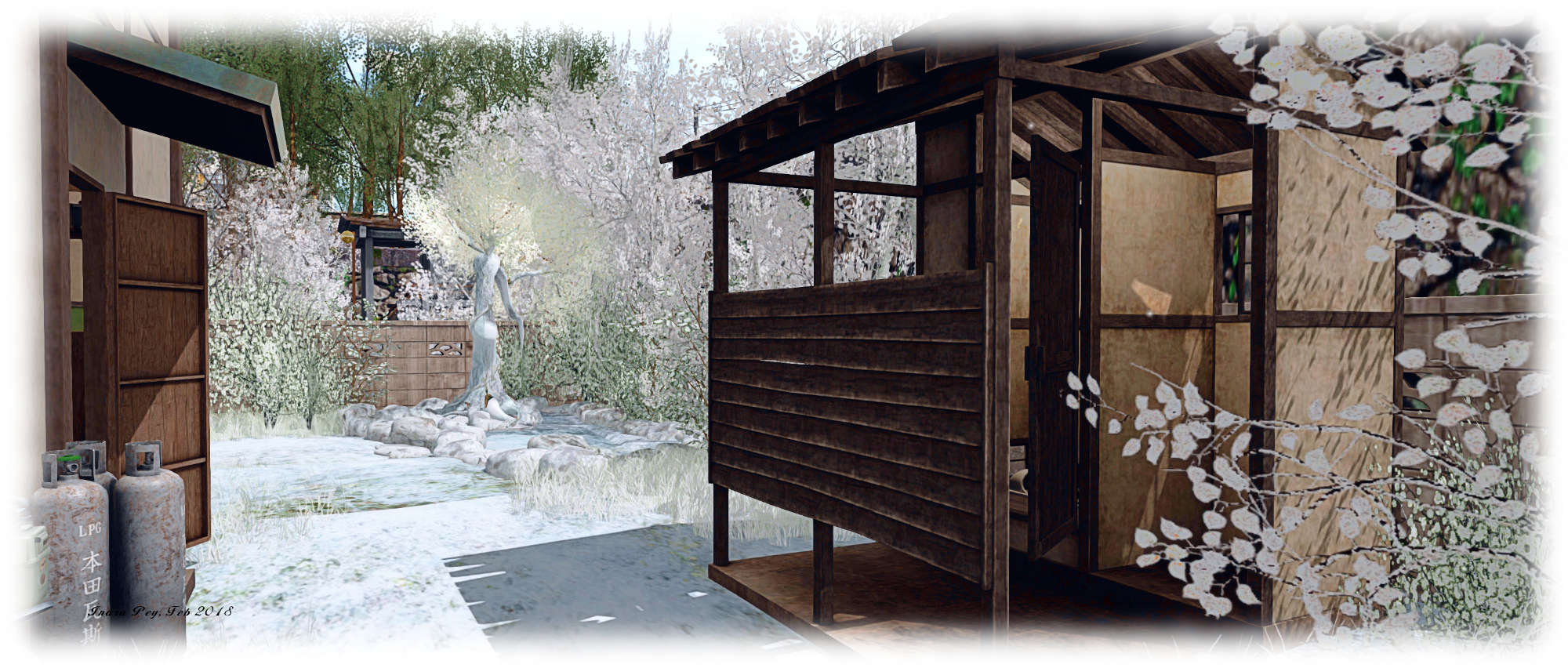
This little precinct, protected from the elements by a discoloured glass roof, again suggesting it has some age to it, has little boutique stores on either side and offers a route to a back street where the snow is falling a little harder. A small temple is huddled into a corner, banners offering greeting, the shrine subject to occasional rattling as cantilevered train cars rumble by on the elevated track behind it. A house and flat-roofed apartment buildings also occupy this southern side of the town, again subject to the passage of trains on the elevated track. A little row of market stalls sits beneath the wall supporting the rails, perhaps serving the locals living in the apartments.

Small it might be, but the design of Kisaragi Town is such that when walking the streets, it is easy to get a feel you are exploring a corner of a much larger setting. To the north, forming a natural border along one edge of the parcel, rise as series of more modern apartment blocks. These serve to both contain the town and suggest that if we were to travel beyond them, we’d find yet more of this town to explore. Similarly, to the east and west are raised lines of trees which again provide a natural border for the town and break-up the rooftops of the regions beyond, further adding to the sense that Kisaragi Town is part of something bigger, even though it is not in any way thematically connected to its surroundings.

Kisaragi Town; Inara Pey, February 2018, on Flickr Kisaragi Town

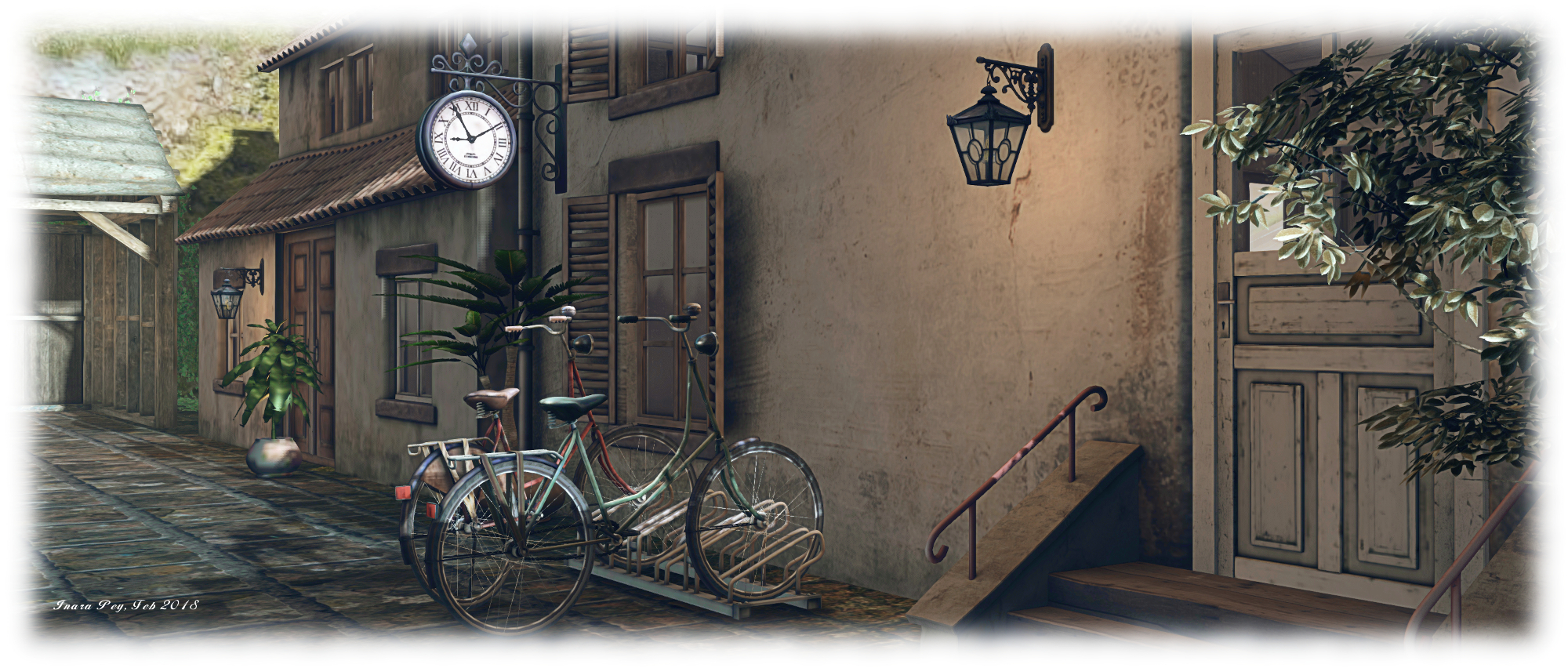
What we liked most about this build is the sheer attention to detail that bring it to life. There’s the vending machines and bicycles racked up under the lee of a building at one end of the street; the parking ticket machines and sign board outlining the use of the car park at the other; the waste bags at the side of a street awaiting collection; the just-delivered bundles of the morning’s papers outside a store; the care taken in selecting the cars on the streets; the overhead power distribution system… it all adds up.  Climb a set of steps up from one end of the main road and you’ll find a little rooftop area where people can practice their baseball batting – so typical of the use of space seen in places like Japan, where land can come at a premium price.

I also liked the way that the western end of the parcel has a small undeveloped “buffer zone” beyond the road tunnel. This not only offers a break between Kisaragi Town and its immediate neighbours (currently undeveloped at ground level), but also potentially offers room for expansion.

Kisaragi Town; Inara Pey, February 2018, on Flickr Kisaragi Town

Kisaragi Town is a treat to visit. Small, finely detailed, and offering a compact opportunity for exploring and discovering. Should you visit and enjoy the setting, please consider a donation towards its upkeep at the temple in the south-east corner.

SLurl Details

Meraki Islands in Second Life

Meraki Islands; Inara Pey, February 2018, on Flickr Meraki Islands – click on any image for full size

Meraki Islands, on the homestead region of Felicitie Isle, is a group build by Nïc H Bour (NicBor) and Busta (BadboyHi). It is currently home to Etnia, the store operated by Mika Whitesong-Holloway (Mika Whitesong), and offers visitors a perfectly landscaped environment to explore and appreciate.

It was actually Busta’s involvement in the design which encouraged me to visit. He was responsible for the enchanting Yasminia, which Caitlyn and I visited in 2016 and 2017, so I was keen to discover what Meraki Islands had to offer.

Meraki Islands; Inara Pey, February 2018, on Flickr Meraki Islands

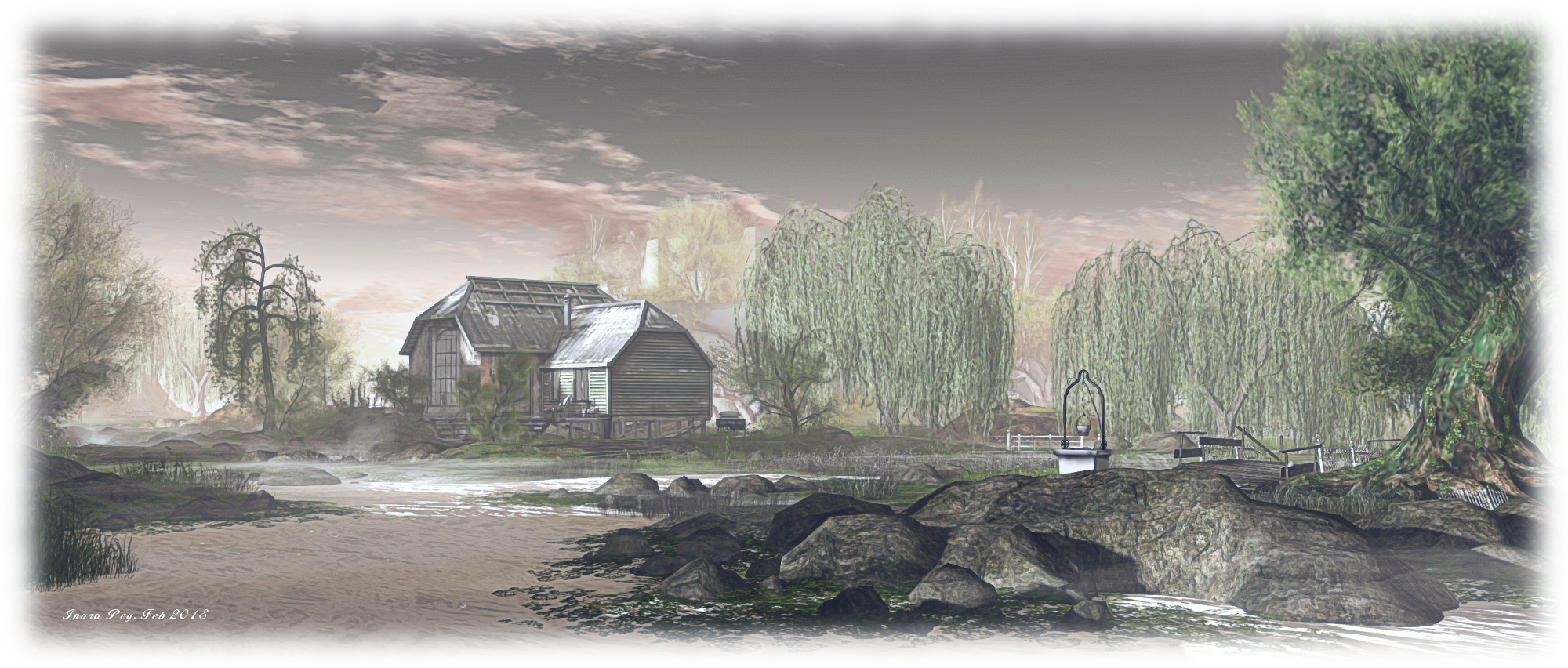
Predominantly flat, the landscape has a wonderful wetland feel to it, water cutting channels through the northern side of the region, seemingly at random, trees and bushes offering shade. A single  table of rock rises from the south-east corner of the region, a crown of silver birch trees on its top surrounding the walls of Etnia, reached by a single stepped footpath winding up the side of the platform.

A broad strip of land runs west from this, separating the wetlands on the north side of the region from the open waters south of it, before turning north to where a farmhouse sits slightly elevated above a flagged courtyard with a pair of houses on one side. Unfurnished, those look out across the wetlands, in the middle of which sits an out warehouse building, re-purposed as a simply furnished cosy spot.

Meraki Islands; Inara Pey, February 2018, on Flickr Meraki Islands

The warehouse and houses aren’t the only structures; there is a second farmhouse on the south finger of land, while scattered around the water channels are old walls, a disused greenhouse, a folly and bridges offering routes over the water and between the many fingers of land between the narrow channels. One of these bridge leads eastwards to the neighbouring region, which at the time of my visit was still being designed – again by Busta, suggesting a reason to return for a future visit.

If this all sounds simple in design, it’s because it is – and in being so, it is also elegant and highly photogenic. There is a sense of serenity about the region which not only encourages exploration, but gives people plenty of reasons to stay. Scattered over the waters are rowing boats offering gently rocking places to sit and appreciate the setting, while the coastal and inland paths offer further places for couples to sit.

Meraki Islands; Inara Pey, February 2018, on Flickr Meraki Islands

A further charm with the region is that it looks out over its neighbours to the west and north. This gives Meraki Islands a sense of place in the world – although be aware that the neighbouring regions are private homes and not open to the general public. There are other points of attraction as well such as the avenue of trees bent over the channel running around the foot of the south-eastern plateau.

In all, this is a veritable tour de force of region design. Simple yet elegant, subtle in touch. The measure of care taken with the build is exquisite, the presentation wholly natural from the cut of the waterways in the wetlands through the selection of the trees – particularly the weeping willows – to the dressing of things such as the steps up to the store.

Meraki Islands; Inara Pey, February 2018, on Flickr Meraki Islands

Definitely not something to be missed.

SLurl Details

Cece’s Secret in Second Life

Cece's Secret; Inara Pey, January 2018, on Flickr Cece’s Secret – click on any image for full size

I was drawn to Cece’s Secret, a homestead region designed by CeCeGy, as a result of seeing it as an Editor’s Pick in the Destination Guide. For those still keen to enjoy winter themes, it currently offers a snowy environment which makes for a pleasing visit and a charming location with hints of romance.

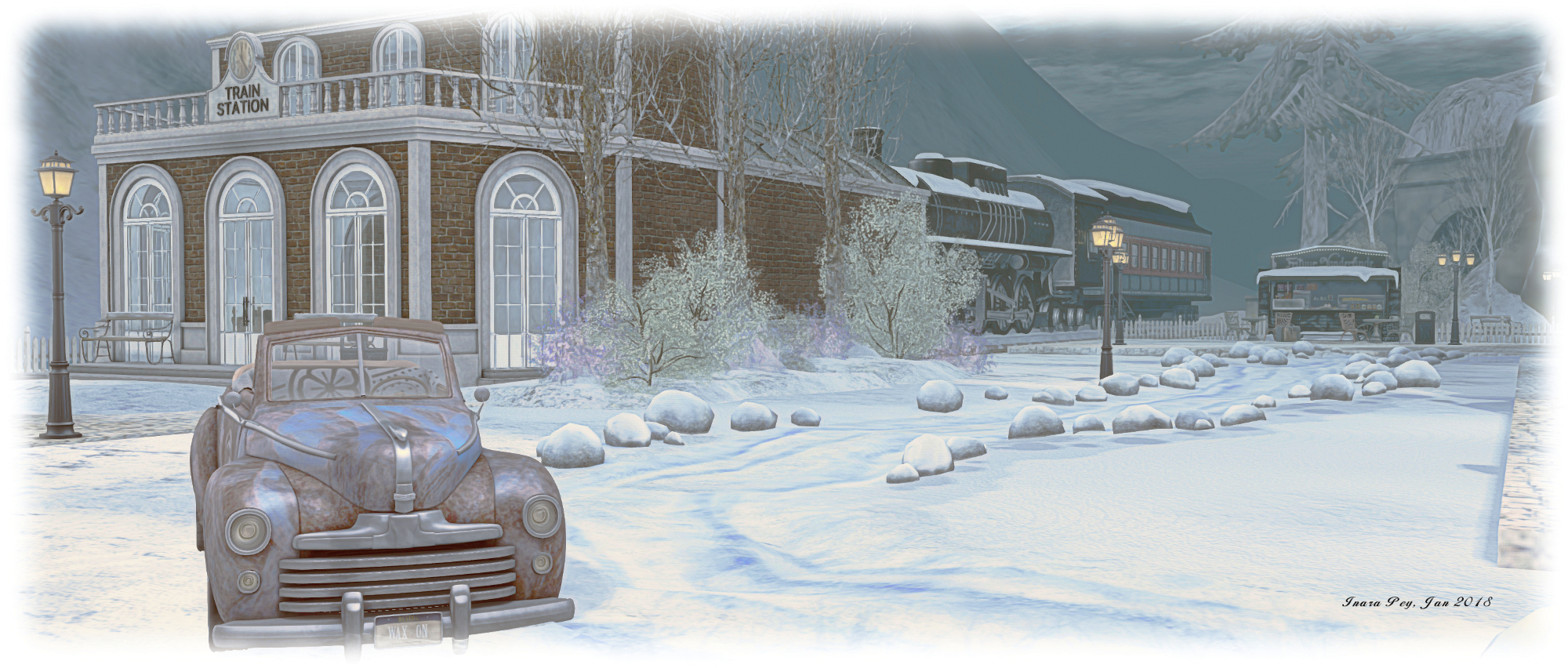
A visit starts on the largest of five islands, and almost at the centre of the region. This island is home to a parade of shops facing a railway station terminus, a single track curving out of the station to vanish into a tunnel. A train is halted before the awning of the station – which is just as well; the smoke stack of the engine is taller than the steel frame of the awning, so any attempt to go any further might have been damaging to both. Instead, the train sits under the early morning sky, a small square alongside the track.

Cece's Secret; Inara Pey, January 2018, on Flickr Cece’s Secret

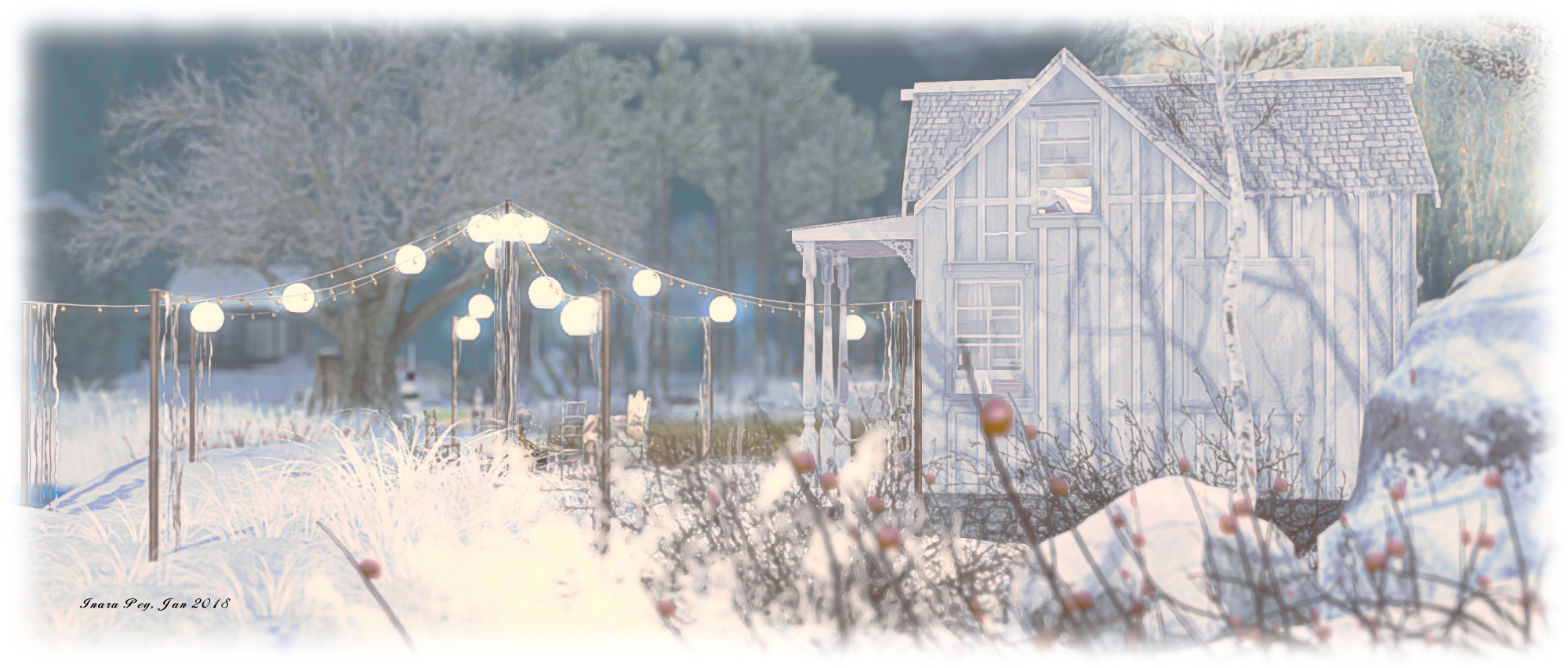
A café sits on the square, a frozen pond nearby, reached via a set of gates. Further to the east, beyond the rocks rising from the ground beyond the pond, sits a whitewashed cabin with roaring fire outside and an interior setting suitable for newly weds and the romantic at heart. With the ground covered in snow, a path marked by small rocks winds its way around the shops and down to the south to where two bridges span narrow channels to the nearer two of the four southern islands.

Of the two islands reached via these bridges, one is a rocky outcrop. Stone steps curl up the snow and rock to where a large tower rises, inviting people to explore. With its walls holed and its turret broken, this tower still offers another cosy retreat. Across the water the second island is lower, flatter. Reached via a low bridge, it is home to another comfortable cabin facing a vagabond trailer across another frozen pond.

Cece's Secret; Inara Pey, January 2018, on Flickr Cece’s Secret

The remaining two islands sit further out and are far more rugged in nature; one on the edge of the region and deserted; the second – which appears to be only reachable by flying – is also rugged, with a garden cottages sitting on the top of it, again making presenting another comfortable escape from the rest of the world.

There is one more accessible offshore point; not so much an island as a tiny islet on the west side of the region. Reached by a little iron bridge, and devoid of trees, it offers a bed under a canopy, while a deck with seats and burning brazier faces it from across the region on the east side.

Cece's Secret; Inara Pey, January 2018, on Flickr Cece’s Secret

There are one or two little issues with the design, but nothing to spoil the overall setting. There are some gates that don’t open, for example, but can easily be walked around, while one or two plants could do with being phantom. Do note, as well, that scripts are disabled; so if you re-log whilst visiting, you many find any scripted AO you use and scripted attachments may not work as expected.

It’s important to note that these are own little issues, and they don’t spoil a visit. As such, were I to use one word to describe Cece’s Secret, it might be placid. The winter set to the region, coupled with the surrounding mountains, the region has a feeling of being a secluded place; somewhere to escape to and relax. As well as the cabins and the bed on its islet, there are numerous places to sit and relax or cuddle.

Cece's Secret; Inara Pey, January 2018, on Flickr Cece’s Secret

SLurl Details