Originalia: a tropical paradise in Second Life

Originalia; Inara Pey, February 2019, on FlickrOriginalia – click any image for full size

Update: Originalia appears to have closed. SLurls have therefore been removed from this article.

Imagine you had a small personal fortune. Enough to, say, buy your own tropical island atoll. What might you look for in such an island prior to purchase? What might you do with it? What style of house would you opt to have built there? What facilities would you want to include to make it that special place where you can escape the pressures of life and simply be, enjoying sun and surf and the haven of tropical splendour with your family and / or friends?

Doubtless, many of us have fantasised having a life where we could “do a Branson” and have such an island – and I wouldn’t at all be surprised if in our individual mind’s eyes, it didn’t in some ways resemble Originalia.
Originalia; Inara Pey, February 2019, on FlickrOriginalia

Designed by Minnie Blanco (Minnie Atlass) of Soul2Soul fame for region holder Amase Levasseur, Originalia is an utterly stunning Full region this fully embodies the idea of a tropical paradise home. And if you’ve never dreamed of having such a place to call your own, or in letting your mind wander the fantasy of owning a private island getaway you’ve not pictured anything quite like it, I’ve little doubt that after a visit, you’ll be unable to picture anything else.

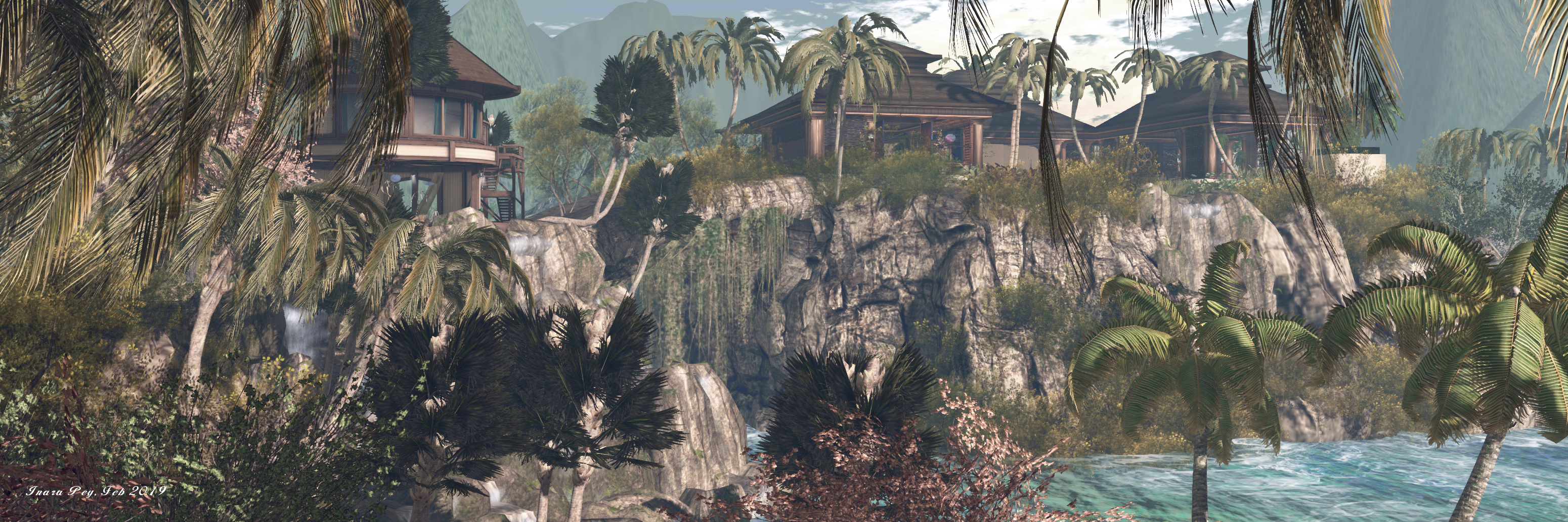
Set within an archipelago of off-sim islands – some quite mountainous – Originalia offers what could easily be the atoll top of a drowned volcano: an oval of sand and rock rising above the surrounding sea, the wall broken to the east, allowing the waters to enter the crater’s bowl to form a lagoon. Beyond  the curve of the island lies an outer semi-circle of low-lying rock, home to scrub grass and palm trees. It suggest that perhaps at one time the cone forming Originalia sat within a larger caldera, perhaps the last gasp of the volcano that formed it, pushing itself above the waves before falling silent, and then allowing the millennia and the sea take over the work of giving the land its current form.
Originalia; Inara Pey, February 2019, on FlickrOriginalia

Whatever its origin, what remains is perfectly idyllic; a horseshoe-like island running from sandy lowlands to the north around to a high ridge-line to the south, the ring of rock open to the sea to the east and also linked to the waters of the old caldera to the west, where the crater wall has in part collapsed to leave a magnificent arch of basalt arching over the waters below, thus forming a broad bridge linking the high plateau with the lower reaches of the island and the beaches there.

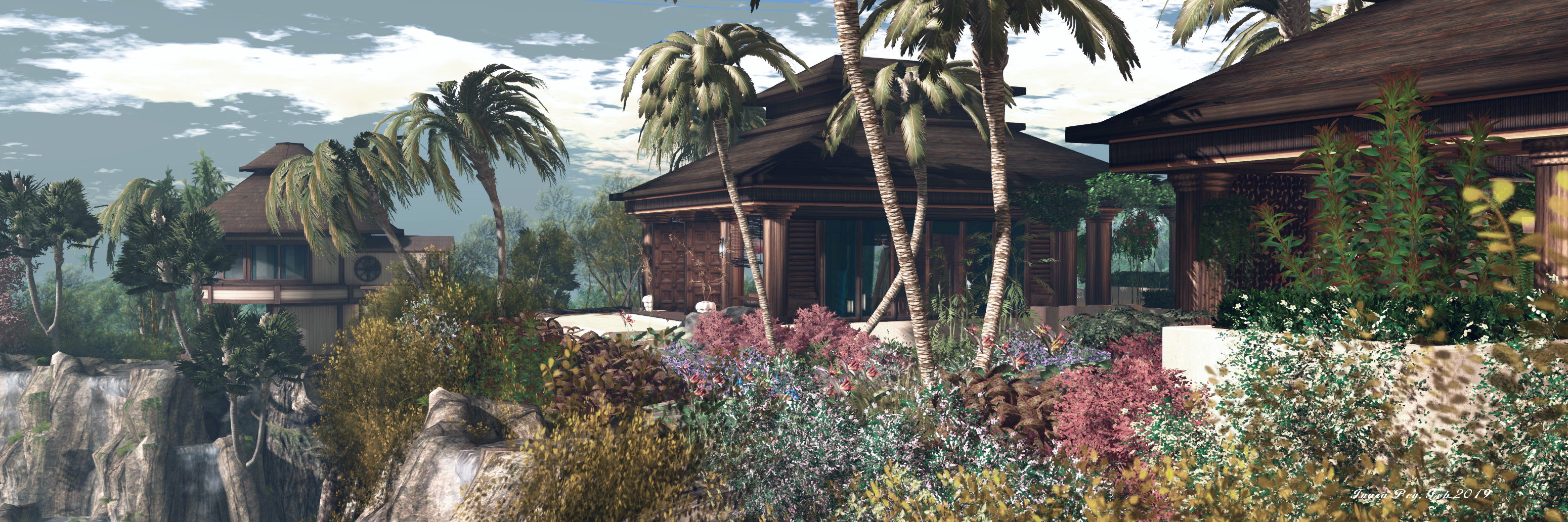
It is on this high shoulder of rock, from which waterfalls tumble from numerous points, that Minnie has sited the ideal residence: The Patron Banyan House by Eliza Wierwright, itself a stunning build that has always impressed me. Offering a southward view out over the lagoon, the house grandly sits on the high plateau, the pool between its arms feeding one of the falls that tumble over the rocks and into the blue waters of the lagoon below. Across the rocky arch from it sits a rotunda like cottage by Cory Edo, perfectly complementing the house and offering a spa style setting in which to relax.
Originalia; Inara Pey, February 2019, on FlickrOriginalia

The overall suggestion of house and cottage perhaps leans toward Thai in intent; but as is often the way with me, the setting carried soft echoes of places I’ve visited in Sri Lanka, such as Saman Villas. While the latter is far, far more developed than Originalia, I Couldn’t help but think of their rocky perch and the open-air nature of the public buildings within the development as we explored the house, memories of meals in the open-sided restaurant drifting into my thoughts.

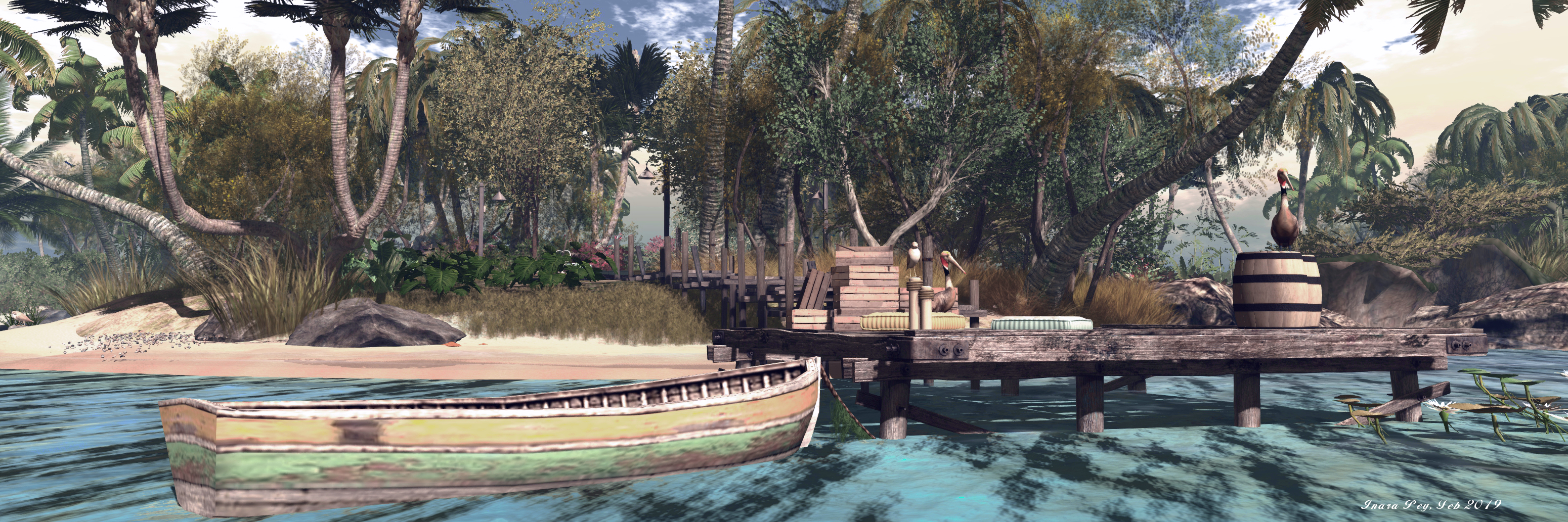
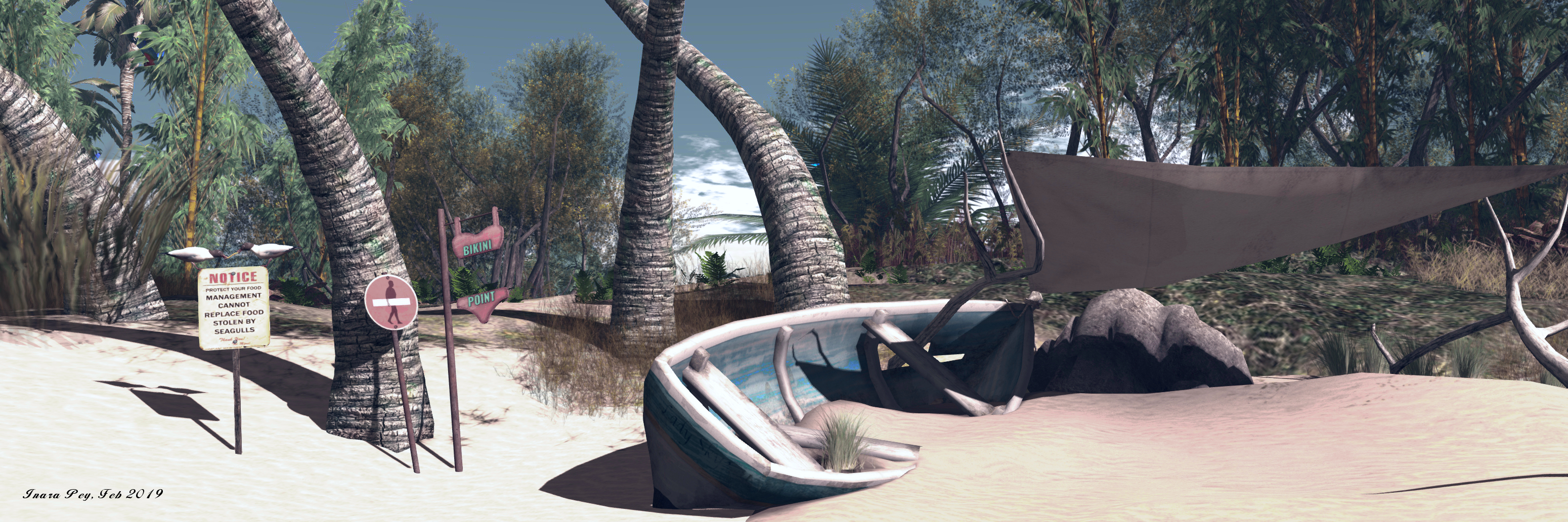
Finding your way around the island is easy: just take the wooden board walk and bridge from the little sand bar of the landing point, then follow the rocky paths laid across sand and scrub. These wind over island and up hill under palm trees and between shrubs and rocky shoulders. Here and there the paths branch, offering routes to the outlying beaches where little hideaways can be found and boats bob on the surf at their moorings.
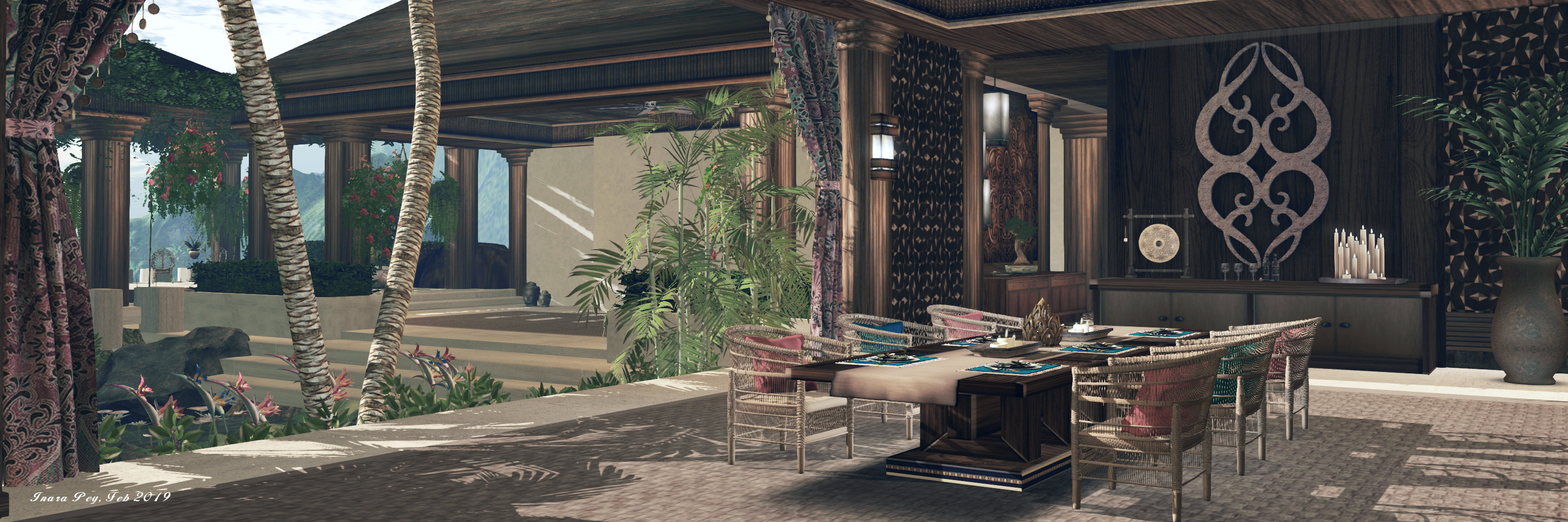
Originalia; Inara Pey, February 2019, on FlickrOriginalia

I’m not sure if Originalia is permanently open to the public, or whether public access is for a limited time. However, I do know that it is a setting that not to be missed – but do allow time for a visit; there is much here to captivate the eye and the imagination. And do make sure to have local sounds enabled; as something of a sanctuary for birds of all kinds, Originalia has a rich accompanying sound scape.

Our thanks, once again, to Shakespeare and Max for pointing us to this island gem. As Minnie points out in the comments, those taking photos are welcome to submit their pictures to the region’s Flickr group.
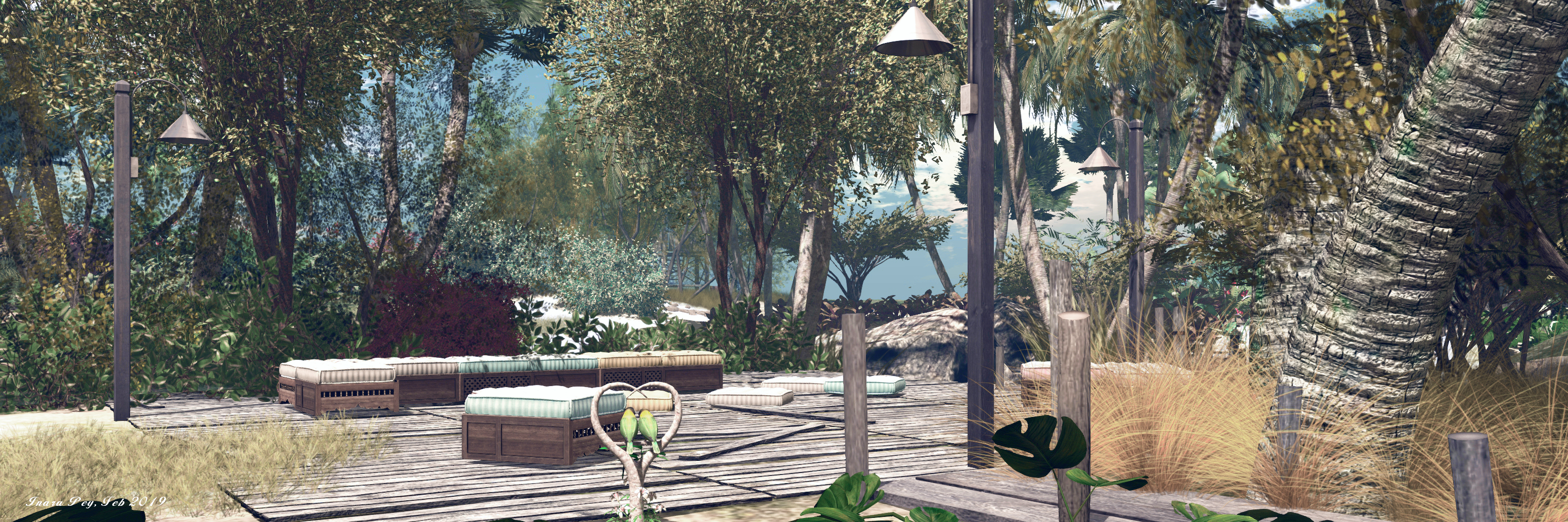
Originalia; Inara Pey, February 2019, on FlickrOriginalia

A visit to historic Boardman in Second Life

Boardman – click any image for full size

There are many historic sites scattered around Second Life, some better known than others. Svarga (read here for more), for example, or The Man, Governor Linden’s mansion, the Ivory Tower of Primitives, to name just four. Then there are places to celebrate the history of Second Life, such as the SL Historic Museum (read here for more) and Maps of Second Life (read here for more).

One of the historical location that perhaps doesn’t get much of a mention outside of the Destination Guide is Boardman, one of the earliest experiments of a themed community established in Second Life that dates back at least a decade, and which is now overseen by the Boardman Preservation Society.

Boardman

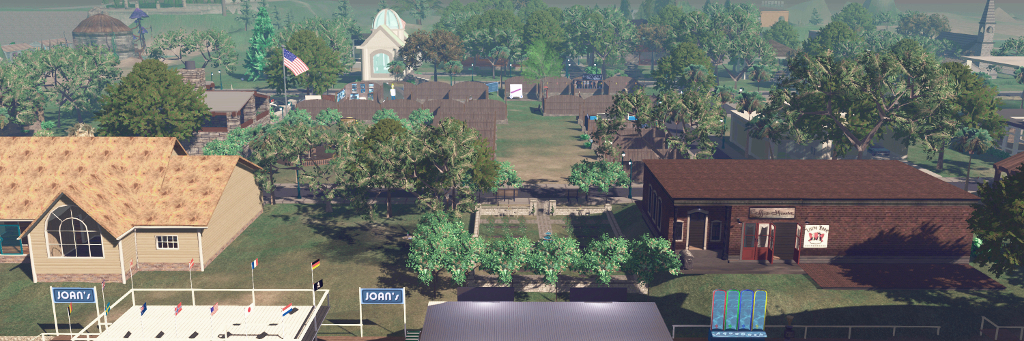
It’s a fascinating curio to visit; a living reminder of how Second Life once was. A prim build, formed around a network of little roads and sidewalks, in which sits a little suburb setting of houses and community buildings: a town hall (complete with a picture of Jack Linden, former head of the Land Team who departed LL at the end of 2010), a church, and ice cream parlour. The roads are shaded by Linden trees from the library, while the houses – although largely empty – sit within their own little lawned gardens.

Being an early example of community building in Second Life, Boardman is subject to some of the earliest zoning requirements in Second Life. These can be obtained from the information kiosks scattered around the town and in assorted signs, and date all the way back to January 2003, which itself makes them an interesting read.

Boardman

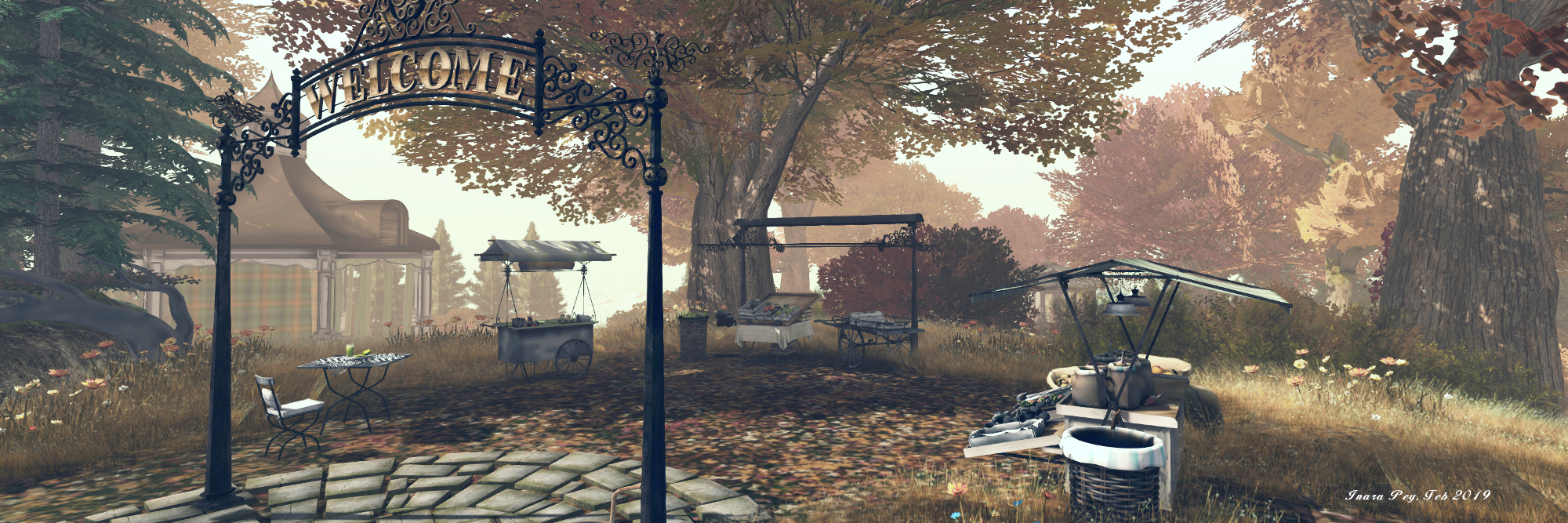
A central (literally as well as figuratively) feature is an open air market space. This was specifically established to allow Boardman residents to sell their goods – as long as they were within the required guidelines – via a 13×8 metre stall. It is at the market that some names and logos can be found that will have a certain resonance among long-term Second Life residents: Sion Chickens (although none of them are around!) and Adam Zaius for example. There are even some vendor boards still present and working! You can, however, pick up Mr. Greggan’s Whimsical Full Perm Freebies, for a look back at SL mechanics circa 2007/8.

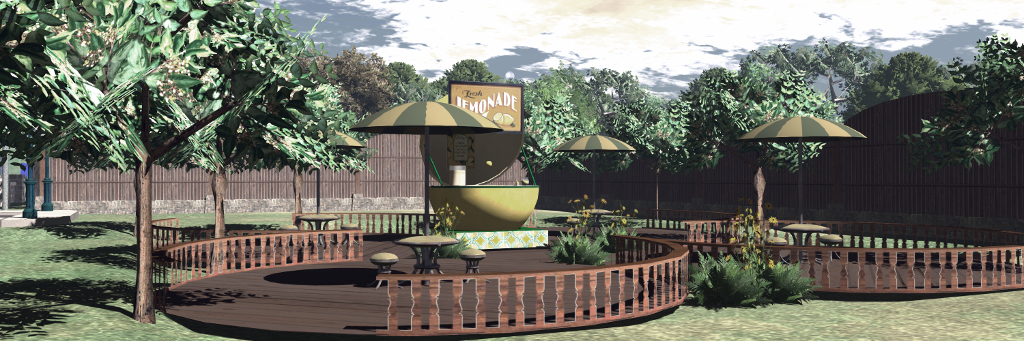
As well as exploring, visitors can take a walk to the waterfront and try their hands a few games or simply enjoy the Sun. While you’re there, say hello to Captain Nomad as he builds his new boat.

Boardman

Boardman may look dated when compared to modern mesh builds, and the total ban on even limited terraforming to smooth out the land in places can result in some buildings looking oddly placed. However, as a site of historical reference, it makes for an interesting and diverting visit.

SLurl Details

Elvion: an elven sanctuary in Second Life

Elvion; Inara Pey, February 2019, on FlickrElvion – click any image for full size

Update, September 2021: Elvion has relocated and expanded – see Elvion expanded in Second Life.

The suggestion we visit Elvion, which recently opened its doors to the public, came to us via Miro Collas, another reader who always keeps can eye out for regions in Second Life we might find appealing, and to whom I again offer my thanks for doing so 🙂 .

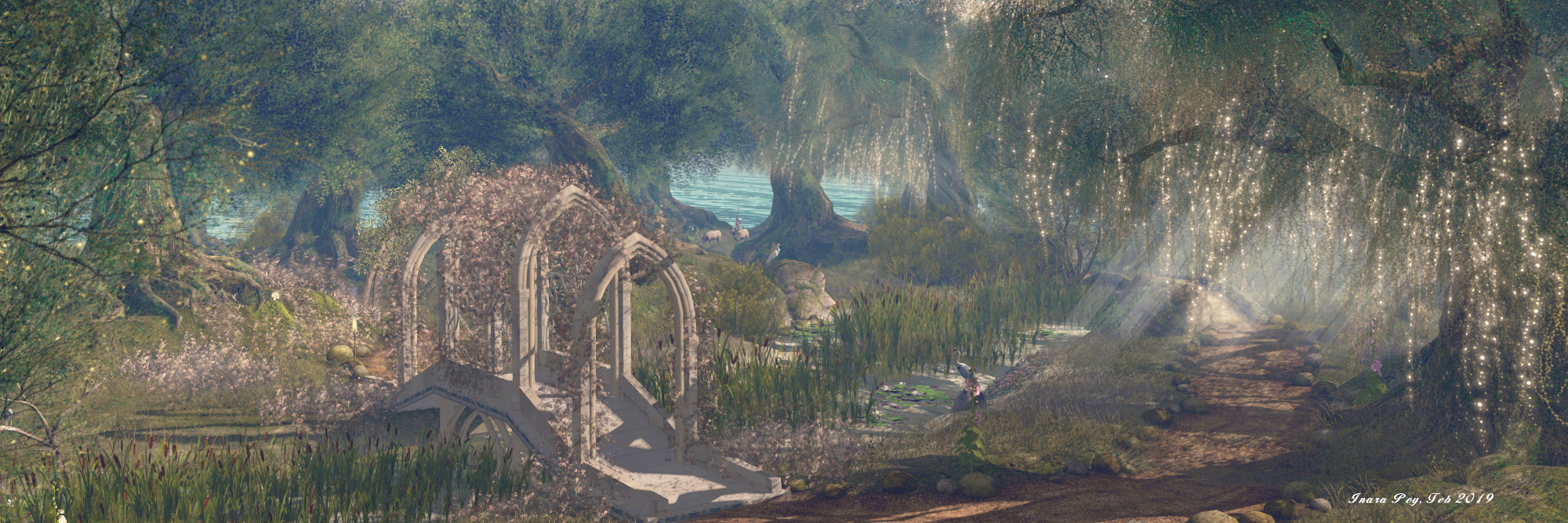
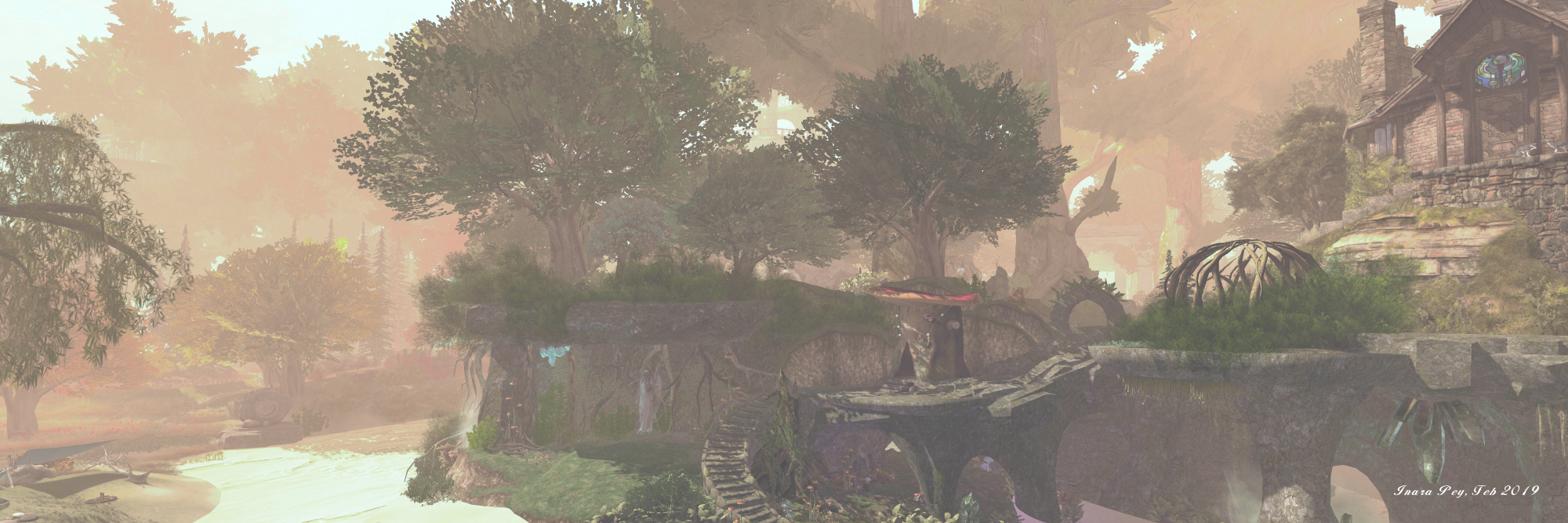
Occupying a quarter region parcel on a Homestead region, Elvion has been designed by Bo Zano (BoZanoNL) as an elven style sanctuary, rich in atmosphere and with a suggestion of mystic magic; and it is a quite breathtaking place to visit: simple but elegant in its presentation, rich in detail without feeling overcrowded.

Elvion; Inara Pey, February 2019, on FlickrElvion

Aside from a single tower towards the north-east of the parcel, not far from the landing point, the entire location is open to public exploration and enjoyment.

To help with this, a single track runs through the parcel from the south-east corner through to the north-west. A short distance, perhaps, but a good start to explorations. From its starting point was the edge of a small bay, it skirts around the water, passing the entrance to the glade where the private towers resides. Past this, it passes over a little bridge to pass along the edge of another glade to reach a  second bridge pointing back to the tower.

Elvion; Inara Pey, February 2019, on FlickrElvion

This second glade is bordered on its far side by high falls and is home to a large pavilion. It is here that a further sense of fantasy is presented to visitors: a dragon circling slowly over the grass of the glade, sharing the space with gossamer butterflies as rabbits hop around below. Sunlight filters through the trees at the edge of the glade, while lights dangle from branches in strings, adding a further ethereal look to the parcel.

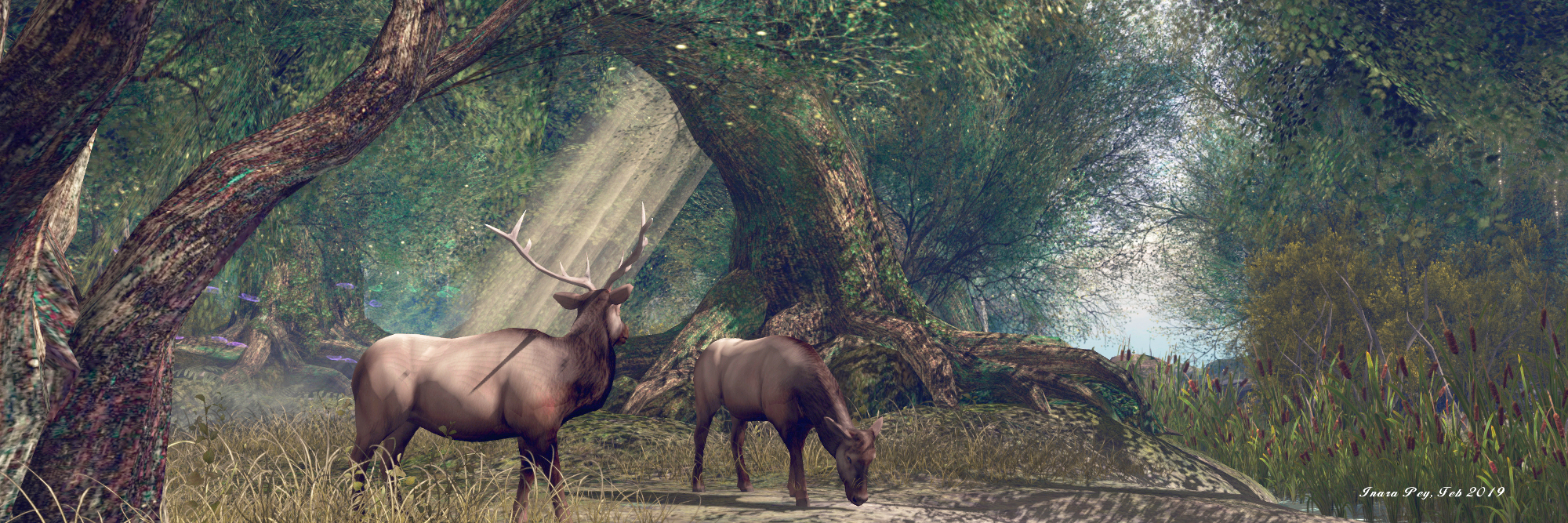
This is far from all there is to Elvion, however, wander across the glade or follow grassy trails through the trees, and you’ll find elk grazing at the edge of the water and just beyond, a rocky arch offering a way to where a further mystical element can be found: a stone carved with glowing runes with unicorns just before it.

Elvion; Inara Pey, February 2019, on FlickrElvion

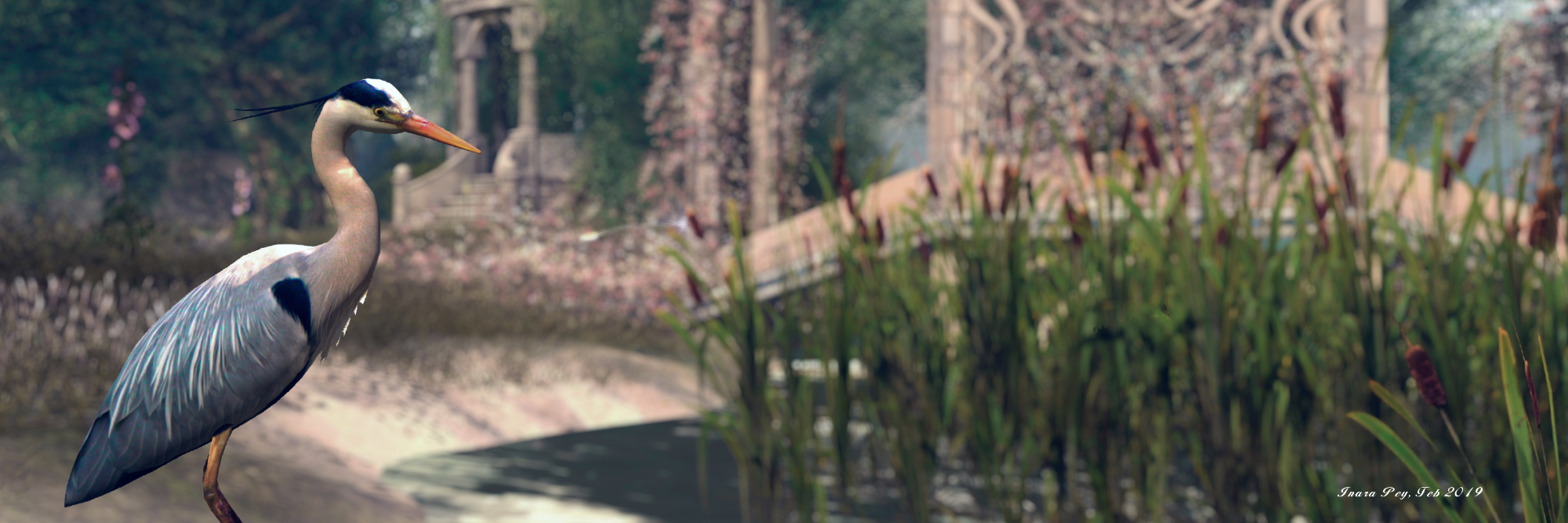
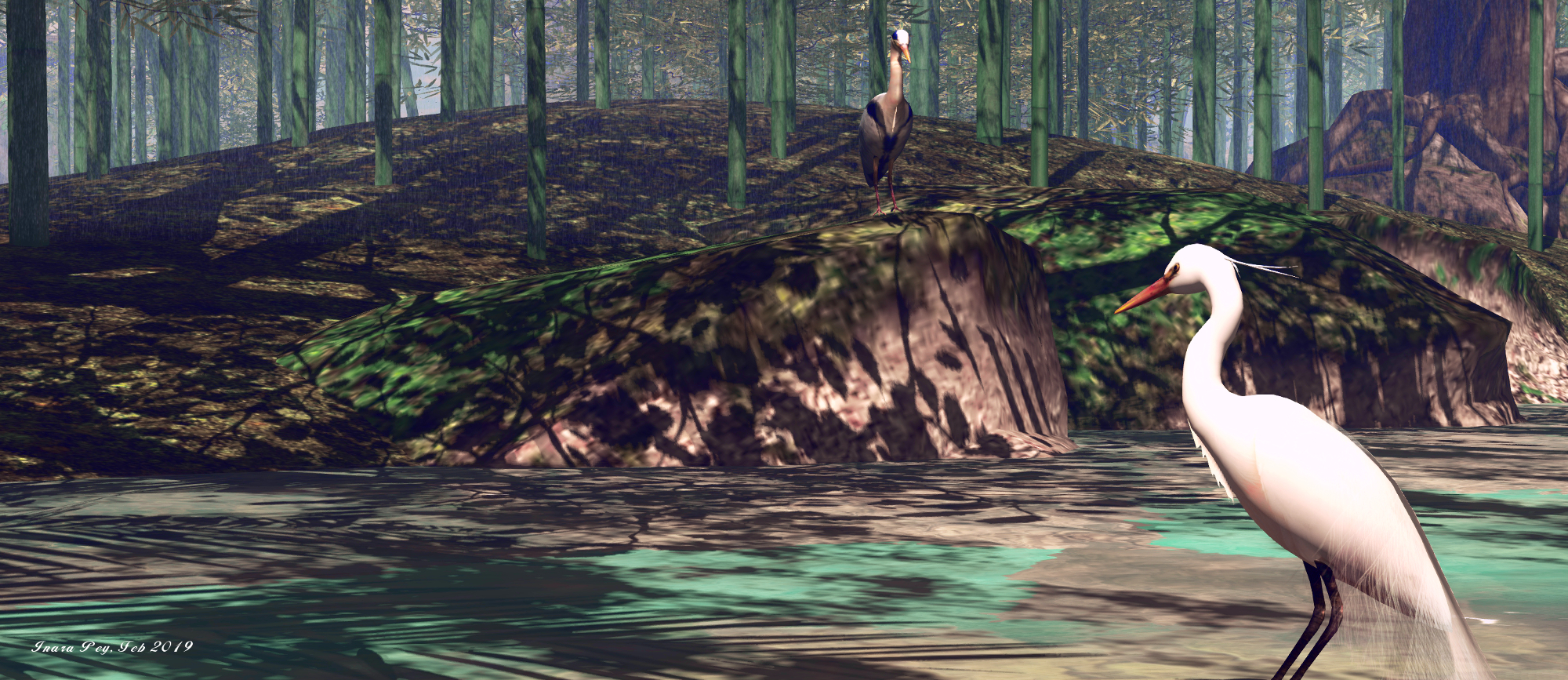
Another aspect to the parcel is the wildlife; elk graze, heron and egret watch over the waters, birds sing from trees and sit on rocks while swans patrol the waters and a woodpecker keeps himself busy on a tree trunk. These all bring the place to life, and a further depth and attracts the ear and eye.

I’ve often commented that when it comes to designing somewhere special, be it a private home or a place we can share with others, it is all too easy to focus on the space and land capacity offered by an entire region, be it full or Homestead. Elvion, however, is one of the wonderful gems in Second Life that demonstrate this is not the case, and that with care and attention to detail, it is possible to present a special, photogenic place worthy of sharing with others and which is an absolutely delight to visit and spend time within.

Elvion; Inara Pey, February 2019, on FlickrElvion


The Missing Whale in Second Life

The Missing Whale; Inara Pey, February 2019, on FlickrThe Missing Whale – click any image for full size

Note: Missing Whale is now closed. SLurls have been removed from this article.

We were recently passed the landmark to The Missing Whale by Shakespeare, and decided to pay it a visit. Designed by Lotus Mastroianni and Fred Hamilton (frecoi), it’s a homestead region with a touch of the wild side about it, complete with an eclectic mix that adds to its depth.

Backing directly onto a lush green sim surround, the region presents a feeling of being somewhere in a rain forest; a place built on the edge of a modest lake that feeds into a river that meanders away westward into the hills, and which is in turn fed by the broad falls that tumble from the hills to the east.

The Missing Whale; Inara Pey, February 2019, on FlickrThe Missing Whale

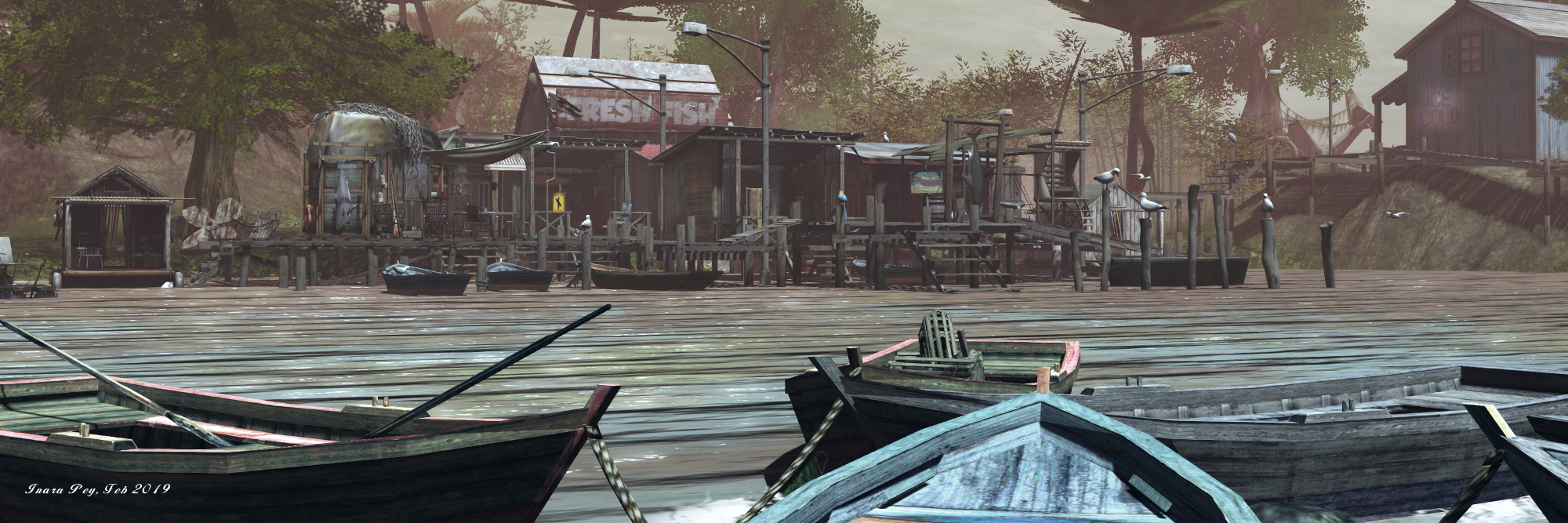
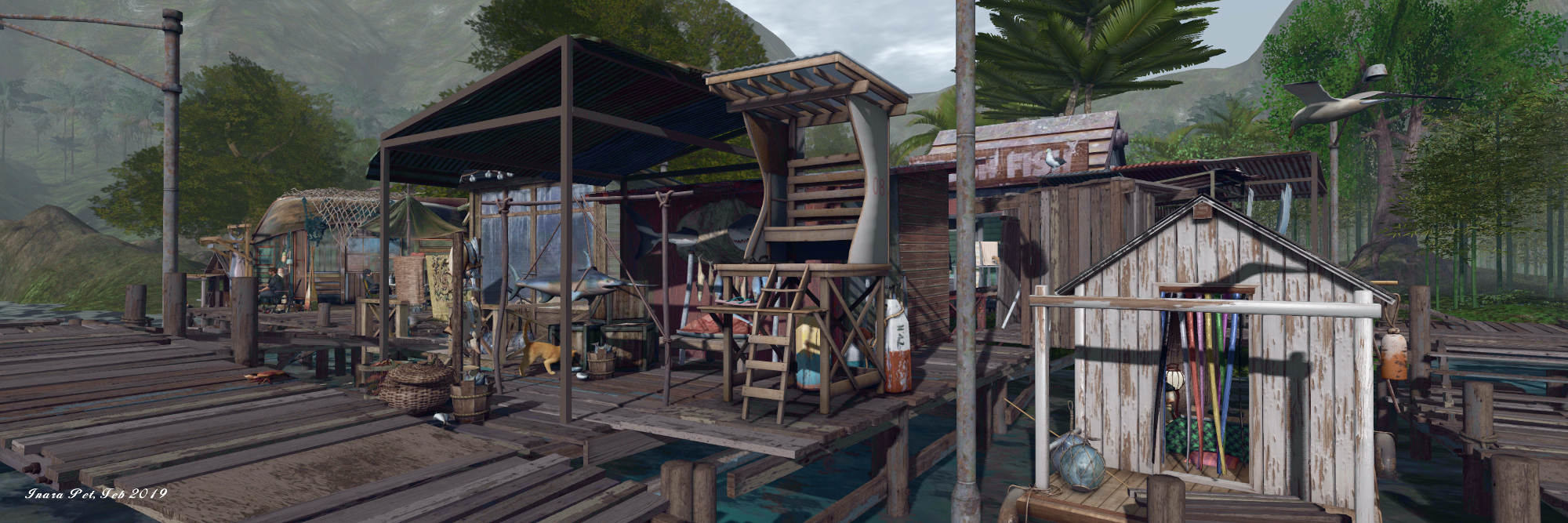
The landing point is in a small fishing shanty built out over the water. Music drifts through the air, the tunes and quality of which might suggest we’re caught in the 1930s; however, the televisions inside the huts of the shanty suggest a much later period. Perhaps the music is from a record player and innocent enough; but the contrast between the music and the presence of the televisions (and surfboards!) is the first in a series of mixes that make the Missing Whale such an interesting curio awaiting exploration.

Raised board walks links the various huts and buildings of the village, and provide a route up onto dry land in one direction and, by way of a river crossing to the local store in another. The store is stacked with a range of produce, western meats and cheeses, oriental beer – and the opportunity for a game of pool. It appears to sit as the Last Friendly Store where explorers can gather supplies before delving into the interior.

The Missing Whale; Inara Pey, February 2019, on FlickrThe Missing Whale

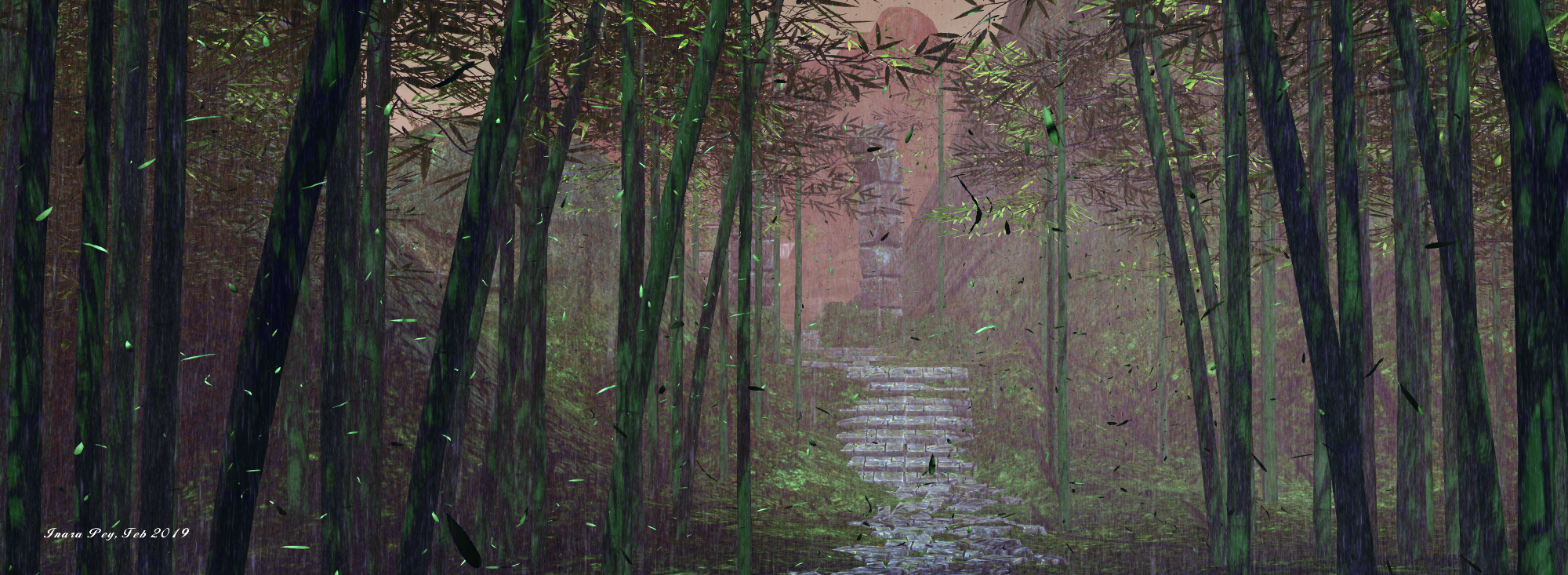
Beyond the little village, the landscape becomes more rugged  – and wet. Rain falls over a bamboo forest, water flows down over rocks and through pools to a broad channel cutting the land. Ruins lie close to this river, watched over by a tiger, offering a suggestion that perhaps we’re in the rain forests between India and Myanmar. But then, up on the rocky foothills beyond, African elephants bathe in the waters of the large, waterfall-fed pool. Thus we have another anachronism (although admittedly, it might simply be the result of Indian elephants being a little less popular with creators than their African cousins).

Even so, whether deliberate or forced by circumstance, the clash between tiger and elephant adds further mystery to the region. The Asian influences can be found elsewhere as well; there is more than one tiger in the region awaiting discovery, while stone and copper Buddha heads can be found as well. Similarly, the region has a number of oriental / Japanese style structures waiting to be discovered, both down among the trees and up on rocky plateaus, mixing things further.

The Missing Whale; Inara Pey, February 2019, on FlickrThe Missing Whale

There is also an edge of danger to the region – as evidenced by the wreckage of two downed aeroplanes in the hills and a boat driven against the rocks in one of the river channels. This channel holds within it a little beach; although the path to it is not entirely obvious, even if it is signposted when you find it 🙂 . As an alternative, the daring could scramble down from the high rocks holding the beach in their curve.

If I’m totally honest, I’m not sure the selected region windlight shows the setting to its best advantage, and I would suggest playing with options for photography. Also, there are one or two areas where the is a lot going on which can impact viewer performance (depending on your system & settings, obviously). I found the walk through the bamboo forest in the rain pretty heavy going thanks to the rain, the motion of all the bamboo in the breeze and the atmospherics; hence again why playing with windlights can help.

The Missing Whale; Inara Pey, February 2019, on FlickrThe Missing Whale

But, this shouldn’t deflect you from a visit; the Missing Whale makes for an attractive visit.

The peace and seasons of Angelhaven in Second Life

Angelhaven; Inara Pey, February 2019, on FlickrAngelhaven – click any image for full size

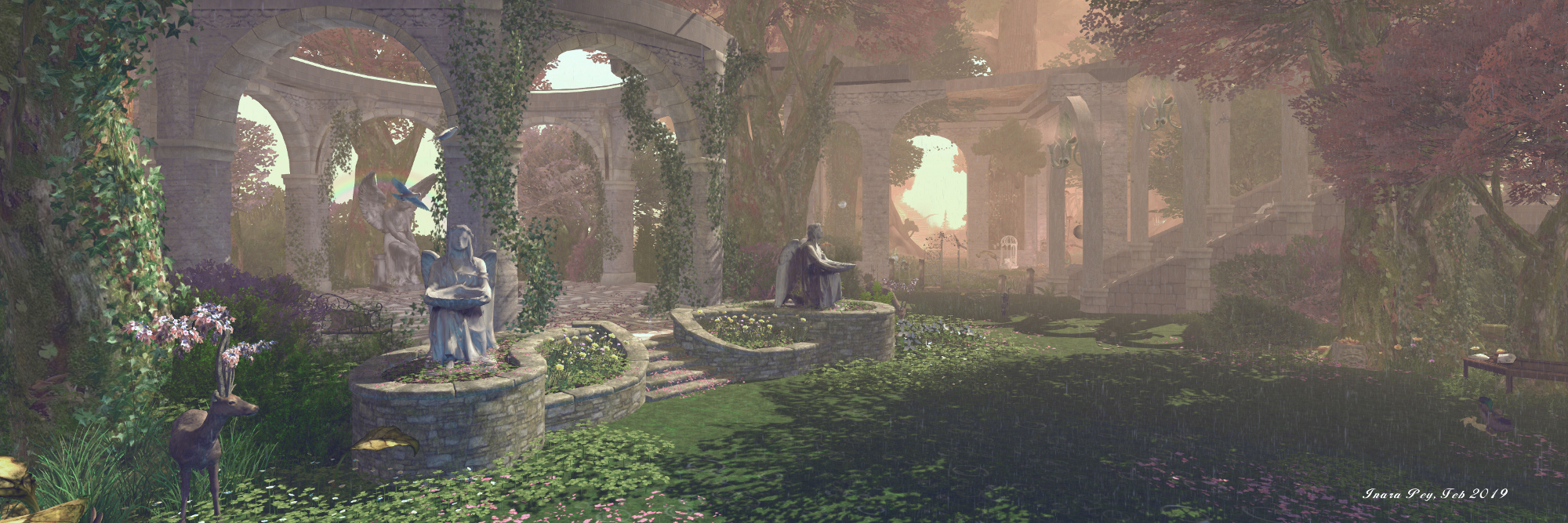
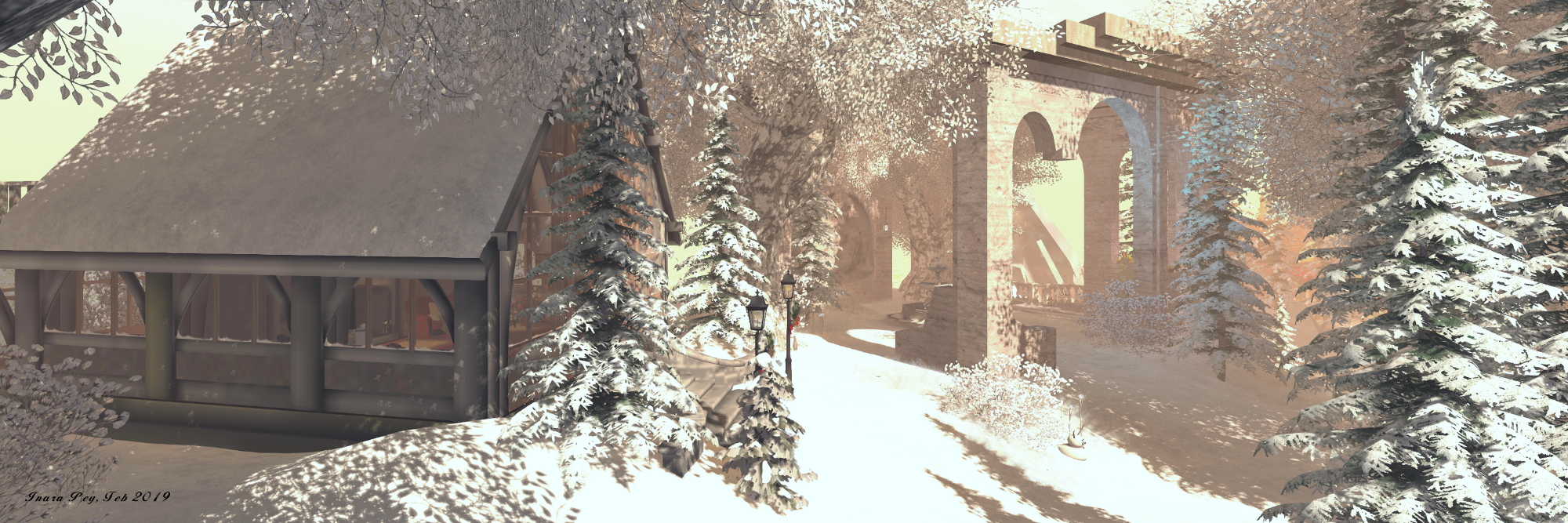
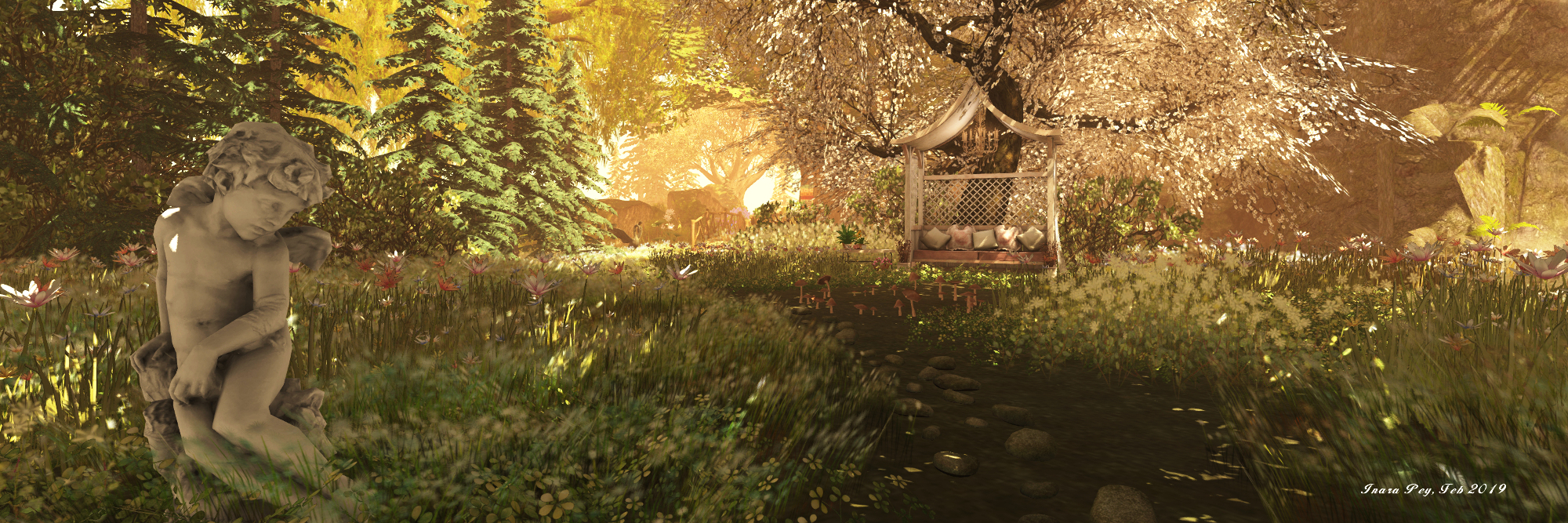
Angelhaven is an artists’ concept of the natural wheel of change, beautifully expressing the seasons around us and within us. A haven for angels, winged and unwinged, and those searching for romance, peaceful prayer, and the things that comfort and remind us we are only human. Happy or sad, lonely or in good company, love and loss, life and death, there is a time and a season for all things.

– Angelhaven description

Angelhaven; Inara Pey, February 2019, on FlickrAngelhaven

So reads the description for the Full region of Angelhaven,designed and held by Vangel (VanderGalaeth). As the description suggests, this is a place for reflection, a natural setting that encompasses the beauty of nature and the realm of fantasy. It is also a place that exists on multiple levels, starting with the landing point  1,000 metres above ground level.

Here, visitors will find the rules for visiting the region – all of which are straightforward and understandable. Also available by touching the rules board, is a note card outlining all the major destinations within the region, each with its own land mark enclosed. However, these can also be reached via the teleport disk located at the end of the short hall leading off the main arrivals hall.

Angelhaven; Inara Pey, February 2019, on FlickrAngelhaven

Several of the locations can be found on the ground – including the Ballroom, the Café, the four seasons and the Swamp. Others are located on their own islands in the sky, such as the Lunar House, the Angel House, and the Solar House. Given the fantasy nature of the region, the windlight offers an ethereal look and theme: a pervasive orange glow surrounding the land and sky islands.

Those locations on the ground are linked one to another by paths making exploration possible without necessarily resorting to teleporting. Walking also reveals all the little spots to be found for sitting, cuddling and simply resting.

Angelhaven; Inara Pey, February 2019, on FlickrAngelhaven

The sky locations offer a nice feeling of further privacy and separation, while the similar nature of their appearance also helps give a sense of commonality between them, and thus a feeling of continuity as you travel one to the next, or between them and locations on the ground.

Finished with a fitting ambient sound scape, Angelhaven makes for a restful visit; a place where myth and fantasy mix gently with one anther to offer an environment open to being enjoyed and where tension can slip away. As noted, there are plenty of places to be found for couples to enjoy, as well as places to be appreciated in solitude.

Angelhaven; Inara Pey, February 2019, on FlickrAngelhaven

SLurl Details


In the Forest of Astray in Second Life

Forest of Astray; Inara Pey, February 2019, on FlickrForest of Astray – click any image for full size

The Forest of Astray is a Full region that offers a curio of a setting to explore, parts of which might be currently be under renovation.

Designed by 絵理子 (Eriko), this is a setting that, though a clever use of horizontal space and design, has the feeling of being far bigger than 256 metres on a side, and within which it is quite easy to become disoriented whilst exploring – just as you might in an actual forest.

Forest of Astray; Inara Pey, February 2019, on FlickrForest of Astray

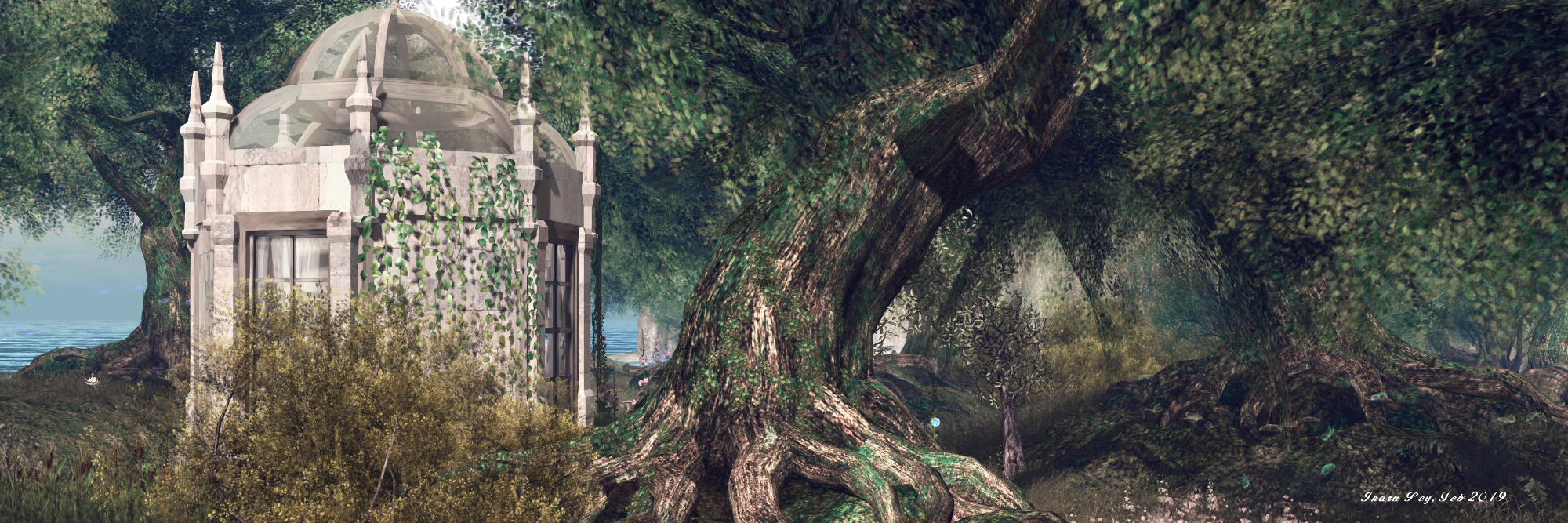
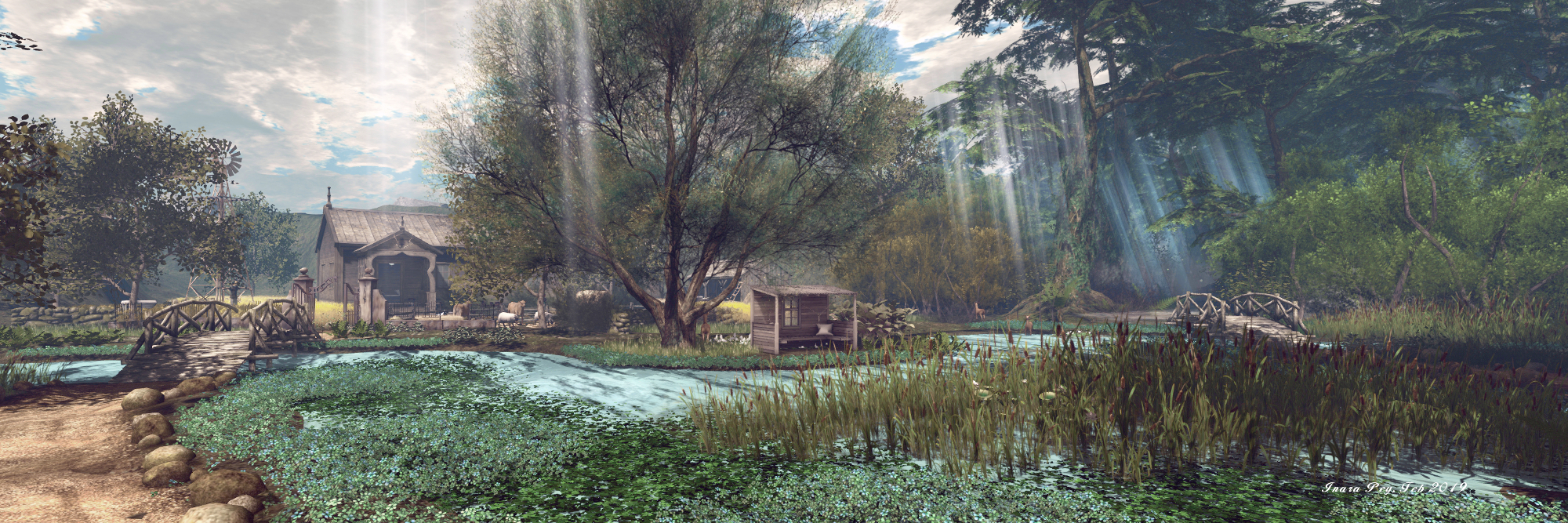
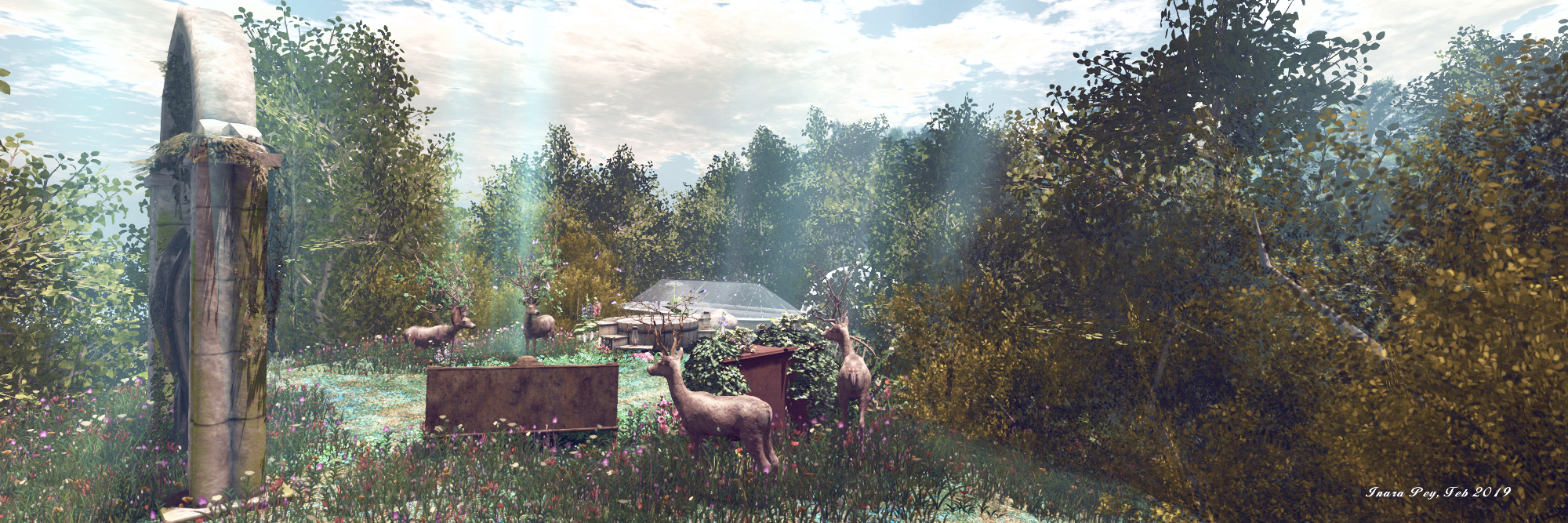
Within the forest, the region is divided by streams and hills into a number of different settings, which are brought together by the paths and trails the meander under bough and leaf and over bridge and water, neatly sewing everything into a cohesive whole. Included within these settings are a farm, two houses, a beach and cabin, a fishing wharf with boats, gardens, old ruins of towers and houses, and walled Japanese house, glades where flowers grow and deer play, a reed-sided estuary fed by two streams, ponds and waterfalls, greenhouses-as-pavilions and more.

It is at the farm where visitors begin their journey, up in the north-east corner of the region. From here, a track hops over a bridge and winds outward and over a narrow channel of water to where a second bridge (which can also be reached by a grassy path running along the water’s edge)  leads the way into the forest proper.

Forest of Astray; Inara Pey, February 2019, on FlickrForest of Astray

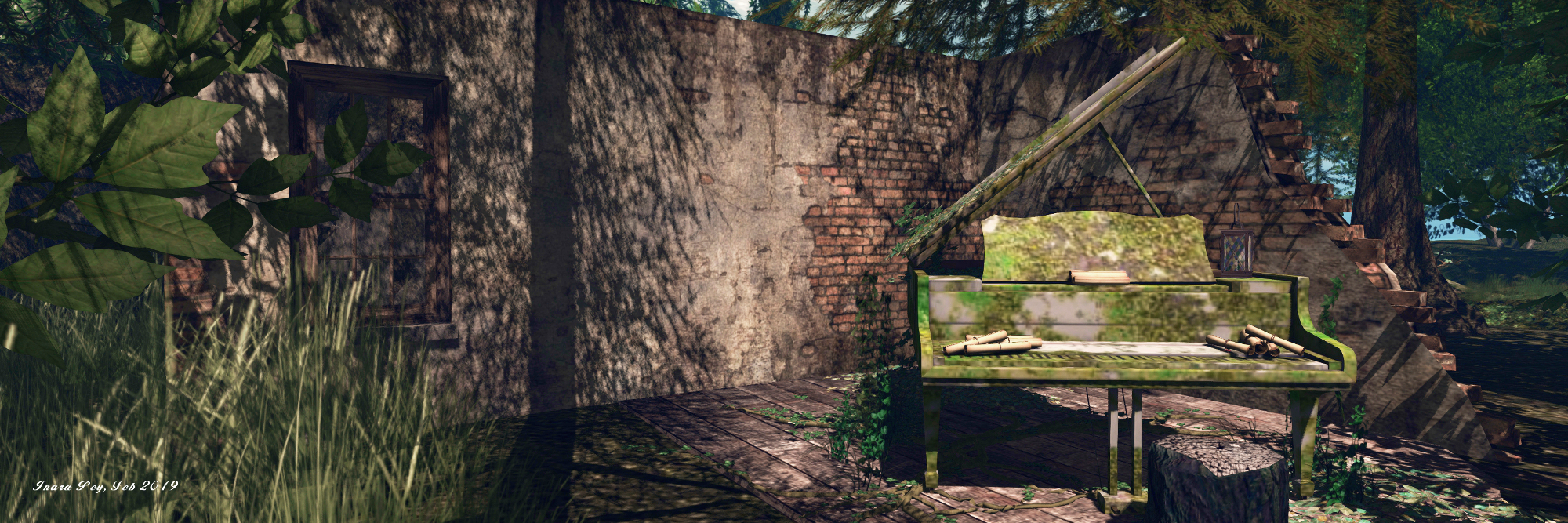
Here the path winds between the trunks of giant oaks, the air alive with birdsong, the ground gradually becoming obscured by mist that becomes even thicker once another bridge has been crossed, and the sounds of piano might be heard. Follow the music and you’ll find an aged piano, its wood mildewed and mossy, sitting within the ruins of a building set on the far side of a path cutting across the one your on, presenting two routes of further exploration.

Take one, and you’ll be led by twist and turn lit by wolves carrying lanterns in their jaws, to the ruins of an old stone tower overlooking the junction of several streams. Take the other route from the piano and it will lift you up out of the mists before bringing you to a wall marking the boundary of a large property, the ground dropping sharply away on the other side into a fog bound bowl, reached via a pair of gates.

Forest of Astray; Inara Pey, February 2019, on FlickrForest of Astray

Here, under its own windlight and with rain falling steady, is a setting well suited to Halloween. Crows circle just above head height, strange figures loom out of the mists while the house stands as a shadow, old and decrepit, a strange (and decidedly sexual) tableau framed within its rotting walls, the upper floor given over to BDSM equipment.

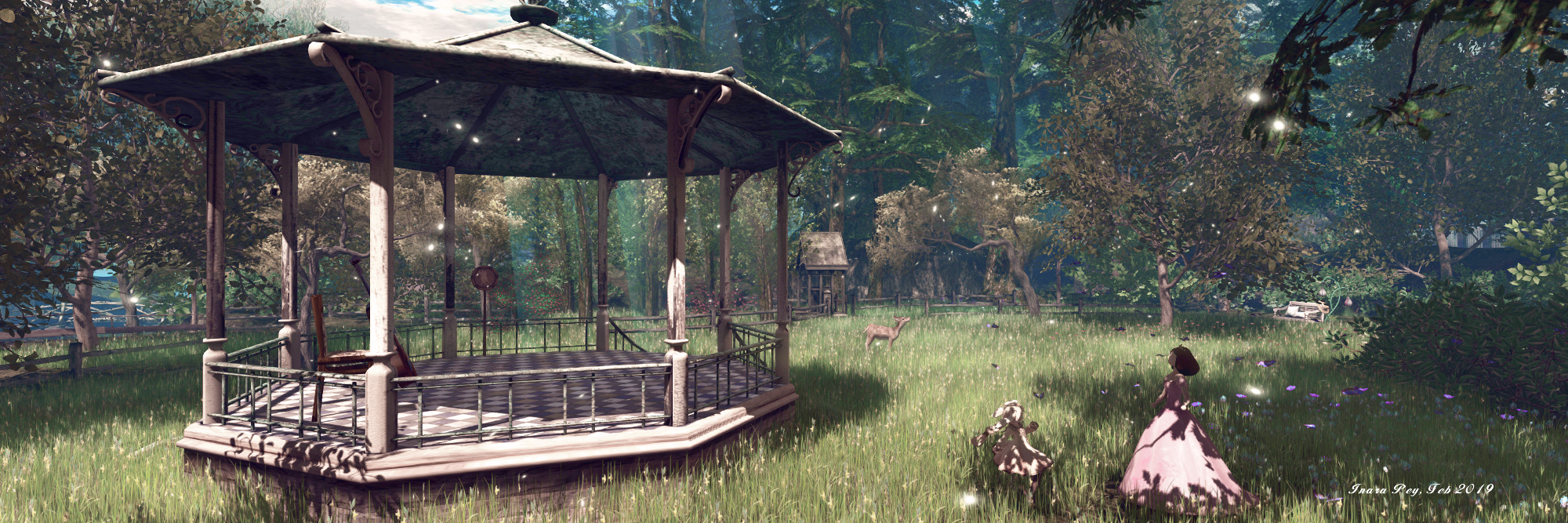
If such a scene is not to your taste, simply pass the gates by and continue along the path outside of the wall and turn left at the point where it ends in a stone circle. A short distance across the grass you’ll find  a track lit by a scattering of luminescent confetti running down a short slope. The confetti points the way to where another grassy path runs by a glade of tall grass lapping around the feet of a pavilion; a place where a dance can be enjoyed. Stay on the path, and it will take you past – or to – the tower ruins, where it becomes the riverside route leading back to the wooden bridge crossed earlier.

Forest of Astray; Inara Pey, February 2019, on FlickrForest of Astray

A cobbled path runs along another side of the glade with its pavilion,  directing people through gabled gates to yet anther bridge, and thus to the southern aspects of the region. This offers even more to explore along winding paths: glades where angels might lie sleeping; gardens with hot tubs and dancing; hidden pools of clear water; the white frames and columns of the previously mentioned greenhouse and its companion pavilion – and more.

Choose the right paths here, and the rest of the setting will open to you, be it the bridge reaching back to where the Japanese house and onsen lie snug between wooded rocks and the sea, or the board walk reaching around a headland to the beach. A further path can be found, passing over stepping-stones and through a narrow gorge to where stone steps lead up to the south-east corner of the region, in which sits the largest house on the island, raised above the fishing wharf.

Forest of Astray; Inara Pey, February 2019, on FlickrForest of Astray

It is here – and on the beach – where indications that parts of the region might be under some remodelling were visible during our visit; furniture was floating over the beach cabin, while things around the house were in slight disarray (I’m actually not entirely sure whether the large house is supposed to be open the public; a request to Eriko for clarification passed unanswered; so take care with invading privacy while exploring, just in case).

Even with these little glitches, Forest of Astray makes for an engaging visit, with plenty of opportunities for photography and romance for those wishing to enjoy a dance.  The adult undertones aren’t restricted to the house in the north-west corner, some of which might not be wise for a Moderate region – but these also aren’t particularly overt enough to question a visit. Overall, this is a unique location and well worth a visit, one that is well worth setting aside to explore simply because there is to much to find and see.

Forest of Astray; Inara Pey, February 2019, on FlickrForest of Astray

SLurl Details