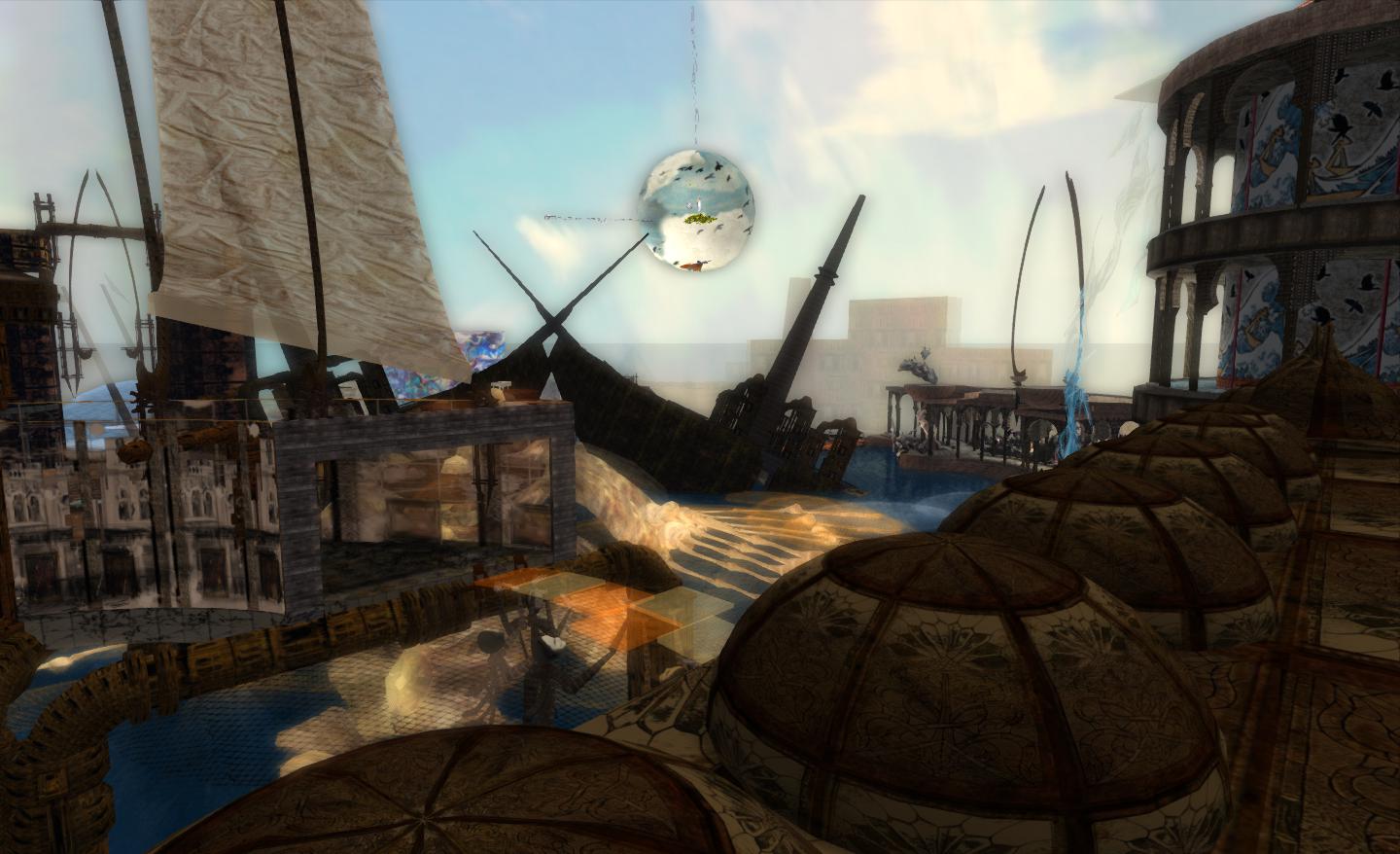
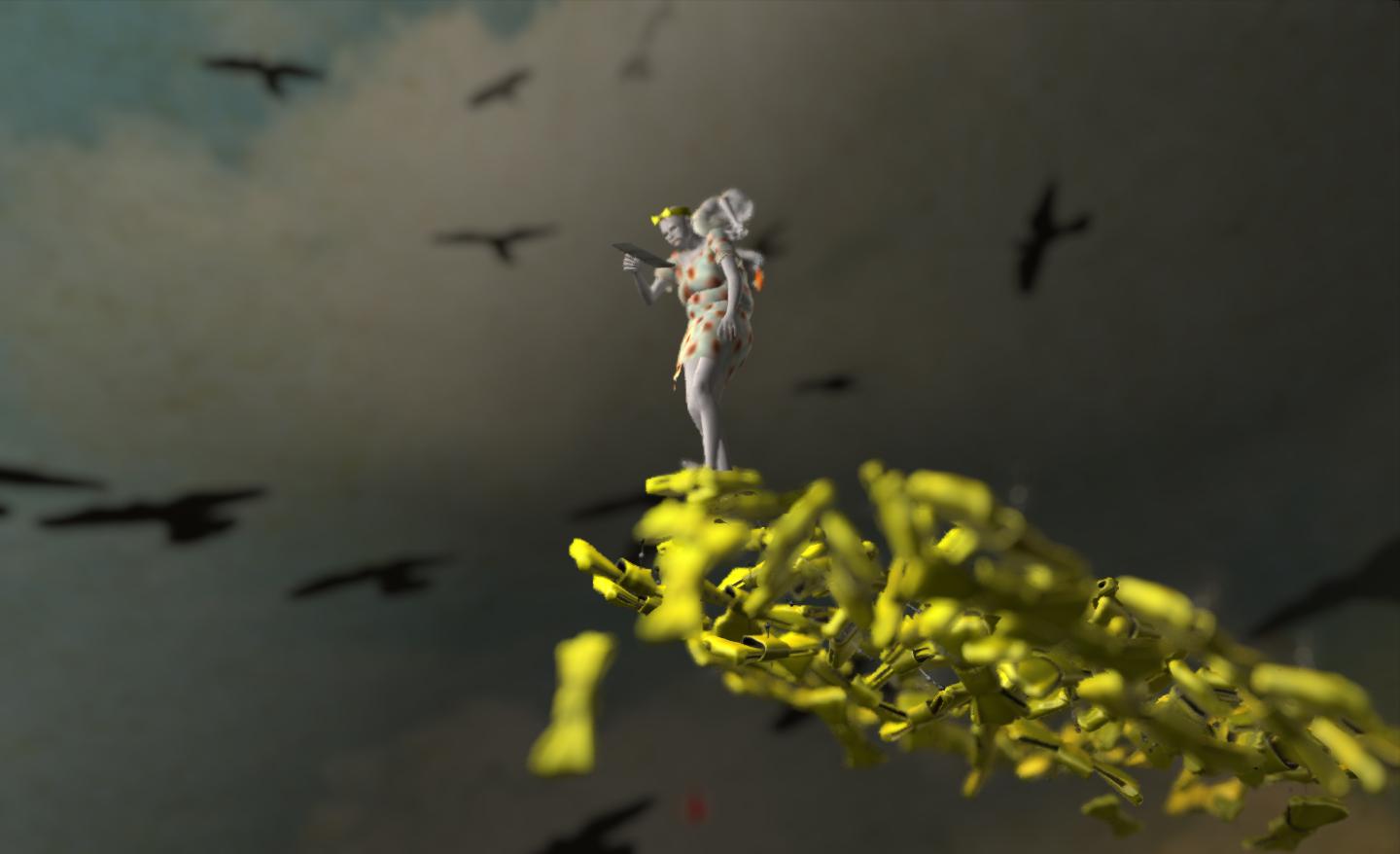
The Linden Endowment for the Arts has announced applications for the third round of land grants is now open. For artists not familiar with the LEA or the land grant process, the following is taken from the formal announcement:
The LEA Land Grant program seeks to promote and nurture the arts in Second Life, through a six-month land grant to recipients. Recipients can be individuals or groups interested in creating or curating art, or proposing cultural projects which would require/utilise a full-sim build and can be completed within the allotted time frame. The LEA is able to offer land grants through the generosity of Linden Lab.
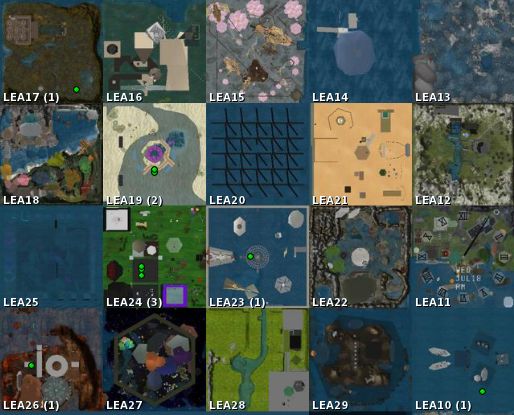
Twenty regions, donated by Linden Lab and managed by the LEA, are generally offered under the land grant programme, and successful applicants will be granted the use of one full region for a period of six months. The region may then be used on an individual or group basis for such diverse activities as:
Full sim exhibitions and / or immersive installations
Curated projects, especially those which have a connection to physical exhibitions and events (augmented reality)
Land grant regions: LEA10 through LEA29
Applications are not limited to visual art but are welcomed from all areas of artistic expression, including performance, music, and film.
Preference is for submitted works to be original in nature, although curated projects may present extant works. Successful applicants will have up to four months in which to execute their build, and must have it open for public viewing for at least the last two months of the grant period. Artists may alternatively use the land for multiple exhibits, but it is imperative that projects will be ready within four months from acceptance, and this time-frame should be considered (and reflected) in applications.
Application Timeline
(Dates subject to change by LEA in the event of unforeseen circumstances)
July 18th: applications open
August 15th: deadline for submissions
August 26th: final decision by the LEA Committee for primary applications
August 27-31st: Notification period for successful applicants / selection of alternates (if required)
September 1st: region hand-overs and public announcement of successful applications.
You can find the application form at the end of the LEA blog entry, together with all other necessary information.
I love Marcus Inkpen’s work. The Looking Glass is one of my favourite regions to visit, and I’m massively tempted by his Floating Victorian Home. In mid-June LEA opened a full sim installation featuring Marcus’ work, and I’ve finally managed to get myself over to see it.
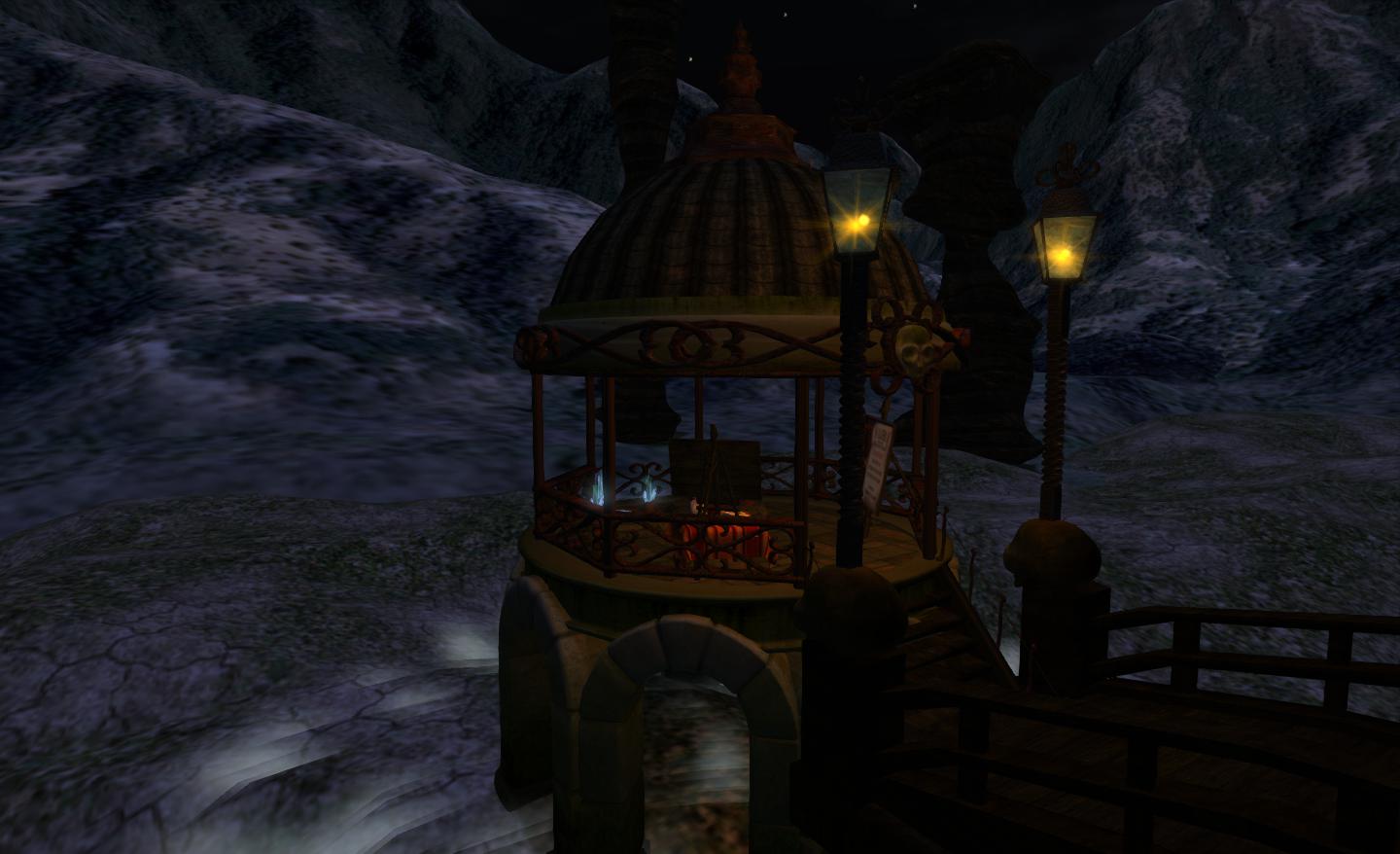
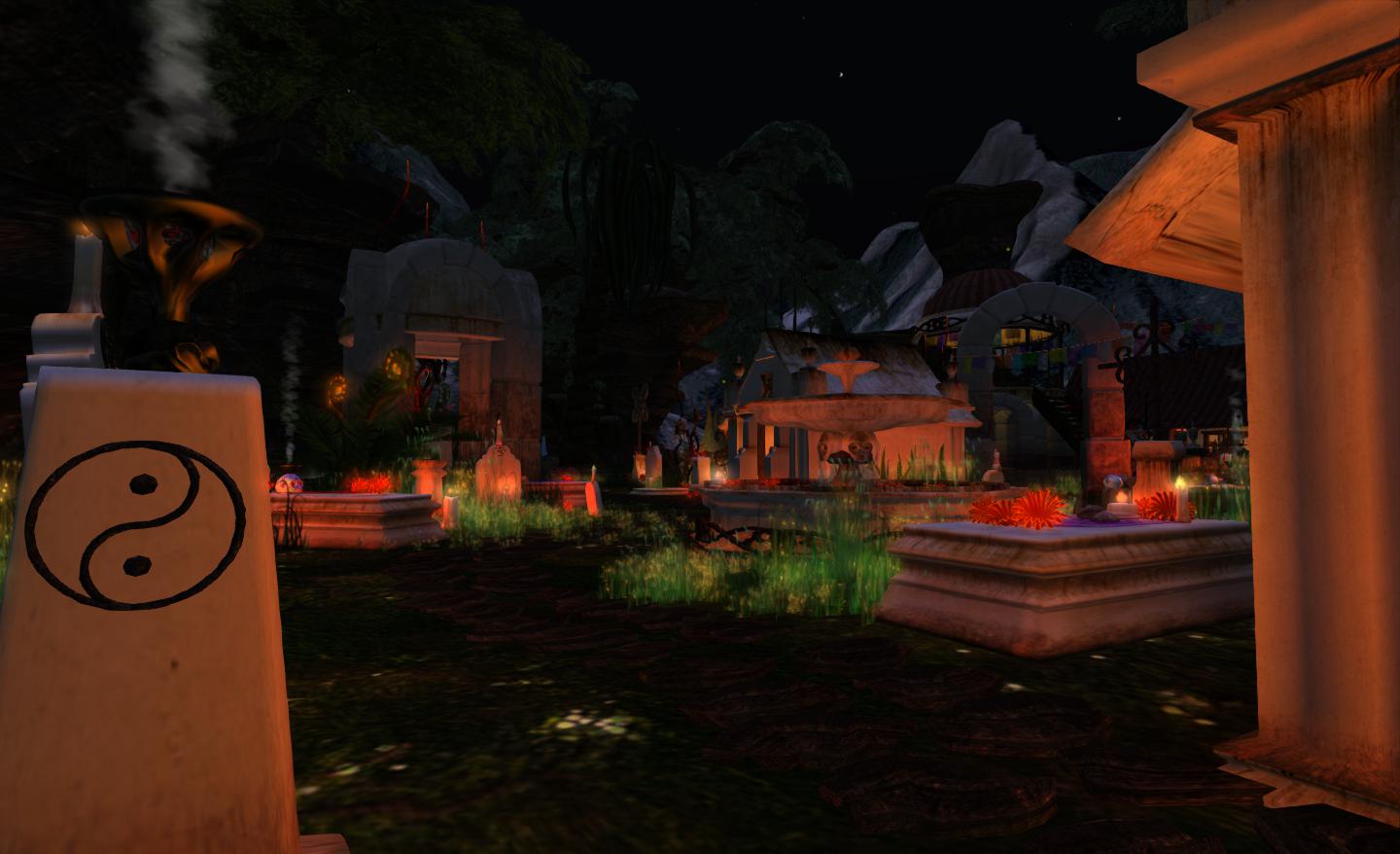
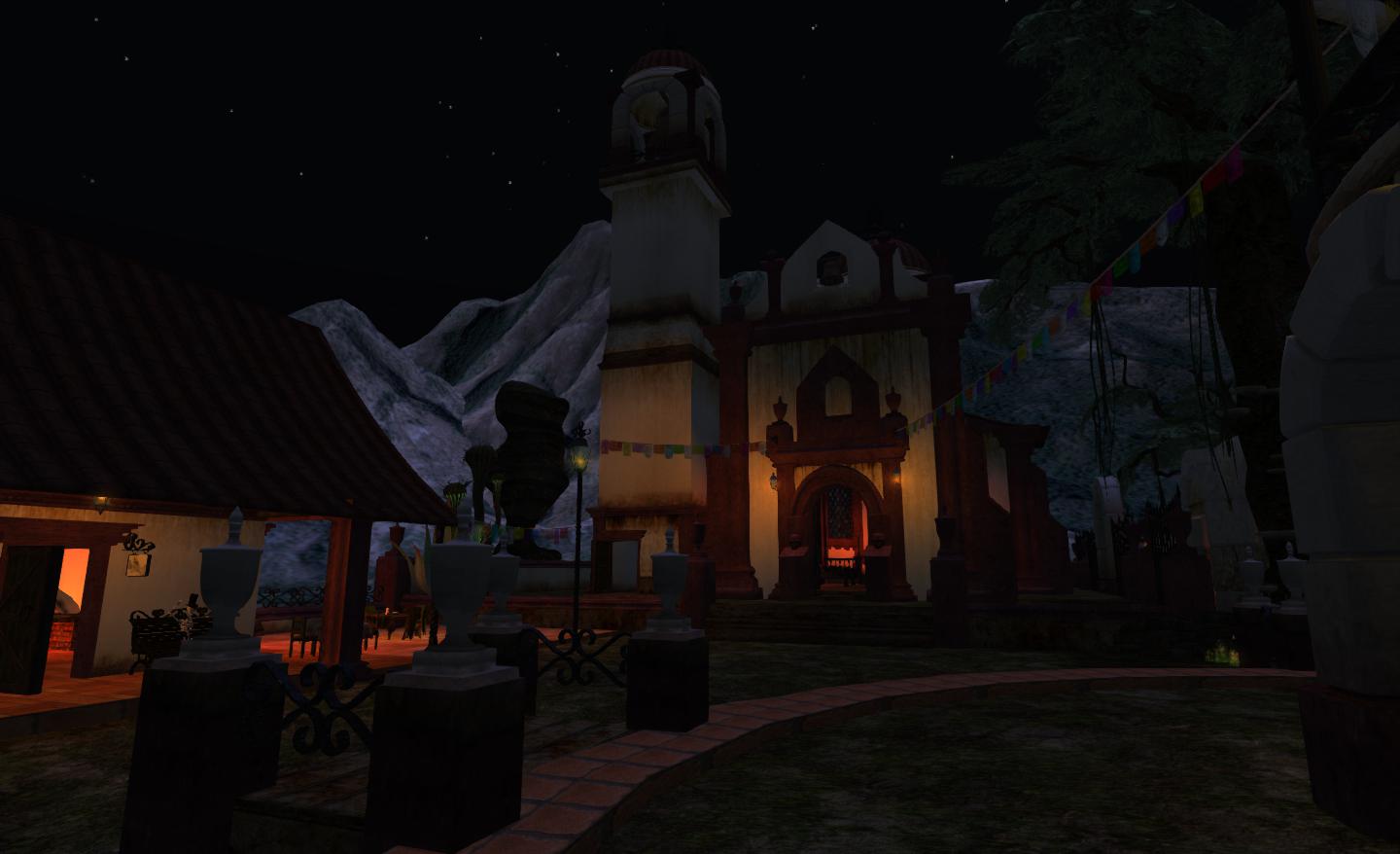
The Returning is described as exploring “the spiritual connection we once experienced, as an integral part of life, now lost – but lying in wait for our return” – and it is simply enchanting.
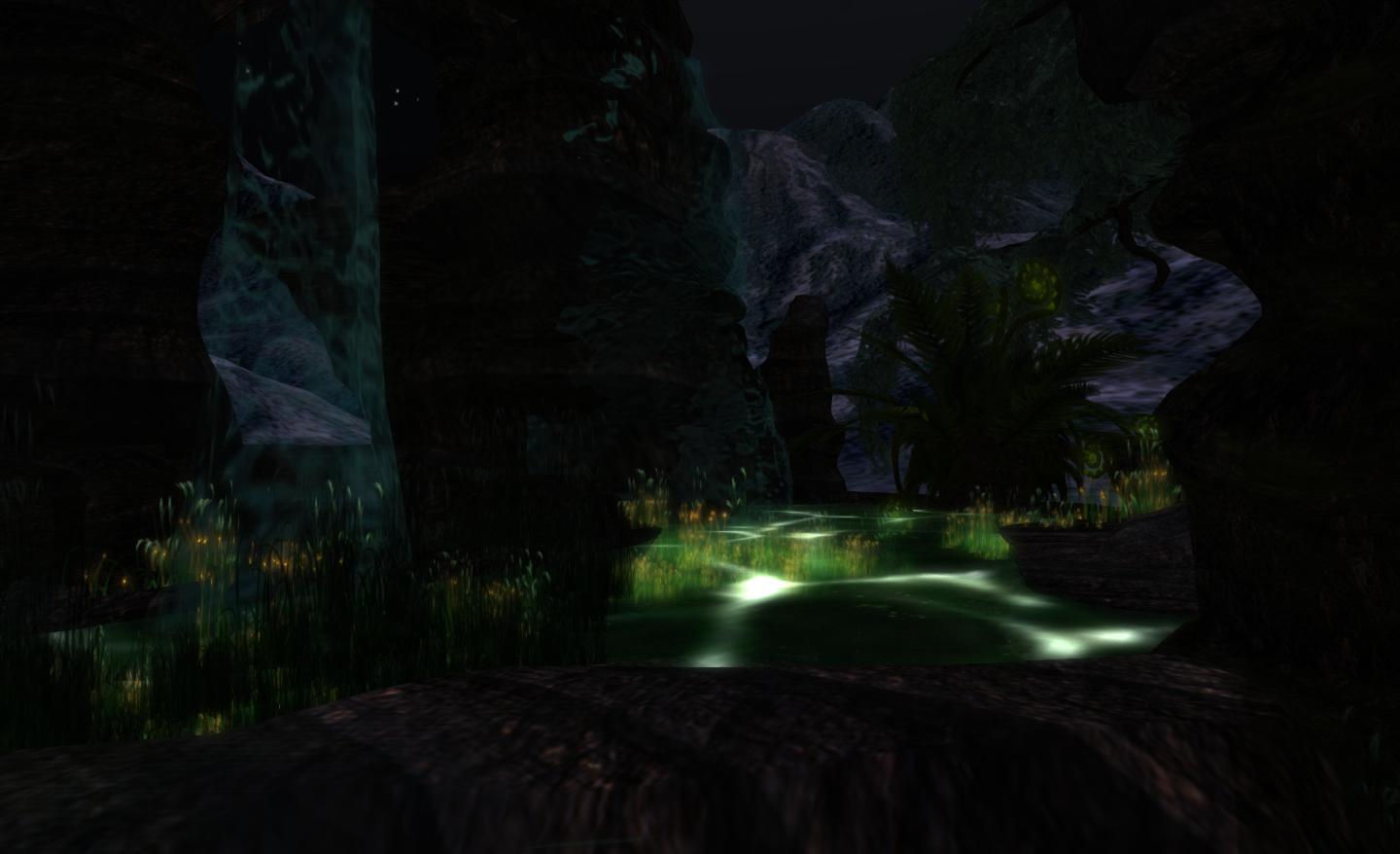
There is a rich mix of cultural elements here, most of them seeming to come from Asia, but also with some European / Middle Eastern elements as well. You arrive at a wooden landing stage facing a lush rain forest-like environment, split by meandering waterways. Where you go from here is up to you – follow the wooden piers around the small lake to the woodlands, or take a row-boat. There are only two building here, and whichever route you take will eventually lead you to them.
The Returning
The main building carries echoes of many historical sites; some have compared it with Angkor Wat – and the similarity is strong. For me, and without wishing to sound like a cracked record, the building carries a strong Sri Lankan resonance, reminding me particularly of the great stupas and pools of Anuradhapura.
For me, the Sri Lankan element was certainly heightened by the fact the music stream accompanying the installation features pieces by Lakshman Joseph De Saram. Having the music stream on is not a vital part of a visit – if anything, I’d say that in parts it actually might detract from the overall atmosphere. However, I was curious as to what might be accompanying the installation and in what was undoubtedly a serendipitous moment, I turned media precisely as Beggar / Charles Is Dying from De Saram’s soundtrack for Bel Ami was playing – and so the mental association with Sri Lanka was cemented.
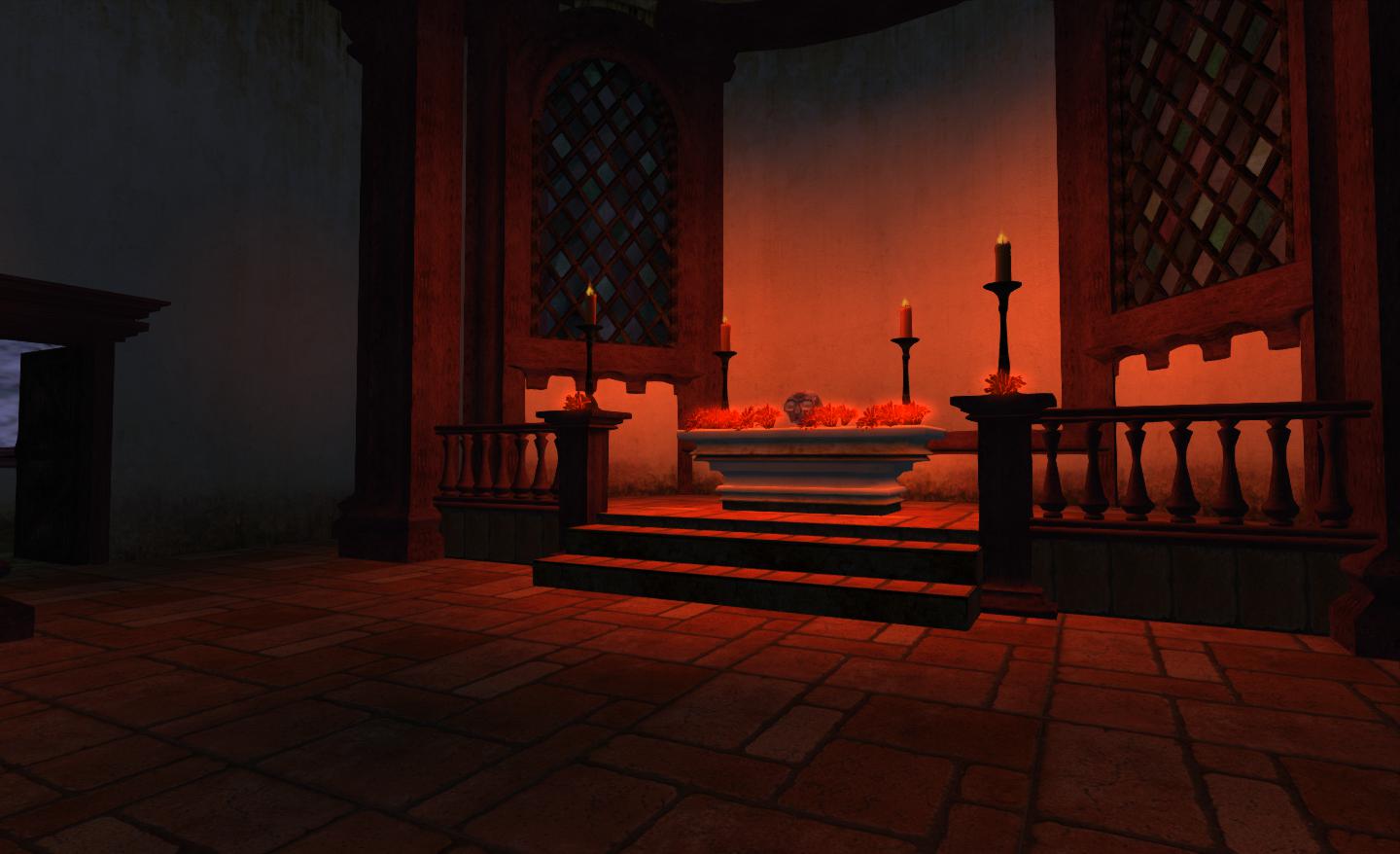
Inside the structure lay the deeper spiritual elements: manuscripts that appear to be from the Kabbalah, including what looks to be the Sēpher Yəṣîrâh; on the floor in the central chamber is a carving featuring the seven Chakras, adding a Hindu / Buddhist element, around which a pendulum slowly rotates.
The remaining building appears to be more western in style and design – almost a folly. It contains a device resembling an orrery, enticingly called Know Thyself. Around the walls are empty frames and pictures that appear to be from the 19th Century; perhaps another piritual echo – the memories of those who have passed before us.
Exploring the region will reveal strange incongruities. Alongside the “folly” run a set of power / telegraph wires; up on a hill you’ll find a US Postal Service mail box. Near the end of the reflecting pool at the front of the main building sits a pianola. Are these random placements, or do they carry meaning themselves? You’ll have to decide, as I’m saying nothing.
I’m not sure how long The Returning will remain open. If you haven’t visited already, I urge you to do so – and don’t be surprised if you find me sitting in quiet contemplation by the reflecting pool or among the trees.
With over 20,000 regions currently active on the grid, it is sometimes hard to picture just how big Second Life is, much less under how all the various component parts – continents, famous regional groups, places like the Blake Sea and Bay City – look and fit together. Harder still is to picture exactly how SL grew over the years.
Maps of Second Life
So, if you do have an interest in the physical growth and development of Second Life, or are curious about SL cartography, Maps of Second Life is well worth a visit.
Brought together and curated by Juliana Lethdetter, the exhibition features maps charting the history of Second Life from 2002 onwards, and features maps supplied by groups such as the Historical Society of Second Life, the SL Coast Guard, and individuals such as Carl Metropolitan and Marianne McCann.
Together, the maps present a fascinating portrait of Second Life over the last decade, not only tracing the growth of the main and beta girds, but also providing insight into regions such as the Steamlands, Blake Sea, Nautilus and Bay City. The SL roads and railways are also represented here with a series of maps, and there are a number of unique maps from residents and LL on display as well.
Carl Metropolitan’s famous maps of the SL continents (2009)
The exhibition also delves into the legend of Magellan Linden, who has been credited with the discovery of much of the historic landmass of the grid and documenting many of the pre-Linden artefacts found in these regions. Magellan himself mysteriously vanished in 2006, but an expedition formed by the intrepid Salazar Jack found evidence that Magellan was continuing his explorations as late as 2008, although his whereabouts today remains unknown.
Magellan Linden
The exhibition opened on June 30th, and is described as a “limited-time exhibit”. If you’ve not already done so, take time out and go and visit – you won’t be disappointed.
Katz Jupiter recently re-opened her art sim, Slightly Twisted with a new centrepiece full sim installation called The Gathering of Sky Women. This is a collaborative piece by Katz and fellow artists Asmista Duranja, Fuschia Nightfire, Louly Loon, Lilia Artis, and Trill Zapetaro.
Katz describes the installation thus: “I approached each of these artists to create a piece focused on a selected goddesses from different cultures around the world. The common denominator of all of the ones featured is they were all responsible for creating the world or aspects of the world in which we live in (elements, animals).”
The inspiration for the work is Judy Chicago’s The Dinner Party, produced from 1974 to 1979, which depicted place settings for 39 famous women of myth and history, with the goal to “end the ongoing cycle of omission in which women were written out of the historical record.”
Slightly Twisted – The Gathering of Sky Women
“For this exhibition and the bringing together of these goddesses is a remembrance of sorts of women who at one time figured largely in the creation stories of their respective cultures,” Katz further explains, referencing The Dinner Party, “But with the passage of time their role and their stories have been largely ignored or re-written to their exclusion.”
The six goddesses featuring in the piece are:
Ariadne (Fuschia Nightfire), who as a goddess may have been the first divine character from Greek mythology to be recognised in Crete, and who is here described as, “She spins the world into existence. Hidden places and the life forms found in those places are associated with her.”
Awehai (Katz Jupiter), a goddess of the Iroquois nations, who is associated with renewal, continuity and community
Botthisattva of Willendorf (Trill Zapetaro), perhaps better know as the Venus of Willendorf, representing fertility and stability of the Earth
Mahuika (Asmista Duranja), a Maori fire deity from whom Māui obtained the secret of fire by tricking her into giving him her fingernails
Sedna (Lilia Artis), the Inuit goddess of the sea
Yemanja (Louly Loon), a Brazilian goddess from the Candomblé and Umbanda religions, regarded as a the spirit of the sea.
Sedna
As mentioned above, this is a sim-wide installation, and you can either reach the various exhibits on foot (with the exception of Mahuika, who resides on a platform over the sim) or by clicking on the banners at the arrival point and obtaining a landmark to each goddess. However, I do recommend that you use your pedal extremities and walk around the sim as there is a lot to see in addition to the main installation, including additional works by Anna Anton, Cherry Manga Gee Blackadder, Kyra Roxan, Spirit Radikal, Treacle Derlande, Briawinde Magic and Fae Varridale.
Microcosm by Gee Blackadder and Kyra Roxan
These additional pieces also examine modern civilisation’s relationship with the world around us and the nature of ecosystems, and are themselves fascinating pieces. Across the island one will also find other elements of Katz’s work, making careful exploration very worthwhile.
When I was a teenager, many moons ago, a frequent insult passed around was, “If brains were dynamite, s/he wouldn’t have enough to blow her/his own ears off.” If a girl was particularly disliked, this sometimes became “….She wouldn’t have enough to blow her own tits off” (boys had a similar twist, which involved parts of their anatomy much lower than the chest).
So, any art installation that invites you to Blow Your Own Tits Off tends to ring bells of teenage years past in my noddle, and send me investigating.
The full title of the piece is “Celebrity Blow Your Own Tits Off”, and it is by Maya Paris with assistance from a number of other SL artists. It is located on LEA 10, and is modelled on a game show (proudly sponsored by “Braino, Ransom & Wow™”), with five interactive levels.
“Will the next contestant … COME ON DOWN!
The main part of the experience is to follow the dotted red arrows (well I had to get something that fits the metre of “follow the yellow brick road”) through the various exhibits looking for “holes” to pass through (or touch). You’re encouraged to touch anything else you come across as well, and to have sound on and your AO off (so your avatar can be animated).
“She’s a pinball wizard, there has to be a hole…”
Along the way you get the opportunity to pick up various items as well. Whether you wear the accessories or not is up to you…some are decidedly … novel!
Some of it is a little ominous … some a little confusing … some might be considered a tad rude – although one cannot help but be reminded of Kenny Everett’s Cupid Stunt and that really, “It’s all done in the best PASSSS-ABLE taste!” :).
“It’s all done in the best PASSSS-ABLE taste!”Careful, or I’ll show up on *your* doorstep like this….
Crash Bang Trollop, which is where you end-up on exiting Blow Your… is similar in theme, and is described thus:
Tired of being bombarded by the crazy tornado that is the beauty industry?
Time to CrashBangTrollop!
Now you have your ZAP suit, wear it and find the 7 Trollop gadgets in the “ZAP” boxes around the sim ( all free)
Run Wild, turn up your sound and click everything! Dodge the needlefish, tiptoe through the aggravated follicles, help those boobs escape the underwires, Wax on….and off….claw your way through the waters, dare to try the trollop-rocket? Spray yourself orange, and don’t forget to Vajazzzzz.
Aerosol a*se kisser?
Trollop is open-air, and opposed to enclosed, as with Tits, and offers a number of things to click on to animate your avatar or which give you further bits’n’pieces.
If I’m honest, I’m not at all sure what to make of either piece – apart from feeling decidedly silly when I emerged from Tits. As interactive experiences go, they are both certainly that; I’m just not sure if there is meant to be a commentary on the state of television today and / or the cosmetics industry, or whether it is all simply meant in fun.
Best thing, possibly, is that if you’re curious you go along and find out for yourself. I man, the worse that can happen is you do manage to Blow Your Own Tits Off, right ;-)?
Arrehn Oberlander recently contacted me concerning MetaHarpers and the -io- Team’s new Linden Endowment of the Arts installation, The Inspiring Orientation – a smaller version of which was recently displayed at SL9B.
The installation, which opened on June 22nd, is described as: “Part art walk, part tutorial – a vision of a future where new SL citizens are introduced to an interactive combination of gallery and orientation course.”
The inspiring orientation – from the outside
Teleporting to the venue brings you (a little wet-footed, but that seems par for the course at LEA venues!) to a greeting area, where you are welcomed in a wide range of languages and get to meet your guides for the tour – tablet-like creations that display information and instructions on their screens.
A guide
Following the path takes you through various rooms, each with a specific focus on using your viewer and interacting with the world around you, starting with the basics of movement. Each section is quite cleverly put together, and the section on sitting cleverly introduces the idea of sitting on objects directly (scripted or otherwise) and using poseballs. Elsewhere there are lessons on using chat, which uses a range of animals with which to interact on a basic level, and there is a section devoted to camera movement and control.
Talking to the animals: “If I were asked to sing in hippopotamus I’d say “whynotamous?” and I would!!
At the end of the walk there is the opportunity to explore SL itself, with a series of teleport alcoves. These are divided into categories: Music and Stage, Art and Fashion, Exploration, Games, and Social and Chat. Each of these has two (or more) vendor boards visitors can scroll through to see a range of destinations. Clicking on an image brings up the Place Profile floater, allowing the visitor to read more on the destination and, if they like it, click on the Teleport button and go visit.
Each alcove also has a notecard giver that explains a little more about the subject matter, and can provide additional help. The Art and Fashion notecard, for example, defines the major forms of clothing (system, prim/sculpted and mesh) and the differences between them. While one might grumble the presentation of this information could be better, it is nevertheless more informative than anything currently on offer to new arrivals in SL.
Where next?
Most importantly, this area of the installation offers a way back for those that need a little more assistance – something massively lacking in recent orientation offerings from LL, where once you leave, the way back is barred to you in a “Thank you, and good night!” approach.
There isn’t much else beyond this in terms of orientation – but its is enough to give a flavour of what might be achieved.
Not only is the tour a visual experience, it is also very aural: the various sections are filled with a range of atmospheric sounds or music. The section on flight features elements of Glyph Graves’ The Forest of Water and Strangers also Dance, which uses sounds and tones very cleverly and is definitely worth wandering around rather than simply flying straight through. Elsewhere sounds of the jungle accompany the animals in the chat section and Lily of the Lamplight provides an accompaniment as you learn about camera controls.
Given that sound is enabled by default on the official viewer, then the use of music and sounds adds a clear dimension to an orientation experience and helps demonstrate the rich immersive experience one can enjoy with SL.
Glyph Graves’ combined piece deep inside The Inspiring Orientation
Clearly, as a demonstration, the installation only offers up just a sampling of lessons that could be provided in order to provide a feel for the idea. It would seem to naturally lend itself to further lessons being added without over-burdening the new user, so I’m not going to critique the creators on the basis that it doesn’t show X or Y in terms of basic lessons – something easily fixed were this to go into production.
However, I would be a little concerned should the idea be used with some of the graphics as seen in this installation. The animals in the chat area and the cartoon bedroom used to demonstrate sitting and touching objects in-world may look cute – but they also run the risk of giving entirely the wrong first impressions about SL to the newcomer, who ends up simply turning around and walking out in the belief they’ve wandered into something aimed towards younger children, rather than a sophisticated immersive world.
Perhaps a little too much like a cartoon?
While the lessons don’t have to be totally rooted in the “reality” of SL, I can’t help but feel that they should at least have a greater rooting in what SL as actually like in terms of what the new user can reasonably expect to see and encounter once they pass on in-world. Doing so should help build familiarity and confidence in the user, and enable them to better respond to the things they see with greater familiarity.
Another area that isn’t really covered in the exhibit, which is perhaps more important, is that of language. Beyond the many greetings in the welcome area, The Inspiring Orientation is presented entirely in English – and that’s fine for a piece designed to stimulate the mind and demonstrate what might be achieved. But how would it handle multiple languages, given that those coming into SL do so from all over the world? Would multiple “tablet” screens be used? If so, the lesson areas might get a little crowed. Would screens operate in more than one language? That could easily lead to confusion were someone to start reading instructions in German, only to have someone else click the button for the French option to be displayed…
In fairness, the team behind the piece may have already considered this issue and have an answer – if so, it would have been nice to see something presented here, if only to further demonstrate the practicality of the the approach.
As a small aside, it would be nice to see an orientation system that actually points to the assistance that is available in the Viewer – particularly the How To guide, which even LL ignores (in favour of the Destination Guide). It’s a small niggle, but the built-in help is there, and there is no harm in pointing people towards it.
But leaving my niggles aside, The Inspiring Orientation does offer an interesting and entertaining attraction that takes a fair crack at answering a question that has stumped LL to the point where they have seemingly abandoned it entirely: just how do you get users engaged with the viewer and introduce them to Second Life in a visual and informative medium? This exhibit doesn’t have all the answers, but it does offer an immersive and engaging alternative to what has been offered-up recently elsewhere. As such, it is very much a worthwhile visit, whether you enjoy SL art or have an interest in issues of new user orientation.