There are no planned deployments for the opening week of 2018. There are currently no DRTSIM projects on Aditi (the beta grid) awaiting promotion to the Main grid, however, there may be new RC deployments for week #2 (commencing Monday, January 8th).
SL Viewer Updates
There have been no SL viewer updates over the holiday period. This leaves the viewer pipeline as per the end of 2017:
Current Release version 5.0.9.329906, dated November 17th, promoted November 29th – formerly the “Martini” Maintenance RC
Release channel cohorts:
Nalewka Maintenance viewer version 5.0.10.330123, December 21st.
Wolfpack viewer, version 5.0.10.330113, December 20th.
Alex Ivy 64-bit viewer, version 5.1.0.511248, December 11th.
Voice RC viewer, version 5.0.10.330039, December 12th.
Project viewers:
Project Render Viewer version 5.1.0.511446, December 18th.
Obsolete platform viewer version 3.7.28.300847, May 8, 2015 – provided for users on Windows XP and OS X versions below 10.7. This viewer will remain available for as long as reasonable, but will not be updated with new features or bug fixes.
TPV Updates
The following third-party viewers updated over the holiday period:
Cool VL viewer updated to version 1.26.20.40 (stable), and 1.26.21.6 (experimental).
Catznip updated to version R12 on January 2nd, 2018 – see my overview for more.
My weekly viewer release summaries will resume from week #2, 2018.
SL Feature Summit
The next Second Life “feature summit” when potential projects and major updates for SL are considered / reviewed, is due to take place in February 2018. These meetings are generally held around every 6 months.
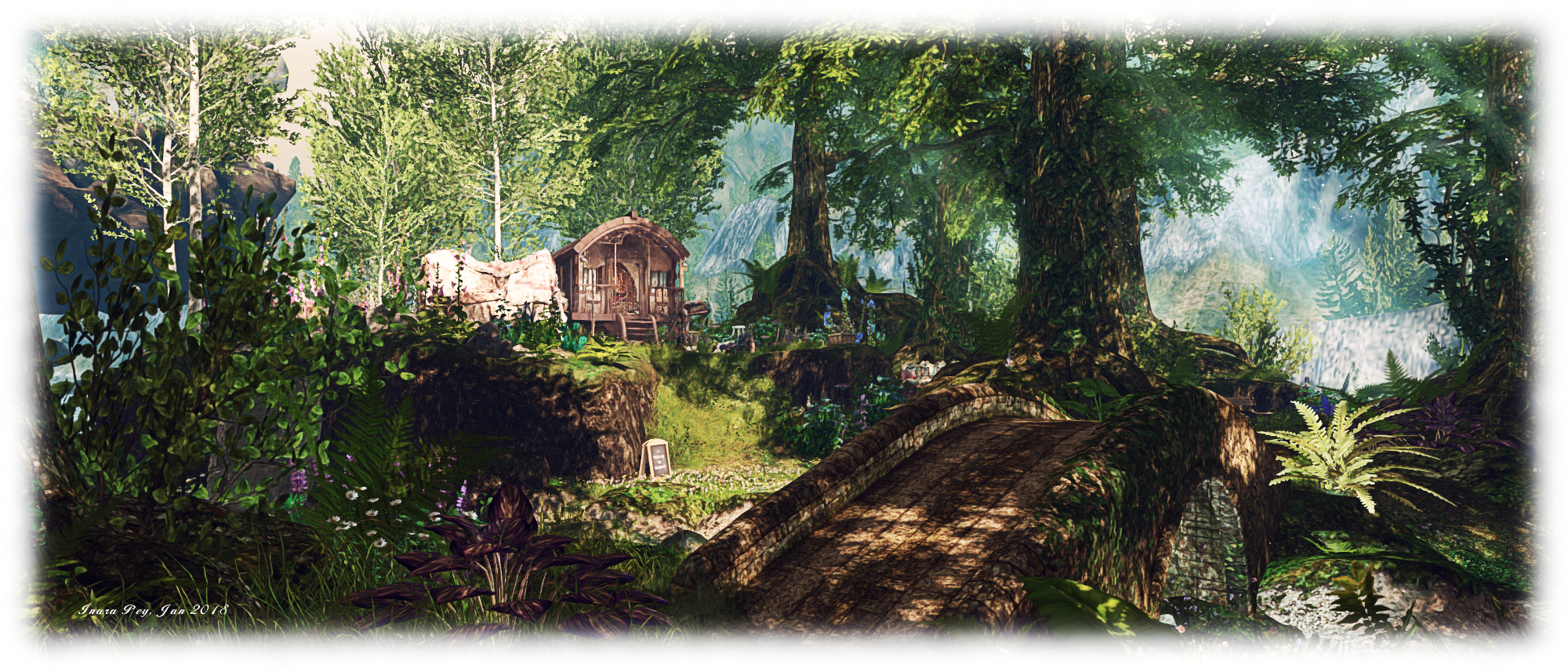
Brand New Colony – click on any image for full size
Brand New Colony is closed. SLurl have been removed from this article as a result.
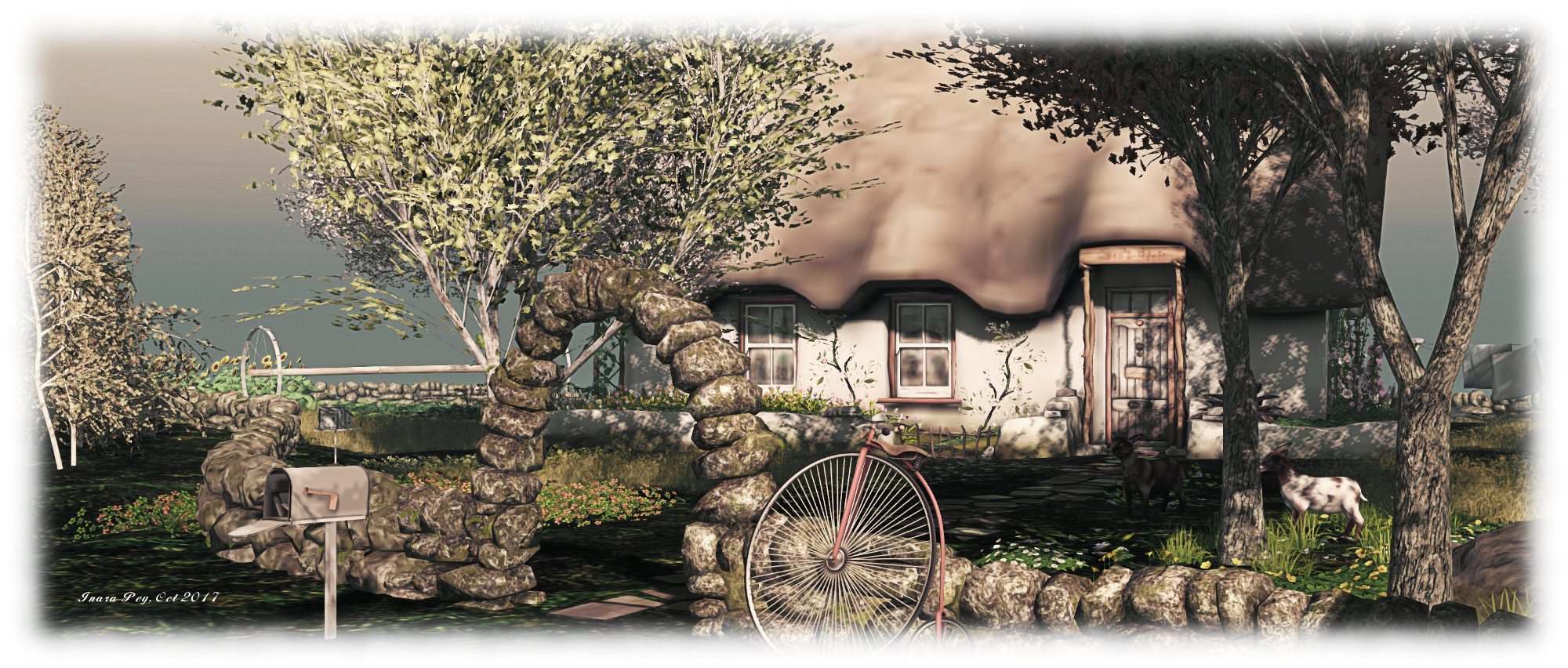
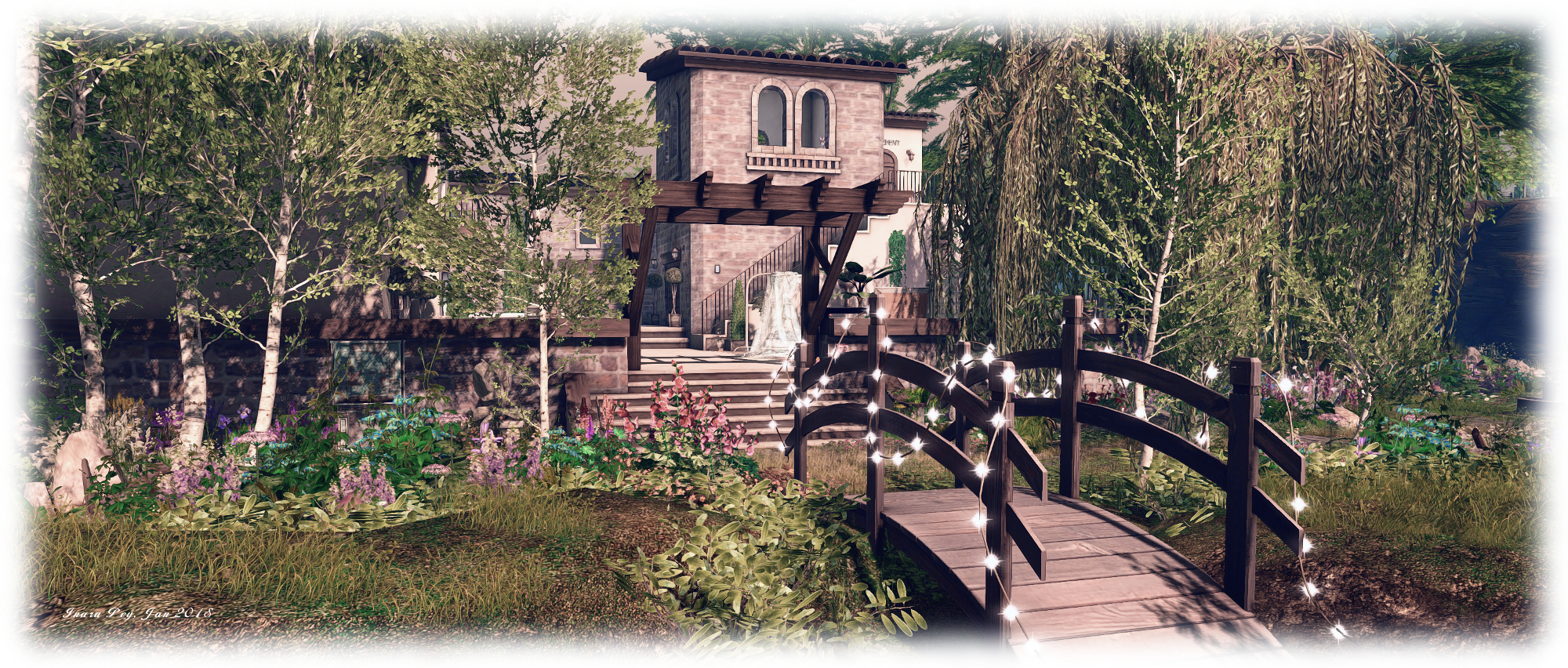
In September 2017, we visited Brand New Colony, a homestead designed by Bunny Blessed (Svelte Blessed) and Mimara Blessed (Mimara), and we very much enjoyed our explorations. So when Miro Collas sent me a message to say the region had relocated and in the process had been rebuilt, we decided to jump to the new location and take a look.
Still in the hands of the Blessed family, and designed once again by Bunny and Mimara, with assistance from Seren La Croix (torturedstar), the region in its new location carries on some of the themes from the September 2017 design whilst presenting a wholly new look that touches on fantasy in an eye-catching and imaginative way.
Brand New Colony
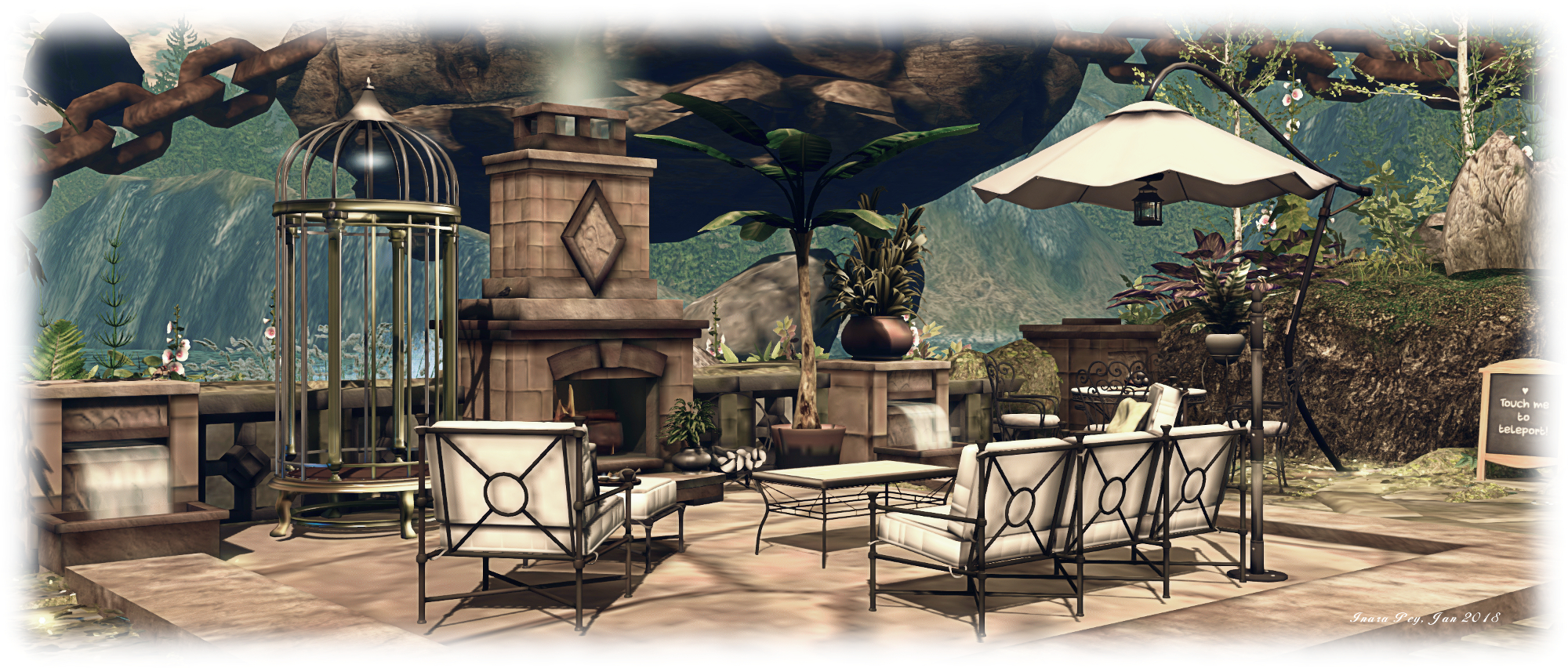
As with the September design, a core aspect of this new build is islands. Surrounded by tall, grass-covered peaks, Brand New Island presents six islands – although three are not what you might expect. The largest of these islands is a rugged affair, thrusting up from foamy waters, its flat top home to a large villa which echoes part of the look from the September 2017 design. Furnished indoors and within its courtyard, the villa shares this table of rock with an outdoor terrace located closer to the water, sitting on a low shoulder of rock reached via a stone stairway. With plenty of room to sit around the fireplace, this terrace ends at a small jetty against which a Loonetta 31 is moored.
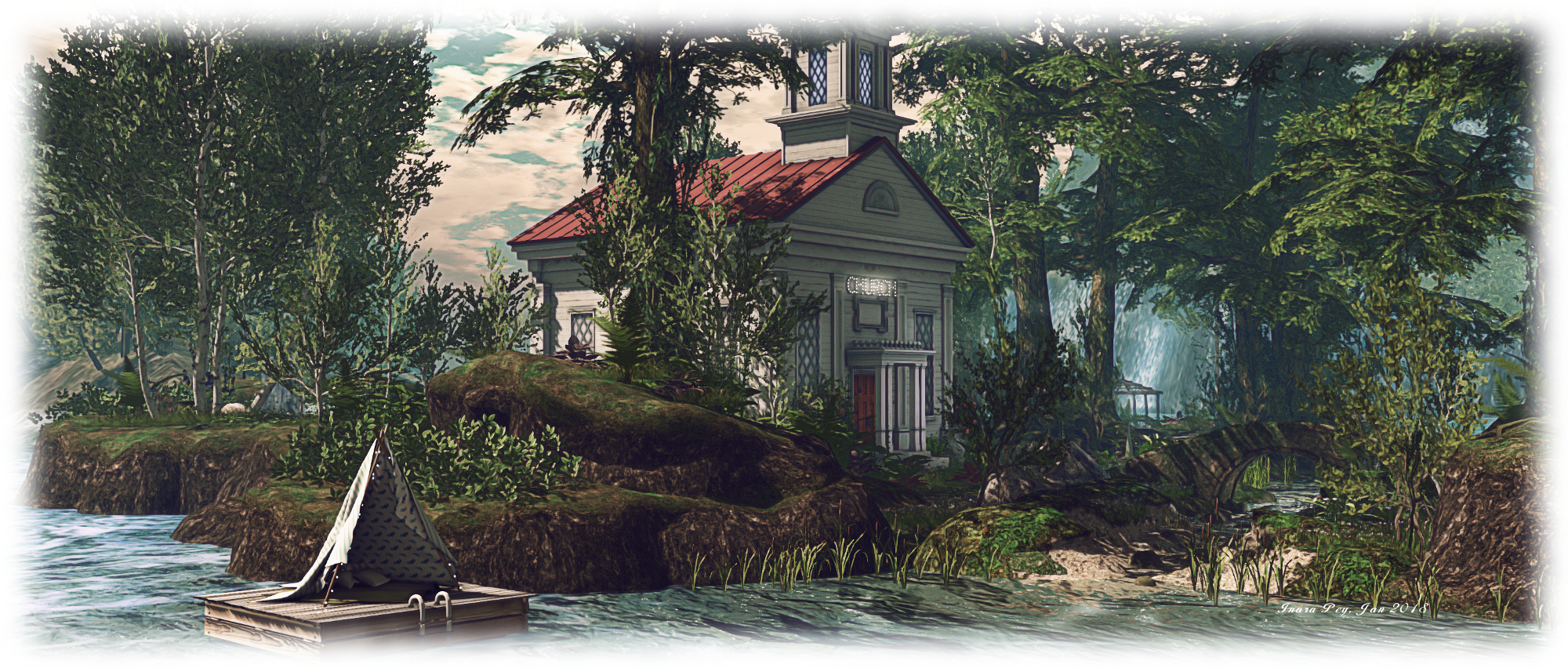
The terrace also offers a fine view across the water to two more islands – these so closely linked, they at first appear to be a single body of land rising gently from the surrounding waters. It is only while exploring that the narrow channel dividing them becomes apparent, stone and wood bridges spanning it to link these two richly wooded islands. Much is to be found on them, be it the red-roofed chapel or the little Romany encampment or, a little further afield and more secluded, various points where couples can sit and cuddle under the shade of trees or by rounded pools of quiet water.
Brand New Colony
But how does one get from the villa island to its neighbours? The answer to that question isn’t hard to find, lying as it does within the unique presentation of the three remaining islands, one of which forms the landing point for visitors, and is home to a gazebo those who visited the September 2017 design will likely find familiar.
Rather than being surrounded by the region’s foamy waters, these three islands are floating – rising, even – above them. It is as if gravity has forgotten them, so they have cut loose from their foundations to start a slow rise into the sky, setting smaller boulders and rocks tumbling and spinning in the air in defiance of gravity in the process. But they have not been allowed to escape entirely: great chains anchor the larger two of these floating islands to their cousins below, the chains massive and rusted, forming iron bridges visitors can use to travel between those below and those in the air.
Brand New Colony
Two of these islands seem content with their lot, firmly anchored in place to those below. The third, however, linked to the landing point island, appears more wayward. Canted at a slight angle, it seems to resent the massive chain impeding its upward progress and is still attempting to ascend, the great trees on its grassy top seeming to grasp the grassy rock in their roots, grimly determined to hang on.
With chains connecting it to both the villa island and one of the wooded islands, the landing point offers a natural connection between the two, while to the south-east, and linked only to the villa island, the last of those floating in the area offers its flat top to a garden setting. Focused on a large gazebo, this features statues, fountains, a rich variety of unusual flower planters – including an old grand piano and a garden swing to an overgrown tea party attended by stone sculptures, presenting a wonderfully fanciful scene.
Brand New Colony
For those who prefer not to chance the chains linking the islands together, a teleport system is supplied; look for the chalk signs boards found at or near each of the major locations and click on them for a list of destinations. Make sure you accept the local experience, and TPs will be automatic on selecting a destination thereafter.
At the time of our visit, some construction work still seemed to be in progress, so some things may well change over the coming days. However, that shouldn’t put visitors off. This latest iteration of Brand New Colony retains all the beauty of the former region, while offering something very new and fun to explore. Our only word of warning is that it is rich in textures, some of which can take a little time to load.
Monday, January 1st, 2018 saw the long-await release of Catnzip R12 – the release coming a little over a years since the last update – and slightly earlier than planned, thanks to the auto-update!
As one might expect, this update brings a large number of user-facing updates, which are quite comprehensively documented in the accompanying release notes, and rings Catznip up to parity with the current LL released viewer code base 5.0.9. It is currently only available for Windows, in 32-bit and 64-bit versions, the latter conforming to the Lab’s Alex Ivy 64-bit build.
Given the depth of the release notes, I’m providing an overviews of just some of the updates here:
Quick Preferences updates.
Inventory Management improvements.
Chat / group chat updates.
For the rest of the changes, please refer to the release notes.
Quick Preferences Updates
Main Quick Preferences Panel
The main Quick Preference panel sees a number of small updates and improvements:
The short cut CTRL-SHIFT-P no longer conflicts with Print Selected Object Info (the latter now ALT-SHIFT-P).
The panel can now be minimised via a button (item 1 in the image below)
The Other Section of avatar rendering now includes a button to open the Exceptions panel for listing exceptions to your avatar rendering settings (item 2 in the image below)
The worn items tab button (item 3 in the image below) now displays a tab with button to display sort options for the items listed in it (item 4 in the image).
The revised Catznip Quick Preferences
Quick Inventory
We all use HUDS – HUDS for AOs, HUDs for mesh bodies, HUDs for mesh heads, HUDs for appliers, etc.). However, wearing the all, all the time not only clutters the viewer’s window, it actually eats texture memory. We also have certain things we like to wear all the time. However, even if you dump all of your HUDs into a single folder in inventory, finding the one you want can be a pain.
Catznip R12 helps ease some of this pain through the provision of a Quick Inventory function. Used via Quick Preferences, this can afford faster, cleaner access to your HUDs, etc. To use it:
Create a folder anywhere in your inventory (if you don’t already have one ready to go).
Drag and drop your HUDs an bits (or links to them ) into it.
Open Quick Prefs and click on the inventory button (item 1 in the image below).
Click on the Folder <click to select> button (item 2 in the image below) to open a folder picker.
Click on the folder with your HUDs and bits to select it.
The contents of the folder will be displayed in the inventory tab of Quick Preferences each time it is opened, allowing you to easily Wear / Add items from it (right-hand picture in the image below).
The folder can be changed at any time by clicking on the folder button in the inventory tab.
Quick Preferences: Quick Inventory
Inventory Management
Inventory management updates make up the core of the R12 changes, and these come in a number of improvements, from how you chose to receive goods purchased in-world in your inventory or passed to you by others, through searching inventory to where boxed items are unpacked and stored in your inventory.
Accepting In-World Purchases and Inventory Offers
With Catznip R12 you can now designate where the items you purchase in-world or are given by others, are stored within your inventory. So, for example, you could opt to receive all your in-world purchases in a folder you call “Shopping Bag”, any demos you grab in a folder called “Demos”, anything your offered by friends in “From Friends”, and so on. How you organise things is entirely up to you. This means both the Pay and Buy floaters in Catznip R12, together with the Accept Inventory floater now offer you the ability to select where incoming items are going to be stored in your inventory.
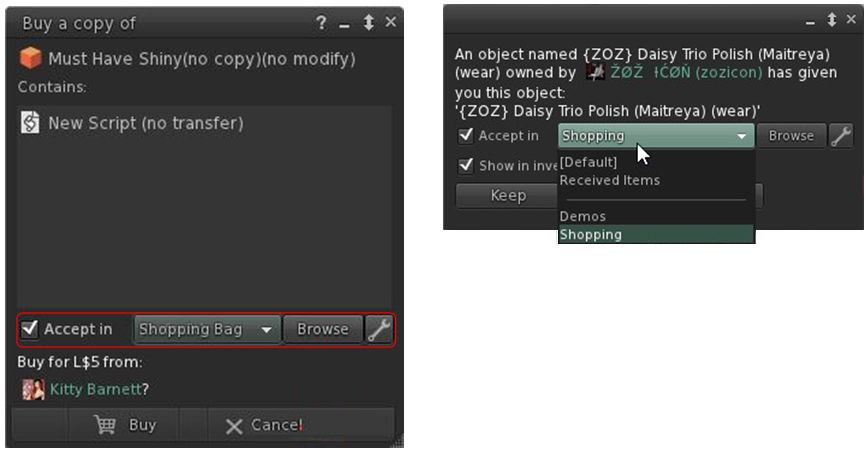
Catznio R12’s options to select where items you buy / receive go in your inventory
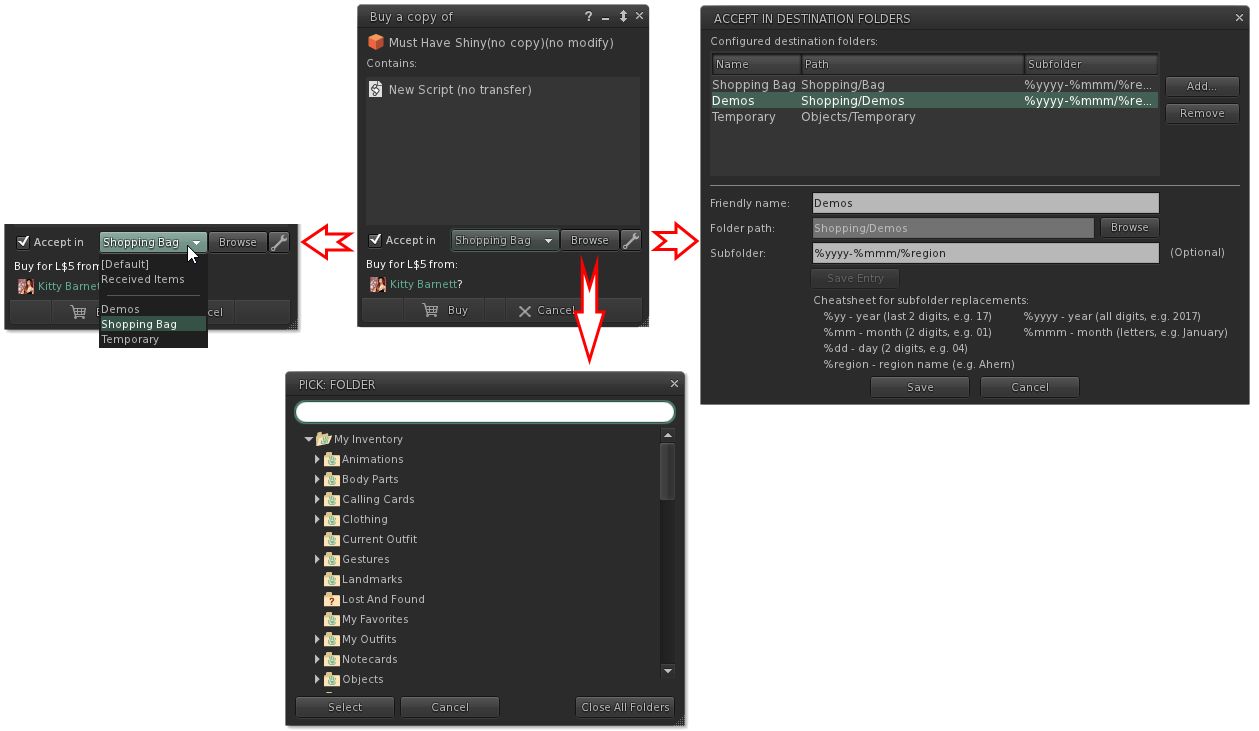
The options should be fairly self-explanatory. Check Accept in and the remaining options are activated. The drop-down will display a list of folders you have opted to allow incoming items to be delivered (show in the image on the right), the browse button allows an alternative to you list of folders in the drop-down to be selected, and the spanner button allows you to establish your list of destination folders. The roadmap of these various options is shown below.
What the options do. Note they are available in both the expanded floater view (centre) and the collapsed view (left)
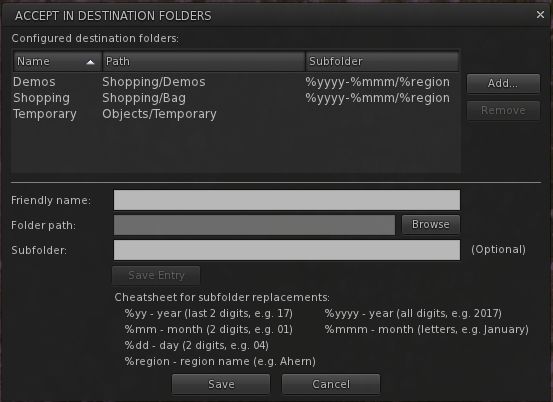
Not only can you select the folders into which you want incoming purchases to go, you can also set Catznip R12 to dynamically create new folders in which to place incoming items. This means, for example, that if you got to a big shopping event at one location, you can set the viewer to deliver all the demo you obtain / items you purchase into folders define by – say – the month in which you got them, and the location where they were obtained.
So, for example, if in April you go to shopping event X on region YYYY, and grab a load of demos, and then later in the month go to event A on region BBBB and grab more demos, you can have them delivered to sub-folders in your “Demos” folder, respectively labelled “April 2017 YYYY” and “April 2017 BBBB” – both of which are dynamically created by Catznip as they are needed. So even if you don’t get around to trying them for days after your visit, you can quickly and easily locate the demo items without have for fiddle around searching for folders and objects.
The panel for setting folders into which incoming purchases can be received, and the option for setting dynamically created sub-folders within that folder
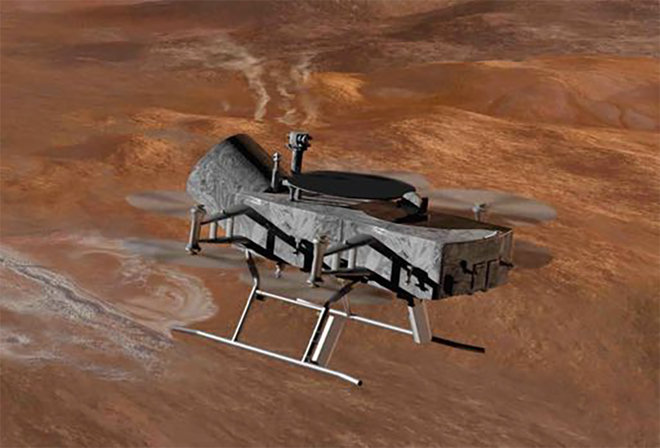
An artist’s impression of the Dragonfly dual-quadcopter, both on the surface of Titan and flying. The vehicle could make multiple flights to explore diverse locations as it characterises the habitability of Titan’s environment. Credit: JHU /APL / Mike Carroll
Back in August I wrote about a proposal from the Johns Hopkins Applied Physics Laboratory (APL) to fly a robotic helicopter to Saturn’s moon Titan.
Called “Dragonfly”, the mission would use a nuclear-powered dual-quadcopter, an evolution of drone technology, carrying a suite of science instruments to study the moon. Capable of vertical take-off and landing (VTOL) operations, the vehicle would be able to carry out a wide range of research encompassing Titan’s atmosphere, surface, sub-surface and methane lakes to see what kind of chemistry is taking place within them.
The proposal was one of several put forward for consideration by NASA as a part of the agency’s New Horizons programme for planetary exploration in the 2020s. In late December 2017, NASA announced it was one of two finalist proposals which will now receive funding through until the 2018 for proof-of-concept work.
Titan has diverse, carbon-rich chemistry on a surface dominated by water ice, as well as an interior ocean. It is one of a number of “ocean worlds” in our solar system that hold the ingredients for life, and the rich organic material that covers the moon is undergoing chemical processes that might be similar to those on early Earth. Dragonfly would take advantage of Titan’s dense, flight-enabling atmosphere to visit multiple sites by landing on safe terrain, and then carefully navigate to more challenging landscapes.
Dragonfly in flight. Credit: JHU /APL / Mike Carroll
At 450 kg, Dragonfly is no lightweight, and a fair amount of the mass would be taken up by its nuclear power unit. However, the vehicle will carry a science package comprising some, or all, of the following:
A mass spectrometer for analysing the composition of Titan’s atmosphere and surface material.
A gamma ray spectrometer of analysing the shallow sub-surface.
A seismometer for measuring deep subsurface activity.
A meteorology station for measuring atmospheric conditions such as wind, pressure and temperature.
An imaging system for characterising the geologic and physical nature of Titan’s surface and identifying landing sites.
Commenting on the NASA decision to provide further funding for the project, APL Director Ralph Semmel said:
This brings us one step closer to launching a bold and very exciting space exploration mission to Titan. We are grateful for the opportunity to further develop our New Frontiers proposals and excited about the impact these NASA missions will have for the world.
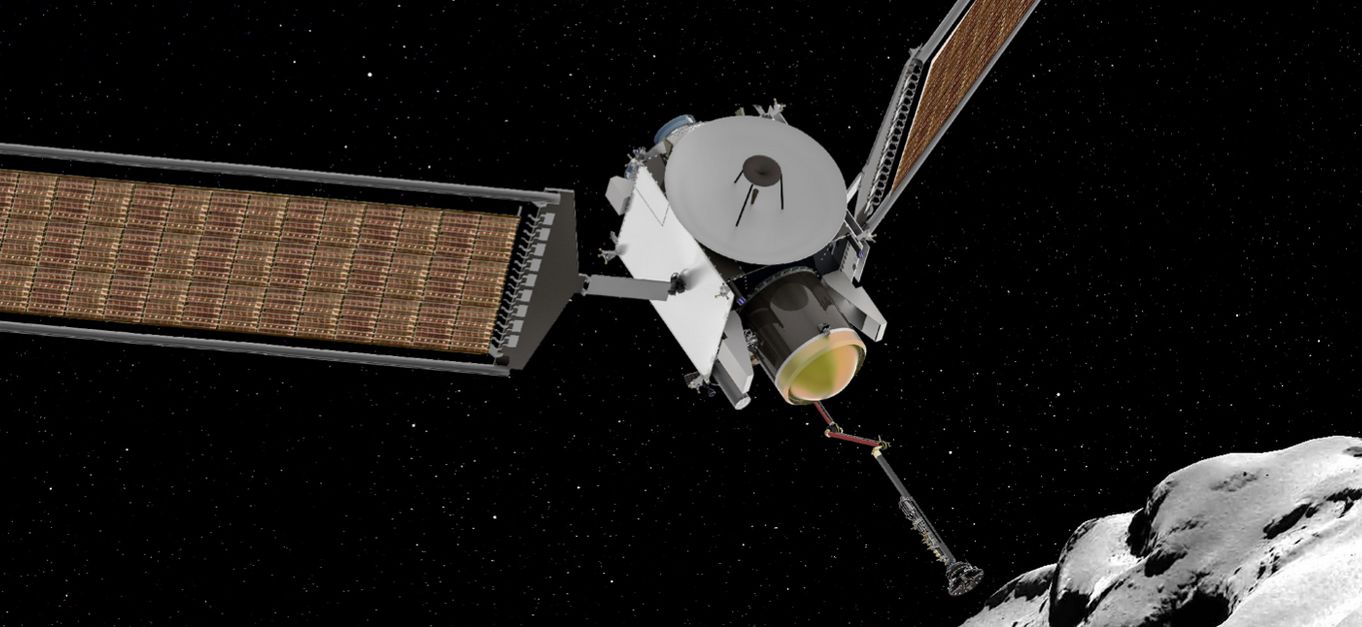
The second proposal to receive funding through until the end of 2018 is the Comet Astrobiology Exploration Sample Return (CAESAR) mission proposed by Cornell University, Ithaca, New York and NASA’s Goddard Space Flight Centre.
This mission seeks to return a sample from 67P/Churyumov-Gerasimenko, a comet that was successfully explored by the European Space Agency’s Rosetta spacecraft, to determine its origin and history. This project is being led by Steve Squyres of Cornell University, who was the principal investigator for NASA’s Mars Exploration Rover missions featuring Opportunity and Spirit.
If approved by NASA, CAESAR would launch in 2024/25, collect at least 100 g (3.5 oz) of regolith from the comet, separating the volatiles from the solid substances. The spacecraft would then head back to Earth and drop off the sample in a capsule, which would re-enter Earth’s atmosphere and parachute down to the surface in 2038. 67P/C-G was selected because it has been extensively imaged and mapped by the Rosetta mission, thus enabling engineers to design a vehicle better able to meet the conditions around the comet as it swings around the Sun.
A conceptual rendering of CAESAR orbiting comet 67P/C-G
New Frontiers is a series of planetary science missions with a cap of approximately US $850 million apiece. They include the Juno mission to Jupiter, the Osiris-REx asteroid sample-return missions, and the New Horizons mission to Pluto, also built and operated by APL. Under the terms of NASA funding, both of the 2017 finalists will receive US $4 million each in 2018, and a final decision on which will be funded through to completion will be made in 2019.
WFIRST: Hubble’s New Cousin
While attention is on the next space telescope due for launch – the ambitious James Webb Space Telescope (JWST), which will be departing Earth in 2019 – NASA and the international community is already turning its attention to the telescope that will come after JWST, with a launch due in the mid-2020s.
Billed as a cousin to the Hubble Space Telescope, and something of a descendent of that observatory, the Wide Field Infra-Red Survey Telescope (WFIRST) will use a very similar telescope system as Hubble, with a 2.4m diameter primary mirror, but with a shorter focal length. This, coupled with no fewer than 18 sensors built into the telescope’s camera (Hubble only has a single sensor), means that WFIRST will be able to image the sky with the same sensitivity as Hubble with its 300-mexapixel camera – but over an area 100 times larger than Hubble can image. To put this in perspective: where Hubble can produce a poster for your living room wall, an image from WFIRST can decorate the entire side of your house.
NASA’s Wide Field Infrared Survey Telescope (WFIRST) will fly in the mid-2020s and provide astronomers with the most complete view of the cosmos to date. Credit: NASA Goddard Space Flight Centre / CI Lab
This wide field of view will allow WFIRST to generate never-before-seen big pictures of the universe, allowing astronomers explore some of the greatest mysteries of the cosmos, including why the expansion of the universe seems to be accelerating. One possible explanation for this speed-up is dark energy, an unexplained pressure that currently makes up 68% of the total content of the cosmos and may have been changing over the history of the universe. Another possibility is that this apparent cosmic acceleration points to the breakdown of Einstein’s general theory of relativity across large swaths of the universe. WFIRST will have the power to test both of these ideas.
The prim has been hoisted, the tables and dance floor await: Bay City Prim Drop 2017, December 31st, 2017
Sunday, December 31st 2017 will once again see Bay City celebrate the turning of the year with their annual Prim Drop festivities.
The event will open at 23:30 SLT at the Bay City Fairgrounds in North Channel. The theme for the event is a wintertime soirée; black tie attire is recommended, and all SL residents are invited to attend. Marianne McCann will be providing the music and fireworks, and food and drink will be provided.
This will also be the final opportunity in 2015 to donate to Child’s Play Charity, a US 501c3 non-profit organisation which helps seriously ill children around the globe during their hospital stays with the purchase of games and gaming equipment.
In 2016, Bay City raised L$163,892 (approx: US $630) for Child’s Play, and in 2017 has already raised more than L$165,000 – and the Prim Drop will be a last chance to make this a truly record-breaking year in Bay City’s support of the charity. So even if you can’t make it to the event itself, do please consider taking a couple of minutes out of your SL day and stopping by the Bay City Fairgrounds and making a donation via one of the collection bins there.
Are you ready for your close-up? Have your picture taken as a red carpet guest at the Bay City Prim Drop 2017, December 31st, 2017
About Bay City and the Bay City Alliance
Bay City is a mainland community, developed by Linden Lab® and home to the Bay City Alliance. The Bay City Alliance was founded in 2008 to promote the Bay City regions of Second Life and provide a venue for Bay City Residents and other interested parties to socialize and network. It is now the largest group for Residents of Bay City.
Whimberly marked one of the first places we visited in Second Life at the start of 2017, when I remarked that the great beauty of the region lay within its simple elegance. In August, a return visit was made, after region holder Staubi (Engelsstaub) had given Whimberly a make-over, presenting a new look along the same elegant simplicity of presentation. So, when friend Miro Collas tipped me that a further make-over had been made to the region, it seemed a third visit would make a fitting end-of-year report on the region, balancing may January write-up.
This latest iteration of the region offers something of an echo of both the designs from mid-year and the start of 2017. As with August 2017, the landing point sits towards the north-east of the island, up on a rocky shoulder of a hill. Once again, this is home to a small summer-house – but in difference to August’s design, this one has been converted into a 50’s style diner inside, complete with jukebox, vinyl covered bench sitting and plenty of chrome. Also echoing the August design, a stone fountain sits outside of the diner, a parasolled seating area to one side, looking southwards across the water to a small island where a windmill stands, sails gently turning.
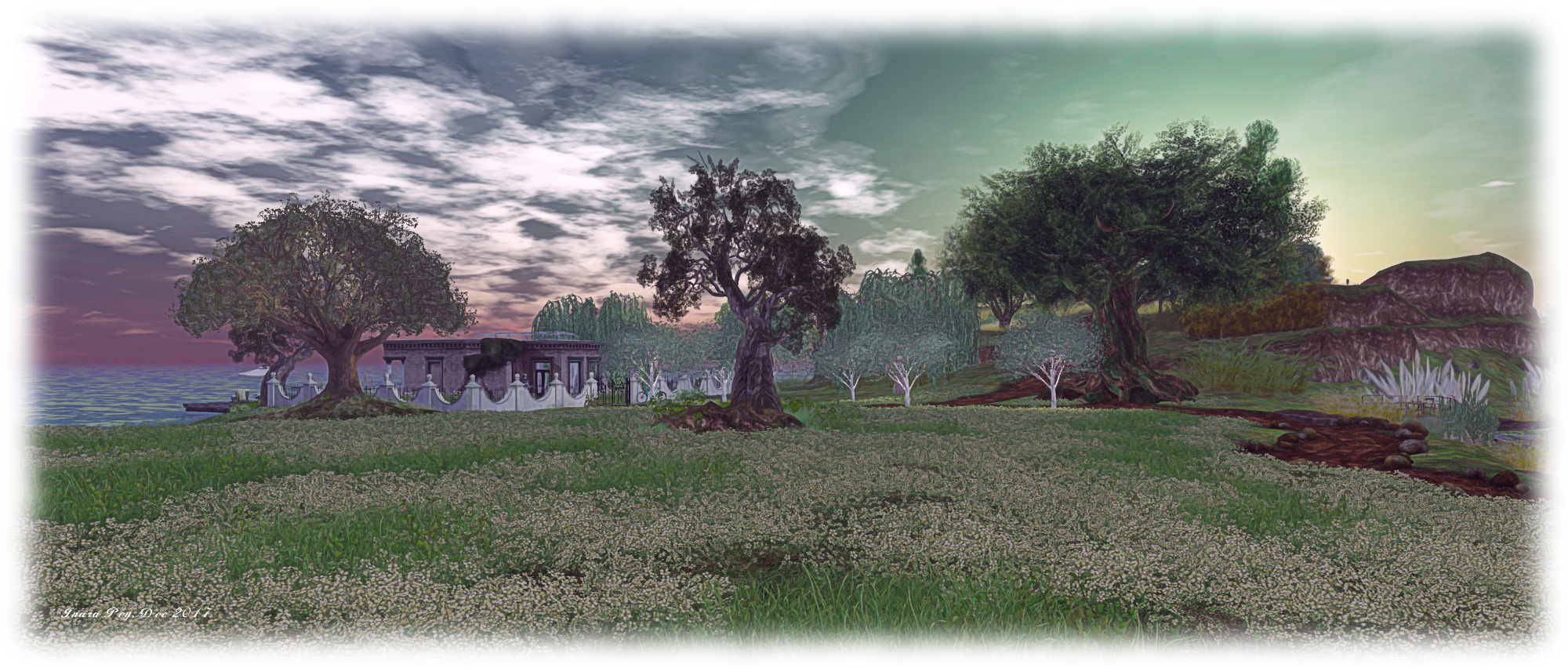
A dirt track runs down the hill to the lower reaches of the island, which have something of a feel for the January design of the region. A wide-open, grassy scene dominates the central landscape beneath the cloud-laden sky, the track splitting before the tide of grass, one arm leading to another summer-house, this one sitting within ornate walls, but offering a strong reminder of a similar place found within the January 2017 build, complete with the deck looking out over northern waters.
To the south, the track curve past a second wooden deck, where little motor boats can be rezzed and used to reach the windmill island, before following the water’s edge westwards before forking again, offering route to a choice of local houses.
The first of these has a distinctly Mediterranean look to it. With the old pick-up truck parked outside the front, the well and the cart wheels stacked against a wall, it might easily be taken for a farm-house. A look inside and a walk to the back of the house, with its terraced pool, reveal it to be anything but. An old stone jetty, broken and partially flooded – one of two to be found alongside the shoreline – sits close by, a place where an artist has been practising their skill with brush and paint.
The second house is much larger, and occupies the south-west spur of the island. Sitting among what might be oak trees and watched by a weeping willow, this has the feel of a family home – three pairs of Wellington boot in the hall, a meal for three set on a table, and so on. A car sits outside the garage, guarding the front door.
The little motor boats available to puttering around on the water are, I have to say, quite nippy; also, getting out of them takes a little care as well – any double-click teleporting will carry you back to the landing point. However, the windmill offers a haven for Greedy, Greedy and On a Roll fans, while a picnic blanket is spread under the wind-bent back of an old tree close to the windmill’s doors.
Whimberly always has been a region of serene, natural beauty, and this iteration is no exception; the melding of ideas from earlier designs is sublime, and the entire look and feel of the region so perfectly executed with a wonderfully light touch. It’s the perfect setting for an end-of-year visit, and a reminder that while we are in the midst of winter in the northern hemisphere, spring is really not that far away. In other words, an ideal place to visit and escape the winter blues.