Premium subscription changes: a little more news from Grumpity

At the April 20th, 2018 town hall event, Linden Lab CEO Ebbe Linden confirmed that as a part of pivoting Second Life’s revenue generation away from a heavy reliance on land, the Lab are looking at introducing a range of Premium account options which will have different levels of benefits associated with them – see here for more (includes an audio extract of his comments).

While details have yet to be finalised, Grumpity Linden spoke to some of the ideas under consideration at the Web User Group meeting. Because her comments are likely to be of interest beyond that meeting, I’ve provided a transcript of her comments, with an audio recording, below.

to précis Grumpity’s comments:

  • The Lab is looking at a range of Premium subscriptions, not just the single tier we know at present.
  • As per Ebbe’s original comments, how many and what they might each comprise is still TBD.
  • The over-arching idea is to make premium options so attractive, it would be “insane” to ignore them.
  • Simple examples of additional benefits being looked at is guaranteed access to in-world events / early access to in-world events, but overall, the Lab is looking at a broad range of benefits and (in the case of Basic accounts) limits.
  • With regards to Basic accounts, the Lab’s view is:
    • There are many things within Second Life which come at a cross to everyone’s in-world experience, but which are offered on an “unlimited” basis to Basic account holders – this may change.
    • Despite rumours circulating on the forums, there are no plans to prevent Basic account holder from rezzing things in-world.
    • The Lab wants to provide a Basic account experience sufficient to give incoming users an understanding  / flavour / taste (call it what you will) of all aspects of Second Life, while encouraging those who engage with the platform motivation to move to a subscription tier.
  • The coming changes are not about curtailing any use of Second Life or limiting what people can do or “nickel and diming” everything that can be done within Second Life.  they are about giving people more reasons to go Premium, make them happy / excited about premium opportunities, and hopefully of driving revenue generation.

Obviously, it would be nice to have more in the way of specifics – and these will come it time. As has been noted, it is still somewhat early days in what is being considered / planned, and I (and others) will obviously be reporting on things as the plans are made more public.

In the meantime, for those interested, here are Grumpity’s comments, and the audio recording of those comments as made at the April 25th, 2018 Web User Group meeting.

What’s coming on the premium tiers? We are looking at all of the existing premium benefits, we’re also looking at what is included with Basic accounts. Our goal is to make a basic experience that allows you an introduction to all areas of Second Life.

So I saw some fascinating speculation on the forums, and I don’t believe we’ve ever considered not allowing Basic members to rez. That would be probably insane on our parts, because this would take away from an integral part of Second Life.

But there are certain things that impact everyone’s experience on one hand, and are completely unlimited to a Basic account on the other.

So we’re looking at different ways of putting in limits that will actually improve everyone’s experience, give basic accounts a sufficient taste of what it is like but also; honestly, our goal is that if you’re committed to Second Life and  you’re invested in Second Life, the Premium benefits are such that it would be insane not to be Premium. And that’s the end goal.

And we’re looking at all sorts of limits, and we’re also looking at higher Premium levels that give you even more things. Like you could get into events even before all the other people, and you’d be guaranteed to get into the hair fair or something.

I can’t give away specifics, because this is so far away, and then when we announce you guys will be, “Oh, this is old news!”  So, we’d like to hold some stuff back. But our goal is to make you happy; it’s not to make your lives miserable and to nickel and dime you at every turn. It is to make Second Life more profitable and successful by making our residents happy [and] also by making new residents’ introduction to Second Life smoother.
A Bay of Dreams in Second Life

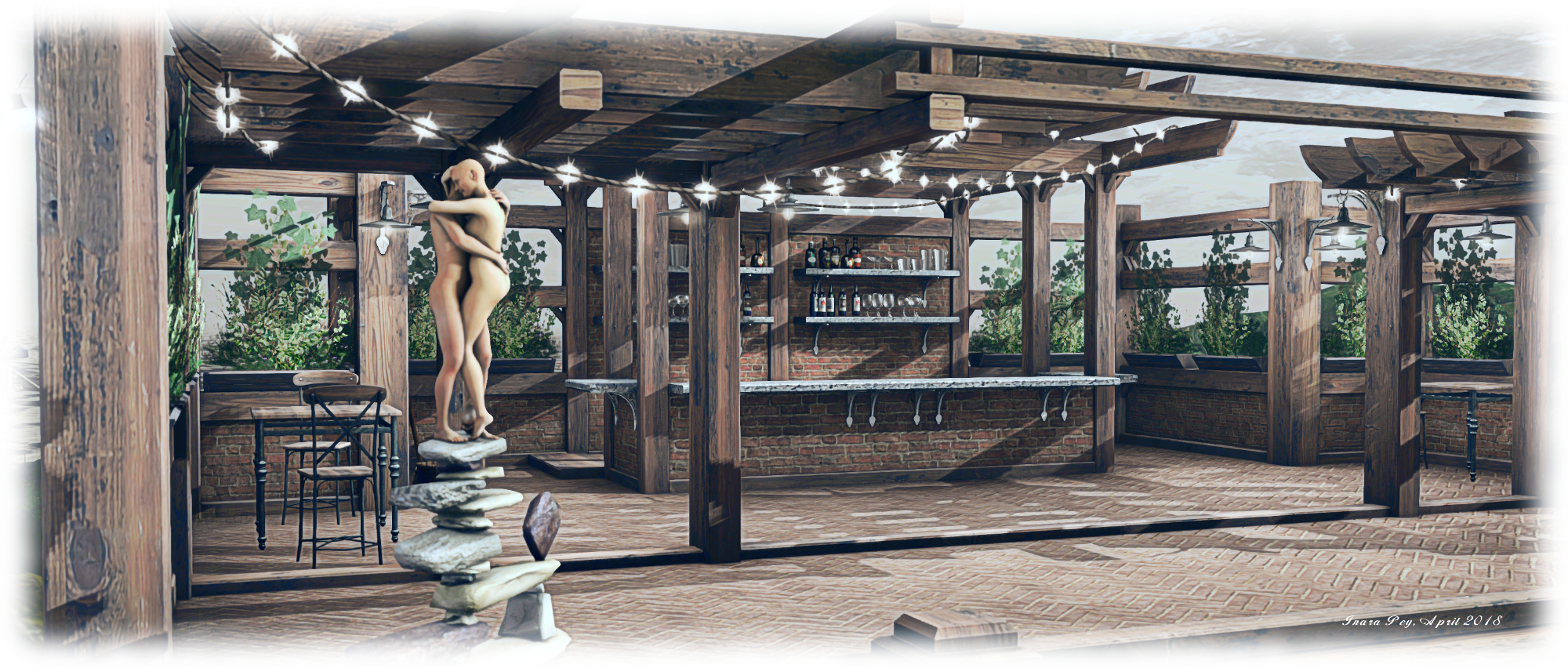
Bay of Dreams; Inara Pey, April 2018, on FlickrBay of Dreams – click any image for full size

Solo Arte, the open-air gallery space for art and culture designed by Terrygold, is well-known for art displays and installations, as I’ve frequently covered in this blog. All of the art events at the venue have tended to be on platforms in the sky – Terry has designed a lovely outdoor urban setting, complete with small indoor galleries as well as the street-side areas for art displays, while additional installations can be set-up on their own platforms. This has tended to leave the ground level space of the quarter-region parcel unused where public access is concerned.

Or at least, it has until now. Bay of Dreams is a new ground-level setting Terry has created for people to enjoy – and it stands as another demonstration that you don’t have to have an entire region in order to create something special.

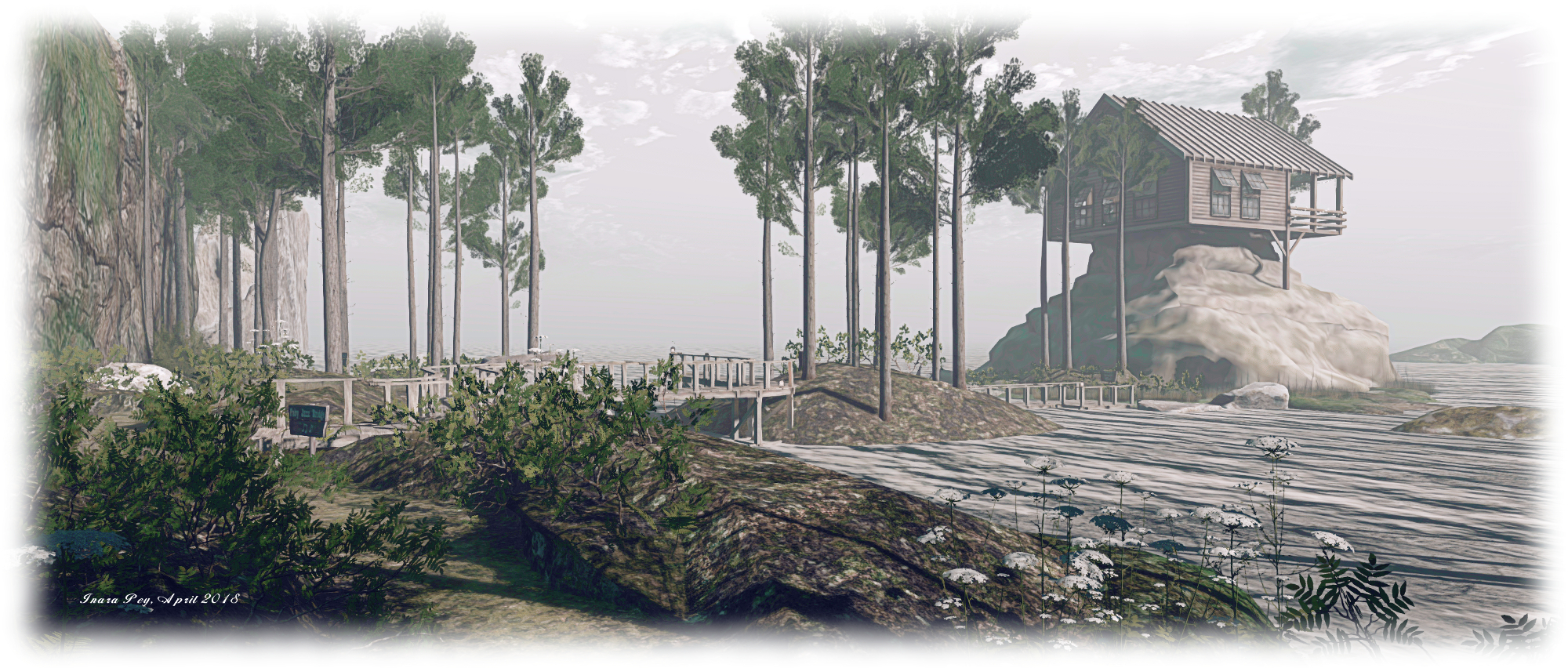
Bay of Dreams; Inara Pey, April 2018, on FlickrBay of Dreams – click any image for full size

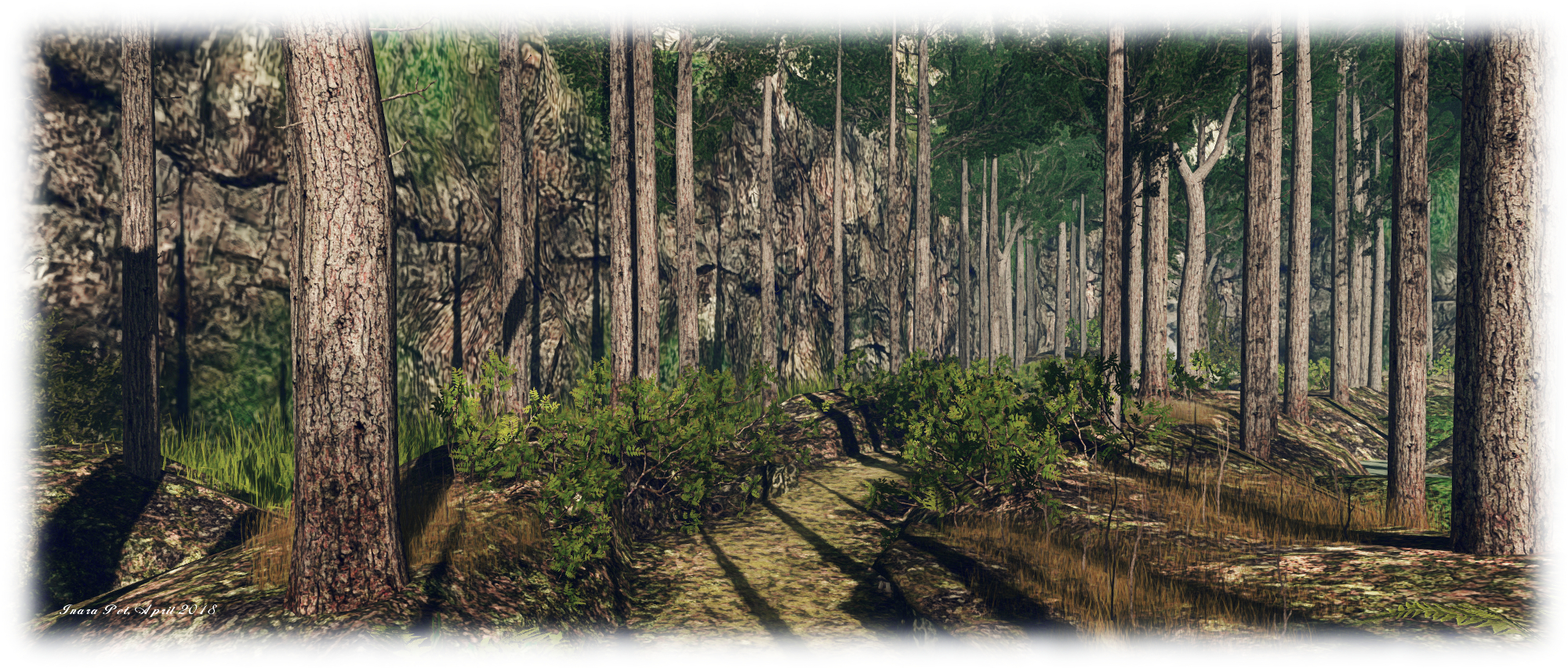
“It’s inspired by the Canadian woodlands,” Terry told me as we explored the space. “We will also be hosting some parties and music events here, and people are welcome to explore the woodland paths and come here for a little peace.”

The setting has the feel of somewhere in the Rockies – the parcel is bounded on two sides by curtain walls of rock to separate it from its neighbours, the remaining two looking out over open Linden Water, which one might imagine to be the waters of a lake. Scotts pine vie with the rocky curtains for height, a grassy path winding its way eastwards through them from the landing point, while a raised wooden board walk curls back to the western edge of the parcel and a waterside venue space.

Bay of Dreams; Inara Pey, April 2018, on FlickrBay of Dreams – click any image for full size

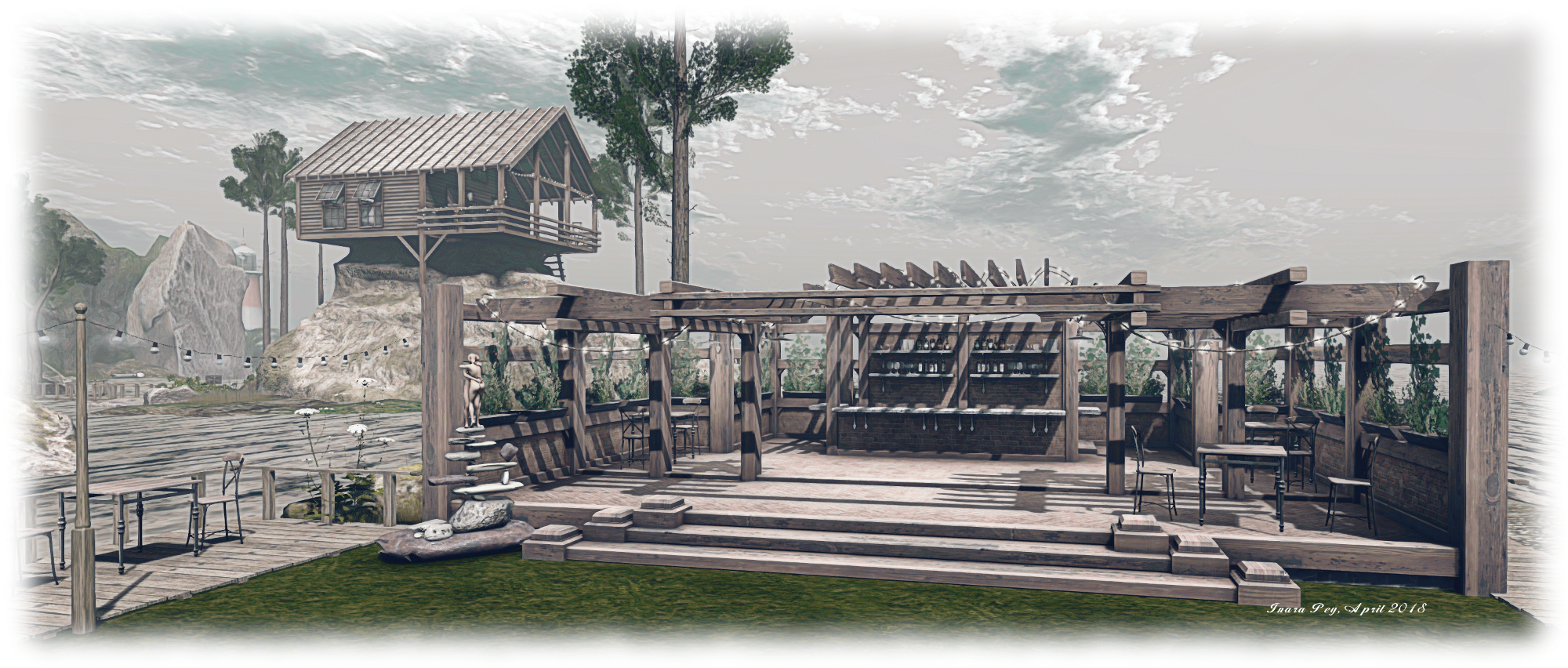
A rectangular, lawned space bracketed to the north and south be a stage area and a pavilion-style bar respectively, and by water to the west and east, this events space is extremely attractive in design and layout. It’s fair to say – if an understatement – to say it embodies an artist’s eye, with simplicity of layout with a balance of design and placement of elements – notably pieces by fellow artists such as CioTToLiNa Xue – to create an elegant venue space. A wooden pier to one side offers a rezzing create where a canoe can be taken for a row out onto the southern waters – just be careful about paddling too far, as you might bounce off the region edge.

These southern waters are dominated by a near-nude rock that rises impressively from them. It is straddled by an equally impressive cabin crouching on study wooden legs rooted in the stone beneath. The cabin can be reached via two platforms at the base of the rock – against which a canoe can be moored – and ladder-like steps. For those who don’t like the idea of rowing to the rock, it can be reached via another wooden board walk.  This extends out from the eastern side of the woodland trail, winding its way over a small island between the shoreline and a the tall rock.

Bay of Dreams; Inara Pey, April 2018, on FlickrBay of Dreams – click any image for full size

Along the path to this board walk can be found a little camp site and a tiny waterfall tucked away under the cliffs bordering the parcel. The trail itself continues beyond the board walk to where a sign points the way to a little cove where people can sit or cuddle – or take a HUD from the sign at the water’s edge and go for a swim.

Bay of Dreams is a charming, extremely well designed environment put together with an eye for detail. It has a balanced elegance about it which gives life to the truism “less is more”. Should you enjoy a visit, please consider a donation towards the parcel’s upkeep, and if you want to keep abreast of events at Bay of Dreams and Solo Arte in general, consider joining the Solo Arte group.

Bay of Dreams; Inara Pey, April 2018, on FlickrBay of Dreams – click any image for full size

SLurl Details

2018 UG updates #17/1: Simulator User Group

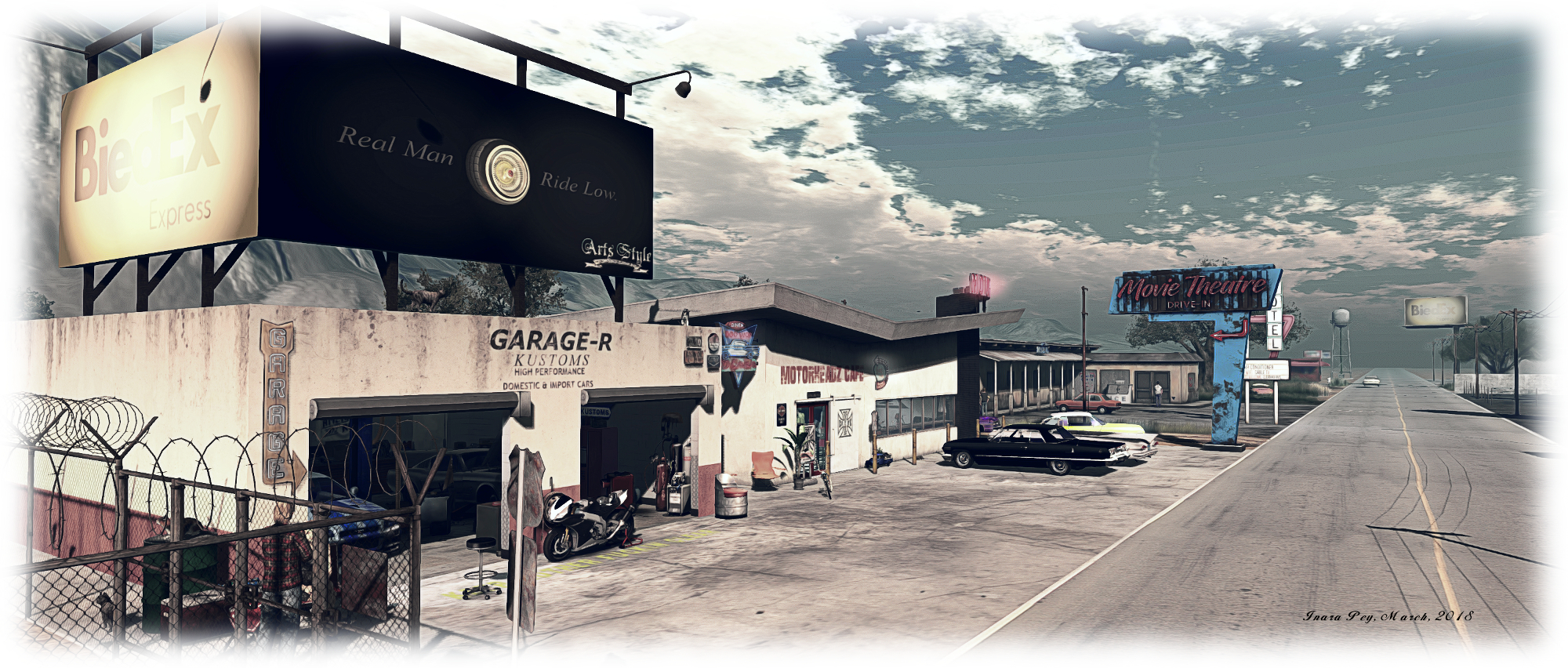
Motorheadz Café / Route6; Inara Pey, March 2018, on FlickrMotorheadz Café / Route66 – blog post

Server Deployments

As always, please refer to the server deployment thread for the latest updates.

  • According to the deployment thread, on Tuesday, April 24th, 2018, the Main (SLS) channel was updated with server maintenance package 18#18.04.09.514272, previously deployed to the RC channels and containing internal fixes and a fix for BUG-214702. However, a check on the simulator release via Help > About in the viewer reveals the simulator version to be 18.04.13.514504, which doesn’t appear to have associated release notes.
  • According to the deployment thread, there was no deployment to the three main RC channels – LeTigre, Magnum and BlueSteel – on Wednesday, April 25th, which reportedly remain on server maintenance release 18#18.04.09.514272. However, as with the Main (SLS) channel, these channels report as being on simulator version 18.04.13.514504.

Region Crossing Updates

On Wednesday, April 25th, the Snack RC was updated with a release designed to assist with region crossings.

“We’ve made some changes on the back-end with respect to message reliability,” Rider Linden stated at the Simulator User Group meeting on Tuesday, April 23rd. “We are hoping makes the transitions [from one region to the next] a bit more reliable … mostly it was a number of internal changes dealing with how agents get passed between simulators during a crossing or teleport.”

The simulator regions with the updated messaging code are:

Blake Sea – Atlantic
Blake Sea – Galilee
Blake Sea – Cattewater Blake Sea – Crows Nest
Blake Sea – Mizzen
Blake Sea – Nelson
Blake Sea – Thunderer
Blake Sea – Hawser
Blake Sea – Indefatigable
Blake Sea – Jones Locker

All of these can be accessed via the Blake Sea Half Hitch rezzing zone for those wishing to access them. I addition there is a block of region centred on “Est Full2” on Aditi that also have the updated region crossing code.

SL Viewer

There have been no updates to the viewer channels so far, leaving them as follows:

  • Current Release version 5.1.3.513644, dated March 27, promoted April 13 – formerly the media update RC.
  • Release channel cohorts:
  • Project viewers:
  • Linux Spur viewer, version 5.0.9.329906, dated November 17, 2017 and promoted to release status 29 November – offered pending a Linux version of the Alex Ivy viewer code.
  • Obsolete platform viewer, version 3.7.28.300847, May 8, 2015 – provided for users on Windows XP and OS X versions below 10.7. This viewer will remain available for as long as reasonable, but will not be updated with new features or bug fixes.

Other Items

A recent back-end change made to PRIM_MEDIA_CURRENT_URL reportedly broke a lot of content (see BUG-216032), causing a lengthy debate during the Simulator User Group meeting. As a result of this discussion, Oz Linden provided an update on the change and on a further change the Lab has made which they hope will assist those experiencing issues as a result of the original change.

We installed an important security patch, which happened to no longer infer http for a URL that had no scheme (in my opinion a good change). That broke some scripts that had used the field for a URL but left off the scheme (e.g. “myserver.example.com/myapi”) so those were broken. In order to get those slightly sloppy but legit uses working again, we added the scheme for them (but used https because everyone always should).

Storing data in that URL field was never intended to work.

The fact that we broke uses that were never legit is unfortunate, but not something I feel an obligation to maintain compatibility with. We’ll try to help you recover data that’s trapped there, but we won’t change it so you can keep doing that. If you have scripts that you need to get the data back out of, let us know and we’ll try to work with you.

Those still experiencing issues should report them via the JIRA.

Visiting the Apothecary in Second Life

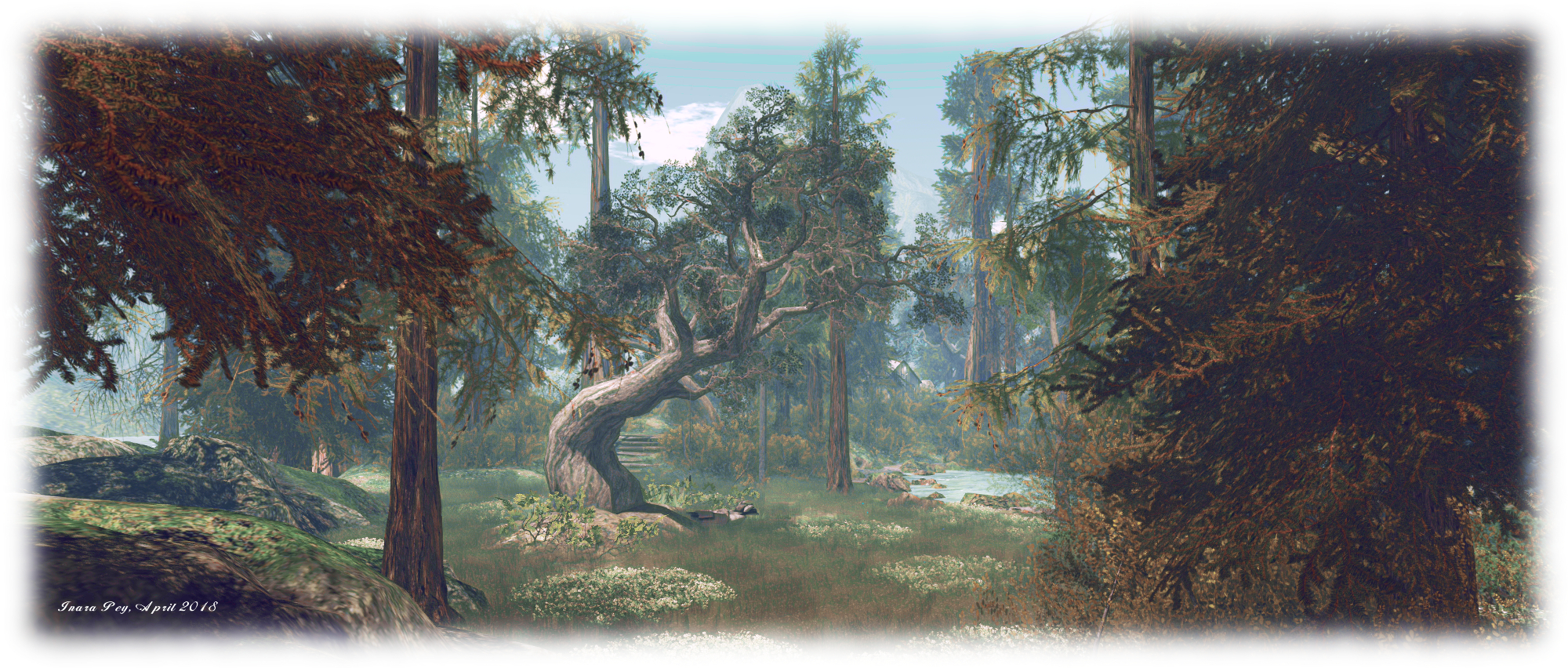
The Apothecary; Inara Pey, April 2018, on FlickrThe Apothecary – click any image for full size

Update: The Apothecary has closed. Because of this, I’ve removed SLurls from this article.

The Apothecary is a new Homestead region design by Harlow Heslop which opened in April 2018. It’s an impressive outdoor design, which immediately puts one in mind of the Great Outdoors of North America, or possibly the wilder reaches of northern Europe or Scandinavia. Buildings are few, the landscape richly wooded with tall redwoods (hence the North American feel to the place) and larch, surrounded by tall mountains.

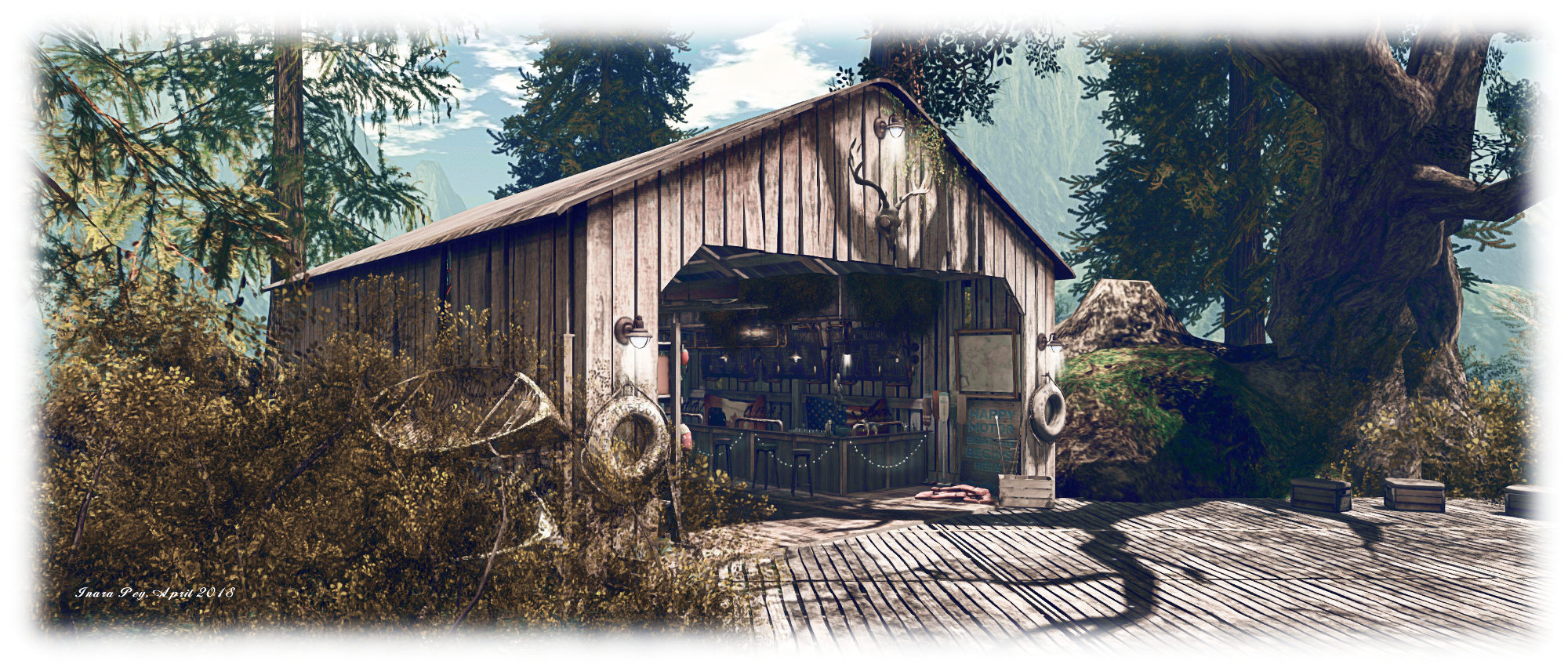
There is no landing point set within the region, but there is a greeter and welcome sign offering information on the region located on a deck in the north-east. This extends out over the water from the rugged coast of one of the three islands making up the landscape. An old barn sits close by, converted into a cosy lounge space complete with stacks of books and drinks on offer.

The Apothecary; Inara Pey, April 2018, on FlickrThe Apothecary

The land rises sharply alongside this, with stone steps climbing the steep slope, passing between the tall trunks of trees to where a wooden bridge watched over by four lanterns floating in the breeze, spans the narrow gorge separating this island from its much larger neighbour, a  folly like building beckoning visitors to cross the bridge to the plateau on which it sits

The drum-like building, complete with a glass-domed roof was once an aquae spadanae, a water spa – although it has been converted from this use. The pool is now a water garden, a large sculpture occupying its centre while around it, old sofas and armchairs offer comfortable places to sit and an upright piano offer an opportunity for music. The building looks to be under repair, given the scaffolding around and over a couple of windows.

The Apothecary; Inara Pey, April 2018, on FlickrThe Apothecary

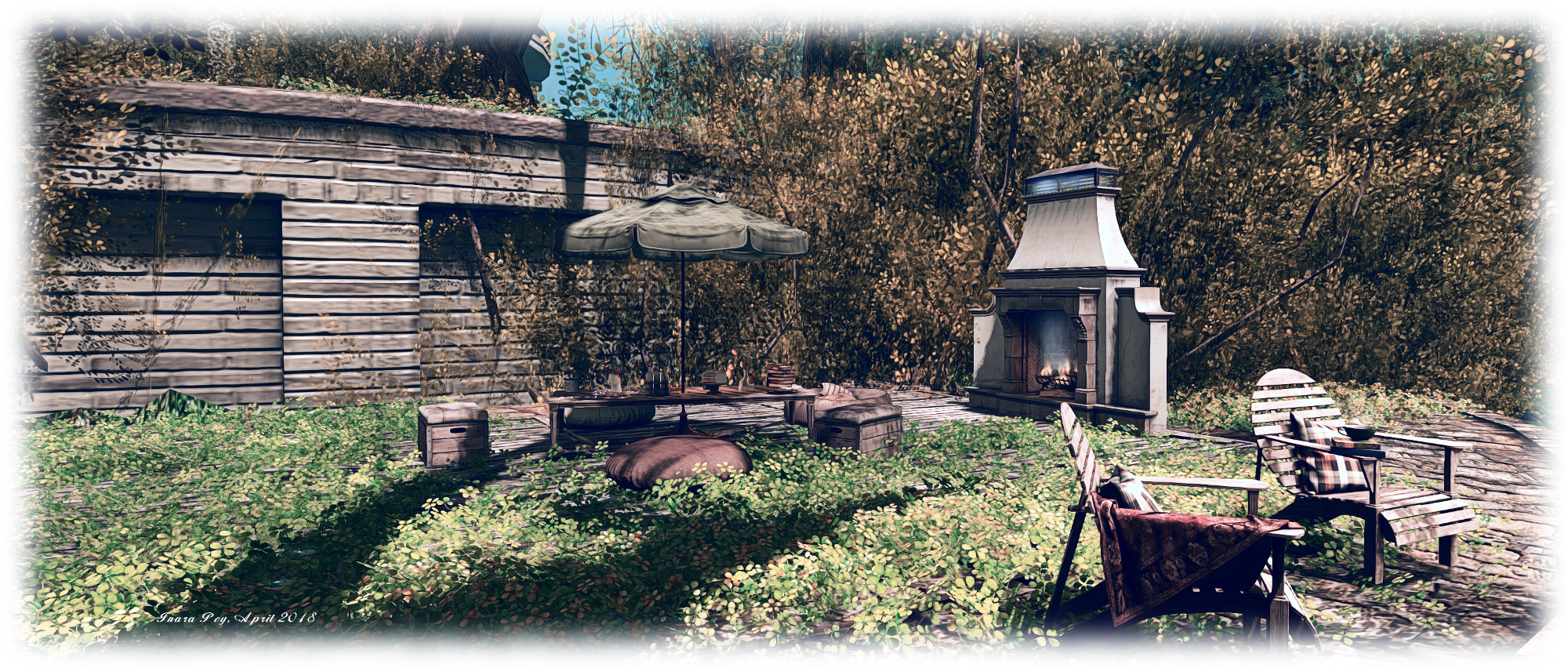
Two paths descend from this plateau, one to a broad step of rock, bounded out its outside by an old path and with another open-air bohemian seating area on its inside, warmed by a fireplace. The second path – marked by stone steps and cobbled paths, offers a route around the rest of the island. Branching at the foot of the hill, one arm of the path leads the way to the Apothecary itself – a grand  old conservatory building, its frame and high roof now without glass, its floors largely overgrown and the bent back of an ancient tree reaching grasping boughs out through its woodwork. A chaise lounge and mossy grand piano sit within, along with the tools of a gallipot’s trade.

The second path leads onward around the island’s curve to another waterfront warehouse and deck. The warehouse is this time sheltering a bar with bar on tap and spirits on the shelves behind it, while the dock appears to be the setting for the occasional DJ events that may be held within the region. It looks out over the water towards the third island in the group.

The Apothecary; Inara Pey, April 2018, on FlickrThe Apothecary

This third island, compact and crowned with trees, is given over to a cosy camp site where couples and groups can enjoy quiet and intimate times.  How it is reached other than by flying, is a mystery at present; while a rowing boat is moored alongside the deck on the main island with oars seemingly at the ready, it is for cuddles only rather than being a source of transportation.

While  I opted for daylight when taking my photos, the region lies under a darkening sky rich in horizon haze. This gives the impression of the land sitting in either post-sunset dusk, or a pre-sunrise morning. The introductory notes indicate that The Apothecary will evolve over time, so I suspect it could be a place we return to from time-to-time as it changes. Those wishing to rez props for their photographs, or who wish to keep abreast of changes make to the region or DJ events held there, can join the local group for a modest fee of L$175. Those taking photos are invited to share them through the region’s Flickr pool.

The Apothecary; Inara Pey, April 2018, on FlickrThe Apothecary

SLurl Details

  • The Apothecary (Havana, rated: Adult)

Crunching some numbers: the 2018 SL infographic

Courtesy of Linden Lab

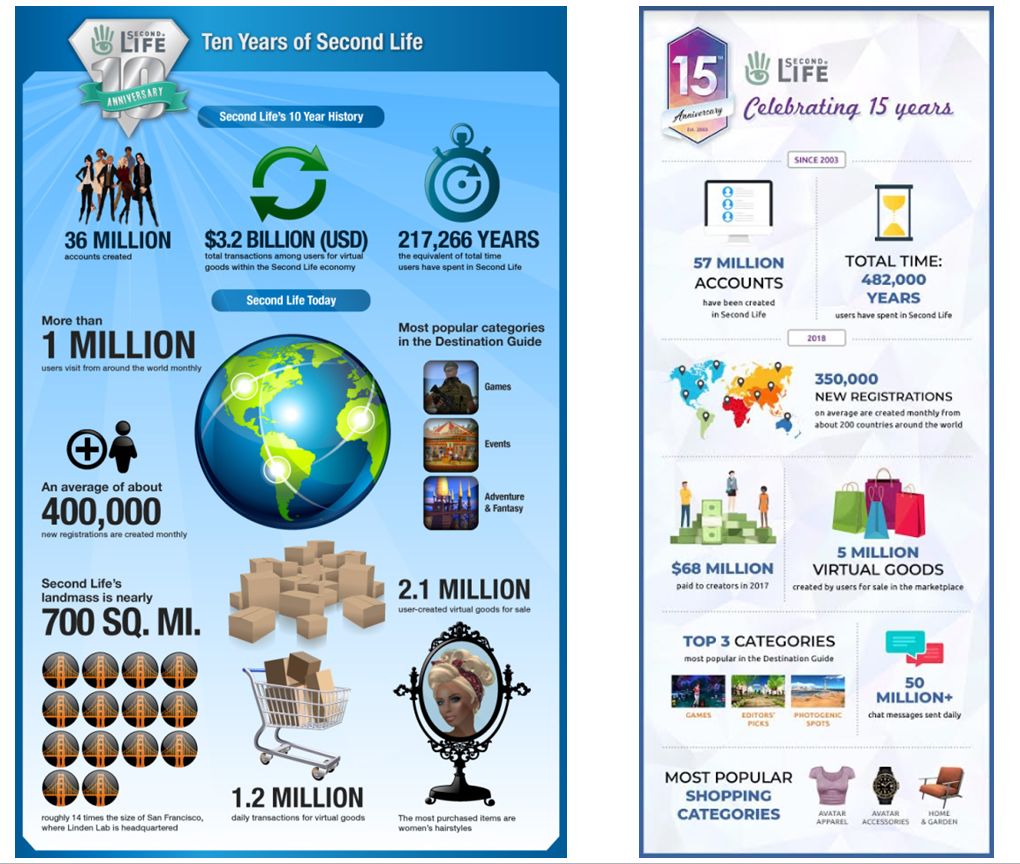
On Monday, April 23rd, Linden Lab issued an infographic on the state of Second Life as the platform approaches its 15th anniversary. The last time the company did this was, I believe, for the  platform’s tenth anniversary in 2013.

Both infographics obviously offer a potted view of Second Life which some might choose to take as spin – but casting the platform in a positive light is what PR is about. More than that, when all is said and done, the figures do go some way to showing the platform is still a vibrant place with a healthy economy and a (broadly speaking) positive engagement on that part of active users.

The “spin” element might be seen in elements such as the number of accounts created in Second Life: a total of 36 million between 2003 and 2013, and a further 21 million in the last five years (for a total of 57 million since 2003, when SL formally opened its doors to the public at large). These figures sound impressive, but when push comes to shove, “accounts created” is a pretty meaningless figure. What really matters is the number of active accounts operating within Second Life; and the fact is that over the years these have been dropping – perhaps not by the amounts some might think – although it is admittedly hard to pin things down to a precise figure.

Similarly, the number of new user registrations (400,000  reported in 2013 and 350,000 reported in 2018) doesn’t add up to a major indicator of SL’s health – but, in fairness nor do they indicate any kind of major decline, despite the 50,000 drop over the intervening period between the two infographics. But really, the issue with Second Life is not the number of sign-ups achieved, but the number of retained active users the platform obtains.

Side-by-side: the 2013 (SL10B) and 2018 (SL15B) infographics. But how useful are they?

Perhaps of more value, to a degree, are figures like the total hours users have spent engaged in the platform. in 2013, this cumulative total for 10 years was stated as an equivalent of 217,000 years; for the 15th anniversary it is put at 482,000 years.  What these show is that while the number of active users engaged in Second Life may have shrunk somewhat (notably since its peak in around 2008), those still engaged in the platform are between them potentially spending more time logged-in to the platform than they were five years ago.

Why this might be is open to speculation; but one group of reasons could be that the time an effort Linden Lab has put into improving the overall Second Life infrastructure, making batter use of technology, improving the performance of much of the platform (simulators, back-end systems, etc.), and the work put into enhancing user-facing capabilities, which have collectively encouraged people to spend more time in-world now than five years ago.

This increase in time spent engaged in the platform has other potential benefits as well – such as in increased economic activity. This is somewhat indicated by the 2018 infographic, which indicates that Second Life creators and land holders cashed out some $67 million in 2017. During sessions such as Lab Chat, and other public meetings, it had been indicated that the amount cashed-out by users in 2015/2016 was around $60 million; so it would seem that overall, the SL economy is experience an upturn, albeit a modest one. The strength of the economy might also be indicated by the rise in the number of virtual goods for sale: 2.1 million in 2013 and a stated 5 million in 2018 – although I point to this increase with the caveat that items for sale doesn’t necessarily translate directly into increases in goods sold.

Given that the 2018 infographic would tend to indicate overall engagement in the platform among engaged Second Life users has increased, the economy has apparently undergone something of a growth as well, it’s perhaps understandable why – as per the recent town hall meeting – there is now a much stronger emphasis within the Lab to pro-actively try to grow the user base going forward – and some interesting approaches are being tried.

So, what of the issues of active user numbers and new user accounts? It is true that Second Life is experiencing shrinkage in the number of active users. However, a degree of perspective is required when discussing it. At its peak in around 2008, SL averaged around 1.1 million active monthly log-ins. Today, it is lower – but by how much? That’s a tough nut to crack.

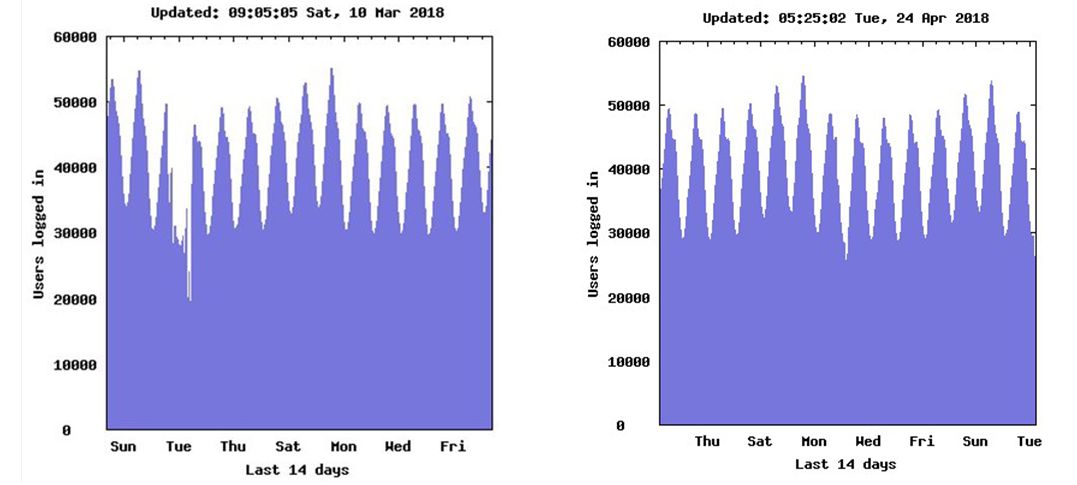
One of the few sources of real data we have comes from the SL Statistical Charts Page put together many years ago the most respected Second Life blogger (whose insight is genuinely missed), Tateru Nino, which is still active today. Among other things, it provides a series of breakdowns of concurrent log-ins – current and over set periods of times. These tend to collectively show that by-and-large average concurrency is between 30,000 and 50,000. Even when taking the bottom end of this range as the daily “average”, it still yields around 900,000 active monthly log-ins. That’s just 200,000 from the platform’s peak.

Second Life average concurrency is around 30,000-50,000 per day, as illustrated by these two 14-day extracts from Tateru Nino’s Statistics Charts, deliberately collected just over a month apart from one another

Of course, it might be argued that some of these concurrent log-ins are alt accounts or possible bots and so “don’t count”. But how large a figure is that likely to be? It’s impossible to know. Some factor it as being more than one-third, which might not be a wholly unreasonable figure; however, a counter-point to this is that just because someone is logged-in on two accounts doesn’t mean they’re not actively contributing to things like the economy through both of those accounts; so while it might be argued such activities reduce the total user count, it may not negatively impact the platform’s economy. Similarly, and where there are no empirical numbers available, it is fair to say that bot usage today is a lot less prevalent than when SL was at its peak; thus while their influence cannot be completely discounted, they are likely to have less of an influence on concurrency today than a decade ago.

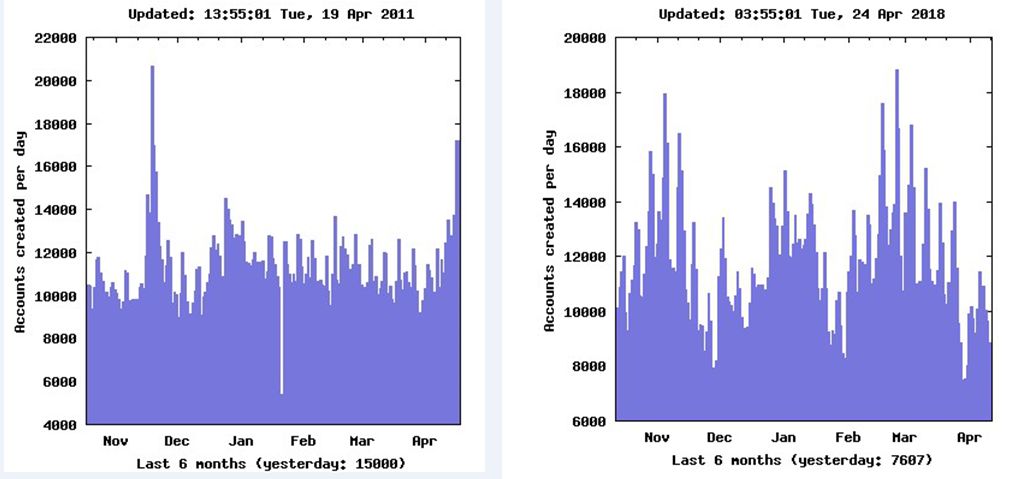
The most interesting aspect of the figures is perhaps those of sign-ups As noted above, the Lab notes a decline in monthly sign-ups of around 50,000 since 2013. Looking at Tateru’s data for 2011 (the nearest 6 month period to 2013 I have archived) and 2018, shows the average daily rare of sign-up hasn’t varied overly much across the years – although arbitrary daily figures can show more of a variation.

Sign-up across 2 6-month periods, in 2011 and up to April 2018. The averages for both are not too far apart

Both the infographic and Tateru’s stats would again point to the Lab’s optimism around growth, indicating as they do that while daily sign-ups have dropped somewhat over the years – Second Life potentially still generates interest, not all of which can be put down to existing users creating thousands of alt / bot account daily. The problem is, as noted earlier, getting more of those sign-ups converted to active, retained users.

Overall, the current infographic reveals that while there is undoubtedly room to grow the numbers of active users, and despite the downplaying of monthly active users by some, Second Life is still a healthy platform for both users and the Lab when it comes to generating revenue – and the weight of virtual goods tends to point to the Lab’s hopes to re-balance their own revenue generation away from such a heavy reliance on land tier as having merit.

More to the point, it does demonstrate that, despite all the fears about the arrival of Sansar, etc., as Second Life approaches a celebration of it’s fifteenth anniversary, it still offers a richness and depth that can keep us all engaged with it.

Lab announces SL15B music festival and invites auditions

On Monday, April 23rd, 2018, Linden Lab issued an invitation to live music performers to apply to be a part of the Second Life 15th Birthday celebration’s Music Festival.

2018 marks the fourth such festival the Lab has organised. It will be held as a part of the official Second Life Birthday celebration, taking place in mid-June 2018. For the successful applicant, it will be a paid event.

Xiola Linden explains things further in the official blog post:

Since we started Music Fest in Second Life, we’ve held an audition showcase to highlight some of the musical talent in the Second Life community. Many of you have been performing for years in virtual venues all over the grid, and we’d love to have you come showcase your talent at the try-outs for this summer Music Fest. All genres are welcome! From bands to solo acts, rock and roll to electronica – we encourage anyone to sign up for consideration. The Second Life Music Fest is an opportunity to perform at one of the biggest celebrations in Second Life, and it’s a paid gig!

She continues:

While we encourage everyone to sign up, it is not a commitment on your part and does not guarantee a spot at the auditions. We will review all submissions and extend audition invitations via email to the designated contact. Each invited act will have a short audition time (5 minutes max) to play and leave an impression on a panel of judges made up of Lindens and Residents. This panel will select acts to be invited to perform at the Second Life Music Fest. Upon completion of a half hour slot at the festival, the designated contact for each act will be eligible for payment (subject to Linden’s terms and conditions).

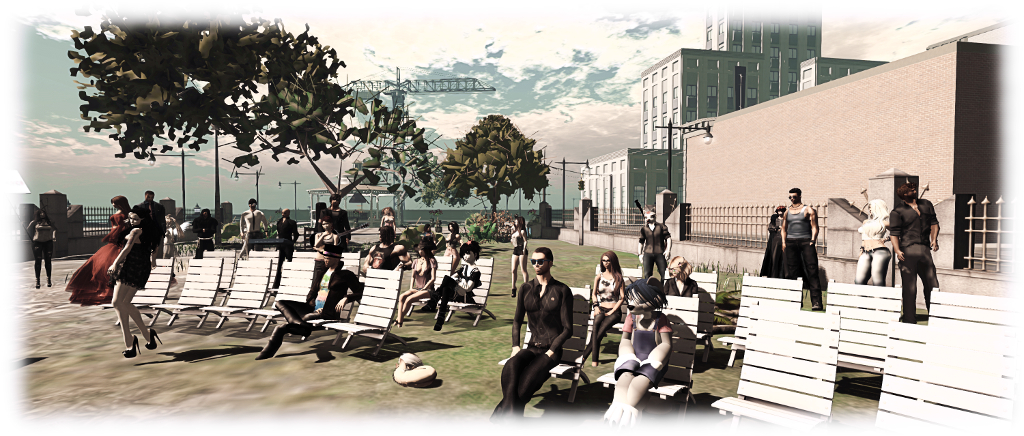
The 2016 Music Festival auditions

Those interested in taking part are invited to complete the audition application form – and to do so no later than Friday, May 18th. The blog post notes that completion of the application does not signify a commitment on the part of the artist to take part, nor a guarantee they’ll be called upon to audition before a panel of judges comprising Lab personnel and residents.

Musicians who are selected to audition will receive word directly from the Lab via e-mail. Those successful in their 5-minute audition, as judged by a panel of Lab staff and residents, will be invited to perform a 30-minute set at the Second Life Music Fest, and (subject to the Lab’s terms and conditions) receive payment for doing so.

The auditions will take place on (times are SLT):

  • 12:00 noon to 14:00 Friday, June 1, 2018.
  • 18:00 – 20:00 Saturday. June 2, 2018.

The venue for the auditions will be announced in due course and all residents are invited by the Lab to attend the auditions as a part of the audience.