Kokua goes Animesh with version 6.0.0

On Sunday, November 18th, 2018, Kokua issued version 6.0.0, which includes full Animesh support. As always with Kokua, the viewer is offered in two options:

  • With RLV support: 6.0.0.44120.
  • Without RLV support: 6.0.0.44121.

Both of these options are, again as always, available for Windows, Mac OSX and Linux.

As well as Animesh support, the update includes a series of third-party updates and additional bug fixes.

Animesh

As per my release overview, Animesh has been in development for about a year, and like Bento, has been a collaborative effort between Linden Lab and Second Life content creators. Essentially, it allows the avatar skeleton to be applied to any suitable rigged mesh object, and then used to animate the object, much as we see today with mesh avatars. This opens up a whole range of opportunities for content creators and animators to provide things like independently moveable pets / creatures, and animated scenery features.

Rigged mesh can be set to be used as Animesh through the Build / Editor floater

To help people get started with Animesh, there is already a range of available resources, including:

In particular, the user guide and test content offer the best way of getting started with Animesh for those who haven’t tried it thus far.

And, Animesh isn’t just for content creators: it has been designed such that just about any rigged mesh can be converted to Animesh directly from the Build / Edit floater. Do be aware, however that simply converting an object will not cause it to start animating – you’ll obviously need suitable animations and a script to run them.

Like any other object utilising animation, this is done by adding the animations and scripts via the Edit > Contents tab for your converted object. If you’re not a scripter / animator, you can still use the Animesh test content and have a play around with things.

Additional Updates

The 6.0.0 release of Kokua re-introduces the NACL viewer sound explorer (found under World > Sound Explorer). In addition, a number of options have been ported from Firestorm:

  • The animation explorer (under World > Animation Explorer).
  • The Money Tracker/Tip Tracker (View > Money Tracker).
  • Phoenix-style extended hovertips (View > Highlighting & Visibility > Hover Tips > Show More Information).
  • Avatar Complexity score in name tags (Edit > Preferences > General) along with the Only If Too Complex and Show Own Complexity options.
Kokua adds Firestorm’s approach to display avatar complexity information

Other updates comprise:

  • A bug fix so that Turning on Full Res Textures works.
  • If RLV is active, the Message Of The Day will appear in chat at login as a substitute to it being suppressed on the login progress screen.
  • Further ports of:
    • Reporting the latest grid status bulletin in chat at login (Edit > Preferences > Notifications).
    • The ‘do not hide worldmap after teleport’ option ( Edit > Preferences > Kokua > General).

I’ve not had time to take the viewer for a thorough test of the viewer, and the Kokua team note they’ve not had the opportunity to test Animesh. Therefore, If you see any strange behaviour please check it against the LL viewer and then either raise a Jira ticket on the LL viewer or against Kokua at: https://sourceforge.net/p/team-purple/kokua/tickets/.

Additional Links

Monroe Snook’s Art Bistro in Second Life

Monroe Snook Art Bistro

Monroe Snook has a new home for her art, courtesy of Milly Sharple. Called the Art Bistro, it offers an impressive insight into Monroe’s art, both from the physical world and from within SL.

Art expression for me is in the experience of the creative process. The thrill of a piece as it unveils itself as I work. The process can be slow and tedious or a quick snap. The work is in command – I am but its servant.

– Monroe Snook

Monroe Snook Art Bistro

Monroe’s physical art is a fascinating blend of nature and abstract; wonderful plant-like creations, some mindful of sea anemones or even triffids, others organic forms of fractal images. There is a rich vibrancy on the use of colours in these images that adds depth to the feeling they are each alive, whether plant-like in form or more crustacean in shape and feel.

Within her photography, Monroe demonstrates an equally rich ability to present mood or narrative – so much so, that I actually regretted finding three example of her photographic work on display in the gallery space.

Art expression for the viewer is in the interaction with the completed work. Spend time to get to know a work. Make [it] yours. Listen to its song.

– Monroe Snook

Monroe Snook Art Bistro

This is a selection of pieces that also demonstrate the richness of Monroe’s approach to her art: and approach that encompasses paints and brushes, scans of objects, original sketches, digital art tools such as fractal generation programs and tools like Photoshop.

All told, a welcome return to exhibiting her art from a talented artist.

SLurl Details

Aliens and Thanksgiving traditions at Seanchai Library

Seanchai Library

It’s time to highlight another week of storytelling in Voice by the staff and volunteers at the Seanchai Library. As always, all times SLT, and events are held at the Library’s home at Holly Kai Park, unless otherwise indicated.

Monday, November 19th 19:00: Tumithak Of The Corridors

Far and away the best and most exciting story I had ever read up to that time. I found the characters human and the hero all the more admirable because he could feel fear. I found the plot exciting and a deep humanity in the sentence ‘Tumithak had to learn that in no matter what nation or age one finds oneself, he will find gentleness, if he looks, as well as savagery.’

– Isaac Asimov

Such are the words of praise from one of the giants of science fiction for Charles R Tanner’s Tumithak series, first published in the 1930s (the fourth book in the series, Tumithak and the Ancient Word was not published until 2005, 31 years after the author’s death).

The series follows the titular hero, Tumithak, a young boy who rebels against the tyranny of the oppressive Shelks, invaders from Venus who have over-run Earth and force humanity to live underground in tunnels and caverns created at the time of the invasion. With no access to technology or knowledge of science, humankind lives in fear of the Shelks, who periodically descend into the tunnels of Man to hunt humans for sport – and worse.

Tuesday, November 20th: TBA

The Library may be dark – check the Seanchai Library blog for updates.

Wednesday, November 21st: 19:00: The Quilters: Women in Domestic Art

With Caledonia Skytower.

Thursday, November 22nd 10:00: Alice’s Restaurant Massacree

A Seanchai Library Thanksgiving tradition with Shandon Loring.

via Wikipedia

You can get anything that you want
At Alice’s restaurant.
You can get anything that you want
At Alice’s restaurant.
Walk right in, it’s around the back,
Just a half-a-mile from the railroad tracks
,
And you can get anything that you want
At Alice’s restaurant
.

As Thanksgiving arrives in the United States, Shandon Loring presents singer-songwriter Arlo Guthrie’s famous 1967 musical monologue, Alice’s Restaurant Massacree (also popularly known as Alice’s Restaurant, and the inspiration of the 1969 Arthur Penn film of that name, starring Guthrie himself).

Aside from the opening and closing chorus, the song is delivered as the spoken word accompanied by a ragtime guitar. The story is based on a true incident in Guthrie’s life when, in 1965, he (then 18) and a friend were arrested for illegally dumping garbage from Alice’s restaurant after discovering that the town dump was closed for the Thanksgiving holiday.

What follows is a complicated, ironic and amusing story told in a deadpan, satirical tone, which encompasses fines, blind judges, guide dogs, 27 8×10 copiously annotated glossy photos related to the littering, frustrated police officers, the Vietnam War draft and, ultimately, the inexplicable ways in which bureaucracy moves to foil itself, just when you’ve given up hope of foiling it yourself.

Also presented in Kitely (hop://grid.kitely.com:8002/Seanchai/108/609/1528).


Please check with the Seanchai Library’s blog for updates and for additions or changes to the week’s schedule.

2018 SL UG updates 46/2: TPV Developer meeting

The EEP sky over the Linden Hippotropolis region, designed by Whirly Fizzle. Credit: Whirly Fizzle

The following notes are taken from the TPV Developer meeting held on Friday, November 16th, 2018. A video of the meeting is embedded below, my thanks as always to North for recording and providing it.

This was again a short meeting.

SL Viewer

Video: 1:10-3:37.

  • The Spotykach Maintenance RC viewer updated to version 6.0.1.521757 on November 15th.
  • The Environmental Enhancement Project (EEP) viewer updated to version 6.0.0.521803 on November 16th.

These updates bring both viewers up to parity with the newly promoted Animesh release viewer. The remainder of the viewer pipeline remains as:

  • Current Release version 6.0.0.520636, dated October 18th, promoted November 14th. Formerly the Animesh RC viewer – NEW.
  • Release channel cohorts (please see my notes on manually installing RC viewer versions if you wish to install any release candidate(s) yourself):
    • Love Me Render RC viewer, version 5.1.10.521635, November 13th.
    • Estate Access Management (EAM) RC viewer, version 5.2.0.520057, September 28th.
    • BugSplat RC viewer, version 5.1.9.519462, September 10th. This viewer is functionally identical to the current release viewer, but uses BugSplat for crash reporting, rather than the Lab’s own Breakpad based crash reporting tools.
  • Project viewers:
  • Linux Spur viewer, version 5.0.9.329906, dated November 17th, 2017 and promoted to release status 29th November 2017 – offered pending a Linux version of the Alex Ivy viewer code.
  • Obsolete platform viewer, version 3.7.28.300847, May 8th, 2015 – provided for users on Windows XP and OS X versions below 10.7.

Bakes On Mesh

The back-end support is now grid-wide, meaning that Bakes on Mesh can be tested by anyone using the project viewer, which itself will be updated, both to bring it into parity with the new release viewer and with further BoM fixes.

BugSplat Update

[11:55-14:40] There are Four things to note with Bugsplat:

  • As noted above, it will see the Lab switch to using the BugSplat system for crash reporting, rather than their  own Breakpad based crash reporting tools.
  • The Breakpad support code will remain in place with a build time option, so that TPVs wishing to continue to use it can do so.
  • The current parent process that handles viewer launch and also updates, will be removed. This means there will be some internal differences to how the viewer updater works, and one of the two executables for the viewer will vanish.
    • On windows, if the viewer is installed using an account that does not have admin privileges, the viewer installer will install as a local instance in the user’s local applications folder.
  • It will also resolve the viewer having 2 dock icons on MacOS.

In Brief

Group Notifications

[3:34-4:40] A resource has been assigned to look into the unreliable delivery of group notices. It appears the reason some notices are being received when people log-in to Second Life is because they are not actually being recorded in the database that manages the delivery of things like off-line notices. Investigations are therefore focused on backtracking through the various systems to work out where things are breaking down.

EEP On Legacy Viewers

[5:04-6:24] It’s been noted that when seen of non-EEP viewers, applied EEP skies appear odd – stars persistently overlay the sky and fail to render correctly, for example.

This is because the simulator end of EEP tries to take the environment and tries to approximate it for delivery to non-EEP viewers using the “old” environment settings system for delivery to those viewers – something that works at best imperfectly. The Lab has not determined how much effort will be put into making EEP fully backwards compatible with the older environment rendering system, as the issues should only exist through a transitional period as the viewer-side EEP code reaches all maintained viewers.

The same sky seen at the top of this article, but through a non-EEP viewer, demonstrating how an EEP environment is translated for rendering on a non-EEP viewer

Duplicate Calling Cards

[21:35-24:00] This was an issue some time ago that saw people’s calling cards duplicated – sometimes multiple times. The core issue was largely corrected, so people with duplicates could generally delete them and not see further duplications. However, duplicates could sometimes still be created as a result of inventory issues a logging-in, and sometimes clearing duplicates requires a request to support to run and inventory transform.

Thanksgiving USA

Week #47 (commencing Monday, November 19th, 2018) is Thanksgiving week in the United States. This means there will be limited updates and releases during the week, and the Lab will be closed on Thursday and Friday, except for essential support.

Of time in Lutz City, Second Life

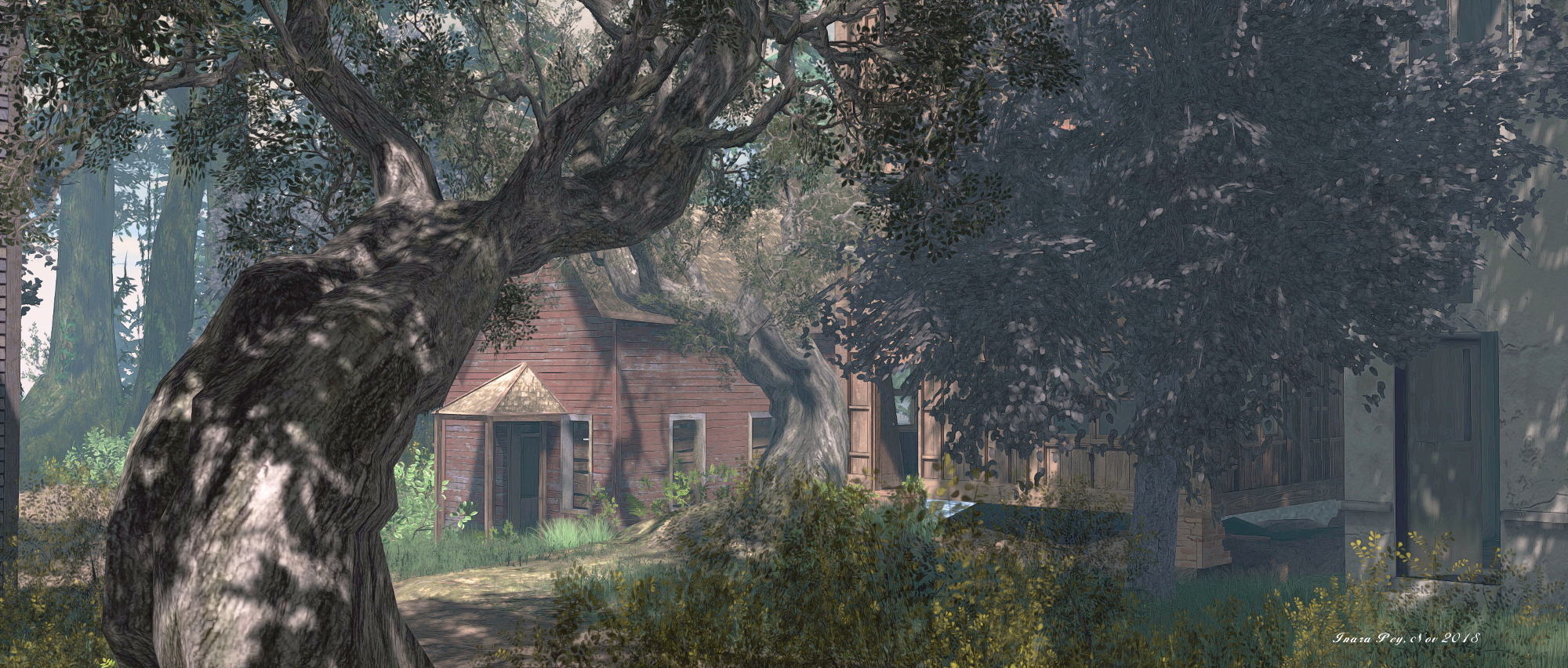
Lutz City; Inara Pey, November 2018, on FlickrLutz City – click any image for full size

Update: it appears the landing point had been temporarily reset to deliver people to the events venue mentioned into this article for a live event. The default landing point is in fact the railway station on the south side of the city.

Lutz City, which opened its doors on November 16th, 2018, is the latest is a series of region designs by Luis Lockjaw, another of Second Life’s superb creators of regions and setting that capture the imagination and sit within the mind’s eye long after a visit. In in, he continues his tradition of presenting captivating settings under his Templemore banner.

I first encountered Luis’ work through Hesperia of Templemore, although sadly, I never got to blog about it – although I did get as far as writing about its sister region the Isle of Mousai, also by Luis, and made sure I did not miss out on his Elysium City of Templemore (which you can read about here). Lutz City very much carries on many of the traditions seen within these previous builds, as Luis notes in his own description of the region:

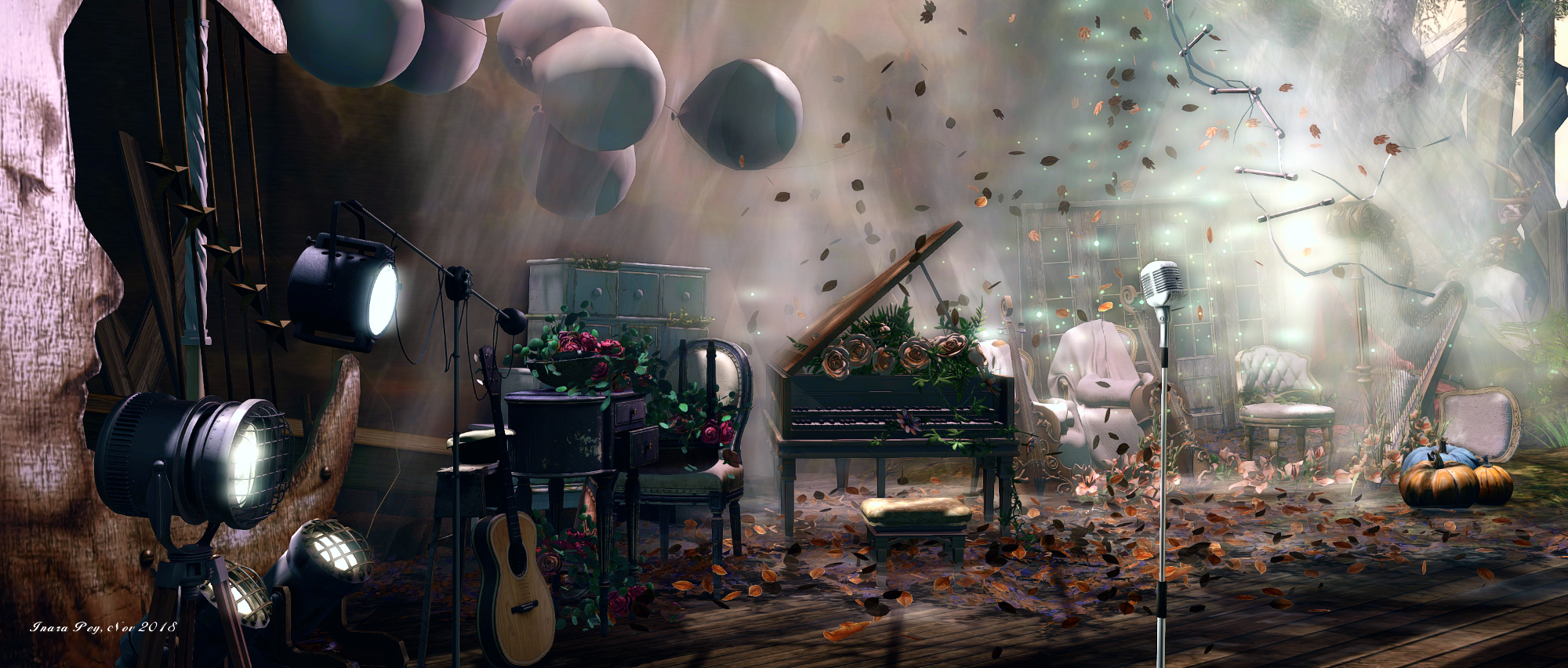
As a celebration of art, Lutz City continues the Templemore tradition of offering the greatest musical experiences. The live music venue features a grand stage where musicians become part of a living painting that reaches out to your very soul. Lutz City of Templemore isn’t just a sim, it’s home for your creative spirit.

Lutz City; Inara Pey, November 2018, on FlickrLutz City

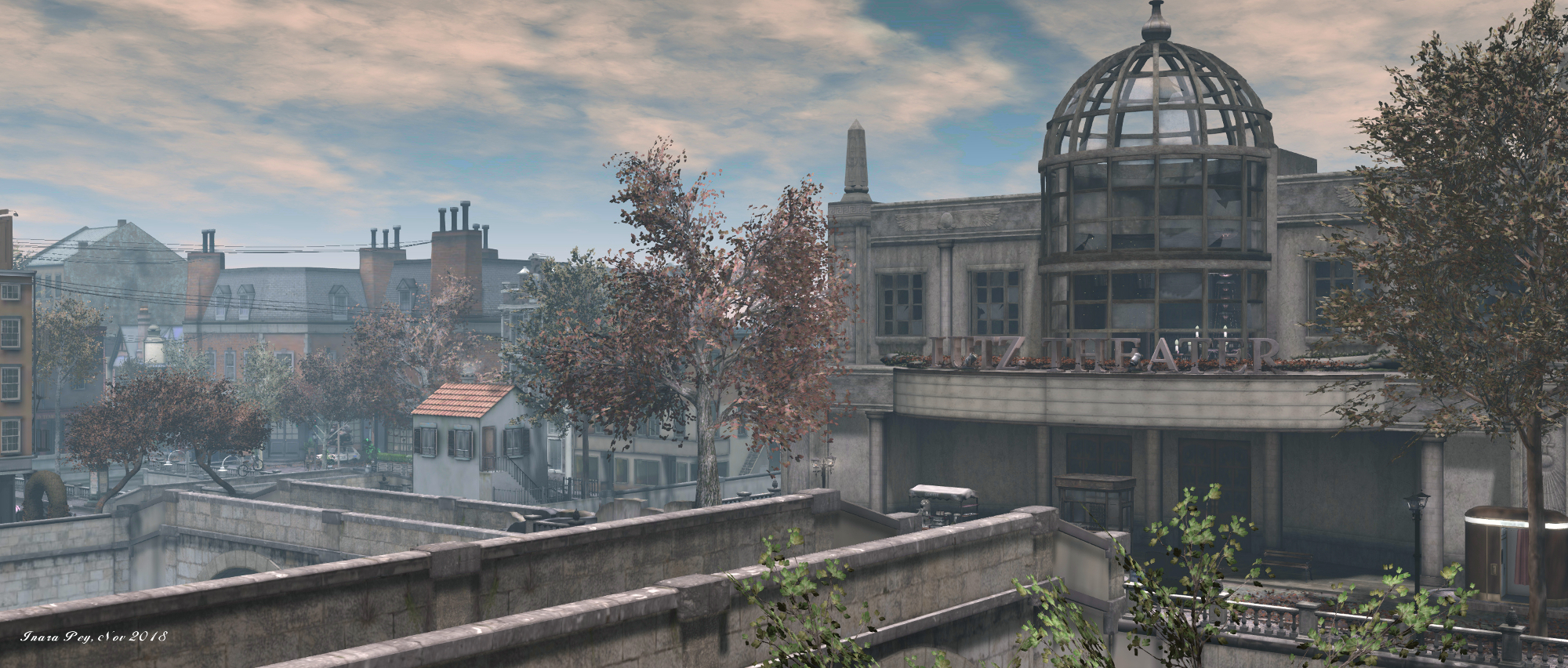
And it is with the musical element in mind that visitors arriving in the city find themselves in one of the major venues for the city, the Lutz Theatre, standing block-like on its own island on the west side of this magnificent Full region design. Just how magnificent a build it is only requires stepping out through the foyer of the theatre to the cobbled road outside.

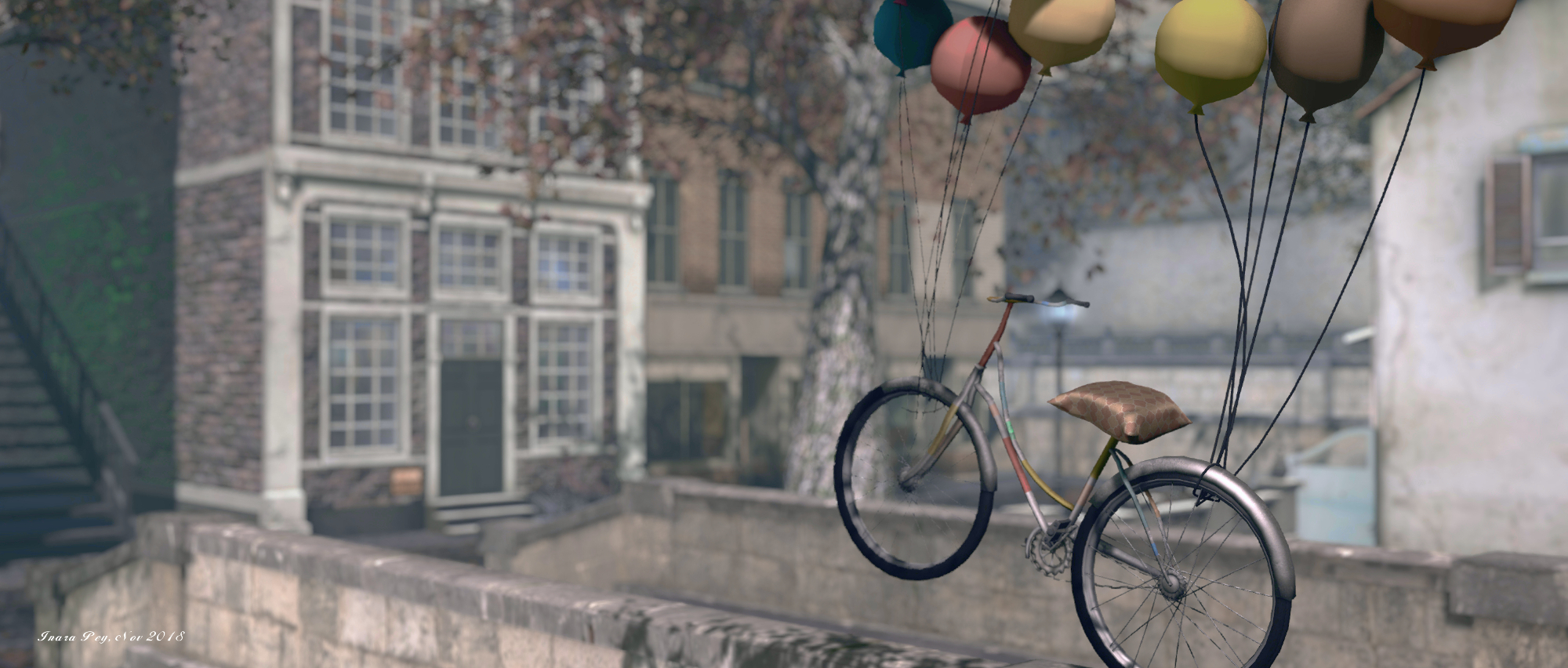
This is a place cut neatly into blocks by waterways that flow along brick-sided channels, the water passing under the bridges that connect them and occasionally through tunnels. Aiding them in the division of the city are the roads, sometimes running parallel to the canals, at others sitting at right angles to them, extending over the stone bridges to link distracts one to the next whilst also denoting their boundaries.

Lutz City; Inara Pey, November 2018, on FlickrLutz City

There is an air about the design of Lutz City that gives it very much a feeling of being a place, part of something larger, but invisible, lying beyond the high mountain peaks that surround it. While separated from these by surrounding water, Luis has cleverly made the city feel a part of the mountains through the use of an off-sum tunnel and steel bridge that carries a railway track to the south side of the city, where a rural-looking halt waits to greet arriving trains while the tracks pass onward over a second steel bridge and vanish into yet another tunnel at the foot of the southern mountains. At the same time, the region has been cut to roughly match the three channels of open water dividing the mountains, giving the feel that the land on which the city stands has been as much formed by the action of water as the mountainside gorges.

There is also a wonderful sense of age and development imbued in Lutz City. Bracketed to the west and east by the massive forms of music venues, the central area has the feeling of evolving as a modern centre of commerce, art and music. a grand brick-built gateway facing the railway halt across the bridge lying between them. But to the north, the buildings are more mixed in age and style, some becoming more careworn and tumble-down until the paved road gives way to a rutted, dry dirt track running under trees and between purely wood-built houses, and shacks, all bar one of which have seen better days, time having moved on to the city’s newer stone and cement heart.

Lutz City; Inara Pey, November 2018, on FlickrLutz City

What I particularly like about Lutz City is the design lends itself to a sense that it has different neighbourhoods. These may be defined by the age or style of buildings within in (such as with the north side), or by the way they are divided by road and water channel. Not only does this give the design a feeling of being somewhat bigger than its 256 metres on a side, it also helps flesh out another aspect of the city Luis references in his description:

Beyond the iron wrought gates and stone sculptures that usher you past the brick archway lies Lutz City of Templemore. True to its name, you’ll find yourself immediately immersed in a whimsical world reminiscent of Peter Pan and Hogwarts. But Lutz City goes beyond that. Here your imagination can be engaged in a place and time that defies the limitations of such concepts. Every detail of Lutz City tells a story, every building creates a unique experience.

Lutz City; Inara Pey, November 2018, on FlickrLutz City

Caught in the colours of autumn and by default under a dusty evening sky, the setting also has a certain atmosphere about it for the weaving of stories. But, if I’m honest, I found it came more to life under a brighter sky – hence the pictures here – which breathed more life into the narratives the buildings suggested as I walked and cammed by them, and helped bring their voices more to the fore.

For those who enjoy photography, Lutz City has a huge amount to offer – including a Flickr group for sharing pictures with others. Those wishing to keep abreast of the music events in the region can do so by joining the in-world group – there is a joiner board within the landing point theatre, together with a tip board where appreciation can be shown for the region and assistance given towards its upkeep.

Lutz City; Inara Pey, November 2018, on FlickrLutz City

Seeing the Templemore tradition return to Second Life is a treat; my thanks to Shakespeare for passing word to me that Luis has been building again, and thanks as well to Luis for once again sharing his vision and passion with us.

SLurl Details

  • Lutz City (Templemore City, rated: Moderate)

A touch of Frost (and more) in Second Life

The Vordun: Frost: Visions of Winter

Wintertime in the northern hemisphere is when thoughts turn to snow and holidays, and within Second Life, this is no exception. Many regions take on a winter look and feel, the ground, trees and buildings caught under white blankets or dusted with snow, even as more often falls from the sky. For many in the physical world, despite the cold, it is a time of joy and for treks through virgin drifts of snow or – in the case of the younger at heart snow fairies, snowmen and sledges and sleighs.

Celebrating this time of year is not new; people have always found enjoyment with winter and the changes it brings to the world, and right now we can witness this for ourselves at a recently opened exhibition of art at The Vordun Museum and Gallery, created and curated by Jake Vordun.

Entitled Frost: Visions of Winter, it offers selected reproductions of classical pieces of art spanning 500 years, celebrating winter in all its glory, as the introductory notes explain:

In this exhibition, you will see twenty painting, drawings, prints and manuscripts depicting different aspects of the season. Be it landscapes, winter costumes or feasts by the fire, these pieces will show you glimpses of winter from the  15th century to the 20th.

The Vordun: Frost: Visions of Winter

The Vordun has a reputation – thoroughly deserved – for bringing high-quality reproductions of physical world art, properly licensed, into Second Life. This exhibition, located in the gallery’s rearmost hall, is no exception. Including paintings and drawings by the likes of Francesc Masriera i Manovens, Jacob van Ruisdael, Sebastiaan Vrancx, Claude Monet,  Jean-Baptiste Pater, Francis Wheatley and Hendrick Avercamp, this might at first be considered a wholly European view of winter – but not so; America is represented via James Abbott McNeill Whistler, as is China through the ink on paper Winter Forest in Flying Snow by Wen Zhengming, with Scandinavian artists also being present among the images.

I really cannot stress the quality of these pieces, which together with the environment in which they are set. As I noted when it first opened in July 2016, The Vordun beautifully recreates the experience of visiting a physical world art gallery – so much so that it one of the those select Second Life experiences that leaves me regretting we cannot have fully immersive virtual reality in Second Life. Certainly, for those building in Sansar, it is perhaps the model of how to plan and build a virtual gallery space.

The Vordun: Frost: Visions of Winter

This is not only because of the look and feel of The Vordun, but in the way Jake has developed a visit as a Second Life experience in the technical sense of the word, presenting visitors with the opportunity to view the works in the main hall exhibition of European Masters: 300 Years of Painting as immersively as possible, via scripted camera control and the use of both voice and text to impart information on each piece on display.

Sadly, this aspect of The Vordun doesn’t extend into Frost: Visions of Winter, but that is not to say the latter is lessened in any way; rather the reverse. Frost stands as a captivating exhibition in its own right, while for those who haven’t visited The Vordun before, the presentation of European Masters: 300 Years of Painting, makes a visit to the gallery doubly worthwhile – and also gives the opportunity to appreciate two other long-running exhibitions there: Pictures of the Floating World and Dutch Proverbs (both of which you can read about here), which are as equally stunning as Frost and European Masters, and sample Postcrossing, a celebration of the website of the same name and the use of postcards to bring half a million people around the world a little closer together.

The Vordun: Frost: Visions of Winter

SLurl Details