The latest exhibition at Club LA and Gallery, curated by Fuyuko ‘冬子’ Amano (Wintergeist) opened on Sunday, February 10th, featuring the art of Dodo (DodoAhanu).
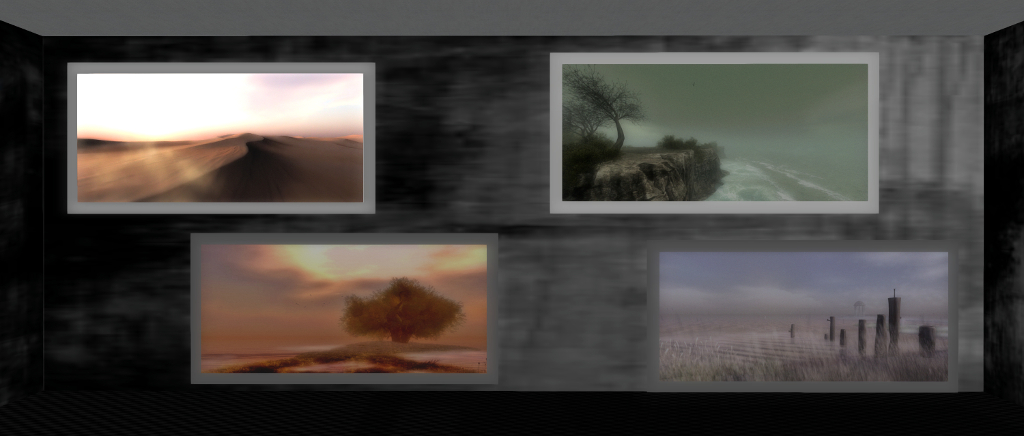
Located on the gallery’s ground floor, the exhibit presents 18 of Dodo’s images that span his photography from 2013 through to 2018, offering a mix of landscape, art and avatar studies, making this exhibition an engaging introduction to Dado’s work and evolving style for those of us previously unfamiliar with his work.
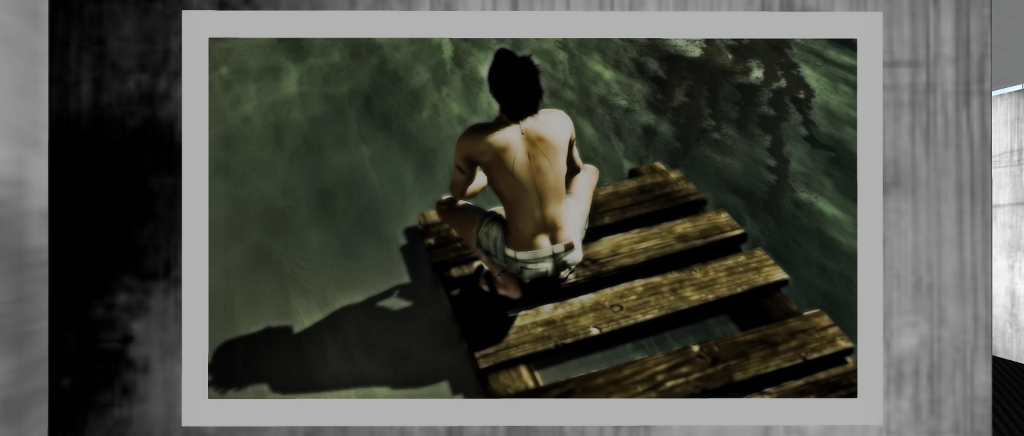
Dodo’s landscapes, particularly those presented in a panoramic format, are sweeping in their extent. There is also a quality about some of them that suggests while they were taken within Second Life, they are somehow a window onto the physical world. Meanwhile, his avatar studies include two self portraits, although it is Silent Moment that particularly caught my eye; it has that richness of narrative I so enjoy finding in images.
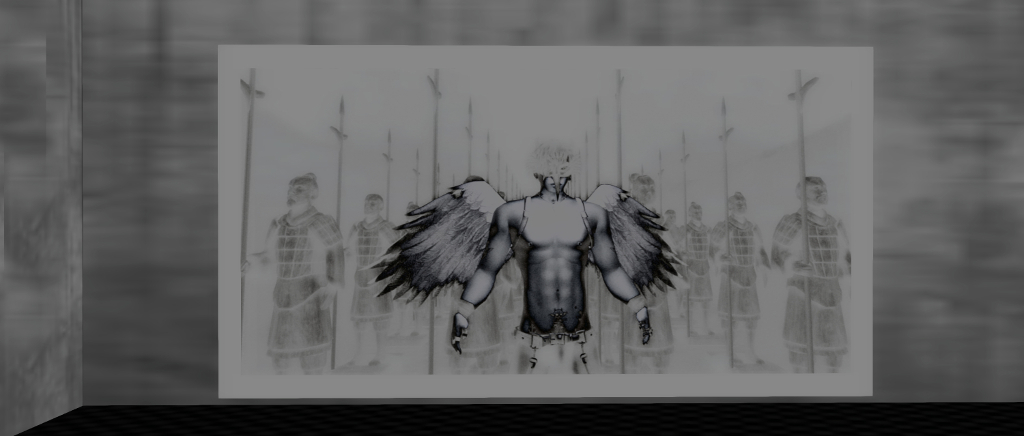
However, it is in two of the “earliest” pieces in the exhibition (“earliest” in that they date back to 2013 and 2014 respectively) that particularly captivated me: PRAVDA dark couture and The Ballet I. Both are very different to one another and to the other pieces presented. The latter demonstrates a wonder use of projected light and shadow to create an image, while the former is simply marvellous in the use of tone, light, and processing to create the impression of a drawing straight from the artist’s hands.
Update: in keeping with Serene and Jade’s approach to having their region designs open for approximately a month, Chesapeake Bay has now closed and the host region is under private holding. SLurls have therefore been removed from this article.
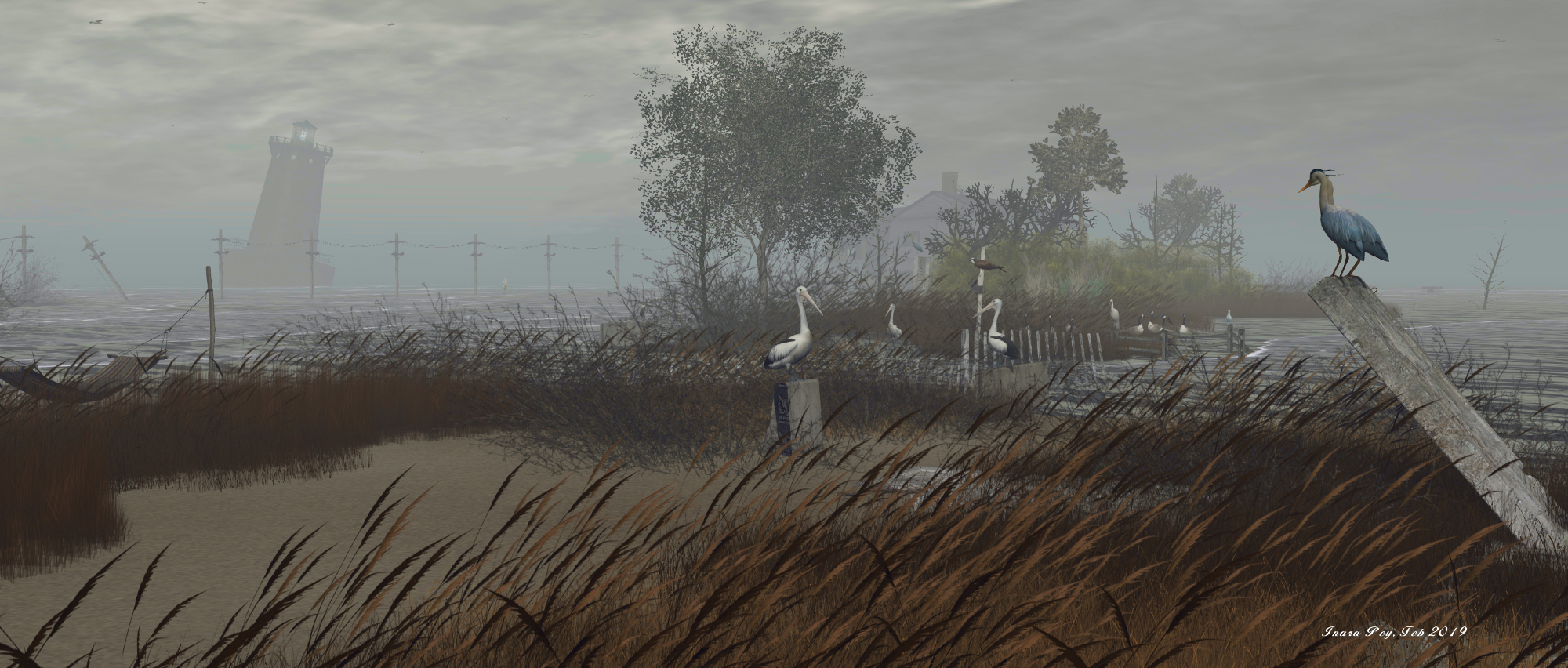
Serene Footman and Jade Koltai have opened their February region design – called Chesapeake Bay – and, given it is by two people who always produce the must stunning vistas in Second Life, it is utterly captivating.
Our latest sim is located in the Chesapeake Bay, an estuary in the US states of Maryland and Virginia. The Chesapeake Islands are famous for the simple reason that they disappeared. Built on clay and silt, over the course of a century the islands were gradually submerged as a result of erosion exacerbated by sea level rise. They were the islands that sank.
For the build, Jade and Serene have focused on two islands in particular: Holland Island and Sharps Island, with a particular focus on the former while blending features of both into a unique setting and memorial to both with all of the attention to detail and care in design that make their work among the best to be found in Second Life. As with all of their regions, this design carries within it a story – or rather stories. The first – and primary – story is that of the attempts of a husband and wife team to save Holland Island and the last remaining house standing upon it, all that remained of a place once home to over 400 watermen and farmers, and their families.
Stephen White, a waterman and Methodist Minister, first visited Holland Island when he was a boy. Years later, he was visiting one of the island’s three cemeteries when he saw an inscription on one of them.
The discovery inspired Stephen White to embark on a campaign to stop Holland Island from disappearing into the sea. He purchased the island for $70,000, and set up the Holland Island Preservation Foundation. For fifteen years, Stephen and his wife waged their own battle against the sea. Spending $150,000, they built wooden breakwaters, laid sandbags and carried 23 tons of rocks to the island and dropped them at the shoreline.
– Serene Footman, describing Stephen White’s attempt to save Holland Island
Chesapeake Bay – click any image for full size
The waters of the Chesapeake were not to be held back, however, and in 2010 that last house, originally built in 1888, collapsed, forcing the Whites to admit defeat and sell the island. The remnants of that last house was completely lost to the waters of the bay in 2012.
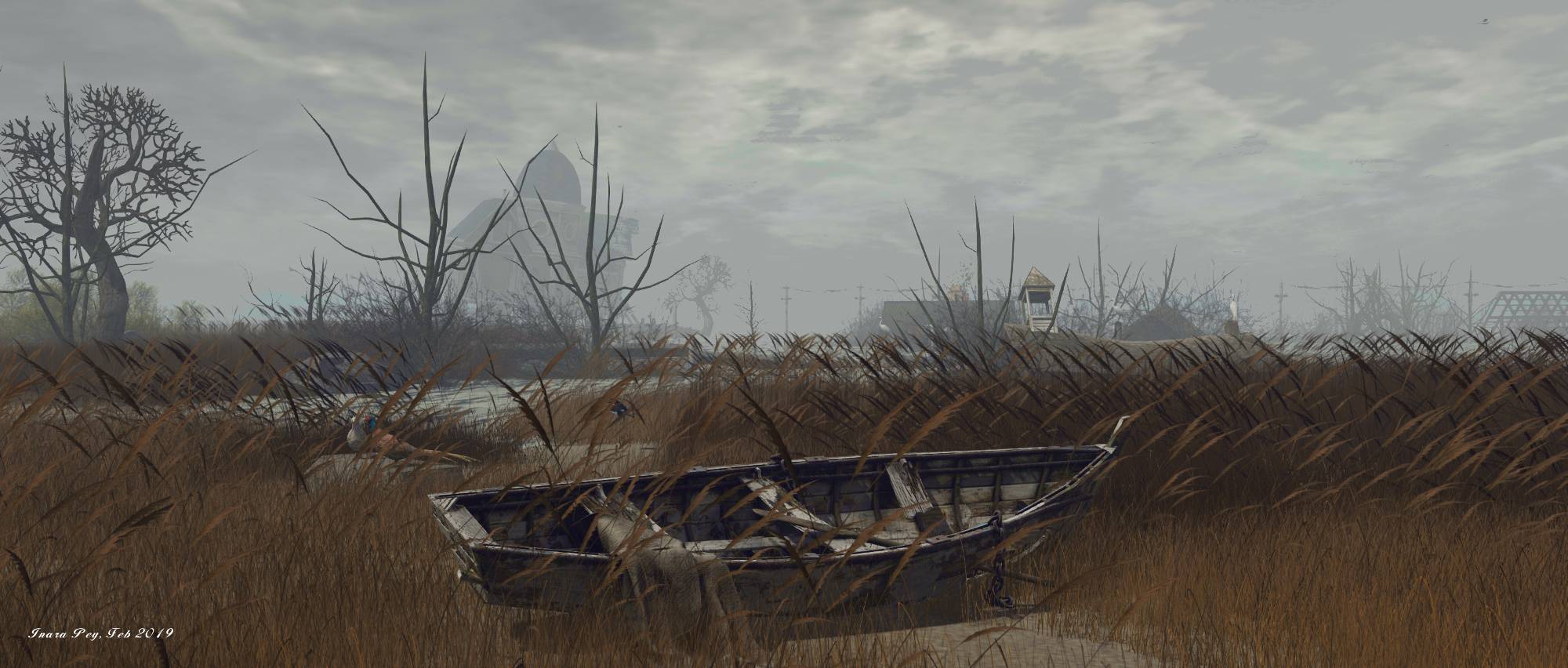
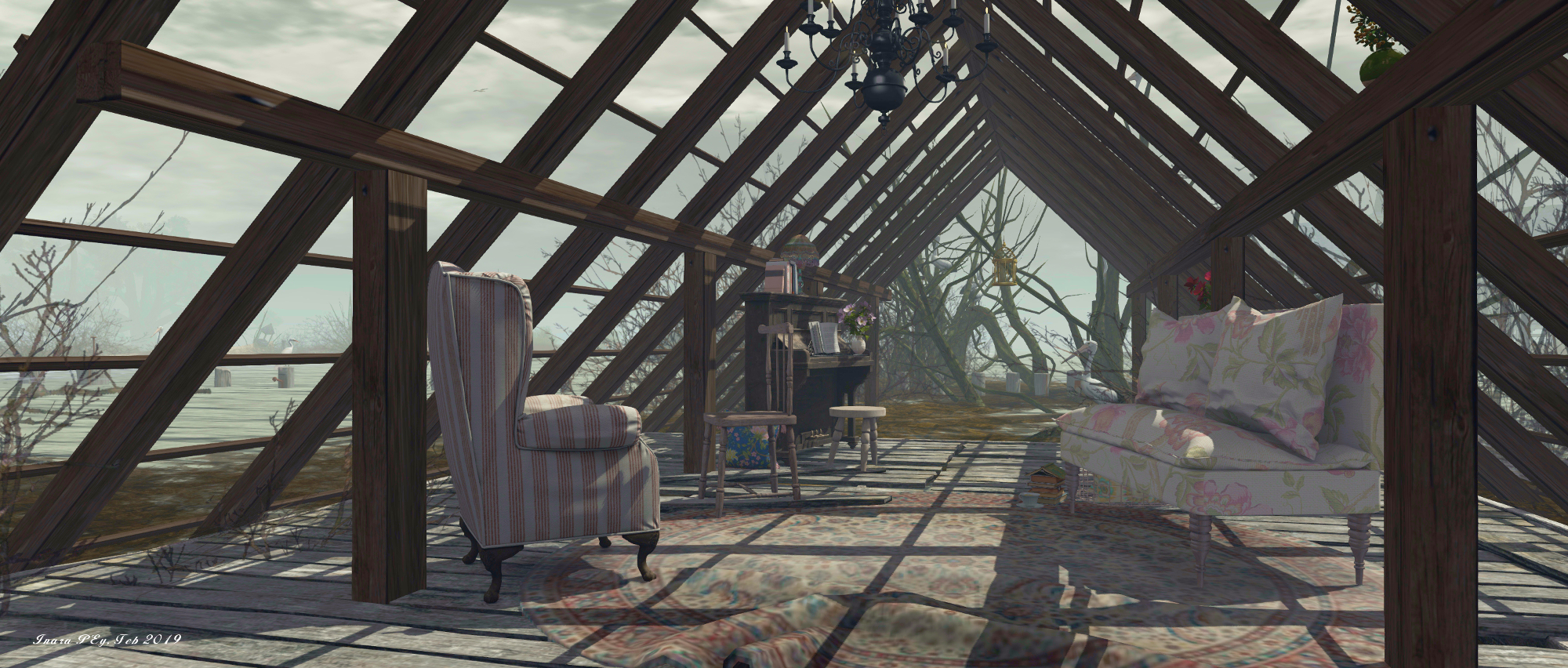
Hoewever, for this incarnation and in recognition of the Whites’ attempts, the house remains, much as it appeared in 2010 after the initial collapse. It sits on the west side of the island, the carcasses of the vehicles used to try to shore up the land around it slowly drowning under the rising waters, watched over by sea birds and waterfowl.
Chesapeake Bay – click any image for full size
North of the Last House is an automated lighthouse sitting on a platform, marking the second story commemorated by the region: that of lighthouse keeper Ulman Owens. The light sits atop a platform once home to the Holland Island Bar Lighthouse, also built in 1888, and manned through until 1960, when the automated tower replaced it on the platform. In 1931, keeper Owens was found dead in the lighthouse kitchen amidst a scene of apparent violence, including a bloodied butcher’s knife close to the body and bloody stains within the room, although the body itself showed no significant wounds.
Initially, his death was ruled the result of a fit, rather than foul play. But subsequent investigations and an autopsy suggested Owens may have been murdered by local rum runners or that, given he had at least two affairs that caused the women involved to leave their husbands, he might have been set upon by an angry husband. However, as the autopsy revealed Owens had heart disease, the ruling of accidental death was held, and the case closed.
Chesapeake Bay – click any image for full size
Sharps Island, although some distance from Holland Island in the physical world, is represented in the region by a reproduction of the “leaning tower” of the (deactivated) Sharps Island Light, and the ruins of a second large house. The latter represents the popular (if short-lived, due to the island’s continuing erosion) hotel built by Miller R. Creighton in the late nineteenth century. Sharps Island itself finally vanished under the waves in 1960.
Today, Holland Island is marshlands and sandbars, home to a great many varieties of birds and waterfowl, and Serene and Jade have captured this within their design, which is finished with an atmospheric windlight and superb sound scape.
As with all of Jade and Serene’s builds, Chesapeake Bay won’t be around forever, so do make a point of visiting; you won’t be disappointed. Be sure, as well, to read the excellent piece on the region and its inspiration on the Furillen blog.
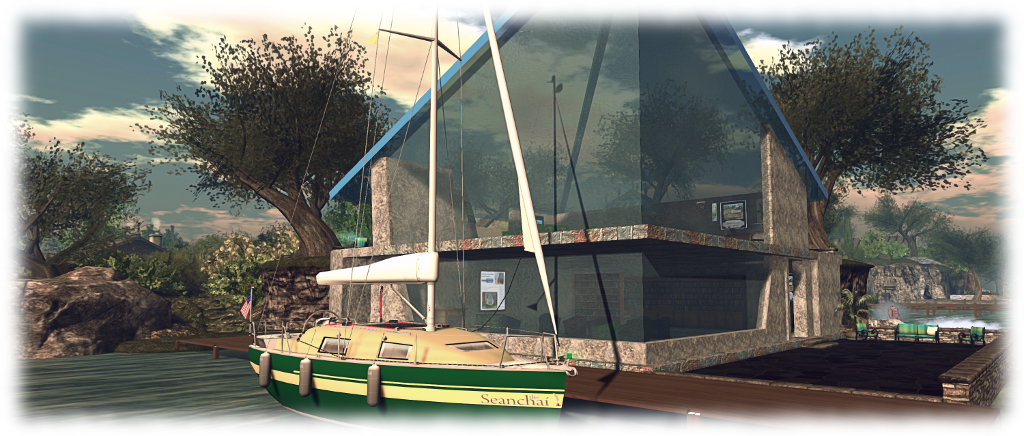
It’s time to highlight another week of storytelling in Voice by the staff and volunteers at the Seanchai Library. As always, all times SLT, and events are held at the Library’s home at Holly Kai Park, unless otherwise indicated.
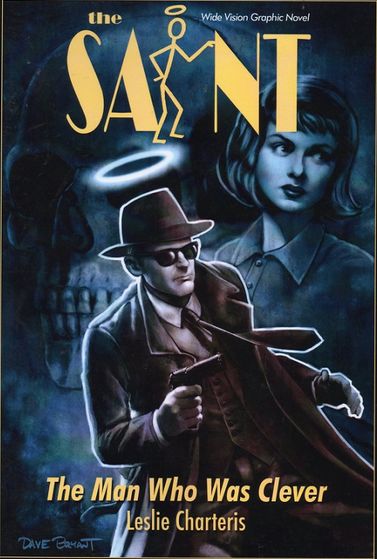
Sunday, February 10th, 13:30: Tea Time with The Saint
Adventure came to him not so much because he sought it as because he brazenly expected it. He believed that life was full of adventure, and he went forward in full blaze and surge of that believe…
So reads The Man Who Was Clever, billed as the first graphic novel about Simon Templar, aka The Saint, aka The Robin Hood of Crime, when describing the man himself. The creation of Leslie Charteris, Templar first arrived in literature in 1928, his career in print spanning almost six decades, with later books and stories being written in collaboration with other writers.
Templar’s career in other media started in 1938 with the release of the motion picture The Saint in New York, and in radio in 1940 – with none other than Vincent Price most famously providing him with a voice from 1947 to 1951, on no fewer than three US radio networks.
However, it is probably as personified by Roger Moore on television between 1962 and 1969 that Simon Templar is familiar to most. This series actually added to the library of The Saint’s literature, with a number of original scripts for the series – with Charteris’ approval – becoming short stories using his name as the author.
The Man Who Was Clever first appeared in 1930 as a part of the first collection of short stories about The Saint published under the title Enter The Saint. In it, Templar, the man who robs from the evil and heartless rich, and gives to the wronged and deserving poor, entered the world of graphic novels thanks to a story adaptation by Mark Ellis with David Bryant serving as illustrator. It marks the start of a new series of Tea Time adventures for Seanchai Library, with David Abbot, Corwyn Allen, Kayden Oconnell, and Caledonia Skytower.
Monday, February 11th 19:00: Hanta Yo: An American Saga
Gyro Muggins reads Ruth Beebe Hill’s extraordinary novel that is either loved or hated – and has certainly proven controversial since its first publication.
Lyrically written, the story is, at its core, a multi-generational saga follows the lives of two Indian families, members of the Mahto band of the Teton Sioux, before and during their first contact with the white man and his “manifest destiny.” Within its sweeping story, Hill attempted to fashion an epic, Native American version of Alex Haley’s Roots.
Allegedly based in part on writings translated from a Lakota Sioux winter account translated by a First Nation Sioux, the story is certainly cohesive and vivid. For those unfamiliar with the lives and rituals of the Plains Indians of North America, it makes for a fascinating and enlightening read.
However, to some in the Lakota, the book is seen as demeaning and misrepresentative – a fact Hill herself finds baffling. Whilst she fully acknowledges the story is a “documented novel” – a fictional story based on actual events – she also notes that she spent some 20 or more years researching Hanta Yo and carrying out hundreds of interviews with representatives of the Sioux, Kiowa, Omaha, Cheyenne, and Navajo tribes, including allowing them access to her manuscript to verify the historical elements from their standpoint.
Event today, in the year of the 40th anniversary since its first publication, Hanta Yo divides opinions. So why not settle down with Gyro to hear the tale first hand?
Tuesday, February 12th 19:00: Love in Music and Poetry
With Ktadhn Vesuvino and Caledonia Skytower, on stream and in voice.
Wednesday, February 13th 19:00: The Jennifer Morgue
Corwyn Allen reads the second volume in the Laundry Files by Charles Stross.
Bob Howard is an IT expert and occasional field agent for the Laundry, the branch of Her Majesty’s Secret Service that deals with occult threats. In this second outing, Bob Howard finds himself dragged into the machinations and conspiracies of megalomaniac multi-billionaire Ellis Billington, The Black Chamber and The Laundry…
Dressed in a tuxedo (what else for a globe-trotting British Secret Agent?) and sent to the Caribbean, Bob must infiltrate Billington’s inner circle via his luxurious yacht. His mission? Prevent the Billington from violating a treaty that will bring down the wrath of an ancient underwater race upon humanity’s head.
Offering a wonderful pastiche on both the world of James Bond and a wonderful mimicking of Ian Fleming’s style of writing, Stross produces a novel that also evokes Lovecraftian overtones that is delightfully entertaining to read. In true Bond style, Bob is (reluctantly) partnered with an American agent – in this case a stunningly beautiful woman who also just happens to be a soul-sucking succubus from another dimension. Which, being the case, marks Bob’s mission somewhat differently to those of Bond: not only must he stop the bad guys and come through this at best shaken, he must totally avoid being stirred towards getting the girl…
Thursday, February 14th:
15:00: Seanchai Library at One Billion Rising
Stories and poems of women in our world – see the Seanchai Blog on the day for the SLurl.
19:00: The midnight Embrace
With Shandon Loring. Also in Kitely grid.kitely.com:8002:SEANCHAI..
Storie’s Helendale (GlitterPrincess Destiny) has a reputation for producing thought-provoking installations that often combine narrative and art. Such is the case with Kiss Like a Blow, which opened at the Black Label Exhibitions Centre on Saturday, February 9th, 2019.
Reaching the installation is a two-step process: take the teleport sphere from the gallery’s landing area up to the introductory area, where some essential information on the installation can be found – and should be read. Once done, a second teleport sphere will carry you up to the installation proper.
This project was done in regards to No Violence by 2lei … Only I chose to do my own Story, my way. A strange love story, somewhat – twisted. Is this your story?
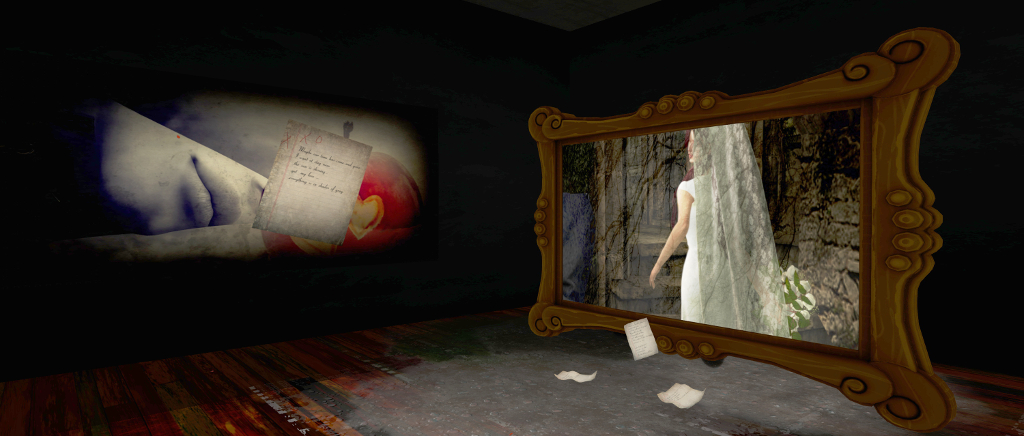
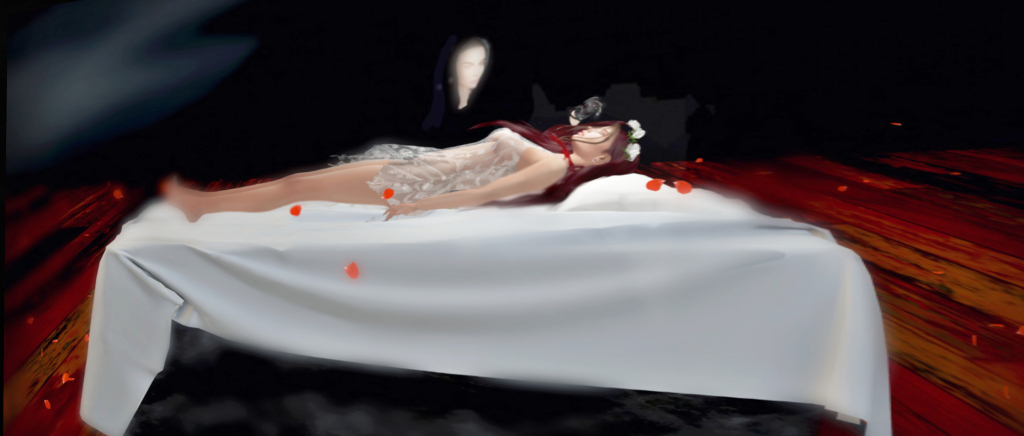
This takes the form of a house sitting within a winter setting – and given the focus of the installation, I would say this winter setting is intentional, as the coldness reflects the core of the story. Within this house are five rooms and six diaries. On the walls of each of the rooms are pictures that tell the story of what should be the happiest day in the lives of two people in love, a story reflected in the diaries.
The latter are to be found throughout the house, at least one per room. Some are hidden in plain sight, others will need to be found. The story they reveal is written from the perspective of the female half of the couple. As Storie’s hints, this is not the usual tale of a couple in love – but it is a story thousands of women will recognise, and one so unfortunately often the subject of news reports.
At 2lei and One Billion Rising (which will once again be taking place in Second Life on Thursday, 14th February 2019), the vast majority of violence against women and girl is of a domestic nature perpetrated by loved one, be they a spouse, a partner, a parent or a relative.
Women caught in these situations are often unable to break out of a cycle of love and violence. It is a harrowing, heartbreaking situation; one in which physical blows are seen by the victim the equivalent of kisses, and manipulation viewed as an expression of love; where the emotional need for love and affection overrules the instinct for self-preservation.
All of this is reflected within Kiss Like A Blow, offered both as a means to bring the plight of so many women into the light – and perhaps a means of holding a mirror to those who might be all too familiar with the story through their own lives, and by doing so, perhaps encourage them take steps to end their own cycle. Hence Storie’s comment: Is this your story?
It’s a dark subject, but one handled with care and concern for the subject by Storie’s. The narrative is presented in blank verse, the images intentionally stepped away from pictures of overt violence – something that makes Kiss Like A Blow a poignant installation.
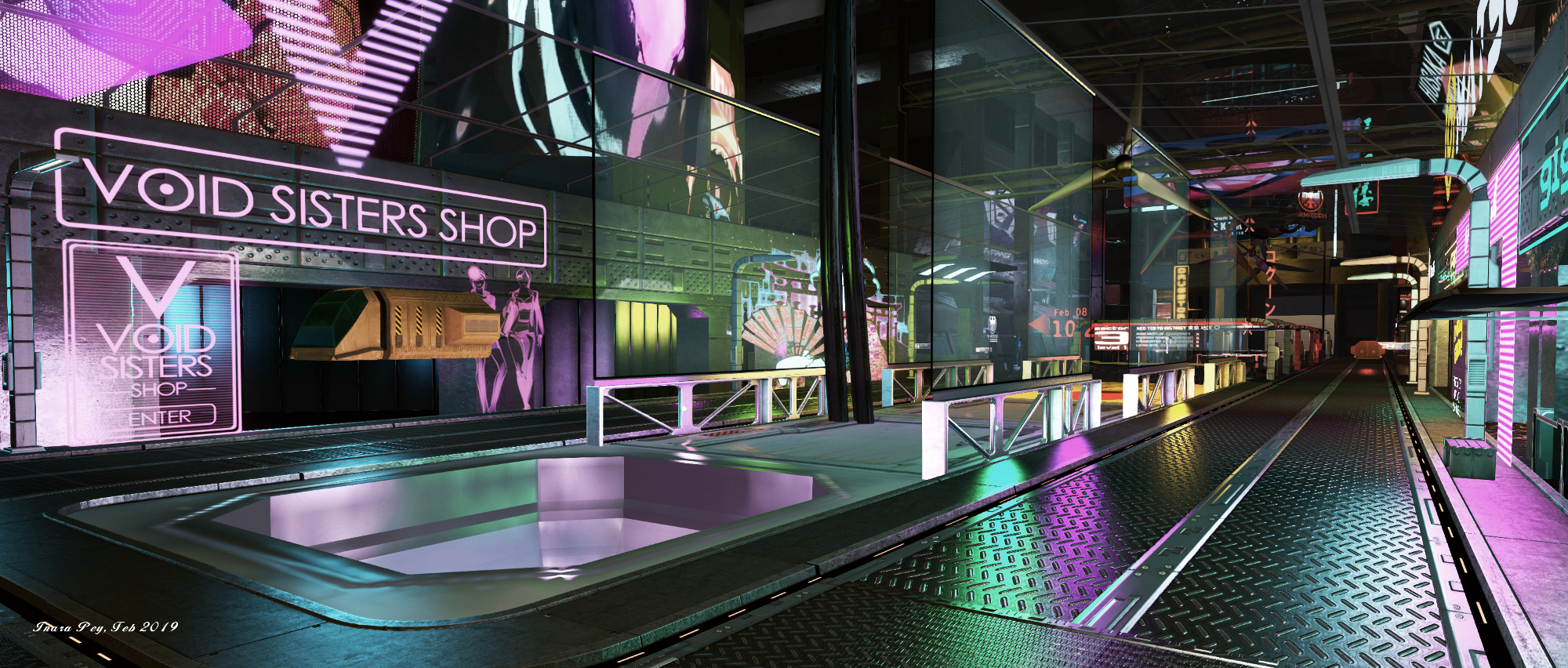
In August 2017, Caitlyn and I visited Cocoon, a futuristic, cyberpunk-ish role-play environment established in 2016 – see A cyberpunk Cocoon in Second Life for more. Since then, the entire setting has relocated and has undergone an extensive update. While I didn’t document the previous simulator type on which Cocoon was placed, the new one is a Full region, utilising the added full region land capacity bonus.
Alongside the move, the backstory for the environment has also been updated, moving the clock forward some two years from the August 2017 setting:
It is the year 2489. What’s left of Earth is a by-product of the things that went wrong there. The weapons unleashed in the Transcendence War transformed the surface into a blighted wasteland and forced the refugee remnants skywards, first to floating cities and arcologies in Earth’s upper atmosphere, then further out, to orbital colonies and settlements throughout the solar system.
Cocoon is one of those orbital facilities, an artificial asteroid owned, operated and governed by the Cocoon Corporation. Its primary function is that of a commerce hub, and – if I might borrow from Babylon 5 (one of my favourite Sci-Fi shows) and re-phrase it a little:
It’s a port of call; a home away from home for business men and women, hustlers, entrepreneurs, freighter crews, smugglers, gangs, and wanderers, all alone in the night…
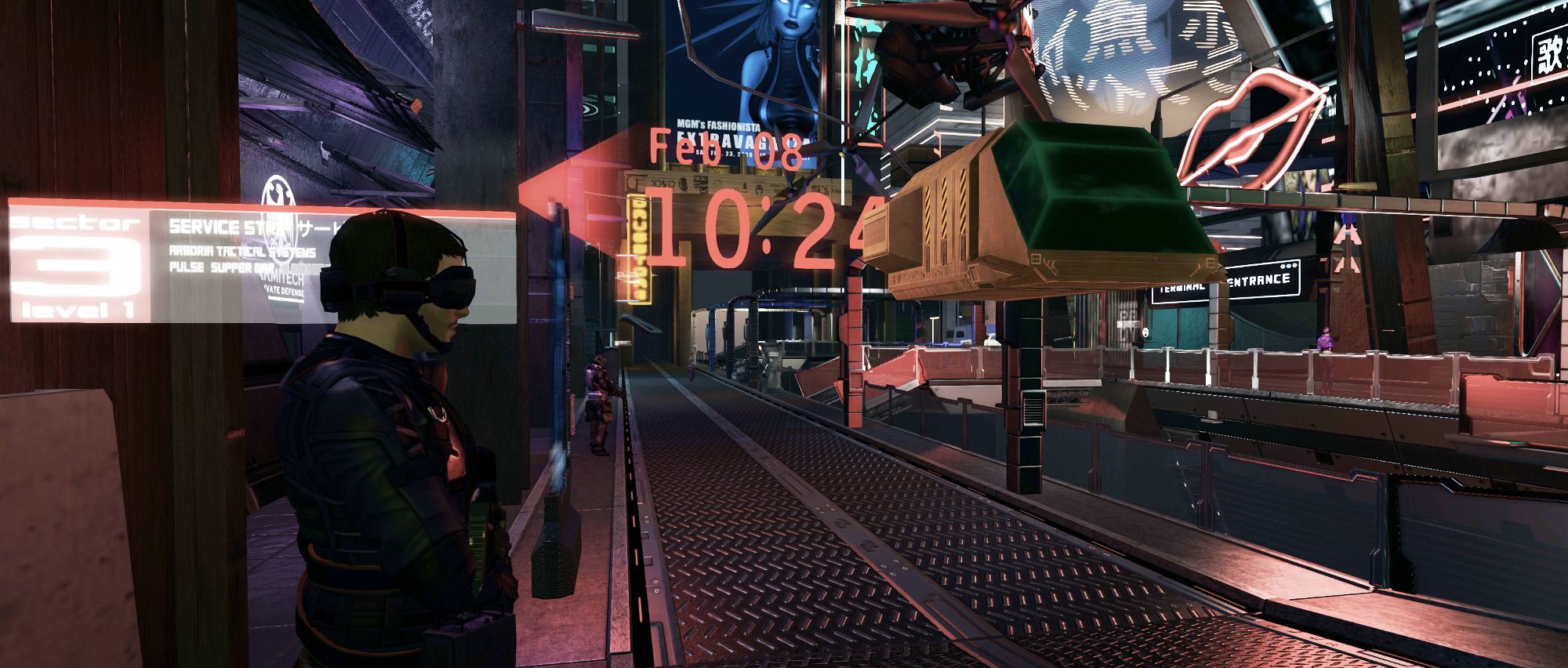
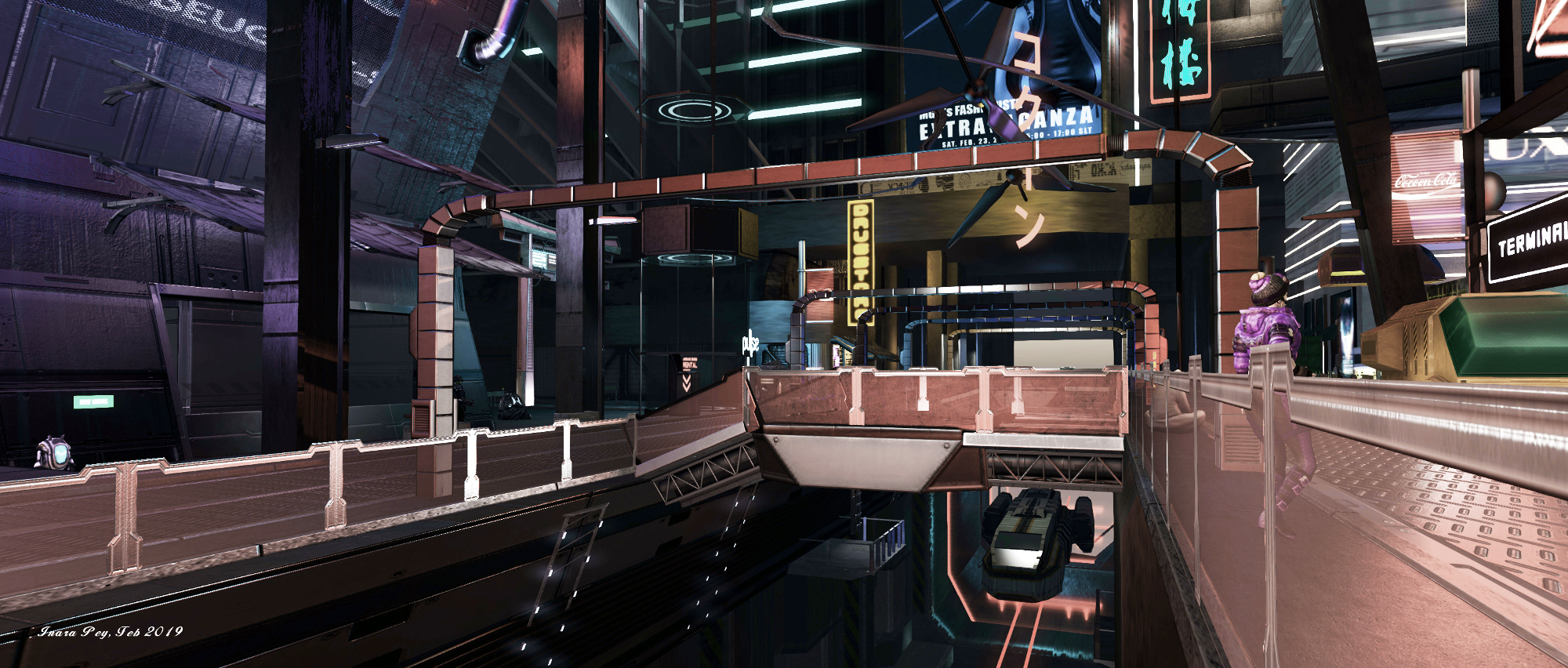
The station itself appears to have been greatly expanded on as well, although many of the locations present from the last iteration we visited remain – such as the walks visitors are delivered to from the main landing point / information area (be sure to collect and wear your OOC visitor tag if just visiting), the Pulse Bar, the Luxxon Hotel, and the extensive road network which Cocoon group members can be ride via bike. However, the overall sprawl of the asteroid city appears to have been extended.
This makes, as I noted when previously writing about the setting, Coccon feel much more of a place – walking the streets with their automated vehicles and interactive non-player character (NPCs) – just touch them to engage with them via a mix of local chat and dialogue menu options – it is easy to become disoriented. Thus, just like any newcomer to a strange environment, you have to spend time gaining familiarity with the city and its various sectors.
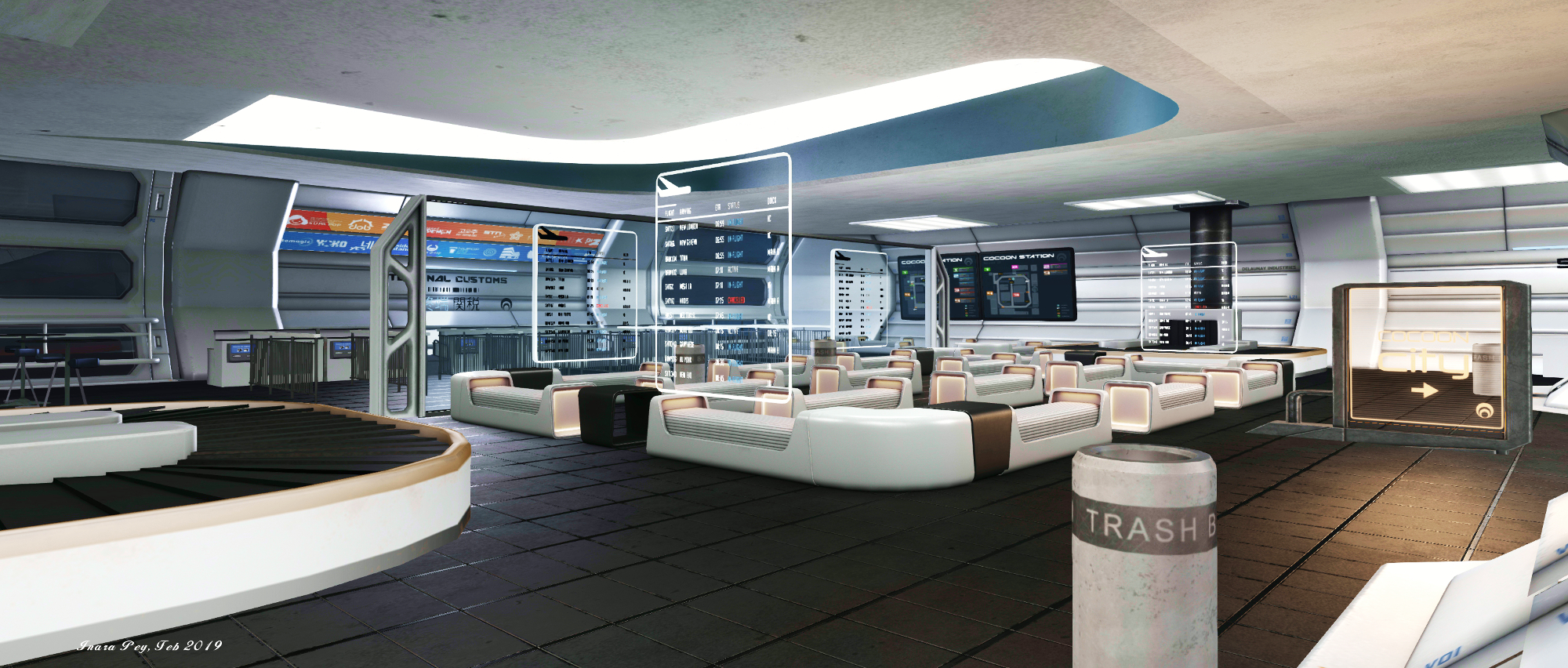
It might be a case of mis-remembering, but the city also seem to have far more depth in a literal sense, levels being more stacked one atop the other. This again adds to the feeling this is an entirely artificial construct. In particular, the main terminal building seemed to be much larger and more multi-level; finding your way down to the shuttle teleporter to reach Earth can be a little bewildering, for example, and I don’t recall that from our last visit.
Teleporters are also provided in the form of The Fifth Element style flying taxis. These are either parked on various platforms or parking bays, or can be summoned via yellow taxi call boards. Just select your desired sector and destination in that sector. Within various buildings are elevators. These may operate as actual elevators, as per the one at Pulse, or as teleporters.
One of the aspects of Cocoon I’ve always liked is this blending of influences. There’s the echo of The Fifth Element in the taxis, sense of Blade Runner within Sector 2’s residential strip and within the advertising boards and signs, and there are the Anime reflections throughout. There’s even a slight whiff of the Yorktown star base from Star Trek Beyond with the freighters moving directly below the building and walkways of Level 1.
Again, as I noted last time. this doesn’t make Cocoon in any way derivative, but rather a unique blending of styles and approaches that simply work. And while the city was not quite as active during our more recent visits as it was in August 2017, it still offers an attractive – a pull if you will.
Nor is this all. As Ellie (Mii1a), the prime mover behind Cocoon informed me on our first return visit, a new Lunar setting is being added to the region as a further destination alongside of Cocoon and the remnants of Earth below.
With full information on role-play and the setting available on the Cocoon website as well as at the landing point, Cocoon remains an intriguing place to visit.
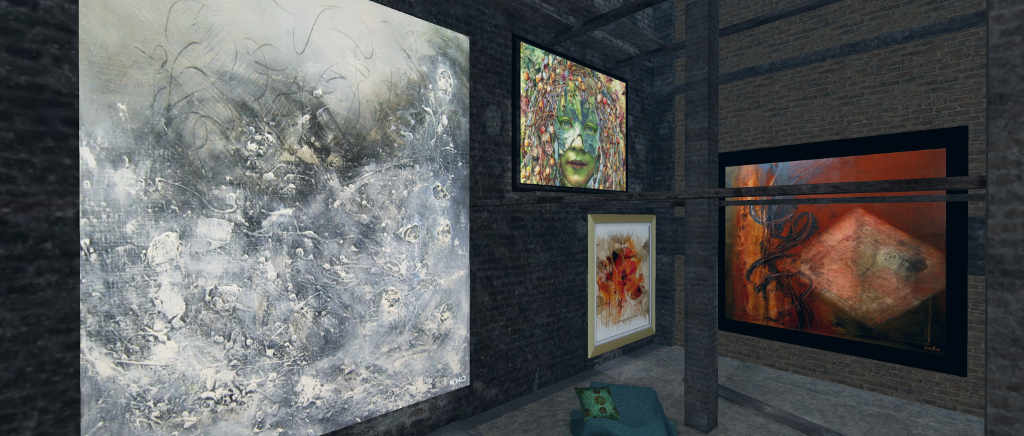
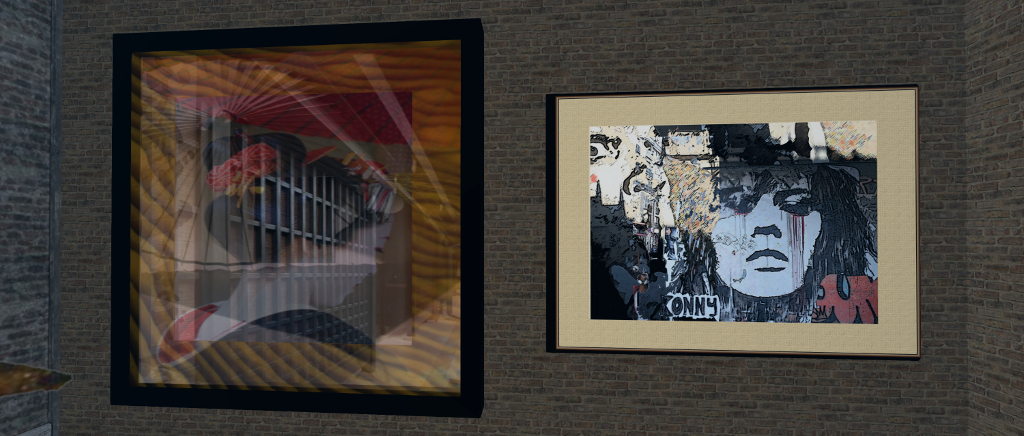
The Art Collector: Ieko Catnap (l and far r), Tigre Milena, and Charles Hera
The Art Collector is the name of Kayly Iali modest gallery of art she has collected in-world over the time she has been engaged in Second Life.
Located on a cosy beach parcel, the gallery has recently been expanded underwater, with an annexe sited beneath the waves and under the sands of the beach itself, leaving only the cabana housing part of the exhibition visible to visitors on arrival. Access to the underwater section of the gallery is gained via a teleporter hidden within a group of three flagstones in the sands of the beach.
The work on display covers both physical world and SL art by a number of artists active in Second Life, including Silas Merlin, Tigre Milena, Ieko Catnip, Milly Sharple, Asmita Duranjaya, John Brianna, and Kayly herself, to name but a few.
The underwater element of the gallery is split into two parts: a wall courtyard and the ruins of what looks to have been a large industrial building, its walls still standing, but the glass of the windows and the tiles of the roof long gone. Art is displayed on both the walls of the courtyard (which also help point the way to the doorless entrance to the building) and within the building itself. Most of the images here are offered in a large format, allowing for detailed viewing.
From the beach, a second teleport offers a way up to a garden in the sky. There is no art offered there (or there wasn’t at the time of my visit), but it does offer a quite place to relax.