Lab Chat #3: May 6th, 2016 – Ebbe, Oz, Troy and Bento

Lab Chat LogoLab Chat is the name of the public Q&A series aimed at providing Second Life users with the opportunity to have their questions put to Lab management and personnel.

The first two sessions in the series took place in November 2015 and January 2016 respectively, with guest Ebbe Altberg, CEO of Linden Lab. Each event covered both Second Life and Project Sansar and saw Ebbe respond to questions selected from those put forward to a forum thread ahead of each event.

For those who missed the first two shows, you can catch up with them through my transcripts, which include audio from the events and are available below:

The third in the series has now been officially announced, and will once again feature Ebbe Altberg, who will this time be joined by Oz and Troy Linden. The 1-hour event will once again take place at the Linden Endowment for the Arts Theatre,  on Friday, May 6th, starting at 10:30 SLT.

About the Guests
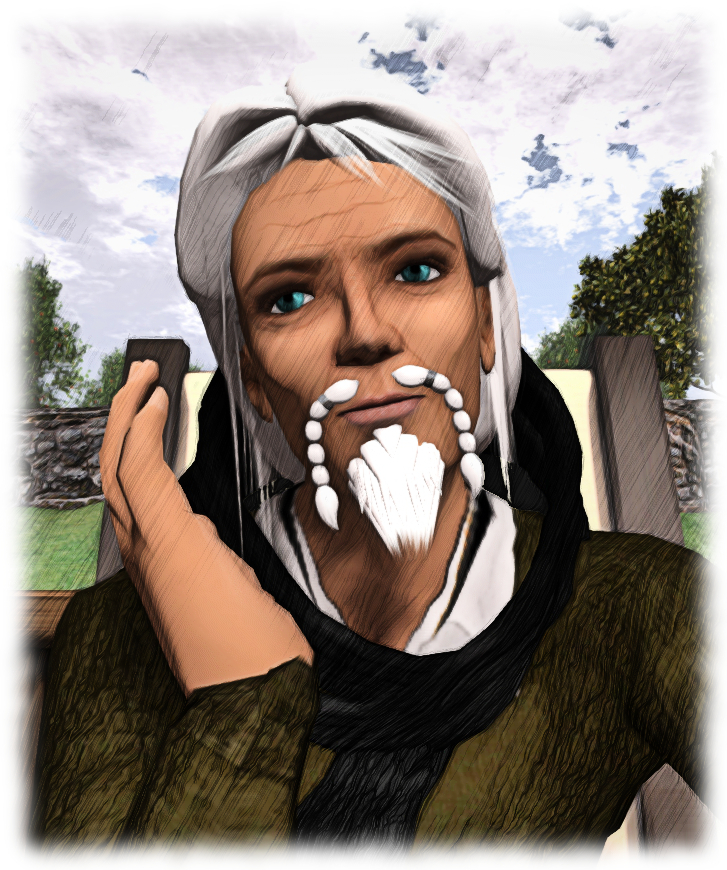
Oz Linden
Oz Linden – Director of Second Life Engineering

Oz Linden is the Director of Second Life Engineering at Linden Lab, and is perhaps most noted for his involvement with viewer development, including contributions from the open-source community and TPVs. He oversees almost all aspects of the technical development of Second Life, both viewer and server, and works closely with his engineers and developers to ensure Second Life continues to be enhanced.

Troy Linden  is a Senior Producer of Second Life at the Lab, and has been involved in bringing numerous high-profile projects within SL to fruition, and is currently engaged in Project Bento, the project to greatly extend the second Life avatar skeleton, which Oz’s team is currently working on together with members of the SL content creation community.

Both Oz and Troy will be at the Lab chat session to directly answer questions on Project Bento, the SL development process and roadmap and on Second Life features, while Ebbe will doubtless cover any questions related to Project Sansar, if they arise (! 🙂 ).

Present Your Questions

The Lab is inviting questions on these topics to be submitted to the official forum thread, no later than Friday, April 29th, 2016. A selection of questions will then be drawn from those submitted and put to Ebbe, Oz and Troy during the recording of the show and before the live audience at the theatre.

In difference to the first two Lab Chat events, the May 6th session will be recorded as audio only. I also hope to be at the event, and will have a full transcript of proceedings available through these pages (with audio extracts) as soon as possible after the show has finished recording.

And to help with Project Bento, here’s the Drax Files World Makers segment introducing the project.

New Social Islands helping new users get started in Second Life

The Experience Keys based Social Islands

In May 2015, I wrote about the Lab’s work in adding Experience keys to their Learning Islands, the first in-world destination for new users joining Second Life through the Lab’s sign-up process. At the time, Peter Gray, the Lab’s Director of Global Communications, indicated the approach was one of a number the Lab were experimenting with, while subsequent to the article, Ebbe Altberg indicated that Lab was continuing with A/B testing of various approaches to getting new users started in Second Life.

Thanks to a nudge from Cube Republic, I’ve had the opportunity of trying-out one of the more recent aspects of this work, by paying a visit to one of a set of four Social Islands, which form the second stop incoming users make on their initial journey in-world, and which have been both redesigned by the Lab and which now also use Experience Keys to help new users gain greater familiarity with using Second Life.

The new Social Islands offer something of a Graeco-Roman feel (top image), presenting a number of circular structures linked by broad stairways and paths, sitting within a rocky island landscape. On arrival, newcomers receive a HUD which attaches to the to left of their screen before stepping through a set of welcoming messages to get them started in their explorations.

The initial HUD messages (click for full size)

The HUD has a number of easy-to-understand icons (? = help; speaker icon = toggle HUD sounds on / off; – = minimise the HUD; Next Step = click to page through instructions, where relevant), and updates with messages and instructions as the user explores the island.

Central to the islands is a pavilion, where information boards provide basic help and support, and which provides access to the various activities on the island. The first of these can be accessed directly from the pavilion, and present users with the opportunity to practice using their camera, find out about building in Second Life and also learn about buying goods in-world and via the Marketplace.

The central pavilion in the new Social Islands includes information boards and - for those who have been involved in SL for a long time, the return of a familiar character from the days of the old Orientation Islands
The central pavilion in the new Social Islands includes information boards and – for those who have been involved in SL for a long time, the return of a familiar character from the days of the old Orientation Islands (right)

Stairs leading down to the ground level from the pavilion provide access to further activities, such as learning to interact with in-world objects at a beach bar or by using swings in an orchard, or learning the basics of vehicle driving by steering a boat through a course set over shark-infested water (swimming very inadvisable!), and so on.

As the HUD indicates, completion of the various tasks earns the user Linden Dollars. These are not added to the avatar’s account balance, but are indicated by a second HUD, which is attached as soon as the L$ start being earned. The balance obtained can then be used in the island’s shop to buy clothing, shoes, hair, and skins and shapes as means of introducing people to the concept of buying goods in Second Life.

The Advanced Camera Movement challenge
The Advanced Camera Movement challenge: use the camera control to move around the tower, touching and illuminating the red squares

A further section of the activities area offers a basic overview to in-world building, complete with a video overview courtesy of Magellan Linden and a couple of interactive elements. As an aside, I have to admit to being slightly bemused that a certain British Tabloid and a former south London community newspaper are featured in one of the demonstrations, simply because it was so unexpected.

The final part of the island is the portal area providing onward access to the rest of Second Life. This follows pretty much the same format as other versions of the Social island: a set of portals defined by category – art, role-play, popular places, editor’s picks from the Destination Guide, the Portal Parks, music and adult – which will deliver a user selecting one of them to one of several potential destinations. The portals are presented via a video providing more information on exploring SL, and users approaching them are presented with / advised to take a Landmark for the island so they can find their way back, if needed.

The new Social Islands include the same portal idea by which newcomers can continue their explorations of Second Life, but with some improvements over earlier versions

Continue reading “New Social Islands helping new users get started in Second Life”

Spring 2016 Premium membership discount

Springtime in the northern hemisphere brings with it many things. The changing of the clocks; the longer hours of daylight; the promise of sunshine … eventually; the inevitable turning of thoughts towards lawns and mowers. And the arrival of the Second Life Premium Discount.

The latest offer, launched on April 14th, 2016, see the usual 50% discount on the first instalment of the quarterly membership payment plan, reducing it to US $11.25 (the remaining quarters of the billing period remaining at US $22.50 (European users note that VAT is no longer applied to Premium subscriptions).

The Premium Discount is once again on offer, together with a set of Halloween gifts
The Premium Discount is once again on offer, together with a set of spring / summer gifts

The offer comes with another set of in-world gifts, available from the Premium gift kiosks, and this time takes the form of a set of garden furniture and accessories, namely a breakfast table with food provided in either a 16 LI set or a lower LOD 8 LI set; a garden bench, a set of garden trellises (one with flower heads and one without), plus a pair of plushies (bird and rabbit) which each come in versions which can be rezzed in-world or which can be held. The total LI for the in-world items (minus plushies) is 55 (or 47 when using the “Low LOD” food items),  which is rather a lot, coupled with some lacklustre texturing.

Spring 2016 gift: breakfast table and food and chairs, bench, trellises and plushies
Spring 2016 gift: breakfast table and food and chairs, bench, trellises and plushies.

I’ll state up-front that like a lot of people, I’m not a fan of Premium gifts of this type, and do much prefer the broader benefits the Lab has striven to offer of late: access to concierge support, the increase in the number of off-line IMs Premium members can access on next logging-in, and the increase in group slots from 42 to 60 for Premium members, and Experience Keys being available only for Premium members.

However, I also understand that offering benefits of this type isn’t necessarily easy, either, and nor is implementing many of the other ideas that have been put forwards, again as I discussed just over a year ago. In this respect, the Lab is caught between something of a rock and hard place on a number of levels. As such, whether or not to update will remain a consideration of broader issues (such as the added benefits mentioned above), rather than simply looking at perks like this alone.

For those who are interested in the latest offer, it expires on April 25, 2016, at 08:00 SLT. It comes with the usual small print, to whit:

To qualify for this promotion, you must 1) have an existing Second Life (“SL”) basic account or create a new account, and 2) select quarterly (every three months) billing for your SL account. The fifty percent (50%) discount will be applied to your first quarter’s bill and future quarters will be billed at the standard Premium Membership price (currently US$22.50 per quarter). Any Linden Dollar (L$) sign-up bonus will be applied to new accounts or accounts not previously upgraded to Premium Membership after the account has been active for forty-five (45) consecutive days.


Gateway programme API update

Note: the following is based on a conversation at the end of the TPV developer meeting held on Thursday, April 7th. A video is available, and the discussion commences at the 37:43 mark. As such, the following is my interpretation on matters, rather than an official overview from the Lab.

As most people are aware, the Lab is working with a number of groups across Second Life to re-introduce the Community Gateway programme to help bring new users into Second Life. For more background on this, please refer to be September 2015 introductory blog post on the approach.

The original gateway programme was discontinued in August 2010, with the Lab citing several reasons for doing so, including issues around scalability and management oversight, together with question marks around its overall effectiveness in bringing new users into SL. However, there have been repeated calls over the years for it to be re-introduced, and the planned pilot programme is a response to these calls.

However, as I recently reported, there has been a slight issue around matters of legal compliance. Essentially, the Lab need to ensure that sensitive user information, such as account passwords, have to be handled directly by the Lab’s own registration services – they cannot be passed through a third-party service as would be the case with the new gateways, were they to use the current new user registration API.

To try to get around this, the Lab initially suggested the gateways make use of the “old” user registration API, as used with the original gateway programme. While this does handle account details through the Lab’s services, thus meeting legal requirements, it also has a major downside: there are no hooks into things like the web-based avatar picker. This means that when using it, new users cannot select a modern avatar, but instead are delivered in-world with either the default male or female Character Test Avatar (below) – hardly an ideal approach, given how the test avatars look.

The default Character Test Avatar, as used by the "old" new user registration API
The default Character Test Avatar, as used by the “old” new user registration API

In order to try to improve things, the Lab had toyed with the idea that users would be able sign-up through the third-party gateways, but would have a temporary account password delivered to them via e-mail from the Lab, which they could initially use to log-in to SL, and be able to change via secondlife.com.

While it is actually not uncommon for on-line services to use e-mail exchanges as a part of their sign-up process (e.g. to verify a person’s e-mail address), this approach was seen as potentially too intrusive with the SL sign-up, with fears raised that it could put new users off as the swap back and forth between sign-up pages and e-mail.

In response to this, the Lab are now proposing (and currently QA testing) an alternative approach. During the user registration process, the incoming new user is directed to a secure page hosted by Linden Lab, where they set-up their account details, before being returns to the gateway sign-up pages to complete their on-boarding and coming in-world (so it is like opting to pay for goods on website using your PayPal account and being redirected to PayPal’s secure server to make the payment before being returned to the website).

The new user sign-up process for the gateway programme currently in QA with the Lab, should present users coming into Second Life via a third-party gateway with a relatively transparent process which allows the Lab to meet its legal requirements on account information privacy. (Note: this diagram is for illustrative purposes only, and based on how the process has been explained during a meeting [42:35]. The number of steps involved in the process may differ in practice)
The new user sign-up process for the gateway programme currently in QA with the Lab, should present users coming into Second Life via a third-party gateway with a relatively transparent process which allows the Lab to meet its legal requirements on account information privacy. (Note: this diagram is for illustrative purposes only, and based on how the process has been explained during a meeting [42:35]. With the exception of the information handled by the Lab’s service, the number of steps involved in the process may differ in practice)
Some concern has been voiced that this approach may still be off-putting to new users, however, it is hoped that it will be transparent enough to offer a more integrated sign-up flow than would be the case with the use of e-mails. There is still no indication as to when the revised API will be made available to groups in the trial gateway programme, but it has been approved by the Lab’s legal and compliance people, so hopefully once testing has been completed, we should hear more official news about it directly from the Lab.  programme should resume moving forward “soon”.

A Look at Tyche’s private estate survey March 2016

Rocca Sorrentina
Rocca Sorrentinablog post

Tyche Shepherd, who tracks land statistics in Second Life, issued a full Private Estate survey at the end of March 2016. It’s the first such survey she has published since the end of November 2013, representing a 28-month gap between reports. Given this, it makes for some interesting reading, some of which is highlighted below.

Overall, the distribution of regions between Full, Homestead and OpenSim in March 2016 remains very similar to that of November 2013 (in fact these figures tend to  remain fairly constant as representative indicators of region distribution).

Year
Full
Homestead
OpenSpace
March 2016
53.9% (+/-1.28%) 45.6% (+/-1.28%) 0.5% (+/-0.18%)
November  2015
53.8% (+/-1.30%) 45.5% (+/-1.29%) 0.7% ( +/-0.21%)
Surveys based on 4,208 accessible regions in March 2016; 4,402 accessible regions in Nov 2013

However, Tyche indicates that, overall, the amount of private estate land has consolidated more within the top 20 estates over the 28-month period from November 2013 (39.5% of private estate land) through March 2016 (49.1%; +/- 1.3%). Using supplied list prices, Tyche estimates that the top 20 estates account for some 40.6% of total private estate tier, compared to 30.5% in November 2013.

In terms of regions held, of these top 20 estates, seven are actually under the Anshe Chung Studio (ACS) brand, accounting for 19.1% of private estate holdings, compared to 13.8 in November 2013 for ACS; again a significant increase.

Grandfathered Homesteads stand at around the 85.32% mark for 2016,  compared to 82.4% in November 2013. The year-end reports do not indicate the percentage of Full private regions that are Grandfathered, but in a comment on SLU following the Lab’s announcement on Grandfathering and buy downs, Tyche indicates that the current number of Grandfathered Full private regions stands at just over 11%.

In terms of private region decline on the grid, Tyche offers the following:

November 2013 March 2016
28-Month Region Loss
%age Decline
19424 17549 1875 10.7%

Comparing annual region losses for the period January 2012 through December 2015 shows that overall, while the decline still continues, it has slowed considerably as a percentage of the total grid since hitting a peak in 2012. However, 2015 did see a slight increase in the rate of decline, but just under 1%.

2012 2013
2014
2015
Loss %age
Loss
%age
Loss
%age
Loss
%age
2863 12% 1719 8.2% 673 3.5% 825 4.4%

In terms of revenue for the Lab, in  November 2013 the Lab was generating approximately US$3,857,000 (+/- US$52,000) per month. By March 2016, this figure was approximately US $3,385,000 ( +/- US $43,000), representing a 12% decline in monthly private region revenues across the 28 months.

While this is a drop, and allowing for the fact that figures can only estimated, it would suggest that the Lab is still generating around $49 million revenue from tier (private + Mainland) at this point in time, representing approximately 80% of their total revenue. Taking into the assorted costs involved in running, maintaining and enhancing Second Life and the company as a whole, this would suggest the Lab is still reasonably profitable.

Which is not to say there are not other clouds on the horizon. The recent buy down offer on regions could pose a problem to small or medium-sized estates where full regions are concerned (given that the majority of Homesteads are already Grandfathered), as they may find meeting the up-front US$600 difficult to meet. If so, this could make it even harder for them to remain competitive on pricing with the larger estates, and potentially lead to further consolidation of land among the latter at the expense of smaller operations forced to turn in their cards.

Tyche’s ongoing reports make for interesting reading – particularly these month-end reports, which have been sadly missed (and my thanks to Ciaran Laval for pointing-out that we now have a new one to look at). As such, I hope the March update might signal the return of these reports are returning to something of a more regular appearance, assuming Tyche has the time to pull them together!

Related Links

Lab: get grandfathered tier in 6-month buy-down offer

On Monday, April 4th, the Lab took a step to help those who are leasing a region (full or homestead) directly from the Lab with the opportunity to reduce their tier payments, by paying a one-off fee.

The blog post announcing the offer – which runs for a six-month period from April 4th through October 4th, 2016 – reads in part:

From today until October 4th, 2016, you can “buy-down” your Full Islands and/or Homesteads to the grandfathered maintenance rates. By paying a one-time fee up front, you’ll be entitled to lower tier rates on your land for as long as you hold it (and remember, we now also allow transferring grandfathered land).

The pricing for this offer is as follows:

  • Full Island:
    • One-time buy-down fee: $600
    • Grandfathered maintenance fee: $195/month (regularly $295/month)
  • Homestead:
    • One-time buy-down fee: $180
    • Grandfathered maintenance fee: $95/month (regularly $125/month)

If you plan to hold onto your land for longer than 6 months, this is a great deal for you!

To take advantage of this offer, you’ll need to submit a Support Case using the Land & Region -> Region Buy Down case type. In that case you can provide us with the names of the regions you would like to buy down, and we will assess the appropriate buy-down fee per region.

There are some caveats to the offer: it cannot be combined with Education and Non-Profit discounts, nor can it be applied to Skill Gaming Regions. The quoted prices are also exclusive of VAT, if applicable.

Coming on top of the recent changes to region set-up fees, which is also referred to in the blog post, this is an interesting move by the Lab, indicating that they are trying to mix things up a little in an attempt to try to help with the issue of tier.

The 6-month period of the offer means those who take immediate advantage of it will effectively break even on the one-time fee cost, and will continue to enjoy the grandfathered tier status for as long as they hold the land. And, of course, grandfathered regions can now be transferred – although this does incur a further up-front fee (US $600 for a full region, $225 for a Homestead, for example).  At the same time, it potentially offers the Lab something of a cash injection, making it almost a best of both worlds offer.

Tier will remain a contentious issue within Second Life, but the Lab is hoist by its own petard  when it comes to taking broader steps with tier and possible tier reduction; there is only so much the company can do without risking hurting itself. As such, this is something of a welcome move, although it will be interesting to see how far down it reaches.