The piece starts with Kristen spending time with Fran Seranade, perhaps best known through an early segment of The Drax Files World Makers in 2013 (I covered her story a few months prior to that, as a result of seeing a story about her in the San Diego Union-Tribune). Suffering from Parkinson’s Disease, Fran has found that her involvement in second Life has generated physical world benefits for herself, and she has been – among others – the subject of studies by Tom Boellstorff, a professor of anthropology at the University of California and Donna Z Davis, a professor at the University of Oregon (see my reports here and here).
Kristen French
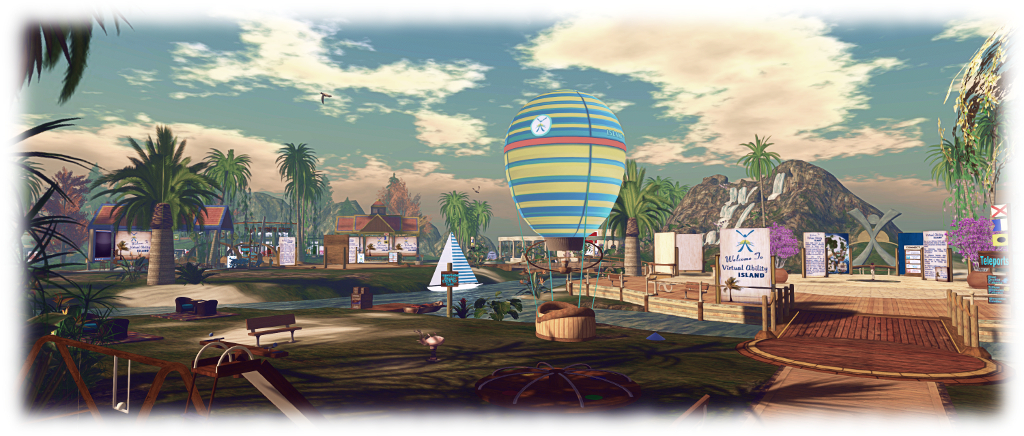
From Fran’s story, the article broadens its canvas to explore the work of Virtual Ability Inc., touching on the story of Gentle Heron and how VAI came into being and the services it provides. Through this, the piece enfolds the fact that Second Life has been an enormous book to those with many disabilities, including illnesses such as multiple sclerosis, conditions such as autism and PTSD (See here for more on one way in which the platform has been used to help hose suffering from PTSD), physical disabilities and more.
Much of this may not be especially new to SL users, particularly as a result of our being attuned to the likes of The Drax Files #22, which looked at Sl and health through the work of Virtual Health Adventures. However, for anyone who has not been exposed to Second Life, the piece offers a refreshing, clear-cut insight into one aspect of why the platform remains so popular and well-regarded among its users after 13 years.
It has long been shown that Second Life can have a range of benefits for all of us: it puts us in contact with people, and the ability to visit places and enjoy activities with them where otherwise we might be house bound and confined to little or no physical interaction with anyone of days at a time. It can help us stay healthy, physically and mentally; it can help healthcare agencies reach their patients (see here and here), and it can be – as seems to very much be the case with Fran – physically and mentally therapeutic.
Fran Swenson (Fran Seranade) and her daughter Barbara Richard (Barbi Alchemi). Credit: San Diego Union-Tribune / Bill Wechter
This examination of Second Life and how it is used makes taking the time needed to read the article worthwhile, but there is more. Through a neatly-encapsulated piece on why Second Life perhaps isn’t as easy to update as extensively as some might believe, the piece moves on to a look at the potential of new worlds like Sansar and High Fidelity.
This is again a considered examination, laying out fairly the benefits more immerse VR environments might be for those with disabilities – and touching on some of the potential barriers. As a part of this exploration of the future, the piece offers a solid reassurance that Second Life isn’t – as yet – facing the end of the road. Instead, it underlines the point the Lab (and I) have often made: SL’s longevity lies as much with its users as it does with LL. So long as there are enough users engaged in the platform to keep it viable, there is little reason for it to be arbitrarily shut down.
There are a couple small misconceptions within the piece. For example, the origins of Radegast: while it is true it was conceived and developed by someone engaged in SL’s Adult / BDSM world, but that doesn’t actually mean it was primarily developed for that market.
However, these really are quite minor quibbles, when noticed. The fact is, First They Got Sick, Then They Moved Into a Virtual Utopia is an engaging, informed and informative piece adeptly written by someone who intrinsically “gets” Second Life. It’s a piece which should definitely be on your reading list if you’ve not come across it already.
There have been a number of press reports on Sansar since the start of the year, some of which I’ve covered in these pages – such as in Road to VR (see here), Upload VR and Tom’s Hardware (see here). However, while I’ve read others, I’ve not made the time to write about them. so, in case you missed them, here’s a quick breakdown of notable coverage of the Lab, Sansar and Second Life.
On January 19th, Réalité Virtuelle, the French on-line publication for virtual and augmented reality carried a piece entitled Sansar: la vraie réalité virtuelle débarque en 2017 (“Sansar: the real virtual reality arrives in 2017″).
Penned by Farid Khedri, the piece covers familiar (to those following Sansar’s development) ground, but offers a very well-rounded overview of the Lab’s new platform – and something of a potted history of Second Life, including a look at French politics.
Farid Khedri
A nice touch with the piece is that it starts out with a 5-point summary, noting that Sansar gains the advantage of having the Lab’s long-term exposure to VR environments, thanks to Second Life, that Sansar itself is not “Second Life 2.0” (how many time do we have to emphasise that?), but it is geared towards “social VR” experiences.
The potted history of Second Life is dealt with briefly in the first two paragraphs, which offer a rounded view of the platform circa 2003 through 2007. It’s interesting to note that the platform has not only played something of a role in US politics and presidential elections, as Farid notes:
In France, many candidates in the 2007 presidential election, such as Jean-Marie Le Pen, José Bové, Nicolas Sarkozy and Ségolène Royal, opened virtual campaign offices in Linden Lab’s metaverse.
Despite the bubble bursting in 2007/8, again as Farid notes, Second Life has – all things considered – been a success in validating the idea of virtual spaces for social networking, and as a means of learning, business and more. This serves to lead into a well-written piece on Sansar and the Lab’s reasoning behind it (including touching on a return to the company’s VR roots with The Rig – although it is not mentioned by name). As such, and whether you opt to read the original piece, or opt to use something like Google Translate, Sansar: la vraie réalité virtuelle débarque en 2017 is worth taking the time to sit down and run through.
Rachel Metz
January 27th saw Rachel Metz delve into similar Sansar territory for the MIT Technology Review.
While somewhat misleadingly entitled Second Life Is Back for a Third Life, This Time in Virtual Reality (Second Life is still very much on its first life, and – as already noted, Sansar isn’t “SL 2.0”, much less some kind of “Second Life Three”), the article offers a further general overview of Sansar and the Lab’s hopes for it.
Although there is nothing particularly “new” in the piece vis-à-vis Sansar, what I do like about it is that rather than being gung-ho about VR’s future, Rachel offers a measure of caution about how and where the brave new (VR) world might actually go:
Consumer virtual reality is still in its infancy—over two million headsets were shipped worldwide in 2016, according to an estimate from market researcher Canalys. That’s tiny compared to the several hundred million smartphones that ship each quarter, and we’re still figuring out what the heck to do with virtual reality.
And therein lies the rub. As I’ve stated elsewhere, while I believe VR definitely has a future – we just need the technology to mature in ease-of-use (size) and cost – I remain sceptical that it will be as all-pervasive as VR evangelists state – particularly when AR and MR would seem to have much broader practical applications which can impact our daily lives. Thus, Sansar is something of a gamble for the Lab, although Second Life is a long way down the road in demonstrating that if done right, and allowing for the potential for Sansar to fit a lot of suitable use-cases far more easily and affordably than SL has managed, the Lab’s new platform could have a comfortable future.
Going back to earlier in January – but offering a nice pivot away from Sansar and to Second Life, on January 8th, 2017, Alex Burnham examined how Virtual reality opens new doors in education for Florida State University (FSU) News. In particular, he looked at how the university has successfully leveraged Second Life in undergraduate programmes.
Alex Burnham discussing FSU’s use of Second Life for education
The work involving Second Life has been spearheaded by professors William Landing and Stephanie Dillon. Working with Chant Newall Development Group, CNDG, they have developed environments within Second Life to help students studying environmental science (under Prof. Landing) and chemistry (under Prof. Dillon).
The article highlights some of the challenges of virtual teaching, as noted by undergraduate student Chris Ortiz, but it also underlines the broad range of opportunities that virtual environments offer for achieving goals and allowing greater understand of, and involvement with, the subjects being taught – something I have little doubt will increase as the likes of Sansar come on stream and which also – equally importantly – demonstrates that far from being a thing of the past, as some pundits would have people believe, education is still a source of involvement and experimentation within Second Life.
Nadika Nadja
In Gender Binary: Second Life, First Loves (January 30th), we are presented within an exploration of gender and identity – two topics which have been much explored in the past through Second Life.
Here, the discussion and exploration – which also in passing touches on archaeological and historical recreation – is presented in a very personal form: the thoughts of Nadika Nadja. It’s a thoughtful, thought-provoking piece, one of a series written for GenderIT.org, poignant for their outright honesty and directness.
Given all that is going on in the world today, with so many fundamental human rights under threat and with so many living in the world who are unable to give expression to their inner selves, Nadika’s article is a powerful reminder of the freedoms inherent in spaces like Second Life we can personally experience – and how they can help us to grow and better understand ourselves and those around us.
This is an article I was tempted to write at length about – but anything I have to say is actually superfluous; Nadika’s own words need no filter; they are beautifully honest and open, and should be read directly. Instead, I’ll leave you with her closing comment – one which, I think it fair to say, will resonate in all of use who are engaged in Second Life, no matter what our backgrounds, beliefs, feelings or desires.
In turn, Second Life took all my love and gave me something else in return: a community I could depend on, a world I could belong to, an identity I could own.
The final article I’m turning to is Samantha Cole’s piece in Motherboard, Second Life Users Are Protesting With Their Avatars (February 4th, and later picked up by Glixel), a piece looking at Avatars Against Trump moment, established by Strawberry Singh and Cajsa Lilliehook in the wake of the increasingly divisive and negative Trump regime in the United States, and which also reference’s the Lab’s own statement on Trump’s immigration policy (which I reported here).
As noted earlier, politics are not uncommon in Second Life – we are, after all, all flesh and blood behind the screens, so it is only natural the line between physical and virtual worlds is naturally blurred. But as explored within the Motherboard article, Second Life offers a unique ability for people from all backgrounds, religious, geographic, political, social, etc., to come together in a virtual melting pot and – for the most part explore views, understand positions and even form bonds. And which it is required, the platform can also be as much a voice of social conscience as any other medium or activity.
As I reported at the time, Linden Lab announced at the end of 2016 that they would re-open applications for Skill Gaming creators and operators on Tuesday, January 3rd, 2017, and this went ahead as planned.
For those who may not be familiar with the concept, while gambling is prohibited in Second Life, and games of pure chance that provides a Linden Dollar payout are against the Terms of Service, games of skill are permitted in-world, providing they meet the criteria of being a Skill Game, and are duly authorised by Linden Lab, under the terms of the Second Life Skill Gaming Policy, which defines such a game as being one:
1) whose outcome is determined by skill and is not contingent, in whole or in material part, upon chance; 2) requires or permits the payment of Linden Dollars to play; 3) provides a payout in Linden Dollars; and 4) is legally authorized by applicable United States and international law.
The current Skill Gaming policy was introduced in 2014, and the announcement of the re-opening of applications marked the first time the Lab has offered the opportunity for further Skill Gaming Creators (SGCs) and Skill Gaming Operators (SGOs) to register their desire to create and / or operate skill games in-world since that time.
However, the application period was fairly short – a little over a month, in fact. On Tuesday, February 7th, the Lab issued an update indicating that as of that date, applications were once again closed. It’s not clear how many new applications were received and are being processed, however, prior to applications re-opening. the Second Life Skill Gaming Approved Participants page on the SL wiki listed 45 SGOs. At the time of writing this article, the total had risen to 50, and the number of approved Skill Games had risen from 44 to 45 (neither of these increases account for any applications which the Lab may still be processing, if any).
The Lab’s Gaming Regions provide an introduction to Skill Gaming for those interested
Those interested in playing Skill Games, or in finding out more about them, can follow the links at the end of this article, or they can visit the Lab’s Gaming Islands. Accessed either directly or via the Portal Parks, they provide information on what Skill Games are, the kinds of games user might encounter, how and where they can be played – and why, in some instances, users may not be allowed to access the regions where they can be played.
An artist’s impression of Juno firing its main engine at it passes over Jupiter’s cloud tops. Credit: NASA
On Thursday, February 1st, 2017, NASA’s Juno spacecraft completed its fourth 53.5 day orbit of Jupiter since its arrival on July 4th, 2016. The vehicle, reached perijove – the point at which it is closest to Jupiter’s cloud tops at 12:57 GMT (07:57 EST), just 4,300 km (2,670 mi) above the cloud top at a velocity of about 208,000 km/h (129,300 mph) relative to the planet.
As there were no plans to utilise the craft’s main engine to slow the craft into a 14-day orbit around Jupiter – a issue with a potentially faulty set of valves in the motor system is still being investigated – the spacecraft was able to conduct a “close-up” data gathering exercise as it swept around Jupiter, gathering data on atmospheric radiation and plasma.
Also active during the flyover was the spacecraft’s imaging system, dubbed “JunoCam”. This has already captured some stunning images of Jupiter during past perijoves, and the hope is it will have done so again. Thanks to an outreach programme in which NASA invite “citizen scientists” to download raw JunoCam images and process them at their leisure, together with a programme that allows the public to suggest areas the camera might image during each perijove, JunoCam has become extremely popular.
A stunning view of the intricate boundaries between Jupiter’s bands of cloud, as captured by JunoCam during the December close pass over the cloud tops in December. The white spot is one of the “pearls” – thought to be a storm – which form bright “strings” in Jupiter’s southern hemisphere
The next close flyby will be on March 27th. It’s not clear yet whether this will be a science pass, or whether the Juno Mission team will risk firing the vehicle’s motor to slow it into the planned 14-day orbit. If they do, then the science suite will likely be powered down to conserve electrical power during the manoeuvre.
But even if Juno doesn’t achieve that final 14-day orbit, its science mission will not be unduly compromised. The craft will be able to meet all of its mission goals even if it remains in the 53.5-day polar orbit it currently occupies.
A major reason for Juno’s polar orbit around Jupiter is that it allows the vehicle to pass “between” the most powerful and intense radiation belts emanating from the planet. However, as the mission continues, the tilt of the spacecraft’s orbit relative to the planet means that over time, it will increasingly delve into these more intense radiation belts. Credit: NASA
The Jovian system is a place of intrigue. Not only is Jupiter a potential key to helping us understand the evolution of such gas giant planets, it sits at the centre of a gigantic magnetosphere so vast and powerful, it extends 5 million kilometres (3 million miles) towards the Sun, and reaches out as far as the orbit of Saturn – 651 million kilometres (407 million miles) – in the other direction.
All of Jupiter’s Galilean moons, Callisto, Ganymede, Europa and Io, orbit within this magnetosphere, “bubble” and are affected by it. However, it is innermost Io which has the greatest interaction, and a proposal has been put forward to have Juno examine the relationship between Io and Jupiter in greater detail.
A false colour enhanced image of a volcanic plume above Io. Credit: NASA
With Jupiter on one side, and the other three big moons on the other, Io, roughly 320 km (200 mi) small in diameter than the Moon, is constantly being flexed by the opposing gravitational forces. This flexing physically manifests in the moon being the most volcanically active place in the solar system. At any given time, Io has an estimated 300 active volcanoes belching sulphur, sulphur dioxide gas and fragments of basaltic rock up into the space above itself to interact with Jupiter’s magnetosphere.
As the material from the eruptions rise from Io, it is bombarded by high-energy electrons withing Jupiter’s magnetsphere. These ionise the ejected material, forming a vast plasma torus of highly energised (aka radioactive) particles around the Jupiter and straddling Io’s orbit. In addition, Jupiter’s magnetic field also couples Io’s polar atmosphere to the planet’s polar regions, pumping this ionised material through two “pipelines” to the magnetic poles and generating a powerful electric current known as the Io flux tube, which can most visibly be seen (if you are close enough) as Jupiter’s polar aurora.
On Thursday, February 2nd, Linden Lab became the latest tech company to speak out against the recent immigration Executive Order signed by US President, Donald Trump.
Politics is a contentious issue, and one I’ve preferred to keep out of this blog. However, there is no doubt that the move by the new US Administration has caused great concern in both the United States and around the world. More to the point, Second Life is also a global entity which has – through the Community Standards – always sought to make a stand against intolerance on the basis of race, ethnicity, gender, religion, or sexual orientation. As such, the Lab’s statement is wholly in keeping with this standing.
We at Linden Lab are extremely disappointed in and adamantly opposed to Trump’s recent executive order on immigration. We reject racism, intolerance, and xenophobia.
We are proud to include immigrants among our leadership, colleagues, and customers, as well as our families, friends, and communities. We value diversity, compassion, and understanding, and we are proud that our products enable people to come together and form meaningful connections regardless of differences in their offline lives.
Trump’s order is counter to what we value and antithetical to American ideals. We join the many voices calling on the US government to remove this restriction as quickly as possible and to refrain from imposing additional barriers that threaten opportunities for immigrants, under-represented minorities, and women.
Linden Lab and Second Life use e-mail in a wide variety of ways, from direct e-mail campaigns informing users of promotions, etc., through the users having a means to obtain IMs sent to them while they are not logged-in (and even reply to them within a certain time constraint).
However, many people sign-up to Second Life, either with new accounts or additional accounts, and offer e-mail addresses which are either made up, or unused. The former is a particular problem for the Lab, as it creates additional traffic passing through ISPs, which can mark the Lab as a purveyor of “spam”.
To try to reduce this problem, the Lab recently introduced e-mail verification. When you sign-up to Second Life, the e-mail account provided will receive a request to verify it (the usual click-on-the-link approach); if you change the e-mail address, you will receive a similar verification request.
In addition, there is also an option within the Change Email Settings of your Second Life dashboard where you can have your e-mail verified without having to change your e-mail address.
This is important because, starting in the very near future, the Lab will be making changes to their e-mail service which will eventually mean that outgoing e-mails will not be sent to any unverified e-mail addresses.
So, if you want to be sure you continue to receive SL-related e-mails – such as IMs to e-mail or Marketplace information sent to your e-mail as a Merchant, etc., – it is important you ensure the e-mail you use with Second Life is verified.
Here’s how:
Go to your dashboard at secondlife.com.
Click on Account at the top left of your dashboard to open the Account sub-menu.
Click on Change Email Address to open the Change Email Settings page (below).
Locate the Verify link next to your e-mail address and click on it.
The Verify link will allow you to have the e-mail address associated with your SL account verified
A verification e-mail will be sent to your current e-mail address associated with Second Life, containing a link. Click the link to verify your e-mail address.
Wait a minute or so, then refresh the Change Email Settings page on your dashboard. It should be updated to show your e-mail address is verified (below).
A verified e-mail address
There will be an official notification from the Lab when the work updating the e-mail service commences. However , this article can be treated as something as an advanced warning, courtesy of Oz Linden speaking at the January 27th TPV Developer meeting.
It’s not clear how long the changes will take to implement / propagate out, but it is important that if you rely on any e-mails sent to you by the Lab in relations to Second Life, you ensure your recorded e-mail address is verified, otherwise you will at some point no longer receive any e-mail notifications from the Lab until such time as you are using a verified address.