Ebbe Altberg on user retention now and in the future

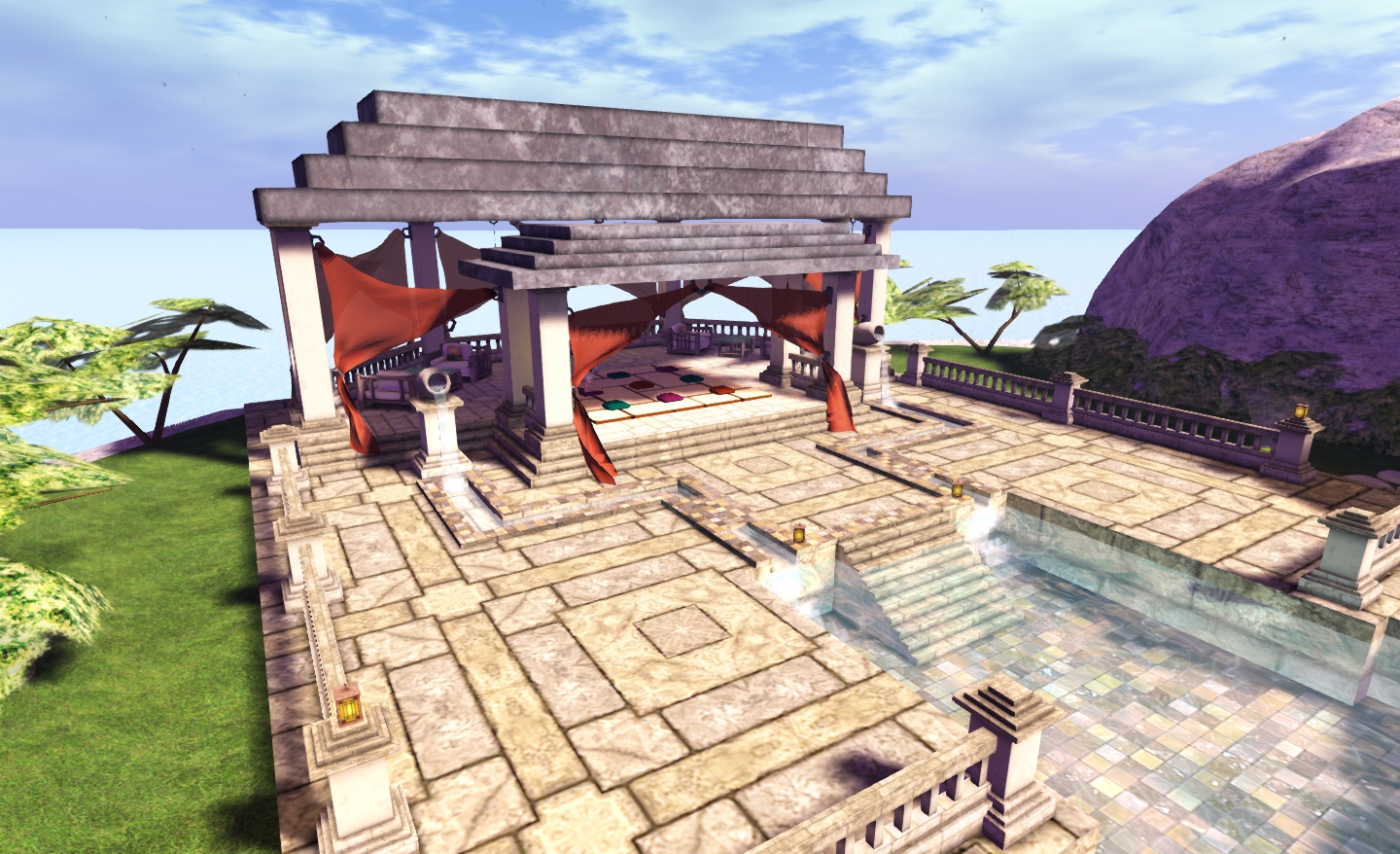
A part of one of the new user experience social islands

While at the TPV meeting on June 20th, 2014, Ebbe Altberg didn’t only address questions on the new virtual world platform the Lab is developing. The session actually kicked-off with a discussion of user retention in Second Life and the new user experience.

Some eight minutes were devoted to the discussion, of which around five and a half were taken-up by Ebbe talking through ideas, and the remaining time either with questions or with reminiscences about mentors and the old mentor programme. The audio presented here represents all of Ebbe’s comments on the subject, together with a transcription for those who prefer to read his comments.


The first question was whether the Lab had any further ideas for trying to improve user retention.

Well, there are lots of different types of users, and I think we can make it easier for some users without losing the power for other users. But yeah, that is a tremendous challenge, allowing for this incredible flexibility, openness, freedom, and at the same time make it simple.

I am convinced there’s a lot of things we can do, not necessarily in the short-term, but in the medium-to-long term that going to make things a lot easier.

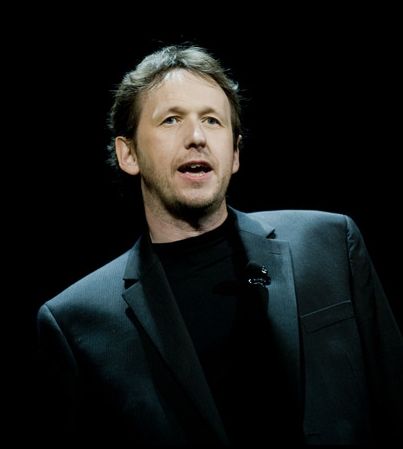
Ebbe Linden (LL CEO Ebbe Altberg) Talked about user retention at the June 20th TPV Developer meeting (image: Strawberry Singh from the VWBPE conference, April 2014)

I mean, just coming in and getting dressed is a major undertaking, and it shouldn’t have to be. There’s a lot of stuff that is geekier than it need to be; what the hell does it mean to “detach” something from your avatar and stuff like that?

So I think the user interface can improve a lot. and obviously, a lot of the work that you guys have just discussed here [Experience Tools, etc] will make retention improve. When the quality improves, performance improves, that will do a lot as well. It’ll just take users a while to notice and appreciate, and therefore get sticker. It seems to me, the metric seems to indicate, you know, some potential extra stickiness is going on. We’ll have to see; we’ll have to wait a little longer to be sure about that.

But when I talk about making in “simpler”, I’m not suggesting I’m trying to make it dumber or less powerful. So it’s going to take some smart people quite some time to solve for, but we have to try really hard to continuously make it easier.

Hopefully we can have something with the power of Second Life, but appealing to hundreds of millions, and not just a million; we have to figure out how to get there.

The next question was whether Ebbe was aware of the official mentor programme, and whether he would consider bringing that back.

[1:57] I was actually in-world yesterday [Thursday June 19th, 2014] with a group of people, many of whom have been part of that, and so we started conversations. There’s a lot of sub-groups participating in that conversation, of helpers.

I think the difficulty is, for our perspective, or why it might have been discontinued, is how do you manage it at scale? Who do you trust? Who’s behaving? Who’s not behaving? I think that might have been a part of it.

But I think that also a lot of those efforts were unfortunately discontinued as a part of the big layoff back in the day, when a lot of things were thrown out of the window whether it made completely sense to stop those types of things or not.

[2:43] Personally, I’m in big favour of a – what was at the beginning, what was it called? Community Portal? … Community Gateway programme – to enable creators to attract their own audience into their experiences. I think ultimately, if we’re going to scale way beyond a million users but tens of millions or hundreds of millions, we have to allow creators to be able to attract an audience from the outside world directly into their experiences.

There we have to think about what does that mean? Does it become some kind of co-shared, co-branded on-boarding experience for people? Because there are too many unique communities and verticals and experiences, that we can’t correctly advertise and drive traffic to those experiences, and it would be much more powerful if the creators could sort-of attract their own audience, and that’s much more scalable. That’s the way I think about it, but how long it will take to get there, I’m not sure.

[3:43] So we’re actually experimenting right now, where we’re doing A/B tests with a welcome island as we know it, and a second welcome island with a live helper so we can A/B test the conversion rates and the stickiness of the product. Obviously, one person is not going to do it, but we’re starting with one person as a very consistent way of treating people coming in. and then we can see what the actual performance differences [are] between those two experiences. We’ve also tried with audio on and audio off.

So we’re doing these little A/B tests to see what works, and if we find that having a live greeter there has a meaningful conversion rate improvement , then we just have to figure out how we can scale that, so we can have people able to meet everybody.

I haven’t seen statistics come out of that yet. I saw some stats of audio versus no audio, and it was like a tiny, tiny, plus for no audio, so we’re now trying with no audio, or no speech, so that … but other things we can do is maybe only certain people can get to the welcome island … and [not] having cuckoo folk show up there … Having a way to … we can technically potentially solve it so that we don’t have to have people kicking people out, but you could be sort of, only new users or … and if you’re a brand-new user, it’s a little harder to grief than if you’re and existing user.

Anyway, it’s stuff we’re actively playing with. I’ll try to figure out when we’ll have statistically relevant numbers from the tests we’re doing, and then we’ll go from there.

[At this point the discussion moves to PR as a means of reaching out to new users, and then moves into the discussion of the Lab’s next generation platform.]
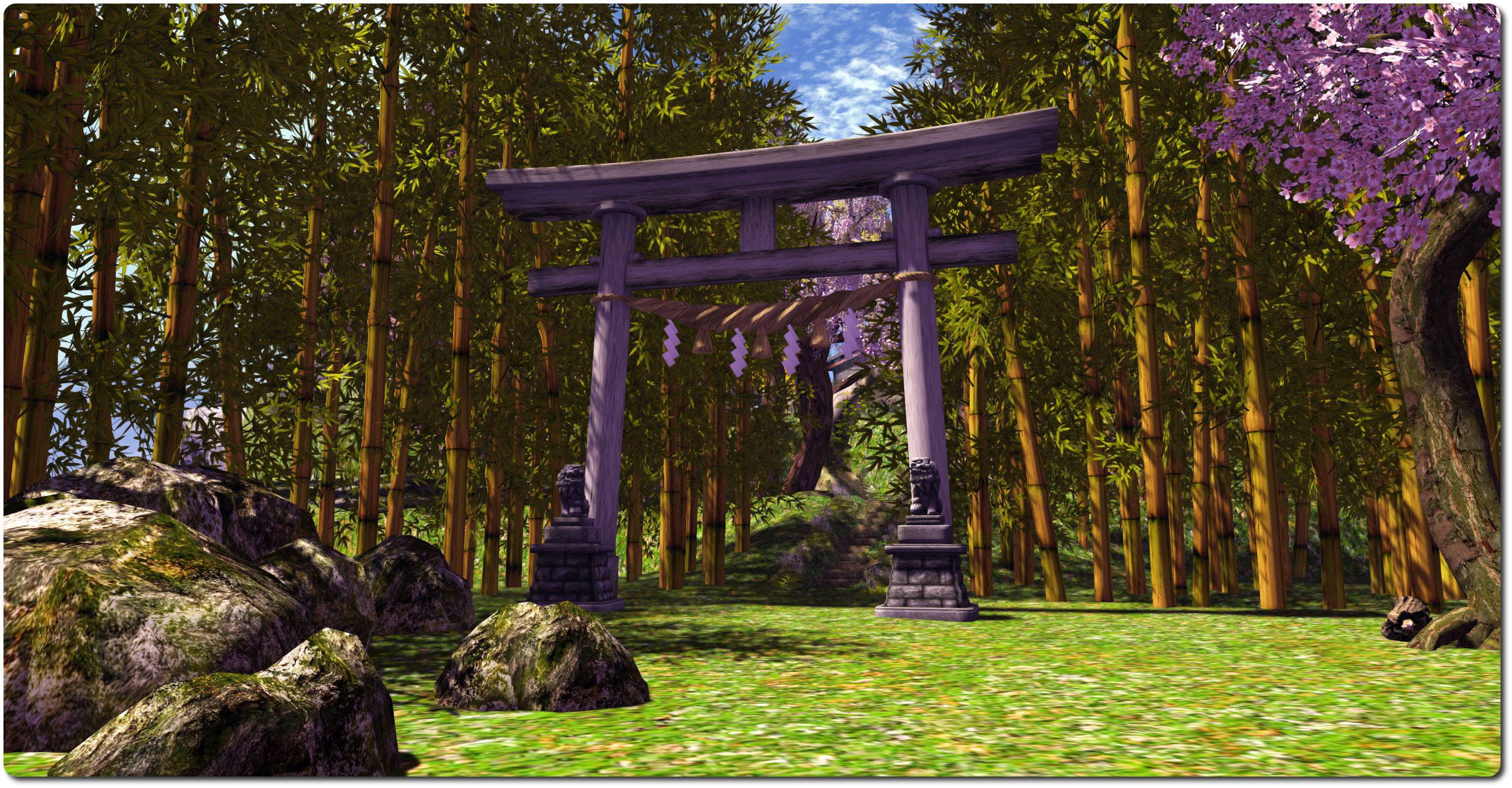
The Snow Lion, Oceanside dAlliez; Inara Pey, May 2014, on FlickrCommunity Gateways offer perhaps the most flexible means to meet the needs of incoming users (image: The Snow Lion, Oceanside dAlliez (Flickr))

Comments

The first interesting point of note here – and with the benefit of hindsight – is the first clue is given that the Lab is looking towards another platform for mass adoption:

“Hopefully we can have something with the power of Second Life, but appealing to hundreds of millions…” [my emphasis]

The idea of enabling established users to be able to build tailored on-boarding experiences which not only get newcomers involved in their activities, but also provide them with sufficient guidance to be able enjoy the rest of what a platform has to offer, could be a powerful move in the right direction. Not only does it resolve issues of scalability, it is also something that delivers the on-boarding process more squarely to users within a platform, something many in SL want to see.

It will be interesting to see if the Lab actively pursue such an approach with SL, or whether it is something they’ll look more towards implementing in-depth on the new platform. Perhaps we’ll see a little bit of both; the Lab initially “trialing” such an approach on SL, prior to enhancing  / expanding it with their new platform.

The further A/B testing with the current on-boarding process is interesting. Even if one discounts 90% of the current 350,000 (ish) monthly sign-ups as alt creation or spambots*, that’s still potentially 35,000 new users month who are coming into SL, of whom around 80% have apparently evaporated within a month. So any attempts to increase on this are to be welcomed.

That said, whether user retention can be signficantly increased by tweaking at the edges of the current on-boarding process is debatable. I tend to still be of a mind that without finding the means to connect incoming new users on a more “social” level with others within SL, attempts at increasing user retention will be limited in success.  Nevertheless, it will be interesting to see what comes out of the current A/B testing – and in seeing just where else the Lab is willing to invest time and effort in order to try to increase SL’s retention levels.

*Footnote: some claim that 99% of this number is the result of spambots which never actually go on to download the viewer, much less log-in. While I agree that the potential number of sign-up hits by bots is likely to be high, placing it that high is perhaps a stretch, and points toward’s Marcello Truzzi’s statement that such an extraordinary claim requires extraordinary proof.

LL’s next generation platform and the mainstream market

There can be a broad gulf between niche and mainstream. Bridging it isn't easy
There can be a broad gulf between niche and mainstream. Bridging it isn’t easy

One of the aims the Lab has in developing a new virtual world(s) platform is that they hope to lift it into mainstream adoption, with not hundreds of thousands, but potentially hundreds of millions of users.

It’s a lofty goal, to be sure; but the Lab isn’t alone in talking in these terms. Brendan Iribe over at Oculus recently talked in terms of a virtual world / MMO (he seemed to be using the terms interchangeably) with a billion users – although granted, he also couched this in terms of being a decade or more away.

But how realistic is it for a virtual world to achieve figures of hundreds (or even tens) of millions of users? The gap between niche and mainstream isn’t an easy one to bridge. It’s fair to say that the Lab hasn’t managed it so far, although they’ve certainly had both opportunities and attempts at broadening their mainstream appeal in the past – which is not to say they yet can’t.

Bridging the gap involves dealing with a number of key issues. Three of these might be said to be relevance, identity and ease-of-use.

Loki Eliot's Main Stage, SL11B Community Celebration
Loki Eliot’s >stage desgin at the SL11B Community Celebration

If people don’t see a virtual world as having relevance in their lives and the things they do, then it’s going to be hard to persuaded them as to why they should consider using it. In this, it doesn’t matter how snazzy it looks or how clever the technology behind it.

This need for some real value proposition is perhaps most clearly exemplified by Pamela in the 8th segment of The Drax Files Radio Hour. She dismisses any involvement in a virtual world because she sees no advantage in it compared to what she can already do in her day-to-day physical life. Her reaction may have caused some of the mirth seen at the SVVR Creating the Virtual Metaverse panel, but it is one that is unlikely to be in the minority. Laughing such opinions off doesn’t actually make them go away.

Pamela’s comments also touch on the issue of identity.

Handling issues of identity for groups of people with very different views on the subject may not be easy

For those of us engaged in Second Life, the ability to define our identity howsoever we wish by virtue of the anonymity we enjoy, is intensely liberating. We can be who we want to be and what we want to be; it gives us the willingness to express ourselves more openly and creatively.

However, as Roland Legrand points out when discussing the Lab’s new platform, for many people out in the mainstream world / market the Lab would like to reach, it is downright creepy and off-putting. They are intensely uncomfortable around the notion that the people they may meet in a place like SL may not be entirely as they present themselves.

How this might be dealt with in a manner which gives them the level of comfort they need while still allowing others complete freedom of anonymity, isn’t a straightforward matter. On the one hand, it must allow people to define themselves howsoever they wish; but on the other, it requires that the platform provide some form of assurance that the person with whom you’re interacting really is who they say they are.

And so to ease-of-use.

The new platform needs to provide an intuitive UI which presents itself as easy-to use and offers the greatest flexibility of use, be it with a keyboard and mouse, or an Oculus Rift and STEM system. It also needs convenience of use as well, if it’s going to be made available through mobile devices.

Allied to this is the need to ensure that incoming users are presented with compelling experiences which encourage their use of the platform, and increase their desire to explore it further. This includes ensuring those who come to it with an idea of what they want to do and what they are seeking can find it and similar-minded users quickly, while those who arrive out of curiosity are entertained and /or engaged.

Taken together, these three elements provide a substantial challenge to anyone attempting to drive a virtual world product into the mainstream market. So far, no-one has successfully managed to tackle all three with a single virtual world product and bridged the gap into mainstream acceptance, including Linden Lab. As such, it’ll be interesting to see if the Lab do indeed rise to the challenge, or whether they opt to channel their efforts in other ways, such as towards deeper penetration of vertical markets by offering multiple “worlds” via a single platform. That, however, may be the subject for another blog post.

Related Links

Ebbe: hiring 40-50 new staff, new platform to launch in 2016

Linden Lab: hiring 40-50 new staff for their new VW platform (via FogBay.com)

In keeping with comments various made during the TPV Developer meeting where the latest news on the new platform effectively broke, the article confirms that it will debut in  beta form in 2015, and will potentially launch at some point in 2016.

Other reasons given in the article for the move include an observation that, like its active user base, Second life’s technology has plateaued. additionally, the piece further quotes Ebbe Altberg, “With technology, market interest, hardware and software available, now is the time to give it another big shot. We have the experience to do it more than anyone else.”

Baldwin indicates that the new platform will, “offer more robust tools for creators. Games, designs, goods, all the things that make the current incarnation of Second Life the go-to place for current users will be part of the new world.”

Nor is the “current incarnation of Second Life” left out in the cold. The article provides a brief overview of SL, albeit one slanted towards the commerce aspects of the platform and makes mention of the fact that SL has been continuously upgraded over the years. It also, unsurprisingly, refers to the Oculus Rift headset integration. Allowing for the fact he was using the SD-1 headset, which Oculus users have reported as given rise to feelings of motion sickness, Baldwin’s response to the work – which the Lab has stated still has a way to go in terms of development and refinement – is interesting / encouraging, “beyond the rising tide of uncertainty in my stomach, Second Life finally clicked for me. Years ago I logged on, flew around, got bored, and logged off. The headgear made the entire experience immersive and actually interesting.”

Related Links

Lab: “We’re not giving up on Second Life”

Update: Just as a further reminder, all that Ebbe Altberg had to say about the new platform can be heard here, with bullet points on his statements.

As per my article Ebbe confirms: “we’re working on a ‘next generation’ platform” (with audio), Linden Lab are working on a “next generation” virtual world – news of which should be appearing in the media soon, quite likely as a part of the Lab’s PR work around Second Life’s 11th anniversary.

The confirmation that the Lab are working on the platform – and may well have been for around the last two years (see: Rod Humble hints at more virtual worlds in LL’s future, October 2012) – have fuelled rumours and speculation about the future of Second Life (remembering that any new platform is still some way into the future).  As a result Peter Gray, the Lab’s Director of Global communications contacted me with a copy of an official reply the Lab is circulating in response to enquiries on the matter, and has given me permission to reprint it here:

Hi Inara,

Just saw your post – thanks for taking care to get what Ebbe actually said. Below is the comment I’ve just sent along to a couple of folks who asked for clarification, which mostly reiterates what it sounds like you already know. Still, I just wanted to send it along in case it were useful.

Best,

Peter

more/…

Linden Lab is working on a next generation virtual world that will be in the spirit of Second Life, an open world where users have incredible power to create anything they can imagine and content creators are king. This is a significant focus for Linden Lab, and we are actively hiring to help with this ambitious effort. We believe that there is a massive opportunity ahead to carry on the spirit of Second Life while leveraging the significant technological advancements that have occurred since its creation, as well as our unparalleled experience as the provider of the most successful user-created virtual world ever.

The next generation virtual world will go far beyond what is possible with Second Life, and we don’t want to constrain our development by setting backward compatibility with Second Life as an absolute requirement from the start. That doesn’t mean you necessarily won’t be able to bring parts of your Second Life over, just that our priority in building the next generation platform is to create an incredible experience and enable stunningly high-quality creativity, rather than ensuring that everything could work seamlessly with everything created over Second Life’s 11 year history.

Does this mean we’re giving up on Second Life? Absolutely not. It is thanks to the Second Life community that our virtual world today is without question the best there is, and after 11 years we certainly have no intention of abandoning our users nor the virtual world they continually fill with their astounding creativity. Second Life has many years ahead of it, and in addition to improvements and new developments specifically for Second Life, we think that much of the work we do for the next generation project will also be beneficial for Second Life.

It’s still very early days for this new project, and as we forge ahead in creating the next generation virtual world, we’ll share as much as we can.

If we had one message to share with Second Life users about this new project at this point, it would be: don’t panic, get excited! Again, Second Life isn’t going away, nor are we ceasing our work to improve it. But, we’re also working on something that we think will truly fulfill the promise of virtual worlds that few people understand as well as Second Life users.

Ebbe confirms: “we’re working on a ‘next generation’ platform” (with audio)

Back in October 2012, I was pointed to an interview with former Lab CEO Rod Humble in Gamesbeat, in which he talked about the Lab’s (then) new products, the Lab and Second Life. In reviewing that piece, I picked up on a statement that Linden Lab is “still investing in 3D virtual worlds.”

Rod Humble first hinted that the Lab is looking at virtual worlds beyond SL

In the middle of the comments following that article, Rod himself popped-up to reassure people that the Lab was (and is) still committed to Second Life. In this comment, he also acknowledged the use of the plural – “virtual worlds” – stating:

My comment about also investing in virtual worlds is correct. As you know I don’t like to detail things until we are close to something actionable, but we absolutely are investing in the large virtual world space which I think will make Second Life users, business owners and developers very happy…. but its a ways off 🙂

Making an unannounced visit to the TPV Developer meeting on Friday June 20th, Ebbe Linden (Ebbe Altberg, the current CEO at the Lab) went a lot further than hinting at “virtual worlds”. He made a clear-cut statement that not only  is the Lab working on a “next generation” platform, he’s been actively talking to the media about it, and that things have reached a point where they are ready for internal demos at the Lab.

Obviously, the idea that the Lab is working on something “other” that Second Life – particularly given it is another virtual world platform – is liable to cause a range of responses from excitement through to misgivings and outright worry (many of which were expressed during the meeting).

Ebbe Altberg popped-in on the TPV Developer meeting as Ebbe Linden, and spoke a little about the "next generation" VW platform the Lab is developing
Ebbe Altberg popped-in on the TPV Developer meeting as Ebbe Linden, and spoke a little about the “next generation” VW platform the Lab is developing

His comments on this platform can within a wide-ranging discussion on Second Life, issues of user retention, how best to tackle bringing new users into SL (including the role the existing user base can play, how users and Lab can support one another, etc.). I’ll have more on this in due course.

For the moment, I’m including an audio file of the conversation on the platform the Lab is developing, extracted from the wider discourse, together with some key bullet-points:

  • There are no clear details on exactly how the new platform will work and how it will be marketed
  • It is not going to replace Second Life per se, but will initially run in parallel to it. Second Life is still a viable product with a strong revenue stream. How long the two run in parallel and whether or not one or the other will eventually be closed down depends on a lot of variables, not the least of which will be the volume of users and the success of both in terms of continued revenue generation
  • It does not mean the Lab are stopping work on Second Life developments and enhancements – although it does mean that some projects (such as the introduction of a new scripting language or a complete overhaul of the avatar) are unlikely to go ahead within Second Life
  • The new platform is not Philip Rosedale’s High Fidelity, nor is it based on High Fidelity (although conceivably it could leverage some of what High Fidelity is doing  – and possibly vice-versa). As I’ve frequently pointed out in this blog, and others have elsewhere, High Fidelity is an entirely separate technology development being carried out by an entirely separate company (although the Lab were an early investor)
  • The platform may or may not have some compatibility with Second Life in terms of content, it is to early to definitively say which it will be. However, the direction which has been set is not to allow things to be constrained by ideas of backwards compatibility with SL or to become overly complicated as a result of thoughts about backward compatibility. Although there are some hopes for some levels of migration, given the new platform may well be revolutionary, rather than evolutionary, whether this will be possible , and at what level cannot at this time be determined
  • This does not necessarily mean there won’t be a means by which content can be exported from SL to the new platform, although the Lab is understandably concerned over the quality of content
  • It will initially be closed-sourced; whether this remains the case, hasn’t been decided
  • Resources at the Lab will be split going forward: Oz Linden will be leading a team of engineers focused on Second Life, and the Lab will use other resources / resources recruited into the company to build-up is liable to be run starting in late 2014 or early 2015, with people invited in to it under NDA.

The comments on the new platform grew out of a discussion about SL and the media, and the audio extraction picks-up from the end of the chat about PR.

Note that in the audio, questions are included from the 8:11 mark onwards, and Oz Linden adds a comment between 11:12-12:00. Following Ebbe’s comments on people accessing the new platform under NDA from the end of 2014 or in 2015, the conversation wound-down and he departed the meeting.


Speakers: Ebbe Linden, Oz Linden, Jessica Lyon, Latif Khalifa, Takoda (Lassie)

Related Links

Facebook and contests: the Lab comments

Following this and other blogs picking-up on the SL11B photo contest the Lab announced yesterday and the fact that it may be off-putting to some SL users (see: Lab launches SL11B L$10,000 photo contest), Pete Linden (Peter Gray, the Lab’s Director of Global Communications) posted the following comment on why Facebook has been used (which he also posted to Ciaran Laval’s blog):

 We realize that a number of Second Life users have reservations about using Facebook and other platforms. In this case, we chose to run the contest through our Facebook page simply because we have a tool on our page that facilitates running a contest with all of the legal stuff (technical term) we need in place to run something like this, and we thought it would be of interest to the more than 366,000 followers of the official Second Life page. Our aim certainly isn’t to discourage participation, and we’ll certainly explore alternative ways to run similar contests in the future.

The issue of “the legal stuff” is actually something I mentioned in my original post when ruminating on using alternatives such as Flickr, pointing out that “ensuring T&Cs are read might be a little harder.”

Given that the Facebook approach requires that people at least click-through the T&Cs prior to entering a contest does make the Lab’s position somewhat understandable. It doesn’t matter if people read them, the fact that they’ve clicked through them absolves the Lab of a degree of potential nastiness after the fact if someone decided to get severely upset (probably unlikely, but the kind of thing lawyers are paid to worry about and mitigate). Truth be told, a link on a Flickr group doesn’t provide the same level of in-your-face immediacy.

I did also flippantly mention the visibility aspect as well – particularly if a fair proportion of those 366,000 followers on Facebook aren’t active SL users. I’ve actually no problem with this; if the contest increases SL’s visibility among non-SL users, then so much the better. Particularly as we’re all pretty much agreed that SL needs more positive advertising, and a fun-looking competition among users does look and feel positive.

Nevertheless, it would be nice to see competitions like this, which are not constrained by external considerations (as was the case with last year’s Dell Alienware competitions), to be put forward in a way that encourages SL user participation, rather than potentially discouraging it. In this, it is pleasing to hear that the Lab is taking the feedback onboard and will seek alternatives for the future.

My thanks to Pete for providing the feedback.