Run silent, run deep: the SL Marketplace and eroding merchant trust

Update October 4th: Linden Lab have issued a forum post on this matter, please see LL updates on listing enhancements.

Linden Lab depend on land tier (server space, call it what you will) for  80%(ish) of their revenue. This places them in an awkward position vis-à-vis providing any form of tier easement, even if they wanted to (as I’ve commented before).

The remaining 20% comes from the likes of Premium membership, and more particularly, the SL Marketplace (SLMP). In the case of the latter, the revenue doesn’t only come from the 5% commission on goods sold through the Marketplace, a lot of it comes via the listing enhancements merchants are encouraged to pay for. These theoretically boost sales by placing items in places such as the SLMP home page, or on the Checkout pages, and are paid for on a 30, 15, or 7-day rolling subscription basis, costing merchants between approximately $5.00 and $12.00 USD a month per item, with some merchants paying over $200 USD per month for enhancements.
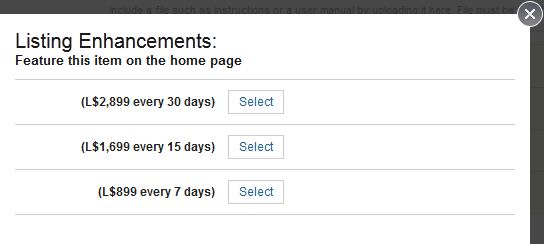
Listing enhancements – can amount to a pretty penny in outlay per item

Earlier this year, the system went haywire, failing to take due subscriptions for around a two-week period (JIRA WEB-4638). It was finally resolved by Linden Lab taking a single, large payment from merchants’ accounts. While people had no issue in paying for services rendered, the problems here were that a) next to no forewarning was given that accounts were about to be so debited, leaving many merchants with a sudden and unexplained drop in their account balances; and b) many were billed in excess of the two weeks subscriptions actually owed (with some reporting being billed for up to four weeks); while c) the billing information received made it hard for merchants to actually determine which of their listing enhancements had been billed, or even if the right enhancements had been billed.

This understandably led to some confusion within the merchant’s forum, and not a little upset, particularly as some merchants had also been faced with an inability to cancel some of their listing enhancements due to an ongoing issue with many items remaining stuck in a “locked” mode, preventing them from being edited – a situation itself which at the time was some 18 months old (and is now some two years old, and still awaiting resolution – see WEB-2974).

While merchants were refunded for any overcharging on their account as a result of the billing issue, the manner in which the situation was handled by LL resulted in something of a drop in trust where the Marketplace is concerned, and a number of merchants publicly indicated they would be ceasing in their use of enhanced listings.

At the end of July, the problem started again, and was raised as a topic for discussion in mid-August, as well as having a new JIRA (WEB-4927) raised against it. Neither the discussion thread nor the JIRA drew comment from the Commerce Team. Instead, a single payment was taken from all “at fault” accounts, again without any forewarning, and again with Merchants facing issues over what, precisely, they have been charged for, and whether those listings they have made payment against are actually active.

Failed subscriptions for August – courtesy Ry0ta Exonar

Again, the problem here is not so much that things Went Wrong and broke again – that’s pretty much taken to be the standard operating condition for the Marketplace nowadays – but how the Commerce Team managed the issue. Almost nothing was said on the matter (again), with the only communications forthcoming from the Commerce Team being a terse instruction not to re-open WEB-4638 after Ry0ta Exonar attempted to do so (hence WEB-4927), and a brief Marketplace dashboard message posted on September 28th, which simply said:

We are aware of some issues with Product Listing Enhancements. Keep an eye on the Grid Status page for more details.

With neither the dashboard message or Status page message actually stating what was about to be done.

So is it little wonder that merchants are again looking at listing enhancements with a jaundiced eye? Several have re-stated the fact that they will no longer participate in the process and others have stated they are terminating – either automatically or manually – their subscriptions. Given that LL are seeking to increase their non-tier related revenues, one would think that ensuring the one service which does so is run with a level of professionalism and communication that would not undermine customers’ faith in the service, or their willingness to place money into it.

Currently, and added to the rest of the ongoing litany of issues and problems with the Marketplace, this doesn’t appear to be the case.

Related Links

Of blogs and sundry thoughts

The Second Life Blog was once a place where the Lindens talked casually with you about policy, their projects, recent news, the future of SL, etc.  Residents regularly told us that they loved having access to such broad insight into the company and frequent communication with the full range of Lindens.  And Lindens loved the ongoing dialog with residents.

Sounds like something I might have said here – or you might have read from Tateru or a dozen other SL commentators. A harkening-back to the “good ol’ days”.

But it’s not. It’s actually from – wait for it – a Linden, who went on to say:

Over time however, as more Lindens came to participate, the blog got a bit manic. Some of you complained that reports of temporary performance issues would eclipse larger conversations related to long-term plans and features while others believed that tutorials and opinion pieces were distracting them from the hard news of inworld issues they needed to know about in order to run their businesses.

In other words, we outgrew our single channel blog […] We knew it was important to get back to using the blog as a key means of constructive two-way conversation with the community.

“We knew is was important to get back to using the blog as a key means of constructive … conversation…” How times have changed, hmmm?

These quotes come from the Linden Lab blog archive on WordPress. Written by Blue Linden (sadly gone in the re-organisation of June 2010), they demonstrate how much attitudes have changed within LL over the last three years.

The LL blog archive on WordPress

Continue reading “Of blogs and sundry thoughts”

LL’s new products aren’t the end of Second Life

It’s been interesting to watch reactions toLinden Lab’s recent announcement on the forthcoming launch of two of their new products – Creatorverse and Patterns.

While many have responded positively to the announcement, it is fair to say that some have not, categorising LL’s diversification as a sign that either the company given up on Second Life, or that the company can now only develop products or continue to develop SL rather than doing both. I find both attitudes completely unfathomable, although in the case of the latter, not entirely new. When it comes to even trivial, easy-to-make changes that are essentially crowd pleasers, there can often be a response from commentators who feel that company is only doing so at the expense of working on more serious matters – as if LL can only do one or the other.

Patterns: some see LL’s move to diversify as a sign the company has “given up” on SL (image courtesy of Linden Research Inc.)

They’re Still Working On It

The view that LL are developing new products because they’ve “given up” on Second life is one I find curious because in the 13 months following Rod Humble announcing the company would be diversifying, Linden Lab has clearly shown that it actually is continuing to develop and enhance SL – and what’s more, the work is taking place alongside the development of their new products. Since the beginning of 2012 alone we’ve seen LL:

  • Making what they refer to as being one of the largest investments in hardware and infrastructure for SL to date (which came on top of a major hardware investment in 2011)
  • Investing heavily in manpower, time and effort to bring greater and broader capabilities to Second Life, including:
    • Pathfinding
    • Materials processing – which should revolutionise how SL looks compared to modern games
    • A new HTTP library capability aimed at eliminating many of the major issues we’ve long complained about, with texture load times and large group loading / management fixes being the first two to rolling-off the development line
    • Advanced creation tools which will (permissions allowing) help enhance SL in a wide variety of ways
    • Re-working interest lists and object rezzing to develop a faster, more logical way in which objects are rezzed around us when we teleport in-world
    • Providing a new avatar baking process to eliminate bake fail
    • Developing multi-threading region crossing to help eliminate sim boundary issues
  • Purchasing a Havok sub-licence arrangement which, despite worries over TPVs and connectivity, could in the future yield significant improvements to SL through the provisioning of dedicated Havok libraries accessed by the viewer
  • Pro-actively working to find a new audience for SL through the forthcoming link-up with Steam
  • Working to nail down long-standing issues within the viewer – memory leaks and so on – in order to make the whole SL experience less prone to bumps, thumps and outright crashes
  • Seeking to improve their customer support, and working towards providing better assistance for TPV users where it is logical for them to do so.
Materials processing: enhancing Second Life

True, we may not necessarily like the way the company is developing the platform (pathfinding being the current bug-a-boo). There are also decisions the company has made and is making which may confound us or seem counter-intuitive; I’m still very much frustrated at their willingness to even engage in an ongoing one way dialogue towards users, for example. While such moves and decisions may well cause us concern and / or regret, they don’t actually point to the company as having “given up” on SL; and we shouldn’t confuse the two issues.

It’s Not Time Taken from SL

When it comes to the actual development of the new products themselves, there appears to be a misconception among some that LL has only been able to do so by taking time and resources away from Second Life. Yet, outside of senior management, this would hardly appear to be the case. For a start, and since mid-2011, Linden Lab has been recruiting very specialist skills aimed specifically at developing new products separate from SL itself. Secondly, we need to remember that in the case of at least two of the three new products we know about, the creative resources have (at least in part) come from outside of SL. Dio is being developed by Richard Evans and Emily Short, both formerly LittleTextPeople, a company acquired by LL and who have had little if anything to do with SL; while Patterns is being produced in partnership with games developers Free Range Software.

Continue reading “LL’s new products aren’t the end of Second Life”

Of avatar height and size

Height has always been an issue within Second Life. Not only are default avatars unusually tall compared to the rest of the in-world scaling (most top-out in the 7-8ft range), the camera is offset at a difficult – if not unnatural – angle – which forces people to build oversized  structures in order to be able to accommodate it.

I’ve been solving the camera issue for the last couple of years using Penny Patton’s excellent camera offsets, which she first kindly allowed me to reproduce on this blog almost two years ago. Penny has also written extensively on getting a decently scaled avatar, and on the benefits of having realistically sized avatars in-world.

Avatar height issues have long been compounded by the fact that the height display in the viewer’s appearance editor does not accurately reflect the avatar’s height when compared to in-world scaling, with the avatar being around 15 cm (6 inches) taller in-world than is reported by the edit shape height display. This means that even when someone is trying to scale their avatar more realistically using the shape editing tools, they will, at the very least, invariably end up taller than they intend.

The good news here is that there is a good chance that the edit shape height issue may be addressed as a part of the avatar baking project. Nyx Linden will be “diving into” the code for the appearance editor as a part of that project, and may have time to do something about the inaccuracies in the height reporting. Assuming this does happen, it will still leave the problem of starter avatars still being abnormally tall / large, but it’ll certainly be a step in the right direction for those who do wish to size and proportion their avatars more realistically (something which is growing in popularity within SL).

I’ve actually been working on adjusting my own avatar since altering my overall appearance back in August 2010, gradually reducing my height to get down to something which might be regarded as relatively “normal”. Of late, however, I’ve noticed that even with my own downsizing, I’m starting to stand a good head or more taller than friends, and that at a touch over 2 metres in height in bare feet, I’m not always comfortable with my avatar’s height.

The problem is, how does one correctly scale one’s avatar, given the fact the editing tools are so very rough-and ready? Even allowing for the inaccurate height reporting noted above, the sliders are entirely abstract in meaning and at best relate only to an arbitrary start point. The abstraction is made worse by the fact that changes to one slider can impact the proportions controlled by several other sliders, reducing everything to a series of guessimates if using the sliders alone to define your shape.

Penny Patton again comes to the rescue here, providing a superb guide to defining a properly portioned avatar of almost any height and size, which in valuable whether you’re trying to get your avatar sized to realistic proportions or whether you wish to have an abnormally tall or short avatar that is properly proportioned of itself (such as a role-play giant or dwarf, for example).  I’ve been meaning to try her tutorial out for a while, but after tripping over a couple of friends recently, thought it was about time I did so :).

I like to think my avatar wasn’t abnormally sized to start with – but I have to admit, the results did startle me, and I’ve yet to see how things stack-up as I wander in-world.

My “usual” height has been just over the 6-foot mark (6 ft 3in, in fact), as mentioned above, and has been that way for a while. This is actually quite moderate in SL terms – or has been – a height which mostly leaves me looking reasonably-well proportioned against many in-world objects.

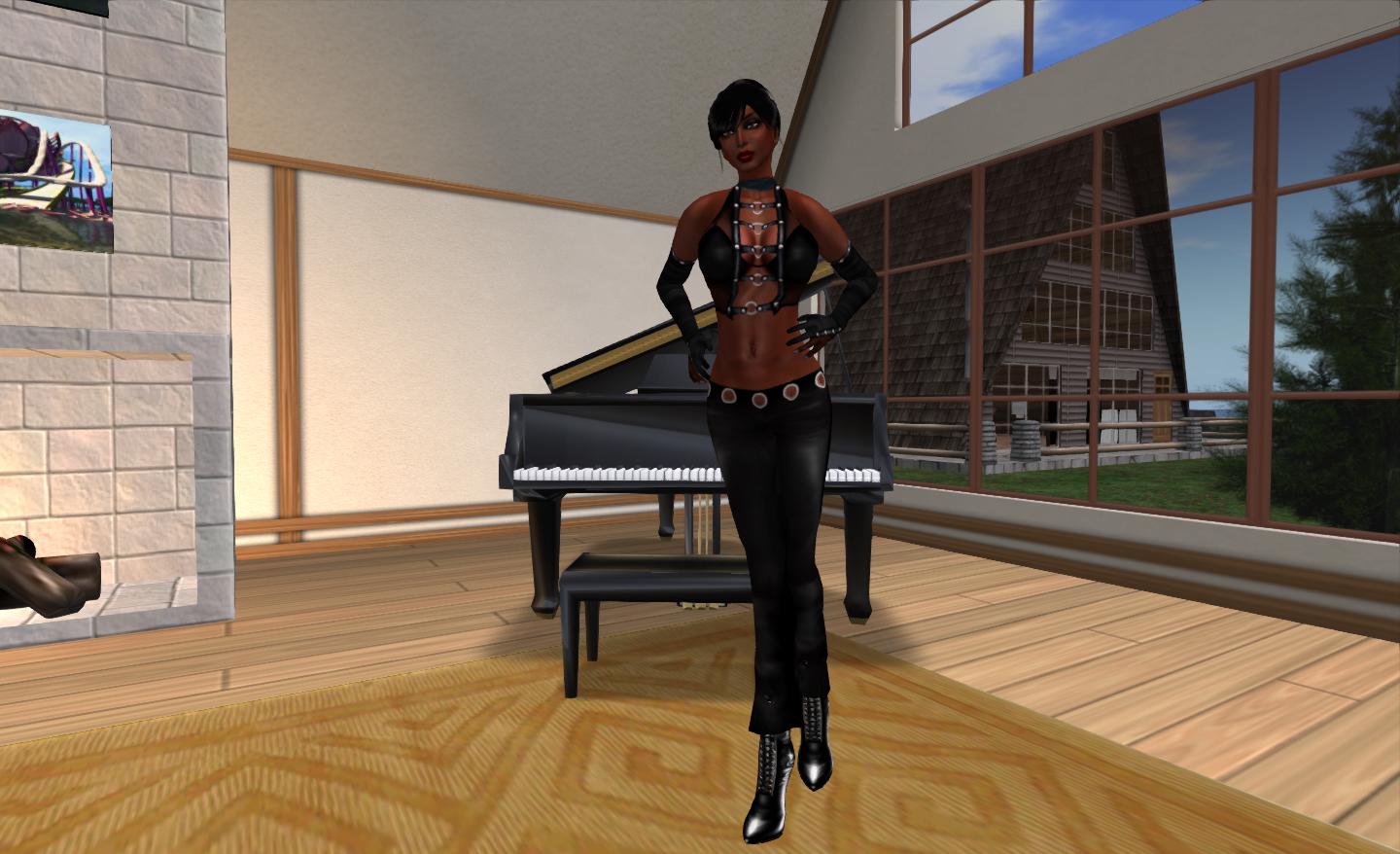
Me at 6ft 3in (+ heels…)

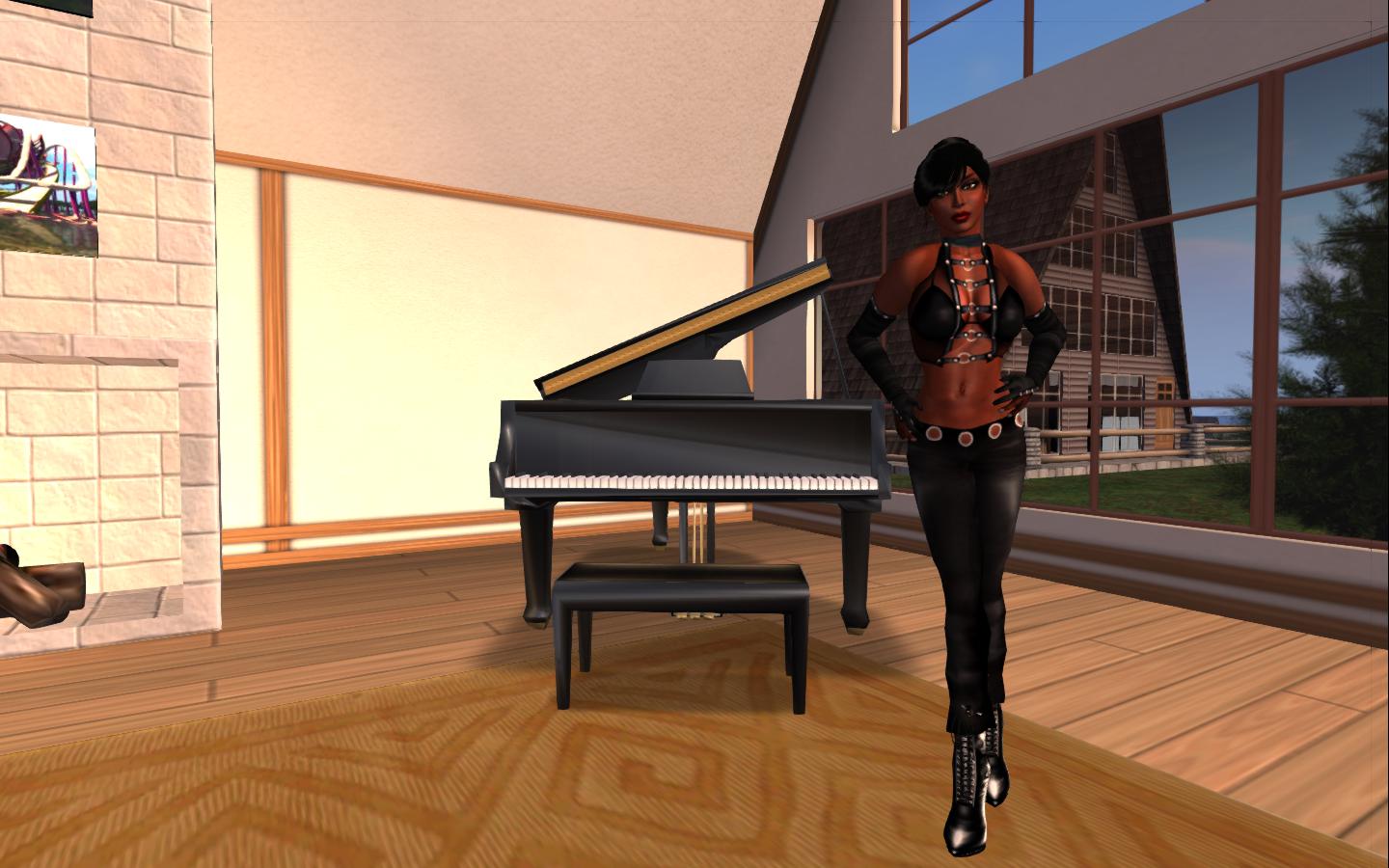
Using Penny’s tutorial I opted to scale my avatar to something approaching my real-world height and size (I’m 5ft 8in in real life, so a little bit on the tall side here as well :)). If I’m honest I did have a small problem with one section of the instructions, which I found a tad confusing to read (but then, put three shovels against a wall then ask me to take my pick, and I’m confused; so the fault is as likely to be mine as much as anything else), but, with a little trial and error, I ended up looking like this…

Me at 5ft 8in

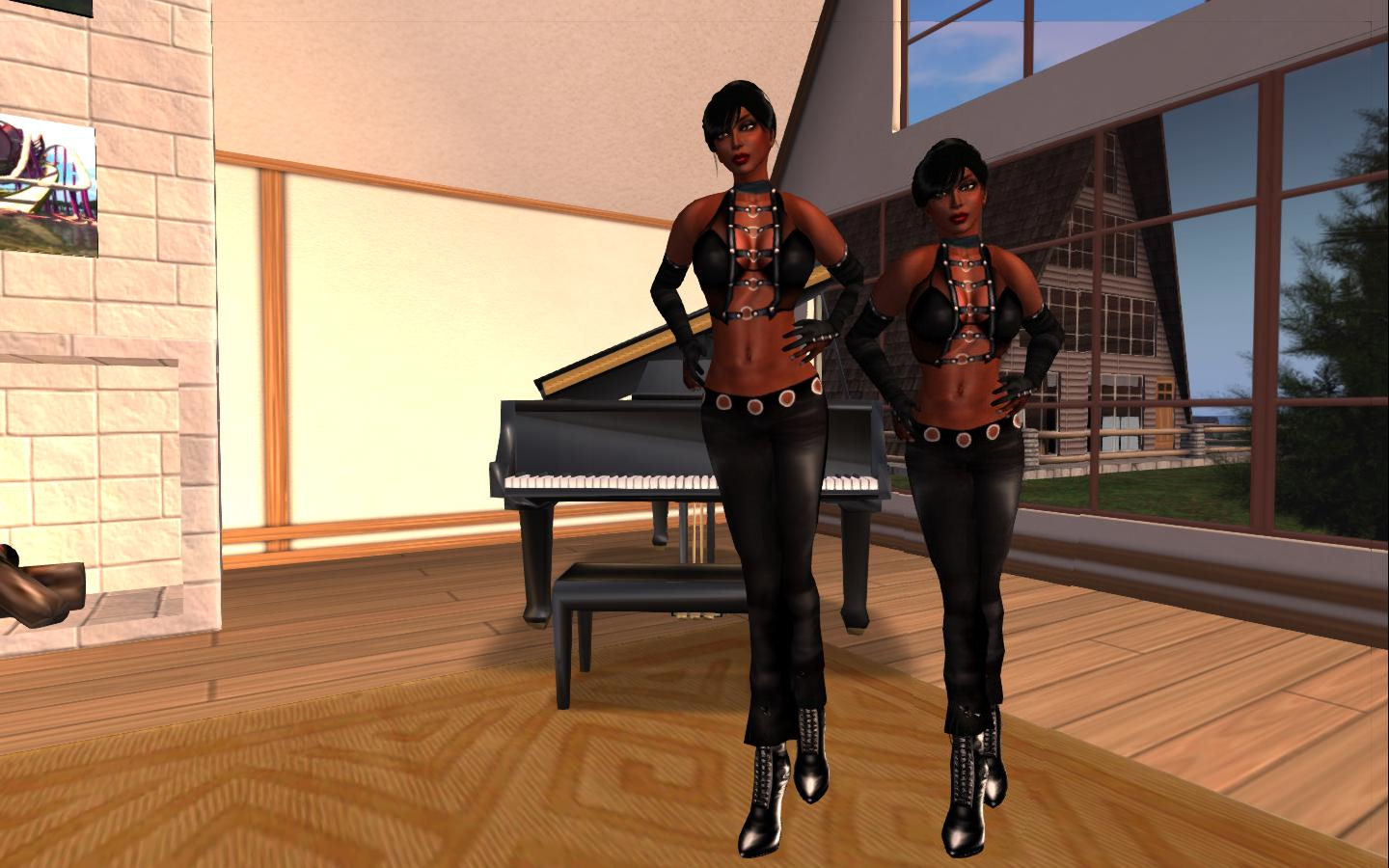
The difference is perhaps a little hard to see, until one compares the two side-by-side (and allows for a slight perspective issue which does actually exaggerate the difference somewhat).

Me at 6ft 3 and me at 5ft 8 (there is a slight perspective exaggeration in the two photos when combined like this)

The finished result, if I’m honest, has me leaning two ways at once. On the one hand, and combined with Penny’s camera defaults, It does give a much better perspective of things in general, and does have major benefits building-wise; were we all properly scaled in-world, we wouldn’t need houses the size of the Royal Albert Hall in which to live. Even my Linden Home now has church-sized proportions about it from my new perspective!

However, on the other, realistic avatar heights open up a world of issues of their own. Take no mod furnishings, etc., for a moment. Adjust your avatar height and proportions and it’s easy to find you have a bed you need a car and a guide-book in order to find your way across from one side to the other. That said, I do more naturally “fit” my piano now, and my feet don’t vanish into the floor when seated…

I’m still adjusting to my new height, and confess to having my “old” shape sitting ready for recall. Even at 6ft+, it still works with Penny’s camera offsets; but I’m going to see how things go with the new economy-sized me for a while – and see how people react as I let her be seen more in-world.

Related Links

Popularity and the official SL viewer

In commenting on Firestorm’s achievements, Wolf Baginski asked a question about the popularity of official SL viewer:

From my POV, while I am glad I made the effort to shift from Phoenix to Firestorm, I would say there is an argument here which is missing their main point. 

Just what is wrong with the Linden Viewer UI?

What spoiled it for me was the jump from V1 to V2. Linden V1 has a range of colour schemes. V2 appeared in Beta with a rather dull set of colours, which I found difficult to use. I set out my reasons for wanting to see the same sort of choices that V1 had, and when that sort of choice appeared, I found I had to rely on a third-party developer, who had to repeat and test the work every time the Viewer was upgraded by Linden Labs.

Now they’re on V3, but I’ve never bothered to try it out. The Firestorm crew do a good job, and you can find these guys in-world. They’re people who take the trouble to use their Avatars. There are Lindens like that but, to be honest, I wouldn’t want Torley to be responsible for colour choices in the UI. Might not be the UI design… Maybe the question is, why don’t we feel safe with the Linden Viewer?

I’m not sure I share the contention that people don’t “feel safe” with the official viewer (not liking it is not the same as not feeling safe with it), although I do agree that people may well have a trust issue around LL (something I’ll  to come back to). However, Wolf’s question in interesting, as it actually touches on elements of the Lab / user dynamic that go beyond the viewer itself – or at least it set me off thinking in that direction, as well as a number of others; so much so that as I attempted to reply to his comment with my thoughts, I found them growing to essay length proportions. Rather then end up with a huge splurge in the comments section of a blog post, I decided it might be better to give my thoughts a post of their own.

It’s About the Options

Whatever its flavour, the official viewer has always been regarded by many SL users as a poor offering. Back in the days of Viewer 1.x, for example, we had Nicholaz’ Viewer, the RLV .EXE for the official viewer, Cool Viewer and Rainbow Viewer. Of course, we also had the infamous Emerald Viewer. Of them all, the latter probably lead to an explosion in TPV use, with people opting for the huge spread of options and innovative approaches to the UI that made their in-world experience easier and more informative. It also, it’s fair to say, paved the way for Phoenix’s huge success when shenanigans from within brought an end to Emerald in Second Life.

Even today, the major reason for the adoption of TPVs has little to do with the UI presentation and issues therein or with any matters of trust where LL is concerned. It comes down to a simple matter of the range of additional options and capabilities presented to the user in a TPV when compared to the official viewer.

The Failure of Viewer 2.0

The real problems for LL’s own viewer really began with Viewer 2.0 and broader matters occurring before and during the launch period, as summarised below.

Poor UI Implementation

Viewer 2.0: usability issues galore

The UI design was bad, period. Not only were there issues with the colour scheme and issues with the font style (which many with eyesight problems reported as being hard to read), and in the use of toasties / chiklets, etc., –  it was simply horribly unsettling to use.

The most obvious examples of this were the original sidebar, which rudely shunted the world-view off to the left rather than functioning as an overlay, what far too large and intrusive and included a series of eye-distracting side tabs jutting into the right side of the screen, and the bizarre decision to split up the camera controls into mutually exclusive panes on the same floater. Neither of these were destined to find favour with established users, and LL were to prove equally unwilling to accept this.

Setting False Expectations

An image from Massively’s sneak peek at “SL 2.0” (credit: Massively / Tateru Nino) – click to enlarge

Prior to V2.0 appearing, a lot of false expectations were set as to what it would be. Not all of these were LL’s fault, in fairness. Some, however, were. In late 2009, LL allowed Massively a sneak peek at various elements of the “new” viewer, which largely received positive feedback from users.

Such was the buzz about the new approach, LL actually issued what amounted to a warning statement shortly after Massively published the piece, stating: “What we ship later this year will be very different from what appeared in that post. We’ll share a sneak peek of the “real” Viewer 2009 later in the year, with plenty of time to receive and incorporate feedback before the final iteration ships.

Not only did the Massively sneak peek present a UI that was reasonably familiar – and comforting – to users, it also offered insight into new and useful functionality which ended up being tossed aside prior to the release of the “finished product”.

Thus, and despite issuing their cautionary response to the Massively article, LL had managed to tweak people’s expectations: we were going to get a viewer that looked something like V1; it was going to have cool additional features we’ve been looking for. What’s more, and as shown in the Massively article, there was even going to be a fairly simply UI skin that would potentially be easier on the eye for those with vision impairments.

Use the page numbers below left to continue reading

Steam: some news, further speculation

The TPV/Developer meeting on the 24th August included an interesting, if brief, discussion on the forthcoming link-up with Steam, in which a little more information was revealed, and comments were passed that allow for further speculation as to how things might be handed.

In keeping with the Steam format, there will be a promotional video for Second Life which will be available for Steam users to view prior to initialising the Steam download / installation process. This video (produced by Linden Lab) apparently does not promote Second Life “intensely as a game”, but rather as a “place with a lot of cool content”, with the overall approach to the video being described as “kaleidoscopic” and fast-paced in terms of images shown.

Perhaps the most interesting comment however, came from Oz Linden in response to a question relaid by Jessica Lyon, on users being able to log-in to SL “from Steam”, in which he said, “Yeah, it creates a Second Life account…I don’t know how the name gets created … the two are connected somehow.”

This sparked a short discussion on how this might be possible, and what the mechanism would be for handling names, with some in the meeting wondering if the link-up would allow them to use their Steam user IDs with SL. I’m going to go right out on a limb here, and suggest that when it comes to creating an SL account “from Steam”, we might already have the answer sitting in front of us.

How Steam Works

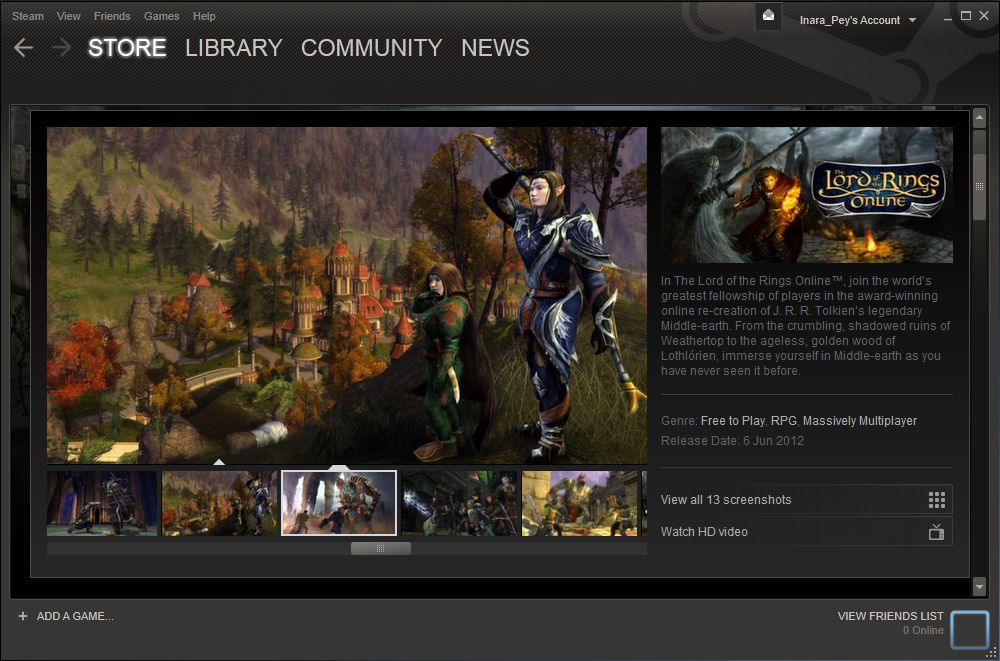
For those unfamiliar with Steam, obtaining a new game is a matter of using the Steam client or web page to browse available games (listed in several categories). Individual games can be previewed in a dedicated panel / page, which includes the options for promotional videos and stills to be added, as well as a description of the game provided.

A typical Steam client game preview panel

Should the user opt to play the game, they can start a download / install process from within Steam (on PCs running Windows 7 32-bit, games are installed into C:\Program Files\Steam\steamapps\ common, for example). Links are created to the user’s Steam library, allowing games to be launched from there as well as through things like short cuts on the desktop, etc.

What is interesting here is that many of the games have some form of sign-up process. However, rather than being incorporated in Steam itself, these generally take the user to an external website to complete the sign-up process. Could Second Life simply take the same route?

The Answer, My Friend, is (Maybe) Written in the Viewer (apologies to Bob Dylan)

Last month, I commented on changes made to the SL Development Viewer’s splash screen – specifically the dialogue box pointing the user to the need to sign-up for an account in order to access SL.

SL Development Viewer 3.4.1.263582, (August 16): initial prompt asking the user to create an account – included for the Steam link-up? (click to enlarge)

This has been included in all subsequent Development viewer releases since August 16th, but is only displayed if there are no avatar account files located on the host PC. Once somone has logged-in to SL and the account files created, the prompt is no longer displayed in starting the viewer.

At the time I reported this update I speculated as to whether it might be related to the upcoming Steam link-up. It’s hard to see why else LL would add such a prompt to the viewer’s splash screen – and the arrival of the update, just a couple of days after the original announcement did seem rather timely (although the splash screen changes have yet to be seen in any other flavours of the official viewer). Certainly, handling things this way would eliminate the need for complicated links between the Steam client / website and the SL website / sign-up page, and eliminate the need for any API interaction between the two.

If this is the case, however, one assumes steps will be taken to update the SL sign-up pages – the final step of which is to download the viewer; as Steam users will have already have effectively done this already, having the prompt without clarification could lead to some confusion.

The potential rebuttal to this is that Oz is involved with the viewer – so if the sign-up process was simply a matter of adding a dialogue to the viewer in order to direct the user to SL’s sign-up page, he’d know? Or is he simply being coy in his response, pending the official launch?

Will SL be Promoted as a Game?

During the TPV/Developer discussion, speculation is voiced that SL will in fact be promoted by Valve as a game on Steam. If correct, then one assumes that SL will be appearing in the Free Games category on Steam. However, this did not apparently come from Linden Lab, but rather from one of the TPV developers at the meeting.

As it is, Valve are due to launch their non-game offerings (described as “creativity and productivity” software this coming Wednesday, September 5th (which some have taken to be the date SL will appear on Steam, although this again is by no means clear) – so we might gain some further insight as to how SL might be pitched then – assuming SL isn’t one of the first offerings on the list.

Given that the original blog-post from the Lab announcing the link-up stated it would be happening in “the next month or so”, it would seem that we may have a couple of weeks yet in which to speculate, rather than perhaps getting a definitive answer this week.

Time will tell, as they say…

Related Links