Of Premium perks and problems

Update, April 3rd: This article has be slightly overtaken by events. The discussion relating to SL Go as a Premium option has been negated by the fact that on April 2nd, 2015, Onlive regretfully announced their streaming services would be closing on April 30th, 2015, following the sale of their core patents to Sony Computer Entertainment America – see my report here.

On Monday, March 20th, the Lab announced A New Perk for Premium Subscribers, which saw the cap on delivery of offline IMs you can read raised from 25 to 50 if you’re a Premium account holder. 

Premium benefits are often hard to quantify in terms of value (although the "new" in the current Linden Homes ad really needs to be dropped nowadays...)
Premium benefits are often hard to quantify in terms of value (although the “new” in the current Linden Homes ad really needs to be dropped nowadays…)

While the rise in the limit did result in some amused comments in various groups about it being an early  “April Fools” joke, and some sarcastic feedback on the forums, it is at least indicative that the Lab do have Premium accounts, and the need to try to improve the offerings associated with them, on their collective minds. 

Indeed, this increase in the cap for off-line IMs had been informally mentioned at a number of the Server Beta User Group (SBUG) meetings in recent weeks, while a server-side deployment that went grid-wide in week #12 included “internal improvements for premium users”, which were described as offering the means by which the Lab might be able to offer new perks to Premium account holders in the future, should such opportunities develop.

Of course, we can argue as to whether or not such a modest change and the IM cap update deserves heralding in a blog post of its own – but how else is the Lab supposed to get the word out in a manner that will be spotted?

However, the general response perhaps indicates once again that coming up with the right balance of Premium benefits isn’t as easy as we might like to think. The problem here is that we’re such a rich and diverse group of users, that trying to find something that will have a really broad basis of appeal, and which is relatively easy to implement, isn’t so simple a proposition as may appear to be be the case. Even the ideas we ourselves put forward might be said to be of limited appeal or aren’t entirely straight-forward to implement. Thus the Lab tends to be caught in something of a cleft stick.
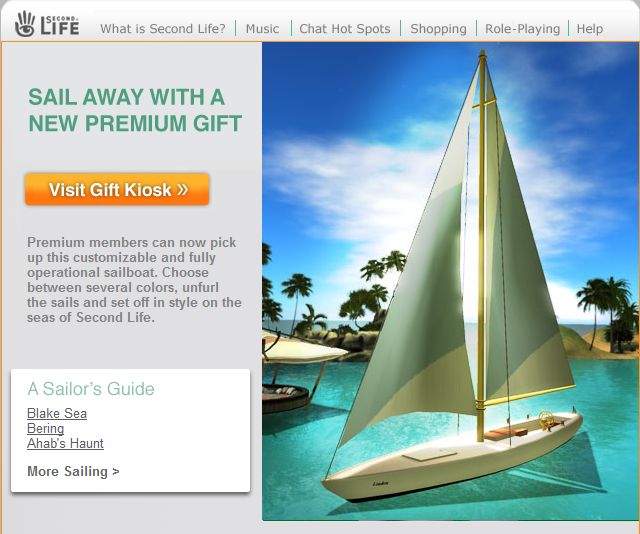
Gifts have been a staple part of the Premium account offering. While well-intended, and something liable to have reasonably widespread appeal when compared to other ideas, they've not really endeared themselves to users as well as might have been imagined
Gifts have been a staple part of the Premium account offering. While well-intended, and something liable to have reasonably widespread appeal when compared to other ideas, they’ve not really endeared themselves to users as well as might have been imagined

An example of the potential narrowness of appeal came up at a recent LL-led meeting in which the question of Premium benefits was raised. The responses given, which related to things like additional scripting options, special file stores, etc., undoubtedly sounded good to those making them, but, when taken as a whole, really only held appeal to a very narrow group of users, making them hard to justify as a “benefit” everyone might appreciate.

Other ideas, while sounding obvious, may suffer the same issue of appeal and bring with them problems of their own which could easily offset any potential benefit they present. Take the idea of increasing the amount of land offered as either part of a Linden Home or as free tier from 512 sq metres to 1024 sq metres. Sounds simple enough on the surface, but it belies the fact that many SL users, Premium and Basic, don’t see the appeal of either Mainland holdings or Linden Homes.

More particularly, increasing the amount of land available to Linden Homes brings with it problems of its own, as it essentially means that all of the existing LH estates would have to be rebuilt from ground up in order to both provide the additional land per unit and preserve the necessary protected land per region in order to be able to supply each home with it 117 LI – and that’s a big task, one that would include something of an increase in the overall number of LH regions to boot. It would also mean the need for those already occupying Linden Home to have to relocate, causing additional disruption the Lab may not feel happy about creating.

Increasing the parcel size for Linden Homes to 1024 square metres sounds good, but brings with it headaches of its own when you consider the amount of re-working required to make all LH estates fit with the new parcel size

While this issues are perhaps smaller, the same goes for upping the amount of free tier offered Premium accounts from 512 sq m to 1024 sq m. Does the person currently using their 512 sq m actually have enough land around them to benefit from the increase in free tier? Will they have to move to make use of it? If they deed their land to a group, does the group have enough land from which to benefit? Then there are the necessary changes which need to be made to the billing system to account for the change.

Obviously, these are not insurmountable problems, and those relating to free Mainland tier might even be regarded as edge cases. But, the fact that they do raise questions marks over their ease of implementation and may not deliver the hoped-for levels of increased appeal do make them that much harder for the Lab to consider as potential solutions.

SL go logo
Even ideas around offering SL Go as a Premium offering, while simple in concept, are potentially less-than-simple to implement

The same is true for ideas for combining Premium accounts with other offerings – such as SL Go, as Jo Yardley  has suggested, may potentially be non-starters. While the idea sounds great in principle, it perhaps overlooks a few things.

At its most basic, it is hard to see how such an arrangement would offer a decent level of return for OnLive. As it is, it would seem the service has already gained sufficient critical mass for the company to enjoy a meaningful revenue stream from it without any such partnership; ergo, it’s hard to quantify any real gain that might be made in wrapping the service as a part of LL’s Premium membership.

More practically for both companies, however, is that the idea would seem to introduce numerous additional billing requirements which will take time and effort to implement and which, once done, might not be matched by the overall pick-up in interest SL users have in the Premium account offering. Support issues also rear their head as well. Currently, SL Go stands as a service independent of LL. Bundle it with a Premium offering, however, and users are going to expect the Lab to support it, regardless of OnLive’s own support activities, and are probably going to be unimpressed when referred elsewhere.

Thus there are a broad range of issues which would have to be addressed for such an arrangement to come about. While they may not necessarily be insurmountable, they do nevertheless call into question the overall benefits of such a partnership when compared to the overall effort in making it happen.
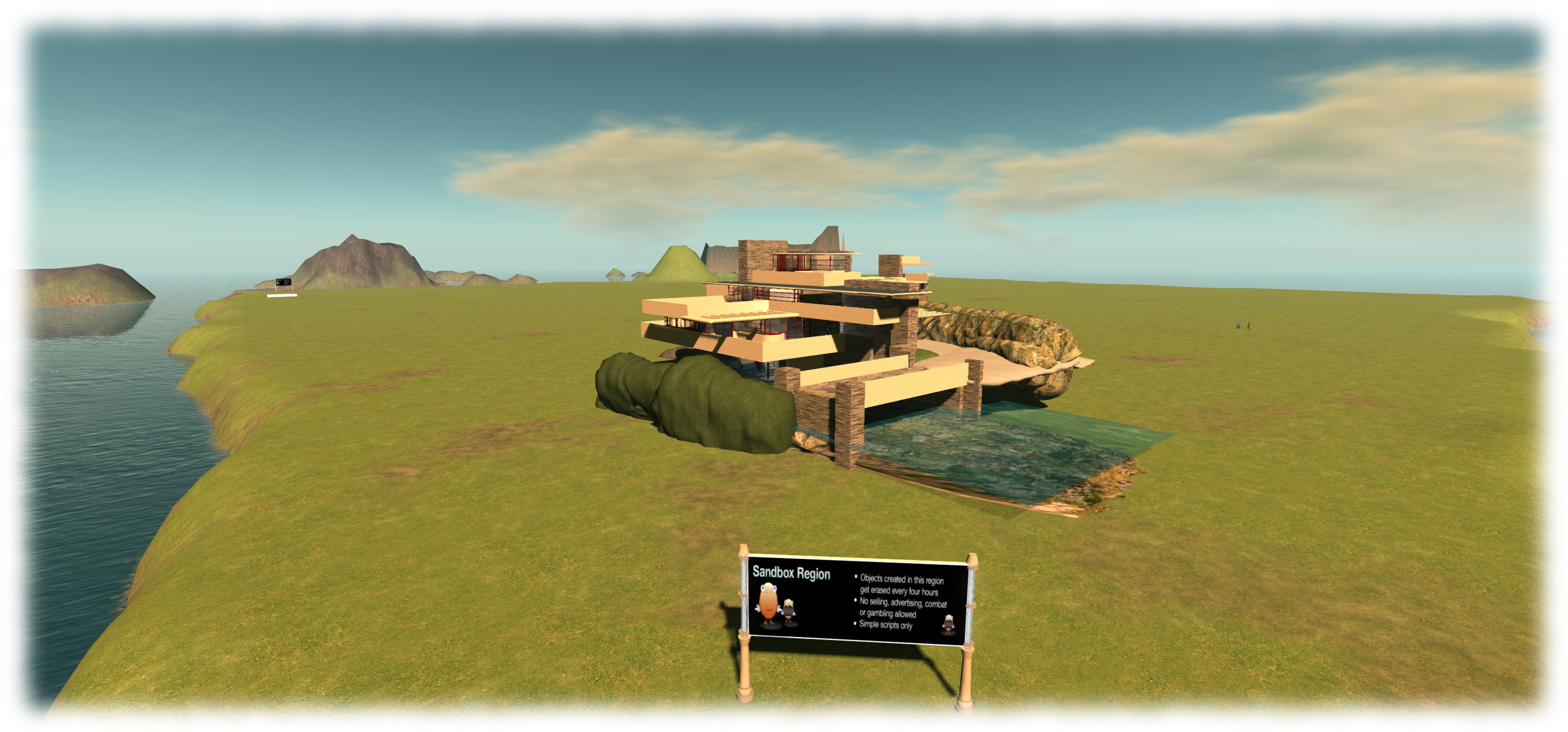
Premium sandboxes have proven popular among premium members for providing relatively quiet and griefer-free building locations

One idea that could have appeal is that of increasing the number of groups Premium members can join. Given the ongoing improvements being made to the entire group chat mechanism (which had previously been impacted, performance-wise, by the sheer volume of group-related “management” messages the system had to deal with), this could well be something the Lab could provide in the future.

Another idea has been that perhaps the Lab could offer a range of options users could then chose from to build their own “Premium package”. However, this again brings up the question of management and support for such a system, as well as the sticky issue of ensuring all that is offered represents equitable value across the various combinations of options users might pick.

Will Burns, far back in the mists of time (OK, February 2013), pointed to one potential for Premium accounts, and that would be to revamp them as “Professional Accounts”. He’s nipped and tucked the idea since then, but it is an interesting concept, and one that has significant logic behind it. However, it is also one I rather suspect the Lab is considering (in some form, at least) with regards to their next generation platform, rather than “retroactively” applying to SL.

Or perhaps the solution needn’t be that complicated, and we’re simply looking at the issue too hard. Maybe a simple increase in the weekly stipend back to its old level of L$500 might be enough of an enticement (money talks, as it were, despite potentials sinks), particularly if, going forward, it is part of a package of visible in-world options … such as a higher group limit, raised cap on offline IMs, etc.

In terms of the raising of the IM cap – and to bring this discussion full circle – one of the criticisms voiced directly at it is that it seems a trivial change, and should have been higher. Perhaps so, but as was pointed out to me when discussing the change, notifications have to be loaded each time you log-in, and people are really bad at clearing down their saved notifications. Thus setting the limit too high could result in some people’s log-in being impacted as the notifications file is loaded, and so it might be that the Lab is erring on the the side of caution in order to see how things go.

But be that as it may, the fact remains that the Lab are at least trying to offer more useful benefits to Premium members. It may well be that given the state of things, all they’ll ever be able to do is twiddle at the fringes in order to try to make things more attractive. If so, then hopefully as small as it is, the IM cap change will prove the be just the tip of the iceberg, and in time we will see a broader range of perks and tweaks sufficient to give us all some measure of satisfaction with Premium accounts.

Second Life is [in] Good today

Nalates Urriah pointed me to an article in Good magazine in which freelance writer Mark Hay discusses Second Life.

Now, before you start groaning, the piece is actually pretty good. Unlike wannabe writers of the Marlon McDonald ilk (whom I rebutted last year), Mark Hay has actually – shock, horror! – researched his subject prior to putting fingers to keyboard.  Not only that, he’s actually taken the time to comb through Flickr and found images that both reflect how Second Life actually looks today – so double kudos to him from the outset.

Don't be fooled by the look: Mark E. Hay offers a perceptive take on Second Life (image: Mark E. Hay)
Don’t be fooled by the look: Mark E. Hay offers a perceptive take on Second Life (image: Mark E. Hay)

What’s more, while at a little under 1500 words in length, Second Life is Staying Alive may not be a in-depth piece of analysis, but it is a considered and balanced peace which offers a largely impartial and fairly accurate examination of the platform – and a thought-provoking one at that, and in a number of ways.

For my own part, what makes this article particularly interesting is the social bent it takes. That it does is not precisely the interesting point, after all, Mr. Hay has something of a background in sociology by education. Rather it is the views he offers up which may not only be eye-opening for those who have heard about, but not really looked at, but which also offer food for thought on a number of levels even for those of us already engaged in the platform.

Some of the latter may not be immediately obvious, and may require a second reading in order for them to fall into place. As such, they may not even have been intended at the time of writing, although I suspect some of the examples he cites are far from mere happenstance when one looks at the wider context in which SL is at times held within the media.

This really kicks-in after he gives a very short potted history of some of the platform’s highs and lows and the apparent loss of interest in it that occurred within the wider world. Here he points out that despite all the claims otherwise, the platform does continue to enjoy widespread use around the globe with average monthly log-ins not that far below those enjoyed during its “peak” popularity. from this, he offers his own explanation to why this is the case: the ability to socialise and create / join communities in which those who are otherwise globally dispersed to engage with one another and create environments for that interaction which go beyond anything achievable through other mediums.

Give Us a Kiss, Dear, by Serena Snowfield on Flickr Not only does Mr. Hay offer an interesting and thought-provoking take on SL, he also takes the time to search through Flickr and locate images for his article that offer a fairer indication as to how the platform can look, such as with this image called “Give Us a Kiss, Dear”, by Serena Snowfield on Flickr

OK, so for those of us within SL this may generate something of a “no s*** Sherlock,” reaction; we are, after all, seeing this on a daily basis, either directly through our own involvement in the platform, or as a result of our travels within the platform.  However, other than the “fnar, fnar” finger-pointing or feigned outrage  at “the porn”, the ability for SL to provide a means to generate such societal interactions and ties seems to be something that has gone right over the heads of most of those willing to comment on the platform. Thus, Mr. Hay’s view is a timely, and welcome counterpoint to the frequent negatively which accompanies public mention of Second Life.

But this isn’t the sole thrust of his thinking. as he points out, the ability for SL to generate such social and sub-cultural networks and groupings isn’t actually new; it’s actually pretty much the way in which the Internet as a whole has grown. What does make SL unique, however, again as he identifies, is in the manner of the depth of creation and tangible persistence it offers all these various groups and sub-cultures, something what hasn’t previously been found within digital mediums and which has thus become the reason why many of us keep coming back to SL.

In this – and while he doesn’t point to it directly, but rather references it obliquely in mentioning attempts to bring the likes of the Oculus Rift into SL – his piece also highlights another potential within Second Life. Because it it can and does present the means for the creation, growth and sustained use of sub-cultures and societal interactions and structure which might not otherwise exist, it stands as the precursor for things to come in the promised VR revolution over the course of the next decade. Hence, his reference to Tom Boellstorff‘s seminal Coming of Age in Second Life: An Anthropologist Explores the Virtually Human, although offered in a broader context, is both unsurprising and entirely appropriate.

But even without all of this deeper ponderings, which as Mr. Hay correctly states, are all part of the future, his article neatly encapsulates why Second Life has endured and will likely continue to endure for the foreseeable future, as he points out in his closing statement:

For now all we can say is that Second Life is not as dead as many think. It just wasn’t the world we thought it was half a dozen years ago. Rather than a place that would reinvent everyday life for the masses, it became a place for the gathering, manifestation, and expression of societies and ideas that might not otherwise get to exist. And as long as it fulfils that purpose, it will most likely not fade away any time soon.

If you haven’t done so already, go read what Mr. Hay says about Second Life, and if you like what you’ve read, Tweet him. Better yet, get your SL-dubious friends to give him a read, they might just change some of their perceptions.

Related Links

“We are building a new product *in addition* to Second Life”

Just Another Tequilla Sunrise, Isle of Love; Inara Pey, October 2014, on FlickrJust Another Tequilla Sunrise, Isle of Love (Flickr)

It’s no secret that the Lab is working on a “next generation” virtual world(s) platform. Since the original announcement and follow-up confirmation, the matter has inevitably led to some controversy.  Since that time the Lab has sought to give reassurance to users that doing so is not the “end” of Second Life.

Hence why the Lab are continuing to develop Second Life and continuing to plan for its future, up to and including a planning meeting which took place at the Battery Street offices during February 2015. Hence why the Lab continues to circulate manpower and expertise between Second Life and the development of their new platform, so that both might equally benefit.

Indeed, after recently advertising a software engineering position specifically for Second Life work, Oz Linden, the Lab’s Technical Director for the platform, was able to Tweet:

And no, the Lab will not say who it is, or what their involvement in SL might be

In this, it’s also worth pointing out that Oz has very much been the cheerleader when it comes to SL’s prospective future. In 2014, when the Lab was starting a process of aligning its resources to support both Second Life and its new platform, he actively campaigned for the post of Technical Director for Second Life. In July of that year he was happy to go on record saying:

I went through kind-of a process with Linden Lab management to try to get the new position I’m in now. This is something I wanted. I wanted this. This was not some kind of booby prize that was handed me. I got a couple of IMs from residents, I’m sure they were mostly kidding and mostly all in fun, but saying, “Oh, poor Oz. He got left behind.”

Poor Oz did not get left behind. Lucky Oz got exactly the job he was looking for.

Oz Linden - Technical director of Second life offers some pragmatic and open thoughts about the platform and its future
Oz Linden – Technical director of Second life offers some pragmatic and open thoughts about the platform and its future

He also takes a very positive attitude to the debate over the new platform and how it might or might not impact Second Life, noting that for the Lab as a whole, that such a debate is going on within the community demonstrates that they still have a very passionate and supportive user base for the platform:

People wouldn’t bother to criticise us for what they see as our flaws, and we can all either agree or disagree with whether or not individual issues are a big deal, and that’s a conversation I’m looking forward to. But they wouldn’t be bothering to criticise us if they didn’t think Second Life was worth having and worth improving.

This was again demonstrated during the February 13th TPV Developer meeting, when the subject of the new platform was raised in passing, Oz again emphasised that the future of Second life is far from over. In doing so, he also demonstrates the kind of pragmatic attitude towards the new platform we should perhaps all consider adopting. He’s further  given me permission to reproduce his comments here in both audio recordings and as written transcriptions.


The folks that are working on the new platform would love to be able to say that they’re making something so amazing and so wonderful, and so much better that everybody will want to move over to it. And maybe that will happen; and if it does, then Second Life will be this vast, empty place, and there’ll be no activity happening here, and if we turn it off, nobody will notice.

I don’t expect that will happen, and realistically, none of them expect that will happen right out of the box, anyway. Because there’s an awful lot in Second life that will take time to to create equivalence for in whatever they end-up decided to call the new thing. So it’ll be time.

But if Second life continues to be a sound working environment for people, and they’re still enjoying it, and they’re still using it and it’s still economically advantageous to keep it alive – why would we turn it off? I mean, we won’t. It’s silly. And I think that’s going to be years and years. [That’s] just my personal opinion.

And in the meantime, my job is to continue to make it better. Not “keep it alive”; not, “keep it limping along” – to make it better.

 And in terms of future activities related to Second Life, he went on to say:


It’s no secret we had a big planning conference in San Francisco last week; it wasn’t meant to be a secret, we did. We got everybody involved in Second Life get together; we had developers, and QA people and support people, and operations people and product planning people and business people….

And everybody got together and talked about what was working, what wasn’t working, various ideas for how to improve things, and it was fantastic. It was really fun; everybody there learned something they didn’t know when they got there, and we came away with a lot of great ideas. And we’re going to go ahead with some of those ideas. So, we’re having fun!

So really, there’s no reason to fear for the future of Second Life at this point in time. It’s liable to be around for a good while yet. Hence why I use another quote from Oz as the title for this article, one which I’ll paraphrase in closing. The Lab aren’t building a new platform instead of working on Second Life, the Lab are building a new platform in addition to working on Second Life.

One year on: Ebbe’s Linden Lab

On Monday, February 10th, 2014, Ebbe Altberg officially took-over the reins as the CEO of Linden Research Inc. (aka Linden Lab).

The news of his appointment, which had been released not too long before his arrival, and after the Lab remained steadfastly silent after the departure of his predecessor had entered the public domain, tended to bring retorts of “who he?”, promoting me to pull together something of a profile on him from various sources, which tended to draw largely positive feedback. I also took the liberty of offering a couple of suggestions on the day he arrived at LL, which appeared to be appreciated:

So, now we are a year on, how have things been, overall?

For me, given I originally wrote that “open letter” to him on the subject of communications, the turn-around has been both noticeable and appreciated. At the first of his many public appearances with bodies of users and groups which marked his opening months at the Lab, Ebbe effectively announced at the 2014 VWBPE event that the door is once again open, and demonstrated as much by spending almost 90 minutes addressing questions from users.

Following that, we saw re-engagement through forums, further bridge building with educational and non-profit organisations, the re-opening of the JIRA, the lifting on the ban on Linden staff entering SL using their Linden accounts unless they were on official business, and fresh (and persistent) use of the blogs once more to present news, information and updates – such as Monty Linden’s superb range of posts on the HTTP work, or Landon Linden’s equally informative posts such as The Recent Unpleasantness. As the year progressed the Lab continued to open windows as well as doors, seeking to re-engage with the community through a variety of means, from pro-actively seeking input from users on potential improvements to SL through to something as simple as the return of the annual snowball fight.

Ebbe Altberg: one year in the Hot Seat

All of this has been to the good, even if some approached this “new” openness (actually more of a return to how the Lab used to be) with suspicion. Some of it was perhaps understandable; at the start of his tenure at the Lab, Ebbe’s predecessor seemed to initially breathe life into matters of communication (even then a priority in many people’s eyes) – only for the door to been slammed shut again within a few months.

Some might even argue that such re-engagement is trivial “in the scheme of things”; I’d say not so. Engagement and communication lie as two of the foundations of trust between a company such as a Lab and its user community; therefore putting them both back in place does do much to stem the erosion of that trust.

Elsewhere, things may seem to have been a little slower. While there have been changes for the better for SL in technical terms, it’s fair to say that these have been more incremental and evolutionary, rather than revolutionary. But then, SL is a decade-plus old platform; getting truly revolutionary with it isn’t that easy. Instead, what we’ve had is a continuation of approach started prior to Ebbe’s arrival at the Lab – and quite rightly, too.

Far better to allow projects of proven likely benefit to continue to their conclusion and then build on them, than to suddenly try to jump tracks and do something else entirely, even if it does promise lots of new shiny in the process. As it is, the improvements this work has brought to the vast majority of users are undeniable. What’s more the approach has meant the thorns long ignored, such as group chat issues (another pressing problem put to Ebbe when he arrived) are also getting attention.

The Engadget Expand NY panel for Back to Reality: VR Beyond Gaming. For left to right: Ebbe Altberg, Matt Bell, Marte Roel and host Ben Gilbert
Ebbe Altberg also worked to put Linden Lab and Second Life front-and-centre of the debate on the future of the metaverse through opportunities such as SVVR’s Creating the VR Metaverse panel, and in discussions about the future of VR outside of games through opportunities such as at Engadget Expand NY in November 2014  (above)  where he joined Matt Bell, Marte Roel and host Ben Gilbert.

Where things have perhaps been radical have been outside of Second Life, such as the dropping of almost all of the products that marked the company’s attempts to diversify its portfolio and potentially generate additional revenue. Again, this was actually something started before Ebbe’s arrival, but which he supported – hence the axing of Creatorverse, dio and Versu, to be followed later in the year by the closure of Patterns development and the sale of Desura.

In truth, when first announced, the idea of the Lab looking to diversify its revenue stream through a broader product base was a good one; the problem was the follow-through never really matched expectation and became too much of a grand experiment.

Of all the products the Lab developed or acquired, only Blocksworld has demonstrated it has real legs, while Creatorverse and dio, always appeared to be far too limited in appeal to ever gain deep and lasting traction, so trimming them was a sensible move. It was also hard to see how the acquisition of Desura could offer the Lab practical revenue growth outside of meeting its own needs, or without on-going investment and development which would in turn offset the value of revenue gained. Even so, Patterns and Versu, did appear to offer potential. Versu has certainly since gone on under its own steam (full kudos to the Lab for allowing it to do so), while Patterns, even though still under development, built up a small but loyal following on both Steam and Desura, and the announcement of its passing did give rise to upset.

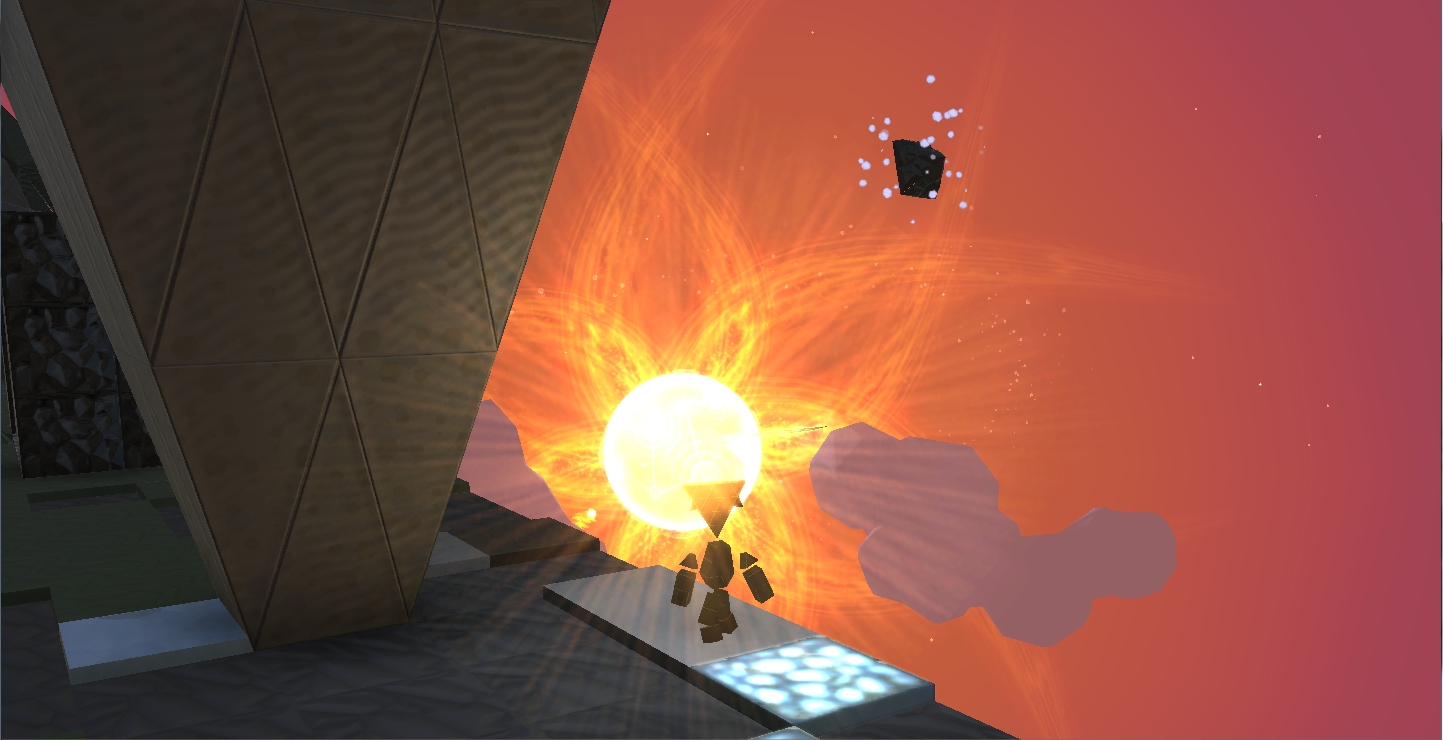
The little "Dorito man" headed off into the sunset in October, as Patterns followed Creatorverse, dio and Versu in being axed from the Lab's nascent product portfolio. It was followed in November by news that Desura had been sold.
The little “Dorito man” headed off into the sunset in October, as Patterns followed Creatorverse, dio and Versu in being axed from the Lab’s nascent product portfolio. It was followed in November by news that Desura had been sold.

Continue reading “One year on: Ebbe’s Linden Lab”

Sundry thoughts on regions, revenue, tier and platforms

A quiet afternoon at Hollywood Airport

The year-end brought with it a round-up of Second Life in terms of region numbers, courtesy of Tyche Shepherd and her excellent Grid Survey. 2014 continued to see the downward count in the number of private regions in SL, with some 673 regions vanishing through the course of the year (from 19,273 at the start of the year to 18,600 at the end of the year).

Expressed as a percentage, this means that the main grid has shrunk by 3.5%. That compares to an 8.2% shrinkage in 2013 (from 20,992 to 19,273 regions, a loss of 1719) and a 12% reduction in 2012 (23,857 to 20,992, a loss of 2865 regions).

There are likely to be a number of reasons for the slow down in losses, all interacting with one another. While  one ideologue opted to pooh-pooh it, in September 2011 I pointed to one contributing factor to the then increasing rate of decline in region numbers as likely being due to physical world economic issues. With their disposable income diminishing, people were finding an outlay of $125 a month for virtual land increasingly hard to justify, and so were divesting themselves of it; something which likely continued through 2012 and early 2013.

Private regions numbers through 2014 (source: Tyche Shepherd, SLU forums)
Private region numbers decline through 2014 (source: Tyche Shepherd, SLU forums)

While I’m not about to say we’ve turned the corner where the physical world economic situation is concerned, it is probable that by late 2013 we’d reached a point where those still with a residential homestead of their own were more willing to grit their teeth and pay for the land they hold, thus contributing to the slowing of shrinkage.

So what does that mean for the year ahead? While nothing is guaranteed, I tend to sway towards the view that the decline in region numbers will continue to slow, but at less than the rate we’ve seen in from late 2013 through 2014. I’m also inclined to think we won’t see any significant rise in region numbers through 2015 (unless some kind of external factor comes into play or the Lab does opt to do something quite unexpected to cause people to suddenly want lots of land).

One thing the slow-down will hopefully do is decrease future calls for tier cuts. As I explained back in January 2013, unless the Lab have a substantive means of compensating for the revenue loss resulting from any “reasonable” tier, any such cut will likely hurt the company (and SL) more than help. Nor is the Lab’s profit margin anywhere near the levels sometimes mentioned (e.g. the 200% recently claimed in this blog), such that they could simply “absorb” any tier cut without feeling the impact.

The decline in private regions, January 2012 through December 2013 (source: Tyche Shepherd, SLU forums)

In 2008, estimates put the Lab’s earnings at around $90-95 million, and their possible profit margin at between $40-$50 million (48-50%) – see the articles here and here. I assume these estimates are for gross profits, as neither makes allowances for tax.

More to the point, there seems to be a slight flaw in both estimates: they only appear to reference the costs involved in running simulator servers. No mention is made of the various back-end services such as group chat, group management, asset management, login, transaction management and payment, (and today, the avatar baking service), the various web services (Marketplace), and so on. While the costs associated with all of these are obviously going to be a lot lower than those for the simulator hosts, they shouldn’t be entirely discounted. There’s also third-party support costs (in 2008-2010, for example, the Lab was paying Rivers Run Red and 80/20 Studio; today there’s the costs involved in using the Highwinds CDN service).

Continue reading “Sundry thoughts on regions, revenue, tier and platforms”

A look at the Lab’s new promo videos

secondlifeUpdate: December 26th: Seems I may have been a little hasty in critiquing the Welcome to Second Life video. Both of the new videos are intended as part of an e-mail campaign, and so additional context will be given. 

Tuesday, December 23rd saw the Lab issue two new promotional videos on You Tube (although interestingly, at the time of writing, one one appears on the WhatIs page of the official SL website). I missed both when released – so thank you to Whirly Fizzle for sending a G+ notification of both, which showed-up on my Nexus tablet.

There has often been strong criticism of past SL promotional videos produced by the Lab, some if which have seemed a tad confusing, while others have perhaps given a bit of a false impression about the platform. In the past I’ve droned on about the Lab doing more to work with established machinima makers to put together promotional material; in fact I did so as recently as January, thanks to Strawberry Singh raising awareness of a very slick promo video for an in-world brand.

So what are the latest videos like?

Well, pretty good, actually. The first one I caught is called Create in Second Life, and it’s a very good demonstration of just that – content creation in Second Life. It comes with the descriptive tag of Second Life is a powerful platform for creativity. Everything in Second Life – interactive 3D objects, unique experiences, global communities, and more – is created by people just like you.

It runs for bang-on one minute (with 52 seconds of actual footage). The editing is fast-paced without being confusing, and the various sequences provide a pretty good glimpse at various elements of content creation within the platform.  There is a lot showcased in the film, including Cica Ghost’s Little Town and the famous Dwarfins, together with Chouchou, to name the three I instantly recognised. What’s more, footage from The Drax Files: world Makers series is used (notably clips from segment #23, featuring Loz Hyde).

All told, it is a snappy, tightly-produced video that showcases SL very well.

The second (for me in terms of viewing order) is entitled Welcome to Second Life. It runs to slightly longer – 1:07 minutes, with 1:04 comprising footage. It also includes a more detailed description:

Second Life is an online 3D virtual world imagined and designed by you. From the moment you enter Second Life, you’ll discover a universe brimming with people and possibilities.

Create and customize your own digital 3D persona, also known as your avatar. Be a fashion diva, a business-savvy entrepreneur, or a robot or all three. Changing identities is quick and easy, so if you tire of your avatars outfit or body, shop for a new one in Second Life or from your web browser. Then switch it in seconds.

Every minute, Residents assemble buildings, design new fashion lines and launch clubs and businesses. There’s always more to see and do.

However, as much as I like it, it does cause something of a niggle; the video supposedly takes one through engaging in Second Life in “five easy steps”. However, actually joining SL by creating an account is completely missed. Instead, the video  gives the visual impression that all someone has to do is download the viewer and start from there (i.e. any sign-up process is inclusive to the viewer, when in fact it is a separate step), the second step being to “login to Second Life”.

A persona niggle for me with the second video is it does gloss over the need to have an SL account before downloading the viewer
A personal niggle for me in the “Welcome to Second Life” video, which is otherwise pretty good overall, is it does gloss over the need to have an SL account before a new user downloads the viewer and attempts to log-in.

This may sound nit-picky, given it is a promotional, rather than instructional, video. While I don’t expect a promo video to get bogged-down in all the steps required to sign-up, at the same time I can’t help but feel that failing to even point to the Join Now options on the web page could result in people following the steps as outlined by the video only to find themselves facing the viewer log-in screen and screaming a frustrated, “HOW?!”

Beyond this, however, the video is again slick, well-edited and does show off SL’s better features – and it is certainly good to see attention drawn to the likes of the Destination Guide to help people with their engagement in the platform, and to aspects of help and support, as well as to the broader community as represented through the website and forums.

Having said that, both videos do offer a bright, positive look at SL, with Create in Second Life really carrying the banner very well.