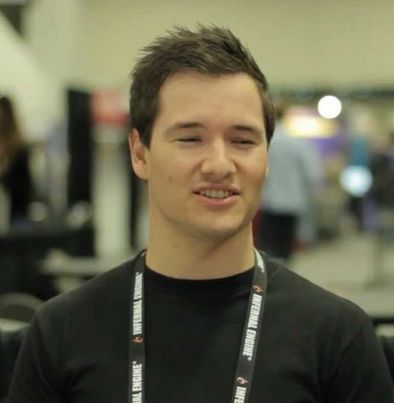
Ebbe Altberg talks Blocksworld, SL and the “next gen” platform

Dean Takahashi has a new article up at VentureBeat’s GamesBeat column, featuring a conversation with CEO Ebbe Altberg.

I admit to finding the title of the article, Linden Lab explores VR for its next-generation virtual world (interview), a little bit of a misnomer, given the article actually covers more ground than just the Lab’s new platform and VR. In fact, it’s fair to say that much of the focus of the piece is on Blocksworld, and not the new VW platform – which doesn’t make the piece any less interesting a read.
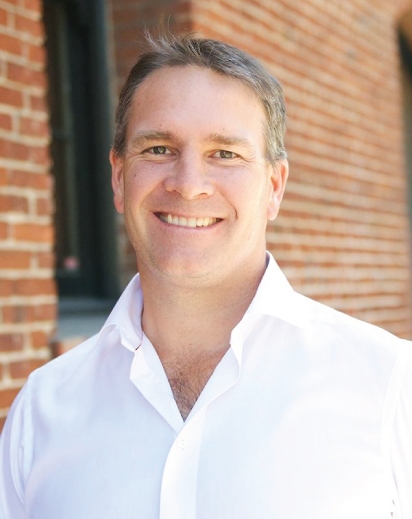
Ebbe Altberg discusses the Lab's next gen platform, Blocksworld and SL with VentureBeat
Ebbe Altberg discusses the Lab’s next gen platform, Blocksworld and SL with VentureBeat

The article starts out by noting the company’s longevity and the fact that it has been in something of a transitional state (as we all know), divesting itself of almost all its existing products save Blocksworld and SL, while at the same time announcing it is heading down the road of building a new virtual world platform.

Takahashi suggests the reason for the Lab divesting itself of products is down to some of the products failing to have the right mix of talent, traction and resources to make their mark.

This is perhaps debatable; while Creatorverse and dio were perhaps lame ducks in terms of appeal, it has to be pointed out that both Versu and Patterns had potential – the former has since gone on to stand on its own two feet, and the latter already had a reasonable user-base even whilst still in a pre-release status (and its termination drew no small amount of upset from Patterns user on Steam).

In fairness to Ebbe Altberg, he does acknowledge the fact that some of the Lab’s nascent  products didn’t really get a chance to grown their own legs, and that some of them might well have worked out for the good of the company. However, hard choices were required, the Lab really being too small to handle everything at once (and we know what happens when it grows beyond its means: remember, the June 2010 layoffs came after a sustained 18 months of recruiting that saw staffing numbers increase by 50% for no demonstrable increase in revenue).

Turning to the meat of the article, it has to be said the the recent sale of Desura had led to some questions over Blocksworld’s future. However, Altberg’s replies to Takahashi about that product should put paid to speculation:

We’re also very excited about Blocksworld. I don’t know if you’ve had a chance to check that out before, but it’s a small up-and-comer. It’s one of the portfolio of non-Second Life products that we decided to stick with. We liked the user experience, the ease of creation, and the audience it targets: a much younger demographic than Second Life. Also, right now, it’s iPad only. It gets us into a lot of experience dealing with a younger audience. … You need to think about ease of use and simplicity but still enable them to create really powerful things, as well as working with the new medium of mobile. We’ve had good progress with this product. It’s still early, but we have good traction. The kids love it.
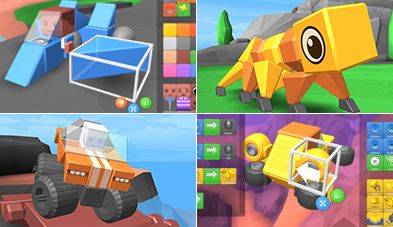
Block-3
Linden Lab are said to be “very pleased” with Blocksworld’s performance

In addition, and further into the interview, Altberg indicates that the game has around 400,000 monthly users. How this translates to revenue flow beyond the actual purchase of the game is hard to judge. While additional building sets and expansion packs are available as in-game “purchases”, these are paid for through “coins” which users can earn, rather than having to necessarily buy. Even so, buying coins is the easier option, particularly where the expansion packs are concerned (see the video below), so there’s a reasonable chance that Blocksworld is proving a “nice little earner” for the Lab, even if it is nowhere on the scale of SL.

Beyond this, it would seem clear that the Lab have further plans to enhance Blocksworld, including the development of an in-game user-to-user economy, which will allow the sale of creations and builds between users, somewhat a-la SL. Also, Altberg’s statement that, “right now it’s iPad only”, suggests that an Android version of the game is still under consideration.

One of the blocksworld expansion packs

Continue reading “Ebbe Altberg talks Blocksworld, SL and the “next gen” platform”

Of storms in teacups and dear diary articles

For what was a fairly minor piece on Second Life, Karyne Levy’s August 1st piece for Business Insider, Second Life Has Devolved Into A Post-Apocalyptic Virtual World, And The Weirdest Thing Is How Many People Still Use It, created quite a storm in a teacup, ripples from which continue to spread with accusations it is “negative” and “poorly researched”.

Yes, it is a tad lightweight, has a ridiculous title which has no bearing on the content, and gives every indication of being written in a hurry. It also gets a couple of things wrong: sex has always been a part of SL, rather than something that filled the void left by big business; and it isn’t actually as easy to see adult themed items in search as is suggested (not without setting the right Maturity ratings first).

But “negative”? Not really. Sure, it quotes William Reed Seal-Foss saying that SL stagnated (a view actually shared by many in SL); however Ms Levy counters this herself, pointing out the platform is pretty much still as popular among its users as it ever was. She also references the fact that it is embracing new technology like the Oculus Rift and she references Chris Stokel-Walker’s excellent 2013 article on SL for The Verge (which I reviewed when it first appeared).

Nor is any failure to mention the likes of the LEA or live performances or any of the hundreds of photogenic regions in SL evidence of a lack of research on Ms. Levy’s part. The reason such places aren’t mentioned is simple: they’re not the focus of the article.

Karyne Levy: "Dear diary" article (image via Business Insider)
Karyne Levy: “Dear diary” article (image via Business Insider)

The bottom line is that the article isn’t supposed to be any kind of analysis or examination of Second Life; nor is it an exploration of the creative opportunities within the platform. It is simply this: a “dear diary” account of one person’s venture back into Second Life and her experiences in doing so, and to judge it as anything else is to entirely miss the point.

As it is, and given the way the piece demonstrates just how shoddy the new user experience is, with its sink-or-swim approach to new users, I’d suggest Ms. Levy is to be commended for not sitting down and dashing-off an article along the lines of “after ignoring it for X years, I tried SL again. It still sucks”.

Let’s face it, she comes in-world, apparently negotiates the Learning and Social Islands (both of which are anything but), and gets herself to a role-play region only to find herself summarily ignored. As experiences go, it’s hardly great, and I suspect there are more than a few who can attest to having a similar experience when coming into SL for the first time.

Fortunately, rather than running off never to be seen again, Ms. Levy uses the assistance of an acquaintance – Judy – to help her on her way. How and where Ms. Levy may have contacted Judy isn’t that important given the nature of the piece; the fact that she at least had someone willing to help her is.

Ms. Levy met-up with Judy at the Caledon Oxbridge new user orientation centre, where she was able to acquaint herself with the rudiments of Viewer 3.x

Nor does it particularly matter whether or not Judy took Ms. Levy to the “right” places in SL or that her personal view of SL seems oddly slanted. What matters is that she was able to provide help, and enabled her to have a little fun whilst in-world.

That last part is actually quite important, hence the emphasis. Having fun is what is likely to bring newcomers back to Second Life. Probably more so than bashing them for writing something which fails to measure up to some preconception of what their article “should” be about.

At the end of the day, there is nothing intrinsically negative about the Business Insider. It doesn’t malign the platform, or cast judgement on the initial experience the writer had when in-world. It doesn’t poke an accusatory finger at anyone or mock Judy’s SL / RL relationship. The most that can really be said about it is that it overplays the adult / sex element; but that’s not bad research, that’s unfortunate titillation.

Would I have preferred something with more meat on it? Yes; I’m not about to deny that. But by the same standard, I’m also not about to start clubbing Ms. Levy about the head with a rolled-up version of her article because it doesn’t meet my expectations. As strategies go, that’s probably going to be a lot less successful in getting her to write something more considered in the future  than, say, inviting her back in-world and showing her the things she might enjoy writing about.

Be he ever so Humble: my interview with LL’s CEO

Back in June 2013, I had the opportunity to interview Rod Humble for Prim Perfect magazine. As explained in the piece, things didn’t entirely go according to plan, and I have to admit to being a little disappointed with the end result. Due to various reasons, the piece didn’t see the light of day until Issue 49 of Prim Perfect, which appeared in September 2013, and which is available on-line and in-world. What follows here is the article in full, reprinted with permission.

=========================

2013 marks the 10th Anniversary of Second Life as a publicly accessible platform. In that time, Linden Lab has seen it grow from a small venture into a product which, whilst still niche, generates revenues in the region of $75 million a year, and keeps people from around the globe logging-in to it as a part of their daily routine.

In that time four men have helmed the Lab through highs and lows: Philip Rosedale, the man responsible for starting it all, Mark Kingdon, Bob Komin, who also served as the Lab’s CFO, and Rod Humble, known to us all as Rodvik Linden.

Rod Humble, with a little reminder from his past

Humble, a veteran of Virgin Interactive, Sony Online and EA Games, brought considerable games industry experience with him when he joined the Lab at the start of 2011. Since then, he’s been the driving force behind a huge amount of work on Second Life, and in trying to expand the company’s product portfolio with a growing range of apps and games.

As part of Second Life’s anniversary celebrations, he spent a lot of time being interviewed in many venues and through a variety of media platforms. Our request to be included generated a warm and positive response, but was then derailed somewhat by scheduling issues on all sides.

Originally, the idea had been to converse via Skype, but as the scheduling conflicts bit, we were forced to use e-mail as the medium of exchange. While not ideal, it at least gave me the opportunity to gain a small window into the mind of the man in charge of the virtual world we feel so very passionate about.

I started out by turning the clock back and asking him what initially drew him to accepting the CEO position at the Lab, specifically what was it about the company, as well as the platform, that attracted him.

I immediately saw and fell in love with SL when I was approached. I was delighted and amazed at the creativity within the world.

As a platform, Second Life puts an incredible amount of power in the users’ hands, which is obvious from the range and complexity of things people have created in-world. Beyond the platform itself, I think a key strength of Second Life is the model of allowing users to monetize their creations. That sets up a situation where everyone wins – users are rewarded for being creative, and the virtual world continually gets fresh and interesting content and experiences for everyone, beyond what would be possible if Linden Lab had to create everything.

claudia222
Secondlife allows for extraordinary creativity, as exemplified by Claudia222 Jewell’s amazing creations

His tenure at the Lab has not only been marked by the introduction of new capabilities to the platform – the most notable perhaps being mesh and pathfinding – but by a strong push to improve usability, and performance. Not long after he arrived, the viewer was given a major overhaul and underwent extensive user testing. More recently, we’ve seen a 12-month effort under the umbrella title of “Project Shining” aimed at massively improving SL’s performance and stability. Given this emphasis, I asked him if he saw matters of performance and so on as potential threats to the viability of the platform when he first joined the company.

Any active user of Second Life can tell you that performance is a big issue. It’s a hard one for us to solve as well, because of the inherent complexity of the platform and the huge number of variables involved – like differences in broadband speeds, hardware specs, etc. But, it’s an area that I’m proud to say we’re making great strides in with efforts like Project Sunshine. Users should see bigger performance improvements from that project as the server-side changes roll-out.

But there were also other usability issues – like the complexity of Magic Boxes for Marketplace deliveries and the confusing number of communications tools – that we’ve worked to improve.

Two long-term issues for the platform have been user sign-ups and user retention. When it came to sign-ups, Humble again quickly made his presence felt, overseeing a top-to-toe redesign of the account creation process. This resulted in a significant increase in the number of daily sign-ups, one which still sees some 400,000 new accounts created monthly. However user retention has remained elusive; only around 20% of new accounts are still active a month after signing-up.

By Humble’s own admission, this is not a an exciting figure, and he’s set himself and the Lab the goal of improving it, going so far as to say his ambition is to get all those who said “Meh” to SL “back”. As a part of this, the Lab has resumed its examinations of the “new user experience”, testing new “Social Islands” and “Learning Islands” alongside the existing “Destination Islands” in an attempt to find out what does and doesn’t work.

This renewed interest on the Lab’s part led me to wonder if it might mean we’ll be seeing something in the way of directed experiences, so that “modellers get to aeroplanes rather than a nightclub”,  to paraphrase a remark he famously made in the SL Universe forums in 2012.

Continue reading “Be he ever so Humble: my interview with LL’s CEO”

The Verge: an astute look into Second Life

Hazardous
Hazardous

The Verge has an article out about Second Life. Second Life’s Strange Second Life may not sound the most promising of titles, and the opening paragraph may not make for the most inspiring of reading material:

Do you remember Second Life? Set up by developer Linden Lab in 2003, it was the faithful replication of our modern world where whoring, drinking, and fighting were acceptable. It was the place where big brands moved in as neighbours and hawked you their wares online. For many, it was the future — our lives were going to be lived online, as avatars represented us in nightclubs, bedrooms, and banks made of pixels and code.

However, never judge a book – or in this case, an article – by its title (or its opening paragraph!). What follows is actually an astute look at the platform, as seen through the eyes of a newcomer, Chris Stokel-Walker, a freelance writer in the UK, and through those of long-time resident Fee Berry, as well as a few others.

Rougham Town
Rougham Town

Fee, who lives in Middlesex, England, is actually none other than Caliandris Pendragon, also once known as Misty Mole. She’s  been involved in Second Life since 2004, having migrated from the worlds of games such as Riven and Myst. She’s been both a resident of SL and she’s been employed – until June of this year, at least – by Linden Lab. As such, she is eminently qualified to talk about SL from all sides.

The attraction which brought Fee to Second Life is more than likely the very same attraction which brought each of us here in the first place and caused us to “stick”, as Stokel-Walker relates:

“It’s like every toy you ever had, all rolled into one,” she tells me in awed tones, recalling the power of the game to keep her playing nearly a decade on. It’s also liberating, she explains, allowing her to forget about the kids, the responsibilities, and the extra few inches she’d rather not have. It lets her cut free.

Fee provides a very clear and concise view of Second Life, one we can all perhaps identify with: the wonders that it presents to us; the opportunities for discovering new friends, learning new things; the initial shaping of the world by Linden Lab – and the fact that, when all is said and done, it’s entirely possible that not everyone at the Lab really gets the in-world culture the company gave birth to simply by allowing Second Life to be so open-ended.

Musiclandia
Musiclandia

It is this examination of the cultural and historical aspects of Second Life, unburdened by bias, that helps to set this piece apart from the more usual offerings the media serve-up when talking about the platform. Not only do we get Fee’s perspective, we also get to hear from Hunter Walker. One of the original Lab employees working on Second Life from before the launch, but since departed, Hunter also provides insight into the early days, again as Stokel-Walker relates:

It was conceived as a space that gave you a set of choices that were missing from reality. “In your first life you don’t necessarily get to fly. Here you can fly. In your first life you can’t choose what you look like. Here you can choose what you look like — and it’s malleable.”

Nor does it end there. This is a piece which has not been written as a late-coming feature built from SL’s tenth anniversary infographic. Rather, it is a piece that has come about through experimentation and research, with Stokel-Walker spending time in-world, going through all the pangs, trials and tribulations of a newcomer to Second Life. He is clearly someone who is attracted to the platform without – at least initially understanding why. And this brings an added element to the article, because his story will be so familiar with many of us:

For the longest time I didn’t get it. I’d spent several weeks pottering about, teleporting from one place to another. I stood on a dock of a bay, overlooking an azure sea and hearing the whistle of the wind. I walked through a cold, gun-metal gray futuristic world full of walkways that reminded me of any number of first-person shooters. I’d chased a woman, inexplicably sprinting, arms flailing, through the palazzos of Milan, looking at the fashion boutiques. I’d visited London — in reality a tired collection of worn clichés, a cardboard cut-out of the Beatles crossing the street down from a roundabout with a red telephone box on one corner. It was kind of cool, but it was also corny.

Continue reading “The Verge: an astute look into Second Life”

Of Parkinson’s, Second Life and a story worth reading

We’re all probably familiar with the story of Fran Swenson, now 86, a Parkinson’s sufferer who has seen something of an overall improvement in her condition which she attributes to Second Life.

It’s a remarkable story, initially broken by Hamlet Au in February 2013, which has again  demonstrated the therapeutic impact of Second Life which is not always obvious to many of us, and which can itself become the subject of wider study.

Now Fran, who is known in-world as Fran Seranade, and her story are again being picked-up by mainstream media as the San Diego Union-Tribune  (Fran is a San Diego resident, rl) provides more insight into Fran’s life and that of her family, together with thoughts and feedback from Tom Boellstorff, an anthropology professor at UC Irvine, who took interest in Fran’s situation back at the start of the year, and Donna Davis, a strategic communications professor at the University of Oregon.

Fran Swenson with her avatar (in the blue gown) Fran Serenade, and her daughter's avatar, Barbi Alchemi (image courtesy of
Fran Swenson with her avatar (in the blue gown) Fran Seranade, and her daughter’s avatar, Barbi Alchemi – image courtesy of San Diego Union-Tribune / Bill Wechter

Pam Kragen, author of the piece, provides a very focused and heart-warming article which not only encompasses Fran’s life and her family, it also does much to overturn the “accepted” view of Second Life so often adopted by those outside of SL.

Some of the benefits offered by the platform may appear obvious even to those uninitiated into Second Life, as Fran explains in the article, “It’s a place that gives me great satisfaction. I’m dancing now and I can run, hop, jump and have fun. I’m not just in my apartment, I have the whole world now. It’s thrilling.”

But it’s the underlying benefits which make the real story here, and which have drawn Fran to the attention of Boellstorff and Davis, and now the San Diego U-T. In real life, Fran has reported she feels mentally better as a result of the time she spends engaged in SL; she has seen her physical capabilities and freedom of movement improve, and has felt a corresponding uplift in her overall quality of life.

Having lost her husband to Parkinson’s in 2003, Fran found herself diagnosed with the illness the following year. As a result, her son Ken, living on the other side of the country in Florida, proposed the idea of using Second Life as a means of bringing the family together more easily, offering to build a home for them in-world.

Fran Swenson (Fran Seranade) and her daughter Barbara Richard (Barbi Alchemi) - images courtesy of San Diego Union-Tribune / Bill Wechter
Fran Swenson (Fran Seranade) and her daughter Barbara Richard (Barbi Alchemi) – image courtesy of San Diego Union-Tribune / Bill Wechter

Continue reading “Of Parkinson’s, Second Life and a story worth reading”

Desura and Linden Lab: through the founder’s eyes

Update: Linden Lab sold Desura to Bad Juju Games on November 5th, 2014.

I came across a short interview conducted by the Linux-focused Root Gamer with Desura founder Scott Reismanis held shortly after the news broke that the Lab had acquired the digital distribution service, but which seems to have gone unnoticed elsewhere.

Since the announcement of the acquisition, there has been considerable interest in whether it means Desura / LL will compete more directly with others in the same marketplace – notably Steam. In a recent interview with Gamasutra’s Kris Ligman, which I also covered here, Rod Humble had a few pokes at this himself (although some of his comments on competition would appear to have a much wider context which includes Second Life). Reismanis sees the “competition” element of the acquisition in terms of providing Desura with much-needed additional ability to pro-actively attract games developers, rather than having to react to overtures from games developers, commenting:

Scott Reismanis
Scott Reismanis

At the moment we are largely dependent on developers reaching out to us about getting published – that’s what our small team had time to do. With Linden Lab help we will expand our team working with the game developers helping us target and bring more on board.

In reading both Reismanis’ and Humble’s comments around the acquisition, it would appear that both are very much of the same mind in how they regard the Lab’s initial relationship with Desura and in terms of future plans.

Both, for example, couch the Lab’s role as initially being more supportive than directive; providing additional muscle in key areas to assist the Desura team to carry on with their business in a more structured and focused manner, rather than the Lab charging in and absorbing everything and trying to reinvent the wheel. In this, the approach appears to be more of a partnership more than an outright acquisition and, given the marketplace is new to Linden Lab, not an unwise move.

Not that this means there won’t be any visible changes. Work is already underway to overhaul (or at least update) the Desura client in order to make the Lab’s involvement more apparent. Exactly what form this will take isn’t clear at present, but the work is seen as priority, although dependent upon Desura (or the Lab?) bringing in new staff.

Desura and the Lab: proceeding more as a partnership? (image courtesy of Root Gamer)

The interview also hints that both Humble and Reismanis share the same grand ambitions for the future of a service – and that the ambitions may have been there prior to the acquisition (and by extension, might have been one of the reasons the Lab was attracted to Desura).

Commenting on the Desura blog about the acquisition following the formal announcement, Reismanis give additional insight as to what he believes this means for developers and customer using the service:

To date Desura has been built and run by a dedicated small team – and it’s grown to the point where we list over 1,000 games and have served over 1,000,000 customers. We are very passionate about the developers and community we represent, and I want to assure you now this policy isn’t changing.

With Linden Lab’s support, we plan on expanding our team and providing you with more co-ordinated coverage, sales, marketing efforts, reporting, and assistance from us. We want to solve challenges like discoverability and giving your customers’ choice, and we look forward to doing so. We are going to continue to polish and innovate so Desura stands out and does its most important job better: getting your game into customers’ hands.

So far reaction to the acquisition from within the Desura community appears to be mostly positive, with those responding to the news wishing Reismanis and his team good luck, although there are obviously some questions about what it means in practice for game developers in terms of publishing, DRM, etc., – all of which are liable to only become clearer once the initial dust has settled and both the Desura team and the Lab have worked out priorities and directions and have settled into working together over long distances.

It’ll be interesting to see how this develops over time, starting with the roll-out of the new Desura client, and whether the approach does develop along lines of a partnership rather than a buy-out, and if so, for how long.

Related Links