Engadget and VentureBeat visit Sansar

The new Sansar logo (courtesy of Linden Lab)

There have been a couple of articles on Sansar in December, each of which touch upon Second Life. While both retread ground already familiar to those of us who have been following Sansar’s development. However, hidden within them are some interesting little nuggets.

Appearing in the December 17th edition of VentureBeat, Dean Takahashi’s Linden Lab’s Sansar will take virtual worlds far beyond Second Life, caused umbrage with at least one pundit, leading as it did with the statement “Second Life is by far the most successful virtual world ever created”, resulting in some kind of kindergarten like comparison of “who has the most”.

Dean Takahashi, lead writer, GamesBeat
Dean Takahashi, lead writer for VentureBeat’s, GamesBeat

Yes, there are other virtual / game environments out their with a larger cache of active users; but then, do any of them present the kinds of opportunity  for revenue generation on a scale achieved by Second Life? Does it really matter which has the most of what?

No, not really. Of far more interest to me is what Takahashi has to say about Second Life – the fact that it is still going strong – and about Sansar.

Foremost in this – although easily unnoticed – is the reference the Sansar opening its gates to the public at large in “early” 2017.

Over the last few months the Lab has talked in terms of “Q1 2017” as the time frame for Sansar’s opening out. It’s a precise time frame, indicating a period between the start of January and the end of March. “Early 2017” is somewhat less precise, and while Takahashi may be using the phrase as a different means of stating “Q1 2017”, it’s hard not to wonder if perhaps his wording is indicative that the Lab is now looking a little beyond Q1 2017 for opening Sansar to the public.

If so, it wouldn’t be surprising. Slippages happen with big projects, and shouldn’t be unexpected or seen as sign that something is “wrong”; it’s simply the nature of the beast. And we have already seen it at least once with Sansar, when the opening of the Creator Preview slipped from the target of June 2016 to August 2016.

Elsewhere in his piece, Takahashi pulls out the WordPress analogy. This is something we’re all probably tired of hearing, given it’s been raised in just about every interview / report on Sansar during the course of 2016. However, that doesn’t make it any the less important, because it is one of the central reasons why Sansar could reach a much, much broader audience than Second Life has managed to achieve, and Takahashi observes:

Rather than one continuous world, Sansar is a set of virtual spaces that will be a lot more accessible than Second Life. You could, for instance, share the link to your virtual space on social media and invite people to visit it that way. With Second Life, you typically visit the site, download the client, create your avatar, and then join it.

Second Life users looking unfavourably on Sansar has made much of this lack of it being a “continuous world”. but while we, as Second Life users are undoubtedly conditioned by the presence of the map, the same isn’t automatically true for a broader audience of the kind Sansar is being aimed towards. They’re liable to be far more interested in finding and accessing the experiences they want to enjoy and then having the means to possibly jump to other points of interest, regardless of whether or not they are in any way “geographically defined” one to another – perhaps via teleporting, something Ebbe Altberg hinted might be the case when talking to Occipital’s Mark Piszczor back in June.

Nick Summers, associate editor, Engagdet UK

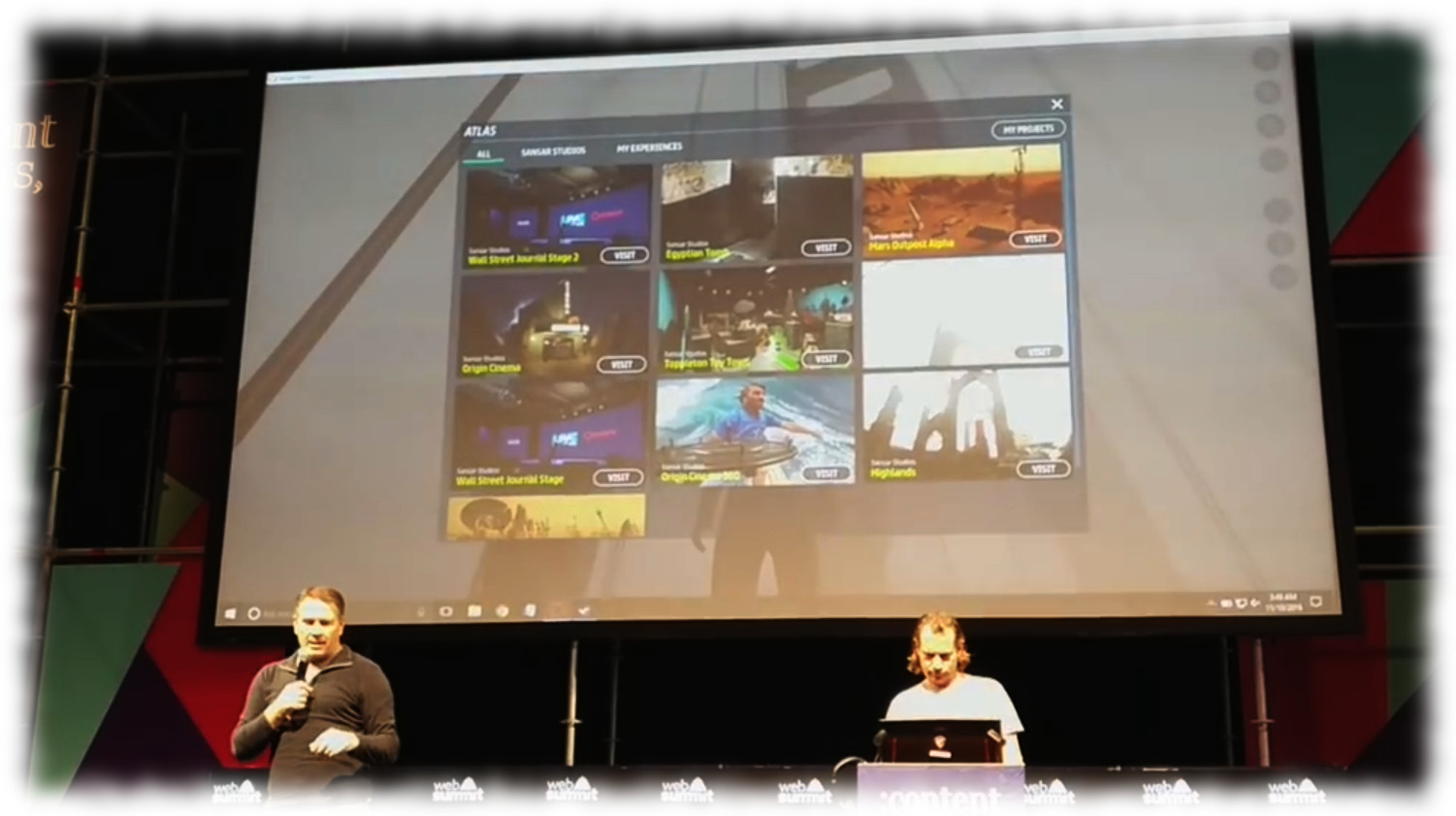
In writing Second Life’s creator is building a ‘WordPress for social VR’ for Endgadget on December 21st,  Nick Summers also examines how people will move between Sansar experiences, referencing the use of an “Atlas” search directory (something we’ve also previously seen demonstrated). This appears to be akin to the SL Destination Guide, presenting a means for Sansar users to hop between connected experiences much as we hop around Second Life.

A further point of interest between the two pieces – which cover a lot of common ground in terms of what the reports are shown within Sanasar – is the manner in which the one article raises a question and the other answers it.

Take object manipulation. Up until now, the vast majority of object manipulation in Sansar has been sown in the Edit Mode, although it has been indicated that some basic manipulation will be possible in the run-time environment (and we’ll certainly need to interact with objects in the run-time environment if we are to sit on them, drive them, fly them, etc). However, Takahashi refers to moving a palm tree around and bouncing rubber balls about. So is object manipulation not more accessible in the run-time space?

Summers’ article suggests not, noting that manipulation in the run-time environment is still “limited”, and referencing the edit more more directly when discussing moving and placing things.  Both offer interesting tidbits which perhaps also help people who may not quite see the “point” or “audience” for Sansar.
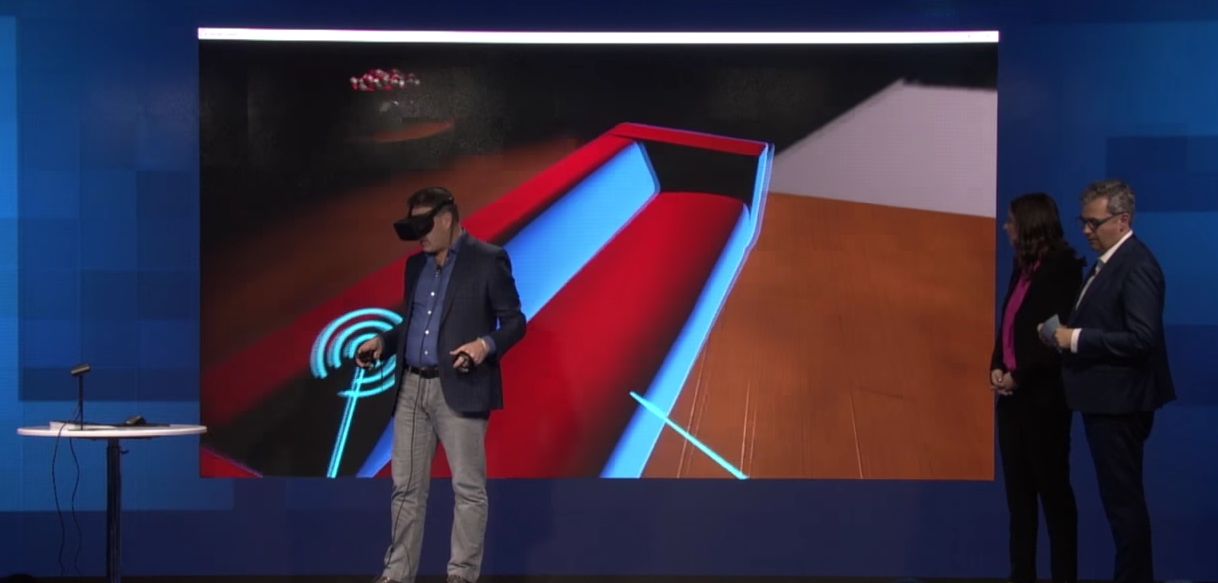
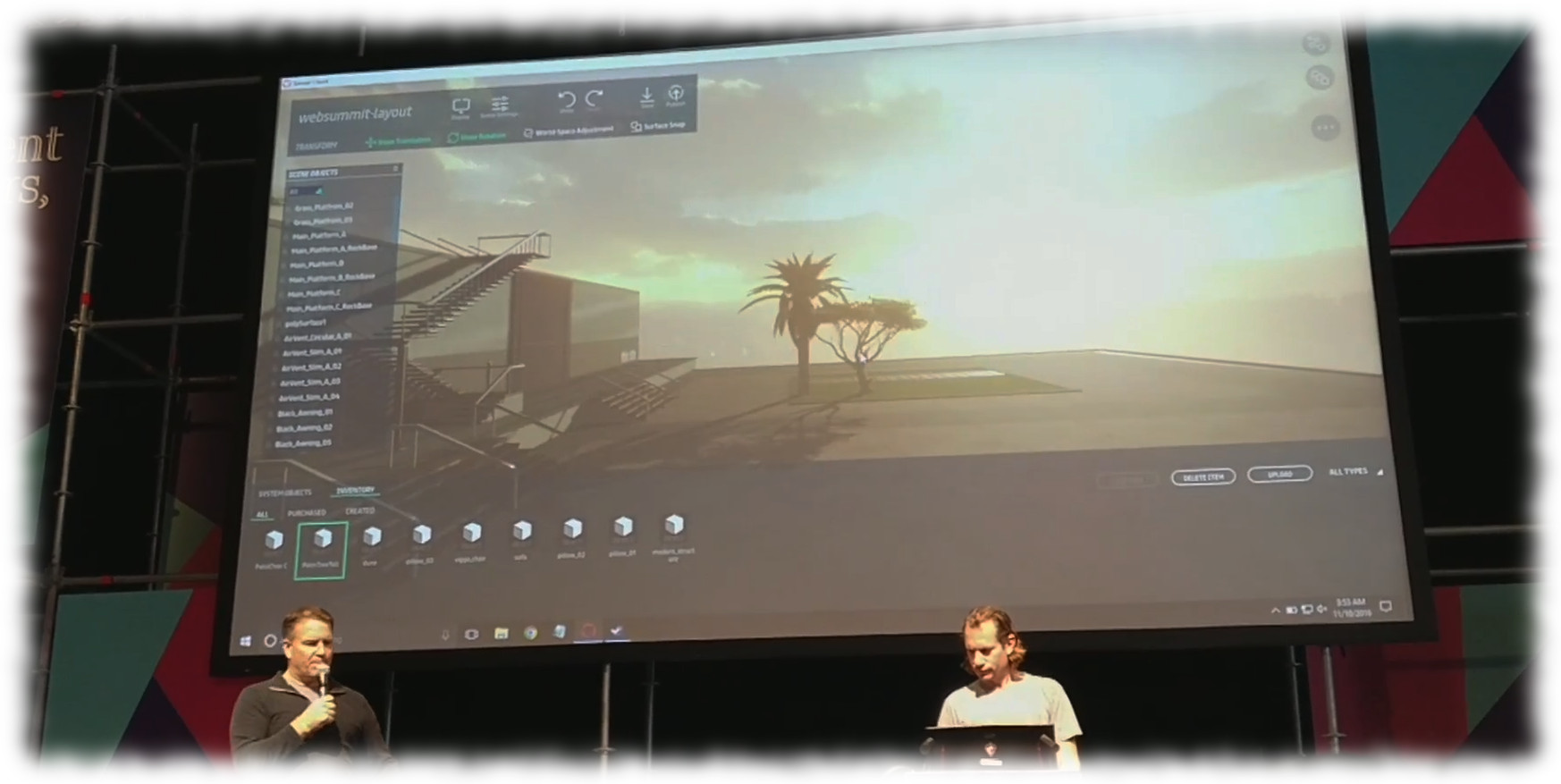
Ebbe Altberg moving virtual furniture around in Sansar, demonstrating some of the platform's capabilities at the WSJ.D Live conference, October 24th-26th
So far, object manipulation in Sansar has only been shown in the platform’s edit mode, such as when being demonstrated at events like the WSJ.D Live conference, October 24th-26th. How much of this might be possible in the runtime environment? How will personal object manipulation be handled within spaces you don’t necessarily own, such as a role-play environment where you are a “player”?

Takahashi, for example, references Altberg’s comments that Sansar offers the kind of defined, manageable environment in which a school or architectural might comfortably develop (and have hosted) an immersive educational or design experience without the need to necessarily being in external design talent or partake of an entire MMO / virtual world experience.

Elsewhere, Summers shines a little bit more light on the potential for revenue generation through Sansar for both the Lab and content creators:

It’s unclear how much Sansar will cost for people who want to design their own VR world. Linden Lab envisions a low, monthly fee that will grant creators access to a virtual plot of land. They can build whatever they want on top, and then choose whether to charge an entry fee for visitors. Designers will, of course, also have the option to sell their individual items on the in-game marketplace. Sansar is therefore like a canvas. Linden Lab will provide some basic paintbrushes, but the hope is that artists will bring their own. They’ll pay the company to store and display their work — similar to an art gallery — and then earn some cash when someone requests a viewing or permission to rework it as part of something new.

Taken together, both of these articles complement one another nicely. Yes, they do re-tread familiar ground, but they also – possibly – give us a few new pointers and insights into Sansar which raise the interest level a notch or two.
Sansar at Web Summit 2016

The new Sansar logo (courtesy of Linden Lab)
Logo courtesy of Linden Lab

November 10th and 11th saw the 2016 Web Summit take place. An annual technology conference, 2016 marked the event’s first appearance at its new home in Lisbon, Portugal. However, as with the 2015, it included a look inside Linden Lab’s Sansar platform, this year presented by the Lab’s CEO Ebbe Altberg and Bjorn Laurin, VP of Product at the Lab.

The official Web Summit video of the demonstration has yet to appear (if indeed they filmed any of the sessions). However, courtesy of Loki Eliot, I was steered towards a video of the presentation taken by an attendee at the summit: Miguel Mimoso Correia, which I’ve taken the liberty of embedding below, as there are a number of points of interest.

The Sansar Atlas
The Sansar Atlas – a Kitely-like directory of accessible places

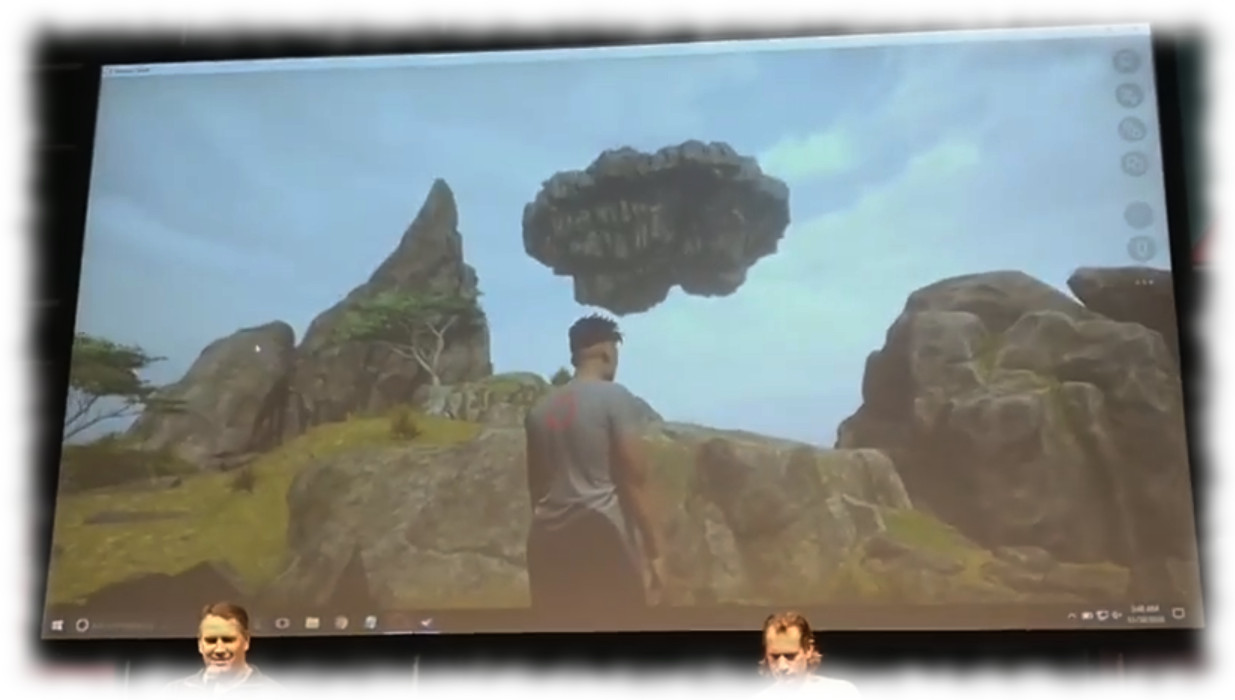
The first is seeing Sansar operating in a purely third-person, keyboard / mouse driven mode. While the platform is obviously primarily geared to VR HMDs and controllers, it’s nevertheless good to get a better look and feel for how it might also be used by people without such hardware. Of particular interest to me in this was the suggestion that users might have relatively free camera placement when moving their avatar around in a third-person view, rather then their camera being locked into a “default” view, as with Second Life.

In the “highlands” scene, for example, the camera is clearly set low down, affording a good view of the avatar and the hilly terrain around him as he walks through it. Meanwhile, in the Mars scene, the camera position is noticeably higher relative to the avatar, giving a broader view of the flatter landscape. The avatars also appear to respond more naturally as well – note how Bjorn’s avatar casually rests one foot on the dais in the 360-degree video sphere when he stops walking.

The “highlands” environment

While the demonstration is given in third-person view, insight is given into how movement is achieved when in a first-person VR headset view:

With VR, we found one thing that’s uncomfortable for some people is to just use a thumb stick, like on an Xbox controller or whatever, and just walk around …. because … you can start spinning the world around. And when your body’s not moving, but the world is moving, some people can get nausea or something like that. So … the way we prefer to move around in VR [in Sansar], is that we actually have with the controllers, a way to point to a spot in front of us with an arrow … and we just jump to that spot.

For those used to Second Life, there might be something of a “bleah” response to this description; but really, it’s not that much different to the convenience of SL’s double-click to teleport option.  However, that said, it would be nice to see if there’s also a Sansar equivalent to SL’s “single click to walk” – something which might be preferable to having other people seeing avatars hopping around, as suggested in Ebbe’s explanation. Elsewhere, we get to see a little of the dynamic capabilities in Sansar, which employ some of the platform’s physics.

A further (brief) look at Sansar's editing environment

A further (brief) look at Sansar’s editing environment

The creative aspects of Sansar are only briefly looked at, and for those who have been following Sansar reports, offers nothing of significance. However, it is somewhat interesting to learn that the familiar Golden Gate bridge seen in Sansar is actually a TurboSquid model, underlining the ability for models to be purchased from other mediums and pulled into Sansar.

But for me, what is more interesting – if only because it offers room for speculation. Is the use of the term “Sansar Studios”, which appears as each scene is loading. Why not “Linden Lab (or even “Linden Research”)?

Is it simply indicating that the scenes are the result of collaborative work between the Lab and content creators / “content partners”, and simply a means to denote “pre-built” environments which will be available for people to explore when Sansar opens its doors to the public? Or might it be indicative of something else? Might the Lab be looking to sell its own scenes within the platform as a means of additional revenue generation? Or that “Sansar Studios” might be the marketing brand for the platform? Again, I’m not indicating a particular belief, I’m simply speculating as I write.

TSansar, October 2016; Linden Lab, on Flickr A further look at the fantasy “highlands” Sansar space, as revealed by Linden Lab in October 2016

I’m pretty happy with my lot in Second Life and  – at this point in time – have no desire to own a VR HMD (something which might change in the future, depending on how the market and technology develop). Ergo, an outright move to Sansar doesn’t interest me (not that Sansar is intended to be any kind of “replacement” for Second  Life – it isn’t. Hence why the Lab has said Second Life will continue well into the future).

However, I do continue to see the potential for something like Sansar, particularly in those markets where the emerging “low-cost” VR tools could have significant impact: design, engineering, architecture, simulation, education, training, healthcare. These are very much the markets the Lab is looking at for Sansar.

As such, even if the whole “social VR” thing falls flat on its face, I still hold the view that there are potential VR niches and audiences out there Sansar could occupy and be a success, just as Second Life has successfully occupied a niche and developed its own audience.


Sansar: what’s in a name?

The new Sansar logo (courtesy of Linden Lab)

In the first half of 2015, speculation circulated that the name of the Lab’s new virtual experiences platform might be “Sansar” or “Project Sansar”, after two trademark registrations were spotted. When asked, the Lab would only comment than “Project Sansar” was a temporary name, and that a number of options were being considered (and there was at least one other trademark filing at the same time which seemed to support this statement).

However, on August 31st, in a press release marking the distribution of the first invitations for people to join the platform’s Creator Preview, Linden Lab indirectly confirmed the official name of their new virtual experiences / social VR platform is indeed Sansar.

As the news of the name circulated, there were various group chat comments questioning the meaning and relevance of the name. While there is no reason for any product’s name to have a definitive meaning, in this instance, there do seem to be likely connotations.

Sansar Screen Shot, Linden Lab, August 2016, on Flickr Sansar (TM) Screen Shot, Linden Lab, August 2016, on Flickr

Back when the Lab was poking at possible names for Second Life, one option they considered was “Sansara” (later used as the name of the first mainland continent). This was said to be a variation on the Sanskrit word Samsāra, meaning “wandering” or “world”, associated with cyclic, circuitous change.

The interesting point here is that the Maxgyan dictionary  / lexicon offers sansar (also sansaar in Jainism) as an alternative for Samsāra, and defines its potential meanings as “earth”, “world” or “universe” (with “cosmos” cited as a possible alternative to the latter), depending on the context.

Given that  Sansar is intended to host many different virtual spaces, “universe” might be taken as a good “fit” when looking for a meaning in the platform’s name. Similarly, the idea of cyclical, circuitous change appears to be reflected in the platform’s logo, with its three segments suggestive of movement (/change).

Sansar Screen Shot, Linden Lab, August 2016, on Flickr Sansar (TM) Screen Shot, Linden Lab, August 2016, on Flickr

Of course, other meanings of “sansar” could be offered (such as an”icy Iranian wind”, for example), but it seems reasonable to look no further than those derived from Hinduism / Jainism. There is a certain “fit”, as noted above, and the Lab has turned to Hindu nomenclature before. As most of us are aware, the Lab’s two publicly accessible SL grids are named for Rigvedic deities – Agni, god of fire, and Aditi, the mother of gods.

But even accepting this as a possible derivation for the platform’s name, it might be argued that the Lab should have gone for something more “obvious”. Well, possibly. But then again, it is fair to say that at this point in time, those being drawn to Sansar are doing so by way of the Lab or through media reports on it, and so already have some idea of what it is about. This will also likely be true when Sansar opens it doors to the public (although by that time, the website will hopefully be a lot more dynamic and informative as well). Thus, having a name which “reflects” the platform’s intent perhaps isn’t so major a consideration.

For my part, if the platform’s name is intended to have a meaning, I admit to being drawn to it being “universe”. As noted above, it, fits the idea of an environment hosting many, many virtual spaces of many different sizes, some of which exist independently of the rest, others of which are “stitched together” to form – dare I say – “constellations” of linked spaces. Of course, being a “space fan”, I could also be a tad biased 🙂 .

USA Today’s further look at Project Sansar and Social VR

Project Sansar promotional image via Linden Lab

On July 4th, I noted USA Today’s video short on Project Sansar and the Lab. At the time, I indicated that there didn’t appear to be a related article to go with the video. However, that’s now changed, and Ed Baig, USA Today’s tech reporter, has indeed written an article to sit alongside the video, which appeared on July 6th under the title Second Life’s creators try for a third — in virtual reality.

“Third”? You may wonder. “What third?” The answer is something of a play on words – Linden Lab’s “first life” is (like the rest of us) firmly rooted in the physical world, where it sits as a corporate entity employing over 200 staff, 75-ish of whom are focused on Project Sansar (the rest doubtless made up of those managing Second Life, running Blocksworld, taking care of the company’s administration and management and (potentially) working with Tilia Inc.). Their “second life” is, obviously, Second Life itself, thus leaving Project Sansar as the company’s nascent “third life”.

Ed Baig: looking further inside Sansar and Social VR for USA Today

As with the video, the article doesn’t reveal much that is new about Project Sansar itself per se, however, it does delve more into the concept of “social VR” – the term that Linden Lab and the likes of High Fidelity,AltSpace VR (both of whom are also mentioned in the article) and Facebook are increasingly using to define their new platforms.

In the case of Sansar, this “social” element is not just about people together who are already engaged in the virtual domain, but in allowing the creators of the environments hosted by Project Sansar to directly attract their own audiences to the experiences they build.

At this point, it’s probably worth diverting slightly and stating something that by now I would hope would be straight out of the British Guide to Stating the Bleedin’ Obvious, particularly for those who have been following Project Sansar’s development, but is worthwhile repeating just in case.

And it’s this: as with various other aspects of discussing Project Sansar, “creator” actually has a wider context than perhaps it does within Second Life. In the latter, by-and-large, we tend to regard “creators” as the folk who design and make the goods we use to dress our avatars and furnish our land. Outside of lip service, it’s perhaps not a term closely linked with those who obtain land and regions in SL and use these goods to create and environment. However, with Project Sansar, it is pretty clear “creator” is intended to encompass both: it applies to both those who can build and model with the tools supported by the platform, and those with the desire to “build” an environment they can share with others, even if “build” refers more to shaping the land and obtaining content designed, made and supplied by others.

Ed Baig was able to explore Mars within Sansar, using one of the Lab's early experience set pieces
Ed Baig was able to explore Mars within Sansar, using one of the Lab’s early experience set pieces

In his article, Ed Baig illustrates this, together with the concept of “social VR” and the ability for experience creators to be able to attract their own audience by quoting the idea of learning the French language:

If you search Google for “I want to learn French” you might find in the search results a virtual reality experience in Sansar where you can actually “go to virtual places in France, meet French people and have French dialogue at the boulangerie,” Altberg says.

This actually brings up another point – and one I really must remember to ask the Lab about next time I have the opportunity to do so. And that’s the idea of Project Sansar as a “white label” environment. This was first mentioned back in early 2015, and hinted at in interviews since. If it is still a central aim for the platform, then it could be a powerful aspect to Project Sansar, allowing experience creatorsattract audiences through gateways they define and in a manner such that the audience isn’t even aware they are entering an environment hosted by Linden Lab or is something of a relative of Second Life.

But I digress; Sansar as a white label platform is a topic for another article (and one long overdue to appear in these pages!). In terms of the USA Today piece, the social aspect is further touched upon with the idea that in the future, people from geographically disparate locations will be able to meet and work together far more easily in virtual spaces than up to now has been possible (thanks largely to the work in facial and body tracking, which allow avatars to be a lot more nuanced and expression in their reactions to others).

Elsewhere, the idea of the potential “cannibalisation” of Second Life by Project Sansar is touched upon.  This has been a controversial statement when raised in the past. However, while it is true that Second life thus far in its history faced serious competition, the times really are now changing, and just because SL hasn’t yet faced a competitor capable of luring its user base away doesn’t mean that at some point in the medium-term future it won’t.  As such, references to the risk of “cannibalisation” shouldn’t be taken as a sign the Lab is in any way willing to “sacrifice” Second Life on the alter of Sansar, but rather that it is a pragmatic acknowledgement that the risk actually now does exist for Second Life to be supplanted in people’s hearts and minds, and thus, for the sake of the Lab’s own survival, better it came from within than from without.

Like the video before it – which is included at the head of the article,  there’s nothing here that’s particularly revelatory about Project Sansar for anyone who has been keeping abreast with developments on that platform. However, the overview of the “social VR” approach is worth a read in and of itself. While for anyone who has not thus far dipped a toe into the waters of Project Sansar, Ed’s piece offers a pretty good starting point in understanding what it is about.

Ebbe Altberg talks Sansar at Augmented World

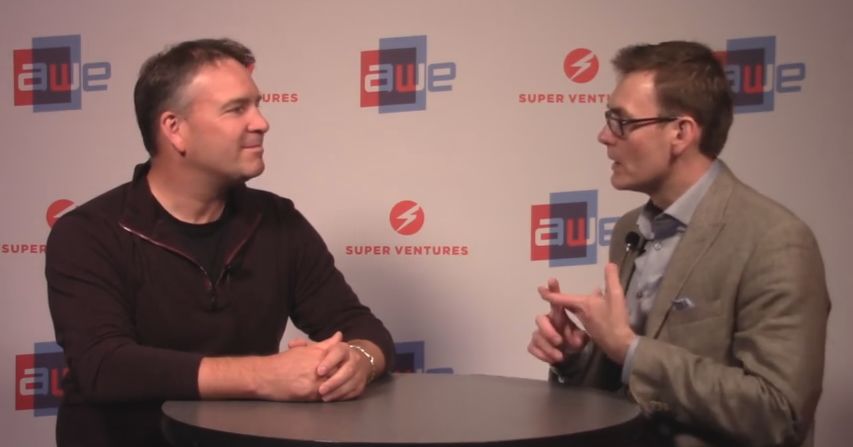
Ebbe Altberg discusses Project Sansar Mark Piszczor of Occipital at AWE, June 2nd

June 1st-2nd saw the 7th annual Augmented World Expo take place in Santa Clara, California. Billed as “the largest event dedicated to AR, VR and Wearable Technology”. Among the 200 speakers appearing at the event was one Ebbe Altberg, who sat down with Mark Piszczor of Occipital to chat about Project Sansar.

The interview, embedded below, doesn’t touch on anything significantly new for those of us who have been following the Sansar news. Time frames remain unchanged since the last Lab Chat event. The creator preview will open its doors to applicants in August; there have been “thousands” of applicants (and I’m still itching to know the ratio of Second life creator / users to non-SL creator / users in that number); public access so start around the end of 2016 / early 2017, etc. That said there were various points of interest for me.

Early on, we get a somewhat familiar discussion on the “social” approach being taken with Sansar, and the drive to (initially at least) address various markets where there is liable to be a real take-up in the use of VR. In this case, education and training are specifically mentioned at relative length.

At the 6;55 mark, while discussing Ready Player One, Ebbe touches on how Sansar is a platform on which many experiences put together by many different organisations, companies, groups and individuals can be hosted, some of which may be interconnected. This again got me wondering as to how much Sansar will be a white label environment for clients to use, and whether it is still planned to let those who wish use their own user authentication processes to control access to their Sansar experiences is still on the cards. This was initially mentioned way back in the 2015 VWBPE Q&A session with Ebbe, but hasn’t been remarked upon since.

Also in terms of interconnecting different experiences, it was interesting to hear the term “teleport amongst” experiences being used (07:12), rather than the more customary reference to experiences being “stitched together”. Whether this is indicative of whether movement between connected Sansar experiences might be somewhat analogous to moving between separate private islands in SL, or whether it was a slip of the tongue isn’t clear – so it will be interesting to see if “teleport” is used elsewhere when discussing Sansar.

From 08:30 onwards, there is a discussion of where Sansar might be in a year’s time. This again is interesting, as Ebbe’s reply suggests that while the Lab may well have a development roadmap for the platform, they are very open to building upon the feedback and lessons gained from their core users (or quite possibly “content partners”), rather than simply ploughing ahead with their own plans. Quite how this works in practice will have to be seen, but having an ear to users’ wants and needs is no bad thing.

All told, an interesting interview and well worth the 10 minutes required to watch it.

An actual look inside Project Sansar

Project Sansar image via Linden Lab

The end of April was a busy time for the Lab, with Ebbe Altberg leading a team to both the  Collision 2016 tech conference (billed as the “anti-CES”) in New Orleans, which ran from April 26th through 28th, quickly followed by the 2016 Silicon Valley Virtual Reality (SVVR) conference, which took place at the San Jose, California, conference centre between April 27th and 29th.

At both events, Ebbe Altberg gave a presentation which included further images and some video shots from within Sansar, and Collision 2016 has now made these available for viewing within a recording of Ebbe’s presentation which can be found on YouTube, and is embedded below.

As the Collision event is more general tech than VR specific, the first part of the video is more about the potential of VR and the possible VR / AR marketplace in the future. A lot that is familiar to SL users is mentioned, such as the use of immersive spaces for social activities and the potential VR has in areas such as education, design, business, healthcare (the use of Second Life in helping PTSD sufferers is touched upon, something I covered back in June 2014).

For those wishing to cut to the chase, the Project Sansar discussion starts at the 8:18 point in the Collision video.

[05:52] The Sorbonne University and the Egyptian Ministry of Antiquities worked with Insight Digital to produce a 3D model of an ancient tomb based on digital photography and laser scanners. The initial 50 million polygon model, which the Lab were able to publish through Sansar as an optimised 40,000 polygon model visitors to the experience could visit and interact with and within
[09:52] The Sorbonne University and Insight Digital supplied a 50 million polygon model of an ancient Egyptian tomb created as a part of a project for the Egyptian Ministry of Antiquities. This was optimised as a 40,000 model in Project Sansar people can enter and explore
In brief, this part of the presentation:

  • Reveals the Lab is now employing around 75 people in RD on Project Sansar (High Fidelity, as a simple comparison, has around 25-30 staff)
  • Indicates the broad base of creators and “content partners” invited into the initial platform testing which started in August 2015 is revealed – such as the Sorbonne University / Insight Digital (see above)
  • We get to see both the editing environment and the runtime environment elements of Project Sansar (remembering that the actual editing / layout mode of Sansar is quite separate from the runtime environment where users actually engage with one another once experiences have been “published” to it)
Jason manipulates assets using the HTC Vive hand controllers within Sansar's edit mode whilst building the Mars scene seen in previous Sansat promotional shots
[11:17] Jason manipulates assets using the HTC Vive hand controllers within Sansar’s edit mode whilst building the Mars scene seen in previous Sansar promotional shots
  • Reiterates that in using the term “creator”, the Lab isn’t necessarily just referring to content creators as might be the case within SL. Rather the term also encompasses those who purchase original content within the platform and use it to create their scenes and spaces. It is ease-of-use for this broader class of creator that the Lab is currently addressing when it comes to ease-of-use within the platform.

I’m actually curious to know more about the edit mode / runtime split. For example, can an experience still be accessed by others while it is being edited, in the same way a WordPress (to use the Lab’s analogy) page can still be viewed and read by others? If so, what happens when an update for an experience is published?

The video show Project Sansar’s runtime environment commences at the 12:38 mark.

In particular, this reveals a number of locations – including the Mars scene, the Golden Gate seen previously in Project Sansar promo shots, and a camera trip into the ancient Egyptian tomb mentioned above.

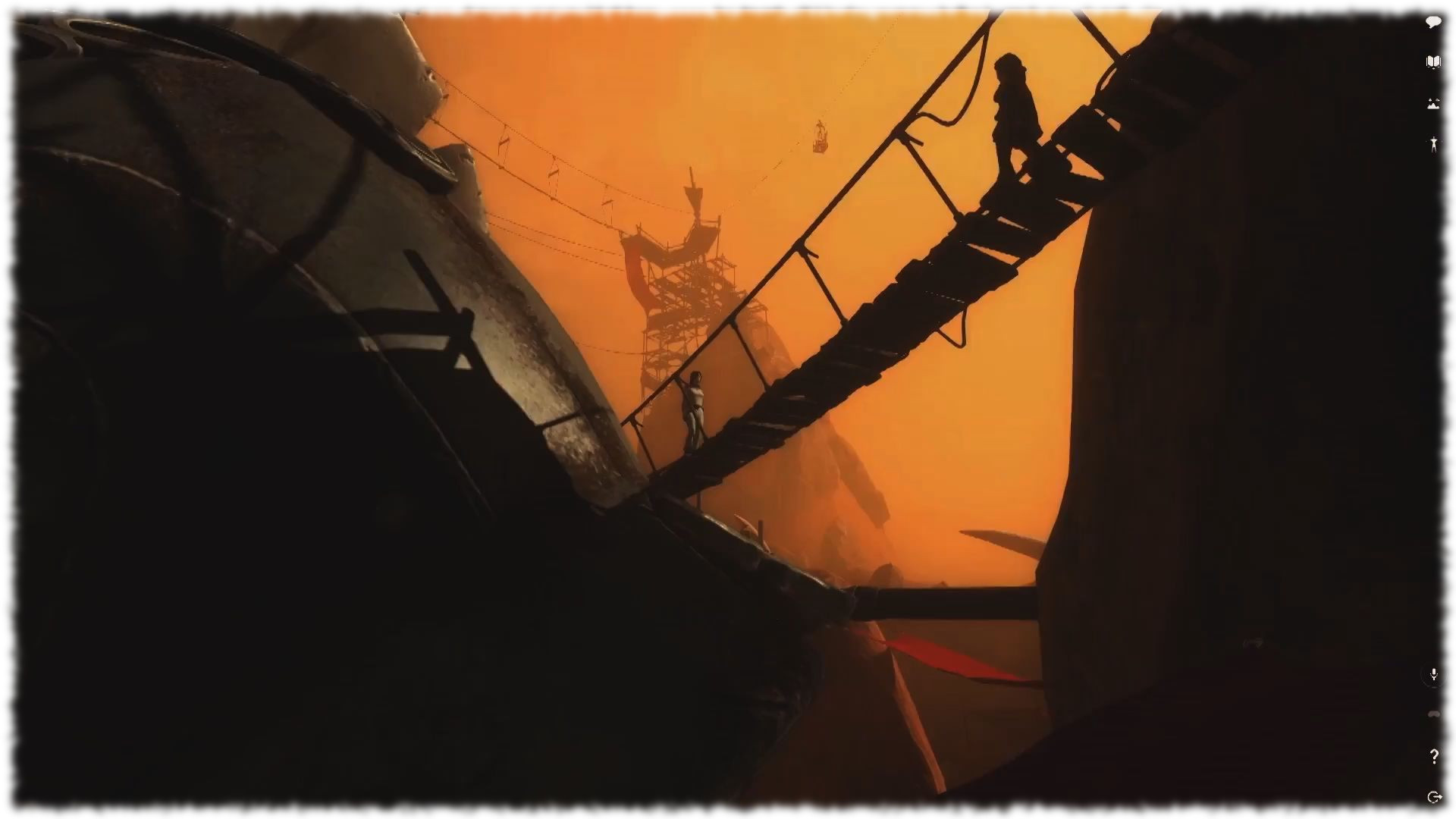
The Sansar clips open with a reasonable-looking avatar walking across the office / excavation space
The Sansar clips open with a reasonable-looking avatar walking across a complex built around the Villa Ortli excavation in the Crimea – a model selected from on-line, or another joint project?

My own observations from these video clips are that:

  • Project Sansar potentially has a higher level of polish within the runtime environment than High Fidelity has thus far shown
  • In there appearance, Project Sansar avatars are at least as good as the more advanced avatars currently found within High Fidelity and certainly more immersively attractive than the more recent iterations of the Altspace VR avatars
  • It will be interesting to see how dynamic things like day / night cycles and weather are / will be handled be Project Sansar.
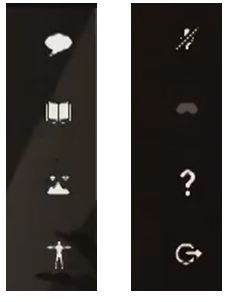
The UI icons in the video clips

The video includes some hints at the client UI – remember it is still very much a work-in-progress, so there are likely to be many changes.

As it stands, the buttons are ranged against the right side of the screen, in two groups of four, top and bottom, and shown on the right.

Some of these appear reasonably obvious: the landform / terraform tool and Avatar tool at the bottom of the first group of icons, and microphone, help and exit  / log-off options in the second group of four.

Doubtless the range of buttons and options available will increase  / grow more sophisticated as the UI continues to develop. The current set would appear to simply address the current level of capabilities within the platform at present.

The Lab is apparently still considering whether or not to make the video footage of Sansar more generally available. I’m tending to assume given the overall tone and presentation of the runtime footage, complete with music, that it was put together as a potential promo piece, rather than just a video to show at presentations. So hopefully it will make a broader appearance when the Lab judge the time to be right.