Linden Lab highlights GDPR – coming into force on May 25th 2018

On May 25th, 2018 the European Union’s General Data Protection Regulation (GDPR) comes into force. While an EU regulation, the GDPR not only applies to organisations located within the EU but it will also apply to organisations located outside of the EU if they offer goods or services to, or monitor the behaviour of, EU data subjects.

The GDPR applies to all companies processing and holding the personal data of data subjects residing in the European Union, regardless of the company’s location. As such, it not  only Linden Lab, who hold data on Second Life and Sansar users in the European Union, it can also impact those operating a business through Second Life and who collect data on customers which is stored outside of the servers operated by Linden Lab.

In preparation for the enforcement of the GDPR, on May 9th, 2018, Linden Lab issued a preliminary blog post on their compliance with the GDPR, which covers both Second Life or Sansar.

GDPR, in a nutshell.

Put simply, the GDPR puts in place new requirements for the collection, maintenance, and use of personal data for residents of the European Union (EU) and European Economic Area (EEA). It’s an important evolution in privacy practices, and one we’ve already started to account for: if you notice, our existing Privacy Policy already discloses the type of personal data we collect from you, how we use and limit any sharing of your data, and your rights to control our use of your personal data.

What you can expect.

In coming weeks, we’ll provide more information on how EU residents in Second Life can best exercise their rights under GDPR. In some cases, you may take actions through your account dashboard (to modify your personal data, for instance). In others, it may be necessary to file a support ticket and verify your identity (to better protect your privacy).

– Linden Lab May 9th blog post on the upcoming GDPR

The GDPR defines personal data as, “any information related to a natural person or ‘Data Subject’, that can be used to directly or indirectly identify the person.” This includes, but is not limited to: IP addresses, on-line identifiers (including avatar names), e-mail addresses, photographs, as well as the more usual name, address, bank details, medical data, etc.

In addition to defining requirements for how such data should be managed and protected by organisations gathering it, the GDPR also specifies a number of rights to Data Subjects who have their personal information stored by companies and other entities. These include, but are not limited to:

  • The right to be informed: Data Subjects have the right to know what data is being collected, how it’s being used, how long it will be kept and whether it will be shared with any third parties.
  • The right to access: generally speaking, organisations are required, within one month of receipt of a formal request, to provide a copy of any personal data concerning the requesting Data Subject.
  • The right to rectification: a Data Subject can formally request that inaccurate or incomplete information relating to them is updated, and the update must be made within one month (exceptions can apply).
  • The right to be forgotten: a Data Subject can request the erasure of all personal data relating to them in certain circumstances (e.g. it is no longer necessary to hold it; if the data was unlawfully processed or it no longer meets the lawful ground for which it was collected). However, there are certain exceptions to this.

(In addition, the GDPR defines: The right to object (to data being gathered); The right to restrict processing; The right to data portability; and Rights related to automated decision making including profiling.)

For those running businesses through Second Life or Sansar which use services  – web sites, computers, etc.,  – outside of Second Life for the collection and storage of personal information on their EU Second Life  / Sansar customers, the GDPR might have significant import – and exposure to the risk of fines. For such businesses, the Lab’s advice is clear and straightforward:

If you collect or process personal data of EU residents on a website associated with Second Life or Sansar, or create or make use of programs that retain information about Second Life or Sansar users or their computers, you may also have obligations under the GDPR. You should consult with your legal counsel for advice regarding your site(s) or program(s).

– Linden Lab May 9th blog post on the upcoming GDPR

To help people get to grips with GDPR, if they haven’t been aware of its arrival, the Lab offer a series of links to articles and FAQs. To these I would add:

The following is a brief video outlining the GDPR in under a minute.
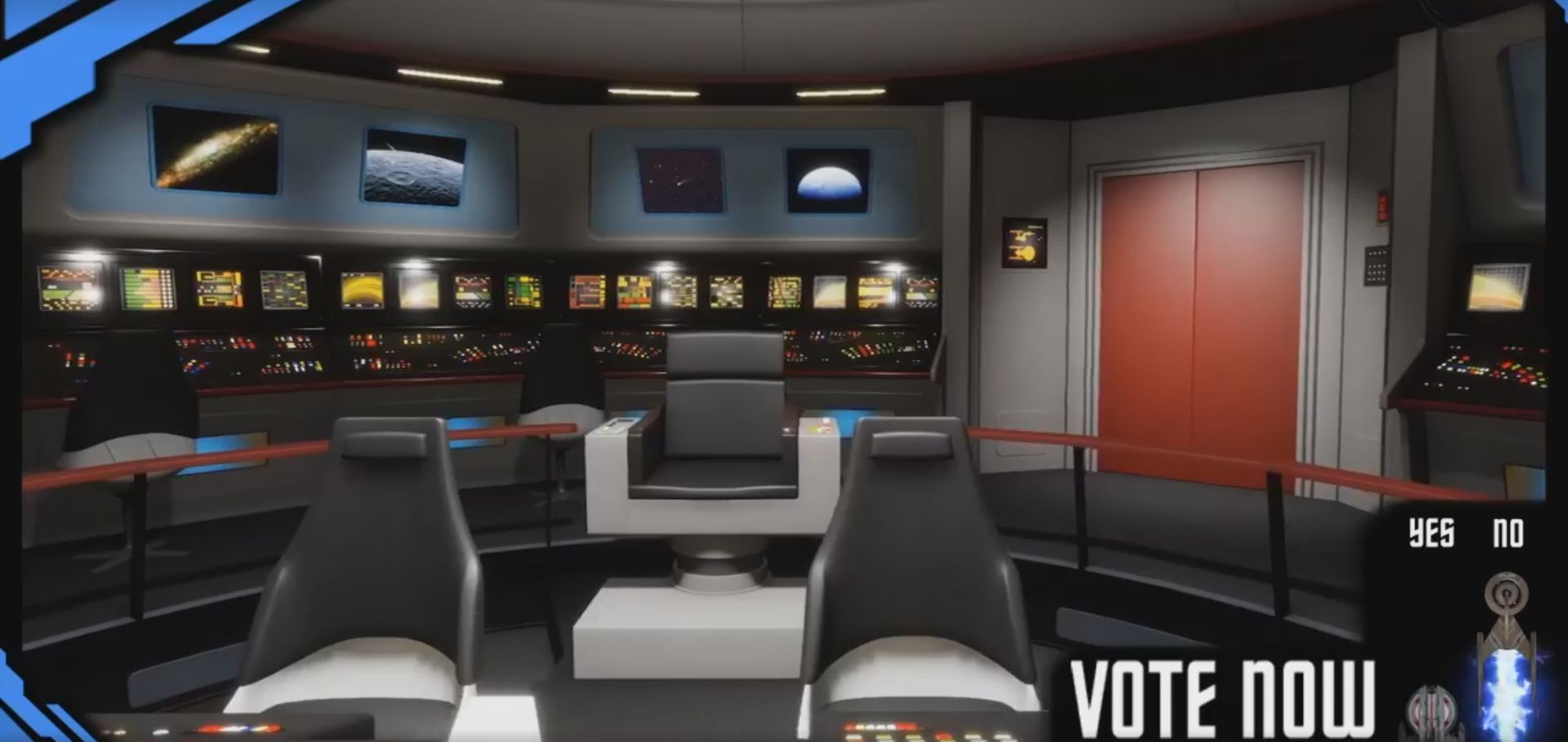
Star Trek beaming in to Sansar, May 22nd 2018

The Bridge of the USS Enterprise NCC-1701, will be warping into Sansar on May 22nd, 2018, as new social hangout in a partnership between Linden Lab and Roddenberry Entertainment Inc. Credit: Linden Lab, via Roddenberry Entertainment Inc.

Update: the podcast, as uploaded to YouTube, is now appended to the end of this article, with thanks to Wurfi!

It’s no secret that I enjoy and appreciate Star Trek – notably The Original Series, although I’m also partial to The Next Generation (the other incarnations never really resonated with me in the same way). In my late teens and twenties, I helped organise a number of Star Trek conventions in the UK, while in these pages, I’ve written about Loki Eliot’s freebie boxed starship combat game (2013), and in 2016, about Cathy Foil’s stunning, two regions long and avatar-sized USS Enterprise, NCC-1701.

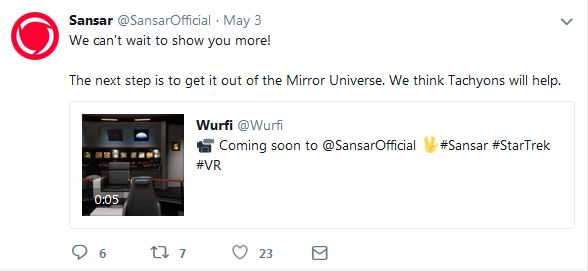
So on May 4th (ironically, given its association with the Star Wars franchise), I was intrigued to see a pair of tweets from @SansarOfficial and Second Life’s own Wurfi:

The Star Trek Tweets

A little more digging revealed the Tweets relate to an interesting Tidbit discovered by Sansar user and creator Gindipple: a weekly live Mission Log podcast by Roddenberry Entertainment. The podcasts, offered as both pre-recorded and “live” events exploring all aspect of Star Trek, from The Original Series through to the current Paramount film series and CBS’s Star Trek Discovery TV series.

This particular podcast, broadcast on May 1st, 2018, featured none other than Sansar’s Jason Gholston, who heads-up Linden Lab’s Sansar Studios team. Starting the 3 minute mark of the video, which I’ve time-stamped the link above, Jason revealed that Sansar Studios and Roddenberry Entertainment will be introducing a new Star Trek Experience to Sansar on May 22nd, 2018.

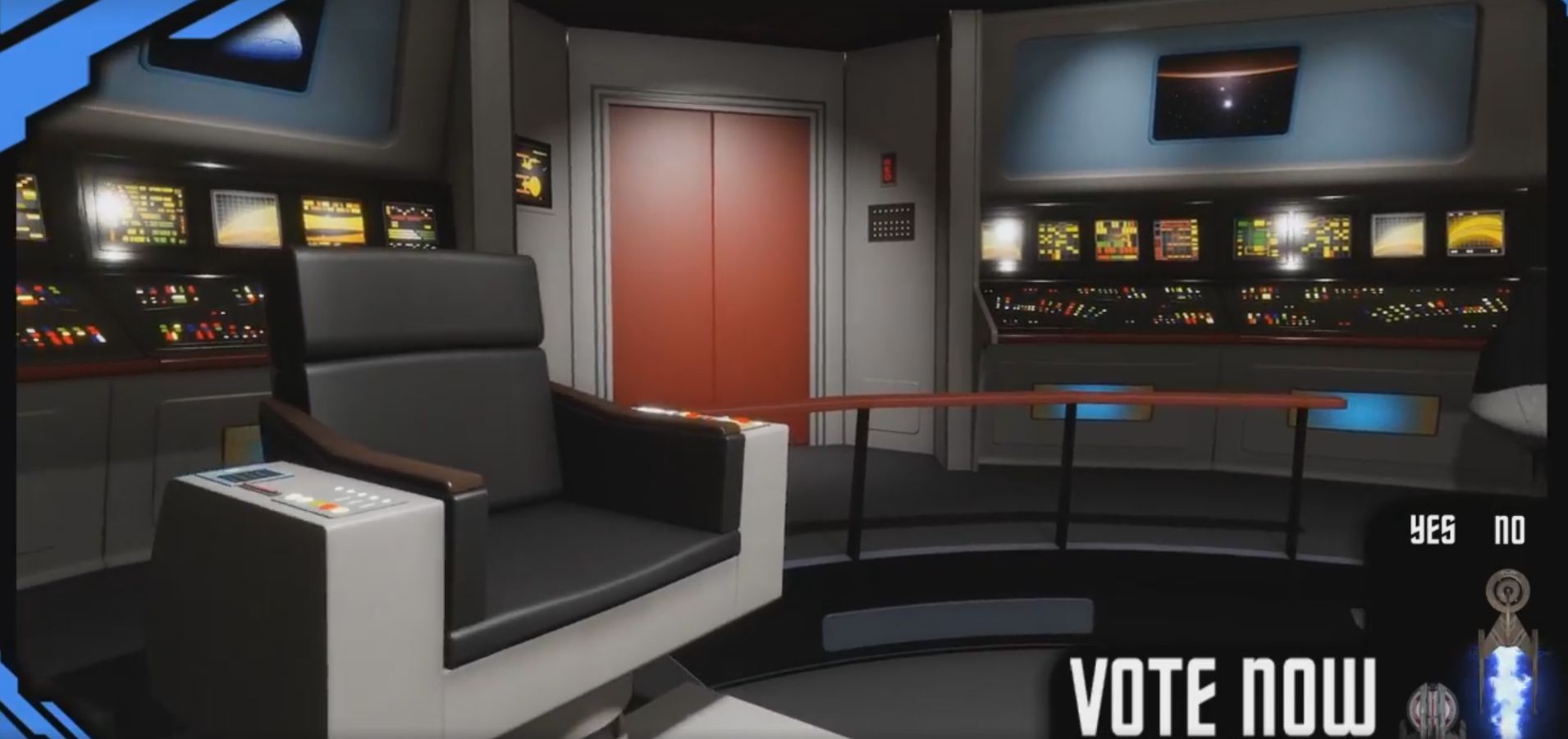
“Captain’s Log stardate….” – the iconic Captain’s chair on the original TV series starship Enterprise. Credit: Linden Lab, via Roddenberry Entertainment Inc.

The new experience, referred to as a “VR chat room”, is a 3D reproduction of the bridge of the USS Enterprise, NCC-1701 (“no bloody A, B, C, or D”, and Montgomery Scott famously stated around Stardate 46125.3, in the Next Generation episode Relics), as seen after the original series had been picked-up following the initial two pilot episodes.

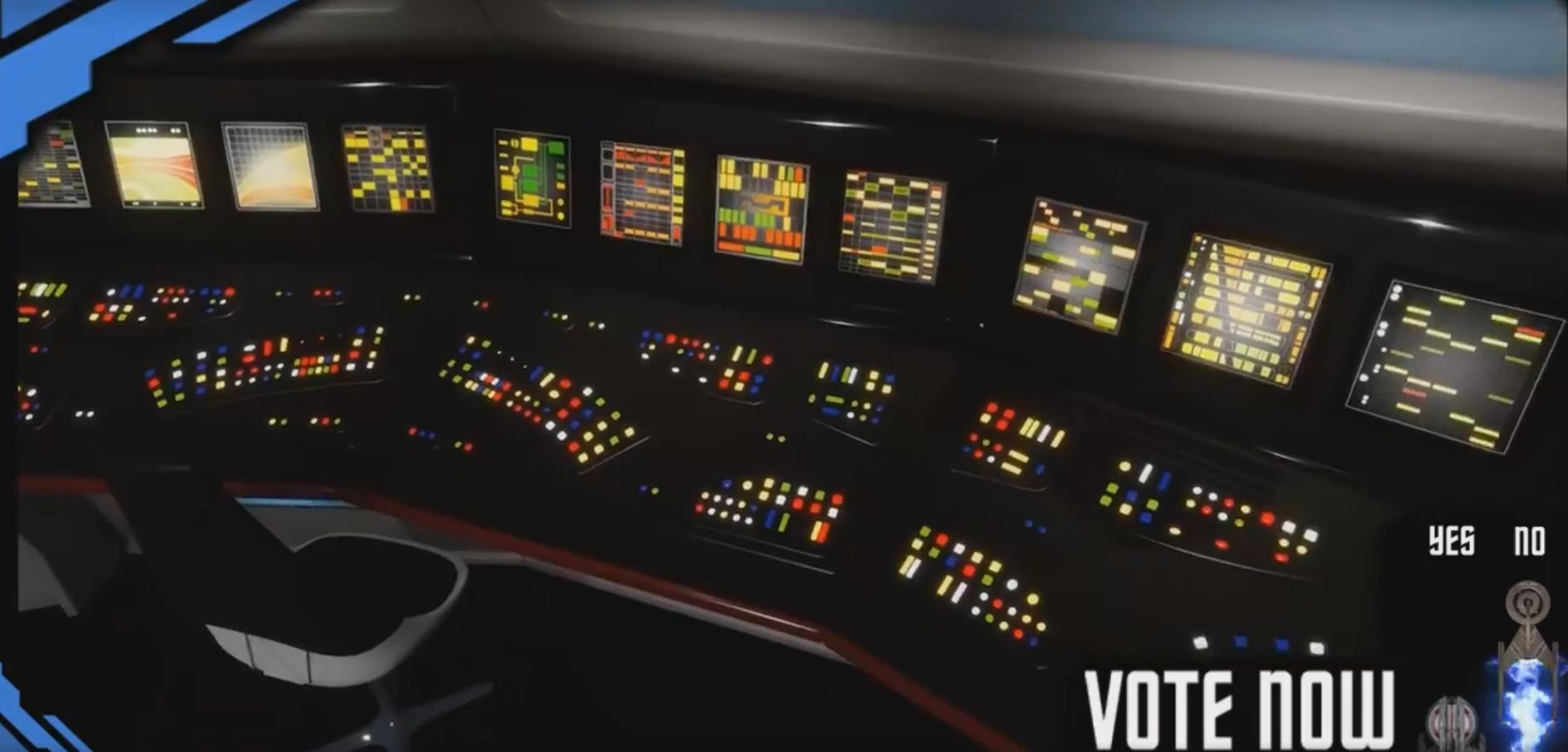
I admit to getting goosebumps when watching the brief video clip of the design, and it is evident that a huge amount of care has been poured into this project: everything it presents from Kirk’s centre seat, through the conn and helm stations, to the stations occupied by Spock and Uhura and – when he was on the bridge – Scotty is perfectly reproduced, right down to the changing data displays and blinking lights. While not present in the video, I’ve little doubt the finished article will be enhanced by spatial loops of all the bridge sounds, deepening the overall immersion of the experience.

A look at one of the forward stations on the upper ring of the bridge. Credit: Linden Lab, via Roddenberry Entertainment Inc.

The core rendering for the experience has been produced by OTOY, working in collaboration with Sansar Studios and Roddenberry Entertainment. OTOY is the creator of the OctaneRenderer, and their work is currently featured in the opening title sequence of HBO’s stunning TV series Westworld.

The experience won’t be used to host the Mission Logs podcasts, but will give people the opportunity to hop into Sansar and view them via the main view screen and socially hang out afterwards, and Jason indicates that show hosts Ken Ray and / or John Champion may will be jumping into the experience immediately following the weekly Mission Log Live podcast, which go out every Tuesday at 19:00 Pacific Time / 22:00 Eastern time, USA.

The exchange between Jason and Ken and John is worth listening to beyond the Star Trek / Sansar news as between them, they nicely cover the “why” of Sansar ahead of getting into details of the new hangout itself – and yes, Second Life gets a positive mention, albeit it passing.

This initial exchange also hints that the new hangout is but the first aspect of what appears to be an evolving relationship:

So, we’re kind-of dancing around the big question here, which is what are we going to do? And we’re going to reveal part of that tonight; there’s another part coming somewhere down the road, and that has to do, potentially, with Star Trek Las Vegas …

– John Champion, Mission Log Live 024, May 1st 2018

Star Trek Las Vegas appears to be a reference to the Star Trek convention taking place in Las Vegas at the start of August 2018, and organised by Creation Entertainment. So might the convention include a Sansar presence, together with an expanded Star Trek Experience?

That would certainly be intriguing; not just in terms of what might be presented, but also in terms of how it fits with Linden Lab’s stated goal for 2018 to grow Sansar’s audience (and visibility). As such, I’m certainly going to be trying to keep my ear to the ground on this subject, not only in visiting the new Star Trek bridge experience in Sansar on or just after May 22nd, but also in trying to get a clearer picture on what is being planned and how it fits with this broader idea of trying to expand Sansar’s visibility and audience.

Addendum

Thanks to Wurfi’s work, I can now embed the podcast from YouTube, below – thanks, wurfi! To just directly to the Sansar coverage, click this link.

Related Links

With thanks to Wurfi and Gindipple.

Sansar: Slip, Slide and Sit release (April 2018)

Ground sits come to Sansar

Tuesday, April 10th, 2018 saw the arrival of the Sansar Slip, Slide and Sit release. As the name implies, this update includes the first iteration of the ability to sit avatars in experiences. Yes, it’s a simple ground sit, but it’s a start. The release also sees further avatar gestures (aka “emotes”), script API updates and a reminder aimed at creators on the removal of the Terrain Editor.

As always, full details are available in the release notes, this overview just highlights some of the key features / items in the release.

Initial Notes

  • As with the majority of Sansar deployments, this update requires the automatic download and installation of a client update.
  • Changes to the avatar inventory support means that on logging-in for the first time following the update, users will be placed in the LookBook (Avatar App).

Terrain Editor Reminder

Starting with the mid-March release, the Lab has been discontinuing the use of the Terrain Editor. This is as a result of recent investigation in Sansar’s performance revealing the height maps created using the tool could adversely affect performance in both the Run-time and Edit modes.For creators who have used the Terrain Editor, this means:

  • All existing terrain created using the Terrain Editor or through uploaded heightmaps should be replaced by the end of April. After this date, all terrain items that are still in scenes will be replaced by a place-holder asset.
  • All terrain items in the Store that have been created using a terrain heightmap should also be removed from the Store as soon as possible.

There is at this time no indication as to if / when the Terrain Editor will be re-introduced.

Ground Sit and Avatar Gestures (/”Emotes”)

Sitting in Sansar

The ability to sit is Sansar has long been a request along those engaged in the platform. It’s been seen by the Lab as one of the more problematic issues to solve for, particularly for a number of factors.

Firstly, there is the question of where should avatars be able to sit? In the physical world, we can sit almost anywhere that’s sensible (and a few that are not!): on chairs, on stairs, on counter tops, on logs and rocks, up in the branches of trees, on the edge of a cliff, the railings of a bridge, in (and on) vehicles, and so on; and the Lab would like to have the ability in Sansar, and preferably without the need for custom scripting within the more “static” objects – railings, tree branches, rocks, etc., to make it possible.

Then there is the “realism” factor. It’s been expressed that rather than having people point-and-click to have a script and animation effectively “grab” an avatar and seat it, a-la Second Life, it would be preferable to have an avatar be able to “walk up and sit down” as we do in the physical world. But – how should that be handled? By a more subtle form of scripting that “goes through the motions” for the avatar? But how would that work for people in VR? Would it be disorienting to find their avatar under “external” control, however briefly, as an animation takes over movement? What about the physical confusion for VR users… standing and controlling their avatar, then seeing it sit, and perhaps instinctively trying to sit as well – regardless of whether a chair is behind them or not?

While having the ability to sit is nice, the use of a cross-legged pose for female avatars in skirts or dresses isn’t perhaps the best given the amount of potential knickers exposure and perhaps other problems

The one place we all can reasonably safely sit is on the ground – hence the first iteration of sitting in Sansar allows just that, with a simple “/sit” command. This activates a basic animation to sit your avatar cross-legged on the ground with arms resting on legs. To stand, simply hit a movement key, and your avatar will stand (and perhaps turn, depending on the key pressed).

In Desktop mode, the animation works well  – if you are wearing jeans, shorts, leggings, trousers, etc; if you’re in a skirt or dress, then it might not be so good and result in a case of knickers exposure and possibly other odd results if cloth physics aren’t employed in the skirt / dress.  I’ve also no idea how it works in VR mode (I assume a controller command) as the release notes make no mention, and I am sans a headsets to test it myself.

Cross-legged like this isn’t necessarily the most feminine of sits, so hopefully we’ll see some differentiation introduced – how about the more attractive leg tuck position for female avatars, LL?

New Gestures

Thee new gestures are added with this release. They are all self-explanatory:

  • /wave – a reasonable wave, although a little more emotion on the avatar’s face would not go amiss, given it is intended to be a Friendly GreetingTM.
  • /cheer – a two-armed cheer, which again given the lack of facial emotion seems (to me) to leave it devoid of any real feeling.
  • /lol – something of a belly laugh of the kind we’re used to in Second Life, just without the over-the-top doubling over. And it actually has (a bit of) a facial emote to go with it!
/wave, /cheer and /lol gestures / emotes

I confess these gestures / emotes provoke a mixed reaction in me. On the one hand, they add a degree of life to an avatar, on the other, the sheer lack of reflective facial emotion – a smile when giving a thumbs up or a wave, for example – tends to emphasise the mannequin-like artificiality of Sansar avatars, particularly for those coming to the platform from expressive environments like Second Life. Hopefully, this will improve in time, particularly if some means of providing a more comprehensive animation / animation override capability is made available.

It would also be handy if the commands themselves could be “hidden” from display in the local chat window. Seeing lots of “/thumbsup”, “/clap”, “/cheer” gesture commands littering the chat window is a) distracting, b) can result in a lot of frustrating scrolling back up the window when trying to read something someone wrote.

Other Updates

  • VR mode arm IK improvements: a set of updates to improve arm ikenema in VR mode. Again, lacking a VR headset, I’m unable to test these, nor have I seen anyone with a headset since the release in order to see if the improvements are visible.
  • Marvelous Designer clothing updates: it is now possible to pin sleeves and scarves up in cloth simulation mode, and to pull zippers up or down.
  • Lighting updates: all properties on lights can now be changed by scripts.
  • Physics updates: a number of physics updates including new APIs to adjust nearly every physical property of objects at runtime; the ability to define motion types of models on import, and friction and bounce settings on static objects. The Sansar Script API documentation provides more information.

Feedback

Another compact release focusing on building out capabilities rather than adding a lot of new features. Like the March release, it’s unlikely to get those outside of Sansar feeling a “wow!” factor – but that’s not the intention. My own thoughts on things are given above, so I won’t repeat them here.

Aech’s Basement: a new Sansar RPO experience

Aech's Basement, Sansar; Inara Pey, March 2018, on FlickrSansar: Aech’s Basement – click on any image for full size

Thursday, March 29th marked the US opening of Steven Spielberg’s Ready Player One, the film based on Ernest Cline’s 2011 novel of the same name. Few can fail to have heard of either film or book – which features a VR “metaverse” made up of thousands of worlds, called OASIS. To mark the opening of the film, but with much less fanfare, Sansar Studios, the 3D / VR modelling and experience design team at Linden Lab, recently opened Aech’s Basement in Sansar.

Described as being “interpreted from the original ILM design for Ready Player One, from Warner Bros. Pictures, Amblin Entertainment and Village Roadshow Pictures.” Aech’s Basement is the second Ready Player One experience to be presented by Sansar Studios, the first being Aech’s Garage (read here for more).

Aech's Basement, Sansar; Inara Pey, March 2018, on FlickrSansar: Aech’s Basement

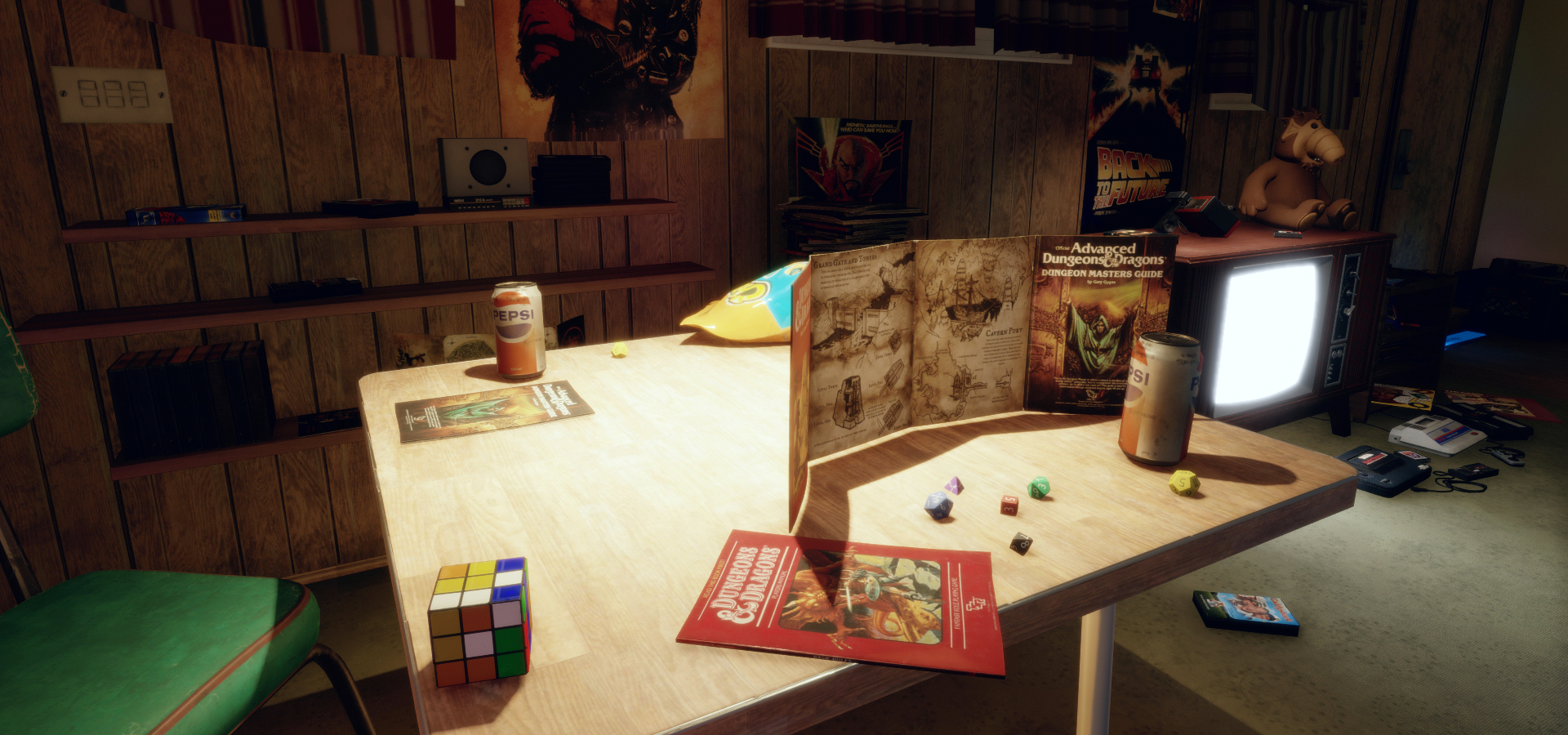
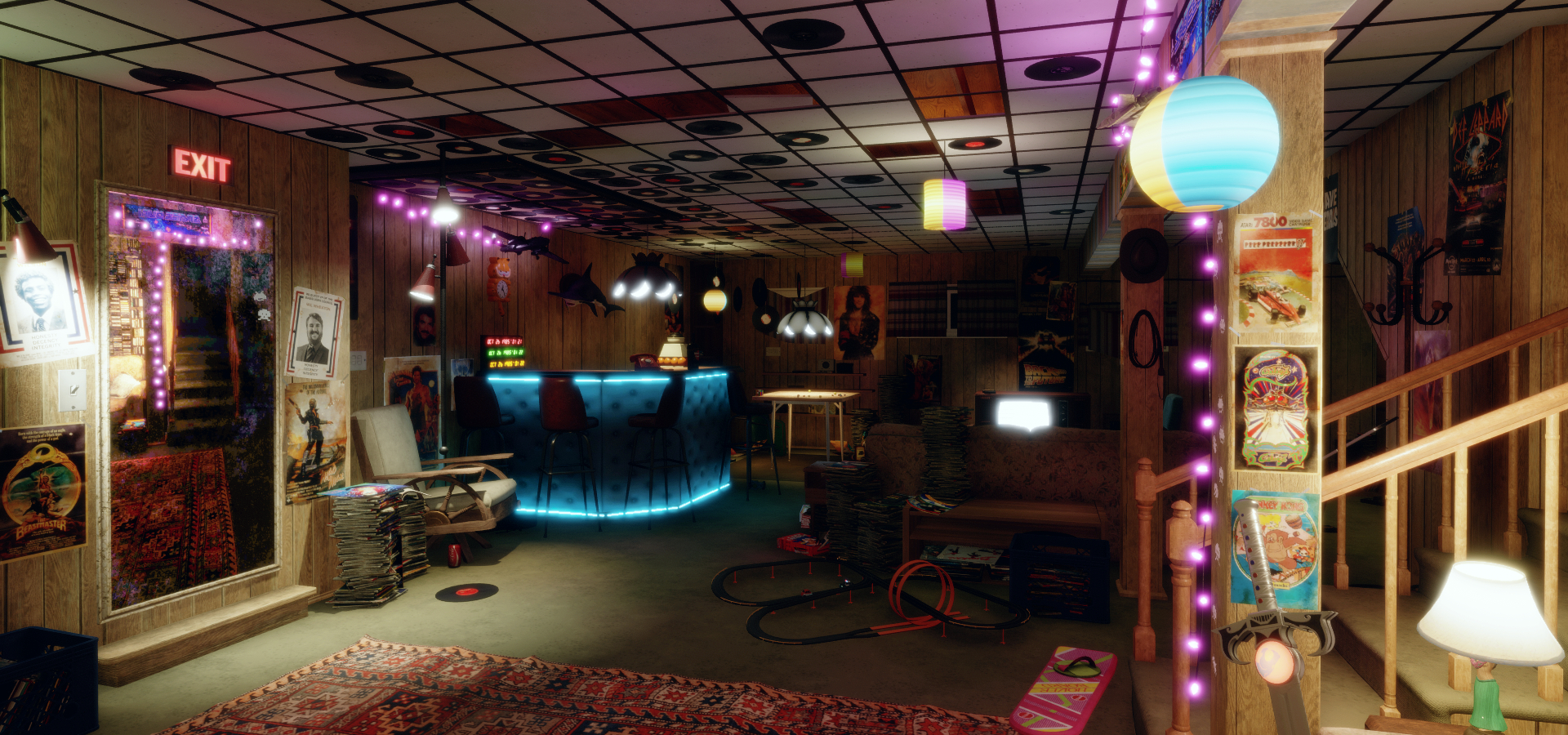
I can’t speak for the movie as I’ve not seen it yet, but in terms of the book, and with one or two liberties taken to ease avatar movement, the experience hits pretty close to home. And like Aech’s Garage before it, there is a wealth of detail and subtle touches packed into it which are – for those with a keen eye and love of sci-fi and films or the 1980s – a treat to find.

Aech had named his chat room the Basement. He’d programmed it to look like a large suburban rec room, circa the late 1980s. Old movie and comic book poster covered the wood-panelled walls. A vintage RCA television stood in the centre of the room. hooked up to a Betamax VCR, a LaserDisc player and several vintage video game consoles. Bookshelves lined the far wall, filled with role-playing game supplements and back issues of Dragon magazine.

Ernest Cline, Ready Player One, Chapter 3

Aech's Basement, Sansar; Inara Pey, March 2018, on FlickrSansar: Aech’s Basement

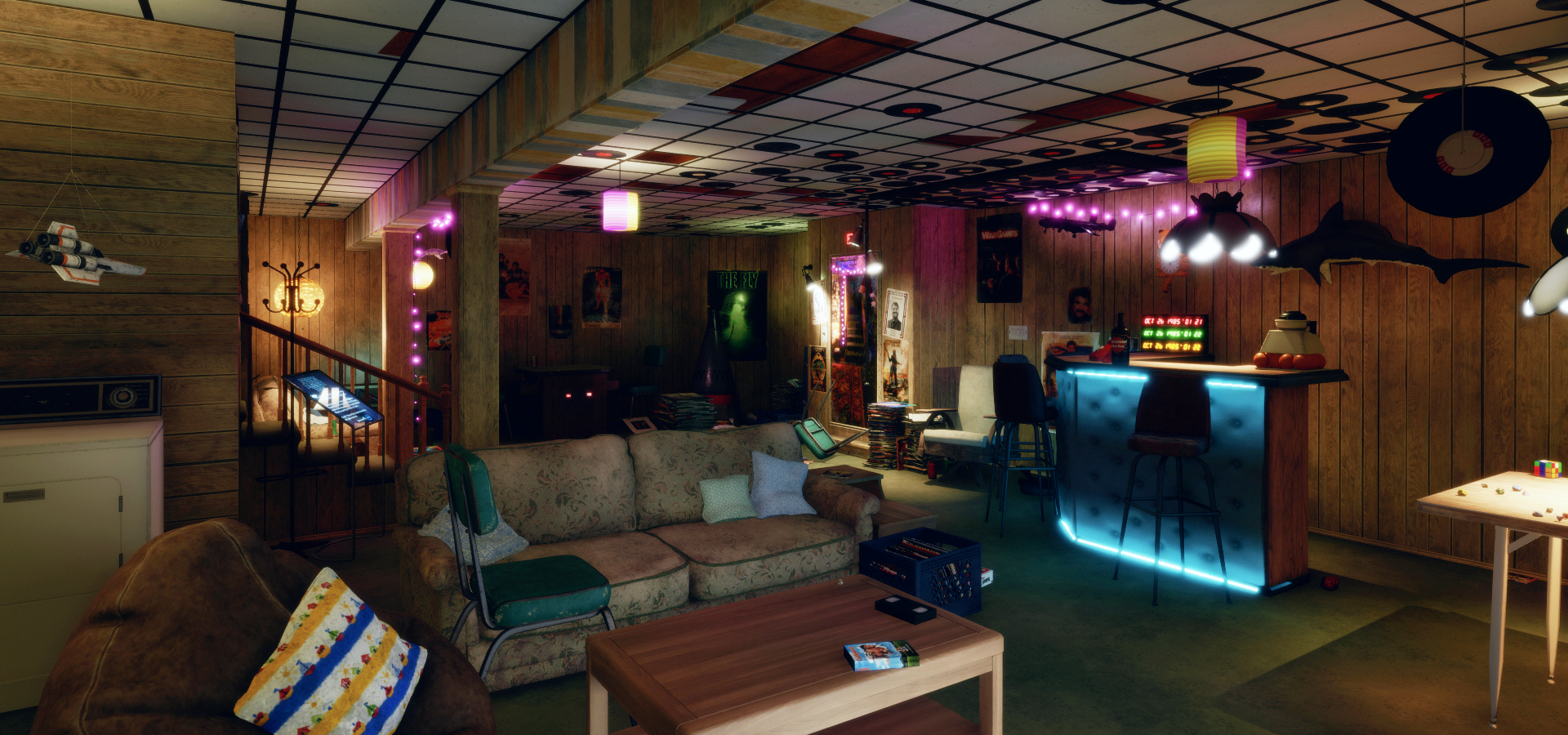
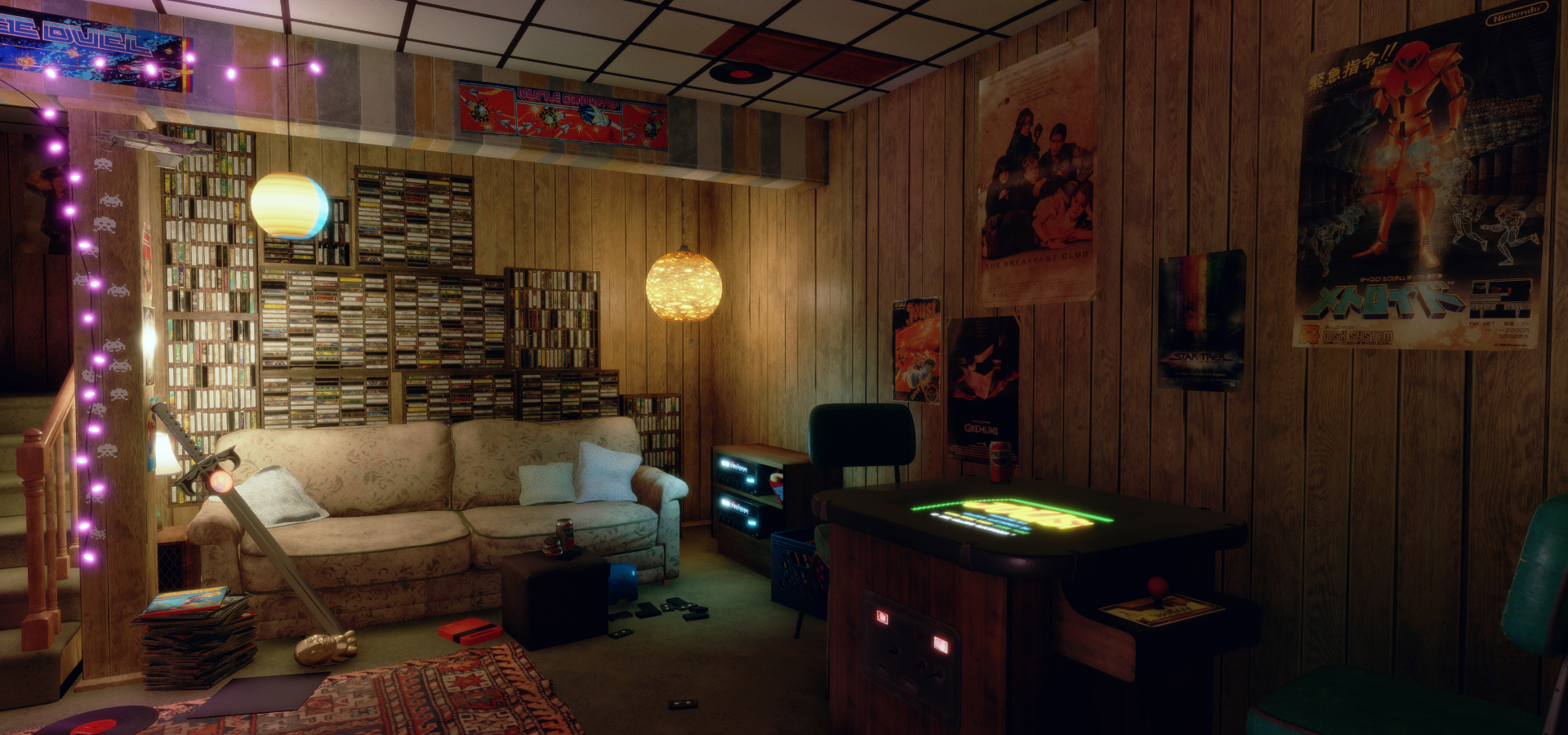
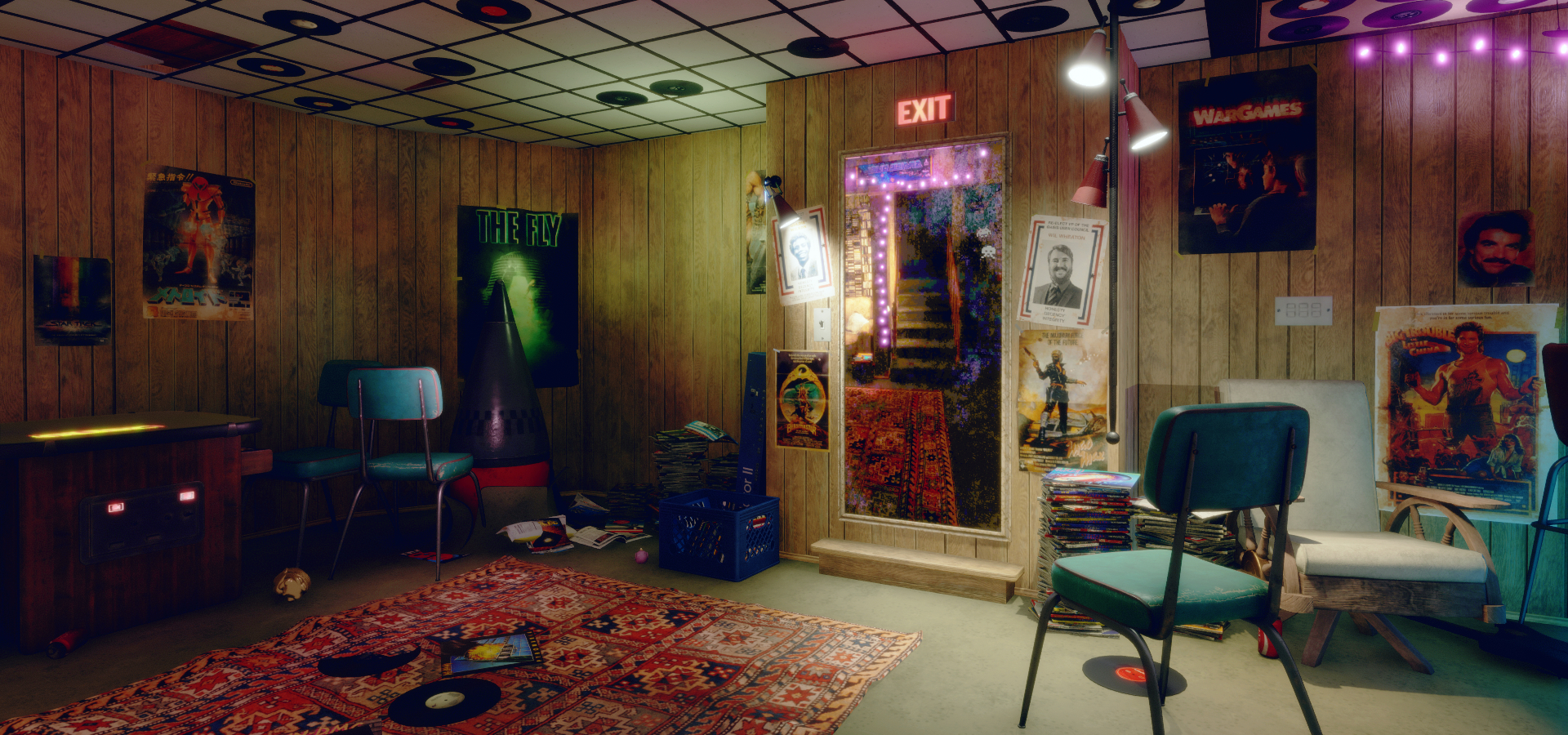
Unlike the book, where avatars visiting Aech spawn at the top of the stairs leading down to the Basement, visitors to Aech’s Basement in Sansar spawn in the basement itself.  Walls panelled in wood, as per the book, it is literally chock-a-bloc with 80’s references. The RCA TV is there, although it has been moved against a wall, rather than occupying the centre of the room, its place taken instead by a sofa. However, the consoles are there on the floor in front of it – two Segas and what looks like (from a very quick Internet search, I confess to being no expert), a Mattel Intellivision. The 80’s posters are on the wall celebrating films of the era, and albums by popular 80’s musical artists are scattered around.

A little liberty has been taken with the video tapes, as they are VHS rather than Betamax, while against a wall near the spawn point sit racks of audio cassettes. The rest of the space – in suitably 80’s style lighting – is furnished as one would expect a den to be – large, plump sofas, armchairs past their prime, a games table and – against one wall, a bar.

Aech's Basement, Sansar; Inara Pey, March 2018, on FlickrSansar: Aech’s Basement

The Easter eggs are to be found all over – from the posters , albums and VHS films, through to models from Buck Rogers in the 25th Century and Battlestar Galactica, to space invaders climbing down a ceiling support – and more (I’m just not going to spoil the fun of finding them for yourself). I particularly like the election poster for Wil Wheaton (he of Star Trek the Next Generation fame, as well as a respected blogger, narrator of the Ready Player One audiobook and – in the novel – the vice-president of the OASIS User Council).

Connected to Aech’s Garage by a door at one end of the room, the Basement is a lot smaller than that experience, and can great a little crowded with more than half-a-dozen avatars in it; however, it is as visually rich. Sansar’s quirky interactive capabilities do mean things can get thrown around, but hopefully, this will improve as those interactive capabilities are refined.

Aech's Basement, Sansar; Inara Pey, March 2018, on FlickrSansar: Aech’s Basement

Sponsored by Intel, and licensed by Warner Brothers Entertainment, Aech’s Basement and Aech’s Garage make for an ideal joint visit to the world of Ready Player One, whether or not you’ve seen the film and – in the case of the Basement – especially if you’ve read the book.

Experience SLurl

Sansar Product Meeting #13/1: events, new users, fees

Sansar: The Whyst Garden, scene of the Tuesday, March 27th product meeting

The following notes are taken from the Sansar Product Meeting held on Tuesday, March 27th. These weekly Product Meetings are open to anyone to attend, are a mix of voice (primarily) and text chat. Dates and times are currently floating, so check the Meet-up Announcements and the Sansar Atlas events sections each week.

The subject for this meeting was events, although the discussions were inevitably far more wide-ranging.

Events

The mid-March release, now called the It’s A Party release, included the client-side option for Sansar experience owners to promote events they are running through the Sansar events listings in both the client and on the web. This is part of the Lab’s desire to increase the active user count within Sansar and to encourage more social / fun activities on the platform.

Event Surfacing

Some issues have been identified with the way events are surfaced in both the Sansar Events web page and the client.

  • Currently, the Events app in the client and the Events page on the web have a Featured tab which only lists upcoming events. Ideally, this tab should only list those events selected by Linden Lab to be Featured events; there should be a separate tab for Upcoming events, listing them in chronological order.
    • The Lab has not actually started curating user-submitted events. This will start happening in the near future.
  • Within the client Atlas, Upcoming events are only displayed when the Featured experiences tab is selected. Switching to any other Atlas view – All, Sansar Studios, My Friends, Favourites – and the list of Upcoming events vanishes. Ideally, the Upcoming events should persist across all client Atlas views.
    • A suggestion is to add an Events tab to the Atlas (as well as having the Upcoming list), which could either list events, or (preferably) open / switch to the Events app window.

Promoting Events / Inviting people to Events

The Lab is currently considering way to promote events and inviting people to events, both within and beyond Sansar. This is seen a part of building a comprehensive notifications system.

  • The ability to promote through social media platforms requires the inclusion of the authorisation processes / APIs for those platform, something which isn’t on the immediate list (at the current point in time, inclusion of something like Facebook authorisation might not be viewed positively anyway).
  • An idea raised at the meeting to include the option to export event items to meetup.com pages or Eventbite pages, for those who wish to use those services.
  • Inviting people to events is, in the Lab’s eyes, a complex issue, as it is tied to the permissions system, and to things like future abilities for event organisers to host their events in experiences built and owned by others, etc.
    • However, being able to directly invite people into an event is seen as critical, and far more beneficial than simply placing an event notice out on the web or broadcasting it purely through social media in the hope of attracting interest.

Paid Events

The Lab’s initial thinking around paid events takes two forms:

  • Ticketing: allowing event organisers to set up a “paywall” in front of their event (e.g. those wishing to attend must purchase a ticket through the Sansar Store).
  • Tipping: the means for those attending an event to tip the organisers at some point. This would include scripted support so tippers can be recorded / acknowledged. There will also be a means for event organisers to see how well their events are helping to monetise their experiences. Tipping can be approached in a number of ways:
    • Via a scripted object, which pays the experience owner / object owner directly;
    • Via gifting – payment from one person to another, although this requires the permissions system to be in place.
    • Via the Sansar Store – purchase a set price “tip jar” to pay the creator / event host (as both will currently likely be the same).

Event Co-ordination

The question was raised about encouraging event co-ordinators from Second Life into Sansar.

  • On the plus side, some event co-ordinators are content to obtain space (available for free in Sansar) and build-out their event using purchases from the Marketplace (or in this case, the Sansar Store).
  • One the minus side, there is no way, currently, for event co-ordinators to collaborate with experience owners in developing and building-out an event in partnership nor is there any means for event co-ordinators to be paid via the platform by an experience owner to plan and run an event on the experience creator’s behalf.

Other Events-Related Items in Brief

  • Support for Recurring Events: currently, events can only be created on an individual basis – there is no means to create a recurring event. This has been requested multiple times since the It’s A Party release was deployed, and it is something the Lab as added to their list of capabilities to be added to the events feature.
  • Linden Lab’s Current Events  / Marketing Approach: Linden Lab is currently experimenting with pulling live stream events into Sansar and trying to build an audience around them. In early Mars, for example, there was a series of Twitch live streams – painting, playing chess, dungeons and dragons discussions, etc.
  • Offering gifts: gifts can form a major part of events in Second Life. currently, event organisers cannot easily offer gifts directly to visitors to their events in Sansar – gifts can only be made available through the Sansar Store, which means they are available to anyone, rather than exclusive to the event.

New User On-Boarding

The Lab is in the process of developing a more advanced new user experience. This is to include a new tutorial, and may take the approach of dropping new users into a lobby space where they can socialise together, learn how to control their avatar, etc., prior to moving them on to the Atlas and broader explorations.

Events are seen as an important element of this work, as ideally, the Lab would like to direct new users coming into Sansar through their on-boarding process to places where there is activity and they will likely be welcomed.

Payment Channels for Sansar Dollars

The Lab is still looking to provide more channels for purchasing Sansar Dollars – e.g. PayPal, with plans to broaden the choices to match those in Second Life (e.g. credit / debit cards, PayPal, Skrill). However, this work has been on hold for a while, and it is not clear where it sits in the Lab’s current road map.

Transaction Fees

Sansar operates on a fundamentally different model to Second Life, in which transaction fees play a much large role as a means for Linden Lab to generate revenue from the platform.

This means, for example, that tips, as with any form of monetised transaction will be subject to a transaction fee (the same fee as applied to the Sansar Store). This will be applied on top of the tip / transfer amount, rather than subtracted from it (as with Second Life). So, for example, if the Sansar transaction fee is 15%, someone tipping another person S$100 will be charged S$115, including the transaction fee.

The Lab has been considering a minimum threshold amount that can be gifted that is fee-free, but once payments / transfers exceed that amount, the transaction fee is applied, the thinking being the payment is essentially for services rendered, and thus subject to “tax”.

It has been pointed out that for creators, up to 26.5% in fees can be levied (15% transaction fee, 10% fee for converting a S$ amount to fiat currency, and a bank transfer fee applied to the amount).

  • The Lab feels that while not necessarily set in stone, the fees represent a fair price point when compared to other content selling sites, where the fees and bt 30% or more. However, they also note those sites are able to offer revenue generation at volume to those selling through them, which Sansar cannot currently offer due to the user base size.

Ability to Pay Subscriptions via Sansar Dollar Income

In Second life, it is possible to cash-out Linden Dollar amount to fiat money and then leave the amount on account to pay things like Premium membership fees and tier. No similar mechanism currently exists in Sansar to allow creators to cash-out their $S balances and use the result $ balance to pay their subscription fees. This has now been raised as a feature request.

Visiting the Drew Struzan Gallery and Studio in Sansar

The Art of Drew Struzan: The Studio Experience

On Friday, March 23rd, the The Art of Drew Struzan: The Studio Experience opened in Sansar. As the name suggests, it is a celebration of the art of celebrated illustrator, Drew Struzan – and it is perhaps one of the most visually superb and compelling experiences yet to surface on the platform, particularly for anyone (like me) with a love of films and all that goes with them (I love both film art and film soundtracks).

Drew Struzan

The Art of Drew Struzan: The Studio Experience is part of the The Hollywood Art Museum (HWAM) project, established by Greg Aronowitz with the aim of encouraging artists in the digital medium to find fresh inspiration in the traditional arts of Hollywood’s past, through the preservation and education of art used in entertainment.

I provided something of a “preview” of the opening, including a (very) brief look at Drew Struzan’s career here – which I hope you’ll read alongside this article.  For this piece, I’m focusing purely on the presentation of Drew Struzan’s work as it appear sin Sansar. But first, some preliminary notes:

The experience is in two parts: a gallery of Drew’s work, and a reproduction of his physical world private studio.  Access is via the gallery experience, which can be reached in one of two ways – via a direct URL, or via the Hollywood Art Museum experience – just walk to the entrance of Sound Stage 6, which advertises the exhibition, and you’ll be transferred to the gallery experience.

Both experiences can be enjoyed in VR mode or Desktop mode. However, if you’re visiting in Desktop mode, I suggest using first person view (toggled via F3) to get the best view of the art.

Also note that some of the pieces displayed in the “cinema” part of the gallery have associated audio recordings of Drew talking about them, indicated by a set of push buttons beside the art. These buttons work in both VR and Desktop mode. Instructions are provided on a board by the entrance to the “cinema”, but in brief:

  • Walk up to a button to trigger the audio track (only audible to you). Once playing, you can move away from the button so others can also trigger the audio. Slowly moving away from a button will stop the audio playback before the end, if needed. VR, users can additionally use their controller’s trigger button to start / stop the audio.
  • Note that if you step up to another button while audio from one is already playing, the current track will stop and be replaced by the audio for the button you are next to.
Name those films; the 20th Century Fox 50th Anniversary art produced by Drew Struzan in 1984, now part of The Art of Drew Struzan: The Studio Experience

Taking the Tour

The gallery space is divided into a number of distinct areas. The “lobby” area features some of Drew’s fine art, with portraits of Abraham Lincoln and Bob Dylan together with a self-portrait, as well as a more classic piece of art (Autumn) and more. A hallway leads off this, displaying more of his fine art, including a fabulous self-portrait in pencil and a phenomenal study of Albert Einstein, before reaching the “film” element of the exhibition, which starts with some magnificent pieces celebrating George Lucas, 20th Century Fox together with the art used for the cover of Spielberg / Williams collaboration soundtrack album. There’s also a collection of truly amazing portraits of some of Hollywood’s greats, which Drew produced for US postage stamps and for Franklin Mint.

Sinatra (l, for Franklin Mint), and John Wayne, Edward G. Robinson, Jimmy Stewart, Johnny Carson, Lucille Ball and Henry Fonda (all produced for US postage stamps), and Cary Grant (r)

Beyond this is the “cinema” exhibition space, and the collection of Drew’s film-related art, and the point where the audio options are available.

This features individual film posters (including the 1977 Star Wars “Circus” poster Drew produced with Charles White III, complete with the story of the poster’s unique look related by Drew), placed along the main corridors.  In the centre of the gallery is a walk-through of “comprehensives” – drawings showing the initial layout and composition of a proposed artwork for the client to approve before going to the final illustration –  Drew has produced over the years. There is also a section featuring a Hellboy poster and a Star Wars poster showing the creative process in stages from initial drawing through to final poster; and a special display dedicated to the Back to the Future trilogy.

The Art of Drew Struzan: The Studio Experience

This entire environment is visually stunning. The set is that of an old-style movie theatre with Deco lighting, red carpets and ornately-panelled ceilings, completed by excellent lighting. There is a richness to it that really give the environment a sense of place; exploring it in first-person genuinely gave me the sensation of being there – no headset required (although I imagine I’ll be totally blown out of my chair when I do get to see this experience in VR). As to the art – it has to be seen to be appreciated; it is just astounding, and the images here do not do it justice.

Beyond the “cinema” gallery is the entrance to Drew’s private studio – just walk up to the door marked Enter Here to be transferred to it.This is again stunning: a complete and accurate reproduction of Drew’s physical world studio. Just how accurate? Well, it has been produced by the Sansar Studios team working in collaboration with Insight Digital, a company specialising in photogrammetry and laser scanning to recreate sites of antiquity in digital format for detailed examination. some of their work has already been imported to Sansar at the Voyage Live: Egypt experience, and you can read about that work here.

Drew’s studio – reached via The Art of Drew Struzan: The Studio Experience

For Drew’s studio, Insight took over 4,000 photographs of his workspace and laser scanned the objects and items inside it. “They went front, back, side, top, bottom, behind. Everything!” Drew says of the work. The result is – if I might use that word again – stunning.  literally everything from the original studio space is here, beautifully reproduced.

The wealth of detail is extraordinary, and I strongly recommend careful exploration and viewing, simply because there is so much to see (watch out for the drawer with the stash of paints…). While touring, a couple of people did comment that things seemed a little big, but I assume the space was slightly scaled up to reduce issues of avatars colliding with one another when looking around in groups. And when you have (eventually) done, use the door beneath the deer head to return to the gallery.

Drew’s studio – reached via The Art of Drew Struzan: The Studio Experience

A truly marvellous and visually impression pair of experiences, and kudos to Greg Aronowitz, Insight Digital and the Sansar Studios team under Jason Gholston for bringing it all together, and very special thanks to Drew Struzan for sharing both his art and his personal space with us in this way.

Experience URLs