
MENLO PARK, CALIF. – March 25, 2014 – Facebook today announced that it has reached a definitive agreement to acquire Oculus VR, Inc., the leader in immersive virtual reality technology, for a total of approximately $2 billion. This includes $400 million in cash and 23.1 million shares of Facebook common stock (valued at $1.6 billion based on the average closing price of the 20 trading days preceding March 21, 2014 of $69.35 per share). The agreement also provides for an additional $300 million earn-out in cash and stock based on the achievement of certain milestones.
So opens a press release issued by Facebook on Tuesday March 25th, 2014.
This is a pretty stunning announcement, and shows that, as Mark Zuckerberg states in the release, “Mobile is the platform of today, and now we’re also getting ready for the platforms of tomorrow. Oculus has the chance to create the most social platform ever, and change the way we work, play and communicate.”
The news has sent shock waves rumbling across the social media sphere, with many reacting positively to the news, and other reacting negatively. Following the announcement, Cory Ondrejka at Facebook was unsurprisingly excited by the news.

While Markus Persson of Minecraft fame responded to the news with as less favourable response, which was quickly picked-up by the games media.

Others also didn’t appear to be initially impressed by the news, either, including those who funded the original kickerstarter. Meanwhile, Techcrunch reported a slide on Facebook’s share price which, while closing on the day overall, saw Facebook’s share value below its open price of $64.25, resulting in a loss of $1.5 – $1.8 billion market cap. However, as Techcrunch also notes, this isn’t the first time Facebook’s shares had dropped following the announcement of an acquisition.
Theories as to why Facebook have made the move abound, with some pointing to the company tripping-up on the explosion of the mobile market and so are perhaps afraid they might miss-out on the growth of VR if it takes off suddenly. Others are suggesting Facebook is keen to jump on the possible marriage of the Oculus with mobile technology.
I’ve been somewhat skeptical that VR will explode in quite the immediate way many have been predicting – which is not to say I don’t think it will be big; I just think it’ll take longer to get there on all fronts (i.e. beyond gaming) than some pundits are perhaps allowing. It seems I’m not alone in thinking this. Speaking to The Verge, Oculus investor Chris Dixon believes Facebook are playing the long game – rather like Google did with their acquisition of Android in 2005.
It appears Zuckerberg agrees with him. Commenting in a teleconference held on the afternoon on March 25th to discuss the acquisition, Zuckerberg said, “There are not that many companies building technologies that could be the next computing platform, and Oculus is the clear leader.”
In this regard, Zuckerberg went on to say:
But this is just the start. After games, we’re going to make Oculus a platform for many other experiences. Imagine enjoying a court side seat at a game, studying in a classroom of students and teachers all over the world or consulting with a doctor face-to-face — just by putting on goggles in your home.
This is really a new communication platform. By feeling truly present, you can share unbounded spaces and experiences with the people in your life. Imagine sharing not just moments with your friends online, but entire experiences and adventures.

Concerns have already been raised over the future of Oculus Rift as an open platform, something Oculus VR founder Palmer Luckey attempted to allay in a statement on the company’s Reddit page:
Facebook is run in an open way that’s aligned with Oculus’ culture. Over the last decade, Mark and Facebook have been champions of open software and hardware, pushing the envelope of innovation for the entire tech industry. As Facebook has grown, they’ve continued to invest in efforts like with the Open Compute Project, their initiative that aims to drive innovation and reduce the cost of computing infrastructure across the industry. This is a team that’s used to making bold bets on the future.
Whether such comments will quell concerns and upset, remains to be seen, although i’m not putting money on it doing so. Facebook undoubtedly have the financial and technical clout to boost Oculus Rift and VR into more mainstream consciousness. Whether this will come tied to a Facebook log-in requirements, again as some are already predicting, remains to be seen.
It’ll also be interesting to see how Facebook, after dabbing with virtual world environments through Cloud Party, consider virtual worlds, and the direction in which they might move. Could it be the “Facebookisation” of SL (or rather, perhaps, Linden Lab) may yet come to have a significantly new meaning? Or, less tongue-in-cheek, what about Philip Rosedale’s High Fidelity coming under the FB eye? Now there’s something to chew on (ETA: and in this regard, Palmer Luckey’s sign-off to his blog post announcing the acquisition is interesting: We’ll see you in the Metaverse!)
P.S. Techcrunch may score the biggest hit in this latter regard with their latest headline on the subject: Facebook Buys A Virtual World – that’s bound to get people rushing to their doors!
With thanks to Luke Plunkett at Kotaku.
 Gabe Newell, co-founder and Managing Director of Steam’s parent company, Valve, is aiming high.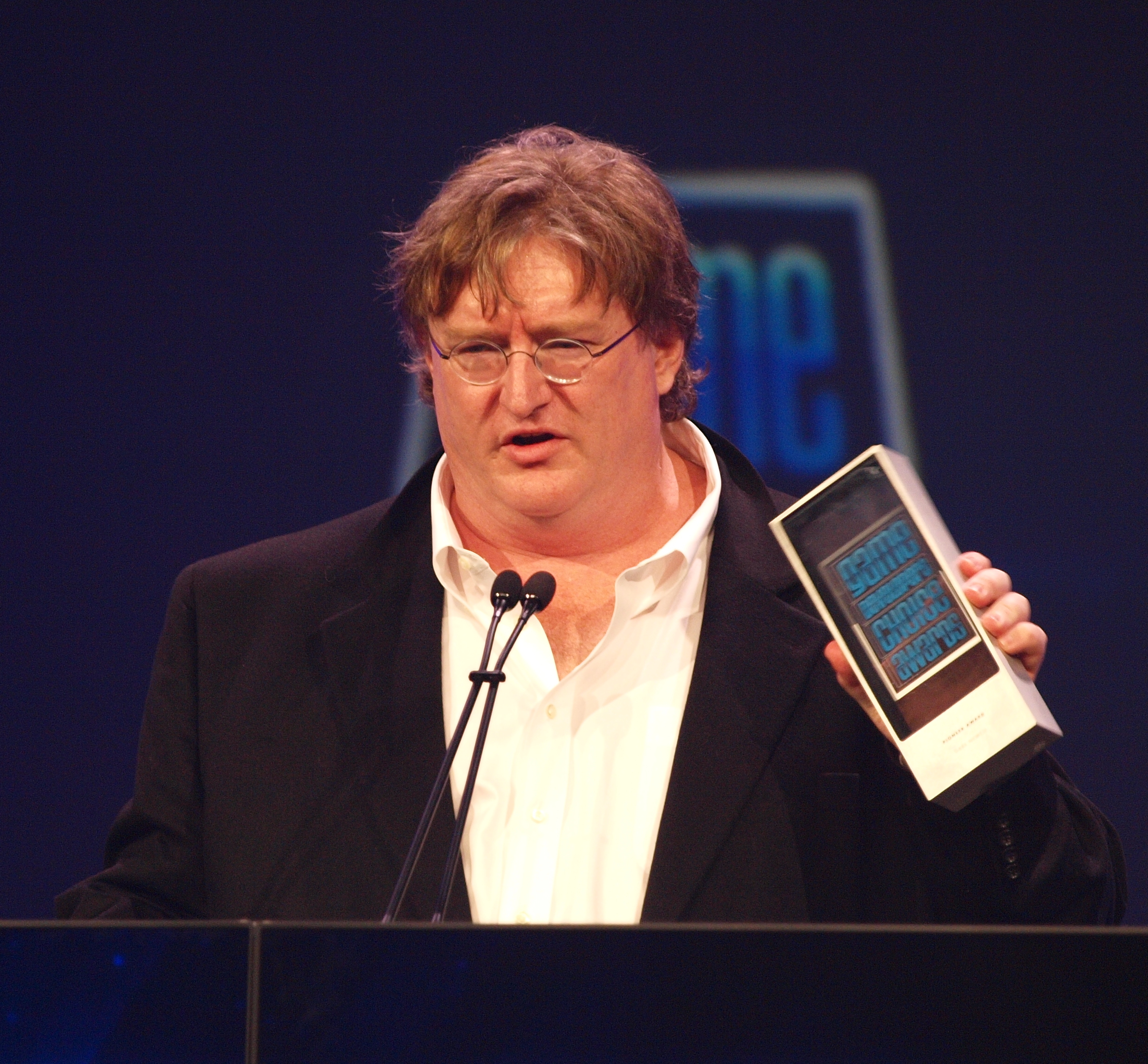





 Inara Pey: Living in a Modemworld