
I’ve written about the issues of orbital space debris several times in these pages. It is estimated that there are 150 million pieces of space junk surrounding Earth. The vast majority of this debris is too small to be readily detected – minute pieces smaller than a centimetre; still large enough to do mischief to a satellite or other orbital vehicle, particularly if a cloud of them happen to strike – but of no significant threat to those of us on Earth or flying through the sky.
However, there are between 25,857 and 56,450 large object orbiting the Earth; of these, between 10,000 and 12,500 are operational satellites (the numbers vary based on the collective orbital regions studied), and the rest defunct satellites, rocket stages, payload fairing and other debris large enough to pose a range of issues. These present a range of problems, some of which are obvious, others perhaps less so.
For example, satellites and rocket stages in low-Earth orbit (LEO) can be directed to re-enter the atmosphere so that any parts surviving re-entry “safely” fall into the Pacific Ocean at “Point Nemo” (officially called the oceanic pole of inaccessibility), the furthest point from land in any ocean or sea, and a place 400 km from the nearest air or marine route. However, as “safe” as this is, as I recently noted – they result in an increase in high-altitude pollutants such as aluminium oxides that is on the increase (as I noted in that article, SpaceX’s Starlink is now responsible for some 40% of debris burning-up in the upper atmosphere and creating up to 5 tonnes of (mostly) aluminium oxide dumped in the mesosphere and stratosphere per day).

There are others who are less considerate in what happens to their satellites and the expended stages of their rockets. Russia, for example, has a habit of taking pot-shots at its own satellites, blowing them up (and thus increasing the amount of fast-moving debris and adding to the general confusion, whilst China just tends to leave rocket stages to make an uncontrolled re-entry which, whilst pointing in the general direction of Point Nemo, could equally result in debris striking populated areas.
Even SpaceX has been a little cavalier; three of their service modules – or “Trunks” – from Crew Dragon missions have survived re-entry to come down near populated areas. The first was largely glossed over (it fell on Australia); the next two came down in America – one within a glamping centre, the other actually striking a house in Florida (fortunately without loss of life or injury). These two were enough to persuade NASA and SpaceX to move Crew Dragon splashdowns from the Atlantic to the Pacific Ocean, so the vehicles would not be re-entering the atmosphere over the continental United States.

However, this is just the tip of the iceberg. Not only is there a vast amount of debris occupying the various orbital planes – low Earth orbit (LEO), medium Earth orbit (MEO), Geostationary orbit (GEO), Sun synchronous orbit (SSO) – over the years all of the smaller debris previously mentioned has come to be spread more broadly around the Earth and across different altitudes. And the amount of potential junk we’re casually lobbing up in the form of smallsats viewed as “no bother” as even in an uncontrolled re-entry at the end of their useful life, they will completely burn up, together with the rocket stages used to get them there, is now accelerating. In 2024, for example, there were 263 launches world-wide, most of them delivering multiple satellites to various orbits and leaving upper stages in what are called “superspreader orbits” – orbit beyond those occupied by satellites, so as to minimise collision risks between them. Taken together, all of this increases the risk of collisions – and not just between a couple of objects; there is a very real risk of one or more collisions leading to an event referenced under the term Kessler syndrome.
Also called collisional cascading, the Kessler syndrome envisages a single collision between two fast-moving orbital objects generating debris which goes on to strike other orbital objects, shattering them, causing more debris, and so on through a cascading set of collisions that could destroy entire networks of satellites – and orbital facilities like space stations together with orbiting crewed space vehicles. If you’ve seen the 2013 film Gravity starring and Sandra Bullock and George Clooney, you’ll have seen a visualisation of a Kessler syndrome event.
Kessler syndrome is particularly relevant to the crowded domain of low Earth orbit which is currently getting packed out thanks to the arrival of megaconstellations such as Starlink (currently 7,000 active and inactive, with a plan for 12,000 potentially rising to 40,000 in both LEO and MEO, together with China’s planned 14,000 strong Qianfan (“Thousand Sails”). Because of these and the overall increase of commercial activities in LEO, the risk of a Kessler syndrome event occurring is seen as being on the rise – as is its potential range of impact (no pun intended).

In particular, a study conducted by a team from the University of British Columbia (UBC) and published in Scientific Reports noted that a widespread collisional cascade could result in multiple large-scale debris elements entering the atmosphere to rain down fragments across wides areas, not only putting lives on the ground at risk but also causing potential disruptions to air travel and airspace closures, even when there is no direct threat to people on the ground.
In this latter regard, the report additionally notes that even without a Kessler syndrome event, particularly busy concentrations of air routes – like southern Europe, the Mediterranean Sea and Middle East; the Caribbean and Central America; south-east Asia through the Philippines and around the South China Sea – now have a 1 in 4 risk of suffering significant disruption as a result of orbital debris falling through them, and this could rise to 1 in 3 in the next few years (although the chances of an individual aircraft actually being struck by debris will remain around 1 in 430,000).
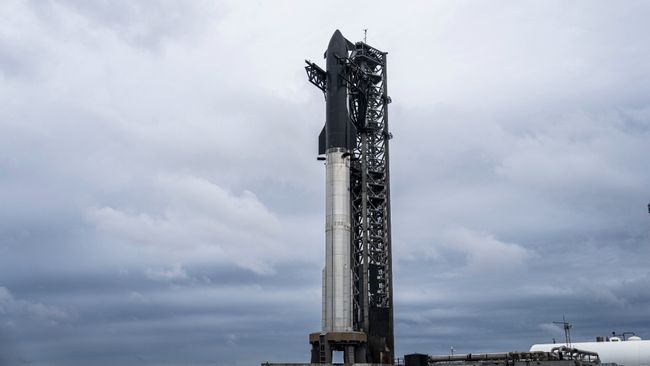
The report also notes that this potential for disruption is not limited to just space debris re-entering the atmosphere; the increasing number of launches around the world could see something of an increase in vehicle losses at high altitudes during ascent, also causing short-term airspace restrictions and aircraft diversions. In this, the report references the loss of the Starship vehicle during the January 16th, 2025 IFT-7 sub-orbital flight by SpaceX. The vehicle in question exploded at an attitude of 124 km, with wreckage falling over the airspace of the Caribbean and Greater Antilles, resulting in aircraft being diverted and airspace being temporary restricted to avoid the risk of aircraft passing through clouds of small debris which could be ingested by their engines with unwanted results. Also, and as a by-the-by, this mishap resulted in 85.5 tonnes of pollutants in the form of metal oxides and nitrogen oxides oxides dumped into the upper atmosphere – that’s 1/3 of the annual levels of such pollutants dumped on us from meteorites burning up in the atmosphere.
A video captured from an airliner flying over the Greater Antilles showing the break-up of the SpaceX Starship on January 16th, 2025
All of which underlines the fact that whilst space companies point towards their use of more environmentally-friendly propellants for the launch vehicles – notably with the move away from using kerosene – this is actually a very small step in tackling increasingly complex problems resulting from spaceflight.
Boeing Warn of SLS Layoffs
Following my last piece concerning NASA Project Artemis and – particularly – the Space Launch System (SLS) and Orion crew vehicle – Boeing has formally notified employees working on the SLS programme that there could be lay-offs coming.
To align with revisions to the Artemis program and cost expectations, today we informed our Space Launch Systems team of the potential for approximately 400 fewer positions by April 2025. This will require 60-day notices of involuntary layoff be issued to impacted employees in coming weeks, in accordance with the Worker Adjustment and Retraining Notification Act.
– Boeing Statement in the possible layoffs notification

The notification is seen as evidence that the Trump administration is moving towards an immediate cancellation of SLS – and possibly Orion. However, the wording of the Boeing statement might indicate otherwise. The company and its partners in Artemis, Lockheed-Martin and ULA have been under pressure from NASA to reduce costs, and have agreed to do so. With the SLS production line maturing the notification might by in line with that goal, Boeing having the confidence they can reduce the SLS workforce without impacting the programme. As it is, the vehicles – both SLS and Orion – due to be used in the next three Artemis missions (2 through 4) are already well advanced:
- The Artemis 2 SLS is being stacked at Kennedy Space Centre, and the Orion vehicle for that mission is awaiting final testing.
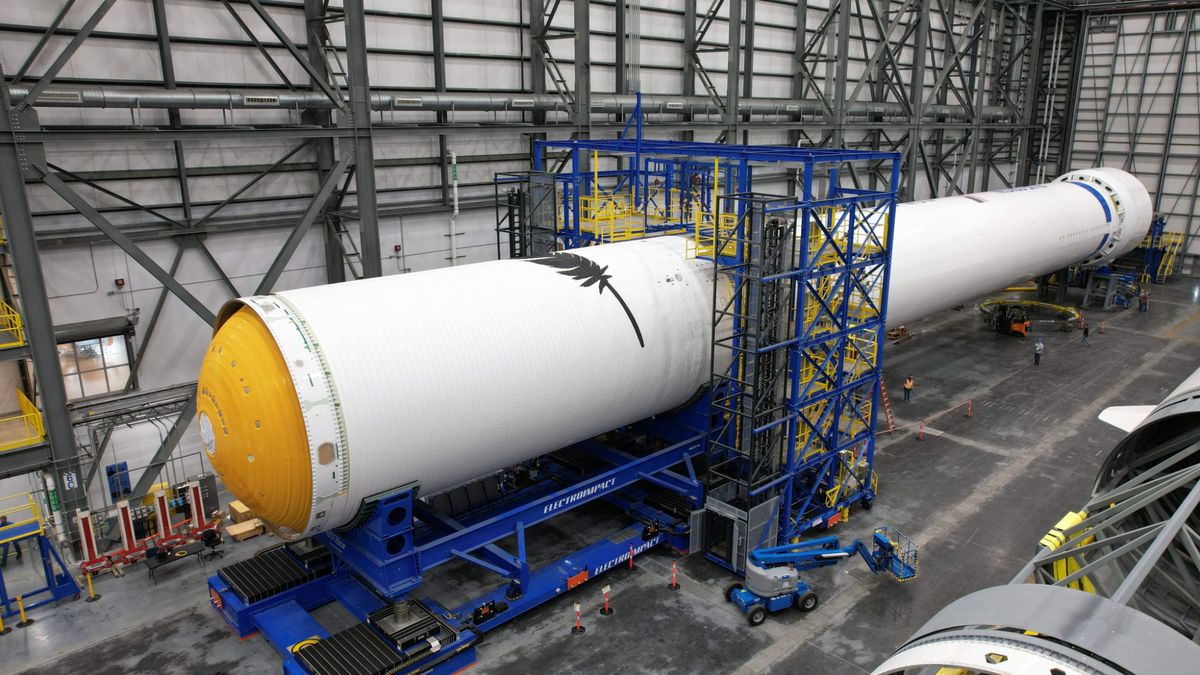
- Construction of the core stages for the SLS vehicles to be used with Artemis 3 and Artemis 4 have been under construction in parallel by Boeing at NASA’s Michoud Assembly Facility, and work has commenced on the Artemis 5 rocket’s core stage.
- The Orion vehicles for Artemis 3 and Artemis 4 are at Kennedy space centre, undergoing assembly and integration.
- The European Service Module (ESM) for Artemis 3 was shipped to Kennedy Space Centre from Germany in August / September 2024 while the ESM for Artemis 4 is currently under construction in Bremen, Germany.
However, if the Boeing notice has been issued over concerns about cancellation, then as I pointed out last time out, it would likely only serve to severely delay Artemis, because there just isn’t anything available to readily replace SLS or SLS + Orion. Also, there is an argument to be made that whilst Artemis in its current form with the fully expendable SLS is unsustainable, continuing with it for the time being might actually help move the programme towards any SLS replacement without the need to completely disrupt the entire Artemis programme.
Right now, only Artemis mission 2 through 5 are funded to any degree; 6 through 10 have yet to receive serious budget allocations – although this will have to start soon. As such, it would seem to make more sense to continue with Artemis 2 preparations and the development of the Artemis 3-5 flight hardware whilst redirecting funds that would otherwise go into the vehicles required for Artemis 6 onwards into the development of a more cost-effective architecture, such as modifications to New Glenn and the Orion launch Abort System to allow the one to launch the other, and the development of a means for Orion to dock with ULA’s Centaur upper stage whilst on-orbit (required to get Orion to cislunar space, New Glenn being unable to do so on its own).

Such an approach would both allow Artemis to meet current goals – and even provide a buffer if mission dates have to again slip – whilst the alternate hardware is modified, tested, rated, and called for flight. Thus, by the time Artemis 6 rolls around, the new architecture could be ready to make its debut in place of SLS, and no significant ground has been lost in moving Artemis forward. Additionally, the specific use of New Glenn / Centaur would both fit with the current Lunar Gateway architecture (possibly the one thing NASA really should abandon but likely won’t) and avoid the need to cancel and squander Orion.
However, this is pure conjecture. Whether the Boeing notification was issued in expectation of SLS cancellation or not, is something that is likely to become clear within the next month or two.









 Inara Pey: Living in a Modemworld